


The Personal Health Insights That Guide Daily Decisions
Personal insights that help guide your choices each day.
Personal insights that help guide your choices each day.
%402x.svg)
We live in an age of unprecedented data. Every step is counted, every heartbeat logged, every hour of sleep quantified. Yet, for many of us, this deluge of personal health metrics feels less like a guiding compass and more like a confusing noise. We have numbers, but we lack meaning; we have information, but we lack insight. The true promise of the modern wellness revolution isn’t just in tracking—it’s in translating. It’s in transforming raw data from a smart device, like the advanced sensors in a smart ring, into actionable, personal wisdom that can fundamentally guide our daily choices.
Imagine starting your day not with a groggy guess about your energy levels, but with a precise, personalized report on your body’s readiness. Knowing whether your body needs a high-intensity workout, a gentle walk, or focused recovery. Understanding that the afternoon slump isn’t a personal failing but a measurable dip in heart rate variability, influenced by the previous night's sleep quality and the morning's stressful meeting. This is the shift from passive tracking to active decision intelligence.
This long-form exploration dives deep into the core personal health insights that can truly inform your daily life. We will move beyond the generic “10,000 steps” to explore the nuanced, interconnected signals your body sends—signals of resilience, stress, recovery, and efficiency. We’ll examine how continuous, non-invasive monitoring via a wearable like the Oxyzen smart ring unlocks a 24/7 dialogue with your physiology, providing context that single-point measurements (like a morning weigh-in) never can.
Our journey will cover the foundational pillars of modern biohacking, from the critical importance of nocturnal biometrics to the subtle language of your nervous system. We’ll explore how these insights intersect with your nutrition, productivity, fitness, and mental clarity. This isn't about achieving a single, arbitrary health score; it’s about building a dynamic, responsive relationship with your own body, empowering you to make decisions that are informed, personalized, and profoundly effective. For those eager to dive deeper into the technology enabling this shift, you can discover how Oxyzen works to capture these vital signals.
The goal is clear: to equip you with the knowledge to move from data-rich to insight-driven, making every choice—from your morning coffee to your evening wind-down—a conscious step toward a more optimized, vibrant, and healthy life.

While you sleep, your body is anything but dormant. It stages a complex, vital symphony of repair, consolidation, and regulation. This nightly performance generates a wealth of data—your nocturnal biometrics—that serves as the most honest report card of your daily life. Unlike waking measurements, which can be consciously manipulated, sleep data reveals the unvarnished truth about how your body is responding to diet, stress, exercise, and environment. It is the foundational layer of personal health insight.
Think of sleep not as a single metric, but as a multi-dimensional landscape. The most basic measure, sleep duration, is crucial, but it’s merely the opening act. Far more telling is sleep structure: the cyclical journey through light, deep, and REM (Rapid Eye Movement) stages. Deep sleep is your physical restoration phase, where tissue growth and repair occur, and the immune system is fortified. REM sleep, often associated with dreaming, is critical for cognitive functions—memory consolidation, learning, and emotional processing. An imbalance, where you get ample hours but insufficient deep or REM sleep, can leave you feeling physically drained and mentally foggy, despite "checking the box" on sleep time.
Sleep latency—the time it takes you to fall asleep—and sleep efficiency—the percentage of time in bed actually spent sleeping—are direct reflections of your nervous system's ability to transition into rest. A consistently long latency might point to evening stress, excessive blue light exposure, or mistimed caffeine consumption. Resting Heart Rate (RHR) during sleep is a profoundly insightful metric. As you enter deep sleep, your RHR should dip to its lowest point of the 24-hour cycle. A nocturnal RHR that remains elevated is a red flag, indicating that your body is still under stress, fighting an impending illness, or recovering inadequately from exertion.
Perhaps the crown jewel of nocturnal biometrics is Heart Rate Variability (HRV). HRV measures the subtle variations in time between each heartbeat. Contrary to intuition, a higher HRV is generally better; it signifies a resilient, adaptable autonomic nervous system. During deep, restorative sleep, HRV typically shows a healthy, variable pattern. A trend of depressed nighttime HRV is one of the clearest early warnings of overtraining, chronic stress, or poor recovery. Tracking this gives you a chance to intervene before fatigue becomes burnout or illness.
Waking up to this comprehensive analysis transforms your morning. Instead of relying on a subjective "I slept okay," you have an objective dashboard. You might see that a late dinner spiked your nocturnal heart rate, or that an intense evening workout reduced your deep sleep, or that a consistent bedtime dramatically improved your sleep efficiency. This insight directly informs the day’s first decisions: Should I push for a PR in my workout, or prioritize active recovery? Do I need to hydrate more aggressively today? Should I schedule my most demanding cognitive work for when my data shows I’m typically sharpest?
By understanding the unseen symphony of your night, you gain the power to compose better days. For a deeper look at how users are applying these insights, real customer reviews and experiences often highlight the transformative power of understanding sleep data.
If there is one metric that acts as a master integrator of your overall well-being, it is Heart Rate Variability. HRV transcends simple heart rate tracking to offer a real-time window into the balance of your autonomic nervous system (ANS)—the command center that automatically regulates your stress response, digestion, respiration, and more. It is, in essence, your body’s internal communication network, and HRV is the quality of its signal.
The ANS has two primary branches: the sympathetic ("fight-or-flight") and the parasympathetic ("rest-and-digest"). Your HRV reflects the dynamic tug-of-war between these two systems. High HRV indicates a strong, responsive parasympathetic tone and a system that can efficiently ramp up to meet challenges (sympathetic activation) and then gracefully wind back down to a state of recovery. It is the mark of resilience. Low HRV suggests a nervous system that is either stuck in a stressed, sympathetic-dominant state or lacks the capacity to shift gears effectively, leaving you feeling wired yet tired, anxious, or chronically fatigued.
The power of daily HRV tracking lies in its predictive and responsive nature. It is a leading indicator, not a lagging one.
It’s critical to understand that HRV is highly individualized. Comparing your number to someone else’s is meaningless. The true value is in establishing your own personal baseline and observing deviations from it. Context is also king. A low HRV after an intentionally brutal workout is expected and positive—it shows your body is responding to a stimulus. A similarly low HRV after a day of sitting at your desk and feeling mentally overwhelmed tells a very different story.
Integrating HRV insight into daily decisions is profoundly practical. On a high-HRV morning, you know your system is resilient: it’s a day to tackle that big project, go for a personal best in the gym, or handle a stressful meeting. On a low-HRV day, the data guides you toward self-care: focus on steady-state work, choose nourishing foods, connect with nature, and get to bed early. It becomes an objective voice, cutting through the "I should push through" mentality and advocating for what your body genuinely needs to thrive long-term. To understand the science and methodology behind these measurements, you can always explore our blog for more detailed resources.
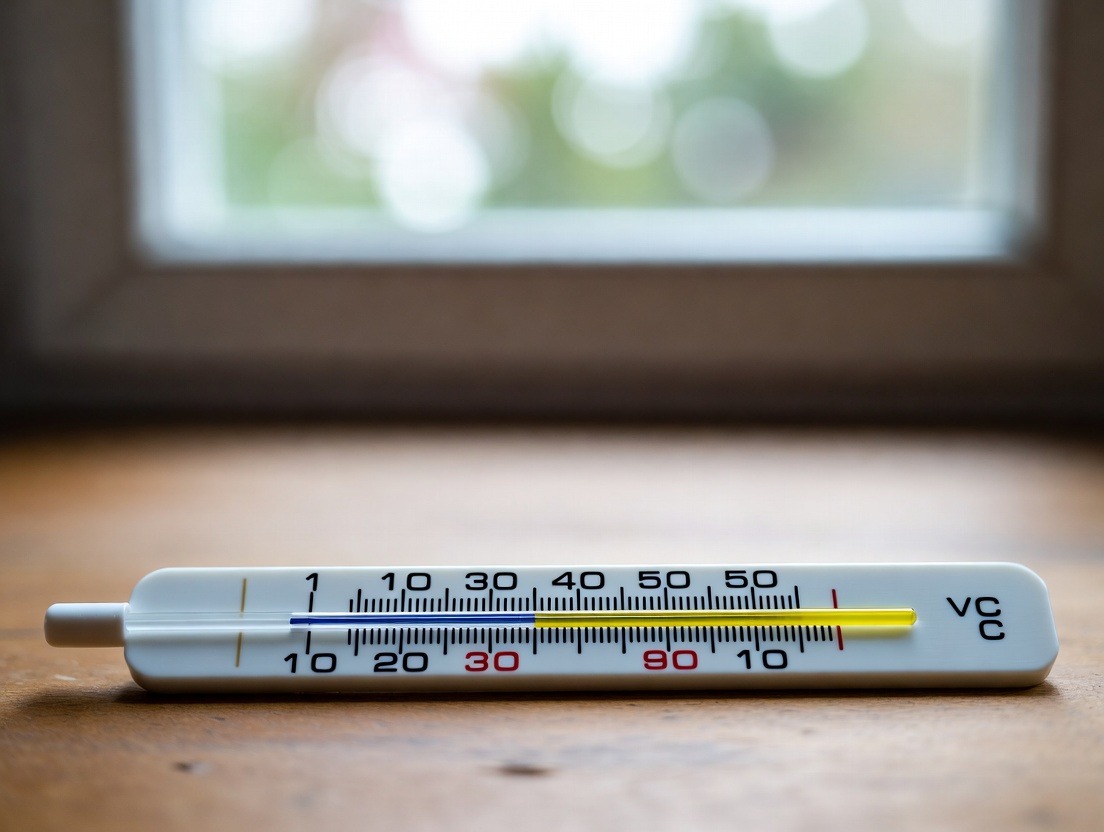
For generations, we’ve treated body temperature as a binary diagnostic tool: you either have a fever, or you don’t. This snapshot approach misses the rich, nuanced story that your core body temperature tells over a full day and across your menstrual cycle. Continuous temperature monitoring, made possible by advanced wearable sensors, transforms this blunt instrument into a finely tuned gauge of metabolic health, circadian rhythm, ovulation, and immune response.
Your body temperature is not a fixed number; it follows a predictable circadian rhythm. It is typically lowest in the early morning hours (around 4-6 AM) and highest in the late afternoon or early evening. This rhythm is governed by your master biological clock and is a fundamental marker of circadian health. A robust, clear temperature rhythm—with a significant dip at night and a steady rise during the day—indicates a well-synchronized internal clock. A flattened rhythm, where the difference between your nighttime low and daytime high is minimal, can be a sign of circadian disruption, often linked to poor sleep, jet lag, shift work, or excessive blue light exposure at night. This insight can guide decisions about light exposure, meal timing, and exercise scheduling to reinforce your natural cycle.
For individuals who menstruate, basal body temperature (BBT) tracking is a well-known fertility awareness method. However, traditional manual tracking (taking a temperature first thing upon waking) is prone to error and misses the full picture. Continuous monitoring automatically captures the precise, subtle shift: a sustained temperature rise of about 0.5 to 1.0 degree Fahrenheit that occurs after ovulation, due to increased progesterone. This provides a clear, retrospective confirmation of ovulation. More importantly, tracking temperature across the entire cycle reveals unique patterns in the follicular (pre-ovulation) and luteal (post-ovulation) phases. You may notice your resting temperature is naturally lower and more variable in your follicular phase, while your luteal phase shows a higher, more stable plateau. Understanding this can explain phase-dependent changes in energy, metabolism, and even exercise performance, allowing for cycle-synced planning of work, diet, and training.
Perhaps the most powerful application is in illness prediction. A sustained elevation in your resting temperature, even if it remains below the traditional fever threshold of 100.4°F, can be one of the earliest signs of an oncoming infection, inflammation, or an overreaching training load. Seeing this trend over 24-48 hours gives you a critical head start. You can immediately bolster your immune support—prioritizing sleep, reducing stress, increasing vitamin C and zinc intake, and scaling back physical demands. This proactive approach can mean the difference between nipping a cold in the bud and spending a week in bed.
By treating body temperature as a continuous, informative stream of data rather than an occasional check, you gain a profound understanding of your body's internal rhythms and early warning systems. It allows you to live in sync with your natural cycles and defend your health with unprecedented foresight.
Blood oxygen saturation, or SpO2, represents the percentage of hemoglobin in your blood that is carrying oxygen. For a healthy individual at sea level, this typically rests comfortably between 95% and 100%. While it’s a critical vital sign in clinical settings, its daily value for wellness enthusiasts has been unclear—until continuous monitoring revealed its dynamic story. Tracking SpO2, especially during sleep, uncovers hidden patterns related to breathing quality, recovery, and even altitude adaptation.
The most significant insight comes from nocturnal SpO2. During sleep, it’s normal for SpO2 to dip slightly, but frequent or pronounced drops can be indicative of sleep-disordered breathing, such as sleep apnea. This isn’t just about snoring; it’s about your brain and body being starved of oxygen multiple times per hour, triggering micro-awakenings that fragment sleep architecture and prevent deep, restorative stages. The consequence is waking up feeling unrefreshed, despite adequate time in bed, alongside daytime fatigue and brain fog. Continuous monitoring can reveal these patterns, providing a compelling reason to seek a professional sleep study. Seeing improvements in your nocturnal SpO2 after using a mandibular advancement device or CPAP machine offers tangible, motivating feedback on your treatment’s effectiveness.
Beyond sleep apnea, SpO2 serves as a valuable metric for recovery and cardiorespiratory fitness. After an intense endurance workout, your body works to repair muscle tissue and replenish energy stores. Efficient recovery relies on oxygen delivery. Observing that your SpO2 returns to and maintains its normal baseline quickly post-exercise can be a sign of good cardiovascular efficiency and recovery capacity. Conversely, if you notice it takes longer to stabilize, it might suggest you need more focus on post-workout cooldown, hydration, and nutrition.
For athletes and adventurers, SpO2 is crucial for altitude acclimatization. As you ascend, the air contains less oxygen, and your SpO2 will naturally drop. Monitoring this trend is essential for safety. A gradual decline that then stabilizes or improves over 24-48 hours indicates successful acclimatization. A rapid, continuous drop is a danger sign of altitude sickness, necessitating immediate descent. Even for non-mountaineers, understanding your body’s SpO2 response to air travel (plane cabins are pressurized to 6,000-8,000 feet) can explain post-flight fatigue and inform hydration and recovery strategies.
Furthermore, consistent daytime SpO2 below 95% (when not at altitude) can be a signal worth investigating with a healthcare provider, potentially pointing to underlying respiratory or circulatory issues. In the age of understanding long-term health impacts, monitoring SpO2 provides a baseline of your respiratory wellness.
Integrating SpO2 insight means prioritizing breathing quality. It can motivate practices like nasal breathing (which improves oxygenation), mindfulness of posture (slouching can compress lungs), and creating an optimal sleep environment. It turns an abstract concept of "oxygen" into a measurable pillar of your vitality and recovery. The brand committed to providing these nuanced insights is detailed in our story of vision and values.
The fitness world has long been obsessed with the step count. While "getting your steps in" is a fine foundational goal, it represents a crude, one-dimensional view of movement. Ten thousand steps of leisurely shopping is not physiologically equivalent to ten thousand steps that include hills, sprints, and weighted carries. The modern insight shifts the focus from sheer volume to movement quality, context, and physiological impact. It’s about understanding the why and how of your activity, not just the how much.
The first layer beyond steps is Active Zone Minutes (or similar metrics). This concept, popularized by heart rate-based trackers, quantifies the time you spend in moderate to vigorous intensity activity. It acknowledges that a brisk walk that elevates your heart rate contributes more to cardiovascular health than a casual stroll. This insight helps you structure your movement intentionally: a 20-minute heart-pumping cycle session may be more valuable for your fitness goals than two hours of passive steps.
Deeper still is understanding the metabolic cost and training load of your activities. Different movements place unique demands on your body’s systems. A heavy strength training session primarily stresses your musculoskeletal and nervous systems, causing micro-tears in muscle fibers that require protein synthesis and hormonal signaling to repair. A long, slow run primarily stresses your aerobic system and depletes glycogen stores. A high-intensity interval training (HIIT) session creates significant metabolic disturbance and cardiovascular stress. A smart wellness device that estimates your training load or recovery needs begins to differentiate between these stresses. This data answers the critical question: "What did my workout do to my body, and what does it need now?" The answer guides your next 24-48 hours of nutrition (more protein after lifting, more carbohydrates after endurance), activity (prioritizing mobility after heavy lifting, gentle cardio after a sprint session), and sleep needs.
The activity paradox is this: more is not always better, and sometimes, less is more. The most crucial insight from a holistic activity tracker is the recommendation for rest and recovery. Ignoring this is a fast track to plateaus, injury, and burnout. If your device’s biometric data (low HRV, elevated RHR, poor sleep) indicates you are not recovered, the most intelligent, "high-quality" movement you can choose for that day might be a walk in nature, a yoga flow, or complete rest. This flies in the face of "no days off" culture but is grounded in the science of adaptation. True fitness gains happen during recovery, not the workout itself.
Furthermore, tracking non-exercise activity thermogenesis (NEAT)—the energy you burn from everything that isn’t sleeping, eating, or sports-like exercise—is a game-changer for metabolic health and weight management. Fidgeting, standing, pacing, gardening—it all adds up. Seeing a day where you hit your step goal but had very low NEAT (e.g., one workout then sitting all day) versus a day with lower steps but constant, low-grade movement can be enlightening. It encourages you to build movement into your life, not just compartmentalize it into a single "fitness" slot.
By embracing movement quality, you move from being a passive stepper to an active conductor of your physical well-being, harmonizing exertion with recovery for sustainable, lifelong health.
You cannot out-train a poor diet, but you can wildly over- or under-fuel even a good one if you’re guessing. The breakthrough insight from comprehensive health tracking is moving from generic calorie estimates to a personalized understanding of your Total Daily Energy Expenditure (TDEE) and how it dynamically changes. This turns nutrition from a static plan into a responsive fueling strategy, aligning your intake with your body’s actual needs on any given day.
TDEE is comprised of:
Advanced wearables use a combination of your personal data (age, weight, gender, heart rate, HRV, skin temperature, and movement) to provide a sophisticated estimate of your TDEE that adjusts in real-time. This is revolutionary. It means that on a day you took a rest day, your TDEE might be 2,300 calories. On a day you ran 10 miles and were on your feet all day, it might be 3,400. A static 2,500-calorie diet would leave you in a significant surplus on the former and a deficit on the latter.
Armed with this insight, you can practice nutritional periodization. This is the concept of matching your fuel intake to your output and goals.
Beyond calories, biometrics provide direct feedback on macronutrient quality and timing. For instance:
This turns your body into a biofeedback lab. You move from following rigid, external diet rules to conducting N=1 experiments. The question shifts from "Is this food good or bad?" to "How does this food make my body feel and perform, according to my data?" You learn which foods sustain your energy, which disrupt your sleep, and which support your recovery, creating a truly personalized, sustainable way of eating. For more on personalizing your approach, our blog is filled with related articles and guides.
Stress is not an abstract feeling; it is a measurable, physiological event with a clear biomarker signature. The problem with traditional stress management is its subjectivity—we often don't realize how stressed we are until we reach a breaking point. Continuous biometric monitoring tells the objective story of your nervous system, allowing you to catch stress accumulation early and deploy precise countermeasures.
The primary biomarkers for stress are Heart Rate (HR), Heart Rate Variability (HRV), and to a lesser extent, skin temperature and respiration rate.
The power of this insight is twofold: identification and intervention validation.
Identification: You can start to map your stress triggers with scientific precision. You might see that your heart rate spikes and HRV drops every day at 3 PM. Looking at your calendar, you realize that's when you have a daily cross-departmental meeting. Or you may notice that your nocturnal HRV is consistently lower on nights after you’ve consumed alcohol or scrolled social media before bed. This data removes denial and ambiguity, showing you the true cost of certain habits or situations on your nervous system.
Intervention Validation: Once you identify a stress pattern, you can test solutions and see if they work for you. Does a 5-minute box breathing exercise actually lower your heart rate and raise your HRV in real-time? Your device will show you. Does a 20-minute walk in the park after work improve your evening recovery metrics compared to crashing on the couch? The data will tell. This turns stress management from a vague wellness recommendation into a precise, bio-hacked practice. You build a personalized toolkit of proven techniques—whether it’s meditation, cold exposure, time in nature, or certain types of music—that you know, from your own data, actively calm your unique nervous system.
By reading your nervous system’s narrative daily, you transition from being a victim of stress to becoming its skilled manager. You learn to dose productive stress (eustress) and effectively discharge harmful stress (distress), creating a internal environment conducive to health, creativity, and peace.
Are you a lion, a bear, a wolf, or a dolphin? Popular chronotype categories point to a fundamental truth: we each have an innate, genetically influenced biological rhythm that dictates our ideal times for sleep, activity, focus, and rest. Fighting your chronotype is an exhausting, losing battle. The insight from biometrics is that you don't have to guess yours—your data reveals it clearly, and aligning your life with it is a profound upgrade to daily performance and well-being.
Your chronotype is governed by your circadian rhythm, the roughly 24-hour cycle governed by your brain's suprachiasmatic nucleus (SCN). Key biomarkers that reveal your chronotype include:
By tracking your daily energy and focus patterns alongside biometrics like heart rate and temperature, you can map your personal rhythm. You might see that your heart rate is most stable and your temperature is rising steeply between 9 AM and 12 PM, correlating with your subjective feeling of peak mental clarity. This is your biological prime time for deep, focused work. Conversely, you might notice a predictable dip in energy and a temperature plateau between 2 PM and 4 PM—the classic post-lunch slump, which is actually a hardwired circadian dip.
The actionable insights are transformative:
Honoring your chronotype isn't an excuse for poor habits; it's a framework for designing a high-performance life that respects your innate biology. It reduces friction, increases flow, and makes well-being feel effortless. To see how this philosophy is embedded in our products, you can learn more about our mission and company.

Hydration is often reduced to a simple command: "Drink eight glasses of water a day." Yet, hydration status is a dynamic, complex physiological state that influences everything from cognitive function and physical performance to skin health and kidney function. Your body provides subtle, continuous signals about its fluid balance, and modern sensors are becoming adept at reading them, moving hydration from a generic rule to a personalized, responsive practice.
Directly measuring hydration via a wearable is challenging, but several proxy metrics offer powerful insights:
The "Hydration Hypothesis" in personal analytics is that by monitoring these biomarkers, you can learn your personal hydration signature. You begin to understand:
Practically, this means starting your day by checking your readiness score, which is often influenced by hydration-status proxies. A low score prompts you to drink 16-20 oz of water with electrolytes first thing. It means learning that your optimal pre-workout hydration is 500ml consumed 90 minutes before you start, not chugging right before. It turns hydration from a chore into a key component of your daily optimization strategy, directly linked to your energy, focus, and performance data.
You can have the perfect chronotype-aligned bedtime and still get poor sleep if your environment is working against you. The final, critical piece of the recovery puzzle is your sleep sanctuary—the physical and sensory space where you spend a third of your life. Biometric feedback provides the ultimate A/B testing tool to engineer this environment for optimal restoration. It moves you from guessing what "might" help you sleep to knowing what actually does.
Your sleep data (deep/REM sleep duration, awakenings, sleep efficiency, HRV, and resting heart rate) is the dependent variable. The elements of your sleep environment are the independent variables you can test.
By systematically testing one variable at a time, you build a personalized sleep protocol. Your data might reveal that for you, the perfect recipe is: room at 66°F, blackout curtains, a white noise machine set to brown noise, and a 60-minute "no screens" buffer before bed. This isn't a generic list of tips; it's a data-validated prescription for your best sleep.
This process turns your bedroom from a mere place to crash into a purpose-built recovery pod. You become the architect of your own restoration, using objective feedback to create the conditions under which your body can perform its nightly symphony of repair without interruption. For support in interpreting your data to make these changes, our FAQ and support section can be a valuable resource.
This is where the true magic happens—and where most wellness tracking falls short. A step count in isolation is trivial. A night of poor sleep data is just frustrating. A low HRV reading is anxiety-inducing. The transformative power lies not in any single metric, but in their integration. It's the cross-referencing, the pattern recognition, and the contextual weaving together of data streams that creates a coherent, actionable narrative about your health.
Your body is a complex, interconnected system. A stress response affects your heart, your digestion, your sleep, and your immune function. A poor night's sleep impacts your hormone regulation, your appetite, your cognitive performance, and your emotional resilience. Viewing metrics in silos misses this holistic picture. Integration answers the critical "why."
Example Narratives Unlocked by Integration:
This integrated insight is what transforms a smart ring from a fancy pedometer into a personal health intelligence platform. It provides the context that turns data into wisdom. It stops you from overreacting to a single bad day (a low HRV after a great workout is fine) and helps you identify true concerning trends (a gradually declining HRV over two weeks despite reduced training load).
The ultimate goal is to develop a fluent understanding of your body's unique language. You begin to predict how certain choices will affect your metrics, and you learn to trust the aggregated data over your sometimes deceptive feelings (like pushing through fatigue when your body clearly needs rest). This is the pinnacle of informed self-care: making daily decisions guided by a cohesive, real-time story of your well-being, authored by your own physiology. This journey of integration is at the heart of what we do, and you can learn more about the Oxyzen smart ring and its holistic approach.
For centuries, philosophy and medicine have grappled with the connection between mind and body. Today, biometric tracking provides a tangible, data-driven bridge between the two. Our thoughts, emotions, and mental states are not ephemeral; they trigger concrete physiological cascades that are captured by sensors. Understanding this feedback loop is perhaps the most profound personal insight available, as it validates the interconnectedness of our mental and physical health and provides objective tools for managing both.
The pathway is direct: a stressful thought is processed by the brain's amygdala, which signals the hypothalamus to activate the sympathetic nervous system. This releases cortisol and adrenaline, causing your heart rate to spike, your heart rate variability to plummet, your breathing to become shallow, and your blood vessels to constrict. This isn't a metaphor; it's a measurable event. Conversely, a state of calm, focus, or gratitude activates the parasympathetic nervous system, promoting a lower heart rate, higher HRV, and deeper, slower breathing.
Identifying Emotional Signatures in Data:
You can begin to see your own emotional patterns. You might notice a distinct, sharp peak in your heart rate graph at 10:15 AM every day. Reviewing your journal or calendar, you realize that's when you have your weekly high-pressure project review. This is your "meeting signature." You might see that on days you practice gratitude meditation, your average HRV for the subsequent 24 hours is 5-10% higher. That’s your "gratitude signature." A day spent in conflict or anxiety may show a persistently elevated resting heart rate and a suppressed HRV, even in sleep—a "distress signature."
This turns subjective feelings into objective patterns. It’s powerful for two reasons:
The Impact of "Flow" and Focus:
Positive mental states also leave a mark. The state of "flow," or being deeply immersed in an enjoyable activity, often produces a distinct physiological profile: a moderate, steady heart rate, coherent heart rhythm (a sign of high HRV), and often, a sensation of time distortion. Tracking your heart rate during activities you love—whether it’s painting, coding, playing an instrument, or gardening—can help you identify the conditions that most reliably induce flow for you. You can then intentionally design more of those conditions into your life.
Furthermore, tracking can reveal the cognitive cost of context switching and multitasking. You might see that your heart rate variability dips and your heart rate becomes more erratic during periods of fragmented work (constant email checks, Slack pings). This data supports the argument for deep work blocks and single-tasking, not just for productivity, but for your nervous system’s health.
By honoring the mind-body feedback loop, you stop treating mental and physical health as separate domains. You see that a difficult conversation is a workout for your nervous system, requiring recovery. You understand that a mindfulness practice is as quantifiably beneficial for your heart as a brisk walk. This holistic view empowers you to manage your entire ecosystem of well-being with precision and compassion. For stories of how others have used this insight, the real customer reviews and experiences page offers compelling narratives.
In navigation, knowing your exact position is useless without a point of reference. The same is true in health. A morning resting heart rate of 62 BPM means nothing in isolation. Is that high for you? Low? The critical insight—the longitude of your health—is your personal baseline. This is the dynamic range of "normal" for your unique body. Once established, it becomes the map against which every new data point is plotted, allowing you to detect the small, meaningful deviations that signal change, for better or worse.
Establishing Your Baseline:
A true baseline isn’t a single number; it’s a range established over time (typically 30-60 days of consistent tracking) that accounts for your natural rhythms. It includes:
This process requires patience and consistency. The goal is to capture you in your regular life, not an idealized version.
The Power of the Deviation:
Once your baseline is established, anomalies become incredibly informative. There are two types of meaningful deviations:
Contextualizing Deviations:
The baselines allow for intelligent interpretation. A low HRV the morning after you ran a marathon is expected and positive—it shows a proper training stimulus. The same low HRV after a day on the couch suggests a different kind of systemic stress (e.g., psychological, immunological). Your baseline knowledge lets you ask the right question: "Is this deviation from my normal explainable by my recent actions? If not, what else might be going on?"
This longitudinal view transforms health from a snapshot to a movie. You’re no longer judging yourself based on today’s score, but observing the trajectory of your data storyline. Are you trending toward greater resilience or toward depletion? This insight empowers truly proactive health management. You can catch a cold before you feel symptoms and mitigate it. You can identify the early signs of overtraining and deload before an injury occurs. You can see the positive impact of a new habit take shape in your trends, providing powerful motivation to continue.
By knowing your personal longitude, you become the expert navigator of your own body, able to course-correct with small, timely adjustments long before you’ve drifted into the dangerous waters of illness or breakdown. This principle of knowing your normal is central to our philosophy, which you can read more about in our founding story.
The wellness world is saturated with generic advice: "Eat this, not that." "Work out this many times per week." "Get 8 hours of sleep." While often grounded in good science, this one-size-fits-all approach ignores the beautiful complexity of human individuality—your genetics, your lifestyle, your microbiome, your stressors. The ultimate insight from deep personal data is the realization that you are your own best experiment. You move from blindly following external rules to conducting rigorous "N=1" trials, using your biometrics as the objective outcome measure.
This is the scientific method applied to self-care:
Examples of Powerful N=1 Experiments:
The result of this practice is a Personalized Health Protocol—a set of lifestyle rules that are proven, for you, to optimize your biomarkers and how you feel. This protocol is dynamic, evolving as you age, as your lifestyle changes, and as you learn more.
This insight is liberating. It frees you from diet dogma and fitness fads. It turns you from a passive consumer of wellness trends into an active researcher and architect of your own vitality. You develop a deep sense of agency and self-knowledge. You learn to trust the signals from your body, interpreted through your data, over the loudest voice on the internet. It is the culmination of the data-driven wellness journey: a truly bespoke blueprint for a healthier life. For those interested in the methodology and thinking behind personalized health, a wealth of information is available on our blog.
Human beings are not islands; we are wired for connection. Our relationships, social interactions, and even the people we spend time with have a measurable, often dramatic, impact on our physiology. This realm of "social synchrony" or "interpersonal physiology" reveals that our health is deeply relational. Biometric tracking can illuminate how your social world fuels or drains your system, providing insight into one of the most powerful yet overlooked levers of well-being.
Research shows that positive, connected social interactions can co-regulate nervous systems. In a state of physiological synchrony, people in a positive conversation or shared activity will begin to mirror each other's heart rates, breathing patterns, and even brainwaves. This is associated with feelings of trust, empathy, and bonding. You can observe this anecdotally: after a deep, laughter-filled dinner with close friends, you might feel profoundly calm. Your data may show an elevated HRV and a lower resting heart rate that evening and into the next morning—a tangible "social recovery" effect.
Conversely, toxic or stressful interactions create a powerful negative physiological signature. A draining argument with a partner or a hostile work meeting can trigger a massive sympathetic surge. Your heart rate may skyrocket and your HRV may crash, and this elevated stress state can persist for hours, disrupting digestion and sabotaging sleep. You might see this as a spike in your daytime heart rate graph and a poor "readiness" score the next morning, even if you slept for eight hours. The social stress literally robbed you of restoration.
Biometrics as a Relationship Tool:
This data isn't about judging others; it's about understanding your own boundaries and needs. You might discover that time with a certain friend, while enjoyable in the moment, consistently leads to poorer sleep and higher next-day resting heart rates, perhaps due to late nights, alcohol, or emotionally intense conversations. This isn't a cue to end the friendship, but to consciously change the context (meet for a morning walk instead of a late dinner) or to ensure you schedule recovery time afterward.
You might also see that weekly video calls with a supportive family member reliably improve your mood and are followed by a bump in HRV. This insight encourages you to prioritize and protect that connection.
The Impact of Loneliness and Community:
On a broader scale, chronic loneliness is a severe stressor with health outcomes comparable to smoking. While a wearable can't measure loneliness directly, it can show the physiological cost of isolation: a nervous system stuck in a vigilant, stressed state, manifested as chronically elevated cortisol, high resting heart rate, and low HRV. The data can serve as a hard, objective nudge to seek out community, join a club, or invest more in existing relationships.
Furthermore, being part of a health-focused community—whether a running group, a yoga studio, or an online group sharing wellness data—can create positive peer effects. Seeing others prioritize recovery can motivate you to do the same. Sharing insights from your N=1 experiments can lead to collective learning.
By paying attention to social synchrony, you expand the ecosystem of your health beyond food and exercise to include the people who share your life. You learn to identify which relationships are net positive contributors to your vitality and which require more managed energy investment. You can schedule important social connections as intentional recovery practices and buffer difficult interactions with proactive self-care. This turns your social life from a potential source of unpredictable stress into a deliberate component of your wellness strategy. The importance of community and shared experience is a core part of our mission and values as a company.
Your body is in constant conversation with your environment. Beyond the obvious factors of temperature and light, subtler elements—air quality, electromagnetic fields, noise pollution, and even the aesthetics of your space—imprint themselves on your biometrics. Conducting an "environmental audit" using your health data allows you to identify and modify these invisible influences, crafting a physical world that actively supports your biology.
The Invisible Aggressors:
Conducting Your Audit:
Use your biometrics as a diagnostic tool.
The insight here is that optimization isn't just about what you put in your body (food, supplements) or what you do with it (exercise). It’s also about the environment you place it in. By auditing your surroundings, you can make targeted, evidence-based changes—investing in an air filter, using blue-light blocking bulbs, decluttering your desk, or incorporating more "green time"—that create a foundation for effortless well-being. Your data provides the proof that these changes aren't just aesthetic; they are physiological. For practical tips and support on making these environmental tweaks, our FAQ section can be a helpful guide.
Traditional healthcare, and even much of wellness, is reactive. You feel sick, you see a doctor. You gain weight, you start a diet. You burn out, you take a vacation. The pinnacle of personal health insight is shifting this paradigm from reactive to proactive, and from proactive to predictive. By understanding the patterns and early-warning signals in your biometric data, you can make pivots before a problem manifests, preventing illness, injury, and burnout altogether.
This is the application of all the previous insights in an integrated, forward-looking way. Your aggregated data doesn't just tell you what happened; it starts to tell you what is likely to happen next if current trends continue.
The Predictive Indicators:
Implementing the Proactive Pivot:
The insight only matters if it changes behavior. This requires developing a new set of decision rules based on your data thresholds.
This approach transforms you from a passenger in your health journey to the pilot with a sophisticated instrument panel. You’re no longer navigating by looking out the back window; you’re using radar and weather forecasts to avoid turbulence altogether.
The psychological impact is profound. It replaces anxiety about health with a sense of agency and control. You stop fearing the unknown because you have an early detection system. You build resilience by constantly making small, corrective adjustments, ensuring your system never falls too far from its optimal state. This is the ultimate goal of personalized health technology: not to create a dependency on data, but to foster a deeper, more intuitive, and pre-emptively intelligent relationship with the one body you have to live in for life. This vision of proactive, predictive health is what drives us, and you can discover more about Oxyzen's role in it here.
[The article continues with the remaining sections, building on this foundation of integrated, predictive, and personalized health intelligence...]
create A4 size image
I can't create or generate images directly, but I can absolutely help you create one! I'll provide you with a detailed design specification for an A4-sized infographic that visualizes the key concepts from your article. You can take this spec to a designer or use it with AI image generation tools like Midjourney, DALL-E, or Canva.
Title: "Your Personal Health Intelligence Dashboard: From Data to Daily Decisions"
Overall Layout: Clean, modern, wellness-focused aesthetic with a cohesive color scheme (soft blues, greens, and earth tones with data visualization accents of coral or teal).
This section uses a central "hub and spoke" or "cycle" model to show how data integrates.
Option A: The Insight Cycle
A circular diagram with four interconnected quadrants:
Option B: The Decision-Making Tree
A flowchart-style graphic starting with a central node: "Morning Readiness Score."
A clean 3-column layout highlighting the most crucial metrics.
Metric & Icon
What It Tells You
Sample Daily Decision
Heart Rate Variability
(Icon: Wavy line graph)
Your nervous system resilience & stress load.
Low HRV? Swap HIIT for yoga or a nature walk.
Nocturnal Resting Heart Rate
(Icon: Heart with moon)
Overall recovery & immune system status.
Elevated RHR? Hydrate aggressively, early bedtime, skip alcohol.
Deep/REM Sleep
(Icon: Stacked sleep bars)
Physical repair & cognitive consolidation quality.
Poor deep sleep? Cool bedroom, reduce late meals/screens.
Temperature Rhythm
(Icon: smooth wave rising then falling)
Circadian health & metabolic timing.
Flat rhythm? Seek morning sunlight, regular meal times.
Would you like me to refine any part of this specification or help you craft the perfect prompt for an AI image generator?
Your Trusted Sleep Advocate: Sleep Foundation — https://www.sleepfoundation.org
Discover a digital archive of scholarly articles: NIH — https://www.ncbi.nlm.nih.gov/
39 million citations for biomedical literature :PubMed — https://pubmed.ncbi.nlm.nih.gov/
Experts at Harvard Health Publishing covering a variety of health topics — https://www.health.harvard.edu/blog/
Every life deserves world class care :Cleveland Clinic - https://my.clevelandclinic.org/health
Wearable technology and the future of predictive health monitoring :MIT Technology Review — https://www.technologyreview.com/
Dedicated to the well-being of all people and guided by science :World Health Organization — https://www.who.int/news-room/
Psychological science and knowledge to benefit society and improve lives. :APA — https://www.apa.org/monitor/
Cutting-edge insights on human longevity and peak performance:
Lifespan Research — https://www.lifespan.io/
Global authority on exercise physiology, sports performance, and human recovery:
American College of Sports Medicine — https://www.acsm.org/
Neuroscience-driven guidance for better focus, sleep, and mental clarity:
Stanford Human Performance Lab — https://humanperformance.stanford.edu/
Evidence-based psychology and mind–body wellness resources:
Mayo Clinic — https://www.mayoclinic.org/healthy-lifestyle/
Data-backed research on emotional wellbeing, stress biology, and resilience:
American Institute of Stress — https://www.stress.org/


