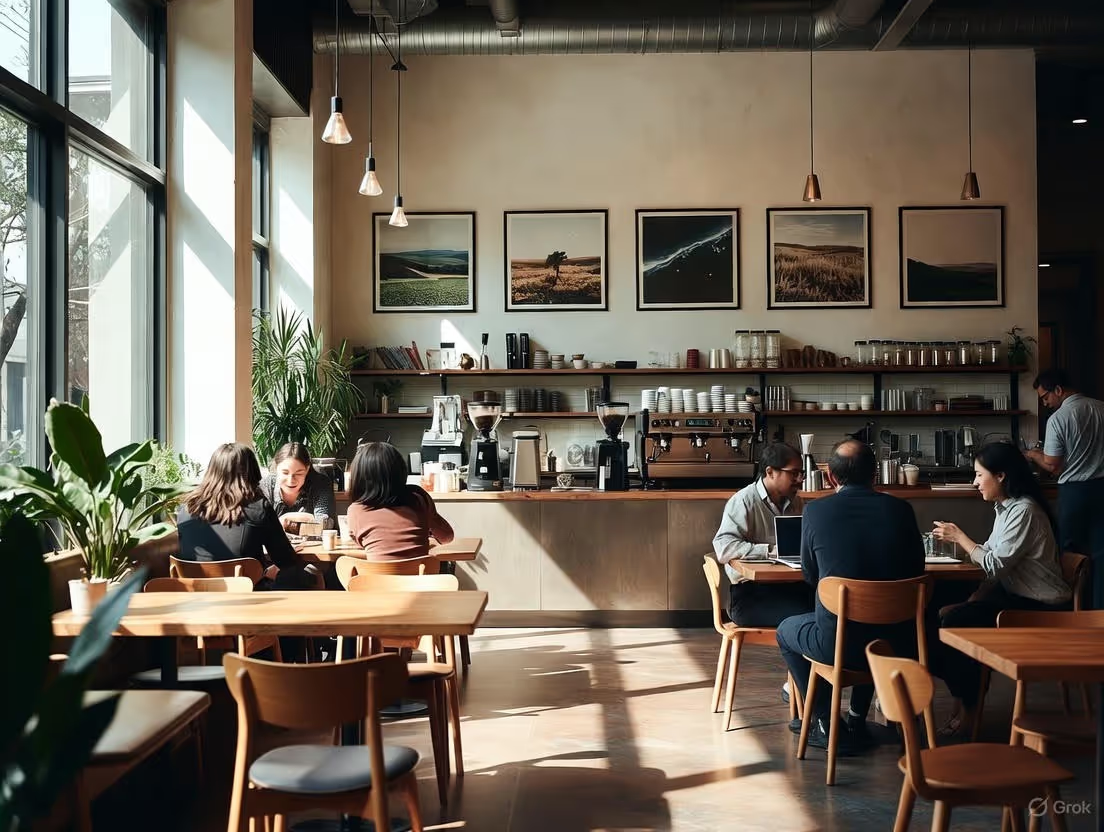
How to Practice Calm Mind Techniques in Public Spaces
Practice in public by doing discreet techniques: mindful observation of surroundings, subtle breathing exercises, or sensory focus.
The Invisible Sanctuary: Mastering Calm Mind Techniques When the World is Watching
We’ve all been there. The heart begins a frantic tap-dance against the ribs. Thoughts swirl like leaves in a storm. The buzz of a crowded coffee shop morphs into a deafening roar, or the tense silence of a packed conference room feels suffocating. In our private spaces, we might retreat to a corner, meditate, or breathe deeply. But in public? The challenge feels monumental. We often believe calm is a solitary pursuit, confined to quiet rooms and yoga mats. This belief is not only limiting—it’s fundamentally false.
True mental resilience is forged not in isolation, but in the crucible of everyday life. The checkout line, the commuter train, the stressful business lunch, the overwhelming grocery store—these are the modern arenas where our peace is truly tested. The ability to anchor yourself amidst external chaos is the ultimate wellness skill, transforming anxiety into agency and overwhelm into observant calm.
This guide is your manual for building an invisible sanctuary, a fortress of calm that you carry within you, accessible at any moment, in any place. We will move beyond theory into highly practical, subtle techniques designed for the real world. You’ll learn to use your own biology—your breath, senses, and physiology—as discreet tools. We’ll explore how modern technology, like the advanced biometric tracking from Oxyzen smart rings, can provide the self-awareness needed to catch rising stress before it spirals. Imagine being alerted by a gentle vibration on your finger that your heart rate is climbing during a difficult conversation, giving you the cue to deploy a grounding technique before you consciously feel the anxiety. This is the future of personalized, in-the-moment emotional regulation.
The journey begins not with changing the world’s volume, but with mastering your internal controls. Let’s step into the noise, together, and discover the profound quiet that exists within it.
The Science of Public Stress: Why Your Brain Thinks the Coffee Shop is a Jungle
To effectively cultivate calm in public, we must first understand the enemy: the ancient, automatic wiring of our stress response. When you feel your palms sweat before a presentation or irritation flare in a crowded queue, you’re not being “dramatic.” You are experiencing a primal biological script, written over millennia, being activated in a profoundly modern setting.
Your Primitive Brain in a Modern World
The amygdala, a small, almond-shaped cluster in your brain, acts as a perpetual threat radar. Its primary job is to ask one simple, survival-oriented question: "Am I safe?" In our evolutionary past, threats were clear—a predator, a rival tribe, a natural disaster. The amygdala’s response—the famous fight, flight, or freeze reaction—was perfectly adapted for these physical dangers. It floods the body with cortisol and adrenaline, sharpening focus, pumping blood to muscles, and preparing you for action.
Now, translate this to a 21st-century scenario. Your amygdala can interpret a critical email, a looming deadline, a stranger’s judgmental glance, or the sheer sensory overload of a shopping mall with the same alarm bells it used for a sabretooth tiger. This is a mismatch phenomenon. The threat is psychological or social, but the body’s response is intensely physical. Your heart races, muscles tense, and digestion halts—all to deal with a spreadsheet or a social slight. The "public" aspect amplifies this because social rejection or humiliation was, evolutionarily, a threat to tribal belonging and survival.
The Physiology of Overwhelm
This biochemical cascade has tangible effects that sabotage calm:
Cognitive Tunnel Vision: Stress hormones narrow your focus to the perceived threat, making it hard to see the bigger picture or think creatively.
Increased Heart Rate & Blood Pressure: This prepares the body for action but feels like anxiety.
Shallow, Chest-Based Breathing: The body prioritizes quick gasps over deep, diaphragmatic breaths, reducing oxygen to the brain and perpetuating the cycle of panic.
Sensory Overload: The stressed brain loses its ability to filter stimuli. Every conversation, phone notification, and flickering light feels equally urgent, leading to cognitive exhaustion.
Understanding this is empowering. It means your reactions are normal, biological, and not a personal failing. The goal of calm mind techniques is not to suppress this system—it’s vital for genuine danger—but to hack the feedback loop. By sending deliberate, calming signals from the body to the brain (like deep breaths or relaxed posture), you can convince your amygdala that the "coffee shop jungle" is, in fact, safe. This process, called neuroplasticity, means with consistent practice, you can literally rewire your brain’s default response to public spaces.
Tools that provide biofeedback, like those developed by Oxyzen, are groundbreaking here. They make the invisible visible, showing you your real-time stress physiology. You can learn what specific environments (e.g., loud open offices vs. quiet libraries) trigger your stress response and, crucially, observe in concrete data how a specific breathing technique lowers your heart rate variability (HRV). This turns the abstract concept of "finding calm" into a tangible, trainable skill. For those curious about the technology behind such personal insights, the Oxyzen FAQ offers a deep dive into how precise biometrics are captured and interpreted.
The Foundational Triad: Breath, Body, and Anchor
You cannot think your way into calm. You must embody it. When the mind is racing in a public setting, trying to reason with it is like shouting at a hurricane. The pathway to peace is through the body. This section introduces three core, interlinked practices you can deploy anywhere, anytime, without drawing attention. They form the essential toolkit for your invisible sanctuary.
1. The Discreet Power of Breath
Breath is the remote control for your nervous system. It’s the only autonomic function you can easily consciously override, making it your most powerful and stealthy public tool.
The 4-7-8 Technique (Modified for Public): Inhale quietly through your nose for a count of 4. Hold the breath for 7. Exhale slowly and completely through your mouth (pursed lips) for a count of 8. In public, you can do this without the audible exhale. The extended exhale is key—it stimulates the vagus nerve, triggering the body's relaxation response. Use this before speaking, while waiting in line, or when you feel a wave of social anxiety.
Box Breathing (Square Breathing): Inhale for 4, hold for 4, exhale for 4, hold for 4. This technique is used by Navy SEALs to stay calm under extreme pressure. Its rhythm is easy to remember and its symmetry is deeply grounding. You can practice this while sitting in a meeting, on public transit, or in a waiting room. Simply look ahead or down at your hands and breathe.
The Sighing Breath: This is the ultimate micro-reset. Take a slow, deep inhale through the nose, and as you exhale, let out a long, soft, intentional sigh. It sounds like a natural release of tension. One or two of these can discharge a significant amount of immediate stress. It’s perfectly camouflaged as a response to tiredness or minor frustration.
2. Mastering Covert Body Awareness
Your posture and micro-movements directly inform your emotional state. We slump when sad and tense when anxious. The reverse is also true: changing your posture can change your mood.
The Grounding Stance: Whether standing or sitting, place your feet flat on the floor. Feel the weight of your body distributed evenly. Imagine roots growing from your feet into the earth. This simple act counteracts the "ungrounded," scattered feeling of anxiety.
The Palm Press: A completely invisible isometric exercise. Press your palms together firmly in your lap or under a table. Hold for 10 seconds, then release. Notice the warmth and tingling. This engages muscles and focuses the mind away from external chaos and onto a single, simple physical task.
Progressive Muscle Relaxation (PMR) Lite: Instead of tensing and relaxing whole muscle groups, focus on subtle areas. Gently tense the muscles around your eyes, then release. Clench your toes inside your shoes, then let them go. Draw your shoulders up to your ears slightly, then drop them. This sequential focus pulls you into your body and out of your spiraling thoughts.
3. Creating a Sensory Anchor
An anchor is a physical object or subtle sensation you deliberately associate with calm. It becomes a conditioned trigger for relaxation.
The Touchstone: Choose a small, discreet object you often have with you—a smooth ring (like an Oxyzen smart ring, whose presence can also serve as a reminder of your wellness journey), a pendant, a key, or even the seam of your pocket. When you are calm in a safe place, hold the object and take a few deep breaths, imprinting the feeling of calm onto it. In a stressful public moment, find the object and touch it, recalling that anchored state.
The Scent Anchor: Apply a drop of a specific, calming essential oil (like lavender or sandalwood) to a wrist or a pendant you wear. When overwhelmed, bring your wrist discreetly to your nose for a slow inhale. Scent has a direct pathway to the brain's emotional and memory centers, making it a potent, rapid-calming tool.
The Sound Anchor: Use a specific, short piece of calming music or a natural sound (like ocean waves) that you listen to only during relaxation practice. In public, you can hum a bar of the tune internally or recall the sound vividly in your mind’s ear. This auditory memory can shift your brainwave state.
These triad practices are your first line of defense. They require no explanation, no special equipment, and can be woven seamlessly into the fabric of your day. They are the foundational bricks of your portable peace. For a wider array of techniques that complement these foundations, exploring the Oxyzen blog can provide fresh perspectives and science-backed methods.
Sensory Gatekeeping: Managing Input in Overstimulating Environments
Public spaces are a barrage of stimuli: chaotic visuals, unpredictable sounds, competing scents, and the complex social energy of crowds. Our brains are incredible processing machines, but they have a bandwidth limit. When that limit is breached, we experience overwhelm, irritability, and mental fatigue—a state modern psychologists often call sensory overload. Calm, in these contexts, isn’t about feeling blissful; it’s about strategically managing your sensory input to maintain cognitive clarity and emotional equilibrium. Think of yourself not as a passive recipient of the environment, but as an active gatekeeper of your senses.
The Art of Selective Attention
Your attention is a spotlight. You cannot control everything it illuminates, but you can control what you choose to focus on within that beam.
The 5-4-3-2-1 Grounding Technique: This classic tool is perfect for pulling you out of internal panic and into the present sensory moment. Look around and silently name:
5 things you can see (e.g., a red exit sign, a plant with green leaves, a person’s blue hat).
4 things you can feel (e.g., the fabric of your chair, the cool air on your skin, your feet on the floor).
3 things you can hear (e.g., the distant hum of a refrigerator, a muffled conversation, your own breath).
2 things you can smell (e.g., coffee, clean air).
1 thing you can taste (e.g., the lingering taste of mint from your gum). This practice forcibly redirects cognitive resources from the amygdala (the fear center) to the prefrontal cortex (the planning center), breaking the stress cycle.
Creating Subtle Sensory Buffers
You can physically moderate input without complete withdrawal.
Auditory Control: If noise is the primary stressor, use discreet, high-fidelity earplugs that reduce volume without muffling clarity. You can still hear conversations, but the edge is taken off the chaotic background. Alternatively, if appropriate, one earphone with neutral soundscapes (like brown noise or ambient music) can create a personal auditory bubble.
Visual Simplification: In visually chaotic settings (airports, malls), practice soft gaze. Instead of darting your eyes from one flashy sign to another, allow your vision to soften and widen, taking in the entire field without focusing on any one thing. This mimics a meditative state and reduces visual processing load. You can also use physical barriers: sitting with a wall to your back, choosing a booth over a central table, or wearing a hat with a brim to gently limit your visual field.
Proprioceptive Input: Sometimes, calm comes from increased sensory input of the right kind. Deep pressure is profoundly calming to the nervous system. This is why weighted blankets work. In public, you can simulate this by crossing your arms and giving yourself a firm hug, placing a weighted bag or laptop on your lap, or leaning firmly against a wall or chair back.
The Strategic Retreat
Gatekeeping also means knowing when to step away. The most powerful calm technique can be a two-minute tactical withdrawal.
The Bathroom Reset: A bathroom stall is a universally available private space. Step in, close the door, and take 60 seconds for three deep 4-7-8 breaths. Splash cold water on your wrists (a pulse point) and the back of your neck. Look at yourself in the mirror and offer a gentle, acknowledging nod. You haven’t left the building, but you’ve changed your state.
The Outdoor Pause: Even a moment of fresh air—stepping out a door, leaning out a window—can reset your sensory palate. The change in temperature and air quality acts as a system reboot.
Mastering sensory gatekeeping transforms you from a victim of your environment to its curator. You learn that while you can’t control the public space itself, you have absolute sovereignty over how you interact with it. This sense of agency is, itself, a profound source of calm.
Cognitive Reframing: Rewriting the Narrative of Anxiety in Real-Time
Our experience of a public situation is rarely about the objective facts; it’s about the story we tell ourselves about those facts. “Everyone is looking at me,” “I’m going to mess this up,” “This delay is a disaster.” These narratives, often automatic and negative, are the fuel for public anxiety. Cognitive reframing is the practice of identifying these stories and consciously choosing to edit the script. It’s not about naive positivity, but about flexible, evidence-based thinking that creates psychological space for calm.
Identifying Your “Public Anxiety Scripts”
The first step is to become a detective of your own thoughts. Common scripts include:
Mind Reading: “That person is annoyed with me,” or “They all think I’m incompetent.”
Catastrophizing: “If my voice shakes during this pitch, I’ll lose the client, ruin my reputation, and never work again.”
Should Statements: “I should be able to handle this crowd without a problem,” or “I shouldn’t feel this nervous.”
Labeling: “I’m such an awkward person,” or “This is a horrible situation.”
In the moment, these thoughts feel like undeniable truths. The reframing technique asks you to treat them as hypotheses, not facts.
The Reframing Toolkit: Questions to Create Space
When you notice an anxiety script running, pause and ask yourself these questions. You can do this mentally in seconds.
What is the evidence for this thought? What is the evidence against it? (e.g., Evidence for “Everyone is bored”: One person checked their phone. Evidence against: Three others are nodding and maintaining eye contact.)
Am I confusing a thought with a feeling? (e.g., “I feel like an idiot” is a thought disguised as a feeling. The actual feeling might be “embarrassment.” Separating them reduces the thought’s power.)
What would I tell a friend in this exact situation? We are often far more compassionate and reasonable with others than with ourselves.
Is this thought helpful? Even if it contains a grain of truth, does fixating on it serve my goal of being calm and effective right now?
Can I adopt a “Curious Observer” stance? Instead of “I’m so anxious,” try “Isn’t it interesting how my body is reacting to this? My heart is beating fast to give me energy.”
Practical Reframes for Common Public Scenarios
Before Public Speaking: Script: “I’m terrified.” Reframe: “I am energized and prepared. This feeling is my body’s way of rising to the challenge.”
In a Conflict: Script: “This person is attacking me.” Reframe: “We have a difference of perspective. My goal is to understand and be understood.”
When Feeling Judged: Script: “They think I don’t belong here.” Reframe: “I have no idea what they are thinking, and it’s none of my business. I am focused on my own purpose here.”
During a Delay or Wait: Script: “This is a waste of my precious time.” Reframe: “This is an unexpected pocket of time. I can use it to breathe, observe, or plan something pleasant.”
This mental practice is like muscle training. Initially, it feels clunky and forced. But with repetition, it becomes an automatic, rapid-response system that intercepts stress-inducing thoughts before they can hijack your nervous system. The real-world impact of building this mental resilience is something we hear about consistently in our user testimonials at Oxyzen, where individuals share how increased self-awareness leads to profound shifts in daily mindset.
The Power of Micro-Moments: Integrating Calm into the Flow of Your Day
The pursuit of calm can feel like another item on an endless to-do list: “Meditate for 20 minutes.” When we fail to carve out that dedicated block, we feel we’ve failed at peace itself. This all-or-nothing approach is the enemy of sustainable calm. The true secret lies in micro-moments—brief, intentional pauses woven into the existing architecture of your day. These are not additions to your life; they are qualitative shifts in how you experience the moments already there.
Finding the Gaps: Your Daily Inventory of Opportunity
Look at any routine day. The “in-between” spaces are abundant:
The 30 seconds waiting for your coffee to brew.
The minute riding an elevator.
The pause at a red light.
The moments after you send an email and before you start the next task.
The walk from your car or the subway to your destination.
The time waiting for a webpage to load or a video call to connect.
These are not dead spaces. They are unclaimed territories of attention, typically filled by reaching for a phone or spiraling into worry. They are your training ground.
A Menu of 60-Second Resets
Have a toolkit of ultra-brief practices you can deploy in these gaps.
The One-Breath Reset: Simply take one, full, luxurious breath. Inhale deeply, feeling your lungs and belly expand. Exhale slowly, releasing everything. Just one. The intention matters more than the duration.
The Gratitude Flash: Look around and identify one tiny thing you can appreciate. The pattern of light on the floor, the fact you have a warm drink, the efficiency of the traffic system, a stranger’s kind smile.
The Posture Check: In any seated moment, run a quick scan. Are your shoulders hunched? Gently roll them back and down. Is your jaw clenched? Let it go slack. Is your brow furrowed? Smooth it. This 10-second body audit releases accumulated tension you weren’t even aware of.
The Single-Sense Focus: For 30 seconds, commit to one sense. Hearing: Listen to the most distant sound you can detect. Sight: Find the smallest detail in your immediate vicinity (a crack in the pavement, a specific color). Touch: Feel the texture of your own clothing or the surface you’re touching.
The Ripple Effect of Micro-Practices
The cumulative power of these moments is neurological. Each time you interrupt autopilot with a conscious, calming choice, you strengthen the neural pathways associated with mindfulness and self-regulation. You are teaching your brain that calm is not a destination, but a manner of traveling. It makes the transition to longer, more formal practices much smoother because you’ve already been cultivating the skill in bite-sized pieces all day.
Furthermore, these practices are invisible. You can do them in a boardroom, on a factory floor, or in a crowded cafe without anyone knowing. They empower you to reclaim agency over your inner state amid the relentless flow of external demands. For more ideas on seamlessly integrating wellness into a busy life, the resources at the Oxyzen blog are continually updated with actionable strategies.
Leveraging Technology: Using Your Smart Ring as a Biofeedback Coach
In the quest for public calm, one of the biggest hurdles is interoceptive awareness—the ability to perceive the internal state of your body. Often, we only recognize stress or anxiety once it has reached a boiling point, manifesting as a pounding heart, shallow breath, or overwhelming emotion. By then, de-escalation is much harder. Imagine having a compassionate, objective coach on your finger, whispering, “Hey, I’m noticing your stress response is activating. Maybe take a breath now?” This is no longer futuristic fantasy; it’s the practical application of advanced wearable technology like the Oxyzen smart ring.
From Data to Awareness: Catching the Wave Before It Crashes
A smart ring like Oxyzen continuously monitors key biomarkers that are direct proxies for your nervous system state:
Heart Rate Variability (HRV): This is the gold standard for measuring physiological stress and recovery. A higher HRV generally indicates a more resilient, relaxed nervous system, while a lower, less variable HRV signals stress, fatigue, or overload.
Resting Heart Rate (RHR): An elevated RHR in a non-active state can be an early sign of anxiety, poor recovery, or dehydration.
Skin Temperature & Blood Oxygen: Shifts can indicate the onset of a stress response or help you understand your body’s unique rhythms.
In a public setting, this data is transformative. Instead of wondering, “Why do I feel so on edge?” you can open your paired app and see a clear, objective metric showing your stress levels rising over the past 15 minutes. This objectifies the experience, removing shame and self-judgment. It’s not “you being weak”; it’s your body having a measurable stress response to a specific environment.
Creating Personalized, In-the-Moment Protocols
The real power lies in using this feedback to experiment and learn.
Establish a Baseline: Wear your ring during known, calm activities (reading at home, a leisurely walk). Note your HRV and RHR. This is your personal “calm zone.”
Identify Triggers: Go about your public day. Later, review the data. You might see a clear HRV dip during your daily commute, an important meeting, or even a particular type of social interaction. This data-driven insight is often more accurate than memory.
Experiment and Intervene: This is the active practice. The next time you enter a known trigger situation, use a technique from this guide. Try box breathing during your commute, or a 5-4-3-2-1 sensory scan before a meeting. Watch the data in real-time or immediately after. Did your HRV stay higher? Did your heart rate spike less? This turns calm practice into a concrete, rewarding experiment. You are no longer guessing what works; you are building evidence for what works for you.
Discreet Alerts for Proactive Calm
Many advanced wearables allow for customizable alerts. You can set a gentle vibration alert on your Oxyzen ring to notify you if your stress levels (via HRV or heart rate) cross a certain threshold for a sustained period. This serves as a perfect, private prompt to step out of autopilot and into a chosen calming practice before you consciously feel overwhelmed. It’s the ultimate tool for preventative emotional regulation.
This synergy of ancient wisdom and modern technology creates a powerful feedback loop. The technology provides the “what” and “when,” while the mindful techniques provide the “how.” Together, they accelerate the journey from being a reactive passenger on your emotional rollercoaster to becoming the skilled driver of your inner state. To understand the precision and care behind such a device, one can delve into the Oxyzen story, which outlines the vision of creating truly supportive, personalized wellness technology.
The Social Sphere: Maintaining Composure in Conversations and Conflict
For many, the most intense public stress arises not from the environment itself, but from the people within it—difficult conversations, perceived judgment, or outright conflict. Here, calm is not a passive state of relaxation; it is an active skill of emotional regulation and social intelligence. It allows you to listen clearly, respond thoughtfully, and protect your energy without being hijacked by fear or anger. This is the art of being calm while being engaged.
The Physiology of Social Stress and the “Pause Button”
A challenging social interaction triggers the same threat response as a physical one. The key technique here is mastering the internal pause. When you feel reactive heat rising (to a criticism, a rude comment, a high-pressure question), your first job is not to formulate a perfect response. It is to buy time for your prefrontal cortex to come back online.
The Tactical Sip: Keep a drink nearby. Taking a slow, deliberate sip of water is a socially acceptable way to create a 5-10 second pause. Use that time to take one deep breath and land back in your body.
The Non-Committal Acknowledgment: Use neutral, buying-time phrases: “That’s an interesting point,” or “Let me think about that for a second.” This acknowledges the other person without committing you to a reactive response.
The Physical Grounding Move: While listening, press your feet firmly into the floor or gently press your fingertips together. This subtle isometric action provides a physical anchor, keeping you present.
Active Listening as a Calm Practice
Paradoxically, focusing intently on the other person can calm your own nervous system. It shifts your attention from your internal panic (“What do I say next?”) to an external, observational task.
Listen for the What and the Why: What is the person actually saying (the content)? Why might they be saying it (the underlying need, fear, or desire)? This analytical frame creates psychological distance.
Practice Reflective Listening: “So, if I’m hearing you correctly, your main concern is…” This ensures understanding, demonstrates respect, and, again, buys you processing time.
Manage Your Non-Verbals: Maintain soft, steady eye contact (not a stare). Uncross your arms. Nod slightly to show you’re processing. Calm body language can actually feed back to create calmer internal feelings.
De-escalation and Boundary-Setting
Calm does not mean being a doormat. It means asserting yourself from a centered, non-reactive place.
Use “I” Statements: Instead of the accusatory “You are being unreasonable,” try “I feel frustrated when timelines shift without discussion.” This frames the issue around your experience and is less likely to trigger defensiveness.
Name the Dynamic (Gently): In a heated moment, you can say with calm curiosity, “I notice we’re both getting quite intense. Can we take a step back?” This metacommentary on the conversation itself can interrupt the negative pattern.
The Power of the Postponement: If you cannot stay calm, it is perfectly acceptable—and wise—to disengage temporarily. “This is important, and I want to give it my full attention. Can we revisit this in 30 minutes/tomorrow?” This is a pro-calms, professional boundary, not a retreat.
Mastering calm in the social sphere turns potentially draining encounters into opportunities for connection, or at least, for dignified disengagement. It ensures you are guided by your values and goals, not by transient emotions. The confidence that comes from this ability is a cornerstone of personal wellness, a topic frequently explored by users sharing their experiences with Oxyzen.
The Commuter’s Sanctuary: Transforming Transit into Recovery Time
For millions, the daily commute is a peak period of public stress—a forced confinement amid noise, unpredictability, and often, frustration. Viewing this time as “lost” or “stressful” cedes a significant portion of your life to agitation. The alternative is to reframe your commute as a dedicated practice zone for your calm techniques, a moving sanctuary between the realms of home and work. This shift in perspective can transform a draining chore into a ritual of resilience.
Crafting Your Commute Container
Begin by intentionally setting the tone. The moment you step onto the train, into your car, or into the station, make a conscious declaration: “This is my transition time. My goal is to arrive more centered than when I left.”
The Pre-Commute Ritual: Before you move, take three deep breaths. Set an intention: “I will observe without reacting,” or “I will use this time to rest my mind.”
Create a Sensory Buffer: In a car, this could be choosing audiobooks or music that uplifts or calms, not agitates. On public transit, noise-canceling or isolating headphones are an invaluable investment. They don’t have to play anything; they can simply create a cone of quiet.
Practice in Motion: Techniques for a Moving Environment
The techniques here adapt to the kinetic reality of transit.
Landscape Gazing (Soft Focus): Instead of glaring at traffic or scrolling your phone, allow your eyes to softly focus on the passing world—trees, buildings, clouds. Let your vision be wide and receptive, not targeted. This is a form of moving meditation.
Body Scan on the Go: Starting at your feet, slowly bring attention up through your body. Notice the contact points: feet on the floor, back against the seat, hands in your lap. Consciously release tension in each area. You can do this with your eyes open, observing the world while tending to your internal state.
Breath and Motion Syncing: If walking, synchronize your breath with your steps. Inhale for three steps, exhale for four. If on a train or bus, feel the rhythm of the vehicle and let your breath become slow and steady in contrast to the movement around you. This creates an inner anchor of stillness.
The Strategic Digital Detox
The constant pull of emails, news, and social media on a commute guarantees mental clutter upon arrival. Designate at least a portion of your commute as a digital minimum. Put your phone in Do Not Disturb mode or in your bag. The world can wait 20 minutes. This abstinence is not deprivation; it is creating space for your mind to process, unwind, or simply be. If the idea of disconnecting causes anxiety, start with a five-minute window and build from there.
By reclaiming your commute, you accomplish two things: you protect your peace during a vulnerable time, and you practice your calm skills in a dynamic, real-world laboratory. You arrive at your destination not already depleted by the journey, but psychologically prepared for what comes next. This proactive approach to managing environmental stress is a key principle behind the design philosophy at Oxyzen, which aims to provide insights that help users navigate all facets of their day with greater balance.
The Art of the Public Pause: Finding Stillness in Motion
Our culture often equates public behavior with purpose: walking with direction, sitting with activity, waiting with distraction. To be visibly still or idle can feel transgressive, attracting attention or internal judgment. Yet, the ability to find purposeful stillness while in motion is the hallmark of a deeply calm nervous system. This is not about freezing; it’s about discovering a core of quiet continuity within external flow. It’s the practice of being a still point in a turning world.
Redefining “Doing Nothing” as “Being Present”
The first step is to dismantle the guilt associated with public stillness. In a park, on a bench, in a lobby, or even standing in a queue, you are not obligated to consume content or look busy. You have permission to simply be. This is an active, skillful state of presence, not laziness.
The Bench Practice: If you have 5-10 minutes, sit on a public bench. Set a gentle timer if needed. Your only task is to notice the world around you without analysis or story. Watch people walk by as if they are leaves floating on a stream—noticing, not judging. Feel the air temperature. Hear the symphony of city sounds. This is open monitoring meditation in its wild, natural habitat.
The Queue Contemplation: Instead of impatiently shifting weight or sighing, stand firmly. Practice deep, slow breathing. Observe the colors, textures, and architecture around you that you normally rush past. Turn the wait from a frustration into a gift of forced pause.
Micro-Meditations for Eyes-Open Calm
You can meditate without closing your eyes or assuming a lotus position.
The 60-Second Breath Count: Set a goal of counting 10 complete, natural breath cycles (inhale and exhale equals one). Keep your eyes open with a soft gaze. If you lose count, gently start again. This focuses a scattered mind instantly.
Mantra Repetition: Silently repeat a short, calming word or phrase with each exhale. “Peace.” “Calm.” “I am here.” Let it become a rhythmic, mental anchor.
Loving-Kindness (Metta) On The Go: Direct silent, simple well-wishes to those around you. “May you be happy. May you be safe.” Start with neutral people (the barista, a passing stranger). This practice actively cultivates compassion and connection, directly countering the isolation and irritation of public stress.
Embracing the Observer Self
At its heart, this practice is about cultivating your Observer—the part of you that can witness your own thoughts, feelings, and the surrounding chaos without being completely fused with it. In a stressful crowd, you can think, “Here is the feeling of overwhelm arising in my body,” rather than “I AM overwhelmed.” This subtle shift creates a critical inch of space, and in that space lies your freedom to choose your response.
Mastering the public pause teaches you that you do not need to escape to find peace. You can touch it right where you are, in the middle of the noise and the rush. It turns every waiting room, every line, every mundane moment into a potential portal to presence. For a deeper exploration of how mindfulness and technology can intersect to support this observer mindset, the resources available at Oxyzen offer continued learning and inspiration.
Anchoring in Routine: Rituals for Entering and Exiting Public Spaces
Transitions are vulnerable times for our psyche. Moving from the controlled, safe environment of home into the unpredictable public sphere (and back again) can create jolts of anxiety or lingering agitation. Without conscious rituals, we can carry the stress of the subway into our living room, or the anxiety of the workday into the supermarket. Transition rituals act as psychological airlocks, helping you consciously shed one energy and adopt another. They mark a clear beginning and end, protecting your inner sanctum.
The “Crossing the Threshold” Ritual
Your doorway, whether at home or work, is a powerful symbolic boundary. Use it.
Departing Your Sanctuary: Before you open the door to leave, pause. Take three deep breaths. Set an intention for your time in public. It could be as simple as “Curiosity,” “Patience,” or “Connection.” Touch your anchor object (your ring, a necklace). Visualize yourself carrying a bubble of calm with you. Then, step out.
The Vehicular Airlock: If you drive, use the moment after you park at your destination. Before you open the car door, sit for 30 seconds. Finish a thought, take a breath, and consciously prepare to enter the next environment. Similarly, before starting the car to return home, take a moment to consciously leave the work or public mindset behind.
The Re-Entry Ritual: Coming Home to Yourself
This is perhaps the most important practice for integrated calm. It prevents public stress from contaminating your private refuge.
The Physical Shedding: Upon entering your home, have a specific, small routine. It might be hanging up your keys in a particular spot, changing out of your “public” clothes into home wear, or washing your hands with intentionality—imagining you are literally washing away the energy of the day.
The 5-Minute Decompression: Before you check mail, turn on the TV, or launch into family demands, give yourself five minutes of intentional transition. This is non-negotiable. Options include:
Sitting in a designated chair and staring out a window.
Drinking a glass of water slowly and mindfully.
Doing a very short body scan to notice and release any held tension from the day.
Writing down three fleeting thoughts or stresses on a piece of paper to “get them out of your head.”
The Sensory Recalibration: Engage a sense strongly associated with home and safety. Light a favorite scented candle, play a specific piece of music, or make a cup of tea. This sensory signal tells your nervous system, “You are safe now. You can stand down.”
The Digital Gateway
In our connected age, a critical part of the re-entry ritual is managing the digital transition. Consider having a “phone home” station—a specific place where your phone goes when you arrive. Put it in Do Not Disturb mode for the first 30-60 minutes of being home. This creates a clear boundary between the public, responsive you and the private, restorative you.
These rituals might seem small, but their cumulative effect is profound. They build a structure of psychological safety. They teach your brain that you are in control of your boundaries and your energy. Over time, this practice ensures that your public life and private life enrich rather than erode each other, allowing you to engage with the world fully while always having a true home within yourself to return to. This holistic approach to well-being, honoring both engagement and recovery, is central to the mission you can learn about in Oxyzen’s story.
Building Unshakable Resilience: Advanced Applications and Lifelong Integration
Having established the foundational toolkit—the breath, the body reframe, the sensory gate, and the strategic pause—we now venture into deeper waters. This is where practice evolves into mastery, where techniques become woven into the fabric of your character. The goal is no longer just to manage moments of stress, but to build a fundamental, unshakable resilience that changes your baseline experience of the world. This portion of our journey focuses on advanced applications, navigating high-stakes scenarios, cultivating a resilient identity, and ensuring these practices endure for a lifetime.
The High-Stakes Scenario: Performing, Presenting, and Navigating Crisis in Public
For many, the pinnacle of public stress is the performance scenario: giving a keynote speech, leading a critical meeting, performing on stage, or even navigating a true public emergency. Here, the stakes are perceived as high, and the feeling of being "on display" is acute. The techniques we’ve discussed remain valid, but they must be adapted for intensity and often, for an audience. This is calm under a spotlight.
Pre-Performance Anchoring: The Backstage Ritual
The hour and minutes before a high-pressure event are critical. This is not the time to cram or rehearse frantically; it is the time to systematically regulate your nervous system.
Power Posing (Privately): Find a private space—a bathroom, a hallway, behind a curtain. Stand tall, feet wide, hands on hips or raised in a "V" for two full minutes. Amy Cuddy’s research, while debated on mechanics, underscores a universal truth: expansive postures can reduce cortisol and increase feelings of confidence. Use this to biologically hack pre-game jitters.
Visualization with Sensory Detail: Don’t just vaguely imagine success. Close your eyes and run a mental movie of the event going well. Incorporate all senses: see the engaged faces, hear the clear sound of your own voice, feel the confident stance in your body, even imagine the temperature of the room. This neural rehearsal primes your brain for the real performance.
Vocal Warm-Ups & Breath Control: Humming, lip trills, and gentle sighs not only warm up your vocal cords but directly stimulate the vagus nerve, promoting calm. Practice projecting your voice on a long exhale, connecting breath support to a sense of grounded power.
In-the-Moment Composure: When All Eyes Are On You
Once you’re "on," the game changes. The focus shifts to maintenance.
The Anchor Spot: Identify three friendly or neutral faces in different parts of the room (left, center, right). As you speak, rotate your gaze among these "anchor spots." This gives the impression of engaging the whole room while providing you with specific, less intimidating focal points, preventing your eyes from darting nervously.
The Pause is Power: Embrace strategic silence. A two-second pause after a key point feels deliberate and confident to the audience, and gives you a crucial moment to take a full, centering breath. It feels much longer to you than to them.
Grounding Through Connection: If your hands are free, use subtle, slow, intentional gestures. This channels nervous energy into purposeful movement and grounds you. Feel your feet firmly on the floor. If at a podium, you can discreetly press your fingertips against it for a grounding touch.
Reframing Nervous Energy: Recognize that the flood of adrenaline is not your enemy. It is energy, plain and simple. Mentally rename it. Instead of "I’m so nervous," tell yourself, "I am energized and alert." Redirect the energy into your voice and your passion for the topic.
Navigating a True Public Crisis
In a true emergency—a sudden alarm, a medical incident, a disruptive event—collective panic is a tangible force. Your calm becomes a public good.
The OODA Loop for Civilians: Borrowed from military strategy: Observe (What is actually happening? Cut through the noise), Orient (Situate yourself. Where are exits? What are authorities saying?), Decide (Choose the simplest, safest action), Act (Move deliberately). This cognitive framework prevents freezing and provides a plan.
Regulated Breathing to Model Calm: In a group panic, your steady, visible breathing can subconsciously influence those around you. It also keeps your own cognitive functions online to make clear decisions.
Focus on Micro-Actions: If helping is safe and possible, focus on one simple, manageable task. "Call 911." "Get the first aid kit." "Guide people to this exit." Action, however small, counteracts the helplessness that fuels panic.
Mastering calm in these high-stakes arenas proves to yourself, at the deepest level, that you are capable of more than you imagined. It transforms fear from a stop-sign into a source of fuel.
The Compassionate Observer: Cultivating Detachment Without Disengagement
One of the most subtle and powerful advanced skills is learning to be in a situation but not of it—to engage fully while maintaining an inner citadel of peace. This is not cold detachment or dissociation; it is warm, compassionate observation. It’s the difference between being caught in the storm and being the calm, quiet eye of the storm, aware of the chaos but undisturbed by it.
Developing Your "Observer Self"
The Observer Self is a mental vantage point from which you can witness your own thoughts, feelings, and sensations as passing events, rather than as the absolute truth of who you are.
The Labeling Practice: In a stressful public interaction, silently label your experiences as they arise. "Thinking." "Worrying." "Tightness in chest." "Feeling of heat." This simple act of naming creates instant space between you and the experience. You are not "angry"; you are "experiencing the emotion of anger." This tiny shift is profoundly liberating.
The Third-Person Perspective: In a moment of intense personal reaction, try this mental exercise: Briefly imagine you are a compassionate, wise friend watching this situation unfold from a slight distance. What would that friend notice about your body language? What might they suggest? This momentarily lifts you out of the egocentric, reactive view and into a more balanced perspective.
Practicing Radical Acceptance of External Chaos
A primary source of public stress is the futile struggle against reality: "This noise shouldn’t be here." "This line is too long." "This person is so rude." Acceptance is not approval; it is the conscious decision to stop fighting what is already happening.
The "And That’s Okay" Mantra: When you notice resistance arising, add the phrase to your internal narrative. "The train is delayed… and that’s okay." "My heart is beating fast… and that’s okay." This doesn’t magically fix the situation, but it dismantles the secondary suffering—the anger about being angry, the stress about being stressed.
Finding the Neutral Fact: Strip the emotional story away to find the bare fact. Instead of "This crowded store is a nightmare," try "There are approximately 30 people in this aisle." The fact is neutral. Your judgment is what causes the pain. Returning to the fact grounds you.
Compassion as a Calming Agent
Paradoxically, turning your focus outward with compassion can be the fastest route to inner calm. When irritated by a crying child on a plane or a slow-moving person on the sidewalk, try a compassionate inquiry.
Wonder About Their Story: "I wonder what’s going on for them? Maybe they’re having the worst day of their life. Maybe they’re in pain, or scared." This isn’t about being right; it’s about generating empathy, which chemically counters irritation and frustration.
Silent Well-Wishing: Practice metta (loving-kindness) toward difficult people in your vicinity. Silently wish, "May you be free from suffering. May you find peace." This redirects your energy from conflict to connection, immediately draining the toxicity from your own system.
Becoming a Compassionate Observer allows you to participate in the vivid theatre of public life without losing yourself to the drama. You become both the actor and the audience, engaged yet at peace. This advanced mindset is a common outcome for those who commit to the journey of self-awareness, a theme echoed in many Oxyzen user testimonials where data becomes a mirror for non-judgmental self-observation.
The Long Game: Building a Sustainable, Daily Practice That Lasts
Knowledge is not power; applied knowledge is power. The risk with any deep guide is "phantom learning"—where you intellectually understand techniques but fail to integrate them. The final, most critical piece of the puzzle is sustainable habit formation. How do you move these practices from a list of "should-dos" to an automatic, embodied way of being? The answer lies in behavioral science and self-compassion.
The Science of Habit Stacking and Keystone Habits
Willpower is a finite resource. Relying on it to practice calm amid daily chaos is a recipe for failure. Instead, use habit stacking—attaching a new calming practice to an existing, automatic routine.
Examples: After I pour my morning coffee (existing habit), I will take three deep breaths (new calm habit). When I sit down at my desk (existing), I will do a 10-second posture check (new). When I hear my phone ring (existing), I will sigh once before answering (new). The existing cue reliably triggers the new behavior.
Identify Keystone Habits: These are habits that naturally create ripple effects, making other positive habits easier. For many, a consistent morning mindfulness routine (even 5 minutes) or regular review of biometric data from a tool like an Oxyzen ring acts as a keystone. It sets an intention of awareness for the day, making you more likely to spot stress early and deploy your tools.
Embracing the "Non-Zero Day" Philosophy
Perfectionism is the killer of practice. You will miss days. You will "fail" in stressful moments. The key is to never let two zero days happen in a row.
The One-Breath Minimum: On your most chaotic, overwhelming day, your practice can be reduced to a single, conscious breath. That counts. A 30-second body scan counts. Reading one paragraph from this guide counts. Consistency over intensity builds the neural pathway. A non-zero day maintains momentum.
Track Progress, Not Perfection: Use a simple calendar or the journal feature in a companion app. Put an "X" on days you engaged in any formal or micro-practice. The goal is not a flawless streak, but to see the pattern of commitment over weeks and months. Visual proof of your effort is incredibly motivating.
The Role of Community and Technology in Sustenance
We are social creatures, and our environment shapes our behavior. Sustaining a practice is easier with support.
Find or Create a "Calm Collective": This could be a friend you check in with, an online community focused on mindfulness, or even mentioning your goals to a partner. Shared accountability transforms a private struggle into a shared journey.
Leverage Technology as a Gentle Guide: Use your tools not as judges, but as coaches. Set a smart ring like Oxyzen to give you a weekly "stress readiness" score or a gentle nudge if it notices erratic sleep patterns affecting your resilience. Let the data be a feedback loop, not a report card. When questions arise about optimizing this relationship with technology, the Oxyzen FAQ is a valuable resource for troubleshooting and insight.
Scheduled Reflection: Once a month, spend 15 minutes reflecting. What techniques worked best? What public situations are still triggers? How has my baseline of calm shifted? This meta-practice ensures your approach evolves with you.
Building a lasting practice is about designing a system that survives bad days, busy weeks, and shifting moods. It’s about making calm not just something you do, but a fundamental part of who you are.
The Ripple Effect: How Your Calm Transforms Your Environment
The journey thus far has been inwardly focused: building your sanctuary, mastering your tools, sustaining your practice. But the impact of this work does not stop at the boundaries of your skin. A calm individual creates a calm field, influencing their environment in subtle yet profound ways. Your personal practice becomes a contribution to the collective well-being of every public space you inhabit.
The Neurobiology of Social Contagion
Emotions are, quite literally, contagious. Through mirror neurons and subtle cues in facial expression, vocal tone, and body language, we constantly "catch" the emotional states of those around us. A visibly anxious person can raise the heart rates of others in a room. Conversely, a person who is genuinely calm, centered, and present sends out a countervailing signal.
The Calm Presence in a Group: In a tense meeting, the simple act of one person sitting with relaxed posture, listening deeply, and speaking slowly can lower the group's collective anxiety. You become a regulatory presence, a human tuning fork that helps others find their own pitch of calm.
De-escalating Conflict: In a disagreement, your regulated nervous system is your greatest asset. By not mirroring the other person’s agitation (yelling back, matching their frantic pace), you break the feedback loop of escalation. Your calm provides a "soft place to land" for their frustration, often leading to a quicker, more rational resolution.
Modeling as Unconscious Teaching
Without saying a word, you become a model for others. When people see you handle a delay with equanimity, respond to rudeness with quiet grace, or navigate a crowd with purposeful ease, it demonstrates an alternative to reactivity.
For Children: This is perhaps the most powerful legacy. A child who sees a parent take a deep breath in traffic instead of yelling is learning emotional regulation. They are learning that external chaos does not have to dictate internal reality.
In the Workplace: A leader who remains composed under pressure gives their team permission to focus on solutions rather than panic. It creates psychological safety, where people feel they can perform without fear.
Creating "Pockets of Peace" in Public Infrastructure
Your personal practice can extend to subtly shaping your immediate environment. This is ambient calm.
The Considerate Commuter: On a packed train, practicing calm might manifest as organized, unhurried movements, creating a bit more physical and psychic space for those around you.
The Patient Customer: In a slow-moving line, your lack of visible agitation can ease the tension for the cashier and fellow customers. A simple, genuine "No rush, take your time" can be a gift.
The Connective Glance: In a crowded, anonymous space, a brief moment of calm eye contact and a slight, acknowledging smile—free from demand or expectation—can be a tiny but significant affirmation of shared humanity.
Understanding this ripple effect adds a layer of meaning and motivation to your practice. It is no longer solely for your benefit. You are participating in a quiet, grassroots movement to re-introduce sanity, slowness, and presence into our shared spaces. Every breath you take consciously in public is a small act of social healing. The vision behind tools like those from Oxyzen aligns with this broader view, aiming to empower individuals to improve not just their own health metrics, but the quality of their interactions and, by extension, their communities.
Integrating Technology with Tradition: A Symbiotic Path Forward
We stand at a unique crossroads in human history, where ancient wisdom practices for calming the mind meet cutting-edge technology capable of quantifying our inner state. This is not a conflict to be resolved, but a synergy to be embraced. The most powerful approach to public calm is a symbiotic one: using technology to deepen self-awareness and using traditional practice to cultivate the wisdom to respond to that awareness with compassion and skill.
Technology as the Mirror, Practice as the Response
A smart ring or other biometric device provides an objective, real-time mirror. It shows you the "what" and "when": what is happening in your physiology and when it trends toward stress or recovery. This is invaluable data that cuts through denial or unawareness.
From Generic to Personalized: Traditional techniques are often one-size-fits-all. Technology allows for personalized prescription. The data might reveal that for you, morning meetings are a huge stress trigger, but crowded social events are not. Or that a specific breathing technique raises your HRV by 15%, while another has little effect. This turns calm from an art into a personalized science.
Catching the Subtle Wave: Often, stress begins with subtle physiological shifts long before we have a conscious thought of anxiety. A device can alert you to this early rise in heart rate or drop in HRV, giving you a crucial window to intervene with a breathing exercise or grounding technique proactively, stopping the cascade before it becomes a tsunami of emotion.
Tradition as the Anchor in a Digital Storm
While technology provides data, the timeless practices provide the context and meaning. They answer the "why" and "how."
The "Why" of the Data: A low HRV score might trigger self-judgment: "I'm failing at calm." A mindfulness practice teaches you to see that data with curiosity, not criticism: "I'm under-resourced. What do I need?" This reframe is the difference between useful feedback and destructive shame.
The "How" of the Response: The device pings you. Now what? Your practiced toolkit—the 4-7-8 breath, the sensory scan, the compassionate reframe—gives you the "how." Technology provides the cue; tradition provides the skillful action.
Creating a Conscious Feedback Loop
The integration looks like this in practice:
Live with Awareness: Wear your device as you go about your public life. Live normally.
Review with Curiosity: At day’s end, briefly review your stress and recovery metrics. Don’t judge. Get curious. "My stress spiked at 3 PM. That was the cross-town bus ride in heavy rain. I remember feeling trapped and irritable."
Experiment with Intention: The next day, prepare for that known trigger. Before the bus ride, you do a one-minute visualization of staying calm. During it, you practice box breathing while listening to a calming soundscape.
Observe the Result: After, check the data. Did the stress spike lessen? Did your recovery happen faster? This objective feedback reinforces the effectiveness of your chosen technique.
Refine and Repeat: This builds a powerful, self-directed learning loop. You become both the scientist and the subject of your own well-being.
This symbiotic path honors the full spectrum of human ingenuity—from the introspective insights of millennia-old contemplative traditions to the brilliant engineering of modern biosensors. It is a holistic model for 21st-century wellness, one that is deeply explored in the philosophy and story of Oxyzen, which was founded on the principle of uniting these two worlds to foster genuine human flourishing.
Beyond the Self: Calm as a Foundation for Empathetic Leadership and Social Connection
When we conceive of calm as merely a self-help tool for stress reduction, we sell its potential short. The deepest fruit of a consistent calm mind practice is its transformation of how you relate to others. A grounded, non-reactive nervous system becomes the foundation for empathetic leadership, authentic connection, and wise action in the social sphere. Your invisible sanctuary becomes a welcoming space for others.
The Calm Leader: Presence as Power
In any group—be it a family, a team, or a community—the person who can remain centered amid chaos naturally becomes a leader. This is not leadership of authority, but leadership of influence.
Listening from a Quiet Place: True listening requires the inner space to receive another person’s words without immediately formulating your rebuttal or defense. A calm mind creates this space. You can hear not just the words, but the emotion and need beneath them. This makes people feel profoundly seen and understood.
Decision-Making from Clarity, Not Fear: Reactive decisions are often poor decisions. When you are practiced at returning to calm, you can access the prefrontal cortex’s executive functions: discernment, foresight, and ethical reasoning. You lead from a place of "What is the right thing to do?" rather than "What will make this fear go away?"
Holding Space for Others’ Emotions: A leader who is not terrified of strong emotions in others can contain them. When a team member is frustrated or a child is having a meltdown in public, your calm allows you to be a steady, non-shaming presence. You can acknowledge the emotion ("This is really frustrating, I get it") without being swept away by it, providing a container for it to safely process.
Deepening Social Connection
Social anxiety often stems from a preoccupation with self: "How do I look? What do they think of me?" Calm practice, by quieting the internal noise, turns your attention outward.
Curiosity Over Performance: In conversations, you can shift from "How am I performing?" to "I wonder who this person is?" This stance of genuine curiosity is magnetic and eases social pressure for everyone involved.
Authentic Responsiveness: When you are not hijacked by your own nerves, your responses become more authentic and attuned. You laugh when something is genuinely funny, not when you think you should. You offer comfort that is heartfelt, not rehearsed.
The Comfort of Comfortable Silence: The ability to share a public silence with someone—on a walk, in a car, sitting together—without feeling the need to fill it with chatter is a mark of deep, secure connection. Calm allows you to enjoy the communion of shared presence.
Calm as a Precursor to Compassionate Action
The world’s problems can feel overwhelming, leading to apathy or burnout. A calm mind is not a detached mind; it is a mind capable of sustaining attention on difficult issues without collapsing into despair or rage.
From Outrage to Discernment: Calm allows you to process disturbing news or injustice with discernment. You can ask, "What is actually happening? What is within my sphere of influence?" This leads to targeted, effective action rather than scattered, frenetic outrage that burns out quickly.
Sustainable Advocacy: For those in helping professions or activism, calm is the key to sustainability. It allows you to set boundaries, process vicarious trauma, and return to your work from a place of renewed compassion rather than depletion.
In this way, the journey that begins with a single breath in a crowded room culminates in a greater capacity for love, leadership, and service. It proves that the most personal work is, ultimately, the most global work. By building your own resilience, you increase the total amount of resilience available in your family, your workplace, and your community. This expansive view of wellness is what motivates continuous learning, and we encourage you to explore the Oxyzen blog for ongoing discussions on the intersection of personal well-being and social impact.



%402x.svg)