


Restful Living Spaces: Designing for Calm and Restoration
Design spaces with comfort, natural elements, and minimal clutter to promote feelings of calm and restoration.
Design spaces with comfort, natural elements, and minimal clutter to promote feelings of calm and restoration.
%402x.svg)
In a world that glorifies the grind and measures success in productivity sprints and midnight oil burned, a profound counter-movement is quietly taking root. It’s a return to the sanctuary, a reclamation of our most fundamental human need: true rest. This isn’t about sleeping more; it’s about living in a state of restored calm. It’s about designing our immediate environments—our homes—not just as places to exist between obligations, but as active participants in our well-being. The concept of a restful living space has evolved from a luxury of interior design magazines into a non-negotiable pillar of modern wellness. Our surroundings directly influence our nervous system, dictating whether we slip into a state of fight-or-flight or gently ease into rest-and-digest.
The science is unequivocal. Chronic exposure to chaotic, over-stimulating, or poorly designed environments contributes to elevated cortisol, disrupted sleep, and a pervasive sense of anxiety. Conversely, spaces intentionally crafted for calm can lower blood pressure, improve sleep quality, enhance focus, and foster emotional resilience. This is where environmental design meets biophilic principles, neuroscience, and mindful living. It’s the art and science of creating a habitat that doesn’t just house you, but heals you.
But how do we translate this ideal into a practical reality? Is it solely about a minimalist aesthetic and a few potted plants? The journey to a restful living space is deeper and more personal. It involves a holistic audit of your sensory experience—the light that falls on your face in the morning, the textures under your fingertips, the sonic landscape of your evening, and the very air you breathe. It requires understanding your personal rhythms and designing spaces that harmonize with them, not fight against them. This is a foundational element of a holistic wellness practice, as essential as nutrition or exercise. For a deeper exploration of how environmental factors tie into personal biometrics, our blog offers a wealth of resources on creating a data-informed wellness lifestyle.
This guide is your comprehensive blueprint for that transformation. We will move beyond paint swatches and furniture placement (though we’ll cover those, too) and delve into the foundational philosophy of restorative design. We’ll explore how to engineer calm through light, sound, and air, and how to tailor each room in your home to serve a specific restorative purpose. We’ll also examine how technology, often a source of distraction, can be thoughtfully integrated to support—rather than sabotage—your peace. The goal is to empower you to create a personal ecosystem that actively facilitates restoration, making calm not something you have to seek, but something that naturally surrounds you.
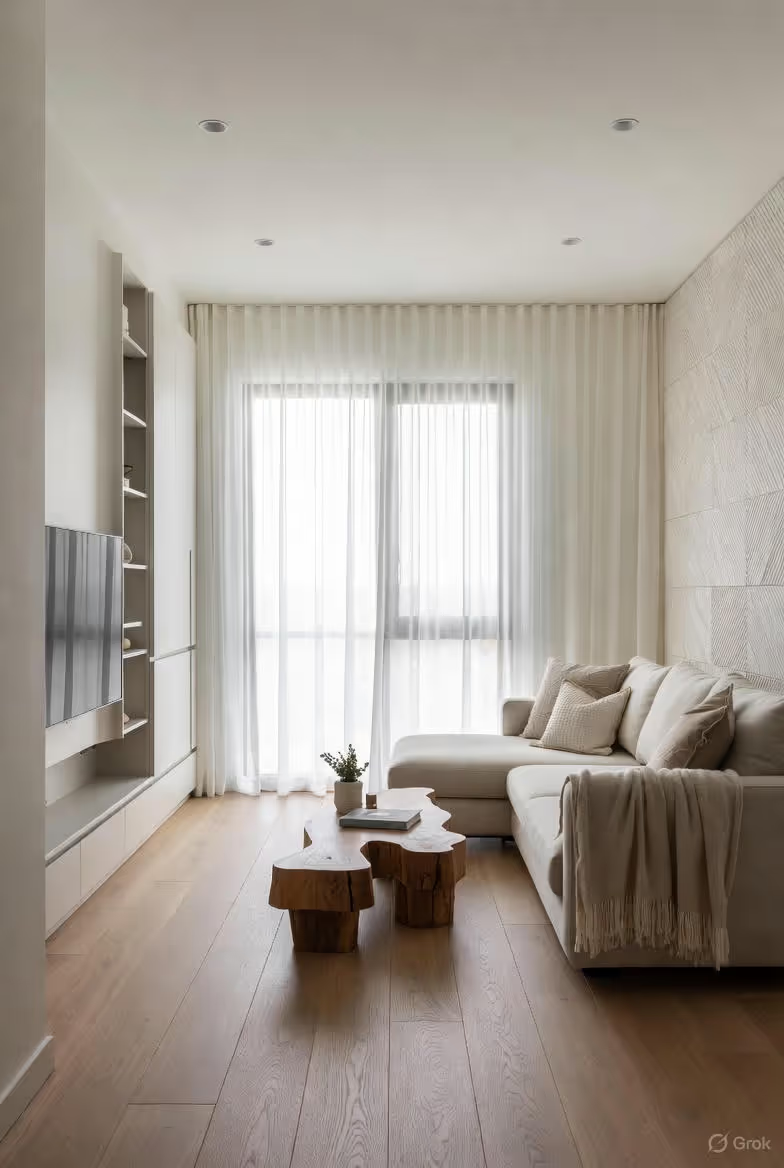
Restorative design is not a style; it’s a strategy. It moves past the surface-level question of “What looks good?” to ask the more profound: “How does this space make me feel?” and “What does this space do for my well-being?” This philosophy is rooted in several key principles that distinguish a merely decorated room from a deliberately restorative one.
First is the principle of Human-Centered Function. Every design decision is filtered through the lens of human biology and psychology. For instance, instead of choosing a sofa solely for its appearance, you consider: Is its depth and angle supportive for reading and conversation? Does its fabric feel inviting to the touch? Does its placement foster connection or isolation? The space is designed to serve the inhabitants’ needs for comfort, safety, and ease of movement, reducing daily friction and micro-stressors.
Second is the concept of Sensory Sanctuary. Our brains are constantly processing sensory input. A restorative space carefully curates this input to be gentle and harmonious. It considers the visual weight of clutter (reducing it), the acoustic profile of a room (dampening harsh noises), the tactile landscape (incorporating natural, comforting textures), and even olfactory cues (using subtle, natural scents). The aim is to create an environment that feels like a “sensory sigh”—a place where your nervous system can finally dial down the alert level.
This leads directly to the third principle: Biophilic Connection. Coined by biologist E.O. Wilson, biophilia describes the innate human tendency to seek connections with nature and other forms of life. Restorative design harnesses this instinct. It’s not just about adding plants (though that’s a great start). It’s about maximizing natural light, incorporating organic materials like wood and stone, using a color palette found in nature, providing views to greenery or the sky, and even simulating natural patterns and processes. Studies consistently show that biophilic elements reduce stress, enhance creativity, and improve cognitive function. A space that feels connected to the natural world inherently feels more grounding and peaceful.
Finally, restorative design embraces Intentional Empty Space. In a culture that often equates fullness with success, the courage to leave space empty is radical. This isn’t stark minimalism imposed as a rule, but rather a respectful allowance for breath, thought, and possibility. Empty space on a wall, a clear surface, an uncluttered corner—these are visual pauses that give the eye and mind a place to rest. They reduce cognitive load and create a perception of calm and order.
Understanding this philosophy is the critical first step. It shifts your perspective from being a consumer of decor to being a curator of experience. It’s the “why” behind every “what” you bring into your home. At Oxyzen, our mission is deeply aligned with this human-centered approach. We believe wellness is a holistic integration of self-knowledge and environment, which is why we created technology that helps you understand your body’s signals, allowing you to design a life—and a living space—that truly supports restoration. You can learn more about this human-centric vision on our About Us page.
To design effectively for calm, we must understand the conversation happening between our surroundings and our neurology. Your brain is not a passive receiver; it’s an active interpreter, constantly scanning your environment for threats and rewards. This process happens largely in the subconscious, ancient parts of your brain, like the amygdala and hippocampus, which are directly linked to emotional processing and stress response.
Visual Chaos and Cognitive Load: When your visual field is cluttered—stacked papers, crowded shelves, tangled cords, busy patterns—your brain’s visual cortex has to work overtime to process it all. This increases cognitive load, the mental effort required to navigate your space. A high cognitive load is exhausting; it depletes the prefrontal cortex, the brain region responsible for focus, decision-making, and emotional regulation. This is why, after a day in a disorganized environment, you may feel mentally drained and irritable even if you’ve done no “hard” thinking. A restorative space minimizes unnecessary visual stimuli, creating a predictable, orderly visual field that allows the brain to enter a default mode associated with rest and introspection.
The Threat of the Unknown and Asymmetry: Our brains are hardwired for pattern recognition. Symmetry, balance, and familiarity are processed as safe and predictable. Sharp, unexpected angles, extreme asymmetry, or unfamiliar, abstract art can, for some individuals, trigger a subtle threat response. This doesn’t mean your home must be perfectly symmetrical, but it underscores the calming effect of balanced proportions, harmonious layouts, and the inclusion of familiar, cherished objects. The goal is to create a sense of perceived safety.
Color and Wavelengths: Color psychology is more than folk wisdom; it’s rooted in the physiological impact of light wavelengths. Cooler tones like soft blues, greens, and lavenders are associated with the parasympathetic nervous system (rest-and-digest). They can literally help slow heart rate and lower blood pressure. Warm, muted earth tones (soft terracotta, warm grey, oatmeal) can feel grounding and nurturing. In contrast, highly saturated, bright colors (vivid reds, electric yellows) are stimulating and are best used as minimal accents in a restorative space. The key is often in the saturation and context—a muted sage green is calming; a neon lime is not.
The Primacy of Nature: The biophilic effect has a strong neuroscientific basis. Viewing nature scenes or natural patterns (a process called “soft fascination”) engages the brain in a gentle, effortless way. It captures attention without demanding it, which allows the directed-attention networks of the brain (which get fatigued) to replenish. This is known as Attention Restoration Theory. Furthermore, materials like wood and stone often have complex, fractal patterns that our brains find inherently soothing. Introducing these elements—through a live-edge table, a stone vase, or even imagery—can directly dial down stress reactivity.
Understanding this dialogue empowers you to become the author of your brain’s experience. By designing an environment that sends consistent signals of safety, order, and natural connection, you actively train your nervous system to remain in, or more easily return to, a state of calm. It’s a form of indirect, yet powerful, neuro-regulation. For those interested in the direct metrics of their body’s calm state—like heart rate variability and sleep stages—technology like the Oxyzen smart ring provides fascinating, personalized data. Seeing how your body responds to different environments can be a powerful motivator for change, a topic we often explore in depth on our blog.

A restorative space is a multi-sensory experience. While visual design often takes center stage, the true masters of atmosphere understand that light, sound, and air quality are the invisible architects of mood and well-being. Engineering these elements is the next critical layer in designing for calm.
Light is our primary timekeeper. It regulates our circadian rhythm, the 24-hour internal clock governing sleep, hormone release, and energy cycles. Disrupt this rhythm with poor light hygiene, and you undermine the very foundation of rest.
Harnessing Natural Light: This is your most valuable resource. Prioritize maximizing daylight exposure, especially in the morning. Arrange seating areas near windows. Use light-diffusing window treatments (like sheer curtains) instead of heavy block-outs to soften direct glare while still filling the room with ambient glow. Consider the color of your walls—lighter colors reflect more light, making a space feel more airy and expansive.
Artificial Light with Intention: When the sun sets, your lighting strategy must shift. The goal is to mimic the natural progression of dusk.
Noise pollution is a chronic, low-grade stressor. A restorative space actively manages its sonic environment.
Noise Reduction: Identify and mitigate intrusive sounds. This could mean adding thick rugs and heavy curtains to absorb echo and street noise, sealing gaps around windows and doors, or using bookshelves filled with books (excellent sound dampeners) on shared walls.
The Power of Sound Masking: Complete silence can feel unnerving. Often, what we seek is not silence, but the absence of jarring, unpredictable noise. Introducing a constant, gentle, background sound can effectively “mask” disruptive noises. This is the principle behind:
Intentional Sound: Curate positive sound experiences. This could be a dedicated space for playing music on a high-quality speaker, the mindful chime of a bell to mark a transition, or simply the intentional enjoyment of quiet moments.
We are literally made of the air we breathe. Poor indoor air quality, laden with volatile organic compounds (VOCs from paints, furniture, cleaners), dust, and allergens, can cause headaches, fatigue, and brain fog—direct antagonists to a restful state.
Ventilation is Vital: The simplest strategy. Regularly open windows to create cross-ventilation and flush out stale, polluted air. Even in winter, a short, vigorous airing can be transformative.
The Green Air Filter: Incorporate air-purifying plants. While you’d need a jungle to rival a HEPA filter, plants like Snake Plants, Peace Lilies, and Spider Plants do remove common toxins and contribute to a healthier humidity level. Their presence also offers visual biophilic benefits.
Purification Technology: For a more targeted approach, especially in urban areas or for allergy sufferers, a high-quality HEPA air purifier is a worthy investment for bedrooms and main living areas. It works silently in the background to remove particulates, creating a cleaner, fresher breathing environment.
Olfactory Calm: Scent is the sense most directly linked to memory and emotion. Use it sparingly and naturally. Opt for essential oil diffusers with pure oils like lavender, chamomile, or frankincense over synthetic plug-in air fresheners. Simmering citrus peels and herbs on the stove or simply bringing in fresh-cut flowers can subtly uplift the atmosphere.
Mastering these three invisible elements—light, sound, and air—transforms a space from being merely seen to being fully felt. It’s the difference between a photograph of a room and the immersive experience of being within it. As you engineer these sensory inputs, you create a habitat that consistently supports physiological calm. For individuals tracking their wellness metrics, observing improvements in sleep depth or resting heart rate after optimizing these factors can be incredibly validating. If you have questions about how environmental data correlates with biometrics, our FAQ section addresses many common inquiries on this intersection.
Color and texture are the emotional language of a space. They communicate before a single word is spoken, setting an immediate and visceral tone. In a restorative environment, this palette is chosen not for trendiness, but for its psychological and sensory impact, creating a cohesive narrative of comfort and tranquility.
Forget rules about “this year’s color.” Focus on hues that evoke the desired emotional and physiological state: peace, safety, and groundedness.
Earth Tones: The Foundation of Calm. These are the colors of the natural landscape—the quiet, understated shades that feel inherently stable and nurturing.
Cool Hues: The Breath of Serenity. When used in soft, desaturated forms, these colors promote a sense of spaciousness and calm.
The Strategy of Accent: A fully monochromatic palette can lack energy. The key is to use richer, deeper, or slightly brighter colors as minimal, intentional accents. A single burnt orange throw pillow on a sand-colored sofa, a piece of art with a slash of deep teal, or a vase in a muted cobalt blue can provide a focal point and visual interest without overwhelming the senses.
If color speaks to the eyes, texture speaks to the body. A restorative space invites touch and creates a rich, layered sensory experience that feels nurturing.
The Comfort of Softness: Incorporate elements that beg to be touched and that provide physical comfort.
The Grounding of the Solid: Balance softness with elements that provide visual and tactile weight and stability.
Layering for Depth: The magic happens in the layering. A linen sofa (smooth and cool) with a chunky knit throw (soft and nubby), atop a jute rug (rough and natural), next to a polished wood side table creates a symphony of touch. This layered approach prevents a space from feeling flat or sterile, making it feel lived-in, cozy, and deeply inviting.
Crafting this palette is a deeply personal process. It’s about finding the combination of hues and materials that whisper “safety” and “comfort” to you. The resulting environment doesn’t just look peaceful—it feels peaceful on a primal, sensory level. This holistic approach to wellness, where your environment actively supports your emotional state, is central to the philosophy at Oxyzen. Our smart ring is designed to help you understand your unique rhythms, so you can make informed choices—from your schedule to your surroundings—that foster true restoration. Discover how real users have integrated this awareness into creating their own sanctuaries by reading their stories in our testimonials.
The bedroom is the epicenter of restoration. It is the one room dedicated solely to the sacred acts of sleep, intimacy, and private rejuvenation. Therefore, its design demands the highest level of intentionality. An optimal sleep environment isn’t an accident; it’s a meticulously engineered ecosystem that addresses all five senses to facilitate the body’s natural dive into deep, restorative sleep.
1. The Bed as an Altar: Your mattress, pillows, and bedding are the foundational tools of sleep. View them as health investments, not furnishings.
2. Light Mastery: The bedroom must be pitch black for optimal melatonin production.
3. Soundproofing for Silence: Aim for the quietest possible environment.
Beyond the physical specs, the bedroom’s ambiance must psychologically signal “this is for rest only.”
The Digital Detox Zone: This is the most critical rule. Ban televisions, laptops, and charging smartphones from the bedroom. The blue light is disruptive, but more importantly, the mental association with work, news, and social media creates cognitive arousal that is antithetical to sleep. Let your bedroom be a digital-free sanctuary. Charge your devices in another room. If you use your phone as an alarm, get a traditional alarm clock.
Clutter is the Enemy of Calm: A bedroom overflowing with laundry, paperwork, or general clutter creates subconscious anxiety and mental “to-do” lists. Embrace minimalist storage: under-bed boxes, closed closets, and clear surfaces. The room should visually whisper “peace” and “order.”
A Restrictive Color Palette: Employ the principles of color psychology discussed earlier. Stick to a very calm, muted, and cohesive palette. Soft neutrals, blues, and greens are ideal. Avoid stimulating reds or oranges and overly bright colors.
Scent as a Sleep Signal: Introduce calming scents only at bedtime to create a powerful Pavlovian response. A few drops of lavender or cedarwood essential oil on a wool dryer ball tossed in the bedsheets, or a diffuser set on a timer for 30 minutes before bed, can work wonders.
Temperature Regulation: The body needs to drop its core temperature to initiate sleep. Most experts recommend a cool room, around 65°F (18°C). Use breathable bedding and adjust layers as needed.
By treating your bedroom as a sacred, single-purpose lab for sleep, you remove the obstacles your body and mind face in trying to achieve deep restoration. The result is not just more sleep, but higher-quality sleep, which is the cornerstone of every other aspect of health and well-being. For those curious about quantifying their sleep architecture—tracking light, deep, and REM sleep—tools like the Oxyzen ring offer unparalleled insight, helping you see the direct impact of your sleep environment optimizations.
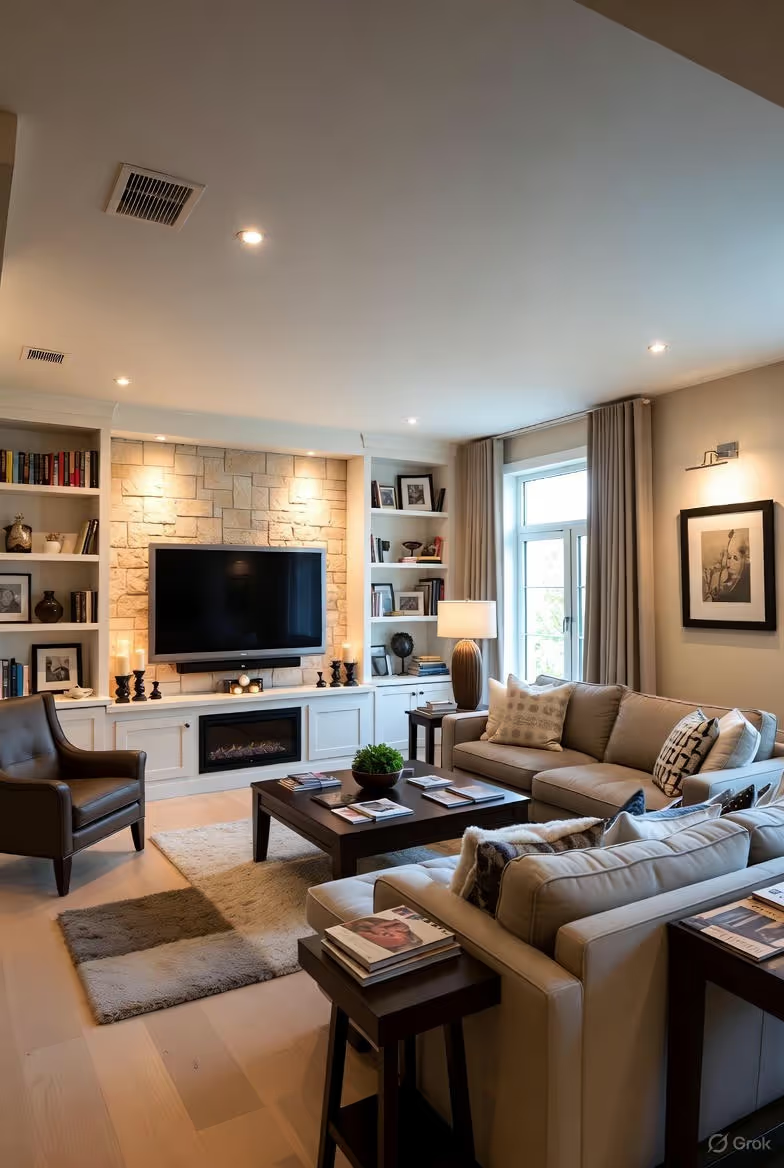
The living room has traditionally been the “entertainment center” of the home, often oriented around a large television. To design for true restoration, we must reimagine this space’s primary function: from passive consumption to active connection—connection with others, with ourselves, and with calming activities. It should be a haven that invites conversation, quiet contemplation, and joyful hobbies.
Arrange furniture to promote face-to-face interaction, not just screen-facing.
The goal is not to eliminate television but to de-throne it as the room’s dictator.
A restorative living room encourages you to do more than just sit.
Everything in the room should encourage you to stay, relax, and be present.
By reimagining the living room as a connection haven, you create a space that actively fights the isolation and overstimulation of modern life. It becomes a place where relaxation is an activity in itself, where you can reconnect with your household, your hobbies, and your own thoughts. This philosophy of intentional living—creating spaces that support your values—is a journey. For more inspiration on cultivating a holistic, mindful lifestyle, we invite you to explore the diverse topics covered on our blog.
The kitchen is more than a utilitarian space for meal prep; it is the heart of the home, the source of physical nourishment. A restorative kitchen design minimizes the stress of chores and transforms cooking and eating into mindful, even joyful, rituals. It focuses on flow, simplicity, and sensory pleasure, turning daily necessities into opportunities for calm and creativity.
A chaotic kitchen is a stressed cook. The goal is effortless movement and intuitive organization.
A nourishing kitchen should delight the senses, not assault them.
Design areas that encourage slowing down and connecting.
The cleanup is part of the ritual. Design to make it easier.
When your kitchen is designed as a nourishing hearth, the act of preparing food shifts from a chore to a practice. It becomes a space where you care for yourself and others in the most fundamental way, surrounded by order, beauty, and intention. This holistic view of wellness—where environment, ritual, and nourishment intersect—is at the core of what we believe. To understand the roots of this belief system, you can delve into the founding principles and journey that shaped Oxyzen by visiting Our Story.
The bathroom, often the smallest room, holds immense potential for daily micro-restoration. By transforming it from a purely functional space into a personal spa, you create a sanctuary for essential rituals of cleansing, hydration, and release. This is where you bookend your day, and its design can turn routine into renewal.
The goal is to engage the senses to signal “this is a place of pampering and pause.”
Create specific zones and cues that encourage you to slow down.
Even in this tile-and-water space, nature can be present.
Frame the bathroom as a place of literal and metaphorical cleansing. At the end of the day, a shower can be visualized as washing away stress; a bath as soaking out tension. Morning routines can be framed as preparation and awakening. This mindful framing, supported by the environment, turns daily hygiene into a powerful practice in self-care and presence.
By elevating your bathroom to a personal spa, you claim moments of sanctuary every single day. It becomes a retreat within your home, proving that restoration doesn’t require a weekend getaway—it can be woven into the fabric of your daily life through intentional design. For those tracking their readiness and sleep scores, noticing the positive impact of a calming pre-bed bath or an un-rushed morning routine can be a clear data point in the journey to holistic well-being, a connection many of our users discuss in their testimonials.
Your home’s entryway is more than a literal doorway; it is a psychological threshold between the external world and your inner sanctuary. It is the space where you transition from public to private, from the demands of the outside to the repose of home. A poorly designed entryway allows external chaos to flood inward. A thoughtfully crafted one, however, acts as an airlock for stress, facilitating a deliberate mental and physical decompression.
The moment you enter should be met with order and ease, not clutter and immediate demands.
The Functional Foundation: Designate clear, dedicated spots for the items you carry every day. This includes:
Visual Calm: The entry should be the first taste of your home’s restorative aesthetic. Keep surfaces clear. A single beautiful bowl for keys, a piece of art that brings you joy, a mirror to check your reflection (and expand the space), and a small, hardy plant (like a ZZ plant or snake plant) can create a welcoming, serene vignette.
Use this space to actively shift your sensory state.
A restorative entryway also supports a calm morning departure, reducing the frantic energy that can poison the start of your day.
By treating the entryway as a deliberate decompression chamber, you create a critical buffer zone. It becomes a ritual space that honors the transition, allowing you to consciously shed the stressors of the day and fully arrive into the restorative atmosphere of your home. This practice of intentional transition is a key component of managing daily stress, a topic we often explore in relation to physiological metrics like heart rate variability on our blog.
For many, the line between work and home has irrevocably blurred. The restorative home must, therefore, accommodate the need for deep focus and creative output without allowing work energy to metastasize throughout the living space. The key is to design a dedicated zone—whether a full room or a defined nook—that psychologically separates "work mode" from "rest mode" and is optimized for sustained, calm concentration.
The goal is to create a space that, when you enter it, your brain recognizes it as a place for focused activity, and when you leave it, you can mentally clock out.
Physical Demarcation: Even in an open-plan living area, use furniture, room dividers, a change in rug, or a different paint color to visually and physically define the workspace. A simple, high-backed desk positioned away from heavy foot traffic can create a sense of enclosure.
The "Start" and "End" Ritual: If possible, keep work items confined to this zone. At the end of the workday, tidy the desk, turn off specific task lighting, and if possible, close a door or pull a room divider across. This ritualistic act signals to your brain that work is over.
Physical discomfort is a primary destroyer of focus and a source of low-grade stress. A restorative workspace is, first and foremost, a supportive one.
A cluttered desk leads to a cluttered mind. The workspace should be a temple to clarity.
Curate the sensory inputs in this zone to support concentration, not distraction.
By creating a distinct, well-designed zone for focused work, you protect the rest of your home from becoming contaminated by work-related stress. You also train your brain to enter a state of flow more easily when in that space, making your work time more productive and less draining, thereby preserving your energy for true restoration afterward. For knowledge workers and creatives tracking their daily readiness and stress levels, the correlation between a well-designed workspace and sustained energy is often clearly visible in their biometric data.
No restorative living space is complete without a conscious connection to the outdoors. Whether you have a sprawling garden, a modest balcony, or just a window ledge, extending your sanctuary into nature is a powerful biophilic imperative. An outdoor oasis provides a direct, unmediated connection to fresh air, sunlight, and living systems, offering a qualitatively different kind of restoration than any indoor room can provide.
Treat your outdoor space with the same design intention as an interior one.
Design for a full sensory immersion in the natural environment.
Tailor your outdoor space to support key restorative activities.
If your outdoor space is limited, focus on framing the best possible view from your windows.
By deliberately crafting an outdoor oasis, you vastly expand the restorative footprint of your home. You gain a vital escape valve—a place to literally and figuratively breathe deeper, reset your circadian rhythm with natural light, and reconnect with the slower, cyclical time of nature. This connection is a profound antidote to the artificial, accelerated pace of modern life. At Oxyzen, we see time in nature as a core wellness pillar, and our technology is designed to help you recognize its positive impact on your sleep and recovery metrics, encouraging you to prioritize these vital connections.
In our pursuit of calm, technology often appears as the antagonist—a source of endless notification-driven stress, blue light, and mental clutter. However, a restorative living space doesn’t require a Luddite rejection of technology. Instead, it calls for a philosophy of intentional integration. The goal is to make technology a silent, obedient servant to your well-being, not a noisy master of your attention. This involves creating systemic boundaries and choosing tools that align with your restorative goals.
Design your home’s layout and routines to naturally discourage mindless tech use and protect your focus and relaxation.
Select and use technology that enhances your well-being by providing valuable insight or automating calm.
Replace passive consumption with active, mindful tech use.
By architecting your home and habits for a digital detox, you reclaim your most precious resource: your attention. You create space for boredom, creativity, conversation, and deep thought. The home becomes a shield against the endless pull of the digital world, allowing you to be present within its walls. This conscious relationship with technology is a cornerstone of modern wellness, and it’s a practice that many in our community are passionate about, as shared in their personal testimonials.
The link between a cluttered environment and a cluttered mind is no longer just anecdotal; it is neuroscientific. Decluttering is not merely an organizational chore tied to aesthetics; it is a critical, non-negotiable act of cognitive and emotional hygiene for a restorative home. It is the process of transforming visual noise into visual silence, creating the perceptual space necessary for the nervous system to relax.
Every object in your visual field represents an unfinished task, a memory, or a potential decision ("Should I keep this? Where does this go? When will I use this?"). This creates what psychologists call attentional capture and cognitive load.
A 2011 study in the Journal of Neuroscience confirmed that multiple stimuli in the visual field compete for neural representation, literally overloading your brain’s processing capacity. A decluttered space, by contrast, presents a predictable, orderly visual field. This predictability signals safety to the amygdala (the brain’s threat detector), reducing subconscious anxiety and freeing up cognitive resources for thought, creativity, and rest.
Clutter is often postponed decisions made physical. It represents the past (things we can’t let go of), anxiety about the future (things we might need), and confusion about our present identity. A restorative home must reflect who you are now, not who you were or who you think you should be.
This is not about minimalism as an aesthetic dogma, but about curation as a wellness practice. Your home should contain only what is useful, beautiful, or deeply meaningful.
The profound calm that follows a major decluttering purge is not just about a cleaner house; it’s the palpable feeling of a brain released from siege. It is the single most effective step you can take to make any space feel instantly more restful. This process of creating external order to foster internal calm is a powerful form of self-care, a principle that aligns with using data from tools like the Oxyzen ring to create internal awareness—both practices aim to reduce noise and highlight signal.
A restorative home must be resilient. It must maintain its sanctuary qualities not in a vacuum, but amid the beautiful, messy reality of shared life—whether with a partner, children, roommates, or aging parents. The challenge is to balance individual needs for privacy and retreat with collective needs for connection and shared function, creating a home that calms each member while strengthening the whole.
The key is to move away from rooms with single, rigid purposes and think in terms of activity zones that cater to different energy levels and needs, all within the same footprint.
Households often contain neurodivergent individuals or those with different sensory sensitivities (e.g., to sound, texture, or light). A truly restorative home is sensory-inclusive.
Clutter and chaos are major stressors in shared living. A system that is clear, easy, and fair prevents resentment and maintains the restorative baseline.
The most powerful design tool in a family home is the modeling of behavior. Children and other household members learn what is valued by what is practiced.
Designing for multi-generational calm is an exercise in compassionate negotiation and creative space planning. The reward is a home that doesn’t just house a family but actively nurtures the well-being of each member within the context of the whole, becoming a true sanctuary from the demands of the outside world. For families tracking wellness metrics, observing how these shared rhythms and individual retreats positively impact everyone’s sleep and stress scores can be a remarkable validation of the effort, a journey many document in shared stories.
After establishing order and flow, the final, most personal layer of a restorative home is the curation of meaning. This is where a space transitions from being well-designed to being truly yours—a reflection of your inner landscape. Art, music, and personal artifacts are not mere decorations; they are the emotional and spiritual furniture of your home. They tell your story, evoke specific states of being, and provide anchors of joy and memory.
The art you choose to live with is a constant, silent dialogue with your subconscious. In a restorative space, art should be a source of soft fascination, not aggressive stimulation.
Music is the most direct way to alter the emotional atmosphere of a room in an instant. A restorative home has a conscious relationship with sound.
These are the objects that hold your history and identity: photographs, heirlooms, travel souvenirs, collections, and found objects. Displayed with intention, they are touchstones of memory and belonging.
Plants deserve a special category as both art and artifact. They are living, breathing beauty that actively participates in your home’s ecosystem.
By thoughtfully curating these elements, you imbue your home with soul. It becomes a narrative of your journey, a gallery of your inspirations, and a concert hall for your chosen moods. This layer of personal meaning is what transforms a house from a showroom into a sanctuary—a place where you are not just resting, but are surrounded by reflections of what you love and who you are. For those on a wellness journey, this curation is an external manifestation of internal values, a concept we explore in relation to building a consistent, values-aligned lifestyle on our blog.
A home designed for calm is not a static museum piece; it is a living system that requires gentle, consistent stewardship. Without maintenance, clutter creeps back, dust accumulates, and the carefully engineered calm can degrade into background stress. The key is to reframe maintenance not as a burdensome chore, but as a series of rituals of care—mindful practices that sustain your sanctuary and, in the process, sustain you. These rituals, paired with seasonal resets, keep your home in an active dialogue with your well-being.
Incorporate small, non-negotiable practices into your daily and weekly rhythm to prevent overwhelm.
Transform cleaning from a fight against dirt into a practice of nurturing your space.
Our ancestors lived by the seasons, and our bodies and minds still respond to these rhythms. A seasonal reset aligns your interior environment with the external world, preventing stagnation and honoring the passage of time.
If you share your space, these rituals must be shared to be sustainable.
By embracing maintenance as a ritual of care, you cultivate a relationship of respect with your home. It becomes a practice in mindfulness, a moving meditation that keeps the channel of restoration clear. This proactive, gentle stewardship ensures your sanctuary remains potent, responsive, and alive—a true partner in your well-being. For individuals tracking their health data, the consistency of these rituals often correlates with lower daily stress readings and more stable sleep patterns, as the environment remains a reliable source of support rather than a variable stressor.
Your Trusted Sleep Advocate: Sleep Foundation — https://www.sleepfoundation.org
Discover a digital archive of scholarly articles: NIH — https://www.ncbi.nlm.nih.gov/
39 million citations for biomedical literature :PubMed — https://pubmed.ncbi.nlm.nih.gov/
Experts at Harvard Health Publishing covering a variety of health topics — https://www.health.harvard.edu/blog/
Every life deserves world class care :Cleveland Clinic - https://my.clevelandclinic.org/health
Wearable technology and the future of predictive health monitoring :MIT Technology Review — https://www.technologyreview.com/
Dedicated to the well-being of all people and guided by science :World Health Organization — https://www.who.int/news-room/
Psychological science and knowledge to benefit society and improve lives. :APA — https://www.apa.org/monitor/
Cutting-edge insights on human longevity and peak performance:
Lifespan Research — https://www.lifespan.io/
Global authority on exercise physiology, sports performance, and human recovery:
American College of Sports Medicine — https://www.acsm.org/
Neuroscience-driven guidance for better focus, sleep, and mental clarity:
Stanford Human Performance Lab — https://humanperformance.stanford.edu/
Evidence-based psychology and mind–body wellness resources:
Mayo Clinic — https://www.mayoclinic.org/healthy-lifestyle/
Data-backed research on emotional wellbeing, stress biology, and resilience:
American Institute of Stress — https://www.stress.org/


