


Restoration Wellness Tips for a Balanced Nervous System
Tips for calming and balancing an overactive nervous system.
Tips for calming and balancing an overactive nervous system.
%402x.svg)
In the silent hum of modern life, a quiet crisis is unfolding. It’s not marked by sirens or headlines, but by a collective sigh—the feeling of being perpetually wired yet tired, overwhelmed yet stagnant. Your heart races at a non-urgent email. Sleep feels elusive despite profound exhaustion. Focus scatters like light through a prism. This isn't just "stress"; this is a dysregulated nervous system, the foundational control center of your entire well-being screaming for a reset.
For generations, wellness was about outward metrics: weight, reps, calories. Today, the frontier of true health is internal, biological, and astonishingly precise. It’s about the autonomic nervous system (ANS)—the intricate network that governs your heartbeat, breath, digestion, and, ultimately, your state of calm or crisis. When balanced, it’s the source of resilience, clarity, and vibrant energy. When imbalanced, it becomes the root of anxiety, burnout, inflammation, and chronic disease.
But how do you navigate something you cannot see? This is where ancient wisdom meets modern innovation. The journey to nervous system restoration is no longer a guessing game. With advanced health tracking technology, you can now receive a real-time translation of your body's silent language. Imagine a tool that doesn't just track steps, but deciphers your stress load, sleep quality, and recovery needs with clinical-grade insight. This is the promise of the modern wellness ring, a discreet powerhouse that brings laboratory-level biometrics to your fingertip.
This guide is your comprehensive roadmap out of survival mode and into a state of thriving. We will move beyond generic advice into actionable, science-backed strategies for nervous system restoration. From the breath in your lungs to the data on your screen, we will explore how to listen to, understand, and ultimately, heal your most essential system. The path to balance begins here.
Think of your autonomic nervous system as the master conductor of your body’s symphony. Operating below the level of conscious thought, it has two primary players working in a dynamic, delicate duet: the sympathetic ("fight-or-flight") and the parasympathetic ("rest-and-digest") branches.
The sympathetic system is your accelerator. It’s the surge of adrenaline when a deadline looms, the increased heart rate during a workout, the sharp focus in a moment of danger. It’s essential for action, performance, and survival. The parasympathetic system is your brake. It slows your heart, deepens your breath, and activates digestion and repair. It’s the state of calm connection, deep sleep, and cellular renewal.
The problem of the 21st century isn't the existence of stress—it's the absence of the brake. We live in a state of chronic low-grade sympathetic activation. The ping of a notification, the traffic jam, the mental load of endless tasks—each can trigger a micro-stress response. Without conscious parasympathetic intervention, the accelerator stays pressed, leading to what neuroscientist Dr. Stephen Porges calls a "neuroception" of constant threat.
The consequences of this imbalance are systemic and severe:
Restoration, therefore, is not about eliminating stress but about training your system to fluidly move between states—to press the accelerator when needed and, most crucially, to confidently and efficiently apply the brake. It’s about building "vagal tone," a measure of the strength and responsiveness of your vagus nerve, the superhighway of the parasympathetic system. Higher vagal tone is linked to better emotional regulation, faster recovery from stress, and improved physical health.
Understanding this internal landscape is the first step. The next is measurement. How do you know if your nervous system is truly balanced? Subjective feeling is one clue, but objective data removes the guesswork. This is the revolutionary power of a device like the Oxyzen wellness ring. By continuously monitoring key biomarkers like Heart Rate Variability (HRV)—the gold standard for measuring autonomic nervous system balance and recovery status—it provides a direct window into your internal state. You can see, in tangible data, the impact of a stressful meeting, a good night's sleep, or a meditation session. To learn more about the science behind this modern health tracking technology, the resources at Oxyzen.ai offer a deep dive into how sensors and algorithms translate bodily signals into actionable insight.
The Data of Calm: How Modern Biometrics Illuminate Your Inner State
We can no longer afford to be strangers in our own bodies. The journey from dysregulation to balance requires not just intention, but information. This is the core promise of biometric tracking: making the invisible visible. By understanding a few key metrics, you move from vaguely "feeling stressed" to knowing precisely how your nervous system is responding to your life.
Heart Rate Variability (HRV): This is not your heart rate. HRV measures the subtle, millisecond variations in the time intervals between your heartbeats. Counterintuitively, a higher HRV is better. It indicates a flexible, resilient nervous system that can adapt quickly to changing demands—your heart can speed up and slow down with efficiency. A low, stagnant HRV suggests a nervous system stuck in a stressed, inflexible state, and is a significant predictor of burnout and future health issues. Tracking HRV trend lines is like having a daily readout of your recovery capacity and stress resilience.
Resting Heart Rate (RHR): While more familiar, its trends are profoundly telling. A creeping increase in your resting heart rate over days or weeks can be an early warning sign of overtraining, impending illness, or chronic stress load. A lower RHR generally indicates better cardiovascular fitness and efficient autonomic function.
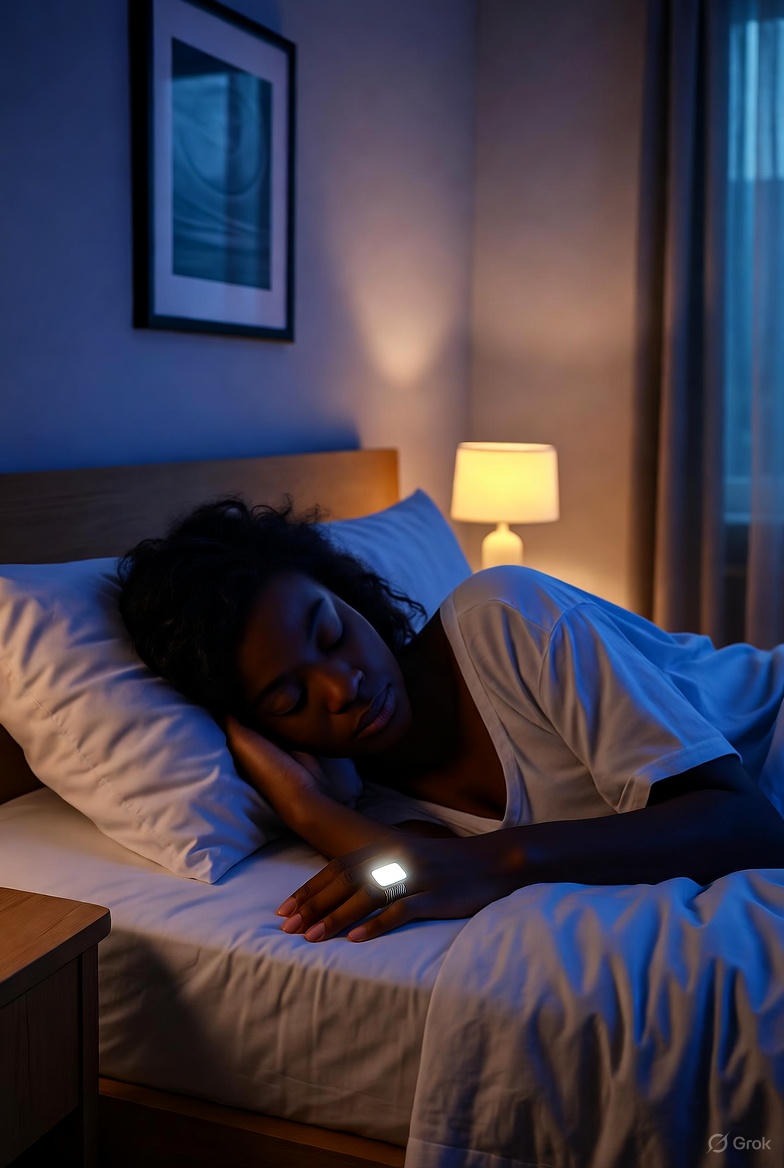
Sleep Architecture: It’s not just about duration, but quality. Deep (slow-wave) sleep is essential for physical repair and hormonal regulation, while REM sleep is crucial for memory consolidation and emotional processing. Disrupted sleep, characterized by frequent awakenings or insufficient deep/REM stages, is both a cause and a symptom of a dysregulated nervous system. A wellness ring that tracks sleep stages can show you if your "rest" is truly restorative.
Respiratory Rate: The breath is the most direct portal to your autonomic state. A resting respiratory rate that is too high (often above 17 breaths per minute) can be a sign of chronic sympathetic arousal. Monitoring this rate, especially during sleep, provides a clear metric for calm.
Skin Temperature & Blood Oxygen (SpO2): Nocturnal deviations can signal stress responses or disrupted sleep. A drop in blood oxygen (even if mild) can fragment sleep and strain the system.
The magic lies in the correlation. Seeing that your HRV plummeted and your RHR spiked after a night of poor sleep and a difficult workday creates a powerful feedback loop. It replaces self-judgment with objective understanding. You begin to see patterns: "When I have two glasses of wine, my deep sleep drops by 40%." Or, "My 20-minute afternoon walk consistently improves my evening HRV."
This level of personal insight was once confined to sleep labs. Now, it’s accessible continuously. The accuracy revolution in health tracking technology means these devices are powerful tools for preventive health. For a closer look at how this technology enables personalized wellness beyond generic advice, exploring the research and stories on the Oxyzen blog can be incredibly enlightening. It transforms the art of nervous system restoration into a precise science.
If nervous system restoration had a cornerstone, it would be sleep. This is not mere downtime; it is an active, intensive rehabilitation program run by your body and brain. During deep sleep, cerebrospinal fluid flushes metabolic waste from your brain. Your pituitary gland releases human growth hormone, repairing tissues. Your parasympathetic nervous system dominates, lowering blood pressure and heart rate. Critically, the synaptic connections formed during the day are pruned and strengthened—a process essential for emotional regulation and cognitive resilience.
Poor sleep doesn't just make you tired; it directly sabotages your nervous system's equilibrium. It heightens amygdala reactivity (the brain's fear center), dulls prefrontal cortex function (responsible for rational thought), and perpetuates a state of physiological stress.
Therefore, optimizing sleep is the most potent leverage point for restoration. Here’s how to engineer your sleep for maximum nervous system repair:
1. Embrace Chronobiology: Your body thrives on rhythm. Go to bed and wake up at the same time every day, even on weekends. This regularity strengthens your circadian rhythm, which governs not just sleep, but hormone release, digestion, and core body temperature—all key ANS functions.
2. Craft a Non-Negotiable "Power-Down Hour": The transition to sleep must be gradual. The blue light from screens suppresses melatonin, the sleep hormone. At least 60 minutes before bed:
* Implement a digital sunset. Use device night modes, but better yet, read a physical book or listen to calm music.
* Dim overhead lights. Use lamps and candlelight to signal to your brain that night is approaching.
* Engage in a "brain dump." Write down lingering thoughts, to-dos, or worries in a journal to clear mental RAM.
3. Optimize Your Sleep Sanctuary:
* Temperature: The body needs to drop its core temperature to initiate sleep. Aim for a cool room (around 65°F or 18°C).
* Darkness: Invest in blackout curtains or a high-quality sleep mask. Even small amounts of light can disrupt sleep cycles.
* Quiet: Use white noise or a fan to mask disruptive sounds. Earplugs can be transformative for light sleepers.
4. Leverage Data-Driven Insight: This is where a wellness ring becomes your sleep coach. Don't just guess—know. Review your sleep data each morning. Did your restless sleep correlate with a late meal? Did your deep sleep increase after an evening yoga session? This feedback allows you to iterate and personalize your routine for consistently better sleep. For those starting this journey, a guide on wellness ring basics for beginners can help you set up and interpret this crucial data from day one.
5. The Daytime Protocol: Good sleep starts at sunrise. Get morning sunlight in your eyes (without sunglasses) within 30 minutes of waking. This anchors your circadian rhythm and boosts daytime energy, making sleep pressure greater at night. Manage caffeine (cut it off by 2 PM) and alcohol, which is a notorious destroyer of deep sleep architecture.
Remember, you are not trying to "get" sleep. You are cultivating it. It is a practice built throughout the 24-hour cycle. By honoring sleep as the non-negotiable foundation of nervous system health, every other restorative practice becomes more effective. For a broader exploration of how daily habits influence long-term vitality, consider the comprehensive strategies outlined in 50 healthy aging tips a smart ring helps implement daily.
The Breath: Your On-Demand Nervous System Reset Switch
If your nervous system is an orchestra, your breath is the conductor’s baton. It is the only autonomic function we can easily consciously control, making it the most direct and powerful tool for shifting our state in real time. By deliberately changing the rhythm, depth, and pattern of our breathing, we send immediate signals to the brainstem to switch from sympathetic arousal to parasympathetic calm.
The science is clear: slow, diaphragmatic breathing stimulates the vagus nerve, lowers heart rate, reduces blood pressure, and increases HRV. It’s a physiological antidote to the stress response, available anytime, anywhere.
Let’s move beyond "just breathe deeply" to specific, potent practices:
1. The Physiological Sigh (The 2-Minute Reset): Discovered by Stanford researchers, this is the fastest, most effective method to reduce acute stress. It mimics the body's natural sighing mechanism to reset respiratory chemistry.
* How to do it: Inhale fully through your nose. Then, take one more short, sharp "sip" of air at the top to fully inflate the lungs. Exhale slowly and completely through your mouth, letting all the air out. Repeat 2-3 times. Use this before a stressful call, during moments of overwhelm, or to unwind before sleep.
2. Box Breathing (4-4-4-4) for Steady Calm: Used by Navy SEALs to remain calm and focused under pressure, this technique creates rhythmic coherence in the heart and breath.
* How to do it: Inhale through your nose for a count of 4. Hold your breath at the top for a count of 4. Exhale slowly through your mouth for a count of 4. Hold the breath out at the bottom for a count of 4. Repeat for 5-10 cycles. This is excellent for anxiety, improving focus, or centering yourself.
3. Extended Exhale Breathing (The Brake): The parasympathetic response is particularly linked to the exhalation. Lengthening your exhale relative to your inhale is like pressing the brake pedal.
* How to do it: Inhale gently through your nose for a count of 4. Exhale slowly and completely through your nose (or pursed lips) for a count of 6, 7, or 8. Aim for the exhale to be at least twice as long as the inhale. Practice for 5 minutes to down-regulate before bed or after work.
4. Coherent Breathing (5.5 Breaths per Minute): This is the "sweet spot" frequency found to optimize HRV and create harmony between the heart, lungs, and brain.
* How to do it: Breathe in and out through your nose at a rate of 5.5 seconds inhale, 5.5 seconds exhale. This totals 5.5 breaths per minute. Use a breathing app or a metronome to guide you at first. Practice for 10-20 minutes daily for profound effects on baseline stress.
Integrating Breath with Awareness: Pair these techniques with biometric feedback for a powerful bio-hack. Sit quietly with your wellness ring on and practice 5 minutes of coherent breathing. Afterwards, check the real-time impact on your heart rate and HRV. This visible reinforcement trains your brain to associate the breath practice with a measurable state of calm, motivating consistent practice.
Breathwork is not a luxury; it's a fundamental skill for modern living. By mastering these techniques, you equip yourself with an always-available tool to navigate daily stressors without being hijacked by them. To see how this kind of mindful habit-building is supported by technology, explore how a wellness ring can help build healthy habits through consistent, gentle feedback.
In the quest for nervous system balance, movement is a double-edged sword. High-intensity, competitive, or prolonged exercise without adequate recovery can be a significant sympathetic stressor, keeping the accelerator pressed. However, movement done with the intention of regulation is profoundly therapeutic. The goal shifts from punishment or performance to presence and regulation.
The key is to listen to your nervous system’s needs each day, not just follow a rigid calendar. Some days it needs gentle swaying; other days, it needs to shake out energy. Your biometrics can guide this choice.
1. The Golden Rule: Low & Slow Wins the Race. For a stressed system, gentle, rhythmic, mindful movement is often more restorative than a grueling workout. Focus on activities that promote interoception—feeling the internal sensations of your body.
* Yoga (especially Yin or Restorative): These practices combine long-held poses with deep breathing, directly stimulating the parasympathetic nervous system and releasing deep fascial tension where stress is stored.
* Tai Chi & Qigong: The ultimate moving meditations. The slow, flowing movements synchronized with breath are scientifically proven to reduce anxiety, lower cortisol, and improve HRV.
* Walking in Nature ("Forest Bathing"): A simple, rhythmic walk, especially in a green space, without headphones. Pay attention to your senses—the sounds, smells, sights. This practice reduces rumination and lowers cortisol more effectively than urban walks.
2. Shake It Off: Discharging Stuck Energy. Animals in the wild instinctively tremble to discharge the energy of a life-threatening event. Humans often suppress this, trapping stress in the body.
* Try this: Put on a song and shake your entire body for 3-5 minutes—arms, legs, torso. Don’t choreograph it; let it be messy. This can feel silly but is incredibly effective at releasing muscular tension and signaling to the brain that the "threat" has passed.
* Dance: Free-form, expressive dancing to your favorite music is a joyful way to move energy and connect with your body’s innate wisdom.
3. Strength & Resilience Training (At the Right Time): When your HRV is high and you’re well-recovered, strength training and moderate cardio are excellent for building physiological resilience. They are hormetic stressors—small doses that, with recovery, make you stronger. The critical factor is balance. Always pair intense days with dedicated recovery. Use your wellness ring’s recovery score or HRV trend to decide if it’s a day for a push or for gentle movement.
4. The Magic of Rhythmic Movement: Any repetitive, rhythmic action can be meditative and regulating: swimming, rowing, cycling, even knitting. The rhythm helps entrain your brainwaves and breath into a calmer state.
Listen to the Data: Notice the biometric impact of different movements. Did a gentle yoga session boost your overnight HRV? Did a high-intensity workout when you were already fatigued lead to a restless night? This personalized feedback loop helps you craft an activity regimen that truly supports, rather than depletes, your nervous system. Understanding the basics of activity and movement tracking on a device like a wellness ring empowers you to make these nuanced connections.
While breathwork can be done anywhere—in a traffic jam, at your desk, in a grocery line—there is immense value in creating a dedicated, even if tiny, sanctuary for your longer or deeper practices. Environment shapes nervous system response. A chaotic, cluttered, or noisy space sends subliminal signals of "unsafety" that can counteract your calming efforts. Conversely, a intentionally crafted space sends a powerful cue to your brain: It is time to shift state.
This doesn’t require a spare room or expensive decor. It’s about curating cues for the senses to support parasympathetic activation.
1. The Auditory Environment: Managing Sound.
Sound is the sense most directly linked to the amygdala, the brain's alarm center. Sudden or harsh noises can instantly trigger stress.
2. The Visual Environment: A Tidy Field of View.
Visual clutter is cognitive clutter. Your prefrontal cortex, the part of your brain you're trying to quiet, is constantly processing and categorizing the objects in your sightline.
3. The Tactile & Olfactory Environment: Anchoring with Sensation.
Touch and smell are potent, direct pathways to memory and emotion.
4. The Technological Environment: Minimizing Intrusion.
The greatest antagonist to a restorative space is the smartphone, a literal pocket-sized portal to the world's stress.
Your 5-Minute Sanctuary Setup:
This ritualistic setup, done consistently, becomes a powerful prelude that primes your nervous system for depth. It moves breathwork from a random act to a sacred appointment with your own well-being. For more ideas on creating a holistic wellness environment, our blog on making the perfect start for beginners offers additional foundational tips.
Your nervous system is built from and fueled by the food you eat. Every neurotransmitter—serotonin, dopamine, GABA (the primary calming neurotransmitter)—is synthesized from amino acids, vitamins, and minerals found on your plate. A dysregulated nervous system is often a malnourished one, running on the wrong fuel. Dietary strategies for calm focus on three pillars: stabilizing blood sugar, reducing inflammation, and providing key building blocks.
1. Stabilize Your Blood Sugar Rollercoaster: Erratic blood sugar is a major, yet overlooked, source of sympathetic stress. A spike causes an insulin surge, followed by a crash that triggers cortisol and adrenaline to mobilize more glucose, creating a cycle of anxiety, irritability, and fatigue.
* Actionable Strategy: Build every meal and snack around a combination of protein, healthy fat, and fiber. This trio slows digestion and provides a steady release of energy. Think: an apple with almond butter, salmon with avocado and broccoli, a chia seed pudding.
2. Prioritize Magnesium: The "Chill Pill" Mineral. Magnesium is a cofactor in over 300 enzymatic reactions, including those that regulate the stress response and GABA function. Chronic stress depletes magnesium, and deficiency exacerbates anxiety and muscle tension—a vicious cycle.
* Food Sources: Dark leafy greens (spinach, kale), nuts and seeds (especially pumpkin seeds), avocados, dark chocolate (85%+), legumes.
* Consideration: An Epsom salt bath (magnesium sulfate) is a dual win: transdermal magnesium absorption and a relaxing ritual.
3. Heal The Gut-Brain Axis. The vagus nerve forms a direct communication highway between your gut and your brain. An inflamed, imbalanced gut microbiome (dysbiosis) sends pro-inflammatory signals up this nerve, contributing to anxiety and brain fog.
* Nourish Your Microbiome: Eat a diverse array of fiber-rich plants (30 different plants per week is a great goal). Incorporate fermented foods like sauerkraut, kimchi, kefir, and yogurt for probiotics.
* Reduce Inflammatory Offenders: For many, processed foods, refined sugars, industrial seed oils (soybean, canola), and for some, gluten and dairy, can drive gut inflammation and nervous system reactivity. An elimination diet, guided by symptom and biometric tracking, can reveal personal triggers.
4. Focus on Key Nutrients for Neurotransmitter Synthesis:
* For GABA & Serotonin: B vitamins (especially B6), zinc, and the amino acid L-theanine (found abundantly in green tea) are crucial.
* Omega-3 Fatty Acids (EPA & DHA): These are fundamental structural components of brain cell membranes. Higher intake is linked to reduced anxiety and better mood regulation. Prioritize fatty fish (salmon, mackerel, sardines) or consider a high-quality supplement.
5. The Power of Ritual & Rhythm: Eat at consistent times in a calm environment. Practice mindful eating—putting your fork down between bites, chewing thoroughly. Digestion is a parasympathetic process; eating on the run or in a stressed state inhibits it, leading to bloating and poor nutrient absorption.
Track the Connection: Use your wellness ring to observe. Does a high-sugar meal disrupt your sleep architecture? Does eating too close to bedtime raise your nocturnal heart rate? Do you feel more balanced on days you start with a protein-rich breakfast? Your body’s biometric responses are the ultimate guide to your personal nutritional blueprint for calm. For more on how continuous monitoring can reveal these subtle connections, read about continuous vs. periodic health monitoring.
In the digital age, our most precious resource is not oil or gold—it is our attention. And our nervous systems are under a unprecedented siege of cognitive and emotional stimuli. Each ping, notification, and infinite scroll is a micro-demand on your brain, often triggering mini-dopamine hits and cortisol releases that keep you in a state of alert. Digital hygiene isn't about Luddism; it's about creating intentional boundaries so technology serves you, not your stress response.
1. Perform a "Neurotoxic" Audit: Your digital environment can be neurotoxic. For one week, observe how different apps and activities make you feel after 10 minutes of use. Do you feel informed or anxious? Connected or compared? Keep a log. This awareness is the first step toward conscious consumption.
2. Implement Structural Defenses:
* Notification Purge: Turn off all non-essential notifications. Your phone should not be a slot machine. Allow only notifications from people (phone, messaging) and maybe your calendar. Everything else can wait.
* Graymode/App Limits: Switch your phone to grayscale. The lack of color makes it significantly less stimulating and addictive. Use built-in screen time limits or apps to lock yourself out of social media after a daily allotment.
* The Charging Station: Never charge your phone in your bedroom. Buy an old-fashioned alarm clock. This single change eliminates the temptation for late-night scrolls and the disruptive EMF and blue light during your critical sleep window.
3. Cultivate "Deep Work" Schedules: Inspired by Cal Newport, block out 90–120 minute periods in your day for focused, undistracted work. During this time, put your phone in another room and close all irrelevant browser tabs. This mono-tasking is not only more productive but is profoundly calming for a brain frazzled by constant context-switching.
4. Create Tech-Free Sanctuaries & Rituals: Designate specific times and places as sacredly tech-free. The dinner table, the first hour after waking, the bedroom. Build rituals around this: a morning page in a journal instead of checking email, a real conversation over a meal.
5. Use Tech For Your Nervous System: This is where your wellness ring and other intentional tech come in. Instead of mindless scrolling, spend 2 minutes checking your biometric dashboard. Use a meditation app like Insight Timer for a guided breathwork session. Listen to a binaural beats track for focus. The goal is to make technology a tool for self-regulation, not dysregulation.
The Data Doesn't Lie: Your wellness ring can provide stark evidence of digital stress. Check your HRV or resting heart rate after 30 minutes of peaceful reading versus 30 minutes of contentious social media scrolling. The objective data makes the cost of digital chaos undeniable and motivates change. For those concerned about data in our connected world, it’s reassuring to know that reputable devices prioritize wellness ring privacy settings and data security, putting you in control of your personal information.
By curating your digital input with the same care you curate your nutrition, you directly reduce the cognitive load on your sympathetic nervous system. You create space for the quiet, reflective, and creative states where true restoration occurs.

True nervous system restoration isn't achieved through sporadic retreats; it's woven into the fabric of daily life through consistent, intentional rituals. These are not grand gestures, but small, sacred pauses that act as "circuit breakers" for sympathetic overload. They train your body to recognize safety and initiate the relaxation response on demand.
The Science of the Pause: When you consciously insert a calming ritual into your day, you're engaging your prefrontal cortex to override the amygdala's alarm signals. With repetition, you strengthen the neural pathways that associate these rituals with safety, making it easier and faster to access calm over time. It's like building muscle memory for relaxation.
1. Morning Anchoring Rituals (Set the Tone):
How you begin your day sets your neurobiological trajectory. Instead of grabbing your phone, create a 15-20 minute buffer of calm.
2. The Strategic Afternoon Reset (The 4 PM Slump Solution):
The mid-afternoon energy dip is both circadian and often a sign of cumulative stress. Instead of reaching for caffeine or sugar, try a 10-minute reset.
3. Evening Transition Rituals (The Bridge to Restoration):
The hours between work and sleep are critical. This is your decompression chamber. We touched on the digital sunset earlier, but expand it into a full sensory experience.
4. Micro-Moments of Mindfulness (Weaving Calm into the Chaos):
Rituals need not be lengthy. The "one-minute mindfulness" practice can be done anywhere: waiting in line, before starting your car, after hanging up a difficult call. Simply stop, feel your feet on the floor, take three conscious breaths, and notice three things you can see, hear, and feel. This is a potent, portable nervous system anchor.
Making It Stick with Data: Your wellness ring provides the reinforcement needed to turn these intentions into habits. Notice the correlation. Does a week of consistent morning sunlight correlate with improved sleep scores? Does an afternoon NSDR session prevent the evening cortisol spike? Seeing the tangible, biometric benefit of these small rituals provides powerful motivation to maintain them. For inspiration on how others have successfully integrated such habits, the real customer reviews and user experiences shared on our testimonials page can be incredibly motivating.
These daily rituals are your personal toolkit for sovereignty over your state. They are the gentle, consistent pressure that, over time, resets your system's baseline from "alert" to "attuned."
Human beings are wired for connection. Our nervous systems are not closed loops; they are open systems that constantly communicate and co-regulate with those around us. This happens through a process called "limbic resonance" and is mediated by the vagus nerve. Positive, safe connection is a potent parasympathetic stimulant, while loneliness and social threat are profound stressors.
Co-Regulation: The Biological Dance: When you sit with a calm friend and feel your own shoulders drop, that's co-regulation. An attuned caregiver soothing a crying infant is co-regulation. It's the biological transmission of state from one nervous system to another. In a healthy interaction, our heart rates, breathing, and even brainwaves can synchronize. This is why a hug from a loved one can feel so calming—it literally regulates your physiology.
1. Prioritize "Safe Harbor" Relationships: Not all social interaction is restorative. Identify the people in your life with whom you feel truly safe, seen, and heard—where you don't need to perform or defend. Prioritize quality time with these individuals. A quiet walk, a shared meal without phones, or simply sitting together can be more regulating than any supplement.
2. The Power of Non-Verbal Connection: Much of co-regulation happens beneath words. Practice attuning to non-verbal cues: gentle eye contact (a soft gaze, not a stare), a warm tone of voice, and open body language. Even interacting with a calm, friendly pet can lower cortisol and increase oxytocin.
3. Set Boundaries as a Form of Self-Regulation: Conversely, learning to set clear, compassionate boundaries is a critical skill for nervous system health. Constant exposure to draining, critical, or chaotic people is a direct attack on your autonomic balance. Saying "no," limiting time with energy vampires, and communicating your needs are not selfish acts—they are essential maintenance for your biological wellbeing.
4. Address the Loneliness Epidemic: If you lack close connections, know that loneliness triggers the same threat pathways in the brain as physical pain. Take small, brave steps. Join a club, class, or community centered on a shared interest (yoga, book club, hiking group). Volunteering is a powerful way to connect that also provides a sense of purpose, another key regulator.
5. The Digital Double-Edged Sword: Social media often provides the illusion of connection without its regulating substance. A "like" does not trigger oxytocin release the way a warm smile across a room does. Use digital tools to facilitate real-world connection—making plans, sharing moments of vulnerability via voice note rather than text—not to replace it.
Tracking the Social Effect: Your biometric data can reveal the profound impact of your social world. You might see your HRV is consistently higher after a night with close friends, or that your resting heart rate elevates during a week with a difficult houseguest. This data isn't about blaming others, but about understanding the physiological cost or benefit of different relationships, empowering you to make more conscious social choices. Understanding how a wellness ring can support different health goals includes seeing these social and emotional patterns in your data.
By investing in quality connection and managing your social landscape, you are not just improving your mood—you are directly modulating your heart rate, your stress hormones, and your vagal tone. We heal and regulate in community.
Your nervous system doesn't exist in a vacuum; it's in constant dialogue with your environment. Light, sound, space, and even the objects around you send continuous signals to your brain about safety and threat. By becoming the architect of your surroundings, you can design a world that consistently whispers "you are safe" to your biology.
1. Harness the Power of Light:
Light is the primary driver of your circadian rhythm. Disrupted light exposure is a direct assault on your ANS.
2. Tame the Auditory Landscape:
Noise pollution is a constant, low-grade stressor, triggering subtle startle responses that keep the sympathetic system engaged.
3. Create a "Neuro-Sanctuary" at Home:
Designate at least one area in your home as a clutter-free, intentionally calming space. This doesn't require a spare room—it could be a cozy corner.
4. Manage the Electromagnetic Field (EMF) Load:
While research is ongoing, many people with sensitive nervous systems report feeling more agitated in high-EMF environments. Prudent avoidance is a reasonable strategy.
5. The Rhythm of Routine:
Your environment includes your temporal structure. A predictable daily and weekly rhythm—for meals, work, exercise, and wind-down—is incredibly regulating for a nervous system battered by the unpredictability of modern life. It reduces the cognitive load of decision-making and creates a scaffold of safety.
Your Biometric Feedback Loop: Your wellness ring is the ultimate tool for environmental optimization. It answers questions like: Does reading on a tablet before bed affect my sleep more than a physical book? Does the new white noise machine improve my deep sleep? Does my heart rate stay lower when I work in my tidy, plant-filled corner versus at the cluttered kitchen table? This turns your life into a personal laboratory for designing your ideal world. For those curious about the technical side of how these devices gather such precise environmental and physiological data, the blog on the science behind modern health tracking technology offers a fascinating look under the hood.
By thoughtfully crafting your sensory inputs—what you see, hear, and feel—you build a proverbial "nest" for your nervous system, a container that actively supports its journey back to balance.

Building a balanced nervous system isn't about achieving a stress-free life—an impossible and even undesirable goal. Stress, in its proper dose and context (eustress), is the stimulus for growth, learning, and adaptation. The true goal is to build resilience: the capacity to encounter stress, respond effectively, and then return to baseline with speed and efficiency. This is the hallmark of a robust, flexible autonomic nervous system.
The Resilience Flywheel: Resilience is built through a virtuous cycle: exposure to manageable stressors + adequate recovery = increased capacity. Each time you successfully navigate a challenge and then consciously recover, you strengthen the neural and physiological pathways that make it easier next time. It's the biological equivalent of progressive overload in strength training.
1. Reframe Your Relationship with Stress: The groundbreaking work of Dr. Kelly McGonigal shows that how you think about stress dramatically changes its physiological impact. Viewing stress symptoms (like a racing heart) as your body's energizing preparation for a challenge, rather than as signs of impending failure, can shift the hormonal profile from damaging to performance-enhancing. This "stress-is-enhancing" mindset alone can improve cardiovascular reactivity and cognitive performance under pressure.
2. Practice Deliberate "Stress Inoculation": You can train for stress resilience through small, voluntary exposures that build tolerance.
3. Cultivate Cognitive Flexibility: Mental rigidity—black-and-white thinking, catastrophizing—keeps the nervous system locked in threat mode. Practices that build cognitive flexibility directly support autonomic flexibility.
4. Foster a Sense of Purpose and Agency: Feeling helpless or that your actions don't matter is one of the most debilitating stresses for the nervous system. Conversely, a sense of purpose and agency is profoundly protective.
5. The Critical Role of Recovery: Resilience is built in the recovery phase, not the stress phase. Without dedicated recovery, stress exposure becomes mere wear and tear. This is where the practices previously discussed—sleep, breath, connection, ritual—become non-negotiable. They are the anvil upon which resilience is forged.
Tracking Your Resilience Build: This is where longitudinal data from a wellness ring becomes invaluable. You're not just looking at daily scores, but at trends over weeks and months.
These are the ultimate metrics of growing resilience. Seeing this progress provides tangible proof that your efforts are working, reinforcing the positive behaviors. To understand the full potential of how this data can guide a personalized approach, explore how health tracking technology enables personalized wellness beyond one-size-fits-all advice.
Building stress resilience is the work of a lifetime, but it is the most empowering work you can do. It transforms you from a passive victim of circumstance to an active participant in your own biological and psychological strength.
Understanding the principles of nervous system restoration is one thing. Implementing them consistently in the chaotic flow of real life is another. This is the transformative role of a sophisticated wellness ring: it acts as a continuous, objective, and deeply personal autonomic nervous system (ANS) coach, bridging the gap between knowledge and actionable daily practice.
From Abstract to Concrete: Making the Invisible Manageable
A wellness ring translates the abstract concept of "stress" and "recovery" into clear, visual data. Instead of wondering, "Am I doing too much?" you can consult your recovery score. Instead of guessing, "Did that meditation help?" you can see its impact on your heart rate in real time. This demystification is profoundly empowering, replacing anxiety with agency.
1. Personalized Baselines & Dynamic Feedback:
Your ring doesn't compare you to population averages; it learns your unique baselines for HRV, RHR, and sleep. This is critical because a "good" HRV for one person might be a sign of fatigue for another. With this personalized understanding, the ring can provide meaningful feedback:
2. Illuminating Cause and Effect with Precision:
The ring turns your life into a series of illuminating experiments.
3. Motivation Through Tangible Progress:
Willpower is fleeting. Concrete evidence of progress is enduring. Watching your HRV trend upward over months, seeing your resting heart rate gradually fall, or achieving a higher sleep consistency score provides a powerful dopamine hit of accomplishment that fuels continued adherence to healthy habits. It’s the ultimate positive reinforcement loop.
4. Enhancing Communication with Healthcare Providers:
When seeking help for issues like anxiety, insomnia, or chronic fatigue, subjective descriptions can be vague. Longitudinal biometric data provides your doctor or therapist with an objective record of your sleep/wake patterns, stress physiology, and activity levels. This can lead to more accurate diagnoses and more personalized treatment plans. In fact, an increasing number of forward-thinking practitioners are finding this data immensely useful. You can read about how doctors find wellness ring data most useful in clinical and therapeutic settings.
Choosing Your Companion: Not All Rings Are Created Equal
When selecting a device for nervous system coaching, look for:
The Oxyzen ring, for instance, is engineered with this holistic, nervous-system-first approach in mind. It’s designed not just to collect data, but to be a seamless part of your journey to balance, providing the insights needed to make your restoration practice precise, effective, and deeply personal. To see how it fits into the broader ecosystem of your health, learn about its integration with other health apps and devices.
In essence, a wellness ring is the missing link between intention and outcome. It turns the art of self-care into a responsive science, giving you a quiet, confident coach on your finger, always working to guide you back to your center.

A crucial, often unspoken truth about nervous system restoration is that it is profoundly non-linear. You will not chart a perfect, upward trajectory. There will be days, or even weeks, where progress seems to vanish—where sleep eludes you despite perfect habits, where old anxiety resurfaces, where your biometrics inexplicably dip. This is not failure; it is an intrinsic part of the healing process. Learning to navigate these setbacks with compassion, rather than criticism, is perhaps the most advanced restoration skill of all.
Understanding the "Window of Tolerance":
Developed by Dr. Dan Siegel, this model describes the optimal zone of arousal where we can function effectively. Within our window, we can experience emotions and stress without becoming overwhelmed (hyperarousal: anxiety, panic) or shutting down (hypoarousal: numbness, dissociation). Chronic stress shrinks this window. Restoration work aims to widen it. Setbacks often feel like being thrust outside your window again. The goal is not to never leave it, but to recognize when you have and to gently guide yourself back, widening the window a little more each time.
1. Decouple Your Self-Worth from Your Data:
Your HRV is a metric, not a moral judgement. A low recovery score does not mean you are "bad" at wellness. It is neutral information: "My body is under more load today." This is the data's true gift—it depersonalizes the experience, allowing you to respond with curiosity instead of self-flagellation. "I wonder why my system is stressed?" is a much more useful question than "Why am I so weak?"
2. Practice "Radical Acceptance" of the Dip:
Fighting against a setback creates secondary stress—stress about being stressed—which compounds the problem. Instead, practice acknowledging the reality without resistance. "Okay, my nervous system is really activated right now. This is uncomfortable, but it is a temporary state. It is information." This acceptance alone can begin to lower the sympathetic charge.
3. Return to the Fundamentals (The "Reset Protocol"):
When in a setback, abandon complex strategies and return to your most basic, nourishing practices. This is your personal emergency kit:
4. Listen to the Wisdom of the Setback:
Sometimes, a persistent downturn in your data is your body's final, emphatic way of communicating something you've been ignoring. It might be signaling an underlying infection, the need to address a toxic relationship, or that a job situation is no longer sustainable. Use the data as a starting point for a compassionate inquiry: "What is my body trying to tell me that my mind has been overlooking?"
5. The Power of "And" in Self-Talk:
Replace "but" with "and" in your internal dialogue. Instead of "I meditated for 20 minutes, but I still feel anxious," try "I meditated for 20 minutes and I still feel anxious. I am giving my body what it needs, and the healing process has its own timing." This holds space for both your effort and your current reality without negation.
Using Your Ring as a Compassionate Mirror, Not a Judge:
During setbacks, review your data with kindness. Look for any small positive sign—"Even though my sleep was poor, my resting heart rate was still lower than it was last month during a similar period." This helps you see the larger trend of progress beyond the daily fluctuation. The ring’s historical data is proof that you have recovered before and will recover again. For support and answers during challenging phases, remember that resources like our FAQ and support page are there to help you troubleshoot both the device and the journey.
By expecting and accepting the non-linear path, you build a different kind of resilience—emotional and psychological resilience. You learn that your worth is constant, regardless of your autonomic state, and that true balance includes the capacity to fall apart and put yourself back together, again and again, with increasing grace.
The ultimate goal of this journey is not to become a master of discrete techniques, but to weave regulation into the very fabric of your life until it becomes your default state. Integration means the practices no longer feel like separate "wellness tasks" on a to-do list, but become the natural, almost unconscious way you move through your day. It’s the difference between doing restoration and being restored.
1. From Scheduled Practice to Embodied Habit:
Start by anchoring specific practices to existing daily cues (a concept known as "habit stacking").
With repetition, these anchored practices become automatic, requiring less and less conscious willpower.
2. Develop Your Personal "Dashboard Check-In":
Twice a day—perhaps mid-morning and late afternoon—develop a quick, 60-second interoceptive scan. This is your internal dashboard check.
This rapid scan, done without judgment, allows you to make micro-adjustments throughout the day—a stretch, a sigh, a glass of water—before dysregulation builds.
3. Create Flexible "Menus," Not Rigid Rules:
Instead of a fixed daily routine that can lead to guilt when broken, create menus of options for different needs and energy levels.
Consult your wellness ring's readiness score to help you choose from the appropriate menu each day.
4. Embrace the 80/20 Principle (The "Flexible Foundation"):
Aim for consistency, not perfection. If 80% of your choices support your nervous system, the 20% that includes life's spontaneous celebrations, travel, and inevitable disruptions will not derail you. Your strong foundation will allow you to engage fully in life and then return to your center with ease. This flexible approach is key to preventing wellness from becoming another source of orthorexic stress. For more on building sustainable, positive habits with technological support, our article on how a wellness ring helps build healthy habits delves deeper into this principle.
5. Cultivate a "Restoration Identity":
Ultimately, integration is an identity shift. It’s moving from "I am someone who needs to manage stress" to "I am someone who values and protects my inner peace and resilience." This subtle reframe changes your decisions from ones of deprivation ("I can't go out") to ones of aligned self-care ("I choose to honor my sleep because it fuels my creativity").
Your Ring as the Integrative Hub:
In this integrated lifestyle, your wellness ring becomes less of a coach and more of a trusted confidant—a silent witness to your journey. You may check it less frequently because the feelings of regulation have become your primary guide. You use its longitudinal data during quarterly "reviews" of your life to see the bigger picture, to tweak your menus, and to celebrate how far you've come. It ensures that your self-perception is aligned with your biological reality. To understand the journey of creating such a device, from concept to your finger, you can explore our brand's founding story and vision.
Integration is the quiet victory. It's when you realize that the space between stimulus and response has grown, that calm is your home base, and that the practices outlined in this guide are no longer something you do, but a reflection of who you have become: a person in conscious, compassionate, and steady dialogue with their own brilliant, resilient nervous system.
Your Trusted Sleep Advocate (Sleep Foundation — https://www.sleepfoundation.org/)
Discover a digital archive of scholarly articles (NIH — https://www.ncbi.nlm.nih.gov/
39 million citations for biomedical literature (PubMed — https://pubmed.ncbi.nlm.nih.gov/)
experts at Harvard Health Publishing covering a variety of health topics — https://www.health.harvard.edu/blog/)
Every life deserves world class care (Cleveland Clinic -
https://my.clevelandclinic.org/health)
Wearable technology and the future of predictive health monitoring. (MIT Technology Review — https://www.technologyreview.com/)
Dedicated to the well-being of all people and guided by science (World Health Organization — https://www.who.int/news-room/)
Psychological science and knowledge to benefit society and improve lives. (APA — https://www.apa.org/monitor/)
Cutting-edge insights on human longevity and peak performance
(Lifespan Research — https://www.lifespan.io/)
Global authority on exercise physiology, sports performance, and human recovery
(American College of Sports Medicine — https://www.acsm.org/)
Neuroscience-driven guidance for better focus, sleep, and mental clarity
(Stanford Human Performance Lab — https://humanperformance.stanford.edu/)
Evidence-based psychology and mind–body wellness resources
(Mayo Clinic — https://www.mayoclinic.org/healthy-lifestyle/)
Data-backed research on emotional wellbeing, stress biology, and resilience
(American Institute of Stress — https://www.stress.org/)


