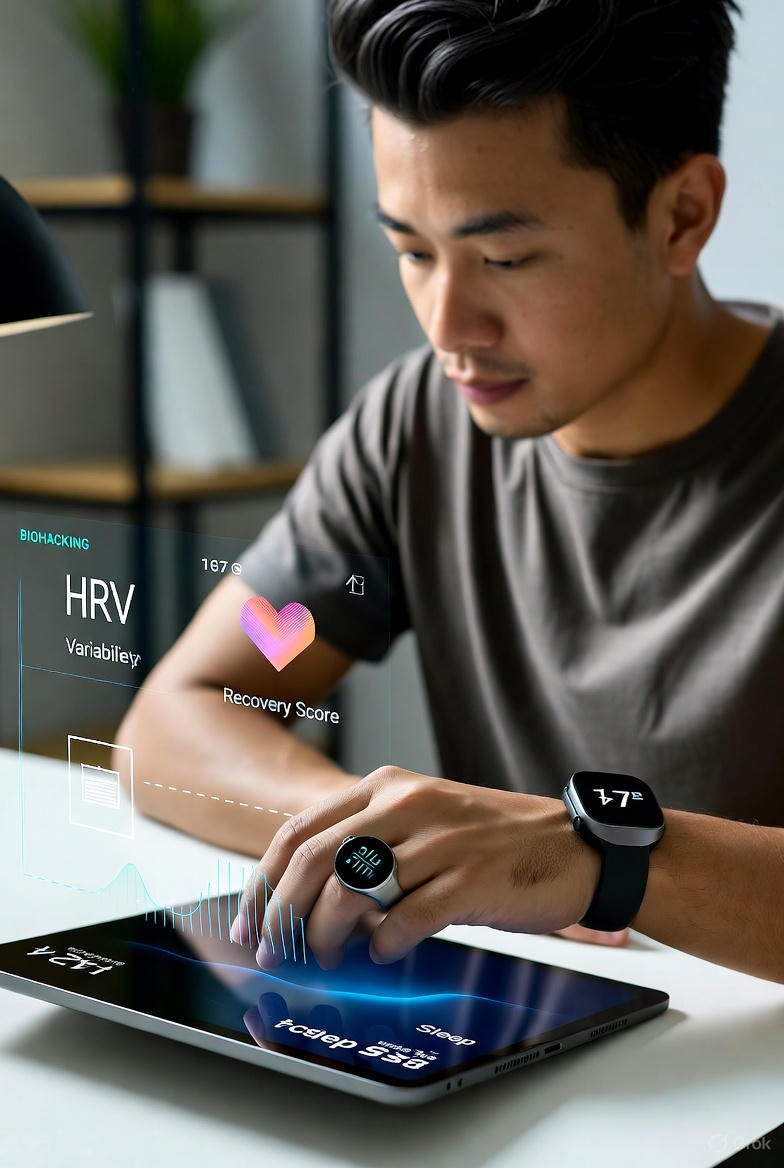
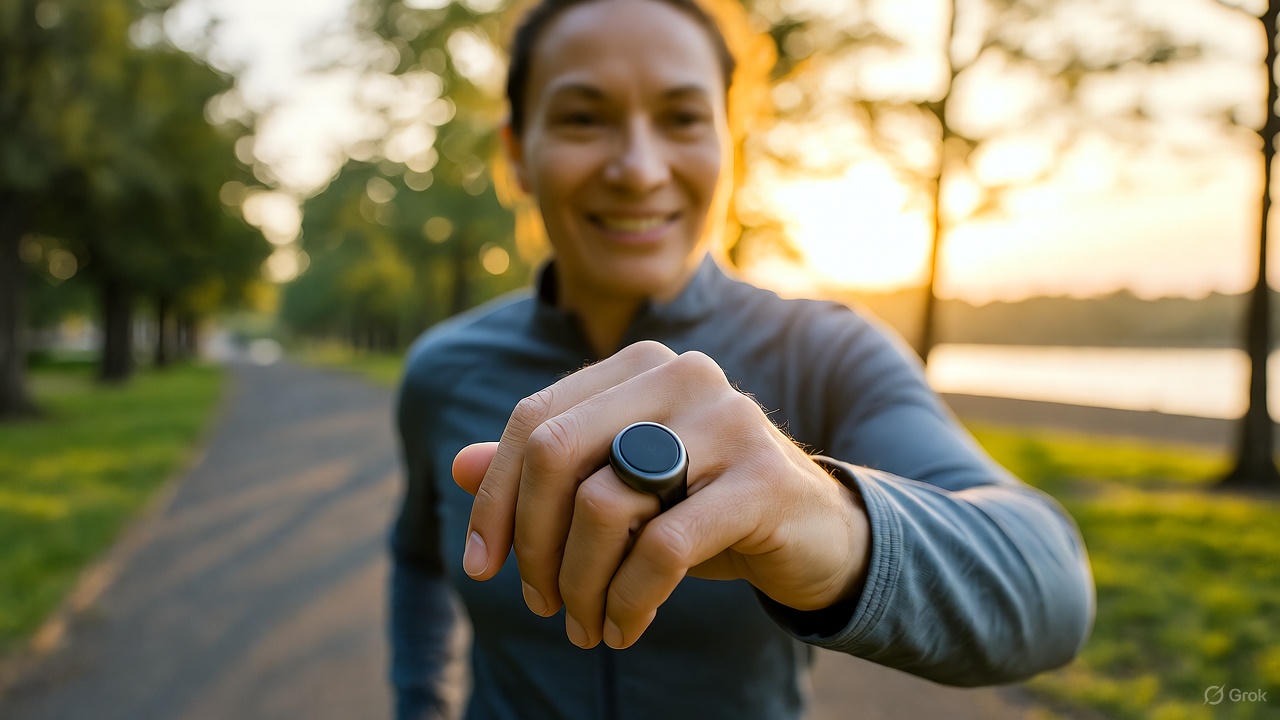
Ring vs Watch Comparison: Charging Convenience and Frequency
Comparing how often and how easily each device needs to be charged.
The Ultimate Guide to Smart Ring vs. Smart Watch Charging: Convenience, Frequency, and Your Uninterrupted Life
In the relentless pursuit of optimized health and peak performance, we’ve armed ourselves with data. For years, the smartwatch has been the undisputed champion on our wrists, a miniature command center buzzing with notifications, tracking our every step, and monitoring our slumber. But a new contender has emerged from the shadows, one that discards the screen for something more subtle, more intimate, and perhaps more insightful: the smart ring.
As you stand at the crossroads of choosing your next wellness tech companion, the debate often swirls around features—heart rate accuracy, sleep stage analysis, workout tracking prowess. Yet, there’s a fundamental, daily-life factor that profoundly impacts user experience and consistency: charging convenience and frequency. This isn't just about battery specs; it’s about ritual, interruption, and the very seamlessness that determines whether a device becomes a part of you or a forgotten gadget in a drawer.
Imagine a health tracker that never asks you to take it off. A guardian of your biometrics that works in the background for days, even weeks, without begging for a cable. This is the promise that shifts the paradigm. In this comprehensive exploration, we will dissect the intricate dance of power management between the ring and the watch. We’ll move beyond marketing claims to understand the engineering trade-offs, the real-world lifestyle implications, and how your choice fundamentally alters your relationship with wearable technology. The goal is uninterrupted awareness—of your health, your habits, and your potential. Let’s begin by understanding why this single aspect of design is so critical to your journey.
The Philosophy of Power: Why Charging Design Defines the Wearable Experience
At first glance, charging might seem like a mundane technical specification—a simple matter of "battery life." But for a device designed to be a constant companion, its power management philosophy is the bedrock of the user experience. It influences behavior, dictates reliability, and ultimately determines whether the device serves you or you serve it.
A wearable’s primary function is to collect continuous data. Gaps in this data are more than just missing numbers; they are holes in the story of your health. A missed night of sleep tracking because your device was on a charger can obscure trends in your recovery. An omitted afternoon of heart rate variability (HRV) data might hide your body’s reaction to stress. The more frequent the charging requirement, the higher the likelihood of these data gaps. For the data-obsessed individual seeking a complete picture, this is a significant friction point.
Furthermore, charging frequency is intimately tied to habit formation. The most effective wellness tools are those that fade into the background, becoming seamless extensions of ourselves. Every time you must remove the device, find a cable, and wait for it to power up, you break that seamless integration. It becomes a task, an item on a mental checklist, rather than a passive partner. This cognitive friction can lead to "charging procrastination," where users leave the device off for extended periods, defeating its very purpose.
The design of the charging solution itself also speaks volumes. Is it a proprietary magnetic puck that’s easy to lose? A cumbersome docking station that requires precise alignment? Or is it a simple, elegant case that not only charges but stores and protects? The ease of the physical act—how intuitively and effortlessly you can place the device to charge—directly impacts compliance.
Finally, there’s the psychological aspect of "wearing" versus "using." A device with multi-day battery life transitions from a gadget you use to an item you wear, like a wedding band or a classic timepiece. You forget it’s there, and that’s the ultimate compliment. It’s allowed to fulfill its mission of ambient, always-on awareness. A device that demands nightly charging remains, consciously or not, a piece of consumer electronics with a daily maintenance cost.
As we delve into the specifics of rings and watches, keep this philosophy in mind. We’re not just comparing milliamp-hours; we’re comparing visions of how technology should integrate into the human experience. For a deeper look at how this philosophy shapes product design at pioneering companies, you can explore the vision and values behind brands like Oxyzen on their Our Story page.
Anatomy of a Charge: Battery and Hardware Constraints in Rings vs. Watches
To understand why a smart ring can often last longer than a sophisticated smartwatch, we must venture inside these devices. The physical and hardware constraints create a fascinating engineering puzzle where every cubic millimeter and milliwatt counts.
The Smartwatch: A Power-Hungry Multitasker The modern smartwatch is a marvel of miniaturization, but it faces significant power challenges:
The Screen: This is the single largest power drain. Whether it’s a vibrant AMOLED or a reflective LCD, illuminating pixels consumes substantial energy. Always-on displays, while convenient, have a continuous power toll.
The Processor: Running a complex operating system (like Wear OS or watchOS), handling touch inputs, managing Bluetooth/Wi-Fi/GPS connections, and processing data in real-time requires a relatively powerful—and power-hungry—System-on-a-Chip (SoC).
Connectivity: Constant communication with a smartphone via Bluetooth, standalone LTE capabilities, and frequent use of GPS for workout tracking are massive energy expenditures.
Sensors: While the optical heart rate sensor, accelerometer, and gyroscope are relatively efficient, using them in tandem with the screen and processor for active workouts creates high-power states.
Physical Space: Despite its larger size, a smartwatch’s volume is packed with components. The battery, while larger than a ring's, must compete for space with speakers, haptic engines, microphones, and sometimes even a crown mechanism.
The smartwatch is essentially a smartphone for your wrist, inheriting both its capabilities and its power appetite. Its design prioritizes interaction, notification, and real-time feedback, which inherently requires more energy.
The Smart Ring: The Efficient Minimalist The smart ring operates under a completely different set of constraints and principles:
The Form Factor: The ring’s defining feature is also its greatest limitation: extremely limited internal volume. Every component must be microscopic. This forces a ruthless focus on efficiency over capability.
No Screen: This is the most significant power-saving advantage. By eliminating the largest drain, the ring’s fundamental purpose shifts from displaying information to collecting it, operating in a near-perpetual low-power state.
Specialized, Low-Power Chips: Rings don’t run full operating systems. They use ultra-low-power microcontrollers (MCUs) and dedicated sensor hubs designed to do one thing well: gather biometric data with minimal energy use. Data processing is often offloaded to the paired smartphone app.
Simplified Connectivity: Rings typically use low-energy Bluetooth protocols (like BLE) only for periodic data syncing, not for constant, two-way streaming. There’s no GPS, LTE, or Wi-Fi to power.
Sensor Strategy: Rings often house similar sensors—PPG for heart rate, accelerometers, temperature sensors—but their firmware is optimized for periodic sampling rather than continuous, high-frequency reading during workouts. Their placement on the finger also offers a strong, consistent signal, which can improve efficiency.
The ring’s design is a lesson in focused application. It sacrifices interactivity and real-time display for the singular goal of sustained, unobtrusive biometric monitoring. It’s not a wrist-worn computer; it’s a specialized health sensor packaged in jewelry.
This fundamental difference in hardware philosophy sets the stage for the stark contrast in charging demands. The watch, for all its utility, is a sprinter that needs frequent refueling. The ring is a marathon runner, paced for endurance. For those curious about the intricate technology that makes such efficient tracking possible, a visit to the Oxyzen FAQ can provide detailed insights into how these systems work in harmony.
The Real-World Ritual: Daily and Weekly Charging Cycles Compared
Spec sheets tell one story; lived experience tells another. How do these technical differences translate into the actual rituals of our daily lives? Let’s paint a picture of the typical charging cycles for both devices.
The Smartwatch Charging Cycle: The Daily (or Twice-Daily) Hustle For the average smartwatch user, charging is a frequent, deliberate act.
The Standard Model: Most full-featured smartwatches (Apple Watch, Samsung Galaxy Watch, Wear OS models) require charging every 24 hours. This typically means placing it on its charger overnight. This creates an immediate conflict: the watch cannot track your sleep unless you charge it at another time.
The "In-Between" Charge: To solve the sleep-tracking dilemma, users often adopt a hybrid approach. They might charge their watch for an hour in the morning while getting ready, or for an hour in the evening before bed. This "top-up" mentality turns charging into a twice-daily consideration.
The Workout Penalty: Engaging in a GPS-enabled workout, especially for extended periods, can slash battery life. A long weekend hike or marathon training session might necessitate an unplanned mid-day charge, disrupting the routine.
The Ritual: It involves locating the specific magnetic charger (often proprietary and not USB-C), ensuring proper alignment on the puck, and placing it on a nightstand or desk. For many, taking off the watch is also the moment they disconnect—literally and figuratively—which can be either a relief or an annoyance.
The Smart Ring Charging Cycle: The Weekly (or Bi-Weekly) Check-In The ring user’s experience is defined by infrequency and forgetfulness.
The Extended Rhythm: Leading smart rings from brands like Oura, Ultrahuman, and Oxyzen offer battery life ranging from 4 to 7 days, with some stretching to 10+ days under normal use. This transforms charging from a daily chore to a weekly or bi-weekly "maintenance" activity.
Seamless Sleep and Activity Tracking: Because charging is so infrequent, it can easily be scheduled during a predictable, low-activity period. A common practice is to place the ring in its charging case during a weekly shower, a one-hour meeting, or a quiet Sunday afternoon reading session. This guarantees uninterrupted 24/7 data collection, including full sleep cycles, every single night.
The "Set It and Forget It" Mindset: The ring’s discreet nature means you’re less likely to notice its battery level depleting. Instead of a constant notification or glaring low-battery icon, a gentle nudge from the app (often at 20-30% remaining) suggests a charge sometime in the next day or two. This is proactive, not reactive.
The Ritual: Charging is often integrated into the device’s ecosystem. Many rings come with a compact charging case that also serves as storage and travel protection. The act is simple: drop the ring into the case, where magnets guide it into place. It’s foolproof and quick.
The contrast is stark. One device demands you plan your day around its energy needs, often forcing you to choose between tracking an activity or tracking your sleep. The other integrates into your existing life rhythms, asking for a brief moment of your time only once a week, ensuring it never misses a beat—or a heartbeat. To see how real users incorporate this low-maintenance tracking into their busy lives, you can read their unfiltered experiences in the Oxyzen Testimonials.
The Travel Test: Which Device Is the Better Road Warrior?
Travel disrupts all routines, and it’s here that the charging convenience of a wearable is put to the ultimate test. Forgotten chargers, incompatible outlets, and packed itineraries can quickly render a high-tech device useless. Let’s evaluate our two contenders under travel conditions.
The Smartwatch on the Road: A Bundle of Cables and Anxiety
The Packing Puzzle: The smartwatch charger is a unique item. It’s not a standard USB-C cable that can be shared with your phone or laptop. Forgetting it means your watch becomes a paperweight within a day. This adds one more specialized item to your packing list and one more point of potential failure.
Outlet Real Estate: In hotel rooms, airport lounges, or Airbnb apartments, outlet space is prime territory. Dedicating a plug and an outlet to your watch charger for several hours overnight can be inconvenient, especially when you need to charge your phone, tablet, and laptop simultaneously.
The Itinerary Conflict: Adventure travel or busy business trips with early starts and late finishes offer few good charging windows. If you use your watch for GPS navigation on a day-long exploration, you may return to your accommodation with a dead device, missing out on crucial recovery and sleep data that is especially valuable when battling jet lag or travel fatigue.
Battery-Pack Charging: While you can sometimes charge a watch from a portable battery pack, it’s yet another cable to manage, and the watch must remain stationary during the process, limiting its use.
The Smart Ring on the Road: The Forgettable Companion
The All-in-One Case: The ring’s charging case is its greatest travel asset. It’s tiny, often smaller than a standard headphones case. It protects the ring from loss and damage in your bag, and it holds a full charge (or multiple charges) within itself. You’re not packing a separate cable and puck; you’re packing a single, compact storage unit.
Minimal Outlet Time: With a weekly charging need, you can easily charge the case from a standard USB-C cable (which you already have for other devices) during one dinner hour over a 7-10 day trip. The ring itself may never need to be plugged in directly while traveling.
Uninterrupted Jet Lag and Recovery Tracking: This is perhaps the most significant advantage. Travel is a major physiological stressor. Monitoring your sleep quality, resting heart rate, and HRV as you cross time zones provides actionable data to optimize your adjustment. A ring, with its week-long battery, will capture this entire transition period without a single gap.
Simplicity: There’s no anxiety about forgetting a proprietary charger. The case lives with the ring, and a universal USB-C cable powers it. It’s a minimalist’s dream for travel tech.
For the frequent traveler, the smart ring’s charging design isn’t just a convenience; it’s a reliability upgrade. It ensures your health tracking remains active when you’re most vulnerable to disruption, without adding to the logistical burden of the journey. For more tips on maintaining wellness routines—including tech habits—while on the move, our blog offers a wealth of related resources.
The Sensor Synchronization: How Charging Affects Data Continuity and Accuracy
We wear these devices for the data. The promise is a continuous, accurate stream of insights into our body’s inner workings. But what happens when the device goes on the charger? The impact is more nuanced than a simple gap in a graph.
The Smartwatch Data Dilemma: The Midnight Gap
The Sleep-Tracking Paradox: This is the most common and glaring issue. If you charge your watch overnight, you forfeit all sleep data for that night. Sleep stage analysis, respiratory rate, and blood oxygen trends are completely missing. Since sleep is the cornerstone of recovery, missing even one night can obscure weekly trends and make it harder to correlate lifestyle choices with sleep quality.
The Recalibration Period: Some sensors, particularly those measuring long-term baselines like temperature or HRV, benefit from continuous wear. Removing the watch for several hours can, in some algorithms, be interpreted as a "reset" or require a short period to re-establish a reliable baseline upon putting it back on. This can potentially affect the accuracy of "readiness" or "recovery" scores that depend on multi-day trends.
Inconsistent Wear Patterns: The daily charging requirement can lead to inconsistent wearing habits. You might take the watch off at 9 PM, charge it, then put it back on at 7 AM. This creates a precise 10-hour off-wrist period daily. While consistent, it means you are never collecting data during those specific hours, which could mask evening stress responses or morning wake-up physiology.
The Smart Ring Data Advantage: The Unbroken Chain
24/7 Baseline Establishment: By being worn continuously for days on end, the smart ring can build a incredibly stable and personalized baseline. It understands your unique heart rate rhythm, your typical temperature fluctuations, and your normal movement patterns throughout the entire day and night, every day. This leads to more sensitive and personalized anomaly detection.
Zero-Compromise Sleep Tracking: This is the ring’s killer app. It always tracks your sleep because it never needs to come off for a nightly charge. You get a perfect, unbroken record of your slumber, which is the most valuable dataset for understanding recovery and long-term health trends.
Seamless Charging, Minimal Impact: When you do charge the ring (during a shower or short meeting), the gap in data is brief—often 60 minutes or less. For long-term trend analysis (sleep, resting heart rate, HRV), this is statistically insignificant. The "chain" of data is virtually unbroken.
Finger vs. Wrist: A More Consistent Signal: The placement on the finger, with its denser vasculature and tighter fit, often provides a stronger and more consistent photoplethysmogram (PPG) signal for heart rate and HRV than the wrist, which is bonier and has more loose skin. This inherent hardware advantage, combined with continuous wear, maximizes data accuracy.
The conclusion is clear: if your primary goal is to build a complete, continuous, and highly accurate longitudinal health record with zero mandatory gaps, the smart ring’s charging paradigm is inherently superior. It is designed first and foremost as a sensor, and its power system is engineered to keep that sensor active.
The Long-Term Lifespan: Battery Degradation and Device Longevity
Lithium-ion batteries are consumable components. They degrade with time and charge cycles. A "charge cycle" is defined as using 100% of the battery’s capacity, which can be spread over multiple charges. This reality has profound implications for the long-term ownership experience of both rings and watches.
The Smartwatch: Accelerated Cycle Count
The Math of Degradation: A smartwatch charged daily completes one full charge cycle approximately every day. Over a year, that’s 365 cycles. Over two years, it’s 730 cycles. Most consumer lithium-ion batteries are rated for 500-1000 full cycles before their capacity significantly diminishes (often to 80% of original).
The Two-Year Cliff: It’s common for heavy smartwatch users to notice a pronounced decline in battery life around the 18-24 month mark. What once lasted a full day now dies by early evening. This decline can force a change in routine (e.g., requiring a mandatory midday top-up) or create anxiety about the device making it through a long day.
Replacement Challenges: While some manufacturers offer battery replacement services, they are often costly and require mailing the device away for days or weeks. For many users, this degradation cycle aligns suspiciously well with manufacturer product refresh cycles, encouraging an upgrade rather than a repair.
The Smart Ring: The Slow Burn
Fractional Cycle Accumulation: A smart ring charged once a week completes one charge cycle approximately every 7 days. Over a year, that’s roughly 52 cycles. Over two years, it’s about 104 cycles.
Extended Primetime: At the two-year mark, when a smartwatch might be struggling, a smart ring has used only a fraction of its battery’s potential cycle life. It will likely still be delivering 95% or more of its original battery performance. The user experience remains consistent for a much longer period.
Sustainable Ownership: This slower degradation means the device can remain fully functional for 4-5 years or more before battery life becomes a noticeable concern. This transforms the ring from a tech product with a 2-3 year obsolescence expectation into a durable wellness tool, offering better long-term value and reducing electronic waste.
Built for the Long Haul: Ring manufacturers are acutely aware of their product’s intimate, jewelry-like nature. People don’t replace their wedding band every two years. This incentivizes designs and battery specifications that prioritize longevity and enduring performance, aligning with a brand’s commitment to being a long-term partner in health. To understand how this long-term philosophy is built into a product from the ground up, you can learn about the meticulous design process on the About Us page for companies like Oxyzen.
The long-term narrative is compelling. The smart ring’s infrequent charging not only benefits your daily routine but also preserves the device’s core functionality for years longer, making it a more sustainable and economically sensible investment in your health tracking.
The Psychological and Behavioral Impact: Friction vs. Flow in Health Tracking
The success of any wellness tool is measured not by its features, but by its adoption and consistent use. The charging model directly influences our psychology and behavior, creating either friction that leads to abandonment or flow that leads to integration.
The Friction of the Smartwatch: Decision Fatigue and Guilt
The Daily Decision: "Should I charge it now or later?" "Do I want to track my sleep or ensure it has battery for my morning run?" This constant low-level decision-making creates mental friction. It turns health tracking into a management task.
The Guilt of the Gap: Seeing a missing data segment in your app—a blank spot in your sleep chart—can induce a subtle sense of failure or inconsistency. It breaks the streak, which can be demotivating for personality types driven by completism.
The "All-or-Nothing" Paradox: Because the watch is so visible and interactive, taking it off to charge can feel like disconnecting entirely. This can lead to periods where, once it's off, the user simply forgets to put it back on for hours or even days, creating a cascade of data gaps.
Notification Dependency: For many, the watch is a notification gateway. The need to charge it can create anxiety about missing an important call or message, further complicating the charging decision.
The Flow of the Smart Ring: Ambient Awareness and Habitual Forgetting
The Jewelry Mindset: Once on, the ring disappears. There’s no screen to glance at, no notifications to manage. It becomes a part of you. This eliminates the "use it or lose it" psychology; you simply wear it.
Elimination of Choice: With weekly charging, there is no daily decision. The ritual is preset and infrequent. You don’t choose between sleep and battery; you get both, automatically. This removes a significant layer of cognitive overhead from your wellness journey.
Positive Reinforcement via Completeness: Opening your app to see a perfect, unbroken chain of data—complete sleep scores, continuous readiness metrics—provides a sense of satisfaction and consistency. This positive reinforcement encourages continued use.
Focus on Insights, Not Maintenance: The ring’s design shifts your focus from interacting with the device to reflecting on the insights it provides in the companion app. The relationship is less about managing the tech and more about understanding yourself.
By minimizing friction and integrating seamlessly into the background of life, the smart ring’s charging philosophy supports the formation of a true habit. It makes consistent tracking the default state, which is the only state from which meaningful, actionable long-term health trends can emerge. For individuals seeking to build sustainable wellness routines without adding more digital clutter, this psychological advantage is paramount.
The Ecosystem & Convenience Features: Chargers, Cases, and Portability
The physical artifacts of charging—the cables, docks, and cases—are the tangible points of interaction between user and device. Their design quality and convenience deeply affect the overall experience.
The Smartwatch Charging Kit: A Mixed Bag of Solutions
The Proprietary Puck: The industry standard is a small magnetic disc that attaches to the back of the watch. While magnets make alignment easier, these pucks are notorious for being easily lost or forgotten when traveling. They are also fragile, with thin cables that can fray.
The Charging Stand: To address the "nightstand clutter" issue, a whole ecosystem of third-party and first-party charging stands exists. These can be elegant, but they are another item to buy and place. They also typically still use the proprietary puck, so you haven’t solved the core portability issue.
Fast Charging as a Savior (and a Curse): Many modern watches now feature fast charging (e.g., 0-80% in 45 minutes). This is a direct response to the pain point of daily charging, allowing for quick top-ups. However, it can also encourage even more fragmented charging habits and may contribute to faster long-term battery degradation due to heat and high-current charging.
Multi-Device Chargers: Some manufacturers offer pads that can charge a watch, phone, and earbuds simultaneously. This is a step toward ecosystem convenience but often comes at a premium price and still relies on specific device placement.
The Smart Ring Charging System: Integrated and Elegant
The Charging Case as a Hub: This is the ring’s masterstroke. The case is not an accessory; it is an integral part of the product. It serves three critical functions: storage (keeping the small, valuable ring safe), protection (from impacts and scratches), and charging. It’s a holistic solution.
Travel-Readiness: As discussed, the case is inherently portable. It’s designed to be thrown in a bag or pocket. Many cases have their own internal battery, capable of providing multiple full charges to the ring before the case itself needs a USB-C cable.
Simplicity and Foolproof Design: Charging is as simple as dropping the ring into an indentation. Magnets ensure perfect alignment every time. There are no fiddly ports on the ring itself to get clogged with lint or moisture.
Aesthetic Consideration: These cases are often designed with the same aesthetic care as the ring—sleek, minimalist, and feeling like a premium tech accessory rather than a utilitarian power supply.
The ring’s ecosystem is elegantly circular: you store it in the case, the case charges it, the case protects it. It’s a self-contained system that minimizes loose parts and maximizes user convenience. This thoughtful integration of the charging solution into the product’s core lifestyle function demonstrates a user-centric design philosophy that prioritizes ease above all else.
The Environmental and Sustainability Footprint
In an age of conscious consumption, the environmental impact of our tech choices matters. Charging frequency and device longevity are key components of a product’s sustainability profile.
The Smartwatch: The Rapid Refresh Cycle
Higher Energy Consumption: Charging a device daily consumes more grid electricity over the lifetime of the product compared to a device charged weekly. While the difference per charge is small, multiplied by 365 days a year for millions of users, the aggregate energy demand is significant.
E-Waste Acceleration: The combination of aggressive battery degradation (due to daily cycling) and a tech culture that emphasizes biennial upgrades makes smartwatches prime candidates for the e-waste stream. Their complex construction, with glued components and integrated screens, makes them difficult to repair or recycle effectively.
Accessory Proliferation: The need for proprietary chargers, stands, and cables creates additional material use, packaging, and eventual waste.
The Smart Ring: Designed for Endurance
Reduced Energy Demand: Infrequent charging directly translates to lower lifetime energy consumption from the grid. The device simply draws less power over its operational life.
Longer Functional Lifespan: As established, the slow battery degradation means the device remains useful and desirable for a longer period. This delays its entry into the waste cycle. A ring used for 5 years replaces the need for two or more smartwatches in the same period, drastically reducing material footprint.
Durable, Jewelry-Like Construction: Rings are often built from robust materials like titanium, which is not only hypoallergenic and lightweight but also highly durable and corrosion-resistant. They are designed to withstand the rigors of constant wear, not to be disposable.
Minimalist Packaging and Accessories: The all-in-one case reduces the need for additional accessories. The product ecosystem is lean by design.
Choosing a device with a longer battery life and a slower charge cycle is a subtle but meaningful act of environmental stewardship. It aligns a personal wellness goal with a broader planetary one, supporting a model of technology that values longevity and efficiency over planned obsolescence. For companies that embed this sustainable thinking into their mission, it’s a core part of their identity, as you can discover by exploring the foundational principles at Oxyzen.
The Future of Power: Emerging Technologies and What’s Next
The current charging paradigms are not the end of the story. Innovation in material science and energy harvesting promises a future where our wearables might never need deliberate charging at all. Let’s glimpse at the horizon.
On the Horizon for Both:
Improved Battery Chemistry: Solid-state batteries promise higher energy density (more power in the same space), faster charging, and slower degradation. This could give smartwatches multi-day life and extend smart ring life to weeks or a month.
Solar Integration: Already present in some fitness watches (like Garmin’s Solar models), transparent solar cells layered under the screen or around the bezel can trickle-charge the device from ambient light. This is more applicable to watches with large surface areas.
Body Heat and Kinetic Energy: Research into thermoelectric generators (converting body heat to electricity) and advanced kinetic harvesters (like those in automatic watches, but scaled up) continues. The energy yields are currently very low but could someday contribute to a device’s overall power budget.
Ring-Specific Advantages:
The Finger’s Potential: The ring’s location on the finger is uniquely advantageous for certain energy-harvesting methods. Blood flow thermoelectric harvesting could be more efficient here than at the wrist due to consistent blood vessel proximity. Finger motion is also incredibly frequent and precise, offering potential for kinetic micro-generators.
Inductive Charging Integration: Future environments might feature inductive charging surfaces built into desks, cars, or nightstands. A ring could receive a continuous, low-level trickle charge simply by being near such a surface, potentially making its battery infinite for all practical purposes.
Material Advancements: The use of advanced, low-power sensors and MCUs will continue to evolve, driving the power requirements down even further. The ring’s minimalist sensor suite is ideally positioned to benefit from these leaps.
Watch-Specific Challenges & Solutions:
The Screen Dilemma: The watch’s biggest drain is also its most essential feature. Future micro-LED or ultra-low-power reflective display technologies might reduce this burden, but the interactive nature will always require more energy than a screenless device.
Radio Efficiency: Improvements in Bluetooth and cellular modem efficiency (like 5G RedCap) will help, but the fundamental need for a radio to be frequently active for notifications will remain a limiting factor.
While the dream of a truly self-powered wearable is still in the future, the trajectory is clear. Devices will require less frequent, less intrusive charging. In this race, the smart ring’s inherent efficiency and favorable form factor position it to be the first device to achieve what many desire: a health tracker you never, ever have to think about charging. For those interested in the cutting-edge of wellness technology and what’s coming next, following industry leaders through their blog is an excellent way to stay informed.
The Morning Routine: How Charging Integrates (or Disrupts) Your Day
The first hour of the day sets the tone. It’s a delicate ballet of habits, and the presence—or absence—of a wearable device needing attention can subtly influence your mindset and momentum.
The Smartwatch Morning: A Dance with the Charger For the smartwatch user, the morning often begins with an assessment.
The First Glance: You reach for your watch on its nightstand charger. The first action of your day is a tech interaction. You check the battery—did it reach 100%? If it’s a day with a morning workout planned, you might feel a twinge of anxiety if it’s only at 85%.
The Syncing Pause: As you put it on, there can be a brief moment where it wakes up, reconnects to your phone, and syncs overnight data. It’s a small delay, but it reinforces the device’s nature as a piece of electronics booting up.
The "Catch-Up" Data Void: If you charged the watch overnight, your app shows a gap. Your readiness score or sleep analysis is incomplete. You start your day with a missing piece of your health puzzle, which can feel like beginning a book by skipping the first chapter.
The Alternative: The Morning Top-Up: If you chose to sleep with the watch on, your morning might now include finding a 30-60 minute window to charge it before you head out. This can rush your routine or force you to leave home with a less-than-full battery, introducing low-battery anxiety later in the day.
The Smart Ring Morning: Unconscious Continuity The ring user’s morning is defined by the absence of a task.
The Non-Event: You simply get up. The ring is already on your finger, having tracked your sleep seamlessly. There is no action required, no charger to disengage from, no battery to check. It is, quite literally, a non-event.
Immediate, Complete Insights: You can open your companion app whenever you wish and be greeted with a complete analysis of your night. Your recovery score, sleep stages, and physiological readiness metrics are ready, based on an unbroken data stream. This provides a concrete, data-driven starting point for your day’s decisions—should you push hard in your workout, or focus on recovery?
The Ritual of Review, Not Maintenance: Your interaction with the technology shifts from hardware maintenance (charging) to personal insight (reviewing data). This is a profoundly different psychological engagement—one focused on self-improvement rather than device management.
One Less Decision: In a world saturated with choices, removing the minor but persistent "what’s my watch’s battery status?" question from your mental load is a small but genuine quality-of-life improvement. Your wellness tracker is simply ready, allowing you to focus your mental energy on the day ahead.
This contrast highlights how the smart ring’s design fosters a sense of effortless awareness. It respects your morning rhythm by requiring nothing from you, yet delivering everything it promised. It’s a silent partner that has done its job while you slept, waiting patiently for you to engage with the insights on your own terms. For individuals seeking to build a calm, intentional morning routine free of digital clutter, this seamless integration is a significant benefit. Discover how others have streamlined their wellness rituals by reading real user stories in the Oxyzen Testimonials.
The Workout Warrior’s Dilemma: GPS, Battery Drain, and Tracking Consistency
For the fitness enthusiast, the wearable is a crucial training partner. It logs effort, maps routes, and measures progress. But intense activity is a high-power state for any device, creating a critical stress test for battery life and charging strategy.
The Smartwatch During Exercise: A Power Gambit
The GPS Tax: Activating GPS for outdoor running, cycling, or hiking is one of the most battery-intensive functions a smartwatch performs. A multi-hour activity can easily consume 20-40% of a full charge. This directly competes with the battery needed for the rest of the day and night.
The Pre-Workout Charge Check: It becomes imperative to check your battery level before starting a long workout. Starting a 3-hour run with 50% battery might mean the watch dies before you finish, losing all your precious data. This adds a layer of pre-exercise planning (and potential anxiety).
The Post-Workout Scramble: After a long, GPS-heavy session, you may return home with a watch at 30% battery. Now you face a trilemma: charge it immediately and miss out on tracking your post-workout recovery and potential afternoon activity; charge it overnight and miss sleep tracking; or try to perform a short top-up at an awkward time.
Music and Phone-Free Complications: Many use smartwatches with LTE or stored music for phone-free workouts. These features compound the battery drain, tightening the charging logistics further.
The Smart Ring During Exercise: Efficient, Supplemental Focus
The Minimalist’s Advantage: The ring has no GPS, no large screen to illuminate, and no standalone music playback. Its sensor suite operates in a relatively efficient mode during activity, tracking heart rate, movement, and estimated effort.
The Synergistic Strategy: The savvy fitness enthusiast often uses the ring in conjunction with a dedicated sports watch or their smartphone’s GPS. The phone or sports watch handles the high-power mapping and pace data, while the ring provides continuous, accurate heart rate and physiological strain data. This splits the power burden optimally.
Unbroken Recovery Tracking: This is the key advantage. After your grueling workout, the ring continues its vigil without concern. It tracks your heart rate’s return to baseline, your overnight HRV dip, and your sleep quality—the most critical data for assessing the true impact of your training and your readiness for the next session. There’s no need to sacrifice recovery insights for activity logging.
Consistency Over Complexity: For gym-based workouts, weightlifting, yoga, or any activity where GPS is irrelevant, the ring provides perfectly consistent heart rate and calorie expenditure data without any of the battery-life drama. It’s the ideal "always-on" background biometric monitor for the active individual.
For the serious athlete, the smart ring isn’t necessarily a full replacement for a dedicated sports watch with advanced metrics. Instead, it’s a superior complement and a revolutionary recovery tool. It handles the 23 hours of the day you’re not working out with impeccable efficiency, ensuring you have a complete picture of how your body is adapting to stress. It guarantees you never have to choose between mapping your run and measuring its after-effects. For more on optimizing your training with holistic data, our blog offers extensive guides on integrating recovery metrics into your fitness plan.
The Aesthetic and Social Dimension: Charging as an Interruption to Style and Presence
Wearables are not just tools; they are personal adornments that communicate style and, in some contexts, social presence. The need to remove them for charging introduces interruptions to both.
The Smartwatch: A Visible Void
The Empty Wrist: Taking off your watch to charge it leaves a noticeable blank space on your wrist. For many, a watch is a foundational accessory. Its absence can feel odd, like being underdressed, and can prompt questions from others (“Where’s your watch?”).
Style Disruption: Many individuals curate their watch to match their attire—a sporty band for the gym, a leather band for the office, a metal link for formal events. Charging requires disconnecting from this stylistic expression for several hours a day. You cannot, for example, wear your watch to a dinner party if it spent the afternoon charging and only reached 70%.
The "Notification Tether" is Cut: In social or professional settings, many use the discreet vibration of a smartwatch to stay minimally informed without constantly checking their phone. When the watch is charging, this tether is cut. You might find yourself reaching for your phone more often, which can be seen as rude or distracted behavior.
The Charger as Desk Clutter: The watch charger on your nightstand or desk is a constant visual reminder of the device’s electronic nature and its dependence. It contradicts the image of a sleek, always-ready accessory.
The Smart Ring: Unbroken Presence
Jewelry That Never Comes Off: A well-designed smart ring is indistinguishable from fine jewelry. Like a wedding band, it is meant to be worn continuously. There is no "empty finger" moment to explain or feel conscious about. Your style remains consistent.
Charging in Private: The weekly charge happens in a private, brief moment—in a shower, at your desk drawer, overnight in its case on your dresser. It is not a public act. Socially and aesthetically, the ring maintains a constant presence, reinforcing its identity as a permanent part of your personal adornment.
Uninterrupted Disconnection: Ironically, by not having a screen and notifications, the ring allows for a more profound social presence. You are not tempted to glance at your wrist during a conversation. You are fully engaged, yet your biometrics are still being quietly guarded in the background. It enables connection without distraction.
The Case as a Discreet Object: The charging case is small and elegant, more akin to a jewelry box than a tech accessory. When not in use, it can be tucked away in a drawer, out of sight. It doesn’t contribute to visual clutter or constantly remind you of a chore.
The smart ring transcends the category of "wearable tech" to enter the realm of "intelligent jewelry." Its charging paradigm supports this identity fully. It understands that for something to be truly worn, it must be always available, never becoming a source of aesthetic or social friction. This seamless integration into personal style is a cornerstone of the philosophy at brands like Oxyzen, whose journey in blending technology with timeless design can be explored in their Our Story narrative.
The Price of Power: Analyzing the Total Cost of Ownership Over Time
When evaluating any technology purchase, the upfront price is only part of the equation. The Total Cost of Ownership (TCO) includes longevity, potential replacement costs, and the value derived from consistent use. Charging frequency is a hidden variable in this calculation.
The Smartwatch TCO: The Upgrade Treadmill
Initial Investment: High-end smartwatches often carry a price tag comparable to or exceeding that of premium smart rings.
Battery Degradation Cost: As battery life diminishes after ~2 years, the user faces a choice: 1) Tolerate Reduced Functionality: Live with daily charging anxiety and potentially missed tracking, reducing the device's value. 2) Pay for Replacement: If offered, a battery replacement service can cost $80-$150 plus shipping and downtime. 3) Upgrade: The most common path is to purchase a new model, effectively resetting the cost clock every 2-3 years.
Accessory Costs: Owners frequently purchase additional bands, protective screens, and charging stands, adding to the overall expenditure.
The Cost of Data Gaps: This is an intangible but real cost. Inconsistent data due to charging conflicts reduces the actionable insights you receive. If you are paying for a health insights platform, missing sleep data half the time means you are only getting half the value.
The Smart Ring TCO: The Long-Term Investment
Initial Investment: The upfront cost is significant, often positioned as a premium health tool.
Extended Functional Lifespan: With battery degradation measured over 4-6+ years due to infrequent cycles, the core functionality remains intact for a much longer period. The annualized cost (price / years of full utility) becomes very competitive.
Minimal Ancillary Costs: The product is typically complete. The case is included, and due to its jewelry-like nature and lack of a screen, there’s little need for additional bands, screen protectors, or stands.
Maximized Data Value: Because it tracks continuously without compromise, you extract the maximum possible value from the insight platform from day one until the device’s eventual end of life. You are getting the complete service you paid for, every day.
Sustainability Dividend: The longer lifespan also means contributing less to e-waste, an ethical value that more consumers are factoring into their purchasing decisions.
When viewed through the TCO lens, the smart ring’s higher initial price is amortized over a significantly longer period of full-featured use. It behaves more like a durable good (a high-quality watch or piece of jewelry) than a consumer electronic device on a rapid refresh cycle. This makes it a financially sensible choice for the long-view individual committed to a decade of health tracking, not just a couple of years. For detailed information on warranties, support, and longevity, the Oxyzen FAQ provides clear answers to common ownership questions.
The Family and Multi-Device Scenario: Managing Multiple Wearables
In a household where multiple family members are tracking health, or an individual uses different devices for different purposes, charging logistics multiply. Managing this ecosystem reveals another layer of convenience or chaos.
The Smartwatch Household: A Tangle of Chargers
The Charger Identity Crisis: If family members have different watch models (e.g., Apple Watch, Garmin, Samsung), they likely have incompatible, proprietary chargers. This prevents sharing and requires labeling or separate, designated charging stations for each person.
Outlet Warfare: Multiple devices requiring nightly charging turn bedroom power strips into contested territory. The need for several proprietary pucks and cables creates visual clutter and physical tangles.
Data Inconsistency Across Users: Getting a complete family health snapshot is difficult when one person forgot to charge their watch before bed, another charged theirs and missed sleep data, and a third has a different battery cycle altogether. Correlating family health trends (like shared sleep patterns during vacations or shared stress during events) becomes unreliable.
The "Forgotten Charger" Domino Effect: On a family trip, if one person forgets their specific watch charger, it can’t be easily substituted. Their tracking goes offline, creating a gap in the family dataset.
The Smart Ring Household: Harmonized Simplicity
Universal Charging Cases: While ring models differ, the charging paradigm is identical: a case. These cases are often similar in size and function, and they all charge via a standard USB-C cable. A single multi-port USB charger can power several family members’ ring cases simultaneously.
Independent, Aligned Cycles: Because charging is weekly and can be done at any convenient hour (e.g., during a shared Sunday movie night), it’s easy to synchronize family charging habits. Everyone can place their rings in their respective cases for an hour, then put them back on, maintaining perfect data continuity for all.
Consistent, Comparable Data: With everyone wearing a device that tracks 24/7 without mandatory gaps, comparing recovery trends, sleep patterns, and responses to shared experiences becomes robust and meaningful. Parents can monitor their own stress and sleep in relation to their child’s (with an appropriate device), creating a holistic family wellness dashboard.
Easy Travel: Packing for a family trip involves throwing several small, identical cases into a bag, not a collection of unique cables. One USB-C cable can recharge all the cases in sequence if needed.
For families or individuals committed to a data-driven, wellness-oriented lifestyle, the smart ring ecosystem scales elegantly. It reduces the cognitive and logistical load of managing multiple devices, turning what could be a tech-support headache into a simple, shared habit. This fosters a collective approach to health, where tracking is unified and effortless for everyone involved. To see how different types of users and families integrate such technology into their lives, the shared experiences in the Oxyzen Testimonials offer valuable perspectives.
The Verdict for Different Lifestyles: Making Your Personalized Choice
There is no universally "best" device—only the best device for you. Your lifestyle, priorities, and personal rhythms should dictate the choice. Let’s crystallize the findings into clear recommendations for different archetypes.
Choose the SMARTWATCH if your priorities are:
Real-Time Interaction & Notifications: You want a second screen on your wrist for calls, texts, app alerts, and quick replies without touching your phone.
Advanced Workout Metrics & GPS Mapping: You are a serious runner, cyclist, or hiker who needs detailed pace, power, route maps, and navigation directly on your wrist during the activity.
Contactless Payments & Apps On-the-Go: You heavily use your watch for Apple Pay/Google Pay, streaming music control, or standalone apps.
You Don’t Mind a Daily Ritual: The act of placing your watch on a charger every night is a ingrained, non-negotiable part of your bedtime routine, and you accept the sleep-tracking trade-off or manage a secondary top-up charge.
Choose the SMART RING if your priorities are:
Uninterrupted Health & Recovery Data: Your primary goal is a perfect, gap-free record of your sleep, resting heart rate, HRV, and temperature trends to optimize recovery and long-term health.
Minimalism & Low Friction: You want the benefits of biometric tracking without the notifications, screen time, and daily maintenance of a smart device. You value "set it and forget it" technology.
Discreet, Always-On Wearability: You prefer jewelry to gadgets. You want to track your health in professional, formal, or social settings without a screen lighting up on your wrist.
Travel & Spontaneity: Your life involves irregular schedules, frequent travel, or adventures where finding daily charging time and remembering proprietary cables is a burden.
Long-Term Value & Sustainability: You view this as a 5+ year investment in your health and prefer a durable product that won’t degrade quickly or contribute to frequent tech waste.
For the vast majority of people whose central need is understanding their body’s signals for better health and performance—not managing a wrist-based smartphone—the smart ring’s charging convenience and data continuity present a compelling, and often superior, solution. It aligns technology with human biology in a way that feels natural and sustainable.
As we look to the future of personal wellness technology, the trend is clearly toward less intrusion, longer endurance, and deeper, more meaningful insights. The charging paradigm is at the heart of this evolution. In the final section of this analysis, we will synthesize all we’ve learned into a forward-looking conclusion, helping you make an empowered decision for your well-being journey. To continue exploring the frontier of effortless health tracking and the philosophy behind it, you can delve deeper at Oxyzen.ai.
The Data Integrity Deep Dive: How Charging Gaps Skew Your Health Narrative
Biometric data is only as valuable as its continuity. Gaps are not merely empty spaces; they are narrative breakpoints that can lead to misinterpretation, missed trends, and flawed conclusions. Let's examine the scientific and practical impact of the charging-induced data voids.
The Fallacy of the "Representative Sample" with Smartwatches: Many smartwatch users rationalize nightly charging gaps by thinking, "I get most nights, and that's enough to see trends." This is a dangerous assumption in health analytics.
Missed Anomalies: Health events often don't follow a convenient schedule. A night of unusually poor sleep due to an unseen stressor, an illness brewing, or an environmental factor might occur precisely on the night your watch was charging. Without that data point, your weekly average sleep score looks slightly off, but you miss the critical spike or dip that signals something meaningful.
Baseline Drift: Algorithms that establish your personal baselines for metrics like Heart Rate Variability (HRV) or resting heart rate rely on consistent data. A mandatory 6-8 hour gap every 24 hours acts as a regular reset button. It can prevent the algorithm from fully stabilizing, potentially making it less sensitive to subtle, longer-term shifts that occur over weeks or months.
Correlation Confusion: The power of wearable data is in correlating lifestyle inputs (stress, diet, exercise) with physiological outputs (sleep, recovery). If your device is off every night, you lose the ability to correlate evening activities (like a late meal, an intense movie, or an argument) with that night's sleep architecture. The cause-and-effect chain is broken.
The Unbroken Story with Smart Rings: Continuous wear enables a form of health storytelling that is both broad and precise.
True Longitudinal Analysis: With data points collected every minute of every day for weeks on end, you move from seeing snapshots to watching a film of your physiology. This allows for the detection of subtle, slow-moving trends—like a gradual increase in resting heart rate or a slow decline in HRV—that could indicate overtraining, chronic stress, or the onset of illness long before symptoms appear.
Perfect Event Capture: Because the ring is always on, it captures every physiological event. That strange night of broken sleep, the elevated heart rate after a difficult conversation, the dip in temperature that preceded a cold—all are logged. This complete record allows you and any health professional you share it with to perform accurate retrospective analysis.
Robust, Personalized Baselines: An algorithm fed with months of uninterrupted data can learn your unique, intricate rhythms—your circadian temperature curve, your typical HRV pattern throughout the sleep cycle, your normal movement profile. This creates a "you" baseline of such high fidelity that deviations from it are statistically significant and personally meaningful, not just algorithmic noise.
The choice, therefore, is between a punctuated narrative with missing chapters and a complete, unabridged biography of your body. For those who view their wearable as a serious health monitoring tool, the requirement for data integrity is non-negotiable. The ring’s charging model is engineered explicitly to meet this requirement.
The Psychological Freedom of "Forgetting": Charging and Mental Load
In our attention-economy world, every device that demands our focus carries a cognitive tax. This "mental load" of managing our technology is a real form of modern stress. The charging routine is a primary contributor.
The Smartwatch as a "To-Do" Item: A device requiring daily charging inevitably becomes a task manager.
Prospective Memory Burden: You must remember to perform the task in the future. "I need to charge my watch tonight." This occupies a slot in your mental checklist.
Monitoring Anxiety: You develop a habit of checking the battery percentage throughout the day, especially before planned activities. This is a small but persistent source of low-grade anxiety—"Will it make it?"
Decision Fatigue: As explored, you face frequent micro-decisions about when and how to charge. This consumes precious cognitive resources that could be directed elsewhere.
Interruption of Flow: When the low-battery warning finally appears, it interrupts whatever you are doing. You must stop your workflow, find the charger, and set it up. This break in concentration has a tangible cost to productivity and peace of mind.
The Smart Ring and Cognitive Liberty: By moving charging to a weekly, low-stakes activity, the ring liberates mental bandwidth.
From Proactive to Reactive Memory: You don't need to remember to charge it; the app will remind you when the battery is comfortably low (e.g., 20%), often with a suggestion like "Charge sometime in the next two days." This shifts the cognitive burden from your brain to the device's system.
Elimination of Battery Monitoring: You simply stop thinking about it. There is no need to check a battery icon because depletion happens over days, not hours. The device achieves a state of perceived "infinite" power during your daily life.
The Gift of Uninterrupted Presence: Because you never need to take it off for a scheduled charge, you are never prompted to "disconnect." This supports a state of flow, whether you're working, exercising, or relaxing with family. The technology respects your focus.
This reduction in mental load is a subtle yet profound benefit. It allows the technology to serve its ultimate purpose: to provide insights about your well-being without becoming a detriment to your well-being through constant management. It’s a tool that empowers you to be less involved with the tool itself. To understand how this principle of effortless technology is central to a user-centric mission, you can read about the driving philosophy on the About Us page for forward-thinking brands.
The Hybrid Approach: Can You Have the Best of Both Worlds?
A logical question arises: Why not use both? A smartwatch for interactive tasks and workouts, and a smart ring for continuous health and sleep tracking. This "hybrid" approach is adopted by a growing number of biohackers and fitness enthusiasts. Let's analyze its charging implications.
The Charging Logistics of a Dual-Device System:
Double the Charging Ecosystems: You now manage two separate charging systems: a watch puck/stand and a ring case. This doubles the physical clutter and the number of proprietary items to remember while traveling.
Synergy, Not Redundancy: The key is to use each device for its superior function. The watch handles GPS, music, notifications, and detailed workout metrics. The ring handles 24/7 heart rate, HRV, sleep staging, temperature, and recovery scores. Their data can often be synced to a unified health platform (like Apple Health, Google Fit, or specialized apps) for a consolidated view.
The Charging Schedule: This approach can simplify the watch's charging. You can charge the watch aggressively during the day or evening without guilt, because your sleep and recovery data are being impeccably captured by the ring. The watch becomes a "use when needed" tool, and the ring the "always-on" foundation.
The Cost and Complexity: Obviously, this is the most expensive path and requires managing two devices and two apps. However, for the power user who wants uncompromised functionality in both interactive and passive tracking domains, it can be the ultimate solution.
Is the Ring Alone Enough? For Whom? For the majority of users whose primary goals are:
Understanding sleep quality and recovery.
Monitoring daily stress and activity levels.
Getting gentle, non-intrusive guidance on overall wellness.
Having a simple, maintenance-free tracking experience.
...a high-quality smart ring is not just enough; it is often preferable to a smartwatch. It delivers the core health insights without the distractions and daily maintenance. The hybrid model is for the niche user who actively requires the advanced sport and connectivity features of a watch in addition to foundational health monitoring.
The Future-Proofing Analysis: Which Charging Paradigm is More Adaptable?
Technology evolves rapidly. When we invest in a wearable, we hope its utility won't be obsolete in a year. The device's fundamental architecture, especially its power system, determines its adaptability to future software and sensor updates.
The Smartwatch's Uphill Battle:
The Feature Bloat Trap: As manufacturers add new software features (more workout modes, always-on display variants, new health sensors), they often increase the power demand on an already strained battery. New features can lead to reduced battery life, forcing users to charge even more frequently or disable the new features to maintain their routine.
Hardware Limitations: Integrating a new, more power-hungry sensor (like a continuous glucose monitor sensor, if they become available) would be a significant challenge without a concurrent, major leap in battery technology. The watch's form factor and daily charging need create a hard ceiling on power allocation.
The Smart Ring's Efficient Foundation:
Headroom for Innovation: Starting from a baseline of 5-7 day battery life provides significant "power headroom." Manufacturers can add new, low-power sensors or more frequent sampling algorithms in firmware updates without critically impacting the user experience. A drop from 7 days to 6 days is unnoticeable; a drop from 24 hours to 18 is a crisis.
Sensor-First Architecture: The ring is a sensor hub at its core. Its entire design is optimized for adding and managing efficient biometric sensors. Future rings could incorporate new types of low-power optical sensors, advanced temperature arrays, or even biometric impedance sensors without fundamentally altering the charging paradigm.
Software-Defined Insights: The ring's value is increasingly in its algorithms, not its raw sensor count. Future breakthroughs in AI that can derive more insight from existing data (heart rate, temperature, movement) can be delivered via app updates, leveraging the ring's continuous data stream without any hardware change. This future-proofs your investment.
In essence, the smartwatch is often fighting to maintain its battery life against a tide of new features. The smart ring, with its efficient core, has the capacity to absorb new capabilities while maintaining the user experience that defines it. This makes the ring a more adaptable and likely longer-lasting platform in the fast-moving tech landscape.
The Final Synthesis: Charging as the Ultimate Litmus Test
After this exhaustive comparison, a clear pattern emerges. The charging frequency and convenience of a wearable is not a minor spec—it is the ultimate litmus test for the device's core philosophy and its alignment with your goals.
The Smartwatch is, at its heart, a wrist-worn computer. Its charging model reflects this: high capability, high interaction, high maintenance. It is for those who want a miniaturized digital companion that keeps them connected, informed, and actively engaged during workouts. It demands a partnership where you are regularly involved in its upkeep.
The Smart Ring is, at its heart, an ambient biometric guardian. Its charging model reflects this: focused, efficient, and unobtrusive. It is for those who want deep, continuous insight into their body's inner state without the noise, notifications, and daily rituals of a screen-based device. It offers a service relationship where it works silently in the background, requiring minimal attention.
Therefore, your choice in the Ring vs. Watch debate on charging grounds boils down to a simple, profound question:
Do you want a device you use, or a device you wear?
If you want to use a device—to interact with it, tap it, speak to it, and have it actively manage parts of your digital life—accept the daily charging rhythm of the smartwatch as the necessary price for that utility.
If you want to wear a device—to have it become as forgettable and constant as a wedding band, silently gathering the data that leads to profound health insights—then the weekly, seamless charging of the smart ring is the only architecture that supports that dream.
For the modern individual seeking not more digital distraction, but more self-awareness; not another device to manage, but a tool that manages itself; the smart ring represents a wiser path. It leverages technology to reconnect us with our biology, not to further tether us to the digital world.
Its superior charging convenience is the practical mechanism that enables this higher purpose: uninterrupted awareness. It ensures the story of your health is never missing a chapter, so you can write a better ending.



%402x.svg)