


Your Body's Nervous System Recovery: What Your Smart Ring Tracks
How to take action based on the recovery signals from your wellness ring.
How to take action based on the recovery signals from your wellness ring.
%402x.svg)
In the ceaseless hum of modern life, your body is conducting a silent, intricate symphony of recovery. This symphony is orchestrated by your autonomic nervous system (ANS)—the master regulator of your rest, digestion, repair, and stress response. For decades, this critical system operated in the dark, its rhythms and dysfunctions hidden from our conscious awareness. We guessed at our stress levels, hoped we were recovering well, and often only understood we were depleted when we hit a wall of fatigue, brain fog, or illness.
Today, a technological revolution is illuminating this inner landscape. Worn on your finger, a sophisticated smart ring acts as a non-invasive window into the very core of your being: your nervous system’s state of balance, strain, and recovery. This isn't just about counting steps or monitoring heart rate during a workout. This is about decoding the language of your physiology to understand how well your body is bouncing back from the myriad stresses of life—be it a tough workout, a demanding work project, emotional strain, or a late night.
This long-form exploration will dive deep into the science of nervous system recovery and demystify exactly what your smart ring tracks to paint this revolutionary picture of your inner health. We’ll move beyond the raw data to understand the profound story it tells about your resilience, your capacity for performance, and your long-term well-being. By the end, you will not only comprehend the metrics on your app but also possess the knowledge to use them as a powerful tool for crafting a more balanced, resilient, and vibrant life.
Before we can understand what a smart ring measures, we must first meet the protagonist of our story: the autonomic nervous system. Think of your ANS as the chief operating officer of your body, managing all the unconscious processes that keep you alive and adapting. It operates 24/7, regulating your heart rate, blood pressure, respiration, digestion, and body temperature without you ever having to think about it.
The ANS has two primary branches that work in a dynamic, push-pull balance, much like the accelerator and brake in a car:
Optimal health and resilience aren't about being in one state all the time. They are about autonomic flexibility—the ability to smoothly and appropriately ramp up the SNS when needed (to give a presentation, lift a heavy weight, or respond to a challenge) and then efficiently downshift into the PNS to recover, repair, and replenish.
The problem in our high-stress, always-on culture is that many of us get stuck with our foot on the accelerator. Chronic, low-grade sympathetic activation—from work pressure, digital overload, poor sleep, and inflammatory diets—depletes our recovery capacity. Over time, this loss of balance, often termed "autonomic dysfunction," is a root contributor to burnout, anxiety, cardiovascular issues, metabolic disorders, and a weakened immune system.
This is where the smart ring transforms from a gadget into a vital health tool. By tracking specific physiological signals, it infers the activity and balance of your ANS. It tells you not just if you're stressed, but how well your body is recovering from that stress. It quantifies your brake strength. For a deeper dive into how this tracking technology works from the sensor level up, our article how sleep trackers actually work provides a comprehensive breakdown.
The ultimate goal of monitoring is to move you from a state of chronic sympathetic dominance to one of robust autonomic balance, where your body can meet demands with vigor and return to peace with ease. It’s about making the invisible, visible.
If there is one metric that sits at the throne of nervous system recovery tracking, it is Heart Rate Variability (HRV). Despite its name, HRV has nothing to do with how fast your heart beats, and everything to do with the timing between each heartbeat.
Contrary to popular belief, a healthy heart does not beat with the monotonous regularity of a metronome. There is subtle, millisecond variation between each beat. When you inhale, your heart rate slightly accelerates (SNS influence); when you exhale, it slightly decelerates (PNS influence). This is called respiratory sinus arrhythmia, and it’s a sign of a healthy, responsive system.
A higher HRV generally indicates a stronger, more resilient parasympathetic nervous system and greater autonomic flexibility. It suggests your body can adapt swiftly to change, recover effectively from stress, and maintain internal stability. Think of it as your body's "readiness to perform" score.
Conversely, a lower HRV suggests dominant sympathetic tone, physical or mental stress, fatigue, or inadequate recovery. It can be a warning sign that your system is overworked and needs rest. It’s crucial to note that HRV is highly individual—comparing your number to someone else’s is meaningless. The power lies in tracking your own trends over time.
Your smart ring calculates HRV by measuring the precise intervals between heartbeats (typically reported as RMSSD or the SDNN index, measured in milliseconds) using its optical PPG sensors. It does this continuously, but most meaningfully during sleep, when external stimuli are minimized, giving a pure reading of your autonomic baseline.
What Influences Your HRV?
By monitoring your nightly HRV, your smart ring provides a daily report card on your nervous system's recovery status. A sudden, sustained drop can be an early warning to dial back training, prioritize sleep, or manage stress. A rising trend indicates you’re doing the right things for your resilience. For athletes and active individuals looking to maximize this connection, our guide on deep sleep optimization for athletes explores this critical link in detail.
Understanding HRV moves you from simply feeling tired to knowing your physiological capacity. It empowers you to make data-driven decisions about your day: Should you go for that intense workout, or would a gentle walk and an early night serve your body better? The ring gives you the answer before your conscious mind has caught up.
While HRV measures the subtle variations between beats, Resting Heart Rate (RHR) gives you the big picture average. Defined as the number of times your heart beats per minute (bpm) while you are completely at rest, RHR is a foundational vital sign. A lower RHR generally indicates higher cardiovascular fitness and stronger parasympathetic (rest-and-digest) tone, as a well-conditioned heart can pump more blood with fewer beats.
Your smart ring identifies your true resting heart rate, typically during the deepest periods of your sleep or very still moments upon waking. This is more accurate than a daytime check, which can be elevated by simply standing up or thinking about your to-do list.
Tracking RHR for Recovery Insights:
Think of RHR and HRV as two sides of the same coin. Often, when your body is stressed and recovery is lacking, you’ll see a correlated shift: your HRV will drop (showing less nervous system flexibility) and your RHR will rise (showing a higher metabolic and sympathetic load). Seeing this pattern in your data is a clear, objective cue from your body to prioritize rest.
It’s a more reliable signal than subjective feeling, as we often acclimate to chronic stress and miss these internal alarms. By paying attention to these metrics, you can sometimes even head off a cold or prevent an overtraining injury. To see what optimal recovery metrics look like in practice, you can explore deep sleep tracking benchmarks.

Sleep is not a uniform state of unconsciousness. It is a highly organized, cyclical architecture of distinct stages, each critical for different aspects of physical and nervous system recovery. Your smart ring uses a combination of heart rate, HRV, movement, and sometimes temperature and blood oxygen, to stage your sleep. This breakdown is arguably the most critical recovery report it generates, as sleep is the prime time for parasympathetic dominance and repair.
Let’s break down the stages and their recovery roles:
A healthy sleep cycle moves through these stages roughly every 90 minutes, repeating 4-6 times per night. The proportion of deep sleep is higher in the first half of the night, while REM periods lengthen in the second half.
What Your Smart Ring Reveals About Your Sleep Recovery:
Poor sleep architecture—especially deficient deep and REM sleep—directly translates to poor nervous system recovery. You wake up with a higher RHR, a lower HRV, and a body that hasn’t completed its repair work. By quantifying your sleep, the ring moves you from “I slept 8 hours” to “I got 72 minutes of deep sleep and my sleep efficiency was 92%, which explains why I feel great.” If you struggle with getting enough of the most restorative stage, our resource on how to get more deep sleep tonight offers actionable strategies.
Your core body temperature is not a fixed 98.6°F. It follows a beautiful, predictable circadian rhythm, orchestrated by your master biological clock in the hypothalamus. This rhythm is a fundamental marker of your circadian health, which is inextricably linked to nervous system regulation.
Here’s the typical pattern:
Advanced smart rings with skin temperature sensors track this nocturnal curve. Deviations from your personal norm are incredibly informative:
By tracking temperature, your ring provides context for other metrics. A night of poor sleep with a high temperature explains itself—your body was fighting something. A low HRV with a normal temperature might point more directly to psychological stress or training load. It adds a crucial layer to the recovery puzzle. Understanding the relationship between temperature and sleep is complex; our deep sleep formula article explores this connection in detail.
While you sleep, your breathing tells a story about your system's stability. Two related metrics—Blood Oxygen Saturation (SpO2) and Respiratory Rate—offer insights into respiratory health and sleep quality.
Monitoring these metrics helps paint a complete picture of your sleep physiology. Restorative sleep requires stable, effortless breathing and optimal oxygenation. Disturbances here mean your body is working harder just to maintain basics, leaving less resources for repair and recovery. It’s a powerful screening tool for issues you might otherwise be unaware of, prompting important conversations with healthcare providers.
Raw data is only useful when synthesized into meaning. This is where the algorithms of your smart ring app earn their keep. By integrating all the metrics above—HRV, RHR, sleep data, temperature, and movement—the software generates composite indices like a Stress Score or an ANS Balance reading.
These are not direct measurements but intelligent interpretations. They answer the question: "Based on everything my body is showing, what state was my nervous system in today?"
How to Use These Scores:
These composite scores are designed for actionable insight. The philosophy is simple:
This feedback loop is transformative. It externalizes your internal state, creating a space between stimulus and response where you can choose wisely. It helps you align your behavior with your biology, rather than pushing through fatigue based on willpower alone. For those curious about the real-world impact of this technology, reading user experiences and testimonials can be illuminating.
Recovery cannot be viewed in a vacuum. It only has meaning in relation to the strain placed upon the system. This is why your smart ring also tracks your daily activity and movement, providing the essential context for your recovery metrics.
The Synergy of Strain and Recovery:
The magic happens in the relationship between these two data sets.
By viewing activity and recovery together, you practice true load management. You learn your personal thresholds. You understand that a stressful work deadline might mean you should swap an intense interval run for a yoga session, because your nervous system is already carrying a full load. This holistic view is at the heart of what makes a smart ring more than a fitness tracker—it’s a recovery management system.
Data is powerless without interpretation and action. The final, and most important, step is integrating this flood of information into a coherent daily practice of nervous system awareness and care. Your smart ring provides the dashboard, but you are the pilot.
Creating Your Personal Baseline: The first few weeks of wearing the ring are about establishing your personal norms. What is your average HRV? What is your typical deep sleep percentage? What does a good recovery score look like for you? Avoid comparison; focus on your own trends.
Identifying Your Unique Patterns and Triggers: Over time, you’ll start to see clear correlations.
This is biofeedback at its finest. You become a scientist of your own body, running gentle experiments and observing the results in your data.
Developing Your Recovery Toolkit: With knowledge comes empowerment. When your metrics indicate poor recovery, you have a toolkit to deploy, informed by what you’ve learned about your body:
The goal is not to achieve perfect scores every day—that’s neither possible nor desirable. Stress is a necessary part of growth. The goal is to cultivate autonomic flexibility: the resilience to meet life’s demands with strength and the capacity to return to a state of calm, repair, and recovery with ease. Your smart ring is the mirror that shows you how well you’re dancing between these two states.
This journey into your own physiology is just beginning. By understanding the language of your nervous system as spoken through your smart ring data, you take the first, most powerful step out of the fog of guesswork and into the clear light of self-knowledge. You move from being a passenger in your body to becoming its skilled steward. To continue exploring the principles of holistic wellness tracking, the Oxyzen blog is a rich repository of guides, insights, and scientific breakdowns.

So far, we’ve explored how your smart ring tracks the outputs of your nervous system—heart rate, sleep stages, temperature. But what about the inputs? The fuel you provide your body fundamentally determines its capacity to recover. Your smart ring data often provides the first clues that your nutrition or hydration is off, acting as a real-time biofeedback system for your dietary choices.
The Digestive System: A Nervous System Battlefield
Digestion is almost entirely governed by the parasympathetic nervous system—the "rest-and-digest" branch. When you eat, ideally, your body should shift into a calm, PNS-dominant state to efficiently break down and assimilate nutrients. However, the modern eating experience—rushed meals, eating while stressed or working, consuming inflammatory foods—can trigger a sympathetic ("fight-or-flight") response. This diverts blood flow away from the gut and halts optimal digestion, a state often reflected in your data.
What Your Ring Reveals About Your Meals:
Creating a Nutrition Feedback Loop:
Use your smart ring to become a nutritional detective.
This isn't about fostering a restrictive or anxious relationship with food. It’s about empowerment. By connecting dietary choices directly to your body’s recovery capacity, you gain motivation to fuel yourself in a way that supports resilience, performance, and calm. It turns abstract nutritional advice into personal, validated truth.
Your nervous system doesn't operate in isolation. It is in constant, intimate conversation with your endocrine (hormonal) system. This bidirectional dialogue means hormonal fluctuations directly impact your recovery metrics, and vice versa—your nervous system state influences hormone production. Your smart ring, especially one tracking skin temperature, becomes a powerful tool for observing this interplay.
The Cortisol-Melatonin Seesaw:
These two hormones are the primary mediators of your circadian rhythm and stress response, directly controlled by the ANS.
Your Ring Data as a Cortisol Proxy:
While the ring doesn't measure cortisol directly, its metrics are superb proxies:
Sex Hormones and Autonomic Balance:
This is where tracking becomes particularly insightful for women and those with menstrual cycles, but the principles of hormonal influence apply to all.
The Menstrual Cycle & Recovery Metrics:
The female cycle is a powerful ~28-day hormonal wave that distinctly modulates the autonomic nervous system. Observing this through your ring data is revolutionary for cycle-aware living.
The Power of Pattern Recognition:
Seeing this data is transformative. It normalizes what many experience as "mysterious" monthly slumps. A woman can look at her app, see her temperature rise and HRV dip, and understand: "My body is in its luteal phase. My recovery capacity is naturally lower. This is not a personal failing; it's physiology." This allows for intelligent adaptation: scheduling demanding workouts in the follicular phase, prioritizing rest and stress management in the luteal phase, and being gentle with performance expectations.
For Men: Testosterone and Recovery:
While less cyclical, testosterone in men is also intricately linked to the ANS and recovery. High chronic stress (low HRV, high RHR) suppresses testosterone production. Conversely, quality deep sleep (especially the first half of the night) is when most testosterone is released. Therefore, a pattern of poor sleep and low HRV can be both a cause and effect of sub-optimal testosterone levels. Tracking recovery metrics becomes a key part of supporting overall hormonal health for men as well.
By honoring these hormonal rhythms instead of fighting them, you work with your body. Your smart ring provides the objective map of this inner landscape, allowing you to navigate it with wisdom and self-compassion. For a deeper understanding of how sleep architecture changes over a lifetime and interacts with hormones, our analysis on how age affects deep sleep provides valuable context.
The true genius of continuous monitoring isn't in the daily score—it's in the long-term trend. A single night of poor HRV is meaningless. But a three-week downward trend in your average HRV, coupled with a creeping rise in RHR and declining sleep efficiency, is a powerful narrative. It’s your body writing a story about accumulating stress and dwindling resilience, long before it manifests as injury, illness, or burnout.
The Macro View: Identifying Phases and Cycles
Zoom out on your app’s monthly or quarterly view. You’ll likely see:
Predictive Health Insights:
This longitudinal data can have predictive value:
The Empowerment of Trend Analysis:
This shifts your role from passive observer to active health forecaster. You’re no longer wondering why you got sick; you can see the strain that led to it. You can answer questions like:
This long-view turns the smart ring from a fitness gadget into a lifelong health diary. It provides an objective record of how your body responds to different seasons of life, giving you the insight to craft a more sustainable, resilient future. For those interested in the foundational role of sleep in this long-term health picture, our beginner's guide Sleep Tracking 101 is an excellent starting point.
Your nervous system is constantly sampling your environment. Light, sound, temperature, and social interactions are not just background—they are direct inputs that shape your autonomic state. Your smart ring data reflects the sum of these inputs, helping you engineer an environment conducive to recovery.
Light: The Master Zeitgeber
Light is the most powerful cue for your circadian rhythm. Exposure to bright, blue-rich light in the morning suppresses melatonin and signals sympathetic activation (alertness). Conversely, darkness in the evening allows melatonin to rise, prompting parasympathetic dominance.
Temperature: Beyond the Bedroom
While we discussed internal temperature, ambient temperature is equally crucial. A cool sleeping environment (~65-68°F or 18-20°C) is essential for facilitating the core body temperature drop needed for sleep onset and deep sleep.
Sound and Noise Pollution:
Even if you don’t fully wake up, noise disturbances cause micro-arousals, fragmenting sleep architecture and shifting you toward lighter sleep stages.
Social and Emotional Environment:
Your interactions are neural modulators. Conflict and loneliness are potent sympathetic activators. Positive connection and safety are parasympathetic promoters.
By methodically adjusting these external factors and observing the changes in your biometrics, you become an architect of your own well-being. Your ring provides the proof that a dark, cool, quiet bedroom isn't just a nice idea—it's a non-negotiable pillar of nervous system recovery. To explore the principles behind optimizing your sleep environment and habits, our article on the deep sleep formula delves into timing, temperature, and behavior.
As this technology advances, a new paradigm is emerging: the quantified patient. Your long-term biometric data is a treasure trove of objective information that can transform conversations with doctors, therapists, coaches, and other health professionals from subjective reporting to collaborative, data-informed discovery.
From Symptom Reporting to Data Sharing:
Instead of saying, "I feel tired all the time," you can present a trend showing: "Over the past three months, my average resting heart rate has increased from 52 to 58 bpm, my HRV has dropped 15%, and my deep sleep has decreased by 25%. This decline started during a period of high work stress."
This is actionable, objective evidence of dysautonomia (nervous system imbalance) that can guide a professional's next steps far more precisely than a vague symptom.
Specific Use Cases:
Creating a Data Package for Your Provider:
Before an appointment, you can prepare:
This approach fosters a partnership. You become an engaged, informed participant in your own health, and your provider gains a continuous stream of real-world data far beyond the snapshot of an in-office checkup. It represents the future of personalized, preventative medicine. For answers to common technical and usage questions that might arise when preparing this data, our FAQ page is a helpful resource.
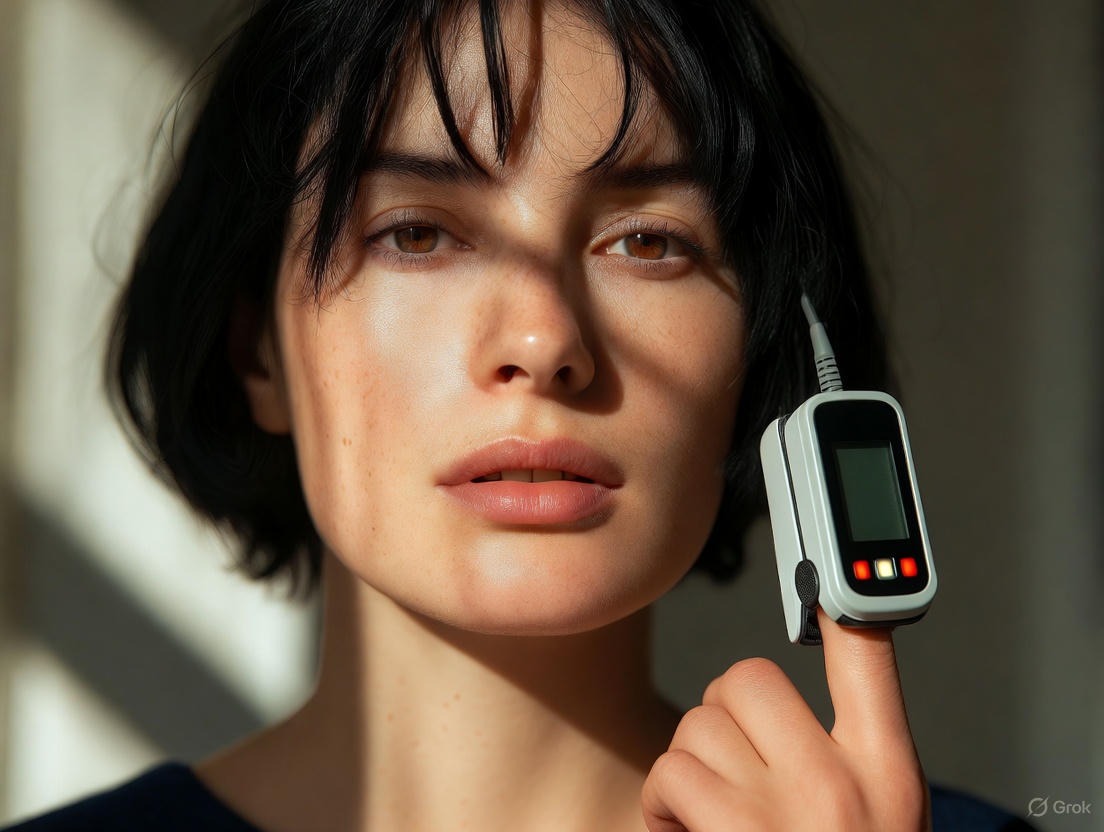
The field of consumer biometrics is evolving at a blistering pace. What we consider advanced today will be standard tomorrow. Understanding these emerging metrics gives us a glimpse into the future of nervous system optimization.
Heart Rate Variability Frequency Analysis:
While most consumer devices report HRV as a single time-domain number (like RMSSD), the gold standard in clinical settings involves frequency-domain analysis. This breaks down the HRV signal into specific frequency bands:
Some advanced wearables are beginning to incorporate this analysis. In the future, seeing a live "HF Power" score could tell you your real-time parasympathetic tone, offering even more precise feedback during a breathing exercise or meditation.
Pulse Arrival Time (PAT) and Blood Pressure Trends:
While not a replacement for a cuff, some devices are exploring the use of Pulse Arrival Time—the time it takes for a pulse wave to travel from the heart to the periphery (the ring). Changes in PAT correlate with changes in blood pressure. While absolute values are tricky, trends in relative PAT could provide nightly insights into your vascular stiffness and pressure load, another critical aspect of cardiovascular recovery.
Electrodermal Activity (EDA) or Galvanic Skin Response (GSR):
This measures tiny changes in the skin's electrical conductivity caused by sweat gland activity, which is directly controlled by the sympathetic nervous system. It's a pure marker of emotional or physiological arousal. While more common in smartwatches, future ring iterations may incorporate this. Imagine your ring not only knowing your heart is racing but knowing it's due to sympathetic arousal (via EDA) and not just physical movement.
Continuous Glucose Monitoring (CGM) Integration:
The true frontier is multi-modal sensing. The combination of a smart ring (tracking ANS output) with a CGM (tracking metabolic input) is a holy grail for health optimization. You could see in real time how a spike in blood glucose from a meal triggers a sympathetic response (increased RHR, decreased HRV), or how stable glucose during sleep correlates with maximal deep sleep. This synergy provides a complete picture of your metabolic and nervous system health.
The Role of AI and Personalised Baselines:
The future lies in hyper-personalization. Algorithms will move beyond comparing you to population averages and will learn your unique patterns. AI could identify that for you, a 20-minute afternoon walk is the most potent booster of nighttime HRV, or that more than 50 grams of carbs at dinner consistently fragments your sleep. It will provide prescriptive insights, not just descriptive data.
These advancements promise to deepen our self-knowledge exponentially. The smart ring will evolve from a recovery tracker to a true, AI-powered health companion, guiding us toward not just absence of disease, but toward a state of flourishing nervous system resilience. To learn more about the technology and vision driving these innovations, you can explore our story and mission.
Understanding your data is the first step. The transformative step is turning that insight into a personalized, living protocol—a flexible set of practices you deploy based on what your body is communicating. This moves you from passive observation to active co-regulation with your nervous system. Your smart ring becomes the dashboard for this ongoing experiment in living well.
Step 1: Establish Your "Green Zone" Baselines
Spend 2-4 weeks observing your data without making drastic changes. Calculate averages for your key metrics during a period you consider "normal" or "good":
Step 2: Define Your "Alert" and "Action" Thresholds
Step 3: Build Your Tiered Recovery Toolkit
Create menus of actions for each zone. The deeper the zone, the more non-negotiable and comprehensive the actions become.
Green Zone Protocol (Maintenance):
Yellow Alert Protocol (Dial Back):
Red Action Protocol (Rest and Reset):
Step 4: The Weekly Review & Tweak Session
Once a week, spend 10 minutes reviewing your trends. Don't get lost in daily noise. Ask:

This powerful technology comes with a psychological shadow: the risk of becoming a "data narcissist," where the numbers on the app become more real than the felt experience of being in your body. This is called "orthosomnia"—the unhealthy preoccupation with achieving perfect sleep scores. It can ironically become a major source of sympathetic arousal, undermining the very recovery you seek.
Signs You're Tipping into Data Obsession:
Cultivating a Healthy Relationship with Your Data:
The goal is informed intuition. You use the data to educate your gut feelings, not replace them. Over time, the external feedback from the ring trains your internal awareness. You start to feel when your HRV is low—a sense of wired fatigue, emotional fragility. The ring simply confirms it. This is the sweet spot: where technology and embodiment work in harmony.
As we willingly strap sensors to our bodies that generate terabytes of intimate physiological data, critical ethical questions arise. Who owns this data? How is it used? Who might it be shared with? The data from your smart ring isn't just about your heart; it's a window into your stress, your sleep habits, your potential illnesses, and your lifestyle. It is, in essence, the data of your life.
Key Ethical Considerations:
Protecting Yourself as a Conscious Consumer:
The future we want is one where this technology empowers individuals without enslaving them. It should increase agency, not reduce it. It should illuminate our path to health without casting a shadow of surveillance. As users, we must be vigilant and demand transparency from the companies we trust with our most intimate numbers. For a company that prioritizes this trust and transparency, understanding its foundational values is key—you can learn more about our approach on our About Us page.
We began this journey in the dark—in the hidden, silent workings of the autonomic nervous system, a realm we could only guess at through the vague languages of fatigue, anxiety, and gut feeling. We end it in the light of understanding.
Your smart ring is more than a piece of technology; it is a translator. It takes the ancient, analog language of your physiology—the beat of your heart, the rhythm of your breath, the dance of your temperature—and renders it into a digital narrative you can understand and act upon. It transforms you from a passenger in your body to its pilot, equipped with a sophisticated instrument panel.
The metrics we've explored—HRV, RHR, sleep architecture, temperature, respiration—are not isolated numbers. They are interconnected notes in the symphony of your nervous system's recovery. Learning to read them is learning to listen to the music of your own resilience.
This journey has profound implications:
The ultimate promise of this technology is not a perfect HRV score. It is autonomic flexibility—the graceful, resilient dance between effort and ease, between engaging with the world and retreating to restore. It is the capacity to meet life's inevitable stresses with strength and to return to a state of calm, connection, and vitality.
As this field evolves, the line between external technology and internal awareness will continue to blur. The goal is that one day, the ring’s feedback will become so integrated that we internalize its lessons. We will naturally seek the activities that raise our HRV, we will intuitively feel our optimal bedtime, and we will honor our need for recovery as the foundational practice of a high-performance life.
You now hold the key to decoding your body's most vital signals. The data is there, waiting on your finger. The story it tells is the story of your capacity to live, fully and resiliently. The next step is to listen, to learn, and to act—not as a slave to the numbers, but as a student and steward of the incredible, self-healing system that is you.
For continued learning, deeper dives into specific topics like the difference between deep and REM sleep, or to explore the tools that can help you on this journey, the complete resource library at Oxyzen is designed to support your path to embodied self-knowledge.
Your Trusted Sleep Advocate (Sleep Foundation — https://www.sleepfoundation.org/)
Discover a digital archive of scholarly articles (NIH — https://www.ncbi.nlm.nih.gov/
39 million citations for biomedical literature (PubMed — https://pubmed.ncbi.nlm.nih.gov/)
experts at Harvard Health Publishing covering a variety of health topics — https://www.health.harvard.edu/blog/)
Every life deserves world class care (Cleveland Clinic -
https://my.clevelandclinic.org/health)
Wearable technology and the future of predictive health monitoring. (MIT Technology Review — https://www.technologyreview.com/)
Dedicated to the well-being of all people and guided by science (World Health Organization — https://www.who.int/news-room/)
Psychological science and knowledge to benefit society and improve lives. (APA — https://www.apa.org/monitor/)
Cutting-edge insights on human longevity and peak performance
(Lifespan Research — https://www.lifespan.io/)
Global authority on exercise physiology, sports performance, and human recovery
(American College of Sports Medicine — https://www.acsm.org/)
Neuroscience-driven guidance for better focus, sleep, and mental clarity
(Stanford Human Performance Lab — https://humanperformance.stanford.edu/)
Evidence-based psychology and mind–body wellness resources
(Mayo Clinic — https://www.mayoclinic.org/healthy-lifestyle/)
Data-backed research on emotional wellbeing, stress biology, and resilience
(American Institute of Stress — https://www.stress.org/)


