


Deep Sleep Optimization for Athletes: Recovery While You Rest
Athletes require deep sleep optimization for recovery. Learn how slow-wave sleep drives muscle repair, hormonal balance, and performance gains with targeted strategies for competitors.
Athletes require deep sleep optimization for recovery. Learn how slow-wave sleep drives muscle repair, hormonal balance, and performance gains with targeted strategies for competitors.
%402x.svg)
For the athlete, sleep is not a passive state of inactivity. It is the most potent, legal performance-enhancing drug available. It is the silent partner in every personal record, the unseen coach in every comeback, the nightly renovation project that rebuilds you stronger than before. Yet, in the relentless pursuit of marginal gains—perfecting nutrition, optimizing training blocks, dialing in gear—the third pillar of performance, recovery, is often its most neglected component. And at the absolute core of recovery lies deep sleep.
Think of your body as a high-performance facility. Your waking hours, especially training, are the demolition and construction phase—breaking down muscle fibers, depleting glycogen stores, and stressing systems. Sleep, particularly deep sleep, is when the foremen, engineers, and construction crews work overtime. Human Growth Hormone (HGH) secretion peaks, facilitating tissue repair and muscle growth. Memories and motor skills are consolidated, embedding that perfect swim stroke or complex play. The glymphatic system, the brain’s waste-clearing network, kicks into high gear, flushing out metabolic byproducts that contribute to fatigue and brain fog. Your cardiovascular system rests, inflammation is tamed, and your immune system is fortified.
But here’s the critical challenge: you cannot manage what you do not measure. Telling an athlete to “get more sleep” is as vague as telling them to “train harder.” How much deep sleep are you actually getting? What daily behaviors sabotage your sleep architecture? How do travel, late competitions, or pre-race anxiety impact your restorative rest? This is where the era of guessing ends and the era of optimization begins. This article is your definitive guide to transforming sleep from a hopeful afterthought into a quantifiable, trainable, and optimizable component of your athletic prowess. We will dissect the science, dismantle the myths, and provide actionable strategies to maximize your recovery while you rest. Welcome to the frontier of athletic performance.
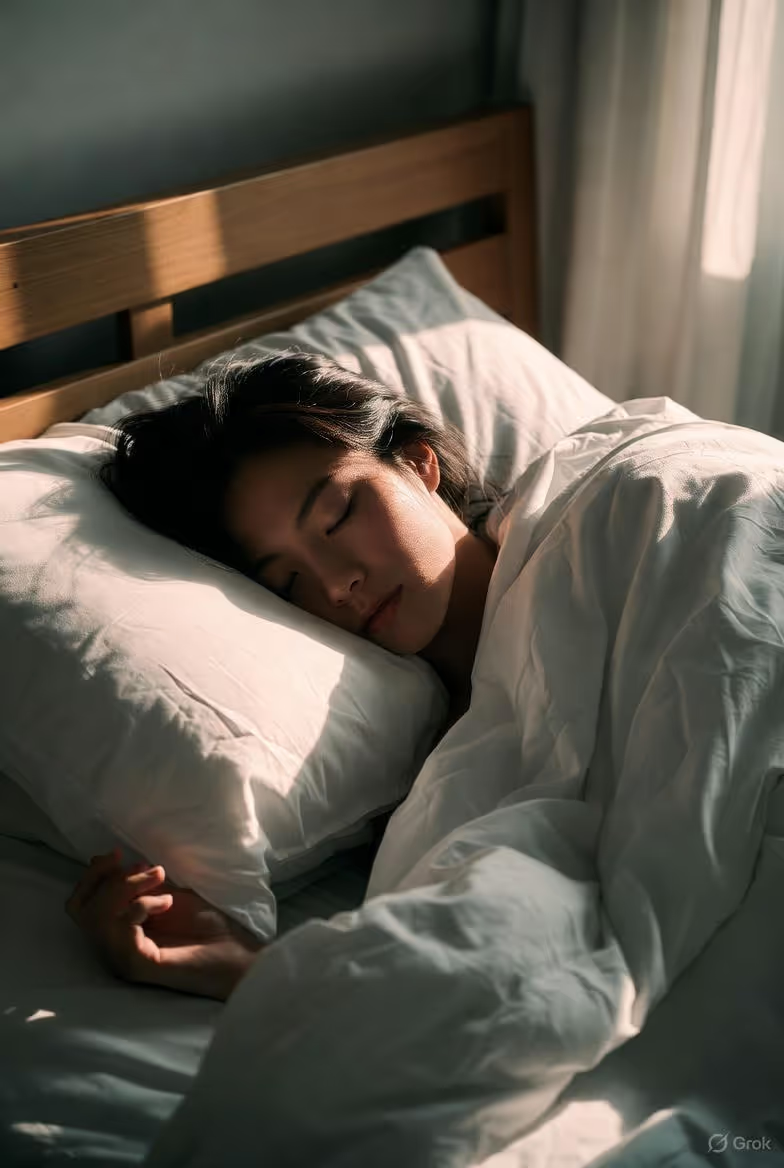
To optimize deep sleep, you must first understand the intricate ballet of the sleep cycle. Sleep is not a monolithic state but a dynamic journey through distinct stages, each with a unique physiological purpose. A full cycle lasts roughly 90-110 minutes and repeats four to six times per night. These stages are categorized as Non-Rapid Eye Movement (NREM) Sleep—Stages 1, 2, and 3—and Rapid Eye Movement (REM) Sleep.
Stage 1 (N1) is the lightest drowsiness, the gateway to sleep. Stage 2 (N2) is where we spend nearly half our night; it’s a period of light sleep where body temperature drops and heart rate slows, crucial for memory consolidation and cognitive function. Then we reach the crown jewel of physical recovery: Stage 3 (N3), or Deep Sleep (Slow-Wave Sleep). This is the most restorative phase. It’s characterized by slow, high-amplitude brain waves called delta waves. It’s incredibly difficult to be awakened from deep sleep; if you are, you’ll likely feel disoriented and groggy—a state known as sleep inertia.
For the athlete, deep sleep is where the magic of physical repair happens. This stage is the primary time for the pituitary gland to release pulses of growth hormone, which stimulates tissue growth, muscle repair, and bone building. It’s when energy stores (glycogen) in your muscles are replenished. The body also prioritizes blood flow to muscles, delivering oxygen and nutrients critical for healing the micro-tears caused by intense training. Without sufficient deep sleep, this repair process is truncated, leaving you chronically under-recovered and prone to plateaus or injury.
Following deep sleep, we ascend into REM Sleep, the stage most associated with vivid dreams, intense brain activity, and emotional processing. For athletes, REM is critical for motor learning and cognitive recovery—it’s where your brain practices and solidifies the skills you drilled in practice. A study on basketball free-throw shooting famously found that improvements correlated with time spent in REM and Stage 2 sleep, not just total sleep time.
The architecture matters. Disruptions—from caffeine, alcohol, late-night screen time, or sleep disorders—can fragment this cycle, robbing you of the precious, uninterrupted blocks of deep and REM sleep. An athlete getting 8 hours of fragmented, low-quality sleep may be less recovered than one getting a solid, uninterrupted 7 hours. The goal is not just sleep duration, but sleep quality and continuity. This is where objective data becomes non-negotiable. Subjective feelings of rest can be deceiving, especially when masked by adrenaline or routine. Modern tools, like the advanced sensors in a smart ring from Oxyzen, provide unparalleled insight into this architecture, tracking not just duration but your movement, heart rate variability, and nocturnal heart rate to estimate time spent in each crucial stage, turning your sleep from a mystery into a metric.
The link between sleep and athletic performance isn’t just locker-room wisdom; it’s rigorously documented in sports science literature. The evidence paints a clear picture: sleep deprivation or restriction is a direct antagonist to peak performance, while sleep extension is a proven performance enhancer.
Let’s start with the negative impacts. Research consistently shows that sleep loss impairs:
Conversely, sleep extension—the practice of systematically increasing sleep duration—has been shown to be a potent ergogenic aid. A seminal study at Stanford University with men’s basketball players is the gold standard. When players extended their sleep to a minimum of 10 hours per night over 5-7 weeks, the results were staggering:
The mechanism is clear: sleep is when the body allocates energy and resources to adaptive processes. Without it, you are simply breaking down without adequate rebuilding. It’s like writing checks without depositing funds into your recovery bank account. For a deeper dive into the physiology of recovery and performance metrics, our blog features a library of research-backed articles on these topics.
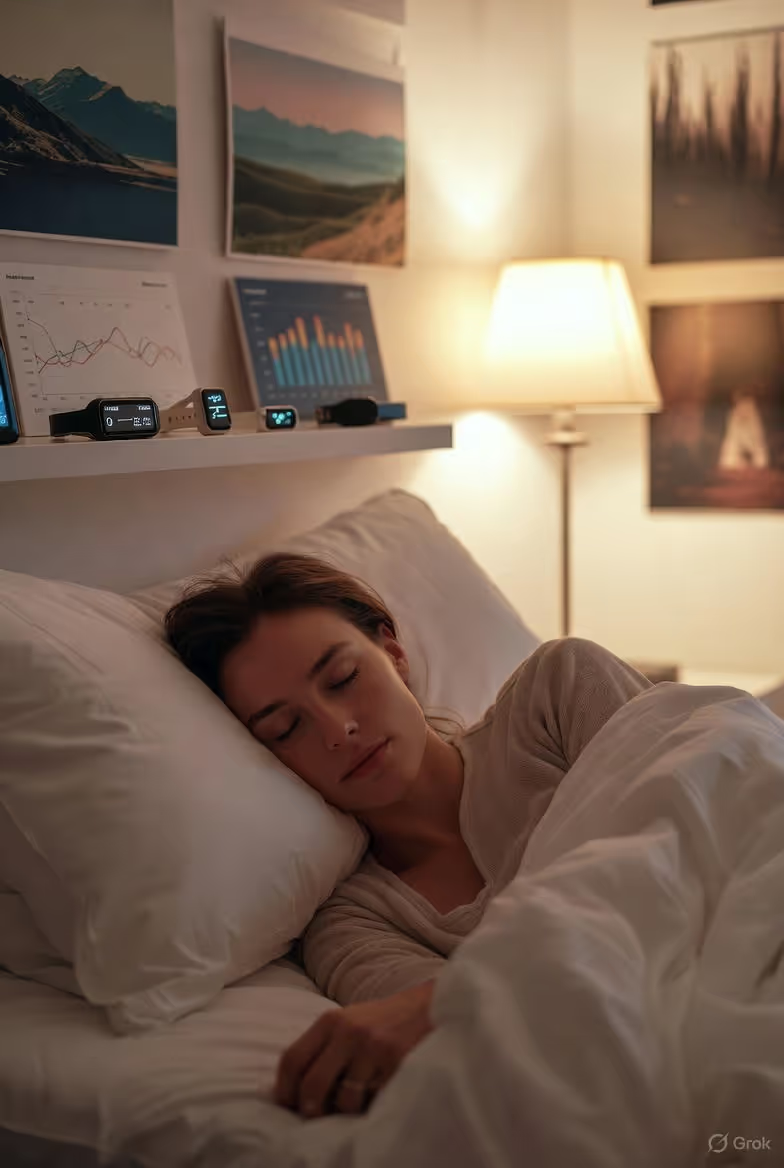
The universal edict to “get 8 hours of sleep” is a useful public health guideline, but for the performance-driven athlete, it’s an oversimplification. Sleep need is as individual as VO2 max or lactate threshold. Genetics, training load, age, and lifestyle all play a role. Some individuals may thrive on 7 hours, while others require 9+ to feel fully recovered, especially during periods of intense training or competition.
So, how do you find your magic number? The process requires a combination of objective tracking and subjective listening.
Step 1: Establish a Baseline with Technology. For a minimum of two weeks during a typical training block, use a reliable wearable to track your sleep. Look beyond just total time in bed. Key metrics to analyze include:
A device like the Oxyzen ring is particularly powerful for this, as its comfortable, all-night wear provides clinical-grade data on these exact parameters, giving you a true baseline without the guesswork.
Step 2: Conduct a Self-Assessment. Upon waking, before checking your phone, ask yourself:
Step 3: The Vacation Test. If possible, on a break from structured training (or during a recovery week), go to bed at the same time each night without setting an alarm. Allow yourself to wake up naturally. Do this for several days, letting your body catch up on any sleep debt first. After a few days, the time you naturally wake up will stabilize. The average sleep duration over this period is a strong indicator of your biological sleep need.
Once you know your number, you can manage it like any other training variable. Plan for it. Schedule it. Protect it. If your need is 8.5 hours and you need to be up at 6 AM for practice, your non-negotiable bedtime is 9:15 PM (allowing for 15 minutes to fall asleep). This precision is the hallmark of a professional approach. For more personalized guidance on interpreting your data, you can always reach out through our comprehensive FAQ for support.

You cannot sprint into sleep. The transition from the sympathetic-dominant “fight or flight” state of a busy day (or a late workout) to the parasympathetic “rest and digest” state required for sleep is a process that must be engineered. Your pre-sleep ritual, performed 60-90 minutes before your target bedtime, is the dedicated off-ramp from your day.
1. Light: Your Master Circadian Cue. Light is the most powerful regulator of your internal clock (circadian rhythm). Blue light wavelengths, prevalent in phones, tablets, and LED lights, are particularly effective at suppressing melatonin, the sleep-inducing hormone. Strategy:
2. Temperature: The Cool-Down. Your core body temperature needs to drop by about 1-2 degrees Fahrenheit to initiate and maintain sleep. Facilitate this:
3. Mind: From Chaos to Calm. An anxious, racing mind is the enemy of sleep.
4. Nutrition & Hydration: The final fuel stop.
Treat this ritual with the same non-negotiable discipline as your warm-up. It is the foundational practice that sets the stage for everything that follows in the night. For more detailed wind-down strategies and user-tested routines, explore the experiences shared in our testimonials.
What you eat doesn’t just fuel your workouts; it also provides the raw materials for sleep-regulating neurotransmitters and hormones. Strategic nutrition can support your sleep architecture, not just your sleep onset.
Key Nutrients & Food Sources:
The Timing & Composition of Your Evening Meal: Your last major meal should be balanced and timed to avoid going to bed either hungry or overly full. A mix of lean protein, complex carbs, and healthy fats is ideal. For a pre-bed snack (if needed), the tryptophan-carbohydrate combo is key: the insulin spike from carbs helps shuttle tryptophan into the brain. Think:
Supplements: Proceed with Caution and Purpose. While food-first is the best approach, some supplements have evidence for sleep support, particularly for athletes under high stress. Crucially, always consult with a healthcare professional or a sports dietitian before starting any supplement regimen.
Remember, no supplement can compensate for poor sleep hygiene or a mismatched circadian rhythm. They are potential adjuncts, not foundations.

Exercise and sleep have a bidirectional, virtuous relationship: good sleep enhances exercise performance, and appropriate exercise promotes better sleep. However, the timing, intensity, and type of exercise can turn this relationship on its head.
Exercise as a Sleep Promoter: Regular physical activity is one of the most reliable ways to improve sleep quality and duration. It helps regulate circadian rhythms, reduces stress and anxiety, and increases the body’s drive for deep, restorative sleep. The thermogenic effect of exercise (raising core body temperature) followed by the post-exercise cooldown mimics the natural temperature drop needed for sleep.
The Timing Conundrum: The old rule of “no exercise within 3 hours of bedtime” is too rigid. The impact depends largely on the individual and the exercise.
Individual Response is Key: Some athletes are “non-responders” to the stimulating effects of late exercise and sleep fine. The only way to know is to track it. Notice how your sleep data—specifically sleep latency (time to fall asleep), resting heart rate, and deep sleep—responds to evening workouts. This kind of personalized feedback is at the core of what makes a tool like the Oxyzen smart ring so valuable for the serious athlete; it turns anecdotes into data.
Practical Strategy: As a general guideline, aim to complete high-intensity training at least 3 hours before bedtime. If you must train later, prioritize a thorough and extended cooldown, followed by a deliberate and extended wind-down ritual. Post-workout, a protein-rich recovery shake that includes tart cherry juice could serve a dual purpose.
Travel is a notorious sleep-wrecker. Jet lag, unfamiliar environments, uncomfortable beds, and altered routines can decimate sleep quality, leaving an athlete competing at a fraction of their capacity. Conquering this requires a proactive, tactical approach.
Pre-Travel Preparation:
In-Flight & On-Road Tactics:
Upon Arrival:
For athletes who travel frequently, the ability to track how travel impacts your physiology is priceless. Monitoring your HRV, RHR, and sleep stages upon arrival provides objective data on how well you’re adapting and when you’re truly ready to perform. Our story is rooted in solving real-world performance problems, and for the modern athlete, few problems are as universal and performance-critical as travel recovery.
The wearables revolution has moved us far beyond simple step counting. For the athlete, the right technology transforms sleep from a black box into a transparent, actionable data stream. But not all trackers are created equal. Understanding the technology and its applications is key.
The Technology Behind the Data: Most advanced sleep trackers use a combination of:
Why a Smart Ring? For sleep tracking specifically, a ring form factor like Oxyzen offers distinct advantages:
From Data to Action – The Feedback Loop: The true power lies in closing the loop. This is where tracking becomes coaching.
This proactive use of technology moves you from being a passive sleeper to an active recovery optimizer. To understand how this philosophy is built into our product, you can learn more about the Oxyzen approach to data-driven wellness.
Sometimes, despite your best efforts, sleep remains elusive or unrefreshing. It’s crucial to recognize when poor sleep is a symptom of a larger issue. Two major red flags for athletes are Overtraining Syndrome (OTS) and underlying sleep disorders.
Overtraining Syndrome & Sleep Dysregulation: OTS is an imbalance between training stress and recovery. A hallmark symptom is a disturbance in sleep architecture. You may experience:
Common Sleep Disorders in Athletes: Athletes are not immune to clinical sleep disorders, which can masquerade as “just being a bad sleeper.”
When to Seek Professional Help: Consult a sleep specialist or sports medicine doctor if you:
Using your sleep tracker data can be invaluable in these consultations, providing the doctor with objective evidence of your sleep patterns. Your journey to peak performance is built on a foundation of health, and addressing these issues is a sign of professionalism, not weakness. For support and community experiences on navigating these challenges, our community’s shared stories can be a valuable resource.
If deep sleep is the physical repair shop, then Heart Rate Variability (HRV) is the master control system that decides when the shop opens, how efficiently it runs, and when it’s time to restock the shelves. For the athlete seeking the deepest level of recovery insight, understanding the symbiotic relationship between HRV and deep sleep is non-negotiable. This isn't just about tracking two separate metrics; it's about interpreting the conversation between your autonomic nervous system (ANS) and your sleep architecture.
HRV Decoded: The Language of Balance. At its core, HRV is the measure of the slight variations in time between each heartbeat. Contrary to what one might assume, a higher HRV (greater variability) is generally a sign of better health and fitness. It indicates a strong, responsive autonomic nervous system—specifically, robust parasympathetic ("rest and digest") tone. Your heart is listening to the body's subtle demands, speeding up and slowing down with ease. A low, rigid HRV suggests sympathetic ("fight or flight") dominance, where the heart beats like a metronome under stress.
The Nocturnal HRV Narrative. While you can take spot measurements, the most valuable HRV data for recovery comes from a nightly average. During deep, restorative sleep, your parasympathetic system should be in charge, leading to a higher HRV. This is the state where repair is prioritized. By tracking your HRV throughout the night, you can see a story unfold:
How Deep Sleep and HRV Influence Each Other. This is a powerful bidirectional relationship:
Practical Application: Using the Duo for Daily Decisions. This is where theory becomes actionable intelligence for your training.
Beyond a Single Night: The Power of Trends. One bad night isn't a crisis. The true power lies in tracking trends over weeks and months. You’ll learn your personal baseline and see how different training phases, life events, and sleep interventions affect your unique physiology. You might discover that heavy leg days suppress your HRV and deep sleep for two nights, informing your periodization. Or that a mindfulness practice begun three weeks ago is steadily raising your baseline HRV. This is the essence of biofeedback—using data to drive behavior for a tangible physiological outcome.
For the athlete committed to optimization, this level of insight is transformative. It moves you from guessing based on subjective fatigue to making evidence-based decisions. The technology to capture this nuanced dialogue, like that found in the Oxyzen smart ring, puts this once-lab-grade analysis on your finger, making your nightly nervous system report card as routine as checking your training log.
Once the foundations of sleep hygiene, environment, and ritual are firmly in place, the curious athlete can explore advanced, evidence-informed "biohacks." These are targeted interventions designed to nudge specific physiological levers to enhance sleep quality and depth. They are adjuvants, not substitutes, for the core principles.
1. Thermal Loading & Strategic Hydration. We know cooling is key, but we can be proactive.
2. Nutritional "Nootropics" for Sleep. Beyond basic nutrients, specific compounds show promise.
3. The Electrical & Energetic Environment.
4. Breathing & Nervous System Mastery. Beyond basic 4-7-8 breathing, advanced techniques can induce profound states of relaxation.
A Critical Note on Experimentation: The golden rule with any biohack is isolate and test. Introduce one new intervention at a time for at least a week while holding all other variables constant. Use your sleep and HRV data to assess its objective impact on you. What works phenomenally for one athlete may do nothing for another due to individual biochemistry and genetics. This rigorous, personal experimentation is the hallmark of a true optimizer. For those curious about the frontier of recovery technology and techniques, our blog is regularly updated with the latest insights.
Even the most diligent athlete will face nights where sleep seems impossible—the eve of a major competition, during periods of high life stress, or after an injury. Acute insomnia (lasting days to a few weeks) is a common reaction. How you respond in these moments can prevent a temporary blip from spiraling into a chronic issue. The goal shifts from optimization to damage control and nervous system regulation.
Step 1: Remove the Clock and the Pressure. The single most anxiety-producing act during insomnia is clock-watching. "It's 2 AM, I've only slept 3 hours, I have to be up in 4 hours..." This catastrophic thinking releases cortisol. Turn your clock around or put your phone in another room. The goal is to rest, not to sleep. Lying in a dark room with your eyes closed, even if awake, provides some neurological rest. Abandon the fight.
Step 2: Implement the 20-Minute Rule (Stimulus Control). This is a core component of Cognitive Behavioral Therapy for Insomnia (CBT-I), the gold-standard treatment. If you are not asleep or are feeling anxious in bed for more than 20 minutes, get up. Go to a pre-designated dimly lit chair. Do something boring and non-stimulating: read a physical, mundane book (no phones, no tablets). Do not eat, work, or watch TV. Only return to bed when you feel unmistakably sleepy. Repeat as necessary. This breaks the powerful negative association between "bed" and "frustration/arousal," rebuilding it as a place for sleep only.
Step 3: Deploy Emergency Relaxation Techniques. When the mind is racing, you need a strong anchor.
Step 4: Manage the Next Day (Damage Control). A poor night of sleep feels catastrophic, but its impact can be mitigated.
When to Escalate: If acute insomnia persists for more than 3 weeks, or if you consistently experience symptoms like loud snoring/gasping, restless legs, or extreme daytime sleepiness, it is time to consult a sleep specialist or a sports medicine physician. CBT-I is highly effective and preferable to long-term medication. Sharing your detailed sleep data from a device like Oxyzen can provide your doctor with invaluable objective information, moving the conversation past "I didn't sleep well" to "Here is my sleep architecture and HRV for the last month."
Remember, one night of poor sleep will not ruin your season. Your response to it, however, can set the tone. By having a calm, procedural protocol to follow, you reclaim a sense of control and prevent a minor storm from becoming a hurricane. For support and to see how others have navigated similar challenges, our FAQ and community resources are always available.
The pursuit of deep sleep optimization cannot rest solely on the shoulders of the individual athlete. The most forward-thinking coaches, sports directors, and high-performance organizations are now recognizing that sleep is a foundational pillar of athlete health and a legitimate frontier for competitive advantage. Building a sleep-centric culture means creating an environment where restorative rest is valued, educated, and facilitated at a systemic level.
Education as the First Step. A culture shift begins with knowledge. Teams should bring in sleep specialists or sports physiologists to educate not just athletes, but also coaches, nutritionists, and support staff. Topics must cover:
Policy & Scheduling for Recovery. This is where leadership demonstrates commitment through action.
Facilitating the Environment.
Leading by Example & Destigmatizing Rest. The most powerful signal is sent from the top.
The organizations that excel in this arena treat sleep with the same seriousness as they treat strength and conditioning or video analysis. They understand that the athlete is a holistic system, and the 8-10 hours they spend outside the facility are the most critical for adaptation. This cultural approach doesn't just improve performance; it protects the long-term health and well-being of the athlete, reducing burnout and extending careers. At Oxyzen, our mission aligns with this vision of integrated, data-informed wellness, providing the tools that make such a culture not just possible, but practical and powerful.
We stand at the precipice of a revolution in sleep science and technology. The future moves beyond simply tracking what happened last night and into the realm of prediction, personalization, and automated intervention. For the athlete, this means a shift from reactive recovery to proactive restoration.
AI-Driven Personal Sleep Coaches. The next generation of wearables and apps will utilize machine learning to create a hyper-personalized sleep model for each individual. By analyzing thousands of data points—your sleep stages, HRV, RHR, skin temperature, respiratory rate, daily activity, training load, calendar events, and even subjective mood inputs—the AI will:
Biometric Integration for Holistic Readiness. Sleep data will no longer live in a silo. The future platform will be a unified recovery dashboard that synthesizes:
Closed-Loop Environment Automation. Your sleep environment will become an active participant. Imagine:
Advanced Nutritional & Supplementation Timing. With a deeper understanding of individual chronobiology and genetics, nutrition will become more timed and precise.
The trajectory is clear: sleep optimization is becoming less about manual habit tracking and more about seamless, intelligent systems that work around you. The goal is to minimize the cognitive burden of optimization so you can focus on being an athlete, while the technology ensures your foundation of recovery is unshakable. This future is being built today by companies focused on seamless integration, a vision you can explore in the foundational principles behind Oxyzen. The ring on your finger is the first, critical sensor in this future ecosystem—the reliable, continuous data stream upon which all this intelligence is built.
Theory and data are compelling, but nothing resonates like the lived experience of those at the pinnacle of performance. Examining how elite athletes and teams have successfully (and sometimes painfully) integrated sleep optimization provides a practical blueprint and powerful motivation. These case studies underscore that prioritizing sleep is not a sign of softness, but a hallmark of professional sophistication.
The NBA’s Sleep Revolution: Perhaps no professional sports league has been more publicly vocal about sleep science than the National Basketball Association. With a grueling 82-game schedule, frequent back-to-back games, and constant cross-country travel, sleep deprivation was once a brutal norm. The shift began with forward-thinking teams employing sleep consultants and implementing radical changes.
Ultra-Endurance and the Sleep-Deprivation Crucible: In events like the Tour de France, RAAM (Race Across America), or ultra-marathons, sleep is the ultimate strategic variable. Athletes must balance minimal rest with the catastrophic cognitive and physical effects of total sleep deprivation.
The Olympic Athlete’s Quadrennial Focus: For an Olympian, the four-year cycle culminates in a performance window measured in minutes or seconds. Sleep optimization is periodized with precision.
The Collegiate Athlete’s Challenge: Balancing Sport, School, and Social Life. This group faces a unique triad of sleep disruptors: academic pressure, early practices, and social temptations. Programs that succeed implement structural support.
These cases, from the professional to the collegiate level, reveal a common thread: sleep optimization is a competitive edge that requires intention, education, and sometimes, institutional courage. It moves from being a personal secret to a shared philosophy. For any athlete reading this and wondering where to start, remember that every elite practice began as a simple experiment. Tracking your own journey is the first step, a process made seamless by tools designed for this purpose, like the Oxyzen smart ring. You can explore how real users from various backgrounds have applied these principles in their own testimonials and stories.
For the athlete, the pursuit is often framed in the short-term: next week’s game, this season’s championship, the upcoming qualifier. However, the most profound impact of deep sleep optimization may be its role in career longevity and long-term health. Investing in sleep is not just an investment in tomorrow’s performance, but in the ability to perform for a decade or more, and to transition into a healthy post-competition life. This perspective transforms sleep from a recovery tool into a career preservation strategy.
Sleep as a Shield Against Overtraining and Burnout. The path to overtraining syndrome (OTS) is paved with chronic under-recovery. Sleep is the primary pillar of recovery. By consistently achieving high-quality deep sleep, you:
Reducing Cumulative Injury Risk. Injury is the single greatest threat to an athlete’s career span. Sleep plays a multi-faceted role in mitigation:
The Long-Term Health Dividend: Beyond the Final Whistle. An athletic career is a phase of life, but the body must last a lifetime. The physiological habits forged during competition have lasting implications.
The Mindset Shift: From Expendable Asset to Sustainable Investment. Embracing the longevity lens requires a shift in identity. The young athlete may see their body as an indestructible engine to be pushed. The wise athlete learns to see it as a high-performance vehicle that requires meticulous maintenance to win races year after year. Sleep is the finest synthetic oil, the best-in-class filter, the perfect wheel alignment.
This perspective is central to a sustainable performance philosophy. It’s about building a career, not just a season. It aligns perfectly with the mission of companies focused on long-term wellness, like the vision that drives the team at Oxyzen. By tracking and optimizing your recovery today, you are not just logging data for tomorrow’s workout; you are building the biometric foundation for a longer, healthier, and more successful athletic journey.
We have traversed the science, the strategies, the hacks, and the mindset. Now, it’s time to synthesize this knowledge into a living, breathing, personalized protocol. This is not a rigid set of rules, but a dynamic framework you will build, test, and refine. Follow these steps to move from informed reader to master of your own recovery domain.
Phase 1: The Assessment (Weeks 1-2) – Establish Your Baseline.
Phase 2: Foundation Building (Weeks 3-6) – Implement the Non-Negotiables.
Choose ONE foundational area to master each week. Do not rush.
Phase 3: Refinement & Personalization (Ongoing) – The Art of the Experiment.
With your foundation solid, you can begin targeted experiments. The rule: Change only one variable at a time for at least 5-7 days.
Phase 4: Integration & Periodization (The Long Game) – Make It Dynamic.
Your protocol must flex with your life and training.
This protocol turns you into both the scientist and the subject of your own ongoing performance study. The goal is not perfection, but progressive mastery. For ongoing support, ideas for new experiments, and a deeper understanding of the metrics guiding you, remember that resources like the Oxyzen blog are built to support this very journey of discovery.
The most significant leap in athletic intelligence happens when disparate data streams converge. Your sleep data is not an island; it is the context for everything in your training log. The true power is unlocked when you correlate your nocturnal recovery metrics with your daily workload, subjective feelings, and performance outcomes. This integrated analysis reveals cause, effect, and opportunity.
The Correlation Dashboard: What to Look For. Start by looking at your data side-by-side over a 4–6 week training block. Use a notes section in your training log or a simple spreadsheet.
Making Data-Informed Decisions. This analysis moves you from reactive to predictive planning.
The Subjective-Objective Bridge. Never ignore the subjective. Your “feeling” of fatigue, muscle soreness, or motivation is a data point. The magic happens when you validate or question those feelings with objective data.
This integrated approach represents the pinnacle of the modern athlete’s toolkit. It fosters a profound body literacy, where you learn the unique language of your own physiology. The technology that gathers this data, therefore, becomes more than a tracker; it’s a translation device. To understand how this philosophy of integrated data is built into our core, you can learn more about the Oxyzen approach here. The goal is to provide not just numbers, but the clarity to make them meaningful.
We have journeyed deep into the nocturnal world of the athlete, illuminating the profound truth that what happens in the quiet dark is the ultimate determinant of what you achieve in the glaring light of competition. Deep sleep optimization is not a fringe biohack or a luxury; it is the unshakeable foundation upon which speed is built, strength is forged, skill is cemented, and resilience is woven.
We began by dismantling the architecture of sleep, revealing deep sleep as the secret weapon for physical repair and growth hormone release. We armed you with the science, proving that sleep extension is a potent, legal performance enhancer, while sleep deprivation is a direct saboteur of reaction time, power, and immunity. We moved beyond the simplistic “8-hour myth” and empowered you to quantify your personal, dynamic sleep need.
We then provided the toolkit: from engineering the perfect sleep environment—your recovery cave—to crafting a neurologically intelligent pre-sleep ritual. We addressed the unique challenges of the traveling athlete and the power of strategic napping. We delved into the critical mind-sleep connection, providing protocols to conquer the anxiety and racing thoughts that so often plague the competitive mind.
The exploration advanced into the frontier of technology and biometrics, revealing how Heart Rate Variability (HRV) serves as your nervous system’s nightly report card, its intimate dialogue with deep sleep offering the clearest picture of your readiness to perform. We examined advanced biohacks and laid out a compassionate, effective protocol for managing acute insomnia when it strikes.
Finally, we scaled this knowledge from the individual to the organizational, showing how a sleep-centric culture is a mark of elite professionalism, and we projected into a future where sleep optimization becomes predictive and seamless. We grounded it all in the long-term view, framing sleep as the guardian of career longevity and lifelong health.
This first portion of our comprehensive guide has equipped you with the knowledge, the strategies, and the strategic mindset to claim ownership of your recovery. You now understand that sleep is a trainable skill, a measurable biomarker, and your most powerful ally.
The journey continues. In the next portion, we will dive into even more specialized applications: tailoring protocols for teen athletes, female athletes across the menstrual cycle and lifespan, masters athletes, and those recovering from injury. We will explore the intersection of sleep with specific nutritional strategies, delve deeper into the world of sleep supplements, and provide a comprehensive resource guide to the tools, technologies, and experts that can support your path.
Remember, the pursuit of peak performance is a mosaic. Nutrition, training, mindset, and recovery are the tiles. Sleep is the grout that holds the entire picture together—without it, even the most brilliant pieces cannot create a lasting, coherent masterpiece. Begin tonight. Observe your ritual, protect your environment, and rest with the confidence that you are not merely sleeping; you are recovering, you are adapting, you are growing stronger. You are optimizing.
Your Trusted Sleep Advocate: Sleep Foundation — https://www.sleepfoundation.org
Discover a digital archive of scholarly articles: NIH — https://www.ncbi.nlm.nih.gov/
39 million citations for biomedical literature :PubMed — https://pubmed.ncbi.nlm.nih.gov/
Experts at Harvard Health Publishing covering a variety of health topics — https://www.health.harvard.edu/blog/
Every life deserves world class care :Cleveland Clinic - https://my.clevelandclinic.org/health
Wearable technology and the future of predictive health monitoring :MIT Technology Review — https://www.technologyreview.com/
Dedicated to the well-being of all people and guided by science :World Health Organization — https://www.who.int/news-room/
Psychological science and knowledge to benefit society and improve lives. :APA — https://www.apa.org/monitor/
Cutting-edge insights on human longevity and peak performance:
Lifespan Research — https://www.lifespan.io/
Global authority on exercise physiology, sports performance, and human recovery:
American College of Sports Medicine — https://www.acsm.org/
Neuroscience-driven guidance for better focus, sleep, and mental clarity:
Stanford Human Performance Lab — https://humanperformance.stanford.edu/
Evidence-based psychology and mind–body wellness resources:
Mayo Clinic — https://www.mayoclinic.org/healthy-lifestyle/
Data-backed research on emotional wellbeing, stress biology, and resilience:
American Institute of Stress — https://www.stress.org/


