The Ring vs Watch Debate: Accuracy, Comfort, and Features Compared
Comparing rings and watches on accuracy, comfort, and features.
The Ring vs Watch Debate: Accuracy, Comfort, and Features Compared
For decades, the wristwatch was the undisputed monarch of personal timekeeping and, later, the pioneer of wearable technology. It symbolized not just punctuality but status, style, and technological adoption. Today, a quiet revolution is unfolding on our fingers. The smart ring, a sleek, minimalist band of advanced sensors, has emerged from the realm of sci-fi concept art to become a formidable contender in the wearable tech arena. This sets the stage for the defining wearable debate of our time: the Ring versus the Watch.
This isn't merely a question of where you prefer to wear your gadget. It's a fundamental exploration of how we choose to integrate technology into our lives, bodies, and personal wellness journeys. Do we prioritize the comprehensive, screen-driven interface of a smartwatch, or the subtle, continuous, and intimate tracking of a smart ring? The answer is nuanced, deeply personal, and hinges on three critical pillars: Accuracy of the data that informs our health decisions, Comfort in the device we wear 24/7, and the Features that genuinely enhance our daily living.
The market is buzzing. While tech giants continue to refine their wrist-bound powerhouses, innovative companies like Oxyzen are pushing the boundaries of what's possible from a device that fits on your finger. The choice is no longer between a "dumb" accessory and a smart one, but between two intelligent paradigms of self-quantification. This deep-dive analysis will dissect every layer of this debate, providing you with the insights needed to choose the wearable that doesn't just sit on your body, but synergizes with your lifestyle. Whether you're a biohacker seeking granular data, a professional valuing discretion, or someone simply beginning their wellness journey, understanding this comparison is your first step toward a more informed self.
The Evolution of Wearables: From Pocket Watches to Finger Rings
To understand the present standoff, we must first rewind the clock. The history of personal wearables is a fascinating journey of miniaturization, shifting social norms, and technological leaps that have consistently moved technology closer to our skin and, ultimately, into our bodies.
The story begins not on the wrist, but in the pocket. For centuries, the pocket watch, often attached by a fob, was a luxury item for the wealthy gentleman. Its move to the wrist was born out of brutal necessity—military officers in the late 19th and early 20th centuries needed to tell time without fumbling in their pockets, especially during combat. World War I solidified the wristwatch as a practical tool for modern life. Over the following decades, it evolved into a mass-market product, a fashion statement, and a symbol of precision engineering.
The digital revolution of the 1970s brought us the calculator watch, a first glimpse of the wrist's potential as a tech platform. But the true genesis of the modern smartwatch began in the early 2010s with the arrival of "connected" watches that synced with smartphones. The watershed moment was the 2015 launch of the Apple Watch, which redefined the category not as a peripheral, but as a health and communication hub. Suddenly, the wrist became a screen for notifications, a heart rate monitor, and a fitness coach.
Parallel to this, a different narrative was being written. The concept of the smart ring has existed in research labs and patent filings since at least the 1990s. Early iterations were clunky and limited, often acting as mere Bluetooth remote controls. The critical turning point was the development of miniaturized, low-power medical-grade sensors. By shrinking photoplethysmography (PPG) sensors, accelerometers, and temperature sensors small enough to fit comfortably inside a ring, the dream became viable.
The crowdfunding success of the Oura Ring in 2015 marked the smart ring's commercial arrival. It presented a compelling new value proposition: unobtrusive, 24/7 health monitoring without a screen. It focused not on interacting with the digital world, but on listening to the body's subtle signals—sleep, recovery, and readiness. This paved the way for a new generation of devices, like those developed by Oxyzen, which build upon this foundation with advanced algorithms and a user-centric design philosophy. You can trace this innovative journey in greater detail on Oxyzen’s story page, which highlights the mission to make advanced health insights accessible and seamless.
Today, we stand at an inflection point. The smartwatch, a direct descendant of the pocket watch, represents the path of integration—bringing more of our digital world onto our bodies. The smart ring, a novel form factor, represents the path of introspection—using discreet technology to better understand our analog, biological selves. This historical context frames the entire debate: one is an evolution of an existing accessory, the other is a reimagining of what a wearable can be.
Defining the Contenders: What is a Modern Smartwatch vs. a Smart Ring?
Before we pit them against each other, we must clearly define our contenders. The terms "smartwatch" and "smart ring" encompass a wide spectrum of devices with varying capabilities, philosophies, and target users.
The Modern Smartwatch: The Wrist-Worn Command Center A contemporary smartwatch is, in essence, a miniature smartphone for your wrist. Its defining characteristic is the presence of a touchscreen display. This screen is the gateway to its core functionalities:
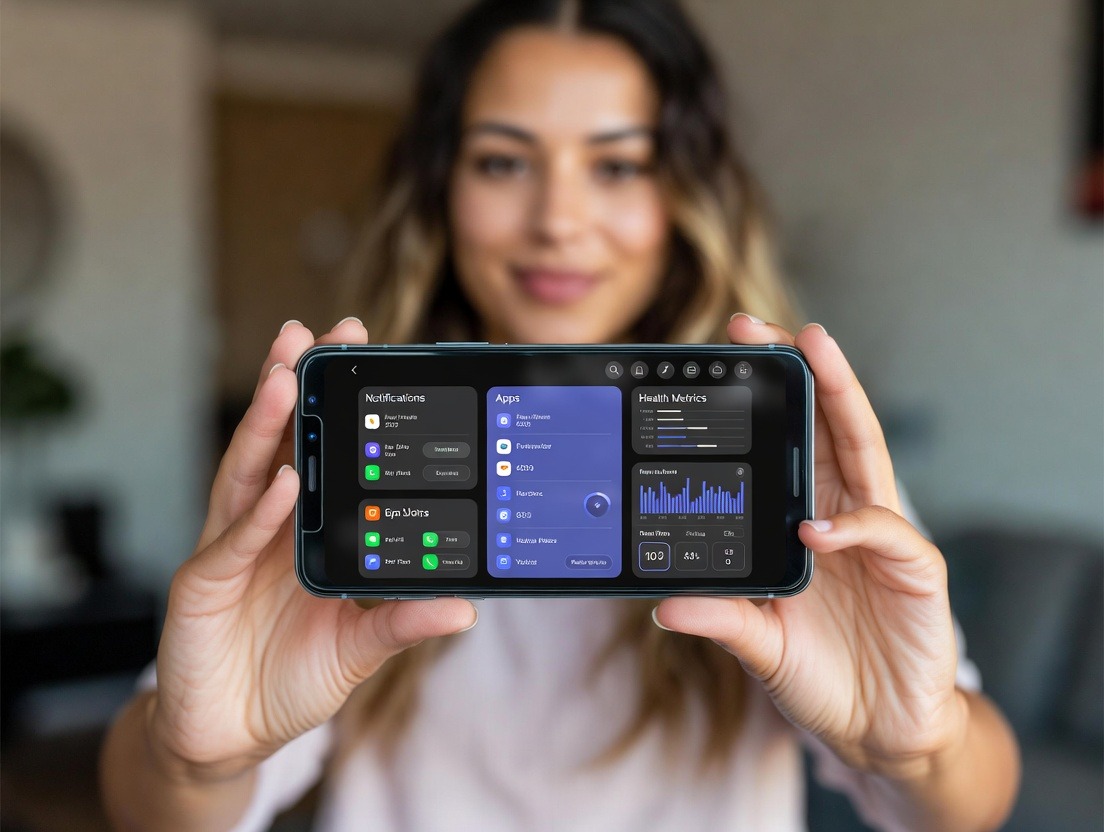
Notification Hub: It mirrors alerts from your phone—calls, texts, emails, and app notifications—allowing for quick glances and often, voice or tap replies.
App Ecosystem: It runs a (sometimes limited) suite of applications, from music players and payment systems (NFC) to standalone GPS for navigation.
Fitness & Health Tracker: It incorporates an array of sensors: optical heart rate monitors, GPS, ECG sensors, blood oxygen (SpO2) sensors, and accelerometers for tracking workouts, steps, and floors climbed.
Communication Device: Many support cellular connectivity, making them independent of a paired smartphone for certain tasks.
The smartwatch philosophy is engagement and action. It’s designed to keep you connected and to provide tools for active tasks—starting a workout, answering a call, or paying for coffee. Brands like Apple, Samsung, Garmin, and Fitbit dominate this space, each with slightly different emphases, from general-purpose tech (Apple) to hardcore athletic performance (Garmin).
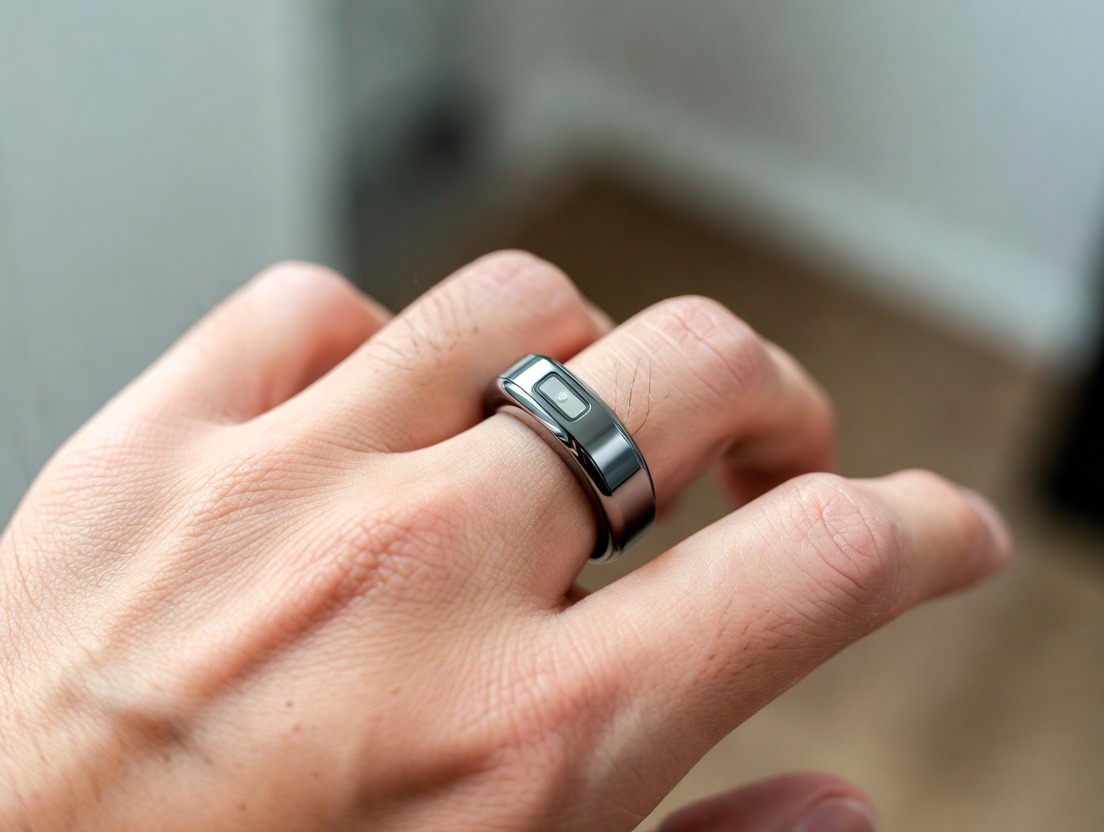
The Modern Smart Ring: The Finger-Worn Biometric Guardian In stark contrast, a modern smart ring is defined by its lack of a screen. It is a passive, always-on data collector. Its form factor is its feature: a small, lightweight ring, typically made from titanium, ceramic, or similar hypoallergenic materials.
Continuous, Passive Monitoring: Its primary function is to gather physiological data 24/7 with minimal user intervention. It excels at tracking biomarkers during sleep, which is when a wristwatch can be uncomfortable or its sensors obstructed.
Core Sensor Suite: It typically houses a medical-grade PPG sensor for heart rate and heart rate variability (HRV), a 3D accelerometer for movement and sleep staging, a skin temperature sensor, and sometimes an NFC chip for payments.
Focus on Recovery & Readiness: The ring’s analytics are heavily focused on longitudinal trends in sleep quality, recovery status, stress (through HRV), and menstrual cycle tracking. The goal is not to tell you you've taken 10,000 steps, but to explain how your body is responding to those steps, your sleep, and your stress.
The smart ring philosophy is insight and awareness. It’s a tool for biofeedback, designed to surface patterns in your nervous system and physiology that you might not feel. Companies like Oura, Ultrahuman, and Oxyzen are leaders here. For a comprehensive look at how one company approaches this philosophy, from sensor fusion to actionable insights, you can learn more about Oxyzen's technology here.
In summary, the smartwatch is an extroverted tool—it helps you interact with the world. The smart ring is an introverted tool—it helps you understand your inner state. This fundamental difference in purpose informs every comparison that follows.
The Accuracy Arena: Heart Rate, Sleep, and Activity Tracking Compared
This is the most critical battleground. When our wearables inform health decisions, workout intensity, or recovery protocols, accuracy isn't a luxury—it's a prerequisite. Let’s dissect how each form factor performs in key tracking domains.
Heart Rate Monitoring: Continuous vs. Spot-Check
Smartwatch: Most use optical PPG sensors on the underside of the wrist. During steady-state activities (like walking or steady running), they are reasonably accurate. However, the wrist presents challenges. Wrist hair, skin tone, bone density, and, most importantly, arm movement can introduce significant "noise," leading to cadence lock (where the sensor reads your step rate instead of heart rate) during high-intensity interval training or weightlifting. The further the device is from the heart and major arteries, the more prone the signal is to interference.
Smart Ring: It also uses PPG, but from the finger. This is a game-changer. The finger contains a dense network of capillaries and blood vessels closer to the skin's surface. Furthermore, during sleep and daily wear, the finger is generally more stationary than the wrist. This provides a cleaner, more stable signal for measuring Resting Heart Rate (RHR) and Heart Rate Variability (HRV)—two critical biomarkers for recovery and autonomic nervous system health. For 24/7 continuous heart rate tracking, especially during sleep, the ring often holds an advantage. However, during very hand-intensive activities (like rock climbing or boxing), a ring can also experience motion artifacts.
Sleep Tracking: The Ring’s Crown Jewel
Smartwatch: Sleep tracking on a watch has historically been an afterthought. While it has improved dramatically, fundamental issues remain. A watch is bulky; many people find it uncomfortable to wear to bed, leading to non-compliance. The wrist is also highly mobile during sleep, which can confuse accelerometer data. Newer models with advanced algorithms and temperature sensors have closed the gap, but the form factor is inherently suboptimal for this specific task.
Smart Ring: This is where the smart ring shines brightest. Its comfort encourages all-night, every-night wear. The combination of a superior PPG signal from the finger and precise movement data allows for highly accurate differentiation between sleep stages (light, deep, REM). The inclusion of peripheral skin temperature tracking, a key circadian rhythm biomarker, adds another layer of sophistication. For anyone prioritizing sleep insight, the ring is widely regarded as the most accurate consumer wearable option outside of a clinical polysomnogram.
Activity & Workout Tracking: The Watch’s Domain
Smartwatch: Designed for this. With built-in GPS, altimeters, and workout-specific modes, smartwatches excel at quantifying active exercise. They provide real-time metrics (pace, distance, heart rate zones) on a screen you can glance at mid-run. They are purpose-built for the active phase of your day.
Smart Ring: Its role here is complementary, not competitive. A ring can track overall daily movement (steps, active calories) and heart rate during a workout reasonably well. However, without a screen or GPS, it cannot provide real-time coaching or precise route mapping. Its value lies in what it does after the workout: measuring how your body recovers from that activity. It answers the question, "Was that workout appropriately stressful for my current state, or did it push me into overtraining?"
The Verdict: Accuracy is domain-specific. For sleep, recovery, and 24/7 physiological trend tracking, the smart ring's form factor offers a demonstrable advantage due to sensor placement and wearability. For detailed workout metrics, GPS tracking, and real-time performance feedback, the smartwatch is the clear, dedicated tool. The most data-obsessed individuals might, in fact, wear both—using the watch for active training and the ring for continuous biometric oversight.
The Comfort & Wearability Conundrum: 24/7 Commitment
A wearable is useless if you don't wear it. The promise of continuous health data hinges on a device being so comfortable and intuitive that you forget it's there—until you need its insights. This is a area where the differences are profoundly physical and psychological.
The Smartwatch: A Conscious Accessory A smartwatch is a noticeable, weighty piece of tech on your wrist. While bands can be swapped for comfort (silicone, nylon, metal), the watch head itself is substantial.
Sleep Wear: This is the biggest hurdle. Many people simply cannot sleep with a rigid, screen-bearing device on their wrist. It can catch on bedding, feel restrictive, or cause pressure points.
Daily Sensations: You are constantly aware of it. Notifications cause it to buzz. The screen can inadvertently activate. During typing or writing, the watch head can bump against your laptop. In colder climates, the cold metal against skin can be jarring.
Fashion & Occasion: While watch faces can be customized, a smartwatch often clashes with formal attire. It unmistakably says "tech gadget," which can be undesirable in certain professional or social settings. Swapping it for a traditional watch means losing a day's data.
The Smart Ring: The Unseen Observer A well-designed smart ring aims for invisibility. Weighing a few grams and conforming to the shape of your finger, its goal is sensory adaptation.
Forgetting It's There: Once you acclimate (usually within a day or two), the ring becomes part of you. There's no screen to light up, no constant haptic interruptions. It doesn't interfere with typing, sleeping, or wearing gloves. This passive nature is its greatest strength for continuous data collection.
The Right Fit: Comfort here is paramount and non-negotiable. A ring that is too tight is dangerous and uncomfortable; too loose, and it spins, compromising sensor contact and data accuracy. Companies provide detailed sizing kits for this reason. The ring must sit snugly against the skin without constriction.
Discreetness: This is a major selling point. A smart ring looks, to the casual observer, like a simple band of titanium or ceramic. It draws no attention, fits with any style of dress from gym wear to a tuxedo, and makes no social statement about being "tracked" or "connected." It preserves social discretion while gathering data.
The Hygiene & Safety Factor
Smartwatch: The band, particularly silicone or rubber, can trap sweat, soap, and bacteria against the skin, leading to irritation ("watch rash"). It needs regular cleaning. The watch itself can be vulnerable to impacts during activities.
Smart Ring: It is easier to clean (just like jewelry) and less prone to trapping moisture over a large area. However, for safety in activities like weightlifting or certain manual jobs where a ring could pose a degloving risk, it must be removed—a clear data gap. Some users get around this by wearing it on a neck chain during such activities, though this pauses physiological tracking.
The 24/7 commitment question leans heavily toward the ring. Its design philosophy is engineered for constant, unnoticeable wear, which directly translates to more complete and reliable datasets, especially for sleep and daily baselines. The smartwatch, by its interactive nature, reminds you of its presence constantly, which can lead to "wearable fatigue" and selective removal. For those who value uninterrupted data and ultimate discretion, the ring presents a compelling comfort advantage. To see how real users have adapted to 24/7 ring wear, you can browse authentic experiences in the Oxyzen testimonials section.
Battery Life and Charging: The Inconvenience Trade-Off
A dead wearable is a piece of inert jewelry or a blank screen. The frequency and method of charging directly impact the continuity of data tracking and the user experience. This is a practical consideration where the two form factors diverge significantly.
Smartwatch: The Daily (or More) Ritual For most full-featured smartwatches, daily charging is a fact of life. The color touchscreen, GPS, cellular radio, and constant notification processing are immense power drains.
Typical Life: 18 to 36 hours is standard for watches like the Apple Watch or Samsung Galaxy Watch. Fitness-focused models from Garmin or Coros can last several days to weeks in "watch mode," but using GPS for activities drastically reduces that.
The Charging Gap: This daily requirement creates inevitable data gaps. Most people charge their watch at night, which is precisely when you need it to track sleep. Some try to charge during a morning routine or shower, but a short window may not be enough for a full charge, leading to a mid-day top-up or a dead device by evening.
The Ecosystem Lock: Chargers are often proprietary, and forgetting a charging cable while traveling can be a major inconvenience.
Smart Ring: The Weekly (or Longer) Interval The smart ring’s lack of a screen is its biggest battery-life boon. With only sensors and a Bluetooth radio to power (and only actively transmitting data in short bursts), it sips energy.
Typical Life: Most premium smart rings boast a battery life of 4 to 7 days on a single charge. Some even approach 10 days depending on usage and sensor activity.
Strategic Charging: A weekly charge is far easier to integrate into a routine without creating significant data loss. You can charge it during a one-hour shower or while sitting at your desk for a work session. This makes it much easier to maintain near-continuous tracking.
The Charger Design: Ring chargers are typically small, puck-style docks. They are portable, but also easy to misplace due to their size. The ring itself must be placed precisely for contact charging.
The Data Continuity Winner From a pure data-collection standpoint, the ring wins on battery logistics. A weekly charging schedule is inherently less disruptive to 24/7 monitoring than a daily one. The inability of many smartwatches to effectively track sleep because they need nightly charging is a fundamental flaw in their health-tracking promise. The ring’s design elegantly solves this by aligning its low-power operation with the human need for uninterrupted rest tracking.
However, the smartwatch user might argue that the daily charge is a necessary trade-off for the functionality the screen provides. It becomes part of a phone-charging ritual. Yet, for the core purpose of continuous, passive health insight, the ring’s battery life is a major, practical advantage that supports its core value proposition.
Feature Set Face-Off: Notifications, Apps, and Health Metrics
This is where the philosophical divide becomes a practical checklist. The smartwatch is a Swiss Army knife; the smart ring is a precision scalpel. Let's compare their toolkits.
Smartwatch: The Kitchen Sink A modern smartwatch is feature-dense, aiming to replicate or complement smartphone functions.
Notifications & Communications: Full call, text, and app alert display. Ability to respond via voice, quick replies, or (on some) a tiny keyboard.
Apps & Services: Music playback control and storage, mobile payments (Apple Pay, Google Pay), standalone GPS for maps and navigation, weather apps, calendar, voice assistant (Siri, Google Assistant).
Health & Fitness: Beyond basic tracking, many now include ECG for atrial fibrillation detection, blood oxygen monitoring, fall detection, noise level monitoring, and a vast library of guided workout apps.
Action-Oriented: Its features are about doing. Starting a timer, sending a message, paying, navigating.
Smart Ring: The Focused Lens A smart ring’s feature set is intentionally narrow and deep, centered on the body’s output.
The Absence of Notifications: This is a feature, not a omission. By design, it does not buzz, beep, or light up. It protects you from digital interruptions, contributing to lower stress and better focus—which it then can measure via improved HRV.
Core Health Metrics: It specializes in biomarkers that require consistency: Sleep Score (with detailed stage breakdown), Readiness/Recovery Score (based on HRV, RHR, sleep, and temperature), Activity Score, Body Temperature Trend, Period Prediction (for menstrual cycle tracking), and Stress/Relaxation indicators through HRV.
Passive Insight: Its features are about knowing. It doesn't tell you to start a workout; it tells you if your body is recovered enough to benefit from an intense workout. It provides trend analysis over weeks and months, highlighting the impact of lifestyle changes, travel, or illness on your physiology.
The NFC Exception: Payments Some advanced smart rings, like those from Oura and as anticipated in future devices from innovators like Oxyzen, are beginning to incorporate NFC chips for contactless payments. This is a fascinating convergence, bringing a key smartwatch "action" feature into the discreet ring form factor, proving that the categories can learn from each other.
Choosing Your Toolkit The decision here is existential:
Do you want a device that connects you to the world and helps you manage your day? Choose the smartwatch.
Do you want a device that connects you to yourself and helps you manage your body’s energy and recovery? Choose the smart ring.
For many, the smartwatch's plethora of features can become a source of distraction and anxiety—the constant ping of notifications increasing stress levels that the device itself is trying to track. The ring offers a cleaner, more mindful approach to quantified self, prioritizing biometric insight over digital interaction. For a deeper exploration of how to use these focused insights for better living, resources like the Oxyzen blog offer valuable guidance on interpreting data and building better habits.
The Design & Aesthetics Perspective: Fashion Statement or Invisible Tech?
Wearables live on our bodies, making them an extension of our personal style. The design language of each device communicates a very different message about the wearer and their relationship with technology.
Smartwatch: The Tech-forward Statement A smartwatch is unapologetically technological. Even the most "classic" designs with leather bands still feature a prominent blacked-out screen or obvious digital crown.
Customization: Its aesthetic strength lies in customization. You can change watch faces to mimic a traditional chronograph, a minimalist dial, or an info-dense digital display. Bands can be swapped in seconds, allowing some adaptation to setting—a sport band for the gym, a metal link for the office.
The Statement: Wearing a smartwatch says, "I am connected, data-driven, and tech-savvy." It signals participation in the digital ecosystem. In professional settings, however, it can sometimes be perceived as distracting or overly casual, prompting some to switch to a traditional watch for important meetings.
The Bulge: For people with smaller wrists, the watch head can look and feel oversized, more like a computer strapped to the arm than a piece of jewelry.
Smart Ring: The Stealth Minimalism A smart ring embraces minimalism and subtlety. It aims to look like high-quality jewelry first, technology second.
Material Focus: They are crafted from materials like brushed titanium, glossy ceramic, or matte black carbon fiber. The emphasis is on a smooth, seamless profile with no visible sensors or seams (which are typically on the inner ring surface).
The Statement: It makes virtually no statement at all. It is discreet to the point of invisibility. This appeals to those who want the benefits of advanced biometric tracking without advertising it. It fits seamlessly into any wardrobe, from workout gear to black-tie attire, without clashing.
Limitation as Strength: There is little to no customization. You choose a material and finish. This simplicity is part of its appeal—it's a set-it-and-forget-it item, not a digital canvas to be tinkered with daily.
The Lifestyle Integration This difference often boils down to lifestyle and personal preference:
The smartwatch user often enjoys the ritual of changing faces and bands, appreciates the glanceable information, and doesn't mind the tech-centric look. It's a functional accessory they interact with.
The smart ring user typically prioritizes discretion and a "less is more" philosophy. They prefer technology that fades into the background, enhancing life without demanding attention. They may also wear a traditional watch they love and don't want to replace, making the ring the perfect complementary, invisible tech layer.
The ring wins on universal aesthetics and discretion. It is perhaps the most socially neutral wearable ever created. The smartwatch wins on personal expression and digital utility through its screen. One is a piece of subtle jewelry that happens to be intelligent; the other is a miniature computer that happens to be worn on the wrist.
Target Audience: Who is Each Wearable Really For?
The "best" device doesn't exist in a vacuum; it's the one that best fits a specific person's needs, habits, and goals. Let's build archetypes for the ideal user of each.
The Ideal Smartwatch User: The Connected Active Pro
The Fitness Enthusiast & Athlete: Needs real-time pacing, heart rate zones, GPS mapping, and structured workout guidance on their wrist during runs, cycles, and swims.
The Notification Manager: Lives a fast-paced, connected life and relies on quick, discreet glances at alerts to triage communications without constantly pulling out a phone.
The Tech-Forward Professional: Enjoys using their wearable for productivity (calendar, emails, payments) and appreciates the extensibility of apps. They see it as a tool for efficiency.
The Safety-Conscious Individual: Values features like fall detection, emergency SOS, and (with cellular) the ability to make calls without a phone nearby.
The Multitasker: Likes controlling music, setting timers, and using voice commands from their wrist while their hands are occupied (cooking, DIY projects).
The Ideal Smart Ring User: The Wellness-Obsessed Biohacker
The Sleep & Recovery Optimizer: Their primary goal is improving sleep quality and understanding their body's readiness. They prioritize accurate, uninterrupted sleep data above all else.
The Mindfulness & Stress Manager: Wants to track their nervous system state (via HRV) to manage stress, validate meditation practices, and avoid burnout. They appreciate a device that doesn't add to digital stress with notifications.
The Discreet Data Seeker: Desires deep health insights but dislikes the look or feel of a smartwatch. This includes professionals in formal fields, individuals who already wear a cherished traditional watch, or those who find wristwear uncomfortable.
The Trend Analyst: Less interested in the single workout score and more interested in longitudinal trends. They want to see how nutrition, travel, alcohol, or training load affect their physiology over weeks and months.
The Women’s Health Focused Individual: Finds immense value in the ring’s continuous temperature tracking for predicting menstrual cycles, ovulation, and understanding cycle-based impacts on sleep and recovery.
Overlap and the Power User There is significant overlap. Many athletes use a ring for recovery and a watch for active training. Many professionals might wear a smartwatch at work for productivity and a ring at night for sleep. The most data-informed individuals are increasingly adopting a hybrid approach, using each device for its superpower.
However, if you must choose one, the decision maps to your primary question:
Ask "What did I do?" and "What should I do next?" → Lean Smartwatch.
Ask "How is my body responding?" and "What do I need?" → Lean Smart Ring.
For those in the latter camp, seeking a device dedicated to internal balance, exploring the specifics of how a ring can answer those questions is a great next step. The Oxyzen FAQ page is an excellent resource for understanding the practicalities of ring use, data interpretation, and compatibility.
The Ecosystem & Compatibility Lock-In
In our connected world, a wearable rarely operates in isolation. It's part of a larger ecosystem involving your smartphone, other apps, and sometimes, your personal computer. The level of "lock-in" and cross-compatibility is a major practical consideration.
Smartwatch: The Walled Gardens Smartwatches are often extensions of their parent company's ecosystem, creating powerful integration but also potential lock-in.
Apple Watch: Requires an iPhone. It is a seamless, deeply integrated part of the Apple ecosystem, syncing with the Health app, iMessage, and Apple Fitness+. Its power is its seamless operation within this walled garden, but it completely excludes Android users.
Wear OS (Google/Samsung): Primarily designed for Android phones, with varying levels of iPhone compatibility (often with reduced functionality). Integration with Google Fit, Google Assistant, and the Android notification system is key.
Garmin, Fitbit, etc.: Have their own robust ecosystems with companion apps (Garmin Connect, Fitbit app) that work across iOS and Android, but their smart features (notifications, payments) may be more limited on one platform versus the other.
Switching smartphone platforms often forces a switch in your smartwatch, a significant investment hurdle.
Smart Ring: The Agnostic Companion Most smart rings are proudly platform-agnostic. They are designed to work with equal efficacy across iOS and Android.
Primary Function Independence: Their core value—sleep, recovery, activity, and temperature tracking—is processed within the ring's own sensors and algorithms. The companion app (e.g., Oura App, Ultrahuman App) provides the interface for this data on any modern smartphone.
Health Data Export: Leading rings allow you to export your raw data or sync it with major third-party health aggregators like Apple Health (on iOS) and Google Fit (on Android). This lets you create a centralized health dashboard alongside data from other apps and devices.
Reduced Lock-In: You can switch from an iPhone to an Android phone (or vice versa) and, aside from reinstalling the app, experience no loss in core functionality. Your historical data migrates with your account.
The Integration Depth Trade-off The smartwatch's lock-in is a result of its deep integration with system-level functions (calls, messages, system notifications). This creates a smoother, more powerful experience if you stay within that ecosystem. The smart ring's agnosticism stems from its focused independence. It doesn't need to hook deep into your phone's OS because its job isn't to manage your communications; it's to listen to your body. This makes it a more flexible, future-proof choice for those who change phones frequently or who use a mix of platforms (e.g., Android phone and iPad).
For the user who values freedom from ecosystem constraints and wants a health device that works seamlessly regardless of their phone brand, the smart ring offers a clear advantage. It positions itself as a dedicated health tool, not an accessory to your smartphone's OS.
Privacy and Data Security: What Happens to Your Biometric Data?
When a device is collecting your heart rate, sleep patterns, temperature, and location 24/7, it is amassing an incredibly intimate digital portrait of your life. Who owns this data, how is it used, and how is it protected? This is a paramount concern that transcends features and comfort.
The Data Collection Spectrum Both devices collect vast amounts of personal data, but the type can differ.
Smartwatch: Collects the intimate biometric data of a ring plus highly personal digital activity data: your message notifications (sender, sometimes preview), your location history via GPS, your voice commands, your app usage, and your payment habits. The data profile is broader and often more explicitly tied to your digital identity.
Smart Ring: Focuses almost exclusively on physiological data. While still deeply personal, it is less directly linked to your communications and digital actions (unless you explicitly connect it to other apps). Its data is more about your body than your behavior in the digital world.
Data Ownership, Storage, and Use This is governed by the company's privacy policy, a document every user should scrutinize.
Anonymization & Aggregation: Most reputable companies state that they anonymize and aggregate user data for the purpose of improving algorithms (e.g., using millions of sleep datasets to make their sleep staging AI more accurate). This is generally considered a reasonable use.
Third-Party Sharing: The critical question is: Do they sell or share identifiable data with third parties (like advertisers or data brokers)? Leading companies in both categories now pledge not to sell user data. However, they may share data with "partners" for research or with your explicit consent when connecting to other apps (like Strava or Apple Health).
Data Storage & Security: Where is the data stored (on the device, on your phone, in the cloud)? How is it encrypted in transit and at rest? Companies with a health focus often invest heavily in HIPAA-compliant or similar grade security infrastructure for their cloud data.
User Control and Transparency Look for devices and apps that give you clear control:
The ability to delete your data from the company's servers.
Clear privacy dashboards showing what data is collected and how it's used.
Local Processing Options: Some newer devices are emphasizing more on-device processing, meaning sensitive data never leaves your ring/watch/phone, enhancing privacy.
A Key Differentiator: Business Model This is crucial. A smartwatch is often sold as a product. You buy the hardware, and that's the primary transaction. A smart ring can sometimes follow a hardware + software subscription model. You buy the ring, but access to your historical data, advanced insights, and trend analyses requires a monthly fee. This raises questions: If I stop paying, do I lose access to my own past data? What is the long-term commitment?
When evaluating options, it's essential to understand the full cost and data policy. For example, exploring the Oxyzen homepage and its support pages would provide clarity on their specific approach to data ownership, subscription models (if any), and user privacy—a necessary step for any informed purchase.
Both categories house trustworthy and concerning players. The vigilant user must prioritize companies that are transparent about their practices, offer robust user controls, and align their business model with respecting, not exploiting, the user's most personal data. In an era of digital vulnerability, the device that best protects your biological data may ultimately be the one that earns the right to collect it.
The Price of Insight: Cost Analysis and Long-Term Value
Choosing a wearable isn't just a lifestyle decision; it's a financial one. The upfront price tag is only the beginning. To truly compare the ring and the watch, we must dissect the total cost of ownership, including hidden fees, subscription models, and the tangible value each device delivers over its usable lifespan.
Smartwatch: The Premium Hardware Play The smartwatch market is tiered, offering options from budget to luxury.
Entry-Level (Fitness Trackers): Devices from brands like Fitbit or Xiaomi offer basic activity and heart rate tracking, often with limited smart features, starting around $100-$200.
Mid-Range (Full Smartwatches): The core of the market. An Apple Watch SE or a Samsung Galaxy Watch starts around $250-$350. This gets you a full-color display, robust app ecosystem, core health sensors, and GPS.
High-End (Flagship & Specialty): The Apple Watch Ultra, Garmin Fenix, or high-end Wear OS watches can range from $700 to over $1,000. These offer premium materials (titanium, sapphire glass), advanced multi-band GPS, extended battery life, and specialized sensors for diving or mountaineering.
The (Mostly) Subscription-Free Model: Crucially, most smartwatches do not require a mandatory monthly subscription to access your historical data or core features. You pay for the hardware, and the companion app is free. Some brands, like Fitbit, have moved to gate advanced analytics and a longer historical view behind a "Premium" paywall, but the baseline functionality remains intact.
Smart Ring: The Hardware + Software Investment The smart ring landscape is currently focused on the premium health-tracking segment, which shapes its pricing.
Hardware Cost: The upfront cost for a leading smart ring typically falls between $300 and $450. This places it squarely in the mid-to-high range of the smartwatch market. You are paying for miniaturized, medical-grade sensors, hypoallergenic materials (titanium, ceramic), and sophisticated, low-power electronics packed into a tiny form factor.
The Subscription Question: This is the defining element of the ring's cost structure. Many leading smart ring companies have adopted a mandatory monthly membership fee (typically $6-$12/month) after an initial trial period. This subscription is required to access the very insights that make the ring valuable: your multi-year trend data, your readiness and sleep scores, detailed analyses, and predictive features.
The Rationale: Companies argue this model funds continuous software updates, algorithm improvements, and new feature development without needing to sell you a new ring every year. It aligns their success with your long-term engagement.
The User Consideration: It transforms the purchase from a one-time transaction into an ongoing service. Over three years, a $350 ring with a $10/month subscription totals $710. This must be compared against a $400 smartwatch with no subscription, totalling $400 over the same period. The user must decide: is the ring's specialized data and the promise of continuous software evolution worth the recurring cost?
Longevity and Upgrade Cycles
Smartwatch: Tech companies often operate on an annual or bi-annual upgrade cycle, with significant new health sensors or features tempting users to upgrade frequently (e.g., the addition of temperature sensing or ECG). Battery degradation over 2-3 years can also necessitate replacement.
Smart Ring: The upgrade cycle appears slower, partly because the core sensors (HR, HRV, temp, accelerometer) are already present. Innovations are more likely to be in software and algorithms, which, in theory, the subscription model delivers to older hardware. The ring's simpler function and lack of a screen that can crack or scratch may contribute to a longer physical lifespan.
The Value Proposition Ultimately, cost is measured against delivered value.
The Smartwatch offers broad utility value. You are paying for a screen, connectivity, and a suite of tools that act as an extension of your phone and a fitness computer.
The Smart Ring offers deep, specialized insight value. You are paying for unparalleled access to your autonomic nervous system and recovery physiology, delivered through a discreet, always-worn device. The subscription model asks you to pay for the ongoing interpretation of your body's language.
For the budget-conscious who want a "do-it-all" device, a mid-range smartwatch without a subscription offers clear value. For the individual who sees their physiological data as critical to their health, performance, and well-being—and who uses it daily to make decisions—the ring’s ongoing cost may be justified as an investment in preventative health. Understanding the full financial picture of any device is key, and potential buyers should always check the FAQ of the manufacturer for the latest details on pricing, subscriptions, and warranty terms.
The Psychological Impact: How Your Wearable Changes Your Behavior
This is the most profound and often overlooked layer of the debate. A wearable isn't a passive observer; it's an active participant in a feedback loop that shapes our habits, perceptions, and even our self-identity. The form and function of your device can lead to vastly different behavioral and psychological outcomes.
Smartwatch: The Nudge (and Nag) of Constant Connectivity The smartwatch operates on a psychology of immediate feedback and interruption.
The Gamification of Activity: "Close your rings!" "Hit 10,000 steps!" These digital goals leverage our brain's reward circuits, providing a potent motivational nudge for many to move more. This can be incredibly positive, fostering consistency and turning activity into a daily game.
Notification Anxiety & Digital Leash: The constant stream of haptic taps and visual alerts, however, can foster a state of hyper-vigilance and stress. The device becomes a source of interruption, fracturing focus and creating a sense of obligation to be perpetually responsive. This can undermine the very wellness—mental peace, deep work—that many users seek.
Performance Pressure: During workouts, the constant visibility of pace, heart rate, and splits can push some to over-exert or turn a mindful movement session into a pressured performance. It can externalize the experience, making you focus on the numbers on your wrist instead of the feeling in your body.
Sleep Guilt: If you choose to wear it to bed, a "poor" sleep score can set a negative tone for your morning, creating anxiety about a biological process that should be restful.
Smart Ring: The Philosophy of Awareness and Recovery The smart ring operates on a psychology of reflection and foundational support.
From Daily Goals to Systemic Trends: It shifts focus from "Did I exercise today?" to "How is my body recovering from the stress of life, which includes exercise?" This promotes a more holistic, patient view of health. Instead of a daily nag, it provides a morning report card on your body's readiness.
The Gift of Disconnection: By having no notifications, it physically removes a major source of digital stress from your body. Wearing a ring can be a conscious choice to prioritize self-awareness over external awareness. This can lead to more present interactions, deeper sleep without the temptation to check a screen, and reduced anxiety.
Listening to Your Body, Validated by Data: The ring provides a language for your internal state. That feeling of being "run down" is validated by a low readiness score and elevated resting heart rate. This empowers you to make evidence-based decisions: maybe today is for a gentle walk instead of HIIT, or an early night instead of late networking. It teaches body literacy.
The Potential for Obsession: The risk here is not anxiety from interruption, but hyper-focus on the biometrics themselves—a condition sometimes called "orthosomnia," where perfect sleep scores become an unhealthy obsession. It requires the user to view the data as a guide, not a gospel.
Cultivating Different Mindsets
The smartwatch mindset is often active, optimizing, and externally engaged. It's about doing more, moving faster, and staying connected.
The smart ring mindset is often receptive, recovering, and internally attuned. It's about balancing stress with rest, understanding limits, and nurturing the system.
The most balanced approach may be to understand which psychological pull you need more of in your life. Do you need a coach on your wrist to push you to move? Or a guardian on your finger to give you permission to rest? Many find that using a ring actually cultivates a healthier, more sustainable relationship with activity—inspiring exercise on high-readiness days and supporting guilt-free recovery on low ones. For those interested in this balanced approach to data-driven wellness, the Oxyzen blog offers numerous articles on building a healthy relationship with your biometrics.
The Future of Wearables: Where Are Rings and Watches Heading?
The current debate is just a snapshot in a rapidly evolving field. To make a choice with longevity, we must look at the horizon. Convergence, specialization, and entirely new sensor modalities will redefine what's possible on our wrists and fingers.
Smartwatch Evolution: The Path to Independence and Medicalization The watch's future lies in becoming less of a phone companion and more of a self-contained health guardian.
Enhanced Non-Invasive Sensors: Research is ongoing into continuous, non-invasive blood glucose monitoring (using optical or spectroscopic sensors). Success here would be a monumental leap for diabetics and metabolic health enthusiasts. Other targets include blood pressure monitoring and more advanced hydration or lactate level sensing.
Deeper Medical Device Integration: We will see more FDA-cleared or CE-marked medical features, moving beyond atrial fibrillation detection to tools for managing conditions like hypertension or sleep apnea. The watch aims to become a frontline screening tool in preventive medicine.
True Independence: With better low-power displays and cellular chips, the vision of a smartwatch that fully replaces your smartphone for certain tasks will get closer, especially for athletic or outdoor scenarios.
Smart Ring Evolution: The Invisible Lab on Your Finger The ring’s future is predicated on maximizing its unique advantages: proximity to capillary-rich tissue and 24/7 wearability.
Sensor Miniaturization & Expansion: The next generation will likely integrate the same advanced sensors targeted for watches (glucose, blood pressure) but with a potential accuracy advantage due to the superior PPG signal from the finger. Core body temperature estimation is already here; making it more precise and actionable is a key frontier.
The "Nervous System Hub": The ring is poised to become the premier consumer device for autonomic nervous system (ANS) tracking. By refining HRV and pulse wave analysis, it could provide real-time, nuanced readings of stress, focus, and emotional valence, acting as a true mood and energy barometer.
Contextual Awareness & AI: Future rings will use advanced AI not just to report data, but to predict and advise with startling personalization. "Based on your rising nighttime temperature and decreased HRV, you are likely fighting off a virus; consider reducing training load for 48 hours." Or, "Your stress signature indicates you are in a flow state; it's an optimal time for deep work."
Material & Battery Innovation: New materials will make rings more durable and comfortable. Solid-state or new chemistry batteries could extend lifespan to months, eliminating the charging interruption entirely.
Convergence and Coexistence We won't see a definitive "winner." Instead, we'll see:
Feature Borrowing: Rings will adopt selective "action" features like NFC payments. Watches will improve passive tracking by borrowing ring-inspired algorithms and adding temperature sensors.
The Hybrid Ecosystem: The most compelling future is a connected personal area network. Your ring handles continuous, foundational biometrics (ANS, recovery, sleep). Your smartwatch handles active tasks, GPS, and communications. They sync seamlessly to a single health profile, providing a complete picture: the what and when from the wrist, and the how and why from the finger. A company building a holistic ecosystem, like Oxyzen, is well-positioned for this integrated future, as hinted at in their vision for connected wellness.
New Form Factors: Both will face competition from even more discreet devices: smart earrings, patches, and subdermal implants. The ring's success proves a market for invisible tech, pushing innovation further.
The takeaway? Investing in a wearable today is investing in a platform. Choose the platform whose current trajectory most aligns with your vision of future health and interaction. If you believe the future of health is in proactive, preventative, and deeply personal physiological insight, the smart ring's path is extraordinarily promising. If you believe it's in a consolidated, all-in-one communication and health hub, the smartwatch will continue to evolve powerfully in that direction.
Making Your Choice: A Decision Framework for the Modern Consumer
We've dissected the debate across every critical dimension: accuracy, comfort, features, cost, psychology, and the future. Now, it's time to synthesize this information into a practical, personalized decision-making tool. Choosing between a smart ring and a smartwatch isn't about which device is objectively "better"—it's about which is better for you.
To navigate this choice, ask yourself these defining questions:
1. What is Your Primary "Why"?
If your answer is: "To get fitter, track my workouts with precision, and stay connected without pulling out my phone." → Lean Smartwatch.
If your answer is: "To understand my sleep, optimize my recovery, manage stress, and get deep, continuous health insights without distraction." → Lean Smart Ring.
2. Where Do You Want the Data vs. Distraction Balance to Lie?
Choose a Smartwatch if: You are comfortable with, or even desire, a constant feed of information and nudges. You see the device as an active tool for daily task management and motivation.
Choose a Smart Ring if: You crave a disconnect from the digital noise. You want the data, but you want it delivered on your terms, in a focused report, not as a live stream of interruptions. You value technology that supports mindfulness, not undermines it.
3. What is Your Relationship with Your Wrist?
Choose a Smartwatch if: You don't currently wear a traditional watch you love, you find rings uncomfortable or unsafe for your job/hobbies, and you don't mind a noticeable device on your wrist.
Choose a Smart Ring if: You already wear and love a wristwatch, you find sleeping with a watch intolerable, you work in a formal or hands-on profession where a watch is impractical, or you simply prefer a minimalist, jewelry-like aesthetic.
4. How Do You Handle Long-Term Costs?
Choose a Smartwatch if: You prefer a clear, one-time (or every few years) purchase price. The idea of a mandatory monthly subscription for your own data is unappealing.
Choose a Smart Ring if: You are comfortable with a "hardware + service" model, viewing the subscription as an investment in ongoing algorithm development and personalized insights that keep your device current. You've calculated the long-term cost and find the value acceptable.
The Power User's Paradox: Do You Need Both? For a specific cohort—serious athletes, biohackers, and data-driven professionals—the "either/or" framework breaks down. The ultimate setup might be both.
Use the Smartwatch as your active tool: for GPS-based run/cycle mapping, real-time heart rate zones during intervals, controlling podcasts, and receiving critical notifications during work hours.
Use the Smart Ring as your passive guardian: for flawless sleep tracking, nightly recovery and readiness scores, continuous stress monitoring, and longitudinal trend analysis that contextualizes the workouts logged by your watch.
This hybrid approach leverages the superpower of each device, creating the most complete picture of your external activity and internal response. While an investment, it represents the pinnacle of the modern quantified self.
Beyond the Device: Integrating Data into a Holistic Health Practice
Purchasing the device is only the first step. The true value—and the real challenge—lies in translating streams of raw data into meaningful, sustainable lifestyle change. A wearable is a powerful compass, but it's not the journey itself.
From Data Points to Wisdom: The Three-Stage Process
Observation (The First Month): Resist the urge to immediately change everything. Wear your device consistently and simply observe. Collect baseline data. Notice patterns: What does a "good" sleep score look like for you? What's your typical resting heart rate? How does alcohol, a late meal, or a stressful meeting affect your metrics? This phase is about establishing your normal, free from judgment.
Experimentation (Months 2-4): Now, form a single, testable hypothesis. "If I stop caffeine after 2 PM, my deep sleep will increase." Or, "If I add a 10-minute breathing exercise before bed, my morning HRV will improve." Change one variable at a time and watch the data for 2-3 weeks. The device provides objective feedback on what works for your unique biology.
Integration (Ongoing): Take the successful experiments and weave them into habitual practice. The goal is to eventually make some decisions without checking the data—because you've learned to listen to the correlated bodily sensations. The wearable becomes a check-in tool, not a crutch.
Avoiding the Pitfalls: Data Anxiety and Orthosomnia An over-reliance on wearable data can backfire. Be vigilant for these signs:
Feeling anxious or defeated by a "poor" score. Remember, these are estimates and trends matter more than any single day.
Becoming obsessed with optimizing a metric at the expense of joy. Skipping a social event solely to protect a sleep score can be counterproductive to overall well-being.
Ignoring how you feel in favor of what the device says. If you feel energetic despite a low readiness score, listen to your body. The data is a guide, not an oracle.
Building Your Ecosystem: The Power of Synergy Your wearable data becomes exponentially more powerful when combined with other pillars of health:
Nutrition: Use a food logging app to correlate dietary choices with energy levels and recovery scores.
Mindfulness: Correlate meditation or journaling sessions with reductions in your stress graph.
Professional Guidance: Share long-term trend data with your doctor, coach, or therapist. It provides them with objective evidence no patient recall ever could.
For those looking to build this integrated practice, seeking out quality resources is key. Platforms that understand this holistic view, like Oxyzen, often provide not just data, but the educational context to use it wisely, fostering a community focused on sustainable wellness rather than short-term optimization.
Final Verdict: The Symbiotic Future of Personal Technology
The Ring vs. Watch debate, upon exhaustive examination, reveals a landscape not of rivalry, but of complementary specialization. Declaring one the universal victor would miss the point of this technological moment. We are moving past the era of the singular, do-it-all gadget and into an age of specialized, symbiotic devices that work in concert to support different facets of our complex lives.
The Smartwatch stands as the undisputed champion of active engagement. It is the fitness computer, the communication hub, the safety device, and the productivity tool. It is for the doing. It excels when you need to interact with the world, measure output, and navigate your day with efficient, glanceable control.
The Smart Ring emerges as the profound master of passive insight. It is the sleep guardian, the recovery analyst, the stress barometer, and the discreet health sentinel. It is for the being. It excels when you need to understand your internal state, respect your limits, and gather pristine physiological data without altering the behavior it seeks to measure.
The most insightful conclusion is that our bodies and lives have both dimensions—active doing and passive being. Therefore, the "best" choice is a deeply personal function of priority, lifestyle, and psychological preference.
For you, the modern consumer, the path forward is clear:
Choose the Smartwatch if your life demands constant connectivity, your fitness regimen relies on real-time performance metrics, and you see technology as an active partner in navigating the external world. You are willing to trade some biometric precision and discretion for broad utility and interactive power.
Choose the Smart Ring if your priority is foundational health, you seek to mitigate digital distraction, you value discretion and comfort above all, and you are motivated by understanding your body's inner language to prevent burnout and optimize well-being from the inside out. You are willing to forgo a screen and active notifications for superior recovery data and peace of mind.
Consider the Hybrid if you are uncompromising in your pursuit of total self-knowledge and performance. This path acknowledges that no single device currently masters both the external and internal game, and that investing in both specializations provides the ultimate integrated dashboard for a high-performing life.
As we look to the horizon, the lines may blur. Rings may gain limited "action" features; watches will deepen their "insight" capabilities. But the core philosophies—engagement versus introspection—will likely persist. The greatest victory of this debate is that it has expanded our choices, pushing innovation in both form factors and forcing a necessary conversation about what we truly want from the technology we invite onto—and into—our lives.
Ultimately, the best wearable is the one you wear consistently, trust deeply, and use not to foster anxiety, but to cultivate a more attuned, balanced, and healthy existence. It is a tool for self-empowerment. Whether that tool shines with the light of a screen or speaks through the quiet whisper of a morning readiness score is your story to write. The data is waiting. The choice, now thoroughly illuminated, is yours.



%402x.svg)