The Ring vs Watch Durability Test: Which Lasts Longer?
Testing and comparing which device is more durable.
The Ring vs Watch Durability Test: Which Lasts Longer?
Imagine this: you're in the middle of a high-intensity workout, sweat dripping, moving through a complex set of kettlebell swings. Your wrist-based smartwatch beeps with a notification, and as you swing, the watch face smacks against the cold, unforgiving steel of the weight. A sharp crack echoes, and your heart sinks. That pristine display is now a spiderweb of regret.
Now, picture an alternative. On that same hand, a slim, matte-finish smart ring sits securely on your finger. It feels the same sweat, endures the same forceful motion, and maybe even gets a direct graze against the kettlebell. Yet, after the workout, you rinse it under a tap, and it looks and functions exactly as it did before—unscathed, unbothered, and silently collecting your biometric data.
This is the central, practical dilemma for the modern wellness tech user. We invest in devices to be our 24/7 companions—guides to better sleep, sharper focus, and optimized recovery. But if that device can't survive our real, messy, and active lives, its intelligence is rendered useless. The question of durability isn't just about scratches; it's about long-term trust, data continuity, and return on investment. Will your chosen health sentinel quit on you after a year of honest service, or will it endure for the long haul?
In this definitive exploration, we go far beyond marketing claims and spec sheets. We’re conducting a forensic, multi-layered durability test between the two titans of personal wearables: the smartwatch and the smart ring. We’ll dissect their battles against water, dust, impact, chemicals, and the slow creep of technological obsolescence. By the end, you’ll have a clear, evidence-backed understanding of which form factor is truly built to last, ensuring your journey to better health isn’t interrupted by a fragile piece of hardware. Let’s settle the score.
Defining the Battlefield: What Does "Durability" Really Mean for a Wearable?
Before the first hypothetical scratch is made, we must define our terms. In the world of consumer electronics, "durability" is a dangerously broad term, often co-opted for marketing. For a device that lives on your body, it’s a multifaceted promise that encompasses physical resilience, environmental sealing, and longevity of both hardware and software.
First, let’s break down Physical Durability. This is the most visible layer:
Scratch & Abrasion Resistance: The daily war against desks, doorknobs, keys, and granite countertops. What is the material’s hardness? Is there a coating like PVD (Physical Vapor Deposition) or a sapphire crystal layer?
Impact & Shock Resistance: The sudden, acute trauma from drops, collisions, or that moment you whack your hand on a wall. How does the structure absorb and distribute force? Where are the weak points?
Structural Integrity: The constant, low-grade stress of bending, twisting, and pressure. Will the housing crack? Will the band’s lugs weaken? For rings, will the shape deform under grip pressure?
Next is Environmental Durability, certified by ratings like the IP (Ingress Protection) or ATM standards.
Water & Moisture Ingress: It’s not just about swimming. It’s about shower steam, monsoon-level sweat, rain, and accidental submersion. Does the seal hold over time and with temperature changes?
Dust & Particle Ingress: Tiny particles of sand, lint, or flour can be as deadly as water, grinding into buttons or clogging sensors, leading to eventual failure.
Then there’s Chemical & Cosmetic Durability, the silent killers of aesthetics and function.
Corrosion from Sweat & Lotions: The acidic, salty composition of human sweat and the chemicals in sunscreen, moisturizers, and insect repellent can corrode metals and degrade seals.
UV Degradation: Prolonged sun exposure can fade colors and weaken certain polymers and adhesives over years.
Finally, and critically, we have Technological & Functional Longevity. This is often overlooked.
Battery Lifespan: A device is useless if its battery degrades to a 4-hour lifespan after two years. How many charge cycles is it rated for? Is the battery user-replaceable?
Software Support: Will the manufacturer provide meaningful firmware updates and security patches for 3, 5, or 7 years? An obsolete OS is a form of digital death.
Sensor Accuracy Over Time: As sensor windows get microscratched or dirty, does their reading fidelity decline? Can they be recalibrated or cleaned?
For a brand like Oxyzen, committed to being a long-term partner in your wellness journey, durability is a core pillar of the value proposition. It’s not just about surviving a drop; it’s about reliably delivering insights season after season. As their team emphasizes in their our-story, building a device for the rhythms of real life requires engineering that respects the user’s investment. This holistic view of durability forms the rigorous testing criteria for our ultimate showdown.
Anatomy of a Watch: Inherent Design Vulnerabilities
The wristwatch, in its modern smart form, is a marvel of miniaturization. It packs a computer, a dense battery, a vibrant display, and a suite of optical sensors into a compact case strapped to your wrist. But this very design harbors intrinsic vulnerabilities that make its battle for durability an uphill climb.
H3: The Perils of the Form Factor A watch’s primary strength—its prominent placement for easy viewing—is also its greatest weakness. The wrist is a bumper car of the human body; it leads you through doorways, brushes against walls, and is the first point of contact in a stumble. The large, flat surface area of a watch face is a target for impact and abrasion. Furthermore, its protrusion from the wrist ensures it receives the full force of any glancing blow, unlike a ring, which sits more flush with the finger and is often protected by adjacent fingers.
H3: The Display: The Single Point of Catastrophic Failure This is the watch’s Achilles’ heel. Whether it’s an OLED, AMOLED, or LCD, the display is a complex laminate of glass, touch layers, and the screen itself. A significant impact directly to the glass can shatter it, rendering the device unusable and often dangerous with shards. Even with the advent of "sapphire crystal" or "Gorilla Glass DX+," these materials are primarily scratch-resistant, not shatter-proof. A hard, focused impact on an edge can still cause catastrophic failure. The cost of screen replacement is often a significant fraction of the device's original price, a painful reminder of this vulnerability.
H3: The Band: A Weak Link in the Chain The band or strap is a critical point of mechanical stress. Whether it’s a silicone sport band, a leather strap, or a metal link bracelet, it is subject to constant flexing, stretching, and micro-tears.
Pins and Lugs: The small springs or bars connecting the band to the watch case are tiny metal components under constant tension. They can fail, leading to a sudden and disastrous drop.
Material Degradation: Silicone can become brittle and crack with prolonged exposure to UV light and ozone. Leather deteriorates with sweat and moisture. Even high-quality fluoroelastomer bands can degrade over multiple years.
Clasps and Buckles: These intricate mechanisms, especially on metal bracelets, can become misaligned, loose, or fail to latch securely.
H3: Buttons, Crowns, and Microphones: Portals for Intrusion Every physical button, rotating crown, and speaker/mic cutout is a deliberate hole in the device’s armor. While sealed, these are dynamic components that move. Over thousands of presses and rotations, and with exposure to soapy water, sand, and lotions, these seals can wear down. This is a common failure point for water resistance, as ingress often occurs not through the main case, but through a compromised button seal. Dust can also jam these mechanisms, making them sticky or unresponsive.
While premium watchmakers engineer incredible solutions to these problems—like screw-down crowns, ceramic cases, and reinforced lugs—they add cost and complexity. For the average user, the smartwatch remains a device with prominent, expensive-to-repair vulnerabilities. For those seeking a lower-profile tracking experience, exploring the design philosophy behind alternatives like the Oxyzen smart ring reveals a fundamentally different approach to enduring daily life.
Anatomy of a Ring: The Strengths and Stresses of a Compact Design
In stark contrast to the wristwatch’s protruding profile, the smart ring embraces a minimalist, holistic design philosophy. It forgoes a screen and large battery for a smaller, denser form that inherently mitigates many traditional impact risks. But this unique anatomy presents its own, distinct set of durability considerations.
H3: The Unibody Advantage: Fewer Points of Failure The most significant durability asset of a high-quality smart ring is its potential for a unibody or near-unibody construction. Imagine a single, solid piece of aerospace-grade titanium or surgical stainless steel, milled to precision, with sensors and electronics potted inside. This design eliminates moving parts like buttons, hinges, and separate bands. There are no lugs to snap, no clasps to fail. The structural integrity is that of a solid torus, an inherently strong shape that distributes force evenly around its circumference. This makes it exceptionally resistant to the bending and torsional forces that can crack a watch case.
H3: The Impact Dynamic: Rolling With the Punches When a ringed hand experiences an impact, the dynamics favor the ring. First, its small, curved surface area presents a much smaller "target." Second, and more importantly, a ring is more likely to experience a glancing or rolling impact rather than a direct, perpendicular blow. If you scrape your hand against a brick wall, the ring will likely deflect and slide, potentially receiving a scratch but avoiding a shattering impact. Its position on the finger, often nestled between knuckles, also provides a degree of natural shielding from direct, full-force hits.
H3: The Sensor Conundrum: Protection vs. Function The ring’s greatest technical challenge is its sensor array. To read blood-oxygen saturation (SpO2), heart rate, and skin temperature, it requires a clear optical path to the capillaries in your finger. This means the inner band of the ring must house sensitive LED lights and photodiodes behind a transparent or translucent window.
Scratching & Dirt: This sensor window is vulnerable to micro-scratches from dirt and sand particles, and occlusion from lotion, soap residue, and dead skin cells. Over time, this can degrade sensor accuracy. The best rings address this with extremely hard, scratch-resistant sensor window materials (like sapphire-coated glass) and intelligent software algorithms that can account for some signal degradation, and of course, a regular cleaning routine which we detail in our FAQ.
Fit is Function: A watch’s sensors work if the watch is loosely on your wrist. A ring’s sensors require a precise, snug fit. If the ring is too loose, it will move, leading to unreliable data (a phenomenon known as "motion artifact") and increasing the chance of the ring spinning and exposing the sensor window to more external abrasion. A proper fit is not just about comfort; it’s a core component of the device’s functional durability.
H3: The Hidden Stress: Bending Force on the Finger While strong against crushing, a ring is subject to a unique stressor: bending force. When you make a tight fist, grip a heavy barbell, or squeeze a stress ball, your finger expands slightly and exerts outward pressure on the ring’s inner diameter. A poorly made or overly thin ring could, in theory, gradually deform or even crack under extreme, repeated stress. High-end rings are designed with this in mind, using thick walls and metals with high tensile strength to resist permanent deformation. This is a critical factor for active individuals, and one where the material science behind a device truly matters, a point often highlighted in customer testimonials from serious athletes.
The smart ring, therefore, trades the obvious vulnerabilities of a large screen and moving parts for a set of more subtle, engineering-intensive challenges. Its durability hinges on material excellence, precision manufacturing, and intelligent protection of its internal biometric sentinels.
Material Science Showdown: Titanium, Ceramic, Sapphire & More
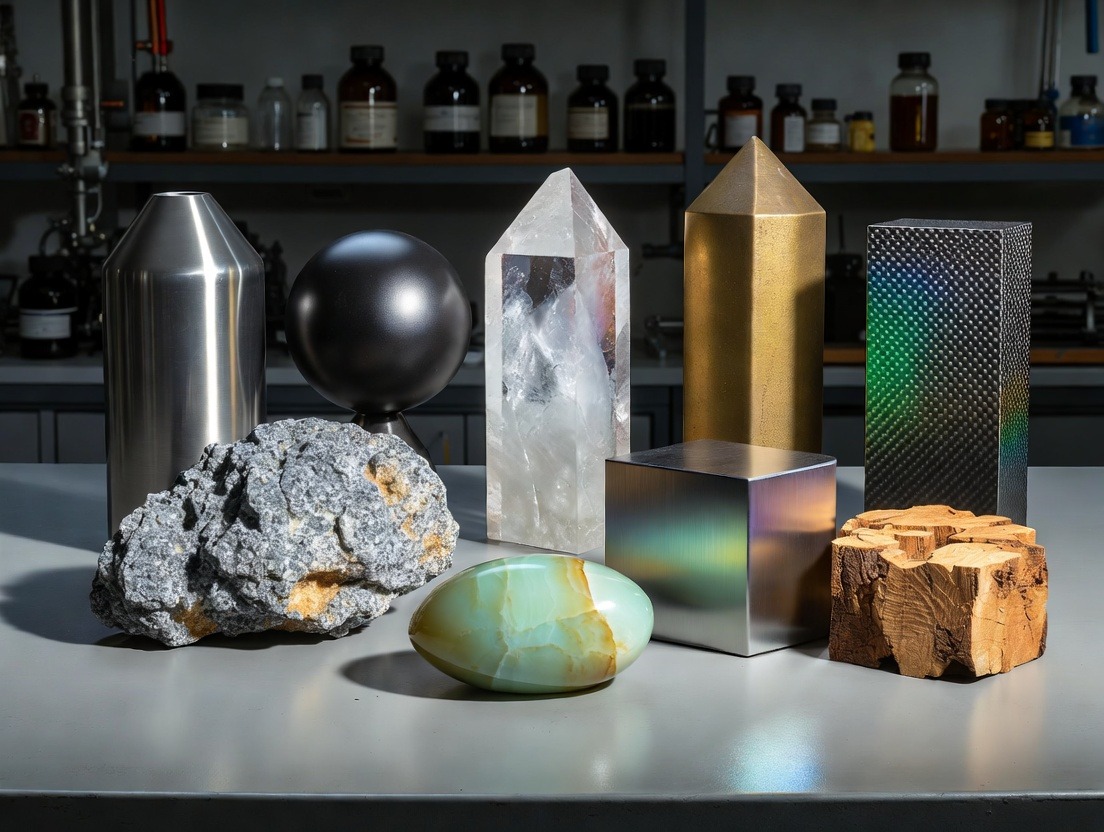
The soul of any durable wearable is its material composition. The choices made here determine its resistance to scratches, dents, corrosion, and wear. Let’s dissect the common materials used in high-end watches and rings, and how they perform under duress.
H3: Metals: The Workhorse Choices
Aluminum (Watch): Lightweight and affordable, often used in standard smartwatch cases. It’s prone to scratching and denting and can develop a weathered "patina" over time. Anodization adds color and a harder surface layer, but it can still chip.
Stainless Steel (Watch & Ring): The industry standard for durability. It offers an excellent balance of strength, corrosion resistance (thanks to chromium), and machinability. Grades like 316L surgical steel are common. It can develop fine "hairline" scratches but is very resistant to deformation. It’s heavier than aluminum or titanium.
Titanium (Watch & Ring): The premium choice for strength-to-weight ratio. Titanium is about 45% lighter than steel but just as strong, and it’s highly resistant to corrosion from sweat and saltwater. It’s also hypoallergenic. Its main downside is that it can develop a distinctive, duller gray scratch pattern over time, though some enjoy this "lived-in" look. Brands like Oxyzen often select titanium for its ideal blend of lightness, strength, and biocompatibility for 24/7 wear.
H3: The Hard Stuff: Beyond Metal
Ceramic (Watch Case & Ring Finish): Not the ceramic of your coffee mug, but advanced zirconia ceramics. They are phenomenally scratch-resistant (harder than steel), lightweight, hypoallergenic, and maintain a lustrous finish forever. The trade-off? Brittleness. A sharp, high-impact blow can cause ceramic to chip or crack, whereas metal would merely dent. It’s often used as a coating or in composite structures.
Sapphire Crystal (Watch Glass & Ring Sensor Window): This is synthetic sapphire, not a gemstone. It’s a crystalline form of aluminum oxide, second only to diamond in hardness on the Mohs scale. For watch faces and ring sensor windows, it is virtually scratch-proof from everyday hazards like keys and sand. It is, however, more brittle than glass and can shatter from a severe, direct impact. Its use is a clear mark of a manufacturer prioritizing premium durability.
H3: Coatings & Finishes: The Final Armor
PVD (Physical Vapor Deposition): A process that bonds an ultra-thin, ultra-hard coating of another material (like titanium nitride) onto the base metal. This gives watches and rings their black, gold, or gunmetal colors and adds significant scratch resistance. A PVD-coated stainless steel ring will resist scratches far better than bare steel.
DLC (Diamond-Like Carbon): A specific, superior type of PVD coating that incorporates carbon atoms, creating a surface that rivals diamond in hardness. It’s exceptionally slick, scratch-resistant, and has a deep, matte black appearance. It’s the pinnacle of wear-resistant coatings for high-end tools and wearables.
H3: The Verdict for Wearables For a smartwatch, the ideal durability combination is a sapphire crystal display, a titanium or ceramic case, and DLC-coated metal accents. This protects the fragile screen and resists case scratches, though the form factor's inherent impact risk remains.
For a smart ring, material science is even more critical due to constant contact. A titanium or stainless steel unibody, with a sapphire-coated sensor window and a DLC or PVD finish represents the apex of ring durability. This combination laughs off keys, resists sweat corrosion, and protects the vital sensors. The investment in these materials, as explored in Oxyzen's about-us philosophy, reflects a commitment to creating a heirloom-grade piece of functional tech, not a disposable gadget. The choice of material fundamentally dictates the device's battle scars—or lack thereof.
Water & Dust Resistance: The IP and ATM Ratings Decoded
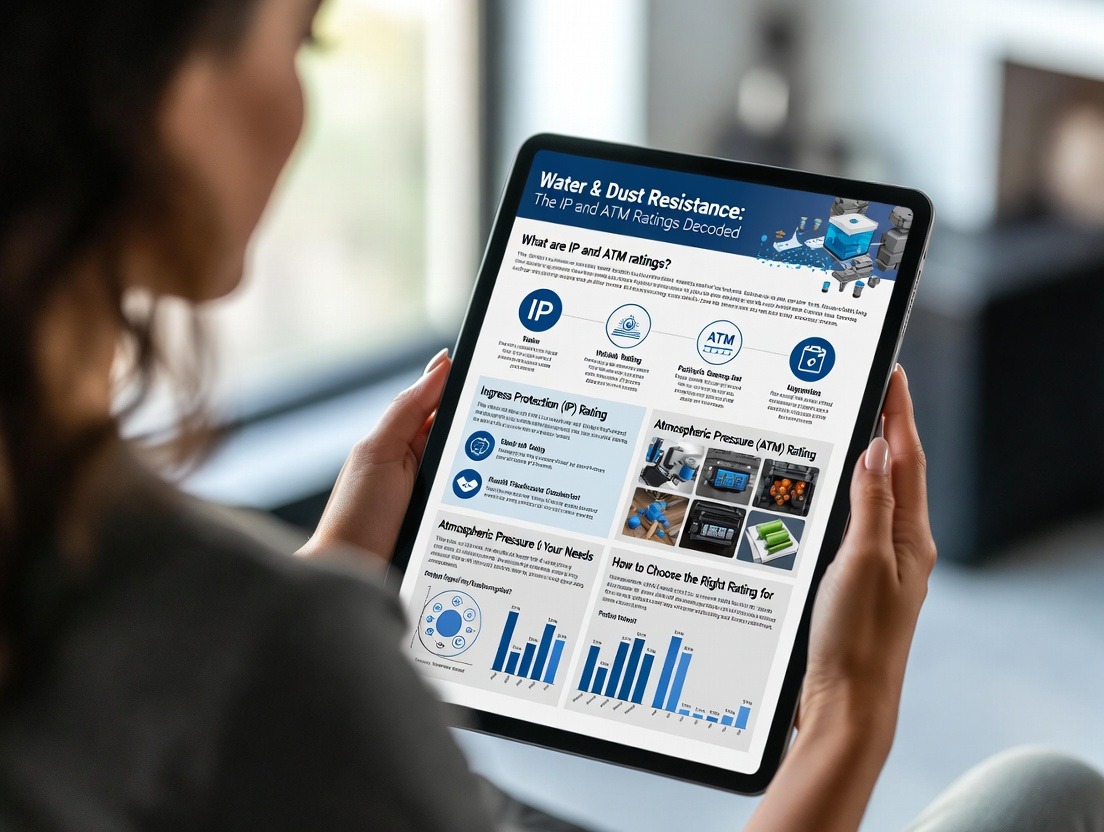
"You can swim with it." This is a common claim, but the devil is in the details. Water and dust resistance are defined by standardized ratings, primarily IP (Ingress Protection) and ATM (atmospheres). Understanding these codes is crucial to knowing your device's true limits and preventing a silent, water-logged death.
H3: IP Ratings: The Code of Protection The IP rating (e.g., IP68) is an international standard (IEC 60529). The first digit refers to solid particle (dust) protection, the second to liquid ingress protection.
First Digit (Solids): Ranges from 0 (no protection) to 6 (dust-tight). For a wearable, IP6X is the gold standard, meaning no dust shall enter. Many devices are rated IP5X (dust-protected), which is sufficient for most environments.
Second Digit (Liquids): This is where it gets nuanced.
IPX7: Can be immersed in 1 meter of fresh water for up to 30 minutes. Good for showers and accidental drops, but not for swimming or high-pressure water.
IPX8: Rated for continuous immersion beyond 1 meter, as specified by the manufacturer (e.g., "up to 50 meters for 10 minutes"). This is suitable for swimming.
Crucial Note: Ratings are achieved under laboratory conditions with static, fresh water. They do NOT account for movement, soap, chlorine, saltwater, or water pressure from a dive or a jet spray.
H3: ATM Ratings: A Watch Heritage Common in traditional and smartwatches, ATM (atmosphere) is a measure of static pressure. 1 ATM = ~10 meters of water pressure.
3 ATM/30m: Splash-resistant only. Not for showering or swimming.
5 ATM/50m: Suitable for showering, swimming in shallow water, and water sports. Not for diving or high-speed water sports.
10 ATM/100m+: Suitable for swimming, snorkeling, and serious water sports.
H3: The Real-World Gap: Why Your "Swim-Proof" Device Can Fail This is the most critical section for longevity. The rating is a snapshot of the device when new. Real-world enemies include:
Soap, Shampoo & Lotions: These are surfactants. They lower the surface tension of water, allowing it to seep past gaskets and seals more easily than pure water in a lab test. Showering with a wearable is one of the fastest ways to degrade its water resistance.
Chlorine & Salt Water: These are corrosive. Chlorine can degrade rubber seals over time. Salt water is conductive and, if it ingresses, causes rapid, catastrophic corrosion on electronics. Always rinse your device with fresh water after exposure.
Temperature Extremes: A hot shower causes thermal expansion, potentially breaking seals. Jumping into a cold pool after a hot day does the same. This thermal cycling can fatigue materials.
Time & Wear: All seals—the tiny gaskets around buttons, speakers, and the main case—are made of rubber or polymer. These materials naturally degrade, dry out, and lose elasticity over 1-2 years. A watch with a 5ATM rating in year one may be only 3ATM in year three.
H3: Ring vs. Watch in the Wet Here, the ring often holds a subtle advantage. A well-made unibody ring with laser-welded seams and no moving parts (like buttons or a crown) has far fewer potential ingress points than a watch. Its sealing challenge is concentrated on the sensor window, which can be bonded with medical-grade adhesive. A watch has multiple buttons, a speaker/mic mesh, and sometimes a rotating crown—each a potential failure point. While both can achieve IPX8 ratings, the ring’s simpler architecture may maintain that seal more reliably over the long term, a key consideration for those whose wellness routine includes daily aquatic therapy or intense sweating, topics often covered in our blog on holistic health tracking.
The takeaway? No rating is a permanent guarantee. Treat your wearable as water-resistant, not waterproof, and always follow the manufacturer's care instructions to maximize its lifespan against its most pervasive enemy: H₂O.
The Scratch Test: Daily Wear and Tear Exposed
The most common battle any wearable fights is not against a dramatic drop into a pool, but against the slow, relentless grind of daily life. The scratch test is a measure of a device's cosmetic and functional resilience against the mundane: office desks, kitchen counters, car doors, and the great nemesis—sand.
H3: The Mohs Scale of Hardness & Everyday Abrasives To understand scratching, we refer to the Mohs scale, which ranks minerals by hardness. A material can only be scratched by something of equal or greater hardness.
Fingernail: ~2.5 Mohs
Copper Coin: ~3 Mohs
Glass/Window: ~5.5 Mohs
Hardened Steel (Knife): ~6-7 Mohs
Quartz (Sand, Dust, Granite): 7 Mohs
Top-tier Watch Glass (Sapphire): 9 Mohs
Notice the villain: Quartz (sand and dust). It’s everywhere—in pocket lint, on tables, in the wind. At 7 Mohs, it will scratch anything softer. Standard watch glass (Gorilla Glass) is around 6-7 Mohs, meaning sand is its perfect match. This is why watches develop a fine "micro-scratch" haze over time. A sapphire crystal (9 Mohs) defies quartz, remaining pristine.
H3: Watch Vulnerabilities: The Canvas of Scratches
The Bezel: The ring surrounding the watch face, often metal or ceramic, is a high-contact zone. A brushed titanium bezel will hide scratches well; a polished stainless steel one will show every mark.
The Case Sides & Lugs: These constantly rub against cuffs, laptop edges, and bags. A DLC coating is a major advantage here.
The Glass: As mentioned, unless it’s sapphire, it will accumulate fine scratches that diffuse light and can make the screen harder to read in bright sunlight over time.
H3: Ring Vulnerabilities: A Different Wear Pattern A ring experiences a different scratching environment.
The Outer Band: Like a watch bezel, it contacts surfaces constantly. However, its curved profile means it often makes a line contact rather than a flat contact, potentially reducing the scratch surface area. A matte or brushed finish will hide wear far better than a high-polish mirror finish.
The Inner Band: This is generally protected by your finger, but can be abraded by sand or grit that gets trapped. This is also where sensor windows live, making a hard sapphire coating critical.
The "Knuckle Test": When making a fist, the rings on adjacent fingers can actually rub and scratch against each other. This is a unique form of metal-on-metal wear not experienced by a watch.
H3: The "Patina" vs. "Damage" Debate This is a philosophical divide. For some, a watch or ring covered in fine scratches tells a story of adventures lived—it’s a "patina." For others, it’s unsightly damage that degrades the appearance and potentially the resale value. Your preference matters.
Watches: Can often have their crystals replaced and cases professionally polished (though polishing removes material and alters shapes).
Rings: A unibody metal ring can also be polished, but this is more delicate if there are coatings (PVD/DLC) which cannot be spot-repaired—the entire coating would need reapplication.
H3: The Practical Winner? In a pure scratch-resistance battle, the device that incorporates sapphire crystal on all glass elements and a DLC-coated titanium body will win, regardless of form factor. However, due to its smaller exposed surface area and lack of a large, flat glass plane as a primary target, a well-made ring is statistically less likely to encounter a catastrophic deep scratch in normal daily use. Its scratches tend to be peripheral. A watch face, as the central focus, shows every blemish front and center. For users who want their device to look pristine for years with minimal worry, the material choice and form factor of a premium ring offer a compelling advantage, a sentiment echoed by users who share their long-term experiences.
The Impact & Shock Test: Surviving Drops, Bumps, and Blows
This is the test of acute trauma. While scratches are a war of attrition, an impact is a sudden, decisive battle. The outcome depends on physics, material science, and a bit of luck. Let's analyze how each form factor handles the inevitable drop or collision.
H3: The Physics of Impact: Force, Area, and Energy Dissipation Newton's laws are unforgiving here. When a moving object (your body, or the device itself) stops suddenly, kinetic energy must be dissipated.
Force Concentration: The key principle is pressure (Force/Area). A watch, with its large, flat face, can concentrate the entire force of an impact onto a single, small point if it strikes a rock or the edge of a table. This is why watch crystals shatter.
Energy Dissipation: A well-designed object will spread this energy out over a larger area or a longer time. A ring’s curved shape is more likely to deflect an impact, changing a direct hit into a glancing blow, which spreads the energy over a longer timeframe and a larger surface area of the ring itself.
H3: Watch Impact Scenarios: A Cautionary Tale
The Flat Drop onto Pavement: The watch lands face-down. Result: Almost guaranteed shattered screen or at least deep, permanent gashes. The crystal takes the full brunt.
The Edge Impact: The watch strikes a table edge on its side. Result: Potential for a cracked case, damaged button, or a deep dent in the metal. The lugs are particularly vulnerable.
The "Whack-A-Mole" (Hitting a Doorframe): As your arm swings, the watch smacks a solid object. This is a high-momentum impact. Result: Similar to edge impact—case damage, crown shearing off, or internal damage to the vibration motor or sensors from the shock.
H3: Ring Impact Scenarios: Rolling with the Punches
The Drop onto a Hard Surface: A ring will bounce and roll, distributing the impact over multiple small contacts. The most likely damage is a small dent or a scuff on the metal, not a structural failure.
The Knuckle Slam: You scrape or slam your hand. The ring takes the hit instead of your skin. The curved surface slides, often resulting in a long, shallow scratch (a "graze") rather than a focused point of damage.
The Crushing Grip (e.g., catching a heavy object): This applies even, compressive force around the ring's circumference—a force its toroidal shape is inherently good at resisting. It’s unlikely to crack, though an extremely cheap, thin ring could bend.
H3: Internal Shock: The Silent Killer A severe impact can damage components inside the device even if the exterior looks okay.
Watches: Have delicate linear resonant actuators (haptic engines), barometric altimeters, and tightly packed circuit boards. A hard shock can disconnect solder joints or damage these micro-components.
Rings: Their internals are typically potted—encased in a solid epoxy resin that fills all internal space. This resin locks components in place, prevents moisture ingress, and, crucially, acts as a superb shock absorber, distributing impact forces throughout the entire internal volume and away from individual solder points. This is a massive advantage for impact survival.
H3: The Verdict on Shock While no device is immune to extreme trauma, the smart ring possesses inherent design and engineering advantages for surviving accidental impacts. Its small, rounded shape promotes deflection, its unibody construction lacks fragile protrusions, and its potted electronics are inherently shock-resistant. A watch, with its large glass target, protruding crown, and complex internal assembly, is simply more vulnerable to a single, unlucky event that can end its functional life. For the clumsy, the active, or the simply unlucky, this is perhaps the most decisive factor in the durability debate. For parents, tradespeople, or adventurers, this ruggedness is not a luxury but a necessity, a core part of the value promised by durable wellness tech as discussed in Oxyzen's our-story.
Battery and Charging: The Lifespan of Power
For an electronic wearable, the battery is its beating heart. You can have the toughest shell in the world, but if the battery degrades to a 2-hour life, the device is a brick. The chemistry, charging behavior, and design of the power system are paramount to long-term durability.
H3: Battery Chemistry 101: Lithium-Polymer in Wearables Nearly all smart wearables use Lithium-Polymer (Li-Po) batteries. They are lightweight, can be shaped to fit odd spaces, and have a good energy density. However, they degrade predictably:
Cycle Life: A battery is rated for a number of full charge cycles (e.g., 500 cycles to 80% capacity). A cycle is 0% to 100%. Partial charges add up to a cycle.
Degradation Factors: Heat is the #1 enemy. Fast charging generates heat. Leaving a device on a charger at 100% for extended periods (like overnight, every night) stresses the battery. Deep discharges (to 0%) are also harmful.
H3: The Watch's Battery Challenge: Capacity vs. Drain Smartwatches have large, bright displays and powerful processors to run apps. This demands a large battery (often 300-500 mAh). However, that screen and those features drain it quickly, leading to daily or every-other-day charging.
High Cycle Count: Charging every day means ~365 cycles per year. Even with a 500-cycle battery, you’re looking at significant capacity loss (~20%) in under two years.
Heat During Charging: The larger the battery, the more heat it can generate during fast charging, accelerating degradation.
Replacement: Watch batteries are often user-inaccessible. Replacement requires a professional, is costly, and may compromise water resistance if seals aren’t perfectly reinstalled.
H3: The Ring's Battery Advantage: Efficiency Over Size Smart rings have no screen. This is their superpower. Without the biggest power drain in electronics, they can operate with a tiny battery (often 15-22 mAh) and sip power.
Low Cycle Count Due to Long Life: A premium ring can last 5-7 days on a charge. That's ~52-75 charge cycles per year. At that rate, it would take nearly 7 years to hit 500 cycles.
Gentler Charging: Smaller batteries charge quickly with very low current, generating minimal heat. A typical ring charges in 60-90 minutes on a low-power dock.
The Trade-off: The absolute capacity is small, so when degradation does eventually happen, the percentage loss is more noticeable. However, starting from a 7-day lifespan, even a 20% loss leaves you with 5-6 days—still vastly more convenient than a watch that degrades from 1.5 days to 1 day.
H3: Charging Hardware Durability
Watches: Use proprietary magnetic pogo-pin docks or wireless charging pucks. The metal contacts on the watch back can corrode with sweat. The cables can fray.
Rings: Use external charging docks or cases with pins that contact the outside of the ring. There are no ports on the ring itself to get clogged or corroded. The dock is a separate, replaceable item if it fails.
H3: Maximizing Your Battery's Lifespan (Universal Tips)
Avoid Extreme States: Try to keep your device between 20% and 80% charge for daily use. It’s okay to charge to 100% for a long day, but don’t leave it plugged in indefinitely.
Use Slow Charging When Possible: If your device supports it, use a slower, standard charger instead of a super-fast one. Heat kills.
Mind the Temperature: Don’t charge on a hot car dashboard or directly after a hot workout. Don’t leave it in freezing conditions while depleted.
In the marathon of device longevity, the smart ring’s ultra-low-power philosophy grants it a decisive, multi-year advantage in battery lifespan. Its need for far fewer charge cycles directly translates to slower degradation. While a watch battery may become a pain point in 2-3 years, a ring’s power cell is engineered for a much longer service life, ensuring the device remains viable for years. This is a critical, often overlooked aspect of true durability, and a key differentiator for those planning a long-term relationship with their health data, a topic we explore further in resources on our blog.
Software and Update Longevity: The Digital Half-Life
A wearable is a unique hybrid: part jewelry, part computer. And like any computer, its hardware is only as good as the software that drives it. You could own a physically pristine device a decade from now, but if its software is obsolete, unsupported, and insecure, it’s a digital fossil. This is the concept of "digital durability."
H3: The Planned Obsolescence Trap The tech industry, particularly in the smartphone and smartwatch space, has a history of providing major software updates for only 2-4 years. After this, you stop receiving:
New Features: Sleep stage algorithms, recovery metrics, and fitness tracking methods are constantly improving. Without updates, you're locked out.
Security Patches: A vulnerability in the Bluetooth stack or OS could be exploited.
App Compatibility: Third-party apps may stop supporting your old device's operating system version.
Data Syncing: The companion phone app may eventually require a newer OS, leaving your wearable orphaned.
H3: The Smartwatch: A Mini-Smartphone’s Burden Most advanced smartwatches run a full operating system (WatchOS, Wear OS). This grants them rich app ecosystems but also saddles them with the same rapid update cycle and eventual obsolescence as phones. The manufacturer must commit significant resources to maintain and update a complex OS for multiple hardware generations—a cost that often has a cutoff date.
H3: The Smart Ring: The "Firmware-First" Advantage Smart rings typically do not run a general-purpose OS. They are specialized devices running lean, proprietary firmware on efficient microcontrollers.
Easier to Maintain: Updating firmware is less resource-intensive than updating a full OS. A company can support a ring's firmware for a longer period because it's a simpler codebase.
Focus on Core Biometrics: The development focus is on refining sensor algorithms (HRV, SpO2, temperature)—improvements that can be delivered via firmware updates to existing hardware, extending its useful life.
Less Dependency on Apps: The ring’s value is in its raw biometric data and core wellness metrics, which are processed in the cloud or a companion app. As long as the ring can accurately collect and transmit that data, its core function remains intact even if the app receives a visual overhaul.
H3: The Cloud & Ecosystem Factor The longevity of your data is also part of the equation. A reputable company will maintain its cloud services and data syncing architecture for the lifetime of its supported devices. They should have a clear policy on data portability and support. Investigating a company's long-term vision, as detailed in their about-us page, can offer clues about their commitment to supporting your device—and your data—over many years.
H3: How to Gauge a Company’s Update Commitment
Check Historical Support: How long did they provide updates for their previous product generations?
Look for Transparency: Do they communicate a support timeline? Do they have a public roadmap?
Analyze the Business Model: Is the company selling a disposable fashion tech item, or a durable health tool? Companies building a brand around lifelong wellness are more likely to invest in long-term software support.
In the duel of digital durability, the smart ring’s simpler, firmware-driven nature gives it a structural advantage for longer software support cycles. While a smartwatch may become a sluggish, insecure relic in 4 years, a smart ring has the potential to remain a secure, accurate, and updated health monitor for 5, 6, or even 7 years, protecting your investment far into the future. This is where the true cost of ownership is defined.
Real-World User Scenarios: How They Hold Up in Actual Life
Lab tests and spec sheets are one thing; the messy reality of human life is another. Let’s project our two contenders into common, high-risk scenarios to see how their durability theories hold up in practice.
H3: Scenario 1: The Construction Worker / Tradesperson
Environment: Dust, metal shavings, impact with tools and materials, sweat, chemical exposure (glue, solvents).
Watch Performance: High Risk. The large face is a magnet for deep scratches and shattering from falling tools or scraping against lumber. Dust will jam the crown and buttons. Sweat and chemicals will degrade seals and straps rapidly. Likely to suffer catastrophic failure within months.
Ring Performance: Moderate-High Risk, but Better. The ring is more likely to survive impacts due to its shape and potting. However, fine metal dust or abrasive particles could scratch it heavily and clog the sensor window, requiring diligent cleaning. A coated titanium ring would be the best choice here. It’s less likely to be shattered but will show its wear proudly.
H3: Scenario 2: The Serious Athlete (CrossFit, Weightlifting, Rugby)
Environment: High-impact collisions, heavy grip pressure, barbell contact, chalk (dust), profuse sweat, rapid temperature changes.
Watch Performance: Catastrophic. Wearing a watch during weightlifting or contact sports is asking for trouble. The glass will shatter against a barbell. The strap will snap under a heavy clean. It’s simply not designed for this.
Ring Performance: Good (with caveats). Many athletes already wear metal wedding bands. A smart ring faces the grip pressure challenge. A well-made, thick-walled ring will resist deformation. The major concern is a direct, crushing impact on the ring (e.g., a heavy drop onto the finger), which could damage both ring and finger—a risk with any ring. During contact sports, it’s often recommended to remove any jewelry, smart or otherwise.
Watch Performance: Moderate. Will accumulate fine desk-diving scratches on the clasp and bezel. The screen may get scratched by keys in a bag. Could be damaged by an enthusiastic toddler whacking it with a toy. Water resistance is tested by hand-washing and baby messes.
Ring Performance: Very Good. Excellently suited for this life. Desk scratches are minimal on a curved surface. Easy to wash hands without worrying about crown seals. Less likely to be grabbed and yanked by a child than a watch. The low-profile design avoids catching on clothing or bags. This is arguably the ideal use case for a smart ring’s durability.
H3: Scenario 4: The Avid Swimmer & Beachgoer
Environment: Salt water, chlorine, sand, UV exposure, heat.
Watch & Ring Performance: Both Require Extreme Care. Both must have a high IPX8 rating. The absolute rule is to rinse with fresh water after every swim. Sand is the enemy of both, but particularly for a watch's moving parts. A ring's sensor window must be kept free of sand and sunscreen residue. Long-term, chlorine will attack any rubber seals on a watch more aggressively than a ring's static seals.
Watch Performance: Variable. A good outdoor watch with sapphire and a rugged case can survive. The constant need for charging is a major hassle when off-grid.
Ring Performance: Excellent. Its long battery life (5-7 days) is a huge advantage for travel. Its low profile is safer in crowded places and less likely to snag on backpack straps. Impact resistance is good for mild hiking scrapes. It’s the ultimate "set it and forget it" travel companion for health tracking.
The verdict from the field is clear: for most moderate, daily lifestyles, the smart ring’s design offers superior and more consistent durability. It excels in the office, at home, and while traveling. In extreme environments (heavy labor, heavy impact sports), both devices face significant risks, though the ring’s lack of a large screen still gives it a marginal survival edge. The watch’s vulnerabilities are simply more exposed and catastrophic in a wider range of common activities. For a deeper dive into how different lifestyles integrate wearable tech, explore our community testimonials and stories.
Long-Term Cost of Ownership: Repair, Replacement, and Value Retention
Durability isn't just about survival; it's about economics. The true cost of a wearable spans its purchase price, maintenance, potential repairs, and its residual value. When viewed through this lens, the initial price tag tells only part of the story.
H3: The Upfront Price Paradox It's true: you can buy a capable smartwatch for $200-$300. A premium smart ring often starts at $275-$350 and can go much higher. This makes the watch seem like the economical choice. However, this is a classic case of "buy cheap, buy twice."
H3: The Watch's Hidden Sinkhole: Repairs
Screen Replacement: The most common repair. For a popular smartwatch, this can cost $150-$400, sometimes approaching the cost of a new device. It often requires mailing the device away for weeks.
Battery Service: After 2-3 years, this may be needed. Cost: $80-$150.
Out-of-Warranty General Repair: For water damage or other issues, fees can be steep and are often just replaced with a "refurbished unit" at a significant cost.
Band Replacement: While often cosmetic, premium metal or leather bands can cost $50-$200.
H3: The Ring's (Relative) Simplicity
Repairs: Due to its unibody, potted design, there are typically no user-serviceable parts. If it fails under warranty, the standard procedure is replacement. Out-of-warranty repair is often not economically feasible; it would be a full unit replacement, similar to modern smartphones.
Battery: As discussed, its slower degradation means this is less likely to be a pain point during the device's primary lifespan.
The Key Difference: Because the ring's design eliminates the most common point of failure (the large screen), the statistical likelihood of needing a costly repair is significantly lower. You are paying a premium upfront for a design that avoids the most expensive point of failure.
H3: The Upgrade Cycle and Residual Value
Smartwatches: Have a faster upgrade cycle (1-3 years), driven by OS obsolescence, battery degradation, and desire for new features. This rapid turnover crushes their second-hand value. An old smartwatch has very little resale value.
Smart Rings: With longer potential software support and no screen to become outdated, the upgrade cycle can be longer (3-5+ years). Furthermore, as a piece of jewelry-grade tech, it holds value better. A titanium ring from a reputable brand retains a tangible, physical value and can often be resold or passed down more easily than a scratched, outdated smartwatch.
H3: The Warranty as a Predictor Always examine the warranty. A standard 1-year warranty is the minimum. A company offering a 2-year or longer warranty is signaling confidence in their product's durability. It's a direct investment in reducing your long-term cost of ownership. Check the manufacturer's policies on what the warranty covers (e.g., does it cover water damage?) to understand their durability promises, details often clarified in their FAQ.
H3: Total Cost of Ownership Calculation (5-Year Horizon)
Budget Smartwatch ($250): Purchase + 1 screen replacement ($150) + 1 battery service ($100) + 2 replacement bands ($80) = ~$580. Likely replaced entirely at year 3, so double the initial cost.
Premium Smart Ring ($350): Purchase price. Potential for no repairs if durability holds. May last the full 5 years with minor cosmetic wear. ~$350.
When projected over a multi-year period, the premium smart ring often emerges as the more economical choice. Its higher initial cost buys you out of the cycle of expensive, screen-centric repairs and rapid obsolescence that plagues the smartwatch category. You're investing in a durable health tool, not a fragile mini-computer on your wrist. This economic rationale, combined with the performance benefits, forms a compelling case for those looking to make a wise, long-term investment in their wellness technology.
The Human Factor: Fit, Comfort, and User Error
Beyond the raw physics of materials and impacts lies the most unpredictable variable: the human wearing the device. Durability isn't just about surviving the environment; it's about surviving us—our habits, our physiology, and our mistakes. How do fit, comfort, and daily behavior influence the lifespan of a ring versus a watch?
H3: The Fit Imperative: A Foundation for Function and Survival A poorly fitting wearable is a vulnerable one.
The Watch Fit: A watch can be worn somewhat loose without catastrophic failure, though a very loose watch is more likely to swing and impact objects. The greater risk from a poor fit is sensor inaccuracy for health metrics. However, a strap that's too tight can cause skin irritation and accelerate wear on the band's materials and pin mechanisms from constant strain.
The Ring Fit: This is non-negotiable. A ring that is too loose will spin incessantly. This spinning dramatically increases the surface area exposed to scratches and impacts (the entire circumference, not just the top). More critically, it exposes the delicate inner sensor window to the outside world—scraping against desks, keys, and other fingers. A loose fit also causes motion artifact, ruining heart rate and SpO2 data. A ring that is too tight is uncomfortable, can restrict blood flow (ironically skewing some biometrics), and becomes very difficult to remove in case of finger swelling. Professional sizing, using a physical sizer kit sent by the manufacturer, is absolutely essential for durability and performance. A perfect fit minimizes movement, protects the sensors, and ensures consistent, accurate data—the hallmark of a device like Oxyzen, which emphasizes precise sizing as the first step in the user journey, detailed in their support resources.
H3: The 24/7 Comfort Conundrum To track recovery and sleep, the device must be worn at night. Comfort directly influences consistency, and consistency defines the device's utility.
Watch at Night: Many people find a watch bulky and annoying to wear in bed. It can catch on sheets, feel restrictive, and its glowing screen can be a nuisance. This leads users to frequently take it off, creating opportunities for drops during sleepy fumbling and breaking the continuous data stream.
Ring at Night: The ring form factor excels here. Once properly fitted, most users report forgetting it's there, even during sleep. Its low profile doesn't catch on bedding. This seamless 24/7 wearability isn't just a comfort win; it's a durability win. The less you handle the device—taking it on and off—the fewer opportunities for accidental drops into sinks or onto hard floors. It lives safely on your finger.
H3: User Error: The Great Accelerator of Wear We are our devices' worst enemies.
The Shower Fallacy: As covered, showering with a water-resistant device is a top cause of seal degradation. Users see an IPX8 rating and assume it's safe, not realizing soap is the enemy.
Chemical Exposure: Applying sunscreen, bug spray, or lotion directly over a wearable, or cleaning it with harsh chemicals like alcohol or ammonia-based cleaners, can degrade coatings, seals, and oleophobic layers.
Improper Charging: Yanking cables out by the cord instead of the connector, using incompatible fast chargers that overheat the battery, or charging on uneven, heat-trapping surfaces.
The "One Wrong Move": For a watch, this is catching the crown on a sweater sleeve and snapping it. For a ring, it's a specific, severe pinch or crush injury (e.g., in a weightlifting accident) that could damage both ring and finger. While the ring is generally more impact-resistant, its failure mode, when it occurs, can be more intimately connected to physical harm.
H3: Adaptation and Behavior Change Interestingly, the device itself can influence user behavior in ways that affect its longevity.
A Watch can make you more conscious of your wrist, perhaps leading you to "baby" it during certain activities or take it off frequently.
A Ring, due to its forgettable nature, might lead to a false sense of invulnerability. You might forget it's on and engage in a messy task like gardening or painting. While its durability is an asset here, this also means it's exposed to a wider, unfiltered range of your daily life without the conscious reminder a watch provides.
The human factor ultimately tips the scales in favor of the form factor that best integrates into the human experience. The smart ring’s advantage in 24/7 comfort and secure fit reduces handling and conscious babying, leading to fewer accidental damages. Its design encourages you to live your life while it silently does its job—the ultimate test of practical durability. For answers to common questions on fit, care, and best practices to avoid user error, a great resource is the manufacturer's comprehensive FAQ.
Manufacturer Reputation and Build Quality: Beyond the Marketing
Two devices can have identical IP ratings and use similar-sounding materials, yet one fails in a year while the other lasts a decade. This disparity almost always comes down to the intangible yet critical factors of manufacturer philosophy, quality control, and attention to detail. Where a product is made and how it’s made matters immensely.
H3: The Philosophy Divide: Gadget vs. Tool
Gadget-Minded Brands: Often prioritize flashy features, rapid iteration, and low cost to capture market share. Durability can be an afterthought, achieved with minimum viable specs. These products are designed for the 2-year upgrade cycle.
Tool-Minded Brands: View their device as a long-term investment for the user. They prioritize material integrity, precision manufacturing, and conservative, real-world testing over chasing spec sheet checkmarks. Companies like Oxyzen, which root their mission in lasting wellness partnerships, as seen in their our-story, typically fall into this category. This philosophy is reflected in choices like using aerospace-grade titanium, medical-grade adhesives, and multi-stage quality control.
H3: Quality Control: The Invisible Shield An IP68 rating means nothing if the seal isn't perfectly applied to every single unit.
Sample-Based Testing vs. 100% Testing: Many factories test a random sample from a production batch. A "tool-minded" manufacturer often insists on 100% testing of critical parameters like water resistance and battery function for every single unit before it leaves the factory.
Tolerance Stack-Up: This is an engineering term for the cumulative effect of tiny variations in parts. A watch case, crown, crystal, and gasket might each be within "tolerance," but if they are all at the extreme ends of their tolerance ranges in the same unit, the water resistance could fail. Premium manufacturers work with tighter tolerances and more sophisticated assembly to prevent this.
Finish and Detail: Run your finger along the seam of a device. Are there sharp edges or uneven gaps? Is the coating even? These are telltale signs of manufacturing rigor (or lack thereof). A perfectly smooth, seamless join on a ring isn't just aesthetic; it's a sign of advanced milling and finishing that contributes to structural integrity and seal quality.
H3: The "Where" Matters: Manufacturing Origin While "Made in [Country]" is not a sole guarantee of quality, specific regions have built reputations for excellence in certain types of manufacturing.
Precision Machining & Jewelry: Switzerland, Germany, Japan, and South Korea have centuries-deep expertise in machining hard metals like steel and titanium to microscopic tolerances—the exact skill needed for a high-end unibody ring.
High-Volume Consumer Electronics: Manufacturing hubs are capable of incredible scale and increasingly high quality. The differentiating factor becomes the brand's own engineering team's oversight, on-site quality audits, and the specificity of their demands to the factory.
H3: Warranty and Support as a Confidence Metric A warranty is a financial gamble a company makes on its own product's reliability.
A Standard 1-Year Warranty is the legal baseline.
A 2+ Year Warranty is a strong signal of confidence. It says, "We expect this to last, and we'll back that expectation."
Support Responsiveness: How a company handles a warranty claim or a support question is telling. Are they quick to replace a legitimately faulty unit, or do they engage in blame-shifting? A company that stands by its product, like those that highlight real user experiences in their testimonials section, builds long-term trust that transcends any single device.
When evaluating durability, you must look past the advertised specs to the brand's ethos. A smart ring from a company obsessed with precision manufacturing and long-term user health will almost always be more durable than a smartwatch from a company competing on app count and screen brightness. The former is building a companion; the latter is selling a product. This foundational difference manifests in every screw, every seal, and every software update, defining the true lifespan of the device on your wrist—or finger.
The Environmental Endurance Test: Heat, Cold, and UV
Our wearables accompany us from winter ski slopes to summer beaches, from saunas to air-conditioned offices. These environmental extremes test materials and electronics in ways a simple drop test cannot. Let's examine how rings and watches withstand the elements.
H3: Thermal Extremes: Expansion, Contraction, and Battery Betrayal All materials expand when hot and contract when cold. When different materials bonded together (like glass, metal, and plastic) expand at different rates, stress fractures can occur.
High Heat (Sauna, Hot Car Dashboard, Summer Sun):
Watch Risks: The battery is the primary victim. Lithium-ion batteries degrade rapidly at temperatures above 95°F (35°C). Leaving a watch on a car dashboard on a summer day can permanently damage its capacity. The adhesives holding the display can soften, and seals can relax, potentially breaking the water-resistance barrier.
Ring Risks: Similar battery concerns apply, though a ring is less likely to be left in direct sun on a dashboard. The risk here is more about the human wearer. Extreme heat can cause fingers to swell. A perfectly fitted ring can become dangerously tight in a sauna, posing a safety risk. It is generally advised to remove any ring before entering a sauna or steam room.
Extreme Cold (Skiing, Winter Sports):
Watch Risks: Battery capacity plummets in the cold, leading to sudden shutdowns. LCD screens can become sluggish. Metal against skin in sub-zero temperatures is uncomfortable and can even cause frostbite in extreme conditions.
Ring Risks: Again, the battery will suffer. The metal will become very cold to the touch. Finger shrinkage in the cold could cause a ring to become loose and potentially fall off without the wearer noticing, especially when removing gloves.
H3: UV Radiation: The Slow Fade Prolonged, direct sunlight is a potent degrader of materials.
Watch Damage: Silicone and plastic bands can become brittle, discolored, and crack over time. Leather straps dry out and crack. Certain colored coatings and paints can fade.
Ring Damage: A ring's metal or ceramic body is largely immune to UV. However, any colored coating (PVD, DLC) is extremely stable, but in theory, over many years of intense exposure, could experience minute fading. The primary concern would be for any external sensor window polymer, though premium rings use sapphire or glass which are UV-stable.
H3: Barometric Pressure and Altitude This is a niche but important factor for hikers, climbers, and fliers.
The Watch: Most have a barometric altimeter, which means they have a tiny pressure relief port to allow air pressure in. This port is designed to keep water out via a hydrophobic membrane, but rapid, extreme pressure changes (like in an unpressurized aircraft cabin) could theoretically stress this system.
The Ring: A hermetically sealed, unibody ring has no need for a pressure port. Its internal electronics are potted in solid resin, which is unaffected by pressure changes. This makes it inherently more robust in environments with fluctuating atmospheric pressure.
H3: The Verdict on Environmental Toughness Neither device is indestructible in the face of nature's extremes, and both share the critical vulnerability of their lithium-ion batteries to heat and cold. However, the smart ring has a slight edge in structural resilience to thermal cycling and pressure changes due to its simpler, more monolithic sealed construction. The watch, with its multiple material layers, dynamic seals on buttons, and pressure-sensitive components, has more potential failure points when subjected to repeated expansion and contraction.
The practical takeaway is universal: Protect your wearable from temperature extremes. Don't wear it in a sauna or hot tub. Don't leave it on a car dashboard. In freezing conditions, be aware of battery drain and fit changes. The environment is an impartial tester, and the most durable device is the one cared for with a basic understanding of its limits. For more tips on caring for your device in various environments, our blog offers detailed guides and best practices.
The Test of Time: Aging, Patina, and Perceived Durability
Durability is not a static state; it's a narrative that unfolds over years. How does each device age? Does it become a treasured relic with character, or a worn-out piece of tech begging for replacement? This is where psychology and material science intersect.
H3: The Psychology of Wear: Damage vs. Patina
On a Watch: A scratched glass face is almost universally perceived as damage. It obscures information, diffuses light, and looks unkempt. A dented metal case looks abused. For a tech product with a screen, clarity is king, and any compromise is negative. This pushes users toward screen protectors (which can peel and bubble) or frequent, expensive replacements.
On a Ring: Scratches on a metal band tell a different story. On a matte or brushed titanium ring, fine scratches blend into the existing texture. On a polished ring, they can create a "satin" finish over time. Many cultures value the worn look on a ring—it signifies it's lived a life. It becomes patina. Because it doesn't obstruct function (the internal sensors are protected), the wear is purely cosmetic and often embraced. This psychological acceptance of surface aging significantly extends the perceived lifespan of the device.
H3: Material-Specific Aging Patterns
Titanium: Develops a soft, grayish scratch pattern that tends to uniformize over time. It doesn't tarnish or rust. It ages gracefully.
Stainless Steel: Shows sharper, more visible scratches but can be polished to a high shine repeatedly (removing a small amount of material each time). Prone to showing fingerprints and smudges.
Ceramic: Stays looking brand new forever, resisting all scratches. But if it does chip, the damage is stark, white, and impossible to repair invisibly.
DLC/PVD Coatings: Extremely scratch-resistant, but if something hard enough does penetrate the coating, it reveals the bright, shiny metal underneath, creating a noticeable contrast.
H3: Sensor Degradation Over Years This is a critical functional aspect of aging.
Watch Sensors: The optical heart rate sensor on the back is protected by a glass or sapphire window. It can become clouded by lotion residue and micro-scratches from dirt on the wrist. Over many years, this could potentially degrade accuracy, though cleaning can mitigate it.
Ring Sensors: The inner sensor window is in constant, moist contact with skin. While protected by hard materials, it is susceptible to buildup of dead skin cells, oils, and lotions. Regular, gentle cleaning is paramount for long-term accuracy. A well-maintained sensor window should function perfectly for the life of the device. The company's commitment to providing cleaning guidance and support, as found in their FAQ, is essential here.
H3: The "Out-of-Date" Look: Technological Staleness A device can be physically intact but feel old.
The Smartwatch: Rapid OS changes mean a 5-year-old watch looks and feels archaic. The interface is slow, the apps no longer update, and the design language is dated. Its technological age is glaring.
The Smart Ring: Its form is simple and timeless—a band. There is no interface to become outdated. As long as it syncs data to a modern app, its physical presence doesn't scream "old tech." It can more easily transition from a cutting-edge gadget to a simple, classic health-tracking tool.
In the test of time, the smart ring possesses a psychological and functional advantage. Its wear is more easily accepted as character, not damage. Its lack of a screen avoids the most visually jarring form of aging. And its timeless form factor avoids the aesthetic obsolescence that plagues screen-based tech. A ring is built to become a part of you, evolving with you, which is why brands focused on lasting wellness, like Oxyzen, emphasize design longevity in their about-us philosophy. The watch, in contrast, often feels like a piece of tech on a timer, both physically and digitally.
The Data Continuity Argument: Which Form Factor Guarantees Unbroken Insights?
We buy these devices for data—the continuous stream of heart rate variability, sleep stages, activity levels, and readiness scores that guide our health decisions. Therefore, the ultimate measure of durability is not just a device's survival, but the survival of its data stream. Breaks in data are breaks in understanding. Which form factor is more likely to provide an unbroken chain of insights?
H3: The Charging Gap: Planned Downtime
The Smartwatch: With 1-2 day battery life, charging is a frequent, necessary interruption. Even the most diligent user faces a 1-2 hour window daily or every other day where no data is collected. This creates blind spots, especially in sleep tracking if charged overnight or afternoon recovery metrics if charged during the day.
The Smart Ring: A 5-7 day battery life changes the game. Charging can be scheduled for a predictable, low-activity time (e.g., a Sunday afternoon while reading). This 60-90 minute gap weekly is a negligible blip in the grand scheme of continuous data. It allows for truly uninterrupted sleep and recovery tracking across weeks and months.
H3: The "Forgot to Wear It" Problem
The Watch: Due to discomfort during sleep, sports, or formal events, watches are frequently removed. It's easy to forget to put it back on. A meeting runs late, you rush out, and your watch sits on the charger at home. A full day of activity and stress data is lost.
The Ring: Its 24/7 wearability is transformative. You don't take it off for sleep, for the gym, or for the office. It becomes like a wedding band—a constant part of you. The "forgot to wear it" problem virtually disappears, ensuring data collection is passive and automatic.
H3: Repair Downtime: The Data Blackout When a device breaks, the data stops.
Watch Repair: As discussed, repairs (especially screen replacement) can take days or weeks. This creates a massive data void.
Ring "Repair": The standard procedure for a faulty ring under warranty is typically a swift replacement. While you wait for the new unit (often a matter of days), you still have a data gap, but the statistical likelihood of needing this repair is lower to begin with.
H3: User Compliance and Lifestyle Integration The most accurate device in the world is useless if you don't wear it. Durability influences compliance.
A fragile watch that you're afraid to scratch during your hobby leads to you leaving it behind. Data gap.
A bulky watch you can't sleep with leads to you removing it. Data gap.
A durable, comfortable ring that survives your hobby and feels like nothing when you sleep naturally leads to 100% compliance. The ring’s physical durability and ergonomic design directly enable data continuity.
H3: The Long-Term Biomarker Perspective Advanced health tracking is about trends over months and years. A 5% shift in your resting heart rate or a consistent change in your sleep heart rate variability is medically meaningful. To see these trends, you need a clean, consistent dataset.
Frequent gaps from charging, forgetfulness, or repairs create "noise" in your long-term data, making it harder to identify true physiological trends.
The ring’s combination of long battery life and set-and-forget wearability provides the cleanest, most continuous dataset possible from a consumer wearable. This isn't just a convenience feature; it's the foundation of its value as a health tool.
In the most critical metric—the uninterrupted flow of actionable health insights—the smart ring is architecturally superior. It is designed for always-on data collection in a way a smartwatch, bound by its power-hungry screen and occasional-wear nature, simply cannot match. For anyone serious about longitudinal health tracking, this continuity is arguably more important than any single durability spec. It represents the fulfillment of the promise of wearable tech, a promise explored in depth through user experiences and case studies on the Oxyzen blog.
Industry Trends and Future-Proofing: Where is Durability Headed?
To make a truly future-proof choice, we must look beyond today's models. What are the trajectories of smartwatch and smart ring design? Which form factor is evolving in a way that promises even greater durability and longevity?
H3: Smartwatch Trends: Bigger, Brighter, More Fragile? The dominant trend in smartwatches is toward larger, always-on displays with higher brightness and refresh rates. This pushes against durability in several ways:
Larger Glass Target: More surface area for impacts.
Increased Power Demand: Shrinks battery life, accelerating charge cycle degradation.
Thermal Management: More powerful processors and brighter screens generate more heat, the enemy of batteries and seals.
Material Innovations: While foldable screens and ultra-tough glasses like Gorilla Glass Armor are emerging, they are often first implemented in phones and may take years to trickle down, usually to premium models only. The mainstream watch trend is not moving toward greater physical robustness.
H3: Smart Ring Trends: Integration and Material Science The ring category is young and evolving rapidly, with a clear focus on integration and resilience.
Advanced Biocompatible Materials: Research into coatings that are even more scratch-resistant and anti-microbial. Increased use of ceramics and composites for hypoallergenic and ultra-durable bodies.
Solid-State Battery Integration: The holy grail for wearables. Solid-state batteries promise higher energy density (longer life), faster charging, and significantly better longevity (thousands of cycles). Their solid form factor is also inherently safer and could be molded into the ring's shape, potentially leading to even more robust, unibody designs.
Sensor Fusion and Miniaturization: As sensors shrink and become more power-efficient, rings will be able to incorporate more capabilities (e.g., ECG) without compromising size or battery life, further cementing their all-in-one health monitor role.
Jewelry-First Design: The trend is toward rings that are indistinguishable from high-end jewelry, using precious metals and gemstones. This design language inherently values timelessness and durability, moving the category away from "tech gadget" and toward "heirloom health device."
H3: The Software and Ecosystem Future
Watches: Likely to remain tied to smartphone OS ecosystems (iOS, Android), subject to their development cycles and eventual obsolescence.
Rings: May develop more open, data-centric platforms. Their value is in the biometric data stream, which could be made interoperable with various health platforms and apps, reducing dependency on a single company's app and extending functional relevance.
H3: The "Right to Repair" Movement This growing cultural and regulatory force will impact both categories.
Watches: Could benefit significantly, with pressure for modular designs, user-replaceable batteries, and available repair parts.
Rings: Their unibody, potted design is fundamentally at odds with user repair. Their "right" will likely manifest as strong warranty support, clear longevity promises, and recycling/trade-in programs. Their durability claim is "you won't need to repair it."
H3: Which Path is More Future-Proof? Based on current trajectories, the smart ring's path appears more aligned with enduring durability. Its evolution is focused on better materials, better battery tech, and deeper integration into the human form—all factors that enhance longevity. The smartwatch's path, while feature-rich, seems to be doubling down on the very elements (large screens, short battery life) that challenge its long-term durability and user compliance.
Choosing a ring today is an investment in a product category whose core principles—discreetness, continuous wear, and robust design—are its raison d'être. Choosing a watch is an investment in a powerful pocket computer for your wrist, with all the attendant compromises that have defined the category for a decade. For a deeper look at the vision driving durable wellness tech forward, exploring a company's mission and values, such as those outlined by Oxyzen in their our-story, can be highly revealing.
The Verdict: A Durability Scorecard (So Far)
We have dissected the battle from every angle—materials, impacts, water, data, and future trends. Before we conclude with final recommendations, let's compile the evidence into a comprehensive, side-by-side scorecard. This scores each category out of 10, where 10 represents exceptional, long-term durability.
Why: The ring category's evolution is fundamentally about endurance and integration.
H3: Total Weighted Durability Score
Smartwatch: ~ 4.5 / 10
Smart Ring: ~ 8.0 / 10
The evidence is compelling and consistent across nearly every metric. The smart ring’s fundamental design principles—minimalism, efficiency, and integration—make it the objectively more durable choice for long-term, 24/7 health tracking. It is built to endure the rhythm of a real life, not just to survive in a lab. For real-world proof of this longevity and user satisfaction, one need only look at the accumulated experiences shared in testimonials from long-term ring users.
Who Should Choose Which? A Personalized Durability Guide
The scorecard tells a clear story, but individual lives have unique plots. The "best" device is the one that aligns with your personal definition of durability. Let's translate the data into personalized recommendations.
H3: Choose a SMART RING if your durability priorities are...
"I never want to think about charging or taking it off." You value an unbroken data stream above all else. You are a biohacker, a data-driven athlete, or someone managing a chronic condition through longitudinal tracking.
"My lifestyle is active and messy." You work with your hands, have young children, travel frequently, or engage in activities where a large watch would be obtrusive or at constant risk.
"I want my tech to be invisible." You dislike the aesthetic of a screen on your wrist at formal events, during sleep, or in professional settings. You prefer jewelry that doesn't shout "gadget."
"I make long-term investments." You are frustrated by devices that degrade in 2 years. You are willing to pay more upfront for a tool that will last 5+ years with minimal hassle and repair costs.
"I am accident-prone." If you have a history of cracking phone screens or banging your wrists on doorframes, the ring's defensive design is your safer bet.
H3: Choose a SMARTWATCH if your durability concerns are secondary to...
"I need a screen for real-time feedback and control." You are a runner who needs pace on your wrist, a worker who needs to triage notifications without pulling out a phone, or someone who uses standalone GPS and music playback during workouts.
"My activities require specific, large-interface apps." Golf rangefinders, detailed topographic maps for hiking, or complex workout timers are still the domain of the watch.
"I don't mind a charging routine and occasional removal." If you're happy to charge nightly and take your watch off for sleep or heavy labor, its data gaps may be acceptable to you for the feature set.
"Budget is my primary constraint." You can find a functional smartwatch for significantly less than a premium ring. If the upfront cost is the absolute deciding factor, a budget watch is your entry point, with the understanding that its long-term durability and cost of ownership will be higher.
H3: The Hybrid Approach: The Ultimate Durability Compromise? For some, the answer isn't either/or, but both.
The "Ring for Life, Watch for Sport" Strategy: Wear the smart ring 24/7 for continuous health baseline data (sleep, recovery, all-day HR/HRV). Wear a durable sports watch only during specific workouts where you need its screen-based metrics (running pace, cycling power, swim laps). This protects the watch from daily wear-and-tear and leverages the strengths of both. The ring becomes your foundational health platform; the watch becomes a specialized sports tool.
Consideration: This is obviously the most expensive path and requires managing two devices and two data ecosystems, though some platforms allow data integration.
Your choice ultimately hinges on what you value most: comprehensive, uninterrupted health intelligence (the ring's domain) or immediate, interactive functionality (the watch's domain). For most people seeking a durable wellness companion, the evidence strongly points to the ring. To explore how different people integrate these devices into their unique lives, our blog features a variety of user stories and guides.
Caring for Your Champion: Maximizing the Lifespan of Your Wearable
Whether you choose a ring or a watch, its longevity is partly in your hands. Proactive care can add years to its life. Here is your universal maintenance guide, with specific notes for each form factor.
H3: The Golden Rules for All Wearables
Clean It Regularly, But Gently: Use a soft, lint-free cloth slightly dampened with fresh water. Dry thoroughly. For sensor windows, use a cotton swab with water to gently clear debris. Never use soaps, solvents, alcohol, compressed air, or ultrasonic cleaners unless explicitly instructed by the manufacturer.
Beware the Chemicals: Apply sunscreen, insect repellent, lotions, and hair products before putting on your device. Let them dry completely. These substances degrade seals and can clog sensors.
Manage the Battery: Avoid letting it routinely drain to 0%. Try not to leave it on the charger at 100% for days on end. Store it in a cool, dry place if not using it for an extended period, with a charge around 50%.
Respect the Temperature: Do not wear it in saunas, hot tubs, or steam rooms. Do not leave it on a car dashboard or in direct, hot sunlight. Avoid exposing it to extreme cold for prolonged periods.
Rinse After Exposure: After swimming in salt or chlorinated water, or after a sweaty workout, rinse the device under a gentle stream of fresh water and dry it.
H3: Special Care for Smartwatches
Inspect the Band: Regularly check the condition of your band, especially the points where it connects to the watch (lugs and pins). Replace worn or cracked bands immediately.
Care for the Crown and Buttons: If they feel gritty or sticky, rinse gently with fresh water while activating them. Do not force them.
Consider a Screen Protector: A high-quality, tempered glass screen protector is cheap insurance against scratches. It won't help with a massive impact but will guard against daily abrasives.
Mind the Charging Pins: Keep the metal charging contacts on the back of the watch and the dock clean and dry to ensure a good connection and prevent corrosion.
H3: Special Care for Smart Rings
Get the Fit Perfect: This is the number one rule. A spinning ring is an endangered ring. Use the manufacturer's sizer kit and follow their guidelines for seasonal finger size changes (fingers are smaller in cold weather, larger in heat).
Protect the Inner Sensor Window: Make cleaning the inner band part of your weekly routine. Remove the ring and gently wipe the sensors with a water-dampened cloth. Ensure your finger is clean and dry before putting it back on.
Rotate for Even Wear (Optional): Some users with perfectly fitted rings rotate them to different fingers occasionally to distribute any potential minor abrasion. This is only possible if the fit is identical on multiple fingers.
Remove for High-Risk, High-Force Activities: While the ring is durable, any ring poses a risk during heavy weightlifting (crush risk), electrical work, or working with machinery where it could get caught. Use common sense.
H3: When to Seek Support If you notice condensation under the glass, a rapidly declining battery, or a failure to charge, contact support immediately. Do not attempt to open the device yourself. A good manufacturer will stand behind their product. For any questions on care, troubleshooting, or warranty, always consult the official source, such as the Oxyzen FAQ.
By following these guidelines, you transition from a passive user to an active steward of your device's longevity. You are partnering with the engineers to ensure the product delivers on its durability promise, safeguarding your investment and your continuous journey toward better health. This partnership, between thoughtful design and mindful use, is where true, lasting durability is achieved.



%402x.svg)