


The Ring vs Watch Notification Comparison (Or Lack Thereof)
Comparing how each device handles notifications (or avoids them).
Comparing how each device handles notifications (or avoids them).
%402x.svg)
The buzz on your wrist. The flash on your finger. In an age of relentless digital connectivity, how we receive our notifications is no longer a trivial detail—it's a fundamental part of our daily well-being. For over a decade, the smartwatch has reigned supreme as the default conduit for our digital pings, from urgent emails to casual social media likes. But a quiet, elegant revolution is underway, worn not on the wrist, but on the finger. The smart ring has emerged from the fringes of wellness tech to pose a profound question: What if the best notification is the one you barely notice?
This isn't just another gadget rivalry. It's a clash of philosophies about attention, intimacy, and how technology should integrate into—or retreat from—our lived experience. The smartwatch is a brilliant, bustling command center. The smart ring is a subtle, somatic sentinel. One shouts for your glance; the other whispers to your nervous system. Framing this as a simple "vs." comparison is, in many ways, a misnomer. It’s more accurately a study in contrasts, a revelation of what we've been tolerating, and a glimpse into a less intrusive future.
At the heart of this evolution is a shift from interruption to insight. While watches excel at mirroring our phone's chaotic stream, rings like those pioneered by Oxyzen are built on a different premise: that the most critical data isn't what's happening on your screen, but what's happening within your body. The notification paradigm itself is being rethought. Is a spike in your stress load, detected through subtle skin temperature and heart rate variability shifts, more urgent than a calendar alert? Is a nudge to breathe when your recovery metrics dip more valuable than a text message preview?
This exploration will dissect the nuanced reality of how these two form factors manage the endless stream of our digital lives. We'll move beyond spec sheets to examine the psychological weight of a wrist buzz versus a gentle finger pulse, the social etiquette of glancing at a watch versus touching a ring, and the fundamental design goals that separate a screen-centric device from a wellness-first wearable. We'll see why, for many, this isn't a competition at all, but a realization that the most profound notification might be the lack thereof—a seamless awareness that doesn't fracture your focus, but protects it. To understand where we're going, we must first understand what we've been living with.
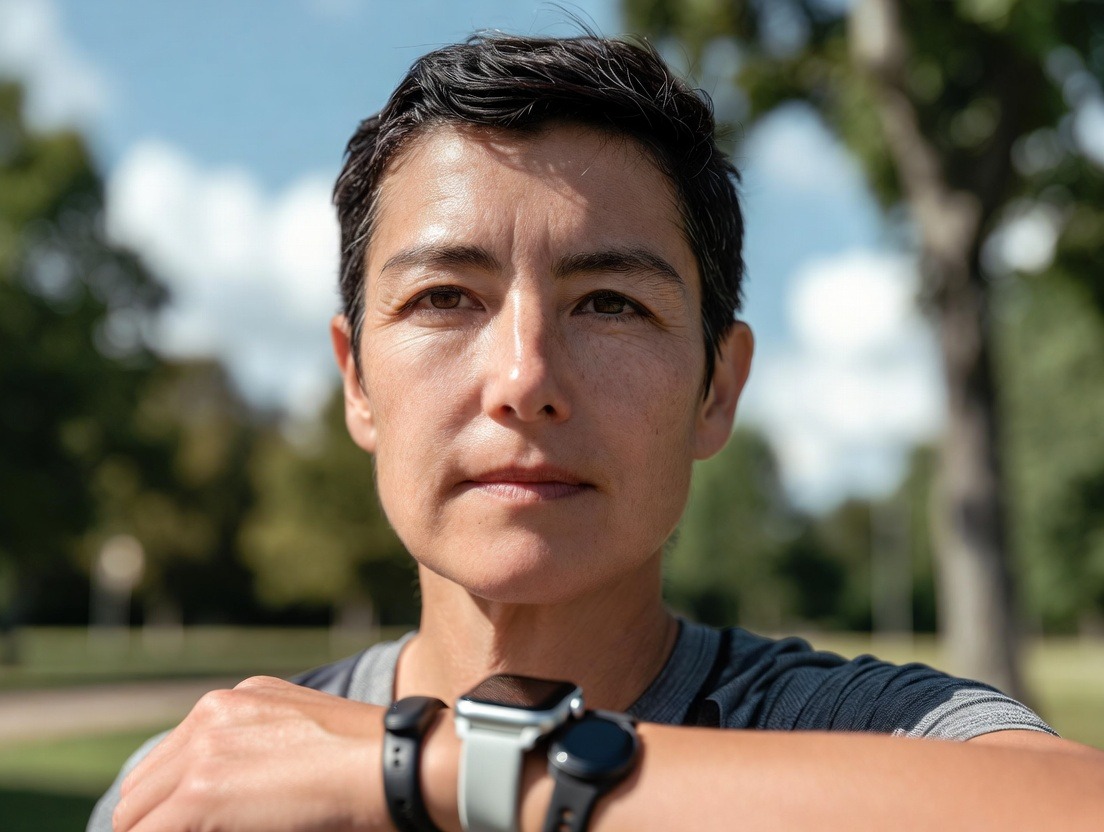
The journey to our current notification reality began not with a whisper, but with a seismic shift in personal computing. The smartwatch, in its modern incarnation, didn't just enter the market; it colonized the wrist. It transformed a space traditionally reserved for telling time and expressing style into a vibrant, interactive dashboard for our digital selves. This was a logical, almost inevitable, progression. The wrist is accessible, visible, and historically accustomed to hosting technology. Tapping into this real estate allowed tech giants to create a seamless extension of the smartphone—a second screen that was always just a flick of the eyes away.
The initial promise was intoxicating: freedom. Freedom from constantly pulling a phone from your pocket. Freedom to triage messages, calls, and alerts with a discreet glance. The smartwatch became the ultimate tool for micro-managing our attention. It delivered notifications with tactile certainty—a distinct haptic buzz, often accompanied by a screen flare. This system is undeniably effective. For time-sensitive alerts—a turn-by-turn navigation prompt, a timer finishing, an important call from a loved one—the wrist-based notification is fast, clear, and actionable. It created a powerful, reflexive loop: buzz, glance, decide (respond, dismiss, or ignore).
However, this efficiency came with a hidden, accumulating cost. The wrist is a uniquely interruptive location. A notification there doesn't just arrive; it demands. It vibrates against a bony prominence, creating a sensation that is difficult to fully ignore. It forces a physical gesture—the arm lift, the wrist turn—a miniature performance of engagement that, repeated dozens or hundreds of times a day, fragments concentration and pulls us out of flow states. The watch face, by its very design, is a visual magnet. Even when you intend only to check the time, you're greeted by a pile of unread notifications, a weather widget, and your latest fitness stats. The boundary between "just the time" and "all of your digital life" is irrevocably blurred.
Furthermore, the smartwatch solidified a one-size-fits-all approach to alerts. While granular controls exist, the fundamental delivery mechanism—buzz + screen—remains the same for a breaking news headline as it is for a Slack message from a colleague. It trains us into a state of chronic vigilance, where every buzz carries equal weight until proven otherwise. This is the paradigm we've accepted as the price of connectivity. But as we'll explore, a different path is emerging from a much older, more personal piece of jewelry.

While the wrist was being turned into a command center, a parallel evolution was taking place in the realm of specialized health monitoring. The concept of wearable biometrics was shrinking—from chest straps to armbands, and finally, to the logical extreme: the finger. This isn't merely miniaturization for its own sake. The finger, specifically the base of the finger, represents a unique and powerful biological observation point. It's rich in capillaries and offers consistent, close-proximity contact with the skin, allowing for the precise measurement of key physiological signals like blood oxygen saturation (SpO2), heart rate, heart rate variability (HRV), and skin temperature.
The smart ring, therefore, was born not from a desire to manage your inbox, but to understand your inner state. Its primary design imperative is biometric fidelity, not screen real estate. Devices like the Oura Ring pioneered this space, focusing on sleep, recovery, and readiness. Oxyzen and others have since advanced the category, refining sensors and algorithms to paint a continuous, nuanced portrait of the autonomic nervous system. The ring's form is its function: unobtrusive, comfortable enough to wear 24/7 (even during sleep), and capable of gathering data during the very moments a watch is typically removed.
This foundational purpose shapes everything about how a smart ring conceives of "notifications." Its entire raison d'être is to interpret bodily signals, not transmit social ones. So, when we talk about ring-based notifications, we are almost exclusively talking about biologically contextual alerts. These aren't pings from the cloud; they are insights from within. A ring might gently prompt you to take a mindfulness break when it detects rising stress biomarkers. It might notify you that your body temperature is elevating, suggesting the onset of illness. It could recommend an earlier bedtime based on a deficit in your deep sleep from the previous night.
The delivery method is inherently subtler. Without a screen, communication happens through gentle, often configurable haptic pulses or through LED indicators that are invisible to the casual observer. The "gesture" is minimal—perhaps a momentary awareness of a quiet vibration on your finger, felt in a moment of stillness. There is no arm lift, no glance, no secondary screen pulling you into a vortex of other apps and alerts. The notification is a closed loop between your body and the device: it senses a state, and it suggests an action for your physical being, not your digital avatar. This represents a tectonic shift from managing external demands to honoring internal needs. To truly appreciate this difference, we need to dissect the mechanics of attention itself.
At its core, every notification is a bid for your brain's most precious resource: focused attention. The psychological impact of these bids, however, varies dramatically based on their source, intent, and delivery. The smartwatch ping is fundamentally an external interruption. It represents a piece of the outside world—a message, an update, an event—breaking into your present cognitive space. Research in cognitive science is clear on the cost of such interruptions: they trigger a "switch cost," a lag in mental performance as your brain disengages from one task and re-engages with another. Even if you don't respond, the mere act of recognizing and dismissing the alert incurs this cost, eroding productivity and increasing cognitive fatigue.
The constant stream of wrist-borne alerts also cultivates a psychological phenomenon known as "anticipatory anxiety." The brain, conditioned by variable reinforcement (sometimes the buzz is important, often it's not), begins to remain in a low-grade state of alert, perpetually prepared for the next interruption. This fractures sustained thought and makes deep work—the state of flow where we do our most creative and meaningful work—increasingly difficult to achieve. The watch becomes a locus of ambient stress, a Pavlovian trigger for distraction.
Contrast this with the ideal smart ring notification, which is best understood as a somatic insight. It is an interpretation of an internal state, delivered not to pull you out of your focus, but to enhance your self-awareness within it. A vibration suggesting a breathing exercise when stress is detected isn't an interruption from your work; it's a tool to help you regulate your physiology so you can continue your work with greater calm and clarity. It's a closed feedback loop: Body signal → Algorithmic interpretation → Somatic suggestion → Bodily regulation.
The psychology here is one of partnership, not piracy. The ring acts as an objective, always-on biofeedback coach. Its notifications are less about "something happening out there you need to know" and more about "something is happening in here you might want to modulate." This shifts the user's relationship with the device from one of reactive compliance (I must check what the buzz is) to proactive self-care (I am being offered data to optimize my well-being). The goal is integration, not intrusion. Of course, this philosophical distinction manifests in the most tangible way possible: through the physical experience of wearing and interacting with each device.
The language of wearables is written not in words, but in vibrations. Haptics are the primary, often subconscious, dialogue between device and wearer. In this silent conversation, the smartwatch and smart ring speak vastly different dialects, with different vocabularies and volumes.
A smartwatch haptic motor is engineered for certainty. It needs to overcome the inertia of a stationary arm, often during movement. The buzz is typically pronounced, localized to the bony part of the wrist, and designed to be felt through potential ambient vibration—like walking or driving. It's a "Hey, you!" signal. Many watches employ distinct patterns for different alert types: a triplet for a text, a long pulse for a call, a rapid-fire sequence for an alarm. This creates a haptic lexicon you learn to interpret. However, this strength is also its weakness. The insistence of the vibration means it can be jarring in quiet settings (meetings, theaters, intimate conversations) and can still startle even when expected. It’s a broadcast, not a private message.
The smart ring, by contrast, leverages a profoundly intimate location. The haptic motor in a ring sits against the soft, sensitive tissue between the finger bones. This allows for a much subtler, more nuanced haptic profile. The sensation is less of a buzz and more of a gentle pulse or tap. It can be configured to be so discreet that it's perceptible only to the wearer, even in complete silence. This turns the notification into a true secret—a piece of information shared solely between you and the device.
This difference in haptic quality fundamentally changes the emotional tone of the alert. A wrist buzz carries an undertone of urgency or demand, aligning with its external interruptive nature. A finger pulse feels more like a nudge, a reminder, or a check-in. It’s far easier to acknowledge and then let go, without the cognitive switch cost of a more aggressive alert. For biometric nudges—"your stress is elevated, consider a one-minute breathing exercise"—this gentle pulse is perfectly matched to the content. It's a suggestion, not a summons.
Furthermore, the ring's haptics are often reserved for these high-value, biologically-generated insights. You're not being buzzed for every email; you're being pulsed for something the algorithm deems materially relevant to your physiological state. This scarcity and relevance make each haptic event more meaningful and less likely to be tuned out or perceived as noise. It transforms the haptic channel from a busy highway of alerts into a quiet path for consequential messages. This physical subtlety is mirrored by a social one, which plays out in our interactions with others.
Wearables exist in a social context. How we interact with them in the presence of others sends subtle signals and is governed by unspoken rules of etiquette. Here, the smartwatch and smart ring inhabit nearly opposite ends of the social spectrum.
The smartwatch glance is a well-recognized, and often frowned upon, modern social gesture. In a conversation, a downward look at the wrist, even if just to check the time, can be interpreted as disinterest, impatience, or divided attention. When accompanied by the telltale lift-and-tap to interact with a notification, it becomes a clear signal that an external digital entity has just taken precedence over the human in front of you. This creates social friction. Meetings have "no phone" policies that inherently include watches. Dates can be soured by a partner constantly checking their wrist. The watch makes your distraction visible, turning a private interruption into a public slight.
The smart ring, by its very design, circumvents this social calculus almost entirely. There is no "glance." There is no screen to light up and draw the eye. Interaction is private and tactile. If a haptic pulse arrives during a conversation, the wearer can simply acknowledge it internally. There's no visual cue to the other person that an alert has been received. If the ring uses an LED indicator (for status like battery or connectivity), it is typically small and positioned on the inner palm side of the ring, invisible to anyone but the wearer.
The social action with a ring is not a glance, but at most, a subtle touch or adjustment—a gesture that is common, unconscious, and carries no negative social weight. You might touch your ring finger thoughtfully, a motion that blends seamlessly with natural body language. This allows the wearer to remain fully present in social interactions, free from the performative distraction of a wrist check. It respects the sanctity of human-to-human connection in a way that screen-based devices struggle to achieve.
This social stealth extends to the device's overall aesthetic. A smart ring like those from Oxyzen is designed to look like elegant jewelry first and foremost. It doesn't announce itself as a piece of technology. In a professional or formal setting, a sleek titanium ring is unobtrusive and stylish, whereas a glowing smartwatch screen can feel out of place. This allows wellness tracking to become a truly continuous, 24/7 endeavor without social compromise, gathering data during the very meetings, dinners, and events where a watch might be disabled or left behind. But beyond social grace lies a more profound capability: the potential for a deeper, more continuous biological connection.
The ultimate promise of wearable technology is not snapshot data, but a continuous narrative—a story of your body told across day and night, activity and rest. In this quest for unbroken awareness, the form factor isn't just a preference; it's a determinant of data quality and completeness.
The smartwatch, for all its daytime utility, hits a fundamental barrier: sleep. While many are now worn to bed, the wrist is a suboptimal site for sleep tracking. The device is bulky, can cause discomfort, and is prone to movement artifacts (data noise from tossing and turning). More critically, the screen and its potential for nighttime notifications are antithetical to sleep hygiene. Even in Do Not Disturb or Theater mode, the mere presence of a bright screen a few inches from your face during a late-night bathroom trip can disrupt melatonin production. For consistent, comfortable sleep tracking, the watch must often be charged daily, creating a data gap during the charging window—typically the very time you'd want to track recovery.
The smart ring solves this by being born for 24/7 wear. Its small, smooth form presents no discomfort during sleep. It is the ideal form factor for capturing the gold-standard metrics of recovery: heart rate variability (HRV), resting heart rate (RHR), skin temperature, and sleep stages. By being worn constantly, it creates a seamless, gap-free data stream. There's no "putting it on" for a workout or "taking it off" for bed; it's simply always there, gathering the baseline from which all insights are drawn. This allows the ring to build a profoundly personal model of your normal. It knows your unique temperature circadian rhythm, your typical HRV during deep sleep, your average respiratory rate at rest.
This unbroken awareness is the bedrock of the ring's notification philosophy. Its alerts are not based on isolated moments but on deviations from your established, continuous baseline. It can notify you of a higher-than-normal nighttime skin temperature days before you feel symptomatic. It can detect an abnormally low HRV—a sign of systemic stress or incomplete recovery—and suggest lighter training or more rest. These are high-fidelity, data-rich notifications impossible for a device with a broken wear pattern to generate reliably.
For a deeper dive into how this continuous data transforms into actionable wellness insights, our blog features detailed explorations on topics like HRV interpretation and sleep optimization. This foundational, around-the-clock data layer sets the stage for the ring's most powerful function: moving from simple alerts to anticipatory guidance.
This is where the comparison transcends mere notification mechanics and enters the realm of potential. The smartwatch is largely a reactive device. It alerts you to events that have already happened: a message received, a heart rate threshold exceeded during a manually started workout, a stand reminder after 50 minutes of inactivity. It is brilliant at real-time reporting and on-wrist action.
The smart ring, fueled by its 24/7 data stream and focus on autonomic nervous system signals, aspires to be predictive and proactive. Its goal is not just to tell you what is or was, but to suggest what might be or what should be done next. This is the evolution from notification to nudge, from interruption to intuition.
Consider stress. A watch might notify you that your heart rate is high while you're sitting at your desk. That's a reactive observation of a present state. A sophisticated ring, analyzing trends in HRV, skin temperature, and activity, might detect the buildup of sympathetic nervous system activation (the "fight or flight" response) before your heart rate spikes or you consciously feel anxious. It could then deliver a gentle, pre-emptive nudge: "You're showing signs of accumulating stress. A 60-second mindful breath could help." This is a fundamentally different value proposition: intercepting a negative physiological trajectory before it fully manifests.
Similarly, in fitness and recovery, the ring shifts the paradigm from "how did I do?" to "how should I proceed?" Instead of just summarizing last night's sleep (reactive), it provides a "Readiness" or "Recovery" score each morning (proactive). This score, synthesized from sleep data, HRV, RHR, and temperature, acts as a daily notification that guides your choices: push hard in today's workout, focus on active recovery, or prioritize rest. It's a holistic, forward-looking recommendation, not a backward-looking report card.
This predictive capacity is the culmination of the ring's design ethos. By being unobtrusive, comfortable, and always-on, it gathers the high-fidelity, longitudinal data required for these algorithms to learn and make personalized predictions. It’s not trying to manage your calendar; it’s trying to steward your energy. For those curious about the science and intent behind building such a proactive wellness tool, you can learn more about our mission and approach at Oxyzen. Yet, even the most elegant technology must prove itself in the arena of daily, practical use.

A device's relationship with its charger is a silent dictator of user experience. This logistical reality profoundly influences how and when you receive notifications, creating a rhythm of availability and anxiety that users must integrate into their lives.
The smartwatch, with its bright display, powerful processor, and constant Bluetooth connection to a phone, is an energy hog. For most users, daily charging is a non-negotiable ritual. This creates predictable data and notification blackouts. For an hour or more each day—often in the evening or overnight—the device is offline, sitting on a puck. You will not receive notifications during this time. This turns battery level into a source of low-grade anxiety ("Do I have enough charge to get through my day and my commute?"), and it inherently fragments the continuous data story, as mentioned earlier.
The smart ring, designed for minimal power draw (no screen, simpler connectivity, focused sensor operation), boasts a battery life measured in days, often a week or more. The Oxyzen ring, for instance, is engineered for extended single-charge use. This transforms the charging ritual from a daily chore to a weekly or bi-weekly maintenance task, akin to charging wireless earbuds. More importantly, it means the device—and its capacity to deliver its unique somatic notifications—is almost always active. There is no daily "dead zone."
This reliability is crucial for the ring's value proposition. A predictive nudge for stress management is only valuable if the device is on your body and functioning when stress begins to accumulate. A recovery score is only actionable if it's waiting for you when you wake up, not after a morning charging session. The extended battery life ensures the ring is a constant, dependable companion, not a high-maintenance gadget that frequently needs to be "fed." This reduces cognitive load (one less thing to worry about charging daily) and reinforces the device's role as a seamless, integrated part of your life, not an intermittent visitor.
Inevitably, users face questions and seek support when integrating any new technology into their lives. Whether it's understanding a specific metric or troubleshooting a sync issue, accessible guidance is key. For any technical or usage questions about smart ring technology, a comprehensive resource like the Oxyzen FAQ can provide immediate, clear answers. This foundation of reliability and support allows us to examine the ultimate goal: how these devices shape our behavior and consciousness over the long term.
The true power of a wearable lies not in the data it collects, but in the behaviors it inspires. Over time, the constant, subtle interactions with a device on your body can rewire routines, reshape responses, and either reinforce or reduce digital anxiety. The smartwatch and the smart ring, through their distinct notification philosophies, become architects of very different daily habits and mental landscapes.
The smartwatch, as an extension of the phone, often amplifies and accelerates our existing digital habits. The lowered barrier to interaction—a notification is just a glance away—can cultivate a habit of constant checking. The quick wrist-flick to see an email preview becomes an automatic, often unconscious tic. This can lead to what psychologists term "phantom vibration syndrome," where you perceive a buzz that didn't happen, a testament to how deeply the expectation of interruption is wired. The watch encourages micro-engagements throughout the day, fragmenting attention into smaller and smaller packets. The habit it reinforces is one of reactive responsiveness: see alert, process alert. While this can be efficient, it trains the brain to privilege the immediate and external over the sustained and internal.
Conversely, the smart ring is designed to cultivate habits of self-awareness and preemptive self-care. Its notifications are less about triggering an immediate digital action and more about prompting an internal shift or a mindful pause. The habit loop it encourages looks like this: Cue (gentle haptic pulse) → Routine (check app for biometric context, perform a brief breathing exercise, decide to hydrate or take a walk) → Reward (feeling of regulated calm, improved recovery score, tangible wellness benefit). This loop is intrinsically rewarding because it directly benefits the user's physical state, not just their inbox zero status.
For example, a ring that consistently nudges you at moments of detected stress trains you to recognize the somatic signs of stress earlier in their cycle. Over time, you may begin to self-regulate before the nudge arrives, internalizing the feedback. The device becomes a scaffold for building better bodily awareness—a form of biofeedback training that gradually makes you less reliant on the technology itself. The ring’s goal is to make you more attuned to your body’s language, fostering habits of listening rather than reacting. This fundamental difference in behavioral conditioning highlights a deeper divergence in what each device values and therefore chooses to measure and communicate.
Not all data is created equal, and the decision of what rises to the level of a proactive alert reveals a device's core priorities. This hierarchy of data is a direct reflection of design intent, and it creates the informational landscape in which the wearer operates.
On a smartwatch, the notification hierarchy is largely a digital mirror. Its top-tier alerts are typically: 1) Communication (calls, texts, messaging apps), 2) Calendar & Reminders (time-based events), and 3) App-specific alerts (breaking news, shipping updates, social media interactions). Health and fitness alerts usually occupy a secondary, reactive tier: "You've been sitting for 50 minutes," or "Your heart rate is above 120 while at rest." These are often based on simple, real-time thresholds. The watch's primary lens is time and social connection; it organizes your external world.
A smart ring inverts this hierarchy entirely. Its primary data universe is physiological state. Therefore, its top-tier notifications are biologically contextual and often predictive:
In this model, a text message from a friend never vibrates on your finger. It exists only as a passive log in the companion app, if at all. The ring acts as a strict filter, declaring that the only information urgent enough to break your tactile field is information about you—your foundational well-being. This creates a powerful psychological boundary. It safeguards your attention for what the device (and arguably, you) have deemed most critical: the integrity of your own nervous system.
This curated, somatic hierarchy teaches the wearer to value internal signals as highly as external ones. It’s a daily practice in reprioritization. You begin to understand that a low recovery score is a more important "notification" for how to approach your day than the first dozen emails in your inbox. The ring’s design communicates that your biological readiness is the bedrock upon which all other productivity and engagement is built. Hearing how others have experienced this shift in perspective can be powerful. Real user stories about this reprioritization can be found in Oxyzen customer testimonials, which highlight the tangible impact of this data hierarchy on daily life.
With great data comes great responsibility—and the inevitable desire to tweak settings. Both smartwatches and smart rings offer customization, but they approach it from opposite ends of the spectrum, reflecting their core identities.
Smartwatch notification systems are labyrinths of granular control. You can, on most platforms:
This level of control is necessary because the watch is a passive conduit for a firehose of external data. The user must become the editor-in-chief, manually curating which parts of the digital deluge reach their wrist. The burden of optimization is on the wearer. This can lead to a paradox of choice and constant fiddling—the very act of managing the device becomes another digital task. The default state is "everything on," and it's up to you to build walls.
The smart ring starts from a default state of "almost everything off." Since it does not pipe through external app notifications, there is no need to manage permissions for Facebook, CNN, or your banking app. Customization is instead focused on the biometric experience. You might be able to:
Here, the curation is done by the device's foundational purpose. The ring's developers have already made the macro decision to exclude the social/digital stream. User customization is about fine-tuning the dialogue about your own body, not building a spam filter for the internet. This results in a simpler, more intentional setup process. The conundrum shifts from "How do I stop this thing from bothering me?" to "How do I want this tool to help me tune in?" This philosophy of intentional limitation is a direct outgrowth of the brand's vision, a story often rooted in a personal quest for better balance, which you can explore in the Oxyzen our-story page.
The wearable itself is only half of the story. The companion smartphone app is where data is contextualized, history is reviewed, and deeper insights are gleaned. The nature of this "second screen" experience is profoundly different for watches and rings, extending their philosophical divide.
A smartwatch app is often a management console and a mirror. Its primary functions include:
The app can feel like an administrative hub. You go there to manage the device—to change its face, update its software, or troubleshoot why a certain alert isn't coming through. The data is often presented in real-time streams or simple daily aggregates (steps, calories, stand hours). The experience can feel fragmented, as the app juggles its roles as a remote control, a notification archive, and a fitness tracker.
The smart ring app, by contrast, is a dedicated wellness journal and insight engine. Since the ring has no interactive screen, the app is the sole venue for engaging with all the collected data. This allows for a focused, immersive experience centered on interpretation. Key features include:
You don't visit the ring app to manage spam; you visit it to understand your physiology. The relationship is consultative. The ring gathers the data silently, and the app provides the clinic where you sit down to review the charts with your "digital wellness coach." This creates a more deliberate, reflective interaction. You check it intentionally a few times a day—perhaps in the morning for your readiness score and in the evening to log the day's activities—rather than constantly being pulled into it by a cascade of mirrored notifications. For those seeking to deepen this reflective practice, the Oxyzen blog offers a wealth of articles on interpreting biometric trends and building a wellness-focused lifestyle.
As we look beyond the current state, the trajectory of wearable notifications points toward even greater subtlety, intelligence, and integration. The future belongs not to the jarring buzz, but to the nuanced pulse; not to the interruptive flash, but to the ambient glow. This evolution will be led by devices that prioritize somatic integration over screen dominance.
We are moving towards the development of rich haptic languages. Imagine a smart ring that can communicate a spectrum of states through variations in pulse rhythm, intensity, and pattern:
Furthermore, the concept of ambient awareness will mature. Instead of discrete notifications, your wearable will maintain a continuous, low-fidelity presence in your perception—a "sense" of your state. This could be achieved through ultra-subtle haptics or through integration with other ambient devices in your environment. For example, your ring detecting rising stress could trigger your smart lights to adopt a more calming hue, or your headphones to softly suggest a soundscape, all without a single explicit "alert." The notification dissolves into the environment.
The ultimate goal is context-aware prediction. Future devices will not just react to present physiology but will learn from your personal patterns, your calendar, and even environmental data (like pollen count or barometric pressure) to deliver hyper-personalized, anticipatory guidance. "Based on your lowered HRV, your heavy meeting schedule today, and the high pollen count, we suggest taking your allergy medication now and scheduling a 10-minute walk between meetings 2 and 3." This moves from notification to prescriptive planning.
In this future, the value of a screen on the wearable itself diminishes further. Why glance at a tiny graph when your environment can reflect your status, or when a sophisticated haptic language can tell you what you need to know? The focus will remain on gathering the highest-fidelity physiological data from the optimal location—the finger—and using intelligent systems to translate that data into guidance that feels less like technology and more like intuition. This journey from a buzzy distraction on the wrist to a silent, somatic partner on the finger represents more than a product category shift; it's a renegotiation of our relationship with technology itself, a topic that brings us to our final, overarching reflection.
The final, and perhaps most significant, layer of the ring versus watch dynamic is not about standalone devices, but about how they integrate—or fail to integrate—into the larger tapestry of our digital and physical lives. We don't live in a world of single gadgets; we live in ecosystems. The true test of a wearable's philosophy is how it plays with others, and more importantly, what vision of a "unified self" it strives to create.
The smartwatch, particularly those from Apple, Samsung, and Google, is the quintessential ecosystem player. It is designed as the central, interactive node in a network of devices. It unlocks your laptop, relays notifications from your phone, controls your smart home, and streams music to your headphones. Its strength is in orchestration. It seeks to create a seamless, convenient digital experience where your data and controls follow you from device to device, with the wrist as the constant command center. In this vision, the "unified self" is a digitally synchronized entity—your calendars, messages, health data, and passwords, all accessible and consistent everywhere.
The smart ring, by its nature and design, presents a different integration model. It is not a command center; it is a specialized sensor hub. Its primary integration is not with your other screens, but with your autonomic nervous system. Its ecosystem role is to provide a foundational, high-fidelity layer of biometric truth that can inform and enhance other devices and services. Imagine:
In this model, the ring is the authoritative source for the physical self. It doesn't seek to mirror your phone; it seeks to inform everything else about your state of being. The "unified self" it helps create is a biologically coherent entity, where your external devices and services adapt to your internal reality, not the other way around. This is a profound shift from the watch's goal of digital convenience to the ring's goal of biological congruence.
The challenge, and the future battleground, is in the openness of these data streams. Watch ecosystems are often walled gardens. Ring developers, including those at Oxyzen, increasingly prioritize open APIs and partnerships with health, fitness, and wellness platforms. Their value multiplies when their unique data can flow to where it’s most useful. This positions the ring not as a competitor to the watch, but as its most important collaborator—the device that provides the "why" behind the "what." The watch might tell you you're behind on your activity goal; the ring can tell you why it's wise to listen to your body and rest instead. Together, they could form a complete picture: the watch managing your external commitments, and the ring protecting your internal capacity to meet them.
Beyond function lies form, and beyond form lies identity. What we choose to wear on our bodies is a non-verbal communication, a statement of values, aesthetics, and personal brand. The smartwatch and the smart ring communicate vastly different messages about our relationship with technology and ourselves.
The smartwatch is, unmistakably, a piece of technology. Even the most luxurious models with ceramic bezels and leather bands are, at their core, a screen on a strap. They scream "connected," "data-driven," and "busy." The watch face itself is a customizable billboard—displaying everything from Mickey Mouse to your latest stock portfolio. It is a tool of utility and a badge of being in the digital fray. Wearing one aligns you with a culture of productivity, immediacy, and tech-savviness. It can also, as discussed, create social friction, marking you as potentially distracted.
The smart ring leans into a centuries-old tradition: jewelry. Its design imperative is to be unobtrusive, elegant, and personal. A well-crafted ring in titanium, ceramic, or gold is subtle. It doesn't announce its function. To an observer, it is simply a ring. This allows it to cross social and professional contexts with ease—from the gym to the boardroom to a black-tie event—where a glowing smartwatch screen might be inappropriate or jarring. It communicates a different set of values: discretion, self-awareness, and a focus on inner state over outer display.
This identity statement is powerful. Choosing a ring over a watch can be a conscious decision to internalize your tech. It's a move away from the performative, broadcast nature of a wrist-borne screen toward a private, personal relationship with data. It says, "My well-being is my business, and I'm investing in understanding it quietly." It aligns with a growing cultural movement towards mindfulness, digital minimalism, and holistic health. The ring becomes less of a "gadget" and more of a personal talisman for wellness, a modern take on an ancient form of adornment that now protects not with superstition, but with science. The journey to create such a thoughtfully integrated piece of technology is often born from a personal story, a narrative you can discover in the Oxyzen our-story page.

When we discuss wearables, we often assume a standard body type and ability. However, the physical form factor has real implications for accessibility and inclusivity—an area where the ring offers compelling, often overlooked advantages.
For many, the wrist is not a viable or comfortable location. This includes:
The smart ring, by virtue of its location and size, circumvents many of these issues. Finger sizing is precise and universal. A properly fitted ring exerts even, minimal pressure and moves with the hand. For those with sensory sensitivities, the haptic pulse on the finger pad can be a gentler, more localized stimulus than a wrist vibration that resonates up the arm. For professionals, a smooth ring is far less likely to interfere with gloves, tools, or instruments. It is also easily worn alongside a traditional watch for those who appreciate horology but want discreet biometric tracking.
Furthermore, the ring's primary interface being a smartphone app, rather than a tiny touchscreen, can be a benefit for users with visual or motor impairments who find interacting with a watch display challenging. The app can leverage the phone's full suite of accessibility features (voiceover, magnification, assistive touch) to present the data.
This isn't to say rings are universally accessible—finger swelling, arthritis, or certain hand injuries can present their own challenges. However, by offering a fundamentally different form factor, the smart ring expands the population that can benefit from continuous health and wellness tracking. It democratizes access to personalized physiological insights for whom the wrist is not an option. This spirit of inclusive design often stems from a core mission to serve a wider community, a principle explored in Oxyzen's about-us section.
If we project the trajectories of these two paths—the wrist-bound computer and the finger-worn sensor—we arrive at divergent, yet potentially complementary, visions for the future of human-machine integration.
The smartwatch's evolutionary path points toward greater independence and capability. It is on a journey to become a standalone computing platform: with faster processors, better connectivity (cellular), more sophisticated health sensors (blood glucose, blood pressure), and perhaps even new interface paradigms (gesture control, micro-projectors). The watch aims to replace more tasks from your phone, becoming an even more powerful portal to the digital world. Its ideal end-state is a full-fledged computer, shrunk to the wrist.
The smart ring's trajectory is orthogonal. Its future is one of miniaturization, sensor fusion, and ultimate discretion. The goal is not to do more, but to sense more while intruding less. We can anticipate rings with more clinical-grade sensors in even smaller, more durable forms. The holy grail is non-invasive, continuous monitoring of biomarkers like glucose, cortisol, or hydration levels—all from the finger. The ring's ideal end-state is to become invisible technology: a sensor so small, comfortable, and power-efficient that you forget it's there, even as it provides a real-time dashboard of your vital chemistry.
This leads to the concept of embodied intelligence. In this future, the ring (or its evolutionary successor) ceases to be a "device" you interact with and becomes a seamless extension of your own proprioception—a sixth sense for your internal state. You wouldn't need to "check" your stress; you would simply know it, through an ambient, embodied awareness facilitated by the technology. Notifications in this world wouldn't be alerts; they would be intuitive nudges indistinguishable from your own body's wisdom.
In this long view, the watch and the ring are not in a zero-sum game. They are specializing. The watch evolves toward managing our external interactions with the world (communication, computation, control). The ring evolves toward managing our internal understanding of ourselves (physiology, emotion, prediction). The most empowered individual of the future might wear both: using the watch as a tool for action in the world, and the ring as a guide for sustaining the self that must act. This synergy represents the pinnacle of human-centric design.
As we conclude this deep examination, the initial question of "Ring vs. Watch Notification Comparison" reveals itself to be a surface-level inquiry into a deep philosophical divide. We have moved beyond comparing buzzes to examining worldviews.
The smartwatch notification is a symbol of the external imperative. It is engineered for efficiency in a world of demands, connecting us instantly to the flows of information, social connection, and scheduled time. It excels at ensuring we don't miss what's happening out there. Its cost, as we've seen, is often paid in fragmented attention, social distraction, and the reinforcement of reactive habits.
The smart ring notification—or more accurately, the somatic nudge—is a symbol of the internal imperative. It is engineered for awareness in a world of overload, connecting us intimately to the rhythms of our own bodies. It excels at ensuring we understand what's happening in here. Its value is measured in protected focus, enhanced self-knowledge, and the cultivation of proactive well-being.
The "lack thereof" in our title is the most telling part. For the ring, the lack of external notifications is not a missing feature; it is the foundational feature. It is a deliberate declaration that the most critical alerts are not about your inbox, but about your infrastructure.
This is not to declare one universally superior. A busy professional managing a team may find immense value in the triage efficiency of a smartwatch. A creative seeking deep work, an athlete focused on recovery, or anyone on a journey of mindfulness may find the ring's quiet guidance transformative. Many may find, as the ecosystems mature, that the ideal solution is a thoughtful partnership between the two.
The real takeaway is one of conscious choice. We must ask ourselves: What do I want my wearable to optimize for? Do I want a device that helps me manage the world's demands on my time, or one that helps me manage my body's capacity to meet those demands? Do I want my technology to shout for my glance, or whisper to my nervous system?
In choosing, we are not just selecting a gadget. We are casting a vote for the kind of attention we wish to cultivate and the kind of life we want to lead—one pulled by the endless ping of the external, or one grounded in the quiet, essential wisdom of the self. The next generation of wearables, led by innovators like those at Oxyzen, offers a path to that grounded wisdom, inviting us to listen not to the noise of the network, but to the signal of our own biology.
Beneath the software and the sensor philosophy lies a physical truth: a wearable is an object that must survive the brutality of daily life. Its build quality, materials, and durability are not mere spec sheet items; they are the foundational determinants of whether the device can fulfill its promise of continuous, reliable insight. The demands placed on a smartwatch and a smart ring are dramatically different, leading to divergent engineering priorities that directly impact the user experience and the sanctity of the data.
Smartwatch engineering is a feat of miniaturized computational ruggedness. It must house a battery, a processor, a bright display, a speaker, microphones, and an array of sensors—all while being subjected to the high-impact environment of the wrist. The wrist is a percussive instrument, constantly knocking against doorframes, table edges, and gym equipment. Watch design, therefore, prioritizes impact resistance and screen durability. We see sapphire crystal glass, aluminum or titanium casings, and robust polymer composites. The band is a critical component, often designed to break away under extreme force to prevent injury. However, this focus on protecting the computer can sometimes come at the cost of sensor consistency. The watch must maintain skin contact through a band that expands and contracts, and a rear module that can lift slightly with movement, leading to potential optical sensor noise—the "motion artifact" that plagues wrist-based heart rate readings during high-intensity interval training or even typing.
The smart ring's engineering challenge is one of dense, resilient miniaturization in a high-contact zone. A ring lives in a world of constant micro-abrasions. It taps against keyboards, scrapes against bags, and is submerged in soapy water and hand sanitizer. Its primary enemies are not sharp impacts (though they can happen) but scratches, corrosion, and chemical degradation. Therefore, ring materials are chosen for hardness, biocompatibility, and chemical inertness. Titanium is a favorite for its perfect blend of strength, lightness, and hypoallergenic properties. Ceramics like zirconia offer exceptional scratch resistance and a premium feel. The sensors, often optical and electrical, are packed into a smooth, contoured interior that must maintain consistent, flush contact with the skin across a range of finger temperatures and sizes. A poor fit here doesn't just cause discomfort; it creates data gaps or inaccuracies, breaking the 24/7 narrative.
This material reality influences the "notification" experience in a subtle way. A scratched watch screen is an aesthetic and functional nuisance, but the device still buzzes. A ring with a compromised sensor window or poor fit due to swelling from a salty meal may simply stop collecting valid data without the user realizing it. There is no screen to glitch. The failure is silent. This makes the initial fit process and the quality of materials paramount. A well-built ring, like those engineered by Oxyzen, disappears not just cognitively, but physically—you forget it’s there because it doesn’t catch, doesn’t irritate, and doesn’t demand protection. It endures your life so it can interpret it. This relentless focus on endurance for the sake of data integrity is a core part of the product’s promise, a detail users frequently highlight in their shared experiences and testimonials.
The economic relationship between user and wearable has evolved into a new, sometimes contentious, paradigm: the subscription. How companies monetize their software and insights further illuminates the philosophical split between the device-as-tool and the device-as-guide.
The dominant smartwatch model (Apple, Samsung, Garmin, Fitbit) is largely hardware-centric with optional service tiers. You buy the device, and its core functionality—telling time, delivering notifications, tracking basic activity and sleep—is yours. Premium subscriptions (like Apple Fitness+, Fitbit Premium, or Garmin’s training plans) offer expanded content libraries, deeper analytics, or coaching, but they are typically additive, not essential. The watch remains a functional tool without them. The hardware is the primary product; the software service is an enhancement.
The smart ring space, pioneered by Oura and followed by others, introduced a hardware-as-a-portal model. Here, the ring is the key that unlocks access to a proprietary software platform where the most valuable insights—the readiness scores, the trend analysis, the personalized guidance—reside. A monthly or annual fee is often required to access this full interpretation layer. Without the subscription, the ring may function as a basic activity tracker, but its raison d'être—the advanced biometric synthesis and predictive nudges—is gated.
This model is controversial but revealing. It frames the ring not as a product you own, but as a sensor for a service you subscribe to. This aligns with the ring’s core value proposition: the ongoing interpretation of complex physiological data. The company’s argument is that continuous algorithm development, research validation, and personalized insight delivery require recurring revenue. It shifts the value from the physical object to the intelligent analysis it enables. For the user, it means evaluating the total cost of ownership and asking: "Is the ongoing insight worth the ongoing fee?" This changes the purchase from a one-time gadget buy to an investment in a long-term wellness partnership.
This economic layer subtly influences the notification experience. In a subscription model, the quality, personalization, and actionability of the notifications (the ring's primary output) become the central proof of the service's value. They must be consistently insightful enough to justify the recurring cost. The company is incentivized to make these nudges feel indispensable—to move them from interesting data points to essential daily guidance. This creates a tight feedback loop: better insights drive subscription retention, which funds better algorithms. Understanding this model, and the value it aims to deliver, is crucial for any potential user, a topic thoroughly addressed in resources like the Oxyzen FAQ.
If data is the new oil, biometric data is the equivalent of a rare, refined isotope. It is the most intimate data possible—a real-time log of your body's subconscious functions, your sleep nakedness, your stress vulnerabilities. Where and how this data is stored, processed, and owned is a paramount concern that casts the notification debate in a stark new light.
Smartwatches, as nodes in major tech ecosystems (Apple, Google, Samsung), collect vast amounts of this intimate data. The privacy proposition here is a trade-off: convenience for potential exposure. Your health data may be encrypted and stored in a personal health cloud (like Apple Health), but it is still within the infrastructure of a company whose primary business is often advertising or broad data aggregation. Users must trust these giants’ privacy policies and security measures. Furthermore, the watch's constant connection to a phone and the internet makes it a potential vector for data leakage. The notification itself, often containing message previews, is a privacy risk if your screen is visible to others.
Smart rings, particularly those from newer wellness-focused brands, often position privacy as a core feature and a competitive advantage. Their business model is (or aims to be) the wellness service, not advertising. Therefore, they can architect their systems with a "privacy-by-design" ethos. This can include:
This creates a different kind of trust relationship. When a ring sends you a nudge about a physiological anomaly, it's based on data you may feel more confident is contained within a specific, purpose-built wellness vault, not a general-purpose tech ecosystem. The notification is not just discreet in its delivery; it’s discreet in its origin. The privacy of the insight reinforces the intimacy of the medium.
However, the paradox is that no connected device is perfectly private. The imperative for the consumer is to scrutinize not just the device's features, but the company's privacy manifesto. When a device’s value is predicated on you wearing it 24/7 and sharing your deepest biological rhythms, its approach to data stewardship becomes a primary feature, not a footnote. This commitment to ethical data use is often rooted in the founding principles of a company, a narrative explored in depth on Oxyzen's about-us page.
In any discussion of wrist vs. finger, we must acknowledge the 800-pound gorilla that feeds them both: the smartphone. It is the ultimate notification engine, the primary data aggregator, and the lens through which we view most wearable data. The true competition for a smartwatch is often the phone it’s trying to replace glances for. The true partner for a smart ring is the phone it uses as a display.
The smartwatch is in a symbiotic yet cannibalistic relationship with the smartphone. It aims to reduce how often you pull out your phone, creating a new, more convenient layer of interaction. Its success is measured in "phone-free" moments. Yet, it is utterly dependent on the phone for its connectivity, processing power (in many cases), and as the source of its notification stream. It is a satellite, trying to make the mothership less necessary for small tasks.
The smart ring has a specialized, complementary relationship with the smartphone. It has no ambition to be a second screen or a call manager. It uses the smartphone’s robust connectivity and processing power as a conduit and a canvas. The phone becomes the dedicated control room and observatory for the ring's data. The ring, in turn, gives the phone a new, profound type of data to display—one it could never collect on its own. This partnership is clean and complementary: the ring collects somatic data in the analog world, the phone contextualizes it in the digital world.
This reframes the notification ecosystem. With a watch, you have two interruptive layers: the phone (buzz in pocket/bag) and the watch (buzz on wrist). You must manage both. With a ring, you maintain the phone's interruptive layer for all external communication, and you add a discreet, somatic layer for internal awareness. The phone handles the noise of the world; the ring handles the signal of the self. This can lead to a more intentional relationship with the phone itself; you might silence it more often, knowing that anything truly urgent for your well-being will find you through your finger, while the digital cacophony can wait for a scheduled check-in.
As we synthesize the multitude of threads explored—from the psychology of the ping to the privacy paradox, from social etiquette to subscription models—a clear, coherent picture emerges. The "Ring vs. Watch Notification Comparison" is not a battle for a single crown. It is the story of two technologies that have matured along separate evolutionary branches, each optimizing for a different aspect of the human experience in the digital age.
The Smartwatch is the Champion of the External Self. It is a masterpiece of connected convenience. Its purpose is to streamline, accelerate, and manage your interactions with the world. It excels at:
Its notification paradigm is one of mirrored urgency. It brings the world's timeline to your wrist, training you for efficient reaction. Its cost is measured in fragmented attention and the externalization of your focus.
The Smart Ring is the Guardian of the Internal Self. It is a paragon of somatic awareness. Its purpose is to interpret, protect, and optimize your physiological and mental state. It excels at:
Its notification paradigm is one of curated necessity. It filters out the world’s noise to deliver only the insights about you, training you for proactive self-regulation. Its value is measured in preserved focus and the internalization of your awareness.
The most forward-thinking approach may not be to choose one over the other, but to understand their distinct languages and deploy them strategically. The future of personal technology is not monolithic; it is layered and specialized. We will wear different devices for different aspects of our being.
The final, most personal question is not "Which is better?" but: "What do I need my technology to optimize for right now?" Do you need a lieutenant to help you manage the demands of your outer world? Or a guardian angel to help you listen to the whispers of your inner world? Your answer lies not in a spec sheet, but in the quiet moment after a vibration—on your wrist or on your finger—and what that vibration compels you to do next.
For those whose answer leans toward the latter, toward a technology that partners in cultivating resilience and presence, the journey begins with a single step of exploration. To see how this philosophy is embodied in a device designed for the life you actually live, discover more about Oxyzen and its approach to intelligent, discreet wellness. The next notification you receive could be the one that changes how you receive all the others.
Your Trusted Sleep Advocate: Sleep Foundation — https://www.sleepfoundation.org
Discover a digital archive of scholarly articles: NIH — https://www.ncbi.nlm.nih.gov/
39 million citations for biomedical literature :PubMed — https://pubmed.ncbi.nlm.nih.gov/
Experts at Harvard Health Publishing covering a variety of health topics — https://www.health.harvard.edu/blog/
Every life deserves world class care :Cleveland Clinic - https://my.clevelandclinic.org/health
Wearable technology and the future of predictive health monitoring :MIT Technology Review — https://www.technologyreview.com/
Dedicated to the well-being of all people and guided by science :World Health Organization — https://www.who.int/news-room/
Psychological science and knowledge to benefit society and improve lives. :APA — https://www.apa.org/monitor/
Cutting-edge insights on human longevity and peak performance:
Lifespan Research — https://www.lifespan.io/
Global authority on exercise physiology, sports performance, and human recovery:
American College of Sports Medicine — https://www.acsm.org/
Neuroscience-driven guidance for better focus, sleep, and mental clarity:
Stanford Human Performance Lab — https://humanperformance.stanford.edu/
Evidence-based psychology and mind–body wellness resources:
Mayo Clinic — https://www.mayoclinic.org/healthy-lifestyle/
Data-backed research on emotional wellbeing, stress biology, and resilience:
American Institute of Stress — https://www.stress.org/


