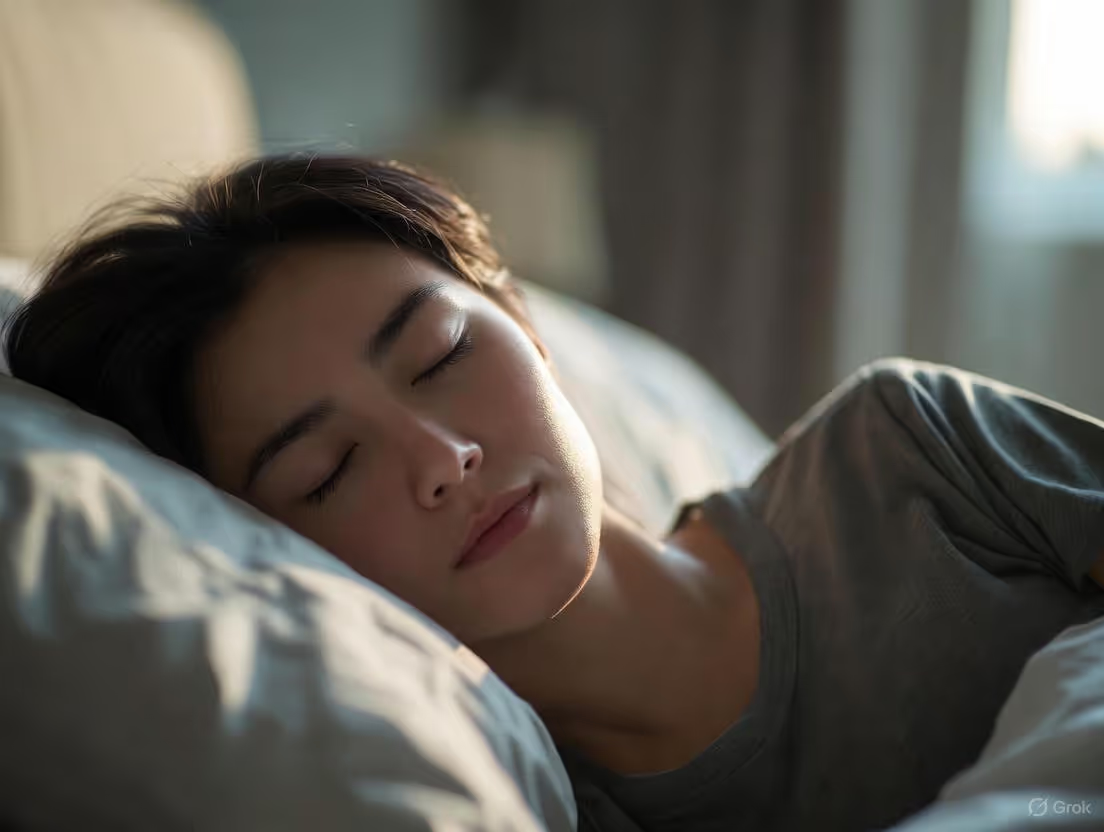
The Science Behind Mental Calmness: What Happens in Your Brain
Mental calmness is associated with increased activity in the prefrontal cortex and decreased activity in the amygdala (the fear center).
The Science Behind Mental Calmness: What Happens in Your Brain
In the silent, dark hours of the night, a silent epidemic rages. It’s not marked by fever or cough, but by fatigue, brain fog, and a deep, pervasive sense of being unwell. For millions, the simple, biological necessity of sleep has become a complex, frustrating puzzle. We try meditation apps, blackout curtains, and expensive mattresses, yet we often navigate our days in a haze, disconnected from the precise data that could illuminate the path to true rest.
This isn’t just about feeling tired. Chronic sleep deprivation is a stealthy thief, pilfering our cognitive sharpness, emotional resilience, and long-term health. It weakens our immune system, skews our hormones, and silently elevates our risk for a host of serious conditions. We know sleep is important, but how do we move from knowing to doing? How do we transform vague intentions into tangible, life-changing results?
The answer lies not in generic advice, but in personalized evidence. This is the story of that transformation. This article delves deep into the real-world experiences of individuals who escaped the cycle of sleeplessness. They are not lab subjects in a controlled study; they are professionals, parents, athletes, and creatives who turned their nights around by finally understanding them. Their journeys, documented through the lens of precise biometric tracking, form a powerful testament to what’s possible when you replace guesswork with insight.
We will follow their paths, from initial frustration to breakthrough, exploring the specific data points that guided their decisions—heart rate variability, sleep stages, body temperature, and blood oxygen levels. These metrics, once the domain of sleep clinics, are now accessible on your finger through advanced technology like the Oxyzen smart ring. By examining these detailed case studies, you will discover that improving your sleep isn’t a mysterious art. It’s a science of the self, and the proof is in the data. Welcome to the evidence-based revolution of rest.
The Architect and the 3 AM Wake-Up Call: Solving the Puzzle of Sleep Maintenance Insomnia
For David, a 42-year-old architect, the problem wasn’t falling asleep. It was staying that way. Like clockwork, his eyes would snap open at 3:07 AM, his mind instantly racing with project timelines, construction details, and client emails. He would lie in the dark, frustration mounting, watching the precious hours tick by until his alarm sounded at 6:30 AM. "I was running on fumes," he recalls. "My creativity was stagnant, and I was snapping at my team. I felt like I was failing at the most basic human function."
David’s journey began with a common misconception: he blamed stress alone. But his Oxyzen ring data revealed a more nuanced story. The biometric narrative was clear and consistent:
Consistent Sleep Onset: He fell asleep quickly, usually within 15 minutes, confirming no issue with sleep initiation.
The 3 AM Cliff: His data showed a sharp, simultaneous spike in heart rate and a drop in heart rate variability (HRV) precisely at his wake-up time. This indicated a pronounced stress response occurring mid-sleep.
Disrupted Sleep Architecture: The ring’s sleep stage analysis showed he was consistently being ripped out of deep sleep or the early phases of REM sleep. He was missing the most restorative portions of the sleep cycle.
"The data was a revelation," David says. "It wasn't just 'stress'—it was a specific, measurable event happening inside my body every single night. Seeing it charted removed the guilt and gave me a problem to solve."
His action plan became targeted, moving beyond generic "stress reduction":
The Temperature Intervention: Noting his body temperature began to rise unnaturally before the 3 AM wake-up, he lowered his bedroom thermostat from 70°F to 66°F and invested in cooling bedding.
Caffeine Curfew: He moved his last coffee from 2 PM to 10 AM. The ring data later showed a noticeable calming of his nighttime heart rate trend.
The 10 PM Digital Sunset: He installed a blue light filter on his devices at 8 PM and implemented a strict "no screens in bed" rule, using the time to read fiction instead of work-related material.
Strategic Hydration: He front-loaded his water intake earlier in the day and stopped all fluids two hours before bed to eliminate nighttime bathroom trips as a potential trigger.
The Results: Within three weeks, the 3 AM spike on his biometric chart began to soften. Within six weeks, it was gone. His deep sleep duration increased by 42%, and his sleep continuity score (a measure of uninterrupted sleep) improved dramatically. "The most profound change wasn't just more sleep," David notes, "it was deeper sleep. I woke up feeling reassembled, not just awake." For a deeper look at the technology behind such precise tracking, you can learn more about how Oxyzen works.
David’s case underscores a critical lesson: Sleep maintenance insomnia often has specific, identifiable triggers. By using biometric data to pinpoint the physiological disruptions—be they thermal, chemical, or neurological—you can deploy surgical interventions rather than blanket solutions.
The New Mom’s Survival Guide: Leveraging Data to Reclaim Sleep Amidst Chaos
Sophie, a 34-year-old software developer and first-time mother, found the common advice on "sleep when the baby sleeps" to be laughably inadequate. "My sleep was completely at the mercy of a tiny, unpredictable human," she explains. "I was surviving on broken, shallow sleep and felt like I was losing my identity to exhaustion. I needed to optimize what little rest I could get."
For Sophie, the goal wasn't achieving a perfect eight-hour block; it was maximizing the quality and efficiency of her fragmented sleep. Her Oxyzen ring provided the objective dashboard she desperately needed.
Her initial baseline data was telling:
Extreme Fragmentation: Her sleep was broken into 4-6 segments per night.
Low Sleep Efficiency: Even when in bed for 9 hours, her actual total sleep time was often under 5 hours.
Depleted Recovery Metrics: Her nightly HRV was in the "strained" range, and her resting heart rate trended 10-12 BPM higher than her pre-pregnancy baseline.
"I stopped focusing on the total hours, which was just depressing," Sophie says. "I started focusing on what the ring called 'Sleep Fuel'—the combination of deep and REM sleep I was able to accumulate, however I could get it."
Her data-driven strategy became an exercise in opportunistic recovery:
Naptime Optimization: She used the ring’s "Nap Mode" to track her daytime sleeps. The data showed her naps after a feeding, in a darkened room with white noise, yielded 3x more deep sleep than a distracted nap on the couch.
The 90-Minute Cycle Guard: Learning about sleep cycles from the Oxyzen blog, she began timing her "sleep opportunities." If the baby went down and she had a 90-minute window, she would prioritize sleep immediately, knowing she could complete a full cycle, rather than scrolling on her phone.
Partner Hand-off Analysis: She and her partner analyzed her recovery scores after different sleep shift schedules. They discovered that a single 4-hour uninterrupted block for Sophie was more restorative for her than two split 2-hour blocks, leading them to redesign their nightly routine.
Stress Tracking: The ring’s daytime stress alerts helped her identify moments of peak tension. She implemented 5-minute breathing exercises during these times, which her nighttime data showed led to a faster drop into deep sleep during her next sleep segment.
The Results: Sophie’s story is one of quality over quantity. While her total sleep time remained variable, her deep sleep as a percentage of total sleep doubled. Her HRV recovered to the "balanced" range, and her resting heart rate decreased significantly. "I stopped feeling like a zombie," she says. "The data gave me a sense of control. It showed me that even in the chaos, my body was still finding ways to recover, and I could actively help it along." For other parents navigating similar challenges, reading real customer reviews and experiences can provide additional community-driven insights.
Sophie’s experience teaches us that in seasons of life where sleep continuity is impossible, sleep quality and recovery efficiency become the paramount, achievable goals. Biometric data provides the feedback loop necessary to make the most of imperfect circumstances.
The Overtrained Athlete: How Sleep Data Prevented Burnout and Unlocked Peak Performance
Marcus, a 28-year-old amateur triathlete, lived by the mantra "more is more." His weeks were packed with swimming, cycling, running, and strength sessions. Yet, his race times had plateaued, and he was constantly fighting minor illnesses and nagging injuries. "I thought I needed to train harder," he admits. "Turns out, I needed to recover smarter."
For athletes, sleep is not passive rest; it’s active, non-negotiable performance enhancement. It’s when muscle repair, memory consolidation, and hormonal regulation occur. Marcus began wearing an Oxyzen ring to quantify this critical component.
The data delivered a stark wake-up call:
Chronic Recovery Deficit: His HRV trend line was on a steady, months-long decline—a classic sign of accumulating fatigue and systemic stress.
Elevated Resting Heart Rate (RHR): His morning RHR was consistently 5-8 BPM above his established healthy baseline, indicating his nervous system was in a constant state of sympathetic (fight-or-flight) dominance.
Poor Sleep Stability: Despite being physically exhausted, his sleep graphs showed frequent awakenings and very little stable deep sleep in the first half of the night, when it is most critical for physical repair.
"This was the objective proof I couldn't ignore," Marcus states. "My body was screaming for a break, and I was still yelling at it to go faster."
His transformation was guided by his nightly recovery score:
Sleep as the Primary Training Metric: He started making daily training decisions based on his morning Oxyzen recovery score (a composite of HRV, RHR, and sleep quality). A score in the green? He’d proceed with his planned intense session. A score in the yellow or red? He’d automatically swap it for a gentle recovery workout, yoga, or a complete rest day.
Strategic Nutrition for Sleep: He shifted his largest meal further from bedtime and incorporated a small magnesium-rich snack (like almonds) in the evening. His sleep data showed this reduced nighttime heart rate instability.
Wind-Down Ritual for the Competitive Mind: He replaced pre-bed analysis of training data with 20 minutes of light stretching and audiobooks (non-fiction, not race reports). His sleep onset latency decreased, and his deep sleep duration began to increase.
The Power Nap Protocol: On heavy training days, he instituted a 20-minute afternoon nap. The ring confirmed these naps, though short, provided a measurable boost to his afternoon HRV without impacting his nighttime sleep drive.
The Results: Within two months, Marcus’s recovery metrics completely reversed their downward trend. His average HRV improved by 35%, and his resting heart rate settled into a lower, healthier range. Most importantly, he returned to training feeling powerful and set a personal best in his next half-Ironman, injury-free. "The ring didn't make me faster in the moment," he clarifies. "It taught me how to be resilient and ready, day after day. That's what leads to breakthroughs."
Marcus’s case study is a masterclass in listening to your body's physiological signals, not just your ambition. For athletes and high-performers, sleep data is the ultimate biofeedback tool for preventing overtraining and achieving sustainable success. To understand the philosophy behind creating such a tool, you can explore the brand's journey and founding story.
The Night Shift Nurse: Resetting the Circadian Rhythm with Biometric Feedback
Laura, a 45-year-old ICU nurse working rotating 12-hour shifts, felt permanently out of sync with the world. "My body never knew what time it was," she describes. "I had digestive issues, mood swings, and a constant, low-grade fatigue that coffee couldn't touch. I was treating patients, but neglecting my own health."
Shift work is a brutal assault on the human circadian rhythm, our internal 24-hour clock governed by light, temperature, and behavior. Laura’s goal was to use data to create artificial rhythm and stability where her schedule provided none.
Her Oxyzen data painted a picture of chaos:
Erratic Sleep-Wake Patterns: Her sleep times and durations were wildly inconsistent, with no discernible pattern.
Blunted Sleep Architecture: Even when she slept for 8 hours during the day, her deep sleep percentage was severely suppressed. Her body was fighting against its natural tendency to be awake in daylight.
Low HRV & High RHR: Her nervous system showed signs of chronic dysregulation, consistent with the long-term health risks associated with shift work.
"I needed to hack my environment to trick my biology," Laura decided.
Her protocol became a rigorous, data-validated routine centered on light and darkness management:
Strategic Light Exposure: After a night shift, she wore blue-light-blocking glasses for the entire commute home. She then used a 10,000-lux light therapy box for 20 minutes immediately before starting her daytime sleep, signaling to her brain that it was "morning."
The Fortress of Darkness: She invested in blackout shades, electrical tape to cover all LED lights, and used a sleep mask. Her sleep data proved that on days she used all three, her deep sleep increased by an average of 25 minutes.
Temperature and Meal Timing: She kept her bedroom cool for sleep, regardless of the time of day. She also adhered to a "feeding window," avoiding large meals right before her daytime sleep, which her data showed led to restless sleep and elevated nighttime heart rate.
Consistency on Off-Days: On her days off, she resisted the urge to revert to a fully "normal" schedule. Instead, she would shift her sleep time by only 1-2 hours, using the ring’s data to find the shift pattern that caused the least disruption to her HRV and sleep depth.
The Results: Laura’s biometrics shifted from chaotic to patterned. Her sleep quality during daytime hours improved to nearly 80% of her pre-shift-work nighttime quality. Her digestive issues resolved, and her energy levels stabilized. "I stopped fighting my schedule and started working with my biology," she says. "The data was my guide, showing me what actually worked instead of what I just hoped would work."
Laura’s experience is vital for the millions of shift workers worldwide. It demonstrates that while you cannot control your schedule, you can use data to control your environment and behaviors to mitigate its damaging effects on your circadian health. For more science-backed strategies on managing sleep in challenging conditions, the Oxyzen blog offers a wealth of related articles.
The Perfectionist CEO: Using HRV and Sleep Data to Manage Stress and Avoid Burnout
Elena, a 50-year-old founder and CEO of a tech startup, wore her sleeplessness as a badge of honor. "I thought thriving on four hours of sleep was a superpower," she confesses. "My breaking point was when I realized my decision-making was impulsive, my temper was short, and my team was walking on eggshells around me. I was the bottleneck."
For high-achieving professionals, sleep is frequently sacrificed on the altar of productivity—a catastrophic misjudgment. Elena turned to biometric tracking not to sleep more, but to perform better. She needed to correlate her cognitive output with her physiological state.
Her initial data was a shock to her system:
Critically Low HRV: Her heart rate variability was persistently in the "exhausted" range, indicating her autonomic nervous system had lost its resilience and flexibility.
High Resting Heart Rate: Her RHR was comparable to someone in a state of constant, low-grade anxiety.
Almost Non-Existent Deep Sleep: Despite being physically still for 6 hours, her deep sleep rarely exceeded 30 minutes—a severe recovery deficit.
"The numbers were irrefutable," Elena states. "My body was in a state of perpetual emergency. I was running my company, but I was bankrupting my health."
Her intervention was a systematic rewiring of her relationship with rest, treating it as strategic, not indulgent:
The Non-Negotiable Sleep Boundary: She instituted a 10:30 PM "device curfew," placing her phone and laptop outside her bedroom. Her sleep data showed the single biggest jump in deep sleep came from this one change.
Daytime Stress Mapping: She paid attention to the ring’s daytime stress alerts. When she saw a spike correlated with back-to-back meetings, she instituted a "buffer rule"—10 minutes of quiet between video calls to breathe and reset.
Linking Output to Input: She began a simple journal, comparing her Oxyzen morning recovery score with her subjective sense of focus and effectiveness that day. The correlation was unmistakable: green recovery days yielded clear, strategic thinking; red recovery days led to reactive, often poor, decisions.
Delegation Based on Data: She used her own biometric evidence to have a frank conversation with her board about hiring a COO. "I showed them my recovery charts and said, 'This is the physiological cost of our current structure. To scale, we need to scale my capacity.'"
The Results: Within three months, Elena’s HRV improved by over 50%, moving her into the "balanced" zone. Her deep sleep tripled. Professionally, the changes were even more profound. "I'm working fewer hours, but the quality of my work is exponentially higher. My team is more empowered, and we're making better long-term bets. I learned that true leadership requires managing your internal state as diligently as you manage your P&L."
Elena’s case is a powerful rebuke to hustle culture. It proves that for decision-makers, sleep and recovery metrics are critical business intelligence, not personal wellness trivia. They are the foundation for resilience, creativity, and sustainable success.
The Chronic Insomniac’s Journey: From Medication Dependency to Data-Driven Sleep Restoration
For over a decade, Michael, a 57-year-old teacher, had relied on prescription sleep medication. "It was a crutch," he says. "I couldn't conceive of sleeping without it, but I hated the groggy 'hangover' feeling every morning. I felt trapped."
Michael’s goal was not just to sleep, but to rediscover natural sleep. He needed to rebuild trust in his own body's ability to rest. This required a slow, evidence-based weaning process, using the Oxyzen ring as his objective safety net.
His starting point was a medication-dependent pattern:
Fast Sleep Onset, Poor Architecture: He fell asleep quickly due to the medication, but his sleep stage data showed a distorted pattern—blunted deep sleep and an overabundance of light sleep in the later cycles.
Suppressed Biomarkers: His HRV was artificially low, and his morning resting heart rate was elevated, side effects of the medication's impact on his nervous system.
Nighttime Oxygen Dips: The ring occasionally flagged mild blood oxygen desaturations, a potential side effect he was unaware of.
"Having the data gave me the courage to try," Michael explains. "I could see the problem, and I could track tiny improvements, which kept me motivated."
His meticulously planned protocol, developed with his doctor, was a masterclass in gradual change:
The Baseline Phase: He wore the ring for two weeks while maintaining his usual medication dose, establishing a clear "medicated sleep" baseline.
The Micro-Taper: Under medical supervision, he began a very slow taper, reducing his dose by a minuscule amount every 10 days. After each reduction, he closely monitored his Oxyzen data for sleep efficiency (the percentage of time in bed actually spent sleeping), not just total time.
Behavioral Reinforcement: Concurrently, he introduced sleep hygiene practices one by one, watching the data to see which had the most impact. A consistent wake-up time, even on weekends, proved to be the most powerful stabilizer for his sleep-wake rhythm.
Reframing "Bad Nights": When he had a night with less sleep during the taper, he would analyze the data rather than panic. Often, he’d see his HRV was still okay, teaching him that a single short night wasn't a catastrophe—it was his body adjusting.
The Results: The nine-month process was challenging but successful. Michael’s final unmedicated sleep data revealed a healthier, more natural architecture: slower sleep onset, but richer, more stable deep sleep and stronger REM cycles. His HRV rose into normal ranges, and the morning grogginess vanished. "I feel like I own my sleep again," he says. "The data was my companion through the uncertainty. It showed me the path back."
Michael’s journey highlights that for complex, long-term sleep issues, biometric data provides the objective feedback and positive reinforcement necessary to navigate a difficult healing process with confidence. It turns an abstract fear of "not sleeping" into a series of manageable, measurable adjustments. For others considering a similar path, the Oxyzen FAQ page can be a valuable resource for common questions about data tracking and health.
The Traveling Consultant: Conquering Jet Lag with a Personalized, Proactive Protocol
Alex, a 38-year-old management consultant, spent more nights in hotel rooms than in his own apartment. Crossing multiple time zones weekly had left him in a permanent state of jet lag—exhausted yet wired, mentally foggy, and struggling to perform at the level his job demanded.
Standard jet lag advice felt generic. Alex needed a personalized, proactive protocol he could deploy based on his specific flight direction (east vs. west) and destination. His Oxyzen ring became his travel co-pilot.
His pre-intervention data during travel was bleak:
Total Circadian Disruption: After a long-haul flight, his sleep graph would show almost no cohesive sleep stages for 1-2 nights—just a jagged line of restless light sleep and awakenings.
Crashing Recovery Metrics: His HRV would plummet, and his RHR would spike for up to 72 hours post-travel.
Poor "First Night Effect": Even in non-jet-lag scenarios, his sleep in a new hotel was always significantly worse than the second night, a phenomenon the data quantified precisely.
"I decided to attack jet lag like a project," Alex says. "I had metrics, and I needed a plan to improve them."
His dynamic travel protocol was built on pre-flight, in-flight, and post-flight actions:
Pre-Flight: Gradual Shift. For eastward travel, he would shift his bedtime and wake-up time 30 minutes earlier each day for three days before departure, using the ring to ensure he was actually falling asleep. The data confirmed this "pre-adaptation" softened the landing for his circadian rhythm.
In-Flight: The Hydration & Light Strategy. He became militant about hydration, avoiding alcohol and caffeine on the plane. Based on his destination's local time, he would use his phone's flashlight (at low brightness) for short periods to cue his brain if it was daytime at the destination, or wear blue-blocking glasses if it was night.
Post-Flight: The Anchor Routine. Upon arrival, he would immediately seek out bright morning light (for westward arrival) or avoid evening light (for eastward arrival). He used the ring’s sleep data to strictly enforce a local bedtime, even if he wasn't initially sleepy. The data showed that forcing this anchor sleep, however fragmented, led to a 50% faster HRV recovery.
The Hotel Room Hack: To combat the "first night effect," he now travels with a small portable white noise machine and a familiar pillowcase. His sleep data consistently shows these familiar cues reduce his sleep onset latency in a new environment by nearly half.
The Results: Alex reduced his functional recovery time from jet lag from 3-4 days to 1-1.5 days. His sleep quality on the first night in a new time zone improved dramatically. "My clients started commenting that I seemed sharper in our first meetings," he notes. "I wasn't just in the city; I was present."
Alex’s case demonstrates that jet lag is not an inevitable tax of travel; it is a manageable biological event. By using personal biometrics to test and refine a targeted protocol, frequent travelers can reclaim their energy and cognitive edge on the global stage.
The Menopausal Transition: Using Temperature and Sleep Data to Navigate Hormonal Shifts
Sarah, a 52-year-old marketing director, found the classic symptoms of perimenopause—night sweats, sleep fragmentation, and anxiety—were derailing her life. "I'd wake up drenched, my heart pounding, at 2 AM. Then I'd lie there, hot then cold, watching the clock, dreading the next day. It felt like my body had betrayed me."
Menopause-related sleep disruption is profoundly physical, driven by hormonal fluctuations and the infamous vasomotor symptoms (hot flashes/night sweats). Sarah needed data to separate perception from physiology and find what interventions actually worked.
Her Oxyzen data provided the missing link between symptom and signal:
The Thermal Rollercoaster: Her skin temperature graph looked like a mountain range, with sharp, pronounced spikes correlating almost perfectly with her subjective notes of "woke up hot and sweaty."
Heart Rate Spikes: Each temperature spike was accompanied by a corresponding jump in heart rate, explaining the pounding, anxious feeling upon waking.
Fractured Sleep Architecture: The continuous interruptions meant she was getting virtually no consolidated deep or REM sleep.
"This wasn't in my head," Sarah says with relief. "The data validated my experience and took the emotional charge out of it. It became an engineering problem: how do I stabilize my core temperature?"
Her targeted approach focused on thermoregulation and nervous system calming:
The Bedding Layer System: She switched to moisture-wicking, temperature-regulating bamboo sheets and a breathable wool duvet. She used the ring’s temperature data to prove that this system reduced the amplitude of her nighttime temperature fluctuations by 60%.
Pre-Cooling Strategy: She took a lukewarm shower 90 minutes before bed and placed a cooling pad under her pillowcase. The data showed this extended the time to her first major thermal wake-up event.
Caffeine and Alcohol Elimination: She completely eliminated alcohol and reduced caffeine to one morning coffee only. Her data revealed that even a single glass of wine in the evening would guarantee a more severe thermal spike between 1-3 AM.
Mindfulness for the Mid-Night Wake-Up: Instead of fighting the awakenings, she used a simple breathing technique (4-7-8 breath) when she woke. Her ring showed this helped her heart rate descend back to baseline faster and often allowed her to fall back asleep more readily.
The Results: While the hormonal transition continued, Sarah’s suffering diminished drastically. The frequency and intensity of her nighttime thermal events dropped significantly. Her sleep continuity improved, and with it, her mood and daytime resilience. "I have agency again," she states. "The data gave me back a sense of control. I understand my body's new language and can respond with precision."
Sarah’s story is crucial for the vast population navigating mid-life hormonal shifts. It shows that even when the root cause is internal and hormonal, external, data-informed interventions can dramatically modulate the symptoms and restore sleep quality.
The Student with Delayed Sleep Phase: Aligning a Night Owl’s Schedule with a Morning World
Jordan, a 20-year-old university student, had always been a night owl. But college life—with early lectures and exams—turned this preference into a debilitating disorder. "My natural time to fall asleep was 3 AM. Forcing myself to sleep at 11 PM felt like torture, and 8 AM classes were a special kind of hell. I was failing because of my biology."
Jordan was likely experiencing Delayed Sleep Phase Disorder (DSPD), a circadian rhythm misalignment. His goal was to shift his internal clock without resorting to sleeping pills, using gradual, light-based entrainment verified by data.
His baseline Oxyzen data confirmed the diagnosis:
Consistently Late Sleep Onset: His natural, unforced sleep onset on weekends averaged 2:45 AM.
Poor Sleep Efficiency on School Nights: When he went to bed at 11 PM, his sleep latency (time to fall asleep) was often 2+ hours, and his sleep was shallow and fragmented until his natural window opened.
Low HRV During Forced Awakenings: His morning HRV readings on school days were terrible, indicating extreme physiological stress from being awakened during his biological night.
"I needed to move my entire rhythm, not just my bedtime," Jordan realized.
His protocol was a textbook application of chronobiology:
Morning Light as the Anchor: He began using a dawn simulator alarm clock that gradually increased light 30 minutes before his target wake-up time. He would then sit by a bright light therapy box for 20 minutes while eating breakfast. His data showed that consistent morning light exposure was the single biggest factor in gradually lowering his evening heart rate earlier.
The Gradual Advance: Instead of trying to jump from a 3 AM to 11 PM bedtime instantly, he used the ring’s data to guide a 15-minute advance every 3-4 days. He would only advance again once his sleep efficiency at the new time stabilized above 85%.
Evening Light Lockdown: He installed f.lux on his computer and used amber-tinted glasses after 8 PM. His sleep onset data proved this was more effective for him than any sleep aid.
Strategic Melatonin: On the advice of a sleep specialist, he used a tiny, timed dose (0.3 mg) of melatonin 5 hours before his desired bedtime (not his current one) as a chronological signal, not a sedative. The ring data helped fine-tune the timing for maximum effect.
The Results: Over a period of 10 weeks, Jordan successfully shifted his natural sleep onset from 3 AM to 12:15 AM. His sleep efficiency on school nights soared from 65% to 92%. His grades improved, but more importantly, his mental health did too. "I'm not fighting myself every day," he says. "The data showed me it was possible and gave me a map to get there."
Jordan’s case is empowering for teens, young adults, and anyone who feels out of sync with societal timetables. It proves that a delayed circadian rhythm is not a moral failing or a lack of discipline; it is a biological trait that can be respectfully and effectively managed with light, timing, and patient, data-driven adjustment.
The Fitness Enthusiast Who Couldn’t Recover: Optimizing Workout Timing Through Sleep Biomarkers
Priya, a 31-year-old graphic designer and avid CrossFit enthusiast, noticed her post-workout muscle soreness was lasting longer, and her performance was stagnating. She suspected her sleep was to blame, but she didn't know how to fix it. "I was getting 7 hours, so I thought I was okay. But I woke up feeling beaten up, not refreshed."
For active individuals, the timing and quality of sleep interact directly with exercise stress. Priya used her Oxyzen ring to uncover this relationship and optimize her training schedule.
Her initial data revealed a hidden conflict:
Late-Night Training Impact: On days she attended the 7:30 PM CrossFit class, her sleep graph showed a markedly elevated heart rate throughout the first half of the night and a significant reduction in deep sleep.
Insufficient HRV Recovery: Her morning HRV was consistently lowest after late workouts, indicating her nervous system wasn't fully recovering overnight.
Correlation with Soreness: She logged her subjective muscle soreness and found a direct correlation: low morning HRV + poor deep sleep = significantly higher perceived soreness and fatigue.
"The connection was undeniable," Priya says. "My evening workouts were sabotaging my recovery, which was holding back my progress."
She embarked on a systematic experiment:
The Workout Timing Audit: For one month, she deliberately scheduled her intense workouts at different times (6 AM, 12 PM, 7:30 PM) and used her Oxyzen recovery score as the primary outcome metric.
Data-Driven Rescheduling: The results were clear. Morning (6 AM) and midday (12 PM) workouts resulted in far superior overnight recovery metrics and lower next-day soreness. Her body had more time to down-regulate before sleep.
The New Evening Rule: If an evening workout was unavoidable, she instituted a mandatory 45-minute "cool-down" protocol: gentle mobility work, followed by legs-up-the-wall pose and paced breathing. This conscious down-regulation, tracked by her ring, helped lower her pre-sleep heart rate and improved sleep architecture compared to no cool-down.
Sleep Prioritization on Hard Days: On days with an intense training session (regardless of time), she would add an extra 30 minutes in bed, guided by the ring’s sleep need algorithm. This simple addition boosted her deep sleep duration on those critical recovery nights.
The Results: Priya’s recovery metrics improved across the board. Her average HRV increased, her soreness decreased, and within two months, she broke through her performance plateaus, setting new personal records. "I learned that fitness is a 24-hour cycle," she explains. "The workout is the stimulus, but the growth happens during sleep. If your sleep is poor, you're interrupting the most important part of the process."
Priya’s experience is a vital lesson for anyone who trains hard. It underscores that exercise timing is a key variable in the sleep-recovery-performance equation, and it can be objectively optimized with personal biometric data.
The Anxiety-Driven Sleeper: Calming the Nervous System for Deeper Rest
Leo, a 29-year-old freelance writer, described his pre-sleep state as "a mental popcorn machine." Generalized anxiety would crescendo at night, leading to racing thoughts, physical tension, and long bouts of lying awake. "My mind was my own worst enemy at bedtime," he shares.
Leo’s challenge was primarily neurological—a hyper-aroused nervous system that didn't know how to power down. He needed to move his physiological state from "fight-or-flight" (sympathetic) to "rest-and-digest" (parasympathetic). His Oxyzen ring provided the objective measure of success: Heart Rate Variability (HRV) and resting heart rate trends.
His starting data reflected his anxiety:
Low and Flat HRV: His HRV was not only low but showed little variation, indicating a nervous system stuck in a rigid, stressed state.
High Pre-Sleep & Sleeping Heart Rate: His heart rate would remain elevated for hours into the night.
Prolonged Sleep Latency: It routinely took him over an hour to fall asleep.
"I had tried meditation apps, but I never knew if they were really working inside my body," Leo says. "The ring gave me the biofeedback I needed."
His approach became a series of experiments in nervous system down-regulation:
The Evening HRV Baseline: He started tracking his HRV at 9 PM. This number became his starting point for any wind-down activity.
Testing Wind-Down Techniques: He would then try different techniques for 20 minutes and measure his HRV again. Diaphragmatic breathing raised it by 8%. A gentle yoga nidra recording raised it by 12%. Reading a novel was better than scrolling social media, but a warm shower (not hot) provided the most consistent boost—an average 15% increase in HRV.
Creating a Predictive Routine: He built a 60-minute pre-bed routine from the most effective techniques: warm shower, followed by 10 minutes of breathing, then reading fiction in dim light. His data showed this sequence reliably increased his HRV and lowered his heart rate before he even got into bed.
The "Brain Dump" Journal: To address the racing thoughts, he instituted a "worry journal" 90 minutes before bed. He would write down every thought, task, or anxiety. His sleep latency data showed this simple act reduced his time to fall asleep by an average of 25 minutes.
The Results: After six weeks, Leo’s pre-sleep HRV had improved by over 30%. His average sleep onset latency dropped from 68 minutes to 22 minutes. Most importantly, the subjective feeling of dread around bedtime disappeared. "I'm not 'cured' of anxiety," he clarifies, "but I now have a toolkit that I know works because I can see the direct physiological impact. I have control over the off-switch."
Leo’s case is profoundly important in our age of anxiety. It demonstrates that sleep anxiety can be hacked not just psychologically, but physiologically. By using HRV as a real-time feedback tool, you can discover the precise activities that calm your unique nervous system and build an undeniable bridge to deeper sleep. For more on the science of recovery and the nervous system, the Oxyzen blog features extensive resources.
The Science of Sleep Staging: How Understanding Your Sleep Architecture Unlocks True Restoration
We often think of sleep as a monolithic state—an “off” switch for the brain. But as our case studies have illuminated, sleep is a dynamic, structured process. The true quality of your rest isn't just measured in hours; it's measured in cycles and stages. This is your sleep architecture, and understanding it through biometric data is the key to diagnosing problems and unlocking profound recovery.
Sleep is composed of alternating cycles of Non-Rapid Eye Movement (NREM) sleep and Rapid Eye Movement (REM) sleep, each lasting roughly 90-120 minutes. A full night involves 4-6 of these cycles.
NREM Stage 1 (Light Sleep): The doorway to sleep. Lasting just a few minutes, it’s a transition phase where you can be easily awakened. Your body begins to relax, and brain waves start to slow.
NREM Stage 2 (Light Sleep): This stage occupies nearly 50% of your total sleep. Your heart rate slows, body temperature drops, and brain activity shows specific patterns called sleep spindles and K-complexes, which are crucial for memory consolidation and sensory processing. This is the foundational stage of your sleep "house."
NREM Stage 3 (Deep Sleep or Slow-Wave Sleep): This is the most physically restorative phase. It’s characterized by slow, delta brain waves. During deep sleep, tissue growth and repair occur, energy is restored, and crucial hormones for growth and development are released. This is when your body does its heaviest lifting in terms of physical recovery. Waking someone from deep sleep is difficult, and they often feel groggy and disoriented.
REM Sleep (Dream Sleep): This is the mentally restorative phase. Your brain becomes highly active (similar to wakefulness), your eyes dart rapidly, and most dreaming occurs. REM sleep is essential for emotional processing, memory consolidation, and cognitive functions like learning and creativity. Your body undergoes temporary muscle paralysis (atonia) to prevent you from acting out your dreams.
Why Tracking Architecture Matters: A device like the Oxyzen ring uses a combination of heart rate variability, heart rate, movement, and often temperature and blood oxygen to algorithmically estimate these sleep stages. This data moves you from saying "I slept poorly" to diagnosing the precise deficit:
"I wake up exhausted." This could indicate low deep sleep. As seen with the overtrained athlete Marcus and the CEO Elena, without sufficient deep sleep, physical restoration is incomplete, leading to fatigue, poor recovery from exercise, and a weakened immune system.
"I feel emotionally fragile and can't focus." This often points to disrupted or insufficient REM sleep. The perfectionist CEO and the anxious sleeper Leo suffered from this. REM deprivation impairs emotional regulation, memory, and complex problem-solving.
"I wake up constantly." This is a problem with sleep continuity, preventing you from progressing smoothly through the necessary cycles. The new mom Sophie and the menopausal transition case of Sarah grappled with this fragmentation, which robbed them of the benefits of any stage.
Applying the Science: By analyzing your own sleep stage data, you can connect lifestyle choices directly to their architectural impact. Did that late-night glass of wine, as Sarah discovered, truncate your REM sleep? Did an evening workout, as Priya found, suppress your deep sleep? Did a consistent wake-up time, as Jordan implemented, help consolidate and strengthen your cycles?
The biometric feedback transforms abstract sleep science into a personal blueprint. You learn that going to bed an hour earlier isn't just about more sleep—it might secure an additional, crucial deep sleep cycle. You understand that sleeping in on weekends might feel good but can actually fragment your later sleep cycles, making Sunday night difficult. This knowledge empowers you to make intentional choices that build a stronger, more restorative sleep architecture, night after night. For a deeper exploration of the technology that decodes these stages, you can discover how Oxyzen works.
Creating the Ultimate Sleep Sanctuary: How Environment Dictates Data
Your bedroom is more than a room with a bed; it is a sleep habitat. Every environmental variable sends a signal to your brain and nervous system, directly influencing the biometric data you see on your sleep tracker. Optimizing your sanctuary isn't about luxury; it's about creating the precise conditions that your biology requires for uninterrupted, high-quality rest.
Let's break down the core environmental pillars, viewed through the lens of data:
1. Darkness: The Master Circadian Signal Light is the most powerful cue for your internal clock. Even small amounts of ambient light from a hallway, an LED clock, or a streetlamp can suppress melatonin production and fragment sleep.
The Data Link: Exposure to light during sleep, especially blue-spectrum light, can cause measurable spikes in nighttime heart rate and reduce HRV. It can also decrease time spent in deep sleep. As seen with the traveling consultant Alex, even the "first night effect" in a new hotel is partly due to unfamiliar light patterns.
Actionable Steps: Use blackout curtains or a high-quality sleep mask. Apply electrical tape to cover every tiny LED light on chargers, electronics, and smoke detectors. Consider your journey to the bathroom at night—use dim, amber-toned nightlights if needed.
2. Temperature: The Thermoregulation Imperative Your core body temperature needs to drop by about 1-2 degrees Fahrenheit to initiate and maintain sleep. A room that’s too warm prevents this drop; one that’s too cold can cause disruptive awakenings.
The Data Link: This is one of the clearest correlations. As demonstrated by the menopausal case study, temperature spikes are directly visible on a smart ring’s graph and correlate perfectly with awakenings. The architect David solved his 3 AM awakenings partly by cooling his room. Most research points to an ideal sleep environment temperature between 60-67°F (15.5-19.5°C).
Actionable Steps: Invest in a thermostat you can control. Use breathable, natural fiber bedding (cotton, linen, bamboo). Consider a cooling mattress pad or pillow. A warm bath or shower 1-2 hours before bed actually helps by drawing heat out from your core to your extremities, facilitating the drop.
3. Sound: The Threat of Unpredictability Sudden, unpredictable noises—a door slamming, a dog barking, a partner snoring—trigger a micro-arousal in your nervous system, pulling you out of deep sleep stages even if you don't remember waking.
The Data Link: These micro-arousals manifest as brief heart rate spikes and movement on a sleep tracker, breaking up the smooth progression of sleep stages. They devastate sleep continuity scores.
Actionable Steps: Consistent, predictable "white noise" or "pink noise" is the solution. A white noise machine or a fan masks disruptive sounds by providing a constant, auditory buffer. Studies, and user data from platforms like the Oxyzen testimonials page, show it can significantly improve sleep efficiency, especially for light sleepers and those in noisy environments.
4. Comfort & Association: The Psychology of Place Your brain forms powerful associations. If your bed is a place for work, worry, and scrolling, it becomes a cue for arousal, not rest.
The Data Link: Anxiety-driven sleepers like Leo saw direct improvements in sleep onset latency (the time to fall asleep) when they reinforced the bed-sleep connection. Poor sleep association can keep pre-sleep heart rate elevated and delay the drop into deeper stages.
Actionable Steps: Reserve the bed for sleep and intimacy only. No laptops, no work calls, no stressful conversations. If you can't sleep after 20 minutes, get up and do a quiet, relaxing activity in dim light elsewhere until you feel sleepy. This reinforces that the bed equals successful sleep.
By systematically auditing and optimizing these four pillars—Darkness, Temperature, Sound, and Association—you create a habitat that actively supports the biometric goals of high HRV, low resting heart rate, and robust sleep staging. Your environment becomes a silent partner in your quest for perfect rest.
Beyond Hours: The Critical Biomarkers of Recovery (HRV, RHR, Temperature, SPO2)
While sleep stages tell the story of your night, other biomarkers provide the vital context of your body's overall stress and recovery state. These metrics, continuously tracked by a advanced wearable like a smart ring, offer a holistic picture of your readiness. They answer the question: "Is my body truly recovering, or is it just surviving?"
1. Heart Rate Variability (HRV): The Gold Standard of Resilience HRV is the subtle variation in time between each heartbeat. It is not about your heart rate itself, but the variability between beats. A higher HRV (within your personal range) indicates a robust, adaptable autonomic nervous system—one that can smoothly transition between stress (sympathetic) and recovery (parasympathetic) modes. A low or declining HRV indicates a stressed, fatigued, or overtaxed system.
The Sleep Connection: HRV naturally fluctuates during sleep, typically rising during deep sleep as the parasympathetic system dominates. A consistently low nighttime or morning HRV, as seen in the cases of the CEO Elena and the overtrained athlete Marcus, is a glaring red flag for insufficient recovery and chronic stress. It’s often the earliest warning sign of impending burnout or overtraining.
2. Resting Heart Rate (RHR): The Baseline of Calm Your true resting heart rate is best measured during deep sleep or immediately upon waking, before any movement. A lower RHR generally indicates better cardiovascular fitness and efficient autonomic function. A trending increase in your RHR, however, is a key indicator of accumulating fatigue, illness, dehydration, or heightened stress.
The Sleep Connection: Poor sleep, especially a lack of deep sleep, will cause your morning RHR to be elevated. The night shift nurse Laura and the anxious sleeper Leo both had elevated RHRs that normalized as their sleep quality improved. Tracking RHR trends is a simple, powerful way to gauge if your lifestyle and sleep are supporting or straining your system.
3. Body Temperature: The Circadian Rhythm's Signature Your core body temperature follows a distinct 24-hour rhythm, falling at night to promote sleep and rising in the morning to promote wakefulness. A smart ring tracking peripheral temperature (typically skin temperature on the finger) can capture this rhythm and its disruptions.
The Sleep Connection: As showcased in the menopausal case study, nighttime temperature dysregulation is a major cause of sleep fragmentation. More subtly, a delayed temperature drop can delay sleep onset, and an premature morning rise can cause early awakening. Tracking your temperature curve can help you align your schedule with your biology and identify environmental or hormonal interferences.
4. Blood Oxygen Saturation (SpO2): The Breath of Sleep This measures the percentage of oxygen-carrying hemoglobin in your blood. While stable during wakefulness for healthy individuals, it can naturally dip slightly during sleep. However, frequent or significant drops (a condition known as nocturnal hypoxemia) can be a sign of sleep-disordered breathing, like sleep apnea.
The Sleep Connection: Unexplained fatigue, morning headaches, and poor sleep quality despite adequate time in bed can sometimes be traced to oxygen desaturations. The chronic insomniac Michael was unaware of mild dips until his ring data revealed them. While not a medical diagnostic tool, this metric can provide a crucial clue to discuss with a healthcare professional, especially if correlated with snoring or witnessed breath-holding.
Synthesizing the Data: The power lies not in any single metric, but in their confluence. For example:
Low HRV + High RHR + Poor Deep Sleep = A clear picture of systemic overload and inadequate recovery (The CEO & Athlete profiles).
Fragmented Sleep + Temperature Spikes + Stable SpO2 = Points strongly to environmental or hormonal thermoregulation issues (The Menopausal profile).
Good Sleep Stages + Low/Declining HRV = Suggests high non-sleep-related life stress that needs addressing.
By learning to read this biometric language, you move from passive observation to active management of your total recovery, using sleep as its foundational pillar. For further reading on interpreting these complex biomarkers, the Oxyzen blog offers detailed guides and insights.
The Day Determines the Night: Pre-Sleep Routines Validated by Data
A common mistake is to view sleep as an isolated event that begins when your head hits the pillow. In reality, your sleep quality is being written from the moment you wake up. Your daytime choices—from light exposure to meal timing to stress management—set the hormonal and neurological stage for the night to come. The case studies we've examined consistently show that the most effective interventions often happen hours before bedtime.
1. Light Exposure: Programming Your Internal Clock Your eyes contain intrinsically photosensitive retinal ganglion cells (ipRGCs) that are especially sensitive to blue light. They directly signal your brain's suprachiasmatic nucleus (SCN)—the master circadian clock.
Morning Light (Within 1 Hour of Waking): Bright, ideally outdoor, light suppresses melatonin and cues cortisol to rise appropriately, solidifying a strong "day" signal. This was pivotal for the student Jordan and the shift worker Laura. Data shows consistent morning light leads to earlier evening melatonin onset and faster sleep onset.
Evening Light Management: Exposure to blue light from screens and LEDs after sunset confuses your SCN, delaying melatonin production. As the architect David and the anxious sleeper Leo found, implementing a "digital sunset" using device filters and amber glasses lowered their pre-sleep heart rate and improved sleep latency metrics.
2. Nutrition & Hydration: The Fuel for Sleep What and when you eat directly impacts thermoregulation, blood sugar stability, and neurotransmitter production.
Timing: A large, heavy meal too close to bedtime forces your digestive system to work overtime, raising core body temperature and potentially causing reflux, which disrupts sleep. Finishing dinner 2-3 hours before bed allows for digestion to slow.
Content: High-glycemic foods can cause blood sugar spikes and crashes, potentially triggering nighttime awakenings. Alcohol, while sedating initially, is a potent REM sleep suppressant and leads to fragmented sleep in the second half of the night, as Sarah noted in her data. Caffeine has a long half-life; the consultant Alex and others found moving their cutoff earlier had a measurable calming effect on nighttime HRV.
3. Stress & Mindfulness: Lowering the Physiological Set Point Daytime stress that isn't processed leaves your nervous system in a heightened state of arousal, making the transition to sleep difficult.
Strategic Breaks: The CEO Elena used data to see that back-to-back meetings spiked her stress. Instituting short breaks became a physiological necessity, not a luxury.
The "Brain Dump": The writer Leo's pre-bed journaling was a cognitive closure ritual. It offloaded worries from his mind, reducing the "mental popcorn" effect and quantifiably shortening his sleep onset time.
Movement & Nature: Daytime exercise (timed well, as Priya learned) and exposure to natural environments are powerful stress buffers that improve overall HRV and prepare the body for deeper rest.
4. The 60-90 Minute Wind-Down: A Non-Negotiable Ritual This is the bridge from day to night. It’s a conscious, predictable series of actions that signal safety and rest to your brain.
The Data-Backed Sequence: Based on common successes from our case studies, an ideal wind-down might include:
T-90 minutes: Last fluids consumed.
T-60 minutes: Start digital sunset (screens on night mode, or better yet, put away). Begin a relaxing activity: reading (non-stimulating), gentle stretching, listening to calm music, or a mindfulness practice.
T-30 minutes: Dim house lights. Perhaps take a warm bath or shower.
T-10 minutes: Final bathroom visit. In bed with a book or simple breathing exercise.
The Result in Data: This routine consistently lowers heart rate, increases HRV, and promotes a faster, smoother descent into deep sleep. It turns sleep from a struggle into an inevitable, natural process.
By curating your entire day with sleep in mind, you stop trying to force rest at night and instead begin to cultivate it from sunrise onward. Your biometric data becomes the proof that these daytime investments pay the highest nightly dividends. To see how others have successfully built these routines, you can explore real user experiences and reviews.
Debunking Common Sleep Myths with Data-Driven Truths
The world of sleep advice is rife with well-intentioned but often contradictory myths. These myths can lead to frustration and wasted effort when they don't yield results. Let's use the lens of biometric evidence and our case study findings to separate fact from fiction.
Myth 1: "You must get 8 hours of sleep, no matter what."
The Data-Driven Truth: Sleep need is individual and can range from 6 to 10 hours for healthy adults. More important than a rigid 8-hour target is sleep sufficiency and consistency. The new mom Sophie thrived by maximizing quality within her limited, fragmented hours. The Oxyzen ring’s "Sleep Need" algorithm often personalizes this, suggesting a target based on your recent sleep debt and recovery state. Focusing on how you feel and your recovery metrics (HRV, RHR) is more valuable than an arbitrary number.
Myth 2: "Alcohol helps you sleep."
The Data-Driven Truth: Alcohol is a sedative, not a sleep aid. It reliably suppresses REM sleep, the critical stage for emotional and cognitive processing. As seen in multiple case studies (the menopausal transition, the architect), alcohol consumption leads to measurable increases in nighttime awakenings, heart rate instability, and poorer sleep architecture in the second half of the night. The data consistently shows it degrades sleep quality, even if it speeds initial onset.
Myth 3: "Watching TV in bed helps me relax."
The Data-Driven Truth: Screens are a triple threat: 1) They emit sleep-disrupting blue light, 2) They are mentally stimulating (even "relaxing" shows require cognitive processing), and 3) They violate the critical "bed-sleep association" rule. The anxious sleeper Leo and others found that replacing screen time with reading a physical book or practicing gentle breathing led to measurable improvements in sleep onset latency and pre-sleep HRV.
Myth 4: "If I can't sleep, I should just stay in bed and try harder."
The Data-Driven Truth: This strategy often fuels sleep anxiety and strengthens the association of the bed with frustration. The cognitive-behavioral technique of stimulus control—getting up after 20 minutes of wakefulness—is proven to be more effective. By leaving the bed to do a quiet, non-stimulating activity in dim light, you break the cycle of anxiety. When you return to bed feeling sleepy, you reinforce the correct association. This practice improves long-term sleep efficiency.
Myth 5: "I can catch up on lost sleep on the weekends."
The Data-Driven Truth: While some sleep debt repayment is possible, the "social jet lag" caused by drastically shifting your schedule on weekends can be counterproductive. It confuses your circadian rhythm, making it harder to fall asleep Sunday night and often fragmenting sleep. A more sustainable approach, as demonstrated by the shift worker Laura, is to maintain relative consistency. If you need to catch up, it’s more effective to go to bed earlier rather than sleeping in much later.
Myth 6: "Snoring is normal and harmless."
The Data-Driven Truth: While common, loud, chronic snoring—especially when accompanied by gasping or pauses in breathing—is a primary symptom of obstructive sleep apnea (OSA). OSA causes repeated oxygen desaturations and micro-awakenings, devastating sleep quality and straining the cardiovascular system. A smart ring’s SpO2 sensor can sometimes flag patterns of desaturation that warrant a discussion with a doctor. It is not a diagnostic tool, but it can be a valuable data point that moves someone from dismissing a symptom to seeking professional evaluation.
By grounding our understanding in the objective data from real users, we can abandon ineffective folklore and adopt strategies that are proven to move the needle on our most vital recovery metric: a night of truly restorative sleep. For more myth-busting and science-based sleep education, a wealth of information is available on the Oxyzen blog.
Building a Sustainable Sleep-First Lifestyle: Integrating Habits for Lifelong Resilience
The journey to better sleep doesn't end with a few weeks of improved data. The true transformation happens when supportive habits become so ingrained that they form the bedrock of your daily life—a Sleep-First Lifestyle. This isn't about being rigid or perfectionistic; it's about creating a flexible, resilient framework that prioritizes restoration as non-negotiable fuel for everything else you do. The individuals in our case studies didn't just solve a temporary problem; they instituted systemic change.
The Pillars of a Sleep-First Mindset:
Sleep as Foundation, Not an Afterthought: Shift your perspective from "I'll sleep when everything else is done" to "My sleep enables me to do everything else well." The CEO Elena embodied this by linking her strategic decision-making ability directly to her recovery scores. When sleep is the priority, other habits naturally align to support it.
Consistency Over Perfection: A sustainable routine is about directional accuracy, not hitting a target perfectly every night. The student Jordan shifted his schedule gradually. The new mom Sophie optimized within chaos. The goal is a strong circadian rhythm, which is built by consistent wake-up times, light exposure, and meal timing more than by a perfect bedtime every single night. Your Oxyzen data will show you that even with occasional deviations, a strong baseline routine makes your sleep architecture more resilient to the occasional late night or missed hour.
The 80/20 Rule of Sleep Hygiene: Not all habits carry equal weight. Use your data to identify the "vital few" interventions that yield the biggest results. For the architect David, it was temperature and caffeine curfew. For the menopausal case, it was thermoregulation strategies. For the anxious sleeper, it was a wind-down routine. Focus on mastering these high-impact levers first, rather than overwhelming yourself with two dozen minor rules.
Listening to Your Body's Data, Not Just Your Schedule: A Sleep-First Lifestyle is responsive. It uses daily biomarkers as a guide. The athlete Marcus didn't follow a pre-written training plan blindly; he let his morning recovery score dictate his day's intensity. This principle applies to everyone: On a day when your HRV is low and your RHR is high despite "good" sleep hours, it's a signal to prioritize gentle movement, stress management, and perhaps an earlier bedtime, not to power through with extra caffeine.
Integrating Sleep-First Principles into a Modern Life:
Work Life: Advocate for and model boundaries. Use calendar blocks to protect your wind-down time and morning routine. Frame it as a performance strategy, not a lack of dedication.
Social Life: Communicate your priorities to friends and family. Suggest social activities that don't always revolve around late-night alcohol. Be the one who proposes a weekend morning hike or an early dinner.
Travel: Adopt the traveling consultant Alex's proactive protocol. View it as an essential part of business travel, like packing your charger.
Parenting: Like the new mom Sophie, use data to find partnership efficiencies and advocate for your own recovery needs, understanding that being a better parent requires you to be a restored human first.
A Sleep-First Lifestyle is ultimately an act of self-respect and high performance. It acknowledges that your capacity for joy, creativity, productivity, and connection is directly funded by the quality of your rest. By making sleep the non-negotiable pillar of your health, you build a life of sustainable energy, not one of frequent burnout and recovery.
Navigating Setbacks and Plateaus: The Data-Driven Guide to Staying on Track
Even with the best intentions and a solid routine, setbacks are inevitable. A stressful project, an illness, a vacation, or a period of emotional turmoil can disrupt your hard-won sleep gains. The critical difference for someone using a data-informed approach isn't the absence of setbacks, but how they are navigated and overcome. A plateau or regression in your data is not a failure; it's a new source of information.
Common Setbacks and How to Respond with Data:
The Stress Spike: A major work deadline or personal conflict sends your sleep metrics spiraling.
What the Data Shows: Elevated resting heart rate, lowered and flattened HRV, increased sleep latency, and more frequent nighttime awakenings.
The Smart Response: Don't panic. Double down on your foundational wind-down routine. Use your ring's daytime stress alerts to prompt mini-recovery breaks (e.g., 3 minutes of paced breathing). Temporarily scale back intense exercise in favor of walking or yoga, as your recovery score dictates. View this period as your body legitimately needing more support; respond with compassion, not frustration.
The Illness Interruption: A cold, flu, or other illness places a heavy load on your immune system.
What the Data Shows: Often a significant spike in resting heart rate and a plummeting HRV, even if you're sleeping more hours. Body temperature rhythm may be disrupted.
The Smart Response: Listen to the data. It is confirming your body's need for deep rest. Prioritize sleep above all else. Abandon any notion of "pushing through." Your recovery score is your permission slip to rest. Track your return to baseline as a sign of true healing, not just the absence of symptoms.
The Vacation (or Schedule) Disruption: Travel or a break in routine throws off your circadian rhythm.
What the Data Shows: Erratic sleep times, blunted deep sleep, and potential jet lag patterns (as seen with Alex).
The Smart Response: Employ proactive strategies before and during the disruption. Upon return, don't expect to snap back instantly. Use morning light and a consistent wake-up time to re-anchor your rhythm. Analyze your data to see how long it truly takes you to recover from such disruptions, and plan future transitions accordingly.
The Unexplained Plateau: You're doing "everything right," but your HRV or deep sleep scores stop improving.
What the Data Shows: Metrics stagnate for several weeks despite consistent habits.
The Smart Response: First, rule out underlying factors like a subtle illness or nutritional deficiency. Then, consider if you've adapted to your current routine. The human body thrives on the right kind of challenge. Could you safely introduce a new variable? Examples might be: experimenting with a slightly earlier bedtime to capture one more sleep cycle, introducing a new mindfulness practice, or reevaluating your fitness routine's balance. Use the data to test one small change at a time.
The Mindset for Long-Term Success: View your sleep data as a long-term journal of your resilience, not a daily report card. Trends over months and years are more meaningful than any single night. A setback visible in the data is simply a plot point in your larger story of recovery. By approaching these phases with curiosity rather than criticism, you turn obstacles into opportunities for deeper self-knowledge. The Oxyzen FAQ page can be a helpful resource for troubleshooting specific data questions during these times.
The Future of Personalized Sleep Science: Beyond Tracking to True Intervention
We stand at the frontier of a revolution in sleep health. The first wave was about awareness—trackers told us we slept poorly. The second wave, exemplified by the case studies in this article, is about personalized insight—using data to connect causes to effects and guide behavioral change. The emerging third wave is about automated, personalized intervention—where technology doesn't just inform us, but actively helps create the ideal conditions for sleep.
Where the Technology is Heading:
Advanced Biomarker Integration: Future devices will move beyond estimating sleep stages to measuring core biomarkers like core body temperature (more accurately), nocturnal glucose trends, and deep brain sleep signatures via advanced proxy metrics. This will provide an even more precise picture of restorative quality and metabolic health during sleep.
Closed-Loop Environmental Control: Imagine your wearable communicating directly with your bedroom ecosystem. As your ring detects your core temperature beginning to drop at your optimal bedtime, it signals your smart thermostat to lower the room temperature. As you enter deep sleep, it cues your white noise machine to emphasize specific frequencies shown to stabilize slow-wave sleep. If it detects an early-morning rise in heart rate and temperature, it could gradually introduce dawn-simulating light to stabilize your rhythm. This moves from monitoring to active sleep optimization.
AI-Powered Behavioral Coaching: Future platforms will use artificial intelligence to analyze your unique data patterns—sleep, activity, stress, diet—and provide hyper-personalized recommendations. Instead of generic advice like "reduce caffeine," it might learn that for you, caffeine after 11 AM specifically reduces deep sleep by 15%, while a 20-minute afternoon walk increases your HRV trend. It will become a true sleep scientist in your pocket, running continuous N=1 experiments on your behalf.
Predictive Health Analytics: By establishing your personal, longitudinal sleep baselines, these tools will become powerful predictive instruments. Subtle, sustained changes in sleep architecture or nocturnal biomarkers could provide early indications of hormonal shifts, immune challenges, or responses to new medications long before overt symptoms appear, allowing for proactive health management.
The Human Element Endures: Even as technology advances, the core principles remain human-centered. Data is a tool for empowerment, not a source of anxiety. The future of sleep science is not about outsourcing our rest to machines, but about using intelligent tools to remove guesswork, reinforce positive habits, and deepen our connection to our own physiological needs. It’s about creating a seamless partnership where technology handles the complex measurements and pattern recognition, freeing us to focus on living well-rested lives.
For those interested in being at the forefront of this personalized wellness journey, learning about the vision and innovation behind leading tools is the first step. The goal is a future where everyone has access to the kind of detailed, actionable insights that have transformed the lives of the real people in these case studies.
Conclusion: Your Sleep Transformation Awaits—The Power is in Your Data
The journeys chronicled in this article—from the frustrated architect to the overworked CEO, from the new mother to the jet-lagged consultant—are united by a single, powerful thread: the transformation from feeling powerless about sleep to becoming an empowered expert of your own rest.
The Key Lessons Revisited:
Sleep is a Biological Process, Not a Mystical State. It can be measured, analyzed, and understood through biomarkers like HRV, RHR, temperature, and sleep staging.
Personalization is Everything. What disrupts one person's sleep may be inconsequential to another. Your unique physiology, lifestyle, and challenges require a solution tailored to you. Generic advice is a starting point; your biometric data is the guide to your finish line.
The Day and the Environment are Co-authors of Your Night. You cannot compartmentalize sleep. Your light exposure, stress management, nutrition, and activity throughout the day, as well as the darkness, coolness, and quiet of your bedroom, are all active participants in writing the story of your sleep.
Consistent, Small Actions Create Massive Change. No one in these case studies made a single, magical change. They built a series of small, data-validated habits—a slightly earlier caffeine curfew, a strict light-management ritual, a proactive travel protocol—that compounded into life-altering results.
Setbacks are Data, Not Failure. Fluctuations in your metrics are not a sign that you've failed; they are feedback. They inform you about your body's current load and provide the opportunity to respond with intelligence and compassion.
Your Invitation to Begin:
You are not doomed to poor sleep. The cycle of fatigue, fog, and frustration is breakable. The path followed by David, Sophie, Marcus, Laura, Elena, Michael, Alex, Sarah, Jordan, Priya, and Leo is open to you. It begins with a single step: the decision to seek evidence over anecdote, to choose insight over assumption.
By embracing a data-informed approach, you do more than improve your sleep. You embark on a profound journey of self-knowledge. You learn the language of your own nervous system. You discover the precise conditions under which you thrive. You reclaim the energy that is rightfully yours and unlock the cognitive clarity, emotional balance, and physical vitality that have been waiting on the other side of restorative rest.
The science is clear. The technology is here. The real-world results are undeniable. Your own case study awaits its first entry. The question is no longer if you can improve your sleep, but when you will start.



%402x.svg)