


The Skin Conductance Method: Galvanic Response Stress Tracking
Galvanic skin response (GSR) measures sweat gland activity, which increases with emotional arousal, providing another stress indicator.
Galvanic skin response (GSR) measures sweat gland activity, which increases with emotional arousal, providing another stress indicator.
%402x.svg)
Have you ever felt your palms go damp before a big presentation, or a cold sweat break out during a tense moment? That visceral, physical reaction is more than just a feeling—it’s a precise, measurable signal from your nervous system. It’s your body’s ancient language of arousal, speaking through the subtle chemistry of your skin. For over a century, scientists have listened to this language through a method known as skin conductance, or the galvanic skin response (GSR). Today, this profound biological signal has escaped the confines of the laboratory, finding its way onto our wrists and, most discreetly, onto our fingers in the form of smart rings. This technology promises not just to track our steps or sleep, but to illuminate the hidden landscape of our stress, emotional reactivity, and overall autonomic nervous system health in real-time.
We stand at the frontier of a new era in personalized wellness, where quantifiable data meets subjective experience. The galvanic response is our direct line to the sympathetic nervous system—our fight-or-flight engine. By tracking its subtle fluctuations, we gain an objective mirror to our inner world. This article is a deep exploration of that mirror. We will journey from the dusty laboratories of 19th-century psychophysiology to the cutting-edge sensors embedded in sleek wearables like the Oxyzen smart ring. We’ll demystify the science, explore the transformative applications for daily life, and examine how this constant stream of biodata, when interpreted wisely, can empower us to build resilience, enhance performance, and cultivate a profound sense of inner balance. This is not just about tracking stress; it’s about learning its unique signature in your life and ultimately, rewriting its script.
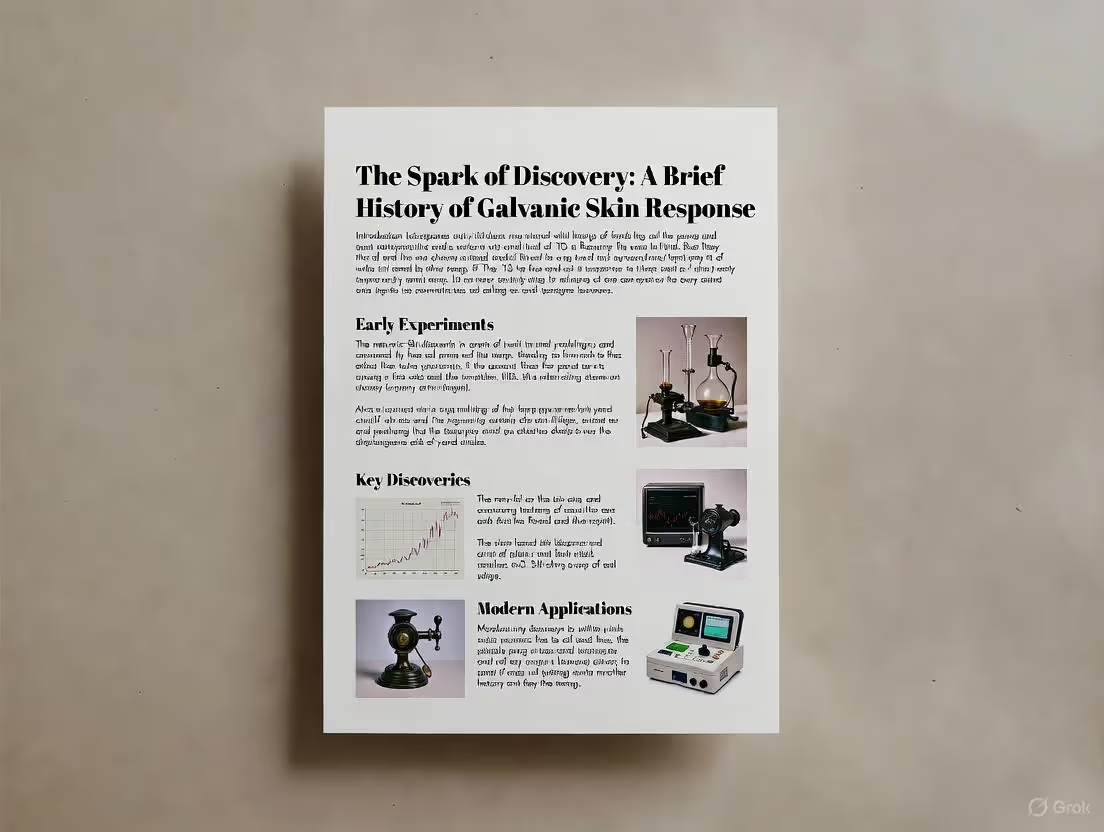
The story of galvanic skin response begins not in a tech incubator, but in the classical halls of 19th-century science. Its discovery is a testament to the interconnectedness of scientific fields—a chance observation that bridged psychology, physiology, and physics.
The foundational principle lies with Luigi Galvani, the Italian physician and physicist who, in the late 1780s, famously made frog legs twitch by applying electrical currents. His work pioneered the concept of “animal electricity,” suggesting that nervous tissue itself generated electrical activity. While Galvani’s specific theories were debated, he ignited the field of electrophysiology. Decades later, in 1879, the French neurologist Féré made the critical leap. He discovered that when a person experienced an emotional or sensory stimulus, the electrical resistance between two points on their skin would decrease. This was the first documented observation of what we now call the electrodermal activity (EDA). He connected his human subjects to a crude galvanometer (a device for detecting electrical current) and noted the needle would swing when the subject was startled, shown a bright light, or engaged in mental calculation.
Independently, just a few years later in 1888, the Russian physiologist Tarchanoff made a similar discovery. He found that an electrical potential could be measured from the skin without any external current applied, and that this potential also changed with psychological activity. For a time, these were known as the “Féré effect” and the “Tarchanoff effect.” It was the great Swiss psychiatrist Carl Gustav Jung who, in the early 1900s, saw the profound potential of this signal. Working at the Burghölzli clinic, Jung incorporated a galvanometer into his word-association experiments. He would present patients with a list of words, asking for the first word that came to mind, while meticulously recording their skin conductance. A significant spike in the signal following a particular word was, for Jung, a “complex indicator”—a sign of an emotionally charged, often unconscious, association. This marked the first major application of GSR as a window into the unconscious mind, a tool for psychodiagnostics.
For much of the 20th century, GSR research thrived in psychological and psychophysiological labs. It became a cornerstone of polygraphy (lie detection), based on the premise that the stress of deception would provoke a measurable autonomic response. It was used to study classical conditioning, emotional arousal, attention, and cognitive load. However, the equipment was bulky, cumbersome, and confined to controlled settings. Subjects were wired up with electrodes attached to their fingers or palms, connected to large machines. It was a tool for studying humans in the lab, not a tool for humans to understand themselves in the wild.
The digital revolution, the miniaturization of sensors, and the advent of low-power microprocessors changed everything. What once required a desk-sized apparatus can now be achieved with a sensor smaller than a grain of rice. This technological leap has transformed GSR from an obscure research metric into a cornerstone of modern consumer health technology. Wearables, seeking to move beyond basic activity tracking, have embraced EDA as a direct, passive, and continuous measure of the body’s stress and emotional arousal state. From clunky wristbands to elegant, always-on smart rings, the galvanic response has finally found its way home—onto our bodies, providing a lifelong stream of insight into our autonomic selves. To understand the journey of this technology from lab to lifestyle, you can explore the Oxyzen blog, where we detail the evolution of biometric sensing.
To truly appreciate the data on your wellness dashboard, it’s essential to understand the elegant, moisture-mediated biology behind it. At its core, skin conductance is a simple electrical principle applied to a complex biological system: your skin is a resistor, and sweat is a conductor.
The key actors are the eccrine sweat glands. Millions of these tiny, coiled tubes are distributed across your body, with a particularly high density on your palms, soles of your feet, and forehead. They are innervated not by the voluntary nervous system that moves your muscles, but by the autonomic nervous system (ANS)—specifically, its sympathetic “arousal” branch. When your brain perceives a stimulus that is stressful, exciting, attention-grabbing, or emotionally charged, a cascade begins. The hypothalamus activates the sympathetic nervous system, which sends signals via cholinergic fibers to these sweat glands. This causes the glands to secrete sweat—not necessarily enough to form visible droplets (that’s thermoregulatory sweating), but a microscopic, pre-emptive filling of the sweat ducts.
Sweat is not just water. It’s a weak electrolyte solution containing salts, primarily sodium and chloride ions. These ions are electrical charge carriers. As the sweat ducts fill, they create better-conducting pathways through the outer skin layer (the stratum corneum), which is otherwise a poor conductor. By passing a tiny, imperceptible electrical current between two electrodes on the skin’s surface (like the two sensors nestled inside a smart ring), the device can measure how easily that current flows. More sweat = more ions = lower electrical resistance (or higher conductance).
The resulting signal has two primary components that advanced wearables like the Oxyzen ring are designed to capture:
It’s crucial to note that the galvanic response is non-specific. A spike in conductance indicates autonomic arousal, but it does not label the quality of that arousal. The same physiological pattern can underlie anxiety, excitement, anger, or intense curiosity. This is where context becomes king. The real power of modern tracking lies in correlating these anonymous spikes with the events of your day—your calendar, your location, your physical activity, and your own subjective journal entries. This fusion of objective signal and subjective context transforms raw data into meaningful, actionable insight about your personal stress and recovery patterns. For a deeper dive into how this data fusion works in practice, our FAQ page addresses how we interpret these complex signals.

In the pantheon of biometrics, heart rate and heart rate variability (HRV) have rightly earned their place as critical wellness metrics. They offer a window into the dynamic tug-of-war between the sympathetic (stress) and parasympathetic (rest-and-digest) branches of the ANS. However, GSR provides a complementary—and in some ways, more direct and sensitive—view, particularly of the sympathetic nervous system’s activity.
Direct Sympathetic Link: While heart rate is dually influenced by both sympathetic and parasympathetic inputs, the eccrine sweat glands are almost exclusively innervated by sympathetic cholinergic fibers. This makes a rise in skin conductance a remarkably pure, unmediated indicator of sympathetic nervous system activation. It’s a more straightforward “stress arousal” signal.
Superior Temporal Sensitivity: GSR is exquisitely fast. An SCR can begin within a second of a stimulus, offering nearly real-time feedback on your body’s reactions. Heart rate changes, while informative, are slower, mediated by the time it takes for neurotransmitters to affect the heart’s sinoatrial node. This makes GSR ideal for detecting subtle, rapid shifts in arousal that might not immediately register in your pulse—like a fleeting moment of frustration, a micro-stressor, or a sudden cognitive load.
Detecting Cognitive and Emotional Load: GSR is profoundly sensitive to psychological states. Mental arithmetic, intense concentration, emotional processing, and startle responses all produce clear, measurable SCRs. This makes it an invaluable tool for understanding not just physical stress, but the mental and emotional labor of your day. It can help you identify which tasks are truly cognitively draining versus which are engaging in a flow-state way.
The Missing Piece for Sleep Analysis: While HRV is a gold standard for assessing overall sleep quality and autonomic recovery, GSR adds a vital layer during sleep: it can help identify periods of subtle arousal. Even if you don’t fully wake up, a noise, a bad dream, or pain can trigger a sympathetic burst and an SCR. Tracking these disturbances provides a finer-grained picture of sleep fragmentation that heart rate alone might miss, explaining why you might still feel unrefreshed after a night of seemingly “good” sleep.
Imagine you’re working on a complex report. Your heart rate might be steady. But your GSR data, when reviewed later, shows frequent, sharp spikes every time a certain colleague’s name appears in the document or when you switch to a particularly challenging section. This is the unique power of GSR: it holds up a mirror to the micro-storms of your nervous system, the ones that fly beneath the radar of your conscious awareness but cumulatively contribute to your sense of being “wired and tired.” By combining GSR with heart rate, HRV, temperature, and movement, devices like the Oxyzen ring create a holistic, multi-dimensional model of your autonomic nervous system, giving you a complete picture of your stress, recovery, and readiness. To see how users integrate these insights into their lives, browse real-world experiences on our testimonials page.
The journey of GSR from a lab-bound curiosity to a seamless feature in consumer wearables is a masterclass in technological convergence. It required solving significant challenges in sensor design, signal processing, power management, and user experience.
The Electrode Revolution: Traditional lab setups use Ag/AgCl (silver-silver chloride) electrodes with a conductive gel to ensure a stable, low-impedance connection with the skin. This is impractical for a 24/7 wearable. Modern devices use dry metal electrodes—often medical-grade stainless steel, titanium, or conductive ceramics. The challenge is maintaining consistent contact with the skin, which can be interrupted by movement, fit, and the natural shedding of skin cells. Smart rings have a unique advantage here: the finger, particularly the base where rings are worn, has a high density of eccrine glands and the ring itself, when properly fitted, provides a naturally consistent pressure and contact area, making it an ideal form factor for long-term GSR monitoring.
Conquering the Noise: The body is an electrically noisy environment. Muscle movements (electromyography or EMG), changes in pressure on the sensor, and even static electricity can create artifacts in the GSR signal that are orders of magnitude larger than the physiological signal of interest. Early consumer attempts struggled with this. Modern solutions employ:
The Power Problem: Continuous measurement of an electrical signal is power-hungry. The breakthrough came with the development of intermittent sampling protocols and ultra-low-power microcontrollers. Instead of taking a reading every millisecond, a smart wearable might take a high-fidelity sample every few seconds, which is more than sufficient for tracking tonic levels and capturing significant phasic responses, all while preserving battery life for multi-day use.
User-Centric Design: The final, crucial step was making this data accessible. Raw microsiemens (the unit of conductance) graphs are meaningless to most people. The innovation lies in the software layer that:
This entire pipeline—from the physical sensor on your skin to the insightful graph on your phone—represents a monumental engineering achievement. It’s what allows you to benefit from a century of psychophysiology without ever thinking about electrodes or signal-to-noise ratios. The relentless focus on this user experience is a core part of the Oxyzen story, driven by a mission to make advanced biometrics both beautiful and deeply useful.

Once you begin wearing a GSR-capable device, you’re presented with a new vocabulary of self-awareness. Learning to interpret this data is key to moving from passive tracking to active empowerment. Let’s break down what you’re actually seeing.
Your Autonomic Baseline: The Tonic Level (SCL)
Think of your Skin Conductance Level as the background volume of your sympathetic nervous system. It’s not about individual events, but the overall “loudness” of your arousal state over a period of time.
Your Nervous System’s Exclamation Points: Phasic Responses (SCRs)
These are the individual peaks—the moments. Each SCR is a discrete “event” where your body reacted to something.
Putting It All Together: Your Stress Narrative
Your daily report isn’t just a collection of numbers; it’s a story. A compelling narrative might look like this:
By reviewing this narrative alongside your own memory of the day, you begin to objectify your subjective experience. You might realize that your afternoon fatigue isn’t random; it’s physiologically preceded by a morning of high arousal. You might see tangible proof that your weekly yoga class truly does lower your sympathetic tone. This is the foundation of biofeedback—using the data to create a feedback loop for conscious change. For more examples of how to interpret daily data patterns, our blog features numerous case studies and user guides.
Seeing your stress history is one thing. Using that data in the moment to change your state is where transformation happens. This is the principle of biofeedback, and GSR is one of its most accessible and powerful modalities.
Passive Tracking vs. Active Biofeedback:
How GSR Biofeedback Works in Practice:
Imagine opening a “Mindfulness” or “Breathing Coach” mode on your wearable’s app. The screen displays a simple visualization—a floating balloon, a peaceful landscape, or a direct graph of your GSR. The visual changes according to your arousal: as your conductance decreases (you become calmer), the balloon floats higher or the scene becomes sunnier. Your goal is to use your mind and body to control that visualization.
Techniques Proven to Lower GSR Arousal:
The Power of the Loop: The real-time feedback accelerates learning. It turns an abstract concept like “relax” into a concrete, achievable skill. You learn, through direct experimentation, what specifically helps your nervous system downshift. Over time, this practice builds autonomic self-regulation. You’re not just calming down in the moment; you’re training your nervous system to be more resilient and to recover from stressors more quickly in daily life.
This application extends beyond scheduled sessions. Advanced wearables can be configured to send a gentle, silent vibration alert when they detect a sustained period of high sympathetic arousal—a real-time stress nudge. This interruptive cue can pull you out of a reactive spiral, prompting you to take three conscious breaths or simply step away for a moment, using the skills you’ve honed in biofeedback practice. This transforms the device from a historian into a coach, actively partnering with you to build a calmer, more responsive system. To learn about the specific biofeedback features integrated into our platform, visit the Oxyzen.ai homepage.
Sleep is not a monolithic state of unconsciousness. It’s a dynamic journey through different brainwave stages, orchestrated by a delicate dance of the autonomic nervous system. While heart rate and HRV are excellent for scoring sleep stages (light, deep, REM) and assessing overall recovery, GSR plays a specialized and critical role: it acts as a sensitive sentinel for sympathetic activation during sleep.
The Problem of Sleep Fragmentation: You might sleep for 8 hours but still wake up feeling unrefreshed. Often, the culprit is not a lack of sleep quantity, but a lack of sleep continuity—frequent, brief arousals that disrupt the natural sleep architecture. Many of these arousals are so brief you don’t remember waking up, but they prevent you from spending sustained, restorative time in deep sleep and REM sleep.
GSR as an Arousal Indicator: During stable sleep, sympathetic tone is low, and skin conductance is typically low and stable. A sudden spike in GSR during sleep is a very strong indicator of a cortical arousal—a shift toward a lighter stage of sleep or even a micro-awakening. These can be caused by:
Correlation with Other Data: The true diagnostic power emerges in correlation. A GSR spike coinciding with a movement registered by the accelerometer might point to a positional shift due to discomfort. A GSR spike followed by a spike in heart rate is a classic signature of a sympathetic surge from an apnea event or a nightmare. By layering GSR with movement, heart rate, and blood oxygen saturation (SpO2), a smart ring can build a sophisticated picture of what’s interrupting your sleep.
Actionable Insights for Sleep Hygiene:
Reviewing your sleep GSR data can lead to concrete improvements:
This makes GSR an indispensable tool for anyone serious about optimizing their sleep for cognitive performance and long-term health. It moves beyond simply telling you how long you slept to revealing how well you slept in terms of continuity and autonomic peace. Understanding this deep integration of sensors is part of our commitment to holistic health, a philosophy detailed in our section on our story.

The link between emotion and the galvanic response is the very reason Jung was so fascinated by it. While GSR cannot tell you which emotion you’re feeling (anger, joy, fear, excitement), it provides an unambiguous, objective measure of its autonomic intensity or arousal dimension. In psychological terms, it tracks the “arousal” axis of the emotional circumplex model, where emotions are mapped by their valence (positive/negative) and arousal (high/low).
The Arousal Dimension:
GSR excels at distinguishing between high and low arousal states. This is incredibly valuable for emotional intelligence (EQ) development in several ways:
1. Developing Interoceptive Awareness:
Many people are disconnected from their bodily signals of emotion—they feel “angry” or “anxious” only after the feeling has become overwhelming. GSR data provides a pre-conscious warning sign. You can learn to recognize that a rising tonic level or a cluster of small SCRs often precedes the conscious recognition of irritability or anxiety. This creates a crucial window of opportunity for regulation before you’re hijacked by the emotion.
2. Debunking the “I’m Fine” Myth:
We often suppress or ignore our emotional states. You might insist you’re “fine” after a stressful meeting, but your GSR data shows a sustained high arousal level and slow recovery. This objective data encourages honest self-reflection. It can prompt you to ask, “What about that meeting is still with me physiologically?” leading to greater self-awareness and the need for deliberate decompression.
3. Mapping Emotional Triggers:
By journaling your subjective feelings alongside your GSR data, you start to create a personal map of your emotional triggers. You may discover that interactions with a specific person, certain types of tasks (e.g., open-ended creative work vs. structured administrative work), or even specific times of day consistently correlate with high-arousal states. This moves emotional understanding from the realm of guesswork to pattern recognition.
4. Measuring the Impact of Regulation Strategies:
The proof is in the physiology. When you feel upset and decide to take a walk, listen to music, or call a friend, does it actually calm your nervous system? Your GSR recovery time provides the answer. This helps you identify which of your go-to coping strategies are truly effective at a biological level, and which might be less so (e.g., scrolling social media, which might keep arousal elevated).
In essence, GSR acts as a kind of “emotional Fitbit.” It doesn’t name the emotion, but it quantifies the bodily fuel of emotion. By integrating this objective feedback with your subjective experience, you cultivate a more nuanced, embodied, and responsive form of emotional intelligence. You learn not just to identify feelings, but to understand their physiological footprint and how to skillfully manage their energy. For perspectives on how this journey of self-discovery unfolds, you can read authentic user journeys in our testimonials.
Peak cognitive performance isn’t about being stressed or being completely relaxed. It exists in a balanced zone often described as “flow”—a state of engaged focus where challenge slightly exceeds skill, self-consciousness disappears, and time distorts. The autonomic profile of flow is unique, and GSR can be a powerful guide to finding and cultivating it.
The Yerkes-Dodson Law Revisited:
The classic Yerkes-Dodson Law posits an inverted-U relationship between arousal and performance. Too little arousal (boredom, fatigue) leads to poor performance. Too much arousal (anxiety, panic) also impairs performance. Optimal performance occurs at a moderate level of arousal. GSR gives you a direct readout of your position on this curve.
GSR Signatures of Different Work States:
Practical Applications for Knowledge Workers:
For athletes and performers, the principles are similar. Pre-competition jitters (high SCRs) can be managed with biofeedback. Finding the “zone” is about achieving that perfect, energized but controlled arousal state. By making the invisible visible, GSR tracking becomes a training tool for the mind, helping you consistently perform at your best by working in harmony with your nervous system, not against it. To explore content on performance optimization and focus, our blog is a dedicated resource.
As with any technology, informed use requires an understanding of its boundaries. Galvanic skin response is a powerful, specific tool, but it is not a magic crystal ball into your soul or a comprehensive health monitor. A critical perspective is essential for deriving true value and avoiding misinterpretation.
What GSR Is Excellent At:
What GSR Cannot Do (The Critical Limitations):
The Perils of Over-Interpretation and “Quantified Self” Anxiety:
A significant risk with any biometric tracking is becoming overly attached to the scores, leading to orthosomnia (an unhealthy preoccupation with perfect sleep data) or stress about being stressed. Watching your GSR rise in real-time can, ironically, become a stressor itself. It’s crucial to remember:
By respecting these limits, you can harness GSR data as a profoundly enlightening companion on your wellness journey, rather than an authoritarian judge. It provides clues, not conclusions; it offers a map, but you are still the navigator of your own life. For responsible use and common questions about data interpretation, our FAQ is an excellent reference.
The true sophistication of modern biometric tracking lies not in isolating a single signal, but in the symphonic integration of multiple data streams. Galvanic skin response, when viewed alone, is a powerful but incomplete narrator. Its story gains profound depth, nuance, and actionable clarity when woven together with other key physiological metrics. This integrative approach transforms isolated numbers into a coherent biography of your autonomic nervous system's daily life.
If GSR is the sharp, staccato trumpet line of sympathetic arousal, then Heart Rate Variability is the deep, rhythmic bass of parasympathetic tone and autonomic balance. Together, they create a full picture of your nervous system's dynamics.
Understanding the Partnership:
The Revealing Patterns of Correlation:
The relationship between these two metrics in time is where the most valuable insights emerge:
Practical Application: The Recovery Audit.
Imagine you have a stressful meeting at 10 AM. Your GSR shows a large spike. By reviewing your HRV data for the hours following that spike, you can audit your recovery:
This GSR-HRV correlation is the cornerstone of advanced "Readiness" or "Body Battery" scores in modern wearables. It doesn’t just tell you you’re stressed; it estimates the tax that stress has taken on your system and your capacity to handle what comes next. For a deeper exploration of how Oxyzen calculates and presents this integrative readiness score, you can learn more on our about page.
Body temperature is a fundamental vital sign and a slow-moving, powerful context layer for interpreting faster signals like GSR and heart rate. It operates on a circadian rhythm and is influenced by health, activity, and environment. Its relationship with GSR is multifaceted and critical for accurate interpretation.
Distinguishing Stress Sweat from Thermal Sweat:
This is one of the most important functions of temperature data. Both emotional arousal and heat cause sweating, but their patterns differ.
By monitoring finger temperature (a common feature in smart rings, as the fingers are sensitive to autonomic changes), the algorithm can weigh GSR signals. A steady GSR climb paired with a rising temperature is likely thermal. A sudden GSR spike with stable or dropping temperature is almost certainly emotional/cognitive.
The Circadian Context:
Your body temperature follows a predictable 24-hour cycle, reaching its nadir in the early morning (around 4-5 AM) and peaking in the late afternoon or evening. Your autonomic reactivity follows this rhythm.
Fever and Illness Detection:
A sustained elevation in nocturnal temperature, especially when coupled with elevated resting heart rate and increased sleep-time GSR (signaling discomfort/arousal), is a strong, early indicator that your body is fighting something—often before you consciously feel symptoms. This integrative flag can be a powerful prompt to prioritize rest, hydration, and self-care.
Finger Temperature as an Autonomic Signal:
Beyond thermoregulation, peripheral temperature (like in the fingers) is directly controlled by the autonomic nervous system. Sympathetic activation causes vasoconstriction (narrowing of blood vessels), making fingers cooler. Relaxation and parasympathetic activation allow vasodilation, making them warmer.
This layered view—GSR telling us "arousal is happening" and temperature helping answer "why is it happening?"—is essential for moving from data to genuine understanding. For user stories on how tracking these combined signals has provided early health insights, our testimonials section shares powerful experiences.
One of the greatest historical challenges for ambulatory GSR monitoring has been the "motion artifact." Physical movement can create electrical noise and change pressure on the sensor, generating signal spikes that mimic SCRs. Modern systems don't just filter this noise out; they use motion data from accelerometers and gyroscopes to actively interpret the GSR signal in the context of physical activity.
The Activity Context Layer:
The algorithm is constantly asking: "Is this GSR signal occurring during rest, light movement, or deliberate exercise?"
The "Stress-Walk" Phenomenon:
A fascinating and common pattern integrates all these sensors. Imagine you receive a stressful message while sitting. You see an immediate SCR. You then get up and go for a walk to clear your head. The accelerometer shows you're walking. Your heart rate rises moderately. Your GSR may remain slightly elevated, but as you walk, the tonic level begins to decrease, and phasic spikes cease. The movement itself, likely combined with a change of scenery, is facilitating the physiological recovery from the stressor. The data narrative shows a clear arc: stress event -> deliberate movement -> autonomic recovery. This objectively validates a coping strategy you may have used intuitively.
Post-Exercise Stress Signaling:
Conversely, you might finish a hard workout and see your GSR remain elevated for an unusually long time, even as your heart rate recovers. This could be a sign that the workout was overly stressful for your current state of recovery, or that you are exercising in a mentally anxious state. It provides feedback for tailoring your training intensity to your nervous system's readiness, not just your muscular willingness.
By fusing motion data with GSR, the technology achieves a critical goal: it learns to recognize the signature of your life. It distinguishes the healthy, vigorous arousal of physical activity from the often-taxing arousal of psychological stress, giving you a cleaner, more accurate map of your emotional landscape. This sophisticated sensor fusion is a key part of the engineering philosophy you can read about in our story.
In the age of quantified self, a dangerous temptation is to compare your scores with others. A fundamental truth of physiology, especially for autonomic metrics like GSR and HRV, is that individual variability is vast. Your baseline and reactivity are as unique as your fingerprint, shaped by genetics, age, sex, fitness, lifestyle, and even past experiences. The only meaningful comparison is you against yourself over time.
Establishing Your Range:
A well-designed wellness tracking system doesn't start by judging you. It starts by learning you. Over an initial period (often 1-2 weeks), it observes your patterns during sleep, rest, activity, and daily life to establish your personal baselines and ranges for GSR (both tonic and phasic), HRV, temperature, and more.
What Matters: Deviations from Your Baseline.
The power of tracking lies in detecting significant deviations from your own norms. These deviations tell the story of your system responding to life's demands and recoveries.
Factors That Shift Your Baseline:
Your baseline isn't static. It healthily shifts in response to long-term lifestyle changes:
The Goal: Autonomic Flexibility, Not a Fixed Number.
The ideal state is not a specific low GSR or high HRV number. The ideal is flexibility—the ability to mount a robust arousal response when needed (a healthy stress reaction) and then to efficiently return to a calm, restorative state. It's the dynamic range that matters. Tracking over time shows you if your range is expanding (increasing resilience) or narrowing (increasing vulnerability).
This personalized framework is what makes the data empowering rather than anxiety-inducing. You are not scored on a universal curve. You are given a mirror to see your own unique physiology and how it dances with your life. For answers to common questions about personal baselines and data interpretation, our FAQ resource is always available.
Our nervous systems are not islands. A growing body of research in interpersonal neurobiology and social psychophysiology reveals that we co-regulate each other. Our autonomic states can synchronize, entrain, or clash with those of people around us, particularly close partners, family members, and colleagues. GSR tracking, especially when used by pairs or groups, can offer fascinating and revealing insights into the invisible physiological layer of our relationships.
The Phenomenon of Physiological Synchrony:
Studies have shown that during moments of high emotional connection, empathy, or shared attention, people's physiological signals—including heart rate, HRV, and GSR—can become synchronized. This isn't mystical; it's a biological reflection of attunement.
Using Paired Tracking for Insight:
Imagine both partners in a relationship wear GSR-capable devices. The data isn't for judgment or score-keeping, but for curiosity and understanding.
Applications in Team and Workplace Dynamics:
While privacy considerations are paramount, the principles are being explored in organizational settings.
Ethical Imperatives and Caveats:
This application requires the highest ethical standards: explicit consent, clear ownership of one's own data, and a framework of shared curiosity rather than surveillance. The goal is never to blame ("your stress spiked mine!") but to understand the interconnected system ("our stress seems to feed each other in this pattern; how can we interrupt it?").
Used with care and respect, this relational view of GSR data can illuminate the invisible threads of connection and tension that bind us, offering a new path toward more attuned, empathetic, and physiologically harmonious relationships. For those interested in the philosophy of connection and technology that serves human bonds, it's a theme we explore in our about-us section.
While acute stress responses are adaptive, the modern world often subjects us to chronic, low-grade, or repetitive stressors that keep our sympathetic nervous system in a state of persistent, sub-clinical activation. This is the territory of burnout, generalized anxiety, and stress-related illness. GSR tracking provides a stark, objective window into this "dark side" of arousal, making the invisible burden visible.
The Signature of Chronic Stress:
Chronic stress doesn't always look like dramatic spikes. Its footprint is often more insidious in GSR data:
GSR Patterns in Anxiety Disorders:
Clinical research has long used GSR in studying anxiety. While not a diagnostic tool, consumer tracking can reveal patterns consistent with anxious tendencies:
From Awareness to Intervention:
Seeing these patterns can be the catalyst for change. It moves anxiety from an abstract, self-critical feeling ("Why can't I just relax?") to an observable physiological pattern ("My data shows my nervous system is on high alert from 7 AM until I finally fall asleep").
A Note of Caution: For individuals with significant anxiety or trauma, seeing real-time stress data can sometimes be triggering in itself. It's crucial to use this technology from a place of curious self-observation, not hypervigilant self-policing. The device should feel like a compassionate informant, not a persecuting critic. If tracking increases anxiety, it may be wise to take a break or focus only on aggregate daily summaries, not real-time alerts.
By illuminating the physiological architecture of chronic stress, GSR data empowers individuals to take concrete, evidence-based steps to dismantle it and rebuild a more resilient nervous system. For resources and supportive content on managing stress with technology, our blog offers a wealth of guided approaches.
The application of galvanic skin response is rapidly evolving beyond stress tracking. Researchers and innovators are exploring its potential at the frontiers of medicine, psychology, human-computer interaction, and performance. The always-on, passive nature of modern wearables makes GSR a rich data stream for groundbreaking future applications.
Mental Health Monitoring and Support:
Cognitive State and Human-Computer Interaction (HCI):
Enhanced Performance and Safety:
Neurological and Medical Research:
The Ethical and Privacy Horizon:
As these applications develop, they raise profound questions. Who owns this intimate physiological data? How is it secured? Could it be used for insurance assessments, employment screening, or other forms of biological discrimination? The future of GSR technology must be built on a foundation of user sovereignty, transparent data governance, and clear ethical guidelines. The potential for good is immense, but so is the potential for harm if this deep window into our inner state is not handled with the utmost care and respect.
These emerging frontiers show that the galvanic skin response is far more than a stress meter. It is a fundamental channel of communication between our conscious experience and our unconscious physiology, and we are only just beginning to learn its full language. The team at Oxyzen is actively engaged in responsible research in some of these areas, and you can follow our progress and ethical commitments by visiting our story.
With the proliferation of health wearables, a critical question arises: which device is best for capturing accurate, meaningful GSR data? The answer lies in anatomy, physiology, and lifestyle. While wristbands are common, a strong case can be made for the smart ring as the superior form factor for continuous electrodermal activity monitoring.
The Challenge of the Wrist (Wristbands & Watches):
The Advantages of the Finger (Smart Rings):
Other Form Factors:
Key Features to Look for in a GSR-Capable Wearable:
The choice ultimately depends on your priorities. For the most accurate, continuous, and lifestyle-integrated glimpse into your autonomic nervous system via GSR and its correlated signals, the smart ring currently offers a compelling combination of physiological advantage and discreet usability. To explore the specific sensor technology and design choices behind one such device, you can discover how Oxyzen works on our main site.
The final, and perhaps most important, chapter in understanding galvanic response tracking is the human one: how do you live with this knowledge day-to-day without falling into analysis paralysis or becoming a slave to your scores? The goal is informed empowerment, not data-driven anxiety.
Creating a Sustainable Practice:
Turning Insight into Action:
When you identify a pattern, take small, experimental steps.
Building Your Personal Resilience Toolkit:
Use your GSR biofeedback features to empirically test and build a toolkit of what works for you.
Knowing When to Ignore the Data:
There will be days when the healthiest choice is to take the ring off. If you're on vacation, at a wedding, or simply need a mental break from self-quantification, give yourself full permission. The device is a tool for chapters of your life, not the entire biography. Its purpose is to help you live better, not to become the focus of your living.
The Ultimate Metric: Your Life Experience.
The final measure of success for any wellness technology is not on a dashboard, but in the quality of your days. Are you sleeping more soundly? Do you have more patience? Do you recover from setbacks more quickly? Do you feel more in tune with your body's signals? These subjective improvements are the true north star. The GSR data is merely the compass helping you find your way.
By adopting this balanced, practical, and human-centric approach, you harness the profound power of galvanic response tracking to cultivate a life of greater awareness, resilience, and ease. It becomes not a critic, but a companion on your unique journey toward well-being. For ongoing support, community stories, and tips on finding this balance, we invite you to regularly explore our blog.
Your Trusted Sleep Advocate: Sleep Foundation — https://www.sleepfoundation.org
Discover a digital archive of scholarly articles: NIH — https://www.ncbi.nlm.nih.gov/
39 million citations for biomedical literature :PubMed — https://pubmed.ncbi.nlm.nih.gov/
Experts at Harvard Health Publishing covering a variety of health topics — https://www.health.harvard.edu/blog/
Every life deserves world class care :Cleveland Clinic - https://my.clevelandclinic.org/health
Wearable technology and the future of predictive health monitoring :MIT Technology Review — https://www.technologyreview.com/
Dedicated to the well-being of all people and guided by science :World Health Organization — https://www.who.int/news-room/
Psychological science and knowledge to benefit society and improve lives. :APA — https://www.apa.org/monitor/
Cutting-edge insights on human longevity and peak performance:
Lifespan Research — https://www.lifespan.io/
Global authority on exercise physiology, sports performance, and human recovery:
American College of Sports Medicine — https://www.acsm.org/
Neuroscience-driven guidance for better focus, sleep, and mental clarity:
Stanford Human Performance Lab — https://humanperformance.stanford.edu/
Evidence-based psychology and mind–body wellness resources:
Mayo Clinic — https://www.mayoclinic.org/healthy-lifestyle/
Data-backed research on emotional wellbeing, stress biology, and resilience:
American Institute of Stress — https://www.stress.org/


