


Sleep Health for Beginners: Common Questions Answered
Common questions include "How much sleep do I need?" and "Is it normal to wake up at night?"
Common questions include "How much sleep do I need?" and "Is it normal to wake up at night?"
%402x.svg)
You are not broken. If you’ve ever spent a weary hour scrolling through sleep tips, drowning in conflicting advice, or lying awake wondering why a basic biological function feels so out of reach, please know that. Sleep, in our modern world, has become a paradox—a universal need wrapped in layers of confusion, anxiety, and frustration. We chase it, track it, and stress over it, often making it more elusive in the process.
Perhaps you’re tired of waking up feeling like you never truly shut down. Maybe you’re confused about sleep cycles, baffled by blue light, or simply wonder if that “perfect eight hours” is a myth or a mandate. The questions are endless, and the answers, it seems, are often contradictory. From the wellness influencer preaching a 5 AM routine to the sleep scientist discussing polyphasic patterns, it’s hard to know where to begin.
This guide is your starting line, not your finish line. We’re stripping away the noise to answer the fundamental, common questions about sleep health in clear, actionable, and scientifically-grounded language. This is a deep, foundational resource designed to transform your understanding from a state of confusion to one of calm confidence. Consider it your comprehensive owner’s manual for the one-third of your life spent in restoration. We’ll explore not just the “what” and “how,” but the crucial “why,” connecting the dots between your nightly rest and your daily energy, mood, and long-term health.
And because understanding is only half the battle, we’ll also touch on the power of precise, personalized data. Technology, when used wisely, can be a bridge between knowledge and action. This is where tools like the Oxyzen smart ring come in, moving you from generic advice to insights tailored to your unique physiology. You can discover more about this approach to personalized wellness tracking on the Oxyzen homepage.
So, take a deep breath. Let’s begin unraveling the mysteries of sleep, one clear, common question at a time.
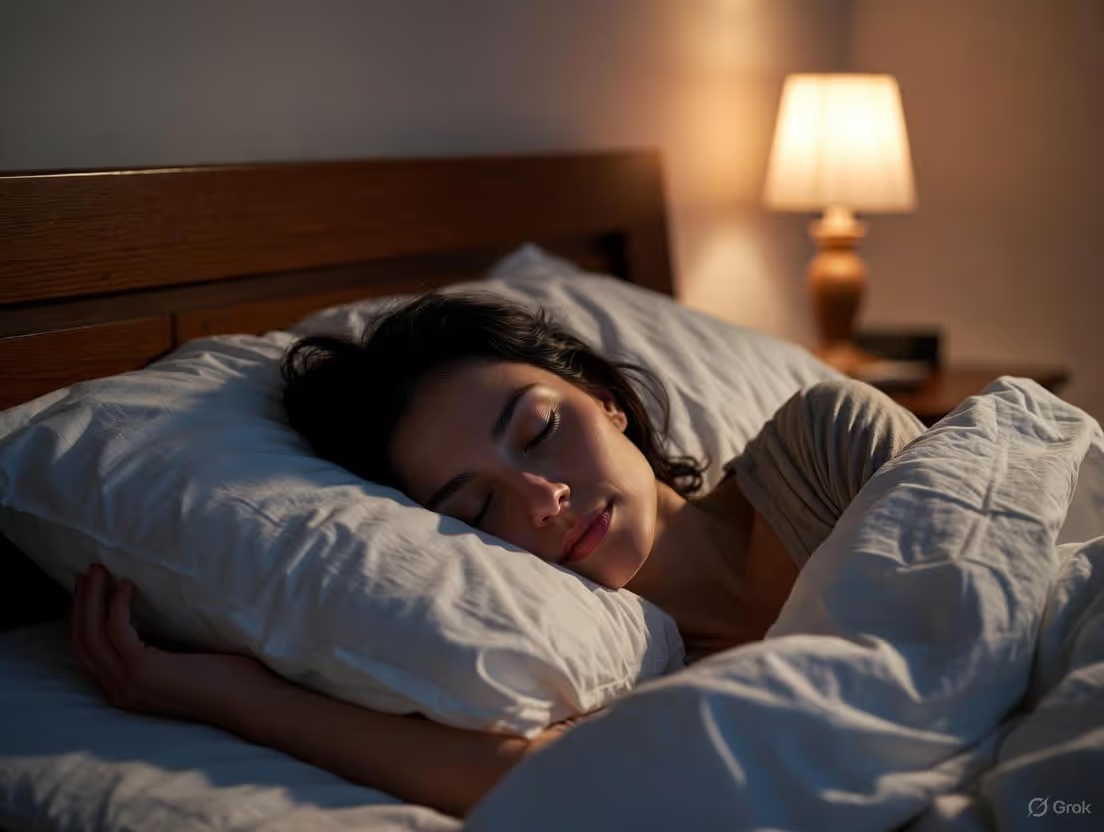
We often think of sleep as a passive state, a mere pause button pressed on our waking lives. But this couldn’t be further from the truth. Sleep is a highly active, complex, and elegantly orchestrated physiological process essential for life itself. It’s not the absence of wakefulness; it’s a distinct, vital state of being.
At its core, sleep is a cyclical series of brain and body states with two primary phases: Rapid Eye Movement (REM) sleep and Non-REM (NREM) sleep. NREM sleep is further divided into three stages (N1, N2, N3), progressing from light to deep sleep. Throughout the night, you cycle through these stages roughly every 90 to 120 minutes, with the composition of each cycle shifting as the night progresses. Early cycles are rich in deep NREM sleep (Stage N3), while later cycles feature longer periods of REM sleep. This architecture is crucial; each stage serves a specific, non-negotiable purpose.
Why is this process so non-negotiable? The consequences of sleep deprivation paint a stark picture. Think of sleep not as downtime, but as critical maintenance time for your entire biological system.
The ancient Greek physician Herophilus aptly said, “Sleep is a cessation of movement of the body and the soul.” Today, science tells us it’s a cessation of external movement to enable a frenzy of critical internal activity. It’s the foundation upon which every pillar of health—physical, mental, and emotional—is built. To neglect it is to sabotage your most fundamental asset. For a deeper dive into how specific sleep stages affect daily performance, you can explore related research and articles on our wellness blog.
“Get eight hours of sleep.” It’s one of the most ubiquitous pieces of health advice, presented as a universal rule. But is it? The answer is both yes and no. While eight hours is a good population average, the ideal is more personal. The National Sleep Foundation and leading sleep experts agree that for most healthy adults, 7-9 hours per night is the recommended range. However, your individual need within that range is influenced by genetics, age, activity level, and overall health.
The fixation on a rigid eight-hour benchmark can be counterproductive, creating anxiety that disrupts sleep itself—a phenomenon known as orthosomnia, where the pursuit of perfect sleep data becomes a source of insomnia. So, let’s move beyond the myth and focus on finding your number.
Listen to Your Body, Not Just the Clock
Ask yourself: On a day without an alarm, after a period of not being sleep-deprived, how long do I naturally sleep? Do I wake up feeling refreshed? Can I maintain focus and a steady mood throughout the day without caffeine crashes? These subjective measures are powerful indicators. If you need 9 hours to feel optimal but force yourself into a 7-hour schedule because “eight is enough,” you’re accruing a chronic sleep debt.
Age Changes the Equation Dramatically
Sleep needs evolve throughout our lifespan. A newborn needs 14-17 hours, a teenager 8-10 hours, and an older adult (65+) may find 7-8 hours sufficient, often with more fragmented sleep. Younger adults and middle-aged adults typically fall squarely in the 7-9 hour window. Recognizing this lifecycle is crucial; expecting a teenager to thrive on 7 hours is as unrealistic as expecting a toddler to nap for 20 minutes.
Quality Trumps Rigid Quantity
A solid 7 hours of uninterrupted, architecturally sound sleep (with proper cycles of deep and REM) is infinitely more restorative than 9 hours of fragmented, light sleep plagued by awakenings. This is why simply tracking time in bed is insufficient. The goal is adequate time spent in each restorative stage. This nuanced understanding is where modern wellness technology provides immense value. A device like a smart ring can help you move beyond guessing hours in bed to understanding your unique sleep architecture and consistency—you can read real user experiences to see how this data has shifted perspectives.
Signs Your Sleep Quantity (or Quality) Is Off:
In summary, while 8 hours is a useful shorthand, your true need is personal. Aim for 7-9 hours as a starting framework, but prioritize consistent, high-quality sleep and tune into your body’s signals of true restoration. The perfect number is the one that allows you to wake up feeling restored and function at your best without artificial stimulants.
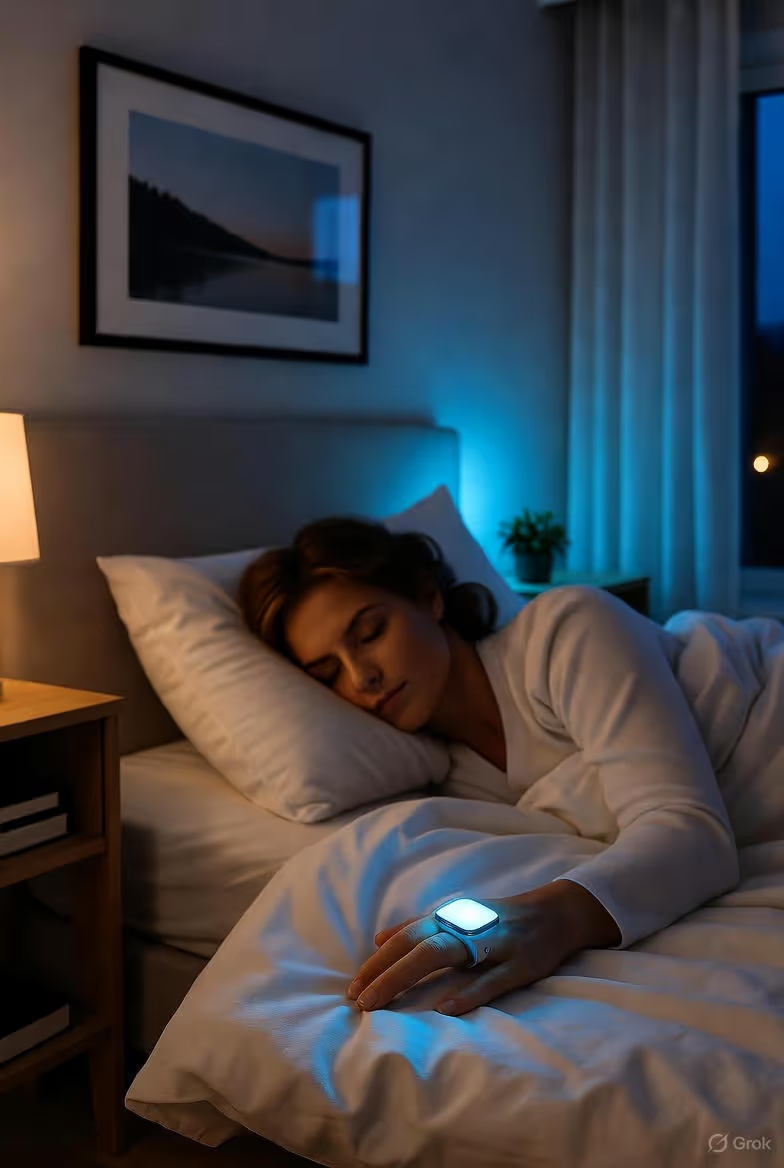
If sleep were a symphony, sleep cycles would be the movements, and the stages (N1, N2, N3, REM) would be the intricate melodies and rhythms within them. Understanding this structure is key to understanding why you feel the way you do upon waking. Let’s demystify the journey you take every night.
The Four Stages of Sleep:
How Cycles Unfold Through the Night
You don’t simply progress linearly from N1 to REM. You cycle. A full cycle (N1 → N2 → N3 → N2 → REM) takes about 90-120 minutes. The magic, however, is in how these cycles change as the night progresses.
This is why cutting your sleep short by 90 minutes often means disproportionately sacrificing REM sleep, potentially impacting mood and cognitive function. It’s also why a long nap (entering deep sleep) can leave you groggy, while a short 20-minute power nap (staying in light sleep) can be refreshing.
Why This Architecture Matters for You
In essence, sleep is not a monolithic state. It’s a dynamic, rhythmic process. Honoring the full arc of these cycles—allowing yourself to complete four to six of them—is what truly unlocks the restorative power of sleep.
This is one of the most pervasive and dangerous myths in modern wellness: the badge of honor worn by the “sleepless elite.” You might pride yourself on running on five or six hours, believing your productivity or toughness defies biological need. The hard truth from decades of sleep science is this: you are almost certainly fooling yourself, and the cost is a silent, compounding debt on your health, performance, and longevity.
The Illusion of Adaptation
When you chronically undersleep, your subjective sense of sleepiness may plateau. You adapt to a persistent state of impaired alertness. This creates a dangerous perceptual gap: you feel like you’re functioning normally, but objective measures of your performance are in steady decline. It’s like a pilot flying in thick fog who grows accustomed to the limited visibility, not realizing how far off course they’ve drifted until it’s too late.
The Cognitive and Performance Toll
Sleep deprivation is a stealthy thief of your mental faculties.
Numerous studies show that after several nights of only 6 hours of sleep, cognitive performance deficits accumulate to a level equivalent to being legally drunk. You would never claim to “function well” while intoxicated, yet we make this claim regularly about sleep deprivation.
The Physical Health Debt
As covered earlier, the systemic consequences are not subjective. They are measurable increases in inflammation, blood pressure, insulin resistance, stress hormones (cortisol), and hunger hormones (ghrelin). Your immune system’s response is blunted. The risk for chronic disease doesn’t announce itself with a yawn; it builds silently over years.
The Sleep Debt Reality
Sleep debt is real and cumulative. If you need 8 hours but consistently get 6, you accumulate a 14-hour sleep debt per week. This debt cannot be fully “paid back” in one weekend of sleeping in (though recovery sleep helps). The body prioritizes repaying deep NREM sleep debt first, often at the expense of REM sleep, leading to a rebound effect that still leaves you unbalanced.
Are You a True Short Sleeper?
A tiny fraction of the population (estimated less than 1%) are genuine “natural short sleepers,” due to a specific genetic mutation. These individuals truly thrive on 4-6 hours without negative effects. The key question for self-assessment: Do you choose to sleep less, or do you naturally wake up after 6 hours feeling perfectly refreshed, without an alarm, day after day, year after year? For the vast majority, the answer is the former.
The narrative of functioning on little sleep is a cultural construct, not a biological one. It’s a performance you’re putting on for the outside world—and for yourself—at an extraordinary internal cost. Acknowledging this is the first step toward reclaiming your health. For support and answers to common questions on making this shift, our comprehensive FAQ is a valuable resource.

Lying in bed, watching the clock, your mind racing while your body remains stubbornly awake—onset insomnia is a profoundly frustrating experience. It’s the gap between intention and biology. The causes are rarely singular; they’re usually a tangled web of physiological, psychological, and environmental factors. Let’s untangle them.
1. The Hyperaroused Nervous System: Stuck in "Fight-or-Flight"
Modern life is a chronic, low-grade stressor. When you finally hit the pillow, your nervous system may still be humming in sympathetic (“fight-or-flight”) overdrive, releasing cortisol and adrenaline when it should be shifting to the calming parasympathetic (“rest-and-digest”) state. This can be due to:
2. A Dysregulated Sleep Drive & Circadian Rhythm
Your ability to fall asleep is governed by two primary systems:
3. The Tyranny of the Racing Mind
Anxiety and rumination are the arch-nemeses of sleep onset. The quiet darkness of bedtime removes external distractions, leaving you alone with your thoughts. This can manifest as:
4. Poor Sleep Hygiene & Environment
Your habits and bedroom can actively work against you.
5. Underlying Medical or Psychological Conditions
Sometimes, insomnia is a symptom, not the core issue.
The First Steps Toward a Solution
Addressing onset insomnia starts with investigation, not desperation. Begin by tracking your habits for a week: What’s your caffeine cutoff? What’s your pre-bed routine? How does your mind behave in the dark? This process of self-observation is the cornerstone of improvement. Many find that using a device to track not just sleep time, but their readiness and daily habits, provides the objective feedback loop needed to connect cause and effect. Understanding the brand journey and vision behind tools designed for this purpose can provide context for their development.
The goal isn’t to force sleep, but to create the conditions—both internally and externally—where sleep can naturally occur. It’s about becoming a curator of your own calm.
Light is the most powerful external cue for your circadian rhythm. It doesn’t just let you see; it tells your internal body clock what time it is. Understanding this relationship, particularly with the pervasive blue wavelength, is fundamental to modern sleep health.
The Science: Melatonin and the Suprachiasmatic Nucleus (SCN)
Deep within your brain sits a tiny region called the suprachiasmatic nucleus (SCN)—your master circadian clock. This clock regulates the daily cycle of hormones, body temperature, and sleepiness. It is set each day primarily by light information received through your eyes.
Specialized cells in your retina (intrinsically photosensitive retinal ganglion cells, or ipRGCs) are particularly sensitive to blue wavelength light (around 460-480 nm). When these cells detect blue light—especially the bright, blue-rich light of the sun—they send a direct signal to the SCN saying, “It’s daytime!”
The SCN then responds by:
As the sun sets and blue light diminishes, this signal weakens. Your pineal gland begins secreting melatonin, body temperature starts to drop, and sleepiness sets in. This elegant system kept our ancestors in sync with the natural 24-hour light-dark cycle.
The Modern Problem: Artificial Light at Night (ALAN)
Our invention of electric light, and now LED screens, has effectively hacked this ancient system. We’ve created perpetual, indoor daylight. The blue light emitted by smartphones, tablets, computers, TVs, and even energy-efficient LED bulbs mimics the spectral signature of the midday sun, telling your SCN it’s still daytime—even at 11 PM.
Consequences of Evening Blue Light Exposure:
Practical Strategies to Manage Light for Better Sleep:
1. Embrace Morning Light: This is the most powerful, pro-sleep habit you can adopt. Get 15-30 minutes of bright, outdoor light within an hour of waking. This resets your clock crisply, boosts daytime alertness, and strengthens the subsequent melatonin signal at night.
2. Dim the Lights in the Evening: Starting 2-3 hours before bed, reduce ambient light in your home. Use lamps instead of overhead lights. Consider smart bulbs that can shift to warmer, amber tones after sunset.
3. Implement a Digital Sunset: This is non-negotiable for sensitive sleepers. Aim to put away all screens 60-90 minutes before bedtime. If this feels impossible, be strategic:
4. Optimize Your Sleep Sanctuary: Make your bedroom a cave. It should be pitch black.
Light is a drug for your circadian rhythm. Dose it wisely: big, bright doses in the morning to energize and align; small, dim, warm doses in the evening to wind down and prepare for restorative sleep. For more actionable tips on creating a holistic sleep-friendly environment, our wellness blog offers a wealth of detailed guides.
You are not just what you eat; you are how you sleep based on what you consume. The substances you put into your body act as direct chemical signals, either supporting or sabotaging the intricate process of sleep. Let’s break down the big three: food, caffeine, and alcohol.
The Food-Sleep Connection: Timing and Composition
It’s not just about avoiding a heavy meal right before bed (which can cause discomfort and acid reflux). The relationship is more nuanced.
Caffeine: The Most Popular (and Misused) Psychoactive Drug
Caffeine works by antagonizing adenosine receptors in the brain. Adenosine is a neurotransmitter that builds up the longer you’re awake, creating “sleep pressure.” Caffeine blocks this signal, making you feel alert.
Alcohol: The Deceptive Sedative
This is a critical misunderstanding. Alcohol is a sedative, not a sleep aid. It depresses the central nervous system, which may help you fall asleep faster. However, the sleep it induces is profoundly disrupted.
Hydration: A Delicate Balance
Dehydration can disrupt sleep, but drinking large amounts of fluid right before bed guarantees disruptive nighttime bathroom trips (nocturia). Aim to stay well-hydrated throughout the day and taper off fluid intake 1-2 hours before bed.
In essence, think of your evening as a preparation protocol. You are sending chemical instructions to your brain and body. The instruction should be: “The day is ending. Begin the restoration process.” Caffeine sends the opposite signal. Alcohol sends a false, disruptive signal. A balanced, well-timed meal and mindful hydration send the right one. Tracking how different dietary choices affect your sleep scores and heart rate variability can provide powerful personal feedback, a feature many users highlight in their personal testimonials.
The humble nap is a cultural flashpoint. Hailed as a productivity secret by some and derided as a sign of laziness by others, its true impact on your sleep health is nuanced. The answer to whether it helps or hurts lies in three factors: duration, timing, and individual need.
The Potential Benefits of a Well-Executed Nap:
When done correctly, a nap can be a powerful tool for cognitive and emotional reset.
The Risks and Downsides of Poor Napping Habits:
The Golden Rules of Smart Napping:
Should YOU Nap?
Napping is not a substitute for poor nighttime sleep. It’s a supplement or a tactical tool. If used strategically, it can enhance your day. If used indiscriminately, it can undermine the foundation of your sleep health. The key is self-awareness and precision. Understanding your own sleep patterns through consistent tracking can help you determine if napping is a net benefit or detriment to your unique physiology.
Your circadian rhythm is the unsung conductor of your body’s daily symphony. It’s a roughly 24-hour internal clock that regulates not just sleep and wakefulness, but a vast array of physiological processes: hormone secretion (cortisol, melatonin, growth hormone), core body temperature, metabolism, digestion, immune function, and even gene expression. It’s why you feel energetic at certain times and drowsy at others, and why disrupting it has such profound health consequences.
The Master Clock: The Suprachiasmatic Nucleus (SCN)
The headquarters of this system is the suprachiasmatic nucleus (SCN), a tiny group of about 20,000 neurons in the hypothalamus of your brain. This master clock generates its own rhythmic signal, but it requires daily calibration from the outside world to stay aligned with the 24-hour solar day. The most powerful time cue, or zeitgeber (“time-giver”), is light, as discussed. Others include temperature, food intake, and social activity.
The Rhythm’s Natural Peaks and Troughs
A typical circadian rhythm for an adult on a standard schedule looks something like this:
Chronotypes: Your Personal Rhythm Blueprint
While the basic shape is consistent, individuals have different innate timing preferences, known as chronotypes. Think of it as your biological personality for timing.
Your chronotype is genetically influenced and can shift with age (teenagers are naturally shifted later). There is no “best” chronotype. The problem arises when your lifestyle (e.g., a 7 AM work start) is chronically misaligned with your innate rhythm (e.g., being a Wolf). This state is called social jetlag, and it’s associated with fatigue, poor performance, and increased health risks.
How to Synchronize Your Rhythm for Better Sleep:
Respecting your circadian rhythm isn’t about rigidly adhering to an arbitrary schedule. It’s about discovering your body’s natural timing and creating a lifestyle that harmonizes with it, not fights against it. When your external habits are in sync with your internal clock, sleep becomes a natural, effortless process. For those interested in the science of synchronization and personalized health, the mission and values behind companies innovating in this space are often rooted in this core principle.

Stress and sleep exist in a vicious, self-perpetuating cycle. Stress disrupts sleep, and poor sleep lowers your threshold for stress, making you more reactive and anxious. This creates a feedback loop that can feel impossible to escape. Understanding the physiological and psychological links is the first step to breaking the chain.
The Physiology: The Hyperaroused Nervous System
When you experience stress—whether from a looming deadline, a personal conflict, or general worry—your body activates the sympathetic nervous system, the “fight-or-flight” response. This ancient survival mechanism releases a cascade of hormones, primarily cortisol and adrenaline.
Waking up in the middle of the night—a phenomenon known as sleep maintenance insomnia or nocturnal awakening—can feel like a special kind of torture. You’ve managed to fall asleep, only to be jolted awake at 2:13 AM with a mind that’s suddenly switched to high gear. You’re not alone; this is one of the most common sleep complaints. The key to solving it lies in understanding its many potential causes, which range from the biological to the behavioral.
The Two-Hour Alarm Clock: A Normal Circadian Blip
First, a note of reassurance. It’s normal to experience brief, semi-conscious awakenings at the transition points between sleep cycles, roughly every 90 minutes. You typically don’t remember them. The problem arises when you become fully alert and can’t drift back off. A common culprit for timed awakenings (e.g., between 2 AM and 4 AM) is a natural circadian rhythm shift. In the early morning hours, your sleep drive has diminished somewhat, core body temperature begins its very gradual rise, and melatonin levels start to drop. At the same time, cortisol levels begin to slowly creep up in preparation for morning wakefulness. This biological crossover point can be a fragile window where you’re more easily awakened.
Common Culprits for Disruptive Nighttime Awakenings:
What To Do When You Wake Up: The 15–20 Minute Rule
This is the single most important behavioral strategy for nocturnal awakenings.
Proactive Strategies to Reduce Awakenings:
Remember, the goal isn’t to never wake up—that’s unrealistic. The goal is to prevent the brief awakening from spiraling into prolonged distress. By changing your response, you remove the anxiety fuel, allowing your natural sleep drive to gently pull you back under. For many, seeing objective data on their sleep continuity—how many times they actually wake up versus how many they remember—can reduce this anxiety. This objective feedback is a core benefit noted by users who share their experiences with detailed sleep tracking.
The rise of consumer sleep technology—from smartphone apps and bedside devices to wearable smart rings and watches—has created a double-edged sword. On one side, unprecedented access to personal data; on the other, a new disorder dubbed “orthosomnia”: the preoccupation with achieving perfect sleep data, leading to increased anxiety and ironically, worse sleep. So, are these tools helpful or harmful? The answer depends entirely on your relationship with the data.
The Potential Benefits: From Guessing to Knowing
For decades, our understanding of our own sleep was purely subjective: “I slept pretty well” or “I tossed and turned all night.” Sleep trackers provide objective metrics, which can be powerful for:
The Pitfalls: When Data Becomes a Dictator
The dangers emerge when the tracker’s score becomes the absolute truth and the primary goal.
How to Use Sleep Technology Wisely: A Healthy Framework
When used as a tool for curious self-discovery rather than a report card, sleep technology can be profoundly enlightening. It can close the loop between actions and outcomes, moving you from generic advice to personalized insight. The key is to remain the conscious interpreter of the data, not its anxious subject. To learn more about how this technology is designed with this balanced philosophy in mind, you can explore the company’s story and vision.
You can have the perfect bedtime routine and impeccable sleep hygiene, but if your sleep environment is working against you, quality rest will remain elusive. Your bedroom should be a sanctuary engineered for one purpose: to facilitate deep, uninterrupted sleep. This involves optimizing five key environmental pillars: light, sound, temperature, comfort, and association.
1. Light: The Non-Negotiable for Darkness
As discussed, light is the primary regulator of your circadian rhythm. Your bedroom must be as dark as physically possible.
2. Sound: The Art of Consistent Noise
Unexpected or variable noises (a door slam, a snoring partner, city traffic) are major sleep disruptors, causing micro-arousals even if you don’t fully remember them.
3. Temperature: The Goldilocks Zone
Core body temperature must drop to initiate and maintain sleep. A room that’s too warm prevents this critical drop.
4. Comfort: Your Bed as a Haven
You spend a third of your life in bed. Don’t skimp on its components.
5. Association: The Psychological Pillar
This is the subtle but powerful principle of stimulus control. Your brain should associate your bed with only two things: sleep and intimacy. Nothing else.
Transforming Your Space: A Practical Checklist
Crafting your sanctuary is an act of self-respect. It sends a powerful message to your nervous system that this time and this space are sacred, reserved for restoration. It’s the physical foundation upon which all other sleep-health habits are built. For more ideas on crafting holistic wellness routines that extend beyond the bedroom, a wealth of inspiration can be found on our dedicated blog.
When your mind is racing or your body is tense, the command to “just relax” can feel insulting. True relaxation is a skill, not a switch. Fortunately, there are specific, evidence-based techniques designed to engage the body’s parasympathetic nervous system—the “rest-and-digest” counterpoint to stress. Integrating these into a pre-sleep wind-down ritual can be transformative.
1. Progressive Muscle Relaxation (PMR)
This technique systematically tenses and then relaxes muscle groups, teaching your body to recognize and release physical tension.
2. Diaphragmatic (Belly) Breathing
Shallow, chest-based breathing is linked to anxiety. Deep, diaphragmatic breathing stimulates the vagus nerve, triggering a calmative response.
3. Body Scan Meditation
This mindfulness practice involves bringing non-judgmental awareness to different parts of the body, releasing tension without actively tensing muscles.
4. Guided Imagery & Visualization
This technique uses the power of your imagination to transport your mind to a calm, safe place, engaging the senses to make it vivid.
5. The “Mental Dump” or Worry Journal
If racing thoughts are your primary barrier, trying to suppress them is futile. Give them a dedicated time and place before bed.
Implementing Your Wind-Down Ritual:
Consistency is more important than duration. A 20-30 minute ritual, performed consistently, tells your brain it’s time to transition.
These techniques are not about forcing sleep. They are about creating the internal conditions—a calm mind in a relaxed body—where sleep is the natural and welcome next step. By consistently practicing these methods, you build a reliable “off-ramp” from the busy highway of your day onto the quiet road to sleep. For those seeking structured guidance, exploring additional resources and guides can provide further support in building these practices.
Self-help strategies and lifestyle changes form the bedrock of good sleep health. However, there are clear signs that indicate your sleep issues may be symptomatic of an underlying medical condition requiring professional diagnosis and treatment. Persistent sleep problems are not a character flaw; they are a health signal that deserves attention.
Red Flags That Warrant a Professional Consultation:
What to Expect and How to Prepare:
Overcoming the Hesitation
Many people delay seeking help due to stigma (“I should be able to handle this”), fear of a diagnosis, or the belief that poor sleep is just their lot in life. Reframe this: addressing a sleep disorder is one of the most profound interventions you can make for your overall health, mood, and longevity. It is as crucial as managing diet, exercise, or blood pressure.
Your journey to better sleep is a continuum that starts with education and self-care but should never hesitate to embrace professional support when needed. Taking that step is a powerful act of self-advocacy. For general questions about wellness technology and its role in a health journey, our support FAQ is a helpful resource, while a medical professional should always be consulted for specific health concerns.
Your Trusted Sleep Advocate: Sleep Foundation — https://www.sleepfoundation.org
Discover a digital archive of scholarly articles: NIH — https://www.ncbi.nlm.nih.gov/
39 million citations for biomedical literature :PubMed — https://pubmed.ncbi.nlm.nih.gov/
Experts at Harvard Health Publishing covering a variety of health topics — https://www.health.harvard.edu/blog/
Every life deserves world class care :Cleveland Clinic - https://my.clevelandclinic.org/health
Wearable technology and the future of predictive health monitoring :MIT Technology Review — https://www.technologyreview.com/
Dedicated to the well-being of all people and guided by science :World Health Organization — https://www.who.int/news-room/
Psychological science and knowledge to benefit society and improve lives. :APA — https://www.apa.org/monitor/
Cutting-edge insights on human longevity and peak performance:
Lifespan Research — https://www.lifespan.io/
Global authority on exercise physiology, sports performance, and human recovery:
American College of Sports Medicine — https://www.acsm.org/
Neuroscience-driven guidance for better focus, sleep, and mental clarity:
Stanford Human Performance Lab — https://humanperformance.stanford.edu/
Evidence-based psychology and mind–body wellness resources:
Mayo Clinic — https://www.mayoclinic.org/healthy-lifestyle/
Data-backed research on emotional wellbeing, stress biology, and resilience:
American Institute of Stress — https://www.stress.org/


