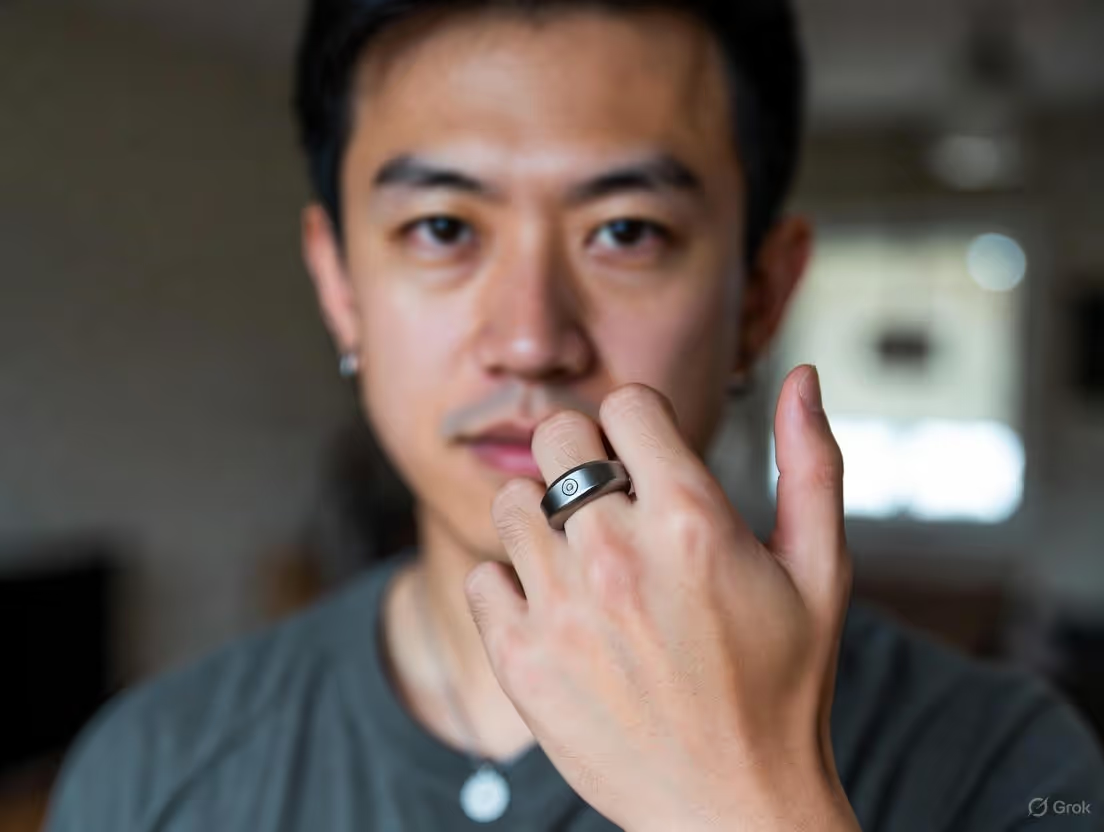
Sleep Improvement Case Studies: Real People, Real Results
Real-life case studies show how individuals with different challenges (parents, shift workers, insomniacs) successfully improved their sleep.
The Silent Epidemic of Sleep Deprivation and the Power of Data-Driven Change
You’ve read the headlines. You know the stats. Sleep is the foundation of health, the bedrock of mental clarity, and the secret weapon of high performers. Yet, for millions, a truly restful night feels like a distant, almost mythical, state. We chase solutions—new mattresses, blackout curtains, meditation apps—often with fleeting or inconsistent results. The problem isn’t a lack of desire for better sleep; it’s a profound disconnect between our subjective feeling of exhaustion and the objective, granular data of what’s actually happening in our bodies throughout the night.
This gap between perception and reality is where the real struggle lies. You might "feel" like you slept through the night, yet wake unrefreshed. You might believe you’re in bed for eight hours, but have no insight into the quality of those hours. For years, solving sleep was a game of guesswork. That era is over.
We are now in the age of biometric intelligence. The advent of sophisticated, wearable technology—specifically, the smart ring—has revolutionized our ability to understand sleep not as a monolithic event, but as a complex symphony of stages, disturbances, and recoveries. By moving from guessing to knowing, individuals are no longer passive victims of poor sleep; they are empowered investigators of their own physiology.
This article is not about abstract theories or one-size-fits-all advice. It is a deep dive into the real-world transformation happening right now. Through a series of detailed, longitudinal case studies, we will follow the journeys of real people who used precise, continuous biometric tracking—primarily via the Oura Ring and other advanced devices—to diagnose the hidden culprits behind their sleep struggles and implement targeted, effective solutions. These are stories of engineers, new parents, executives, and athletes who turned raw data into profound life changes. Their results—measured in increased deep sleep, stabilized heart rates, elevated readiness scores, and, most importantly, renewed daily vitality—provide a powerful blueprint for anyone ready to reclaim their nights and supercharge their days. This is the new science of sleep, written not in lab reports, but in the lived experiences of people just like you. Let’s begin.
The Biometric Lens: How Smart Rings Reveal What Your Mind Can’t Perceive
Before we meet our case study participants, it’s crucial to understand the instrument of their transformation: the smart ring. Unlike wrist-worn trackers that can be bulky and susceptible to motion artifact, or phone apps that merely guess based on sound, a smart ring like the Oura Ring sits on the finger—an ideal location for capturing precise physiological signals. It acts as a continuous, non-invasive biometric lab on your hand, collecting data that forms the cornerstone of modern sleep optimization.
The Core Metrics That Paint the Full Picture:
Sleep Stages Breakdown: This goes far beyond total time in bed. Advanced sensors (like infrared PPG and 3D accelerometers) differentiate between Light, Deep, and REM sleep, each critical for distinct restorative functions. The balance and timing of these stages are more telling than duration alone.
Resting Heart Rate (RHR) & Heart Rate Variability (HRV): Your nighttime RHR is a pristine metric, free from the noise of daily activity. A lower, stable RHR generally indicates good cardiovascular recovery. HRV, the nuanced variation in time between heartbeats, is the gold-standard proxy for your nervous system’s resilience and recovery status. A higher HRV typically suggests a body that is well-recovered and adaptable to stress.
Body Temperature: Continuous body temperature monitoring, especially core temperature deviation, is a game-changer. It can reveal the onset of illness, track menstrual cycle phases with stunning accuracy, and show how lifestyle factors like alcohol or late meals disrupt the body’s natural thermoregulation, a key process for initiating and maintaining sleep.
Respiratory Rate: The number of breaths you take per minute during sleep is a vital sign that is remarkably stable in healthy adults. Significant deviations can signal sleep disturbances, respiratory issues, or heightened physiological stress.
Movement & Disturbances: Precise tracking of tosses, turns, and prolonged awakenings provides objective evidence of sleep fragmentation that you may not consciously recall.
This constellation of data moves us from subjective narrative (“I tossed and turned all night”) to objective diagnosis (“My deep sleep was reduced by 60%, my HRV dropped 30%, and my core temp was elevated by 0.5°C, coinciding with a late, heavy meal”). This shift is fundamental. It transforms sleep from a mysterious, frustrating experience into a solvable equation with identifiable variables.
Case Study 1: The Chronically Stressed Tech Executive (Michael, 44)
Profile: Michael was a Vice President at a fast-growing SaaS company. On paper, successful. In reality, perpetually drained. He described his sleep as “light and anxious,” perpetually waking around 3 AM with his mind racing about work deadlines. He relied on 4-5 cups of coffee daily to function, creating a vicious cycle of daytime artificial energy and nighttime poor recovery. His primary goal was to break the 3 AM wake-up cycle and feel genuinely rested.
The Baseline Biometric Reality: Upon reviewing his first month of smart ring data, a stark picture emerged. Michael’s sleep latency (time to fall asleep) was highly variable, often exceeding 45 minutes. His deep sleep averaged a mere 48 minutes, well below the recommended 1.5+ hours for his age. Most revealing was his HRV graph: it was consistently low and chaotic, with dramatic dips on nights following high-stress days or client dinners. His body was signaling a state of chronic sympathetic (fight-or-flight) dominance, with no space for recovery.
The Data-Driven Intervention:
Wind-Down Protocol: Michael used his ring’s “Readiness Score” as a guide. On days with a low score, he enforced a strict 90-minute digital sunset—no emails, no Slack. He replaced this with a routine of non-stimulating reading and light stretching.
Temperature Regulation: His data showed a clear correlation between late-evening meals (after 8 PM) and elevated nighttime body temperature, paired with reduced deep sleep. He committed to finishing dinner by 7 PM.
Caffeine Cutoff: He moved his last coffee from 3 PM to 11 AM. His sleep latency data improved within a week.
The 3 AM Protocol: Instead of lying in bed frustrated, he implemented a rule: if awake after 20 minutes, he would get up, go to a dimly lit room, and write down his racing thoughts in a notebook. This cognitive “download” often allowed him to return to sleep more quickly.
The Results (After 90 Days):
Deep Sleep Increase: Averaging 1 hour 22 minutes, a 71% increase from baseline.
3 AM Awakenings: Reduced from 4-5 times per week to 1-2 times per week.
HRV Trend: Showed a clear, upward trajectory, moving from “Low” to “Balanced” in his app’s metrics, indicating improved nervous system resilience.
Subjective Impact: “The data gave me permission to take my wind-down seriously. I’m not ‘being lazy’ by not checking emails at 10 PM; I’m ‘protecting my deep sleep’ based on objective evidence. My 3 AM anxiety is now a manageable exception, not the rule.”
Michael’s journey underscores a critical lesson for high-performers: recovery is not a luxury; it is a non-negotiable component of sustained performance. The ring provided the objective proof and the feedback loop necessary to prioritize it. For others navigating high-stress careers, our blog features numerous articles on stress management and sleep that expand on these protocols.
Case Study 2: The New Mother Navigating Fragmented Sleep (Sarah, 32)
Profile: Sarah, a graphic designer and first-time mother to a 6-month-old, was in the trenches of postpartum life. Her sleep was entirely at the mercy of her baby’s needs. Her goal wasn’t to achieve 8 hours of unbroken sleep—she knew that was unrealistic—but to maximize the quality and recovery potential of whatever sleep she could get. She felt perpetually hazy, irritable, and worried her compromised sleep was affecting her milk supply and bonding.
The Baseline Biometric Reality: Predictably, her total sleep time was highly variable, often broken into 2-3 hour chunks. The key insights, however, were in the details. On nights her partner took the “first shift,” Sarah’s data showed she often took over 30 minutes to fall asleep despite being exhausted—a sign of hypervigilance and an overactive mind. Her deep sleep, when she got it, was shallow and insufficient. Her resting heart rate trended higher than her pre-pregnancy baseline.
The Data-Driven Intervention:
Sleep Opportunity Maximization: Sarah and her partner used the ring’s data to strategize. They saw that Sarah’s deepest sleep windows typically occurred in the early part of the night. They adjusted their shifts so Sarah could sleep from 9 PM to 1 AM uninterrupted, a period her data showed was most restorative for her.
Strategic Napping: By tracking her daytime “Readiness” scores and body temperature, Sarah identified a predictable post-lunch dip. She began scheduling a 20-30 minute power nap during this window when possible. The ring’s nap detection validated that even these short naps were improving her afternoon HRV.
Nutrition & Hydration Timing: She noticed a correlation between dehydration (tracked via subtle increases in nighttime respiratory rate) and more frequent waking. She implemented a strict hydration routine during the day.
Mindful Release of Perfectionism: Seeing her own biometric data—showing tangible, though fragmented, recovery—helped alleviate the psychological stress of “not sleeping well.” She could see that even on a hard night, her body was still getting some restorative benefit, which reduced anxiety.
The Results (After 60 Days):
Sleep Efficiency: Increased from a chaotic 75% to a more stable 88% during her designated sleep blocks, meaning she was spending less time awake in bed.
Deep Sleep Protection: Within her 4-hour protected block, her deep sleep became more consistent and robust.
Daytime Resilience: Her afternoon “Readiness” scores improved, correlating with more patience and presence with her baby.
Subjective Impact: “The ring didn’t give me more sleep hours, but it gave me control and insight. I stopped guilt-tripping myself for napping because I could see it actually improved my metrics. It turned chaotic survival into a manageable, data-informed strategy.”
Sarah’s case is a powerful testament to using biometrics for adaptation, not perfection, during life’s most demanding phases. Her experience reflects the mission of Oxyzen to provide compassionate, data-driven support for every life stage, a principle you can read more about in our company’s story.
Case Study 3: The Fitness Enthusiast Hitting a Performance Plateau (David, 29)
Profile: David was a dedicated amateur cyclist and weightlifter, training 6 days a week. Despite meticulous attention to his macros and training plans, his performance had stalled, and he felt persistently “flat” and susceptible to minor colds. He assumed he needed to train harder or tweak his diet further. Sleep was an afterthought—he just aimed for “around 7 hours.”
The Baseline Biometric Reality: David’s data revealed a classic case of non-functional overreaching. While his total sleep was often 7.5 hours, his HRV was on a steady downward trend, a cardinal sign of accumulating fatigue. His resting heart rate was creeping up by 3-4 BPM over several weeks. Most strikingly, on days after intense leg-day workouts or long weekend rides, his deep sleep would paradoxically decrease, and his body temperature would remain elevated—clear signs his body was struggling with inflammation and repair.
The Data-Driven Intervention:
HRV-Guided Training: David began using his morning HRV reading and “Readiness Score” as the ultimate decider for his training intensity. A low score meant switching a planned high-intensity interval session for a recovery ride, yoga, or complete rest.
Post-Workout Recovery Optimization: Seeing the inflammation signature in his data, he prioritized post-workout nutrition (fast-absorbing protein and carbs) and introduced 10 minutes of guided breathing exercises post-training to stimulate parasympathetic (rest-and-digest) activation.
Strategic Sleep Extension: On high-training-load days, he used the ring’s sleep goal feature to aim for 8.5 hours, allowing more time for repair. He tracked how this extra time specifically increased his REM and deep sleep duration.
Alcohol Elimination Experiment: David enjoyed a few beers on weekends. His data showed a dramatic, 2-3 night impact: suppressed HRV, decimated REM sleep, and elevated resting heart rate. He decided to eliminate alcohol during his serious training blocks, using the visual data as unwavering motivation.
The Results (After 120 Days):
Performance Breakthrough: After 6 weeks of HRV-guided training, he set a new personal record on his benchmark cycling climb.
HRV Trend: Reversed its decline and established a new, higher baseline, indicating superior fitness and recovery capacity.
Illness Reduction: Went from feeling run-down every few weeks to no notable illness during the tracking period.
Subjective Impact: “I was flying blind before. I thought fatigue was a mental weakness to push through. The data showed it was a physiological limit to respect. Sleep and recovery are now my most important training metrics. I don’t program my workouts without checking my readiness first.”
David’s story illuminates sleep as the ultimate performance enhancer. For athletes and active individuals, it’s the most powerful legal “drug” available. For more insights on balancing activity and recovery, our FAQ page addresses common questions on using biometric data for fitness.
Case Study 4: The Shift Worker Struggling with Circadian Dysregulation (Elena, 38)
Profile: Elena was an ICU nurse working a rotating schedule of day and night shifts. Her circadian rhythm was in constant chaos. On her off days, she struggled with severe insomnia at night and debilitating fatigue during the day, unable to fully adapt to either schedule. She felt socially isolated and her long-term health was a growing concern.
The Baseline Biometric Reality: Elena’s data was a map of circadian disruption. On night shifts, her sleep during the day was short (4-5 hours) and consisted almost entirely of light sleep, with virtually no deep sleep. Her body temperature rhythm was completely inverted. On days off, when she tried to sleep at night, her sleep latency was extremely long, and her HRV was chronically low, showing her system was under severe strain.
The Data-Driven Intervention:
Strategic Light Management: This became her primary tool. For night shifts, she invested in high-quality blue-blocking glasses for her drive home at 7 AM. She used a bright light therapy lamp for 20 minutes immediately before starting her night shift to signal “wakefulness” to her brain.
Sleep Sanctuary Creation: She blacked out her bedroom completely with aluminum foil on windows and used a white noise machine to eliminate daytime noises. Her ring data confirmed these changes improved her daytime sleep efficiency.
Melatonin Timing: Under guidance, she used small, timed doses of melatonin (0.5mg) 30 minutes before her daytime sleep period after a night shift to help initiate sleep against her circadian drive.
Anchor Sleep: On rotating schedules, she implemented the concept of “anchor sleep”—a protected 4-5 hour core sleep block that she defended fiercely, whether it was day or night, to provide some rhythm for her body.
The Results (After 90 Days):
Daytime Sleep Quality: Increased her daytime deep sleep from near-zero to an average of 35 minutes per sleep block.
Off-Day Recovery: Her sleep latency on first days off improved by 40%. Her HRV began to show recovery on true off-days, rather than being perpetually low.
Subjective Impact: “Before, I felt like my body was betraying me. The data showed me it was just desperately confused. The ring let me see if my interventions (like the blue blockers) were actually working on my physiology. I’m not ‘fixed’—shift work is hard—but I’m now managing it with science, not just suffering through it.”
Elena’s case is a profound example of using biometrics to hack an inherently hostile sleep environment. It demonstrates that even in the most challenging circumstances, data provides a path to mitigation and greater control.
The Common Thread: From Data to Behavioral Change
What unites Michael, Sarah, David, and Elena? Their breakthroughs did not come from a magic pill or a generic sleep tip. They came from the empowering cycle of Measure -> Understand -> Experiment -> Refine.
The smart ring provided the unbiased, precise measurement. Their own curiosity and commitment led to understanding the patterns. They then ran personalized experiments (changing meal times, adjusting training, managing light) and used the ring to immediately refine based on the results. This created a positive feedback loop where behavioral change was rewarded with visible, objective improvement, fueling further commitment.
This self-experimentation framework is the core of modern biohacking. It turns you into the principal investigator of your own well-being. For a community of people engaged in this same journey, exploring their own data-driven experiments, you can read verified testimonials and user experiences from a wide range of individuals.
Identifying Your Sleep Archetype: Where Do You Fit?
While everyone is unique, sleep struggles often fall into recognizable patterns. Identifying your archetype can help you know where to focus your investigative efforts.
The Anxious Mind (Like Michael): Characterized by high sleep latency, early morning awakenings, and low/chaotic HRV. Key levers: wind-down routines, stress management, and cognitive behavioral techniques for insomnia (CBT-I) principles.
The Fragmenter (Like Sarah): Sleep is broken by external (a baby) or internal (pain, apnea) factors. Key levers: maximizing sleep efficiency, strategic napping, and addressing the root cause of fragmentation if medical (e.g., sleep apnea screening).
The Overtrained (Like David): Shows declining HRV, rising RHR, and poor sleep despite high fatigue. Key levers: HRV-guided training, prioritizing recovery as part of the program, and anti-inflammatory practices.
The Circadian Misaligned (Like Elena): Suffers from jet lag-like symptoms due to shift work or extreme night owl tendencies. Key levers: militant light management, consistent sleep-wake times where possible, and melatonin used strategically.
The Inefficient Sleeper: Spends 8+ hours in bed but gets low amounts of deep/REM sleep. May have undiagnosed sleep disorders (apnea, limb movement). Key levers: sleep study referral, optimizing sleep environment, and reviewing medication side effects.
Foundational Pillars of Sleep Hygiene Through a Biometric Lens
Universal sleep hygiene advice becomes far more potent when you can see its direct impact on your data. Let’s reframe these pillars:
Light: It’s not just “avoid screens.” It’s about managing your circadian rhythm. Your data will show how evening light exposure delays your body temperature drop, pushing back sleep onset. Experiment with amber lights and see your sleep latency improve.
Temperature: The goal is a cool room (65-68°F), but your body’s need to drop its core temperature is paramount. Your ring’s temperature graph will vividly show how a late shower, intense evening workout, or heavy meal impairs this critical process.
Routine: Consistency signals safety to the nervous system. A regular bedtime and wake time, even on weekends, will stabilize your HRV and improve sleep efficiency. Your data will reward you for this consistency.
Nutrition & Substances: Alcohol is not a sleep aid. It is a deep sleep and REM sleep demolisher. Caffeine has a 6+ hour half-life. Your biometrics provide an undeniable, personalized report card on how these substances affect you.
Deep Dive: The Science of HRV and Sleep
Heart Rate Variability deserves its own spotlight in the sleep conversation. It is the master metric of your autonomic nervous system (ANS) balance.
The Sleep-HRV Feedback Loop: High-quality, restorative sleep promotes a higher, more resilient HRV. A higher HRV, in turn, predicts better sleep quality and faster sleep onset. They are inextricably linked.
HRV as a Daily Guide: Your morning HRV reading, relative to your personal baseline, is a direct line into your recovery status. A significant drop is a red flag—your body is dealing with stress (physical, emotional, immunological). This is the data point David used to guide his training. It’s your body whispering, “Take it easy today,” before it starts screaming with burnout or injury.
Improving HRV for Better Sleep: Practices that improve HRV—such as paced breathing (like 4-7-8 or box breathing), mindfulness meditation, and regular aerobic exercise—directly contribute to a nervous system that can more easily transition into the restorative parasympathetic state required for deep sleep.
Understanding this connection turns abstract “stress relief” into a tangible, measurable component of your sleep optimization plan. For a more comprehensive look at the technology that makes tracking these subtle biometrics possible, we invite you to discover how Oxyzen’s holistic tracking works.
Conclusion of This Portion: The Beginning of Your Investigation
The stories of Michael, Sarah, David, and Elena are just the opening chapter in a much larger narrative—one that you can write for yourself. They demonstrate that poor sleep is rarely a single, simple problem. It is a puzzle, and biometric data from a smart ring provides the crucial missing pieces.
The journey starts with awareness. It moves into the realm of targeted experimentation. It is sustained by the powerful feedback of seeing your own physiology respond to positive change. You are not doomed to restless nights. You are equipped, as never before in history, to understand the why behind your sleep and systematically address it.
This is not the end of the discussion, but the essential foundation. In the next portion of this exploration, we will delve into more complex, nuanced case studies. We will examine individuals dealing with sleep apnea discovered through respiratory rate tracking, the impact of menopause on sleep architecture, the journey of overcoming chronic insomnia with CBT-I supported by data, and how travel athletes use biometrics to conquer jet lag. We will also explore the cutting-edge intersection of sleep data with long-term health risk mitigation.
The path to better sleep is now a data-informed path. Your first step is to decide to look at the numbers.
Ready to see what your own data reveals? The most important case study is waiting to be written: yours. For further resources and to continue your research into optimizing every aspect of your well-being, be sure to explore our blog for the latest insights and guides.
Advanced Diagnostics: When Data Reveals Hidden Health Signals
The initial case studies showcased how biometric data can solve common, lifestyle-driven sleep issues. But what happens when the data reveals something more serious—a silent, hidden disruptor with significant health implications? This is where the smart ring transitions from a wellness tool to a potentially life-saving health sentinel. The following cases illustrate how subtle, continuous monitoring can detect patterns indicative of underlying medical conditions, prompting crucial professional intervention.
Case Study 5: The "Healthy" Sleeper with a Hidden Respiratory Issue (Robert, 52)
Profile: Robert considered himself a good sleeper. He was a non-smoker, healthy weight, and exercised regularly. His only complaint was a persistent, low-level daytime fatigue he attributed to "getting older" and a dry mouth upon waking. He started using a smart ring out of general interest in biohacking, not to solve a specific sleep problem.
The Baseline Biometric Reality & The Red Flag: Robert’s sleep duration and stages were reasonably good. However, two metrics stood out to the trained eye (and his app’s algorithms): his respiratory rate and his blood oxygen saturation (SpO2). While his daytime breathing was normal, his nighttime data showed frequent, cyclical dips in SpO2—sometimes dropping 4-5% from his baseline—accompanied by brief, repeating spikes in his respiratory rate followed by periods of very shallow breathing. The graph looked like a series of sawtooth mountains and valleys. Furthermore, his movement data showed subtle, frequent arousals that he was completely unaware of. This pattern is a classic biometric signature of Obstructive Sleep Apnea (OSA).
The Data-Driven Journey to Diagnosis:
Awareness and Validation: Robert initially dismissed the findings. The ring’s "Sleep Stability" score, however, was consistently poor. He showed the graphs to his wife, who confirmed she had noticed occasional, loud gasping sounds at night that she hadn’t wanted to worry him about.
Professional Referral: Armed with weeks of granular data—graphs showing the frequency and depth of oxygen desaturations—Robert visited his doctor. The data provided compelling evidence that overcame the common clinical dismissal of "you don’t fit the typical profile."
Clinical Confirmation: He was referred for a home sleep study, which conclusively diagnosed moderate Obstructive Sleep Apnea. His breathing was stopping or becoming shallow dozens of times per hour (his Apnea-Hypopnea Index, or AHI, was 22), starving his brain and body of oxygen and triggering micro-awakenings.
The Intervention and Results:
Robert was prescribed a CPAP (Continuous Positive Airway Pressure) machine.
Immediate Biometric Shift: The very first night using the CPAP, his SpO2 graph flattened into a solid, healthy line. His respiratory rate variability during sleep plummeted.
Sleep Architecture Transformation: His deep sleep, previously fragmented by constant arousals, increased by over 50%. His REM sleep, which is often severely suppressed in OSA, rebounded dramatically.
Daytime Transformation: Within two weeks, his "low-level fatigue" vanished. His partner reported the gasping had stopped completely.
Long-Term Health Impact: "The ring didn't diagnose me, but it gave me the irrefutable evidence that something was physiologically wrong while I was unconscious. I went from thinking I was aging normally to understanding I was stressing my cardiovascular system every single night. Getting treatment wasn't just about feeling better; it was about preventing long-term damage."
Robert’s case is a paradigm shift. It demonstrates how consumer-grade, continuous biometrics can serve as an early warning system, filling the gap between annual checkups and empowering individuals with concrete data to advocate for their health. For anyone noticing similar patterns in their own data, reaching out for professional guidance is critical, and our FAQ section offers support on next steps when data reveals potential concerns.
Case Study 6: The Perimenopausal Professional (Linda, 49)
Profile: Linda, a lawyer, began experiencing what she called "mystery insomnia." She would fall asleep easily but then wake up drenched in sweat, her heart pounding, at 2 or 3 AM, unable to fall back asleep for over an hour. She initially blamed work stress, but the pattern persisted even during calm periods. She felt irritable, cognitively foggy, and was deeply frustrated by the lack of solutions.
The Baseline Biometric Reality: Linda’s data told a clear story that aligned perfectly with hormonal fluctuation. Her nighttime skin temperature graph was chaotic, with sharp, unpredictable upward spikes that correlated precisely with her logged wake-ups. Her resting heart rate during these episodes would jump 10-15 BPM. Her sleep was fragmented into pieces, with very little consolidated deep sleep in the latter half of the night. Her data provided an objective map of the thermoregulatory dysfunction at the heart of perimenopausal sleep disruption.
The Data-Driven Intervention:
Correlation is Key: Simply seeing the objective temperature and heart rate spikes validated Linda’s experience. This removed the psychological burden of wondering if it was "all in her head" and framed it as a physiological event to be managed.
Environmental Pre-Cooling: Linda used her data to implement a "pre-cooling" strategy. She lowered her bedroom thermostat to 64°F, used a cooling mattress pad, and kept a frozen cold pack wrapped in a towel by her bedside to place on her chest or neck at the first sign of waking.
Layered Bedding: She switched to moisture-wicking bamboo sheets and used layered blankets she could easily kick off.
Targeted Supplementation & Timing: Under her doctor's guidance, she experimented with timing for supplements like magnesium glycinate. Her data helped identify that taking it 60 minutes before bed slightly blunted the heart rate spikes associated with her awakenings.
Stress & Glucose Management: Her data showed that on days with higher stress or higher-glycemic dinners, the night sweats were more severe. This prompted her to focus on evening relaxation and balanced evening meals.
The Results (After 60 Days):
Symptom Reduction: The frequency of major night sweat episodes reduced from 4-5 nights per week to 1-2.
Sleep Consolidation: When she did wake, her data showed she was able to return to sleep 40% faster, likely due to the immediate cooling interventions.
Empowerment Through Data: "Seeing the temperature graph spike gave me a sense of control. Instead of lying there feeling victimized by my own body, I had a protocol. Get cool, calm the nervous system with breathwork, and trust that it would pass. The data took the terror out of it."
Linda’s experience highlights how biometric tracking can demystify life-stage transitions, providing a rational framework for managing symptoms that are often poorly understood and dismissed. Her journey aligns with our commitment to supporting health at every age, a core part of the Oxyzen vision and mission.
The Power of Longitudinal Tracking: Seeing Trends Over Months and Years
The true power of this technology is not in nightly scores, but in the long-term trends. A single night of poor sleep is meaningless noise. A three-month trend of declining HRV or rising RHR is meaningful signal.
Identifying Chronic Stress Patterns: Longitudinal data can show how a demanding work project or personal relationship stress manifests as a sustained downward drift in recovery metrics, often before the individual consciously acknowledges the toll.
Tracking Fitness & Aging: An athlete can see their HRV baseline improve with training over a season. Anyone can observe the natural, gradual changes in sleep architecture and recovery speed that come with healthy aging, differentiating them from pathological declines.
Evaluating Lifestyle Changes: Going sober, starting a meditation practice, changing diets—the long-term impact of these major life decisions becomes visually apparent in your biometric trends, providing powerful reinforcement for positive change.
This longitudinal view turns the smart ring into a personal health diary written in the language of your physiology. It answers the question: "Is what I'm doing actually working for my body in the long run?"
Case Study 7: The Digital Nomad Conquering Jet Lag (Aisha, 31)
Profile: Aisha was a consultant who traveled internationally every 3-4 weeks, crossing 6-10 time zones. Her jet lag was debilitating, requiring 4-5 days to adjust, during which she was cognitively impaired, moody, and struggled with insomnia and digestive issues. She needed a rapid, reliable reset protocol.
The Baseline Biometric Reality: Pre-travel, Aisha had a stable circadian rhythm. Travel data showed the brutal aftermath: her body temperature rhythm was completely out of sync with the local day/night cycle, her sleep was almost entirely light sleep with no deep or REM, and her HRV would crash for days. Her body was fighting itself.
The Data-Driven Intervention: A Precision Jet Lag Protocol
Aisha used her ring to create a pre-, during-, and post-travel plan based on circadian science.
Pre-Travel (3 Days Out): She began subtly shifting her sleep and meal times 30-60 minutes per day toward the destination time zone. Her ring confirmed if her body was adapting (via slight shifts in her temperature minimum).
In-Flight Strategy:
Light Management: She used the time of arrival to guide her light exposure. If landing in the morning, she sought bright light on the plane and upon arrival. If landing at night, she wore blue-blocking glasses for the final hours of the flight.
Hydration & Fasting: She avoided alcohol and caffeine on the plane, drank ample water, and timed a short fast to help reset her liver clock, breaking it with a meal at local breakfast time.
Post-Arrival Optimization: She used her ring’s data ruthlessly.
If her data showed her body temperature was still peaking at night (local time), she would take a warm bath in the evening to artificially push it higher, encouraging a steeper drop afterward to promote sleep.
She used outdoor light exposure at key times (morning for eastward travel, afternoon/evening for westward) and let her sleep data guide her napping. If her deep sleep was severely deficient, she allowed a short, early afternoon nap to "pay the debt" but used the ring’s alarm to wake her before entering deep sleep to avoid grogginess.
The Results:
Adjustment Time: Reduced from 4-5 days to 1-2 days for feeling functionally alert and sleeping well on local time.
Performance Preservation: She could deliver critical client workshops the day after a long-haul flight without the previous brain fog.
Subjective Impact: "I used to lose a week of my life to jet lag. Now, it's a managed process. The ring tells me exactly what my internal clock is doing, so I can use light, food, and temperature to hack it back into place. I'm not just surviving travel; I'm mastering it."
Aisha’s case transforms jet lag from an inevitable curse into a solvable engineering problem for the frequent traveler.
Beyond Sleep: The Daytime Readiness Score as Your North Star
While this article focuses on sleep, its ultimate purpose is daytime vitality. This is encapsulated in the Readiness Score—a composite metric derived from sleep data, HRV, RHR, body temperature, and activity balance. It is the qualitative output of your quantitative night.
How to Use It Proactively: This score is not a judgment; it is a guide. A high readiness score is permission to attack the day, train intensely, or tackle demanding cognitive work. A low score is not a failure; it is crucial feedback. It’s your body’s request for a gentler day—more recovery, less stress, earlier bedtime.
Preventing Burnout: By respecting low readiness scores and adjusting behavior accordingly, you create a sustainable rhythm that prevents the accumulation of fatigue that leads to burnout, overtraining, or illness. It teaches you to listen to your body’s whispers so it never has to scream.
The Mind-Body Feedback Loop: Watching how lifestyle choices directly impact your readiness score the next morning creates a powerful associative learning loop. You begin to intrinsically connect the late-night drink, the stressful argument, or the glorious morning hike with their inevitable physiological consequence.
Integrating this score into your daily planning is the final step in closing the loop between nocturnal recovery and diurnal performance. To see how real people integrate this data into their daily decision-making, you can explore the diverse experiences shared in our testimonials.
Case Study 8: The Recovering Insomniac and CBT-I (James, 41)
Profile: James had chronic insomnia for over a decade, defined by severe anxiety about sleep itself ("orthosomnia"). He spent 8+ hours in bed but estimated he was only sleeping 4-5 fragmented hours. He had tried every supplement and sleep tip to no avail. His goal was to break the cycle of anxiety and achieve consolidated sleep.
The Baseline Biometric Reality & The Paradox: Ironically, James's smart ring data revealed his first breakthrough: he was sleeping more than he thought—an average of 6 hours and 10 minutes. However, his sleep efficiency was catastrophically low at 68%. He was spending over 3 hours each night awake in bed. This data was the key: it proved his perception was distorted by anxiety, and it pinpointed the problem as one of conditioned arousal, not an inability to sleep.
The Data-Driven Intervention: CBT-I with Biometric Support
James embarked on Cognitive Behavioral Therapy for Insomnia (CBT-I), the gold-standard treatment, using his ring data as an objective co-therapist.
Sleep Restriction Therapy (SRT): This is the core of CBT-I. Based on his average 6.1 hours of actual sleep, his therapist prescribed a strict 6-hour window in bed (e.g., 1 AM to 7 AM). This creates mild sleep deprivation to increase sleep drive and consolidate sleep. The ring was critical here. It provided the objective average sleep time to set the window and removed the guesswork and anxiety of self-estimation.
Stimulus Control: James agreed to get out of bed after 20 minutes of wakefulness. His ring’s accurate "time awake" metric helped him enforce this without clock-watching anxiety.
Cognitive Restructuring: The data helped challenge his catastrophic thoughts ("I didn't sleep at all!"). He could look at the app and see, objectively, "I had 4.5 hours of sleep, including 45 minutes of deep sleep. It was fragmented, but it was not zero."
Gradual Expansion: As his sleep efficiency (tracked meticulously by the ring) improved to over 85%, he was allowed to gradually expand his time in bed by 15 minutes every few days. The ring provided the clear, positive feedback that the difficult therapy was working.
The Results (After 8 Weeks):
Sleep Efficiency: Soared from 68% to a healthy 92%.
Sleep Consolidation: His actual sleep time stabilized at 7 hours within a 7.5-hour window, meaning he was now awake for less than 30 minutes in bed.
Anxiety Dissipation: "The data was my truth-teller. It broke the power of my anxiety. When I felt like I had a 'bad night,' I could check the data and see it was just a normal fluctuation. The ring gave me the courage to stick with the brutal-sounding sleep restriction because I could see the science working in real-time."
James’s journey is perhaps the most profound example of using biometrics not just to track sleep, but to heal a pathological relationship with it. It provided the objective reality needed to dismantle the subjective prison of insomnia. For anyone struggling with similar cycles of sleep anxiety, our blog features resources on the mind-sleep connection that may provide a starting point.
Integrating Data Without Obsession: Avoiding "Orthosomnia"
A critical caveat emerges from cases like James’s: the risk of "orthosomnia," a term coined by researchers for the preoccupation with perfecting sleep data, which can ironically create new anxiety and worsen sleep.
Healthy vs. Unhealthy Engagement:
Healthy: Using weekly or monthly trends to inform lifestyle choices. Checking your readiness score in the morning to plan your day. Looking for correlations after an unusual night (e.g., "What did I do differently?").
Unhealthy: Obsessively checking live data while in bed. Chasing a perfect "100" score every night. Equating self-worth with a high HRV. Allowing daytime mood to be dictated by last night's sleep score.
Best Practices for Balanced Use:
Trends Over Nightly Scores: Focus on what your data shows over weeks, not hours.
The 80/20 Rule: Let the data guide 80% of your habits, but give yourself 20% grace for life—social events, travel, and spontaneous moments that might affect sleep but are worth the trade-off.
Use the "Do Not Disturb" Feature: Set a schedule where the app doesn't send you notifications about your sleep. Review your data once in the morning, then close it and live your day.
Remember the "Why": The goal is not a perfect graph. The goal is to feel better, perform better, and live healthier. The data is a map, not the destination.
The technology is a servant to your well-being, not its master. This balanced philosophy is central to our story and product design at Oxyzen, which aims to empower without overwhelming.
Case Study 9: The Elite Athlete Optimizing for Peak Performance (Mateo, 26)
Profile: Mateo was a professional marathon runner. For him, sleep was the most critical component of his training regimen. His goal was hyper-specific: to maximize the amount and quality of slow-wave (deep) sleep and REM sleep during heavy training blocks, as these are directly tied to physical repair, memory consolidation of motor skills, and hormonal regulation (like HGH release).
The Baseline Biometric Reality: Even at an elite level, Mateo’s data revealed inefficiencies. While his HRV was naturally high, it showed pronounced dips on double-workout days. His deep sleep was good but inconsistent. He noticed it was lower on nights when his core temperature remained elevated.
The Data-Driven Intervention: Precision Recovery Protocols
Mateo and his sports scientist used the ring data to fine-tune his environment and habits with surgical precision.
Two-Stage Sleep Manipulation: Knowing that deep sleep dominates the first half of the night and REM the latter half, they experimented with sleep extension. Adding 90 minutes of sleep (going from 8 to 9.5 hours) primarily increased his REM sleep, which he believed aided in neural recovery from intense coordination and strategy work.
Temperature Precision: He began taking a hot bath 90 minutes before bed. The ring data confirmed this created an ideal, steep drop in core temperature at sleep onset, consistently boosting his deep sleep duration.
Nutrient Timing for Sleep: He incorporated a small, casein-based protein drink 30 minutes before bed. His data suggested this led to slightly fewer nighttime awakenings and more stable glucose levels (inferred from heart rate stability).
Travel & Altitude Training: When training at altitude, he monitored his SpO2 and resting heart rate closely. The data guided the precise acclimatization schedule, ensuring he didn’t push into overreaching before his body had adapted to the thinner air.
The Results:
Quantifiable Gains: He correlated blocks of consistently high deep and REM sleep with faster recovery between interval sessions and a lower perceived exertion rate during hard workouts.
Injury Prevention: A sustained, unexplained drop in HRV prompted him and his coach to lighten his load for three days, averting a potential stress injury.
Subjective Impact: "At this level, improvements are marginal gains. Sleep is the biggest lever you can pull. The ring lets me quantify that lever. I'm not guessing if an intervention works; I'm testing it and measuring the result in my recovery metrics. It turns recovery into a trained skill, not just passive rest."
Mateo’s case represents the apex of sleep optimization, where data is used to chase fractions of percentage points in performance. It proves that even for those at the pinnacle of physical conditioning, there is always more to learn from the night.
Conclusion of This Portion: The Expanding Frontier of Sleep Science
We have moved from solving common lifestyle issues to uncovering hidden medical conditions, managing life-stage transitions, conquering jet lag, treating clinical insomnia, and pushing the limits of human performance. The through-line is empowerment through objective, personal data.
The journey continues. In the final portion of this comprehensive exploration, we will look forward. We will examine:
The Future of Predictive Health: How long-term sleep and biometric trends might be used with AI to predict risks and suggest preventative interventions.
Integrating Multi-Modal Data: Combining ring data with glucose monitors, continuous ECG, and subjective journaling for a 360-degree health view.
Community and Shared Discovery: How anonymized, aggregated data from millions of users is contributing to larger sleep science discoveries and creating normative databases for better personal insights.
Personalized Sleep Coaching: The emerging model of AI-driven, real-time coaching based on your live biometric stream.
The story of sleep improvement is no longer a static set of tips. It is a dynamic, personal, and data-rich narrative that you are now equipped to write for yourself. The night holds its secrets, but you now have the tools to listen to its whispers.
Ready to see what the next frontier of your own health holds? The data from your nights is the compass pointing the way. To continue this exploration of how technology is personalizing wellness, discover more about Oxyzen’s integrated approach.
The Future of Sleep: Predictive Health, Personalized Pathways, and the Collective Wisdom of Data
The journeys we have followed so far illuminate a present where data demystifies the night. But what does the horizon hold? The true transformative potential of continuous biometric monitoring lies not just in explaining the past, but in forecasting the future and creating hyper-personalized, proactive pathways to lifelong health. This final portion explores the expanding frontier where sleep data converges with artificial intelligence, multi-modal tracking, and community science to redefine our relationship with rest and well-being.
Predictive Health: From Reactive Insights to Proactive Alerts
Today's smart rings analyze last night's sleep to explain today's fatigue. The next generation will analyze trends from the last month to predict and prevent next week's illness, burnout, or performance slump. This is the shift from descriptive and diagnostic analytics to prescriptive and predictive analytics.
How Prediction Emerges from Patterns:
The Illness Signature: Data from thousands of users shows that a subtle, sustained rise in resting heart rate and skin temperature, coupled with a drop in HRV, often precedes the onset of cold or flu symptoms by 24-48 hours. This physiological "pre-illness" pattern is now recognizable by advanced algorithms. Imagine a notification: "Your biometrics suggest your body is fighting something. Prioritize rest, hydration, and maybe postpone that intense workout."
The Burnout Trajectory: A long-term, gradual decline in HRV baseline and sleep quality, paired with an upward creep in RHR, is a canonical signature of accumulating allostatic load (chronic stress). Predictive models could identify this negative trajectory early, prompting lifestyle interventions long before an individual hits a wall of exhaustion or depression.
Metabolic & Cardiovascular Insights: Emerging research links nocturnal heart rate patterns, HRV, and sleep disturbances to long-term metabolic health. While not diagnostic, predictive algorithms could flag patterns that suggest increased risk for conditions like insulin resistance or hypertension, encouraging earlier screening and lifestyle modification.
The Ethical Imperative: This predictive power comes with profound responsibility. The focus must remain on empowerment, not anxiety; on suggestion, not diagnosis. The goal is to provide users with a "weather forecast" for their health—indicating a higher "chance" of a downturn—so they can take preventive action, always in partnership with healthcare professionals. This user-centric, ethical approach is foundational to Oxyzen's vision for the future of personal health.
Case Study 10: The Data Scientist and the Prevented Burnout (Chloe, 35)
Profile: Chloe, a data scientist herself, used her smart ring with analytical curiosity. She was leading a high-stakes, year-long project. She felt fine, but her data began telling a different story.
The Longitudinal Data Narrative: Over four months, Chloe’s weekly HRV average declined by 22%. Her deep sleep became less consistent, and her resting heart rate increased by an average of 3 BPM. While any single week’s data was unremarkable, the trend line was clear and statistically significant. Her app’s new "Trend Insights" feature flagged this pattern with a notification: "We've noticed a sustained dip in your recovery metrics. This can be a sign of accumulating stress."
The Proactive Intervention:
Acknowledging the Signal: As a scientist, Chloe trusted the trend over her subjective feeling. She reviewed the data and correlated the downward slope with her project’s most demanding phase.
Micro-Adjustments: Instead of a drastic life overhaul, she made targeted changes: instituting a strict work cutoff at 6 PM, scheduling two 20-minute walks during her workday, and committing to one full weekend day completely disconnected from work.
Monitoring the Response: She watched her trend lines closely. After three weeks of these adjustments, her HRV graph halted its decline and began a slow, steady recovery. Her sleep consistency improved.
The Results:
Crisis Averted: She completed her project successfully without the catastrophic burnout that had felled colleagues in the past.
A New Relationship with Stress: "It was like having a dashboard for my nervous system. I could see the engine was running hot long before the warning light would have come on. I made tiny course corrections instead of needing a major repair down the road. It taught me that preventing burnout is a continuous process of monitoring and adjustment, not just crashing and recovering."
Chloe’s experience is a prototype for the future of mental and physical health maintenance: a quantified, proactive approach to well-being.
Integrating Multi-Modal Data: The Holistic Health Dashboard
While a smart ring provides a unparalleled window into autonomic nervous system function and sleep, it is one vital piece of a larger puzzle. The most powerful insights emerge when sleep data is integrated with other streams of physiological information.
The Convergence of Data Streams:
+ Continuous Glucose Monitoring (CGM): This is perhaps the most potent combination. Seeing how your nighttime blood sugar levels interact with your sleep stages is revolutionary. You might discover that a late carb-heavy dinner causes glucose spikes that correlate with reduced deep sleep and elevated nighttime heart rate. Or, you might see that a night of poor sleep leads to higher glucose variability the next day. This creates a direct feedback loop for nutritional choices tied to recovery.
+ Electrocardiogram (ECG) Data: While rings now often provide heart rhythm data, more detailed ECG can detect arrhythmias like atrial fibrillation that may occur predominantly during sleep, providing crucial early detection.
+ Subjective Logging (Mood, Energy, Stress): Pairing objective biometrics with subjective entries in an app ("Felt anxious today," "Period started," "Great workout") allows for powerful pattern recognition. You might mathematically confirm that your HRV is lowest in the luteal phase of your cycle, or that your sleep score is 15% higher on days you meditated.
+ Environmental Data (Room Temp, Noise, Light): Smart home integrations could automatically correlate periods of sleep disturbance with a rise in ambient noise or temperature in your bedroom, leading to automated adjustments.
This integrated dashboard moves us from single metrics to a unified theory of personal health. It answers complex questions like: "How does my afternoon coffee affect my deep sleep, and how does that sleep, in turn, affect my glucose response to breakfast the next morning?" For those eager to dive deeper into connecting these wellness dots, our blog is a resource for integrated health strategies.
Case Study 11: The Biohacker Optimizing Metabolic Health (Ian, 40)
Profile: Ian was fit but concerned about a family history of type 2 diabetes. He used a smart ring and decided to add a continuous glucose monitor for a 30-day experiment to see how his lifestyle affected his metabolic health.
The Multi-Modal Revelation: The synchronized data was eye-opening. Ian observed several key cross-correlations:
Sleep & Glucose: On nights where his deep sleep was under 60 minutes, his fasting morning glucose was, on average, 8 mg/dL higher, and his glucose responses to meals were more pronounced.
Evening Food & Sleep: A late dinner (after 9 PM) caused a significant glucose spike that persisted into his early sleep period. His ring data showed this correlated with a 40% reduction in deep sleep in the first cycle and a higher average nighttime heart rate.
Exercise & Recovery: An intense evening workout would sometimes lead to lower nighttime glucose (good) but also elevated body temperature and reduced HRV (bad for recovery). He learned to time his most intense workouts earlier in the day.
The Personalized System: Ian created his own rules based on this feedback loop:
The Sleep-Metabolism Prime: He prioritized sleep above all else as the foundation for stable glucose.
The 8-8-8 Rule: No food 8 hours before bedtime, 8 hours of sleep, and first meal within 8 hours of waking (a form of time-restricted eating informed by his own data).
Postprandial Walks: Seeing the direct glucose-lowering effect of a 15-minute walk after eating, he made it a non-negotiable habit.
The Results:
Quantifiable Improvements: His average glucose variability dropped by 30%. His time-in-range (optimal glucose levels) improved significantly.
Synergistic Understanding: "It was like seeing the conversation between my pancreas and my nervous system. Before, sleep, food, and exercise were separate buckets. Now I see they're in constant dialogue. The ring and CGM together gave me the vocabulary to understand that dialogue and guide it toward better health."
Ian's experiment represents the cutting edge of personalized health optimization, where consumer-grade devices empower individuals to conduct rigorous N-of-1 studies on themselves.
The Power of Community and Shared, Anonymized Data
The value of your personal data multiplies when aggregated anonymously with millions of others. This "collective biometric intelligence" is accelerating sleep science in unprecedented ways.
Building Better Baselines: Normative databases are no longer based on small, homogenous lab studies. They are built from real-world data across ages, ethnicities, professions, and health statuses, providing more relevant and personalized benchmarks (e.g., "Your HRV is in the top 10% for women aged 30-35").
Discovering New Phenotypes: Researchers can now identify previously unknown sleep phenotypes. For example, they might discover a cluster of people who have excellent sleep efficiency but low REM sleep, and then correlate that cluster with specific lifestyle factors or health outcomes.
Rapid Validation of Folk Wisdom: Does a hot bath really improve sleep for most people? Does alcohol affect women's sleep architecture differently than men's? Large-scale, real-world data can provide rapid, robust answers to these questions, moving from anecdote to evidence.
Contributing to Global Health Research: Anonymized, aggregated data on sleep patterns during a pandemic, or across different geographical regions and seasons, provides invaluable public health insights.
By opting into this communal pool of knowledge, each user contributes to a larger understanding of human health, a principle of shared benefit that resonates with our broader mission at Oxyzen.
The Future Interface: AI-Powered, Personalized Sleep Coaching
The end point of this technological evolution is a truly adaptive, personalized health companion. Imagine not just a dashboard, but an AI coach that learns your unique physiology and life context.
Context-Aware Insights: Instead of a generic "Your deep sleep was low," your coach would say: "Your deep sleep was lower than usual after yesterday's late client dinner. For you, eating after 8 PM reduces deep sleep by an average of 25%. Want to schedule a reminder to finish dinner earlier tomorrow?"
Dynamic Goal Setting: Your coach would adjust your sleep goals based on your schedule and readiness. "I see you have a red-eye flight tomorrow night. Let's focus on maximizing sleep quality tonight and strategizing a nap plan for tomorrow afternoon to mitigate the jet lag."
Integrated Life Coaching: It could connect the dots across all your data: "You logged high stress at work today, and your HRV is dipping. Your workout planned for tomorrow is high-intensity. Based on your historical data, a moderate workout would support recovery better. Want to swap it for a yoga session?"
Proactive Dialogue: "Over the last two weeks, your time in deep sleep has decreased during the week but rebounds on weekends. This suggests work-related stress. I've curated three short, evidence-based stress reduction exercises from the library. Would you like to try one tonight?"
This AI coach would be less of a tracker and more of a proactive partner in health, synthesizing data into actionable, compassionate, and hyper-personalized guidance.
Ethical Considerations and the Path Forward
As we embrace this data-rich future, we must navigate its challenges with care:
Data Privacy and Security: Biometric data is deeply personal. Robust, transparent encryption and user control over data sharing are non-negotiable. Users must own their data.
The Access Gap: This technology must not become a luxury that exacerbates health inequalities. Efforts to make insights more accessible and affordable are crucial.
The Human in the Loop: Technology should augment, not replace, human judgment and the patient-doctor relationship. It is a tool for empowerment, not an autonomous diagnostician.
Balancing Quantification with Qualia: We must never lose the simple, unquantified joy of a restful night's sleep. The numbers should serve the experience, not define it.
The path forward lies in a human-centered approach where technology acts as a bridge—connecting us more deeply to the innate wisdom of our bodies, and providing the clarity needed to make choices that honor our long-term well-being.
Conclusion: Your Night, Your Data, Your Transformed Life
We began this exploration amidst a silent epidemic of sleep deprivation, guessing in the dark. We end it illuminated by the power of personal data, equipped to listen to the precise language of our physiology.
The case studies of Michael, Sarah, David, Elena, Robert, Linda, Aisha, James, Mateo, Chloe, and Ian are not outliers. They are pioneers in a new movement of self-knowledge. They prove that:
Sleep is a complex system, but a knowable one.
The levers for change are personal, but identifiable.
Transformation is possible, and it is measurable.
Your sleep story is still being written. The tools now exist to move from a narrative of frustration to one of insight and mastery. You can uncover hidden patterns, validate what works for your unique biology, and take proactive control of your health and performance.
The journey from tired to thriving is no longer a leap of faith. It is a data-informed path, step by step, night by night. You have the case studies. You have the science. You have the technology. The final, and most important, ingredient is your decision to begin.
Take that first step. Look at your habits. Consider your goals. Listen to your body—and perhaps, give it a voice through data. The road to better sleep, and by extension, a healthier, more vibrant life, is clearly ahead.
Ready to start writing your own case study? Your journey towards deeper understanding and optimal well-being begins with a single night of insight. To explore the tools that can begin this transformation for you, we invite you to discover how Oxyzen can be your guide. For ongoing support and answers as you embark on this path, remember that our comprehensive FAQ is always available. And to see the living proof that this journey is possible, look no further than the real results shared by our community.



%402x.svg)