


Sleep Improvement on a Budget: Free Strategies First
Free strategies include sunlight exposure, consistent sleep schedules, relaxation techniques, and optimizing your existing bedroom environment.
Free strategies include sunlight exposure, consistent sleep schedules, relaxation techniques, and optimizing your existing bedroom environment.
%402x.svg)
You’ve scrolled through the ads for the perfect weighted blanket, the premium meditation app subscriptions, and the high-tech sleep trackers. You’ve read about miracle supplements and temperature-controlled mattresses that cost more than a month’s rent. The message is clear: good sleep is a luxury you have to buy.
But what if that’s a myth?
What if the most powerful tools for transforming your sleep aren’t in a shopping cart, but are already within your grasp? The truth is, the foundation of restorative, healing sleep is built not on what you purchase, but on what you practice. Before you invest a single dollar, there is a vast, untapped landscape of free, evidence-based strategies waiting to be implemented.
This guide is dedicated to a radical idea: master the free stuff first. We’re going to dive deep into the behavioral, environmental, and psychological pillars of sleep hygiene that cost nothing but your attention and commitment. By optimizing what you already have—your habits, your mind, and your immediate surroundings—you can achieve a dramatic improvement in sleep quality. This creates a solid baseline. Then, and only then, if you choose to invest in tools like a smart wellness tracker from Oxyzen, you’ll do so from a place of knowledge, using technology to refine and perfect an already strong routine, rather than hoping it will magically solve a problem you haven’t yet addressed.
Think of it as building a house. You wouldn’t install a smart home system in a structure with no foundation and leaky walls. First, you build a sound, stable structure. This article is your blueprint for that foundational build. Let’s begin the journey to better sleep, starting with the most powerful, accessible, and budget-friendly lever you have: light.
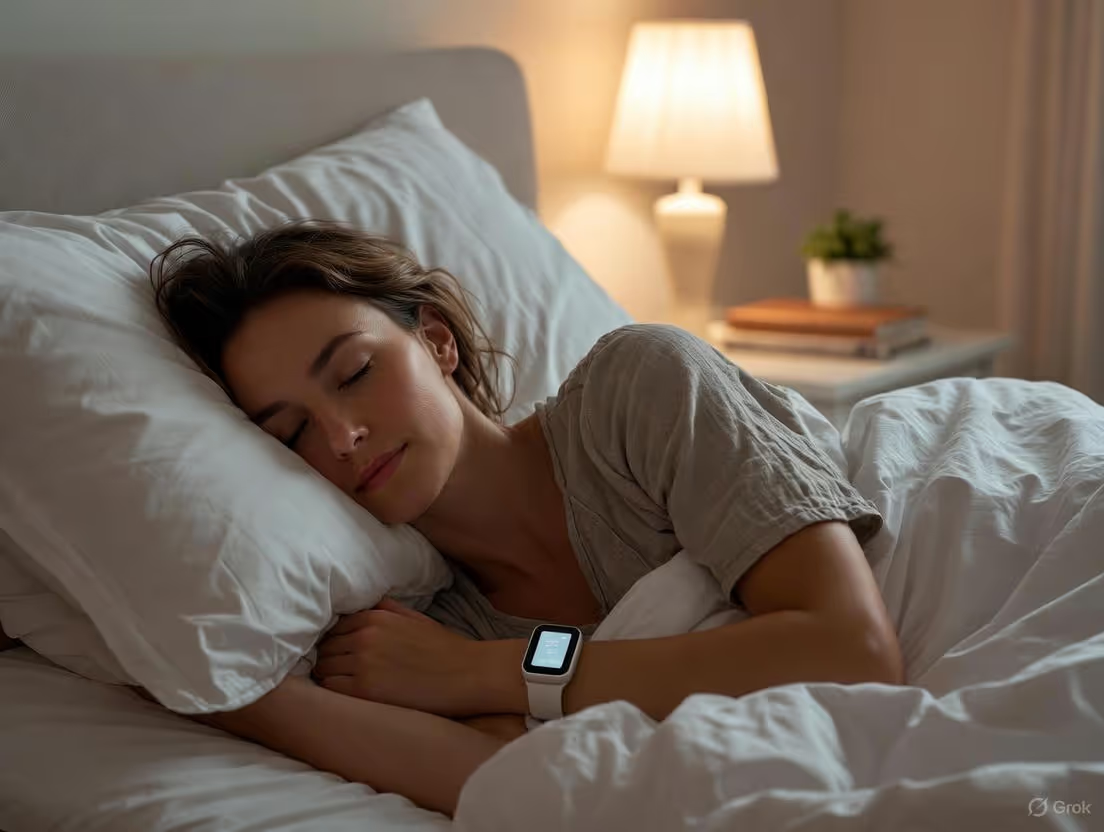
Light is not just something that allows you to see; it is the primary conductor of your body’s internal symphony, the circadian rhythm. This 24-hour biological clock, housed in a tiny region of your brain called the suprachiasmatic nucleus, dictates the ebb and flow of hormones like cortisol (for alertness) and melatonin (for sleepiness). It doesn’t operate on guesswork. It takes its most powerful cues from the light that enters your eyes.
Within the first hour of waking, exposure to bright, outdoor light is like hitting the “start” button on your circadian clock. It sends a direct signal to shut down melatonin production and ramp up cortisol, promoting wakefulness and mental clarity. This early signal is crucial because it sets a timer for when melatonin will be released later that evening.
A 2019 study in Sleep Health demonstrated that office workers who received greater morning light exposure experienced significantly better sleep quality and mood than those with minimal exposure. The mechanism is straightforward: a strong, early signal leads to a stronger, more predictable signal approximately 12-14 hours later for sleep. It’s completely free. A 15-30 minute walk outside without sunglasses (safely, not looking directly at the sun) is the most potent circadian reset available.
As the sun sets, the natural world dims and shifts towards the red and orange wavelengths of twilight. Our bodies evolved to interpret this as a wind-down signal. Modern technology, however, floods our eyes with artificial blue light—the very wavelength most effective at suppressing melatonin.
While smartphone “night shift” modes are a step in the right direction, they are often insufficient. The bigger culprits are often the overhead LED lights in our homes and the bright, large screens of our televions and laptops.
Free Solutions for Evening Light:
Mastering your light exposure costs nothing but intentionality. It aligns your biology with the natural world, creating a powerful hormonal tide that naturally pulls you toward restful sleep when night falls. For those curious about how their daily light patterns directly affect their sleep metrics, this is where technology can later offer fascinating insights. You can learn more about how advanced tracking illuminates these patterns on our blog.
Your bedroom should have one primary purpose: sleep (and intimacy). It is a sanctuary for restoration. Yet, for many, it’s a multi-purpose room for work, entertainment, eating, and worrying. This cognitive association weakens the powerful psychological link between your bed and sleep. Let’s rebuild that link, without spending a fortune.
Your core body temperature needs to drop to initiate sleep. A room that’s too warm stifles this process. The science points to a sweet spot: for most people, a bedroom temperature between 60-67°F (15.5-19.5°C) is ideal.
Free and Low-Cost Adjustments:
Unexpected noises—a siren, a barking dog, a creaking house—are archenemies of sleep, causing micro-arousals you may not even remember. The goal isn’t utter silence, but consistent sound.
The White Noise Solution: You don’t need a machine. A free app on an old phone or tablet, placed across the room, can generate white noise, pink noise (softer, like steady rain), or brown noise (deeper, like a waterfall). This consistent auditory blanket drowns out erratic disruptions. Even a simple fan provides excellent masking noise.
As discussed, light suppresses melatonin. Even the small glow from a power strip, an alarm clock, or a gap in the curtains can interfere with sleep depth, especially in the sensitive second half of the night.
The Blackout Challenge: Make your room as dark as humanly possible.
This is the most powerful psychological tool. Strengthen the association that bed = sleep.
By methodically optimizing these environmental factors, you create a physical space that is biologically and psychologically primed for sleep. It’s about working with your physiology, not against it. For many, seeing the tangible impact of a cooler, darker room on their sleep continuity is a revelation, something that detailed feedback from a device can later help quantify. Real users often share how environmental tweaks transformed their rest; you can read some of their experiences in our customer testimonials.
You wouldn’t sprint at full speed and then immediately try to sit still and meditate. The transition is too jarring. Yet, that’s what we ask of our nervous systems when we scroll through stressful news or tackle a work project and then expect to fall instantly asleep. A wind-down ritual is the essential bridge between the alertness of the day and the restfulness of the night. It’s a series of calming, consistent actions that signal to your brain and body: “The day is over. It is safe to rest.”
Our brains love patterns and predictability. A consistent pre-sleep ritual creates a powerful classical conditioning response. Over time, merely beginning the first step of your ritual can trigger a physiological shift toward relaxation, lowering heart rate, blood pressure, and stress hormones.
Your ritual should be a pleasure, not a chore. Experiment with these free elements:
Minute 0-15: The Digital Curfew & Mental Download
Minute 15-40: Gentle Physical & Sensory De-arousal
Minute 40-60: Deep Relaxation & The Final Cue
The key is consistency. Performing this sequence in the same order most nights programs your nervous system for sleep. It tells your fight-or-flight system to stand down and allows your rest-and-digest system to take over. Understanding the physiological impact of such a ritual—seeing how your heart rate variability improves and your sleep onset time shortens—is a powerful motivator to maintain the practice.
Sleep isn’t just a night-time event; it’s the final act of a play that’s been running all day. Your choices from the moment you wake up until the late afternoon are writing the script for your sleep. You cannot out-supplement or out-track a day filled with habits that undermine your biology.
Exercise is one of the most powerful, proven sleep aids. It helps regulate circadian rhythms, reduces anxiety and depressive symptoms, and raises body temperature, leading to a more pronounced drop later that promotes sleep. However, timing and intensity are crucial.
What and when you eat has a direct impact on sleep architecture.
Chronic, unmanaged daytime stress leads to elevated cortisol levels that can persist into the night, making it difficult to fall asleep and preventing deep, restorative sleep stages.
By aligning your daytime actions with your sleep goals, you build a day that naturally culminates in rest. You reduce the physiological and psychological barriers your body must overcome at bedtime. It’s the concept of preparing for sleep from the moment you wake. For a deeper dive into how daily habits interconnect with physiological metrics, our blog offers extensive resources on holistic wellness tracking.

For many struggling with sleep, the bedroom becomes a battleground. The bed itself transforms from a place of rest into a place of performance anxiety, where you lie awake watching the clock, calculating how few hours you have left, and feeling a rising panic about the consequences of another poor night. This is sleep effort, and it’s the enemy of sleep. You cannot try to sleep. Sleep is a passive process you allow to happen.
This is the clinical term for when worry about sleep itself becomes the primary cause of sleeplessness. It creates a vicious cycle:
1. Reframe the Goal: Shift your goal from “I must sleep 8 hours” to “I will rest my body and mind.” Give yourself permission to simply lie in the dark, relaxed, without the pressure to achieve unconsciousness. Often, this reduction in pressure is what allows sleep to finally arrive.
2. Scheduled Worry Time (Earlier in the Day): Formalize the “brain dump” concept. Set a 15-minute appointment with yourself in the late afternoon to write down worries and make rough plans. When anxious thoughts pop up at night, you can calmly tell yourself, “That’s already on the list for tomorrow’s worry time. I don’t need to deal with it now.”
3. Paradoxical Intention: This is a potent cognitive therapy technique. While lying in bed in the dark, try as hard as you can to stay awake. Keep your eyes open and tell yourself you must not fall asleep. By removing the effort to sleep, you eliminate the performance anxiety. The struggle often dissipates, and ironically, sleep can become harder to resist.
4. Get Out of Bed (The 20-Minute Rule in Action): This is the single most important behavioral tool for breaking the negative association. If you’re not asleep or feeling very sleepy after about 20 minutes, get up immediately. Go to another room and do a quiet, boring activity in dim light until you feel sleepy. Do not return to bed until you feel sleepy. This rebuilds the association: Bed = Sleepiness, not Bed = Frustration.
Mastering this psychological component is often the key that unlocks everything else. The techniques cost nothing but practice and patience. Understanding the data behind this—seeing that your resting heart rate is elevated when you’re anxious in bed, for example—can provide objective proof of the mind-body connection and reinforce the importance of these practices.
In our quest for better sleep, technology presents a paradox. It is often the source of our problems (blue light, constant notifications) but can also be a powerful tool for solutions—if used with intention and discernment. Before investing in hardware, there is a wealth of free and low-cost digital resources to build your sleep IQ and awareness.
Knowledge is power, and the foundation of better sleep is understanding the “why” behind the strategies.
This is a critical juncture. Sleep trackers, from smartphone apps to wearable devices, can be illuminating. They can show you patterns you’re unaware of—how your sleep varies with alcohol, late meals, or stress. This data can be a powerful motivator for behavioral change.
However, a major caveat is essential: Consumer sleep trackers are estimates, not medical-grade diagnostics. They can be inaccurate, especially in distinguishing between quiet wakefulness and light sleep. Placing too much faith in a single “sleep score” can create a new form of anxiety—“orthosomnia,” where healthy individuals become preoccupied with perfecting their tracker data.
A Healthy Approach to Tracking:
Technology should serve your sleep journey, not become its obsessive focus. Used wisely, it can provide the feedback loop that turns casual experimentation into lasting habit formation. For those ready to explore this data-informed path, understanding the philosophy behind the technology is key, which is detailed in our story of creating purpose-driven wellness tools.
Our sleep does not exist in a vacuum. It is woven into the fabric of our relationships, work, and social lives. Often, the most stubborn barriers to good sleep are not personal habits but external pressures and unexamined lifestyle norms. Conducting a gentle audit of these areas can reveal significant, free opportunities for improvement.
This term describes the chronic misalignment between your biological clock (your natural sleep-wake preference) and your social clock (work schedules, social obligations). For example, a natural “night owl” forced to wake at 6 AM for work accumulates a massive sleep debt during the week, then tries to compensate by sleeping in until noon on weekends. This is akin to flying across several time zones every Friday and Sunday night—it constantly disrupts your circadian rhythm.
Free Adjustments:
Sharing a bed can be a source of comfort or a significant sleep disruptor. Differing schedules, snoring, temperature preferences, and movement all play a role.
Our society often glorifies busyness and equates sleep with laziness. This mindset is not only toxic but scientifically bankrupt. Sacrificing sleep is the ultimate false economy—it degrades your cognitive performance, creativity, emotional regulation, and physical health, making you less efficient, not more.
By examining these broader life structures, you claim agency over your sleep. You move from merely reacting to your environment to proactively shaping a lifestyle that supports restoration. This holistic view is central to our philosophy; you can read more about our mission to integrate wellness into everyday life here.
Even with a perfect routine, life happens. Travel across time zones, non-traditional work schedules, and periods of high stress or illness can throw your hard-won sleep gains into chaos. Having a toolkit of free strategies for these specific scenarios is crucial for resilience.
Jet lag is a direct clash between your internal circadian clock and the external light-dark cycle of your destination. The goal is to shift your clock as quickly as possible.
Shift work, especially night shifts, is brutally challenging for human biology. It forces you to be awake and active during your biological night. Mitigation is key.
When you’re stressed, grieving, or sick, your sleep will be disrupted. This is normal. The goal during these times shifts from “optimizing” to “supporting.”
Having these contingency plans removes the fear that one bad week will ruin your progress forever. It empowers you to adapt, knowing you have the knowledge to guide your body back to balance. For persistent, severe sleep issues, these strategies are a first step, but professional medical advice is essential. We’ve compiled some common questions on this front in our comprehensive FAQ.
After delving into the mechanics of light, environment, habits, and psychology, we arrive at the most critical element of all: your mindset. Improving sleep is not a 30-day sprint with a clear finish line; it is a gradual, lifelong practice of tuning into your body’s needs. The final, and perhaps most important, free strategies are the ones you apply to your own expectations and self-talk.
You will have nights where, despite doing everything “right,” sleep is elusive. A work worry, a strange noise, or simply an unknown factor will intervene. This is not failure. It is data. A single night of poor sleep has minimal impact on health. It’s the chronic, night-after-night pattern that matters.
Replace the question “How badly will I perform tomorrow if I don’t sleep?” with “I wonder what helped or hurt my sleep last night?” This shifts you from a state of fearful prediction to a state of curious observation.
When you have a bad night, treat yourself with the same kindness you would offer a friend. Berating yourself with thoughts like “I’m ruined” only adds a layer of psychological stress to the physiological tiredness. A simple, mindful reframe can be: “My body is tired today. I will be gentle with myself and trust that rest will come.”
This journey is about building a respectful, cooperative relationship with your own biology. You are not trying to conquer or control sleep; you are creating the conditions where it can naturally flourish. This philosophy of partnership with your own body is at the heart of sustainable wellness, a principle that guides everything we do, as detailed in our founding story and vision.
You have the foundation. Your light is managed, your sanctuary is prepared, and your wind-down ritual is your nightly anchor. Now, we move from the architecture of good sleep to the fine craftsmanship. This is where we sharpen the tools, address the subtle sabotages, and introduce powerful, evidence-based psychological techniques that can fundamentally rewire your relationship with sleep. These strategies are still free, but they require a higher degree of self-awareness and commitment. They are the difference between sleeping well and mastering sleep resilience.
The anxious mind at 2 AM is a problem-solving machine stuck in overdrive. It replays past conversations and pre-plays future scenarios, all under the false premise that the quiet of the night is the right time for solutions. Advanced sleep hygiene involves recognizing this pattern and consciously shifting cognitive gears.
Technique: The "Not Now" Mantra
When a persistent, cyclical worry arises, mentally label it: "That's a planning thought," or "That's a worrying thought." Then, gently but firmly apply the phrase, "Not now." You are not dismissing the issue; you are deferring it to a more appropriate time. This practice, rooted in mindfulness, helps create cognitive distance from the thought, reducing its emotional charge and allowing your mind to disengage.
Technique: Sensory Grounding (The 5-4-3-2-1 Method)
This is a direct, in-the-moment tool to break a spiral of anxiety and anchor yourself in the present, where sleep is possible. In your bed, quietly identify:
We introduced the 20-Minute Rule earlier. Stimulus Control Therapy (SCT), developed by Dr. Richard Bootzin, formalizes this into a rigorous protocol considered one of the most effective non-pharmacological treatments for chronic insomnia. Its sole purpose is to break the conditioned association between the bed and arousal (frustration, anxiety, wakefulness).
The Full Protocol:
The power of SCT lies in its uncompromising consistency. It can be challenging for the first week or two, as it initially may lead to less time in bed. But its success rate is high because it systematically teaches your brain a new, powerful association: Bed = Rapid Sleep Onset. It erases the old, learned frustration.
This is a more advanced, counterintuitive technique often used under guidance but can be adapted cautiously for self-management. If you spend 9 hours in bed but only sleep 6, your "sleep efficiency" (time asleep/time in bed) is a poor 67%. This fragmented, low-quality time in bed perpetuates insomnia.
The principle of Sleep Restriction is to temporarily reduce your time in bed to more closely match your actual sleep time. This creates mild sleep deprivation, which increases "sleep pressure" (the build-up of adenosine, a sleep-promoting chemical in the brain), making you fall asleep faster and sleep more soundly. As your sleep efficiency improves, you gradually increase your time in bed.
A Cautious, Self-Managed Approach:
Important Warning: This technique can increase daytime sleepiness initially and is not suitable for those with certain health conditions. It is a powerful tool for consolidating fragmented sleep, but it requires discipline and careful self-monitoring. For many, simply understanding this concept—that spending less time in bed can lead to better sleep—is a paradigm shift.
These advanced techniques move you from being a passenger on your sleep journey to being a skilled navigator. They empower you to directly intervene in the cognitive and behavioral loops that trap you in wakefulness. For the analytically minded, seeing the objective data on how these practices improve sleep latency (time to fall asleep) and reduce wake-after-sleep-onset can be incredibly validating, turning subjective struggle into measurable progress.
Napping is a double-edged sword. Done poorly, it can steal from nighttime sleep, leaving you in a limbo of neither here nor there. Done wisely, it is a potent tool for cognitive restoration, mood enhancement, and performance recovery—a free, natural energy booster. The key lies in understanding the biology of sleep stages and applying strict, strategic parameters.
Not all naps are created equal. Your purpose should dictate their length and timing.
For most people seeking to protect nighttime sleep, the 20-minute Power Nap is the undisputed king.
To ensure your nap is an ally, not an enemy, follow these non-negotiable guidelines:
Mastering the nap turns it from a guilty pleasure into a precision recovery tool. It acknowledges that human biology is biphasic for many, and working with that rhythm is smarter than fighting it. For individuals tracking their biometrics, it’s fascinating to observe how a well-timed nap can positively impact afternoon heart rate variability and evening readiness scores, providing clear feedback on its effectiveness.
We've touched on the basics of caffeine curfews and alcohol's sabotage. Now, let's explore the nuanced world of how specific nutrients, meal timing, and even hydration strategies can be fine-tuned to support deeper, more stable sleep. Food is information for your body, and the messages you send in the evening can directly influence the architecture of your night.
The journey to sleep involves the amino acid tryptophan. Tryptophan is a precursor to serotonin, which is then converted into the sleep hormone melatonin. However, tryptophan must compete with other amino acids to cross the blood-brain barrier.
Going to bed hungry can be just as disruptive as going to bed stuffed. A small, specific snack about 60-90 minutes before bed can stabilize blood sugar and provide sleep-supportive nutrients.
Ideal Pre-Bed Snack Components:
Electrolytes play a role in nerve transmission and muscle relaxation.
Dehydration can lead to nocturnal leg cramps and a dry mouth, causing awakenings. Overhydration leads to disruptive bathroom trips. The strategy is front-loading.
By viewing your evening nutrition as part of your sleep protocol, you turn dinner and a potential snack into active, supportive steps in your nightly rhythm. It’s a holistic approach where every choice is an opportunity to signal "safety" and "rest" to your system. Tracking how different evening meals affect your sleep depth and nighttime heart rate can turn this from theory into personalized science, a key benefit of detailed wellness monitoring.
We know exercise improves sleep. But the relationship is more nuanced than "just move more." The type, intensity, duration, and—most critically—the timing of your movement can either be a powerful sleep potion or a potent stimulant that backfires. Let's optimize your movement prescription for maximum nocturnal benefit.
Emerging research in "chrono-exercise" suggests that the same workout can have different effects depending on when you do it, due to fluctuations in core body temperature, hormone levels, and metabolic function throughout the day.
While any movement is beneficial, some forms are particularly sleep-promoting.
It's not just about dedicated workout sessions. Your overall daily movement, or NEAT, plays a massive role. A sedentary day, even with a 30-minute workout, can still be detrimental to sleep pressure.
More is not always better. Overtraining syndrome is characterized by elevated resting heart rate, mood disturbances, and—critically—insomnia and restless sleep. If you're increasing exercise intensity but your sleep is deteriorating, it may be a sign you need more recovery, not more work.
The principle of progressive overload must be balanced with progressive recovery. Sleep is the pinnacle of recovery. If your exercise is harming your sleep, you are undermining the very adaptation you seek. This is where tracking biometrics like Heart Rate Variability (HRV) can be revolutionary. A downward trend in HRV is a clear, objective sign from your nervous system that it is under stress and needs more rest, guiding you to dial back intensity or take an extra recovery day.
By intelligently scheduling and selecting your movement, you transform exercise from a simple calorie burner into a precise circadian and sleep-quality regulator. It becomes a dialogue with your body, not a dictate.
When the mind is chaotic, sleep is impossible. The relaxation response—a physiological state of deep rest that changes the physical and emotional response to stress—is the direct antidote to the "fight-or-flight" arousal that keeps us awake. While we can't meditate ourselves to sleep, we can use these practices to create the necessary internal conditions for sleep to occur. They are the ultimate free, portable sleep aids.
General mindfulness is excellent, but targeted practices can be more effective for the pre-sleep transition.
Body Scan Meditation: This involves slowly moving your attention through different parts of the body, often from toes to head, simply noticing sensations without judgment. It's a powerful way to release physical tension you may be holding unconsciously and to anchor your awareness in the body and away from ruminative thoughts. A 10-minute body scan in bed is often more effective than lying there trying to force sleep.
Loving-Kindness (Metta) Meditation: Focusing on generating feelings of warmth and care for yourself and others can counteract the negative emotional arousal that fuels insomnia. Phrases like "May I be safe, may I be peaceful, may I be healthy, may I live with ease" can soothe an anxious heart and mind.
Imagery and Visualization: Guided sleep stories or visualizing a calm, safe, repetitive scene (walking down a peaceful path, lying in a meadow) engages the brain's visual and spatial networks, crowding out worry. The key is to make the scene mundane and emotionally neutral—not an exciting adventure.
Your breath is a remote control for your nervous system. Fast, shallow chest breathing stimulates the sympathetic (stress) response. Slow, deep, diaphragmatic breathing stimulates the vagus nerve, triggering the parasympathetic (rest-and-digest) response.
Two Potent Pre-Sleep Breathing Techniques:
These tools are most powerful when they become a non-negotiable part of your pre-sleep ritual, not a last-ditch effort during sleeplessness. Dedicate the last 10-15 minutes in bed (after reading) to a body scan or a breathing exercise. This creates a powerful cognitive and physiological bridge into sleep.
The beauty of these practices is that their benefits compound. They not only improve sleep but also increase daytime resilience to stress, creating a positive feedback loop. For the data-driven individual, observing how a consistent meditation practice leads to a lower resting heart rate and higher HRV—both predictors of better sleep—provides tangible proof of its efficacy. Exploring additional resources on our blog can offer further guidance on building these mental fitness routines.
You have built a fortress of healthy sleep habits. You are a master of light, a curator of your environment, a practitioner of mindfulness, and a strategic mover and eater. Yet, despite this diligent work, sleep remains elusive, non-restorative, or plagued by specific, distressing symptoms. This is a critical juncture. The most powerful and free step you can take next is to acknowledge that you may need a guide. Self-help has its boundaries, and recognizing them is a sign of wisdom, not defeat.
Certain sleep problems are medical conditions, not behavioral issues. If you experience any of the following consistently, it is time to consult a healthcare provider, ideally one specializing in sleep medicine:
If your diagnosis is chronic insomnia, the first-line treatment endorsed by the American College of Physicians and every major sleep society is not medication, but CBT-I. This is a structured, short-term (usually 6-8 sessions) program conducted with a trained therapist. It systematically combines all the advanced techniques we've discussed—Stimulus Control, Sleep Restriction, cognitive therapy, and relaxation training—into a cohesive, supervised protocol.
Seeking help is the logical, responsible next step when self-management reaches its limit. It is an investment in your long-term health. A device that tracks physiological data can sometimes provide valuable objective logs to bring to a healthcare provider, such as patterns of nightly blood oxygen dips (suggestive of apnea) or persistent elevated nighttime heart rate. For common questions about how technology interfaces with professional health guidance, our FAQ section touches on these topics.
You are no longer a passive victim of poor sleep. You are an architect, equipped with a vast array of evidence-based tools. The final step is synthesis: taking these individual strategies and constructing a cohesive, personalized, and phased plan of action. Attempting to change everything at once is a recipe for overwhelm and failure. This 30-day plan is designed for systematic implementation, building habits gradually and tracking your progress with curiosity, not criticism.
This week is about establishing the absolute bedrock of sleep biology. Your only goals are light and consistency.
Core Focus 1: Morning Light Anchor
Core Focus 2: Digital Sunset
Core Focus 3: Fixed Wake-Up Time
Tracking for Week 1: Do not track sleep data. Simply log in a notebook: "Got morning light? Yes/No. Stuck to screen curfew? Yes/No. Got up at target time? Yes/No." Celebrate the consistency of the actions, not the sleep outcome.
With your daily anchors set, you now optimize the space and time directly surrounding sleep.
Core Focus 4: The Pre-Sleep Buffer Zone
Core Focus 5: Optimize Your Cave
Core Focus 6: The Bed/Brain Connection
Tracking for Week 2: Continue logging your core habits. Add a simple 1-5 rating for "How calm did I feel before bed?" and "How dark/quiet/cool was my room?"
Your sleep is shaped by your day. This week, you align your daytime choices to support, not sabotage, your nightly rest.
Core Focus 7: Caffeine & Alcohol Audit
Core Focus 8: Strategic Movement
Core Focus 9: The Power Pause
Tracking for Week 3: Log your caffeine/alcohol intake and exercise timing. Note any correlations with your subjective sleep quality.
With strong fundamentals in place, you now refine and personalize based on your self-observations.
Core Focus 10: Cognitive & Dietary Tweaks
Core Focus 11: The Weekly Review
Core Focus 12: Troubleshooting Your Sticking Points
Tracking for Week 4: Log your experiments. Your primary metric is no longer just "how I slept," but "what did I learn about what works for me?"
By the end of this 30-day journey, you will have moved from a state of guesswork to one of empowered self-knowledge. You have a protocol built on your own lived experience. This foundational work is indispensable. It is from this place of mastery that any potential technological investment transforms from a hopeful gadget into a precision optimization tool.
After 30 days of dedicated, free practice, you have earned a sophisticated understanding of your sleep. You are no longer looking for a magic bullet; you are looking for a magnifying glass. This is the ideal mindset for considering an investment in a device like a smart ring. The question shifts from "Will this fix my sleep?" to "Can this help me refine the strong foundation I've built?"
A sophisticated wellness tracker, like the one developed by Oxyzen, is not a sleep coach. It is a biofeedback instrument. Its core value lies in providing objective, physiological data that is otherwise invisible to you.
What It Can Reveal:
A smart ring is most valuable for the individual who:
As mentioned, an unhealthy relationship with tracker data can lead to "orthosomnia." Guard against this by adhering to these principles:
For those who fit the profile, the ring becomes a powerful partner in the journey. It turns abstract concepts like "restfulness" and "recovery" into tangible metrics, providing motivation and direction. Reading about real user experiences and testimonials can give you a sense of how others have integrated this data into their wellness practice.
You've built a great routine, perhaps even started tracking data, and then... progress stalls. Or a stressful life event throws you completely off track. This is not failure; it is an inherent part of the process. Resilience is not about never falling, but about knowing how to get back up efficiently.
The key is to drop the guilt and follow a reset protocol:
If you hit a plateau for several weeks, conduct a formal audit:
Remember, the goal is sustainable sleep health for life. Life is not static, and neither is your sleep strategy. The skill you are cultivating is the ability to listen, adapt, and gently guide yourself back to balance.
We have dissected sleep into its component parts, but it is time to re-assemble the whole. Sleep is not an isolated department of your health; it is the foundation upon which every other pillar is built. Improving your sleep is the single most leveraged investment you can make in your overall well-being, with cascading positive effects that are all free once the habit is established.
When you prioritize and achieve regular, restorative sleep, you initiate a powerful virtuous cycle:
By mastering sleep through free strategies first, you are not just saving money—you are building a healthier, more vibrant, and more capable version of yourself. This aligns perfectly with a philosophy of proactive, foundational self-care, a mission you can explore further in our story.
The ultimate goal of this journey is not just a set of habits, but an identity shift. You are no longer "someone who struggles with sleep." You are now "a person who prioritizes and protects their recovery." This identity influences decisions big and small: leaving a party early, setting boundaries on work hours, choosing the walk over the extra screen time.
This identity makes you a discerning consumer. If you later choose to invest in a product, it is because you have a specific, informed goal for it. You might seek a device to understand your physiological patterns more deeply with Oxyzen, not because you hope it will do the work for you, but because you want to partner with technology from a place of strength and curiosity.
You have journeyed from the basic, non-negotiable signals of light and darkness, through the crafting of your sanctuary and rituals, into the nuanced realms of daytime alignment, advanced psychology, and strategic troubleshooting. You have a 30-day blueprint for transformation and a clear-eyed framework for evaluating technology.
The path to exceptional sleep on a budget is not a secret held by corporations. It is a series of deliberate, free choices, rooted in biology and psychology, repeated with consistency and self-compassion. You now hold that knowledge.
Start where you are. Begin with Phase 1: Foundation Week. Master the morning light, the digital sunset, the fixed wake-up time. Build from there, layer by layer. Be your own sleep scientist, observing what works for you with curiosity.
When you build the foundation first, everything you add later—whether it's a better pillow, a blackout shade, or a sophisticated wellness tracker—becomes an enhancement to an already solid structure, not a desperate attempt to create one.
Your sleep is your birthright. It is the ultimate act of restoration. You have the power to claim it, starting tonight. The only investment required is your attention and your commitment.
Your Trusted Sleep Advocate: Sleep Foundation — https://www.sleepfoundation.org
Discover a digital archive of scholarly articles: NIH — https://www.ncbi.nlm.nih.gov/
39 million citations for biomedical literature :PubMed — https://pubmed.ncbi.nlm.nih.gov/
Experts at Harvard Health Publishing covering a variety of health topics — https://www.health.harvard.edu/blog/
Every life deserves world class care :Cleveland Clinic - https://my.clevelandclinic.org/health
Wearable technology and the future of predictive health monitoring :MIT Technology Review — https://www.technologyreview.com/
Dedicated to the well-being of all people and guided by science :World Health Organization — https://www.who.int/news-room/
Psychological science and knowledge to benefit society and improve lives. :APA — https://www.apa.org/monitor/
Cutting-edge insights on human longevity and peak performance:
Lifespan Research — https://www.lifespan.io/
Global authority on exercise physiology, sports performance, and human recovery:
American College of Sports Medicine — https://www.acsm.org/
Neuroscience-driven guidance for better focus, sleep, and mental clarity:
Stanford Human Performance Lab — https://humanperformance.stanford.edu/
Evidence-based psychology and mind–body wellness resources:
Mayo Clinic — https://www.mayoclinic.org/healthy-lifestyle/
Data-backed research on emotional wellbeing, stress biology, and resilience:
American Institute of Stress — https://www.stress.org/


