


The Sleep Improvement Toolbox: Techniques for Every Situation
The toolbox contains techniques for specific situations: travel, stress, night wakings, and changing schedules.
The toolbox contains techniques for specific situations: travel, stress, night wakings, and changing schedules.
%402x.svg)
You know the heavy fog. The dull ache behind the eyes. The feeling that your brain is operating through a thick, woolen blanket. It’s the universal signal of a night spent wrestling with sheets instead of sliding into restorative sleep. But what if this struggle isn’t an inevitable part of modern life? What if, instead of a single, elusive “secret” to perfect sleep, you possessed a comprehensive, adaptable toolbox—a set of proven techniques you could deploy with precision, no matter the obstacle?
Welcome to The Sleep Improvement Toolbox. This is not another generic list of sleep hygiene tips. This is a deep, evidence-based exploration of the multidimensional art and science of sleep optimization. We will move beyond “avoid screens and caffeine” to equip you with strategies for jet lag, chronic stress, shift work, parenting, aging, and the unique digital-age challenges that sabotage our slumber. Think of it as a masterclass in sleep resilience, where you learn not just to fall asleep, but to engineer an environment and a physiology primed for deep, healing rest.
In this guide, we will dismantle sleep into its core components and rebuild it, stronger. We’ll explore the foundational biology you must respect, the environment you can control, and the mental patterns you can reshape. We’ll also examine how modern technology, specifically the nuanced data from devices like the Oxyzen smart ring, can transform guesswork into actionable insight, allowing you to track the impact of each tool you employ. Your journey toward reclaiming your nights—and your energized, focused days—begins here.
Before you can fix your sleep, you must understand the machinery. Human sleep is governed by two powerful, internal systems that work in concert: your circadian rhythm and your sleep-wake homeostasis.
Your circadian rhythm is your body’s internal 24-hour clock, primarily driven by a tiny region in your brain called the suprachiasmatic nucleus. This clock is exquisitely sensitive to light, especially blue-wavelength light. When light hits your eyes in the morning, it signals the clock to suppress melatonin (the sleep hormone), boost cortisol (for alertness), and raise your core body temperature. As evening darkness falls, the process reverses: melatonin rises, body temperature drops, and sleepiness ensues. This rhythm influences not just sleep, but hormone release, digestion, and cellular repair. Disrupting it is like throwing a wrench into the gears of your entire biology.
Sleep-wake homeostasis, on the other hand, is like a pressure gauge. The longer you are awake, the stronger the homeostatic “sleep pressure” builds, driven by the accumulation of a chemical called adenosine in your brain. Caffeine works by blocking adenosine receptors, temporarily masking this pressure. Sleep is the release valve; during deep sleep, your brain clears out adenosine, resetting the gauge for the next day.
The takeaway is profound: You cannot will yourself to sleep outside of these biological frameworks. The most effective tools in your toolbox are those that align with and reinforce these systems. This means respecting light exposure as the primary driver of your clock and understanding that consistent sleep and wake times stabilize the entire process. It’s the bedrock upon which all other techniques are built. For a deeper dive into how technology can help you visualize these biological rhythms, you can explore the science behind Oxyzen’s tracking capabilities.
A critical and often overlooked component of this biology is the sleep-wake cycle of your core body temperature. To fall and stay asleep, your core temperature must drop by about 1-2 degrees Fahrenheit. This drop signals the body that it’s safe to enter restorative modes. Your circadian rhythm orchestrates this drop in the evening. However, habits like late, intense exercise or a hot shower right before bed can initially raise your core temperature, potentially interfering with this natural decline (though the subsequent cool-down can sometimes aid sleep if timed correctly).
Your bedroom is not just a place you pass out. It should be a engineered sanctuary designed for one purpose: facilitating deep, uninterrupted sleep. This goes far beyond buying a good mattress.
The Darkness Imperative: Even small amounts of light—from a streetlamp, a charging LED, or a crack under the door—can disrupt melatonin production and fragment sleep. True darkness is non-negotiable. Invest in blackout curtains or a high-quality sleep mask. Cover or remove all electronic light sources. Consider your pre-bed light exposure, too: dimming household lights 60-90 minutes before bed signals your circadian clock that night is coming.
The Soundscape: Silence is golden, but for many, total silence is unrealistic or even unsettling. The goal is consistency. Sudden, intermittent noises (a car alarm, a snoring partner) are far more disruptive than a constant, low-level hum. White noise machines or apps generate a blanket of sound that masks these intrusions. For some, pink noise (a softer, deeper variant) or nature sounds like steady rain are even more effective at promoting deep sleep, as some studies suggest they may increase brainwave synchronization associated with stable sleep.
Thermal Optimization: As discussed, your body needs to cool. The ideal bedroom temperature for most people is between 60-67°F (15.5-19.5°C). This cool environment assists the natural drop in core temperature. Breathable, moisture-wicking bedding (like cotton, linen, or specialized cool-tech fabrics) is essential. Your pajamas matter, too—opt for loose, lightweight clothing.
The “Bed is for Sleep (and Sex)” Rule: This is cognitive behavioral therapy for insomnia (CBT-I) gold. Your brain must associate your bed with sleep and intimacy only—not work, worry, scrolling, or watching thrilling movies. If you find yourself awake and anxious for more than 20-25 minutes, get up. Go to another dimly lit room and do something calm (read a physical book, listen to quiet music) until you feel sleepy again. This breaks the cycle of anxiety and frustration that forms around the bed itself.
For those whose nights are hijacked by a racing mind, to-do lists, or existential dread at 3 AM, behavioral tools are your most powerful allies. These techniques are designed to quiet the cognitive noise and lower physiological arousal.
Stimulus Control Therapy: This formalizes the “bed is for sleep” rule. Its instructions are strict but highly effective: 1) Go to bed only when sleepy. 2) Do not use the bed for anything except sleep and sex. 3) If you don’t fall asleep within 20 minutes, get up and go to another room. 4) Return to bed only when sleepy. 5) Repeat as necessary. 6) Set a consistent wake-up time every day, regardless of sleep duration. 7) Avoid naps. This method robustly reconditions the brain’s association between bed and sleep.
Sleep Restriction Therapy: This sounds counterintuitive but is remarkably effective for chronic insomnia. You temporarily restrict your time in bed to match your actual sleep time. If you report sleeping only 6 hours per night but spend 9 hours in bed, your sleep efficiency is low. A therapist might prescribe a 6-hour window (e.g., 1 AM to 7 AM). This builds intense sleep pressure, consolidates sleep, and improves efficiency. Once you sleep soundly throughout that window, time in bed is gradually increased. Note: This should be done under guidance, as it can cause initial sleepiness.
Scheduled Worry Time & Brain Dumping: Designate a 15-20 minute “worry period” in the early evening. During this time, write down every anxious thought, unresolved problem, or to-do item on paper. Be exhaustive. Once the time is up, close the notebook. When worries intrude at night, calmly tell yourself, “I’ve already addressed that in my worry period; it’s on the list for tomorrow.” This contains anxiety and prevents it from spilling into the sleep zone.
Paradoxical Intention: For performance anxiety about sleep (“I must fall asleep now!”), try the opposite. Lie in bed in the dark and try to stay awake as long as possible. Instruct yourself to keep your eyes open and avoid sleep. By removing the performance pressure, you often short-circuit the anxiety that was preventing sleep in the first place.
We live in a world of screens, and they are arguably the greatest modern disruptor of our circadian biology. The blue light they emit is a potent melatonin suppressant. But technology is also a double-edged sword, offering powerful solutions. The key is intentionality.
The Blue Light Problem: It’s not just about brightness; it’s about wavelength. Blue light from phones, tablets, and TVs tricks your brain into thinking it’s midday. The general rule is to implement a digital sunset at least 60 minutes before bed. This means no screens. If you must use a device, enable night shift/dark mode (which reduces blue emission) and use app-specific screen dimmers like f.lux for computers. Consider blue-light-blocking glasses for evening use if your work or lifestyle demands screen time late in the day.
The Sleep-Tracking Opportunity: This is where smart technology transitions from foe to essential ally. A device like the Oxyzen smart ring passively collects biometric data all night—heart rate, heart rate variability (HRV), skin temperature, blood oxygen, and movement. This data moves you from subjective guesswork (“I slept okay”) to objective insight. You can see your sleep stages (light, deep, REM), your sleep latency (how long it takes to fall asleep), and your restlessness.
More importantly, you can run experiments. Did your deep sleep increase on the nights you used the 4-7-8 breathing technique? Did your resting heart rate lower after a week of consistent magnesium supplementation? Did that late afternoon coffee really fragment your sleep, as shown by increased awakenings? This feedback loop is invaluable for personalizing your sleep toolbox. You can read real user experiences on how data changed their sleep approach.
The Mindful Use of Apps: Use technology to support wind-down routines. Meditation apps (Calm, Headspace), audio storytelling apps (Calm, Audible), or soundscape apps can be wonderful tools if used on a device with the screen off or facing down. The content should be calming, not stimulating.
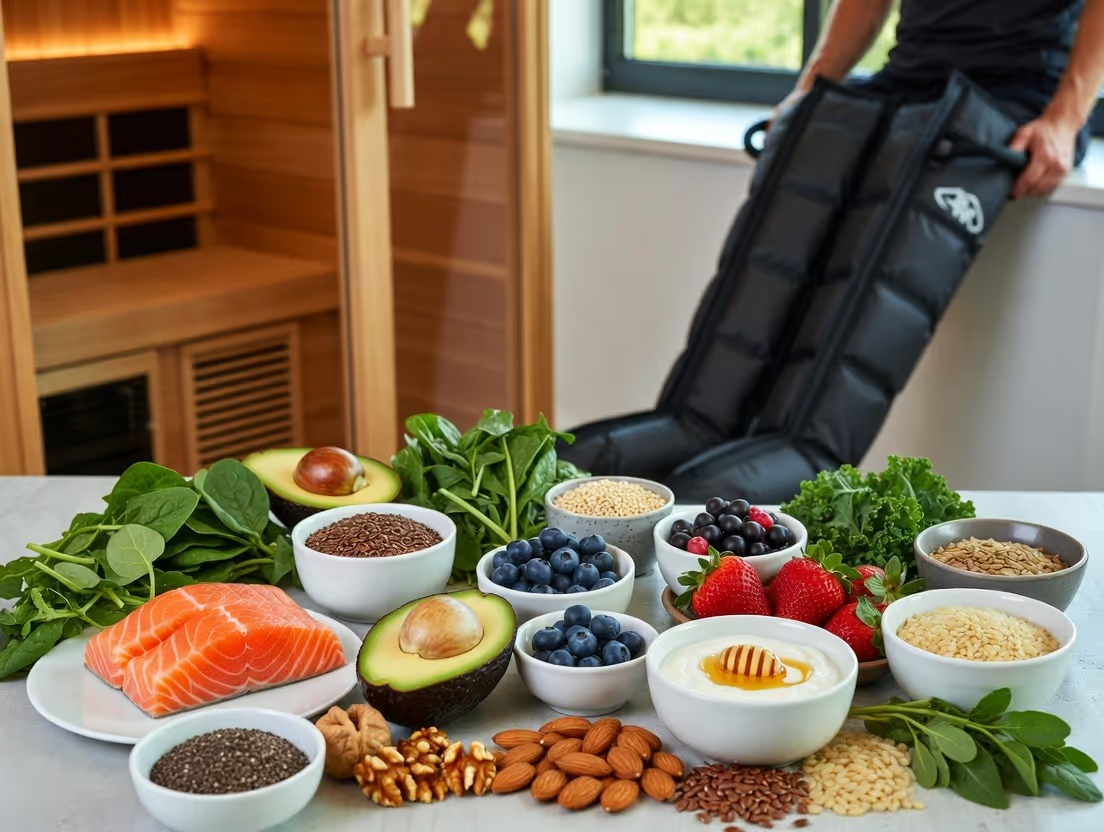
What you eat and drink, and when you do it, acts as a series of signals to your sleep systems. Food is not just fuel; it’s information for your circadian clock and neurotransmitter production.
The Caffeine & Alcohol Paradox: Caffeine has a half-life of 5-6 hours. That means if you have a coffee at 3 PM, half the caffeine is still in your system at 8-9 PM. For sensitive individuals, this is enough to impair sleep depth and latency. A general cutoff by 2 PM is wise. Alcohol is a sedative, not a sleep aid. It may help you fall asleep faster, but it dramatically suppresses REM sleep—the stage crucial for memory consolidation and emotional processing—and leads to fragmented, non-restorative sleep later in the night.
Macronutrient Timing: Large, heavy, or spicy meals too close to bedtime force your digestive system to work overtime, raising core temperature and potentially causing discomfort. Aim to finish your last major meal 2-3 hours before bed. A small, sleep-promoting snack about 60 minutes before bed can be helpful if you’re hungry. The ideal snack combines a complex carbohydrate with a bit of protein or healthy fat (e.g., a small banana with almond butter, whole-grain crackers with cheese). This can help stabilize blood sugar and promote the transport of sleep-supportive amino acids.
Key Sleep-Supportive Nutrients:
For more detailed explorations of how diet interacts with wellness metrics, our blog offers a wealth of related resources.
Your sleep quality is largely determined by what you do during the day. Two of the most potent levers you have are physical activity and light exposure.
Morning Light: The Master Reset: View morning sunlight exposure as a non-negotiable supplement. Within 30-60 minutes of waking, get outside for 10-30 minutes (longer on cloudy days). This does several things: it provides the brightest light cue of the day, firmly setting your circadian clock, suppressing melatonin, and boosting daytime alertness. It also increases cortisol at the healthy, optimal time, which improves energy and mood. Don’t wear sunglasses during this time if safe to do so; you want the light to hit your retina.
Exercise as a Sleep Potentiator: Regular aerobic exercise is one of the most reliable ways to improve sleep depth and reduce sleep latency. It increases sleep pressure (adenosine buildup), helps regulate circadian rhythms, and reduces anxiety and stress. However, timing matters. For most, finishing moderate-to-vigorous exercise at least 3 hours before bed allows the core body temperature and adrenaline to return to baseline. That said, gentle movement like yoga, stretching, or a slow walk in the evening can be incredibly beneficial for promoting relaxation.
The Afternoon Dip & Strategic Napping: Post-lunch, you experience a natural dip in alertness due to a slight circadian lull. If you need to nap, do it strategically. A 10-20 minute “power nap” taken before 3 PM can boost alertness without incurring significant sleep inertia (that groggy feeling) or stealing sleep pressure from the night. Avoid longer naps (entering deep sleep) which can disrupt nighttime sleep.
When you’re lying in bed with a busy mind, you can’t “think” your way to calm. You must use the body to regulate the mind. The breath is the most direct and powerful lever you have to activate your parasympathetic nervous system—the “rest and digest” state.
The 4-7-8 Breathing Method: Pioneered by Dr. Andrew Weil, this is a natural nervous system tranquilizer. 1) Place the tip of your tongue against the ridge behind your upper front teeth. 2) Exhale completely through your mouth, making a “whoosh” sound. 3) Close your mouth and inhale quietly through your nose for a count of 4. 4) Hold your breath for a count of 7. 5) Exhale completely through your mouth, making a “whoosh” sound, for a count of 8. 6) This is one breath. Repeat the cycle 3-4 times. It slows the heart rate and promotes calm.
Diaphragmatic (Belly) Breathing: Simply shifting from shallow chest breathing to deep belly breathing signals safety to the brain. Place one hand on your chest and the other on your belly. Inhale slowly through your nose, feeling your belly expand while your chest remains relatively still. Exhale slowly through pursed lips. Aim for 6-10 slow breaths per minute.
Progressive Muscle Relaxation (PMR): This involves systematically tensing and then relaxing different muscle groups. Starting from your toes and moving up to your forehead, tense each muscle group for 5 seconds, then release for 30 seconds, noticing the sensation of relaxation. This builds body awareness and dissipates physical tension you may not have even noticed.
The Body Scan for Sleep: A mindfulness practice where you bring non-judgmental attention to each part of your body in sequence, from head to toe or vice-versa. Simply notice sensations—warmth, coolness, pressure, tingling, or absence of sensation. When your mind wanders, gently bring it back to the body part. This anchors you in the present moment and away from anxious thoughts.
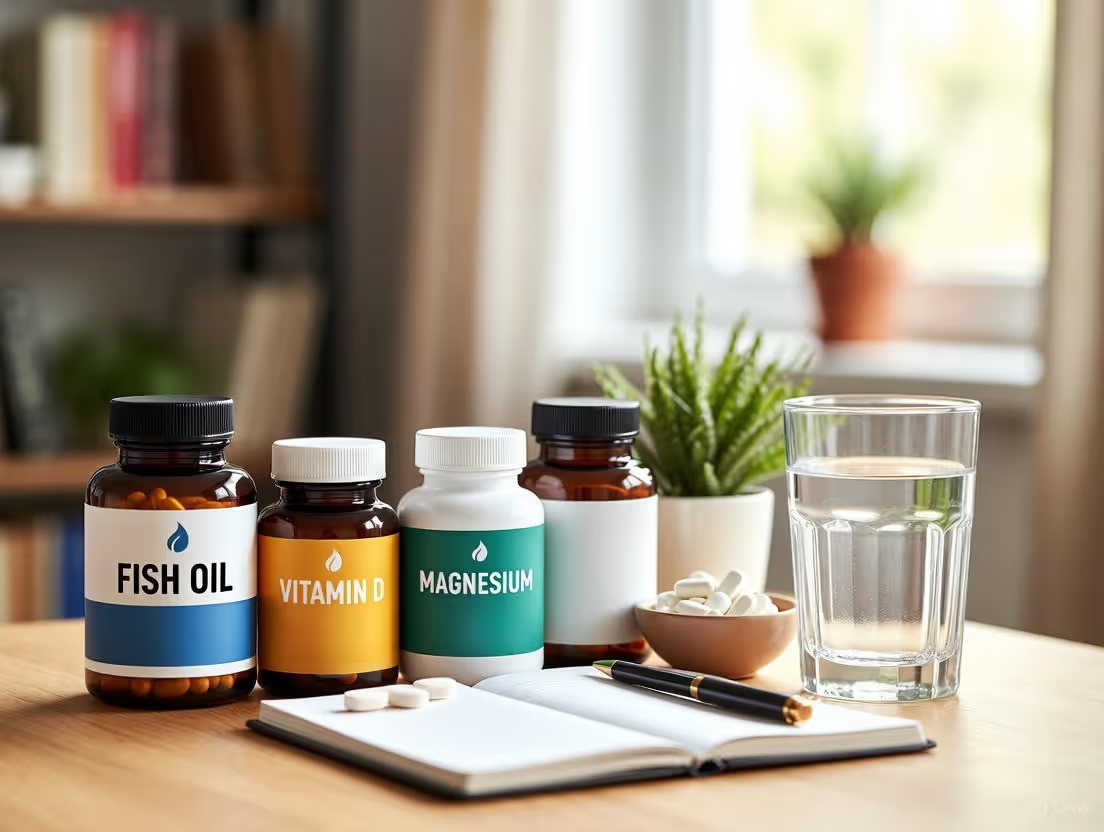
While lifestyle and behavior are the foundation, supplements can be helpful adjuncts for specific situations. They are “tools,” not cures, and should be used thoughtfully.
Melatonin: The Timing Hormone, Not the Knock-Out Pill. Melatonin is a hormone that signals when it’s time to sleep, not a powerful sedative. It’s most effective for circadian rhythm disruptions like jet lag, shift work, or Delayed Sleep Phase Disorder. For jet lag, taking 0.5mg to 3mg at the target bedtime of your destination can help reset your clock faster. For general sleep onset issues, a microdose (0.3mg – 1mg) taken 60-90 minutes before bed is often more effective than the higher doses (5mg-10mg) commonly sold. High doses can cause morning grogginess and may downregulate your own natural production.
Magnesium: The Relaxation Mineral. As mentioned, magnesium glycinate or bisglycinate are highly bioavailable forms that are particularly good for sleep and relaxation without a laxative effect. A dose of 200-400 mg about an hour before bed can help quiet the nervous system.
L-Theanine: An amino acid found in green tea, L-Theanine promotes relaxation without drowsiness. It can be helpful for reducing anxiety that interferes with sleep. A common dose is 100-400 mg.
A Note on Safety & Quality: Always consult with a healthcare provider before starting any supplement regimen, especially if you have health conditions or take medications. Purchase from reputable brands that use third-party testing (look for seals from USP, NSF, or ConsumerLab) to ensure purity and potency. Supplements are a supportive layer in your toolbox, not a replacement for the behavioral and environmental foundations.
Life often throws scenarios at us where standard sleep rules don’t apply. For these, you need specialized tools.
Conquering Jet Lag: Jet lag is a conflict between your internal circadian clock and the external light-dark cycle of your new time zone. Your goal is to shift your clock as quickly as possible using timed light exposure as your primary tool.
Surviving Shift Work: This is one of the most brutal assaults on circadian biology. The goal is damage control and maximizing adaptation.
The Sleep-Deprived Parent: This is about survival and maximizing sleep opportunity.
Our commitment to helping people navigate these complex, real-life challenges is rooted in our story and mission to make holistic health accessible.
Despite a well-stocked toolbox, some sleep disorders require professional intervention. It’s crucial to recognize the red flags.
Signs You Need a Sleep Specialist:
What to Expect: A sleep specialist will likely conduct a detailed history and may recommend a sleep study (polysomnography), either in a lab or with a home testing kit. This monitors brain waves, oxygen levels, heart rate, breathing, and leg movements to provide a definitive diagnosis. Treatments like CPAP for sleep apnea or specialized CBT-I for insomnia are life-changing and cannot be self-administered.
Cognitive Behavioral Therapy for Insomnia (CBT-I): This is the gold-standard, first-line treatment for chronic insomnia. It’s a structured program that combines many of the behavioral (stimulus control, sleep restriction) and cognitive (addressing unhelpful beliefs about sleep) tools we’ve discussed, guided by a therapist. It is more effective and sustainable than sleep medication.
If you have questions about how data from a wellness tracker can complement professional care, our FAQ section provides helpful guidance.
In your quest for better sleep, intuition and guesswork will only take you so far. You might feel like you slept poorly, but without data, you can’t pinpoint the why. Did you get enough deep sleep? Was your heart rate elevated all night due to stress? Did that new supplement make a measurable difference?
This is where the paradigm shifts from generic advice to personalized optimization. A smart wellness device like the Oxyzen ring acts as your 24/7 biometric lab, providing the objective feedback necessary to curate your own perfect sleep toolbox.
From Anecdote to Evidence: Instead of wondering, “Does meditation help me?” you can see it. Compare your Sleep Score, HRV, and deep sleep duration on nights you meditated versus nights you didn’t. Test if your optimal room temperature is 65°F or 68°F by observing your sleep stability and resting heart rate. Track the impact of alcohol with cold, hard data on REM sleep and nighttime awakenings.
Understanding Your Unique Physiology: The ring’s continuous tracking reveals your personal patterns. You might discover your sleep is most fragile in the early morning hours, prompting you to address temperature or light exposure at that specific time. You might see that your HRV—a key marker of recovery and nervous system balance—is consistently low, directing you to focus more on stress management tools. This biofeedback loop is empowering; it turns you into an expert on your own body.
A Holistic Health Picture: Sleep doesn’t exist in a vacuum. The Oxyzen ring tracks daytime activity, readiness, and recovery, showing you how your sleep last night impacts your energy today, and how today’s stress and activity will impact your sleep tonight. This holistic view is essential for making sustainable lifestyle changes. To understand the philosophy behind this integrated approach to wellness, you can learn more about our comprehensive vision here.
Armed with this knowledge and these tools, you are no longer a passive victim of poor sleep. You are an architect. The following sections will build upon this foundation, diving deeper into advanced optimization, the science of dreams, long-term sleep health, and integrating all these tools into a seamless, sustainable lifestyle. Your journey to mastering sleep—in every situation—has just begun.
Understanding the tools is one thing. Wielding them effectively in the messy reality of daily life is another. This is where we move from a scattered toolbox to a finely-tuned protocol—a personalized, dynamic system that adapts to your changing needs. The goal is not rigid perfection, but intelligent, responsive consistency.
Creating your protocol starts with a baseline assessment. For one week, without changing anything, simply observe. Go to bed and wake up at your natural times. Note your energy levels, mood, and subjective sleep quality. If you’re using a device like the Oxyzen ring, this establishes your starting data: average sleep duration, sleep score, HRV, and resting heart rate. This baseline is your truth, devoid of wishful thinking.
Next, identify your primary sleep challenge. Are you a Problem Faller-Asleeper (sleep latency), a Problem Stayer-Asleeper (sleep maintenance), or a Problem Waker-Upper (unrefreshing sleep)? Your initial interventions should target your chief complaint. A Problem Faller-Asleeper might prioritize a strict digital sunset, 4-7-8 breathing, and a cooler bedroom. A Problem Stayer-Asleeper might focus on stress management via scheduled worry time, limiting evening fluids, and investigating potential causes like sleep apnea. A Problem Waker-Upper might drill down on sleep consistency, morning light, and analyzing their deep and REM sleep data.
The Stacking Principle: Introduce changes one at a time, and stack them gradually. Week 1: Implement a consistent wake-up time and get 10 minutes of morning light. Week 2: Add a digital sunset 60 minutes before bed. Week 3: Introduce a brief wind-down routine with a body scan. This methodical approach allows you to see which tool delivers the biggest return on investment for your biology. It prevents overwhelm and creates sustainable habits. For inspiration on building lasting wellness routines, our blog features numerous user stories and strategies.
In the pursuit of perfect sleep, it’s easy to become obsessive—anxiety about sleep itself becomes the very thing that ruins it. This is where the 80/20 Rule (or Pareto Principle) is liberating. Aim to get your sleep “right” about 80% of the time. That might mean 5-6 nights per week where you hit your protocol—consistent bedtime, perfect environment, no alcohol. The other 20%—the late-night social event, the weekend trip, the sick child—you release with grace. Consistency over the long arc of weeks and months is what recalibrates your biology, not a flawless streak of 30 nights. This flexible mindset reduces performance anxiety and makes the protocol resilient to real life.
Are you a bear, a wolf, a lion, or a dolphin? Popularized by sleep specialist Dr. Michael Breus, chronotypes are a useful framework for understanding your genetically influenced predisposition for sleep and wake times. They go beyond "night owl" and "morning lark" to offer guidance on scheduling your entire day for optimal energy.
The Lion (The Early Riser): Wakes up bright-eyed before dawn. Peak productivity occurs in the morning. Energy dips in the early afternoon. Tends to wind down early and prefers earlier bedtimes. Best Schedule: Tackle your most demanding cognitive work before noon. Schedule meetings in the late morning. Light exercise in the early afternoon can help overcome the dip. Protect the evening wind-down.
The Bear (The Sun-Follower): The most common chronotype. Wakes easily with the sun, has a steady energy curve throughout the day, and sleeps well on a standard societal schedule. Peak productivity is mid-morning. Best Schedule: Important work in the late morning. Social or collaborative activities in the early evening. Be mindful of post-lunch drowsiness; a short walk can help.
The Wolf (The Night Owl): Struggles to wake up early. Hits a cognitive stride in the late morning and experiences a second wind in the evening. Most creative and energetic at night. Best Schedule: Avoid scheduling critical tasks first thing. Aim for deep work sessions in the late morning and again from late afternoon into evening. Exercise in the late afternoon is ideal. Must be extra diligent with evening light management to allow for eventual sleepiness.
The Dolphin (The Light, Anxious Sleeper): Often light sleepers with irregular patterns. May wake easily and struggle to fall back asleep. Mentally alert in the mid-morning to early afternoon. Best Schedule: Focus on stress-reduction techniques throughout the day. The most important work window is from 10 AM to 2 PM. Gentle, relaxing exercise like yoga is better than high-intensity work in the evening.
Leveraging Your Chronotype: Knowing your type isn’t an excuse (“I’m a wolf, I’m just doomed to be late!”). It’s an empowerment tool. It helps you:
If your life demands conflict with your chronotype (a Wolf with a 7 AM job), you can gently nudge your rhythm with strict morning light and evening darkness, but respect your limits. Fighting your biology is exhausting; flowing with it is energizing.
Emerging science reveals a fascinating bidirectional communication network: the gut-brain axis. The trillions of bacteria in your digestive tract (the microbiome) produce neurotransmitters and send signals that directly affect your brain, mood, and sleep.
The Vagus Nerve Highway: This is the primary physical pathway. The vagus nerve runs from your brainstem to your abdomen, transmitting information in both directions. A healthy, diverse microbiome promotes vagal tone, which is associated with better stress resilience, lower inflammation, and improved sleep quality. Poor gut health can lead to vagal irritation, contributing to anxiety and sleep disturbances.
Microbial Metabolites & Neurotransmitters: Your gut bacteria are tiny chemists. They produce:
Practical Tools for a Sleep-Supportive Gut:
Listening to your gut isn’t just a metaphor for intuition; it’s a literal strategy for better sleep. An upset stomach or indigestion at night is an obvious disruptor, but the subtler, chronic effects of an imbalanced microbiome are profound and widespread.
Once you’ve mastered darkness, temperature, and comfort, you can explore the frontier of sensory and environmental optimization. These are "next-level" tools for the dedicated sleeper.
Binaural Beats & Isochronic Tones: These are auditory illusions used to encourage specific brainwave states.
Pink Noise & Brown Noise: While white noise masks all frequencies equally, pink noise emphasizes lower frequencies, sounding deeper and more even, like steady rain or wind. Some research suggests pink noise can increase slow-wave (deep) sleep stability and improve memory recall. Brown noise (or Brownian noise) is even deeper, resembling a powerful waterfall or low rumble, and is favored by some for its profound masking of distracting sounds.
Grounding (Earthing): The theory proposes that direct physical contact with the Earth's surface (walking barefoot on grass, sand, soil) allows a transfer of free electrons into the body, which may have an antioxidant, anti-inflammatory effect. Some small studies and a wealth of anecdotal reports suggest grounding can improve sleep, reduce pain, and lower stress. While the science is still evolving, the practice is free and harmless. Try spending 20-30 minutes barefoot outside in the afternoon and see if it impacts your sleep data.
EMF & Geopathic Stress: A Cautious Consideration. The research on electromagnetic fields (EMFs) from Wi-Fi and devices affecting sleep is inconclusive and controversial. However, from a precautionary principle, it’s wise to keep electronic devices away from your bed. Don’t sleep with your phone under your pillow or right next to your head. Put it in airplane mode or turn it off if it must be in the bedroom. "Geopathic stress" refers to disturbances in the Earth's natural magnetic field from underground water lines or geological faults, purported to disrupt sleep. While mainstream science doesn't support it, if you've optimized everything else and still struggle, an old-fashioned bed relocation experiment costs nothing.
Your transition from wakefulness to sleep should be a gradual descent, not a crash landing. A consistent, sensory-rich wind-down ritual is the runway that guides your nervous system safely into sleep. This isn't a single technique; it's a curated sequence that becomes a conditioned signal for your brain: it is time to rest.
Phase 1: The Digital Sunset (T-60 Minutes)
This is your hard start line. All non-essential screens go off. If you must use a device, ensure blue-light filtering is on and brightness is minimal. This single action is the most powerful signal to your circadian clock.
Phase 2: The Environment Prep (T-60 to T-45)
Dim the main lights in your living space. Turn on warm, dim lamps (ideally with orange or red bulbs). Lower the thermostat if needed. Draw your blackout curtains. Turn on your white noise machine or soundscape. This phase is about transforming the ambiance of your space from "active living" to "sleep sanctuary."
Phase 3: The Somatic Shift (T-45 to T-20)
Engage in calming, physical practices that move awareness into the body.
Phase 4: The Mental Unloading (T-20 to T-5)
This is where you offload the cognitive weight of the day.
Phase 5: The Final Descent (T-5 to Bedtime)
In your prepared bedroom, do your final breathwork practice. The 4-7-8 method or simple diaphragmatic breathing for just a few minutes. Get into bed, assume your sleep position, and begin a body scan or a mindfulness practice focused on the breath. Let sleep come to you.
The magic of this ritual is in its consistency. After weeks of practice, simply dimming the lights will trigger a physiological relaxation response. It builds a powerful Pavlovian bridge between your actions and sleep.
Raw data is just numbers. Insight is power. If you're using a device like the Oxyzen ring, understanding what the metrics mean and how they connect is crucial for personalizing your protocol.
The Core Quartet:
Connecting the Dots – A Case Study:
Imagine you have a big work presentation. That night, your data shows:
Actionable Insight: This confirms stress is your primary sleep disruptor. Your protocol should now prioritize cognitive de-tools before the stressful event: extended wind-down, perhaps a calming supplement like L-Theanine, and definitely no work in bed. The data moves you from "I slept badly" to "Stress disrupted my sleep architecture; I need to fortify my nervous system resilience."
This level of personalized insight is what transforms a generic sleep tip into a targeted strategy. For common questions on interpreting this data, our FAQ is a valuable resource.
We often chase sleep for tomorrow's energy. But the real stakes are far higher. Consistent, high-quality sleep is the non-negotiable foundation of longevity, disease prevention, and cognitive vitality. It is the single most effective thing you can do for your long-term health.
The Detoxifying Brain: During deep NREM sleep, your brain’s glymphatic system kicks into high gear. This waste-clearance system flushes out metabolic debris, including toxic proteins like beta-amyloid, which is associated with Alzheimer's disease. Chronic sleep deprivation is like leaving the trash to pile up in your brain's most precious tissues.
Metabolic & Hormonal Regulation: Sleep deprivation cripples your metabolism. It:
The Immune System’s Recharge: During sleep, your immune system releases proteins called cytokines, some of which are needed to fight infection and inflammation. Skimping on sleep reduces production of these protective cytokines. Studies show that people who sleep less than 7 hours are nearly three times more likely to catch a cold than those who sleep 8 hours or more.
Emotional and Mental Resilience: REM sleep is like overnight therapy. During REM, your brain processes emotional experiences, stripping away the sharp, stressful edges from memories while consolidating the learning. This is why after a good night's sleep, problems often feel more manageable. Chronic REM deprivation is linked to increased emotional reactivity, anxiety, and depression.
Investing in Sleep Capital: Think of your sleep as a savings account for your health. Every night of deep, restorative sleep makes a deposit. Nights of poor sleep or short sleep make a withdrawal. Your goal is to always be in the black, building up a reserve of "sleep capital" that protects you during inevitable periods of stress, illness, or disruption. This long-term perspective makes the daily discipline of your sleep protocol feel less like a chore and more like the most important investment you will ever make. This philosophy is central to our mission at Oxyzen.
You now possess a formidable array of tools and the understanding to use them. You’ve moved from basics to advanced hacks, from biology to technology, from night-time habits to daytime foundations. The final portion of this guide will integrate everything into a seamless lifestyle, address common pitfalls, and provide a roadmap for maintaining your sleep mastery for life. The journey continues from building the toolbox to wielding it with effortless expertise.
You have the blueprint. You understand the biology, the environment hacks, the mental tools, and the power of data. Now comes the most critical phase: integration. This is where knowledge becomes unconscious competence—where your sleep protocol stops being a separate “project” and seamlessly blends into the fabric of your life. The goal is to make healthy sleep the path of least resistance.
The key is habit stacking and environmental design. Instead of relying on willpower at 10 PM, you design your day so that the right choices are automatic.
The Weekly Sleep Audit: Once a week, perhaps on a Sunday evening, take 10 minutes for a quick audit. Review your sleep data trends. Did your HRV improve? Did you have more awakenings on the nights you worked late? Check your environment: are blackout curtains still sealing properly? Is the white noise machine functioning? This mini-audit prevents “protocol drift” and keeps you engaged in a positive feedback loop. For ideas on tracking and reviewing your progress, you can always find new perspectives on our blog.
A rigid protocol can clash with a vibrant social life or a partner’s different habits. The solution is not isolation, but strategic flexibility and communication.
For Social Evenings:
For Shared Bedrooms:
Even masters have off nights. Travel, illness, stress, or a simple misstep can disrupt sleep. The critical skill is not avoiding all disruptions—that’s impossible—but knowing how to reset quickly without spiraling.
The Single Bad Night Protocol:
Recovering from a Week of Poor Sleep (e.g., Post-Travel, Project Crunch):
This is about systematic recovery, not a single night.
Sleep is not an isolated event. It’s the final act of the daily drama. The quality of your wakefulness determines the quality of your sleep. Cultivating certain mindsets and habits during the day creates a physiological and psychological state conducive to rest.
Cultivating Circadian Awareness: Start to notice natural rhythms in your energy. That post-lunch dip? That’s normal. A wave of alertness at 10 PM if you’re a Wolf? That’s your biology. Instead of fighting these waves with caffeine or frustration, flow with them. Schedule demanding tasks during your peaks and administrative, low-cognitive tasks during your troughs. This respectful pacing prevents the frantic, wired feeling that can carry into the night.
Stress Inoculation Through Micro-Practices: It’s the chronic, low-grade stress that often leaks into the night. Combat it with tiny, frequent resets.
The Power of Purpose & Engagement: A day spent feeling engaged, productive, and connected to something meaningful is a day that naturally culminates in a sense of satisfaction—a psychological readiness for rest. Conversely, days of boredom, frustration, or aimlessness can lead to nighttime rumination. Actively seek flow states in work or hobbies. Connect meaningfully with others. This isn’t just “wellness advice”; it’s a potent sleep-preparation strategy, as a fulfilled mind is a quieter mind at night. This holistic approach to well-being is at the heart of the Oxyzen philosophy.
You’ve implemented your protocol, seen great improvements, and then… nothing. Your sleep score, energy, or subjective feeling of rest hits a plateau. This is normal. The body adapts. To reach the next level, you need to refine.
Step 1: Revisit and Question Your Data. Look at your metrics with fresh eyes. Has your HRV plateaued at a “good but not great” level? Is your deep sleep percentage stuck? This pinpointing tells you where to focus your experiments.
Step 2: Conduct Single-Variable Experiments. Change one thing for 5-7 nights and observe the trend in your data.
Step 3: Consider a “Sleep Detox” Reset. If you feel your habits have gotten sloppy, do a 5-day back-to-basics reset:
Step 4: Look at Non-Sleep Factors. Sometimes the plateau isn’t about sleep tactics, but underlying issues. Is there an unresolved source of anxiety? Is your training load too high? Are you neglecting other recovery pillars like nutrition and hydration? Sleep doesn’t exist in a vacuum.
The field of sleep optimization is moving at lightning speed. The smart ring you wear today is just the beginning. Understanding the trajectory helps you contextualize current tools and anticipate future ones.
From Tracking to Automated Intervention: The next generation of devices won’t just tell you you slept poorly; they will actively help you sleep better. Imagine a smart bed that detects you are too warm and gently cools your side of the mattress. A wearable that detects prolonged wakefulness and emits a subtle, sleep-inducing frequency or releases a micro-dose of soothing scent. A lighting system that automatically dims and shifts to red tones based on your chronotype and real-time melatonin estimates. The line between tracker and sleep environment will blur.
Advanced Biomarkers and Predictive Health: Future wearables will track a broader suite of biomarkers relevant to sleep quality, such as:
Personalized Sleep Nutrition & Supplementation: Apps will combine your sleep data, genetic information (from services like 23andMe), and microbiome analysis to provide hyper-personalized recommendations. Instead of “try magnesium,” it will be “based on your genetic SNP in the GABA receptor pathway and low deep sleep, a supplement containing 200mg of magnesium l-threonate and 100mg of apigenin is predicted to be 73% effective for you.”
The Integration Imperative: The ultimate future is a fully integrated health ecosystem. Your sleep ring talks to your smartwatch, which informs your smart home, which adjusts your environment, while your nutrition app suggests dinner based on your projected sleep need. This seamless, ambient support will make healthy sleep the effortless default. Staying informed about these advancements is part of our commitment; you can learn more about our vision for this integrated future.
Now, we synthesize everything. It’s time to build your own, living document—a Sleep Blueprint that is unique to your biology, your life, and your goals. This is not a static list of rules, but a dynamic guide you can adjust seasonally, or as life changes.
Section 1: My Non-Negotiable Foundations
Section 2: My Ideal Sleep Sanctuary
Section 3: My 60-Minute Wind-Down Ritual
Section 4: My Daytime Supports
Section 5: My Data-Driven Experiment Log
Section 6: My Special Circumstances Playbook
This blueprint belongs to you. Print it. Put it where you can see it. Treat it as a working document. The act of creating it solidifies your commitment and turns abstract knowledge into a personal operating system. For real-world examples of how others have built their systems, the testimonials and stories from our community can be a great source of inspiration.
You began this journey in the fog of fatigue, seeking tools. You now possess something far greater: a masterful understanding. You are no longer a passive victim of poor sleep, subject to the whims of a busy mind or a disruptive environment. You are an architect, a scientist, and a compassionate guide for your own nervous system.
Remember, the pursuit of perfect sleep is a paradox; the striving itself can be the obstacle. The true goal is sleep resilience—the ability to bounce back, to adapt, to know the levers to pull when life inevitably shakes your foundation. It’s about showing up for your sleep with the same intentionality you show up for your work, your relationships, and your passions, because it is the invisible engine that powers them all.
This is not an end, but a beginning. Let your data be your guide, your curiosity be your compass, and your own rejuvenated energy be your proof. Return to this toolbox whenever you need a tune-up. Share these strategies with those you care about. And tonight, as you begin your wind-down ritual, do so with the confidence of someone who knows not just what to do, but why it works.
Your nights are no longer a mystery to be endured. They are a sanctuary to be curated, a biological imperative to be honored, and a foundation for your best life, firmly built. Sleep well.
Your Trusted Sleep Advocate: Sleep Foundation — https://www.sleepfoundation.org
Discover a digital archive of scholarly articles: NIH — https://www.ncbi.nlm.nih.gov/
39 million citations for biomedical literature :PubMed — https://pubmed.ncbi.nlm.nih.gov/
Experts at Harvard Health Publishing covering a variety of health topics — https://www.health.harvard.edu/blog/
Every life deserves world class care :Cleveland Clinic - https://my.clevelandclinic.org/health
Wearable technology and the future of predictive health monitoring :MIT Technology Review — https://www.technologyreview.com/
Dedicated to the well-being of all people and guided by science :World Health Organization — https://www.who.int/news-room/
Psychological science and knowledge to benefit society and improve lives. :APA — https://www.apa.org/monitor/
Cutting-edge insights on human longevity and peak performance:
Lifespan Research — https://www.lifespan.io/
Global authority on exercise physiology, sports performance, and human recovery:
American College of Sports Medicine — https://www.acsm.org/
Neuroscience-driven guidance for better focus, sleep, and mental clarity:
Stanford Human Performance Lab — https://humanperformance.stanford.edu/
Evidence-based psychology and mind–body wellness resources:
Mayo Clinic — https://www.mayoclinic.org/healthy-lifestyle/
Data-backed research on emotional wellbeing, stress biology, and resilience:
American Institute of Stress — https://www.stress.org/


