


Sleep Improvement Without Medication: Natural Approaches
Natural approaches focus on behavioral, environmental, and dietary changes to improve sleep without pharmaceutical intervention.
Natural approaches focus on behavioral, environmental, and dietary changes to improve sleep without pharmaceutical intervention.
%402x.svg)
You are not alone if you’ve spent the dark, quiet hours of the night staring at the ceiling, your mind racing while the world sleeps. You are part of a global silent epidemic. The World Health Organization has declared a sleep loss epidemic across industrialized nations, with an estimated one-third of adults failing to get the recommended seven hours of sleep per night. For decades, the solution offered has often come in a bottle: a prescription for hypnotics or a trip to the pharmacy for over-the-counter aids. Yet, these chemical crutches often come with a hangover of side effects—dependency, grogginess, and the unsettling feeling of not truly resting, but rather being sedated.
But what if the most profound sleep improvement doesn't come from a pharmacy shelf, but from a deep understanding and harmonization of your own biology? What if the keys to restorative slumber are embedded in the natural rhythms of light, the timing of your meals, the temperature of your bedroom, and the quiet whispers of your own nervous system? This is the empowering promise of natural sleep improvement: a journey back to the innate, hardwired ability to sleep deeply and wake refreshed, guided by data and timeless wisdom.
This comprehensive guide is your map to that journey. We will move beyond generic "sleep hygiene" tips and dive into the foundational pillars of sleep biology, exploring how you can harness the power of your circadian rhythm, craft the perfect sleep sanctuary, master your nutrition for sleep, and utilize cutting-edge technology not as a distraction, but as a precision tool for insight. Imagine having a personal sleep scientist on your finger—a device that tracks your heart rate variability, blood oxygen, and body temperature to give you a true, objective picture of your sleep architecture. This is the power of modern wellness technology like the Oxyzen smart ring, which allows you to move from guessing about your sleep to knowing, and from knowing to truly optimizing. Let's begin by understanding the very bedrock of our sleep-wake cycle: the magnificent, ancient rhythm that governs all life on Earth.
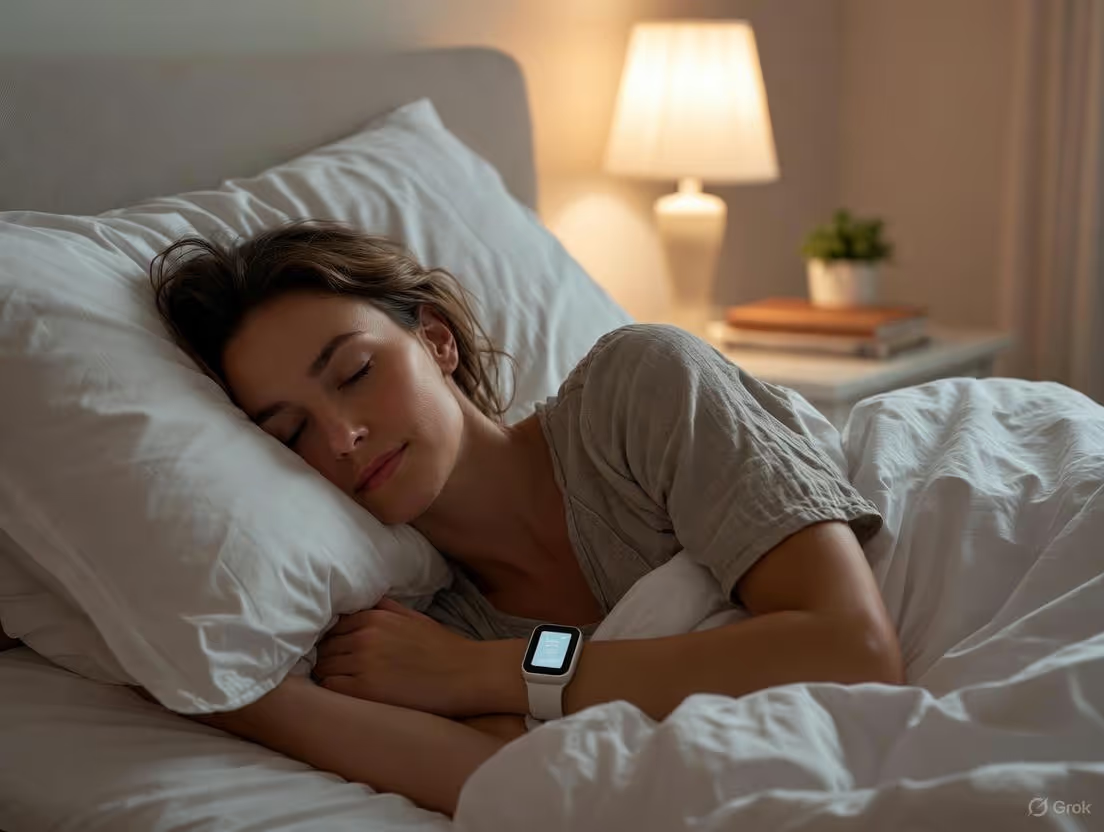
At the core of every living being, from the simplest bacteria to the human body, ticks a biological clock. This isn't a metaphor—it's a physical reality. Nestled in the hypothalamus of your brain, the suprachiasmatic nucleus (SCN) acts as your master circadian pacemaker, a 24-hour internal conductor orchestrating a symphony of hormonal releases, temperature fluctuations, and metabolic processes. Your sleep-wake cycle is the most apparent melody in this symphony. When this rhythm is in tune, sleep comes naturally and is profoundly restorative. When it’s desynchronized, the entire system falls into discord.
The primary cue that sets and resets this clock daily is light, specifically bright blue-wavelength light. When morning light hits your eyes, it signals to the SCN to suppress melatonin (the "sleep hormone") and ramp up cortisol (the "wakefulness hormone"), boosting alertness and setting your physiological clock for the day. As daylight fades, the SCN triggers the pineal gland to release melatonin, gently lowering your core body temperature and preparing your body for sleep. This elegant system worked perfectly for millennia, aligned with the rising and setting of the sun. Then came the invention of the electric light bulb, and later, the smartphone.
The Modern Disruption: Light Pollution & Blue Light
Our evenings are now bathed in artificial light, which confuses our ancient biology. The blue light emitted by LEDs, TVs, computers, and smartphones is particularly problematic because it mimics the spectral quality of morning sun. Staring at a screen at 10 PM sends a direct, false signal to your SCN: "It's morning! Suppress melatonin! Be alert!" A 2014 study in the Proceedings of the National Academy of Sciences found that participants using light-emitting e-readers before bed took longer to fall asleep, had reduced evening melatonin secretion, and were less alert the next morning compared to those reading a printed book.
Practical Rhythm Reset Strategies:
By honoring this fundamental rhythm, you lay the first and most critical stone in the foundation of natural sleep. It’s about working with your biology, not against it. For a deeper dive into how technology can help you track these daily rhythms and see the direct impact of light exposure on your sleep quality, our resource library at the Oxyzen.ai blog offers detailed case studies and guides.
Your bedroom is not just a place to collapse at the end of the day; it should be a purpose-engineered sanctuary for sleep and recovery. Every sensory detail in this environment either supports or sabotages your journey into deep sleep. Optimizing your sleep sanctuary is a non-negotiable step in reclaiming your rest, and it goes far beyond having a comfortable mattress.
The Pillars of the Perfect Sleep Environment:
1. Darkness: The Non-Negotiable
Complete darkness is crucial for melatonin production. Even small amounts of light from a streetlamp, digital clock, or charging indicator can pass through closed eyelids and disrupt your sleep cycle. Aim for a level of darkness where you cannot see your hand in front of your face.
2. Cool Temperature: The Thermal Trigger for Sleep
A drop in core body temperature is a key signal that initiates sleepiness. A room that is too warm interferes with this natural thermoregulation process. The science is clear: the ideal temperature for most people lies between 60-67°F (15.5-19.5°C).
3. Silence & Soundscaping
Unexpected noises—a car alarm, a barking dog, a snoring partner—can cause micro-arousals, pulling you out of deep sleep stages even if you don't fully wake up. Consistency of sound is more important than absolute silence.
4. The Sacred "Brain-Bed" Connection
Your brain is an associative machine. If your bed is used for working, watching thrilling movies, scrolling social media, or arguing, it becomes neurologically linked with stress, anxiety, and alertness. You must rebuild the association that Bed = Sleep & Intimacy Only.
Creating this sanctuary is an act of self-respect. It tells your nervous system, "This is a safe, optimized place for you to power down and repair." It’s the physical manifestation of your commitment to sleep. And to truly understand how environmental tweaks affect you personally—like whether a cooler room increases your deep sleep percentage—tools that provide objective feedback are invaluable. For many, the Oxyzen smart ring has become an integral part of this optimization process, offering precise data on sleep stages and physiological responses to their environment. You can learn more about how this technology works to provide such personalized insights.

You are not just what you eat; you sleep how you eat. The connection between your digestive system and your brain—often called the gut-brain axis—is a bidirectional superhighway, and traffic on this highway has a direct impact on your sleep quality. The timing, composition, and quantity of your food and drink can be the difference between a night of tossing and turning and one of deep, uninterrupted slumber.
Macronutrients & Sleep Chemistry:
The Saboteurs: What to Avoid and When
The Evening Nourishment Strategy:
Your goal for an evening meal or snack is to provide steady, non-disruptive fuel. Opt for a moderate-sized meal that balances a lean protein source, healthy fats, and fiber-rich vegetables or complex carbs. A great example is grilled salmon with roasted asparagus and quinoa, or a lentil soup with a side salad. If you need a pre-bed snack, keep it small and combine protein with a complex carb, like Greek yogurt with a sprinkle of walnuts or a few apple slices with almond butter.
By viewing your diet as sleep fuel, you make conscious choices that support, rather than sabotage, your nightly renewal. For more specific recipes and meal-timing strategies tailored to improving sleep, be sure to explore the curated resources on our wellness blog.
The relationship between physical activity and sleep is one of the most robust in all of health science. It’s a virtuous cycle: regular exercise promotes better, deeper sleep, and better sleep enhances athletic performance, recovery, and the motivation to exercise. But not all exercise is equal in its soporific effects, and timing is a critical piece of the puzzle.
The Science of Sweat & Sleep:
Regular aerobic exercise (like brisk walking, running, cycling, or swimming) has been shown to:
The mechanisms are multifaceted. Exercise elevates body temperature; the subsequent drop hours later promotes sleepiness. It also reduces symptoms of anxiety and depression, common culprits of insomnia, and helps modulate stress hormones like cortisol.
Timing: The Golden Rule of Exercise for Sleep
While exercise is universally beneficial for sleep, when you do it matters significantly for some people.
The Power of Mindful Movement:
If you exercise in the evening, the key is to choose activities that promote the "rest-and-digest" (parasympathetic) state, not the "fight-or-flight" (sympathetic) state.
Listening to Your Body's Data:
How do you know if your evening spin class is helping or hurting your sleep? Subjective feeling is one thing, but objective data is another. This is where a biometric tracker can be revolutionary. By monitoring metrics like resting heart rate, heart rate variability (HRV), and sleep stage breakdown, you can see the direct, personalized impact of your workout timing and intensity on your sleep quality. It moves you from guesswork to precision. Many users of devices like the Oxyzen ring find this data instrumental in fine-tuning their exercise schedules for optimal recovery, as shared in their real-world experiences.

In the age of infinite scrolling, push notifications, and 24/7 connectivity, our minds are in a state of perpetual low-grade alert. This "cognitive loitering" is the arch-nemesis of sleep. The pre-bed period is not just about dimming the lights in your room; it's about dimming the neurological "lights" in your brain. Implementing a true Digital Sunset is one of the most impactful, yet challenging, natural sleep strategies.
Why Our Devices Hijack Sleep:
The pre-sleep threat from technology is threefold:
Building Your Personalized Digital Sunset Ritual:
This isn't about deprivation; it's about creating sacred space. Your ritual should start 60-90 minutes before your target bedtime.
The goal of the Digital Sunset is to create a buffer zone between the hyper-stimulation of modern life and the quiet required for sleep. It allows the nervous system to downshift from sympathetic (alert) dominance to parasympathetic (calm) dominance. This transition doesn't happen with the flip of a light switch; it requires a gradual dimming. For support and answers on how to integrate technology in a way that serves your sleep, not destroys it, our FAQ section addresses common questions on balancing tech and wellness.
When anxiety races your heart and worry keeps you awake, telling yourself to "just relax" is futile. You cannot think your way into calm, but you can physiologically engineer it. The fastest pathway to influencing your nervous system state is through your breath and body awareness. These are tools you always have with you, requiring no equipment, and their effects are immediate and scientifically validated.
Understanding the Lever: Your Autonomic Nervous System (ANS)
Your ANS has two main branches:
The goal before bed is to consciously activate the PNS. The most direct way to do this is through the vagus nerve, the longest cranial nerve, which is a key component of the PNS. Slow, diaphragmatic breathing directly stimulates the vagus nerve, sending a signal to the brain that it's safe to power down.
Evidence-Based Techniques for Sleep Onset:
1. The 4-7-8 Breathing Method (Dr. Andrew Weil):
This technique is a natural tranquilizer for the nervous system.
2. Diaphragmatic (Belly) Breathing:
Lie on your back with one hand on your chest and the other on your belly. Inhale slowly through your nose, feeling your belly rise (your chest should move very little). Exhale slowly through pursed lips. Aim for 6-10 slow breaths per minute. Just 5 minutes of this practice can significantly reduce cortisol levels.
3. Progressive Muscle Relaxation (PMR):
This technique combats the physical tension that often accompanies mental stress. Starting from your toes and moving up to your scalp, systematically tense each muscle group for 5 seconds, then completely release the tension for 30 seconds, noticing the feeling of relaxation. By the time you reach your head, your body will feel heavy and relaxed.
4. Body Scan Meditation:
Similar to PMR but without the tensing. Lie still and bring your attention slowly to each part of your body, from toes to head, simply noticing any sensations without judgment. The goal is not to change anything, but to cultivate present-moment awareness, which pulls you away from anxious future thoughts.
Integrating just one of these practices into your pre-bed ritual can be transformative. They are a direct intervention, shifting your physiological state from "alert" to "ready for sleep." And to truly see the impact—to watch your heart rate drop and your HRV rise in real-time as you practice—provides powerful reinforcement. This biofeedback loop is a core benefit of using a precise wellness tracker, turning an internal feeling into an external, motivating data point. Understanding the vision and values behind creating technology that empowers such self-knowledge can deepen your appreciation for the tools available.
Humans are creatures of habit and meaning. A consistent, calming pre-sleep ritual is more than a checklist of tasks; it’s a series of deliberate, sensory cues that signal to your primal brain, "All is well. The day is done. It is safe to rest now." This psychological conditioning is incredibly powerful. It builds a Pavlovian response where the very start of your ritual begins to trigger physiological relaxation.
Designing Your Personalized Wind-Down Ritual:
Your ritual should be enjoyable, not a chore. It typically starts 60 minutes before bed and incorporates elements that engage your senses in a calming way. Here is a framework to build from:
Sense of Smell (Olfactory): The most direct link to the emotional and memory centers of the brain.
Sense of Touch (Tactile):
Sense of Taste (Gustatory):
Sense of Sight (Visual):
Sense of Sound (Auditory):
The Cognitive/Emotional Layer:
The Key is Consistency:
Perform your ritual in the same order, at roughly the same time, every night. The repetition is what builds neural pathways and strengthens the conditioned relaxation response. Even on nights you don't feel sleepy, performing the ritual can still help initiate the wind-down process.
By treating the hour before bed as a sacred transition, you honor the importance of sleep and give your mind and body the graceful descent they need. For inspiration and to see how others have crafted their perfect wind-down routines, the stories and community insights shared in our blog can be a wonderful resource.
Sleep is not an isolated event; it is the culmination of your entire day. The pressure to sleep (homeostatic sleep drive) builds from the moment you wake up, like an hourglass filling with sand. Several key daytime habits ensure this "sand" fills efficiently, so by evening, the pressure is irresistibly high.
1. Strategic Light Exposure (Beyond the Morning Sun):
While morning light is crucial, getting bright light exposure throughout the day, especially in the afternoon, helps maintain a strong, robust circadian signal and combats the afternoon dip in alertness. Take a walk outside after lunch if possible.
2. Mind Your Naps:
If you must nap, do it strategically. A short "power nap" of 10-20 minutes before 3 PM can boost alertness without significantly denting your nighttime sleep drive. Long or late naps (especially over 30 minutes or after 4 PM) can rob sand from the hourglass, making it harder to fall asleep at night.
3. Stress Management in Real-Time:
Chronic, unmanaged daytime stress leads to elevated cortisol levels that can persist into the evening, effectively "propping up" your arousal system when it should be declining. Integrating micro-practices of calm throughout your day prevents stress from accumulating.
4. Physical Activity Spread Throughout the Day:
In addition to dedicated exercise, avoid being sedentary for long periods. Set a timer to stand up, stretch, or walk for 5 minutes every hour. This movement helps regulate blood sugar and energy levels, contributing to a more stable internal environment conducive to sleep later on.
5. Hydration Timing:
Drink the majority of your water earlier in the day. This supports all bodily functions and prevents the need to chug water in the evening, which leads to nocturia.
By viewing your entire waking day as preparation for sleep, you create a lifestyle that naturally supports your sleep-wake cycle. It’s a holistic approach that recognizes sleep as the foundational outcome of a well-lived day, not a separate problem to be solved at night. Our company mission is deeply aligned with this holistic view, focusing on how data from daily life can inform better 24-hour wellness choices.
While lifestyle and environment are the bedrock of natural sleep improvement, there are times when a targeted, evidence-based supplement can provide a helpful bridge. Think of these not as permanent solutions, but as temporary tools to help you regain a rhythm or get through a period of acute stress. It is crucial to consult with a healthcare provider before starting any new supplement, especially if you are on medication.
The Top-Tier Contenders (With Scientific Backing):
1. Melatonin:
2. Magnesium (Glycinate or Bisglycinate):
3. L-Theanine:
4. Adaptogenic Herbs (Ashwagandha, Rhodiola Rosea):
A Note on Valerian Root & Chamomile:
These are traditional herbal remedies. Valerian's evidence is mixed but may be helpful for some. Chamomile is a gentle, safe option often used as a tea; its effects are mild and related to an antioxidant called apigenin.
The Critical Mindset: Supplements are adjuncts, not replacements. Their greatest utility is when used strategically alongside the foundational lifestyle changes outlined in previous sections. They can help you get over a hump while you build stronger sleep habits. For more detailed research and user experiences on integrating such natural aids with tracking technology, our community's shared insights on the Oxyzen platform can be a valuable resource.
For too long, sleep has been a black box. We subjectively rate our night as "okay" or "terrible" based on how we feel in the morning—a feeling heavily influenced by mood, expectations, and the fog of sleep inertia itself. The revolution in natural sleep improvement is the move from this subjective guesswork to objective, data-driven insight. This is where modern wellness technology, particularly sophisticated wearables like smart rings, transforms your journey.
What Can You Actually Measure?
Advanced sleep trackers move far beyond simple movement detection. They use sensors like photoplethysmography (PPG) to track:
How Data Informs Action:
This data allows you to move from generic advice to personalized experimentation.
Choosing Your Tool: The Case for the Smart Ring
While wrist-worn devices are common, a smart ring like Oxyzen offers distinct advantages for sleep tracking:
By embracing this level of insight, you become an active scientist of your own sleep. You are no longer a passive victim of poor sleep, but an empowered architect of your own recovery. To see how this looks in practice and read about the real-world impact this data-driven approach has had for others, you can explore detailed user testimonials and case studies. This journey of a thousand nights begins with a single, informed step. The final section of this portion will help you synthesize all this knowledge into a sustainable, personalized plan.
You now possess a comprehensive toolkit—a deep understanding of circadian biology, environmental design, nutritional leverage, and nervous system regulation. But knowledge without integration is merely trivia. The final, and most critical, step is to weave these disparate threads into a resilient, personalized tapestry of habits that can withstand the pressures of real life: travel, stress, social obligations, and the occasional late night. This is about building a sleep-positive lifestyle, not achieving perfection for two weeks before reverting to old patterns.
The Principle of Progressive Implementation:
Attempting to overhaul every aspect of your life overnight is a recipe for burnout and failure. The brain resists sudden, wholesale change. The key is marginal gains—the philosophy that small, incremental improvements, when combined, lead to a massive overall advantage.
Creating Your Personal Sleep Protocol:
Your protocol is a living document—a set of guidelines tailored to your unique biology, schedule, and challenges. It answers the question: "What does my ideal sleep-supporting day look like?"
Navigating Inevitable Setbacks:
You will have nights of poor sleep. A sick child, a work deadline, jet lag, or a celebratory night out will disrupt your rhythm. This is normal and not a failure. The resilience of your system is defined not by the disruption, but by your response to it.
The Role of Community & Support:
Transformation is easier and more sustainable with support. Share your goals with a partner or a friend. Join a community, whether online or local, focused on wellness. Seeing others on a similar journey provides motivation, accountability, and a repository of shared wisdom. Our community at Oxyzen.ai is built on this very principle, where users share insights and strategies based on their own data-driven journeys.
By now, you have moved from seeing sleep as a passive state you hope happens to recognizing it as an active, dynamic process you can cultivate. You are no longer at the mercy of your nights but are the architect of your days, building towards the rest you deserve. This foundational knowledge sets the stage for addressing more specific, complex sleep challenges that many face. Let's now delve into one of the most common and frustrating obstacles: when the mind simply will not switch off.
For many, the physical environment is perfect, the body is tired, but the mind is a roaring engine that cannot be shut down. This cognitive hyperarousal—the replaying of past conversations, the worrying about tomorrow's tasks, the general sense of mental static—is a primary driver of insomnia. Overcoming this requires cognitive and behavioral strategies that directly address the thought patterns fueling wakefulness.
Understanding the "Doing" vs. "Being" Mind:
Insomnia often thrives in the "Doing" mind: the problem-solving, planning, judging, worrying mode of consciousness. The goal is not to fight this mind, but to gently shift towards the "Being" mind: the observing, accepting, present-moment mode. This is the essence of Cognitive Behavioral Therapy for Insomnia (CBT-I), the gold-standard non-pharmacological treatment.
Key Cognitive Strategies:
1. Stimulus Control Therapy (Revisited with a Cognitive Twist):
This isn't just about getting out of bed. It's about breaking the mental association between the bed and the "work of worrying." When you get out of bed due to wakefulness, engage in a mindless, not mind-ful, activity. The goal is boredom, not relaxation. Fold laundry, read a dull manual, or sit in dim light. The objective is to make your waking environment so unstimulating that sleep becomes the more attractive option. This trains your brain that bed is not the place for cognitive work.
2. Scheduled "Worry Time":
Paradoxically, scheduling time to worry can contain it. If anxious thoughts are a primary sleep disruptor, designate a 15-20 minute period in the early evening as "Worry Time." Sit with a notepad and consciously think about all your concerns, writing them down. When the time is up, close the notebook. If these thoughts arise in bed, you can mentally say, "I've already addressed that during Worry Time. It's on the list for tomorrow."
3. Cognitive Restructuring: Identify & Challenge Sleep Distortions:
Our thoughts about sleep can be our own worst enemy. Common distortions include:
4. Paradoxical Intention:
This powerful technique involves trying to stay awake. In bed, with lights off, try to keep your eyes open and avoid falling asleep for as long as possible. By removing the performance anxiety associated with trying to sleep, you often eliminate the very pressure that was preventing it. It transfers the goal from an involuntary process (sleep) to a voluntary one (staying awake), which your mind finds less threatening.
5. Mindfulness & Acceptance:
Instead of fighting wakefulness or anxiously monitoring the clock, practice radical acceptance. Lying in bed awake is still rest. Shift your goal from "I must sleep" to "I will rest my body calmly." Focus on the physical sensations of the bed, your breath, or the sounds in the room. This reduces the secondary anxiety ("I'm not asleep!") that compounds the primary problem. Research shows that mindfulness meditation can be as effective as sleep medication for some people with chronic insomnia.
Mastering these cognitive tools equips you to quiet the internal noise, creating the mental silence necessary for sleep to emerge. It's a skill that requires practice but yields lifelong dividends. For further reading on mindfulness and acceptance-based approaches, a wealth of detailed guides can be found on our wellness blog.
Human beings are social creatures, and our sleep is profoundly influenced by those we share our lives and beds with. "Social sleep" refers to the complex, bidirectional relationship between our social interactions, emotional bonds, and sleep quality. A contentious argument with a partner can lead to a night of fitful sleep, while sleeping next to a trusted loved one can, for many, enhance feelings of safety and promote deeper rest. Navigating this terrain is crucial for holistic sleep health.
The Partner Dynamic: Synchronization and Disruption
Sharing a bed means sharing an environment. One person's habits inevitably affect the other's.
Strategies for Harmonious Shared Sleep:
The Bedroom as a Bonding Space:
Protect the bedroom environment from conflict. Make it a "no-fight zone." This reinforces the association of the bedroom with peace and safety. Engaging in a shared, calming pre-sleep ritual—like a few minutes of shared gratitude or light conversation—can strengthen emotional connection and signal mutual wind-down.
When to Consider Separate Sleep Spaces:
Social stigma around sleeping apart is fading, and for good reason. If despite all efforts, shared sleep is chronically disruptive for one or both partners, separate bedrooms or beds are a valid and healthy choice. The goal is quality sleep. Better, separate sleep often leads to better moods, health, and ultimately, a better relationship during waking hours. It is a pragmatic solution, not an emotional failure.
Understanding and proactively managing the social dimension of sleep removes a major, often unspoken, source of sleep stress. It transforms the shared bedroom from a potential battleground into a collaboratively designed sanctuary. The story behind Oxyzen is rooted in a similar understanding—that personal wellness data, when understood, can improve not just individual lives, but the dynamics of shared ones as well.
Once the foundational habits are solid, you can explore advanced, precision-based "biohacks" to fine-tune your sleep optimization. These strategies leverage a deeper understanding of human physiology and utilize technology not just for tracking, but for active intervention.
1. Strategic Temperature Manipulation:
We know a cool room is essential. But we can be more deliberate.
2. Chrononutrition & Time-Restricted Eating (TRE):
This isn't just what you eat, but when you eat, in relation to your circadian rhythm. Your digestive system has its own circadian clock, and metabolism is most efficient during your active phase.
3. Photobiomodulation (Red Light Therapy):
While blue light at night is disruptive, specific wavelengths of red and near-infrared light may have therapeutic benefits. Emerging research suggests that exposure to red light (around 660 nm) in the morning or evening may improve sleep quality and melatonin production. The mechanisms are thought to involve boosting mitochondrial function and reducing inflammation. While still an emerging field, dedicated red light panels are becoming a tool in the biohacker's sleep-optimization arsenal.
4. The Data-Driven Feedback Loop (The Ultimate Biohack):
This is where advanced wearable technology transcends tracking and becomes a true biofeedback tool. Imagine a device that not only tells you your sleep was poor but can guide your recovery.
These advanced strategies are not replacements for the fundamentals; they are amplifiers. They require a baseline of good sleep hygiene to be effective and should be adopted one at a time, with careful observation of their effects. For those intrigued by the intersection of cutting-edge technology and personalized sleep science, exploring the capabilities of modern wellness devices can open up a new world of optimization possibilities. As we continue, we will address the specific challenges that arise when we try to apply these principles beyond the comfort of our own homes, in the unpredictable world of travel and changing schedules.
Your meticulously crafted sleep sanctuary and consistent routine are powerful—until you cross time zones, sleep in an unfamiliar hotel room, or work through the night. Disruption is inevitable, but suffering is optional. With strategic planning, you can mitigate the effects of travel and non-standard schedules on your sleep, protecting your health and performance.
Conquering Jet Lag: A Proactive Protocol
Jet lag is a acute state of circadian misalignment. Your internal clock is stubbornly stuck in your departure city's time zone, while the external environment demands adaptation to a new one. The goal is to shift your internal clock as quickly and smoothly as possible.
The Pre-Travel Prep (3-4 Days Before):
The Flight Strategy:
Upon Arrival:
The Night Shift Conundrum: A Survival & Adaptation Guide
Shift work, particularly rotating or night shifts, poses one of the greatest challenges to human circadian biology. Long-term, it is associated with increased risks for metabolic disorders, cardiovascular disease, and certain cancers. The goal here is often not to achieve perfect sleep, but to strategically manage misalignment to protect health and safety.
Creating a Night-Shift Sleep Sanctuary (Daytime Edition):
Your daytime sleep must be treated with the same rigor as nighttime sleep, but with inverted environmental controls.
Strategic Light Exposure for Shift Workers:
Nutrition & Caffeine Timing for Shifts:
The key for shift workers is consistency. Keeping the same sleep schedule even on your days off, while socially difficult, is far less damaging to your circadian system than flipping back and forth. For more support and answers to common questions about managing sleep in non-traditional schedules, our dedicated FAQ section offers practical, evidence-based advice.
While the vast majority of sleep issues can be improved with the natural approaches outlined, it is crucial to recognize when poor sleep may be a symptom of an underlying medical disorder requiring professional intervention. Self-help has its limits, and persistent, unexplained symptoms are a signal to consult a healthcare provider, preferably one specializing in sleep medicine.
Red Flags: Symptoms That Warrant a Professional Evaluation
The Diagnostic Process: What to Expect
If you identify with these red flags, the journey typically involves:
Seeking help is not a failure of your natural efforts; it is a wise escalation. Treating an underlying sleep disorder often unlocks the full potential of all the lifestyle optimizations you are implementing. Many users first uncover potential issues through the trend data on their wellness devices, which gives them the objective evidence needed to have a productive conversation with their doctor. Reading about others' journeys to diagnosis and treatment can be enlightening, as seen in some of the powerful stories shared in our testimonials section.
We have focused predominantly on sleep as a goal in itself. But to truly fuel your motivation, it is essential to zoom out and see sleep as the foundational pillar of overall health. The science is unequivocal: sleep is not a luxury; it is a non-negotiable biological function with cascading effects on every system in your body. Improving your sleep is a direct investment in your future self.
Sleep as the Cornerstone of Cellular Repair & Longevity:
During deep sleep (slow-wave sleep), your body enters a state of heightened anabolism (building up). This is when:
Sleep: The Immune System’s Power Source:
Think of your immune system as an army. Sleep is its training ground and barracks.
The Sleep-Mental Health Loop:
The relationship between sleep and mental well-being is bidirectional and powerful.
By framing sleep improvement not as a pursuit of feeling less tired, but as a direct investment in a longer, healthier, more resilient, and mentally clear life, you tap into a deeper well of motivation. It transforms the act of going to bed on time from a discipline into a profound act of self-care and future-building. For those inspired by the deeper mission of using health data to empower such long-term well-being, you can learn more about the vision and values driving our work.
You have journeyed through the science of circadian rhythms, the art of environmental design, the nuances of nutrition and movement, the psychology of a racing mind, and the profound systemic benefits of sleep. This is not a collection of tips, but a new operating system for living—one that places restorative rest at the center of your health universe.
Your Path Forward: From Reader to Practitioner
The promise of natural sleep improvement is freedom. Freedom from the grogginess of medication, the anxiety of the clock, and the fatigue that dims your days. It is the freedom to reclaim the energy, clarity, and vitality that are your birthright. This journey begins not with a prescription, but with a decision—a decision to listen to the ancient wisdom of your body and to partner with it using the tools of modern science.
You now hold the map. The path is yours to walk. We are here to support you with resources, technology, and community every step of the way. To continue your learning and find the tools that resonate with your journey, we invite you to explore all that Oxyzen offers, from our foundational technology to the stories of those who have walked this path before you. Your best rest awaits.
Your Trusted Sleep Advocate: Sleep Foundation — https://www.sleepfoundation.org
Discover a digital archive of scholarly articles: NIH — https://www.ncbi.nlm.nih.gov/
39 million citations for biomedical literature :PubMed — https://pubmed.ncbi.nlm.nih.gov/
Experts at Harvard Health Publishing covering a variety of health topics — https://www.health.harvard.edu/blog/
Every life deserves world class care :Cleveland Clinic - https://my.clevelandclinic.org/health
Wearable technology and the future of predictive health monitoring :MIT Technology Review — https://www.technologyreview.com/
Dedicated to the well-being of all people and guided by science :World Health Organization — https://www.who.int/news-room/
Psychological science and knowledge to benefit society and improve lives. :APA — https://www.apa.org/monitor/
Cutting-edge insights on human longevity and peak performance:
Lifespan Research — https://www.lifespan.io/
Global authority on exercise physiology, sports performance, and human recovery:
American College of Sports Medicine — https://www.acsm.org/
Neuroscience-driven guidance for better focus, sleep, and mental clarity:
Stanford Human Performance Lab — https://humanperformance.stanford.edu/
Evidence-based psychology and mind–body wellness resources:
Mayo Clinic — https://www.mayoclinic.org/healthy-lifestyle/
Data-backed research on emotional wellbeing, stress biology, and resilience:
American Institute of Stress — https://www.stress.org/


