Sleep Pattern Journaling: Discovering Your Unique Rhythms
Sleep journaling helps you discover your unique rhythms by logging not just sleep times, but also energy levels, mood, and daily activities to find correlations.
Sleep Pattern Journaling: Discovering Your Unique Rhythms
It’s 3:17 AM. Again. The soft green glow of the clock mocks you from the bedside table as your mind races on a track of unfinished tasks, future anxieties, and the haunting thought: Why can’t I just sleep? You’ve tried the cool room, the weighted blanket, the apps with binaural beats. You’ve sworn off screens and caffeine. Yet, true, restorative sleep remains a frustrating mirage. The standard advice—get eight hours, be consistent—feels like trying to wear a one-size-fits-all garment; it never fits you quite right.
What if the key to unlocking your best sleep wasn’t found in a generic list of rules, but in a map—a map of you? Not the average human, but the unique, complex, and wonderfully individual organism that is your body and mind. For centuries, artists, scientists, and thinkers have kept journals to capture the nuances of their inner worlds. Today, we’re applying that same principle of intentional observation to one of life’s most fundamental processes: sleep. This is not just about tracking hours. This is a deep dive into the ecosystem of your night—a practice we call Sleep Pattern Journaling.
Sleep Pattern Journaling is the deliberate, structured recording of not just when you sleep and wake, but the myriad factors that influence your sleep’s quality, architecture, and feel. It’s a bridge between subjective experience and objective data. It’s how you move from saying “I slept poorly” to understanding why: “I slept poorly because I had a difficult conversation at 8 PM, my room was 72 degrees, and I had a large, spicy meal two hours before bed.” This practice transforms you from a passive victim of sleeplessness into an active detective and architect of your own restoration.
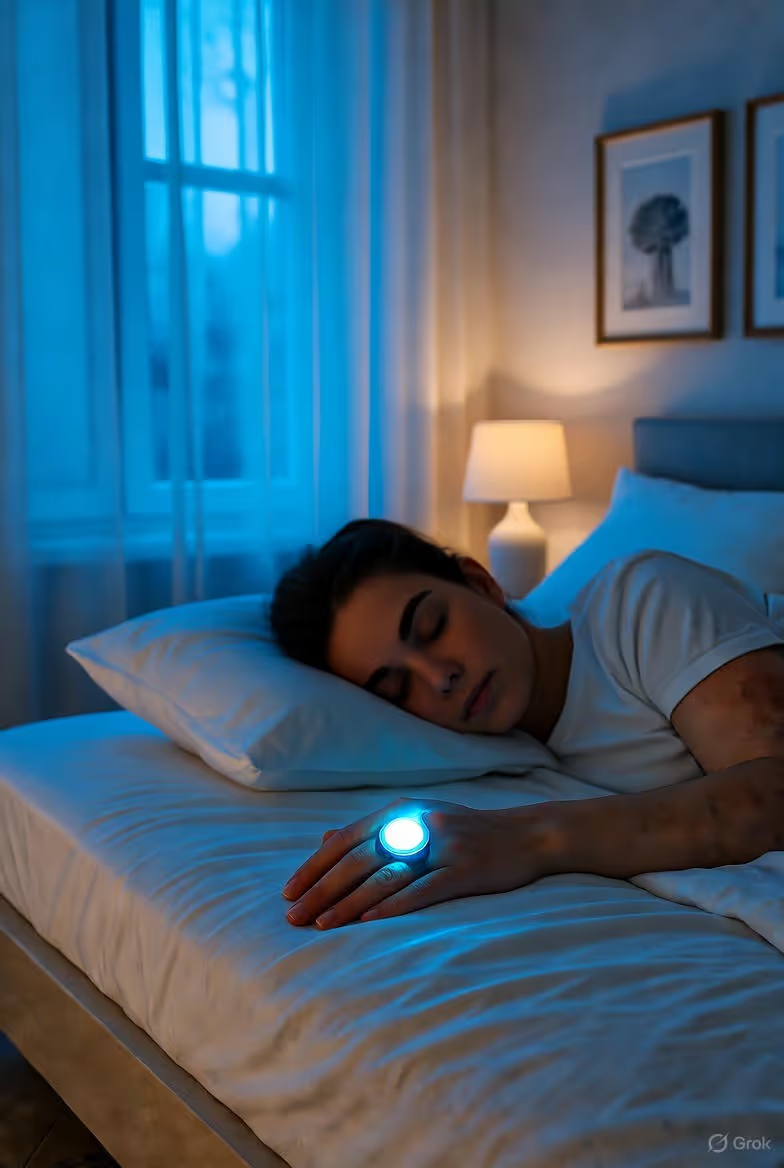
In the age of quantified self, we have unprecedented tools at our fingertips. A modern wellness wearable, like the advanced smart ring from Oxyzen, can provide a continuous stream of physiological data—heart rate variability, skin temperature, blood oxygen, and movement—painting a detailed picture of your sleep stages and disturbances. But data without context is just noise. Journaling provides the narrative. It’s the “why” behind the “what.” By combining the objective metrics from technology with the subjective insights of journaling, you create a powerful feedback loop. You stop chasing an arbitrary sleep score and start cultivating a deeply personal sleep rhythm.
This comprehensive guide is your invitation to begin that journey. We will explore the profound science of sleep individuality, build your personalized journaling toolkit, and decode the complex dialogue between your days and your nights. This is the first step toward moving beyond fatigue and into a life energized by truly understanding—and honoring—your unique need for rest.
The Myth of the 8-Hour Sleep & Embracing Your Chronobiology
We have been culturally hypnotized by the “8-hour rule.” It’s cited in magazine articles, touted by doctors, and serves as a universal benchmark for health. Yet, for many, striving for this golden number creates more anxiety than rest. The truth, illuminated by decades of sleep science, is far more fascinating: there is no universal ideal sleep duration. The landmark research that established 8 hours as a norm was just that—an average. And as with any average, individual data points scatter widely around it.
Your sleep need is as unique as your fingerprint. It is woven from the threads of your genetics, your age, your lifestyle, and your underlying health. The National Sleep Foundation’s guidelines reflect this, offering a range (7-9 hours for adults) rather than a single number. Some individuals, often called “short sleepers,” function brilliantly on 6 hours due to a rare genetic mutation. Others, “long sleepers,” genuinely require 9 or 10 hours to feel optimal. The goal of sleep pattern journaling is not to force yourself into an 8-hour box, but to discover your own biological truth.
This individuality extends far beyond simple duration into the realm of chronobiology—the science of our internal timekeeping. At the core of this system is your chronotype: your innate predisposition to be a morning person (lark), an evening person (owl), or somewhere in between (hummingbird). Your chronotype dictates your natural peaks of alertness, your ideal times for concentration, and crucially, your body’s preferred window for sleep.
Larks (Morning Types): Wake easily, are most productive before noon, and often feel drowsy early in the evening.
Owls (Evening Types): Struggle with early mornings, hit their stride in the late afternoon or evening, and naturally prefer later bedtimes.
Hummingbirds (Intermediate Types): The most common, falling somewhere in the middle with flexible but still personal preferences.
Society, with its 9-to-5 structure, is notoriously biased toward larks. Owls forced into an early schedule often suffer from social jetlag, a chronic misalignment between their social clock and biological clock that carries the same health risks as frequent travel across time zones: increased risk for metabolic disorders, cardiovascular disease, and mood imbalances.
This is where journaling becomes revolutionary. By tracking not just how long you sleep, but when you naturally fall asleep and wake without an alarm (even on weekends), you can identify your chronotype. This isn’t about labeling yourself, but about granting yourself permission to collaborate with your biology, not fight it. As you begin this process, you’ll find that the insights you gather can be powerfully augmented by the objective data from a dedicated wellness tracker. For a deeper exploration of how technology can illuminate your personal rhythms, our blog features several case studies and guides on interpreting biometric data for sleep optimization.
Understanding that your ideal sleep is a personal signature, not a standard prescription, is the liberating first principle of sleep mastery. It shifts the question from “Am I getting enough sleep?” to “What does my best sleep look and feel like?” With this foundation, we can begin to build the toolkit to answer that question.
Building Your Sleep Journaling Toolkit: Analog vs. Digital
To embark on your journey of sleep discovery, you need a reliable method of record-keeping. The good news is that your toolkit can be as simple or as sophisticated as you wish. The most important factor is consistency and ease of use. Let’s explore the two primary avenues: the tactile, reflective world of analog journaling and the integrated, data-rich realm of digital tracking.
The Art of Analog Journaling
For many, the physical act of writing is a therapeutic ritual that enhances mindfulness and memory. An analog sleep journal can be a dedicated notebook, a section of your existing planner, or even a beautifully designed template you print and fill out.
Key Elements to Record:
Evening Context (The Inputs):
Time you got into bed vs. time you attempted to sleep.
Pre-sleep routine: What did you do in the 60-90 minutes before bed? (e.g., read a novel, scrolled social media, had a warm bath, argued with a partner).
Final food/drink: What and when was your last meal or snack? What about caffeine or alcohol?
Mind & Mood: A few words on your emotional state—stressed, calm, anxious, happy.
The power of analog journaling lies in its simplicity and the cognitive processing that occurs when you handwrite observations. It encourages qualitative, nuanced reflection that pure data can miss.
The Power of Digital Integration
Digital tools bring automation, precision, and the ability to spot long-term trends with ease. This can range from dedicated sleep journaling apps to the comprehensive data ecosystem provided by a smart wellness ring.
The Gold Standard: Combining a Smart Ring with Journaling. A device like the Oxyzen ring operates silently in the background, collecting objective physiological data all night long. It measures:
Sleep Stages: Precise timing of light, deep, and REM sleep cycles.
Restlessness: How often you tossed and turned.
Heart Rate & HRV: Your resting nighttime heart rate and Heart Rate Variability, a key marker of nervous system recovery.
Skin Temperature & Blood Oxygen (SpO2): Critical indicators of sleep quality and potential disturbances.
The magic happens when you layer your subjective journal notes on top of this objective data. For example, your journal might note: “Had three glasses of wine at dinner.” Your Oxyzen data that night might show: “Elevated resting heart rate, suppressed deep sleep, and 12 awakenings.” This creates an irrefutable, personal cause-and-effect lesson no generic article could provide.
Choosing Your Path
Start where you are. If you’re new to self-tracking, a simple notebook for two weeks can yield profound insights. If you’re ready for a deeper, data-driven exploration, a tool that provides continuous biometric feedback is invaluable. Many find that a hybrid approach—using a device for automatic data collection and a brief morning journal entry for context—is the most sustainable and enlightening. Remember, the goal is to build a habit of awareness. To understand the philosophy behind creating technology that facilitates this kind of integrated self-discovery, you can learn more about our mission at Oxyzen.
Whether you choose pen and paper or sensors and apps, your toolkit is now ready. In the next section, we’ll dive into the critical practice that bookends your day and sets the stage for everything you will record: your pre-sleep ritual.
The Foundational Practice: Crafting Your Pre-Sleep Ritual
Your journey into sleep doesn’t begin when you close your eyes. It begins hours earlier, as your body and mind start their gradual wind-down from the high-alert state of day into the restorative state of night. Think of your pre-sleep ritual not as a rigid checklist, but as a “soft landing” protocol for your nervous system. This ritual is the single most important variable within your control, and it forms the cornerstone of your sleep journaling observations.
The science behind this is rooted in our circadian rhythm and the sleep-wake homeostasis drive. As evening approaches, diminishing light should cue your pineal gland to secrete melatonin, the “hormone of darkness,” which lowers body temperature and promotes drowsiness. However, modern life—with its artificial light, late-night stimulation, and constant connectivity—brutally hijacks this ancient process. Your ritual is your deliberate effort to reclaim it.
The Pillars of an Effective Wind-Down Ritual
A powerful ritual addresses four key domains: Light, Mind, Body, and Environment.
1. The Light Dimmer Switch (The 60-Minute Signal):
Action: Dim overhead lights 60 minutes before bed. Use lamps with warm-toned bulbs.
Tech Hygiene: Implement a strict “digital sunset.” This means no phones, tablets, or laptops. The blue light emitted suppresses melatonin production by up to 50%. If you must use a device, enable a “night shift” filter at maximum strength and keep it brief.
Journaling Link: In your evening log, note your final screen time. Experiment by shifting it 15 minutes earlier each night and observe the effect on your “time to fall asleep” metric.
2. The Mind Decelerator (From Racing to Resting):
Action: Replace consumption with calm. Swap news, social media, and intense TV for gentle activities that don’t involve problem-solving.
Ideas: Read a physical book (fiction is ideal), listen to calming music or a sleep story, practice gentle gratitude journaling (writing 3 things you’re grateful for from the day), or engage in a low-stakes craft like knitting.
Storytelling: Consider Mark, a project manager who journaled that his mind raced with to-do lists at bedtime. He replaced his late-night email check with 20 minutes of reading a historical novel. In his journal, he noted: “Less anxiety about tomorrow. Fell asleep about 10 min faster. Dreams were less stressful.” His objective data from his Oxyzen ring likely showed a lower pre-sleep heart rate and more consolidated deep sleep.
3. The Body’s Transition (Physiological Downshift):
Action: Use your body to tell your brain it’s time to rest.
The Temperature Drop: A warm bath or shower 90 minutes before bed is not a myth. As you exit the warm water, your blood vessels dilate to release heat, causing a rapid drop in core body temperature—a key sleep signal. Your smart ring can track this skin temperature trend, giving you direct feedback.
Gentle Movement: 5-10 minutes of restorative yoga, light stretching, or diaphragmatic breathing activates the parasympathetic (“rest and digest”) nervous system.
Journaling Link: Record which body-calming practice you tried and rate your physical tension level (1-10) before and after.
4. The Environment Architect (Crafting Your Sleep Sanctuary):
Action: Optimize your bedroom for sleep only. This strengthens the mental association between the space and rest.
The Non-Negotiables: Cool (65-68°F is ideal), dark (blackout curtains or a quality sleep mask), and quiet (white noise machine or earplugs if needed).
Journaling Link: Make a one-time audit of your room in your journal, then note any changes you make. Did adding a fan for noise and coolness help? Did a crack of light from the hallway disturb you?
Your pre-sleep ritual is your first major data point. By journaling what you did, you create a reference library of what works for you. Did the warm bath plus reading result in a higher subjective sleep quality score? Did scrolling in bed correlate with a lower HRV reading in the morning? This ritual is the experiment, and your journal is the lab notebook. As you refine this practice, you’ll naturally generate questions about the specific data you’re seeing, which is where a comprehensive FAQ resource can be incredibly helpful for understanding the metrics behind your experience.
The Morning Revelation: Interpreting Your Wake-Up Data
You’ve crafted a mindful evening and recorded your observations. Now, you open your eyes to a new day. This moment—the first 10 to 15 minutes of consciousness—is a critical data collection window. How you feel upon waking is a rich, direct report from your body on the quality of the restoration it just completed. Learning to interpret this “Morning Revelation” turns a groggy blur into a insightful diagnosis.
Forget the simplistic notion of “waking up tired.” We must dissect that feeling with the precision of a sommelier tasting wine. Your morning state is a composite of several factors, each telling a different part of the story.
Decoding Your Subjective Wake-Up State
Begin by asking yourself specific questions and logging the answers in your journal before you even check your phone.
1. Alertness vs. Sleep Inertia:
The Feeling: Do you feel clear-headed and ready to move, or is there a heavy, foggy “sleep drunkenness” clinging to you?
The Data Link: Pronounced sleep inertia often follows being awakened abruptly from deep sleep (by an alarm) or having a fragmented sleep architecture with many micro-awakenings. Your objective data will show if your alarm ripped you out of a deep sleep phase.
2. Physical Sensations:
The Body Scan: Do you have a dry mouth or headache (potential signs of mouth breathing or dehydration)? Any aches or stiffness (mattress or posture related)? Is your body feeling refreshed or deeply fatigued?
The Data Link: Persistent morning headaches or dry mouth could correlate with low blood oxygen (SpO2) dips recorded by a smart ring, pointing toward potential sleep-disordered breathing like mild apnea or UARS (Upper Airway Resistance Syndrome).
3. Emotional Tone:
The Mood Check: Is your baseline mood anxious, neutral, or positive? Do you feel a sense of dread about the day, or quiet readiness?
The Data Link: Waking anxiety can be a direct result of high cortisol levels at the wrong time (it should be low at night, rising in the early morning). It can also reflect poor sleep quality, particularly a lack of restorative deep sleep, which is crucial for emotional regulation.
4. Dream Recall:
The Narrative: Can you remember any dreams? Were they vivid, stressful, or mundane?
The Data Link: Vivid dream recall usually means you woke from or near a REM sleep cycle. Stressful dreams can be a reflection of daytime stress processed during REM, or sometimes linked to late-night eating or alcohol, which can disrupt and intensify REM sleep.
The Power of the "No-Alarm" Weekend Test
The single most revealing journaling exercise you can do is to track your natural sleep pattern on days without obligations. Go to bed when you feel naturally tired (not when you think you should). Do not set an alarm. Record:
The time you naturally wake up.
How many hours of sleep that amounted to.
How you felt upon that natural awakening.
Doing this for several weekends can clearly reveal your true chronotype-driven sleep need and your body’s preferred sleep window. You may discover you naturally sleep 8.5 hours, not 7.5. Or that you fall asleep at 11:30 PM and wake at 7:45 AM, not the 10:30 PM to 6:30 AM schedule you’ve been forcing.
Integrating Objective Morning Data
If you’re using a device like the Oxyzen ring, your morning revelation now has a powerful partner: your sleep report. Compare your subjective feelings with the objective metrics:
Feeling unrestored? Check your deep sleep and REM sleep percentages. Were they low or fragmented?
Waking with a high heart rate? Note your nighttime resting heart rate (RHR) and HRV. A higher-than-baseline RHR and lower HRV indicate your body was under stress (physical, immune, or psychological) during the night.
Feeling hot and restless? Review your skin temperature trend. Did it stay elevated, preventing a proper core temperature drop?
This feedback loop is transformative. It moves you from vague frustration (“I slept badly”) to precise understanding (“My deep sleep was low because my room was too warm and I had a late, heavy meal, which my elevated RHR confirms”). It’s this level of personal insight that allows for truly targeted interventions. Reading about real user experiences with this integration can provide motivation and relatable context as you begin your own analysis.
Beyond the Night: Tracking Daytime Factors That Steal Your Sleep
We often compartmentalize sleep as something that happens in the dark, separate from the bright chaos of our day. This is a fundamental error. Your sleep is not an isolated event; it is the final digest of your entire waking experience. The food you ate, the stress you managed, the light you saw, and the movement you did (or didn’t do) are all inputs that your brain and body process during the night. Sleep pattern journaling must, therefore, extend its gaze into the daylight hours to uncover the hidden saboteurs of your rest.
The Culprit Archive: What to Log During the Day
Create a simple section in your journal or app for daytime notes. Focus on these powerful levers:
1. The Caffeine & Alcohol Timeline:
The Science: Caffeine has a half-life of 5-6 hours. That 3 PM coffee means 50% is still circulating in your system at 8 PM, antagonizing adenosine (the sleep-pressure chemical). Alcohol is a sedative that fragments sleep architecture, brutally suppressing crucial REM sleep in the second half of the night.
Journaling Practice: Log the time and approximate amount of every caffeinated drink and alcoholic beverage. In your morning entry, look for patterns. Does a 4 PM latte correlate with a longer “time to fall asleep” note? Does two glasses of wine link to a journal note of “restless, vivid dreams” and objective data showing a spike in awakenings after 3 AM?
2. The Stress & Energy Ledger:
The Science: Unmanaged daytime stress leads to elevated cortisol. If cortisol is still high in the evening, it blocks melatonin release and prevents the nervous system downshift into sleep. Conversely, positive energy expenditure (productive work, exercise, joy) uses stress hormones appropriately and promotes a stronger sleep drive.
Journaling Practice: Rate your day’s overall stress on a 1-10 scale. Briefly note peak stress moments. Also, log a 1-10 score for your physical energy expenditure. The goal is to spot imbalances: a day of high mental stress but zero physical movement is a classic recipe for “tired but wired” insomnia.
3. The Food & Hydration Log (Especially Evening):
The Science: A large, high-fat, or spicy meal too close to bedtime forces your digestive system to work overnight, raising core temperature and potentially causing discomfort. Conversely, going to bed hungry can cause a blood sugar drop that wakes you up.
Journaling Practice: Note your dinner time and its general composition (e.g., “large, spicy curry at 8:30 PM” or “light salad with salmon at 6 PM”). Also, track your water intake, noting if you had to wake to use the bathroom.
4. Light Exposure & Movement:
The Science: Bright morning light is the most powerful signal to anchor your circadian rhythm. A 20-minute morning walk tells your brain “day has begun,” setting the countdown for melatonin release ~14 hours later. Conversely, a day spent in dim indoor light provides a weak signal, confusing your internal clock.
Journaling Practice: Simply check off: “Got 20+ mins of outdoor light before noon?” and “Did 20+ mins of moderate exercise?” These yes/no data points become incredibly revealing over time.
Connecting Day to Night: The Art of Pattern Recognition
After two weeks of logging, step back. Look for the threads connecting your days to your nights.
Pattern A: High-stress day + no exercise + late dinner = Journal: “Took over an hour to fall asleep, mind racing.” Data: High sleep latency, low deep sleep.
Pattern B: Balanced day + morning walk + light dinner by 7 PM = Journal: “Fell asleep quickly, woke feeling refreshed.” Data: High sleep efficiency, strong HRV recovery.
This is where you stop being a victim of circumstance and start being an engineer of your own energy. You learn that for you, caffeine after 2 PM is a sleep thief. Or that for you, a 30-minute afternoon walk is a more reliable sleep aid than any supplement. Documenting this journey of discovery, the small wins and the telling failures, is part of the larger story of personal wellness optimization that drives innovation in this field.
Decoding Your Data: From Raw Numbers to Personal Insights
You are now collecting a wealth of information: subjective notes on mood and energy, behavioral logs of food and routine, and, if you’re using one, a stream of objective biometrics from a device like a smart ring. This data river is powerful, but it can also feel overwhelming. The next step in your sleep pattern journaling journey is to become a skilled interpreter—to learn the language of your own body’s signals and translate numbers into actionable knowledge.
This process moves you from “What happened?” to “So what?” and finally to “Now what?”
Understanding the Key Biometric Players
Let’s demystify the core metrics you’re likely encountering and what they whisper about your night.
1. Heart Rate Variability (HRV): Your Recovery Score
What it is: The subtle variation in time between each heartbeat. It’s controlled by your autonomic nervous system.
What it tells you: A higher HRV (relative to your personal baseline) indicates a strong, adaptable “rest and digest” (parasympathetic) state—you are recovered and resilient. A lower HRV suggests your body is under stress (physical, psychological, or immune) and is in a “fight or flight” (sympathetic) state, working hard to maintain balance.
Journaling Integration: Did you note a high-stress day or a intense workout? A temporarily lower HRV that night is expected. But if you see a sustained drop in HRV alongside journal entries like “feeling run down” or “coming down with something,” it’s a powerful early warning to prioritize rest.
2. Resting Heart Rate (RHR): Your Engine at Idle
What it is: Your heart’s beats per minute during true rest, typically the lowest average during sleep.
What it tells you: A lower RHR generally indicates better cardiovascular fitness and efficient autonomic function. Your nighttime RHR should be noticeably lower than your daytime average. A spike in your nightly RHR is a red flag. It can signal illness, dehydration, excessive alcohol, intense late-day exercise, or high psychological stress.
Journaling Integration: Cross-reference an RHR spike with your evening log. “Ate a giant pizza at 9 PM” + “had a fight with my sibling” + “RHR up 8 bpm” creates a clear picture of physiological strain.
3. Sleep Stages (Light, Deep, REM): The Architecture of Restoration
What they are: Your sleep cycles through these stages roughly every 90 minutes. Deep sleep is for physical repair and immune function. REM sleep is for memory consolidation, learning, and emotional processing.
What they tell you: It’s about balance and timing. You need adequate amounts of both, but deep sleep dominates the first half of the night, REM the second half.
Journaling Integration:
Low Deep Sleep: Do you wake up feeling physically unrefreshed, with body aches? Check your journal for evening alcohol, a hot sleep environment, or pain.
Low REM Sleep: Do you struggle with memory, learning, or feel emotionally fragile? Check your journal for antidepressant use (some suppress REM), very early wake-up times (cutting off REM-rich late sleep), or alcohol consumption.
4. Skin Temperature & Blood Oxygen (SpO2): The Environmental Sensors
Skin Temp: A steady decline at night is ideal. A flat or elevated line can mean your room is too warm.
SpO2: Should remain stable at 95% or above. Frequent, significant dips could indicate sleep apnea or other breathing disturbances, especially if paired with journal notes of snoring, gasping, or morning headaches.
The Weekly Review: Your Pattern Detection Ritual
Set aside 20 minutes once a week. Lay out your journal entries and your weekly data summary (all good wellness apps provide this).
Look for your best night. What was the highest Sleep Score or the day you felt most refreshed? What were the common denominators in the 24 hours leading up to it? (e.g., Morning walk, light dinner, 60-min no-screen time, etc.).
Look for your worst night. What were the unifying factors? (e.g., Late caffeine, stressful work deadline, ate after 9 PM).
Spot the trends. Is your average sleep duration increasing as you refine your ritual? Is your HRV baseline slowly climbing, indicating better resilience?
This review turns data into wisdom. It reveals your personal non-negotiables and your unique vulnerabilities. For many, seeing this objective correlation is the final, convincing push to make lasting change. As one user shared in their testimonial for Oxyzen, “Seeing the direct line on my graph between a glass of wine and a plummet in my deep sleep was the moment I really understood its effect on me. No article could have done that.”
Identifying Your Personal Sleep Saboteurs & Triggers
Armed with your decoded data and journal reflections, you now move from observation to diagnosis. This is the detective phase of sleep pattern journaling, where you systematically identify the unique factors that disrupt your sleep. These are your Sleep Saboteurs (consistent negative influencers) and your Sleep Triggers (specific actions that reliably lead to better rest). This knowledge is pure power—it allows you to craft a truly personalized sleep protocol.
Common Saboteur Archetypes
While personal, many saboteurs fall into recognizable categories. Use this list as a checklist against your journal data.
1. The Chemical Saboteur:
Manifests As: Long sleep latency (time to fall asleep), frequent mid-night awakenings, low deep sleep, low REM sleep (especially with alcohol), elevated RHR.
Journal Check: Look for entries with caffeine after 2 PM, alcohol within 3 hours of bed, heavy or spicy meals late, certain medications (check side effects), or even hidden sugars.
Journal Check: Note room temperature, humidity, light leaks, noise disturbances (partner’s snoring, traffic), or an uncomfortable mattress/pillow. Your biometrics will often objectively confirm what you subjectively note.
3. The Psychological Saboteur:
Manifests As: Racing mind at bedtime, high sleep latency, anxious awakenings, stressful dreams, low HRV.
Journal Check: This is where your daytime stress log and evening mood entry are crucial. Look for patterns linking difficult workdays, unresolved arguments, financial worry, or next-day anxiety to poor sleep metrics.
Journal Check: Inconsistent bedtime/waketime, long naps (>30 min) after 3 PM, using the bed for work/entertainment, screen use in bed, lack of a wind-down ritual.
Journal Check: Notes on allergies, pain, pregnancy, menopause symptoms, or frequent nocturia (nighttime urination). This category often benefits most from correlation with objective biometrics like SpO2 and movement.
The Process of Elimination Experiment
Once you suspect a saboteur, design a two-week experiment to test it.
Hypothesis: “I suspect my 7 PM espresso is disrupting my deep sleep.”
Experiment: For one week, eliminate espresso after 4 PM. Substitute with decaf or herbal tea.
Control: Keep all other habits (dinner time, exercise, ritual) as consistent as possible.
Measure: Compare the average “Deep Sleep %” and “Sleep Latency” from the experimental week to the prior week. Check your journal’s “time to fall asleep” notes.
Conclusion: Did the metrics and feelings improve? If yes, you’ve identified a true personal saboteur and have a solution.
Discovering Your Positive Sleep Triggers
The flip side is just as important. What consistently leads to your best nights?
Was it the 20-minute afternoon walk? (Look for higher sleep scores on those days).
Was it the 10-minute gratitude journaling before bed? (Look for lower pre-sleep heart rate notes).
Was it eating dinner before 7 PM? (Look for lower RHR and higher HRV on those nights).
These triggers become the pillars of your personalized sleep hygiene. They are not generic advice; they are your verified bio-hacks. This empirical, self-led research is the core of modern wellness. It’s the philosophy that drives us at Oxyzen—providing you with the precise tools to discover your own unique path to better health, one night of data at a time.
The 2-Week Sleep Pattern Journaling Challenge: A Step-by-Step Guide
Theory and understanding are essential, but transformation happens through practice. It’s time to put everything you’ve learned into a structured, manageable framework. This 14-day challenge is designed to help you build the journaling habit, collect meaningful data, and produce clear, actionable insights about your sleep. Think of it as a focused research project where you are both the scientist and the subject.
Preparation (Days -2 to 0): Set Up for Success
Choose Your Tools: Decide on your primary method (notebook, app, or smart ring + notebook). Have it ready by your bedside.
Create Your Template: In your notebook or note-taking app, create a simple template with two sections: Evening and Morning. List the key prompts you want to hit (see Section 3 for reminders).
Set Your Intention: Write down one primary goal for this challenge. Examples: “Identify what’s causing my 3 AM awakenings,” or “Find my natural wake-up time,” or “Increase my feeling of refreshment upon waking.”
The Challenge Execution (Days 1-14)
Daily Core Routine:
Each Evening (5 min): Complete your wind-down ritual mindfully. Then, fill in your Evening Journal section before you try to sleep.
Each Morning (5 min): Upon waking, before checking your phone, do a quick body and mind scan. Fill in your Morning Journal section. If using a biometric device, check your sleep score and note any standout metrics (e.g., “HRV surprisingly low,” “Got a lot of REM”).
Weekly Focus Themes: To avoid overwhelm, we’ll layer in focus areas.
Week 1 Focus: Consistency & Baseline. Your goal this week is purely to build the habit and establish your baseline. Don’t try to change anything yet. Just observe and record faithfully. Go to bed and wake up at roughly the same time (± 30 min) even on weekends. This stabilizes your circadian rhythm for clearer data.
Week 2 Focus: The Experiment. Based on your initial observations from Week 1, choose ONE suspected saboteur to test.
If your Week 1 journal showed late caffeine: Eliminate caffeine after 2 PM all Week 2.
If it showed high stress: Implement a 10-minute breathing meditation before bed each night of Week 2.
If it showed a warm room: Make a point to cool your bedroom to 65-68°F every night of Week 2.
The Grand Review: Your Insight Synthesis (Day 15)
This is the most important step. Block 60 minutes after the challenge ends.
Quantitative Data Review: If you have biometric data, look at your two-week overview. What was your average sleep duration? Average HRV? What were your best and worst nights (by score)?
Qualitative Journal Review: Read through all 14 morning entries. Highlight recurring words: “groggy,” “refreshed,” “anxious,” “restless.” Do you see a pattern linked to days of the week or specific activities?
Connect the Dots: Place your best night (by feel and data) and your worst night side-by-side. Write down every single difference in the 24 hours preceding each, from your journal. This contrast will be incredibly illuminating.
Draw Your Conclusions: Answer these questions:
What is my most reliable sleep saboteur?
What is my most powerful sleep trigger?
What is my natural bedtime and wake-up time when allowed?
What is one non-negotiable change I will make moving forward?
The outcome of this challenge is not a perfect sleep score, but clarity. You will have moved from confusion to understanding. You will have a short, personalized list of what to avoid and what to embrace. This is the foundational knowledge upon which you will build a lifetime of better sleep. For many, this journey sparks a deeper curiosity about holistic wellness, leading them to explore our blog for more research and strategies on topics like stress management, circadian lighting, and nutritional neuroscience.
From Journaling to Action: Building Your Personalized Sleep Protocol
You’ve completed the detective work. You’ve identified your saboteurs and triggers through careful journaling and observation. Now, we move from insight to implementation. This is where you stop experimenting and start building—constructing a sustainable, personalized sleep protocol that aligns with your unique biology and life. This is not a rigid set of rules, but a flexible framework you own and can adjust as your life changes.
Your protocol is built on three tiers: Non-Negotiables, Flexible Routines, and Troubleshooting Scripts.
Tier 1: The Non-Negotiables (Your Foundation)
These are the 2-3 core actions derived directly from your journaling insights that have the greatest impact on your sleep. They are non-negotiable because when you skip them, your data and feelings consistently suffer.
Example from Your Data: “On 12 out of 14 journal days, caffeine after 3 PM resulted in a ‘tossed and turned’ note and a sleep latency over 30 minutes.”
Your Non-Negotiable Rule: No caffeine after 2 PM. This is now a pillar of your protocol.
Example from Your Data: “Every night I logged ‘cool, dark room,’ my deep sleep percentage was above average and my morning ‘refreshment score’ was 8/10 or higher.”
Your Non-Negotiable Rule: Bedroom environment must be 67°F and pitch black. The fan and blackout curtains are always used.
These are not suggestions; they are the foundation of your sleep hygiene, as essential as brushing your teeth.
Tier 2: The Flexible Routines (Your Structure)
This is your ideal, daily wind-down and wake-up routine, built from your positive triggers. Life isn’t perfect, so this routine has built-in flexibility.
The Ideal Evening (Target): Finish dinner by 7 PM → 9:30 PM: Begin 60-min no-screen wind-down (read, gentle chores, time with family) → 10:15 PM: Warm shower → 10:30 PM: In bed, lights out.
The Flexible Reality: “If I have a work event and eat at 8 PM, I will still protect my 30-minute no-screen buffer before bed and still take a warm shower. I will accept that my sleep might be slightly less deep, but the core ritual holds.”
The Ideal Morning (Target): Wake at 6:30 AM (no snooze) → 5 mins of mindful breathing/journaling in bed → Get sunlight within 30 minutes.
The Flexible Reality: “If I have to wake at 5:30 AM for a flight, I will still avoid my phone for the first 5 minutes and will seek sunlight as soon as I am able.”
The structure provides guidance; the flexibility prevents all-or-nothing thinking that leads to abandoning the protocol entirely.
Tier 3: The Troubleshooting Scripts (Your Emergency Tools)
Even with the best protocol, you will have bad nights. Your journal has likely revealed your personal failure modes. Pre-write a script for each.
Script for “Mind Racing at Bedtime”:
Acknowledge: “My journal shows this happens when I’m stressed about work.”
Action: Get out of bed. Go to a chair. Write down every racing thought in a “brain dump” list for 10 minutes. Tell yourself, “It’s on paper, I can deal with it tomorrow.”
Return to bed and focus on the physical sensation of breathing.
Script for “Wide Awake at 3 AM”:
Acknowledge: “My data shows this often follows alcohol or late sugar.”
Action: Do not check the clock. Practice the 4-7-8 breathing technique (inhale 4, hold 7, exhale 8) for 5 cycles. If still awake after 20 minutes, get up, go to dim light, and read a boring book until drowsy.
Having these scripts ready removes panic and gives you a sense of control, which in itself reduces the anxiety that perpetuates insomnia.
The Living Document: Your Protocol Evolves
Your sleep protocol is a living document. Every 3-6 months, or after a major life change (new job, baby, menopause), revisit your journal. Do a mini one-week tracking sprint. Your needs will change. Your 30-year-old protocol may not suit you at 40. The goal is perpetual self-awareness and adaptation.
This commitment to personalized, data-informed action is at the heart of modern preventative health. It represents a shift from passive patient to empowered self-advocate. It’s a journey we are deeply passionate about supporting, from the technology we build to the resources we provide, all detailed in our story of creating tools for personalized wellness.
The Long-Term Game: How Sleep Journaling Transforms Overall Health
Up to this point, we’ve focused on sleep as the destination. But the true, breathtaking power of sleep pattern journaling is that sleep is not the end—it’s the foundation. The insights you gain and the restorative sleep you cultivate create a positive ripple effect that touches every facet of your physical, mental, and emotional health. This is the long-term game: using your sleep as a lever to elevate your entire life.
The Metabolic Mirror: Sleep, Diet, and Weight Management
Your journal has already hinted at the connection between late meals and poor sleep. This is a two-way street. Poor sleep disrupts the hormones that regulate hunger: ghrelin (the “hunger hormone”) increases, while leptin (the “satiety hormone”) decreases. This biologically drives you toward calorie-dense, high-carb foods.
The Journaling Insight: You may notice that after a night of poor sleep (logged as “restless, low deep sleep”), your morning journal entry says, “Craving pancakes and sugar.” This isn’t a lack of willpower; it’s endocrinology.
The Transformation: By using your protocol to stabilize your sleep, you stabilize these hormones. Your food logs in your journal will begin to reflect more stable energy and fewer intense cravings. Better sleep begets better dietary choices, which in turn beget better sleep—a virtuous cycle.
The Emotional Regulator: Sleep and Mental Resilience
REM sleep is essentially overnight therapy. It’s when your brain processes emotional experiences, stripping away the sharp, reactive edges from memories while retaining the lessons.
The Journaling Insight: In periods of high stress, your journal might show “fragmented sleep” and your data shows suppressed REM. Your morning entries may consistently note “irritable,” “anxious,” or “overwhelmed.” You are literally waking up with unprocessed emotional baggage.
The Transformation: As your protocol improves sleep continuity and REM sleep, you give your brain the time it needs to do this essential work. Over weeks and months, your morning mood entries will trend toward “calm,” “ready,” or “balanced” even in the face of daytime stressors. You’re not avoiding stress; you’re enhancing your capacity to recover from it.
The Cognitive Enhancer: Sleep, Memory, and Creativity
Deep sleep is crucial for memory consolidation—moving facts and skills from the short-term hippocampal storage to the long-term cortical storage. It’s also during the twilight states of sleep that the brain makes novel connections, sparking creativity.
The Journaling Insight: When learning a new skill (a language, an instrument, a software) or during intense study periods, you might journal “dreamt about the project” or your data shows increased REM. Conversely, sleep deprivation will show up as “brain fog” and “forgetfulness” in your logs.
The Transformation: By honoring your sleep need, you are directly investing in your cognitive capital. You’ll notice improved focus, faster learning, and more “aha!” moments. Your sleep becomes a strategic tool for professional and personal growth.
The Immune System’s Best Friend
This is perhaps the most profound connection. Deep sleep is when your body produces cytokines, proteins that target infection and inflammation. It’s also when critical immune memory is formed.
The Journaling Insight: Before you ever feel full-blown symptoms of illness, your biometrics often sound the alarm. A sustained, unexplained dip in HRV and a rise in Resting Heart Rate are classic early warnings. Your journal might note, “Feeling run down” days before a cold hits.
The Transformation: Your sleep journal and data become an early warning system. Seeing these signs allows you to proactively prioritize rest, hydration, and nutrition, potentially heading off illness. In the long term, consistent, high-quality sleep is one of the most powerful preventative medicines for chronic inflammation and disease.
By committing to sleep pattern journaling, you are doing far more than improving your nights. You are optimizing your metabolism, fortifying your mental health, upgrading your brain, and strengthening your body’s defenses. It is the ultimate act of holistic self-care. This interconnected view of wellness is why we believe so deeply in providing a tool that offers more than just step counts—it offers a window into your body’s fundamental recovery processes. The journey you’ve begun by reading this is the first step toward a more integrated, healthier, and more vibrant life.
The Art of Consistency: Making Sleep Journaling a Sustainable Habit
You’ve completed the two-week challenge. You’ve felt the “aha!” moments of connecting your late dinner to a restless night, or your morning walk to a higher sleep score. The insights are fresh, the motivation is high. But now, the real work begins: the art of weaving this practice seamlessly into the fabric of your life, not as a demanding chore, but as a nurturing, sustainable habit. The long-term power of sleep pattern journaling isn’t found in a burst of diligent tracking; it’s found in the gentle, consistent rhythm of paying attention.
The challenge many face at this stage is habit decay. Life gets busy. The novelty wears off. The initial dramatic improvements plateau. The journal starts gathering dust. Preventing this requires a shift in mindset—from viewing journaling as a diagnostic project to embracing it as an ongoing practice, akin to mindfulness or physical exercise.
The Minimalist Maintenance Mode
After your intensive data-gathering phase, you do not need to maintain the same level of detail forever. The goal is to shift into a “Maintenance Mode” that is lightweight yet meaningful.
The Weekly Check-In: Instead of daily lengthy entries, commit to one thorough journal entry per week—perhaps on a Sunday evening. Reflect on the week’s sleep trends. Review your biometric weekly summary from your device. Ask: “What was my best night this week and why? What was my most challenging night?” This 15-minute weekly ritual keeps you connected to your patterns without daily overhead.
The Exception Journaling Rule: The most important time to journal is when things are off. Made a poor choice? Had a terrible night? Feeling incredible? Journal the exception. When you deviate from your protocol (a late night out, a period of high stress) or when you experience an unexplained great or poor night, jot down the context. These exceptions provide the richest data for refining your understanding over months and years.
The Seasonal Audit: Our bodies are not static. They change with seasons, life stages, and stress cycles. Four times a year, commit to a “One-Week Intensive Sprint.” Go back to full daily journaling for just seven days. This allows you to adjust your protocol for seasonal shifts (e.g., less daylight in winter, heat in summer), new life circumstances, or simply to check in with your evolving biology.
Habit Stacking & Environmental Design
To make journaling stick, borrow from behavioral science. Don’t rely on willpower; design for consistency.
Habit Stacking: Attach your minimalist journaling to an existing, unshakeable habit. For example:
“After I brush my teeth at night, I will open my journal app and log my pre-sleep rating and one sentence about my day.”
“After I pour my morning coffee, I will open my sleep data and note my energy level out of 10.” By stacking, you leverage neural pathways that already exist.
Environmental Cues: Place your physical journal and pen prominently on your nightstand, or put the journaling app icon on your phone’s home screen. Make the tool impossible to ignore at the right moment. If you use a smart ring, make checking its morning report part of your wake-up ritual. The sight of the device itself is a tactile cue to be mindful of your sleep.
Embracing the Plateau and Listening to Your Body
A common point of abandonment is the plateau. After initial improvements, progress seems to stall. Your sleep score averages 82 and seems stuck there. This is not failure; it’s stability. Your body has found a new, better baseline.
At this stage, the journal’s purpose evolves. It becomes less about “fixing” and more about “listening and honoring.” Your entries might shift from “How can I sleep better?” to:
“Noticed I need 15 minutes more sleep during the week of my menstrual cycle. Honored that by going to bed earlier.”
“Even with a ‘perfect’ protocol, stress from work project lowered my HRV. Focused on daytime stress management instead of tweaking my night routine.”
“Felt naturally tired at 9:30 PM instead of 10:30. Listened to my body and turned in early.”
This is the maturation of the practice: using the data and awareness not to force an arbitrary optimization, but to have a more fluent, responsive dialogue with your body’s needs. It’s about respecting your limits and celebrating your rhythms. For ongoing inspiration on navigating these long-term wellness journeys, our community often shares their stories and adaptations in our blog’s reader forums and case studies.
Navigating Common Sleep Disruptors: A Journal-Powered Troubleshooting Guide
Even with a solid protocol and consistent habit, life will throw curveballs. Travel, stress, illness, and hormonal shifts are inevitable. The seasoned sleep journalist doesn’t fear these disruptors; they use them as opportunities to deepen their self-knowledge. Your journal becomes a field guide for navigating these turbulent times, providing a record of what worked and a reminder that the disruption is temporary.
Let’s map out how to journal through some of the most common sleep disruptors, turning chaos into actionable data.
1. Travel & Jet Lag: The Circadian Shock
Crossing time zones is the ultimate test of your circadian rhythm. Your journal strategy here is twofold: preparation and adaptive logging.
Pre-Travel Journal Prep: Note your home-time sleep schedule. If traveling east, your goal is to shift your cycle earlier. In the days before, try to go to bed and wake 15-30 minutes earlier each day. Log the effect.
The Travel Journal Log: This is crucial. Record:
Flight details: Times, direction of travel.
In-flight behavior: Did you sleep? Use blue-light blocking glasses? Stay hydrated?
Upon arrival: Immediate light exposure (seek bright light if needing to shift forward; avoid if shifting back). Your first local bedtime and wake time.
The Recovery: For each night at your destination, journal your sleep quality and daytime energy. Your biometric data will show your heart rate and HRV struggling to adapt.
The Insight: You’ll learn your personal jet-lag recovery rate. “It takes me one full day per time zone to normalize when flying east.” This allows you to plan important meetings or events with more self-compassion and precision.
2. Stress & Anxiety: The Mental Intruder
When stress is acute (a work deadline, a family crisis), sleep is often the first casualty. Journaling during this time serves a dual purpose: data collection and emotional regulation.
The Stress-Specific Log: Beyond your normal entries, create a dedicated “Stress Impact” section for the duration.
Pre-Bed Mind Dump: Spend 5 minutes writing stream-of-consciousness about everything causing anxiety. This gets it out of your head and onto paper, reducing cognitive arousal.
Sleep Data Correlation: Expect and observe lower HRV, higher RHR, and more fragmented sleep. The goal is not to fix it immediately, but to document the relationship objectively. Seeing the data can, paradoxically, reduce anxiety about the insomnia itself. It validates your experience: “My body is under stress, and this is how it shows up.”
The Insight: You’ll identify your personal stress-sleep signature. Does stress cause early morning awakenings (common) or difficulty falling asleep? This tells you where to focus calming interventions (e.g., morning meditation vs. evening yoga).
3. Illness & Recovery: The Body’s Priority Shift
When you’re fighting a virus or infection, sleep is medicine. Your journal becomes a recovery tracker.
The Pre-Symptom Signal: Often, your biometrics will flag illness before you feel it. A sustained, unexplained dip in HRV paired with a rise in RHR is a classic signature. If you see this, your journal note might be: “Data shows high stress on body. Feeling a bit off. Prioritizing rest.”
The Acute Illness Log: Your entries will be simple. Note symptoms, fever, and medication. Your sleep data will show dramatically increased deep sleep—your body’s imperative to repair. This is a time to observe, not judge. A low sleep score due to restlessness from fever is irrelevant; the deep sleep is the key metric.
The Convalescence Journal: Track your return to baseline. How long does it take for your HRV to recover? Your energy log? This teaches you the true timeline of recovery, encouraging patience. Rushing back to activity before your data normalizes often leads to relapse.
4. Hormonal Fluctuations: The Monthly & Life-Cycle Rhythm
For menstruating individuals, the menstrual cycle is a powerful, predictable sleep modulator. For those in perimenopause or menopause, shifting hormones redefine the sleep landscape.
Cycle Syncing Your Journal: If applicable, note your cycle phase in your journal (Follicular, Ovulatory, Luteal, Menstrual).
Common Pattern: Higher body temperature and lower sleep quality in the Luteal phase (after ovulation). You may see slightly elevated nighttime skin temperature and more awakenings in your data. Journal notes might say, “more restless, feel warmer.”
The Insight: This pattern recognition is liberating. Instead of “Why is my sleep terrible this week?” it becomes “My luteal phase is here; my body temperature is up, so I’ll ensure my room is extra cool and be gentle with myself.” You move from frustration to collaboration.
Menopausal Transition: Journaling is essential here to separate aging myths from personal reality. Track hot flashes (they will appear as sharp spikes in skin temperature data), mood, and new sleep patterns. This detailed record is invaluable for discussions with healthcare providers, moving the conversation from “I can’t sleep” to “Here is the data on my sleep disruptions and their correlation with temperature spikes.”
By journaling through the disruptors, you demystify them. They become known variables, not terrifying unknowns. You build resilience and a personal playbook for navigating life’s inevitable upheavals. This level of detailed self-advocacy is a core part of our vision for empowering individuals with their own health data.
The Social Side of Sleep: Journaling for Partners & Families
Sleep is often treated as a solitary pursuit, but for those who share a bed, a room, or a household, it is inescapably a team sport. Conflicting schedules, mismatched chronotypes, snoring, and different temperature preferences can turn the bedroom into a battleground rather than a sanctuary. Sleep pattern journaling, when approached collaboratively, can transform this dynamic. It moves conversations from blame (“Your snoring kept me up!”) to shared problem-solving (“The data shows we both had a rough night; let’s look at our logs to see what happened”).
The Couple’s Sleep Journal: From Conflict to Collaboration
Creating a shared sleep journaling practice—even if just for a two-week “relationship sleep audit”—can be revolutionary.
The Setup: Use a shared digital doc or a notebook with two columns. Each partner tracks their own subjective metrics (sleep quality, energy) and notes on the shared environment.
Key Joint Data Points to Log:
Bedtime & Wake Time Alignment: Are you forced to go to bed or wake up at a time that conflicts with your natural chronotype?
Environmental Negotiations: “Thermostat set to 68°F. Partner A noted ‘perfect,’ Partner B noted ‘a bit cold.’”
Disturbance Logging (Without Blame): “Partner A logged: ‘Woke up at 2 AM to Partner B rustling covers.’ Partner B logged: ‘Felt hot, turned over at 2 AM.’”
Pre-Bed Routines: “Partner A scrolled phone in bed for 20 min. Partner B read a book with bedside lamp.”
The Data-Driven Discussion: After the audit period, review the data together. The focus is on the patterns, not the incidents.
Example Insight: “On nights we watched an intense show right before bed, both our sleep latencies were over 30 minutes and our REM sleep was low. Maybe we switch to calm music or podcasts after 9 PM.”
Solution Brainstorming: If chronotypes conflict (a lark and an owl), the data makes it undeniable. Solutions can include: a later, separate bedtime for the owl using a guest room or a comfortable sofa; the use of a sunrise alarm for the lark that doesn’t blast the owl; or wearing sleep headphones for the partner who stays up later.
The Family-Wide Sleep Audit
For families with children or teenagers, sleep challenges are multiplied. A family sleep week can educate everyone on the importance of sleep hygiene.
Age-Appropriate Journaling: Teens can track their own sleep and mood, perhaps with a smart wearable. Younger children can participate with a simple sticker chart for “time I got into bed” and a smiley/frowny face for “how I felt in the morning.”
Identifying Household-Wide Saboteurs: Is the Wi-Fi router keeping everyone online too late? Is there a noisy appliance or street light affecting multiple rooms? Are weekend schedules so chaotic that everyone suffers from “social jetlag” on Monday?
Creating Family Protocols: Based on the audit, create family agreements. “All screens go to the charging station by 8:30 PM.” “We aim for within one hour of normal bedtime on weekends.” “Sunday nights are for calm family activities.” The shared data makes these rules feel cooperative, not authoritarian.
The Power of Shared Goals and Accountability
When you journal with a partner or family, you create a shared language and a shared goal: “We want our home to be a place of rest for everyone.” You become accountability partners. A gentle, “Hey, the data showed we both sleep better when we don’t eat on the couch after 8 PM. Want to stick to that tonight?” is far more effective than nagging.
This collaborative approach turns a potential source of tension into a bonding experience and a collective wellness project. It underscores that sleep is not selfish; it’s a foundational component of a happy, healthy, and harmonious home life. Hearing how other families and couples have navigated these challenges can provide both solace and practical ideas, a topic we often explore through community stories and testimonials.
Advanced Journaling: Correlating Sleep with Diet, Exercise, and Performance
Once the fundamentals of your sleep patterns are well-understood, your journal can evolve into a sophisticated command center for holistic optimization. This is advanced journaling: moving beyond sleep in isolation to explore its dynamic interplay with the other pillars of health—nutrition, physical activity, and cognitive/athletic performance. By adding a few key data points to your log, you can uncover powerful cross-domain insights that elevate your entire well-being.
The Food-Sleep Feedback Loop
We’ve touched on late meals, but the relationship is more nuanced. Macro-nutrients, meal timing, and even specific foods can have distinct effects.
Advanced Logging: Add a simple note on your day’s dietary composition.
High Carb Day vs. High Protein/Fat Day: Does a higher carbohydrate intake in the evening (which can boost tryptophan and serotonin) correlate with faster sleep onset or more deep sleep for you? Or does it lead to blood sugar spikes and restless awakenings? Your data will tell your truth.
Hydration Tracking: Log your water intake and cut-off time. Does drinking a certain amount after 7 PM correlate with nocturia (bathroom trips) in your journal and increased “awakenings” in your data?
The Food Sensitivity Detective: Note any meals that cause bloating, indigestion, or nasal congestion. Does this subjective note later correlate with lower sleep quality, higher RHR, or more movement? This can be a non-invasive way to identify foods that cause low-grade inflammation, disrupting sleep.
The Exercise-Sleep Equation
Exercise is a potent sleep promoter, but its timing and intensity are highly individual.
Advanced Logging: Don’t just log “exercised.” Log: Type (Cardio/Strength/Yoga), Intensity (RPE 1-10), Duration, and Time of Day.
Uncovering Your Personal Curve: For most, vigorous exercise within 1-2 hours of bedtime can be overly stimulating (elevated core temperature, cortisol). But some individuals are not affected. Your journal will reveal your curve.
Potential Finding: “Evening high-intensity workouts (after 8 PM) consistently show a higher sleep latency and lower HRV for me. Morning or afternoon workouts show higher deep sleep percentages.”
Alternative Finding: “Gentle evening yoga or stretching (at 9 PM) correlates with my lowest sleep latency and highest sleep scores.”
Recovery Validation: On days you log a particularly hard workout, your biometrics should reflect a need for recovery. It’s normal to see a slightly elevated RHR and lower HRV that night. This is your body prioritizing repair. If you don’t see this, it might indicate you weren’t training as hard as you thought. If the depression in HRV lasts for 2-3 days, it may be a sign of overtraining.
Sleep as the Ultimate Performance Enhancer
This is where journaling becomes truly empowering for athletes, students, and professionals. You begin to treat sleep as a strategic input for next-day output.
The Performance Log: Add a small section to your morning entry: “Today’s Key Performance Task” and rate it post-completion.
Examples: “Focus: 90-minute deep work session (Rated 7/10 for focus).” “Physical: Afternoon 5k run (Rated: Felt strong, pace improved).” “Creative: Brainstorming meeting (Rated: Generated 3 solid ideas).”
The Correlation Revelation: After a few weeks, look back.
Do higher REM sleep percentages predict better creative/problem-solving performance?
Do higher deep sleep percentages predict better physical performance and pain tolerance?
Does a higher HRV reading in the morning correlate with better emotional regulation and interpersonal patience during the day?
The Strategic Application: Once you see these links, you can plan your week strategically. Need peak creativity for a Wednesday presentation? Prioritize sleep consistency on Monday and Tuesday to ensure ample REM. Have a Saturday morning long run? Make Friday night’s sleep non-negotiable for deep recovery. This turns sleep from a passive state into an active tool for achieving your goals.
This advanced stage of journaling is the pinnacle of self-knowledge. You are no longer just tracking sleep; you are engineering your days based on your nights. You understand the cost of a poor night’s sleep not just in fatigue, but in lost creativity, weaker workouts, and frayed patience. This profound understanding of the mind-body-performance connection is what drives the development of comprehensive wellness technology, a journey you can read more about in our founding story.
The Future of Sleep Awareness: Wearables, AI, and Personalized Insights
As you stand at the frontier of your own self-knowledge, it’s fascinating to look at the horizon of sleep science and technology. The practice of sleep journaling, which began with pen and paper, is being supercharged by a new generation of tools that promise to make our insights deeper, more precise, and more actionable. The future of sleep awareness lies in the seamless integration of biometric wearables, artificial intelligence, and personalized coaching—all rooted in the same fundamental principle your journal upholds: the individual is the unit of care.
The Evolution from Tracking to Predicting
Current wearables, like advanced smart rings, are exceptional descriptive tools. They tell you what happened: “You had 1.2 hours of deep sleep, your HRV was 42 ms, and you woke up 14 times.”
The next leap is into predictive and prescriptive analytics.
Predictive AI: Algorithms will analyze your long-term data (sleep, activity, journal notes) alongside environmental data (local weather, pollen count, your calendar stress) to predict your sleep quality for the coming night. Your app might alert you: “Based on your high stress log today and your historical data, you’re at high risk for sleep disruption tonight. Consider implementing your 20-minute meditation protocol.”
Prescriptive Personalization: Beyond generic advice (“avoid caffeine”), AI will generate hyper-personalized recommendations. “Your data shows that for you, a 20-minute sauna session at 6 PM, followed by a cool shower, increases your deep sleep by an average of 18%. Your schedule is free tonight. Would you like to plan this?” It moves from a dashboard to a proactive, intelligent sleep coach.
The Integration of Multi-Modal Data
Future sleep awareness won’t rely on a single device. It will synthesize data from a constellation of sensors:
The Smart Ring: For core physiological signals (HRV, RHR, temperature, SpO2).
The Smart Bed or Pad: For detailed sleep posture, respiration effort, and micro-movements.
Environmental Sensors: For real-time room temperature, humidity, light levels, and noise pollution.
The Journal (Voice/Text): Your subjective inputs, perhaps via voice note analyzed for stress tone or via quick text entries, remain the crucial narrative layer.
Your AI sleep coach would see the full picture: “The environmental sensor shows the room spiked to 72°F at 2 AM. Your bed sensor shows you shifted to your back. Your ring shows an SpO2 dip and an awakening. Your morning journal note says ‘woke up gasping.’ This cluster strongly suggests positional sleep apnea. Consider scheduling a chat with a sleep specialist and try a positional therapy device.”
The Democratization of Sleep Medicine
This technology has the potential to democratize sleep health. It can identify red flags (consistent SpO2 dips, erratic heart rhythms during sleep) and encourage early medical intervention. It can provide individuals with data-rich reports to take to their doctors, making clinical conversations more efficient and evidence-based. It turns everyone into an engaged participant in their own sleep health, much like continuous glucose monitors have done for diabetics.
The Unchanging Core: The Human Narrative
Despite these astonishing technological advances, the core principle you’ve mastered through journaling will remain paramount: context is king. An AI can see a spike in cortisol, but only you can journal: “Found out my dog needs surgery tomorrow.” The fear, the love, the worry—that human narrative gives meaning to the data point.
The future is not about replacing the journal with a robot. It’s about giving your journal a superpower: the ability to see patterns in decades of data you couldn’t perceive, to remember every correlation you’ve ever logged, and to offer suggestions based on the most successful versions of you from your own historical data.
This vision of a deeply personalized, technology-augmented, yet human-centric approach to wellness is what excites us about the road ahead. It’s a future where tools like those we develop at Oxyzen don’t just give you numbers, but help you write the story of your own health, with deeper understanding and greater agency every day.
Conclusion of This Portion: Your Journey to Rhythmic Living Begins Now
We have traveled a considerable distance from that first, familiar pang of 3 AM frustration. What began as a quest for better sleep has unfolded into a comprehensive practice of self-observation—a journey into the very rhythms that define your energy, your mood, your health, and your potential.
Sleep pattern journaling is the key that unlocked this door. You have learned that:
Your sleep is uniquely yours, dictated by your chronotype and personal biology, not a generic 8-hour rule.
The marriage of subjective journaling and objective biometric data creates an irrefutable feedback loop, turning vague feelings into precise, actionable insights.
Your sleep is the digest of your day, intimately connected to your food, your movement, your stress, and your environment.
With consistent practice, you can identify your personal saboteurs and triggers, building a protocol that works for your real life.
This practice scales from a solo endeavor to a collaborative tool for partners and families, and evolves into an advanced system for optimizing overall performance.
This first portion of our guide has equipped you with the foundational philosophy, the practical toolkit, and the strategic frameworks to begin—and sustain—this transformative practice. You are no longer a passive passenger on the rollercoaster of fatigue and rest. You are now the cartographer, mapping the landscape of your own restoration. You are the scientist, running elegant n-of-1 experiments. You are the architect, building a sanctuary of sleep tailored to your unique blueprint.
The path forward is one of gentle consistency, curious observation, and self-compassion. There will be perfect nights and terrible nights. The journal will capture them all, not to judge, but to inform. Each entry is a data point in the grand project of you.
Remember, the ultimate goal is not a perfect sleep score, but a life lived in rhythm. It’s waking up with energy to pursue your passions. It’s having the emotional resilience to handle life’s challenges. It’s gifting your body the deep restoration it needs to thrive for decades to come. This journey starts with a single question in a journal: “How did I sleep?” and unfolds into the most important question you can ask yourself: “How do I wish to live?”
We are honored to be a part of your journey toward greater awareness and well-being. As you continue to explore and refine your practice, know that a wealth of resources, community support, and evolving tools are available to support you. For further reading, deeper dives into specific topics, and the latest insights on integrative health, we invite you to continue exploring our blog. Your journey to rhythmic living has begun. Sleep well, and wake up ready to live even better.



%402x.svg)