The Sleep Pattern Revolution: Flexible Work and Better Rest
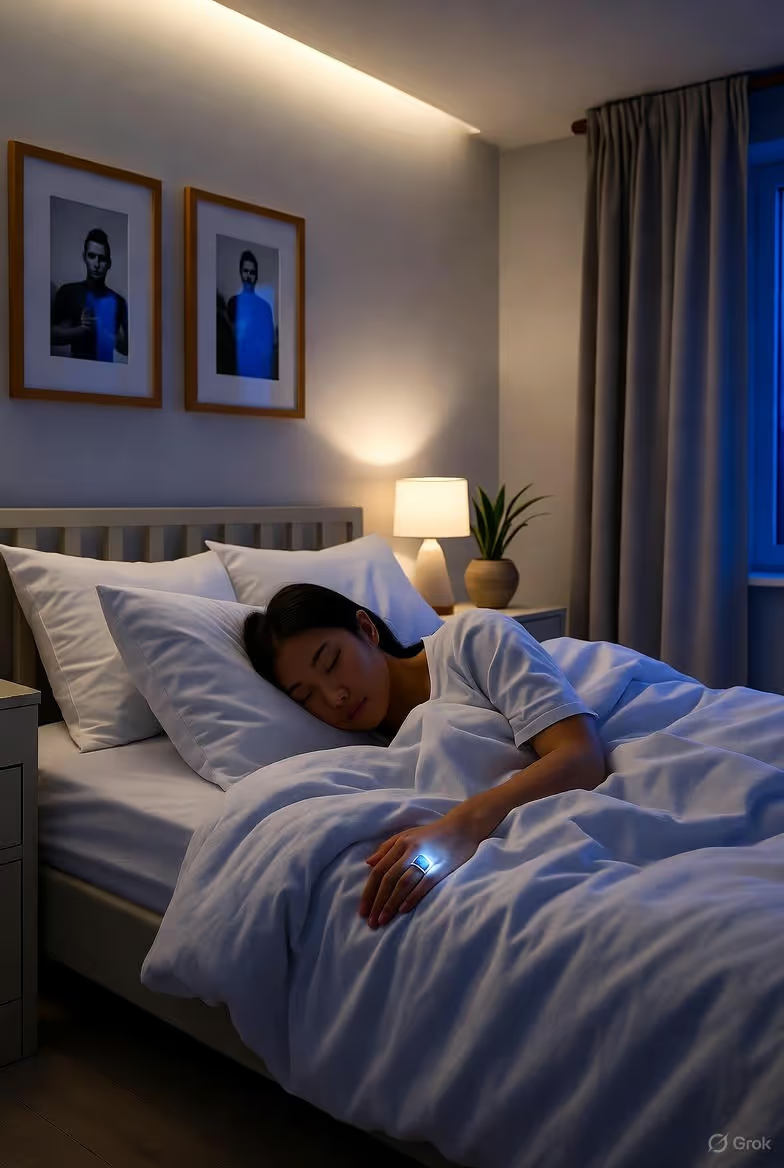
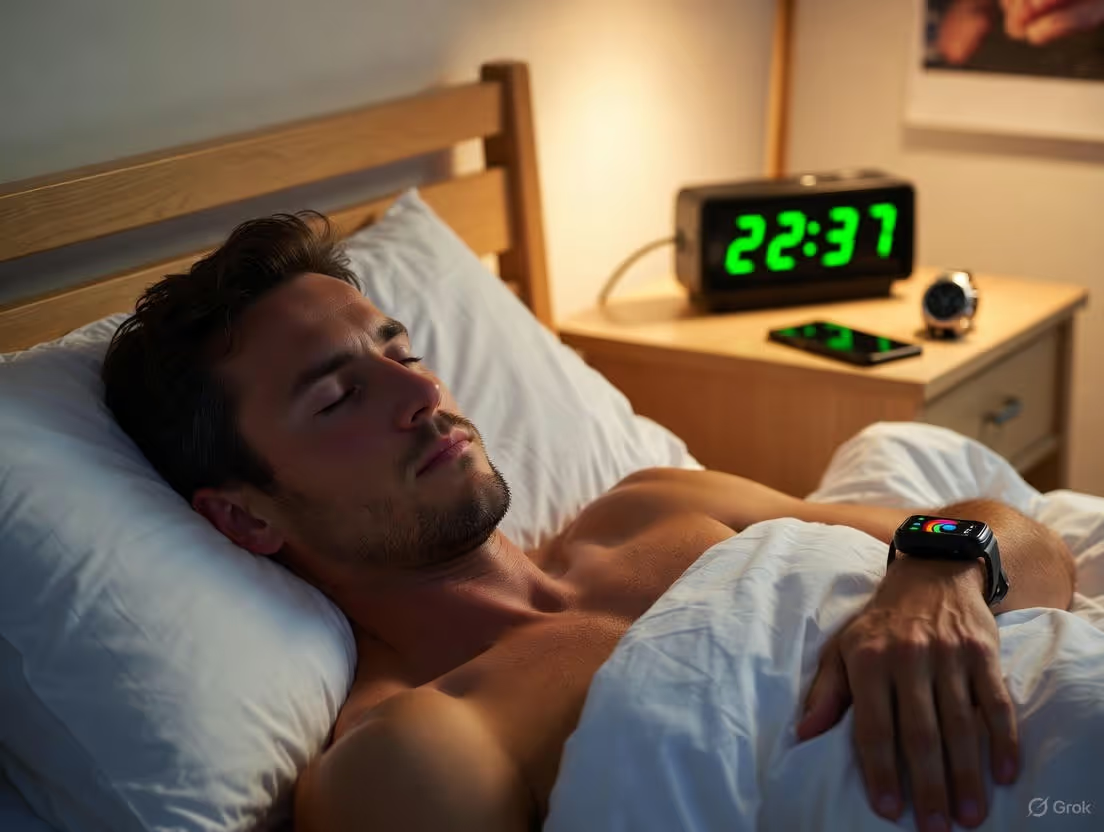
The flexibility of remote and hybrid work allows many people to better align their work hours with their natural chronotype, leading to improved rest.
The Sleep Pattern Revolution: Flexible Work and Better Rest
For centuries, human sleep has been held hostage by the sun, the factory whistle, and the rigid 9-to-5 schedule. We’ve been taught that there is one "correct" way to sleep: a single, consolidated block of 8 hours, anchored firmly in the dead of night. To deviate from this pattern was to be lazy, undisciplined, or unnatural. But what if this monolithic view of sleep is not just outdated, but fundamentally at odds with human biology and modern life?
We stand at the precipice of a seismic shift—the Sleep Pattern Revolution. It’s a movement fueled not by a new pill or gadget, but by a profound change in how we structure our lives: the rise of flexible, asynchronous, and remote work. For the first time in industrial history, millions are gaining genuine autonomy over their time. This liberation from the fixed schedule is unshackling our sleep from the clock, allowing us to rediscover rhythms that may be more authentic to our individual biology.
This isn't about sleeping less or glorifying burnout. It’s about sleeping better, in harmony with our unique chronotypes, energy dips, and life demands. The revolution asks: What if the parent could align their work with their child’s sleep schedule and then take a restorative nap? What if the night owl, finally free from a 7 a.m. commute, could achieve peak productivity at 10 p.m. and sleep deeply until 8 a.m., fully recharged? What if we could break sleep into phases that suit our natural ultradian rhythms?
The promise is immense: a future of higher cognitive function, improved mental health, stronger immunity, and greater overall life satisfaction. But navigating this new frontier requires more than just good intentions. It demands data, self-awareness, and tools designed for this new paradigm of living. This is where precision wellness technology, like the advanced sensors in a smart ring from Oxyzen, becomes not just useful, but essential. By providing continuous, accurate insight into our sleep architecture, heart rate variability, and readiness, these devices act as our guides, helping us experiment safely and optimize our unique sleep pattern for a life of better rest and higher performance.
This article is your map to the revolution. We will deconstruct the myth of the 8-hour block, explore the science of chronotypes, and provide a practical framework for designing your personalized sleep strategy within a flexible work life. The goal is to equip you with the knowledge to take control of your rest and, by extension, your health, creativity, and productivity.
The Tyranny of the 9-to-5: How Fixed Schedules Broke Our Sleep
To understand the revolution, we must first diagnose the problem. The industrial age didn’t just change where we worked; it fundamentally rewired when we slept. Prior to the 19th century, human sleep was often biphasic or even polyphasic. Historical records and studies of cultures without electric light suggest a common pattern: a "first sleep" shortly after dusk, a period of wakefulness in the middle of the night (often used for reflection, intimacy, or quiet work), followed by a "second sleep" until dawn.
The invention of artificial light, and more critically, the economic demands of factory shifts, eradicated this fluidity. The clock became the ultimate boss. To synchronize the labor of thousands, a uniform schedule was imposed. Being "on time" was paramount; personal biological time was irrelevant. This societal mandate cemented the monophasic sleep ideal—one long, unbroken stretch—because it was the most convenient cog for the industrial machine.
The consequences of this forced alignment are still with us today, manifesting as a global public health crisis:
Social Jet Lag: This is the chronic misalignment between your biological clock (your body's natural preference for sleep and wake times) and your socially imposed schedule. A night owl forced to wake at 6 a.m. for work might experience a form of jet lag equivalent to living in a different time zone all week, only to "travel" back on weekends. This constant shifting strains every system in the body.
The Commute Sacrifice: The pre-pandemic standard often involved sacrificing 1-2 hours of potential sleep for preparation and travel. This "sleep debt" was not a personal failing, but a structural tax imposed by geography and rigid work hours.
The One-Size-Fits-All Fallacy: The 9-to-5 schedule operates on the absurd assumption that an entire population shares an identical chronotype. It ignores the genetic and physiological diversity that makes some people naturally alert at sunrise and others most creative at midnight.
The toll is quantifiable. Chronic sleep deprivation and misalignment are linked to:
Significant reductions in cognitive performance, memory consolidation, and emotional regulation
For decades, we’ve been trying to solve sleep problems with individual behaviors—sleep hygiene, meditation, supplements—while ignoring the architectural flaw in our daily lives. We were treating symptoms of a systemic illness. The flexible work movement, however, is offering a cure for the system itself. It returns a measure of temporal sovereignty, allowing us to redesign our days around our biology, rather than forcing our biology to conform to an arbitrary industrial timetable. To dive deeper into how our modern lifestyles impact wellness, you can explore related articles on our blog.
Chronotypes Unlocked: You Are Not Lazy, You're a Wolf, Lion, Bear, or Dolphin
If flexible work is the key to the sleep revolution, then understanding your chronotype is the first turn of the lock. A chronotype is your body's natural predisposition for sleep and wake times. It's not a habit; it's an innate, genetically influenced rhythm governed by your suprachiasmatic nucleus (SCN)—the master clock in your brain.
While the simple "morning lark" and "night owl" dichotomy is a start, sleep specialist Dr. Michael Breus popularized a more nuanced, animal-based model that resonates deeply:
The Lion (The Early Riser): Lions wake up ready to roar. They are most alert and productive in the morning, often peaking before noon. Their energy tends to dip in the late afternoon. Lions typically have little trouble falling asleep but may wake very early. They represent about 15-20% of the population.
The Bear (The Follow-the-Sun): Bears follow the solar cycle. They wake easily but not too early, and their energy is stable throughout the day, with a natural post-lunch dip. They are most productive in the mid-morning. Bears typically need a full eight hours and have a relatively easy time maintaining a "standard" schedule. They are the most common, representing about 50-55% of us.
The Wolf (The Night Owl): Wolves struggle with mornings. Their energy, creativity, and focus ignite in the late afternoon and burn brightly into the evening. They hit their peak productivity when Lions are already in bed. Forcing a Wolf onto an early schedule leads to profound social jet lag. They make up about 15-20% of the population.
The Dolphin (The Light, Anxious Sleeper): Named for the marine mammal that sleeps with one half of its brain at a time, Dolphins are often light, restless sleepers with low sleep drive. They are intelligent, prone to perfectionism and anxiety, and may have irregular sleep patterns. They wake easily to any disturbance and often feel tired upon waking. They represent about 10% of people.
Why This Matters for Flexible Work: In a rigid office environment, only Bears are in their natural habitat. Lions waste their peak hours commuting, Wolves are punished for their late-night brilliance, and Dolphins are perpetually exhausted. Flexible work dismantles this hierarchy.
A Wolf can now design a schedule that starts at 10 a.m., incorporates a focused "power down" period in the late afternoon, and leverages their creative surge from 8 p.m. to midnight.
A Lion can start work at 6 a.m., achieve monumental task completion by 2 p.m., and use the late afternoon for administrative tasks, exercise, or family time.
A Bear can comfortably maintain a 9-to-5-ish schedule but now has the freedom to insert a true restorative break or nap when they feel their natural midday dip.
A Dolphin can work in shorter, more intense bursts throughout the day and night, without the pressure of being "on" for eight consecutive daylight hours.
Identifying your chronotype is the foundational act of self-knowledge in the sleep revolution. It moves you from fighting your biology to partnering with it. The next step is moving beyond simple time-of-day preference and understanding the very architecture of sleep itself.
Beyond REM and Deep: The Nuanced Science of Sleep Architecture
Sleep is not a passive state of unconsciousness. It is an active, highly structured, and vitally restorative process. To optimize your sleep pattern, you must understand its architecture—the cyclical stages your brain and body move through each night.
Sleep is divided into two main types, each with distinct functions:
Non-REM (Rapid Eye Movement) Sleep: This consists of three stages, progressing from light to deep sleep.
N1 (Light Sleep): The transition from wakefulness to sleep. This is a brief, easily disrupted stage where you might experience sudden muscle jerks.
N2 (Light Sleep): This stage constitutes about 50% of total sleep. Your body temperature drops, heart rate slows, and brain waves show characteristic "sleep spindles" and "K-complexes" that are crucial for memory consolidation and sensory processing. It acts as a gateway to deeper sleep.
N3 (Deep Sleep or Slow-Wave Sleep): This is the most physically restorative phase. The brain emits slow, high-amplitude delta waves. It's during N3 that tissue growth and repair occur, energy is restored, and critical hormones for growth and development are released. This is also the stage most associated with feeling physically refreshed. It's hardest to wake from and is prioritized earlier in the night.
REM Sleep: This is the stage most associated with vivid dreams. The brain becomes highly active (similar to wakefulness), but the body experiences temporary muscle paralysis (atonia). REM sleep is essential for:
Emotional processing and regulation
Memory consolidation, particularly for procedural and spatial memory
Creativity and problem-solving by forming novel neural connections
The Sleep Cycle Symphony: These stages don't occur in a linear fashion. They unfold in approximately 90-minute cycles throughout the night. A typical cycle progresses from N1 -> N2 -> N3 -> N2 -> REM. Early in the night, cycles are dominated by deep N3 sleep. As the night progresses, N3 periods shorten, and REM periods lengthen. By morning, you may be spending most of your cycle time in REM and N2 sleep.
Why Architecture Trumps Just Duration: You can be in bed for 8 hours but get poor-quality sleep if your architecture is fragmented. You might miss crucial deep sleep due to alcohol or a hot room, or have abbreviated REM due to stress or an early alarm. This is why simply tracking "time asleep" is insufficient.
The Flexible Work Advantage: With a fixed schedule, you are often torn from sleep at a random point in this delicate cycle—often during deep or REM sleep—leading to sleep inertia (grogginess). Flexible work allows you to align your wake time, where possible, with the end of a natural sleep cycle. Waking at the end of a cycle, typically during lighter N1 or N2 sleep, results in feeling more alert and refreshed. This ability to wake with your biology, not against it, is a cornerstone benefit of the sleep pattern revolution. For those curious about how technology can track these intricate stages, you can discover how Oxyzen works to provide this level of detailed insight.
The Biphasic & Polyphasic Experiment: Reclaiming Historical Sleep Patterns
With an understanding of chronotypes and sleep architecture, we can now explore the patterns that flexible work makes feasible. The rigid monophasic block is no longer the only option on the menu. We can look to history and extreme biohackers for inspiration on alternative sleep schedules.
Biphasic Sleep (Two Phases): This is the most common and historically documented alternative. It typically manifests in two ways:
The Siesta Model: One longer core sleep at night (5-6 hours) paired with a planned, shorter nap (20-90 minutes) in the early afternoon. This aligns perfectly with the post-lunch circadian dip in alertness that Bears experience. A well-timed nap can boost cognitive performance, improve memory, and increase afternoon productivity without impacting nighttime sleep.
Segmented Sleep (First and Second Sleep): This involves two roughly equal sleep blocks separated by 1-3 hours of wakefulness in the middle of the night. This period of "quiet wakefulness" was historically used for prayer, reflection, writing, or intimacy. Some researchers believe this pattern may be more natural for a significant portion of the population.
Polyphasic Sleep (Multiple Phases): These are more extreme schedules that attempt to minimize total time in bed by taking multiple short naps throughout the 24-hour day. Examples include the "Everyman" (one core nap + several short naps) or the "Uberman" (only 20-30 minute naps every 4 hours). Important Note: While fascinating, most polyphasic schedules are incredibly difficult to maintain, socially disruptive, and lack robust scientific evidence for long-term health benefits. They often severely restrict deep and REM sleep, which can have serious consequences.
The Modern, Flexible Approach: For most people in the flexible work revolution, the goal isn't an extreme polyphasic schedule. It's intentional, strategic napping integrated into a lifestyle that already includes a solid core sleep.
The Lion might use a core sleep from 9 p.m. to 4 a.m. and then incorporate a 20-minute power nap after lunch to sustain afternoon energy.
The Wolf might have a core sleep from 2 a.m. to 9 a.m. and find a short late-afternoon nap before their evening productivity window essential.
The knowledge worker with back-to-back video calls could use a "meeting nap"—blocking 30 minutes after a cognitively draining call for eyes-closed rest, even without sleeping.
The key is intentionality. A nap is not a sign of laziness; it's a strategic performance tool. Flexible work provides the space to use it without stigma. It allows you to listen to your body's signals for a dip and respond with restorative rest instead of pushing through with caffeine, which often degrades nighttime sleep quality. To see how real people are integrating these strategies into their lives, you can read about user experiences and reviews.
Designing Your Flex-Sleep Blueprint: A Step-by-Step Guide
Knowledge of theory is one thing; implementation is another. How do you actually design a sleep pattern that works for your unique biology and flexible work life? This is your practical blueprint.
Step 1: The Self-Audit (1-2 Weeks) Before changing anything, become a scientist of your own sleep. For one to two weeks, observe without judgment.
Track: Note your natural bedtime and wake-up time when you have no alarms (e.g., on a weekend or vacation day). This points to your true chronotype.
Log Energy: Use a simple notes app to record your energy levels, focus, and mood every 2-3 hours. Identify your natural peaks and troughs.
Analyze Context: What does your current work calendar look like? When are your non-negotiable synchronous meetings? When do you have blocks of deep work? When is family or personal time?
Step 2: Define Your Non-Negotiables Flexibility doesn't mean chaos. Define your anchors:
Synchronous Commitments: Fixed meetings, school runs, partner time.
Sleep Windows: Based on your audit, set a range for your core sleep (e.g., "I will be in bed for my core sleep sometime between 10 p.m. and 1 a.m."). This is more sustainable than a rigid minute.
Wind-Down & Wake-Up Routines: Protect the 60 minutes before bed (no screens, dim lights) and the first 30 minutes after waking (light exposure, hydration).
Step 3: Pattern Selection & Prototyping Choose a pattern to test for at least one week:
For Bears & Beginners: Monophasic + Strategic Nap. Commit to a 7-8 hour core window that fits your chronotype. Schedule a potential 20-minute nap slot in your early afternoon energy dip.
For Lions & Wolves: Biphasic (Siesta Model). Design a 5-6 hour core sleep aligned with your darkest hours. Then, deliberately block a 60-90 minute period in your natural afternoon slump (for Wolves, this may be later, around 4-5 p.m.). Use this for a short nap or at least for non-screen, restorative rest.
For the Curious: Segmented Sleep Experiment. If you naturally wake in the night, try leaning into it. Upon waking, get up for 60-90 minutes of quiet, low-light activity (reading, meditation, planning). Then return to bed for a "second sleep" of 3-4 hours.
Step 4: Measure, Iterate, Refine This is where objective data becomes critical. How do you know if your new pattern is working? Subjective feeling ("I feel good") is important, but incomplete. You need to measure:
Sleep Consistency: Are you hitting your intended windows?
Sleep Quality: Are you getting sufficient deep and REM sleep?
Daily Readiness: What's your resting heart rate, Heart Rate Variability (HRV), and respiratory rate upon waking? These are objective biomarkers of recovery and stress.
This level of granular feedback is precisely what a device like a smart ring provides. By wearing it 24/7, it measures your sleep stages, overnight HRV, and provides a "readiness" score to help you decide how to tackle your day—should you go for that intense workout or prioritize recovery? It turns your experiment from a guessing game into a data-driven optimization process. For any questions on implementing this kind of tracking, our comprehensive FAQ is a great resource.
The Tech-Enabled Guide: Why a Smart Ring is the Perfect Tool for This Revolution
In the quest for better sleep within a flexible life, information is power. While smartphone apps and wearables have proliferated, the smart ring is emerging as the ideal form factor for 24/7 wellness tracking, especially for sleep. Here’s why:
1. The Unobtrusive, Always-On Form Factor: Unlike a bulky watch or a chest strap, a ring is lightweight, comfortable, and socially invisible. You can wear it to bed without it being a distraction. It doesn’t buzz with notifications on your wrist, promoting better sleep hygiene. This seamless integration ensures continuous data collection, which is vital for spotting trends in your new sleep pattern.
2. Optimal Sensor Placement: The finger is a rich source of physiological data. It has a high density of capillaries, allowing PPG (photoplethysmography) sensors to accurately measure blood volume pulses. This provides the raw data for:
Heart Rate (HR): Tracking resting heart rate, a key indicator of cardiovascular health and recovery.
Heart Rate Variability (HRV): The holy grail of recovery metrics. HRV measures the subtle variations in time between heartbeats. A higher HRV generally indicates a more resilient nervous system, better recovery, and lower stress. It’s your body’s most honest feedback loop on whether your new sleep schedule is working or if you're overreaching.
Blood Oxygen Saturation (SpO2): Monitoring this overnight can reveal disturbances like sleep apnea or general breathing irregularities that fragment sleep.
3. Precision Sleep Staging: By combining movement (via a 3-axis accelerometer) with continuous HR and HRV data, advanced algorithms can accurately distinguish between wake, light sleep, deep sleep, and REM sleep. This is the "architecture" data you need. Did your new biphasic schedule sacrifice deep sleep? Did your late-night work block suppress REM? The ring tells the story.
4. The "Readiness" Score – Your Daily North Star: The true value isn't in the raw data, but in the synthesized insight. Leading devices compile your sleep data, recovery metrics (HRV), activity load, and body temperature into a single, easy-to-understand "Readiness" or "Recovery" score each morning. This score answers the critical question: "Based on how my body recovered last night, how much stress can I productively handle today?"
In the context of flexible work, this is transformative. A low readiness score might tell you to:
Schedule lighter cognitive work.
Prioritize a nap in your flexible afternoon.
Decline an optional high-stakes meeting.
Focus on hydration and gentle movement.
Conversely, a high readiness score signals you are primed for:
Tackling your most challenging deep work project.
Having that important negotiation.
Completing an intense workout.
Learning a new skill.
This bio-feedback allows you to dynamically align your work tasks with your body’s capacity, moving from a rigid calendar to an adaptive, fluid schedule that maximizes both performance and well-being. It turns the smart ring into your personal sleep revolution coach. To understand the philosophy behind creating such a tailored wellness tool, you can learn more about our mission and company vision.
Synchronizing Your External World: Light, Food, and Temperature
Your internal clock doesn't tick in a vacuum. It is constantly being set and reset by powerful external cues known as "zeitgebers" (German for "time-givers"). To successfully anchor a new, flexible sleep pattern, you must master these environmental levers.
1. Light: The Master Zeitgeber Light exposure, especially blue-wavelength light, is the most potent signal for your SCN. It suppresses melatonin (the sleep hormone) and promotes alertness.
Morning Strategy: Seek bright light within 30-60 minutes of waking. Go outside for 10-15 minutes (without sunglasses). If indoors, use a bright light therapy lamp. This firmly sets your circadian clock for the day, improving afternoon and evening alertness and solidifying your sleep time later.
Daytime Strategy: Maximize exposure to natural light throughout the day. Position your workspace near a window. This strengthens the circadian signal.
Evening Strategy: As bedtime approaches, dim artificial lights. Use red or amber-toned bulbs after sunset. Crucially, implement a digital sunset: stop using screens 60-90 minutes before bed. If you must use devices, enable "night shift" modes and consider wearing blue-blocking glasses. For the flexible worker, this is key: finishing a late-night work session under bright screens will directly sabotage your ability to fall asleep, even if your schedule says you can sleep in.
2. Food Timing: Metabolic Rhythms Your digestive system has its own circadian rhythm. Eating at erratic times can misalign your peripheral clocks.
Establish a Consistent Eating Window: Try to start and stop eating at roughly the same times each day, even if your wake-up time shifts. A 10-12 hour feeding window (e.g., 8 a.m. to 6 p.m.) is a good starting point.
Avoid Large Meals Close to Bedtime: Digestion raises core body temperature and requires energy when your body wants to wind down. Aim to finish your last substantial meal 2-3 hours before sleep.
Mind Your Caffeine & Alcohol Curfew: Caffeine has a half-life of 5-6 hours. Establish a personal curfew (often 2 p.m. or earlier). Alcohol may induce sleepiness but severely fragments sleep architecture, reducing deep and REM sleep.
3. Temperature: The Sleep Switch Your core body temperature needs to drop by about 1-2 degrees Fahrenheit to initiate and maintain sleep.
Evening Bath Trick: Taking a warm bath or shower 1-2 hours before bed seems counterintuitive, but it works. It draws blood to the skin's surface, and the subsequent rapid cooldown mimics the natural temperature drop, signaling sleep readiness.
Cool Sleeping Environment: Aim for a bedroom temperature between 60-67°F (15-19°C). Use breathable bedding and consider a cooling mattress pad if needed.
Daytime Contrast: Getting warm during the day (through activity, sunlight) helps amplify the night-time drop.
For the flexible worker, the challenge is consistency amid variability. If you're a Wolf with a core sleep from 2 a.m. to 10 a.m., your "morning" light exposure is at 10 a.m., your "evening" wind-down begins at midnight, and your last meal should be around 9 p.m. The principles remain the same; you simply shift the entire schedule to align with your chosen pattern. The technology we discussed, like the smart ring, can even track your nighttime temperature trends, giving you feedback on whether your environment is optimal.
Navigating the Social & Professional Pitfalls
Adopting a non-standard sleep pattern within a flexible work framework is a personal health optimization, but it doesn't exist in a social vacuum. Navigating relationships and professional expectations requires tact and clear communication.
Challenge 1: The "Lazy" or "Unavailable" Perception If you start work at 10 a.m. because you're a Wolf, colleagues on an early schedule may perceive you as lazy. If you take a 90-minute afternoon nap block on your calendar, you might be seen as unproductive.
Strategies:
Over-Communicate Your Value & Availability: Clearly communicate your core working hours and response times in your email signature and team chat status. (e.g., "My core working hours are 10 a.m. - 7 p.m. ET. I respond to messages outside this time the following business day.").
Produce Visible, High-Quality Output: Ultimately, results silence critics. Use your peak biological hours to deliver exceptional work. Your performance will become the narrative, not your schedule.
Reframe the Narrative: Don't say "I'm sleeping in." Frame it as, "I structure my day to do my most focused deep work during [your peak hours], which allows me to deliver [specific benefit]." You're not following a quirky sleep schedule; you're employing a science-backed performance strategy.
Challenge 2: Family and Shared Household Rhythms Your revolution may clash with a partner's schedule or children's routines.
Strategies:
Seek Synergy, Not Solitude: Look for overlaps. Maybe your late-night focus time is after your partner goes to bed, providing quiet. Perhaps your afternoon flexible time aligns perfectly with picking up kids from school.
Create Protected "Together Time": Deliberately schedule and protect time that is fully present and aligned with your family's rhythm—shared meals, weekend mornings, evening walks. Quality often trumps sheer quantity of overlapping awake-but-distracted time.
Educate, Don't Dictate: Explain why you are experimenting with your schedule—framed around wanting to be more present, healthier, and less stressed when you are together.
Challenge 3: The Blurred Lines of "Always On" Flexible work can ironically lead to worse boundaries if you're not careful. The ability to work any time can feel like an obligation to work all the time.
Strategies:
Defend Your Sleep & Recovery Periods Religiously: Your nap, your core sleep window, your wind-down routine—these are non-negotiable appointments with yourself. Block them on your calendar as "Focus Time" or "Private."
Create Physical & Digital Rituals: Have a specific "shutdown ritual" to end your work day, even if that "day" ends at 8 p.m. Close laptop tabs, tidy your desk, and review tomorrow's priorities. This signals to your brain that work is over, even if your sleep is hours away.
Use Technology Mindfully: Leverage "Do Not Disturb" modes and schedule send for emails. Just because you are awake at 11 p.m. doesn't mean you should send an email that will trigger a colleague's notification.
The social component of the sleep revolution is about respectful negotiation and managing perceptions. It requires confidence in the value of your chosen path and the communication skills to bring others along. The data from your tracking can even be a helpful, objective tool in these conversations, showing the tangible improvements in your readiness and focus. The journey of creating a product that respects these complex human needs is part of our brand's core story and values.
The Mind-Body Bridge: Stress, Anxiety, and Wind-Down Rituals
A perfectly designed sleep schedule can still be sabotaged by a racing mind. The autonomy of flexible work can itself be a source of anxiety—the pressure of self-management, the isolation, the fear of "not being seen" working. Furthermore, the lines between work stress and personal life become physically blurred when your office is your home. Therefore, mastering the psychological transition from "on" to "off" is a critical skill for the sleep pattern revolutionary.
The Stress-Sleep Vicious Cycle: Stress and anxiety activate the sympathetic nervous system (fight-or-flight), releasing cortisol and adrenaline. This elevates heart rate, increases body temperature, and sharpens alertness—the exact opposite of the state required for sleep onset. Poor sleep then lowers stress tolerance the next day, creating a vicious, self-perpetuating cycle.
Building the Bridge: The Wind-Down Ritual You cannot jump directly from a high-stakes work task or a stimulating screen into bed. You need a deliberate "bridge"—a wind-down ritual—to activate your parasympathetic nervous system (rest-and-digest).
Craft Your Non-Negotiable 60-Minute Pre-Sleep Protocol: This ritual should begin at the same relative time before your intended bedtime, regardless of whether that's 9 p.m. or 1 a.m.
Phase 1: The Digital Sunset (Minute 60-30)
Step 1 - The Hard Stop: Set an alarm for the end of your workday. Adhere to it.
Step 2 - The Shutdown Sequence: Close all work applications and browser tabs. Physically shut down your work computer if possible, or at least put it to sleep and out of sight.
Step 3 - Phone Management: Enable "Do Not Disturb" mode. Place your phone in another room, or at the very least, charge it far from your bed. Stop scrolling.
Phase 2: Parasympathetic Activation (Minute 30-0)
Option A - The Gentle Unwind: Engage in low-stimulation, non-screen activities. This could be:
Reading a physical book under warm light.
Gentle stretching or restorative yoga (e.g., legs-up-the-wall pose).
Listening to calming music, a podcast, or an audiobook.
Having a quiet, undistracted conversation with a partner.
Option B - The Brain Dump: If anxiety is high, use a "worry journal." Write down every task, thought, or concern swirling in your mind. The physical act of putting it on paper signals to your brain, "It is captured. I can let it go until tomorrow."
Option C - Mindful Practice: Engage in a short (10-15 minute) meditation or deep breathing exercise. Techniques like the 4-7-8 breath (inhale for 4, hold for 7, exhale for 8) are powerfully calming.
The Role of Technology (as an Aid, Not a Foe): Your smart ring can provide objective feedback on the effectiveness of your wind-down. Is your resting heart rate dropping in the hour before bed? Is your HRV improving overnight after implementing a journaling practice? This data reinforces positive habits and shows you what truly works for your nervous system.
For the flexible worker, whose "office" is always present, this ritual creates a crucial psychological and spatial boundary. It is the ceremony that marks the end of the "work day" and the beginning of the "recovery night," regardless of what the clock says. This practice is the linchpin that allows your beautifully designed sleep architecture to actually be built.
Fueling the Revolution: Nutrition, Hydration, and Movement
Your sleep pattern is not an isolated system; it is deeply interconnected with how you fuel and move your body throughout your newly flexible day. The timing, quality, and quantity of your nutrition, hydration, and exercise are potent levers for reinforcing your circadian rhythm and enhancing sleep quality.
Nutrition: Eating in Sync with Your Rhythms
Prioritize a Protein-Rich Breakfast (or "First Meal"): Whenever you break your overnight fast, make your first meal substantial in protein. This provides the amino acid tyrosine, a precursor for dopamine and norepinephrine, which promotes alertness and helps set your circadian clock for the day. This is especially important for Wolves who eat "breakfast" at 10 a.m. or later.
Carbohydrate Timing for Sleep: While complex carbs are important throughout the day, a modest intake of complex carbohydrates with your last meal (e.g., sweet potato, brown rice) can be beneficial. They promote the release of insulin, which helps shuttle tryptophan (a sleep-promoting amino acid) into the brain, where it converts to serotonin and then melatonin.
The Magnesium & Glycine Advantage: Incorporate magnesium-rich foods (leafy greens, nuts, seeds, avocado) and consider a small, glycine-rich snack before bed, like a handful of pumpkin seeds or a cup of bone broth. Glycine has been shown to lower core body temperature and improve sleep quality.
Hydration: The Day-Long Cascade Dehydration causes a cascade of problems, including increased cortisol (stress hormone) release and thicker blood, which the heart must work harder to pump—hardly conducive to rest.
Front-Load Your Hydration: Aim to consume the majority of your daily water intake during the daylight and early evening hours. This minimizes the need for disruptive nighttime trips to the bathroom, which can fragment your precious deep sleep.
Mind the Evening Diuretic: Reduce or eliminate diuretics like caffeine and alcohol in the evening. Herbal teas like chamomile or magnolia bark can be hydrating and soporific.
Movement: The Dual-Phase Exercise Strategy Exercise is a powerful zeitgeber, but its timing matters greatly.
Morning/Midday Movement for Signal Strength: Getting movement, especially outdoors, in the morning or before your afternoon dip strongly reinforces your circadian rhythm. It raises core body temperature and exposes you to light, providing a clear "daytime" signal. Even a 20-minute walk is highly effective.
Evening Exercise: The Gentle Approach: Intense, heart-pounding exercise too close to bedtime (within 1-2 hours) can raise core temperature and stimulate the nervous system, hindering sleep onset. However, gentle movement in the evening can be beneficial. The key is parasympathetic-activating exercise:
Yin or Restorative Yoga: Poses held for several minutes that release deep connective tissue.
Slow, Mindful Walking: A leisurely stroll without a performance goal.
Light Stretching or Foam Rolling: Focus on relaxation, not intensity.
The Flexible Worker's Advantage: You now have the freedom to strategically place these elements. You can schedule your workout during your natural energy peak (morning for Lions, late afternoon for Wolves). You can ensure you have time to prepare a nutrient-dense "first meal" rather than grabbing processed food on a commute. You can take hydration breaks throughout the day. This isn't about adding more to your plate; it's about aligning foundational health practices with the rhythm of your life for compounded benefits to both wakefulness and sleep. For more insights on integrating holistic wellness into a modern lifestyle, a wealth of information awaits on our dedicated blog.
The Long Game: Adaptation, Consistency, and Avoiding Burnout
Embracing a flexible sleep pattern is not a one-time switch you flip; it is a gradual adaptation and a long-term practice. The initial weeks can feel exhilarating—a newfound sense of freedom and alignment. But the true test of the revolution lies in the months that follow, in navigating travel, stress, social obligations, and the ever-present risk of the flexible schedule blurring into an "always-on" existence that leads to burnout. This phase is about building resilience and sustainable systems.
The Adaptation Timeline: What to Expect Your body’s circadian system is robust and has been conditioned for decades. Rewiring it requires patience.
Weeks 1-2: The Honeymoon & The Drag. You may experience an initial boost from the novelty and improved sleep. However, you might also feel a persistent grogginess or disorientation as your body clock shifts. This is normal. Stick to your chosen windows as closely as possible, even on weekends. Consistency is the accelerant for adaptation.
Weeks 3-6: Settling In & Data Emergence. Your subjective feeling starts to align with the objective data. You’ll begin to notice clearer energy peaks, more reliable sleep onset, and perhaps the most telling sign: waking naturally a minute or two before your alarm. Your smart ring data will show trends—improving sleep consistency scores, more stable HRV, longer periods of deep sleep.
Months 2-4: Integrated Rhythm. The pattern becomes less of a conscious effort and more of an automatic rhythm. You crave your wind-down ritual. You feel "off" if you miss your movement or light exposure. This is when the health and performance benefits become tangible: better focus, stable mood, improved recovery from exercise.
The Consistency Anchor in a Flexible World Flexibility without a framework is chaos. Your sleep pattern needs anchors.
The Non-Negotiable Wake-Up Light: Even if your wake time varies by an hour or two, make morning light exposure your most sacred habit. This single act does more to entrain your circadian rhythm than anything else. It’s the pillar your flexible day is built upon.
The Buffer Zone: Life happens. A late-night project, a social event, a child’s illness. Instead of abandoning your pattern entirely after a disruption, employ the "Two-Day Rule." Allow yourself no more than two consecutive nights of significant deviation before you consciously re-anchor with your core rituals. This prevents a single late night from unraveling weeks of progress.
The Weekly Review: Dedicate 15 minutes each week to review your biometric data (readiness, sleep scores, HRV trend) alongside your calendar and to-do list. Look for correlations. Did a week of back-to-back video calls depress your HRV? Did a day with ample outdoor time boost your deep sleep? This review turns experience into wisdom, allowing you to tweak your blueprint proactively.
The Burnout Antidote: Redefining Productivity The greatest danger in flexible work is the erosion of boundaries, leading to cognitive overload and emotional exhaustion—the hallmarks of burnout. Your sleep pattern must be part of the defense, not another performance metric to obsess over.
Respect the Readiness Score: A chronically low readiness score is not a personal failing; it is a vital warning sign. It is your body’s request for a reduction in load. Honor it. This might mean strategically scheduling a "low-demand day" with administrative tasks, saying no to a new commitment, or literally doing less. In a performance-obsessed culture, strategic recovery is the ultimate productivity hack.
Separate "Me Time" from "Down Time": A flexible schedule often fills "gaps" with more work. Deliberately schedule blocks for non-negotiable, non-work activities that bring you joy or calm—a midday walk, reading fiction, playing an instrument. This is not wasted time; it is fuel for creativity and emotional resilience.
Embrace Seasonality: Your ideal sleep pattern in the bright, active summer may differ from the dark, introspective winter. Allow for some natural fluctuation. You might need more total sleep in winter or find your energy peaks shift slightly. The goal is harmonious alignment with your environment, not robotic rigidity.
The long game is about cultivating a gentle, observant relationship with your own biology. It’s listening to the data and the feeling, and having the courage to adjust not just your sleep, but your entire approach to work and life, to sustain well-being for the long haul. This philosophy of sustainable, data-informed wellness is at the heart of Oxyzen's mission.
The Travel Conundrum: Managing Sleep Across Time Zones and Schedules
The ultimate test of any sleep system is travel. Whether it’s a business trip across three time zones or a vacation that disrupts all routine, travel is a circadian grenade. For the flexible worker, who may blend business and leisure travel more frequently, mastering this challenge is critical. The goal shifts from maintaining a perfect pattern to managing the disruption strategically and recovering swiftly.
Pre-Travel Preparation: The Pro Phase
Micro-Shifts (For Major Time Zone Changes): If traveling east, start going to bed and waking up 15-30 minutes earlier each day for 3-4 days before departure. If traveling west, shift later. This gentle nudge reduces the shock to your system.
Strategic Booking: Whenever possible, book flights that allow you to arrive in the early evening local time. This lets you get to your accommodation, have a light meal, go through a wind-down ritual, and get to bed at a reasonable local hour. Avoid red-eyes that land in the morning if you can; they garble day-one completely.
The "Go Kit": Pack sleep-support essentials: a quality sleep mask, earplugs or a white noise app, a familiar travel pillow, and maybe a small bottle of melatonin (consult your doctor). These are non-negotiable tools for creating a sleep-conducive environment anywhere.
In-Flight Strategy: The Mid-Air Reset
Set Your Watch Immediately: Upon boarding, set your watch or phone to the destination time zone. Begin to mentally and behaviorally align with that schedule.
Hydration is Armor: Cabin air is brutally dehydrating. Drink water consistently, not just when served. Avoid alcohol and excessive caffeine, which will worsen dehydration and jet lag.
Light Timing is Everything: Use light exposure (or avoidance) as your most powerful jet lag drug. If you land in the morning after an overnight flight, get bright sunlight immediately. Even if you’re exhausted, 20-30 minutes of outdoor light will forcefully reset your clock to the new day. If you need to stay awake, seek light. If you need to sleep (on the plane or to adjust to an earlier time zone), wear blue-light blocking glasses and use an eye mask.
The Arrival Protocol: The First 48 Hours
Anchor to Local Time: No matter how you feel, eat according to local meal times. Food is a powerful peripheral circadian cue. Even if you’re not hungry, have something at breakfast, lunch, and dinner time.
Prioritize Sleep Quality Over Duration: The first night or two, focus on creating the perfect environment for quality sleep—dark, cool, quiet. Use your mask and earplugs. You may only sleep 5-6 hours, but ensuring it’s solid, deep sleep is more important than forcing 8 hours of tossing and turning.
Use Naps Judiciously: If you must nap on arrival day, keep it to a power nap of 20 minutes or less, and before 3 p.m. local time. This can provide a cognitive boost without digging you deeper into circadian confusion.
Leveraging Your Tech: Your smart ring becomes indispensable here. It provides an objective view of your disruption and recovery.
Pre-Travel Baseline: Note your baseline HRV and sleep scores.
Track the Impact: See exactly how much the flight and time zone shift affected your metrics. Don’t panic at a low readiness score on day one; it’s expected.
Guide Your Recovery: Let the data inform your activity. A very low score suggests you should schedule light tourism or meetings, not a high-intensity hike or critical negotiation. Watch for the trend line; it will show you when your body is truly adapting.
The flexible worker often has more control over their itinerary. You can build in a "recovery day" with no major commitments upon arrival. You can choose accommodations with blackout curtains and quiet surroundings. By treating travel as a physiological event to be managed, not just an inconvenience to be endured, you preserve your health and ensure you’re truly present—for business or pleasure. For more tactical advice on maintaining wellness in dynamic situations, our blog offers a wealth of related resources.
Beyond Sleep: Optimizing Your Cognitive Peaks for Deep Work
The sleep pattern revolution has a primary goal: to enable peak cognitive function. Sleep is the foundation, but the structure built upon it is how you organize your intellectual labor. Flexible work’s greatest gift is the potential to align your most demanding cognitive tasks with your biological prime time. This is the practice of chrono-productivity.
Mapping Your Cognitive Landscape Your energy and focus are not flat throughout the day, even with perfect sleep. They follow a curve influenced by your circadian rhythm and ultradian rhythms (the 90-120 minute cycles of peak focus followed by a trough).
Identify Your Peak (The Biological Prime Time): This is your 2-4 hour window of highest alertness, clarity, and willpower. For a Lion, it’s 6-10 a.m. For a Wolf, it might be 7-11 p.m. This is non-negotiable territory for your most important work.
Identify Your Trough (The Recovery Dip): This is when your energy and focus naturally wane. Fighting it is futile. This is the ideal time for a nap, mindful break, administrative tasks, or social interactions.
Identify Your Rebound (The Secondary Peak): Many experience a second, smaller peak in the late afternoon or early evening, after the post-lunch dip has passed.
Designing the Chrono-Productive Day
Peak Phase → Deep Work: Schedule your most intellectually demanding, creative, or strategic tasks here. This is for writing, coding, complex problem-solving, learning new skills, or strategic planning. Defend this time fiercely. Use app blockers, turn off notifications, and communicate your unavailability.
Trough Phase → Administrative & Maintenance Work: Schedule email, meetings (if they don’t require your peak creativity), filing, expense reports, and other low-cognitive-load tasks here. It’s also the perfect slot for your power nap or movement break.
Rebound Phase → Communication & Synthesis: Use this time for collaborative meetings, giving feedback, brainstorming sessions, or synthesizing the deep work you did earlier. The social and interactive nature can leverage the rising energy.
The Role of the Smart Ring as a Productivity Coach: This is where biometric data transcends wellness and enters the realm of performance optimization. Your device’s "readiness" or "recovery" score each morning is your daily work capacity forecast.
High Readiness Day: This is a peak performance day. Double down on deep work. Tackle your hardest project. Your brain is primed for high-level cognitive throughput.
Moderate Readiness Day: This is a collaboration and execution day. Focus on meetings, communication, and moving existing projects forward. It’s not the day to start a brand-new, mentally exhausting task.
Low Readiness Day: This is a maintenance and recovery day. This is for cleaning your digital workspace, organizing files, light reading, and—critically—prioritizing recovery behaviors (extra sleep, gentle movement, hydration). Pushing hard on a low-readiness day often leads to poor output and extends the recovery period.
By letting your body’s objective recovery state dictate your cognitive load, you move from a constant, grinding pace to a dynamic, rhythmic flow. You are productive in pulses, with built-in recovery, which is far more sustainable and effective than a flat, always-on effort that leads to diminishing returns and burnout. This intelligent alignment is what the most successful flexible workers master.
The Social Synchrony Challenge: Aligning with Partners, Family, and Friends
Your personal sleep revolution exists within a web of relationships. A partner on a different schedule, children with fixed school hours, friends who want to meet for late dinners—these can feel like threats to your hard-won rhythm. The challenge is not to force others onto your schedule, but to find creative strategies for harmony and connection.
Strategies for Couples with Different Chronotypes: This is a common scenario—a Lion married to a Wolf.
Create Overlapping "Together Time": Identify and sacralize the windows that naturally overlap. This might be the early evening for a Lion who stays up a bit later and a Wolf who makes an effort to be present before their energy peak. The key is quality, focused connection during this time—no phones, no work talk, just shared activity or conversation.
Leverage the Asynchronous Advantage: Different schedules can be a strength. The early riser gets quiet morning time for themselves; the night owl gets the same in the evening. This can reduce friction over shared space and create natural pockets for personal pursuits.
The Weekend Negotiation: Weekends are for synchronization. Find a compromise schedule that works for both, perhaps something closer to a Bear schedule, to enable shared meals and activities. Use your flexible weekday pattern to honor your individual biology, and use the weekend to honor your partnership.
Respect the Rituals: If you go to bed at different times, establish a mini-ritual. The first partner to bed might get a 10-minute cuddle and chat before the other gets up to continue their evening. This maintains intimacy without forcing identical sleep times.
Integrating with Family Rhythms (Especially Children): Children are the ultimate fixed schedule, especially during school years.
Align Your Flex Around Their Anchors: Structure your work day around their immutable times—school drop-off/pick-up, dinner, bedtime routine. Your flexible hours become the time before they wake, during school hours, and after they sleep. This alignment reduces conflict and creates predictable family time.
The Strategic Power Nap: If you’re a parent, the post-lunch energy dip often coincides with younger children’s nap time or older children’s quiet time. This isn’t a coincidence; it’s an opportunity. A 20-minute nap while they rest can be transformative for your afternoon patience and energy.
Lead by Example: Use your own wind-down ritual as a model for your children’s bedtime routine. A family digital sunset, followed by reading or quiet play, benefits everyone.
Navigating Friendships and Social Life:
Reframe Socializing: Move the focus from late-night drinks to alternative social connections: weekend brunch (perfect for Lions), afternoon hikes or coffee (great for Bears), or late-evening game nights or desserts (ideal for Wolves). You initiate the activities that fit your rhythm.
Communicate Proactively: Be upfront but positive. "I’ve found I’m my best self when I honor my early rhythm, so I need to head out by 10, but I’d love to catch an early dinner next week!" Most friends will respect a commitment to health.
The Strategic Exception: Your pattern should serve you, not imprison you. Occasionally staying out late for a wedding, concert, or special event is part of a full life. The key is to not let the exception become the rule. Return to your anchors the next day with extra care paid to light exposure and recovery.
The social challenge is an exercise in creativity, communication, and compromise. It tests whether your sleep pattern is a rigid dogma or a flexible framework for a better life. Success is measured not in perfect adherence, but in enhanced connection and reduced resentment—feeling energized for the people who matter when you are with them. Hearing how others navigate these complex balances can be inspiring, which is why we share real customer stories and experiences.
Advanced Biomarkers: HRV, Body Temperature, and Respiratory Rate
As you advance in the sleep pattern revolution, moving beyond simple duration and into the realm of true optimization, a handful of advanced biomarkers become your most trusted guides. These are the subtle signals your body broadcasts 24/7, revealing your internal state with uncanny accuracy. A sophisticated smart ring tracks these continuously, providing a depth of insight previously available only in sleep labs.
1. Heart Rate Variability (HRV): The North Star of Recovery HRV is not your heart rate; it is the variation in time between successive heartbeats, measured in milliseconds. It is controlled by your autonomic nervous system.
The Science: A higher HRV indicates a strong, resilient nervous system with good parasympathetic (rest-and-digest) tone. Your heart can respond fluidly to demands. A lower HRV suggests dominant sympathetic (fight-or-flight) activity, meaning you are stressed, fatigued, or under-recovered.
The Application: Track your nighttime average HRV or your morning HRV upon waking. This is your baseline recovery metric.
A rising trend over weeks indicates positive adaptation to your new sleep pattern, fitness regimen, or stress management.
A sharp drop is a red flag. It can signal impending illness, overtraining, excessive stress, or poor recovery from a schedule disruption. It’s your body’s plea to dial back.
In Practice: If your HRV is 20% below your baseline, treat it as a low-readiness day, regardless of how you feel subjectively.
2. Peripheral Body Temperature: The Circadian Rosetta Stone Your core body temperature follows a clear circadian wave, peaking in the late afternoon and reaching its nadir in the early morning hours. Peripheral temperature (at your finger) shows an inverse wave and is highly sensitive to sleep onset and quality.
The Science: As you fall asleep, blood vessels dilate to release heat, causing a noticeable rise in skin temperature. A stable, elevated peripheral temperature throughout the night correlates with consolidated, uninterrupted sleep. Frequent dips can indicate awakenings or sleep disturbances.
The Application: Your ring’s temperature sensor can:
Predict Illness: A sustained elevation in your nightly temperature trend can be one of the earliest signs of an oncoming cold or infection, often before you feel symptoms.
Reveal Sleep Disturbances: See exactly how that late meal or alcohol impacted your nighttime temperature stability.
Confirm Chronotype: The timing of your temperature nadir (low point) is a strong objective marker of your circadian phase, confirming whether you are a true Wolf or Lion.
3. Respiratory Rate (Breaths Per Minute): The Silent Stress Gauge This is the number of breaths you take per minute, typically measured during sleep when it’s most stable.
The Science: A typical adult sleeping respiratory rate is between 12-20 breaths per minute. This rate is controlled by the brainstem and is remarkably stable night-to-night for an individual. It can increase with fever, illness, or sleep-disordered breathing (like apnea).
The Application: Tracking your baseline (e.g., 14.2 breaths/minute) is powerful.
Consistency is Key: A stable respiratory rate is a sign of autonomic nervous system balance and good sleep quality.
A Significant Increase: A jump of 1-2 breaths per minute above your baseline can be an early indicator of stress, respiratory infection, or a worsening of allergy/asthma symptoms.
A Warning Signal: Coupled with elevated temperature and low HRV, a rising respiratory rate forms a powerful triad pointing to a need for immediate rest and recovery.
Synthesizing the Data: The Bio-Feedback Loop The power is not in any single metric, but in their confluence. A perfect night might show: high sleep consistency, strong deep/REM architecture, a high and stable HRV, a smooth temperature curve, and a stable respiratory rate at your personal baseline.
By learning to read this language, you move from guessing about your health to knowing. You can answer questions like: "Was that extra glass of wine last night detrimental?" "Am I actually recovering from my new workout routine?" "Is my new 5 a.m. wake-up time sustainable for my body?" This is the pinnacle of personalized wellness, turning your flexible lifestyle into a continuous, self-optimizing experiment. For those with technical questions about how these measurements work, our detailed FAQ section provides clear explanations.
When to Pivot: Recognizing When Your Pattern Isn't Working
Not every experiment is a success. A chosen sleep pattern might look perfect on paper but feel awful in practice. The wisdom of the revolution lies not in stubborn adherence, but in intelligent adaptation. How do you know when to tweak versus when to abandon a schedule? The signs come from both subjective feeling and objective data.
The Subjective Red Flags (Listen to Your Body):
Persistent Sleep Inertia: If, after several weeks, you still wake up feeling groggy and disoriented for more than 30-60 minutes every single day, your wake time may be misaligned with your sleep cycles.
Increased Daytime Sleepiness: You’re getting your total hours, but you fight overwhelming urges to nap at times outside your planned dip. This suggests poor sleep quality or a mismatch between your sleep phase and your activity demands.
Irritability and Low Stress Tolerance: You find yourself snapping at minor inconveniences, a classic sign of sleep deprivation or poor sleep quality, even if you’re "in bed" for enough time.
Loss of Motivation and Anhedonia: Your work and hobbies feel like a chore. The mental energy for deep work or joy is absent. Sleep issues are a primary driver of low-grade depression and apathy.
Social Isolation Becomes Detrimental: If maintaining your pattern is causing significant, ongoing conflict in your important relationships and feelings of loneliness, the social cost may outweigh the biological benefit.
The Objective Data Red Flags (Trust the Numbers):
Chronically Low or Plummeting HRV: If your HRV trendline is flatlined or consistently heading downward over 2-3 weeks, your body is signaling a state of chronic stress and poor recovery. Your current pattern may be too demanding.
Poor Sleep Scores Despite Adequate Time: Your ring consistently reports low sleep quality scores (fragmented sleep, low deep/REM sleep) even when you spend 8+ hours in bed. This points to environmental or behavioral issues (e.g., room too warm, too much alcohol, undiagnosed sleep apnea) that your pattern can’t overcome.
Inability to Stabilize: Your sleep onset and wake times are wildly erratic, with no consistency from day to day. This "social jet lag" within your own schedule is worse than a fixed, misaligned schedule. It means you lack the necessary anchors and discipline for true flexibility.
Readiness Scores Stuck in the Basement: A string of consecutive low readiness scores is a non-negotiable signal from your body. You are not recovering. Pushing forward is the path to burnout.
The Strategic Pivot: How to Adjust
Diagnose Before You Change: Look at the data. Is the problem timing, quality, or external stress? Did your new biphasic schedule rob you of deep sleep? Is your Wolf schedule leaving you too isolated?
Adjust One Variable at a Time: Change your wake time by 30 minutes. Or move your nap. Or commit to a stricter digital sunset. Give each change 7-10 days to assess its impact before changing another thing.
Consider a "Reset Week": Sometimes, you need to go back to basics. For one week, prioritize a consistent 8-hour window aligned as closely as possible with natural darkness, perfect sleep hygiene, and no naps. Re-establish a solid baseline, then reintroduce flexibility from a place of strength.
Consult a Professional: If objective data shows consistently poor sleep architecture (very little deep or REM sleep) or you have signs of a sleep disorder (loud snoring, gasping for air, extreme daytime sleepiness), consult a sleep specialist. No pattern can overcome an underlying medical condition.
The goal is a pattern that feels sustainable and energizing, supported by data that confirms good recovery. It is a dynamic equilibrium, not a fixed destination. Having the humility to change course based on feedback is the mark of a true practitioner, not a failure. This iterative, learning-focused approach is woven into the fabric of our company's journey and values.
The Future of Rest: AI, Personalization, and the Quantified Workplace
We are standing at the frontier of a future where our understanding of sleep and work will be transformed by artificial intelligence, hyper-personalization, and a fundamental redesign of organizational culture. The sleep pattern revolution is the first wave; what comes next will integrate these insights into the very fabric of our technology and institutions.
AI as Your Personal Sleep Concierge: The current generation of wearables provides data. The next generation, powered by sophisticated AI, will provide prescriptive, dynamic guidance.
Predictive Scheduling: An AI analyzing your historical sleep, HRV, calendar, and even weather data could advise: "Based on your low recovery trend and your high-stakes meeting tomorrow, I recommend an 8 p.m. digital sunset and a 90-minute core sleep extension tonight. Would you like me to block your calendar for a nap tomorrow at 3 p.m.?"
Dynamic Wind-Down: Your smart home system, integrated with your biometrics, could automatically begin dimming lights and playing calming soundscapes when it detects your body starting its physiological descent towards sleep, regardless of the clock time.
Pattern Optimization: Instead of you guessing at whether a biphasic or monophasic schedule is better, an AI could run a multi-week analysis, subtly shifting variables and measuring the outcomes on your biomarkers, ultimately recommending your ideal, personalized sleep-wake architecture.
The Quantified and Human-Centric Workplace: Forward-thinking companies will move beyond simply offering "flexible hours" to actively leveraging wellness data to build resilient, high-performing teams (with strict privacy controls and employee consent).
Team Readiness Aggregates: Anonymized and aggregated team readiness scores could help managers identify when collective stress is too high, prompting them to lighten deadlines or declare a "recovery day" to prevent burnout cycles.
Meeting Scheduling AI: Company calendaring systems could factor in employee-chronotype preferences (e.g., "No high-cognitive-load meetings before 10 a.m.") to schedule critical brainstorming sessions when the majority of participants are biologically primed for creativity.
Output-Based Performance Models: The ultimate shift will be a full decoupling of "hours seen online" from performance evaluation. Work will be measured by output, deliverables, and impact, giving employees true autonomy to design their days around their biological and personal rhythms. This is the true endpoint of the flexible work revolution.
Ethical Imperatives and Privacy Frontiers: This future is not without peril. The same data that empowers can also surveil and coerce.
Consent and Ownership Must Be Paramount: Employees must own their biometric data. Its use in the workplace must be opt-in, transparent, and solely for the benefit of the individual’s well-being, not for monitoring productivity or penalizing individuals.
The Goal is Empowerment, Not Optimization for Output: The ethical use of this technology is to enhance human health and fulfillment. The moment it becomes a tool to squeeze 10% more productivity from a fatigued workforce, it has betrayed its purpose.
The future of rest is not about sleeping more or less, but about sleeping smarter, in perfect sync with our individual biology and the rhythm of our lives. It is about workplaces that view employee well-being as the foundation of sustainable innovation. Technology, like the advanced sensing in a device from Oxyzen, will be the bridge to this future—providing the personal insights needed to navigate a world where work adapts to humanity, not the other way around. For ongoing exploration of these future trends, our blog will continue to be a resource.



%402x.svg)