


The Complete Beginner-Friendly Guide to C-Suite Wellness: Ring-Based Longevity
A complete beginner's guide to executive wellness for long-term health.
A complete beginner's guide to executive wellness for long-term health.
%402x.svg)
In the relentless pursuit of professional excellence, we’ve tried it all. From intricate time-blocking systems and caffeine-fueled marathons to expensive executive coaches and productivity seminars promising the moon. Yet, for many high-achieving professionals, a nagging sense persists: that peak performance remains just out of reach, sabotaged by burnout, brain fog, and a body that simply won’t keep pace with an ambitious mind.
The missing piece isn’t another app or a new management philosophy. It’s data—not from spreadsheets, but from your own biology. Welcome to the era of quantified wellness, where the smallest accessory on your hand, a smart ring, becomes the most powerful tool in your professional arsenal. This isn’t about counting steps for vanity; it’s about decoding the biometric language of success. Your heart rate variability, skin temperature, sleep architecture, and resting pulse are no longer mere numbers. They are real-time feedback loops, telling you when you’re primed for deep work, when you’re teetering on the edge of burnout, and exactly which habits are building—or eroding—your capacity to lead, create, and execute.
This article delves into the eight core wellness habits that modern smart rings track with clinical precision, translating physiological whispers into actionable strategies for professional dominance. We’ll move beyond generic health advice into the realm of high-performance biohacking, showing you how to leverage continuous, passive tracking to build a foundation of energy, resilience, and cognitive sharpness that makes success not just a goal, but a sustainable state of being.
For the professional, sleep is not downtime. It is strategic consolidation time. While you rest, your brain is fiercely at work: converting short-term memories into long-term knowledge, clearing metabolic waste like beta-amyloid (linked to cognitive decline), and rebalancing neurochemicals critical for decision-making and emotional regulation. A smart ring moves you far beyond simple "hours in bed" metrics. It maps your sleep architecture—the cyclical journey through light, deep, and REM sleep stages—providing an objective report card on your nightly recovery.
Deep sleep (N3) is your physical restoration phase, when tissue repair, immune function strengthening, and growth hormone release peak. For the professional, this translates to physical resilience, faster recovery from the mental and physical strain of long days, and sustained energy. REM sleep, often called "mental sleep," is where creativity, emotional processing, and complex learning are cemented. Miss REM, and you miss your brain’s best chance to solve problems subconsciously and regulate the emotional turbulence of high-stakes work.
Your smart ring tracks the duration and quality of each stage. You’ll see the direct impact of that 9 PM email check (delayed sleep onset, suppressed deep sleep) or the evening glass of wine (fragmented REM). This data shifts sleep from a passive activity to an active performance lever. By analyzing trends, you learn your personal, non-negotiable sleep requirement and the conditions that optimize your architecture. Was your deep sleep percentage higher after your 4 PM workout, or lower? Did your REM increase when you implemented a 60-minute digital sunset? The ring tells the story.
This granular understanding is the first step toward true sleep mastery. For those beginning this journey, focusing on consistent behavior change over sheer willpower is key, as explored in our resource on sleep improvement through behavior change not willpower. It turns abstract advice into a personalized, data-driven protocol for cognitive renewal.
If sleep architecture is the what, your circadian rhythm is the when. This 24-hour internal clock, governed by light exposure, dictates the timing of nearly every physiological process: cortisol awakening response, digestion, hormone secretion, body temperature fluctuation, and cognitive performance windows. For the professional, being in sync with your circadian rhythm means aligning your most demanding tasks with your natural peak alertness and your restorative activities with your biological troughs.
Your smart ring is a master circadian detective. Through continuous skin temperature monitoring (which follows a predictable circadian wave), sleep-wake timing, and heart rate trends, it builds a model of your unique rhythm. You can see if you’re a true lark, an owl, or somewhere in between. More importantly, you can see when your rhythm is disrupted—a telltale sign is a flattened or erratic skin temperature curve.
Why does this matter for success? Because fighting your rhythm is a losing battle that drains willpower and produces subpar work. Presenting a brilliant strategy is best done during your circadian peak, not during the post-lunch dip. Creative brainstorming may flow better for some in the evening’s lateral-thinking state. Your ring’s data helps you schedule your day biochemically. It can signal when late-night screens are blunting your melatonin release, pushing your rhythm later and making morning leadership meetings a foggy struggle. It shows the profound impact of consistent wake-up times, even on weekends, in anchoring a stable rhythm.
By tracking these subtle biometrics, you gain the power to manage your clock, not just obey it blindly or suffer from its misalignment. Optimizing timing is everything, a principle detailed in our deep dive on sleep improvement through timing when matters most. This allows you to design a work schedule that flows with your biology, making high performance feel effortless rather than forced.
Stress is the constant companion of ambition. But not all stress is equal. Acute, short-term stress can heighten focus (eustress). The enemy is chronic, unmanaged stress—the kind that silently elevates cortisol, impairs the prefrontal cortex (your executive function center), and leads to burnout. The problem is, we are notoriously bad at subjectively gauging our stress load until it’s too late. Enter the smart ring’s most powerful metric for nervous system insight: Heart Rate Variability (HRV).
HRV is the microscopic variation in time between each heartbeat. A higher, more variable HRV generally indicates a resilient, adaptable autonomic nervous system—one that can respond vigorously to a challenge (sympathetic activation) and then recover smoothly to a calm state (parasympathetic dominance). A low, stagnant HRV suggests a nervous system stuck in "fight-or-flight" or one that is depleted and struggling to regulate.
For the professional, HRV is your daily readiness score. Your smart ring tracks it overnight to give you a morning baseline. A trending downward HRV is a clear, objective warning sign of accumulating strain, often before you consciously feel overwhelmed. It can tell you if yesterday’s difficult negotiation is still taxing your system, or if your body has successfully recovered. This allows for proactive intervention: perhaps today is for deep work, not decision-making; maybe you need to prioritize a walk over another meeting.
Beyond overnight trends, some rings offer daytime moment-to-moment stress tracking using heart rate and HRV data. Imagine receiving a gentle vibration when your biometrics indicate prolonged physiological stress during a marathon work session—a cue to take three mindful breaths. This transforms stress management from a theoretical concept to a real-time, biofeedback-guided practice. Understanding the neuroscience behind this daily accumulation is critical, which is why we recommend exploring the neuroscience of daily stress complete framework. Your ring becomes a compass, guiding you through high-pressure environments by showing you the physiological path back to calm and control.
Professional success demands energy output. But sustainable output requires intelligent energy input and recovery. The old paradigm of "grinding until you drop" is a recipe for cyclical crash-and-burn. The new paradigm, illuminated by your smart ring, is one of strategic energy cycling. It conducts a continuous energy audit by measuring activity levels, resting heart rate, and recovery status.
Your ring’s activity tracking goes beyond basic step counts. It assesses the intensity and duration of movement, correlating it with cardiovascular load. Combined with heart rate data, it can estimate active calorie burn and gauge the physiological cost of your workout or even a physically demanding day on-site. But the magic for the professional lies in the recovery metrics.
Your resting heart rate (RHR), especially when measured first thing in the morning, is a superb indicator of overall fitness and recovery. A lower RHR typically suggests better cardiovascular efficiency. A spike in your morning RHR, as flagged by your ring, is a strong signal of incomplete recovery. This could be due to inadequate sleep, an illness brewing, dehydration, or excessive training stress.
By cross-referencing your activity data with your sleep quality, HRV, and RHR, your ring provides a daily "Readiness" or "Recovery" score. This single metric answers the essential question: "How much gas is in my tank today?" A high score means you’re primed to tackle intensive, focused work, lead demanding meetings, or have a vigorous workout. A low score is not a failure; it’s critical intelligence. It tells you today is for administrative tasks, gentle movement like walking, and deliberate recovery practices. It prevents you from digging an ever-deeper recovery hole. Learning to respect this data allows you to work with your body’s energy cycles, leading to higher quality output when you are at your best and preventing the long-term depletion that derails careers. This strategic approach to balancing stress and recovery is what defines modern high performers, as discussed in daily stress management for high performers.
What you eat doesn't just affect your waistline; it directly fuels—or sabotages—your cognitive engine. Brain fog, afternoon slumps, and volatile energy levels are often metabolic in origin. While smart rings are not glucose monitors, they provide two powerful proxies for metabolic health and digestive impact: continuous skin temperature and resting heart rate trends.
Digestion is a thermogenic process. A large, heavy, or inflammatory meal requires significant energy to process, raising core body temperature. Your smart ring can detect this subtle post-prandial temperature rise. If you notice frequent nighttime spikes in your temperature graph that aren’t linked to your sleep environment, it could point to late dinners or specific foods that are causing digestive distress and disrupting sleep—a common thief of professional performance.
Furthermore, a diet high in processed sugars and inflammatory foods can lead to systemic inflammation and poorer cardiovascular health, reflected in a creeping elevation of your resting heart rate over time. Conversely, a consistent, nutrient-dense diet that stabilizes blood sugar often correlates with a lower, more stable RHR and better HRV.
By observing how your biometrics respond to your eating patterns, you gain a metabolic mirror. Did your HRV dip after a business lunch heavy with carbs and wine? Did your sleep score suffer after a late-night snack? This biofeedback allows for personalized nutritional tweaks that support steady energy, mental clarity, and nighttime recovery. You move from generic diet rules to a data-informed understanding of which foods make you feel and perform better. The profound connection between what you eat and how you rest is a cornerstone of holistic wellness, a topic explored in sleep improvement through nutrition food sleep connection. Optimizing this loop means your brain has clean, consistent fuel for the demands of leadership and innovation.
In boardrooms and business literature, mindfulness and breathwork have transitioned from fringe to fundamental. But for the driven professional, the question often remains: "Is this working? Am I doing it right?" Subjective feelings of calm can be elusive. Your smart ring provides the objective proof, measuring the direct Return on Investment (ROI) of your mindfulness practice through immediate, measurable shifts in your autonomic nervous system.
The primary metric here, again, is Heart Rate Variability (HRV) and heart rate. A well-executed, coherent breathing practice (such as 5-second inhale, 5-second exhale) should create an almost immediate increase in HRV and a decrease in heart rate. This is the signature of activating the parasympathetic "rest-and-digest" nervous system. Your smart ring can show you this in real-time if it has a live biofeedback mode, or you can see the impact on your post-session or overnight HRV.
For the professional, this transforms a vague wellness practice into a precision tool. You can:
This data turns resilience from an abstract concept into a trainable, trackable skill. It provides the motivation to persist with practices that, in the moment, might feel less productive than answering emails, by showing you the concrete physiological upgrade you’re creating. Building this resilience is a long-term strategic investment, akin to the approach outlined in our building stress resilience 12 month strategic blueprint. The ring confirms that these quiet moments are not a departure from productivity, but the very foundation of sustained, high-level performance.
Your performance is not dictated solely by your habits, but by the environments you inhabit for 90% of your day. The lighting in your office, the temperature of your bedroom, the noise pollution during your focus work—all these environmental factors leave a biometric signature. Your smart ring helps you become a scientist of your own surroundings, using your body's responses to optimize them.
Skin temperature data is invaluable here. It helps you pinpoint the ideal bedroom temperature for your sleep. The standard advice is around 65°F (18°C), but your data might show you sleep more soundly with less fragmentation at 68°F. You can experiment and let your deep sleep score be the judge.
Sleep staging and resting heart rate data reveal the impact of environmental disruptions. A spike in heart rate and a shift to light sleep at 2 AM might correlate with a partner’s movement, street noise, or a change in light pollution. This objective data justifies investments in blackout curtains, white noise machines, or a temperature-regulating mattress pad.
During the day, indirect data also tells a story. If you notice your daytime stress scores are consistently high in your home office but lower when you work elsewhere, it might point to poor ergonomics, lighting, or even subconscious associations with that space. By treating your body as the ultimate sensor, you can iterate on your environments—both work and rest—to create conditions that passively support lower stress, better recovery, and sharper focus. For those struggling with specific environmental factors like temperature, targeted strategies can be found in our guide on sleep improvement for hot sleepers cooling strategies.
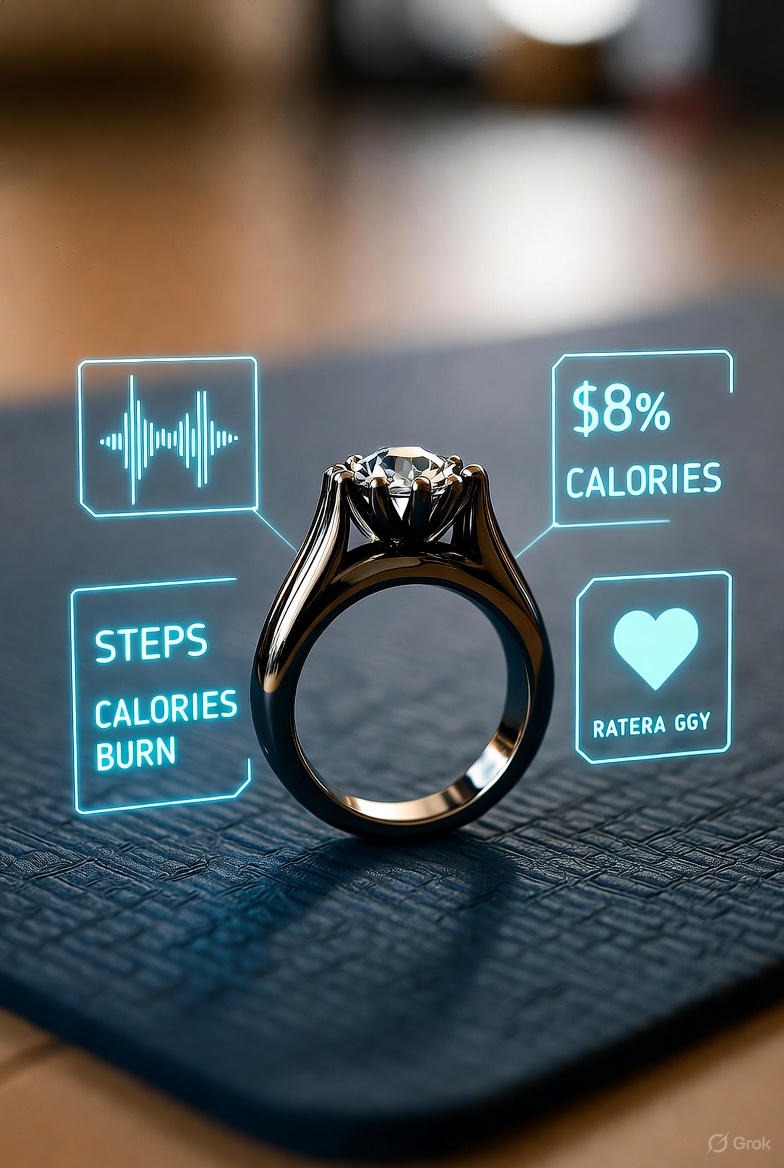
The ultimate power of the smart ring is not in tracking eight isolated habits, but in revealing how they interconnect to form a holistic flywheel of wellness. It shows you the compound effect. The ring’s data makes visible the virtuous (and vicious) cycles that define your professional vitality.
For example, the data will show you:
Conversely, it will also illuminate the doom loop: poor sleep → low HRV → poor stress handling → bad food choices → low energy → skipped workout → worse sleep.
This systems-view is transformative. It encourages you to see habits not as discrete chores, but as interdependent levers in a personal performance engine. You stop asking, "What's one thing I can fix?" and start asking, "Which lever, if pulled, will positively influence the entire system?" Often, the data points to sleep as the foundational habit, as its improvement compounds with all others, a principle detailed in sleep improvement compounds with wellness habits. Your smart ring provides the map of this territory, allowing you to navigate intentionally toward a state where professional success is built on a bedrock of quantifiable, optimized well-being. This is the edge that separates the perpetually drained from the sustainably unstoppable.
The raw data from a smart ring—sleep scores, HRV graphs, temperature curves—is merely potential energy. Its transformative power is unlocked only when translated into actionable intelligence. This is where the device evolves from a passive tracker into an active, personalized executive coach. For the modern professional, time is the ultimate scarce resource. Decision fatigue is real. The ring’s greatest value lies in its ability to distill complex physiological signals into clear, contextual nudges and strategic insights, automating self-awareness and guiding daily choices with precision.
Think of your morning routine. Instead of a groggy, subjective guess at how you feel, you open your companion app to a Readiness Score—a composite algorithm synthesizing your sleep, recovery, and stress data. This isn't just a number; it's a directive. A high score above 85 is your green light to attack that high-consequence project, schedule your most challenging conversations, or engage in intense strategic planning. A middling score suggests a day for collaborative work, administrative catch-up, and steady-state effort. A low score is a non-negotiable mandate for recovery, light activity, and stress-containment strategies. This objective gatekeeper removes the ego and guilt from the equation. You’re not "being lazy"; you’re following a data-driven performance plan.
The coaching continues throughout the day. Alerts for prolonged sedentary behavior prompt micro-movement breaks, proven to boost circulation and cognitive function. Real-time stress alerts serve as biofeedback triggers, inviting you to deploy a 60-second breathing exercise to down-regulate your nervous system before stress becomes corrosive. The ring helps you conduct experiments: *“If I take a 20-minute walk in natural light at 3 PM instead of a third coffee, how does it affect my afternoon focus and evening wind-down?”* The data provides the answer, allowing you to iterate on your personal productivity formula.
This level of automated coaching closes the gap between knowing what’s good for you and actually doing it. It externalizes the executive function of self-regulation, conserving your mental bandwidth for the professional problems that truly require it. The ring becomes a silent partner in preventative performance management, helping you spot a downward trend in recovery before it manifests as irritability in a team meeting or a critical error in analysis. For leaders, this data-informed self-management also models a crucial modern leadership trait: sustainable performance, built on self-awareness rather than self-sacrifice.
Generic health advice fails the professional because it ignores individual differences—chronotype, stress response patterns, metabolic idiosyncrasies, and genetic predispositions. The “perfect” 7-hour sleep window or “optimal” workout time does not exist. What exists is your perfect window, your optimal time. The smart ring’s true sophistication lies in its capacity for deep personalization, learning your unique patterns over weeks and months to establish a highly individualized biometric baseline.
Initially, the ring gathers data to understand “normal” for you. What is your typical deep sleep percentage? What is your personal baseline HRV range? What does your ideal circadian temperature curve look like? This phase is purely observational, building a personal database. After this foundational period (typically 2-4 weeks), the ring’s algorithms can detect meaningful deviations. It’s not that a single night of low REM sleep is catastrophic; it’s that a 10% drop from your average deep sleep for three nights in a row is a significant alert. This personalized baseline makes the data profoundly more relevant and actionable.
The ring personalizes its insights based on your life context. It can learn to recognize the unique physiological signature of:
With this understanding, the ring can offer tailored recommendations. Instead of “get more sleep,” it might suggest, “Based on your data, you recover best when you’re in bed by 10:30 PM on nights after high-stress meetings.” It can correlate specific activities with positive outcomes: “Your HRV consistently improves 8% on days you take a midday walk.” This process of continuous learning and feedback creates a living blueprint for your performance. You are no longer trying to fit yourself into a one-size-fits-all wellness box; you are using data to sculpt a lifestyle that perfectly fits the contours of your own biology and ambitions. This journey requires a realistic framework, acknowledging that progress is nonlinear, as discussed in sleep improvement reality check realistic expectations.
The application of smart ring technology need not stop at personal optimization. Forward-thinking organizations and leaders are beginning to explore its use—ethically and anonymized—as a tool for enhancing team dynamics and organizational health. When deployed with transparency, consent, and a focus on psychological safety, aggregated, anonymized biometric data can provide unprecedented insights into the collective well-being of a team, department, or company.
Imagine a scenario where a team is working on a critical, high-pressure product launch. With voluntary participation, aggregated data could reveal patterns invisible to managers:
For leaders, this shifts management from intuition to insight. A manager might notice that after implementing “No-Meeting Wednesdays,” the team’s aggregate sleep scores and HRV improve, correlating with a measurable uptick in productive output later in the week. It provides objective evidence to support cultural initiatives like mandatory vacation, flexible hours for different chronotypes, or investments in workplace wellness.
On an individual leadership level, understanding one’s own biometric data cultivates empathetic leadership. A leader who sees their own stress spike after a difficult conversation may be more mindful of its impact on others. They can learn to schedule tough feedback sessions during their own physiological peak, ensuring they deliver it from a place of calm clarity rather than reactive stress. This creates a ripple effect, fostering a culture where well-being is viewed not as a perk, but as a prerequisite for innovation and resilience. Leaders seeking to master this balance can find science-backed approaches in how successful leaders manage daily stress.
We are on the cusp of moving from descriptive and diagnostic tracking to predictive analytics. As algorithms become more sophisticated and data sets grow, the smart ring’s next frontier is forecasting potential downturns in performance, health, and mental well-being before they happen. This isn’t science fiction; it’s the logical evolution of pattern recognition applied to human physiology. For the professional, this shifts the paradigm from crisis management to strategic prevention.
A smart ring, with months of high-fidelity data, could identify subtle precursor patterns. For instance:
Receiving a notification that says, “Your recovery trends suggest a high risk of burnout in the next 7-10 days. Consider prioritizing delegation and scheduling a recovery day,” is a game-changer. It allows for pre-emptive action—rescheduling less critical meetings, increasing restorative practices, temporarily dialing back intensity—to avert a major derailment.
This predictive capability transforms long-term career planning. It allows professionals to map out ambitious quarters with intentionally scheduled “reload” periods based on their physiological patterns, creating a sustainable rhythm for decade-long careers, not just short-term sprints. It turns the smart ring into a personal early-warning system, guarding not just your health, but your most valuable professional asset: your sustained capacity to contribute at the highest level. Understanding the science of how daily choices accumulate is key to leveraging this predictive power, a concept explored in science of stress accumulation why daily management matters.
The power of continuous biometric monitoring is undeniable, but it brings profound ethical considerations that every professional must navigate thoughtfully. This technology lives at the intersection of self-optimization and surveillance, empowerment and obsession. A responsible approach requires establishing clear personal boundaries and principles.
The first pillar is data sovereignty. It is crucial to understand where your raw biometric data is stored, who has access to it, how it is encrypted, and what the company’s privacy policy entails. Professionals should favor platforms with transparent, user-centric data policies, ideally with the option to store data locally or delete it entirely. The idea of sensitive physiological data being sold, leaked, or used for purposes beyond your consent is a legitimate concern.
The second pillar is psychological autonomy. The data should serve you, not master you. There is a risk of developing “quantification anxiety,” where a low sleep score ruins your morning or you become compulsive about checking real-time stress metrics. It’s vital to use the data as a guide, not a gospel. Sometimes, you must ignore a suboptimal readiness score to deliver on a critical commitment—but do so with awareness and a plan for compensatory recovery. The ring should enhance self-awareness, not replace self-trust. Cultivating the right mindset is essential, as detailed in sleep improvement mindset patience persistence.
Finally, there is the right to disconnect. The very purpose of this technology is to improve recovery and life outside of work. It would be a tragic irony if the constant pursuit of optimization itself became a source of stress. Professionals must guard against letting the ring taint leisure time with performance pressure. Schedule times to take it off—perhaps during a weekend afternoon or a vacation—to simply exist in your body without auditing it. The goal is holistic success, which includes the freedom to be unmeasured, present, and human.
The ultimate test of any performance tool is not its complexity, but its ability to fade into the background, creating positive outcomes with minimal cognitive load. The smart ring, by its very design—small, wearable, and passive—achieves this seamless integration. Unlike a phone that demands attention or a wearable that needs constant charging, a modern smart ring operates with profound simplicity. You wear it. It gathers data. It provides insights at a glance. This frictionless experience is what leads to lasting habit change and sustained high performance.
This integration works on three levels:
When this integration is successful, the technology itself recedes. What remains is a more attuned, resilient, and capable professional. The ring doesn’t create success; it systematically removes the invisible barriers to it—poor recovery, unmanaged stress, misaligned rhythms—allowing your skills, intelligence, and ambition to operate without biological friction. This is the promise of truly intelligent wearables: not to make us more like machines, but to help our human biology function at its magnificent, intended best.
Data and theory compelling, but the true testament of the smart ring's value lies in its applied, real-world impact. By examining anonymized case studies across different professional archetypes, we can see how the eight tracked habits translate into tangible career advantages, crisis aversion, and quality-of-life improvements. These are not hypotheticals; they are the lived experiences of professionals who moved from guessing to knowing.
The Case of the Burned-Out Founder (Tech Startup):
Sarah, a 38-year-old SaaS founder, was in the crucial Series A funding stage. Subjectively, she felt "tired but fine." Objectively, her Oura ring data told a different story: a 25% decline in her HRV over six weeks, a resting heart rate that had crept up by 8 BPM, and her deep sleep had evaporated. The "Readiness" score was consistently in the red. She dismissed it as the cost of building a company until, during a pivotal investor meeting, she experienced a crippling mental block—her mind simply went blank. The humiliation was a wake-up call. Using her ring data as evidence, she worked with her co-founder to delegate two major operational burdens, instituted a strict 10 PM device curfew, and began a daily 10-minute breathing practice. Within three weeks, her HRV trend reversed, and deep sleep returned. More importantly, her strategic thinking became clearer. She credits the biometric data with not only preventing a total crash but with giving her the clarity to successfully secure funding. The ring provided the objective proof she needed to prioritize recovery before her body forced her to.
The Case of the Travel-Weary Consultant (Management Consulting):
David, a 45-year-old partner at a global firm, spent 60% of his month in hotels across time zones. His performance was stable, but his personal life suffered, and he felt perpetually jet-lagged. His Whoop strap became his travel coach. He learned through granular data that for him, east-coast travel devastated his sleep for two nights, while west-coast travel took one night to recover. He used the "Strain" and "Recovery" scores to strategically plan his client work: high-strain analysis days were scheduled for his high-recovery days post-adaptation. He discovered that forcing a workout upon landing in a new time zone worsened his recovery, but a 20-minute walk in morning sunlight was magical. The data also revealed that alcohol, even a single glass of wine on a flight, demolished his REM sleep. By making small, data-informed tweaks—hydration strategies, timed light exposure, and adjusted workout schedules—David didn't just survive travel; he optimized for it. His performance consistency improved, and he regained energy for his family on weekends. For anyone whose work disrupts natural rhythms, understanding the principles behind sleep improvement through timing when matters most is foundational.
The Case of the Creative on Deadline (Film Director):
Elena, a freelance film director, faced the erratic schedule of production: 18-hour days followed by periods of inertia. Her creativity felt mercurial and unreliable. Using an Ultrahuman Ring, she began correlating her creative output with her physiological state. The insights were profound. Her most fluid, innovative ideas consistently emerged on days following high REM sleep. Periods of "writer's block" or directorial indecision correlated with low HRV and elevated resting heart rate, signs of nervous system strain. She learned that her "creative sweet spot" occurred not when she was grinding at her desk, but after a period of active recovery—a walk, a museum visit, or even a nap. She started scheduling her most demanding creative work (script revisions, shot planning) for the mornings after she saw high REM scores, and used lower-readiness days for logistical tasks and meetings. The ring didn't make her more creative; it helped her identify and protect the biological conditions under which her innate creativity could flourish unimpeded. She moved from hoping for inspiration to engineering the environment for it.
The Case of the High-Stakes Trader (Finance):
Marcus worked on a frenetic trading floor where milliseconds and emotional control meant millions. His Apple Watch (with advanced third-party apps) and later a dedicated smart ring became his emotional early-warning system. He configured alerts for when his heart rate exceeded a specific threshold during trading hours, signaling the onset of fight-or-flight reaction that could lead to impulsive decisions. This biofeedback cue became a trigger to engage a pre-practiced grounding technique—a specific breathing pattern—to regain cognitive clarity. Over time, he analyzed his data and found that on days he skipped his morning workout, his stress resilience was markedly lower, and his afternoon focus waned. He also found that his optimal sleep duration for peak decision acuity was 7 hours and 15 minutes, not 8. This precision allowed him to maximize sleep efficiency without sacrificing performance. For professionals in fields where emotional regulation is currency, the tools for managing emotional stress in real time crisis tools are indispensable. Marcus’s edge was no longer just his analysis; it was his biometrically-augmented emotional discipline.
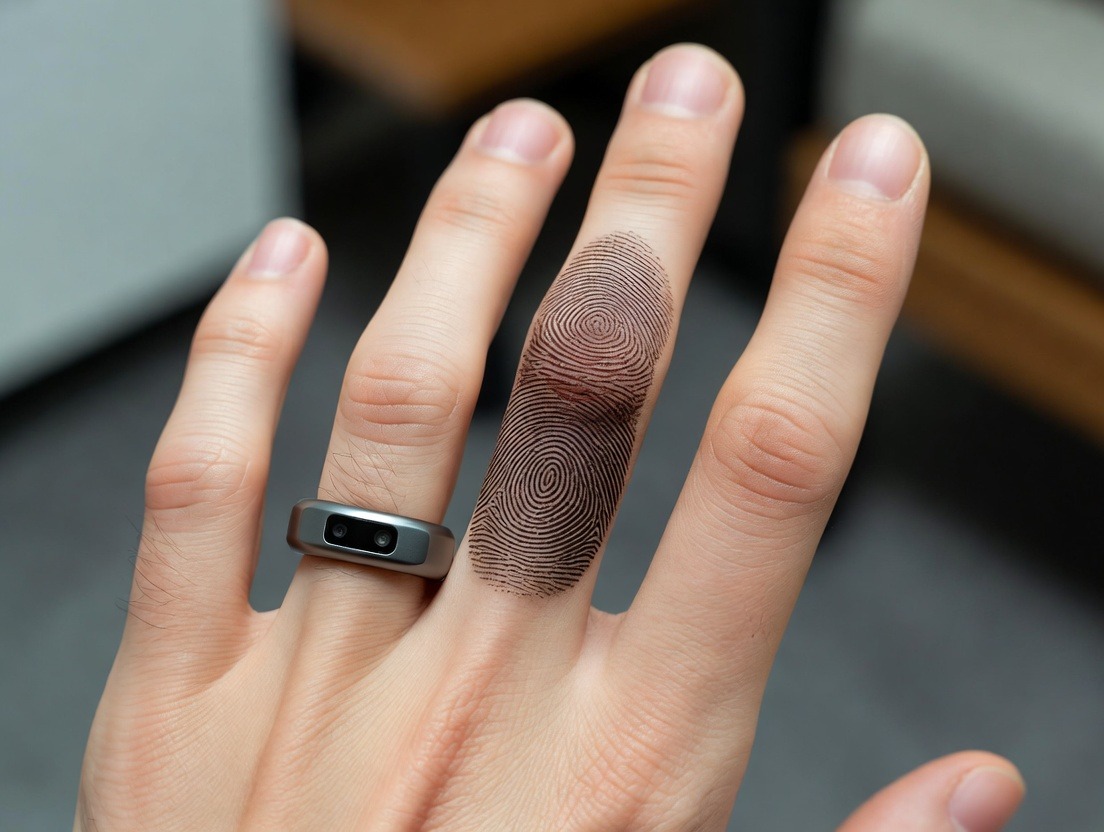
The market for advanced smart rings is growing, with offerings from Oura, Ultrahuman, RingConn, Circular, and others, alongside sophisticated wrist-based wearables like Whoop and Garmin with similar metrics. Selecting the right device is not about the "best" in a vacuum, but the best fit for your professional profile and goals. Here are key decision factors, framed for the high-performing individual:
For the professional, the choice ultimately hinges on which device most seamlessly integrates into your life and most clearly translates complex data into decisive actions that protect and enhance your capacity to perform. It's an investment not in a gadget, but in your human infrastructure.
We are currently in the "tracking" era. The next leap is into the prescriptive and predictive era, powered by the convergence of advanced biometric sensors and specialized artificial intelligence. This isn't about a ring giving generic tips; it's about an AI coach that knows your physiology, your calendar, your work patterns, and your goals, and intervenes with hyper-personalized guidance.
Imagine this near-future scenario: Your ring's AI, having learned your patterns, sends a notification on Sunday evening: *"Analysis of your upcoming week shows four consecutive days of high-stakes meetings. Your historical data indicates this pattern typically lowers your HRV by 15% by Thursday. To maintain performance, I recommend: 1) Scheduling a 20-minute walk for Tuesday at 3 PM. 2) Moving your Wednesday workout to the morning. 3) Blocking a 30-minute 'Do Not Disturb' recovery window after your Thursday summit. Should I adjust your calendar?"*
This AI could:
This future moves beyond reactive tracking to proactive co-piloting. The AI becomes a strategic partner in managing your human operating system. For the professional, this means offloading the cognitive burden of self-regulation to a system designed for it, freeing you to focus entirely on the creative, strategic, and human elements of your work that machines cannot replicate. The foundation for this is already being laid in the science of sleep improvement mastery advanced optimization techniques.
Understanding the "why" is essential, but success is built on the "how." Here is a practical, 30-day protocol for integrating a smart ring into your professional life to build sustainable high-performance habits. This is not about perfection, but about progressive learning and integration.
Week 1: The Observational Baseline (Days 1-7)
Week 2: The Connection Phase (Days 8-14)
Week 3: The Single-Lever Experiment (Days 15-21)
Week 4: Integration & Planning (Days 22-30)
By the end of 30 days, the ring will have transitioned from a novel tracker to an integrated part of your professional operating system. You will have moved from being a passenger in your own biology to becoming its skilled pilot.
As with any optimization journey, you will hit plateaus. After initial improvements in sleep and recovery scores, progress may stall. This is normal and is a sign that your body has adapted to the new baseline. The smart ring is crucial here, as it provides the objective data to confirm the plateau and guide you to the next level.
Strategies for Breaking Through:
The key is to use the data not as a report card, but as a dialogue with your body. A plateau is a question: "What's the next stimulus for growth?" The ring provides the feedback to answer it safely and effectively, ensuring you are always evolving, not just maintaining. For a dedicated look at moving past stagnation, our guide on sleep improvement plateau breaking through stagnation provides a focused framework.
The modern professional landscape is a marathon of sprints. Early career success is often fueled by raw stamina and ambition, but sustaining that success over decades requires a strategic, long-term perspective on your human capital. This is where the smart ring transitions from a performance optimizer to a career longevity insurance policy. Its value compounds over years, not weeks, by providing a continuous, objective record of your physiological trends, allowing you to manage your energy and health as a non-renewable portfolio.
Consider the data your ring accumulates over five years. This longitudinal dataset becomes a powerful diagnostic tool. You can observe:
This long-view approach reframes wellness from a series of New Year's resolutions into a continuous stewardship of your primary professional asset: yourself. The ring becomes the dashboard for this stewardship. It allows you to make career decisions—accepting a more stressful role, pursuing an entrepreneurial venture, scaling back for family—with a clear understanding of the physiological cost and the recovery capital required. You plan sabbaticals or strategic downtimes not out of desperation, but as pre-emptive, data-informed reloading phases, ensuring you have the stamina for a 40-year career of impact, not a 10-year career of burnout.
Perhaps the most profound impact of living with a smart ring is not on your sleep scores, but on your mindset. In a professional world that often measures worth by external outputs—revenue closed, deals made, projects shipped—the ring anchors you to an internal metric of value: your biometric integrity. This fosters a philosophical shift from seeking external validation to cultivating internal sovereignty.
You begin to make decisions not solely based on what will please your boss, client, or peers, but on what will preserve or enhance your readiness score. Saying "no" to a late-night request becomes easier when you can literally see the projected cost on your next day's cognitive function. Taking a full vacation becomes non-negotiable when you observe the multi-week positive ripple effect on your HRV. This is not selfishness; it is the ultimate professionalism. It recognizes that your highest-quality work, your most creative ideas, and your most empathetic leadership are only possible when your biological system is operating in the green zone.
This sovereignty extends to your relationship with productivity culture. The ring's data often reveals the law of diminishing returns on overwork. The 12th hour at your desk may produce negligible output while inflicting massive recovery debt. The data legitimizes rest, movement, and play as essential components of the production cycle, not deviations from it. You start to trust the data over the cultural noise, understanding that sometimes the most professional thing you can do is log off and go for a walk. This mindset is the bedrock of sustainable success, moving you from a human doing to a human being who is exceptionally effective.
A final, critical awareness is that data, while powerful, is not destiny. The smart ring provides the "what" and the "when," but the "why" and the "how to respond" require human wisdom. The most advanced algorithm cannot tell you if pushing through a low-readiness day to support a teammate in crisis is the right moral choice. It cannot quantify the joy of a spontaneous late-night conversation with a friend, even if it disrupts your sleep. It is a tool for optimization, but life—and a rich professional life—is about more than optimization.
The goal is to reach a state of informed intuition. Initially, you rely heavily on the ring's scores and alerts. Over time, as you internalize the connections between your habits and your states, you develop a sharper, more accurate sense of your own body. You might feel a subtle tension and know, before checking an app, that your HRV is likely depressed. You learn to distinguish between productive tiredness (after a great workout or deep work session) and draining exhaustion (from chronic stress). The ring trains this inner sense, and then you learn to occasionally set it aside, to live in the unquantified moment.
This synthesis is where true balance lies. You use data to build robust, resilient habits and to catch yourself when you drift into unhealthy patterns. But you also grant yourself the freedom to sometimes ignore the data in service of connection, spontaneity, or purpose. The ring is the compass, but you are still the navigator, choosing when to follow the plotted course and when to sail toward a meaningful horizon that doesn't appear on the map.
In the competitive arena of professional achievement, we search for edges—new skills, better networks, faster technology. Yet, the most significant leverage point has been with us all along: our own biology. The smart ring demystifies this inner world. It takes the eight foundational wellness habits—sleep architecture, circadian rhythm management, stress navigation, energy cycling, metabolic awareness, resilience building, environmental optimization, and habit integration—and transforms them from abstract ideals into a living, breathing, data-informed practice.
This is not about biohacking for its own sake. It is about conscious embodiment in your professional life. It is about recognizing that the quality of your decisions, the clarity of your communication, the depth of your creativity, and the strength of your leadership are direct products of your physiological state.
By leveraging this technology, you gain an unfair advantage: the ability to consistently show up as your best self. You trade reactive crisis management for proactive capacity building. You replace guesswork with confidence. You build a career not on the shaky foundation of borrowed energy and suppressed strain, but on the solid rock of quantified recovery and sustainable vitality.
The journey begins not with a massive overhaul, but with a single data point—your first night's sleep score, your first morning readiness reading. From there, it unfolds into a lifelong practice of listening, learning, and optimizing. In a world that demands more, your smart ring empowers you to be more—not by doing more, but by being more intelligently, more resiliently, and more wholly human. Your success, tracked, understood, and sustained, awaits.
Your performance is not dictated solely by your habits, but by the environments you inhabit for 90% of your day. The lighting in your office, the temperature of your bedroom, the noise pollution during your focus work—all these environmental factors leave a biometric signature. Your smart ring helps you become a scientist of your own surroundings, using your body's responses to optimize them.
Skin temperature data is invaluable here. It helps you pinpoint the ideal bedroom temperature for your sleep. The standard advice is around 65°F (18°C), but your data might show you sleep more soundly with less fragmentation at 68°F. You can experiment and let your deep sleep score be the judge.
Sleep staging and resting heart rate data reveal the impact of environmental disruptions. A spike in heart rate and a shift to light sleep at 2 AM might correlate with a partner’s movement, street noise, or a change in light pollution. This objective data justifies investments in blackout curtains, white noise machines, or a temperature-regulating mattress pad.
During the day, indirect data also tells a story. If you notice your daytime stress scores are consistently high in your home office but lower when you work elsewhere, it might point to poor ergonomics, lighting, or even subconscious associations with that space. By treating your body as the ultimate sensor, you can iterate on your environments—both work and rest—to create conditions that passively support lower stress, better recovery, and sharper focus. For those struggling with specific environmental factors like temperature, targeted strategies can be found in our guide on sleep improvement for hot sleepers cooling strategies.
The ultimate power of the smart ring is not in tracking eight isolated habits, but in revealing how they interconnect to form a holistic flywheel of wellness. It shows you the compound effect. The ring’s data makes visible the virtuous (and vicious) cycles that define your professional vitality.
For example, the data will show you:
Conversely, it will also illuminate the doom loop: poor sleep → low HRV → poor stress handling → bad food choices → low energy → skipped workout → worse sleep.
This systems-view is transformative. It encourages you to see habits not as discrete chores, but as interdependent levers in a personal performance engine. You stop asking, "What's one thing I can fix?" and start asking, "Which lever, if pulled, will positively influence the entire system?" Often, the data points to sleep as the foundational habit, as its improvement compounds with all others, a principle detailed in sleep improvement compounds with wellness habits. Your smart ring provides the map of this territory, allowing you to navigate intentionally toward a state where professional success is built on a bedrock of quantifiable, optimized well-being. This is the edge that separates the perpetually drained from the sustainably unstoppable.
Your Trusted Sleep Advocate: Sleep Foundation — https://www.sleepfoundation.org
Discover a digital archive of scholarly articles: NIH — https://www.ncbi.nlm.nih.gov/
39 million citations for biomedical literature :PubMed — https://pubmed.ncbi.nlm.nih.gov/
Experts at Harvard Health Publishing covering a variety of health topics — https://www.health.harvard.edu/blog/
Every life deserves world class care :Cleveland Clinic - https://my.clevelandclinic.org/health
Wearable technology and the future of predictive health monitoring :MIT Technology Review — https://www.technologyreview.com/
Dedicated to the well-being of all people and guided by science :World Health Organization — https://www.who.int/news-room/
Psychological science and knowledge to benefit society and improve lives. :APA — https://www.apa.org/monitor/
Cutting-edge insights on human longevity and peak performance:
Lifespan Research — https://www.lifespan.io/
Global authority on exercise physiology, sports performance, and human recovery:
American College of Sports Medicine — https://www.acsm.org/
Neuroscience-driven guidance for better focus, sleep, and mental clarity:
Stanford Human Performance Lab — https://humanperformance.stanford.edu/
Evidence-based psychology and mind–body wellness resources:
Mayo Clinic — https://www.mayoclinic.org/healthy-lifestyle/
Data-backed research on emotional wellbeing, stress biology, and resilience:
American Institute of Stress — https://www.stress.org/


