


The Sleep Improvement Reality Check: Realistic Expectations
Realistic expectations acknowledge that perfect sleep every night is impossible; aim for consistency and overall trend improvement.
Realistic expectations acknowledge that perfect sleep every night is impossible; aim for consistency and overall trend improvement.
%402x.svg)
You’ve seen the ads. The serene faces on pillows, the perfect sleep scores glowing on a smartphone, the promise of “perfect sleep in 30 days.” In the wellness world, sleep has become the ultimate frontier of optimization—a metric to hack, a score to perfect, and, for many, a source of profound frustration. We invest in smart rings, sleep trackers, blackout curtains, and a pharmacy of supplements, chasing the elusive promise of waking up every single day feeling like a million dollars.
But what if the promise is the problem? What if our relentless pursuit of perfect sleep is, paradoxically, stealing our rest?
Welcome to the Sleep Improvement Reality Check. This isn’t another list of “10 Hacks for Perfect Sleep Tonight.” This is a foundational, evidence-based exploration of what you can realistically expect when you decide to improve your sleep. We’re dismantling the hype, confronting the “sleep perfection” complex, and building a sustainable, compassionate, and effective approach to rest. Using modern tools like smart rings not as judges, but as guides, we’ll separate the attainable gains from the marketing myths. Your journey to better sleep begins not with a fantastical goal, but with a clear-eyed, realistic starting point.

The modern sleep optimization movement has a dark side: orthosomnia. Coined by researchers, this term describes an unhealthy preoccupation with achieving perfect sleep, fueled by the very data meant to help us. It’s the anxiety that spikes when your smart ring shows a “Poor” recovery score. It’s the urge to stay in bed longer after a “bad” night, hoping to improve the metrics. It’s the belief that unless every data point is in the green, you’re failing at a fundamental human need.
This perfectionism is rooted in several myths:
The consequence of buying into these myths is a phenomenon well-documented in sleep science: effortful sleep. The harder you try to sleep, the more elusive it becomes. Your brain’s sleep drive, a natural physiological process, gets drowned out by the cognitive noise of striving. The first step toward better sleep is often to surrender the fight for perfection. This doesn’t mean giving up, but shifting your goal from a perfect score to consistently better, more sustainable rest. It’s about progress, not perfection. Understanding the psychology of why these numbers can motivate change is crucial for using them healthily.
Let’s replace the hype with evidence. When you commit to a realistic, science-backed sleep improvement plan, what changes can you genuinely anticipate? These are not overnight miracles, but gradual, profound shifts that compound over time.
1. Improved Sleep Efficiency, Not Just Duration. You may not instantly add an hour of sleep, but you can significantly improve how you use the time you’re in bed. Sleep efficiency—the percentage of time in bed actually spent sleeping—is a gold-standard metric. Moving from a restless 75% efficiency (lying awake for 2 hours in an 8-hour window) to a solid 90% gives you an extra hour of actual sleep without spending more time in bed. This is one of the most immediate and tangible wins.
2. Stabilized Sleep-Wake Timing. Your circadian rhythm loves consistency. A realistic goal isn’t a 9 PM bedtime if you’re a night owl, but a regular one. By anchoring your wake-up time and dimming lights consistently, you can strengthen your internal clock. This leads to more predictable sleep onset, less social jetlag, and easier mornings. The data from a wearable can powerfully validate this, showing how regular monitoring and consistency solidify these rhythms.
3. Enhanced Sleep Quality Metrics. This is where modern tracking shines. You can realistically expect to see positive trends in the architecture of your sleep:
* Increased Deep Sleep: While you can’t force 3 hours of deep sleep, you can create the conditions for your body to maximize it. Strategies targeting temperature, timing, and pre-sleep behavior can lead to measurable improvements in this restorative phase. You can learn more about the deep sleep formula based on temperature, timing, and habits.
* More Consolidated Sleep: Fewer and shorter nighttime awakenings. You’ll spend less time in the “tossing and turning” zone and more in continuous sleep cycles.
* Faster Sleep Onset: Reducing the time it takes to fall asleep from 45 minutes to 15-20 minutes is a highly realistic and impactful goal.
4. Subjective Daytime Improvements. The ultimate goal. Within a few weeks of improved sleep, you can realistically notice:
* More stable energy throughout the day (less 3 PM crash).
* Improved mood regulation and resilience to stress.
* Sharper focus and mental clarity.
* Better recovery from exercise, as detailed in our analysis of deep sleep optimization for athletes.
The key is to view these as trends over weeks and months, not nightly report cards. Some nights will be better than others, and that’s not a failure—it’s human. The power lies in the longitudinal view that a device provides, helping you see the forest beyond the occasional barren tree.
To make room for realistic progress, we must consciously discard the fantasies sold to us. Holding onto these will sabotage your efforts before they begin.
Expectation to Drop #1: Linear, Nightly Improvement. Sleep is not a stock chart you want to see always climbing. It is inherently variable. Stress, digestion, a change in routine, an intense workout, or even a full moon can impact a single night’s data. Expecting every night to be better than the last is a recipe for frustration. Look at weekly averages and monthly trends instead. This longitudinal insight is a core strength of how consistent sleep tracking integrates with your broader health picture.
Expectation to Drop #2: One-Size-Fits-All Solutions. The podcast host’s “perfect” routine will not be perfect for you. Your friend’s miracle supplement may do nothing. Your body is a unique ecosystem. The process is one of thoughtful self-experimentation: try one change at a time, observe the trend (not just one night), and see what your data and your feelings tell you.
Expectation to Drop #3: Immediate Results. Neuroplasticity and circadian entrainment take time. Don’t expect one early night to fix months of accumulated sleep debt. Commit to a change for at least two weeks before assessing its impact. The first few days might even feel harder as your body adjusts.
Expectation to Drop #4: 100% Control Over Your Sleep. You cannot control your sleep. You can only influence the conditions that make sleep likely. You are a gardener, not a puppeteer. You prepare the soil (your environment and habits), plant the seeds (your sleep drive), and let nature (your nervous system) take its course. Obsessing over control activates the sympathetic “fight or flight” system—the exact opposite of the state required for sleep.
By releasing these unrealistic burdens, you free up mental energy for the actual work: crafting and tending to your personal sleep ecosystem. This is where the journey truly begins.
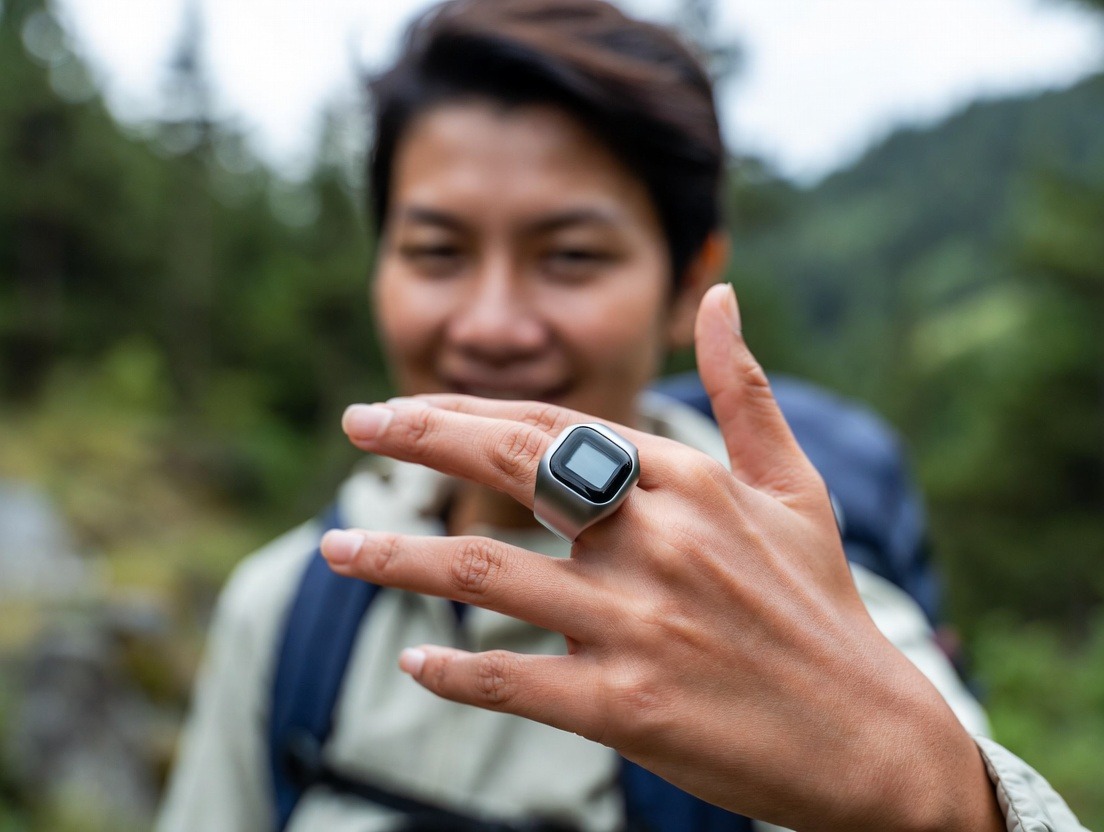
A common misuse of sleep technology is leaping straight to setting ambitious goals (“I want a Sleep Score of 90!”) without first establishing a truthful baseline. This is like planning a cross-country road trip without knowing your starting point. The first and most critical job of a device like a smart ring is not to judge your destination, but to illuminate your starting line with compassionate objectivity.
Establishing Your Personal “Normal”: For two weeks, wear your tracker with zero effort to change your behavior. Observe your natural patterns. What’s your average sleep duration on weekdays vs. weekends? What’s your baseline deep sleep percentage? How long does it actually take you to fall asleep? This data is not “good” or “bad”; it is your unique physiological fingerprint. It provides the crucial context needed to understand articles like what your deep sleep numbers should look like—not against a generic ideal, but against your own starting point.
Identifying Patterns, Not Just Failures: The baseline period often reveals hidden influencers. You might see a correlation between late, heavy dinners and restless sleep, or between afternoon caffeine and reduced sleep efficiency. You may discover that your “bad sleep” is highly predictable on Sunday nights (anticipatory anxiety) or after intense evening screen time. A smart ring, using a combination of sensors like the optical, accelerometer, and temperature sensors found in advanced devices, can detect these subtle physiological shifts that you might miss.
From Judgment to Curiosity: With a baseline in hand, your relationship with the data shifts. Instead of asking, “Why was my score so bad?” you begin to ask, “What was different last night?” and “I see my deep sleep dipped; what might have contributed?” This transforms the device from a critic into a detective’s tool. It helps you move from feeling victimized by poor sleep to understanding its levers and dials. This foundational knowledge is essential before diving into targeted strategies, such as those for travelers managing sleep across time zones.
By spending time in this observational phase, you build a data-informed relationship with your own body. You learn its language. This makes every subsequent intervention—every change in habit or environment—more intelligent, personalized, and ultimately, more likely to succeed.
If you could only focus on one sleep metric for the first month of your journey, it shouldn’t be total sleep time or deep sleep. It should be consistency. Fixating on adding hours to an erratic schedule is like pouring water into a bucket full of holes. First, you patch the holes.
Your circadian rhythm is a powerful internal pacemaker that thrives on predictable cues. The most important cue is light, and the second most important is your behavior—specifically, when you sleep and wake.
The Power of the Wake-Up Anchor: Your wake-up time sets the countdown clock for your sleep drive for the next 16-ish hours. A consistent wake-up time, even on weekends (within an hour or so), is the single most effective tool for anchoring your rhythm. It makes falling asleep easier and leads to more consolidated, efficient sleep. Yes, this means sometimes getting out of bed when you feel you could sleep more. It’s a short-term sacrifice for a long-term rhythm.
The Realistic Approach to Bedtime: An equally rigid bedtime can backfire, creating pressure. Instead, focus on a consistent wind-down routine that begins at the same time. This 60-minute pre-sleep ritual (dim lights, no screens, gentle relaxation) is your signal to your brain that sleep is coming. Your actual “lights out” time will naturally become more consistent as a result.
What to Expect: In the first 1-3 weeks of strict wake-time consistency, you may feel more tired initially, especially if you have significant social jetlag. This is your rhythm realigning. Stick with it. Soon, you’ll notice:
A smart ring excels at showing you this progress visually. The weekly view of your sleep start and end times will transform from a scattered mess into tidy, aligned blocks. This visual proof of consistency is incredibly motivating and forms the bedrock for all other improvements. It’s a practical application of how tracking validates your sleep patterns and efforts.
We’ve been conditioned to believe sleep is something that happens at night, in the bedroom. In reality, sleep is a 24-hour process. The quality of your wakefulness determines the quality of your sleep. Here are the most impactful, evidence-based daytime levers you can pull.
Light Exposure: Your #1 Circadian Tool. View bright, ideally natural, light within the first hour of waking. This suppresses melatonin and sets your internal clock for the day, making you alert now and priming you for sleep later. Conversely, minimize bright, blue-rich light exposure in the 2-3 hours before bed. This isn’t just about screen filters; it’s about dimming overhead lights and using lamps.
Movement & Timing: Regular exercise is a proven sleep promoter, but timing matters. Morning or afternoon workouts generally improve sleep. Intense exercise too close to bedtime can raise core body temperature and act as a stimulant for some people, potentially impacting the quality of your deep sleep window in the first half of the night. Listen to your body and your data.
Caffeine & Alcohol Calculus:
Nutrition & Hydration: Avoid large, heavy, or spicy meals within 3 hours of bedtime. Your body should be digesting, not digesting and trying to initiate complex sleep processes. Stay hydrated throughout the day, but taper liquid intake 1-2 hours before bed to minimize disruptive bathroom trips.
Managing these factors is where a holistic health tracker becomes invaluable. By correlating your activity levels, daytime heart rate, and temperature trends with your nightly sleep score, you can move from guessing to knowing how your daily choices truly impact your rest. This integrated view is the future of personalized wellness, as explored in our article on how sleep data integrates with other health metrics.
You wake up, grab your phone, and open your sleep app. A number stares back at you: 72. “Fair.” A cascade of questions and judgments may follow. But what does that number actually represent? Understanding this is key to avoiding data-driven anxiety and using the information productively.
Deconstructing the Sleep Score: Most scores are composite algorithms weighing several factors, commonly:
Your 72 isn’t a grade from a stern professor. It’s a quantitative summary of these biometric signals. A “low” score isn’t a failure; it’s a snapshot of your physiology last night under a specific set of conditions.
The Gap Between Objective Data & Subjective Feeling: This is critical. Your sleep satisfaction—how you feel upon waking and throughout the day—is the ultimate metric. The data is a supporting actor, not the star. Sometimes they align perfectly. Other times, they diverge.
Using Data as a Guide, Not a Gospel: Let the data ask you questions, not deliver verdicts.
This investigative mindset transforms the experience. It turns passive monitoring into active self-discovery, helping you identify your personal deep sleep killers and unique restorative triggers.
The internet is full of 100-point sleep hygiene checklists. This can be overwhelming and lead to all-or-nothing thinking (“If I can’t do it all, why bother?”). Let’s apply the Pareto Principle: 80% of your results will come from 20% of the actions. These are the non-negotiable, high-impact pillars. Master these before worrying about the minutiae.
Pillar 1: The Sleep Environment (Make It a Cave)
Pillar 2: The Wind-Down Ritual (The 60-Minute Buffer)
This is your signal to the nervous system that the “on” switch is being turned off. It should be consistent and relaxing.
Pillar 3: Mind Management (Quiet the Racing Thoughts)
An anxious mind is the most common barrier to sleep.
Perfectly executing these three pillars 80% of the time will yield far better results than sporadically attempting 50 low-impact tips. They create the optimal physiological and psychological conditions for sleep to occur naturally. It’s the foundation upon which more advanced optimization, like targeted deep sleep strategies, is built.

You’ve done everything right. You’ve nailed consistency, optimized your environment, and established a wind-down ritual. For weeks, your data and feelings improved. Then, it stops. The graph flattens. You’re stuck in the mid-80s, or your deep sleep percentage won’t budge past a certain point. Welcome to the plateau—a normal, expected, and even positive part of the journey.
Why Plateaus Happen:
How to Respond Productively (Without Panic):
The plateau isn’t a wall; it’s a resting ledge on your climb. It’s a chance to look at how far you’ve come, enjoy the view, and plan your next, more nuanced step with intelligence rather than desperation.
This is the most important transformation of all. It’s a shift in identity, from someone who performs sleep to someone who cultivates the conditions for it. The perfectionist is rigid, anxious, and attached to outcomes. The gardener is patient, observant, and invested in the process.
The Perfectionist Mindset: “I must get 8.5 hours with a score over 90. If I don’t, my day is ruined. I need to fix this.”
The Gardener Mindset: “I will tend to my sleep environment and habits tonight. I’ll observe what happens and learn. Some nights will be better than others, and that’s part of the natural cycle.”
How do you make this shift?
By becoming a sleep gardener, you make peace with the inherent variability of life and biology. You use tools like the Oxyzen smart ring not as a scorekeeper, but as a sophisticated lens to understand the unique ecosystem of your own health. This mindset is the ultimate protection against the dark side of sleep tracking, where data creates stress, and the foundation for a lifelong, positive relationship with rest.
The concept of "sleep debt" is one of the most motivating—and most misunderstood—ideas in sleep science. We imagine it as a ledger where we can deposit and withdraw hours, leading to the beloved fantasy of the weekend "catch-up" sleep. But the biological reality is more nuanced, and understanding it is crucial for setting realistic long-term expectations.
What Sleep Debt Actually Is: Sleep debt is best understood not as a simple hour-for-hour deficit, but as a cumulative burden on your cognitive function, metabolic health, and emotional regulation. When you chronically sleep less than your body needs, you accrue impairments in attention, memory, insulin sensitivity, and stress resilience. A landmark study showed that getting 6 hours of sleep per night for two weeks creates cognitive impairments equivalent to going 24 hours without sleep. The debt isn't just about feeling tired; it's about systemic dysfunction.
The Limited Power of "Catch-Up": Can you repay this debt? Yes, but not with a simple one-time deposit. Here's the realistic breakdown:
A Realistic Strategy for Repayment:
Your smart ring can provide subtle clues about debt and recovery. Chronically elevated resting heart rate, reduced heart rate variability (HRV), and a body temperature that doesn't dip optimally at night can all be signs of systemic stress from accumulated sleep debt. Observing these metrics normalize over weeks of better habits is a powerful visual of "repayment" in action. This kind of integrated insight is a key benefit of understanding how sleep tracking integrates with broader health metrics.
The goal isn't to achieve a mythical "zero balance," but to operate consistently in a range where your body and mind can function at their best. It's a shift from reactive compensation to proactive maintenance.
One of the most sobering realizations in the sleep journey is that your "sleep machinery" changes dramatically across your lifespan. The 8-hour, deep-sleep-rich rest of your 20s is not what your 50s or 70s will offer. Fighting this biological truth leads to frustration. Adapting to it with intelligence is the path to realistic, age-appropriate sleep health.
The Inevitable Shifts:
Realistic Adaptation Strategies for Every Decade:
The key at any age is to use data not to lament the loss of youthful sleep, but to understand and optimize your current baseline. A smart ring can show you your personal sleep stage distribution, helping you see that while your deep sleep percentage might be lower than a decade ago, your overall architecture is healthy for you. This reframes the narrative from loss to informed adaptation.
The link between what you eat and how you sleep is profound, yet it's often reduced to simplistic advice like "drink chamomile tea." The reality is more complex and powerful. Nutrition influences sleep through multiple pathways: neurotransmitter production, blood sugar regulation, inflammation, and even the gut microbiome. Let's set realistic expectations about dietary changes.
Macronutrients and Timing:
Key Micronutrients and Their Realistic Impact:
Realistic Dietary Principles for Sleep:
The Gut-Sleep Connection: Emerging research highlights the gut microbiome's role in producing sleep-regulating neurotransmitters. A diverse, fiber-rich diet (prebiotics) and fermented foods (probiotics) support a healthy gut, which may indirectly support healthier sleep patterns.
Expect dietary changes to work as a supportive background player, not a solo act. You won't eat a salad and magically sleep 9 hours, but over weeks, a nutrient-dense, well-timed diet creates a internal biochemical environment that is more conducive to stable, restorative sleep. Track your food timing alongside your sleep data for a week; you may be surprised by the correlations you discover, especially regarding restlessness and sleep onset latency.

This is the heart of the matter for millions. Stress and poor sleep are locked in a vicious, self-reinforcing cycle: worry and anxiety lead to poor sleep, and poor sleep lowers your resilience to stress, making you more anxious. Breaking this cycle requires tools that address both the cognitive and physiological components of stress.
Why Stress Wrecks Sleep: When you're stressed or anxious, your sympathetic nervous system (the "fight or flight" system) is activated. This releases cortisol and adrenaline, increasing heart rate, blood pressure, and alertness—the exact opposite of the parasympathetic "rest and digest" state required for sleep. Chronic stress keeps your nervous system in a heightened state of vigilance, making it hard to "switch off" at night.
Cognitive Strategies (Managing the Mind):
Physiological Strategies (Calming the Body):
The Role of Tracking in Stress Management: This is where a smart ring's capabilities extend far beyond simple sleep staging. Two metrics are particularly insightful:
Breaking the stress-sleep cycle is not about eliminating stress—that's impossible—but about building a buffer of resilience. It's about having practiced, reliable techniques to down-regulate your nervous system when it's time to rest. The combination of cognitive tools, physiological practices, and biofeedback from a device creates a powerful, multi-pronged approach to reclaiming calm and, by extension, reclaiming sleep.
No sleep journey is a straight line. Life happens. A stressful project, a transatlantic flight, a head cold, or a personal crisis will inevitably disrupt your hard-won rhythm. Viewing these events as catastrophic failures will derail your progress. The realistic approach is to plan for them, manage through them with minimal damage, and have a clear recovery protocol.
Plan of Action for Common Disruptors:
1. For Acute Illness (Cold, Flu, Infection):
2. For Jet Lag and Travel:
3. For Stressful Life Events (Work Deadlines, Family Stress):
The Golden Rule for Recovery Post-Setback:
Do not try to "force" recovery by going to bed extremely early or sleeping in for hours. This often creates irregular, poor-quality sleep and prolongs the disruption. Instead:
Your tracking data is invaluable here. It shows you the "dent" the event made in your trends, and then visually charts your recovery back to baseline. This reinforces that setbacks are temporary blips in a long-term positive trend, not a reversion to zero. This perspective is vital for maintaining motivation and avoiding the all-or-nothing thinking that dooms so many wellness journeys.
The self-improvement space, including the use of consumer sleep trackers, has limits. While data can empower you and reveal patterns, it is not a diagnostic tool. Knowing when to transition from self-experimentation to professional consultation is a critical aspect of realistic sleep improvement. Your persistence in the face of certain red flags can be detrimental to your health.
Clear Indicators for Medical Consultation:
How Your Tracker Can Inform the Conversation: Bring your data to your doctor. Being able to show long-term trends, not just subjective complaints, is powerful. You can say:
This data-driven approach moves the conversation past "I'm tired" to "Here is a quantifiable record of my physiology at night." It can help validate your sleep complaints with objective evidence and guide a healthcare provider toward the appropriate tests, such as a clinical polysomnogram (sleep study).
The Mental Health Connection: Chronic sleep problems are both a symptom and a cause of many mental health conditions, including depression and anxiety disorders. If poor sleep is accompanied by persistent low mood, loss of interest, or overwhelming worry, a consultation with a psychologist or psychiatrist is essential. Therapy, particularly Cognitive Behavioral Therapy for Insomnia (CBT-I), is considered the gold-standard, first-line treatment for chronic insomnia and is highly effective.
Seeking help is not a failure of your self-help efforts; it is the logical next step when you've hit the boundary of what self-management can address. It's the ultimate act of realistic self-care.
After absorbing all this information, the final step is synthesis. How do you build a personalized, realistic, and sustainable sleep protocol that you can actually follow? This framework moves you from theory to action, focusing on gradual implementation.
Phase 1: The Observation & Foundation Month (Weeks 1-4)
Phase 2: The Habit Stacking & Experimentation Month (Weeks 5-8)
Phase 3: The Refinement & Resilience Phase (Ongoing)
Your Protocol is a Living Document: It will evolve with your age, lifestyle, and goals. The goal is not to create a rigid prison of rules, but a flexible scaffold of evidence-based habits that support your biology. It's the difference between chasing sleep and cultivating an ecosystem where rest can flourish.
To truly manage expectations and optimize sleep, you must move beyond "hours in bed" and understand the intricate symphony of your sleep architecture. This is the cyclical pattern of sleep stages your brain progresses through each night. Knowing what each stage does, and how they are orchestrated, allows you to interpret your data intelligently and target your efforts where they matter most.
The Four Stages of Sleep:
NREM (Non-Rapid Eye Movement) Sleep – The Physical Restoration Phase
REM (Rapid Eye Movement) Sleep – The Mental Restoration Phase
The Sleep Cycle Symphony: These stages don't occur randomly. They are organized into cycles lasting approximately 90-110 minutes each. A typical night involves 4-6 of these cycles.
Realistic Implications for Your Sleep Journey:
Understanding this architecture turns your nightly data from a confusing report card into a meaningful story. You can see if you're getting those crucial early deep sleep blocks, if your REM periods are expanding toward morning, and how fragmented your cycles are. This knowledge empowers you to ask better questions and make more informed changes to support your body's natural rhythm.
Of all the sleep stages, deep sleep (N3) holds a unique, almost mythical status in the wellness world. We've touched on its physical restorative powers, but its connection to growth hormone (GH) secretion deserves its own spotlight, as it underpins so many of the promised benefits—from muscle repair to anti-aging.
The Endocrine Rhythm of the Night: Growth hormone, produced by the pituitary gland, is not released at a steady trickle. It follows a pulsatile pattern, with the largest, most significant pulse occurring in conjunction with the first period of deep sleep, typically within the first 90 minutes of falling asleep. This relationship is so robust that scientists can predict GH secretion based on the onset of slow-wave sleep.
Why This Matters for Your Health:
Growth hormone is misnamed; its role extends far beyond childhood growth. In adults, it is essential for:
Realistic Expectations for Optimization: You cannot "hack" your body to release unlimited GH. However, you can create the optimal conditions for this natural, sleep-dependent pulse to occur robustly.
What Your Data Can Tell You: While consumer devices cannot measure GH, they are excellent at measuring the proxy metric: deep sleep. A consistent pattern of solid, consolidated deep sleep in the first half of your night is a strong indicator that your GH rhythm is likely functioning well. If your tracker shows chronically low or fragmented deep sleep, it's a sign that this critical restorative pathway is compromised. Focusing on improving those deep sleep metrics isn't just about feeling rested; it's about supporting a fundamental pillar of your body's repair and renewal system. For a scientific breakdown of this process, explore the science of what happens to your body during deep sleep.
If deep sleep is the body's mechanic, REM sleep is its therapist and creative director. For years overshadowed by the deep sleep obsession, REM is now recognized as equally vital for a different set of functions: emotional resilience, memory integration, and creative problem-solving.
What Happens During REM:
Realistic Signs of REM Deprivation:
How to Support Healthy REM Sleep:
The Deep Sleep vs. REM Sleep Balance: It's not a competition. Your brain dynamically allocates time to each stage based on need. After a day of intense physical exertion, you may see more deep sleep. After a day of intense emotional or cognitive work, you may get more REM. A healthy sleep architecture has both. Understanding the critical differences and why both matter is key to a holistic view of your sleep health.
Your smart ring can help you track REM trends. Look for a pattern where REM periods are short in the first half of the night and grow longer in the second. A complete absence of REM or an extremely high percentage might be worth discussing with a professional. Appreciating REM sleep shifts the goal from just "deep rest" to "emotionally and mentally balanced rest," which is just as critical for your overall wellbeing.
Your Trusted Sleep Advocate: Sleep Foundation — https://www.sleepfoundation.org
Discover a digital archive of scholarly articles: NIH — https://www.ncbi.nlm.nih.gov/
39 million citations for biomedical literature :PubMed — https://pubmed.ncbi.nlm.nih.gov/
Experts at Harvard Health Publishing covering a variety of health topics — https://www.health.harvard.edu/blog/
Every life deserves world class care :Cleveland Clinic - https://my.clevelandclinic.org/health
Wearable technology and the future of predictive health monitoring :MIT Technology Review — https://www.technologyreview.com/
Dedicated to the well-being of all people and guided by science :World Health Organization — https://www.who.int/news-room/
Psychological science and knowledge to benefit society and improve lives. :APA — https://www.apa.org/monitor/
Cutting-edge insights on human longevity and peak performance:
Lifespan Research — https://www.lifespan.io/
Global authority on exercise physiology, sports performance, and human recovery:
American College of Sports Medicine — https://www.acsm.org/
Neuroscience-driven guidance for better focus, sleep, and mental clarity:
Stanford Human Performance Lab — https://humanperformance.stanford.edu/
Evidence-based psychology and mind–body wellness resources:
Mayo Clinic — https://www.mayoclinic.org/healthy-lifestyle/
Data-backed research on emotional wellbeing, stress biology, and resilience:
American Institute of Stress — https://www.stress.org/


