


Sleep Improvement Through Timing: When Matters Most
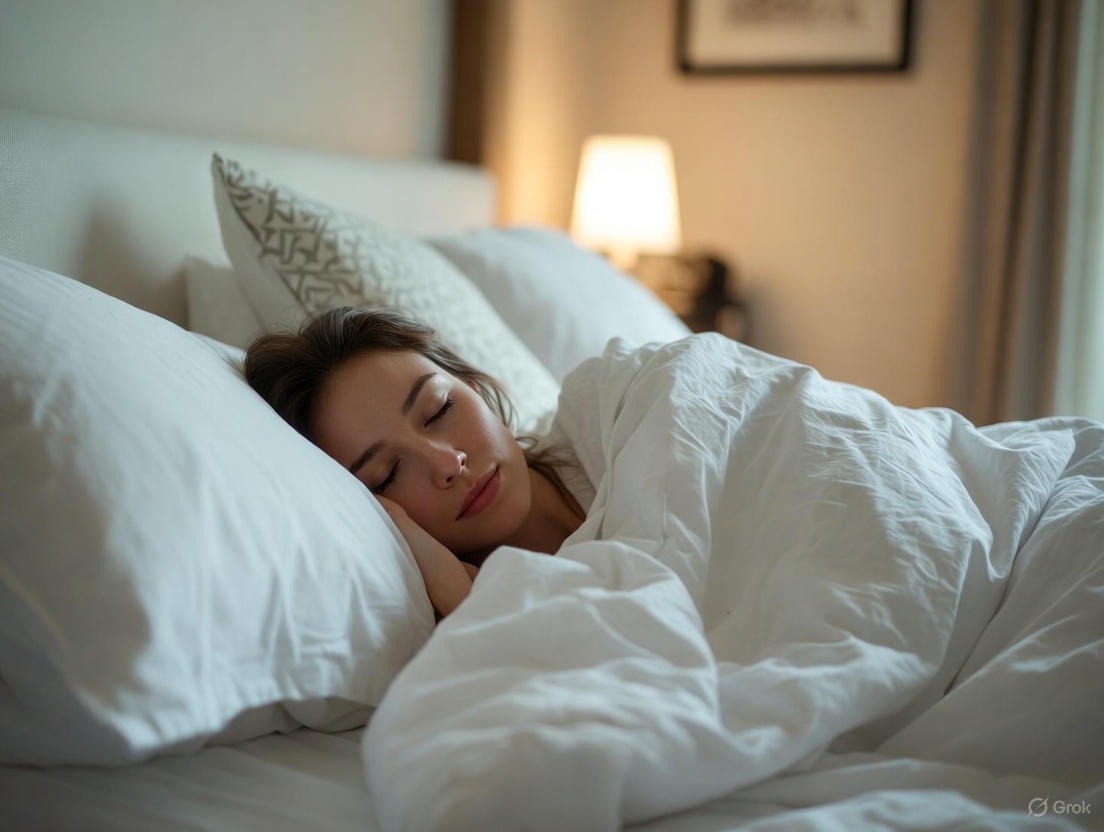
Timing matters most for consistency—a fixed wake time is the most powerful signal for setting your biological clock.
Timing matters most for consistency—a fixed wake time is the most powerful signal for setting your biological clock.
%402x.svg)
We live in a world obsessed with what and how much. How much protein should I eat? What type of exercise is best? How many hours of sleep do I need? While these questions are important, they overlook a fundamental pillar of human biology that governs everything from our metabolism to our mood, our cognitive performance to our cellular repair: timing.
When it comes to sleep—the single most potent performance enhancer and health regulator at our disposal—timing isn't just a detail; it’s the main event. You could spend eight hours in bed, but if they’re the wrong eight hours according to your internal clock, you’ll wake feeling drained. You could practice perfect sleep hygiene, but if your meals, exercise, and light exposure are misaligned, you’ll fight an uphill battle for restful slumber. This is the silent struggle of millions: chasing sleep quantity while sleep quality, dictated by circadian biology, remains elusive.
This article is a deep exploration into the science of chronobiology as it applies to sleep. We’ll move beyond the generic "get 8 hours" advice and into the precision of when. When should you sleep? When should you eat your last meal to optimize sleep architecture? When is the ideal window for exercise, caffeine, and even worry? We’ll dissect the 24-hour cycle, revealing how every action has a circadian consequence that ripples into your night.
Modern technology, particularly the advent of sophisticated wearable devices like smart rings, has pulled back the curtain on this invisible rhythm. For the first time in history, we can move from guessing about our sleep to understanding its precise architecture and its relationship to our daily schedule. This isn’t about obsessing over data, but about using it to create harmony. By aligning our lives with our innate timing, we unlock a level of recovery, mental clarity, and vitality that feels less like a struggle and more like a natural state of being. Let’s begin by understanding the master conductor of this symphony: your circadian rhythm.

At the core of every sleep timing discussion lies the circadian rhythm. This isn't a metaphor or a vague concept; it’s a concrete, biological reality. The term "circadian" comes from the Latin circa diem, meaning "about a day." It refers to the roughly 24-hour cycle that regulates the physiological and behavioral processes of virtually every living organism on Earth, from bacteria to humans.
Think of your circadian rhythm not as a simple sleep-wake timer, but as a master project manager operating out of the headquarters of your brain—the suprachiasmatic nucleus (SCN), a tiny region of the hypothalamus. This project manager doesn't just tell you when to feel sleepy. It orchestrates a daily cascade of events: it schedules the release of hormones like cortisol to wake you up and melatonin to usher in sleep; it dictates fluctuations in core body temperature (a key sleep driver); it manages peaks and troughs in alertness, digestion, immune function, and even the expression of thousands of genes.
The SCN doesn't operate in a vacuum. It synchronizes itself to the outside world primarily through light, especially the blue-wavelength light of sunrise. When light hits your eyes in the morning, it signals the SCN to suppress melatonin production, boost cortisol, and raise your body temperature, effectively hitting the "start" button on your biological day. As daylight fades, the absence of light cues the SCN to initiate the reverse process, preparing your body for rest.
The critical concept here is entrainment—the process of syncing your internal clock with external time cues (called zeitgebers, German for "time givers"). The most powerful zeitgeber is light, but others include temperature, food intake, and social activity. When your lifestyle aligns with these natural cues, your circadian rhythm is entrained, and all systems hum along in harmony. This is the state of circadian alignment, and it is the non-negotiable foundation of restorative sleep.
Conversely, modern life is a masterclass in circadian disruption. We bombard our SCN with bright artificial light long after sunset. We eat at erratic hours, sometimes right before bed. We keep our homes thermally neutral, blunting the natural nighttime dip in core temperature that facilitates sleep. We jet across time zones or work overnight shifts. This creates a state of internal misalignment, often called social jet lag, where your body's internal time is out of sync with your external social and work time.
The consequences are profound and extend far beyond tiredness. Chronic circadian disruption is linked to an increased risk of metabolic disorders (like obesity and type 2 diabetes), cardiovascular disease, compromised immune function, mood disorders like depression, and certain cancers. Your sleep, therefore, is the most visible casualty of a deeper systemic discord. Understanding this rhythm is the first step toward fixing it. By learning to work with your clock instead of against it, you stop forcing sleep and start allowing it to occur naturally. In the next section, we’ll see how this master clock directly constructs the architecture of your night.
If your circadian rhythm is the project manager, then sleep itself is the critical overnight construction project. This project isn't a monolithic block of unconsciousness; it’s a highly organized, cyclical process with distinct phases, each serving a unique and vital purpose. Understanding this sleep architecture—the timeline of your night—reveals why when you sleep is as important as that you sleep.
A full night’s sleep for a healthy adult consists of multiple 90- to 120-minute cycles. Each cycle progresses through a specific sequence of stages:
Here’s where timing becomes architecturally critical: The composition of these cycles changes predictably throughout the night.
This pattern is a direct instruction from your circadian rhythm and a related process called the sleep-wake homeostat (which tracks your sleep debt). Your body schedules the most physically recuperative deep sleep for the early part of your sleep window, when circadian drive for sleep is strongest and slow-wave pressure is high. If you truncate your sleep by waking up too early, you disproportionately rob yourself of REM sleep. If you go to bed too late, you may miss your optimal window for deep sleep initiation.
Therefore, the timing and duration of your sleep window directly determine the balance of the restorative benefits you receive. A short or mis-timed sleep isn’t just less sleep; it’s a qualitatively different, less restorative type of sleep. This is precisely why tracking your sleep phases—not just duration—is so revealing. With a device capable of measuring deep sleep without a sleep lab, you can see firsthand how your bedtime and wake time influence this crucial architecture. Now, let’s pinpoint the single most important timing decision you make each day.
We’ve established that a master clock runs your biology and that it builds sleep in a specific sequence. But not all clocks are set to the same time. This inherent, genetically influenced predisposition for when you prefer to sleep and be active is your chronotype. It’s your personal expression of your circadian rhythm. While the SCN is the conductor, your chronotype is the sheet music it’s reading.
Popularized by sleep scientist Dr. Michael Breus, chronotypes are often categorized into four animal archetypes, which are more nuanced than the simple "lark" or "owl":
Your chronotype is not a choice or a lifestyle; it’s a biological reality, influenced by genetics (like the PER3 gene), age, and other factors. Trying to force a Wolf to live like a Lion is a recipe for chronic sleep deprivation and circadian misalignment, no matter how "disciplined" they try to be. The key is not to change your chronotype, but to discover and honor it.
This is where personalized data becomes invaluable. A consistent wearables can help you identify your natural patterns. When do your body temperature and heart rate naturally dip, suggesting a readiness for sleep? When do you consistently record your most restful sleep, even on free days? This data moves you from guessing ("I'm not a morning person") to knowing your precise biological niche.
Aligning your life with your chronotype—scheduling demanding cognitive work during your peak alertness, planning important meetings when you’re sharpest, and, crucially, setting a sleep window that matches your natural propensity—is a game-changer for sleep quality and daily performance. It turns effort into ease. For Wolves struggling in a 9-to-5 world, this might mean negotiating a later start time or blocking your calendar for deep work in the afternoon. For Lions, it means protecting your early evenings for wind-down. Fighting your chronotype is a battle against your own biology; understanding it is the path to sustainable wellness. Next, we'll apply this to the cornerstone of sleep timing: setting your ideal bedtime.
"Go to bed earlier." It’s the most common, least helpful piece of sleep advice. The question is, earlier than what? And what does "early" even mean for a Wolf versus a Lion? The ideal bedtime is not a universal standard like midnight; it’s a personal calculation based on your chronotype, your circadian rhythm, and a key physiological signal: your core body temperature.
Here’s the scientific blueprint for finding yours:
Step 1: The Core Body Temperature Cue.
One of the most reliable physiological markers of sleep onset is the nocturnal drop in core body temperature. As evening progresses, your circadian rhythm orchestrates a dilation of blood vessels in your skin (particularly in your hands and feet), releasing heat and lowering your core temperature by about 1-2 degrees Fahrenheit. This drop is a direct signal to the brain that it’s time for sleep. It initiates feelings of drowsiness and facilitates the transition into deep sleep.
Your ideal bedtime window occurs approximately 1-2 hours after your temperature begins this steady decline and lasts until it reaches its nadir (lowest point), which for most people is around 4-5 AM. If you go to bed before this decline starts, you’ll lie awake. If you try to go to bed after it’s well underway (i.e., you’ve missed the "sleep train"), you may experience a "second wind" as your circadian rhythm enters another phase.
Step 2: The Chronotype Adjustment.
Your chronotype dictates the timing of this temperature drop.
Step 3: The Wake-Time Back-Calculation.
While bedtime is critical, it’s only one side of the equation. You must pair it with a consistent wake time. The classic advice is to aim for 7-9 hours of sleep. A more sophisticated approach is to wake up at the end of a 90-minute sleep cycle to avoid grogginess (sleep inertia). If your alarm jolts you from deep or REM sleep, you’ll feel terrible.
Therefore, your calculation becomes:
This calculated time should then be cross-referenced with your chronotype’s natural window. A Wolf forced to wake at 6:30 AM may find a 10:45 PM bedtime impossible. For them, the solution may involve negotiating a later wake time or using light therapy to gently shift their circadian rhythm earlier over time.
Technology shines here. A smart ring that tracks your continuous body temperature can show you your personal nightly dip. By reviewing your data over weeks, you can identify the time your temperature reliably begins to fall—your biological green light for sleep. This moves bedtime from an arbitrary rule to a data-informed, personalized ritual. It’s the difference between trying to sleep and being ready to sleep. As we’ll see, this readiness is fragile and can be easily undermined by one of the most powerful circadian disruptors: light.
Of all the zeitgebers that entrain your circadian rhythm, light is the undisputed king. It is the primary signal that tells your SCN, "This is day. Reset the clock." Understanding and managing light exposure is arguably the most potent tool you have for controlling your sleep timing. This isn't just about avoiding screens before bed; it’s about a strategic, all-day approach to light dosing.
The Mechanism: Melanopsin and the ipRGCs.
The process is exquisitely specific. In your eyes, a special subset of photoreceptor cells, distinct from the rods and cones used for vision, contains a photopigment called melanopsin. These intrinsically photosensitive retinal ganglion cells (ipRGCs) are exquisitely sensitive to short-wavelength blue light (around 460-480 nm). When morning sunlight (rich in blue light) hits these cells, they send a direct signal to the SCN: "Stop melatonin production. It’s day time." This sets your circadian clock for the next 24 hours.
The Day-Night Strategy for Perfect Timing:
1. Morning Light (Within 1 Hour of Waking): This is Non-Negotiable.
Viewing bright, outdoor light (even on a cloudy day) for 10-30 minutes in the morning is the most powerful action you can take to strengthen your circadian rhythm. It:
2. Daytime Bright Light: Sustain the Signal.
Continued exposure to bright light throughout the day, especially in the afternoon, helps maintain alertness and reinforces the circadian day phase. Seek natural light whenever possible. Dim, cave-like offices contribute to daytime drowsiness and a weaker circadian signal.
3. Evening Dim Light: The Art of the Wind-Down.
As the sun sets, your goal is to mimic the natural environment. This means dramatically reducing light intensity and eliminating blue light 2-3 hours before your target bedtime.
The Modern Sabotage:
Our indoor environments are a circadian disaster. We live in 100-lux dimness by day and blast our retinas with 1000-lux screens by night, completely inverting the natural light cycle. This confuses the SCN, delaying the melatonin signal and pushing your entire sleep window later. It directly causes you to miss your ideal biological bedtime.
For travelers or shift workers, this light management becomes a critical science. Deliberately timed light exposure can help you adapt your sleep tracking across time zones faster. By using bright light to strategically advance or delay your clock, you can minimize jet lag.
Mastering light is mastering timing. It’s the most direct way to tell your body when it is, aligning your internal clock with your desired schedule. Once you’ve set the stage with light, the next act involves another powerful zeitgeber: food.
Your digestive system has its own circadian rhythms. Enzymes, gut motility, and metabolic hormones like insulin follow a daily pattern optimized for daytime activity and nighttime repair. Chrononutrition—the study of the relationship between food timing and circadian biology—reveals that when you eat can be as metabolically important as what you eat, with profound implications for sleep.
The Core Rule: Align Eating with Daylight.
The general principle is to consume the majority of your calories during your biological day, when your body is primed for digestion and energy utilization. This means a robust breakfast (for your chronotype), a solid lunch, and a lighter, earlier dinner. This pattern supports stable blood sugar, optimal metabolism, and a clear signal to your circadian system that day is for activity, night is for rest.
The Last Meal: Your Sleep's Gatekeeper.
The timing of your last meal or snack is critical for sleep architecture. Here’s why:
The Ideal Timing: Aim to finish your last meal at least 3 hours before your target bedtime. This allows for the bulk of digestion to occur while you’re still upright and active, clearing the metabolic stage for sleep. If you need a small snack closer to bed, opt for something that combines a little protein with a complex carbohydrate or healthy fat (e.g., a handful of almonds, a small cup of plain yogurt) about 60-90 minutes before bed. Some foods even contain sleep-supportive nutrients, which you can discover in our list of 10 foods that increase deep sleep naturally.
The Fasting Window:
The time between your last meal of the day and your first meal the next day is your overnight fast. A consistent 12-14 hour fasting window (e.g., 7 PM to 7 AM) has been shown in studies to improve circadian rhythm robustness, enhance metabolic health, and potentially improve sleep quality by giving your digestive system a true rest period. This aligns with the body's natural overnight repair cycle.
Ignoring meal timing is like throwing a loud party in your body’s house just as it’s trying to start its quiet, nightly renovation work. By scheduling your last meal wisely, you ensure the construction crew (your restorative sleep processes) has full, uninterrupted access to the site. Next, we’ll look at another daily activity whose timing is crucial: exercise.

Physical activity is a well-documented sleep promoter. It reduces stress, tires the body physically, and can help deepen sleep. However, its impact is highly dependent on when you do it. Exercise is a potent physiological stimulus that affects core temperature, heart rate, and the release of various hormones and neurotransmitters. Timing it wrong can turn this sleep aid into a sleep thief.
The Core Temperature Principle (Again).
Recall that a drop in core body temperature is a key sleep signal. Exercise raises your core temperature significantly, and it can take 4-6 hours for it to return to baseline. This post-exercise temperature elevation is followed by a more pronounced drop later on. This is the basis for exercise's dual effect on sleep:
The Timing Guidelines:
Individual Variation is Key:
Your chronotype matters here, too. A Lion might thrive on a 5 AM run, while a Wolf may perform best—and sleep fine afterward—with a 7 PM gym session. The only way to know for sure is to experiment and observe. This is where the data from a consistent tracking device becomes personal science. You can see if your late-night Peloton session correlates with a higher resting heart rate overnight, more wakefulness, or reduced deep sleep percentages, as discussed in our analysis of how exercise timing affects your deep sleep tonight.
The overarching principle is to view exercise as a strategic tool for circadian entrainment. Use it to raise temperature and alertness early in the day, creating a stronger contrast for the evening drop. Avoid using it as a last-ditch stress reliever right before bed, when your body needs calm, not stimulation. With our activity timed, let's turn to the chemicals we consume that have a direct line to our sleep clock.
Caffeine and alcohol are the most socially accepted and widely used psychoactive substances in the world. Both have dramatic, time-sensitive effects on sleep architecture, yet their use is rarely timed with sleep in mind. Understanding their pharmacological half-lives is essential for protecting your sleep timeline.
Caffeine: The Long-Lived Stimulant.
Caffeine works by blocking adenosine receptors in the brain. Adenosine is a neurotransmitter that accumulates throughout the day, creating "sleep pressure." By blocking its signal, caffeine creates artificial alertness. The problem is that caffeine has a half-life of 5-6 hours in a healthy adult. This means:
Even if you fall asleep, this residual caffeine can reduce total sleep time, decrease sleep efficiency (more tossing and turning), and, most notably, significantly reduce deep sleep (N3) and REM sleep. The result is a lighter, less restorative sleep that may still last 7 hours but feel insufficient.
The Caffeine Curfew: A widely recommended rule is to avoid caffeine after 2 PM. However, a more personalized and stringent rule is to establish a caffeine curfew 8-10 hours before your target bedtime. For a 10 PM bedtime, that means your last coffee by 12-2 PM. Be mindful of hidden sources: tea, soda, dark chocolate, and some medications.
Alcohol: The Seductive Saboteur.
Alcohol is a sedative; it can help you fall asleep faster. This is its great deception. As alcohol is metabolized, it creates a cascade of sleep disruption:
The Alcohol Deadline: To minimize its impact on sleep architecture, the last alcoholic drink should be consumed at least 3-4 hours before bedtime. This allows for significant metabolism before you attempt to sleep. One drink with dinner at 7 PM for a 10:30 PM bedtime is far less disruptive than a nightcap at 10 PM.
The lesson here is one of pharmacological respect. These substances are not just passing through your system; they are active participants in your night. Timing them requires viewing your entire day as a preparation for sleep. By establishing clear cut-off times, you protect the integrity of your sleep cycles, ensuring that the sleep you get is genuinely restorative. This level of precision leads us to the ultimate tool for measuring its success: objective tracking.
In the quest to optimize sleep timing, subjective feeling is an unreliable narrator. "I slept okay" can mask a night of fragmented sleep and deficient deep sleep. This is where modern wearable technology, particularly smart rings, transitions from a gadget to an essential biofeedback tool. They allow you to move from guessing about your circadian rhythm to observing it directly.
What Advanced Wearables Track:
Unlike basic step counters, sophisticated devices like the Oura Ring, Whoop, or others use a combination of sensors to paint a detailed picture of your sleep and circadian biology:
From Data to Personalized Timing Insights:
This sensor fusion allows you to:
This process of experimentation turns abstract advice into personalized, verified protocol. You learn not what works for the "average" person, but what works for your unique biology. For instance, you can use this data to understand if you're hitting the deep sleep sweet spot for your age or if your numbers indicate a potential issue, as outlined in our post on what your deep sleep tracking numbers should look like.
Avoiding the Pitfall of Orthosomnia:
It is vital to use this data as a guide, not a gospel. An over-attachment to perfect scores can create sleep performance anxiety, which is itself a major sleep disruptor. The goal is to observe trends over time, not obsess over single-night scores. For a balanced perspective on this, our article on the dark side of sleep tracking explores how to use data wisely without letting it rule you. The technology is a compass, not a tyrant. Its ultimate value is in helping you establish a consistent, well-timed routine—the final and most important piece of the puzzle.
After exploring the intricate science of light, food, exercise, and substances, we arrive at the simplest, most potent, and most underrated principle of all: consistency. Your circadian rhythm thrives on predictability. It is a rhythm, after all, and rhythms are defined by their regular, repeating patterns. Going to bed and waking up at the same time every day—yes, even on weekends—is the single most effective action you can take to solidify your sleep timing and improve sleep quality.
Why Consistency is King:
The "Anchor" Times:
If you can only be consistent with one time, make it your wake time. A fixed wake time, coupled with morning light exposure, is the strongest anchor for your entire circadian cycle. It sets the countdown for melatonin release roughly 14-16 hours later. A consistent bedtime naturally follows from a consistent wake time, provided you’re not accumulating a massive sleep debt.
The Data Doesn't Lie:
The importance of regularity is why any credible sleep tracker emphasizes consistency metrics alongside duration and stages. The data will clearly show that on nights following a irregular schedule, your sleep scores, HRV, and resting heart rate often suffer. For a deeper dive into this, our blog on why regular sleep tracking consistency matters explores the long-term benefits of a steady rhythm.
Implementing consistency requires reframing sleep not as a flexible activity you fit into leftover time, but as a non-negotiable pillar of your schedule, as important as a critical meeting. Protect your wind-down time and your wake time with the same vigor you protect your work calendar. The payoff is a level of predictable, high-quality rest that makes every other aspect of health and performance easier to manage. This foundational consistency prepares us to tackle one of the greatest challenges to sleep timing: when life inevitably throws it off course.
Even with the best intentions, life often disrupts our ideal sleep timing. Shift work, transmeridian travel, and late-night social obligations are realities for millions. These scenarios create acute circadian misalignment, where your internal clock is violently out of sync with your required schedule. The resulting sleep is often short, fragmented, and non-restorative. The key is not to avoid these situations entirely (which is often impossible), but to manage them with strategic circadian hacking techniques to minimize damage and reset your clock efficiently.
1. Managing Jet Lag: The Art of the Time-Zone Transition.
Jet lag occurs when you rapidly cross time zones faster than your SCN can adjust (it naturally shifts about 1 hour per day). The symptoms—fatigue, insomnia, digestive issues, brain fog—are the hallmarks of internal desynchrony.
Pro-Timing Protocol for Jet Lag:
A smart ring becomes an invaluable travel companion here, allowing you to monitor your sleep across time zones and see objectively how quickly your body temperature rhythm and sleep architecture are adapting to the new schedule.
2. Surviving Shift Work: Mitigating the Inevitable Toll.
Night shift work is a profound challenge, as it requires you to be active during your biological night and sleep during your biological day, fighting every natural cue. Complete adaptation is rare. The goal shifts from alignment to damage control and strategic compensation.
Strategies for Shift Workers:
The data from a wearable is crucial for shift workers. It can reveal if your daytime sleep is yielding any meaningful deep sleep, or if it's perpetually light and fragmented. This information can guide conversations with employers about schedule design or underscore the need for aggressive recovery strategies on days off. This population must be hyper-vigilant about the silent signs of deep sleep deprivation, as their health risks are significantly elevated.
3. The Occasional Late Night: Recovery Protocol.
For the occasional party, event, or deadline that pushes bedtime far later than usual:
The philosophy here is resilience, not perfection. By having a plan for disruptions, you reduce their psychological stress (worrying about sleep worsens sleep) and physiological impact. You acknowledge the disruption, deploy countermeasures, and guide your rhythm back to baseline with intention. Now, let's examine the subtle, daily timings within your evening that set the stage for success.

Your transition from wakefulness to sleep is not an on-off switch; it’s a gradual descent. Attempting to jump directly from high stimulation (a stressful work email, an intense movie) into bed is like slamming on the brakes at 60 mph—it’s jarring, inefficient, and often unsuccessful. The 90-minute wind-down is a phased approach that uses the final hour and a half before your target bedtime to gently guide your nervous system and physiology into a state primed for sleep.
This period aligns with the natural timeline of your circadian wind-down and the clearance of daytime stimulants. Here’s a science-backed, phase-by-phase blueprint:
Phase 1: The "Power-Down" (T-90 to T-60 minutes before bed)
Goal: Signal the end of the "doing" day.
Phase 2: The "Physiological Drop" (T-60 to T-30 minutes)
Goal: Actively trigger the parasympathetic (rest-and-digest) nervous system and core temperature drop.
Phase 3: The "Mental & Emotional Landing" (T-30 minutes to Bedtime)
Goal: Quiet the mind and invite drowsiness.
This structured wind-down does several critical things. First, it protects the sanctity of your sleep window by creating a buffer against the intrusions of the day. Second, it actively engineers the physiological state required for sleep (lower temperature, calm nervous system). Third, it becomes a powerful conditioned response—over time, simply starting the ritual will trigger feelings of drowsiness.
For those who struggle with racing thoughts, this wind-down is non-negotiable. It’s the process of landing the plane smoothly instead of crash-landing into bed. The consistency of this routine works in tandem with your consistent schedule, creating a fortress of habit that protects your sleep. With the evening perfected, we must look at the other bookend: the critical first hour of your day.
How you start your day doesn't just set the tone for your waking hours; it programs your entire circadian cycle and dictates the quality of your next night’s sleep. The first 60 minutes after waking are your most powerful opportunity to anchor your rhythm and create a positive feedback loop between day and night. This is your "morning anchor" protocol.
1. Consistency in Wake Time (Reiterated): As established, a fixed wake time, even on weekends, is the cornerstone. Your alarm clock (or better yet, waking naturally at a consistent time) is the day's first and most important zeitgeber.
2. Light: The Prime Directive (Within 30 Minutes of Waking):
3. Movement & Temperature:
4. Fuel Strategically:
5. Mindset & Planning:
The Ripple Effect on Sleep:
This morning routine does two critical things for your upcoming night:
Think of your circadian rhythm as a domino chain. The morning wake-up is the first domino. Knock it over with power and precision (light, consistency), and every subsequent domino—alertness, mood, digestion, evening wind-down, melatonin release, sleep onset—falls into place at the right time. Neglect that first domino, and the entire sequence is weak and misaligned.
By mastering both the 90-minute wind-down and the 60-minute morning anchor, you bookend your day with intentional, circadian-supportive rituals. This creates a stable structure within which life’s variables can fluctuate without completely derailing your sleep. Now, let's integrate all these timing principles into a single, actionable daily blueprint.
We’ve dissected the individual elements: chronotype, light, food, exercise, substances, wind-down, and wake-up. Now, let’s synthesize them into a sample 24-hour blueprint for a hypothetical "Bear" chronotype (the most common) with a target sleep window of 11 PM to 7 AM. This serves as a template that can be adjusted earlier for Lions or later for Wolves.
6:30 AM - 7:30 AM: The Morning Anchor
9:00 AM - 12:00 PM: Peak Cognitive Window
12:00 PM - 1:00 PM: Midday Reset
2:00 PM - 5:00 PM: Secondary Energy Peak & Physical Activity
6:00 PM - 7:00 PM: Evening Meal
7:00 PM - 9:30 PM: Wind-Down Initiation
9:30 PM: The 90-Minute Wind-Down Begins
11:00 PM: Target Bedtime
11:00 PM - 7:00 AM: The Sleep Window
Adjusting the Blueprint:
This blueprint is not a rigid prison, but a framework for intentional living. It shows how each action is connected, each timing decision rippling forward and backward through the circadian day. The ultimate goal is to make this rhythm feel effortless and natural—the way your body wants to function when freed from modern chaos. To sustain this, we need to address the final piece: the long-term view and seasonal adaptability.
Your sleep timing is not static. It evolves in predictable ways over two major timelines: the yearly cycle of seasons and the decade-long journey of aging. Ignoring these macro-cycles can lead you to fight your biology. Embracing them allows you to flow with your natural rhythms, making adjustments that preserve sleep quality throughout your life.
1. Seasonal Sleep: Honoring the Light of Summer and the Dark of Winter.
Before artificial light, human sleep patterns naturally changed with the photoperiod (length of daylight). We can still see traces of this.
A wearable can show you these seasonal shifts in your data: a slightly lower resting heart rate in winter, a minor change in your temperature rhythm, or a small increase in sleep duration. Observing this can normalize the experience and guide your seasonal adjustments.
2. The Lifelong Arc of Sleep Timing: From Childhood to Golden Years.
Sleep architecture and circadian timing undergo profound changes from infancy to old age. Understanding this prevents unnecessary frustration.
Viewing your sleep journey through these long lenses fosters self-compassion and strategic action. You’re not failing if you need more sleep in winter or can’t party like you’re 21. You are responding to the natural cadence of your biology. The goal is to use knowledge and tools—like precision light exposure and consistent tracking—to navigate these cycles optimally, ensuring that at every season and stage of life, you are getting the most restorative sleep possible within your current biological framework.
This brings us to the culmination of our exploration: moving from knowledge to lasting, personalized implementation. How do we take these principles and weave them into the fabric of our lives to create not just a good night, but a well-timed life?
Understanding the science of sleep timing is one thing; translating it into a sustainable, personalized practice is another. This is where the art meets the science. A generic protocol will fail because it doesn't account for your unique chronotype, lifestyle, responsibilities, and biological quirks. Building your own protocol is a systematic, patient, and data-informed process of self-discovery. Here is your step-by-step guide.
Phase 1: The Discovery Week (Gather Baseline Data)
Before changing anything, you must know your starting point. For one week, live your normal life but observe and record.
This baseline shows you the gap between your current reality and your potential. It validates your sleep complaints with objective data, providing the motivation to change.
Phase 2: The Single-Variable Experiment (The Scientific Method for Sleep)
Now, begin making changes—but one at a time. Changing everything at once creates confusion; you won’t know what actually worked.
Each experiment should last at least 5-7 days to account for natural variability. Your wearable is your lab equipment, showing you the direct physiological impact of each intervention. Perhaps you’ll find that moving your dinner earlier has a more dramatic impact on your deep sleep than cutting caffeine. This is invaluable personal insight.
Phase 3: Chronotype Alignment & Schedule Design
With data from your experiments, you can now design an ideal skeleton schedule.
Phase 4: Iteration and Refinement
Your protocol is a living document. Life changes—new jobs, travel, stress, aging. Your sleep needs will shift.
This personalized protocol is your ultimate tool. It is uniquely calibrated to your biology, validated by your own data, and flexible enough to adapt to life. It transforms sleep from a mysterious, often frustrating bodily function into a skilled practice—a practice that yields dividends in every aspect of your waking life. Now, let's explore those dividends in concrete terms.
When you align your sleep timing with your circadian biology, the benefits cascade far beyond simply feeling less tired in the morning. You create a state of systemic harmony that upgrades your physical health, cognitive performance, emotional resilience, and even your long-term disease risk profile. It’s the ultimate example of a high-leverage habit: mastering one core rhythm optimizes dozens of downstream processes.
1. Metabolic Symphony: Weight Management, Blood Sugar, and Hormones.
A well-timed circadian rhythm turns your metabolism into a precise, efficient machine.
2. Cognitive Optimization: Memory, Focus, and Creativity.
Sleep timing directly determines the quality of your sleep architecture, which is the foundation of cognitive maintenance.
3. Emotional and Mental Resilience: Stress, Mood, and Anxiety.
The relationship between sleep timing and mental health is a two-way street, and alignment is a powerful therapeutic tool.
4. Physical Performance and Recovery.
For athletes and anyone who exercises, sleep timing is a non-negotiable part of the training regimen.
5. Longevity and Disease Prevention.
At its core, circadian alignment is about reducing systemic inflammation and oxidative stress—the root causes of most chronic diseases. Robust circadian rhythms are associated with:
In essence, by mastering sleep timing, you are not just improving your nights; you are upgrading the operating system of your entire life. Every decision is sharper, every emotion more balanced, every cell functioning at its intended rhythm. This holistic payoff makes the investment in a consistent schedule and mindful habits profoundly worthwhile. Yet, the journey is not without its challenges and misconceptions, which we must finally address.
Even with the best knowledge and intentions, people encounter predictable obstacles on the path to better sleep timing. Recognizing these pitfalls ahead of time—and having strategies to navigate them—prevents discouragement and keeps you moving forward.
Pitfall 1: "I'm Not Tired at My Target Bedtime."
This is the most common complaint, especially for Wolves or those trying to shift earlier.
Pitfall 2: "I Can't Shut Off My Brain."
Racing thoughts and anxiety can obliterate even the most perfectly timed sleep window.
Pitfall 3: "Weekends Ruin My Schedule."
The temptation to sleep in on Saturday is powerful, but it’s a major disruptor.
Pitfall 4: "My Partner/Kids/Roommate Has a Different Schedule."
Shared living spaces can make individual sleep timing difficult.
Pitfall 5: "The Data Stresses Me Out." (Orthosomnia)
Obsessing over sleep scores can become a performance anxiety that ruins sleep.
Overcoming these pitfalls requires a blend of steadfast commitment to the core principles (light, consistency) and flexible, compassionate problem-solving. Perfection is not the goal; resilient progress is. With these strategies, you can maintain your timing protocol through the realities of life. Finally, we look to the horizon, where technology and science promise to make this precision even more accessible.
Your Trusted Sleep Advocate: Sleep Foundation — https://www.sleepfoundation.org
Discover a digital archive of scholarly articles: NIH — https://www.ncbi.nlm.nih.gov/
39 million citations for biomedical literature :PubMed — https://pubmed.ncbi.nlm.nih.gov/
Experts at Harvard Health Publishing covering a variety of health topics — https://www.health.harvard.edu/blog/
Every life deserves world class care :Cleveland Clinic - https://my.clevelandclinic.org/health
Wearable technology and the future of predictive health monitoring :MIT Technology Review — https://www.technologyreview.com/
Dedicated to the well-being of all people and guided by science :World Health Organization — https://www.who.int/news-room/
Psychological science and knowledge to benefit society and improve lives. :APA — https://www.apa.org/monitor/
Cutting-edge insights on human longevity and peak performance:
Lifespan Research — https://www.lifespan.io/
Global authority on exercise physiology, sports performance, and human recovery:
American College of Sports Medicine — https://www.acsm.org/
Neuroscience-driven guidance for better focus, sleep, and mental clarity:
Stanford Human Performance Lab — https://humanperformance.stanford.edu/
Evidence-based psychology and mind–body wellness resources:
Mayo Clinic — https://www.mayoclinic.org/healthy-lifestyle/
Data-backed research on emotional wellbeing, stress biology, and resilience:
American Institute of Stress — https://www.stress.org/


