The Sleep Quality Paradox: Why Tracking Helps You Sleep Better
Tracking sleep quality paradoxically improves rest despite the monitoring. This fascinating guide explores the psychology behind why awareness motivates behavior change, how data visualization encourages consistency, and when monitoring becomes helpful versus anxiety-inducing for orthosomnia prevention.
The Sleep Quality Paradox: Why Tracking Helps You Sleep Better
You set the alarm for 8 hours of sleep. You dim the lights, put your phone away, and drift off. The next morning, you wake up feeling groggy, foggy, and decidedly unrested. Your friend, who swears they only need 6 hours, bounces out of bed feeling energized and sharp. You’re left wondering: What’s wrong with me? Did I actually sleep? For all the time we spend in bed, sleep remains one of life’s great black boxes—a mysterious, unconscious process we desperately need but cannot consciously perceive or easily control.
This universal frustration has birthed a modern obsession: sleep tracking. From bedside wearables to smart rings and under-mattress sensors, millions are now quantifying their slumber, seeking answers in the cold, hard data of heart rate variability, oxygen saturation, and sleep stage graphs. Yet, a curious tension arises. The very act of measurement, intended to bring clarity and improvement, can sometimes tip into anxiety. Checking your sleep score can become the first stressful thought of the day. This is the Sleep Quality Paradox: the idea that the tools and focus we use to solve our sleep problems can, paradoxically, become part of the problem themselves.
But what if the paradox isn’t a dead end, but a doorway? What if the key isn't to stop tracking, but to learn how to track wisely? Emerging research and countless user experiences suggest that when done correctly, moving from unconscious worry to conscious, data-informed awareness is the most powerful step you can take toward reclaiming your rest. This journey isn't about fixating on a perfect score; it's about building a collaborative relationship with your own biology. It's about using insights, not as a verdict, but as a compass.
This article delves deep into the science, psychology, and practical strategy of breaking the sleep anxiety cycle. We’ll explore why we’re so blind to our own sleep, how tracking illuminates the invisible, and how to leverage that knowledge to build sustainable habits that work for your unique physiology. The goal is to transform the tracker from a judge on your nightstand into a trusted guide on your finger—a silent partner in your quest for truly restorative sleep.
Imagine ending the guesswork. Imagine understanding not just that you slept poorly, but why—and having a clear, personalized action plan to address it. That is the promise on the other side of the paradox. Let’s begin.
The Black Box of Sleep: Why We're Terrible Judges of Our Own Rest
Think about the last time you had a vivid, stressful dream. You woke with your heart pounding, the emotional residue clinging to you for hours. Now, recall a night you slept so deeply you remember nothing, not even turning over. Which was the more restorative sleep? Our subjective feeling upon waking is a powerful, yet profoundly unreliable, narrator of the night's events.
For centuries, humans had only two metrics for sleep: time in bed and morning feeling. Both are deeply flawed. Time in bed ignores wakefulness, restlessness, and sleep latency (the time it takes to fall asleep). The morning feeling is swayed by a host of confounding factors—your mood, immediate stressors, the weather, even your first sip of coffee. This inherent blindness stems from sleep's fundamental nature: it’s a state of altered consciousness. The very parts of the brain responsible for objective judgment and memory formation are offline or operating differently.
The Science of Sleep Misperception Researchers term this "sleep state misperception." In clinical settings, some patients with severe insomnia objectively sleep for 6-7 hours when measured by polysomnography (the gold-standard sleep study) yet report being awake all night. Conversely, some who report 8 hours of solid sleep show significant disruptions and limited deep sleep. Our internal clock is easily fooled. The anxiety about not sleeping can create a feedback loop where we monitor ourselves for signs of wakefulness, interpreting every slight arousal as prolonged insomnia, thus amplifying the stress that causes poor sleep in the first place.
Furthermore, we are terrible at estimating sleep stages. The exhilarating, plot-filled REM sleep often feels longer and more salient than the slow, quiet depths of deep sleep (N3), which is actually more physically restorative. We might wake from a long night of dreaming feeling emotionally drained, mistaking mental activity for quality rest.
The Cost of Flying Blind Operating without objective data leaves us vulnerable to folk wisdom and one-size-fits-all advice. "I need 8 hours," becomes a rigid dogma, causing anxiety if you get 7.5. You might blame poor sleep on "stress" in general, missing the specific trigger of a late-evening blue light exposure or a room temperature that's just two degrees too warm. Without data, we are left with correlation, not causation. We guess, we trial-and-error, and we often fail, reinforcing a sense of helplessness.
This is where technology steps in to act as an external, objective cortex. A device like a smart ring, worn continuously, can begin to decode the black box. It doesn't rely on your feeling; it measures physiological outputs. It can show you that while you felt restless, you actually achieved solid deep sleep cycles. Or it can reveal that your "calm" night was riddled with micro-awakenings and a depressed heart rate variability, indicating unseen stress. For a deeper dive into the technology making this possible, you can learn more about smart ring technology and its sensors.
The first step out of the paradox is recognizing that our subjective judgment is a necessary, but insufficient, tool. We need an ally in observation. By accepting that we cannot perfectly feel what happens while we’re unconscious, we open the door to a more informed, and ultimately more compassionate, relationship with our sleep.
From Guesswork to Guiding Light: The Core Metrics That Define Sleep Quality
Once we accept the need for objective data, the next question is: what should we actually measure? Not all data is created equal. Counting steps is simple; quantifying sleep is complex and multi-dimensional. Modern sleep science, powered by consumer-grade technology, has moved far beyond simple duration. True sleep quality is a symphony of interwoven metrics, each telling a part of the story.
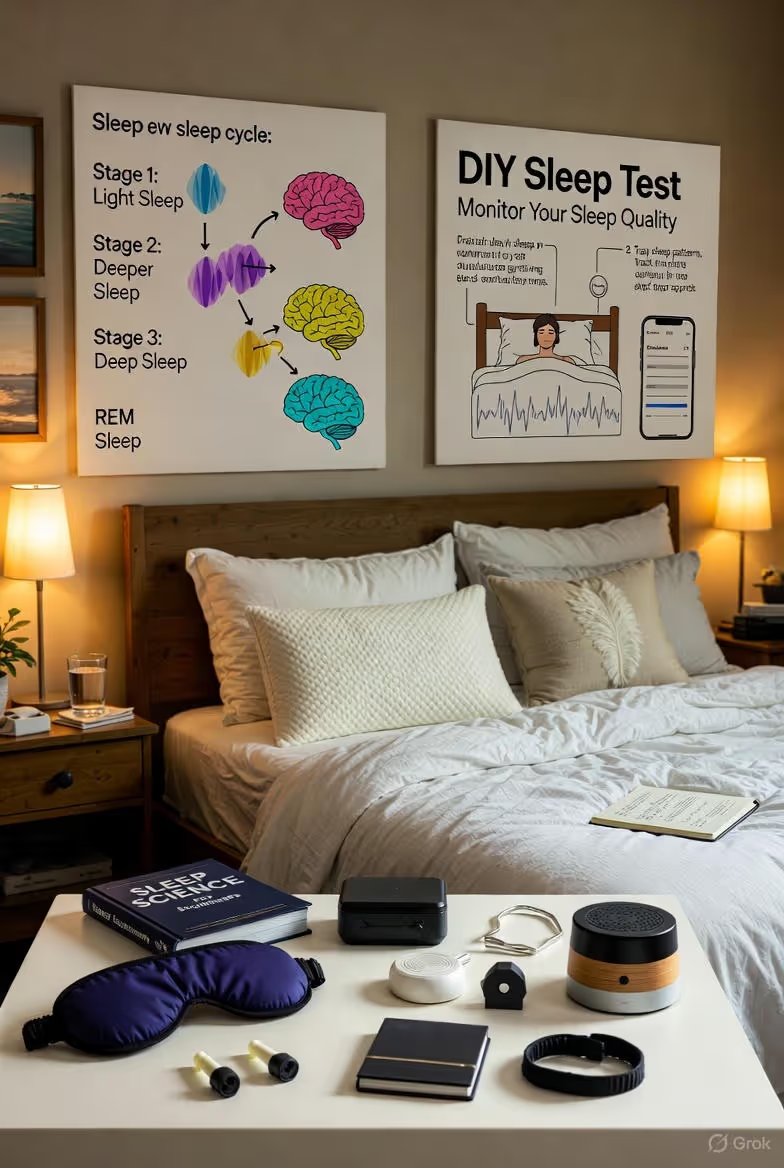
1. Sleep Stages Architecture: The Rhythm of the Night Sleep isn't a monolithic state. It's a cyclical journey through distinct stages: Light Sleep (N1 & N2), Deep Sleep (N3), and REM (Rapid Eye Movement) Sleep. Each plays a crucial role:
Deep Sleep (N3): The physical restoration phase. This is when tissue repair, muscle growth, immune strengthening, and memory consolidation occur. Growth hormone is released. It's often hardest to achieve and easiest to disrupt with alcohol or noise.
REM Sleep: The mental and emotional processing phase. The brain is active, dreaming occurs, and memories are integrated and emotional experiences are processed. It's crucial for learning, creativity, and mood regulation.
Light Sleep (N1/N2): Acts as a bridge between wakefulness and deeper stages. It's essential for overall sleep but dominating your night with light sleep leads to non-restorative rest.
A good night isn't just about total time; it's about the right balance and progression of these stages in 90-120 minute cycles throughout the night. Tracking reveals your personal architecture: do you get enough deep sleep early in the night? Does your REM period lengthen toward morning?
2. Sleep Latency & Efficiency: The Economics of Sleep
Sleep Latency: The time it takes you to fall asleep. Ideally, this is between 10-20 minutes. Consistently taking less than 5 minutes can indicate severe sleep deprivation. Taking longer than 30 minutes may point to hyperarousal or poor sleep hygiene.
Sleep Efficiency: This is the percentage of time in bed you are actually asleep. If you spend 8 hours in bed but are awake for an hour, your sleep efficiency is 87.5%. A rate above 85% is generally considered good, while above 90% is excellent. This metric ruthlessly exposes restless, fragmented sleep that you might not recall.
3. Restlessness & Awakenings: The Ghosts of Fragmentation You may not remember waking up, but your physiology does. Brief arousals (often less than 5 minutes) can fragment sleep architecture, preventing you from completing full, restorative cycles. Tracking can count these disruptions and often correlate them with environmental noise, partner movement, or even subtle breathing changes.
4. Heart Rate (HR) & Heart Rate Variability (HRV): The Autonomic Nervous System's Whisper This is where advanced wearables, particularly those worn on the finger or chest, provide profound insight. During sleep, your heart rate should drop significantly from your daytime resting rate. A failure to achieve this "nocturnal dip" is a strong indicator of physiological stress.
Heart Rate Variability (HRV): The jewel in the crown of physiological tracking. HRV measures the subtle variations in time between each heartbeat. A higher HRV generally indicates a resilient, adaptable nervous system (parasympathetic dominance, or "rest and digest" mode). A lowered HRV signals a stressed, taxed system (sympathetic dominance, or "fight or flight"). During deep sleep, HRV should naturally rise. Tracking your nightly HRV trend offers an unparalleled window into your overall recovery status and how well your body is handling life's stressors. It’s a metric that connects sleep quality directly to next-day resilience.
5. Respiratory Rate & Blood Oxygen (SpO2): The Breath of Sleep Your breathing rate should slow and become very regular during deep sleep. Significant deviations can be meaningful. More advanced trackers also measure peripheral blood oxygen saturation (SpO2). While typically stable in healthy individuals, occasional dips (nocturnal desaturation) can indicate sleep-disordered breathing, like mild sleep apnea, which is a major destroyer of sleep quality and often goes undiagnosed.
Body Temperature: The Thermostat of Sleep Our core body temperature needs to drop to initiate and maintain sleep. A smart ring, positioned on the finger, is uniquely capable of tracking continuous skin temperature, which closely follows this core temperature rhythm. Seeing your personal temperature curve can help you identify your ideal bedtime window and reveal how evening habits (like a hot shower or a late meal) affect your body's ability to cool down.
Together, these metrics transform sleep from a vague concept into a detailed, personal blueprint. They answer not just "how much?" but "how good?" and provide clues to the "why?" behind both good and bad nights. For those curious about how these metrics come together in a single device, you can discover how Oxyzen works to capture this holistic picture.
The Observer Effect: How Conscious Measurement Changes the Game
In physics, the "observer effect" notes that the act of observing a phenomenon inevitably changes it. This principle holds powerfully true for sleep. The moment you decide to track your sleep, you have changed your relationship with it. You have moved from passive participant to active investigator. This shift in mindset is not a bug of sleep tracking; it is its most transformative feature.
From Fatalism to Agency Without data, poor sleep can feel like a personal failing or an immutable fact. "I'm just a bad sleeper," becomes a resigned identity. Tracking disrupts this fatalism. When you see a graph showing your sleep was fragmented after a late-night glass of wine, or that your deep sleep plummets when your bedroom is too warm, the problem is no longer a vague "you." It becomes a specific, modifiable variable. Data externalizes the issue, turning an internal struggle into an external puzzle to be solved. This fosters a sense of agency—the foundational belief that you can influence the outcome.
The Feedback Loop of Reinforcement Positive reinforcement is a potent driver of habit formation. Sleep tracking provides this reinforcement in a tangible way. When you experiment with a new wind-down routine—say, reading a book instead of scrolling social media—and see a measurable improvement in your sleep latency or HRV the next morning, you get an immediate reward. That positive data point validates your effort, making you more likely to repeat the behavior. Conversely, seeing the negative impact of a poor choice (like late caffeine) provides a concrete, personal consequence that generic advice lacks. This tight feedback loop accelerates learning and behavior change in a way pure intuition never could.
Reducing Catastrophizing and Anxiety Sleep anxiety often thrives on the unknown and the catastrophic thought. "I barely slept last night, today is going to be awful." A tracker can act as a reality check. It might show you that you actually got 90 minutes of deep sleep despite feeling unrested, preventing you from spiraling into a day of fatigue-fueled negative predictions. It reframes the narrative from "I failed" to "My sleep was light and fragmented, likely because of X. I can try Y tonight." This cognitive reframing is a critical tool in managing the psychological aspects of insomnia.
The Rise of the 'Sleep Citizen Scientist' This process turns you into a citizen scientist of your own life. You form hypotheses ("If I exercise in the morning instead of the evening, my deep sleep will increase"). You run experiments (changing one variable at a time). You collect data (your sleep metrics). And you draw conclusions. This empirical, curious approach is inherently engaging and depersonalizes setbacks. A "bad" night of data isn't a failure; it's a data point that informs the next experiment.
Of course, this powerful observer effect has a dual edge. If the goal becomes chasing perfect scores, it can breed a new form of performance anxiety—"orthosomnia," as some sleep researchers have dubbed it. The key is to wield the tool with intention, focusing on trends and understanding over daily perfection. The true value lies not in the score itself, but in the empowered, investigative mindset it cultivates. This journey of self-discovery is at the heart of the Oxyzen brand story and vision, which is centered on empowering personal insight.
Beyond the Bedroom: The Holistic Day-Night Connection
For decades, sleep advice was confined to the bedroom: a better mattress, blackout curtains, a cool room. While these are essential, they are only one piece of the puzzle. The most profound revelation from continuous physiological tracking is that sleep quality is forged during the day. The seeds of a restless night are often sown by our daytime habits, stress levels, and choices. A smart ring or wearable, worn 24/7, illuminates this critical day-night continuum.
Daytime Stress and the Nocturnal Echo Your autonomic nervous system doesn't have an on/off switch at bedtime. A day filled with stressful meetings, constant notifications, or emotional tension leaves your sympathetic nervous system ("fight or flight") in a state of heightened tone. This elevated stress load, often visible in a depressed daytime HRV, doesn't magically vanish when your head hits the pillow. It follows you into the night, increasing sleep latency, suppressing deep sleep, and increasing restlessness. Tracking your daytime stress (through metrics like HRV and activity analysis) provides a forecast for your night. Seeing this connection motivates proactive daytime stress-management techniques, knowing they are an investment in that night's sleep.
The Timing and Type of Exercise Exercise is a double-edged sword for sleep. Regular physical activity is one of the most reliable promoters of deep sleep. However, the timing matters intensely. Intense, late-evening workouts raise core body temperature and release stimulatory hormones like cortisol and adrenaline, effectively telling your body it's time for battle, not bed. Tracking can pinpoint your personal cutoff time. You might discover that a 7 PM HIIT class destroys your sleep efficiency, while a 7 PM yoga session improves it.
Nutrition & Hydration: The Midnight Digestive Tax That late-night snack or heavy dinner isn't just a calorie intake; it's a work order for your digestive system. While you're trying to sleep, your body is diverting energy to process food. This can lead to fragmented sleep, more awakenings, and even affect heart rate. Alcohol, a notorious sleep disruptor, is a sedative that suppresses REM sleep and leads to rebound awakenings later in the night. Hydration is also key; being dehydrated can elevate heart rate, but drinking too much right before bed guarantees disruptive bathroom trips. Tracking helps you connect dietary choices to specific sleep disruptions, moving beyond generic advice to personal cause and effect.
Light Exposure: Resetting Your Master Clock Your circadian rhythm is primarily set by light exposure. Bright, blue-rich morning light signals your brain to suppress melatonin and be alert. Dim, warm light in the evening signals melatonin production for sleep. But our modern indoor life and screens have scrambled these signals. Tracking can reveal if a lack of morning light is contributing to a delayed sleep phase (trouble falling asleep) or if late-night screen time is truncating your deep sleep. The data makes the invisible effect of light tangible.
The Power of Trends, Not Isolated Nights This holistic view is why single-night data is often misleading. A poor night's sleep might be due to a one-off late meal, or it might be part of a downward trend linked to a sustained period of work stress. Continuous tracking allows you to see these patterns. You can look back and see how a vacation, with its natural light, relaxed pace, and earlier dinners, positively transformed your sleep architecture and HRV. This panoramic view shifts the focus from micromanaging the night to orchestrating a supportive, 24-hour lifestyle. For more insights on crafting a holistic wellness routine that supports sleep, explore our blog for more wellness tips and research.
Demystifying Your Data: How to Interpret Sleep Scores Without Anxiety
You’ve worn your tracker. The morning arrives, and with it, a notification: "Sleep Score: 78." Your heart might sink or lift. But what does that number actually mean? The leap from raw data to meaningful insight—and avoiding the trap of score-based anxiety—is the most critical skill in the savvy sleeper's toolkit.
Deconstructing the Composite Score First, understand that a single sleep score is almost always a composite metric. It's an algorithm's attempt to weigh and combine the various factors we've discussed—duration, efficiency, stages, restlessness, and physiological data like HRV and resting heart rate. Different platforms use different formulas. An 85 on one app might be equivalent to a 72 on another. Therefore, the absolute number is far less important than the trend and the breakdown.
Your mission is to become a detective of your own dashboard. Don't just glance at the score; open the report. Ask questions:
What dragged my score down? Was it low efficiency (lots of awake time)? Was it a lack of deep sleep? Was my resting heart rate unusually high?
What boosted it? Did I get excellent REM sleep? Did I fall asleep quickly?
Embracing the "Why" Behind the "What" A score of 78 with a note "Low Deep Sleep" is an opportunity, not a judgment. The next question is: "Why was my deep sleep low?" This launches your personal investigation. Review your previous day: Was it unusually stressful? Did you have alcohol with dinner? Did you work out too late? Were you recovering from a hard workout two days prior? By linking the data to your lived experience, you move from evaluation to understanding.
Focus on Weekly Averages and Trends Human physiology is not a machine; it has rhythms, fluctuations, and off days. Fixating on a single night’s score is like judging your fitness by a single workout. The real gold is in your weekly and monthly averages. Is your average sleep latency improving over the last month? Is your deep sleep percentage gradually increasing? Is your baseline HRV on an upward trend? These long-term vectors tell the true story of progress and are incredibly empowering. They help you ride out the inevitable "bad" nights without panic, because you see they are just blips in a larger, positive pattern.
Setting Personal, Not Perfect, Benchmarks Forget the generic "8 hours" or "20% deep sleep" goals. Use your own data to establish your personal baselines. What does a good night look like for you? What's your typical HRV range? Once you know your normal, you can identify meaningful deviations. This personalizes the journey. Maybe you naturally thrive on 7 hours of sleep with a specific stage distribution. Chasing an arbitrary ideal is a recipe for anxiety; optimizing for your unique biology is a path to peace.
Using Data for Calibration, Not Condemnation This is the philosophical core of avoiding tracking anxiety. The data is not a report card on your worth as a human. It is a calibration tool. It’s like the dashboard in your car. You don’t get angry at the fuel gauge for showing empty; you use that information to go get gas. Similarly, a low sleep score isn't calling you a failure. It’s saying, "Hey, systems were sub-optimal last night. Let's check the variables and adjust."
This mindset transforms the tracker from a critic into a coach. It provides neutral, objective feedback that allows you to make smarter choices, not to berate yourself for past ones. If you ever find yourself getting overly fixated, it can be helpful to review our FAQ for guidance on healthy tracking habits and perspective.
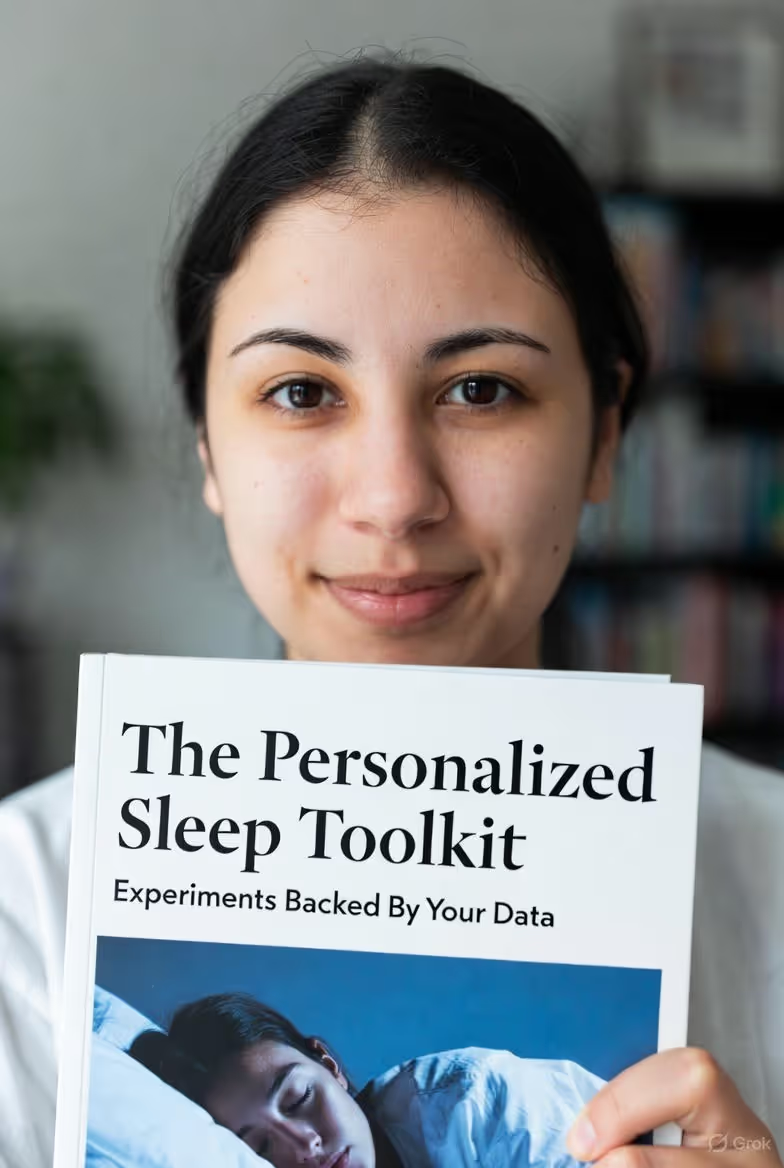
The Personalized Sleep Toolkit: Experiments Backed By Your Data
Armed with interpretation skills, you now graduate from passive observer to active optimizer. This is where the fun begins. Your data provides the feedback to run personalized experiments, building a sleep toolkit that is uniquely effective for you. Generic advice becomes a starting point for a tailored protocol.
Experiment 1: Optimizing Your Chronotype-Based Schedule Are you a night owl or an early bird? Forcing an early bedtime against your natural inclination (chronotype) can lead to long sleep latency and frustration. Use your data to find your sweet spot. For a week, go to bed when you feel naturally sleepy and track the results. Note your sleep efficiency and how you feel in the morning. You may find your personal "best bedtime" is 30-60 minutes later than you thought, leading to faster sleep onset and more consolidated rest.
Experiment 2: The Wind-Down Protocol Audit "Have a bedtime routine" is common advice. But what should it include? Your data can test different options.
Digital Sunset: For one week, implement a strict 60-minute screen curfew, using blue light blockers if needed. The next week, cut it to 30 minutes. Compare your sleep latency and deep sleep scores.
The Evening Relaxation Technique: Test different modalities. Try 15 minutes of gentle yoga one week, a mindfulness meditation app the next, and simply reading a physical book the third. Track which one correlates with lower pre-sleep heart rate and higher HRV during the first sleep cycle.
Experiment 3: The Temperature Fine-Tune The general advice is a cool room (~65°F or 18°C). But your body might be different. Use your tracker's skin temperature data. Experiment with changing your thermostat by one-degree increments over successive nights. Does a slightly cooler room (64°F) lead to a more pronounced temperature drop and better deep sleep? Does a warmer room (67°F) cause more restlessness? Your body will give you the answer.
Experiment 4: Caffeine & Alcohol Cutoff Calibration The standard cutoff for caffeine is often quoted as 2 PM. For alcohol, it's 3 hours before bed. Are these right for you? Use a deliberate experiment. Have your last coffee at 2 PM for 3 days, then at 12 PM for 3 days, then at 10 AM for 3 days. Look at the impact on sleep latency and restlessness. Do the same with alcohol: note the impact of one drink at 7 PM vs. 9 PM vs. none at all. You may discover you are highly sensitive and need an earlier cutoff, or more resilient than the average.
Experiment 5: Daytime Stress Interception Since daytime stress wreaks havoc on sleep, use your daytime HRV or stress score readings as a trigger for intervention. If you see your stress score is high in the mid-afternoon, that's your cue to take a 10-minute walk outside, do a breathing exercise, or close your eyes for a brief meditation. Track whether these deliberate "stress resets" improve your evening readiness for sleep and your overnight HRV recovery.
The key to these experiments is the scientific method: change one variable at a time, hold others constant, and collect data over multiple nights to account for natural variation. This process is empowering. It turns sleep from a mystery into a collaborative design project with your own body. To see how others have used data to transform their habits, you can read real user experiences and testimonials.
Navigating the Pitfalls: When Tracking Becomes the Problem (Orthosomnia)
The path to better sleep through tracking is not without its potential detours. The very intensity and curiosity that make tracking so effective can, for some, tip over into an unhealthy fixation. Sleep researchers have coined the term "orthosomnia" to describe a condition where the pursuit of perfect sleep data becomes a source of anxiety and ironically, worse sleep. Recognizing and avoiding this pitfall is essential for a sustainable, healthy relationship with your tracker.
The Symptoms of Orthosomnia How do you know if you're crossing the line from engaged to obsessed? Watch for these signs:
Pre-Sleep Anxiety: Lying in bed worrying about what your sleep score will be, or feeling pressure to "perform" well for the tracker.
Over-Interpretation of Data: Spending excessive time each morning analyzing every minute detail of your sleep graph, searching for problems.
Behavioral Rigidity: Becoming so inflexible with your sleep routine (e.g., refusing social engagements that might push bedtime) that it harms your quality of life and increases stress.
Misplaced Trust in the Device: Placing more faith in the tracker's data than in your own subjective feeling of being rested, or believing consumer-grade technology is as precise as a clinical polysomnogram.
Compulsive Checking: Looking at your sleep data multiple times during the day with a sense of dread or elation tied directly to the numbers.
The Technology's Limitations: A Necessary Reality Check Consumer sleep trackers are marvels of engineering, but they are not medical devices. They use algorithms and proxies (like movement and heart rate) to estimate sleep stages. Different brands can yield different results for the same night. They are excellent at showing trends, relative changes, and physiological signals like HRV and heart rate. However, they can sometimes misclassify quiet wakefulness as light sleep, or struggle with precise stage timing. Understanding this inherent margin of error is crucial. The data is a guide, not gospel.
Strategies for Healthy Engagement If you recognize shades of orthosomnia in your behavior, these strategies can help recalibrate:
Hide the Score: Many apps allow you to turn off the morning score notification. Try getting up, starting your day, and checking the data later with a more detached, analytical mindset.
Focus on the Feeling First: Before you look at your phone, ask yourself: "How do I feel?" Rate your energy, mood, and mental clarity on a simple scale. Then, look at the data to see if it provides clues to that feeling. This keeps your subjective experience in the primary position.
Adopt a Weekly Review Habit: Instead of daily deep-dives, make a habit of reviewing your weekly trends every Sunday. Look for patterns over 7 days, which smooths out nightly noise and provides a more meaningful picture.
Take Tracking Holidays: Give yourself permission to not wear the device for a weekend or a vacation. Reconnect with listening to your body without the intermediary of data. This can be a liberating reset.
Reframe the Goal: Remind yourself that the ultimate metric is not a number in an app, but your daytime vitality, mood, and health. The tracker is merely a tool to serve that end.
The goal is to use the tracker as a lens to bring your habits into focus, not as a mirror that reflects your worth. It should reduce anxiety by providing clarity, not create a new arena for performance anxiety. Maintaining this balance is key to a long-term, beneficial partnership with technology.
The Smart Ring Advantage: Why the Finger is a Window to the Night
In the landscape of sleep trackers, form factor matters profoundly. While wrist-worn devices and bedside sensors are common, the emergence of the smart ring represents a significant evolution in continuous, user-friendly physiological monitoring. For the serious sleeper seeking the most accurate and holistic data with the least friction, the ring offers compelling advantages.
The Physiological Goldmine of the Finger The vasculature in your finger is rich and close to the surface, making it an excellent site for photoplethysmography (PPG)—the optical heart rate sensing technology used by most wearables. A ring's fit, when sized correctly, maintains consistent skin contact and pressure, which can lead to more reliable and cleaner PPG signals than a wrist device, which can shift and bounce. This is especially critical at night when subtle movements can cause data gaps or artifacts for wrist-based sensors.
24/7 Wearability and the True Baseline The ultimate goal is understanding your 24-hour rhythm. A smart ring, by virtue of its small, unobtrusive, and waterproof design, is meant to be worn continuously. You shower, swim, and sleep with it on. This eliminates the "white coat effect" of only measuring during exercise or sleep. It captures your true, all-day resting heart rate, your complete temperature cycle, and your HRV in all life contexts—while you work, relax, and sleep. This creates an unparalleled, seamless dataset. You can see exactly how a stressful meeting at 3 PM affected your physiology for the next 12 hours.
The Skin Temperature Differential Perhaps the ring's most unique advantage is its ability to accurately track skin temperature trends. The wrist is often exposed to air and bedding, causing temperature readings to fluctuate with environment. A ring on the finger is more thermally stable. The continuous temperature curve is a direct readout of your circadian rhythm. The timing of your temperature minimum is a powerful marker of your internal clock, and seeing how it shifts with your habits is invaluable for optimizing sleep timing.
Comfort and the Forgotten Device Sleep is about letting go. A bulky device on your wrist can be a tangible reminder of the tracking process itself, a potential source of subconscious pressure or simple physical annoyance. A lightweight, smooth ring disappears on your hand. You forget it's there, which psychologically supports the goal of forgetting about "trying" to sleep and just allowing it to happen.
A Unified Platform for Holistic Health The best smart rings don't just track sleep; they synthesize sleep data with activity, readiness, and recovery metrics. They answer the question: "Given how I slept and recovered last night, what is my body's capacity for stress, exertion, or focus today?" This moves beyond sleep tracking into true readiness coaching. It provides actionable morning guidance: "Your recovery is low, prioritize light activity," or "Your sleep was excellent, it's a good day for a intense workout." This closed-loop system—from day to night and back to day—is the future of personalized wellness. To understand the philosophy behind creating such a seamless, holistic device, you can learn more about the company mission and approach.
Building Your Sleep Sanctuary: Data-Informed Environmental Design
Your sleep environment is the stage upon which the night's drama unfolds. While your daytime habits set the plot, the bedroom itself can be a supporting actor or a disruptive heckler. Using your sleep data, you can move beyond generic design tips and engineer a sanctuary tailored to your physiological quirks. Every element—light, sound, temperature, and comfort—can be optimized based on empirical feedback.
Light: Quantifying Darkness You know darkness is important, but how dark is dark enough? Your data can tell you. Even small amounts of light, especially blue-spectrum light from chargers or streetlights, can suppress melatonin and fragment sleep. After ensuring your room is as dark as possible (using blackout curtains, electrical tape over LEDs), track the impact. Look for improvements in sleep efficiency and reductions in recorded awakenings. You might be surprised by how a seemingly insignificant light source was having an outsized effect. For those who need a nightlight, opt for a dim red/orange bulb, which has the least impact on circadian biology.
Sound: The Silent Disruptor You may think you've adapted to traffic noise or a partner's snoring, but your nervous system may not have. Even if you don't fully wake up, noise can cause micro-arousals, shifting you from deep to light sleep without conscious awareness. Review nights with high "restlessness" or low "deep sleep" and cross-reference them with environmental noise. Test solutions:
White Noise/ Pink Noise: Use a machine or app to create a consistent, masking sound. Track for a week. Does it reduce restlessness and improve sleep efficiency?
Earplugs: Test high-quality, comfortable earplugs. Do you see a decrease in noted awakenings?
Temperature & Humidity: The Microclimate We've discussed room temperature, but the microclimate inside your bedding is equally important. Your body needs to dissipate heat to initiate sleep. The data from a smart ring's skin temperature sensor is perfect for this. Experiment with different bedding materials:
Natural Fibers (Cotton, Linen, Wool): Breathable and moisture-wicking.
Performance Fabrics: Designed for temperature regulation.
Weighted Blankets: For some, the deep pressure touch is calming and improves sleep latency and reduces nighttime anxiety. For others, they can be overheating. Your temperature and restlessness data will provide a clear verdict.
Also, consider humidity. Dry air can irritate airways and disrupt breathing during sleep. A humidifier set to 40-50% relative humidity might improve breathing regularity, reflected in more stable respiratory rate and SpO2 readings.
The Bed & Pillow: Support Beyond Comfort An unsupportive mattress or pillow can cause subtle discomfort that leads to constant micro-adjustments and fragmented sleep, visible as high restlessness. While a tracker can't diagnose back pain, a consistent pattern of poor sleep efficiency and frequent awakenings, especially if you wake with aches, can be a data point motivating an investment in better support. The key is to look for correlations between changes in your sleep surface and changes in your restlessness metric.
The Pre-Bed Atmosphere: Crafting the Transition Finally, use your data to design the transition into this sanctuary. If your latency data shows you take a long time to fall asleep, your environmental transition might be too abrupt. Consider using smart lights that dim and shift to warmer tones 60-90 minutes before bed, signaling to your biology that sleep is approaching. Track the effect on your sleep latency over time.
By treating your bedroom as a laboratory for restoration, you use objective feedback to create a space that doesn't just look calm, but actively promotes the specific physiological states required for deep, uninterrupted sleep. This is the art and science of the modern sleep sanctuary.
The Mind-Body Feedback Loop: Harnessing Biofeedback for Sleep Onset
One of the most challenging aspects of sleep is its elusive, involuntary nature. You cannot command yourself to sleep; you can only create the conditions for it to occur. This is where the data from a physiological tracker transcends mere reporting and enters the realm of active biofeedback—a powerful technique for gaining conscious influence over your unconscious state. By learning to read and respond to your body’s real-time signals, you can directly engage the mind-body feedback loop that governs sleep onset and quality.
Understanding the Biofeedback Principle Biofeedback is a process that uses instruments to measure physiological functions (like heart rate, muscle tension, or skin temperature) and feeds that information back to you in real time. The goal is to develop awareness and voluntary control over these normally automatic processes. In the context of sleep, you don’t need a complex clinical setup; a modern wellness wearable, especially one measuring HRV and heart rate, can serve as a potent biofeedback tool.
HRV as Your Real-Time Stress Gauge Heart Rate Variability is your most accessible window into your autonomic nervous system’s current state. A higher, more variable rhythm indicates a relaxed, adaptable state (parasympathetic dominance). A low, steady rhythm indicates stress or "fight or flight" mode (sympathetic dominance). When you lie down to sleep, you can use your tracker’s live HRV reading or its derived "Relaxation" score to guide your wind-down.
The Practice: Lie in bed, start a gentle breathing exercise (like 4-7-8 breathing: inhale for 4, hold for 7, exhale for 8), and observe the data. With practice, you’ll see your HRV begin to rise and your heart rate dip in direct response to your focused breath. This tangible, immediate feedback reinforces the relaxation technique, proving to your conscious mind that you are effectively calming your body. It turns an abstract meditation into a measurable, rewarding skill.
Breath Pace Guidance Many wearables now offer guided breathing exercises that are paced to your real-time heart rate. The device detects your current respiration rate and guides you to slow it down, step by step, syncing your breath with gentle vibrations or visual cues on an app. This co-regulation—letting the device guide your physiology—is incredibly effective for breaking the cycle of ruminative thoughts and initiating the parasympathetic shift necessary for sleep. Seeing your heart rate graph fall in tandem with the exercise provides powerful positive reinforcement.
Body Scanning with Physiological Awareness A classic sleep meditation involves a "body scan," where you focus attention on relaxing each part of the body sequentially. You can augment this practice with awareness of your physiological state. As you mentally relax your forehead, jaw, and shoulders, observe if there’s a corresponding blip in your HRV or a drop in your resting heart rate on the graph. This connection strengthens the neural pathway between mental intention and physical outcome, deepening the relaxation response.
From Frustration to Fascination For those who lie in bed feeling frustrated by their wakefulness, biofeedback reframes the experience. Instead of "I can't sleep," the focus becomes "Let's see if I can increase my HRV by 5%." It transforms a stressful goal (falling asleep) into a curious, process-oriented activity (activating relaxation). This shift alone can reduce performance anxiety, which is a primary driver of insomnia. The act of observing the data becomes a form of mindfulness, anchoring you in the present moment and away from anxious thoughts about the past or future.
Building a Personalized Pre-Sleep Ritual Over time, by combining different techniques and observing their physiological impact, you can build a highly effective, personalized pre-sleep ritual. You’ll learn that 10 minutes of a specific breathing exercise works better for you than 20 minutes of a meditation app, or that listening to a certain type of sound (binaural beats, pink noise) reliably slows your heart rate. Your data validates what works for you, creating a reliable, confidence-building routine that signals to your brain and body that it’s safe to shut down.
This proactive use of data moves you from being a passenger in your sleep journey to being the pilot, with a sophisticated instrument panel guiding your descent into rest. It is the ultimate resolution of the Sleep Quality Paradox: using the focus on measurement not to create anxiety, but to cultivate a deep, empowering mastery over your own state of calm.
From Data to Diagnosis: When to Seek Professional Help
While consumer sleep trackers are phenomenal tools for optimization and awareness, they also play a critical role as early-warning systems, helping you identify when your sleep issues may transcend lifestyle factors and point toward a potential medical condition. Understanding the red flags in your data can empower you to seek professional help with clearer, more compelling information, leading to faster diagnosis and treatment.
Recognizing the Patterns of Sleep Disorders Your nightly graphs can reveal signatures suggestive of common sleep disorders. While a tracker cannot diagnose, it can provide strong evidence to bring to a sleep specialist.
Sleep Apnea Indicators: The most significant clues are recurrent, cyclical dips in blood oxygen saturation (SpO2) and correlated spikes in heart rate. If your SpO2 graph looks like a series of valleys throughout the night, especially accompanied by snoring (noted by a partner) and excessive daytime sleepiness, it could indicate Obstructive Sleep Apnea (OSA). Many trackers also estimate respiratory disturbance index (RDI) or provide a "breathing regularity" score. Consistently poor scores here are a major red flag.
Insomnia Patterns: Trackers can objectify the experience of insomnia. Consistently long sleep latency (e.g., over 30 minutes nightly), very low sleep efficiency (consistently below 80%), and excessive time awake after sleep onset (WASO) quantified in your data provide concrete metrics to discuss with a doctor, moving beyond the subjective "I didn't sleep well."
Circadian Rhythm Disorders: If your temperature minimum data (from a smart ring) consistently occurs late in the sleep period or even into the morning, and your sleep logs show you cannot fall asleep until very late (e.g., 2 AM) despite good sleep hygiene, this could indicate Delayed Sleep-Wake Phase Disorder. The data provides an objective record of your innate timing, which is invaluable for a specialist.
Periodic Limb Movement Disorder (PLMD): Unusually high and regular spikes in "restlessness" or movement data, often in clusters every 20-40 seconds, can suggest PLMD, which fragments sleep and reduces deep sleep without the sleeper being aware.
The Power of the Data-Log for Your Doctor Walking into a sleep clinic with a printout or app summary of months of data is transformative. Instead of relying on a two-week sleep diary you might misremember, you can show a physician:
"Here is my sleep efficiency trend over the last three months. It averages 72%."
"These are the nights where my SpO2 dropped below 90%. It happened 15 times last night alone."
"My resting heart rate during sleep is consistently above my daytime resting rate, which I understand is a sign of poor recovery."
This objective record can accelerate the diagnostic pathway, helping to prioritize sleep studies (polysomnography) and tailor questions during the clinical interview. It turns you from a passive patient into an informed participant in your own care.
The Limits of Consumer Technology: A Critical Caveat It is vital to understand what your tracker is not. It is not a medical device. Its SpO2 readings are not as precise as a medical pulse oximeter. Its sleep stage estimates are algorithmic inferences. It cannot rule out disorders. For example, it may not detect "upper airway resistance syndrome," a precursor to apnea, or certain types of central sleep apnea. Therefore, the data should be used as a screening tool and conversation starter, not a diagnostic endpoint.
When to Take Action Use the following data-driven signs as prompts to consult with your primary care physician or a sleep specialist:
Consistent, unexplained low SpO2 readings or frequent "breathing disturbances" flagged by your device.
Chronic sleep efficiency below 80% despite diligent sleep hygiene practice for over a month.
A resting heart rate during sleep that is consistently higher than your daytime resting rate.
Extreme, persistent deviations in your sleep architecture (e.g., virtually no deep sleep recorded over weeks).
Significant daytime impairment (fatigue, cognitive fog) that correlates with poor objective sleep metrics, even if you subjectively feel you slept "okay."
By bridging the gap between subjective feeling and objective measurement, your sleep tracker becomes a powerful advocate for your health. It provides the evidence needed to take your concerns seriously and seek expert guidance, ensuring that underlying medical conditions are identified and treated, paving the way for true, sustainable sleep improvement. If you have questions about how data from devices like the Oxyzen ring can be used in a healthcare context, our FAQ section provides further support and information.
The Long Game: How Consistent Tracking Builds Lifelong Sleep Resilience
The final, and perhaps most important, chapter in leveraging sleep tracking is shifting perspective from short-term fixes to long-term investment. Sleep resilience is not about achieving a perfect score every night; it's about building a system—a deep understanding of your personal physiology—that allows you to navigate life's inevitable disruptions without catastrophic collapse. Consistent, long-term tracking is the cornerstone of building this resilience.
Establishing Your Unique Baselines In the first few months of tracking, you are not just collecting sleep data; you are mapping your unique physiological fingerprint. You learn your personal norms: What is your typical deep sleep percentage? What is your normal HRV range? What does your temperature curve look like on a good night? These baselines are priceless. They allow you to contextualize any single night. A night with an HRV 20% below your personal baseline is a meaningful alert, even if the absolute number seems "fine" compared to a population average. This self-knowledge eliminates comparison anxiety and focuses you on what matters: deviations from your normal.
Identifying Lifecycle and Seasonal Patterns Over years of data, profound patterns emerge. Women may see clear cyclical variations in sleep architecture, resting heart rate, and HRV correlated with their menstrual cycle, providing insights into perimenopause or hormonal health. You might discover you are exquisitely sensitive to seasonal changes, with sleep quality dipping in late fall as daylight wanes, prompting you to proactively use a light therapy lamp. You can see how your sleep naturally changes with age, allowing for graceful adjustments rather than panicked reactions. This longitudinal view transforms data from a daily snapshot into the story of your life in rhythms and cycles.
Stress Inoculation Through Data Life will throw curveballs: stressful projects, grief, illness, travel. Long-term tracking teaches you how your sleep responds to these stressors and, crucially, how it recovers. You learn that after a peak stress event, it typically takes your system 3 nights to return to baseline HRV. This knowledge is empowering. It prevents you from layering "meta-stress" ("Why am I still sleeping poorly?!") on top of the original stress. You can view the disruption with detachment, knowing it's a predictable physiological response with a known recovery timeline. You become inoculated against sleep anxiety because you have historical proof of your resilience.
Precision Recovery from Exercise and Illness For athletes or active individuals, sleep data is the ultimate recovery monitor. You can precisely match training load with sleep quality and morning readiness scores. This allows for periodized training that aligns hard efforts with periods of high sleep resilience and schedules deload weeks when data shows accumulated fatigue. Similarly, tracking through a mild illness like a cold can show how your body prioritizes immune function (often increasing deep sleep demand) and provides a clear data-driven signal for when you are fully recovered and ready to resume normal activity, reducing the risk of relapse.
The Compound Interest of Micro-Adjustments The power of long-term tracking lies in the cumulative effect of tiny, data-informed tweaks. It’s the compound interest of health. Adjusting your caffeine cutoff by 30 minutes might improve sleep efficiency by 2%. Switching to a heavier comforter in winter might increase deep sleep by 5%. These single-digit improvements are imperceptible day-to-day, but over a year, they represent hundreds of additional hours of quality rest and a significantly upgraded foundation of health. The tracker provides the feedback loop that makes these sustainable micro-adjustments possible and rewarding.
Cultivating a Partnership with Your Body Ultimately, this long-game approach fosters a collaborative partnership with your body. You are no longer at war with a stubborn organism that won't sleep. You are a scientist tending to a complex, responsive system. You provide inputs (habits, environment), observe the outputs (data), and adjust accordingly. This relationship, built on curiosity and evidence rather than fear and force, is the most sustainable path to lifelong sleep health. It ensures that your tracker remains a tool for empowerment, not obsession, guiding you toward not just better sleep, but a more attuned and resilient life. For those inspired by a vision of long-term, data-informed wellness, you can read more about the founding vision and journey behind Oxyzen.
The Synergy of Systems: Integrating Sleep Data with Overall Wellness
Sleep does not exist in a vacuum. It is the most critical pillar in the temple of wellness, deeply interconnected with nutrition, fitness, mental health, and daily productivity. The true power of detailed sleep tracking emerges when you stop viewing it as a isolated metric and begin to integrate it with other data streams, creating a holistic dashboard for your entire well-being. This synergy reveals the multiplier effect of good sleep and provides a more nuanced, actionable picture of your health than any single data point could offer.
The Sleep-Fitness Performance Loop For anyone engaged in physical training, sleep is the primary recovery modality. Integrating sleep data with workout metrics creates a powerful feedback loop.
Recovery Readiness: Morning readiness or recovery scores (largely derived from sleep HRV, resting heart rate, and sleep quality) should inform daily training decisions. A low readiness score after a poor night's sleep is a directive to swap a high-intensity interval training (HIIT) session for light cardio, yoga, or a rest day. Ignoring this data increases injury risk and leads to subpar, grinding workouts. Conversely, a high readiness score signals your body is primed to benefit from a challenging session.
Progress Validation: Improvements in fitness should, over time, correlate with improvements in sleep metrics. As your cardiovascular fitness increases, you might see a lower average sleeping heart rate and an upward trend in your baseline HRV. Better sleep should also lead to better workout performance—you can lift more, run faster, or sustain longer sessions. Seeing this positive correlation in your combined data validates your efforts across both domains.
Identifying Overtraining: A classic sign of non-functional overreaching or overtraining syndrome is a sustained drop in HRV despite adequate sleep, coupled with an elevated resting heart rate. If your sleep data shows you're getting 8 hours of high-efficiency sleep but your HRV is in a multi-week slump and your workouts feel terrible, it's a clear sign you need extended recovery.
Sleep and Nutritional Insights What you eat directly impacts how you sleep, and how you sleep influences your dietary choices the next day. Tracking both creates fascinating insights.
The Meal Timing Effect: By logging your last meal or snack and comparing it to sleep depth and restlessness, you can pinpoint your ideal "fasting window" before bed. You might discover that a protein-rich snack three hours before bed improves deep sleep, while a carbohydrate-heavy meal at the same time increases restlessness.
Cravings and Sleep Deprivation: Poor sleep (especially low deep sleep) dysregulates the hormones ghrelin and leptin, increasing hunger and cravings for high-calorie, sugary foods. By noting days following poor sleep, you can consciously anticipate and manage these cravings rather than being blindsided by them. Your sleep data becomes an early warning system for making mindful nutritional choices.
Hydration Tracking: Correlating fluid intake logs with nighttime awakenings can fine-tune your hydration strategy. You can find the sweet spot where you're hydrated enough for optimal physiology without causing disruptive trips to the bathroom.
The Mood-Sleep Connection Quantified The bidirectional relationship between sleep and mental/emotional state is profound. Integrating simple mood logging (using a scale of 1-5 or tags like "Anxious," "Calm," "Energetic") with sleep data makes this abstract connection concrete.
Predictive Patterns: You may find that a day of high stress or low mood predicts a night of low HRV and fragmented sleep. More importantly, you can see that a night of poor sleep predicts a lower mood and higher anxiety the following day. This visible cycle helps you break the fatalistic thinking of "I always feel this way," replacing it with "This is a temporary state caused by a lack of restorative sleep; I can improve it tonight."
Validating Intervention Efficacy: When you employ a mental health intervention—like starting therapy, practicing daily gratitude, or using a meditation app—you can track its impact not just on your subjective mood log, but on your objective sleep physiology. Seeing your deep sleep increase or your nighttime heart rate decrease after a month of meditation provides powerful, objective reinforcement to continue the practice.
Productivity and Cognitive Output The ultimate "why" behind sleep optimization for many is daytime performance. Integrating sleep scores with simple productivity metrics (focus hours, task completion, creative output) can be revelatory.
The Cost of Poor Sleep: Assign a subjective productivity score to your day. You will likely see a direct correlation: a sleep score below 80 leads to a productivity score below 7. This quantifies the real-world cost of that late-night streaming binge or poor sleep hygiene.
Finding Your Creative Prime: Your chronotype data (from sleep/wake times) can tell you when you are naturally alert. Aligning demanding cognitive work with your peak biological times (often in the late morning for most people, post a good night's sleep) and scheduling administrative tasks for your natural troughs (post-lunch dip) can dramatically increase your effectiveness.
By weaving sleep data into the broader tapestry of your life, it ceases to be just a health metric and becomes a central operating system parameter. It explains yesterday's workout, predicts today's cravings, and informs tomorrow's schedule. This integrated view is the pinnacle of using technology not just to track, but to truly understand and orchestrate a high-performing, balanced life. For more on building a holistic system that connects these dots, explore our blog for strategies on integrated wellness.
The Future of Rest: Predictive Analytics and Personalized Sleep Coaching
We are on the cusp of a revolution in sleep science, moving from descriptive analytics ("this is how you slept") to predictive and prescriptive analytics ("this is how you will sleep, and here's what to do about it"). The next generation of sleep tracking, powered by artificial intelligence and ever-more sophisticated sensors, promises to transition from a passive journal to an active, anticipatory sleep coach.
Predictive Modeling: Seeing the Storm Before It Arrives Current trackers are reactive; they tell you about the night that has passed. The future lies in predictive algorithms that analyze your ongoing daytime data—activity, stress, heart rate patterns, and prior sleep—to forecast your upcoming night's sleep quality.
The Scenario: By 6 PM, your device has analyzed a day of back-to-back meetings, low activity, elevated cortisol markers (from HRV patterns), and a late afternoon coffee. It sends a gentle notification: "Your sleep readiness is currently low. Consider a 20-minute evening walk and our guided wind-down meditation tonight to improve your sleep potential." This shifts the intervention window from post-bad-sleep to pre-emptive, dramatically increasing the chance of a good night.
Hyper-Personalized Prescriptive Guidance Beyond prediction lies prescription. AI can move from generic advice ("avoid caffeine") to hyper-personalized, contextual recommendations.
Dynamic Sleep Schedules: Instead of a fixed bedtime, your app could analyze your recent sleep debt, upcoming calendar, and physiological state to recommend an ideal bedtime and wake time for tonight, optimizing for your specific recovery needs and commitments.
Micro-Habit Suggestions: The system learns what works specifically for you. If data shows that on days you have high work stress, the intervention that most reliably improves your sleep latency is a 10-minute breathing exercise rather than a bath, it will prioritize that suggestion. It might say: "Based on 15 similar past nights, a diaphragmatic breathing session at 9:15 PM improved your sleep onset by an average of 12 minutes."
Advanced Biomarker Integration Future wearables will likely incorporate additional sensors, providing even deeper diagnostic and coaching capabilities.
Core Temperature Rhythm Mapping: More precise, non-invasive core temperature monitoring will allow for exquisitely accurate circadian phase tracking, enabling perfectly timed light therapy, meal, and activity suggestions to entrain or shift your rhythm as needed (e.g., for jet lag).
Glucose Monitoring Integration: For those who track glucose, correlating nocturnal glucose stability with sleep architecture will provide groundbreaking insights into metabolic health and sleep, offering dietary recommendations to stabilize blood sugar for better rest.
Advanced Neurological Sensing: While further out, technologies like low-power EEG integrated into a headband or even a ring form-factor could provide direct brainwave data, allowing for sleep stage detection with clinical accuracy and potentially even guiding interventions like auditory stimulation to enhance deep sleep in real time.
The Seamless, Ambient, and Invisible Future The ultimate goal is for sleep optimization to become seamless and ambient. The technology will fade into the background:
Smart Home Integration: Your tracker communicates with your home ecosystem. As your bedtime approaches, it automatically dims the smart lights, lowers the thermostat, and silences notifications. If it detects you're struggling to fall asleep, it might gradually play a soundscape it knows is effective for you.
Passive and Frictionless Data Collection: The need for manual logging or even charging will diminish. Devices will harvest energy from body heat or movement, and sensors will be woven into clothing, bedding, or the environment itself, providing a continuous, zero-effort stream of physiological insight.
This future transforms the sleep tracker from a tool you use into an intelligent partner that understands your unique biology and lifestyle, proactively working in the background to architect the perfect conditions for your restoration. It represents the full maturation of the tracking journey—from anxiety-inducing scorekeeper to an invisible guardian of your most precious resource. To see how one company is working towards this integrated, intelligent future, you can discover more about the Oxyzen approach and technology.
Cultivating a Healthy Tracking Mindset: The Path to Sustainable Sleep Success
As we reach the culmination of this exploration into the Sleep Quality Paradox, we must return to the most essential element: you. Technology provides the data, science provides the context, but your mindset determines the outcome. Cultivating a healthy, sustainable relationship with sleep tracking is the final, non-negotiable skill for long-term success. It’s the philosophy that ensures the tool serves you, not the other way around.
The North Star: Daytime Vitality, Not Nightly Perfection Your primary metric for success must shift from the sleep score in an app to the quality of your waking life. Are you energized? Is your mood stable? Can you focus and engage meaningfully with your work and relationships? These are the true KPIs. The sleep data is merely a diagnostic tool to explain and improve these outcomes. When you feel great but the score is an 75, trust the feeling. When you feel terrible but the score is an 85, investigate the discrepancy—perhaps it’s emotional stress or an off-day that the numbers didn’t capture. Let subjective vitality be your ultimate judge.
Embrace the 80/20 Rule of Sleep Hygiene The Pareto Principle applies beautifully to sleep. 80% of your results will come from 20% of the possible interventions. Your data’s purpose is to identify your vital 20%. For one person, it’s strictly managing caffeine and light. For another, it’s stress management and a consistent wake time. Obsessing over the remaining 80% (perfect room humidity, exact pillow height, micronutrient timing) leads to diminishing returns and maximal anxiety. Use your data to find the two or three levers that most powerfully impact your sleep, and master those. Give yourself permission to ignore the noise.
Practice Data Detachment and Seasonal Breaks Schedule regular periods of data detachment. This could be one weekend a month where you don’t wear the device, or a two-week vacation where you leave it at home. This serves two critical functions:
It breaks the compulsive checking habit and reacquaints you with listening to your body’s innate signals.
It provides a psychological reset, reminding you that you are not the data. You are a person who sleeps, not a sleep performance machine.
These breaks are not a step backward; they are essential maintenance for a healthy mindset, preventing the tool from becoming a source of identity or anxiety.
Celebrate the Trend, Forgive the Night Internalize the mantra: "I manage the process; I do not control the outcome." You can control your bedtime routine, your environment, and your daytime habits. You cannot directly control the sleep that follows. Your job is to faithfully execute the supportive processes you’ve discovered through your data. Some nights, despite perfect process, sleep will be poor due to unknown factors or simple biological variation. Thank your data for showing you that you did everything right, and trust that the trend over weeks and months will reflect your good habits. Forgive the anomalous night immediately; it holds no predictive power for your worth or your future.
Share the Journey, Not Just the Score Integrate your sleep journey into your social health in a positive way. Instead of competitive comparisons ("I got a 92 sleep score!"), engage in curious, collaborative conversations. "My data showed that reading fiction instead of news really improved my sleep latency. Have you found anything like that?" This frames sleep as a shared human experience of exploration, not a performance metric. Sharing struggles and insights can reduce shame and build a supportive community, whether with friends, family, or through the shared stories of other users.
The Evolution from Tracking to Trust The highest goal of this entire endeavor is to reach a point where you no longer need to track obsessively. After a year or two of dedicated, mindful tracking, you will have internalized the lessons. You’ll know how your body responds to caffeine, stress, exercise, and light. You’ll have honed a personalized routine that works. At this point, tracking can become periodic—a check-in every few months to ensure you’re still on track or to troubleshoot a new life phase. You will have graduated from relying on external data to trusting your internal, educated intuition, supported by a deep well of self-knowledge.
This mindset—curious, compassionate, process-oriented, and focused on holistic vitality—is the ultimate resolution to the Sleep Quality Paradox. It allows you to harness the incredible power of data and technology without being consumed by it. You become the architect of your rest, using every tool at your disposal to build a foundation of sleep that supports a vibrant, resilient, and fully awake life.



%402x.svg)