Sleep Tracking Comparison: Ring vs Watch vs Headband
Comparing ring, watch, and headband sleep trackers reveals distinct advantages for different needs. This detailed evaluation assesses accuracy, comfort, features, battery life, cost, and usability across device types to help you select the optimal sleep monitoring technology for your situation.
Sleep Tracking Comparison: Ring vs Watch vs Headband
In an age where we quantify everything from our daily steps to our heart rate variability, one of the most intimate and crucial aspects of our health—our sleep—remains a mystery to many. You spend roughly a third of your life asleep, yet until recently, understanding what truly happens during those hours was the domain of sleep labs and clinical polysomnography. Today, a quiet revolution is happening on our wrists, our fingers, and even our heads as wearable technology promises to decode the secrets of the night.
But with so many options—from the sleek smart ring you barely feel to the powerful smartwatch that manages your day, to the specialized headband designed for rest—how do you choose? Is the most accurate tracker the most comfortable? Does the device with the most features actually help you sleep better, or does its complexity become just another source of anxiety? The quest for perfect sleep data can sometimes overshadow the goal of simply getting better rest.
This comprehensive guide cuts through the noise. We will embark on a detailed exploration of the three dominant forms of sleep-tracking wearables: smart rings, smartwatches, and sleep headbands. Over the course of this deep dive, we will move beyond marketing claims to examine the core technology, real-world accuracy, and holistic user experience of each. We’ll analyze which form factor excels at passive, all-night biometric monitoring, which doubles as a powerful daytime fitness coach, and which prioritizes immersive sleep improvement above all else.
The journey to better sleep is personal. It’s not about which device is objectively “best,” but which is the best for you—aligning with your lifestyle, your comfort, and your specific wellness goals. Whether you’re a data-driven athlete optimizing recovery, a professional seeking to manage stress, or someone simply curious about your sleep patterns, the right tool can be transformative. Let’s begin by understanding the landscape and how we arrived at this point where the choice rests, quite literally, at your fingertips.
The Modern Sleep Crisis and the Rise of Biometric Tracking
We are a society running on a sleep deficit. The Centers for Disease Control and Prevention (CDC) has declared insufficient sleep a public health epidemic, with more than one in three U.S. adults regularly failing to get the recommended minimum of seven hours per night. This isn’t just about feeling groggy; chronic sleep deprivation is a stealthy catalyst for a host of serious health issues. It’s intricately linked to an increased risk of obesity, type 2 diabetes, cardiovascular disease, and depression, while also impairing cognitive function, emotional regulation, and immune response.
Confronted with these high stakes, people are no longer willing to be passive about their rest. There’s a growing desire to move from subjective feeling—“I slept terribly”—to objective understanding. How long did I actually sleep? How often did I wake up? How balanced were my sleep stages? This shift from anecdote to data is at the heart of the wearable revolution. People want to be the CEOs of their own health, and you can’t manage what you don’t measure.
The market has responded explosively. The consumer sleep and activity tracker sector was estimated at approximately $30 billion in 2024, reflecting massive investment and consumer appetite. This isn’t a niche hobby for tech enthusiasts; a survey cited by the American Academy of Sleep Medicine (AASM) indicates that more than one-third of Americans have now used an electronic sleep-tracking device. Patients are increasingly arriving at sleep clinics with printouts of their nightly data, turning personal metrics into a starting point for professional dialogue.
However, this democratization of sleep data comes with a critical caveat: awareness is not the same as improvement. A 2017 article in the Journal of Clinical Sleep Medicine coined the term “orthosomnia”—a perfectionistic quest for ideal sleep driven by tracker data, which can ironically lead to increased anxiety and worse sleep. The most advanced biometric ring is useless if its data becomes a source of nightly stress. The true value of any sleep tracker lies not in its ability to generate numbers, but in its capacity to translate those numbers into actionable, personalized, and sustainable insights that foster genuine behavioral change.
This is where the form factor of the tracker itself becomes profoundly important. The device is not just a sensor; it’s a constant companion in your wellness journey. Its physical presence—whether it’s a noticeable screen on your wrist, a nearly invisible ring on your finger, or a soft band across your forehead—directly influences your relationship with the data it provides. As we delve into the specifics of rings, watches, and headbands, we must evaluate them not just as data loggers, but as holistic tools for habit formation. The goal isn’t a perfect sleep score; it’s a more rested, resilient, and healthier you.
The Science of Sleep Tracking: From Actigraphy to Advanced Biometrics
To intelligently compare wearables, we must first understand what they’re actually measuring and the limitations of the technology. The gold standard for sleep analysis is an in-lab polysomnography (PSG) test, which uses a suite of sensors—electroencephalogram (EEG) for brain waves, electrooculogram (EOG) for eye movements, electromyogram (EMG) for muscle activity—to precisely identify sleep stages (awake, light, deep, and REM sleep). Consumer devices, for obvious reasons of size, cost, and comfort, must approximate this clinical precision through other means.
Most consumer trackers, regardless of form, rely on a foundational technology called actigraphy. This uses an accelerometer—a tiny motion sensor—to detect movement. The core assumption is simple: when you’re still, you’re likely asleep; when you’re moving, you’re likely awake. While useful for estimating total sleep time and gross restlessness, actigraphy alone is notoriously limited. It cannot distinguish between lying still in bed awake and being in deep sleep, leading to a common flaw where trackers overestimate total sleep time.
This is where modern biometric sensors come in, layering physiological data onto the movement story to create a richer, more accurate picture. The key metrics advanced wearables now track include:
Heart Rate (HR) and Heart Rate Variability (HRV): Using photoplethysmography (PPG), a sensor shines a light (usually green LED) into the skin and measures blood volume changes to determine heart rate. HRV, the subtle variation in time between heartbeats, is a powerful indicator of autonomic nervous system balance and recovery status. During sleep, your heart rate generally drops and stabilizes, and distinct patterns can correlate with different sleep stages.
Blood Oxygen Saturation (SpO₂): Using red and infrared LEDs, the sensor estimates the percentage of oxygen in your blood. Significant overnight drops (nocturnal desaturation) can be a key indicator of sleep-disordered breathing like sleep apnea.
Skin Temperature: Continuous monitoring of peripheral skin temperature (often from a finger or wrist) can reveal circadian rhythms and is a sensitive marker for physiological changes, from the onset of illness to menstrual cycle phases.
Respiratory Rate: Derived from heart rate or motion data, this measures breaths per minute throughout the night.
By fusing data from these sensors with motion data using sophisticated proprietary algorithms, devices attempt to infer sleep stages. For example, a period of very low movement, low and steady heart rate, and elevated HRV might be labeled “deep sleep.” A period of no movement but with elevated heart rate and rapid, irregular breathing might be labeled “REM sleep.”
It is crucial to understand that this is an estimation, not a measurement. As sleep specialists Dr. Mak and Dr. Wong note, the staging accuracy of even the best consumer devices is “adequate for trends, not for diagnosis”. They are excellent tools for observing longitudinal patterns—noticing that your deep sleep decreases when you drink alcohol or that your resting heart rate rises under stress—but they are not medical devices.
The form factor directly impacts sensor efficacy. A ring sensor on the finger’s vascular-rich pulp can provide a strong PPG signal. A headband with an EEG sensor can directly measure brain waves, getting closer to PSG-grade staging. A watch on the bony wrist may have more signal noise. As we explore each category, we’ll see how design dictates capability, turning theoretical sensor suites into practical, nightly performance.
Smart Rings: The Unobtrusive Power of Perpetual Monitoring
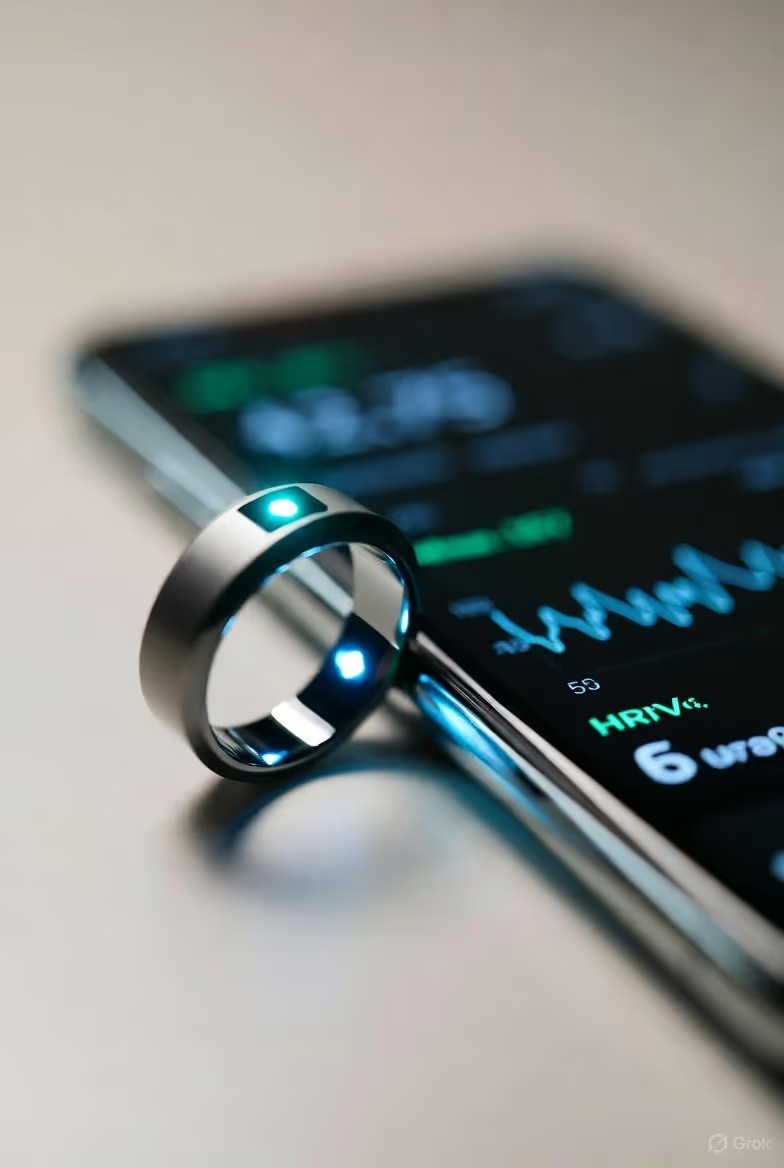
Imagine a wellness device so discreet it’s often mistaken for a piece of jewelry, yet so powerful it provides a continuous, clinical-grade stream of data about your body’s most intimate rhythms. This is the promise of the modern smart ring. Emerging from early niche concepts into a mainstream wellness powerhouse, smart rings like the Oura Ring 4, Samsung Galaxy Ring, and Ultrahuman Ring Air have redefined passive health monitoring by moving it from the conspicuous wrist to the subtle finger.
The Anatomy of a Smart Ring: Miniaturized Marvels
The engineering behind a smart ring is a triumph of miniaturization. Within a titanium or ceramic band typically weighing just 2 to 4 grams, manufacturers pack an impressive suite of technology:
Advanced Sensor Suite: This includes optical PPG sensors for heart rate and HRV, red/infrared LEDs for SpO₂, a skin temperature sensor, and a 3D accelerometer for movement.
Microprocessor & Firmware: An ultra-low-power chip processes sensor data in real time.
Bluetooth Low Energy (BLE): For syncing data to your smartphone with minimal battery drain.
Miniature Power System: A tiny battery that, thanks to optimized power management and the lack of a power-hungry screen, can last 5 to 10 days or more on a single charge.
This efficient design isn’t just about convenience; it’s fundamental to the ring’s value proposition. As noted in a 2021 study published in Frontiers in Physiology, adherence to wearable use is heavily influenced by comfort and convenience. A device you can forget you’re wearing, and only need to charge weekly, is far more likely to be used consistently for the long-term data collection that yields meaningful insights.
Why the Finger? A Unique Biometric Advantage
The choice of location is strategic. The finger, particularly the index or middle finger, offers a highly vascularized area with a strong, consistent pulse signal for PPG sensors. This can lead to highly accurate heart rate and HRV readings, which are the bedrock of recovery and sleep analysis. Furthermore, the finger provides an excellent site for measuring peripheral temperature trends, a sensitive metric for ovulation tracking, illness prediction, and circadian rhythm assessment.
For sleep tracking specifically, the ring form factor has distinct advantages:
Unparalleled Comfort: Testers consistently report that rings are the easiest device to sleep with. There’s no bulky screen to dig into your wrist when you sleep on your side.
Data Consistency: Because it’s so comfortable, people wear it 24/7. This provides the device’s algorithm with a continuous, unbroken data stream of daytime activity and nighttime rest, allowing for more nuanced insights about how your day affects your sleep and recovery.
Passive and Discreet: It operates entirely in the background. There are no buzzing notifications to disrupt your wind-down routine or illuminate your bedroom.
Leader of the Pack: The Oura Ring 4
In nearly every comparative review and test, the Oura Ring 4 emerges as the benchmark. Its strengths are comprehensive:
Accuracy: It consistently earns top marks for accurate heart rate, HRV, and sleep tracking when tested against chest-strap sensors and user logs.
Holistic Scoring: It synthesizes data into three intuitive daily scores: Sleep, Readiness, and Activity, providing an at-a-glance overview of your status.
Actionable Insights: The app is praised for translating complex data into personalized, actionable guidance, such as recommending an earlier bedtime if your data shows signs of strain.
Ongoing Development: Oura frequently adds new, research-backed metrics like cardio capacity, stress resilience, and advanced menstrual cycle predictions.
However, this premium experience comes at a cost. The ring itself starts at $349, and access to your full historical data and insights requires a $5.99/month or $69.99/year subscription. For some, this ongoing fee is a significant barrier.
The Subscription-Free Contenders
The market has responded with compelling alternatives that forgo monthly fees:
Ultrahuman Ring Air: Often called the best subscription-free ring, it focuses heavily on circadian rhythm management, offering unique features like an “Adenosine Clearance Window” to advise on caffeine timing.
Samsung Galaxy Ring: A sleek option that integrates seamlessly with the Samsung ecosystem. It offers snore detection (a feature Oura lacks) and a stylish charging case, but some features are best experienced with a Galaxy smartphone.
RingConn Gen 2 Air: Positioned as a value champion, it offers capable sleep tracking and an impressive 10-day battery life for under $200 with no subscription.
The Ring’s Core Trade-off
The smart ring’s greatest strength is also its key limitation: focus. It is a phenomenal passive health and sleep monitor, but it is not an active fitness or smart device. Workout tracking is basic compared to a dedicated sports watch, and you won’t get notifications, music controls, or GPS from your finger. It is a device designed for understanding and optimizing your body’s state, not for managing your daily digital life.
For the person who prioritizes sleep, recovery, and stress management above all else—and wants a comfortable, always-on device that provides deep, personalized insights—the smart ring is a compelling, and often superior, choice. As one reviewer succinctly put it, smart rings are “more comfortable to sleep with than smartwatches” and provide “in-depth health insights while allowing you to wear your favorite watch”.
For more on how this philosophy of holistic, passive monitoring is applied, you can explore the approach of companies like Oxyzen, which integrates similar wellness principles into its product design at https://oxyzen.ai/.
Smartwatches: The Versatile All-Day Health and Fitness Command Centers
If the smart ring is a dedicated sleep and recovery specialist, the modern smartwatch is a polymath—a versatile, screen-equipped command center for your daily health, fitness, productivity, and connectivity. Devices like the Apple Watch Series 11, Samsung Galaxy Watch 8, and Garmin Venu series dominate the wearable landscape by offering a compelling proposition: a single device on your wrist that can track your run with GPS, handle mobile payments, display notifications, and analyze your sleep. For many, this convergence of functions is the ultimate convenience.
The Smartwatch as a Sleep Tracker: A Jack-of-All-Trades?
Smartwatches bring formidable technological resources to sleep tracking. They house the same core biometric sensors as rings—advanced PPG heart rate monitors, SpO₂ sensors, accelerometers, and, in some models, skin temperature and ECG sensors. However, their approach and performance are shaped by their design priorities.
Major platforms have made significant strides in sleep analytics:
Apple Watch: With watchOS, Apple provides detailed sleep stage breakdowns (awake, core, deep, REM) and a unifying Sleep Score. Its most significant health feature is an FDA-authorized sleep apnea notification feature (on Series 9-11 and Ultra 2). This acts as a risk screening tool, flagging potential signs of moderate-to-severe obstructive sleep apnea by analyzing breathing patterns and blood oxygen data over a 30-day period. It is a landmark feature for consumer health empowerment, though Apple is careful to note it is “not a diagnostic tool”.
Samsung Galaxy Watch: Samsung was first to receive FDA De Novo authorization for a sleep apnea feature, available on the Watch 7, 8, and Ultra. It can assess OSA risk after just two qualifying nights. The Samsung Health app also adds snore detection and recording, providing tangible audio evidence of sleep disruptions.
Garmin: Garmin’s forte is the athlete. Its watches, like the Forerunner and Venu lines, boast exceptional battery life (often 10+ days) and features like nap detection and a “Body Battery” score that integrates sleep data, stress, and activity to advise on energy expenditure and recovery throughout the day. The focus is on how sleep fuels performance.
Fitbit: Now under Google, Fitbit devices like the Charge 6 and Inspire 3 are known for user-friendly sleep scoring and a vast ecosystem. They offer detailed sleep stage maps and a “Sleep Profile” that categorizes your sleep animal type over monthly trends.
The Inherent Tensions: Convenience vs. Optimal Sleep Tracking
Despite these advanced features, using a smartwatch for sleep tracking involves navigating several inherent compromises:
Battery Life: This is the most frequent pain point. While Garmin and some Fitbits last over a week, flagship Apple and Samsung watches typically require daily or every-other-day charging. This creates a logistical hurdle: you must remember to charge your watch during the day, or you’ll have a dead device at bedtime. For consistent sleep tracking, this daily habit is a critical point of failure that a ring’s weekly charging cycle easily avoids.
Physical Comfort: A smartwatch is significantly larger and heavier than a ring. For side sleepers, the protruding case and screen can be uncomfortable, pressing into the wrist. Some people simply cannot get used to wearing anything on their wrist in bed.
Digital Intrusion: The very screen that makes a watch useful during the day can sabotage sleep at night. The temptation to check notifications, the glow of an always-on display, or simply the mental association of the wrist device with daytime productivity can interfere with the psychological wind-down process essential for good sleep hygiene.
Sensor Placement: The wrist is a more challenging location for optical heart rate sensors than the finger. Bony anatomy, wrist hair, and a less consistent blood flow can lead to more signal noise, especially during the subtle physiological changes of sleep. While algorithms compensate, the fundamental signal quality may differ.
The Watch Wearer’s Profile
The ideal user for smartwatch-based sleep tracking is someone who:
Is already committed to wearing a smartwatch all day for its other features (fitness tracking, notifications, payments).
Prioritizes convergence and convenience—wanting one device to rule them all.
Values active health features like ECG, workout GPS, and on-demand SpO₂ checks.
Is disciplined about a daily charging routine.
Isn’t overly bothered by sleeping with a wrist-based device.
For this person, the smartwatch offers a “good enough” sleep tracking experience baked into a device they already use and love. It provides valuable trend data and, in some cases, groundbreaking health screenings like sleep apnea risk assessment. However, for the individual whose primary and foremost goal is to optimize sleep quality and recovery, the compromises of battery life, comfort, and potential digital intrusion make the smartwatch a less ideal specialist tool compared to a dedicated ring or headband.
The smartwatch story is one of remarkable versatility, proving that a single device can competently cover many bases. But as we’ll see next, when the sole focus is achieving the most accurate sleep data and creating the ideal conditions for rest, other devices make a more targeted, and often more effective, argument.
Sleep Headbands: The Specialized Path to Brainwave-Based Insights
While rings and watches infer sleep stages from heart rate and movement, sleep headbands take a more direct—and some would argue, more authoritative—approach. Devices like the now-discontinued Dreem and various emerging EEG (electroencephalogram) headbands aim to get closer to the clinical gold standard by measuring electrical activity in the brain itself. This category represents the most specialized form of consumer sleep tech, sacrificing all-day wearability for a singular goal: providing the most accurate possible sleep staging and facilitating direct sleep improvement.
How Headbands Work: Bringing the Sleep Lab Home
The core technology in these headbands is dry-electrode EEG. Instead of the dozens of wires and conductive gel used in a sleep lab, these devices use a series of small, dry sensors embedded in a flexible fabric band (often resembling a minimalist headphone headband) to detect the microvolt-level electrical signals generated by your brain.
By analyzing the frequency and amplitude of these brain waves, the device’s algorithms can identify with greater confidence whether you are in:
Wakefulness (beta/alpha waves)
Light Sleep (theta waves)
Deep Sleep (slow-wave delta waves)
REM Sleep (rapid, desynchronized waves similar to wakefulness)
This method is fundamentally different from the biometric inference used by rings and watches. It’s measuring the primary source of the sleep stage definition, rather than correlating it with secondary physiological signs.
Beyond Tracking: The Promise of Active Sleep Improvement
Many advanced sleep headbands don’t just track; they intervene. This is their most compelling differentiator. Using a technique called auditory stimulation or closed-loop stimulation, the device plays subtle, inaudible sound pulses (like pink noise) during detected deep sleep phases. The theory, supported by growing research, is that these precisely timed pulses can enhance and stabilize the slow-wave oscillations of deep sleep, potentially increasing its duration and restorative quality. Some headbands also integrate bone-conduction speakers for playing white noise, guided meditations, or soothing soundscapes to aid sleep onset.
The Ideal User for a Sleep Headband
This category is not for the casual tracker. The sleep headband user is typically someone with a focused, serious commitment to solving a sleep problem. This might include:
Individuals with chronic insomnia who have found passive tracking unhelpful.
Biohackers and performance enthusiasts seeking to maximize sleep quality for cognitive or physical recovery.
People intrigued by the science of sleep enhancement and willing to adopt a specific bedtime ritual.
Those who have tried rings and watches but question the accuracy of their stage breakdowns and want data closer to a clinical standard.
The Significant Trade-offs: Comfort and Lifestyle Fit
The specialization of headbands comes with clear costs:
Limited Wearability: You only wear it in bed. It provides no daytime activity, readiness, or recovery data. It is a tool for the night, disconnected from the context of your daily life.
Comption Concerns: Despite improvements, wearing a band with sensors on your forehead is undeniably more intrusive than a ring or watch. It can feel warm, may shift during the night, and can be awkward for people who share a bed.
Aesthetic and Habitual Hurdle: Incorporating a headband into your nightly routine requires more deliberate habit formation than simply continuing to wear a device you already have on.
The Verdict on Headbands
Sleep headbands occupy a unique and valuable niche. For the right person, they offer the most scientifically grounded sleep stage data available outside a lab and the only form of consumer device that actively attempts to improve sleep architecture, not just monitor it.
However, they represent the opposite end of the spectrum from the versatile smartwatch. They are highly specialized tools that demand a significant commitment to a specific bedtime routine and forgo the holistic, 24/7 health picture provided by rings and watches. They answer the question, “How can I get the most accurate sleep data and potentially enhance my deep sleep?” but they do not answer, “How is my daily stress affecting my readiness, or how did my workout impact my recovery?”
For a deeper dive into how different technologies are harnessed for wellness, you can explore the resources available at https://oxyzen.ai/blog, which often covers the intersection of innovation and holistic health.
Accuracy Deep Dive: How Do the Form Factors Really Compare?
With an understanding of how each device type works, we arrive at the most pressing question for any potential buyer: Which one is the most accurate? The answer is nuanced and depends heavily on what specific metric you prioritize and how you define “accurate” in the context of consumer-grade, non-medical devices.
It’s essential to reiterate the consensus from sleep medicine professionals: No consumer wearable can match the precision of an in-lab polysomnogram (PSG) for sleep staging. The AASM notes that due to their reliance on movement and derived physiology, wearables generally “overestimate total sleep time and underestimate wake after sleep onset”. Their true value lies in tracking trends over time, not in diagnosing a disorder based on a single night’s data.
Comparing the Core Sleep Metrics
1. Total Sleep Time (TST) and Sleep/Wake Detection
Smart Rings: Generally perform very well. The Oura Ring, in particular, is frequently praised in reviews for accurate sleep/wake detection. However, a noted weakness is that rings can sometimes mistake prolonged, still rest (like reading on the couch) for a nap, slightly inflating sleep time if you’re sedentary in the evening.
Smartwatches: Performance varies by brand and algorithm. Studies and tests show that mainstream watches from Apple, Fitbit, and Garmin are typically “fair to good” at estimating total sleep time. Their primary weakness is the same as all actigraphy-influenced devices: confusing quiet wakefulness for sleep.
Sleep Headbands: By using EEG, headbands have a theoretical advantage in distinguishing wakefulness from sleep, as brainwave patterns are definitive. This should, in principle, lead to the most accurate TST measurement among consumer devices.
2. Sleep Stage Breakdown (Light, Deep, REM)
Smart Rings & Watches: This is the area of greatest estimation. Both use heart rate, HRV, movement, and respiratory data to infer stages. Independent validations show “mixed” results for staging. They are reliable for showing you trends—e.g., “my deep sleep percentage drops when I drink alcohol”—but the exact minutes assigned to each stage should be viewed as an educated guess rather than a precise measurement. Among rings and watches, those with the most sophisticated, clinically-validated algorithms (like Oura and newer Apple/Fitbit models) tend to be viewed as leaders.
Sleep Headbands: By measuring brain waves directly, headbands provide the most accurate sleep stage breakdown available to consumers. While not equivalent to a full PSG cap with multiple electrode placements, a forehead EEG is measuring the primary signal used for staging in a clinical setting. For users deeply interested in the architecture of their sleep, this is a significant advantage.
3. Heart Rate (HR) and Heart Rate Variability (HRV)
Smart Rings: Often excel here. The vascular finger provides a strong, consistent signal for PPG sensors. In comparative testing, the Oura Ring 4 has proven to be “the most accurate of the trackers at measuring heart rate and heart-rate variability” when checked against a chest-strap sensor.
Smartwatches: Can be very accurate during rest but may suffer from more signal noise (“wrist noise”) during movement or if not worn snugly. Newer generations with improved sensors and algorithms have closed the gap significantly.
Sleep Headbands: Typically include PPG sensors as well, but their primary focus is EEG. HR/HRV accuracy is good but not necessarily their standout feature.
4. Key Health Signals: SpO₂, Respiration, and Apnea Risk
Blood Oxygen (SpO₂): Rings (like Oura, Samsung) and watches (Apple, Samsung, Garmin, Fitbit) now commonly track this overnight. The accuracy is sufficient for spotting trends and significant dips that might suggest breathing disturbances. Samsung and Apple have leveraged this data, combined with movement, to create their FDA-authorized sleep apnea risk screening features, a major differentiator in the smartwatch category.
Respiratory Rate: Derived reliably by both rings and watches from heart rate or movement data. It’s a stable metric useful for spotting deviations.
Snore Detection: A unique feature offered by Samsung (on both its watch and ring) and some other watch platforms. It uses the device’s microphone to detect and record snoring events, providing tangible evidence of sleep disruptions.
The Takeaway on Accuracy
There is no single winner, but there are clear leaders in specific domains:
For the most accurate sleep stage breakdown, EEG-based sleep headbands have a clear technological edge.
For highly accurate 24/7 heart rate and HRV monitoring in a comfortable, always-worn device, high-end smart rings like the Oura are frequently top-rated.
For comprehensive health screening, including FDA-authorized sleep apnea risk assessment, advanced smartwatches from Apple and Samsung are currently unmatched.
For overall trend tracking and holistic readiness insights derived from continuous data, both advanced rings and watches are highly capable, with rings often having an edge in comfort and consistency of wear.
The “best” device for accuracy depends entirely on which of these data points you value most and how you plan to use the information. A person seeking to improve deep sleep may prioritize the headband’s staging accuracy, while an athlete focused on recovery would value the ring’s superior HRV tracking, and someone concerned about sleep apnea would be drawn to the smartwatch’s screening capabilities.
The Human Factor: Comfort, Lifestyle, and Behavioral Change
Beyond the specs and sensor comparisons lies the most critical determinant of a sleep tracker’s success: you. The most accurate device in the world is worthless if it sits in a drawer because it’s uncomfortable, inconvenient, or fails to motivate you. The long-term value of any wearable hinges on its integration into your daily life and its ability to foster positive change.
Comfort and Wearability: The Foundation of Consistency
As the 2021 UCLA study on wearable rings highlighted, “adherence seems to be influenced by… discomfort [and] the inconvenience of wearable devices”. A device you can’t forget you’re wearing is a device you’ll eventually stop wearing.
Smart Rings consistently win on this front. Testers note they “barely noticed it” and that the comfort makes it “become a part of my daily routine”. The weekly charging cycle is also a major adherence advantage over daily-charging watches.
Smartwatches present the biggest hurdle. The need for daily charging is a frequently cited point of failure for consistent sleep tracking. Furthermore, some users, especially side sleepers, never acclimate to the feeling of a watch in bed. As one reviewer comparing devices put it, “I do prefer a ring tracker at night”.
Sleep Headbands require the most deliberate adaptation. You must be comfortable with the sensation of a band and sensors on your forehead, which not everyone is.
Data Presentation and Actionability: From Numbers to Knowledge
Raw data is overwhelming. The magic happens in the app, where algorithms synthesize numbers into insights. This is where user experience diverges dramatically.
Oura’s app is widely praised for being “calming,” “well-organized,” and translating data into simple, actionable scores (Sleep, Readiness, Activity) and personalized guidance.
Whoop’s app (for its wristband) is celebrated for its depth and personalized coaching but can be “intimidating” with its wealth of data and required interaction.
Garmin and Fitbit apps offer excellent fitness integration and trend analysis, with Garmin particularly strong for athletes.
Headband apps focus intensely on sleep architecture and the results of any stimulation protocols, often with less emphasis on daytime integration.
The best app for you depends on your personality. Do you want a simple, digestible daily score with clear advice? Or do you crave deep-dive analytics and charts to explore yourself?
The Danger of Orthosomnia and Finding Balance
This brings us to a crucial psychological consideration. Sleep trackers can inadvertently fuel sleep performance anxiety—known clinically as orthosomnia. Obsessing over a low sleep score or a lack of deep sleep can trigger stress that further degrades sleep quality, creating a vicious cycle.
The healthiest approach is to use the device as a guide, not a judge. Focus on multi-week trends, not single-night scores. Use the data to test gentle lifestyle experiments: “If I stop caffeine after 2 PM, what happens to my sleep latency over the next week?” The goal is progressive understanding and improvement, not perfection.
The Verdict on Lifestyle Fit
Choose a Smart Ring if: Your top priority is comfort and 24/7 wearability for holistic health insights. You value recovery and stress data as much as sleep data. You want a device that stays out of your way and doesn’t require daily management. You can read our complete guide on integrating such devices into a balanced wellness routine.
Choose a Smartwatch if: You already live on your wrist and want a single device for fitness, notifications, health screenings (like ECG or apnea risk), and sleep. You are disciplined about a daily charging habit and don’t mind sleeping with a watch.
Choose a Sleep Headband if: Your sole, focused goal is to improve your sleep with the most accurate staging data possible. You are willing to adopt a dedicated bedtime ritual with a specialized device and are less concerned with daytime tracking.
The right choice aligns the device’s strengths with your personal habits, goals, and psychological relationship with data. It’s the tool that you’ll use consistently, not just for a week, but for the long journey toward better health. For insights into how companies build products with this long-term user journey in mind, you can explore https://oxyzen.ai/our-story.
Battery Life and Ecosystem: The Logistical Realities
The promise of seamless health tracking often crashes against the mundane reality of battery life and device compatibility. These logistical factors don’t make for glamorous marketing bullet points, but they are daily determinants of whether your high-tech sleep solution becomes a trusted partner or a forgotten gadget. Let’s break down the critical, practical considerations that separate a convenient tool from a burdensome chore.
The Charging Conundrum: From Weekly to Daily
Battery performance is arguably the most tangible differentiator between form factors and has a direct, daily impact on user experience.
Smart Rings: The Endurance Champions. Rings are designed for efficiency, lacking power-hungry displays. This translates to impressive longevity. The RingConn Gen 2 Air leads the pack with a tested 10.5-day battery life, while the Oura Ring 4 and Samsung Galaxy Ring reliably deliver 5 to 8 days on a single charge. This weekly charging rhythm is forgiving. You can charge it while you shower or during a sedentary work session, and it’s unlikely to die unexpectedly overnight.
Smartwatches: The Daily Grind. Here, the landscape is split. Garmin watches are famous for endurance, with many models lasting 10 to 14 days in smartwatch mode. The Withings ScanWatch boasts up to 30 days. However, the market-dominant Apple Watch and Samsung Galaxy Watch still largely operate on a ~24 to 40-hour cycle, requiring charging every day or every other day. The new Apple Watch Series 11 has improved to “nearly two days,” but the habit remains daily. For consistent sleep tracking, this means you must proactively charge your watch during the day. If you forget, you face a choice: skip a night of data or start your evening with a charging delay.
Sleep Headbands: Battery life varies but is typically designed to last for several nights (e.g., 2-3) on a charge, aligning with their dedicated use case. Charging is just another part of the pre-bed routine.
The implication is clear: a ring’s weekly charge integrates easily into existing habits, while a daily-charging watch requires the formation of a new, specific habit—a non-trivial behavioral hurdle.
Ecosystem Lock-In and Subscription Models
Your choice of device can tether you to a specific brand ecosystem and ongoing costs.
Platform Dependencies:
Apple Watch requires an iPhone. Its full potential is unlocked within the Apple Health ecosystem.
Samsung Galaxy Ring and Watch offer their best features, like full health data integration and some AI coaching, when paired with a Samsung Galaxy smartphone.
Oura, Whoop, Garmin, and Fitbit are more platform-agnostic, working with both iOS and Android, though Fitbit is now deeply integrated with Google services.
The Subscription Question: This is a major financial and philosophical divide in the market.
The Subscription Model: Oura requires a $5.99/month or $69.99/year fee to access your historical data, trends, and personalized insights. Whoop operates entirely on a subscription model ($199-$359/year), with the hardware included. These companies argue the fee supports continuous software development, new features, and advanced analytics.
The One-Time Purchase Model: Samsung Galaxy Ring, Ultrahuman Ring Air, and RingConn offer all their features with no ongoing subscription. Garmin also provides all data in its Connect app for free.
Hybrid Models: Fitbit offers core tracking for free but locks advanced analytics, wellness reports, and coaching behind a $10/month Premium subscription.
Your tolerance for ongoing fees is a personal decision. It’s worth asking: Does the subscription provide enough value in terms of updated insights and features to feel worthwhile, or would you prefer the predictability of a one-time cost?
Data Privacy and Security: What Are You Sharing?
Wearables collect profoundly intimate data: your heartbeat, location, sleep patterns, and potentially your voice (for snore detection). It’s imperative to consider:
Data Ownership: Who owns your data? Can you export it?
Usage Policies: Is your aggregated, anonymized data used for research or sold to third parties? Can you opt out?
Security: How is your data encrypted in transit and at rest?
Reputable companies have clear privacy policies. Before purchasing, it’s wise to review these documents. Look for transparency about data practices and options to control your information.
Making the Practical Choice
When evaluating logistics, ask yourself:
Charging Routine: “Am I disciplined enough to charge a device every single day, or would a weekly schedule fit my life better?”
Ecosystem: “Does this device work seamlessly with the phone and other tech I already own and love?”
Cost Structure: “Do I prefer paying more upfront with no strings attached, or am I comfortable with a monthly fee for a continuously updated service?”
Data Comfort: “Am I satisfied with how this company explains its use and protection of my health data?”
The device that wins on paper specs can fail in real life if its logistical demands conflict with your lifestyle. The most successful sleep-tracking experience is the one that feels effortless to maintain. For answers to common practical questions about device use and compatibility, resources like https://oxyzen.ai/faq can be helpful.
The Future of Sleep Tracking: AI, Integration, and Proactive Health
The wearables we see today are merely the opening chapter in a story of deeper integration between technology and human biology. The frontier of sleep tracking is rapidly moving beyond passive monitoring and generic advice toward predictive, personalized, and preventative health systems. Driven by advances in artificial intelligence (AI), sensor miniaturization, and a growing body of clinical research, the next generation of devices promises to be not just observers, but active partners in our long-term well-being.
The Rise of the AI Health Coach
Current devices provide data; future devices will provide contextual wisdom. We’re already seeing the seeds of this with features like Whoop’s AI Coach and Oura’s personalized recommendations. The next step is hyper-personalized systems that learn your unique physiology and lifestyle patterns to offer truly bespoke guidance.
Imagine a device that doesn’t just tell you your sleep was poor, but says: *“Based on your elevated resting heart rate and decreased HRV, combined with your heavy workout yesterday and your past data, today is an ideal day for active recovery rather than high-intensity training. A 30-minute walk this afternoon will aid recovery without adding strain, and aiming for a 9:15 PM bedtime will help you get back on track.”* This moves from retrospective reporting to prospective planning.
Multi-Modal Sensing and Clinical Convergence
The distinction between consumer wellness gadgets and medical devices is blurring. The FDA authorizations for sleep apnea screening on Apple and Samsung watches are a landmark example of this convergence. The case study of the Happy Ring, developed as the first FDA-cleared smart ring for whole-body hospital-at-home monitoring, points to a future where clinical-grade diagnostics reside in comfortable, everyday wearables. These devices use a suite of sensors—including in some cases, galvanic skin response (GSR) and electrodermal activity (EDA) to measure stress responses—to create a holistic digital biomarker profile.
Future devices may incorporate:
Non-invasive blood glucose trend monitoring (already pioneered by companies like Ultrahuman with separate sensors).
Advanced hydration and electrolyte level sensing.
More precise blood pressure monitoring (already beginning with FDA-authorized features like hypertension notifications on the Apple Watch).
Direct neural interface technologies for even more precise brain-state analysis, moving beyond the forehead EEG of current headbands.
The Seamless Internet of Healthy Things (IoHT)
Your sleep tracker will not operate in a vacuum. The future lies in the Internet of Healthy Things—a seamless ecosystem where your ring, watch, or headband communicates with other smart devices in your environment to create the optimal conditions for health.
Your tracker could signal your smart thermostat to begin cooling the bedroom as it detects your body temperature dropping in preparation for sleep.
It could turn on a smart light to simulate a sunrise as you exit deep sleep in the morning, promoting a natural wake-up.
It could inform your smart kitchen appliances to suggest meals that support recovery on days when your data shows high stress or poor sleep.
It could integrate with electronic health records (with your consent), allowing your physician to monitor chronic conditions or post-operative recovery remotely, as envisioned by the Happy Ring’s hospital-at-home model.
Predictive Health and Longitudinal Biomarkers
The ultimate goal is predictive health. By analyzing thousands of data points over months and years, AI algorithms will be able to identify subtle deviations from your personal baseline that may signal the onset of illness, excessive stress, or metabolic shifts long before you feel symptoms. Researchers note that precision wearables offer “highly accurate, clinically validated measurements used for diagnosis and treatment,” moving from general wellness to specific digital biomarkers.
This longitudinal data becomes a priceless asset for preventative care, enabling interventions at the earliest, most effective stage. Your wearable becomes a guardian of your baseline health, constantly vigilant in the background.
The Human-Centered Challenge
As technology races forward, the core challenge remains human-centered: avoiding data overload and anxiety while fostering agency and well-being. The most successful future devices will be those that master the art of insightful silence—knowing when to deliver a crucial, actionable piece of advice and when to simply reassure you that everything is on track. They must enhance our intuition about our own bodies, not replace it.
The trajectory is clear: sleep tracking is evolving from a niche curiosity into a foundational pillar of proactive, personalized healthcare. The device on your wrist or finger is becoming a window into your overall health, a coach for your daily choices, and a sentinel for your long-term vitality. The future of sleep isn’t just about counting hours; it’s about enriching the quality of every waking moment that follows. For a perspective on how companies are working to responsibly navigate this future, you can learn about their vision and values at https://oxyzen.ai/about-us.
Making Your Choice: A Decision Framework for Your Perfect Sleep Tracker
After exploring the technological intricacies, accuracy comparisons, and human factors of rings, watches, and headbands, the time has come to synthesize this knowledge into a clear path forward. Choosing the right sleep tracker is a personal decision with no universally correct answer. The following framework is designed to guide you through a series of key questions, helping you align your unique needs, lifestyle, and goals with the strengths of each device category.
Step 1: Define Your Primary Objective
Start by asking yourself the most fundamental question: “Why do I want a sleep tracker?” Your answer will immediately narrow the field.
“I want to improve my overall recovery, understand my stress, and get a holistic view of my health.” → Lean strongly toward a Smart Ring. Its 24/7 wearability, comfort, and focus on readiness make it the ideal tool for this integrated approach. The consistent data stream provides context for how daily activity and stress impact your sleep and recovery.
“I want one device that tracks my workouts with GPS, handles my notifications, and also monitors my sleep.” → A Smartwatch is your natural choice. It excels at this convergence. Prioritize models with longer battery life (like Garmin) if sleep tracking consistency is important, or embrace the daily charging ritual of an Apple or Samsung watch for their advanced health features.
“I have chronic sleep issues, and I want the most accurate breakdown of my sleep stages to work on, or I want to try enhancing my deep sleep.” → A Sleep Headband is your specialized tool. It is designed specifically for this deep, single-purpose focus and offers the most accurate staging and active intervention potential.
Step 2: Audit Your Lifestyle and Habits
Be brutally honest about your daily routine and preferences.
Charging Discipline: Are you the type of person who reliably charges your phone every night? If yes, a daily-charging watch might work. If charging is a frequent afterthought, a ring with weekly battery life will cause far less friction.
Comfort & Sensitivity: Do you sleep on your side? Do you find wristwatches bothersome in general? If comfort is paramount, especially for sleep, the ring’s advantage is significant.
Tech Ecosystem: Do you live firmly in the Apple, Samsung, or Google ecosystem? Choose a device that plays nicely with your existing phone and services for the smoothest experience.
Relationship with Data: Do you get anxious seeing numbers, or do you find them motivating? If prone to anxiety (“orthosomnia”), choose a device with a gentle, score-based app like Oura’s. If you love digging into charts, a data-rich platform like Whoop or Garmin might be more satisfying.
Step 3: Weigh the Financial and Logistical Factors
Budget: Consider both upfront cost and long-term ownership.
High upfront, lower ongoing: Smartwatch (Apple Watch Series 11: ~$299+).
High upfront, subscription required: Oura Ring 4 (~$349 + $6/month).
Subscription includes hardware: Whoop 5.0 ($199-$359/year, all-inclusive).
One-time cost, no subscription: Samsung Galaxy Ring (~$280), Ultrahuman Ring Air (~$299), RingConn (~$199), most Garmin watches.
Data Privacy: Review the company’s privacy policy. Are you comfortable with how they state they will use your health data?
Step-by-Step Decision Matrix
If this is your TOP priority...
Then strongly consider...
Because...
All-day comfort & forgettable wear
Smart Ring
Lightest, most comfortable for 24/7 use. Weekly charging.
One device for fitness, smart features & sleep
Smartwatch
The ultimate convergent device. Manages workouts, notifications, payments, and sleep.
The most accurate sleep stage data
Sleep Headband (EEG)
Measures brain waves directly, closest to clinical staging.
Deep recovery & stress insights (HRV)
Smart Ring
Finger-based PPG often provides superior HRV signal for recovery metrics.
FDA-authorized sleep apnea screening
Apple Watch or Samsung Galaxy Watch
Currently the only consumer devices with this authorized health feature.
Deep, unrivaled integration with iOS and Apple Health.
Active improvement of sleep quality
Sleep Headband
Some models use sound stimulation to potentially enhance deep sleep.
Final Advice Before You Buy
Use Sizing Kits: If you choose a ring, never skip the sizing process. Most companies provide free plastic sizing kits. Wear the test ring for a full 24-48 hours, including during hand washing and sleep, to ensure a perfect, snug fit that won’t rotate.
Check the Return Policy: Ensure the device has a reasonable trial period (e.g., 30 days) so you can test comfort and the app experience in your real life.
Start with Trends, Not Scores: When you first get your device, resist the urge to obsess over daily numbers. Wear it consistently for a few weeks to establish your personal baseline. Then, use the trends to inform small, sustainable lifestyle changes.
The journey to better sleep and health is a marathon, not a sprint. The perfect tracker is the one that effortlessly accompanies you on that journey, providing insights that empower you without adding burden. By thoughtfully applying this framework, you can move beyond the hype and select a tool that becomes a genuine catalyst for your well-being. For social proof and to see how these devices perform in real life, consider exploring https://oxyzen.ai/testimonials for user experiences and reviews.
The App Experience: Dashboards, Scores, and Actionable Insights
If the wearable sensor is the body, the companion app is the brain and the voice. It’s the interface through which weeks of biometric data are synthesized into a story you can understand and act upon. A powerful sensor suite paired with a confusing, overwhelming, or overly simplistic app is a wasted opportunity. Conversely, a brilliant app can elevate capable hardware into an indispensable wellness partner. The user experience (UX) design philosophy of these apps varies dramatically, catering to different personalities and goals.
The Philosophy of Data Presentation
App designers face a fundamental tension: simplicity versus depth. How do you present complex physiological data without terrifying or boring the user?
The Holistic Score Approach (Oura, Garmin Body Battery): This method distills a multitude of data points into one or a few simple, digestible numbers. Oura’s three-circle system (Sleep, Readiness, Activity) is the archetype. You wake up and see a single Sleep Score out of 100, and a Readiness Score suggesting how prepared your body is for the day. The brilliance is in its reduction of complexity. It tells you what you need to know, not every detail. For users who want guidance without analysis paralysis, this is ideal. Garmin’s Body Battery serves a similar purpose, using a 0-100 scale to represent your energy reservoir based on sleep, stress, and activity.
The Data-Rich Dashboard (Whoop, Fitbit Premium): These apps cater to the data enthusiast who loves to explore. Whoop’s app is a deep well of metrics, graphs, and correlations. It shows you not just your sleep stages, but your sleep performance vs. need, your respiratory rate, your skin temperature deviation, and how each affects your recovery. It encourages you to “journal” daily behaviors (caffeine, alcohol, late meals) and then shows you, weeks later, their statistical impact on your recovery. It’s for the user who wants to be their own sleep scientist.
The Integrated Health Hub (Apple Health, Samsung Health): For Apple Watch and Samsung Galaxy users, the app is not just for sleep; it’s the central repository for all health data. Apple Health can aggregate sleep data from your watch, mindfulness minutes from a meditation app, nutrition data from a food logger, and clinical records from your doctor. Its power is in integration, creating a unified, if somewhat clinical, health profile. The sleep data itself is presented clearly but without the same level of tailored coaching as dedicated platforms.
The Focused Sleep Lab (Headband Apps like Muse S): Apps for EEG headbands are laser-focused on sleep architecture. You’ll see detailed brainwave graphs, precise timings of sleep cycles, and metrics on sleep depth. The focus is on the structure of your night, often with tools to review the effects of soundscapes or stimulation protocols.
What Makes an App “Actionable”?
A great app doesn’t just report; it recommends. True actionability is the holy grail. Here’s what to look for:
Personalized, Not Generic, Advice: Instead of “get more sleep,” a good app might say: “Your data shows your sleep is consistently less restful after days with high evening screen time. Try turning off devices 60 minutes before bed starting tonight.”
Behavioral Correlation (The Whoop Model): The ability to log habits and have the app statistically show you their impact on your metrics is profoundly powerful. Seeing a graph that clearly links “alcohol consumption” with a 15% drop in your HRV and recovery score is more motivating than any generic warning.
Trends Over Daily Scores: An app that highlights weekly and monthly trends (“Your resting heart rate has been trending down over the past month”) is more valuable than one that only highlights last night’s score. It helps you see the big picture of progress.
Positive Framing: Language matters. An app that says “Your body needs more recovery today” is better than one that declares “Your sleep was poor.” The former is a supportive nudge; the latter can feel like a judgment.
The Notification Dilemma
When and how should the app interrupt you? The best apps are judicious.
Helpful: A gentle morning notification with your score and one key insight.
Intrusive: Constant pings about being sedentary, having a high heart rate, or reminders to log sleep when you’re already winding down. Look for apps with highly customizable notification settings.
The Takeaway: When choosing a tracker, spend as much time reviewing videos and reviews of the app as you do the hardware. Ask yourself: Does this layout make sense to me? Does the guidance feel empowering or stressful? Does it fit my learning style? The app is where you will live with your data; it must be a place you want to visit.
Beyond Sleep: Holistic Health Monitoring and Daytime Metrics
While this guide focuses on sleep, the reality is that for rings and watches, sleep data is intrinsically linked to a broader tapestry of 24/7 health monitoring. These daytime metrics provide the critical context for understanding your night. They answer the question: Why did I sleep the way I did?
Key Daytime Metrics and Their Importance
Heart Rate Variability (HRV): This is arguably the most important metric for recovery and overall autonomic nervous system health. HRV measures the variation in time between heartbeats. A higher HRV generally indicates a more resilient, recovered state (your body can easily adapt to stress). A lower HRV suggests your body is under strain—from exercise, illness, or psychological stress. Smart rings, due to their consistent finger-based signal, are often praised for providing stable, reliable HRV readings. Tracking your HRV trend can tell you if your training is effective, if you’re getting sick, or if you’re chronically over-stressed.
Resting Heart Rate (RHR): Your heart rate when you are fully at rest. It typically lowers with improved cardiovascular fitness and rises with illness, dehydration, or overtraining. Seeing your RHR creep up over several days can be an early warning sign.
Stress/Recovery Scores: Many platforms synthesize data (like HRV, RHR, and sleep) into a daily stress or recovery metric. Garmin’s Stress Score and Whoop’s Recovery Score are prime examples. They give you an at-a-glance view of whether your body is primed for performance or in need of rest.
Activity and Readiness Integration: The best ecosystems don’t treat sleep and activity as separate silos. Oura’s Readiness Score directly influences its Activity Goal for the day. If you have a low Readiness Score, it will automatically lower your recommended calorie burn, encouraging active recovery. This creates a feedback loop that respects your body’s current state.
Body Temperature: Continuous skin temperature tracking (pioneered by Oura) is a sensitive biomarker. A sustained elevation can indicate the onset of illness, ovulation in women, or a disrupted circadian rhythm.
Blood Oxygen (SpO₂) During the Day: While crucial for sleep breathing analysis, spot checks during the day can be useful at altitude or if you’re feeling unwell.
The Case for 24/7 Wear: The Power of a Continuous Baseline
This is where the smart ring’s value proposition shines brightest. Because it’s so comfortable and its battery lasts for days, it’s designed to be worn constantly. This provides the device’s algorithms with an unbroken data stream.
Why is this continuous baseline so powerful?
Personalized Normalization: The device learns your personal normal. It doesn’t compare you to population averages; it compares you to yourself. It knows what your typical HRV is, what your normal skin temperature is. This makes deviations more meaningful and actionable.
Context for Sleep: The app can see that your poor sleep last night was preceded by a day of high stress and an intense evening workout. It can tell you that your excellent recovery score today is likely due to the two restful nights that followed a hard training block.
Detection of Subtle Trends: Long-term, continuous data can reveal patterns invisible over a week. It can show seasonal variations in your metrics, or how a change in diet or medication slowly affects your physiology.
A device you only wear at night, like a headband or a watch you frequently take off, provides a series of snapshots. A device worn 24/7 provides a documentary film of your health. For the user seeking a comprehensive, holistic view of their well-being—where sleep is understood as the nightly reset within an ongoing cycle of strain and recovery—the continuous data from a ring or an always-on watch is indispensable. For more on how this holistic data philosophy is applied, you can explore the approach of companies focused on integrated wellness at https://oxyzen.ai/.
Specialized Use Cases: Athletes, Shift Workers, and Health Conditions
The “average” sleeper is a myth. Our lives, physiologies, and challenges vary wildly. Therefore, the optimal sleep tracker is not a one-size-fits-all proposition. Different populations have distinct needs that make certain features and form factors significantly more valuable.
The Athlete and Fitness Enthusiast
For athletes, sleep is not just about rest; it’s the primary period for physiological adaptation and recovery. The tracker that provides the best insights for an athlete is the one that best quantifies recovery and guides training load.
Key Needs: Accurate HRV and RHR tracking to gauge daily recovery status, sleep staging to assess restorative sleep quality, and integration with training load.
Top Contenders:
Whoop: The cult favorite among professional athletes. Its Strain and Recovery scores are designed specifically to guide training. The journal feature helps pinpoint exactly which behaviors (hydration, protein intake, foam rolling) improve recovery metrics. The lack of a screen is a plus for many athletes during training.
Garmin Watches: Unbeatable for the athlete who also wants detailed GPS workout tracking and performance metrics (VO2 Max, training status, load focus). The Body Battery and Sleep Score integrate seamlessly with workout data to advise on daily readiness.
Oura Ring: Provides excellent recovery data (HRV, temperature) and is more comfortable for sleep than a watch, which is crucial for athletes who need uncompromised rest. Its Activity Score can help prevent overtraining.
Why a Ring or Band? For serious athletes, sleeping with a bulky watch can be disruptive. The comfort of a ring or a Whoop band is a tangible advantage for ensuring consistent data during this critical recovery phase.
The Shift Worker or Chronically Jet-Lagged
This group battles against their natural circadian rhythm. Their primary need is to understand and mitigate the impact of irregular sleep schedules on their health.
Key Needs: Tools for managing circadian disruption, tracking sleep at odd hours, and monitoring the cumulative sleep debt.
Top Contenders:
Smart Rings (Oura, Ultrahuman): Rings excel here due to 24/7 wear. They can track sleep whenever it happens—day or night—and build a consistent baseline despite the shifting schedule. Ultrahuman’s focus on circadian health and caffeine timing can be particularly useful.
Devices with Nap Detection: Garmin watches and Whoop automatically detect naps and incorporate them into daily recovery scores, which is essential for those who must supplement night sleep with daytime naps.
Important Features: Look for apps that help visualize your sleep pattern over a weekly cycle, not just a 24-hour day. The ability to manually adjust sleep times in the app (if automatic detection fails for a daytime sleep) is also helpful.
Individuals with Specific Health Conditions or Concerns
Suspected Sleep Apnea:
The Clear Choice: Apple Watch or Samsung Galaxy Watch. Their FDA-authorized sleep apnea notifications are the most direct, clinically validated tool a consumer can use for risk assessment. While not a diagnosis, a positive notification is a powerful prompt to seek a professional sleep study. Overnight SpO₂ tracking on rings and other watches can also show concerning dips, but without the same authorized algorithmic assessment.
Chronic Insomnia or Anxiety-Driven Sleep Issues:
Proceed with Caution: For some, trackers can worsen anxiety (orthosomnia). If you choose to use one, opt for an app with a gentle, positive framing (like Oura) and use it in trend mode only.
Sleep Headbands can be a double-edged sword. The detailed data may fuel anxiety for some, but for others, the use of soundscapes and meditation guides (on devices like Muse) can be an active tool for relaxation and sleep onset.
Women’s Health & Fertility:
Smart Rings are Standouts. Continuous skin temperature tracking is a game-changer for predicting ovulation and mapping menstrual cycle phases far more accurately than basal body temperature (BBT) taken once a morning. Oura and Natural Cycles have a well-known partnership, but other rings with temperature sensing offer similar insights. The 24/7 data provides a much more reliable picture than a single point measurement.
The Minimalist or Tech-Averse User
For someone who wants insights but fears complexity or digital intrusion:
A subscription-free smart ring (RingConn, Ultrahuman) or a simple Fitbit Inspire 3 might be ideal. They provide core sleep and activity data without overwhelming dashboards or monthly fees.
The key is a simple app and a device that requires minimal daily interaction. Avoid data-rich platforms like Whoop if simplicity is the goal.
The lesson is clear: your life context is a primary filter. A device perfect for a professional athlete might be overkill for a new parent simply wanting to track sleep duration, while a watch with apnea screening could be a life-saving tool for someone with undiagnosed sleep disorders. For additional resources and articles tailored to specific wellness journeys, consider exploring https://oxyzen.ai/blog.
The Buyer's Guide: Top Models Compared (Late 2024)
Armed with an understanding of your needs, it’s time to survey the battlefield. The wearable market evolves rapidly, but as of late 2024, a few models in each category have distinguished themselves as leaders. This is not an exhaustive list, but a focused comparison of the most compelling options based on performance, features, and market reception.
Smart Ring Showdown
Model
Key Strengths
Key Weaknesses
Ideal For
Oura Ring 4 (Heritage & Horizon)
Best-in-class app & holistic scores. Excellent accuracy for HR/HRV/sleep. Extensive research backing. Stylish, durable designs.
Required subscription ($6/mo). Higher upfront cost. Workout tracking is basic.
The user who wants the most polished, actionable wellness insights and prioritizes recovery. The gold standard.
Samsung Galaxy Ring
Sleek design, excellent charging case. No subscription. Strong SpO₂ & snore detection. Good Samsung ecosystem integration.
Best features tied to Galaxy phones. Less mature wellness insights vs. Oura. Newer, less proven algorithm.
Samsung phone users who want a stylish, subscription-free ring with smart ecosystem features.
Ultrahuman Ring Air
No subscription. Strong focus on circadian rhythm & metabolism (caffeine timing, etc.). Good data platform.
App can feel technical. Brand is less established than Oura/Samsung.
Biohackers and those focused on metabolic and circadian health who want to avoid a subscription.
RingConn Gen 2 Air
Best value. Very capable tracking, 10.5-day battery, no subscription. Simple, effective app.
Less brand recognition. Fewer “extra” features (like period prediction). Design is more utilitarian.
The budget-conscious buyer who wants reliable core tracking and maximum battery life with no ongoing fees.
Smartwatch Arena
Model
Key Strengths
Key Weaknesses
Ideal For
Apple Watch Series 11
Unrivaled iPhone integration. FDA sleep apnea notifications. Best overall smartwatch ecosystem. Bright, always-on display.
Battery life still ~1-2 days. Expensive. Sleep tracking is good but not best-in-class. Requires daily charging habit.
iPhone users who want a top-tier smartwatch with leading health screenings and app ecosystem.
Garmin Venu 3 / Forerunner 965
Exceptional battery life (10-14 days). Superior fitness/performance metrics. Body Battery & Nap Detection.
Smart features less robust than Apple/Samsung. Sleep staging can be less accurate.
Fitness-focused users and athletes who prioritize battery life and training metrics over smart features.
Samsung Galaxy Watch 8 / Ultra
FDA sleep apnea feature. Robust Samsung health ecosystem. Sapphire glass durability (Ultra). Rotating bezel (classic).
Battery life inconsistent. Best with Galaxy phones. Can feel bulky.
Android (especially Galaxy) users who value health screenings and a premium smartwatch experience.
Fitbit Charge 6
Best value in the watch category. Reliable sleep & fitness tracking. User-friendly app. 7-day battery.
Those new to tracking who want a simple, affordable wrist-based device with a proven platform.
Sleep Headband Niche
Muse S (Gen 2): A leading consumer EEG headband. Provides detailed sleep staging, mindfulness meditation guidance with real-time biofeedback, and soothing soundscapes to aid sleep. It’s a tool for both sleep tracking and active relaxation training.
Note on Dreem: Once a pioneer, the Dreem headband is no longer sold as a consumer product, though its technology lives on in clinical applications. Its departure highlights the challenges of the consumer headband market.
The Quick-Reference Decision Tree:
Want the best holistic health coach? → Oura Ring 4 (if subscription is okay) or Ultrahuman Ring Air (if no subscription).
Want one device for everything? → Apple Watch Series 11 (for iPhone) or Samsung Galaxy Watch 8 (for Android).
On a tight budget with no fees? → RingConn Gen 2 Air (ring) or Fitbit Charge 6 (watch).
An athlete focused on recovery? → Whoop or Garmin Venu 3.
Concerned about sleep apnea? → Apple Watch or Samsung Galaxy Watch.
Want to improve sleep with brainwave tech? → Muse S Headband.



%402x.svg)