Sleep Tracking for Beginners: Getting Started Without Overwhelm
Starting sleep tracking feels overwhelming without proper guidance. This beginner-friendly approach breaks down the process into simple steps, explains how to choose devices, set up tracking, interpret initial data, and gradually build understanding without information overload or analysis paralysis.
Sleep Tracking for Beginners: Getting Started Without Overwhelm
You know that feeling—the heavy grogginess that clings to you all morning, the afternoon slump that feels like hitting a wall, the vague sense that you’re running at 70% capacity while life demands 100%. For years, I chalked it up to stress, a busy schedule, or just “getting older.” Then, on a whim, I started tracking my sleep. The data didn’t lie: I was averaging just 5 hours and 45 minutes of restless, fragmented sleep. The revelation wasn’t just in the numbers; it was in connecting those numbers to my daily reality—the irritability, the brain fog, the missed workouts. That simple act of measurement was the first, most crucial step out of the fog and into a life of energized clarity.
If you’re curious about sleep tracking but feel intimidated by tech jargon, complex graphs, or the fear of information overload, you’ve come to the right place. This guide is designed for the absolute beginner. We’re going to demystify the process, strip away the complexity, and give you a simple, actionable roadmap. Forget the overwhelm. Think of this not as adding another chore to your life, but as gaining a gentle, insightful guide to your most foundational health habit. By the end, you’ll not only understand your sleep but possess the knowledge to improve it profoundly. And the best part? You can start this journey tonight with little more than intention and, perhaps, a simple wearable like a smart ring from Oxyzen, designed to make insights effortless.
Why Your "Fine" Sleep Might Be Your Biggest Blind Spot
We live in a culture that often wears sleep deprivation as a badge of honor. “I’ll sleep when I’m dead,” we joke, while fueling ourselves with caffeine to power through the day. We assume that because we’re unconscious for a chunk of the night, we’re sleeping. But there’s a monumental difference between being unconscious and achieving truly restorative sleep.
For the beginner, the first mental hurdle is accepting that your subjective feeling of “I slept okay” is often a poor indicator of objective sleep quality. This isn’t about distrusting your feelings; it’s about understanding that sleep architecture—the cyclical pattern of light, deep, and REM sleep—is complex and largely hidden from our conscious perception. You can sleep for 8 hours and wake up exhausted because you missed crucial deep sleep. Conversely, you might sleep for 6 but wake refreshed after a perfectly balanced cycle.
Consider this: A 2022 study in the Journal of Clinical Sleep Medicine found that self-reports of sleep duration are often overestimated by an average of 30-60 minutes compared to objective actigraphy data. Your perception is a blurry snapshot; tracking provides a high-definition timeline.
The beginner’s “aha moment” typically comes from connecting data to lived experience. For example:
You see a night with high “restlessness” and remember waking up with a stiff neck.
You notice your heart rate remained elevated all night after an evening of heavy social media scrolling or a difficult conversation.
You see a correlation between nights you drink alcohol (even just one glass) and a drastic reduction in your deep sleep percentage.
This process moves sleep from an abstract concept to a tangible, measurable pillar of health. It transforms guesswork into knowledge. As you’ll discover on the Oxyzen blog, countless user stories begin with this simple revelation: “I had no idea.” By shining a light on this blind spot, you take the first empowered step toward not just more sleep, but better sleep. It’s the cornerstone of everything else—your mood, your immune system, your cognitive function, and even your fitness goals.
Beyond Counting Sheep: What Modern Sleep Tracking Actually Measures
Gone are the days when tracking sleep meant jotting down a rough bedtime and wake time in a journal. Modern technology, particularly wearable devices, offers a window into the fascinating physiology of your night. Let’s break down the key metrics you’ll encounter, explaining what they are and why they matter—in plain English.
Sleep Stages: The Nightly Symphony Your sleep isn’t a flatline. It’s a series of 90-120 minute cycles, each containing distinct stages:
Light Sleep (N1 & N2): This is the gateway to sleep and makes up about 50-60% of your night. It’s crucial for memory consolidation and physical relaxation. Tracking shows you if you’re getting enough of this foundational stage.
Deep Sleep (N3 or Slow-Wave Sleep): This is the physical restoration phase. It’s when tissue repair, muscle growth, and immune strengthening occur. It’s harder to wake from, and if you’re sleep-deprived, your body will crave more of it. A beginner should look for a consistent, stable percentage of deep sleep each night.
REM Sleep (Rapid Eye Movement): This is the mental restoration phase, associated with dreaming, emotional processing, and learning. It’s vital for cognitive function and mental health. Most of your REM occurs in the later cycles of the night, which is why cutting your sleep short often means robbing yourself of this critical stage.
The Vital Signs of Sleep: Heart Rate and HRV
Resting Heart Rate (RHR): During quality sleep, your heart rate should dip significantly below your daytime resting rate. This “nocturnal dip” is a sign of a healthy, recovering nervous system. A consistently high nighttime heart rate can signal stress, illness, or poor recovery.
Heart Rate Variability (HRV): This is the holy grail of recovery metrics for many. HRV measures the subtle variations in time between each heartbeat. A higher HRV generally indicates a more resilient, adaptable nervous system and better recovery. It’s a sensitive metric that responds to stress, training, and, of course, sleep quality. Seeing your HRV trend up over time can be one of the most rewarding signs of improved overall wellness.
Movement and Restlessness: This is measured via an accelerometer. It tells you how much you’re tossing and turning. Some movement is normal between cycles, but high restlessness can indicate discomfort, an unsuitable sleep environment (too hot/cold), or sleep disorders like sleep apnea.
Sleep Latency and Efficiency:
Latency: How long it takes you to fall asleep. Ideally, this is between 10-20 minutes. Consistently taking much longer can point to anxiety or circadian rhythm issues.
Efficiency: The percentage of time you’re actually asleep while in bed. If you spend two hours in bed scrolling on your phone, your efficiency plummets. Aiming for >85% is a great beginner goal.
For the curious beginner wanting a deeper dive into the science behind these metrics, the Oxyzen FAQ offers detailed explanations on how devices like smart rings capture this data accurately and non-intrusively. The goal here isn’t to obsess over every decimal point, but to understand the story these numbers are telling you about your body’s nightly renewal process.
Choosing Your Sleep Sidekick: From Apps to Smart Rings
With so many options, choosing a tracking method can feel paralyzing. Let’s simplify. Each method has pros and cons, and the “best” one is the one you’ll use consistently and trust.
Smartphone Apps (e.g., Sleep Cycle):
How they work: They use your phone’s microphone and/or accelerometer (if placed on the mattress) to detect movement and sound.
Pros: Extremely low barrier to entry (often free), easy to use, good for tracking basic sleep duration and consistency.
Cons: Less accurate for sleep stages, can be fooled by a partner’s movement, requires your phone to be in/on the bed (potential for distraction or EMF concerns), drains phone battery.
How they work: They use photoplethysmography (PPG)—flashing green LEDs into your skin to detect blood flow changes—and accelerometers.
Pros: Very common, good overall activity tracking, often include smart notifications.
Cons: Can be bulky and uncomfortable for sleep, wrist movements can sometimes lead to inaccurate readings (especially if your hand is under a pillow), the screen and notifications can be disruptive to winding down.
The Smart Ring Revolution (e.g., Oura, Circular, Oxyzen):
How they work: The same PPG and accelerometer technology, but housed in a sleek ring worn on your finger.
Pros: Unparalleled comfort—once you put it on, you forget it’s there. The finger is an excellent location for consistent heart rate and HRV data due to strong capillary presence. No screens or notifications to disrupt sleep hygiene. Discreet and stylish for 24/7 wear.
Cons: Higher upfront cost, battery requires periodic charging (though many last 4-7 days), sizing is critical for accuracy.
How they work: A pad placed under your mattress that analyzes ballistocardiography (body movement), heart rate, and breathing.
Pros: No wearables required, good for couples, can detect sleep apnea indicators.
Cons: Only tracks sleep in that specific bed, less portable, doesn’t track daytime metrics that impact sleep (like activity and stress).
For the beginner seeking a balance of accuracy, comfort, and holistic insight, the smart ring is increasingly the tool of choice. Its passive, non-intrusive nature lowers the barrier to consistent use—the single most important factor in successful tracking. You’re more likely to stick with a device you don’t have to think about. To understand why this form factor was chosen for optimal wellness tracking, you can explore our story and the philosophy behind creating a device that integrates seamlessly into your life, not distracting from it.
Setting Up for Success: Your Pre-Bedtime Tracking Checklist
You’ve chosen your tool. Now, let’s set the stage for accurate, useful data from night one. Think of this as calibrating your instrument. Good data in leads to good insights out.
1. Device Setup & Placement:
Smart Ring: Ensure it’s snug but not tight. It should sit comfortably at the base of your finger. Charge it fully and sync it with its app. Most have a slight break-in period (a few nights) to establish your personal baselines.
Wrist Wearable: Wear it slightly higher on your wrist (about a finger’s width from your wrist bone) for better contact. Enable sleep mode or theater mode to disable wake-on-gesture and notifications.
Phone App: Place your phone on a stable nightstand or, if using mattress tracking, place it near your torso on the mattress. Enable airplane mode or Do Not Disturb to prevent interference.
2. Establish Your “Wind-Down” Signal: Consistency is key. Choose an action that tells your body and your tracker, “The day is ending.” This could be:
Putting on your sleep tracker.
Starting a “sleep focus” mode on your phone.
A brief 2-minute journaling session to dump thoughts from the day.
3. Sync and Charge Rituals: Build a habit. For example, sync your device every morning while your coffee brews. Charge your ring or band while you shower and get ready. This ensures you never miss a night due to a dead battery.
4. Note Your “X-Factors” (Context is King!): The raw numbers are meaningless without context. Most good apps have a tagging or note feature. Get in the habit of quickly logging:
Caffeine (time of last cup)
Alcohol (number of drinks)
Late, heavy meal
Intense evening workout
High-stress day
Any medications taken
Anecdotes: “Felt great upon waking” or “Woke up with a headache.”
This habit is a game-changer. In a week, you might see that your “felt great” mornings consistently follow nights where you finished eating 3 hours before bed. That’s a personalized insight no generic article can give you.
5. The One-Week Baseline Rule: Resist the urge to make drastic changes based on one night of data. Sleep varies. Your goal for the first 7-10 nights is simply to collect data and observe. Go about your normal routine. This establishes your personal baseline—your unique “normal” from which you can measure progress. For common questions during this setup phase, a resource like the Oxyzen FAQ can provide quick, specific answers on getting the most accurate readings from day one.
Making Sense of the Morning After: How to Read Your Data Without Panic
You open your app, and a dashboard of numbers, graphs, and scores greets you. It’s easy to fall into the trap of fixating on a single “bad” number. Don’t. The goal is pattern recognition, not perfectionism. Here’s how to navigate your morning readout like a pro.
Start with the Big Picture: Your Sleep Score Most apps distill your data into a single score (e.g., 0-100). This is your quick-glance metric.
Treat it as a compass, not a grade. A score of 75 doesn’t mean you “failed.” It means there’s room for improvement. Did it drop 15 points from yesterday? Look for the “why” in the detailed metrics. Did it jump 10 points? Celebrate and note what you did differently.
Then, Dive into the Trends (This is Crucial): One night is a data point. A week is a trend. A month is a story. Switch your app view to the weekly or monthly trend graph.
Look for patterns: Are your scores consistently lower on Sundays (maybe due to inconsistent weekend sleep schedules)? Is your deep sleep higher on nights after you exercise?
The trend line is your friend. Is it sloping gently upward over weeks? That’s progress, even if last night was rough.
Analyze Key Metrics with Curiosity, Not Judgment:
Short Sleep Duration: Did you simply go to bed too late, or did you have long sleep latency (trouble falling asleep)?
Low Deep Sleep: Was your room too warm? Did you have alcohol? Was your heart rate elevated?
High Restlessness: What was your stress level yesterday? Did you consume sugar or caffeine late?
The Beginner’s Morning Review Routine:
Check your score: Note how you feel subjectively before you even look at it.
Review trends: Look at your weekly sleep duration and score graph (30 seconds).
Pick ONE metric to explore: “My deep sleep was low. Let me see my HRV and check my notes from last night.”
Form one hypothesis: “I think the low deep sleep is because I had that glass of wine with dinner.”
Make one tiny, testable change: “Tonight, I’ll skip the evening wine and see what happens.”
This process takes less than 5 minutes but builds immense self-awareness. It transforms data from a source of anxiety into a source of empowerment. For real-world examples of how people have interpreted their data to change their lives, browsing Oxyzen testimonials can provide relatable inspiration and perspective.
The Non-Negotiables: Foundational Sleep Hygiene Before You Track a Thing
Before you use technology to optimize, you must master the basics. Sleep hygiene is the bedrock. No amount of fancy tracking will overcome a terrible sleep environment and chaotic habits. Here are the pillars that every beginner must address:
1. Light: Master Your Circadian Rhythm Light is the most powerful cue for your internal clock (circadian rhythm).
Morning: Get bright, natural light exposure within 30-60 minutes of waking. Go outside for 10 minutes (without sunglasses if safe). This signals your brain that the day has started and sets the timer for melatonin release later.
Evening: Dim the lights 2-3 hours before bed. Use lamps instead of overhead lights. This is critical: Activate a blue-light filter on all screens (phones, laptops, TVs) at sunset. Better yet, stop using screens 60 minutes before bed. Consider amber-tinted glasses if you must use screens.
2. Temperature: The Cool-Down Rule Your core body temperature needs to drop to initiate sleep. A hot room is one of the most common sleep disruptors.
Target: A bedroom temperature of around 65°F (18.3°C) is ideal for most people.
Strategy: Take a warm bath or shower 1-2 hours before bed. The subsequent cool-down effect mimics the natural temperature drop and can speed up sleep onset.
3. Routine: The Power of the Cue Your brain loves predictability. A consistent pre-sleep routine acts as a series of cues that trigger sleep physiology.
Keep it simple: 30-60 minutes of winding down. This could be: Light stretching → Skincare → Reading a physical book (with a warm, dim light) → Lights out.
Be consistent: Try to go to bed and wake up within the same 60-minute window, even on weekends. This is arguably the single most effective habit for improving sleep quality.
4. The Bedroom Sanctuary Principle Your bed should be for sleep (and intimacy) only—not for work, scrolling, or watching stressful news.
Make it dark: Use blackout curtains or a sleep mask.
Make it quiet: Use earplugs or a white noise machine to mask disruptive sounds.
Make it clutter-free: A chaotic room can contribute to a chaotic mind.
These fundamentals will do more for your sleep score than any gadget. The tracker’s role is to show you how much these things affect you personally. For instance, you might see your sleep latency plummet after a week of a consistent wind-down routine, proving its value in your own data. You can find more tailored advice and deeper explorations of these principles on the Oxyzen blog, which is regularly updated with science-backed wellness strategies.
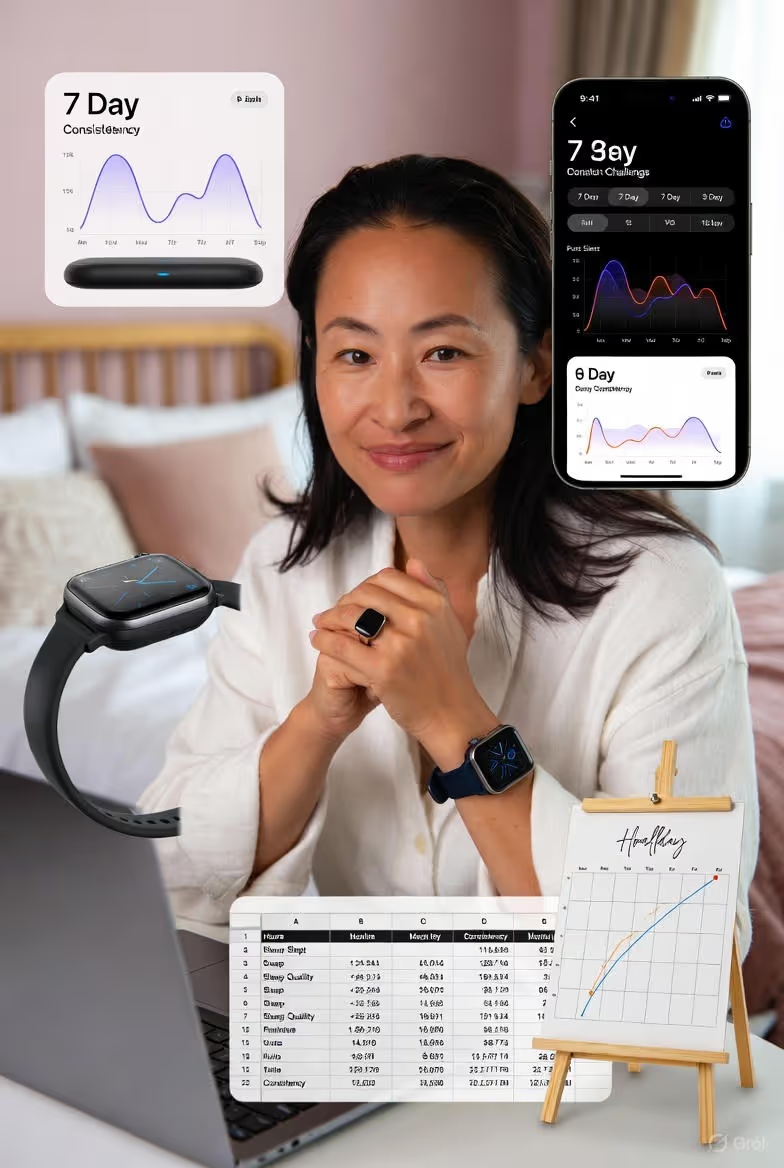
Your First Experiment: The 7-Day Consistency Challenge
Now for the fun part: applying the scientific method to your own sleep. Your first experiment should be simple, clear, and focused on one lever you can control. We’ll call it the 7-Day Consistency Challenge.
The Hypothesis: “If I prioritize and protect a consistent sleep schedule (same bedtime and wake time, +/- 30 minutes) for 7 consecutive days, then my overall sleep score and feeling of morning alertness will improve.”
The Protocol:
Calculate your target bedtime: Based on your necessary wake time, count back 7.5-8 hours (this allows for ~7 hours of sleep after accounting for sleep latency).
Set a “bedtime alarm” for 60 minutes before this target. This alarm means: Start your wind-down routine now.
Wake up at the same time every morning, even if you slept poorly. Get light exposure immediately.
Log everything in your tracker’s note field: Stick to your routine, and note any deviations or observations.
What to Measure:
Primary Metric: Your Sleep Consistency Score (if your app has it) or the stability of your Sleep and Wake times.
Secondary Metrics: Sleep Latency, Sleep Efficiency, and how you rate your morning alertness on a scale of 1-10.
The Review (After 7 Days): Look at your trend lines. Did your latency decrease as the week went on? Did your efficiency improve? Most people find that even if total sleep time doesn’t increase dramatically, the quality and feel of their sleep improves significantly. The body thrives on rhythm.
This experiment teaches you the process: Hypothesis → Intervention → Measurement → Insight. It proves that you have agency over your sleep. Once you master consistency, you can design more nuanced experiments: “What happens if I stop caffeine after 2 PM?” or “Does a 10-minute evening meditation impact my HRV?”
The journey of a thousand nights of better sleep begins with a single, simple experiment. By focusing on one change, you avoid the overwhelm of trying to fix everything at once. This ethos of focused, intelligent experimentation is at the core of the Oxyzen mission—to provide the clear, actionable insights that empower these personal discoveries.
Decoding Your Body’s Signals: When to Listen and When to Question the Data
As you get comfortable with the numbers, an important skill develops: discernment. The data is a guide, not an oracle. It’s a conversation with your body. Here’s how to interpret common signals.
Scenario 1: The “Great Sleep” Feeling with a “Low” Score. This is common. You wake up refreshed, but your app shows low deep sleep and a mediocre score.
Listen to: Your subjective feeling. How you feel is the ultimate metric.
Question the data: Could the device have been misplaced or had poor contact (e.g., a loose ring)? Were there environmental factors (like a silent partner’s alarm causing micro-disturbances the tracker picked up but you didn’t consciously register)? Trust your lived experience over the algorithm’s opinion. The score is an algorithm’s best guess based on population data; you are an individual.
Scenario 2: The “Terrible Sleep” Feeling with a “High” Score. You feel exhausted, but the data says you slept 8 hours with great stage balance.
Listen to: Your exhaustion. It’s real.
Question the narrative: Look beyond sleep stages. Check your nighttime heart rate graph. Was it elevated all night, suggesting your body was under stress (fighting off an illness, processing high cortisol)? Check your HRV. Was it significantly lower than your baseline, indicating poor recovery? Sometimes, the “quality” metrics (HRV, HR) tell a truer story than the “architecture” metrics (stages) when you feel this way.
Scenario 3: Obsessing Over the 1% Dips. You fixate on a 2% drop in REM sleep from one night to the next.
This is a trap. Natural night-to-night variation is normal. Stress, activity, diet, and even lunar cycles can cause minor fluctuations.
The solution: Zoom out. Look at your weekly averages. Is your REM average stable? That’s what matters. Obsession creates stress, and stress ruins sleep. Set a rule: you only analyze weekly trends, not nightly fluctuations.
When the Data is a Red Flag: Consistently observed patterns like extremely high nighttime heart rate, very low HRV for weeks, or potential signs of sleep apnea (long pauses in breathing detected by some devices, constant oxygen desaturation) should not be ignored. In these cases, your tracker is giving you a powerful signal to consult a healthcare professional. It provides objective data you can bring to your doctor, moving the conversation from “I’m tired” to “Here’s what my data shows.”
Learning this balance is the mark of an advanced beginner. It turns you from a passive data consumer into an intelligent interpreter of your own health narrative. For support and community discussion on navigating these nuances, reaching out via Oxyzen’s support channels can connect you with experts and fellow users who can share their experiences.
Building Your Personal Sleep Profile: From Data to Self-Knowledge
After 2-4 weeks of consistent tracking and experimenting, you’ll move beyond generic advice. You’ll start building your Personal Sleep Profile—a collection of unique insights about what your body needs to sleep well. This is where the magic happens.
What goes into your Personal Sleep Profile?
Your Ideal Sleep Window: You might discover you’re a natural 11 PM - 6:30 AM sleeper, not the 10 PM - 5 AM schedule you forced yourself into.
Your Personal Kryptonite: For you, it might be that any alcohol after 5 PM decimates your deep sleep, while for your partner, it’s a late-day espresso.
Your Superchargers: You may find that a 20-minute afternoon walk, magnesium-rich foods at dinner, or 5 minutes of diaphragmatic breathing before bed reliably boosts your HRV and sleep score.
Your Recovery Needs: Your data will show how much sleep you need after a heavy workout versus a rest day. You’ll learn to differentiate between “good tired” (high sleep need, high potential for deep sleep) and “bad tired” (high stress, low HRV).
How to Document This Profile: Create a note in your phone or a physical journal titled “My Sleep Rules.” Populate it with statements proven by your own data:
“For me, eating within 2 hours of bed = +20 mins of sleep latency.”
“A 10-min evening meditation = +5% average deep sleep for the week.”
“Weekend sleep-in >1 hour = terrible Sunday night sleep.”
This document becomes your most valuable health asset. It’s customized, evidence-based, and empowers you to make confident decisions. It turns sleep from a mystery into a manageable, personal system.
The Journey from Novice to Connoisseur: This is the ultimate goal of beginning your sleep tracking journey. You start as a novice, blindly following general tips. You become a student, learning the language of your data. Finally, you evolve into a connoisseur of your own rest, intuitively understanding your body’s signals and possessing a toolkit of personalized strategies to course-correct. It’s a journey of profound self-discovery, where the quiet hours of the night become a source of strength for every hour of the day. This philosophy of deep, personalized understanding is central to the vision and values behind creating technology that serves as a true partner in your wellness journey.
The Mid-Night Wake-Up: Using Data to Solve Your Most Common Sleep Disruptions
You’ve mastered the basics, established your profile, and then—it happens. You’re wide awake at 2:37 AM, your mind racing. Or you wake up groggy every single day at 5 AM, unable to drift back. These common disruptions are where beginners often feel defeated, but for a tracker-equipped individual, they are simply puzzles waiting to be solved with data. Let’s troubleshoot.
The “Can’t Fall Asleep” Pattern (High Initial Sleep Latency): Your data shows it routinely takes you 45+ minutes to fall asleep.
Data-Driven Investigation:
Check your evening heart rate graph. Is it still elevated when you get into bed? This points to insufficient wind-down or late stress.
Review your light exposure. Did you look at a bright screen right until lights-out?
Check your notes for late caffeine or intense evening workouts.
The Targeted Fix: Instead of a generic “wind down earlier,” your data might show you need a physiological cool-down. If your heart rate is high, try a protocol like the “4-7-8” breathing method (inhale 4, hold 7, exhale 8) for 5 minutes to activate your parasympathetic nervous system. Your tracker can show you if this practice actually lowers your real-time heart rate before bed.
The “Mid-Night Mind Racing” Wake-Up: You fall asleep fine but consistently wake up 3-4 hours later, anxious.
Data-Driven Investigation:
What sleep stage were you in? Waking from light sleep or REM is common and easier to fall back from. Waking from deep sleep is more jarring and may indicate an external disruptor (noise, pain, temperature shift).
Look at your room temperature log. Does it spike or drop in the middle of the night?
Check for digestive notes. A late, heavy, or sugary meal can cause a blood sugar crash hours later, triggering a wake-up.
The Targeted Fix: If your data shows it’s a light sleep/REM wake-up, the issue is likely cognitive. Keep a notepad by your bed to “download” racing thoughts. If data suggests a deep sleep interruption, address the environment: get a thermostat that maintains a steady cool temperature, or try a weighted blanket for deeper, more anchored sleep.
The “Too Early” Final Wake-Up: Waking up before your alarm, unable to resume sleep, is often tied to stress hormones.
Data-Driven Investigation:
This is a cortisol-timing issue. Your cortisol is rising too early.
Look at your sleep structure. Are you getting most of your deep sleep early in the night? That’s healthy. The problem arises if you’re not getting enough total sleep.
Check your overall sleep duration trend. Are you chronically short, causing your body to max out its “sleep drive” too soon?
The Targeted Fix:
Morning light exposure is non-negotiable. This resets your cortisol rhythm for the next day. Do it consistently.
Manage daytime stress. High daytime anxiety directly impacts early morning waking. Use your tracker’s daytime HRV or stress score to identify high-stress periods and intervene with micro-breaks.
Consider a small, protein-rich snack before bed (e.g., a spoonful of almond butter) to stabilize blood sugar through the night.
The “Tossing and Turning” Night (High Restlessness): Your movement graph looks like a seismograph reading.
Data-Driven Investigation:
Cross-reference with temperature. This is the #1 cause. Was your room or bedding too warm?
Check for pain or discomfort notes. An old mattress, wrong pillow, or even tight pajamas can cause this.
Look at alcohol consumption. Alcohol notoriously increases restlessness in the second half of the night as the body metabolizes it.
The Targeted Fix: Let the data guide your investment. If temperature is the culprit, prioritize cooling sheets or a bedroom fan over a new mattress. Track the change. If restlessness drops by 30% with cooler temps, you’ve found your solution.
By approaching disruptions with this detective mindset, you replace frustration with curiosity and helplessness with agency. Each solved puzzle adds another robust rule to your Personal Sleep Profile. For more case studies and community-shared solutions on overcoming specific sleep disruptions, the Oxyzen blog is an ever-growing resource of real-user experiences.
Syncing Sleep with Life: How to Integrate Tracking with Diet, Exercise, and Stress
Sleep does not exist in a vacuum. It is the nightly recovery phase from your daily life. The most profound insights come from connecting your sleep data to your daytime choices. This is where holistic wellness truly begins.
The Exercise Connection: Finding Your “Goldilocks” Zone. Exercise improves sleep, but timing and intensity matter immensely.
The Data Link: Track your Sleep Score, Deep Sleep %, and HRV on nights after different workout types.
Common Pattern: You may see that intense evening HIIT or weightlifting elevates your core temperature and heart rate for hours, pushing back your sleep latency and reducing deep sleep. Conversely, a gentle evening yoga or walk may improve sleep efficiency and increase HRV.
Actionable Insight: Your data will reveal your personal cutoff time for intense exercise. It might be “No heavy workouts within 4 hours of bedtime.” It will also show which activities are truly restorative. You’ll learn to schedule demanding sessions earlier and use gentle movement as a sleep-promoting tool in the evening.
The Food & Drink Log: Beyond “Don’t Eat Late.”
Alcohol: The data is brutally honest. It shows the “sedation” myth for what it is. You’ll see: Faster sleep onset, but a dramatic plunge in Deep and REM sleep, elevated resting heart rate, and a spike in restlessness after 3-4 hours. Seeing this graph once is often enough to motivate a “no nightcaps” rule or a strict 2-drink, 3-hours-before-bed limit.
Caffeine: Track your last cup time against your Sleep Latency. You may find your widely cited “8-hour half-life” is more like a 12-hour sensitivity. A 2 PM coffee might be sabotaging your 10 PM sleep onset.
Large Meals & Sugar: Look for correlations with mid-night wake-ups, restlessness, and lower HRV. A heavy meal demands digestive work, raising core temperature and metabolic activity when your body wants to rest.
Hydration: Dehydration can elevate heart rate and cause cramps. But drinking too much water right before bed guarantees disruptive bathroom trips. Your data helps you find the sweet spot—likely stopping major fluid intake 60-90 minutes before bed.
The Stress & Recovery Feedback Loop. This is the most critical integration. Your daytime stress levels dictate your sleep quality, and your sleep quality dictates your resilience to tomorrow’s stress.
Daytime Metric: Use your wearable’s daytime HRV or stress score feature. Notice when it dips.
The Connection: A day of high stress (low HRV) will almost invariably lead to a night of elevated resting heart rate and lower sleep quality. A night of poor sleep will result in a lower HRV and higher stress score the following day—a vicious cycle.
Breaking the Cycle: This feedback loop is your intervention signal. When you see a poor sleep score or low morning HRV, treat your day as a “recovery day.” Prioritize light activity, meditation, good nutrition, and an early, protective bedtime. Use the data to give yourself permission to slow down before you crash. This proactive recovery is the hallmark of intelligent self-care.
Integrating these pillars turns your sleep tracker from a sleep monitor into a holistic wellness guardian. It provides the cause-and-effect evidence needed to make sustainable lifestyle changes. Understanding these deep interconnections is a core part of the educational mission at Oxyzen, as detailed in our about us section, where we emphasize the synergy of data, design, and human behavior.
Beyond the Night: Using Daytime Data to Predict and Protect Your Sleep
An expert sleeper doesn’t just react to last night’s data; they use today’s data to predict and influence tonight’s sleep. This proactive approach is the next level.
Your Readiness Score: The Morning Forecast. Many advanced wearables and rings provide a “Readiness” or “Recovery” score each morning. This is a algorithmically compounded metric based on:
Last night’s sleep (quality, duration)
Your resting heart rate & HRV (compared to your baseline)
Recent sleep and activity trends
Sometimes, body temperature
Treat this score as your daily instruction manual.
High Readiness (e.g., 85+): Your body is recovered and resilient. It’s a day to go for it—tackle hard workouts, demanding projects, and social engagements.
Moderate Readiness (e.g., 70-84): You’re in a maintenance zone. Proceed with balance. Opt for moderate exercise, stay on top of your routines, but don’t push for personal bests.
Low Readiness (e.g., <70): This is a recovery and protect signal. Your body is stressed or under-recovered. Prioritize gentle movement (walking, stretching), excellent nutrition, stress management, and, most importantly, an early, impeccable bedtime. Ignoring a low readiness score is the fastest way to burnout or illness.
Body Temperature: The Silent Health Sentinel. Some advanced devices track your nocturnal distal body temperature (like from your finger). A sustained elevation (even just 0.5°C) above your personal baseline can be one of the earliest signs of:
Oncoming illness (your body fighting an infection)
Ovulation (for those tracking fertility)
Overtraining or chronic stress
Action: If you see a multi-night upward trend in your temperature alongside a dropping HRV, it’s a powerful signal to rest, hydrate, and prioritize immune support. You may be able to head off a full-blown cold.
Daytime Activity & “Sleep Pressure.” Sleep pressure (the homeostatic drive to sleep) builds with daytime wakefulness and physical/mental activity.
The Data Link: A day of very low activity (e.g., sedentary work, no movement) can result in lower sleep efficiency and more awakenings because you haven’t built up sufficient sleep drive.
The Fix: Use your activity/steps data to ensure you’re hitting a minimum threshold for healthy sleep pressure. A morning or afternoon walk can be as much for your sleep as for your step count.
By learning to read these daytime signals, you move from being a passive observer of your sleep to an active conductor of your daily energy and recovery. You make informed choices that compound over time, leading to not just better sleep, but better days. This level of predictive, personalized insight is what users often describe as transformative when sharing their Oxyzen testimonials.
Navigating Pitfalls: How to Avoid Obsession and Maintain a Healthy Relationship with Data
This is the essential chapter for any sustainable journey. Data is a tool, not a master. Without caution, the quest for perfect sleep can become a source of anxiety—the very thing that ruins sleep. Here’s how to keep the balance.
1. Define Your “Why” and Revisit It. Are you tracking to improve your energy and life or to achieve a perfect score? When you feel obsession creeping in (“I only got a 78!”), revisit your original “why.” The goal is wellness, not a high score in a game. A tool like a smart ring from Oxyzen should feel like a helpful guide, not a demanding coach.
2. Embrace the 80/20 Rule. 20% of your habits likely drive 80% of your results. Identify those core habits from your Personal Sleep Profile (e.g., consistency, light management, caffeine cutoff) and focus on nailing those. Don’t stress over the minor 20% variables (exact room humidity, perfect pillow angle). Perfection is the enemy of good sleep.
3. Implement “Data Sabbaticals.” Once you are confident in your profile and habits (usually after 2-3 months), consider taking planned breaks.
The Weekend Glance: Only check your data on weekdays, letting weekends be intuitive.
The Occasional Full Week Off: Go on vacation, put the device in a drawer, and just sleep. Reconnect with your body’s natural signals. This prevents you from becoming dependent on the device for feedback and rebuilds trust in your own perceptions.
4. Watch for Orthosomnia. This is a clinically recognized condition where the pursuit of perfect sleep, fueled by tracker data, creates such anxiety that it causes insomnia. Signs include:
Going to bed earlier than tired to “get more sleep.”
Lying in bed anxious because your tracker isn’t showing “sleep” yet.
Changing behaviors not based on feeling, but solely to manipulate a score.
The Antidote: If you see this, take a full month off from tracking. Relearn to listen to your body. Remember, sleep trackers are not medical devices; they are wellness guides with a margin of error.
5. Focus on Trends, Not Nights. Make this your mantra. Do not judge your day based on last night’s score. Judge your month based on the trend line. Is your average sleep duration up? Is your average resting heart rate down? These are the victories. A single bad night is just noise in a beautiful, upward-trending signal.
6. Let Go of Comparison. Your deep sleep percentage, HRV, and ideal duration are unique to you. Comparing your data to a friend’s or an online “ideal” is meaningless and discouraging. Your only valid comparison is you from last month.
By setting these guardrails, you ensure that sleep tracking remains a liberating tool for self-knowledge, not a prison of metrics. It should reduce anxiety about health, not create it. For those struggling with this balance, the supportive community and resources available through Oxyzen’s platform can offer perspective and strategies to maintain a healthy, productive relationship with your data.
From Beginner to Guide: How to Use Your Knowledge to Help Others (Without Being Annoying)
Once you’ve experienced the transformation that comes with understanding your sleep, it’s natural to want to share it. But diving into someone’s face with talk of circadian rhythms and HRV is a surefire way to be dismissed. Here’s how to be an effective, empathetic guide.
Lead with Empathy, Not Data. Start conversations based on observed feelings, not numbers.
Instead of: “Your sleep latency is probably too high.”
Try: “You mentioned always feeling wired at bedtime. I struggled with that too. What’s your evening like?” This opens a dialogue about wind-down routines, not a lecture.
Share Stories, Not Spreadsheets. People connect with narratives. Share your own “before and after” in terms of lived experience.
“I used to hit a wall at 3 PM every day. Once I started fixing my sleep, that disappeared. I realized I wasn’t lazy; I was just exhausted.”
“The biggest shock for me was seeing what that glass of wine before bed actually did to my rest. I feel so much clearer in the morning without it.”
Offer Simple, Low-Barrier First Steps. The overwhelm you initially felt is what they feel now. Offer them a single, easy experiment.
“If you wanted to try one thing this week, just try getting 15 minutes of morning sunlight. It made a huge difference for me.”
“What if you tried moving your last coffee to before 2 PM and saw how you feel at bedtime?”
Use Your Tracker as a Demonstration Tool, Not a Sales Pitch. If they’re curious, show them your app in a relatable way.
“See this graph? This spike in restlessness is exactly when my partner’s alarm goes off. That’s what made me get a white noise machine.”
“This is my ‘sleep consistency’ graph. When this line is steady, I feel a million times better during the week.” This makes the abstract concept of “sleep quality” visually tangible.
Respect Boundaries and Acknowledge Limitations. Not everyone is ready. Be quick to drop the subject if there’s no interest. Always couch advice in humility: “This is just what worked for me based on my own data; everyone’s different.” Most importantly, never diagnose. If someone expresses serious sleep issues (chronic snoring, extreme fatigue), your only advice should be: “That sounds really tough. A sleep specialist could give you a clear answer.”
By becoming a thoughtful guide, you extend the benefits of your journey. You create a ripple effect of better wellness, rooted in support rather than dogma. This community-minded approach to wellness is a value we hold deeply, as reflected in the collaborative spirit found in sharing our story and user experiences.
The Long Game: Making Sleep Tracking a Sustainable, Lifetime Habit
The final step for the beginner is to graduate to a long-term vision. This isn’t a 30-day challenge; it’s a foundational layer of your healthspan. How do you make it stick for life?
Institutionalize Your “Sleep Rules.” Take the insights from your Personal Sleep Profile and bake them into your lifestyle.
Make your wind-down routine as non-negotiable as brushing your teeth.
Set automatic “Do Not Disturb” and blue-light filter schedules on your devices.
Schedule your workouts with your sleep cutoff time in mind.
This turns conscious effort into automatic habit.
Let Your Goals Evolve. Your initial goal was “understand my sleep.” Then it became “improve my deep sleep.” Next, it might be “optimize my sleep for athletic performance” or “use sleep to bolster my immune system during travel” or “stabilize my energy as a new parent.” Let your tracking focus shift with the seasons of your life. The data is always there to guide you through new challenges.
Schedule Quarterly “Sleep Reviews.” Four times a year, take 30 minutes to:
Look at your 3-month trend graphs for Sleep Duration, Quality Score, and HRV.
Review and update your “Personal Sleep Profile” note with any new insights.
Ask: “Is my current routine still serving me? What one small adjustment could I test next quarter?” This turns maintenance into an intentional, minimally time-consuming practice.
Embrace the Ebb and Flow. Life happens. Sickness, travel, stress, holidays—they will all disrupt your sleep. The mark of an expert isn’t perfect sleep; it’s graceful navigation and quick recovery. When life throws you off, you don’t panic. You use your knowledge to get back on track as swiftly as possible. You know the levers to pull (prioritize consistency, manage light, protect the wind-down) because you’ve built the evidence for yourself.
View Your Data as a Lifetime Health Journal. Over years, your sleep, HRV, and activity data becomes a priceless record of your body’s responses to life. You can see how your baseline changes with age, fitness, and lifestyle. This longitudinal self-awareness is perhaps the greatest gift of consistent, mindful tracking.
You began this journey curious but potentially overwhelmed. You are now equipped not just with knowledge, but with a practical, sustainable system. You understand the why, the how, and the what now. You have moved from being a passive recipient of poor sleep to an active architect of your own restoration. This is the true promise of beginning the sleep tracking journey: the reclaiming of energy, clarity, and vitality, one restful night at a time.
To continue exploring advanced topics, from the impact of nutrition on sleep architecture to optimizing your environment with technology, remember that the Oxyzen blog is continually updated as your companion on this lifelong journey to better rest and better living.
Understanding Your Chronotype: It’s Not Laziness, It’s Biology
You’ve mastered consistency, but what if your ideal 11 PM - 7 AM schedule still feels like a struggle? You might be fighting your innate chronotype—your body’s natural predisposition for sleep and wake times. This isn’t about discipline; it’s about DNA. Aligning your life with your chronotype is the master key to effortless, energizing sleep.
The Science of Sleep-Wake Preferences: Chronotypes are largely governed by your PER3 gene, which influences the length of your circadian cycle and your sensitivity to morning light. They exist on a spectrum, often categorized as:
Lions (Morning Types): ~15-20% of the population. Wake early, full of energy, peak productivity before noon. Their circadian rhythm runs slightly faster than 24 hours.
Bears (Mid-Day Types): ~50-55%. Follows the solar cycle, most alert mid-morning to early afternoon. This is the "societal default" schedule.
Wolves (Evening Types): ~15-20%. Naturally wake later, hit their stride in the evening, struggle with traditional 9-5 schedules. Their circadian rhythm is longer than 24 hours.
Dolphins (Light, Anxious Sleepers): ~10%. Often light sleepers, prone to insomnia, mentally alert at odd hours. (Note: This model, popularized by Dr. Michael Breus, is a useful framework, but the science is more of a continuum).
Discovering Your Chronotype with Data, Not Just a Quiz. While online quizzes can hint, your sleep tracker provides objective proof. Over a period of normal sleep (without social jetlag), look for:
Natural Sleep Onset: When do you fall asleep most easily without an alarm forcing you awake the next day?
Sleep Quality Peaks: During a vacation or free period, when do you get your highest sleep scores and feel most rested?
Body Temperature Minimum: Some advanced wearables track this. Your lowest core temperature typically occurs about 2 hours before your natural wake time. This is a key circadian marker.
The Art of Chronotype Alignment (Not Resignation): You may be a Wolf in a Lion’s world. The goal isn’t to quit your job, but to strategically adapt.
For Wolves in a Morning World:
Maximize Evening Light: Get bright light exposure in the late afternoon/early evening to help delay your cycle.
Protect Morning Darkness: Wear blue-light blocking glasses on your morning commute if it's bright out.
Schedule Smart: Push demanding cognitive work to the late morning or afternoon. Use mornings for routine, non-critical tasks.
Advocate: If possible, negotiate a slightly later start time or hybrid work.
For Lions in an Evening World:
Embrace the Morning: Schedule your most important work, workouts, and creative tasks before noon.
Dim Early: Be militant about reducing light exposure after dinner to help your body wind down on its early schedule.
Communicate: Set boundaries for evening social events. It’s okay to leave early or decline frequently.
The Dangers of "Social Jetlag": This is the chronic misalignment between your biological clock and social clock (work, family). Your tracker will reveal it: poor sleep efficiency and low scores on workdays, with long, erratic "catch-up" sleep on weekends. This constant shifting is associated with increased risks for metabolic disorders, depression, and cardiovascular issues. The solution is to minimize the gap. Even a Wolf can aim for a consistent 12 AM - 8 AM schedule, which is better than alternating between 2 AM and 7 AM alarms.
By honoring your chronotype, you stop wasting willpower fighting your biology and start working with your natural energy waves. This level of self-knowledge moves you from simply sleeping better to living in better sync. For more on tailoring your daily routine to your unique biology, explore the in-depth guides on the Oxyzen blog.
Sleep Optimization for Peak Performance: Athletes, Creatives, and Executives
Once sleep hygiene is solid, you can begin to fine-tune sleep to fuel specific high-performance goals. Whether you're training for a marathon, leading a critical project, or solving complex creative problems, sleep is your secret weapon.
The Athletic Performance Protocol: For athletes, sleep is non-negotiable recovery. The goal is to maximize physical restoration and hormonal optimization.
Deep Sleep as the Primary KPI: This is when Human Growth Hormone (HGH) is released, facilitating muscle repair and growth. Your tracker’s deep sleep percentage is your nightly report card on recovery.
The Data-Driven Training Feedback Loop:
Monitor Pre-Sleep HRV: A higher HRV suggests readiness for a hard training load the next day. A significantly lower HRV may indicate overreaching and signal the need for a rest day.
Analyze Post-Training Sleep: After an intense session, expect and demand higher deep sleep. If you don’t see it, investigate: Was the session too close to bedtime (elevated temperature/HR)? Was nutrition inadequate for recovery?
Track the "Performance-Ready" Sleep Signature: Over time, you’ll identify what your sleep data looks like on the morning of a personal best. It likely includes high sleep efficiency, strong deep sleep, and a high HRV. Use this as a template.
Strategic Napping: A short, 20-minute nap (before 3 PM) can boost afternoon performance without impacting night sleep. Some trackers can monitor naps, showing if you entered slow-wave sleep (which can cause grogginess).
The Cognitive & Creative Optimization Protocol: For knowledge workers and creatives, REM sleep is the superstar. This is when the brain consolidates memories, makes novel connections, and processes emotions.
Protecting REM at All Costs: This means prioritizing total sleep time. REM dominates the later cycles. Cutting sleep from 8 to 6 hours can slash REM by 40-60%.
Linking Sleep to Insight: Keep a creativity or problem-solving log. Note when you have breakthroughs or "aha!" moments. Cross-reference with your sleep data from the previous 2-3 nights. You may find a pattern: breakthrough ideas often follow nights of high REM sleep and excellent sleep continuity.
Managing the "Mental Load": High cognitive work elevates brain activity. Your tracker’s elevated nighttime heart rate can be a sign of an overactive mind, even if you feel physically calm. This is a signal to incorporate a true mental wind-down—like reading fiction or a mindfulness practice—to lower cognitive arousal before bed.
The Executive Resilience Protocol: For leaders under constant stress, sleep is about emotional regulation, decision-making, and immune resilience.
HRV as a Stress Barometer: Your HRV trend is your most sensitive metric for nervous system resilience. A sustained downward trend is a red flag for burnout risk.
Sleep for Decision Fatigue: Poor sleep impairs the prefrontal cortex, leading to poorer judgment, increased risk aversion, and impulsivity. Use your sleep score as a decision-making filter. On low-score mornings, defer major decisions, default to pre-made routines, and lean on trusted advisors.
The Recovery-Priority Model: Instead of pushing through fatigue, use low readiness scores as a mandate to schedule "admin days"—light meetings, processing, and communication—while saving strategic deep work for high-readiness days.
In each case, the sleep tracker transforms from a health monitor into a performance dashboard. It provides the objective feedback needed to tailor training, creative work, and leadership to your body’s actual recovery state, not just your ambition. Users often share how this data-driven approach has revolutionized their output and stamina, as seen in detailed Oxyzen testimonials from professionals across fields.
When Data Hints at Deeper Issues: Navigating Sleep Disorders
Your diligent tracking can sometimes reveal patterns that are more than just poor habits. It can provide the first, crucial clues to underlying sleep disorders, empowering you to seek the right professional help with concrete evidence.
Spotting the Signs of Sleep Apnea: This serious disorder, characterized by repeated breathing interruptions, is massively underdiagnosed. Your wearable can’t diagnose it, but it can show strong indicators.
The Tell-Tale Data Signature:
Consistently Elevated Nighttime Heart Rate: As your body struggles to breathe, your sympathetic nervous system activates, spiking your heart rate.
High Restlessness/Movement: As oxygen drops, your body briefly arouses to resume breathing, often with a jerk or movement.
Blood Oxygen Drops (SpO2): If your device has an oximeter, look for repetitive, sawtooth-pattern dips in your blood oxygen saturation throughout the night.
Poor Sleep Architecture: Chronically low deep sleep and highly fragmented sleep stages.
The Next Step: If you see this pattern consistently, take screenshots of these graphs and bring them to your primary care physician or a sleep specialist. You’ve just provided a powerful 24/7 data log that far surpasses subjective reporting.
Uncovering Insomnia Patterns: Tracking can differentiate between the types of insomnia, guiding treatment.
Sleep-Onset Insomnia: Data shows consistently long sleep latency (e.g., >30 mins). This points to issues with wind-down, anxiety, or circadian misalignment.
Sleep-Maintenance Insomnia: Data shows frequent, long awakenings after sleep onset. This can be linked to pain, reflux, sleep apnea, or hormonal shifts.
Early Morning Awakening: Waking up far too early with an inability to return to sleep, often seen in depression or age-related sleep changes.
Identifying Restless Leg Syndrome (RLS) & Periodic Limb Movement Disorder (PLMD):
The Data Clue: Look for extremely high, regular spikes in the movement graph throughout the night, often occurring in clusters every 20-40 seconds. This rhythmic restlessness, especially if noted with subjective feelings of an irresistible urge to move the legs in the evening, is a key indicator.
The Critical Rule: Tracker as Triage, Not Diagnosis. This cannot be overstated. Your wellness wearable is a screening tool, not a medical device.
Do: Use data to articulate your symptoms precisely. “Doctor, my device shows my heart rate spikes 15-20 times per hour all night, and my blood oxygen fluctuates. I wake up exhausted with a headache.”
Don’t: Self-diagnose or let a device deter you from seeking care. A clean tracker report does not rule out a sleep disorder.
Armed with your personal data, you become an empowered participant in your healthcare. You move the conversation from “I’m tired” to “Here is the objective pattern of my sleep disturbance.” This proactive, evidence-based approach aligns with a core tenet of modern wellness: using technology to enable better conversations with healthcare professionals. For questions on what your specific device metrics can and cannot indicate, the Oxyzen FAQ provides detailed, responsible guidance.
The Traveler’s Guide to Sleep: Conquering Jet Lag and Unfamiliar Beds
Sleep disruption during travel is a given, but it doesn’t have to derail your trip. With strategy and your tracker as a guide, you can minimize jet lag and protect your rest on the road.
The Pre-Flight Protocol: Begin adjusting 2-3 days before travel.
Eastward Travel (e.g., NY to London): You need to advance your clock. Go to bed and wake up 30-60 minutes earlier each day. Seek bright morning light.
Westward Travel (e.g., LA to Tokyo): You need to delay your clock. Go to bed and wake up 30-60 minutes later each day. Seek bright afternoon/evening light.
Hydrate Strategically: Increase water intake 48 hours before flying. Avoid alcohol and excessive caffeine the day before and during travel.
The In-Flight Strategy:
Set Your Watch: Immediately switch your watch and phone to the destination time zone.
The Light Rule: Use light exposure as your primary tool. If it’s nighttime at your destination, wear blue-light blocking glasses and try to sleep. If it’s daytime, try to stay awake and seek light (open the window shade).
Hydrate Relentlessly: Cabin air is brutally dehydrating. Drink water consistently, not just when thirsty.
The Data-Driven Jet Lag Recovery: Upon arrival, use your tracker to guide your adaptation.
Monitor Your "Local" Sleep Data: Don’t despair at the first night’s terrible score. Look for progress in the trend. Is your sleep latency decreasing each night? Is your nighttime heart rate settling? This shows adaptation is happening.
Use Light with Surgical Precision: Your goal is to anchor your circadian rhythm to the new light/dark cycle. Use a light therapy lamp or morning sunlight exposure at the appropriate local time to firmly set your new clock. Your tracker’s sleep-wake consistency graph will show when you’ve successfully anchored.
Consider Melatonin (Know-How): For eastward travel, a small dose (0.5-3 mg) of melatonin taken at local bedtime can help advance your clock. Consult a doctor first. Your data can help you see its effect on your sleep onset.
Mastering the "Hotel Sleep" Challenge:
Create a Portable Sanctuary Kit: Pack a sleep mask, earplugs/white noise machine app, and a familiar scent (small lavender spray).
Recreate Your Ritual: Do your abbreviated wind-down routine no matter what. This cues your brain for sleep despite the unfamiliar environment.
Temperature Control: Hotels are often overheated. Crank down the AC. If it’s noisy, use the fan for white noise.
The First-Night Effect: It’s real. Your data will show high restlessness and low deep sleep the first night in a new place as one brain hemisphere stays more alert. Expect it, don’t fight it. It usually resolves by night two.
By treating travel as a sleep optimization challenge, you transform from a groggy tourist to an energized explorer. Your tracker provides the feedback to see what’s working, turning guesswork into a precise recovery protocol. For more targeted tips on maintaining wellness in motion, the Oxyzen blog offers dedicated guides for digital nomads and frequent travelers.
The Tech-Enabled Sleep Sanctuary: Building Your Optimal Environment
Your habits are 50% of the equation; your environment is the other 50. Modern technology allows you to engineer a cave-like sanctuary perfectly tuned to your biological needs.
The Intelligent Lighting System: Light is your circadian rhythm’s conductor. Automate it.
Smart Bulbs: Use bulbs that change color temperature. Program a sunset simulation: starting 2 hours before bed, they should gradually dim and shift from blue-white to warm amber/red. This triggers natural melatonin production.
Sunrise Alarm Clocks: These devices simulate a dawn, gradually increasing light in your room 30 minutes before your wake time. This gently elevates cortisol and helps you wake up feeling more natural, reducing sleep inertia. Sync it with your tracker’s alarm for a seamless experience.
The Climate Control Trio: Temperature, Humidity, and Air.
Smart Thermostat: The data is clear: 65°F (18.3°C) is the sweet spot. Program your thermostat to hit this temperature 30 minutes before bedtime. Some systems can even integrate with wearables, adjusting based on your sleep stage.
Humidity Management: Aim for 40-60% relative humidity. Too dry irritates airways; too damp promotes mold and dust mites. Use a smart hygrometer and a humidifier/dehumidifier as needed.
Air Purification: A HEPA air purifier removes allergens and particulates, leading to easier breathing and less nighttime congestion. Run it on a quiet, nighttime mode.
The Soundscaping Solution: Consistent, masking sound is better than erratic silence.
Smart Sound Machines: Use devices that play scientifically designed soundscapes (pink noise, brown noise) proven to improve sleep depth and continuity by masking disruptive sounds. Some can respond to sudden noises (a siren, a snoring partner) by briefly increasing volume to mask it.
The Smart Bed & Beyond:
Advanced Mattresses & Pads: High-end systems now offer dual-zone temperature control (cooling your side of the bed), adjustable firmness, and even sleep tracking integrated into the mattress itself, which can provide a secondary data source to compare with your wearable.
Non-Negotiable: Blackout. Smart motorized blackout shades are an investment in sleep. Total darkness is critical for melatonin production. If that’s not possible, a high-quality, comfortable sleep mask is essential.
Creating Your "Sleep Mode" Automation: The ultimate hack is a single command that prepares your sanctuary. Using a platform like Apple Home, Google Home, or Amazon Alexa, create a “Goodnight” scene or routine that:
Locks the doors.
Lowers the thermostat to 65°F.
Activates your sunset lighting sequence on all smart bulbs.
Turns on the white noise machine and air purifier.
Lowers the blackout shades.
Puts your phone into Do Not Disturb mode.
This turns a 10-minute process into a one-second ritual, removing friction and ensuring your environment is perfectly calibrated, every single night. Engineering this environment demonstrates a deep commitment to self-care, a principle that guides the design and functionality behind every Oxyzen smart ring, built to work seamlessly within your optimized life.
The Future of Sleep Tracking: What’s Next on the Horizon
The journey from simple movement detection to the sophisticated metrics of today is just the beginning. The frontier of sleep technology is moving towards deeper integration, greater personalization, and proactive intervention.
From Tracking to Coaching: AI-Powered Sleep Guides. The next generation of apps won’t just show data; they will prescribe hyper-personalized actions.
Predictive Analytics: Algorithms will analyze your sleep, activity, stress, and calendar to say: “Based on your poor sleep last night and your big presentation tomorrow at 10 AM, we recommend a 20-minute nap today at 2 PM and an 8:30 PM bedtime.”
Adaptive Wind-Downs: Your app might curate a unique wind-down playlist or meditation based on your daytime stress levels and current sleep latency trend.
Dynamic Sleep Scheduling: Instead of a fixed bedtime, an AI coach might suggest an optimal time to go to bed each night based on your real-time circadian cues and sleep debt.
Biomarkers and Disease Prediction: Research is exploding in using sleep data as a window into overall health.
Neurodegenerative Disease Biomarkers: Subtle changes in sleep architecture, REM sleep behavior, and nighttime movement patterns may provide early indicators of conditions like Parkinson’s or Alzheimer’s, years before clinical diagnosis.
Mental Health Monitoring: Patterns of disrupted REM sleep, elevated nighttime heart rate, and low HRV are strongly correlated with depression and anxiety. Future devices may provide users and clinicians with longitudinal data to track the efficacy of therapy or medication.
Fertility and Hormonal Tracking: Nocturnal body temperature and HRV patterns are already used by some to track ovulation. Future integrations will make this more precise and accessible.
Seamless and Invisible Sensing: The goal is zero friction.
Contactless Radar Sensing: Devices like bedside sensors using ultrawideband radar can already track sleep stages, heart rate, and breathing with clinical-grade accuracy, without touching you. This could become standard in smart homes.
Fabric-Integrated Sensors: Pyjamas, sheets, or mattress pads with woven-in fiber optics will provide detailed physiological data without any separate device to wear or charge.
The Truly Holistic Ring: Future smart rings will likely incorporate more sensors—like continuous core temperature, advanced SpO2, and even glucose trend monitoring—creating a comprehensive 24/7 health dashboard on your finger.
The Ethical and Data Privacy Frontier: As data becomes more intimate and powerful, questions of ownership, privacy, and insurance will intensify.
Who owns your sleep data? You should. Look for companies with transparent, user-centric data policies.
Could this data affect insurance premiums? The potential for “sleep scoring” by insurers is a real ethical concern. Advocacy for protective legislation will be crucial.
Staying informed about these trends allows you to be a savvy consumer and an advocate for your own health data sovereignty. The mission of forward-thinking companies in this space, as explored in our story, is to navigate these frontiers responsibly, putting user wellness and privacy at the center of innovation.
Creating Your Personalized Sleep Improvement Plan: A 90-Day Blueprint
Knowledge is power, but only when applied. Let’s synthesize everything into a actionable, phased 90-day plan for transformative change. This is your roadmap from informed beginner to sleep-optimized individual.
Phase 1: Foundation & Observation (Days 1-30)
Goal: Collect baseline data and master hygiene.
Actions:
Weeks 1-2: Wear your tracker consistently. Log context (food, stress, exercise). Do not change anything. Just observe.
Week 3-4: Implement the Non-Negotiable Hygiene Trio: a) Consistent wake time (even weekends), b) 15 mins of morning light, c) No screens 60 minutes before bed. Hold these steady.
Review: At day 30, analyze your baseline vs. the last week. Note any improvements in sleep latency or efficiency. Document your first “Personal Sleep Rule.”
Goal: Run targeted experiments to fix your biggest pain point.
Actions:
Identify: Based on your first 30 days, what’s your #1 issue? Long latency? Low deep sleep? Mid-night wakes?
Design Two Experiments: Each 2 weeks long.
Experiment A (e.g., for latency): “No caffeine after 12 PM” or “Evening meditation at 8 PM.”
Experiment B (e.g., for deep sleep): “Finish eating 3 hours before bed” or “Cool room to 64°F.”
Execute & Measure: Stick to the experiment protocol meticulously. Use your tracker to measure the specific metric you’re targeting.
Review: Did the experiment move the needle? If yes, adopt the habit. If no, discard it and test a new hypothesis.
Phase 3: Integration & Mastery (Days 61-90)
Goal: Integrate successful habits, focus on trends, and use daytime data proactively.
Actions:
Lock In Your Stack: You should now have 3-5 non-negotiable sleep habits that work for you. Write them down as your official “Sleep Protocol.”
Start Using Readiness Scores: Let your morning recovery metric guide the intensity of your day. Practice having a “low readiness” day without guilt.
Conduct a Quarterly Review: At day 90, analyze your 3-month trends. Is your average sleep duration up? Is your average HRV higher? Celebrate the macro-progress.
Plan Your Next Frontier: What’s your next goal? Optimizing for travel? Fine-tuning for a new fitness regimen? Set your intention for the next quarter.
This blueprint provides structure without rigidity. It’s a framework for sustainable, self-directed improvement. Remember, the Oxyzen FAQ and community are there for support when you encounter questions or plateaus during your 90-day journey.
The Ripple Effect: How Mastering Your Sleep Transforms Every Aspect of Your Life
The ultimate payoff of this journey extends far beyond the bedroom. When you fix your sleep, you don’t just get more rest—you upgrade your entire operating system. The ripple effects are profound and measurable.
Cognitive & Emotional Upgrades:
Sharper Mind: Improved memory consolidation, faster processing speed, and enhanced creativity. You’ll find yourself grasping complex ideas quicker and generating solutions more easily.
Emotional Stability: A well-rested amygdala (your brain’s fear center) is less reactive. You become more resilient to stress, less prone to anxiety and irritability, and more capable of measured responses. Relationships improve as a direct result.
Willpower Reservoir: Sleep deprivation depletes glucose in the prefrontal cortex, the area responsible for self-control. Better sleep refills this tank, making it easier to resist cravings, maintain focus, and stick to healthy habits.
Physical Health & Body Composition:
Metabolic Harmony: Sleep regulates ghrelin (hunger hormone) and leptin (satiety hormone). With good sleep, cravings for sugary, high-carb foods diminish. Your body becomes more insulin sensitive, making it easier to manage weight and metabolic health.
Hormonal Optimization: Deep sleep boosts testosterone and growth hormone. Consistent sleep supports healthy cortisol rhythms and thyroid function.
Immune System Fortification: During sleep, your body produces cytokines, proteins that fight infection and inflammation. Chronic poor sleep leaves you vulnerable to every passing virus and is linked to increased systemic inflammation.
Professional Advancement: The combination of improved cognition, emotional intelligence, and consistent energy makes you a more effective, promotable leader and collaborator.
Healthspan: Quality sleep is one of the most potent anti-aging tools available. It supports cellular repair, clears metabolic waste from the brain (via the glymphatic system), and is linked to a lower risk of virtually every chronic disease, from heart disease to dementia.
This is the true “why.” You didn’t start tracking sleep to get a higher number in an app. You started to have better days. To be a more patient partner, a more present parent, a more visionary thinker, and a healthier, more vibrant human. The data was merely the map. The transformed life is the destination.
As you move forward, let this understanding be your motivation during the inevitable off-nights. You are not just collecting data; you are investing in the foundation of your entire well-being. The stories of this holistic transformation are what we find most inspiring, and they are shared by users in their own words on the Oxyzen testimonials page.



%402x.svg)