


How Smart Ring Benefits Empower You With Health Data Ownership
How smart rings give you ownership and understanding of your own health data.
How smart rings give you ownership and understanding of your own health data.
%402x.svg)
In an era where our digital footprints are monetized and our personal information is a commodity traded in opaque markets, a quiet revolution is unfolding on our fingertips. We are at the dawn of a new paradigm in personal health—one where the power of information is being returned to its rightful owner: you.
Every heartbeat, every sleep cycle, every moment of stress or recovery captured by the sleek band on your finger is more than just a data point. It is a piece of your biological story, a chapter in your lifelong health narrative. For decades, this narrative was fragmented, locked away in disparate medical files, or surrendered to technology giants in exchange for convenience. Today, smart rings are challenging this status quo, offering not just insights into wellness but a foundational shift toward genuine health data sovereignty.
Imagine a world where you are the sole custodian of a complete, real-time record of your health—a record that integrates clinical history with the rich, continuous stream of data from your daily life. This is not a distant future. A 2025 systematic review in Biomimetics analyzing 107 studies and approximately 100,000 participants confirms that smart rings have evolved into sophisticated clinical tools capable of early disease detection, from predicting inflammatory flares to identifying infections days before symptoms appear. Simultaneously, health policy and technology are converging to create the framework for this ownership. Landmark legislation like the 21st Century Cures Act now mandates that patients have access to their electronic health data, while modern standards like FHIR APIs enable you to retrieve it on demand.
This article explores how the modern smart ring is your gateway to this empowered future. We will journey from understanding the profound intimacy of the data collected by these devices to dissecting the often-overlooked economic models that can undermine your control. We will arm you with the critical questions to ask about privacy and security, navigate the complex legal landscape of data ownership, and finally, chart a practical path for you to build, manage, and leverage your own comprehensive health record. This is more than a guide to a gadget; it is a manifesto for taking back what is inherently yours.
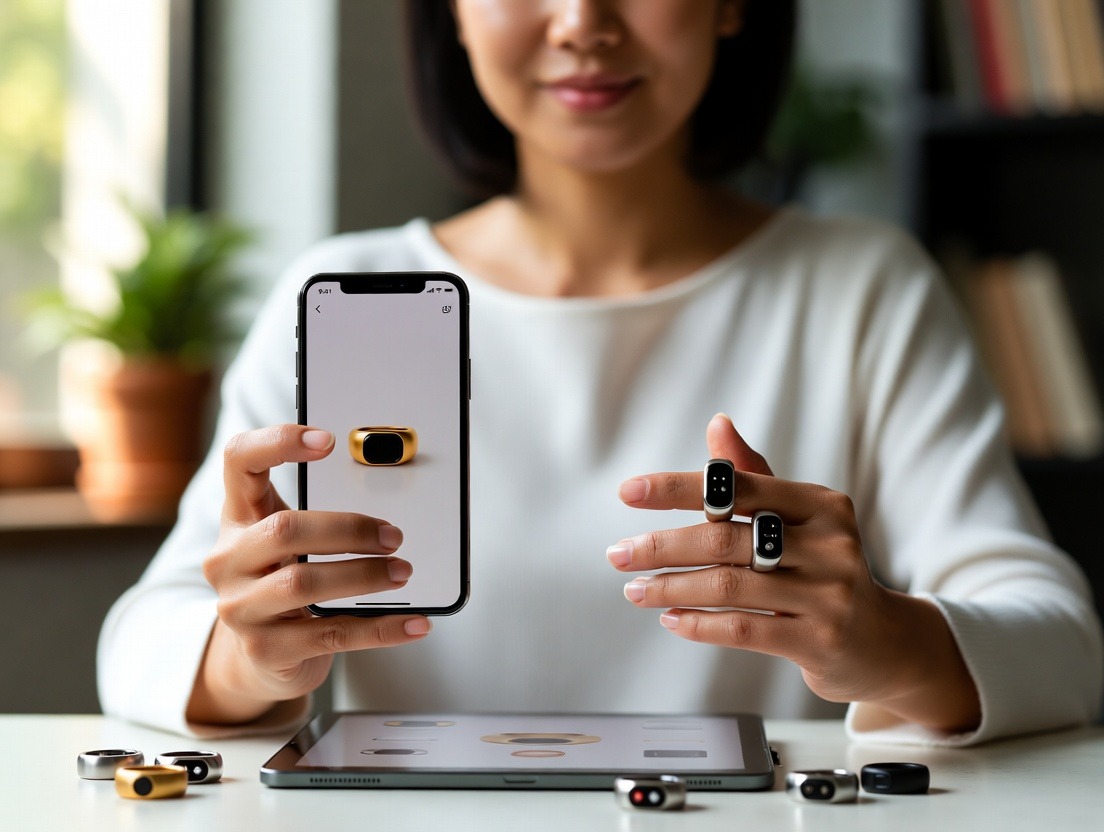
To appreciate the power of ownership, you must first understand the profound depth of the information at stake. A smart ring is not a simple step counter; it is a biometric observatory, leveraging the unique vascular anatomy of your finger to capture a high-fidelity signal of your inner state. The thin skin and dense capillary network at your fingertip provide an optical window far superior to the wrist, allowing sensors to measure blood volume changes with remarkable clarity and reduced motion artifact.
This strategic placement enables a continuous, intimate dialogue with your autonomic nervous system. While you sleep, the ring is meticulously chronicling your journey through sleep stages—detecting the duration of deep, restorative sleep versus light sleep and noting interruptions you may not even recall. It tracks your nocturnal heart rate and heart rate variability (HRV), sensitive indicators of recovery and stress resilience. It measures your blood oxygen saturation (SpO2) and respiratory rate, with advanced models boasting up to 90.7% accuracy in screening for sleep apnea, a condition directly linked to cardiovascular risk.
During the day, the narrative continues. It logs your activity, not just through steps but by interpreting the intensity of your movements, distinguishing a leisurely walk from a vigorous workout. It infers periods of sitting versus standing. Crucially, it detects subtle physiological shifts that signal broader changes. Research has demonstrated that algorithms processing this continuous data stream can predict the onset of symptomatic COVID-19 an average of 2.75 days in advance with 82% sensitivity and forecast inflammatory bowel disease flares seven weeks early. For women, this data intimacy extends to reproductive health, tracking basal body temperature trends that can illuminate cycle patterns and fertility windows.
This is data that reveals not just what you do, but how you are. It can indicate rising stress before you feel overwhelmed, flag inadequate recovery before you hit burnout, and hint at immunological changes before a fever begins. In a post-Roe world, as noted by privacy researchers, such detailed cycle and physiological data also carries significant personal risk if it were to fall into the wrong hands. The data your ring collects is, therefore, among the most sensitive personal information you can generate. It is the quantitative essence of your lived experience, and the foundation of ownership begins with recognizing its true value and vulnerability.
The promise of personal health data is often delivered with a hidden catch. Many consumers purchase a smart ring believing they are buying a tool for self-empowerment, only to discover they have entered a conditional access model where true ownership is negotiable. The most prominent example is the subscription fee. Leading brands charge a monthly premium—often around $5.99—to unlock the full analysis of the data your ring collects. Without this ongoing payment, the device may revert to a basic tracker, its most valuable insights and long-term trend analysis locked behind a paywall.
This model creates a fundamental tension. You own the physical hardware, but you are effectively renting the interpretation of your own biology. This stands in contrast to a growing number of subscription-free rings from companies like RingConn and Amazfit, which offer one-time purchase pricing. The choice forces a critical calculation: a lower upfront cost with an indefinite data tax, or a higher initial investment for perpetual, unfettered access.
Beyond subscriptions, data is often held in proprietary siloes. Your detailed sleep, HRV, and activity data may reside exclusively within the manufacturer’s ecosystem, formatted in a way that makes it difficult to extract or integrate with other health records. While most rings offer some integration with platforms like Apple Health or Google Fit, the depth and granularity of the shared data can be limited. This fragmentation is the antithesis of ownership. A truly owned longitudinal health record (LHR) is comprehensive, portable, and interoperable—concepts championed by the 21st Century Cures Act.
Furthermore, the business model itself dictates priorities. A company reliant on subscription revenue is incentivized to keep you engaged within its app, potentially at the expense of open data standards. It also raises a looming question: what happens to your historical data if you stop paying or the company ceases operations? The risk of data estrangement—where your own health history becomes inaccessible—is a real concern in a fast-moving tech market.
Ownership, therefore, is not guaranteed by purchase. It is a status you must actively verify and defend. It requires scrutinizing not just a device's sensors, but its software license, its data export capabilities, and the very economic structure of the company selling it to you. As one analysis of the smart ring market warns, these hidden costs and limitations mean the device may not be ideal for privacy-conscious individuals or those wary of recurring fees. The path to sovereignty begins with understanding these pitfalls.

If ownership of your health data is the goal, then robust privacy and security are the foundational pillars upon which it must be built. The intimate nature of smart ring data makes it a high-value target, and its protection cannot be an afterthought. It is essential to recognize a critical regulatory gap: unlike the data you share with your doctor, which is protected in the U.S. by HIPAA, data collected by most consumer wearables falls under general consumer protection laws, placing the onus squarely on the company's own policies and safeguards.
A trustworthy smart ring provider will demonstrate security through a multi-layered defense. This starts with data encryption. Your biometric information should be encrypted on the device itself before it is ever transmitted. It should then travel via secure channels (like TLS) to servers where it remains encrypted "at rest". As RingConn details, a best practice is to segregate your personally identifiable information (name, email) from your health data in different databases, adding another barrier against complete exposure in a breach.
Transparency in data handling is equally crucial. You should look for clear, accessible privacy policies that answer pressing questions:
Finally, consider the company's business model alignment. A company that profits primarily from selling hardware or a one-time software license has a different relationship with your data than one whose revenue depends on subscriptions or advertising. The former's success is tied to your trust and satisfaction with the product; the latter may have inherent incentives to leverage your data for engagement or monetization. When you own your data, you delegate its stewardship. Choosing a steward whose interests are aligned with yours is the most important security decision you can make.
The question of legal ownership of health data is surprisingly murky, a complex tapestry woven from property law, privacy regulations, and evolving ethical debates. The intuitive sense that "my body, my data" suggests private ownership. However, the legal reality is more nuanced. As a 2022 analysis in BMC Medical Ethics clarifies, undifferentiated application of either strict private ownership or public ownership models fails to resolve the ethical and practical challenges of health data use.
In practice, you do not "own" your medical records in the same way you own a pencil. Instead, you possess a bundle of rights over your data. In the United States, under HIPAA, you have the right to access, inspect, and obtain a copy of your designated record set held by a covered entity (like a hospital). The 21st Century Cures Act strengthened this, prohibiting "information blocking" and mandating that electronic health information be made available to patients via APIs. This establishes a powerful right of access and portability, but not ownership in the classic property sense.
The data from your smart ring exists in a different sphere. As a consumer device, it is governed by the company's terms of service and privacy policy—a contract you agree to. This is where your agency is critical. By choosing a device that grants you full export capabilities and promises not to sell your data, you are exercising a form of practical sovereignty within the confines of that contract.
Scholars argue that focusing solely on the binary of "private vs. public" ownership can be a distraction from more effective models of governance. Instead, concepts like data stewardship, custodianship, and sovereignty are gaining traction. The core principle is that you, as the data subject, should be the central authority controlling how your data is collected, used, and shared. You may grant custodial rights to a company to process your data for service provision, but you retain the ultimate authority.
This evolving landscape points toward a future of managed access through governance frameworks. Some proposals include data cooperatives, where individuals pool their data under collectively agreed rules, or the use of independent Data Access Committees (DACs) to ethically oversee data sharing for research. For the smart ring user today, the imperative is to support companies whose practices mirror these sovereign principles: transparency, user control, and alignment of interests. By doing so, you are not just buying a product; you are voting for the kind of data future you want to build. To learn more about how forward-thinking companies are navigating this responsibility, you can explore the mission and values that guide them at Oxyzen.
The grand promise of health data ownership is not merely to possess isolated streams of information, but to weave them into a coherent, actionable whole—a Longitudinal Health Record (LHR). Today, the average patient's health data is scattered across dozens of providers and systems over a lifetime. Your smart ring data, your electronic medical records (EMRs), your genomic information, and your own notes on diet and symptoms exist in separate siloes. This fragmentation is the greatest barrier to personalized care and informed self-management.
As outlined in a pivotal 2025 paper, the consumer is emerging as the only viable steward capable of aggregating this complete picture. No single hospital, doctor, or EMR vendor is incentivized or equipped to maintain a record that includes your wearable data, patient-reported outcomes, and genomic information. This task falls to you, and the modern smart ring, when chosen wisely, can be a cornerstone of this personal health repository.
The technical pathway for integration is being built. The Fast Healthcare Interoperability Resources (FHIR) standard is a game-changer. Mandated by U.S. regulation, FHIR allows different health IT systems to communicate using modern web APIs. In practical terms, this means you can use patient-facing apps to pull your clinical data—allergies, lab results, medications—from your hospital's portal into a single, private application you control. Your smart ring data, exported in a standard format, can be incorporated alongside it.
The vision is powerful: a dashboard where a spike in your resting heart rate and decreased HRV (from your ring) is viewed in the context of a recent change in medication (from your EMR) and your own logged notes of increased work stress. This holistic view transforms data from mere numbers into contextualized insight. It empowers you to have more productive conversations with healthcare providers, who, despite their expertise, are often constrained by limited time and fragmented information.
Building your LHR is an active process. It starts with selecting a smart ring that offers comprehensive, raw data export. It continues by using patient portal rights to gather your clinical records. It may involve leveraging new consumer-facing "health data utility" apps designed for this very purpose. The goal is to move from being a passive subject of scattered records to the active architect and custodian of your unified health narrative. For additional resources and guides on taking these steps toward integrated health management, you can find valuable information on the Oxyzen blog.
Understanding the philosophy and technology of data ownership is essential, but real power lies in action. Here is a practical, step-by-step guide to moving from theory to practice, ensuring your smart ring becomes a true tool for sovereignty.
Step 1: The Pre-Purchase Audit
Before you buy, interrogate the company's data practices. Do not skip the privacy policy.
Step 2: The Secure Setup and Daily Practice
Step 3: Proactive Integration and Advocacy
Step 4: Know Your Rights in a Crisis
Taking these steps transforms you from a passive user to an active participant in the data economy. It signals to companies that privacy, security, and user control are not niche concerns, but primary features demanded by informed consumers. Your vigilance and choices help shape a market where data ownership is the standard, not the exception. For answers to common technical and privacy questions as you embark on this journey, a helpful resource is the Oxyzen FAQ page.
We have embarked on a deep exploration of the first principles of health data ownership in the age of the smart ring. We've seen how these devices capture an intimate, continuous stream of our physiological reality, data so personal that its security must be paramount. We've dissected the economic and technological structures—from hidden subscriptions to proprietary siloes—that can create an illusion of ownership. We've navigated the complex legal landscape, moving beyond simplistic "ownership" debates toward a more practical framework of stewardship and sovereignty.
Most importantly, we have established that the smart ring is not the end goal. It is a powerful key. A key that can either unlock a future of personalized insight and empowered health management, or one that can inadvertently lock your most sensitive information into a closed garden controlled by others. The difference lies in your intentionality.
The journey toward true data ownership is both a personal and a collective undertaking. Personally, it requires the diligence to choose tools that align with sovereign principles and the habit of actively managing your health information. Collectively, it demands that we, as consumers, support the companies and policies that prioritize user rights, transparency, and interoperability.
In the next portion of this comprehensive guide, we will turn this key. We will delve into the advanced applications of your unified health record. We will explore how artificial intelligence, trained on your comprehensive longitudinal data, can move from generic insights to hyper-personalized predictive guidance. We will examine real-world case studies of early disease detection and prevention empowered by smart ring data. We will also tackle the frontiers of this revolution: integrating data from continuous glucose monitors, managing chronic conditions, and navigating the ethical future of AI in personal health.
The narrative of your health is being written every second. The question is no longer whether you have access to the pen, but whether you are ready to become its author. The foundation has been laid. The power is in your hands—and on your finger.

In the fragmented landscape of health data, generic advice reigns supreme. “Get 8 hours of sleep,” “aim for 10,000 steps,” “keep your resting heart rate low.” These one-size-fits-all recommendations, while well-intentioned, often miss the mark because they ignore what makes you uniquely you: your individual physiology, lifestyle, genetics, and responses. The true transformative potential of owning your comprehensive health data lies in leveraging artificial intelligence to move beyond these averages and into the realm of hyper-personalized prediction.
When your smart ring data exists in isolation, its patterns can be informative but limited. When integrated into your Longitudinal Health Record (LHR)—alongside your clinical history, genetic predispositions, and even dietary logs—it becomes the fuel for a powerful, personal AI model. This model doesn’t just track; it learns. It learns that for you, a resting heart rate that spikes 8 beats per minute above your baseline, combined with a 15% dip in Heart Rate Variability (HRV) and three nights of shortened deep sleep, is a 92% reliable predictor of an impending upper respiratory infection. It learns that your optimal workout recovery isn’t 48 hours, but 52, based on how your HRV rebounds after leg day versus upper body day.
This is the frontier of predictive personal health. Research is already validating this approach. A 2025 study in Biomimetics analyzed data from over 100,000 smart ring users and found that machine learning algorithms could identify patterns preceding illness and inflammatory flares with significant lead time. For the individual, this shifts healthcare from a reactive model (“I feel sick, I go to the doctor”) to a preemptive and preventive model (“My system predicts a high stress vulnerability this week; I should prioritize sleep and defer that intense project”).
Imagine receiving notifications that are truly personal:
This level of specificity is only possible when AI has access to your complete, owned data history. It turns your smart ring from a dashboard of metrics into an adaptive health co-pilot. Crucially, ownership dictates where this AI runs. In a sovereign model, you could choose to run lightweight, privacy-preserving models locally on your device or in a secure personal cloud you control, ensuring the most intimate predictions about your body never leave your custody. This stands in stark contrast to models where data is sent to a company’s server to train their proprietary, general algorithms—a process that benefits their product but may not prioritize your unique profile.
The theoretical power of predictive health becomes undeniable when viewed through real-world applications. The continuous, passive monitoring of a smart ring creates a baseline of normalcy for each user—a fingerprint of their healthy state. Deviations from this baseline can serve as the earliest possible warning system, often days before conscious symptoms emerge.
Case Study 1: Viral Infection Detection
The most validated use case is in early viral detection, pioneered during the COVID-19 pandemic. Studies from leading institutions like the University of California, San Francisco, and Stanford demonstrated that algorithms analyzing smart ring data (particularly nightly resting heart rate and HRV) could predict the onset of symptomatic COVID-19 with high accuracy. The key finding was the lead time: on average, physiological changes were detected 2.75 days before the individual reported feeling feverish or fatigued. For an individual, this isn’t just data—it’s actionable time. It’s time to isolate preemptively, get tested, and consult a doctor, potentially reducing transmission and enabling earlier treatment.
Case Study 2: Managing Chronic Inflammatory Conditions
For the millions living with autoimmune diseases like rheumatoid arthritis or inflammatory bowel disease (IBD), flares are a debilitating reality. Research has shown that smart ring data can forecast these flares with remarkable foresight. A 2023 study involving IBD patients found that trends in resting heart rate, sleep disturbance, and activity levels could predict a symptomatic flare-up seven weeks in advance. This transforms disease management. Instead of being blindsided, a patient can work with their doctor to adjust therapies preemptively, modify diet, and reduce stress, potentially mitigating the flare’s severity or preventing it altogether.
Case Study 3: Reproductive Health and Cycle Tracking
For women, the smart ring offers a discreet, continuous method of tracking core body temperature and other physiological markers tied to the menstrual cycle. This data can provide far more nuanced insight into ovulation, cycle regularity, and symptoms than manual logging. In a post-Roe legal environment, the ownership and local processing of this data become critically important. A woman who owns and controls this data can choose what to share with her fertility specialist or obstetrician, building a richer picture of her reproductive health without risking exposure on corporate servers.
Case Study 4: Cardiovascular and Metabolic Insights
While still an emerging frontier, the correlation between elevated nighttime resting heart rate, reduced HRV, and cardiovascular risk is well-established in cardiology. A smart ring that detects a gradual, sustained creep in your nocturnal heart rate over months could be the prompt for a much earlier conversation about heart health with a physician, long before any clinical sign appears. Similarly, patterns in heart rate and HRV response to meals are being studied as non-invasive proxies for metabolic efficiency.
These case studies underscore a fundamental shift: the smart ring moves medicine from diagnosing sickness to preserving wellness. It empowers you with a personal, early-warning system. However, this power is contingent on data continuity and ownership. A fragmented data history or loss of access to historical trends cripples the predictive model’s accuracy. It is the long-term, owned record that gives these early signals their life-saving context.
The smart ring is a master of autonomic nervous system data—stress, recovery, sleep, and circulation. But the human body is a multi-system orchestra. True health sovereignty means conducting the entire ensemble. The next stage of empowerment is the conscious integration of multi-modal data streams into your owned LHR, creating a holistic, 360-degree view of your health.
The Glucose Continuum
One of the most powerful integrations pairs the smart ring with a Continuous Glucose Monitor (CGM). While a CGM provides a direct readout of blood glucose levels, the smart ring adds the critical context of why those fluctuations occur. Did a glucose spike follow a meal, or was it preceded by a period of high stress (indicated by low HRV)? Did poor sleep quality (measured by the ring) lead to higher fasting glucose and increased insulin resistance the next day? By owning and correlating this data, you can move beyond simply seeing glucose numbers to understanding your unique metabolic responses to food, stress, and sleep.
Fitness and Movement Ecosystems
Smart rings excel at measuring physiological response to activity. Integrating data from other wearables or apps can detail the activity itself. Syncing with a cycling computer, running watch, or strength training app allows you to see exactly how different workout types, durations, and intensities impact your recovery metrics (HRV, resting heart rate) for days afterward. This enables truly personalized training programming that aligns with your body’s readiness, preventing overtraining and optimizing performance.
Digital Phenotyping and Patient-Reported Outcomes
Your subjective experience is data. Integrating mood-tracking apps, digital food diaries, or symptom logs adds an invaluable qualitative layer to the quantitative biometrics. You might discover that self-reported “brain fog” consistently occurs two days after a night of disrupted REM sleep, or that logged “low energy” correlates with a specific pattern of daytime heart rate variability. Platforms like Apple Health and Google Fit can act as aggregation hubs, but the goal of ownership is to ensure you can still export and archive this unified dataset.
Clinical Data Integration
This is the capstone. The ultimate 360° view merges the continuous “real-world” data from your wearables with the periodic “clinical snapshot” data from your doctors. Imagine a timeline where:
This integration closes the loop between daily life and the clinic, making you an informed, data-equipped partner in your care. It turns appointments from a guessing game into strategic reviews of an ongoing, shared dashboard. To see how real users are combining these data streams to transform their health journeys, you can read their personal stories and testimonials at Oxyzen Testimonials.
For the estimated 60% of U.S. adults living with at least one chronic disease, healthcare is not a periodic event but a daily occupation. Smart rings, as a source of owned, continuous data, are poised to revolutionize this daily management, shifting the burden from crisis intervention to sustainable equilibrium.
Autoimmune and Inflammatory Diseases
As noted in the early detection case studies, the predictive capability for flares is revolutionary. But day-to-day, the ring serves as a quantified feedback loop. A patient with lupus can learn which daily activities or stressors most severely impact their recovery metrics. They can objectively demonstrate to their rheumatologist how a new medication affects their sleep architecture and resting heart rate over weeks, providing a richer picture of efficacy and side effects than a standard “how are you feeling?” question.
Mental Health and Neurological Conditions
For conditions like anxiety, depression, and ADHD, physiological data provides an objective anchor. The ring can detect the physical signature of an anxiety attack (spiking heart rate, changed breathing patterns) even before cognitive awareness. Over time, it can reveal patterns—perhaps anxiety metrics rise predictably on Sunday evenings. This allows for preemptive coping strategies. For ADHD, correlations between sleep quality, daily activity rhythms, and focus can inform better routine management. This objective data also helps therapists and psychiatrists tailor treatment plans with greater precision.
Cardiovascular and Metabolic Health
For those managing hypertension, heart failure, or diabetes, daily trends are everything. A smart ring can monitor nocturnal heart rate and HRV—key indicators of cardiovascular strain and autonomic function. A sustained negative trend can be an early signal to check in with a cardiologist. For metabolic health, the integration with CGM data, as previously discussed, creates a powerful management toolkit. Patients can see in real-time how sleep, stress, and exercise directly influence their glucose control, empowering them with knowledge beyond carbohydrate counting.
The Role of Ownership in Chronic Care
In chronic disease management, continuity is everything. Switching devices or losing access to historical data is not an inconvenience; it’s a loss of a crucial health diary. Ownership ensures this longitudinal record persists. It also empowers the patient in the specialist’s office. Walking in with a year-long graph of your physiological data in response to different treatments transforms you from a passive patient into an active collaborator. You provide the continuous, real-world evidence that can guide smarter, more personalized clinical decisions. This paradigm, known as participatory medicine, is the future of chronic care, and it is built on the foundation of patient-owned data.
As we delegate more analytical and predictive power to algorithms fed by our personal health data, we must navigate a complex ethical frontier. Data ownership provides the control, but it does not automatically solve issues of bias, equity, and the profound implications of AI-driven health guidance.
Algorithmic Bias and Representation
AI models are only as good as the data they are trained on. If the foundational datasets for health AI are overwhelmingly from young, male, affluent, and Caucasian populations, the algorithms will be less accurate—and potentially harmful—for women, the elderly, people of color, and those from different socioeconomic backgrounds. A 2025 review in Biomimetics highlighted this as a critical challenge. Your owned data contributes to your personal model, but the base algorithms provided by companies may still carry these biases. As an owner, you should ask: On what population was your AI trained? How do you ensure it works equitably for all users? Supporting companies committed to diverse training datasets and transparency about algorithmic performance across demographics is an ethical choice.
The Digital Divide and Health Equity
The promise of data-driven health risks creating a two-tiered system: the “quantified self” who can afford smart rings, CGMs, and genetic testing, and those who cannot. This could exacerbate existing health disparities. True empowerment requires advocating for policies and innovations that broaden access. This could include insurance coverage for prescribed medical-grade wearables for chronic conditions, subsidized programs for at-risk populations, and the development of lower-cost, high-value devices. The mission of health data ownership must include a commitment to data equity—ensuring the benefits of this revolution are widely shared.
The Black Box Problem and Explainable AI
When an AI predicts you are 85% likely to get a cold tomorrow, you deserve to know why. The “black box” nature of some complex AI models can erode trust. The future lies in Explainable AI (XAI)—systems that can show which data points (e.g., “your elevated resting heart rate for three nights and 30% drop in HRV”) contributed most to a prediction. Data ownership reinforces the right to an explanation. You should be able to audit the logic behind the insights generated from your own body’s information.
From Recommendation to Responsibility
As predictions become more accurate, a profound question arises: what is our responsibility to act on them? If your system predicts a high probability of burnout in a week, does your employer have a right to that data? Do you have a duty to yourself to slow down? The legal and social frameworks for these questions are undeveloped. Ownership places the agency—and the responsibility—squarely with the individual. It emphasizes that these tools are for enhanced personal agency, not for external surveillance or coercion.
Navigating this frontier requires us to be not just data owners, but ethical participants. It means choosing technologies from companies that grapple with these issues transparently. To understand how one company is approaching these complex challenges from its foundation, you can explore their core vision and values at Oxyzen Our Story.

Understanding the philosophy and potential of health data ownership is essential, but implementation is where theory transforms into tangible power. This section provides a concrete, actionable blueprint for building your Sovereign Health System—a personalized infrastructure where you control, integrate, and benefit from your complete health data. Think of it as building your personal "Health Fortress."
Step 1: Conduct a Data Inventory
Start by cataloging your existing health data. This creates a map of what you already have and what's scattered.
Step 2: Define Your "Why" and Set Goals
Clarity of purpose will guide your decisions. Ask yourself:
Step 3: Select Your Core Hardware (The Smart Ring)
With your "why" in mind, apply the ownership criteria:
Step 4: Establish Your Primary Health Data Hub
Choose a primary platform to act as the initial aggregator. Apple Health (for iOS) and Google Fit (for Android) are the most accessible.
Step 5: Initiate Clinical Data Aggregation
This is the most powerful, yet often overlooked, step.
Step 6: Explore Advanced, Patient-Centric Platforms
For true unification beyond what Apple Health or Google Fit offer, investigate dedicated Personal Health Record (PHR) platforms designed for data ownership.
Step 7: Develop Your Review and Action Rituals
Data without review is noise. Create a weekly or bi-weekly "health data review."
Step 8: Define Your Data Sharing Protocol
Ownership means you decide who gets access.
This blueprint is iterative. You build the foundation, then add layers of sophistication over time. The goal is not perfection, but progress toward greater awareness and control. For ongoing support and answers to common technical questions as you build your system, a reliable resource is the Oxyzen FAQ page.
As the value of health data becomes undeniable, the systems for storing and exchanging it must evolve beyond centralized corporate or institutional servers. The next frontier in health data ownership is decentralization—architectures where you hold the keys to your data, granting temporary, permissioned access without ever relinquishing custody. The most discussed technology enabling this future is blockchain, but its application is often misunderstood.
Blockchain as a Verifiable Ledger, Not a Data Dump
A common misconception is that personal health data would be stored "on the blockchain." This is neither practical (due to size and speed limitations) nor desirable (for privacy). Instead, blockchain's power in this context is as an immutable access and consent ledger.
Self-Sovereign Identity (SSI)
This pairs with a concept called Self-Sovereign Identity. Instead of creating separate logins for every hospital portal and wearable app, you would have a verifiable digital identity you own. This identity could prove you are over 18, are a patient of Dr. Smith, or have a valid insurance policy without revealing your name or birthdate unnecessarily. Your smart ring data could be issued as a verifiable credential to this identity, allowing you to present proof of your vaccination status or fitness regimen in a privacy-preserving way.
The "Health Data Wallet" Analogy
Think of it as moving from a system where every company keeps a copy of your money (data) in their own locked box, to a system where you hold all your money in a personal, ultra-secure wallet (your data vault). When you need to pay for a service (share data for research or care), you take out the exact amount needed and hand it over, with a blockchain-based receipt proving the transaction's terms.
Challenges and the Road Ahead
This future faces hurdles: user experience must be seamless, standards must be developed, and the healthcare industry (notoriously slow to adopt IT innovation) must buy in. However, pilots are already underway. The European Union's EHDS2 regulation is pushing for citizen access and control, creating fertile ground for these technologies. For the individual today, the importance is in supporting principles, not necessarily specific tech. Choose products and companies that advocate for user-centric data models, interoperability, and portability. By doing so, you help create market demand for the decentralized systems of tomorrow.
Based on the convergence of sensor technology, AI, regulation, and consumer demand for ownership, we can forecast a transformative decade ahead for personal health technology.
1. The Rise of the Medical-Grade Consumer Device (2025-2027)
The line between clinical and consumer devices will blur further. We will see:
2. The "Health Avatar" Becomes Mainstream (2028-2030)
Your Longitudinal Health Record will evolve into a dynamic Digital Twin or "Health Avatar." This will be a sophisticated, AI-driven simulation of you that is continuously updated with your real-world data.
3. Decentralized Clinical Trials and Participatory Research (Ongoing)
The current system for medical research is slow and suffers from recruitment challenges. The future will see:
4. Seamless Integration and Ambient Sensing (2030-2035)
Technology will fade into the background.
Throughout this evolution, the central tension will remain between convenience and control. The most successful and ethical companies will be those that provide incredible insight without demanding data surrender. They will adopt the principles of Privacy by Design and Data Sovereignty by Default. The journey we have outlined in this article—from taking ownership today to building a sovereign system—is your preparation for inhabiting this future not as a subject, but as a sovereign participant.
We have traveled a considerable distance—from examining the intimate pulse of data captured by a smart ring to forecasting a decentralized, AI-augmented health future. This journey reveals a singular, powerful truth: the 21st-century revolution in healthcare will not be defined solely by new drugs or surgical robots, but by a fundamental redistribution of authority and insight.
For generations, healthcare has been a paternalistic model. The institution held the records, the expert held the knowledge, and the patient held the symptom. The smart ring, and the philosophy of data ownership it represents, is a catalyst inverting this model. You are no longer just a patient; you are becoming the Chief Executive Officer of your own health.
As CEO, your role is multifaceted:
This is not about replacing doctors. It is about empowering a collaborative alliance. You arrive at the clinic not with a vague story, but with a quantified history. The physician's irreplaceable expertise in diagnosis and treatment is then applied to a richer, more accurate picture of you, leading to more personalized and effective care.
The ring on your finger is a symbol of this new covenant. It is a tool that, when coupled with the intention of ownership, unlocks a profound form of self-knowledge. It moves us from guessing about our health to knowing; from fearing illness to preventing it; from feeling powerless in complex systems to engaging with power and agency.
The future of health is personal, predictive, and participatory. It is a future where data is not extracted, but volunteered; where insights are not sold, but shared; and where the ultimate authority over your wellbeing resides where it always should have—with you. The technology is here. The framework is being built. The first step is to claim what is yours.
Your Trusted Sleep Advocate: Sleep Foundation — https://www.sleepfoundation.org
Discover a digital archive of scholarly articles: NIH — https://www.ncbi.nlm.nih.gov/
39 million citations for biomedical literature :PubMed — https://pubmed.ncbi.nlm.nih.gov/
Experts at Harvard Health Publishing covering a variety of health topics — https://www.health.harvard.edu/blog/
Every life deserves world class care :Cleveland Clinic - https://my.clevelandclinic.org/health
Wearable technology and the future of predictive health monitoring :MIT Technology Review — https://www.technologyreview.com/
Dedicated to the well-being of all people and guided by science :World Health Organization — https://www.who.int/news-room/
Psychological science and knowledge to benefit society and improve lives. :APA — https://www.apa.org/monitor/
Cutting-edge insights on human longevity and peak performance:
Lifespan Research — https://www.lifespan.io/
Global authority on exercise physiology, sports performance, and human recovery:
American College of Sports Medicine — https://www.acsm.org/
Neuroscience-driven guidance for better focus, sleep, and mental clarity:
Stanford Human Performance Lab — https://humanperformance.stanford.edu/
Evidence-based psychology and mind–body wellness resources:
Mayo Clinic — https://www.mayoclinic.org/healthy-lifestyle/
Data-backed research on emotional wellbeing, stress biology, and resilience:
American Institute of Stress — https://www.stress.org/


