


Smart Ring Benefits: Why Finger-Based Tracking Changes Everything
Why tracking health from the finger offers unique benefits.
Why tracking health from the finger offers unique benefits.
%402x.svg)
Imagine a wellness device so intuitive and seamless that you forget you’re wearing it, yet so insightful it fundamentally changes how you understand your own body. For years, we’ve strapped bulky smartwatches to our wrists, slept with awkward armbands, and clipped sensors to our clothes, all in pursuit of better health data. But what if the most powerful tool for understanding your health has been on your finger all along?
The emergence of the smart ring is not just another gadget trend; it represents a paradigm shift in personal biometrics. By moving from the wrist to the finger, we unlock a new dimension of continuous, medical-grade data that was previously inaccessible or inconvenient. This isn't about replacing your smartwatch—it's about accessing a deeper, more intimate layer of your physiology. The finger, rich with arteries close to the skin's surface, provides a unique window into your cardiovascular system, nervous system, and sleep architecture that the wrist simply cannot match with the same fidelity.
In this exploration, we will uncover the revolutionary benefits of finger-based tracking. From unlocking the gold standard in sleep analysis to providing a 24/7 stress monitor that actually understands your nervous system, the smart ring is poised to transform passive data collection into active, life-enhancing wisdom. Welcome to the next frontier of personalized wellness.

To understand why smart rings are so transformative, we must first look beneath the skin. The human finger, particularly the base of the finger where a ring sits, is a uniquely advantageous location for biometric sensing. This isn't an accident of design for jewelry; it's a physiological goldmine.
At the core of this advantage is vascular access. The palmar digital arteries run along the sides of each finger, branching into a rich network of capillaries. Unlike the radial artery in the wrist—which is often buried beneath tendons and tissue—these digital arteries are comparatively superficial. This proximity allows photoplethysmography (PPG) sensors in a smart ring to capture a stronger, cleaner signal of your blood volume pulses with less "noise" from movement or ambient light. Think of it as listening to a heartbeat with a stethoscope pressed directly against the source versus through layers of padding. The signal is simply clearer.
Furthermore, the finger contains a high density of arteriovenous anastomoses (AVAs)—direct connections between arteries and veins that are crucial for thermoregulation. These structures, heavily involved in how your body manages heat and stress, provide a direct readout of your autonomic nervous system (ANS) activity. When you’re stressed, cold, or in "fight or flight" mode, these AVAs constrict. When you’re relaxed, warm, and in "rest and digest" mode, they dilate. A ring sensor, constantly measuring skin temperature and blood flow at the finger, is uniquely positioned to monitor these subtle, moment-to-moment shifts in your ANS state. Your wrist doesn’t offer the same dynamic range of response.
This anatomical setup enables a trifecta of superior data collection:
This biological advantage isn't just theoretical. A 2022 study published in the journal Sensors directly compared PPG signals from the finger and the wrist. The research concluded that finger-based PPG provided "significantly higher signal amplitude and quality" for deriving heart rate and HRV, especially during periods of rest. It’s the difference between watching a standard-definition broadcast and a 4K HDR stream of your own vital signs.
The story of Oxyzen’s development is rooted in this profound understanding of human physiology. Our founders, a team of biomedical engineers and data scientists, started with a simple question: "Where can we get the truest, most consistent signal to help people understand their health?" The answer, unequivocally, led to the finger. You can read more about our foundational mission and research on our story page.
The most advanced sensor in the world is useless if you don’t wear it. This is the fatal flaw of many wellness devices: they are intrusive, uncomfortable, or socially awkward, leading to "drawer abandonment." The smart watch gets charged on the nightstand instead of the wrist. The chest strap feels oppressive. The sleep headband is a tangled mess. Compliance is the silent killer of data continuity.
The smart ring solves this through a fundamentally elegant form factor: the ring. It is, by design, one of the most comfortable and socially integrated wearable objects humans have ever created. We’ve worn rings for millennia for adornment, symbolism, and commitment. The smart ring leverages this deep-seated cultural comfort, transforming a piece of jewelry into a guardian of your well-being.
The benefits for consistent wearability are profound:
True All-Day, All-Night Tracking: A smart ring doesn’t need to be removed to charge daily. Leading models boast 5-7 days of battery life, meaning you can charge it during a single shower or short desk session without missing a beat of data. It’s on you during your workout, your workday, your sleep, and your shower (if waterproof). This creates an unbroken data stream, which is critical for identifying patterns and baselines. You cannot understand your unique "normal" with sporadic data.
Zero Sleep Intrusion: This is perhaps the most significant comfort win. Sleep is the most critical period for recovery and biomarker measurement. A bulky watch can dig into your wrist, get caught on sheets, or make you consciously aware of being "monitored." A lightweight, smooth ring is virtually imperceptible. It doesn’t interfere with sleep position, allowing for the most natural, undisturbed sleep possible while still capturing exquisite data. The comfort factor directly translates to data quality.
Social and Professional Seamlessness: A smart ring doesn’t light up, buzz, or distract in meetings. It doesn’t clash with professional attire or formalwear. It is subtle and private. Your health data becomes a personal insight, not a public notification. This discreet nature encourages constant wear, breaking down the final barrier to truly continuous health monitoring.
The psychological impact of this "invisible guardian" model cannot be overstated. When your health tracker fades into the background of your awareness, it stops being a chore or a nag and starts being a seamless part of you. The goal is not to interact with the ring constantly, but to forget it’s there while it does its work, then receive insightful summaries that help you make better decisions. This shifts the relationship from one of device dependence to empowered self-knowledge.
For those curious about the daily experience of wearing a device like this, our testimonials page is filled with stories from users who describe the ring as "forgetting it's there until the app shows me something fascinating about my sleep or stress."

If wearables have an undisputed "killer app," it is sleep tracking. But not all sleep tracking is created equal. Wrist-based optical tracking has improved, but it remains notoriously unreliable for sleep stage detection (Light, Deep, REM), often misclassifying restless lying awake as light sleep. The smart ring, by virtue of its superior signal and placement, is revolutionizing personal sleep science.
The foundation of advanced sleep analysis is a multi-parameter approach. Clinics use polysomnography (PSG), hooking patients up to EEGs, EKGs, EMGs, and more. While a ring isn't measuring brain waves, it captures the key physiological proxies that sleep scientists use alongside EEG to determine sleep stages: heart rate variability (HRV), heart rate (HR), respiratory rate, body temperature, and movement.
Here’s how finger-based tracking excels in each:
The synthesis of these four data streams—HR/HRV, breathing, temperature, and micro-movement—creates a robust picture of your sleep architecture. You don't just get "8 hours of sleep"; you get a breakdown of how much restorative deep sleep you achieved, how much brain-reorganizing REM you logged, and how many times your sleep was fragmented.
This depth of analysis moves sleep tracking from a simple duration score to a diagnostic tool. You can see the direct impact of:
By making these connections visible, the smart ring empowers you to become a sleep scientist in your own life, running gentle experiments to optimize your most important recovery period. For a deeper dive into interpreting your sleep data, our blog features extensive guides on sleep optimization.
In our always-on, high-pressure world, stress is a constant. But our understanding of it is often retrospective and subjective: "I feel burnt out," or "I'm so anxious." These feelings are the end product of a cascade of physiological events governed by your autonomic nervous system (ANS). The smart ring’s true genius lies in its ability to make the invisible visible—to give you a real-time, objective dashboard for your ANS and your body's stress load.
The ANS has two primary branches: the sympathetic (SNS) or "fight or flight" system, and the parasympathetic (PNS) or "rest and digest" system. Health is not about eliminating the SNS—it’s essential for motivation, focus, and reaction—but about maintaining a healthy balance and a strong resilience, meaning your system can activate when needed and recover quickly afterward.
A smart ring provides two key, continuously monitored metrics that are direct windows into this balance:
1. Heart Rate Variability (HRV): The Ultimate Recovery Metric
HRV is the subtle variation in time between each heartbeat. It is not an arrhythmia; it is a sign of a healthy, responsive heart. High HRV generally indicates strong parasympathetic (rest & digest) tone and good resilience—your heart can rapidly adapt to changing demands. Low HRV indicates dominant sympathetic (stress) tone and can be a sign of fatigue, overtraining, illness, or chronic stress.
Because of its superior signal, a finger-based ring can measure HRV more accurately during both day and night. Nighttime HRV, measured during deep sleep when external stimuli are minimized, is considered your purest baseline of recovery. Tracking this trend over time tells you if your lifestyle is building you up or wearing you down.
2. Skin Temperature & Blood Flow: The Instant Stress Signal
Remember the arteriovenous anastomoses (AVAs)? When your SNS kicks in due to stress (be it emotional, mental, or physical), it triggers vasoconstriction—those AVAs tighten, blood pulls away from your extremities, and your finger temperature drops. A smart ring can detect this drop within seconds. Conversely, when you are relaxed, meditating, or immersed in a calm activity, vasodilation occurs, and your finger warms.
By combining continuous HRV trends (your recovery capacity) with moment-to-moment temperature/flow changes (your acute stress state), the ring creates a powerful feedback loop.
Imagine these scenarios:
This transforms stress management from a vague concept of "self-care" into a precise science of self-regulation. You learn your unique triggers, discover what truly helps you recover, and build resilience with data-backed confidence. It’s like having a personal nervous system translator with you at all times. For common questions on how these metrics work and what they mean for you, our comprehensive FAQ is an excellent resource.
Beyond wellness trends and sleep scores, the smart ring carries a profound potential as a guardian of fundamental cardiovascular and respiratory health. The same anatomical advantages that make it great for sleep and stress also allow it to perform medical-grade monitoring of key vital signs: Resting Heart Rate (RHR), Heart Rate Variability (HRV), and Blood Oxygen Saturation (SpO2).
Resting Heart Rate (RHR) as a Long-Term Health Indicator:
Your RHR, taken at complete rest (optimally during sleep), is a powerful biomarker. A lower RHR is generally associated with better cardiovascular fitness and efficient heart function. More importantly, trends in your RHR are critical. A sustained, unexplained increase in your nighttime RHR can be an early warning sign of overtraining, impending illness, dehydration, or even the onset of a chronic condition. The smart ring’s 24/7 wear provides a flawless, daily RHR reading from your most restful state, creating a pristine baseline to detect meaningful deviations.
The HRV Connection to Overall Health:
We’ve discussed HRV for stress, but its implications are wider. Clinically, low HRV is associated with increased risk for a host of conditions, including hypertension, cardiovascular disease, and even depression. It is a systemic indicator of your body's adaptability and "biological age." Continuous HRV tracking provides a longitudinal picture of your health trajectory, empowering proactive rather than reactive care.
Blood Oxygen (SpO2) Monitoring From the Optimal Site:
SpO2 monitoring became a household term during the COVID-19 pandemic. It measures the percentage of oxygen-saturated hemoglobin in your blood. While wrist-based watches now offer SpO2, the finger is the clinical standard for a reason. Pulse oximeters used in hospitals are almost exclusively finger clips.
Why? The finger provides a thicker tissue bed with strong arterial blood flow, yielding a more reliable signal. This allows smart rings to perform two critical functions:
The convergence of these three metrics—RHR, HRV, and SpO2—on a device worn continuously creates a unprecedented personal health time-series. You are no longer relying on a once-a-year snapshot from a doctor's visit. You have a moving picture of your cardiovascular and respiratory health, allowing you and your physician to spot anomalies in context.
This capability underscores a core principle behind the technology at Oxyzen: to bring meaningful, clinical-grade insights out of the hospital and into everyday life, where they can empower prevention and awareness. You can learn more about the precise sensor technology that enables this on our main site.
When we think of activity trackers, we imagine step counts, GPS routes, and calorie burns. Smart watches excel at this "outward" performance data. The smart ring takes a complementary—and arguably more insightful—approach: it focuses on the internal physiological impact of your activity. It’s less about the map of your run and more about how your body responded to the effort.
This internal lens is transformative for several reasons:
1. Measuring True Strain, Not Just Output.
Two people can run the same 5K in the same time. One, a trained athlete, might finish with a moderate heart rate and quick recovery. The other, returning from injury, might finish with a sky-high heart rate and take hours to return to baseline. The external output is identical; the internal strain is vastly different.
A smart ring, with its continuous heart rate and HRV monitoring, quantifies this strain. It can provide an Activity Score or Strain Score based on the duration and intensity of elevated heart rate relative to your personal baseline. This personalized metric tells you if today's workout was appropriately challenging, too easy, or excessively draining for your current state of recovery.
2. The Crucial Role of Recovery Data.
The most important part of fitness happens after the workout. It's during recovery that muscles repair and adaptation occurs. The ring shines here by providing objective recovery metrics:
3. Recognizing All Forms of Activity.
Not all beneficial movement is a tracked "workout." Gardening, playing with kids, a long walk while on a phone call, or a session of gentle stretching—these non-exercise activity thermogenesis (NEAT) moments are vital for health. A ring, because you always wear it, captures the heart rate lift and calorie burn from these activities seamlessly, giving you credit for your all-day movement in a way a watch you might take off can miss.
This internal focus creates a more holistic, intelligent, and sustainable approach to fitness. It moves the goal from "10,000 steps at all costs" to "balancing strain with recovery for long-term health and performance." It helps prevent overtraining, respects your body's need for rest, and ultimately leads to better, more consistent results.
Skin temperature is not a static number; it’s a dynamic story told by your circadian rhythm, hormonal cycles, metabolism, and immune system. The smart ring, positioned at the temperature-sensitive finger, becomes a continuous narrator of this story, unlocking applications that extend far beyond simple comfort.
1. Circadian Rhythm & Sleep-Wake Cycles:
As discussed, the dip in core body temperature is one of the strongest physiological signals for sleep onset. The ring tracks the predictable evening rise and fall of your distal temperature, mapping your personal circadian waveform. Deviations from this pattern—like a blunted temperature drop—can reveal circadian misalignment from jet lag, shift work, or late screen time, allowing you to take corrective action with light exposure and schedule adjustments.
2. The Revolutionary Window into Female Health & Fertility:
This is one of the most powerful and unique applications of continuous temperature sensing. Basal Body Temperature (BBT) tracking has long been used by women to identify ovulation and understand their menstrual cycle phases. Traditionally, this required taking a manual oral temperature immediately upon waking, a process prone to error and disruption.
A smart ring automates this perfectly. It takes thousands of temperature readings throughout the night, identifying the lowest, most stable point during sleep as your true BBT. This is far more accurate and convenient than a manual reading. Over a cycle, the clear biphasic pattern emerges: lower temperatures in the follicular phase (pre-ovulation) and a sustained temperature rise after ovulation due to increased progesterone in the luteal phase.
This data empowers women with unprecedented insight into their cycles, helping with:
3. Early Illness Detection:
One of the earliest signs of your body fighting an infection (viral or bacterial) is a change in your temperature rhythm. Even before you feel symptoms or develop a fever, your nighttime temperature may elevate. By establishing your unique temperature baseline, a smart ring can alert you to a statistically significant elevation. Seeing this trend can be your cue to prioritize rest, hydration, and isolation, potentially shortening the illness's duration or severity.
This continuous thermal monitoring transforms a simple metric into a multi-purpose health tool. It connects the dots between your daily habits, your hormonal health, and your immune function, providing a proactive signal that something within your internal environment is shifting. It’s a foundational piece of the truly holistic health picture a smart ring provides.

In an era where personal data is a commodity, the intimate nature of biometric information collected by a smart ring raises critical questions of privacy, security, and ownership. Your sleep patterns, heart rate variability, and temperature rhythms form a profoundly personal digital fingerprint—a "biometric selfie." How this data is handled is not a secondary feature; it is a cornerstone of trust.
The ethos of the modern smart ring ecosystem, particularly for brands focused on genuine wellness, is built on a principle of user sovereignty. This means:
1. On-Device Processing & Encryption:
The most sensitive raw data processing should occur on the ring itself or your paired smartphone, not by default in the cloud. For example, your precise heartbeat waveform can be processed locally to extract heart rate and HRV, with only these derived metrics—anonymized and encrypted—being synced for trend analysis. This minimizes the exposure of your raw physiological signal.
2. Transparency & Control:
You should have clear, granular control over what data is collected, how it is used, and who it is shared with. A reputable provider will have a plainly worded privacy policy that explains data flows, storage practices (e.g., anonymization, aggregation), and your rights to delete your data. The app should provide easy-to-use privacy settings.
3. The Anonymized Research Compact:
Many companies offer users the option to contribute their anonymized, aggregated data to research studies aimed at improving human health (e.g., understanding sleep disorders, stress patterns, or menstrual cycle health). This can be a powerful force for good, but it must be an opt-in choice, made with full informed consent, and never a condition of using the product.
4. No Unnecessary Third-Party Sharing:
Your biometric data should not be sold to advertisers, data brokers, or insurance companies. Its primary purpose is to serve you—to provide insights back to you for your own benefit. The business model should align with this, based on the value of the hardware and software to the user, not the monetization of their intimate data.
Choosing a smart ring is, therefore, also a choice about which company you trust as the steward of your biological data. It’s essential to look beyond features and examine a company's stated principles, privacy policies, and transparency. At Oxyzen, we believe that ethical data stewardship is the foundation of any true wellness technology. You can read about our commitment to privacy and our user-first data principles on our About Us page.
The promise of continuous, 24/7 health insights hinges on one practical reality: the device must stay powered. Daily charging is the Achilles' heel of continuous monitoring. If you have to take off your tracker for several hours each day to charge, you create massive gaps in your data—often during key daytime activities or, worse, during sleep. The smart ring form factor, with its smaller surface area, might seem like a disadvantage for battery life, but clever engineering has turned it into a staggering advantage.
Modern smart rings achieve 5 to 7 days of battery life on a single charge. This is possible due to several key factors:
This week-long battery life creates a virtuous cycle for the user:
Furthermore, this efficiency has positive sustainability implications. A device that charges less frequently consumes less electricity over its lifespan. Combined with the use of durable, hypoallergenic materials like titanium or ceramic, and responsible packaging, the smart ring represents a move toward longer-lasting, less wasteful consumer electronics. It is a product designed not for yearly replacement, but for years of daily use as a companion to your health journey.
A health device can have all the advanced sensors in the world, but if people don't want to wear it, it fails. This is where the smart ring transcends "wearable tech" and enters the realm of wearable art and personal expression. By adopting the timeless form of a ring, it inherits a 5,000-year-old legacy of symbolism, beauty, and personal identity.
This focus on design is not superficial; it is fundamental to adoption and consistent use. The smart ring must satisfy on three aesthetic levels:
1. Discreet, Minimalist Design:
The best smart rings look like elegant, contemporary jewelry. They feature smooth, unbroken curves, polished finishes (matte, brushed, or glossy), and a subtle, often hidden, sensor bump. They do not scream "TECH GADGET." This minimalism ensures they complement any style, from athletic wear to business suits, without clashing. They are designed to be unnoticed by others, which paradoxically makes them more desirable to the wearer.
2. Premium, Body-Safe Materials:
This is non-negotiable for a device in constant contact with the skin. Materials like:
These materials ensure comfort, durability, and skin safety for 24/7 wear.
3. Personalization & Fit:
A ring must fit perfectly. The best smart ring companies offer a comprehensive sizing kit—a set of plastic replicas you wear for 24 hours to account for natural finger swelling throughout the day. This ensures the final product is snug enough for a good sensor reading but never tight or uncomfortable.
Beyond size, personalization can extend to choice of finish (e.g., brushed titanium, black ceramic) and, in some cases, subtle design variations in the ring's profile. This allows the user to feel a sense of ownership and style alignment.
The result is a device that people wear not out of obligation to their health data, but because it feels like a part of them—a beautiful, intentional object that also happens to be incredibly intelligent. It bridges the gap between the lab and the living room, between clinical insight and daily life. It proves that advanced technology doesn't have to be ugly or awkward; it can be something you are genuinely proud to wear. To see how this philosophy manifests in a specific product, you can explore the design and craftsmanship behind the Oxyzen ring.
The smart ring is not an island. Its ultimate power is realized when it becomes the central, always-on hub in a wider ecosystem of your health and wellness data. We are moving toward a future of integrated biometric intelligence, where data from multiple sources converges to create a hyper-personalized model of you.
Imagine your smart ring data seamlessly talking to other apps and devices you use:
This interconnected future positions the smart ring as the authentic, continuous baseline. It provides the 24/7 context—your sleep quality, your stress load, your recovery state—that makes data from other, more episodic devices meaningful. A high heart rate during a workout means something very different if your ring shows you were fully recovered versus already in a stressed state.
Furthermore, this aggregated, anonymized data pool, with user consent, has the potential to drive the next wave of population health research. By studying millions of real-world, continuous data streams, scientists could uncover new biomarkers for disease onset, understand the real-world impact of lifestyle interventions, and personalize health recommendations in ways never before possible.
The journey we've begun in this article only scratches the surface of how finger-based tracking is reshaping our relationship with our own bodies. From the intimate physiology of the finger to the vast potential of an integrated health ecosystem, the smart ring stands as a testament to a simple idea: the best technology works in harmony with human nature, not against it. It is subtle, intelligent, and always on your side.
The true paradigm shift of continuous biometric monitoring isn't in the daily snapshot—it's in the unfolding story. A single night of poor sleep or a high-stress day is just a data point, often lost in the noise of life. The transformative power of the smart ring lies in its ability to compile these points into longitudinal health trends, revealing patterns and correlations that are invisible to our subjective awareness and impossible to capture with sporadic testing.
This is the leap from reactive data collection to proactive health intelligence. Consider the analogy of climate versus weather. A wrist-based tracker might give you the "weather" report of your body today: "Your heart rate is elevated." A smart ring, with its uninterrupted data stream, provides the "climate" view: "Over the past three months, your resting heart rate has trended upward by 5 beats per minute, your HRV is declining each weekend after your intense Friday workouts, and your temperature rhythm shows increasing circadian disruption."
Why Longitudinal Data is the Game-Changer:
This longitudinal view turns the smart ring from a fitness tracker into a personal health journal written by your own body. It provides the objective evidence needed to have informed conversations with healthcare providers, coaches, and therapists, moving the dialogue from "I feel tired" to "My data shows a consistent recovery deficit linked to these lifestyle factors." For those interested in the science of long-term health tracking, our blog explores how to interpret and act on these long-term trends.
A device's utility is inversely proportional to the friction required to use it. The smart ring masters this principle by prioritizing an invisible user experience (UX). Unlike a smartwatch that demands constant glances, taps, and interactions, the ideal smart ring interaction is simple: wear it, forget it, and learn from it later.
This seamless integration is achieved through a brilliant division of labor:
1. The Ring: The Silent, Always-On Sensor Hub.
Its job is singular: collect the highest-fidelity biometric data with maximum comfort and minimum power. It has no screen, no buttons (or maybe one for minimal interaction), and no constant notifications. It works in the background, a silent observer of your physiology. You don't "use" the ring; you simply live your life while it does its work.
2. The Smartphone App: The Insightful, On-Demand Dashboard.
This is where the magic of the data becomes accessible. The app's role is to:
The Power of "Set and Forget":
This model creates a healthy, low-stress relationship with your data. You are not being monitored in real-time, which can create performance anxiety. Instead, you're gathering evidence that you review at a time of your choosing—perhaps each morning with your coffee to check your readiness, or each evening to reflect on the day's stress patterns.
Furthermore, this ecosystem integrates effortlessly into your existing digital life. The app syncs data with Apple Health Kit, Google Fit, or Strava, allowing your ring's rich physiological data to enrich the information in the health platforms you already use. This creates a unified health record on your phone, with the smart ring providing the crucial, continuous foundational layer.
The experience is akin to having a personal biostatistician and health coach quietly working in the background, preparing a concise, insightful report for you each day. It’s technology that serves you without demanding your constant attention, freeing you to focus on living well, not just tracking it.
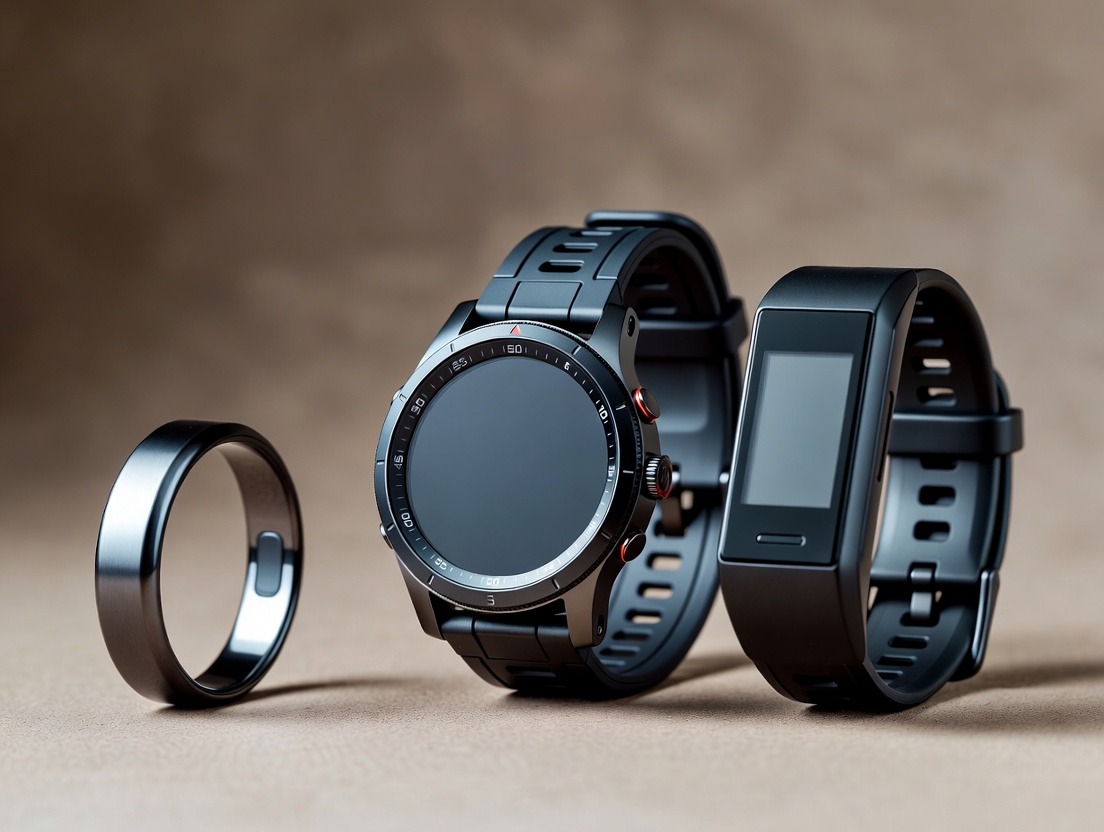
The inevitable question arises: "Do I need a smart ring if I have a smartwatch?" The most insightful answer is not about replacement, but about complementary roles. Think of them not as competitors, but as specialized tools in your wellness toolkit. The smartwatch is your outward-facing command center for activity, connectivity, and notifications. The smart ring is your inward-facing bio-sensor for recovery, sleep, and stress.
Let's break down the distinct advantages of each to build the case for their powerful synergy:
The Smartwatch Excels At:
The Smart Ring Excels At:
The Synergistic Power of Both:
Worn together, they create the most complete personal health picture possible.
For the wellness-focused individual, the ring isn't about ditching the watch; it's about adding a deeper, more intimate layer of understanding that the watch, by its design and placement, cannot provide. It’s the difference between knowing you exercised and knowing how that exercise truly affected your body's capacity to repair and thrive.
The choice may come down to priority: If connectivity and fitness tracking are paramount, start with a watch. If understanding sleep, stress, recovery, and long-term health trends is the primary goal, the ring is the essential device. For the ultimate biohacker or health enthusiast, the duo is the unbeatable combination. To understand how one brand approaches this holistic view of wellness technology, you can explore the philosophy behind Oxyzen's integrated system.
Historically, deep insights into one's own physiology were the domain of elite athletes with access to sports lab testing or patients undergoing clinical diagnostics. The smart ring represents a significant step in democratizing advanced health monitoring, making sophisticated biometrics accessible, affordable, and usable for everyday people.
This breaking down of barriers happens on several fronts:
1. Financial Accessibility: While premium devices exist, the overall cost of a smart ring is often comparable to or less than a high-end smartwatch. More importantly, it provides a specific set of clinical-grade insights (like sleep staging and HRV trend analysis) that would otherwise require expensive sleep studies or repeated visits to specialized clinics.
2. Knowledge Accessibility: Raw data is intimidating. A graph of your PPG waveform is meaningless to most. Smart ring apps excel at translating complex biometrics into actionable wisdom. They don't just show you your HRV number; they explain what it means for your recovery, color-code it (e.g., green for optimal, yellow for pay attention, red for rest), and suggest simple behavioral tweaks. This bridges the gap between advanced physiology and practical, daily life choices.
3. Usability & Lifestyle Accessibility: As covered, the comfort and 24/7 wearability break down the barrier of inconvenience. It also makes advanced tracking accessible to populations for whom a watch is impractical—such as healthcare workers who can't wear wrist jewelry due to hygiene protocols, mechanics, or individuals who simply find watches uncomfortable.
4. Proactive vs. Reactive Health Care: The traditional medical model is often reactive: you feel sick, you go to the doctor. Continuous biometric monitoring fosters a proactive, preventive mindset. By observing trends, individuals can take action before a minor issue becomes a major problem—adjusting sleep, managing stress, or consulting a professional with concrete data in hand. This empowers people to be stewards of their own health.
The Ripple Effect:
As more people adopt this technology, we collectively generate a richer understanding of human health outside the clinic. What does "normal" sleep variability look like across millions of people? How does stress manifest physiologically in different cultures and lifestyles? This anonymized, aggregated data has the potential to inform public health initiatives, workplace wellness programs, and even clinical research, creating a feedback loop that benefits society as a whole.
The smart ring, therefore, is more than a consumer gadget. It is a tool for empowerment, putting the kind of intimate knowledge of one's own body that was once rare and expensive into the hands of anyone curious enough to listen to what their body has been saying all along. For answers to common questions about how to get started and who can benefit, our FAQ provides a great entry point.
Data and specifications are compelling, but the true measure of a technology's value is its impact on real lives. The stories emerging from smart ring users paint a picture of profound personal discovery and positive change. These aren't just anecdotes; they are evidence of the technology's power to illuminate the unseen and guide meaningful action.
Case Study 1: The "Healthy" Burnout.
Sarah, 38, a project manager, considered herself healthy—she worked out 5 days a week and ate well. But she constantly felt fatigued and irritable. Her smartwatch showed she was getting 7 hours of sleep. Her Oura ring data told a different story: while her sleep duration was okay, her deep sleep was consistently in the deficient range (<1 hour), and her nighttime HRV was plummeting every Thursday, hitting its lowest point on Sunday. The trend was clear: her intense weekend workouts and poor weekday sleep hygiene were creating a cumulative recovery debt she was never paying off.
Case Study 2: The Fertility Journey.
Mark and Jessica were trying to conceive. Jessica found manual BBT tracking stressful and inconsistent—waking up at different times disrupted the readings. They started using a smart ring for its automated temperature tracking.
Case Study 3: The Stress Unmasking.
David, 45, a freelance writer, complained of "brain fog" and low-grade headaches. He assumed it was eye strain or dehydration. His doctor found nothing clinically wrong. His smart ring data revealed a fascinating pattern: his finger temperature would drop precipitously and his heart rate would spike for 90-minute blocks every late afternoon. This correlated perfectly with his deep work sessions.
These stories highlight a common theme: the smart ring acts as a translator and a mirror. It translates the vague language of "feeling off" into the specific dialect of physiology. It reflects back an objective truth about our habits and their consequences, empowering us to write a new, healthier story. For a deeper collection of such transformative experiences, you can browse the real-world testimonials from our community.
With any emerging technology, legitimate questions and skepticism arise. Addressing these directly is key to understanding the true value and limitations of smart rings.
Concern 1: "Is it really accurate? Can it replace medical devices?"
Concern 2: "Will it make me obsessed or anxious about my data?"
Concern 3: "The form factor doesn't work for me. My fingers swell/I work with my hands."
Concern 4: "It's just another expensive gadget with a subscription fee."
By engaging with these concerns honestly, we can set realistic expectations. The smart ring is not a magic bullet or a medical guardian angel. It is a powerful tool for self-knowledge—one of the most advanced ever created for personal use. Its power is unlocked not by blind faith, but by informed, intentional use.
The current capabilities of smart rings are impressive, but we are only at the beginning of this technological journey. The convergence of smaller, more powerful sensors, advanced AI, and deeper physiological research points to a future where the ring becomes an even more integral and intelligent health companion.
Near-Term Advancements (1-3 years):
Long-Term Vision (5+ years):
The Ethical & Social Frontier:
With these advancements come profound questions. Who owns this incredibly detailed data? How is it protected? Could it be used by insurers or employers? The industry must develop strong ethical frameworks and regulations in parallel with the technology, ensuring these powerful tools are used to empower, not to exploit.
The road ahead is one of incredible possibility. The smart ring, sitting at the crossroads of biotechnology, data science, and human-centered design, is poised to become one of the most important personal health tools of the 21st century. It represents a future where we are no longer strangers to our own bodies, but informed, compassionate partners in our own well-being.

We have journeyed from the micro-capillaries of the finger to the macro-trends of lifelong health, exploring how finger-based tracking fundamentally changes our access to self-knowledge. The smart ring is not merely a smaller wearable; it is a different category altogether—a continuous, intimate, and insightful biometric companion.
Its benefits are manifold and interconnected: the anatomical advantage for superior signals, the comfort enabling 24/7 wear, the revolution in sleep and stress science, the medical-grade heart and oxygen monitoring, the elegant design, and the profound power of longitudinal data. It democratizes insights that were once confined to labs and clinics, placing them quietly on your finger.
This first portion of our exploration has laid the foundation. We've seen how the technology works and why it matters. But understanding the "what" and the "why" naturally leads to the most important question: "How?"
How do you integrate this tool into your life effectively? How do you interpret the data without becoming overwhelmed? How do you translate insights into sustainable, life-enhancing action? How do you choose the right device for your unique needs and values?
These are the practical, essential questions we will turn to next. The following sections will serve as a master guide to living with a smart ring—a manual for moving from passive data collection to active, empowered well-being. We will delve into choosing your ring, mastering the app, building intelligent daily routines, avoiding common pitfalls, and ultimately, using this remarkable technology not just to track your life, but to fundamentally enhance it.
The conversation about smarter health is just beginning. To continue exploring the practical steps and deeper implications, we invite you to discover more resources and guides on our blog. The future of understanding yourself is at your fingertips.
The decision to embrace finger-based tracking is the first step. The next, crucial step is selecting the right companion for your journey. The smart ring market is evolving rapidly, with options ranging from minimalist trackers to feature-rich powerhouses. Navigating this landscape requires looking beyond marketing claims to the core factors that will determine your long-term satisfaction and success.
Step 1: Define Your "Why" – The North Star
Before comparing specs, ask: What is my primary goal?
Step 2: The Non-Negotiables – The Foundation of Trust
These features separate the contenders from the pretenders:
Step 3: Evaluating the Ecosystem – The App is the Brain
The hardware collects data; the software delivers wisdom. When evaluating a brand's app, consider:
Step 4: The Sensor Suite – Matching Tech to Your Goals
Not all sensors are created equal, and more isn't always better. Focus on the quality of implementation.
Step 5: Brand Values & Longevity
You're investing in a device and a platform. Research the company.
Choosing a smart ring is a personal decision. There is no single "best" ring, only the best ring for you. By methodically working through these steps—defining your purpose, insisting on foundational quality, scrutinizing the software, and aligning with the brand's values—you can confidently select a tool that will become a trusted partner in your health for years to come. For a transparent look at one company's approach to these foundational principles, you can learn about Oxyzen's mission and development philosophy here.
Your new smart ring arrives. The excitement is real. But the critical period that determines long-term value isn't the unboxing—it's the first month. This is the onboarding phase, where you move from novelty to integration. Here’s a practical, day-by-day and week-by-week guide to building a healthy, insightful relationship with your new device.
Week 1: The Observation Phase – Collect Your Baseline
Goal: Wear it consistently and resist the urge to over-analyze.
Week 2: The Correlation Phase – Start Connecting Dots
Goal: Notice simple, obvious connections between your life and your data.
Week 3: The Insight Phase – From Data to Understanding
Goal: Move from noticing to understanding a core insight about your habits.
Week 4: The Integration Phase – Making It Second Nature
Goal: Have the ring and its insights become a seamless, non-stressful part of your wellness toolkit.
Crucial Mindset Tips for the First 30 Days:
The first month sets the tone. By following this phased approach—observing, correlating, understanding, and integrating—you build a sustainable practice. The ring transitions from a fascinating gadget to a trusted advisor, quietly working in the background to help you live in better harmony with your body's innate wisdom.
The dashboard is filled with numbers and graphs. To move from confusion to clarity, you need to become fluent in the language of your own body. Let's translate the key metrics, not as isolated numbers, but as dynamic, interconnected conversations your physiology is having.
1. Heart Rate Variability (HRV): The Symphony of Your Nervous System
2. Resting Heart Rate (RHR): Your Engine's Idle Speed
3. Body Temperature: The Rhythm of Your Day and Cycle
4. Sleep Staging: The Architecture of Restoration
The Art of Synthesis:
The magic happens when you read these metrics together. For example:
Mastering your metrics is an ongoing practice. The more you observe these interrelationships in the context of your life, the more intuitively you'll understand what your body is communicating. For deeper dives into specific metrics and their implications, our blog offers a library of detailed interpretive guides.


