


The Smart Ring Benefits That Protect Your Privacy and Data
Benefits related to the privacy and security of your health data.
Benefits related to the privacy and security of your health data.
%402x.svg)
In the quiet hum of modern life, our personal data has become the new currency. Every step counted, every heartbeat measured, every restless night analyzed—these fragments of our existence are collected, stored, and often traded in a vast digital marketplace. We welcome technology onto our wrists and into our pockets, trading intimate details for convenience and insights. But as we adorn ourselves with sensors, a profound question emerges: at what cost to our privacy?
Enter the smart ring—a minimalist band of titanium or ceramic, unassuming in its design yet revolutionary in its promise. Unlike its more conspicuous counterparts, it represents a paradigm shift: advanced health and wellness tracking that begins with a fundamental commitment to data sovereignty. This isn't just another wearable; it’s a statement. A statement that you can harness the power of continuous physiological monitoring without surrendering your most private information to unknown servers and third-party data brokers.
This article isn't merely a list of features. It is a deep exploration of the smart ring as a privacy-first guardian. We will dissect the very architecture of trust, moving beyond battery life and heart rate accuracy to the core principles that make these devices a sanctuary for your data. From the encryption protocols that cloak your sleep patterns to the local processing that keeps your stress levels on your finger—not in the cloud—we will uncover how the next generation of wearables is rewriting the rules of engagement. In a world quick to monetize your biometrics, the smart ring stands as a silent sentinel, proving that the greatest benefit of all is the peace of mind that comes with true control.

We live in the age of the quantified self, enthusiastically strapping on devices that log our every movement, pulse, and breath. The value proposition seems straightforward: better data leads to better health. But this transaction is rarely so simple. Beneath the sleek interfaces of many popular wearables lies a complex and often opaque data economy where your intimate biometrics are the primary commodity.
Consider the sheer sensitivity of the information a modern wearable collects. It’s not just step counts. It’s continuous heart rate data that can reveal stress patterns, anxiety episodes, or even underlying cardiac conditions. It’s detailed sleep analysis that maps your brain waves, breathing disturbances, and nocturnal movements. It’s skin temperature variations that can indicate illness, ovulation, or metabolic changes. It’s activity patterns that paint a precise picture of your daily routines, your work schedule, and when you are home. When aggregated, this data creates a biometric blueprint of you—a digital portrait more revealing than any social media profile.
The risks are not hypothetical. In recent years, major fitness tracker companies have faced scrutiny and legal challenges for sharing aggregated user data with third parties, including employers and insurance companies. While often "anonymized," studies have shown that such datasets can be easily re-identified. Your unique pattern of movement and rest is as distinctive as a fingerprint. Furthermore, data breaches are a constant threat. A server housing millions of users' sleep, heart rate, and location histories is a catastrophic target for cybercriminals.
This creates the Privacy Paradox: we seek devices to improve our personal well-being, yet in doing so, we may be compromising a more fundamental aspect of our security—our right to bodily and data autonomy. Most platform-based wearable ecosystems are designed to aggregate data centrally. Your information travels from your device to a company’s server, where it is processed, stored, and often becomes an asset for broader "research" or advertising partnerships. You, the user, become the product.
The smart ring emerges as a direct response to this paradox. Its very form factor—small, personal, and always on—demands a higher standard. The leading devices in this category are architecting a new model, one where the default is not to extract, but to protect. To understand this shift, we must first look at the foundation of all digital trust: encryption and security protocols.
If your smart ring is a vault for your personal biometrics, then encryption is the unbreakable lock and the complex security protocol is the armed guard. This isn't about a simple password to an app; it's about a multi-layered defense system that operates from the moment a sensor detects a signal to the long-term storage of your historical data.
Let’s break down how this fortress is built, layer by layer.
End-to-End Encryption (E2EE): The Non-Negotiable Standard
This is the gold standard for data protection. With true E2EE, your data is encrypted on the ring itself before it is ever transmitted. It remains encrypted during its journey via Bluetooth to your smartphone, and it stays encrypted on any company server. The decryption key exists only on your authenticated devices. This means that even if data is intercepted during transmission or if a server is breached, the information is useless gibberish to the attackers. No third party, not even the company providing the service, can read your raw biometric data without your explicit key. For a smart ring tracking your sleep stages or heart rate variability, this is not a premium feature—it is an ethical imperative.
On-Device Processing: The First Line of Defense
The most sophisticated privacy-centric rings take this a step further by maximizing on-device processing. Instead of sending raw sensor data to the cloud for analysis, the ring’s own microcontroller chip performs the initial computation. For example, the ring might calculate your heart rate, identify a sleep period, or detect a workout locally on the finger. Only the resulting insights (e.g., "78 BPM," "30 minutes of deep sleep," "aerobic activity detected") are then encrypted and synced. This drastically reduces the amount of sensitive raw data that ever leaves your physical possession, minimizing the "attack surface" and your digital footprint.
Secure Element & Hardware Isolation
High-security rings incorporate a dedicated Secure Element—a separate, tamper-resistant microchip often used in credit cards and passports. This chip stores cryptographic keys and performs sensitive operations in an isolated hardware environment, completely walled off from the ring’s main operating system. Even if the ring’s firmware were somehow compromised, the keys protecting your data remain in this digital fortress, inaccessible.
Zero-Knowledge Architecture
Building on these principles, the most private systems employ a zero-knowledge or zero-trust architecture. In this model, the service provider has "zero knowledge" of your personal data. They provide the platform and the tools, but you hold all the keys. Your data is encrypted with a key derived from your personal password (which the company never stores). If you forget your password, even the company cannot recover your data—it is permanently sealed. This places ultimate control and responsibility with you, the user, ensuring there is no backdoor.
Transparency about these protocols is key. Brands committed to privacy, like Oxyzen, openly detail their security architecture, allowing you to make an informed choice. You can explore their approach to data stewardship and technology to see how these principles are applied in practice. This level of clarity transforms the device from a black box into a tool of empowerment.
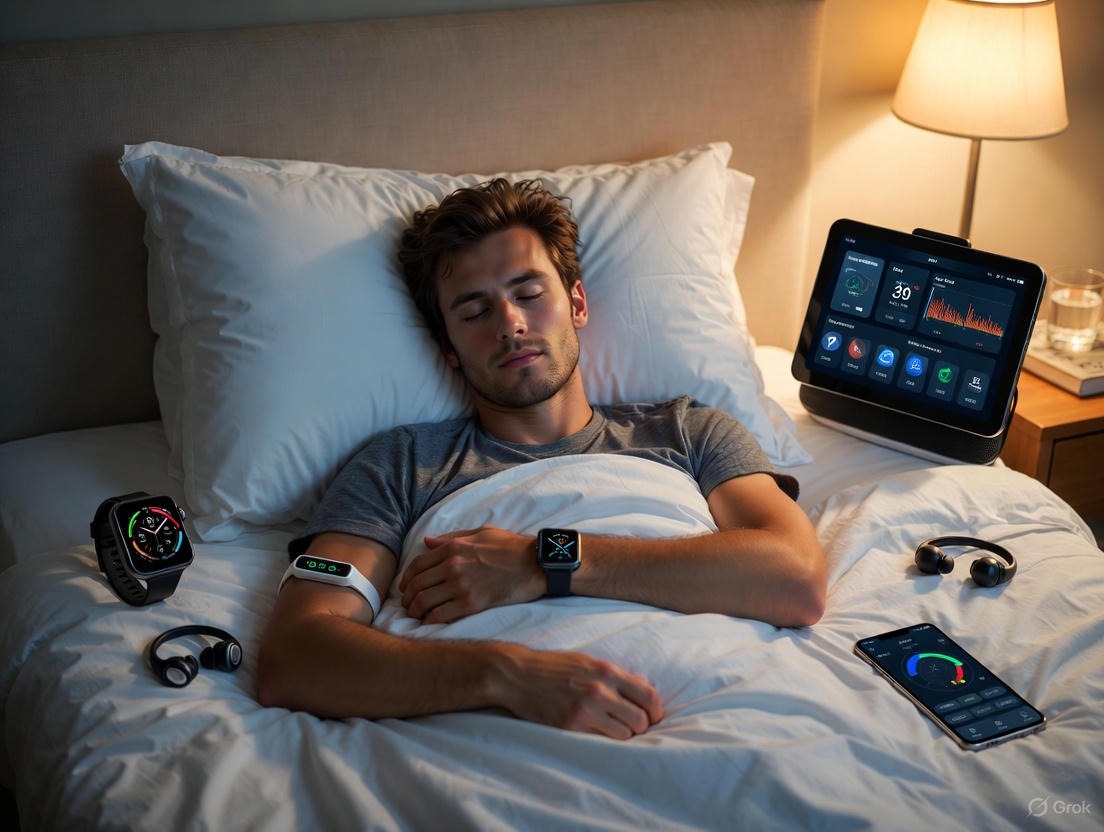
The battle for your privacy is often fought on a simple frontier: where does the computation happen? The choice between local processing and cloud processing defines who has access to your raw biometric stream and where your most vulnerable data resides.
The Cloud-Centric Model: Convenience at a Cost
The vast majority of connected devices operate on a cloud-centric model. Your wearable acts as a simple data collector, streaming raw sensor readings (optical sensor data, accelerometer readings, etc.) to the manufacturer’s servers. The heavy lifting—converting that raw data into meaningful metrics like "sleep score" or "stress level"—happens in the cloud.
The Local-First Model: Empowerment by Design
A privacy-forward smart ring flips this model on its head. It prioritizes local processing whenever possible. The ring’s onboard processor is powerful enough to perform core analytics directly on the device.
The Hybrid & Transparent Approach
For some advanced, longitudinal insights—like trend analysis over months or population-level benchmarking—some cloud interaction is necessary. The key for a trustworthy brand is transparency and user control in this hybrid model.
The paradigm is shifting from "data extraction for service" to "data sovereignty as service." By choosing a device that champions local processing, you are not just buying a ring; you are voting for an architecture that respects the sanctity of your personal information.
We’ve all done it: rushed through a lengthy Terms of Service (ToS) document or Privacy Policy, blindly clicking "I Agree" to access a new gadget or app. In that moment, we are trading legal consent for convenience. But when the product in question is collecting your heart rate while you sleep, skimming these documents is no longer a trivial act—it’s a potential surrender of your biometric rights.
For a smart ring, the Privacy Policy and ToS are the legal bedrock of your relationship with the company. They dictate what can be collected, how it can be used, who it can be shared with, and what rights you retain. Learning to decode their key clauses is an essential skill for the modern, privacy-conscious consumer.
Critical Clauses to Scrutinize:
The Transparency Test:
A company that values your privacy makes these documents clear, accessible, and written in plain language—not legalese. They often provide summaries or blogs explaining their stance. For example, you can often find deeper insights into a brand's philosophy and legal commitments by reading their story and vision, which should align perfectly with the dry text of their policy.
Your diligence here pays off. By choosing a ring from a company with a clear, fair, and user-centric privacy policy, you are not just accepting terms; you are entering a partnership based on respect and transparency. The best policies read like a promise, not a trap.
One of the most powerful arguments for sharing health data is the greater good: aggregated, anonymous datasets can fuel medical research, improve algorithms for early disease detection, and help us understand population-wide wellness trends. The ethical question is not whether this research is valuable—it is—but how to contribute to it without turning yourself into a transparent data point.
This is where the concept of privacy-preserving analytics comes into play, and the smart ring is uniquely positioned to leverage it for true anonymous advantage.
The Flawed "Anonymization" of the Past
Traditional methods of anonymization simply stripped obvious identifiers like name and email from a dataset. However, as mentioned earlier, a detailed timeline of an individual’s location, heart rate, and sleep is so unique it can act as a personal identifier. Researchers have repeatedly demonstrated the ability to re-identify individuals in "anonymized" datasets by cross-referencing just a few data points. This approach is broken.
Modern Techniques for True Anonymity:
Leading privacy-first companies employ sophisticated techniques to ensure that any data used for research or product improvement is truly untraceable back to you.
By adopting these methods, a smart ring company can offer you the opportunity to contribute to meaningful wellness science without asking you to sacrifice your privacy. It turns the act of sharing from a risk into a virtuous, zero-cost contribution. You can often find companies that champion this approach discussing the balance of innovation and privacy in resources like their blog on wellness technology. This represents the future of ethical data science, where progress does not come at the expense of the individual.
In a world of constant notifications and social signaling, the smart ring’s most powerful privacy feature might be its very form factor: its silence and subtlety. Unlike a glowing screen on your wrist that broadcasts your every notification, workout, and incoming call, the smart ring operates in the background, both technologically and socially. This minimalist design is not an aesthetic accident; it is a foundational privacy and psychological benefit.
The Psychology of the Unseen Sensor
A large, screen-based smartwatch is an interactive device. It demands attention, creates distractions, and often turns personal biometrics into social performances (sharing workout completions, competing on leaderboards). This can lead to quantified self-consciousness, where the act of tracking alters the behavior being tracked. The ring, by contrast, is forgettable. It fades into the background of your awareness, collecting data passively and without fanfare. This allows for more authentic, uninterrupted measurement of your true physiological state, free from the bias of performative tracking.
Social and Situational Privacy
There are countless situations where a visible, screen-based wearable is intrusive or inappropriate: a sensitive business meeting, a romantic dinner, a courtroom, or a therapist's office. The light from a screen or the buzz of a notification can breach social norms and your own mental space. A smart ring collects data without any such disruption. It doesn’t light up, doesn’t buzz with every email, and doesn’t draw glances from others. It grants you situational privacy, allowing you to be fully present while still being protected. Your stress levels during a difficult conversation remain your business alone.
Data Collection Without Distraction
The privacy of attention is increasingly valuable. Many wearables are designed to maximize "engagement" with their platform, pulling you back to the screen to check metrics, close rings, or respond to alerts. This creates a data feedback loop that can increase anxiety and device dependency. A well-designed smart ring system respects your focus. It provides insights at times you choose—like a morning recap on your phone—rather than interrupting your flow throughout the day. This means the data serves you, not the other way around.
The Aesthetic of Control
Wearing a discreet smart ring is a personal, almost private, choice. It doesn’t announce itself as a piece of tech. This aesthetic minimalism mirrors the data philosophy: it’s about essential, meaningful collection without excess. It’s a piece of jewelry first and a computer second. This design language reinforces the brand promise of control and discretion. For those interested in how this philosophy translates from product design to user experience, exploring a brand's customer testimonials can reveal how real users appreciate this understated approach to technology.
In essence, the ring’s design protects your privacy in the physical world just as its encryption protects it in the digital one. It allows you to benefit from continuous monitoring without becoming a slave to a screen or a broadcaster of your personal metrics. It is a tool for self-knowledge, not social validation.

True data sovereignty means you are not locked in. Your historical biometric data—your sleep trends, your stress patterns, your activity history—is a valuable personal asset. It belongs to you, not to the device or the platform. Therefore, a core tenet of a privacy-respecting smart ring ecosystem is providing you with robust, straightforward tools for data portability and data deletion. These are not just features; they are digital human rights.
The Right to Data Portability: Take Your History With You
Data portability is your ability to obtain and reuse your personal data across different services. For your smart ring, this means you should be able to download a complete copy of all your raw and processed data in a standardized, machine-readable format (like JSON or CSV).
The Right to Deletion: The Ultimate "Reset" Button
Also known as the "Right to Be Forgotten," this is your power to have all your personal data permanently erased from a company’s servers. This is the nuclear option for privacy, and it must be accessible.
The Practical Balance: Local Data Sovereignty
The most user-empowering systems blend these rights with local storage. If the ring and its app are designed to store significant historical data locally on your phone (encrypted, of course), you inherently have a portable copy. Deletion from company servers then becomes a act of severing the cloud link, not of destroying your only copy. You maintain a personal archive under your direct control.
Exercising these rights shouldn’t be a struggle. Companies that build their reputation on privacy will have clear guides on how to manage your data lifecycle. For any user questions on how to export data or manage an account, the comprehensive FAQ page should be the first and most helpful resource. When you own your biometric blueprint, the smart ring transitions from a service you subscribe to, into a tool that you truly command.
In an industry rife with vague promises and complex legalese, trust is the most valuable currency a smart ring company can possess. You are not just buying a piece of hardware; you are inviting a company to be a custodian of your most intimate information. How can you discern who is worthy of that profound responsibility? The answer lies in a pattern of behavior called radical transparency.
Reputable, privacy-first brands don't just have strong policies; they actively, consistently, and openly demonstrate their commitment through actions that build verifiable trust.
1. Public-Facing Security Audits and Penetration Tests
Trust must be verified, not just claimed. Leading companies engage independent, third-party cybersecurity firms to conduct regular security audits and penetration tests ("pen tests") on their devices, apps, and servers. The results of these audits, or at least summaries confirming compliance with standards like SOC 2 or ISO 27001, should be publicly available or provided upon request. This is the digital equivalent of a restaurant posting its health inspection grade—it proves they welcome scrutiny.
2. Open-Door Policy on Privacy Inquiries
A company that has nothing to hide encourages questions. They maintain a dedicated privacy team with a publicly listed email address (e.g., privacy@company.com). They respond to user concerns about data handling promptly and substantively. This accessibility is a critical signal. It shows they view privacy as an ongoing conversation with their users, not a legal checkbox.
3. Clear Data Flow Maps and Architecture Diagrams
Can you easily find a simple diagram showing where your data goes? A trustworthy brand will provide a visual data flow map that illustrates the journey of your information: from the sensor, to the ring’s chip, to your phone (via encrypted Bluetooth), and optionally to their servers (with encryption noted at each stage). This demystifies the technology and shows they are confident in their architecture.
4. Proactive Breach Notification Protocols
Even the most secure systems can be targeted. What matters is the response. A company's privacy policy should include a clear breach notification commitment, promising to inform users within a legally mandated (or even shorter) timeframe if their personal data is compromised. Being upfront about this protocol, however unpleasant to contemplate, builds long-term trust.
5. Educational Content and Thought Leadership
A brand that is a true steward of privacy invests in educating its community. They publish blogs, whitepapers, and guides that explain encryption, anonymization techniques, and digital rights in plain language. They position themselves not just as a product seller, but as an advocate for user sovereignty in the tech landscape. You can often see this commitment in action by browsing a company's educational blog content, where they break down complex topics for their users.
6. The Founding Story and Mission Alignment
Finally, trust often stems from origin. A company founded on a core mission of disrupting the data-exploitation model has a different DNA than one bolting privacy features onto a pre-existing data-hungry platform. Understanding the brand’s journey and founding principles can provide essential context. Did the founders have a personal experience with data misuse? Is privacy woven into the company's values from day one? This narrative depth is often the strongest predictor of consistent behavior.
This "trust transaction" is a two-way street. By choosing a brand that excels in these transparent practices, you reward ethical behavior and encourage the entire industry to raise its standards. Your purchase becomes an endorsement of a better way to build technology.
While much of the privacy discussion focuses on software and policy, the physical design of the smart ring itself offers unique, inherent security advantages over its wrist-worn competitors. Moving from the wrist to the finger isn't just a style choice; it’s a strategic shift that enhances data accuracy and reduces certain threat vectors.
1. Superior Signal Fidelity and Reduced Noise
The most secure data is accurate data. Inaccurate biometric readings are not just useless; they could lead to incorrect health assumptions. The finger, specifically the base of the finger, provides a superior physiological site for photoplethysmography (PPG)—the optical heart rate sensing technology used by most wearables.
2. Consistent Wear and Sensor Contact
A smartwatch or fitness band on the wrist is frequently loose, rotated, or taken off. This breaks sensor contact and creates gaps in data. A ring, sized correctly, is worn more consistently. It maintains optimal sensor contact with the skin 24/7, especially during sleep—the most critical period for recovery data. This consistent contact ensures a continuous, high-fidelity data stream that can be processed confidently on-device, creating a complete and private health timeline.
3. Reduced Surface for "Side-Channel" Attacks
In cybersecurity, a "side-channel attack" extracts secret information from a system by measuring indirect outputs, like power consumption or electromagnetic emissions. A wrist-worn device has a larger surface area and often more powerful radios (like LTE or Wi-Fi) that can emit more discernible signals. A ring’s tiny form factor limits its radio power (typically to Bluetooth Low Energy only) and its physical mass, inherently reducing its electromagnetic signature and making such theoretical attacks far more difficult.
4. Physical Security and Theft Deterrence
A smartwatch is a conspicuous, high-value item that is easily removed and stolen. A smart ring is far more personal and less frequently removed in public. Its minimalist design also makes it less of a target for theft compared to a flashy smartwatch. Physical possession is a key aspect of security; a device that is less likely to be lost or stolen is a device that keeps its data in your control.
5. Authentication Potential
The ring’s permanent presence on a specific finger opens future possibilities for continuous, passive authentication. Because it can uniquely identify your vascular patterns or specific wear characteristics, it could act as a second factor for unlocking your phone or computer only when worn by you. This is a privacy-enhancing feature, as it could replace less secure methods like passwords or even invasive biometrics like facial recognition on public cameras.
This convergence of optimal biology and minimalistic engineering makes the ring form factor a natural ally for privacy. It’s designed to get the best data with the least intrusion, both physically and digitally. It exemplifies the principle that the best technology often gets out of the way, working so seamlessly and securely that you can forget it’s there—until you need the profound insights it has protected on your behalf.
The landscape of data privacy is not static; it is a battlefield of innovation. As data collection techniques grow more sophisticated, so too must the technologies that protect our information. The next generation of smart rings won't just use today's encryption standards—they will be pioneers in integrating cutting-edge privacy-enhancing technologies (PETs) that will redefine what's possible in personal wearable computing.
1. Homomorphic Encryption: Processing Encrypted Data
This is a "holy grail" technology. Homomorphic encryption allows computations to be performed directly on encrypted data without ever needing to decrypt it. Imagine your ring sends encrypted heart rate data to a cloud service. That service could analyze trends and detect anomalies while the data remains encrypted, then send back an encrypted result that only you can decrypt. The cloud server never sees the raw data. While currently computationally intensive, advances in chip design (including specialized chips in wearables) could make limited homomorphic operations feasible for key analytics, providing cloud-powered insights with zero data exposure.
2. Secure Multi-Party Computation (MPC) for Personalized Insights
MPC is a cryptographic protocol that allows multiple parties to jointly compute a function over their inputs while keeping those inputs private. For a smart ring ecosystem, this could enable powerful, privacy-preserving features. For example, you could confidentially compare your anonymous sleep patterns with a relevant demographic cohort to see how you stack up. Your data and the cohort's data are used in a computation, but no party (including the company's server) sees the individual inputs—only the final, aggregated comparison result.
3. Decentralized Identity and Self-Sovereign Identity (SSI)
The future of digital identity moves away from centralized logins (like using Google or Facebook) where you are tracked across the web. SSI allows you to own and control your digital identifiers without relying on a central authority. Your smart ring could become a hardware "wallet" for your verified health credentials. You could prove you've completed a wellness program to an insurer or share specific health metrics with a doctor, issuing time-limited, revocable credentials directly from your ring without exposing your entire health history or identity.
4. Advanced On-Device AI with TinyML
The trend of Tiny Machine Learning (TinyML) involves running sophisticated AI models directly on low-power, microcontroller-based devices like smart rings. As these models become more efficient, rings will be able to detect complex health signatures (like atrial fibrillation, sleep apnea patterns, or stress triggers) entirely locally. This means the most sensitive diagnostic analyses never leave your finger, turning the ring into a true private health advisor.
5. Blockchain for Audit Trails (Not Storage)
While storing health data on a public blockchain is a terrible idea for privacy, permissioned blockchain technology can be used to create immutable, transparent audit trails. Every time your data is accessed—by you, by a research program you opted into, or by a healthcare provider you authorized—a cryptographically-secured entry could be logged. This gives you a permanent, unforgeable record of who has accessed your data and when, creating unparalleled accountability without exposing the data itself.
These technologies are moving from research labs into practical applications. A forward-thinking smart ring company will be actively researching and communicating its roadmap in these areas. For those keen to understand how these future-facing ideas translate into today's product development, following a brand's public updates and vision is essential. The future of wearable technology is not just about tracking more; it's about exposing less, and the smart ring is poised to lead this quiet revolution.
In the digital age, privacy is increasingly defined and defended by law. For users of smart rings and other biometric-tracking devices, understanding the legal frameworks that govern their data is not merely academic—it is an exercise in empowerment. Regulations like the European Union’s General Data Protection Regulation (GDPR) and the California Consumer Privacy Act (CCPA), along with emerging biometric-specific laws, establish a baseline of rights and corporate responsibilities. A privacy-centric smart ring company doesn’t just comply with these laws; it uses them as a foundation to build even stronger user protections.
GDPR: The Gold Standard for Data Protection
The GDPR, enacted in 2018, is arguably the most comprehensive data privacy law in the world. Its principles apply to any company processing the data of EU citizens, giving it global reach. For smart ring users, GDPR enshrines several critical rights:
CCPA/CPRA and U.S. State Laws
The CCPA (enhanced by the California Privacy Rights Act or CPRA) grants California residents similar rights, with a particular focus on the right to know what personal information is being collected and sold, and the right to opt-out of its sale. While "sale" is broadly defined, the most important implication for health wearables is the need for crystal-clear disclosure. The Virginia Consumer Data Protection Act (VCDPA), Colorado Privacy Act (CPA), and others are creating a patchwork of state-level protections in the U.S., pushing companies to adopt the strongest privacy standards nationwide to ensure compliance.
Biometric Information Privacy Acts (BIPAs)
More targeted laws, like the Illinois Biometric Information Privacy Act (BIPA), are particularly stringent. BIPA requires private entities to:
What This Means for Your Smart Ring Choice
When evaluating a smart ring, you can use these laws as a checklist:
A company that welcomes these regulations, rather than minimally complying with them, demonstrates a culture of respect. They often provide educational resources to help users understand their rights, which you can frequently find in a dedicated support and FAQ hub. By choosing a brand that not only adheres to but champions these legal standards, you align yourself with a partner that views your privacy as a fundamental right, not a regulatory hurdle.
Owning a privacy-first device is the first step. The second, equally crucial step is configuring it to align with your personal comfort level. The most secure smart ring in the world can still expose data if its settings are not tailored to your preferences. This guide walks you through the essential privacy settings you should review and configure from day one, transforming your ring from a protected device into your personalized privacy fortress.
Initial Setup: The Foundation of Consent
Ongoing Management: Your Control Panel
Advanced User Protections
Configuring these settings is an active declaration of your digital boundaries. A user-centric company makes this process intuitive and educational, providing clear tooltips and explanations for each option. For detailed, step-by-step guidance on maximizing your ring's privacy, the brand's official support resources and blog are invaluable. Taking this hour of setup time ensures that for years to come, your smart ring operates as a true extension of your will—collecting only what you permit, sharing only what you authorize.
A smart ring’s privacy is only as strong as the weakest link in its ecosystem. That ring communicates with a smartphone, which connects to cloud services, which might integrate with other apps. If your phone is compromised or your broader digital habits are lax, the robust protections of the ring itself can be undermined. Therefore, a holistic approach to privacy is essential. Here’s how to fortify the entire chain.
Hardening Your Smartphone: The Command Center
Managing Integrations and Third-Party Apps
Your Behavioral Firewall
Securing your ecosystem is an ongoing practice. It’s about creating a culture of mindfulness around your digital interactions. The most privacy-focused smart ring companies often provide guidance on these broader best practices, as they understand their product is part of your larger digital life. For insights into creating a secure personal tech environment, their educational content can be a great resource. By extending the ring’s philosophy of protection to your entire digital persona, you build a comprehensive defense, ensuring that the sanctuary of data you create on your finger remains sacred, from sensor to storage.
In the tech world, you are either the customer or the product. This adage holds profound truth for wearable technology. The business model a company chooses fundamentally dictates its relationship with your data. To understand why a privacy-first smart ring often comes with a price tag, we must contrast it with the dominant "free" or low-cost model that monetizes your personal information.
The Data Monetization Model: The "Free" Wearable Illusion
Many popular fitness trackers and smartwatches are sold at or near hardware cost. Their business strategy is not to profit from the device sale, but from the data platform it creates.
The Hardware-Centric, Privacy-First Model: You Are the Customer
A company like Oxyzen, built on privacy, typically employs a different economic model.
The Hybrid Trap and How to Spot It
Be wary of devices that start with a privacy promise but later introduce data-hungry "premium" tiers or change their terms of service to enable broader data sharing. This "bait-and-switch" is a risk in the platform model.
Questions to Ask When Evaluating a Brand:
Choosing a hardware-centric model is an investment in a different kind of relationship. It supports companies that view privacy as a product feature, not a cost center. To understand how a brand's values translate into its business practices, you can often gain insight by learning about their mission and founding story. When you pay for privacy, you are not just buying a ring; you are funding the continued development of an ethical alternative in a landscape of data extraction, ensuring that your purchase supports the world you want to live in.
Theoretical risks become tangible through real-world incidents. Examining past failures in wearable privacy provides critical lessons, highlighting the pitfalls that a conscientious smart ring user must avoid. These case studies are not meant to induce fear, but to foster informed vigilance and underscore why the architectural principles discussed earlier are so vital.
Case Study 1: The Fitness Tracker Heat Map and Operational Security
Case Study 2: The Social Platform Integration and Data Leakage
Case Study 3: The Data Breach and Health Information Exposure
Case Study 4: The Terms of Service Change and Lost Control
These cases are not relics of the past; they are warnings for the future. They illustrate that privacy is not a static feature but a dynamic commitment. When researching a smart ring, looking at a company's historical actions—its response to crises, its evolution of policies—is as important as reading its current promises. Reviewing independent user experiences and testimonials can sometimes reveal how a company handles real-world privacy concerns. By learning from the mistakes of others, you can choose a device designed to avoid them from the start.
We have meticulously detailed the technical, legal, and practical frameworks that make a smart ring a guardian of your data. But this exploration would be incomplete without addressing the most profound, yet often overlooked, benefit: the positive impact of privacy on your mental and emotional wellbeing. In a world of constant connectivity and surveillance anxiety, choosing a device that respects your digital boundaries is not just a security decision—it's a wellness decision.
Reducing "Quantified Self" Anxiety and Performance Pressure
Many wearables are gamified. They nudge you to close rings, beat yesterday's step count, or compete on public leaderboards. This can transform self-care into a source of stress, fostering obsessive checking and feelings of guilt or inadequacy. This phenomenon, sometimes called "wearable-induced anxiety," turns a tool for insight into a source of performance pressure.
A privacy-centric smart ring, by design, tends to minimize this. Without social leaderboards and with a focus on long-term trends rather than daily gamification, it encourages a more reflective, less reactive relationship with your data. The insights are for you alone, to inform your choices, not to judge them. This reduces digital clutter and mental noise, contributing to a calmer, more focused mind.
The Psychological Safety of a Truly Personal Space
Knowing that your most intimate biological rhythms—the dip in your heart rate variability during a stressful work call, your restless sleep after a difficult conversation—are for your eyes only creates a profound sense of psychological safety. It is a digital sanctuary. This safety allows for more honest self-assessment. You are more likely to acknowledge and address patterns of poor sleep or chronic stress when you know that data is not being scored, shared, or potentially used against you.
In contrast, the subliminal awareness that your data is part of a corporate analytics engine can create a subtle but pervasive sense of being watched, a phenomenon scholars call lateral surveillance. Removing this layer of exposure is intrinsically liberating.
Fostering Intrinsic Motivation
When health tracking is divorced from social validation and external rewards, motivation must come from within. A private device supports intrinsic motivation—the desire to improve for your own sake, based on your personal goals and the direct feedback from your body. This type of motivation is more sustainable and aligned with genuine wellbeing than chasing badges or likes. The ring becomes a tool for self-connection, not external comparison.
The Cognitive Benefit of Digital Minimalism
The smart ring’s minimalist design philosophy extends to its interaction model. Without a screen constantly vying for your attention, it supports digital minimalism. It provides valuable information on your terms (e.g., a morning report on your phone) rather than through incessant interruptions. This reduces cognitive load and the "switch-tasking" that fragments attention and increases stress. Protecting your attention is a critical component of modern mental health, and a discreet device respects that need.
Trust as a Foundation for Engagement
Finally, the trust engendered by a privacy-respecting device deepens your engagement with it. When you believe the company is a true steward of your data, you are more likely to use the device consistently and explore its features fully. You invest in the ecosystem not out of lock-in, but out of confidence. This consistent use leads to higher-quality, longitudinal data, which in turn yields more meaningful and personalized insights for you—a virtuous cycle rooted in security.
In essence, the smart ring that protects your data also protects your mental space. It returns the focus of wellness technology to where it belongs: on supporting your internal state, not broadcasting it. It acknowledges that wellbeing is holistic, encompassing not just physical metrics but also the peace of mind that comes from autonomy and control. For those seeking a deeper understanding of this human-centric approach to technology, exploring a brand's philosophy on their about page can be enlightening. The ultimate benefit of a privacy-first smart ring is that it helps you look inward without worry, creating a quieter, safer, and more personal journey toward better health.
Your Trusted Sleep Advocate: Sleep Foundation — https://www.sleepfoundation.org
Discover a digital archive of scholarly articles: NIH — https://www.ncbi.nlm.nih.gov/
39 million citations for biomedical literature :PubMed — https://pubmed.ncbi.nlm.nih.gov/
Experts at Harvard Health Publishing covering a variety of health topics — https://www.health.harvard.edu/blog/
Every life deserves world class care :Cleveland Clinic - https://my.clevelandclinic.org/health
Wearable technology and the future of predictive health monitoring :MIT Technology Review — https://www.technologyreview.com/
Dedicated to the well-being of all people and guided by science :World Health Organization — https://www.who.int/news-room/
Psychological science and knowledge to benefit society and improve lives. :APA — https://www.apa.org/monitor/
Cutting-edge insights on human longevity and peak performance:
Lifespan Research — https://www.lifespan.io/
Global authority on exercise physiology, sports performance, and human recovery:
American College of Sports Medicine — https://www.acsm.org/
Neuroscience-driven guidance for better focus, sleep, and mental clarity:
Stanford Human Performance Lab — https://humanperformance.stanford.edu/
Evidence-based psychology and mind–body wellness resources:
Mayo Clinic — https://www.mayoclinic.org/healthy-lifestyle/
Data-backed research on emotional wellbeing, stress biology, and resilience:
American Institute of Stress — https://www.stress.org/


