


The Smart Ring Benefits That Work While You Work, Sleep, and Live
Benefits that work seamlessly throughout your entire day and night.
Benefits that work seamlessly throughout your entire day and night.
%402x.svg)
In an age where we meticulously track our steps, monitor our heart rates, and quantify our sleep, a quiet revolution is shifting the focus of health technology from our wrists to our fingers. The smart ring, a sleek, unassuming band of titanium or ceramic, is emerging as the most personal, persistent, and powerful wellness tool you can own. Unlike its bulkier counterparts, it operates with a profound simplicity: it’s always on, always collecting, and always translating the subtle language of your body into actionable insights.
This isn't just another gadget; it's a paradigm shift in personal biometrics. The smart ring benefits you 24/7, moving seamlessly with you through every facet of your life—demanding workdays, restorative sleep, and everything in between. It works not by demanding your attention, but by working for you in the background, gathering the most intimate dataset you'll ever own: your physiological truth.
This article explores the profound, multi-layered benefits of this technology. We’ll dive deep into how a device smaller than a coin can optimize your productivity by managing stress, unlock the secrets of your sleep to supercharge recovery, provide unparalleled comfort for continuous wear, and serve as a long-term health guardian. We’ll move beyond the hype to understand the science, the real-world applications, and the future this technology is building—one data point, one night, one life at a time.
Prepare to discover how the ultimate wearable doesn't just track your life; it enhances it, silently and intelligently, while you work, sleep, and live.

The first and most fundamental benefit of a smart ring is one you feel before you ever glance at an app: its unparalleled wearability. In the quest for continuous health monitoring, comfort isn't a luxury; it's a prerequisite for accurate, long-term data. This is where the smart ring fundamentally outperforms the wrist-worn wearable.
The Physics of Discretion. A smart ring leverages a critical advantage: the finger is a superior site for certain biometric measurements compared to the wrist. It houses smaller, denser blood vessels closer to the skin's surface. This anatomical feature allows sensors like photoplethysmography (PPG) to get a stronger, cleaner signal for heart rate, heart rate variability (HRV), and blood oxygen saturation (SpO2) with less interference from motion. Furthermore, the ring form factor itself is inherently stable. Unlike a watch that can slide and twist, a properly fitted ring maintains consistent sensor-skin contact, especially during sleep when we move naturally.
Comfort as a Feature, Not an Afterthought. Imagine wearing a device you genuinely forget is there. That’s the design ethos behind leading smart rings. Crafted from hypoallergenic materials like grade 5 titanium, ceramic, or medical-grade resins, they are lightweight (often 3-6 grams) and sculpted for all-day, all-night comfort. There’s no screen to glare, no bulky housing to catch on clothing, and no need to remove it for showers, swimming, or weightlifting. This seamless integration into your life eliminates the "wearable dilemma"—the conscious choice of when to wear your tracker. With a smart ring, you simply put it on and live. It becomes a part of you, not an accessory you manage.
The Aesthetics of Invisibility. For many, the aesthetic intrusion of a tech-laden watch is a barrier. A smart ring sidesteps this entirely. Designs are minimalist, elegant, and often indistinguishable from a premium piece of jewelry. This allows it to be worn in professional settings, formal events, and during workouts without a second thought. It doesn't shout "tech"; it whispers "sophistication," making continuous health monitoring socially and stylistically frictionless.
This foundational benefit of unobtrusive, 24/7 wear is what unlocks every other advantage. You cannot manage what you do not measure consistently. The ring’s ability to become a background guardian ensures the data it collects isn't a snapshot, but a continuous, high-fidelity movie of your physiology. As we explore the specific benefits for work and sleep, remember: they all stem from this core capability of persistent, comfortable, and accurate monitoring. For those curious about how this elegant technology translates into powerful insights, you can discover how Oxyzen works to see this principle in action.
The modern workday is a marathon of cognitive loads, digital distractions, and fluctuating energy. We often push through until we crash, guided by subjective feelings of fatigue rather than objective data. The smart ring changes this dynamic, transforming you from a reactive participant in your workday to a proactive conductor of your cognitive and physical resources.
From Reactive to Proactive Stress Management. The ring’s most potent workday tool is its ability to measure your autonomic nervous system (ANS) activity through Heart Rate Variability (HRV). HRV is the subtle variation in time between your heartbeats. A higher, more variable HRV generally indicates a resilient, adaptable nervous system (parasympathetic, or "rest-and-digest" dominance), while a low, steady HRV suggests a stressed, taxed system (sympathetic, or "fight-or-flight" dominance). Your smart ring tracks this metric continuously, building a personalized baseline.
Imagine this scenario: You’re deep in a project, feeling "in the zone." Your ring, however, detects a sustained dip in your HRV and a creeping rise in your resting heart rate—clear physiological signs of accumulating stress long before you mentally acknowledge feeling overwhelmed. This early warning allows you to intervene proactively. Instead of hitting a wall, you can take a scientifically-timed five-minute break: practice box breathing, take a walk outside, or do some light stretching. By responding to your body's signals, you resettle your nervous system, preventing a stress spiral and preserving mental clarity for the tasks ahead.
Identifying Your Biological Prime Time. We all have natural circadian rhythms that affect our cognitive abilities. The smart ring helps you pinpoint your personal "biological prime time"—those hours when your body is naturally primed for deep focus, creative work, or analytical tasks. By correlating your sleep data, morning HRV, and daytime body temperature trends, you can identify patterns. You may learn that your focus is sharpest from 10 AM to 12 PM, making that the ideal window for your most demanding work, while post-lunch is better for collaborative meetings or administrative tasks. This data-driven scheduling moves you from fighting your biology to flowing with it.
The Quantified Recovery Break. The ring makes breaks objective. It can nudge you not just based on time, but based on physiological need. Using a combination of activity and stress metrics, it can suggest when a true recovery break is warranted versus when you’re in a sustainable flow state. Furthermore, you can use it to test the efficacy of different recovery techniques. Does a 10-minute meditation actually lower your heart rate and improve your HRV more than scrolling social media? The data provides clear, personalized answers, helping you build a toolkit of genuinely effective recovery habits.
By turning invisible internal states into visible, actionable data, the smart ring becomes a productivity coach on your finger. It teaches you to work with your body, not against it, leading to more sustainable output, reduced burnout, and a greater sense of control. For more strategies on integrating wellness tech into a demanding professional life, explore our blog for more wellness tips.

If the workday is about output, sleep is the non-negotiable input for high performance and long-term health. Yet, for decades, our understanding of sleep has been limited to duration and rough estimates of restlessness. The smart ring shatters this simplistic view, offering a laboratory-grade window into the architecture of your night.
Beyond Counting Hours: The Architecture of Sleep. A smart ring doesn't just tell you how long you slept; it reveals how well you slept by tracking sleep stages: light, deep, and REM (Rapid Eye Movement) sleep. Each stage serves a critical function. Deep sleep is essential for physical repair, immune function, and memory consolidation. REM sleep is crucial for cognitive function, emotional processing, and creativity. The ring uses a combination of heart rate, HRV, and movement data to estimate your time in each stage throughout the night.
Waking up after 8 hours of fragmented, light-dominated sleep feels utterly different from waking after 7 hours of rich, deep, and REM-filled sleep. The ring quantifies this difference. You can see exactly when you were in restorative deep sleep, when your brain was active in REM, and—critically—what disruptions occurred. This allows you to connect cause and effect. Did that late-night coffee reduce your deep sleep? Did an evening workout improve it? Did stress from the day cause more nighttime awakenings? The data provides answers.
The Body Temperature Chronograph. One of the most advanced insights from smart ring technology is continuous body temperature monitoring. Your core body temperature follows a circadian rhythm, dipping at night to initiate sleep and rising in the morning to promote wakefulness. The ring tracks this subtle, distal temperature trend with remarkable precision.
This data is transformative for sleep optimization. It can help you identify your ideal bedtime window—when your body is naturally cooling down—signaling readiness for sleep. It can also reveal disruptions: a elevated nighttime temperature can indicate illness, stress, or hormonal fluctuations. Furthermore, for those interested in fertility awareness or general hormonal health, the basal body temperature (BBT) trend is a key biomarker, now tracked effortlessly and continuously without a separate thermometer.
Personalized Sleep Hygiene. Armed with detailed sleep staging and temperature data, you can move beyond generic sleep advice. Your ring helps you craft a personalized sleep hygiene protocol. You might learn that reading fiction 45 minutes before bed increases your deep sleep, while watching action movies suppresses it. You may find that keeping your bedroom a specific degree cooler leads to more stable sleep. The ring turns you into a sleep scientist, experimenting with variables and measuring the results on your most important recovery system.
This depth of insight turns sleep from a mysterious black box into a manageable pillar of health. By optimizing your sleep, you directly enhance every aspect of your waking life: mood, immunity, cognitive function, and metabolic health. To see how real users have transformed their rest, you can read about their experiences in our real customer reviews and social proof.
A device can have the most advanced sensors in the world, but if it’s not worn, its value is zero. The success of a smart ring hinges on a triumvirate of practical considerations: Design, Battery Life, and Fit. These are not secondary features; they are the bedrock of the 24/7 monitoring promise.
Ergonomic and Aesthetic Design. Leading smart rings are feats of micro-engineering. The challenge is to pack powerful sensors, a battery, and processing electronics into a form that feels natural on the finger. This is achieved through curved interiors that follow the contour of your finger, smooth, rounded exteriors that prevent catching, and a balanced weight distribution. The aesthetic is intentionally minimalist—often a matte or polished band with a slight sensor module bulge that is discreet and integrated into the design language. This ensures it complements any style, from athletic wear to business formal, removing the social friction of wearing a "device."
The Battery Life Benchmark. One of the most significant user experience advantages over smartwatches is battery life. A smart ring, due to its lack of a power-hungry screen and optimized components, typically lasts between 5 to 7 days on a single charge. This weekly, rather than daily, charging rhythm is psychologically and practically transformative. You can charge it while you shower or during a single sedentary work session, and then forget about it for the better part of a week. This reliability ensures there are no gaps in your data, creating a continuous, unbroken record of your health metrics. The ring’s charging case itself is often a sleek, portable unit, making maintenance effortless.
The Critical Importance of Fit. Fit is the most crucial variable for both comfort and data accuracy. A ring that is too tight can be uncomfortable and affect circulation; one that is too loose will move around, breaking sensor contact and generating unreliable data. Manufacturers provide detailed sizing kits with multiple plastic sizers to ensure a perfect fit. The ideal fit is snug enough not to spin easily but comfortable enough to slide over your knuckle with a gentle push. It should feel secure during hand movements, typing, and exercise. A proper fit ensures the sensors are always in the optimal position to capture clean biometric signals, making the data you rely on trustworthy.
This relentless focus on user experience—making the device something you want to wear and can easily maintain—is what separates a viable health tool from a forgotten gadget in a drawer. It embodies the principle that the best technology fades into the background of your life, enabling its benefits without demanding your constant attention. For specific questions on sizing, materials, and care, our comprehensive support and FAQ page has detailed guidance.
While daily insights into stress and sleep are immensely valuable, the smart ring’s most profound impact may be in the domain of long-term health preservation. By building a continuous, multi-year dataset of your baseline physiology, it transitions from a daily advisor to a lifelong health guardian, capable of detecting subtle deviations that may signal emerging issues.
Building Your Personal Health Baseline. Traditional medicine often relies on snapshot measurements taken during annual check-ups. These are compared against population averages. Your smart ring creates something far more powerful: your personal baseline. It knows your normal resting heart rate, your typical HRV range, your standard sleep architecture, and your circadian temperature rhythm. It understands how these metrics fluctuate with your menstrual cycle, your training load, and even seasonal changes. This personalized baseline is the ultimate reference point.
Detecting Meaningful Deviations. With a robust baseline established, the ring’s AI algorithms can flag significant deviations. A sustained, unexplained elevation in your resting heart rate or a persistent drop in your HRV could be an early sign of overtraining, impending illness, or chronic stress accumulation. A deviation in your nighttime breathing rate or blood oxygen pattern might warrant investigation into sleep apnea. Because the ring detects these changes in the context of your own normal, it can raise alerts far earlier and more specifically than a device comparing you to generic averages.
The Temperature Trend as a Health Compass. Continuous temperature monitoring is a cornerstone of this preventive capability. A fever is a late-stage, obvious sign of infection. But subtle, longer-term shifts in your baseline temperature can indicate hormonal changes, metabolic shifts, or inflammatory processes. For women, this can provide unparalleled insight into menstrual cycle phases and ovulation. For everyone, it can serve as a general marker of metabolic health. Tracking this over months and years creates a powerful longitudinal health record you can share with your healthcare provider.
Empowering Proactive Healthcare. This shifts the healthcare paradigm from reactive to proactive. Instead of visiting a doctor with a pronounced symptom, you can approach them with data: "My data shows my resting heart rate has been trending 8 BPM above my personal baseline for three weeks, and my deep sleep has decreased by 25%, despite no change in my routine. What should we explore?" This data-driven approach facilitates more productive conversations with healthcare professionals and can lead to earlier interventions.
The smart ring, therefore, becomes a sentinel on your finger. It’s always watching, not with judgment, but with vigilance, helping you steward your most valuable asset—your health—over the long term. The vision behind creating such a proactive tool is deeply rooted in our brand journey, founding story, and vision & values.
The core metrics of sleep, stress, and temperature form the foundation, but the utility of a smart ring extends into the dynamic realm of daily activity and overall readiness. It synthesizes data from all its sensors to provide holistic scores and insights that guide daily decisions, moving beyond simple step counting.
Intelligent Activity Tracking. While steps are tracked, the focus shifts to meaningful activity and recovery. The ring uses its accelerometer and heart rate data to automatically detect and log various activities: walking, running, cycling, swimming (thanks to water resistance), and even strength training. It estimates active calorie burn based on your personal physiology, not generic formulas. More importantly, it places this activity in context. A 5-mile run after a night of poor sleep and high stress has a different physiological impact than the same run following a night of deep recovery. The ring helps you understand that context.
The Holy Grail: The Readiness Score. This is where data synthesis creates true wisdom. Each morning, advanced smart rings analyze your previous night’s sleep (duration, quality, stages), your overnight recovery metrics (HRV, resting heart rate), and your recent activity load to generate a single, easy-to-understand Readiness Score or Recovery Index.
This score answers the critical question: "How prepared is my body to take on physical or mental stress today?"
This score eliminates guesswork and overrides the "push through it" mentality that often leads to injury, illness, or burnout. It teaches you to respect your body’s signals.
Personalized, Contextual Insights. The companion app transforms raw data into narrative insights. Instead of just showing graphs, it might say: "Your HRV was 15% higher than your baseline last night, likely due to the yoga session you logged yesterday evening. Great recovery!" or "Your body temperature is elevated and your resting heart rate is up. This could be a sign of your body fighting something. Consider taking it easy and staying hydrated." These insights feel like having a personal coach who knows the intimate details of your physiology.
By providing a synthesized, actionable overview of your readiness, the smart ring becomes a daily decision-making partner. It helps you align your ambitions with your body’s actual capacity, leading to more sustainable progress in fitness, work, and life. To delve deeper into the algorithms and science behind these personalized insights, you can learn more about smart ring technology.
For the fitness enthusiast or athlete, the smart ring is a game-changing tool that moves training from a paradigm of "more is better" to one of "optimal is best." It provides the missing data link between workout effort and physiological adaptation, helping to prevent overtraining, maximize results, and time peak performance.
Quantifying Training Load and Strain. Every workout imposes stress on your body (eustress, or "good stress"). The ring helps quantify this strain not just by duration or perceived exertion, but through direct physiological markers. It tracks the acute impact of a session on your heart rate and HRV. By analyzing the amplitude and duration of your heart rate elevation and the subsequent suppression of your HRV, it can assign a "training strain" score to each activity. This allows you to compare the true physiological cost of a long, slow run versus a short, intense HIIT session.
Monitoring Adaptation Through Recovery. The real magic of training happens not during the workout, but during the recovery period afterward, when your body repairs and strengthens itself. This is where the smart ring shines. By monitoring your nocturnal HRV and resting heart rate, it provides a direct window into this adaptation process.
Precision Timing for Performance. The readiness score, derived from sleep and recovery data, becomes your ultimate guide for daily workout intensity. Going all-out on a day with a low readiness score is inefficient and risky. Conversely, capitalizing on a high readiness day can lead to breakthrough performances. This allows for a truly autoregulated training plan, where you adjust effort based on daily physiology rather than a pre-written calendar. It’s the principle of tactical periodization applied to everyday fitness.
The VO2 Max and Fitness Age Proxy. Many advanced rings use your heart rate response to daily activities and exercise to estimate your cardio-respiratory fitness (VO2 Max) and assign a "Fitness Age." While not as precise as a lab test, this trending metric is incredibly valuable for monitoring long-term progress and the effectiveness of your training regimen over months and years.
By serving as an invisible coach, the smart ring brings a level of precision and personalization to fitness that was once only available to elite athletes with dedicated sports scientists. It ensures your hard work translates into results, not just fatigue. For more detailed guides on integrating biometric data into specific training plans, our blog is an excellent resource.

The one-size-fits-all approach of many health technologies fails to account for the cyclical nature of the female physiology. The smart ring, with its continuous, passive data collection, is uniquely positioned to become an empowering tool for women’s health, offering insights into menstrual cycles, fertility windows, and overall hormonal balance.
The Power of Continuous Temperature Tracking. The cornerstone of this application is basal body temperature (BBT) tracking. A woman’s core body temperature fluctuates predictably throughout her menstrual cycle, dipping slightly at ovulation and then rising by 0.3 to 0.5°C (0.5 to 1.0°F) during the luteal phase (post-ovulation) due to increased progesterone. Traditional BBT tracking requires taking a precise oral temperature first thing every morning, a ritual prone to error and disruption.
A smart ring automates this perfectly. It measures distal body temperature continuously throughout the night, identifying the most stable, resting period to establish a true BBT. This creates a smooth, accurate temperature curve without any user effort. Over cycles, this data becomes incredibly reliable for identifying ovulation and confirming that it has occurred—a key datum for both family planning and general cycle awareness.
Cycle Mapping and Symptom Correlation. By combining temperature trends with resting heart rate and HRV data, the ring can help map the entire menstrual cycle with remarkable accuracy. Women often see predictable patterns: a rise in resting heart rate and a dip in HRV in the days leading up to menstruation. The app can learn these personal patterns and predict cycle phases.
This allows for powerful symptom correlation. You can log mood, energy, cramps, or sleep issues and see how they align with specific hormonal phases. Understanding that low energy and irritability are tightly linked to the luteal phase, for example, can foster self-compassion and allow for proactive planning—scheduling lighter workloads or prioritizing restorative practices during more challenging phases.
Fertility Awareness and Family Planning. For those using fertility awareness methods (FAM) for either achieving or avoiding pregnancy, the smart ring provides a superior level of data. The clear temperature shift, combined with other biometrics, offers a more confident identification of the post-ovulatory infertile phase than temperature alone. It’s important to note that for contraception, FAM should be learned through a qualified instructor, but the ring provides an unparalleled data stream to inform the method.
A Tool for Broader Hormonal Health. Beyond reproduction, these biomarkers serve as a general window into hormonal health. Significant deviations from established patterns—anovulatory cycles, unusually short luteal phases, or erratic temperature charts—can be early indicators of conditions like polycystic ovary syndrome (PCOS), thyroid issues, or other hormonal imbalances. This provides tangible data to bring to a healthcare provider, facilitating more informed conversations and earlier investigation.
By honoring the female body’s natural rhythms instead of ignoring them, the smart ring fills a critical gap in wearable technology, offering women deep, personalized insights into one of the most fundamental aspects of their biology. The mission to create inclusive health technology that serves diverse physiological needs is central to our company's information and mission.
As we invite a device to collect our most intimate physiological data—our heart rhythms, our sleep behaviors, our temperature cycles—questions of privacy, security, and data ethics move from abstract concerns to paramount importance. The benefit of a smart ring is contingent on the trust that this deeply personal information is handled with the utmost responsibility.
On-Device Processing and Encryption. Leading smart ring manufacturers prioritize a "privacy-by-design" approach. This often involves processing raw sensor data directly on the ring or within your smartphone app before it is ever transmitted. For instance, your precise heart rate waveform may be analyzed locally to extract HRV, and only the resulting metric (a number) is sent to the cloud for trend analysis. This minimizes the exposure of raw biometric streams. Furthermore, all data in transit and at rest should be encrypted using industry-standard protocols (like AES-256 and TLS), making it unintelligible even if intercepted.
User Ownership and Control. A fundamental ethical principle is that you own your data. Reputable companies enshrine this in clear privacy policies. You should have transparent control over what data is collected, how it is used, and who it is shared with. This includes the ability to view all your raw data, download it for your own records (often in standard formats like CSV), and permanently delete it from the company’s servers if you choose to stop using the service. This empowers you to share insights with your doctor or a coach on your own terms.
The Anonymization of Research. Many companies use aggregated, anonymized data to improve their algorithms and conduct health research. This is a valuable practice that can lead to better products and broader medical insights. The critical distinction is anonymization. Your personal data should be stripped of all directly identifying information (name, email, etc.) and often grouped with thousands of other datasets so that no individual can be re-identified. Ethical companies are transparent about this process and often allow users to opt-out of such data sharing in their app settings.
Navigating the Ethical Landscape. As biometric wearables become more advanced, they venture into sensitive territory—potentially predicting mood disorders, neurological conditions, or other deeply personal health states. This raises profound ethical questions. Responsible companies must establish clear boundaries on what they will and will not attempt to diagnose or label, and ensure their technology is built and validated with diverse populations to avoid algorithmic bias.
Choosing a smart ring is, therefore, also a choice about the company behind it. Trust is earned through transparency, robust security practices, and a clear ethical framework for data use. The benefit of profound self-knowledge must be balanced with the assurance that this knowledge remains yours to control. For explicit details on how we handle these critical issues, we encourage you to review our policies and reach out with any questions.
The smart ring we see today is just the beginning. Its true potential lies in its role as a central, always-present biometric authenticator and data hub within a larger ecosystem of connected health and smart living. The future of this technology points toward deeper integration, more intelligent AI, and a seamless fusion with our digital and physical worlds.
The Ultimate Biometric Authenticator. Your unique physiological patterns—your heart rhythm, your vascular signature—could become the most secure form of identity verification. Imagine unlocking your car, your home, your laptop, and authorizing high-value payments with a simple touch, authenticated by the live biometrics from your ring. This moves beyond fingerprints or facial recognition, offering continuous authentication that is incredibly difficult to spoof.
Seamless Smart Home and Wellness Integration. The ring will act as a passive controller for your environment. As it detects you falling asleep (via lowered heart rate and reduced movement), it could signal your smart home to dim the lights, lower the thermostat, and activate white noise. Upon detecting your wake-up phase in the morning, it could gradually raise lighting to simulate sunrise. During a stressful work video call, it could detect elevated stress biomarkers and subtly change the lighting in your home office to a more calming hue via connected smart bulbs.
The AI Health Companion. The next leap will be in predictive and prescriptive AI. Instead of just telling you your readiness is low, a future AI companion, trained on your longitudinal data, might say: "Based on your current stress load and poor sleep last night, there's an 85% probability you'll develop a headache by 3 PM. I've paused your afternoon meetings and ordered a hydration electrolyte pack to be delivered. Would you like to do a 10-minute guided breathwork session now to mitigate this?" This shifts the model from insight to intelligent, automated intervention.
Integration with Digital Health Records and Telemedicine. The barrier between personal wellness data and professional medical care will continue to erode. With your explicit permission, you could seamlessly share relevant biometric trends—weeks of sleep data, recovery metrics, temperature charts—directly into your electronic health record (EHR) or with a telemedicine provider during a virtual consultation. This provides clinicians with objective, continuous data far superior to a patient's subjective recall, leading to more accurate diagnoses and personalized treatment plans.
The Evolving Sensor Suite. Future iterations will incorporate new, non-invasive sensors. Continuous glucose monitoring (CGM) via interstitial fluid, advanced hydration and electrolyte sensing, and even non-invasive blood pressure monitoring are on the horizon. Each new sensor layer will add depth to the physiological portrait, making the ring an ever more comprehensive health dashboard.
The smart ring is poised to evolve from a standalone wellness device into the central node of your personalized health and lifestyle ecosystem. It represents a future where technology doesn't distract us from living but quietly orchestrates our environment and provides insights to help us live better, healthier, and more in tune with our bodies. This vision of an integrated, intelligent future is what drives our ongoing innovation, a story you can learn more about in our brand's narrative.
The power of a smart ring is not confined to its sensors. Its true utility is unlocked through seamless integration with the smartphone you already use and the digital ecosystem you already inhabit. This chapter explores how the ring transforms from a data collector into a connected command center for your health and lifestyle, working harmoniously with apps, services, and devices to create a unified and actionable health intelligence platform.
The Companion App: Your Daily Health Dashboard. The ring’s data finds its voice in a meticulously designed companion app. This is not just a repository of charts; it’s a narrative interface. The best apps prioritize clarity over clutter, presenting key insights—like your Readiness Score, Sleep Score, and activity summary—front and center each morning. They translate complex biometric data into simple, actionable takeaways: “Your recovery is high today. It’s a great day for a challenging workout,” or “Your body is showing signs of strain. Focus on light activity and stress management.” This app becomes your first touchpoint of the day, a ritual that sets an intentional, data-informed tone.
Third-Party App Synergy: The Connected Ecosystem. The value multiplies when the ring’s data is allowed to flow into the other health and fitness apps you rely on. Through integrations with platforms like Apple Health, Google Fit, Strava, TrainingPeaks, and others, the ring becomes your primary biometric data source. Your HRV and sleep data from the ring can automatically populate your recovery metrics in Strava. Your activity and calorie burn can feed into Apple Health, creating a single, unified health record on your iPhone. This eliminates data silos and ensures that every app in your ecosystem is working from the same, high-fidelity physiological truth. For a deep dive into which integrations can optimize your specific routine, our blog features detailed setup guides and recommendations.
The Power of APIs and IFTTT. For the tech-savvy user, the potential expands further with open APIs (Application Programming Interfaces). This allows for custom integrations and automations. Imagine a “Do Not Disturb” mode that automatically activates on your phone and computer when your ring detects you’ve entered deep sleep. Or a notification that reminds you to hydrate when the ring’s temperature data suggests mild dehydration. Through services like IFTTT (If This Then That), you can create simple automations: “If my Readiness Score is below 30, then block my calendar for a recovery day.” This level of integration turns the smart ring into an active participant in your digital workflow, not just a passive observer.
Sharing for Support and Accountability. Health is often a team effort. The integration extends to secure, consent-based sharing with trusted individuals. You might share your recovery metrics with a personal trainer so they can tailor your weekly program. A partner might share sleep trends to collaboratively work on improving their bedtime routine. This creates a layer of supportive accountability, where your data becomes a tool for communication and shared goals, rather than a private metric. The privacy controls, as discussed earlier, ensure you have granular command over what is shared and with whom.
Notifications and Gentle Nudges. Unlike a smartwatch that bombards you with emails and social media alerts, the smart ring’s notification philosophy is minimalist and health-centric. Through its app, it can provide gentle, timely nudges based on physiology, not just the clock. A vibration on your phone (and potentially one day, on the ring itself) might suggest a breathing exercise when stress is detected, remind you to move after prolonged inactivity, or signal that your ideal bedtime window is approaching based on your circadian rhythm. These are notifications that add value to your well-being, not distractions from it.
This seamless digital integration ensures the smart ring doesn’t exist in a vacuum. It becomes the most trusted source in your health data ecosystem, enriching every other tool you use and enabling a level of automation and personalization that makes healthy living feel less like a chore and more like an intelligently assisted journey.
At the heart of the smart ring’s transformative power for mental and physical well-being is its ability to quantify the invisible: stress. Not the subjective feeling of being "stressed out," but the objective, physiological state of stress on your nervous system. By decoding Heart Rate Variability (HRV), the ring provides a real-time window into your Autonomic Nervous System (ANS), offering a scientific roadmap for building resilience.
HRV: The Language of Your Nervous System. To understand HRV, first forget about your average heart rate. Instead, focus on the spaces between beats. If your heart beats exactly once per second, it would be a metronome—a sign of a stressed, inflexible system. A healthy, resilient heart beats with subtle, millisecond variations between each beat. This is HRV. It is governed by the constant tug-of-war between the two branches of your ANS:
High HRV indicates a strong, responsive PNS that can efficiently apply the brakes, allowing your system to recover quickly from stress. Low HRV suggests SNS dominance—your foot is stuck on the accelerator, leaving your system in a state of chronic arousal.
From Data Points to a Stress Narrative. Your smart ring tracks HRV continuously, but it is particularly insightful during sleep, when external stimuli are minimized. Your nightly HRV average becomes a pure metric of your recovery status and nervous system balance. The ring’s app doesn’t just show a number; it contextualizes it against your personal baseline. Seeing your HRV dip 20% below your normal range for three nights in a row is a far more powerful insight than knowing the absolute value. It tells a story of cumulative strain, often before your conscious mind has caught up.
The Stress-Response Feedback Loop. This is where the ring enables a revolutionary feedback loop. You can conduct personal experiments:
Over time, this teaches you what truly stresses your unique biology and, more importantly, what truly helps it recover. You learn that for you, scrolling social media when anxious further suppresses HRV, while box breathing for two minutes restores it. This turns stress management from a vague concept into a precise, personal science.
Building Resilience, Not Just Managing Stress. The long-term goal isn't to avoid stress, but to build a system that can withstand it and bounce back faster—this is resilience. By tracking HRV trends over months, you can see the impact of lifestyle changes. Does a consistent mindfulness practice gradually raise your baseline HRV? Does improving your sleep hygiene lead to more stable nightly readings? The data provides objective proof of progress, reinforcing positive habits. You’re not just "feeling better"; you have biometric evidence that your nervous system is becoming more robust.
The smart ring, therefore, demystifies stress. It moves it from the realm of emotion into the realm of physiology, giving you a lever to pull and a gauge to monitor. It empowers you to train your nervous system like a muscle, building the resilience necessary to thrive in a demanding world. Understanding this science is core to our mission of empowering users with knowledge, which you can learn more about on our about page.
The rise of remote and hybrid work, coupled with a growing focus on employee wellbeing as a driver of productivity and retention, has created a new frontier for smart ring technology: the workplace. When adopted thoughtfully and ethically, smart rings can transform corporate wellness programs from generic, participation-based initiatives into personalized, data-driven systems that support individual and organizational health.
Moving Beyond Step Challenges. Traditional corporate wellness often revolves around step counts or gym attendance—metrics that are easy to game and only loosely correlated with true health and resilience. Smart rings introduce a more holistic and meaningful set of metrics: sleep quality, recovery readiness, and stress resilience. A company wellness program could shift from "walk 10,000 steps" to "achieve an average Sleep Score of 75+ this month" or "complete three mindfulness sessions when your app suggests stress is high." This fosters habits that directly combat burnout and improve cognitive function.
Supporting the Remote Employee. For remote workers, the line between work and life is famously blurred. The smart ring can serve as a personal guardian against the perils of the always-on culture. It can provide objective data that it’s time to log off—when stress metrics are elevated and recovery is low. It can encourage movement after hours of sedentary video calls. For employees, it offers a private tool to manage their own boundaries and wellbeing, leading to more sustainable remote work practices. Companies can support this by providing education on interpreting biometric data, not by monitoring it.
Aggregate, Anonymous Insights for Organizational Health. This is the most powerful and ethically nuanced application. With strict privacy protocols and full employee consent, companies can access aggregated, anonymized data from participating employees. This does not mean looking at Jane’s sleep data. It means seeing that, as a whole, the company’s "Workforce Readiness Score" drops precipitously during end-of-quarter crunches, or that sleep scores are consistently low across the team working with a particularly demanding client.
This allows leadership to make systemic, evidence-based changes. If data shows company-wide sleep disruption, perhaps enforcing "no-meeting Fridays" or discouraging after-hours communication could be a solution. If a specific team shows chronic stress markers, it might indicate a need for more resources or a review of project management practices. This turns employee wellbeing from an HR talking point into a strategic metric, like revenue or customer satisfaction.
Ethical Imperatives and Voluntary Participation. The successful implementation of such a program hinges on absolute ethical clarity. Participation must be 100% voluntary, with no incentive or penalty tied to individual metrics. Data must be anonymized at the source, with individuals having complete control over whether their data contributes to the aggregate pool. The focus must be on providing employees with tools for self-mastery, not on surveillance or performance evaluation. The goal is to create a culture that values and supports health, not one that judges it.
For forward-thinking companies, investing in smart ring technology for employees is an investment in human capital. It signals a commitment to building a resilient, thriving workforce by providing tools for individuals to manage their most precious resource: their own health and capacity. To understand how we approach the ethics and potential of this application, you can explore our company’s mission and values.
The daily and weekly insights from a smart ring are valuable, but its narrative power grows exponentially over time. A single night of poor sleep is a data point; a year of sleep data is a story. This chapter explores the profound perspective gained from long-term tracking, where trends emerge, milestones are celebrated, and your health journey is visualized in a way that fosters lasting change.
Visualizing Your Health Trajectory. Over months and years, the app’s graphs transform from daily weather reports into climate charts. You can scroll back and see the seasonal patterns in your sleep: perhaps your deep sleep is consistently better in the winter, or your resting heart rate tends to be lower in the summer. You can observe the long-term impact of major life events: starting a new job, moving, beginning a meditation practice, or having a child. These events are no longer just memories; they are etched into your physiological record, allowing you to understand their true cost and your capacity for adaptation.
Correlating Lifestyle Changes with Hard Data. This longitudinal view turns you into the author of your own health case study. Did that decision to eliminate afternoon caffeine six months ago actually improve your sleep maintenance? The year-long sleep staging graph will show you. Has your new commitment to strength training three times a week gradually improved your resting heart rate and HRV baseline? The trend lines provide undeniable evidence. This removes guesswork and self-deception, reinforcing positive changes with the most powerful motivator: objective, personal results.
Celebrating Non-Scale Victories. In a world obsessed with weight, the smart ring highlights a richer set of health victories. These "non-scale victories" are often more meaningful for long-term wellbeing:
The app can highlight these milestones, providing a sense of progress that isn’t tied to the often-fickle number on a scale. This builds a healthier, more holistic relationship with your body, focused on function and resilience rather than just form.
Creating a Health Legacy. This multi-year dataset becomes a priceless health legacy. Imagine visiting a new doctor and, instead of struggling to describe your sleep issues over the past few years, you can show them a precise graph of your sleep efficiency and resting heart rate. For women, a multi-year temperature chart is an invaluable record for gynecologists or endocrinologists. As you age, having a decade-long baseline makes detecting meaningful deviations—potential early warning signs of chronic conditions—far more sensitive and specific.
The smart ring, therefore, becomes a biographer of your body. It faithfully records the story of your health as you live it, providing not just daily guidance but also the profound wisdom that comes from seeing the long arc of your own physiology. It teaches patience, shows compound interest on healthy habits, and turns the abstract concept of "wellbeing" into a tangible, evolving story of which you are both the subject and the author. For inspiration, you can read real customer reviews that often highlight these transformative long-term journeys.
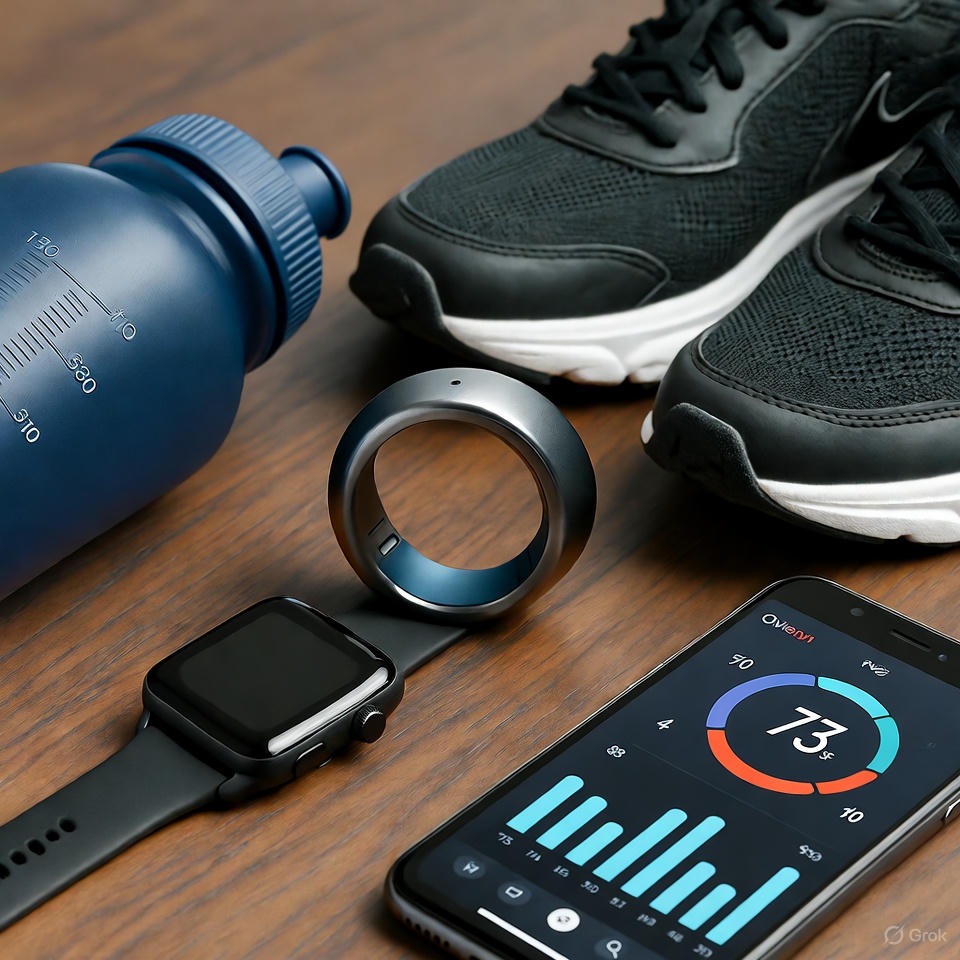
To fully appreciate the smart ring's unique value proposition, it's essential to place it in the broader context of the wearable technology landscape. While smartwatches and fitness bands have dominated the market for years, the smart ring isn't merely a smaller alternative; it's a fundamentally different tool designed for a different purpose. This comparison highlights the ring's strategic advantages and clarifies its ideal use case.
Philosophical Divide: Engagement vs. Ambience. The core difference is philosophical. Smartwatches are engagement devices. They are designed to capture your attention with notifications, apps, and screens, turning your wrist into a second smartphone. Smart rings are ambient devices. They are designed to recede into the background, collecting data without demanding your focus. The ring’s goal is to inform your life, not interrupt it. This makes it superior for the primary task of continuous, uninterrupted biometric monitoring.
Sensor Performance and Data Fidelity. For key health metrics, the finger often provides a superior signal to the wrist.
Battery Life: The Weekly Rhythm vs. The Daily Chore. This is a practical game-changer. A typical smartwatch lasts 1-2 days, demanding a daily charging ritual that often leads to data gaps (e.g., charging it overnight, thus missing sleep data). A smart ring lasts 5-7 days on a single charge. This weekly rhythm means you can charge it during a single shower or a sedentary work session, ensuring a near-perfect, continuous data record. You never have to choose between charging your device and tracking your health.
Comfort and 24/7 Wearability. The ring’s form factor is its ultimate ergonomic advantage. It’s lightweight, doesn’t interfere with clothing or typing, and is socially acceptable in every context, from the boardroom to the beach. There’s no screen to bump, no band to adjust. For sleep tracking, a smooth ring is objectively less intrusive than a bulky watch. This guarantees compliance—the single most important factor for generating meaningful long-term data. If you don’t wear it, it can’t help you.
The Missing Pieces: Where Watches Still Shine. It’s honest to acknowledge the smart ring’s intentional limitations. It is not a direct replacement for a smartwatch if you rely on:
Choosing Your Tool: A Matter of Primary Goal. The choice isn't about which device is "better," but which is better for your primary objective.
For many, the ideal setup is a complementary pair: a smartwatch for daily connectivity and workout tracking, and a smart ring for 24/7 health monitoring and recovery insight. The ring fills the gaps the watch leaves, particularly during sleep and stressful periods, creating a comprehensive picture of your wellbeing. To explore how a specific ring model stacks up against popular wearables, our blog offers detailed comparisons and analysis.
The conversation around wearables often centers on physical metrics, but the most profound connection they reveal is between the mind and the body. The smart ring acts as a real-time translator for this dialogue, providing concrete physiological feedback on mental and emotional states. This creates a powerful bridge for managing mental health, practicing mindfulness, and developing emotional regulation skills.
From Feeling to Data: Quantifying Anxiety and Calm. Feelings of anxiety or calm are not just "in your head"; they have distinct physiological signatures. Anxiety typically involves an elevated heart rate, suppressed HRV, and shallower breathing. A calm state shows the opposite. The smart ring makes these internal states externally visible. When you feel a wave of anxiety, you can open the app and see the objective spike in your heart rate graph. This serves two critical purposes: validation ("This is real, my body is reacting") and detachment ("This is a physiological event I can observe and manage"). It externalizes the experience, making it less overwhelming.
Biofeedback for Mindfulness and Meditation. This is where the ring transforms from a monitor into an active training tool. You can use it for biofeedback sessions. Sit for a 10-minute meditation with the app open to your real-time heart rate or HRV. Watch what happens as you focus on your breath. You will likely see your heart rate gently decline and your HRV increase—a direct, visual reward for your practice. This reinforces the habit powerfully. Conversely, if your mind is racing, you’ll see the data remain agitated, providing instant feedback to gently guide your focus back. Over time, this trains you to associate certain mental practices with specific, desirable physiological states.
Identifying Triggers and Stressors. By reviewing your daily stress metric graphs, you can start to identify patterns and invisible triggers. You might notice your stress levels consistently spike an hour after a particular meeting, during your commute, or after consuming certain foods or caffeine. This objective data helps you move from a vague sense of being "stressed" to pinpointing specific, modifiable triggers in your environment or schedule. You can then experiment with interventions—perhaps taking a walk before that meeting, listening to an audiobook during your commute, or adjusting your diet—and measure the impact on your biometrics.
Building Emotional Resilience Through Physiological Awareness. The long-term benefit is the development of interoceptive awareness—the ability to perceive the internal sensations of your body. The ring acts as a teacher, helping you connect subtle bodily sensations (a slight tension, a quickened pulse) with the emotional or cognitive states they precede. With practice, you begin to recognize the early physiological signs of stress or anxiety before they escalate into full-blown emotional reactions. This creates a critical window of opportunity to employ a calming technique, effectively allowing you to "hack" your nervous system's response loop.
Supporting Therapeutic Journeys. For individuals working with therapists on conditions like anxiety, PTSD, or panic disorders, the data from a smart ring can be invaluable. It provides an objective record of physiological arousal patterns that can inform therapeutic approaches like Cognitive Behavioral Therapy (CBT) or Exposure Therapy. Sharing this data (with consent) can help a therapist understand the somatic component of a client's experience more fully.
By illuminating the mind-body connection, the smart ring demystifies mental health. It turns introspection into observation and self-care into a data-informed practice. It empowers you to not just feel better, but to know how to get there, using your own body's signals as the guide. Understanding this holistic approach to wellness is central to our vision and company mission.
For the committed athlete—from the weekend warrior to the professional—the difference between good and great, and between progress and injury, often lies in the nuances of recovery. The smart ring is emerging as an essential piece of sports technology because it shifts the training paradigm from one based solely on external load (miles run, weight lifted) to one meticulously guided by internal readiness.
The Supercompensation Cycle, Quantified. Athletic improvement follows the principle of supercompensation: apply stress (training), then allow for recovery and adaptation, resulting in a higher performance baseline. The smart ring provides the missing data to optimize this cycle. After a hard training session, you can monitor your HRV and resting heart rate. A successful training stimulus will cause a temporary dip in HRV. The subsequent rebound—ideally to a level at or above your baseline within 24-48 hours—signals positive adaptation. If the rebound is slow or incomplete, it indicates the load was too high or recovery is insufficient, signaling a need for easier subsequent sessions.
The Objective "Rest Day" Advocate. One of the hardest things for passionate athletes is taking a rest day when they "feel fine." The ring provides an objective, physiological reason to rest. A low Readiness Score, driven by poor sleep and suppressed recovery metrics, is a clear indicator that your body is not prepared for another high-stress workout. Training hard on a low-readiness day is inefficient at best (you won’t hit your targets) and harmful at worst (increasing injury and illness risk). The ring gives you permission to rest intelligently, turning a rest day from a guilty omission into a strategic part of your training plan.
Detecting Overtraining Syndrome (OTS) in Its Infancy. Overtraining is a state of prolonged fatigue and performance decline caused by an imbalance between training and recovery. Before it becomes full-blown OTS, there is a state of "non-functional overreaching." The ring’s longitudinal tracking is perfect for catching this early. Warning signs include:
Seeing these trends form in your data allows you to intervene immediately with a planned deload week, extra sleep, and nutritional focus, potentially averting weeks or months of lost progress.
Precision Tapering and Peaking. For athletes preparing for a key event, the taper period is critical. The goal is to reduce training load to arrive at the start line fully recovered and super-compensated. The ring takes the guesswork out of tapering. Instead of following a generic 7-day or 14-day plan, you can taper until your biomarkers—HRV, resting heart rate, sleep quality—show you are in an optimal, recovered, and "spring-loaded" state. This ensures you don't taper too little (arriving tired) or too much (losing fitness).
Personalized Fueling and Hydration Insights. While not direct sensors for nutrition, physiological data provides clues. An unusually high resting heart rate overnight can sometimes indicate dehydration or inadequate fueling for the day's activities. A failure to recover after workouts despite good sleep might point to nutritional recovery gaps. The ring helps you ask the right questions and experiment with solutions, making your nutrition strategy more responsive to your body's actual needs.
In the quest for athletic improvement, the smart ring acts as a personal sports scientist. It ensures that every ounce of effort you put into training is met with an appropriate ounce of recovery, maximizing return on investment and fostering a sustainable, lifelong athletic journey. For athlete-specific case studies and training protocols, our blog is a growing resource.
Travel disrupts our most fundamental health anchors: circadian rhythm, routine, and environment. Whether for business or pleasure, travel can leave us feeling drained. The smart ring becomes an indispensable travel companion, using its biometric intelligence to help you adapt faster, sleep better in unfamiliar places, and maintain your wellbeing on the road.
Jet Lag, Decoded and Managed. Jet lag is fundamentally a misalignment between your internal circadian clock and the external light-dark cycle of your new time zone. The smart ring’s continuous body temperature tracking is a direct readout of your internal clock. As you travel, you can watch your temperature rhythm slowly shift to align with the new zone. This data allows you to strategically use light exposure—the most powerful circadian reset tool. The app can advise you: if your temperature minimum (your biological night) is still occurring at noon local time, you should seek bright light in the local afternoon/evening to help push your rhythm later. This science-based approach is far more effective than generic advice.
The "Travel Readiness" Score. Beyond time zones, travel is stressful: disrupted sleep, unfamiliar food, dehydration, and long periods of sitting. The ring’s Readiness Score becomes your daily travel health indicator. A low score upon arrival in a new city is a signal to take it easy—opt for a gentle walk instead of a marathon museum day, prioritize an early night, and focus on hydration. Using the score to guide your activity pacing can prevent the crash that often hits on day two or three of a trip.
Sleep Optimization in Hotel Rooms. Sleeping in a strange bed, with different sounds, temperatures, and pillows, is challenging. The ring provides objective feedback on how well you’re actually sleeping in these conditions. You can use it to test travel sleep strategies. Does using a white noise app on your phone improve your deep sleep? Does keeping the hotel room a degree colder help? Does an eye mask make a measurable difference? The data helps you build a personalized travel sleep toolkit that works.
Monitoring Hydration and Acclimatization. Travel often leads to dehydration (airplane cabins, increased walking, forgotten water intake). Subtle increases in resting heart rate and decreases in HRV can be early indicators. The ring can serve as a nudge to drink more water. Furthermore, when traveling to high altitudes or extreme climates, monitoring your heart rate and SpO₂ (blood oxygen) trends can provide valuable feedback on how well you’re acclimatizing, alerting you to slow down if your body is struggling.
Maintaining Routine Amidst Chaos. For the wellness-oriented traveler, the ring helps maintain anchor points. It can remind you to move after a long flight, prompt a breathing exercise when travel stress spikes, or signal your ideal bedtime based on your shifting rhythm, even when your schedule is in flux. It’s a piece of your home routine that travels with you, providing continuity and guidance.
By acting as a portable biometric anchor, the smart ring helps you explore the world without sacrificing your health. It turns the disruptive experience of travel into a data-informed adventure, allowing you to arrive at your destination—and return home—feeling more resilient and less depleted. For tips on optimizing your ring for travel, check out the practical guides in our FAQ and support section.
Aging is not merely the passage of time; it is the accumulation of cellular and systemic changes. While we cannot stop time, a growing body of science suggests we can influence the rate of healthy aging. The smart ring, with its ability to track key biomarkers longitudinally, becomes a powerful tool for proactive aging—providing insights to help you preserve vitality, cognitive function, and independence.
Tracking the Biomarkers of Aging. Several metrics monitored by a smart ring are strong proxies for biological age and systemic health:
The Cognitive Health Connection. The link between sleep, cardiovascular health, and cognitive decline is well-established. The ring provides a daily window into two critical pillars of brain health:
Monitoring these can motivate the very behaviors—quality sleep, regular exercise, stress management—that are most protective against cognitive decline.
Early Detection of Atypical Changes. As established in earlier sections, the ring excels at detecting deviations from your personal norm. For an older adult, this is especially valuable. A sustained, unexplained change in nighttime breathing patterns could warrant a sleep apnea screening. A gradual increase in resting heart rate or decrease in activity levels might prompt a conversation with a doctor. This proactive, data-informed approach facilitates early intervention, which is almost always more effective.
Promoting Functional Independence. The activity tracking and readiness features encourage maintenance of strength and mobility. The ring can motivate daily movement, remind you to recover adequately after exertion to prevent injury, and help you balance activity with rest. Staying strong, mobile, and well-recovered is the foundation of functional independence later in life.
A Legacy of Healthspan Data. For the aging population, the multi-year dataset is a clinical treasure. It provides a detailed functional history that can give healthcare providers incredible context, moving discussions from "How do you feel?" to "Here is how my sleep, recovery, and activity have trended over the past five years, and here’s a recent change."
The smart ring, therefore, reframes aging from a passive process to an active practice of stewardship. It provides the feedback necessary to invest in the health behaviors that compress morbidity and extend healthspan—the number of years we live in good health. It’s a tool not for immortality, but for living every year to its fullest potential. This commitment to lifelong wellness is woven into our brand's story and vision.
Your Trusted Sleep Advocate: Sleep Foundation — https://www.sleepfoundation.org
Discover a digital archive of scholarly articles: NIH — https://www.ncbi.nlm.nih.gov/
39 million citations for biomedical literature :PubMed — https://pubmed.ncbi.nlm.nih.gov/
Experts at Harvard Health Publishing covering a variety of health topics — https://www.health.harvard.edu/blog/
Every life deserves world class care :Cleveland Clinic - https://my.clevelandclinic.org/health
Wearable technology and the future of predictive health monitoring :MIT Technology Review — https://www.technologyreview.com/
Dedicated to the well-being of all people and guided by science :World Health Organization — https://www.who.int/news-room/
Psychological science and knowledge to benefit society and improve lives. :APA — https://www.apa.org/monitor/
Cutting-edge insights on human longevity and peak performance:
Lifespan Research — https://www.lifespan.io/
Global authority on exercise physiology, sports performance, and human recovery:
American College of Sports Medicine — https://www.acsm.org/
Neuroscience-driven guidance for better focus, sleep, and mental clarity:
Stanford Human Performance Lab — https://humanperformance.stanford.edu/
Evidence-based psychology and mind–body wellness resources:
Mayo Clinic — https://www.mayoclinic.org/healthy-lifestyle/
Data-backed research on emotional wellbeing, stress biology, and resilience:
American Institute of Stress — https://www.stress.org/


