


Smart Ring vs Smartwatch: The Distraction Factor Analysis
Analyzing which device is less distracting in daily life.
Analyzing which device is less distracting in daily life.
%402x.svg)
In an age where our attention is the most valuable—and most besieged—commodity, the technology we wear is no longer just about function. It's about focus. We strap screens to our wrists, welcoming a torrent of notifications, stats, and digital nudges, all in the name of staying connected and healthy. But at what cost to our presence, our peace, and our ability to engage in deep, uninterrupted work and life? The very devices meant to optimize us are often the same ones that fragment our concentration.
This article delves into a critical, yet often overlooked, dimension of wearable technology: the distraction factor. We will conduct a comprehensive analysis of the two dominant form factors—the smartwatch and the emerging smart ring—through the lens of cognitive load, attention economy, and mindful technology use. This is not just a comparison of features, but an exploration of philosophy. Does the device on your wrist serve you, or does it secretly master you? Could a simpler, more subtle form factor like a smart ring, such as those pioneered by companies focused on intentional design like Oxyzen, represent a path to more harmonious, less intrusive personal tech?
We will dissect everything from notification dynamics and screen addiction to social etiquette and the neuroscience of haptic alerts. By the end, you’ll have a framework for choosing a wearable that enhances your well-being without undermining your focus. The goal is not to vilify one category but to empower you with the knowledge to make a conscious choice that aligns with your personal productivity and mental clarity goals. Welcome to a deeper conversation about what we wear and why it matters.

We live in an era of unprecedented connectivity, yet a pervasive sense of distraction. The term "attention economy" aptly describes a digital landscape where platforms and devices compete fiercely for our limited cognitive resources. Every ping, buzz, and flash is a bid for a slice of our conscious mind. Into this fray entered the smartwatch, transforming our wrists into a primary battleground for this attention.
Initially hailed as a pinnacle of convenience, the smartwatch brought our smartphone's notification stream closer than ever—literally to the flick of a wrist. What was once a deliberate action of pulling a phone from a pocket became an involuntary glance at a screen strapped to your body. Studies in interruptive technology show that even the anticipation of a notification can degrade cognitive performance. The smartwatch, by design, maximizes this anticipation. It turns every email preview, social media like, and news alert into a micro-interruption, fracturing our focus throughout the day.
This constant state of low-grade alertness has tangible effects. It inhibits deep work—the state of flow necessary for complex problem-solving and creativity. It increases cognitive load, leaving us mentally fatigued. Furthermore, it can erode the quality of our real-world interactions. That subtle glance at a wrist during a conversation sends a clear, if unintended, message: "This might be more important than you."
The promise of wellness tracking within this environment becomes paradoxical. A device that reminds you to stand up and breathe for one minute, while simultaneously pulling you out of focus with a dozen other alerts, is offering a fragmented solution. It's treating symptoms (sedentary behavior, stress) while potentially exacerbating the cause (digital distraction and cognitive overload).
This crisis sets the stage for a reevaluation. As consumers become more aware of digital wellness and "tech-life balance," the question arises: Can a wearable provide the valuable health and connectivity data we desire, while minimizing its role as a vector for distraction? The answer may lie not in adding more features or bigger screens to our wrists, but in reimagining the form and function of wearable tech entirely. This is where the philosophy behind minimalist devices, explored in resources like the Oxyzen blog, begins to resonate with a growing audience seeking a less intrusive path.
When we speak of the "distraction factor" in wearables, it's crucial to move beyond the simplistic metric of notification volume. Distraction is a multidimensional psychological experience influenced by the device's form, interaction model, and even its social presence. To analyze it effectively, we must break it down into its core components.
1. The Interruption Trigger: This is the initial alert—a vibration, sound, or screen illumination. Its salience (how noticeable it is) and the user's context determine its disruptive power. A loud buzz during a meeting is highly salient and disruptive; a gentle, light-up tap during a solo work session may be less so.
2. The Cognitive Capture: This is the mental shift the trigger forces. Your brain must disengage from its current task, process the alert's meaning, and decide on a response. Research shows this "task-switching" cost is high, even if you don't fully engage with the notification. It takes an average of over 23 minutes to fully return to the original task after an interruption.
3. The Interaction Demand: This is where form factor reigns supreme. A smartwatch with a rich, colorful screen demands visual and often tactile interaction. You must raise your wrist, likely tap or scroll, and engage with a mini-interface. This is a high-demand interaction. A smart ring, in contrast, typically has no screen. Its interaction might be a specific vibration pattern you feel, or a single tap to acknowledge. This is a low-demand interaction.
4. The Social and Environmental Intrusion: Distraction isn't solely personal. A device that lights up or makes sound in a dark theater, during an intimate dinner, or in a quiet library creates external distraction. The act of frequently looking at your wrist can also be perceived as rude or impatient in social settings, creating interpersonal friction.
5. The Passive Anxiety & "Phantom Vibration" Syndrome: This is the subtlest yet most insidious layer. When a device is habitually distracting, it can create a background state of anxiety—the feeling that you might be missing something. This leads to compulsive checking, even in the absence of alerts. Many smartwatch users report experiencing "phantom vibrations," a somatic illusion where they feel a buzz that never occurred. This is a clear sign of ingrained, anticipatory distraction.
By understanding distraction through these lenses, we can better evaluate our devices. A smartwatch, with its high-interaction screen and constant visual presence, scores highly across all five dimensions. It is engineered for capture and engagement. A smart ring, designed for passive data collection and minimal active notification, aims to minimize scores in Interaction Demand and Social Intrusion, while potentially retraining the brain away from Passive Anxiety. The fundamental question becomes: Do you want a device that asks for your attention or one that quietly supports your awareness? Exploring the different approaches to this question, such as the mindful design principles discussed in our story, can illuminate a different path for wearable technology.
The fundamental divergence between smartwatches and smart rings isn't merely one of placement—it's a clash of underlying design philosophies that shape every aspect of the user experience, especially regarding distraction.
The Smartwatch: The Philosophy of the "Wrist-Smartphone"
The dominant smartwatch paradigm is one of extension and replication. Its philosophy is rooted in bringing a condensed, always-accessible version of your smartphone's functionality to your body. The screen is not an accident; it is the central tenet. This philosophy prioritizes:
This "wrist-smartphone" philosophy is inherently attention-centric. It succeeds by being usefully distracting. Every feature is designed to pull your eyes and mind to your wrist, creating a compelling, interactive experience. The downside is that it embeds a source of continuous partial attention into your physiology. You become conditioned to engage with it, making distraction a default state.
The Smart Ring: The Philosophy of "Ambient Awareness"
In contrast, the smart ring philosophy is one of subtraction and subtlety. It asks: "What is the absolute essential data needed for health and wellness, and what is the least intrusive way to collect and communicate it?" This philosophy, embraced by pioneers in the space, prioritizes:
This "ambient awareness" philosophy is inherently focus-centric. It succeeds by being ignorable until the moment it needs to be noticed for something truly important. It shifts the paradigm from "What's happening on my wrist?" to "What is my body telling me?" The goal is to enhance bodily awareness, not digital awareness.
This philosophical rift is critical. Choosing between a smartwatch and a smart ring is not just choosing a device; it's choosing a daily relationship with technology. It's deciding whether you want a commander on your wrist that directs your attention, or a silent advisor on your finger that informs your awareness. For those curious about a device built on this latter philosophy, learning more about how Oxyzen works provides a concrete example of ambient awareness in action.

The smartwatch notification system is a masterpiece of convenience engineered at the expense of sustained attention. To understand its power, we must dissect its mechanisms, which go far beyond merely mirroring your phone.
The Frictionless Glance: The primary allure—and danger—of the smartwatch is the elimination of physical friction. Pulling a phone from your pocket or bag is a deliberate act with multiple steps. Raising your wrist is a near-instantaneous, subconscious reflex. This reduced friction dramatically increases the frequency of checks. A notification doesn't just inform; it invites immediate, effortless consumption.
The Preview Trap: Smartwatches don't just tell you that you have a notification; they show you the content. You see the sender's name, the first few lines of the email, the text message in full, the score of the game. This preview is designed to satisfy curiosity, but it often has the opposite effect. It provides just enough information to trigger cognitive capture without providing resolution. Your brain is now partially engaged with the email's subject, even as you try to focus on your work. This state of "cognitive residue" is a significant productivity killer.
The Micro-Decision Fatigue: Every notification alert presents a micro-decision: Ignore, act now, or save for later? While seemingly trivial, these decisions accumulate throughout the day, depleting the same mental resources needed for important tasks. A smartwatch can easily deliver dozens, if not hundreds, of these micro-decisions daily, contributing to decision fatigue and leaving you mentally exhausted by afternoon.
The Gamification of Interruption: Many smartwatch platforms gamify engagement. Closing your "activity rings," maintaining "notification streaks" from certain apps, or earning badges for usage create a feedback loop that encourages frequent interaction. The device trains you to seek validation from it, making the interruption pattern feel rewarding rather than disruptive.
Contextual Blindness: Most smartwatch notification systems are still poor at true contextual awareness. While "Do Not Disturb" and "Focus Modes" exist, they often require manual activation. The device rarely knows if you are in the middle of a deep conversation, crafting a complex sentence, or simply enjoying a moment of quiet thought. It delivers the buzz with the same urgency whether you're in a brainstorming session or waiting for the bus.
The result is a vortex. The ease of the glance, the tease of the preview, the drip-feed of micro-decisions, and the gamified rewards create a powerful behavior loop. Your focus becomes the casualty. You may start the day intending to work deeply, but the wrist-bound portal to the digital world repeatedly pulls you into shallow, reactive mode. Breaking this cycle often requires drastic settings adjustments, turning off most notifications, which then begs the question: what core value is the device providing if you must silence its primary function to preserve your sanity?
If the smartwatch operates on a broadcast model—pushing information onto your visual field—the smart ring employs a whisper model. Its entire alert philosophy is built on the principles of necessity, subtlety, and somatic (bodily) intelligence. This represents a fundamental rethinking of how a wearable should communicate.
Haptic Language Over Visual Noise: Without a screen, the smart ring's primary channel for real-time communication is haptic feedback—specific vibration patterns. This isn't just a generic buzz. Advanced rings use distinct patterns to convey different types of alerts: two long pulses for an important phone call from a designated contact, a short burst for a completed activity goal, a gentle, rhythmic pattern for a breathing reminder. This creates a "language of touch" that you can learn to interpret subconsciously, without ever breaking visual focus. It provides information through a different, less cognitively demanding sensory pathway.
The Priority Filter Paradigm: Because the interaction model is so limited (you can't easily act on a notification from the ring itself), it forces a critical design choice: what is important enough to justify a physical tap on your body? This inherently encourages stringent filtering. Most smart rings are configured to only relay the most critical notifications—like phone calls from family or urgent messages—while silencing the endless stream of social and app updates. This transforms the device from a general notification hub into a dedicated priority channel.
Proactive Nudges, Not Reactive Alerts: A significant portion of a smart ring's "alerts" are not about the external digital world, but about your internal physical state. These are proactive wellness nudges:
The "Review Later" Model: The ring completely decouples data collection from data consumption. It continuously gathers biometrics (sleep, activity, readiness, stress) without asking for your attention. The insights are then packaged and presented later, when you choose to open the companion app on your phone. This creates a intentional, bounded session for reviewing your health analytics, rather than allowing them to be a source of constant, real-time performance anxiety ("Why aren't my activity rings closed yet?").
Social and Professional Stealth: In meetings, dinners, or cinemas, a vibrating ring is virtually undetectable to others. There is no glowing screen to draw your own eyes or the disapproving glances of those around you. It allows you to remain connected to critical alerts while being fully present socially—a key advantage often highlighted in customer testimonials from professionals and parents alike.
This approach cultivates a different kind of awareness: somatic and introspective. The smart ring acts less like a telegraph machine delivering urgent messages and more like a skilled translator, quietly interpreting your body's signals and only speaking up to offer a crucial, health-focused suggestion or to deliver a truly urgent call from the outside world. It’s a shift from managing interruptions to cultivating mindful awareness.
The screen is the smartwatch's crowning glory and its greatest cognitive liability. It transforms the wrist from a passive location for a device into an always-available, always-potent visual portal. This creates a specific type of mental burden known as cognitive load, which directly fuels distraction.
The "Glanceable" Myth and Attentional Capture: Smartwatches are marketed on the "glanceability" of information—the idea that you can get what you need in a second. However, neuroscience tells us that the human visual system is powerfully drawn to change and light. An always-on or lift-to-activate screen doesn't just present information; it captures the attentional spotlight. Even if you glance for just a second, that spotlight has been forcibly redirected from your environment or task to the micro-screen. This capture-and-release process, repeated endlessly, is mentally draining.
The Dashboard Anxiety Effect: Many smartwatch faces are customizable dashboards, showing live metrics: heart rate, steps, calories, next appointment, weather, stock tickers. This creates a phenomenon akin to a car driver constantly monitoring every dial instead of the road. You become a manager of your own real-time biometric and digital data stream. This can generate low-grade performance anxiety—"My heart rate is high, am I stressed?" "I'm only at 4,000 steps by 3 PM." The screen becomes a source of self-surveillance rather than serene self-awareness.
The Illusion of Productivity: The ability to perform quick actions—like dismissing an email, sending a preset text, or checking off a to-do item—creates a rewarding sense of micro-productivity. However, this often comes at the expense of macro-productivity. The five seconds spent dismissing an email on your watch might cost you 25 minutes of regained deep focus on your actual work. The device trades meaningful progress for the dopamine hit of clearing a trivial, digital task.
Sleep and the Blazing Wrist: The negative impact extends into the night. While most users charge their smartwatches overnight, those who use them for sleep tracking wear a screen—often capable of bright notifications—strapped to their body in bed. An errant notification can cause a sleep-disrupting glare in a dark room. Even the act of checking the time during a nighttime wake-up involves exposing your eyes to stimulating blue light, which can further disrupt sleep architecture, counteracting the very health tracking the device is meant to provide.
The Alternative: Screenless Integration: The smart ring eliminates this entire category of cognitive load. There is no visual interface to glance at, no dashboard to manage, no blue light emitted. It collects data in the background, free from the need to present it in real-time. The user engages with the data intentionally on a larger screen (phone/computer) at a chosen time. This separation of data collection from data consumption is a deliberate design choice to reduce the "always-on" anxiety and attentional capture inherent to a wrist-borne screen. For those who find the constant visual stimuli of a smartwatch overwhelming, exploring the FAQs about screen-free devices can clarify how this alternative model functions in practice.
The physical design of a wearable dictates not only how it feels on your body, but also how it integrates—or intrudes—into your social and professional life. The distraction factor isn't purely internal; it has an external dimension rooted in perception, etiquette, and social signaling.
The Smartwatch: A Statement of Availability
A smartwatch is, by nature, a conspicuous object. It is large, sits on top of the wrist, and its screen is a clear visual focal point. This design sends unconscious social signals:
This visibility creates external social pressure that fuels internal distraction. You may feel compelled to check a buzzing watch in a meeting simply because others saw it light up, creating an expectation of a response. The device itself becomes a source of social friction, pulling your attention toward managing impressions.
The Smart Ring: Jewelry with a Purpose
A smart ring leverages an ancient, socially integrated form factor: the ring. Its design philosophy is inherently discreet:
This discretion directly reduces social distraction. There is no glowing screen to draw your or others' eyes, no social expectation to respond to a visible alert. It grants you the freedom to be offline in the eyes of the world while still being connected to critical, filtered alerts. It respects the social context, which in turn allows you to relax into it more fully.
The Etiquette of Interaction: The act of interacting with the device is also starkly different. Raising your wrist and poking at a screen is a clear, engaged action. Touching or glancing at a ring is a far more subtle, personal gesture, often mistaken for a simple fidget. This makes the smart ring a more polite companion in shared human spaces.
In essence, the smartwatch design can make you a more visible node in the network, for better or worse. The smart ring design allows you to be a more grounded participant in the physical room. For a company that has built its mission around this principle of subtle, human-centric technology, the story behind Oxyzen reflects a deep consideration of how design impacts both the wearer and their environment.
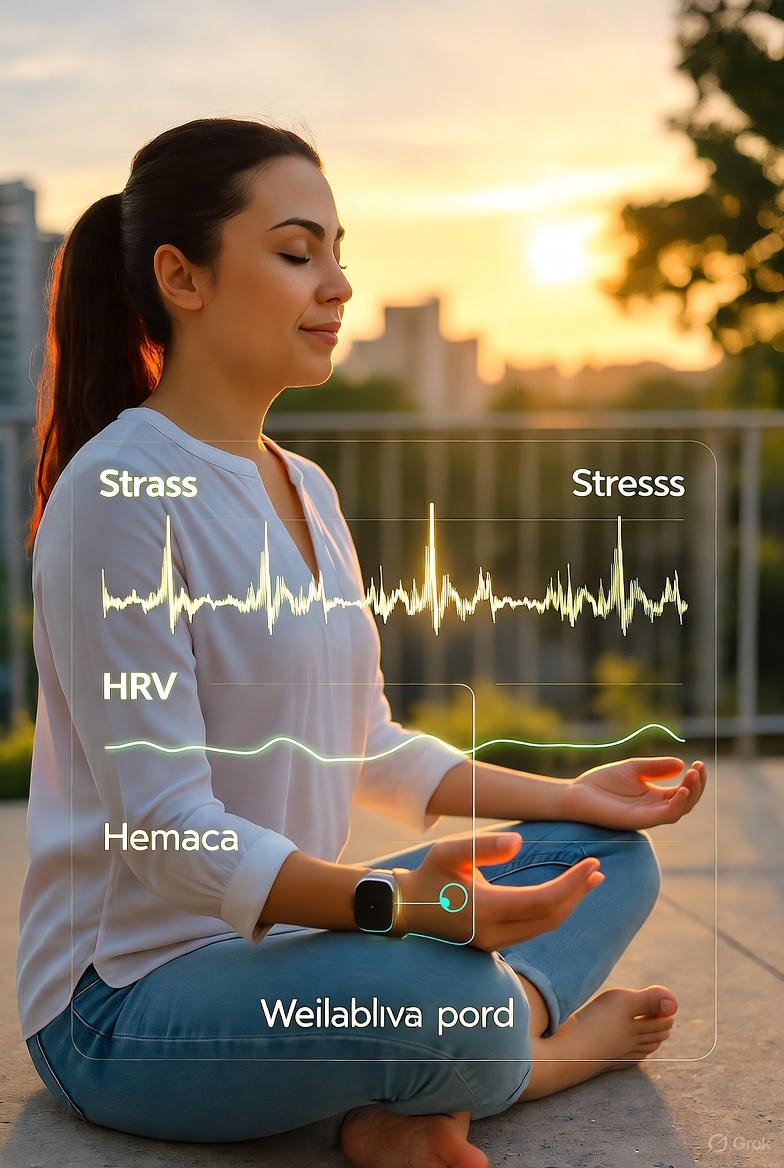
Wearables promise empowerment through data—the quantified self. However, the constant stream of biometrics can have a dark side: it can transform self-awareness into self-surveillance, and curiosity into anxiety. How this data is presented and consumed is pivotal, and the two form factors approach this challenge in fundamentally different ways.
The Smartwatch: The Real-Time Performance Monitor
On the smartwatch, health data is often presented as live metrics and daily goals. This creates a dynamic where you are constantly "on the clock":
The smartwatch's screen encourages this real-time, often obsessive, relationship with data. It puts the metrics front and center, making them a part of your conscious reality throughout the day.
The Smart Ring: The Reflective Health Journal
The smart ring model typically advocates for a reflective, rather than real-time, relationship with data. By removing the screen, it creates a necessary buffer between data collection and data review:
This reflective model treats biometric data like a journal you review each morning—a source of learning and planning, not a live feed to be monitored. It helps build a healthier, more intuitive relationship with your body by providing clues about what it needs, not scores on how it's performing. For users seeking to understand their data without daily pressure, additional resources on our blog often explore how to interpret these trends for meaningful lifestyle changes.
Sleep is the ultimate state of cognitive disconnection and physical restoration. It is also the environment where a wearable's potential for intrusion is at its highest. How a device behaves during sleep is a critical test of its commitment to holistic wellness over constant engagement.
The Smartwatch: A Compromised Bedfellow
Wearing a smartwatch to bed presents inherent conflicts:
While smartwatches provide detailed sleep stage data, the very act of wearing a multi-purpose, notification-heavy computer on your wrist to obtain it seems philosophically at odds with the goal of deep, uninterrupted rest.
The Smart Ring: Designed for Unconscious Sensing
The smart ring is arguably the form factor best suited for sleep tracking, both technically and philosophically:
The ring’s design respects the sanctity of sleep. It is a passive observer in the dark, gathering insights without any capability to disrupt the very process it's measuring. It aligns with the principle that the tool for measuring recovery should not itself be an obstacle to recovery. This holistic approach to wellness, where device design serves the biological need, is central to the mission of companies dedicated to this space, as you can learn more about on our about page.
Battery life is often discussed as a technical specification, but it is, in fact, a profound design feature that shapes user behavior, device dependency, and ultimately, the distraction cycle. The charging ritual of a wearable subtly teaches you how to relate to it.
The Smartwatch: The Daily Tether
Most full-featured smartwatches require charging every 24 to 48 hours. This daily or near-daily requirement has significant behavioral implications:
The short battery life of a smartwatch keeps it top-of-mind, not just as a tool, but as a responsibility. It is another digital pet that needs daily care.
The Smart Ring: The Episodic Companion
Smart rings, with their simpler, screenless technology, routinely achieve 3 to 7 days of battery life on a single charge. This extended lifespan fosters a different behavioral dynamic:
Long battery life is more than a convenience; it's a declaration of independence. It says the device is built to serve you continuously without becoming a clingy dependency. It minimizes the friction and mental overhead of ownership, allowing the technology to support your life instead of inserting its own needs into it. For potential users wondering about the practicalities of this model, the FAQ section often addresses common questions about battery life and charging routines.
The analysis so far reveals a clear tension: the wearable tech market has been driven by a "more is more" philosophy—more features, more apps, more notifications, more screen real estate. Yet, a growing segment of consumers is feeling the cognitive and emotional toll of this approach. This sets the stage for the future, where the "distraction factor" will move from a peripheral concern to a central design criterion. The trajectory points toward a more mindful, human-centric era of wearable technology.
The Convergence of Discreet Biometrics: We will see a proliferation of form factors that prioritize invisible sensing. The smart ring is just the beginning. Future wearables may integrate into other everyday objects—earbuds with advanced health sensors, clothing with woven biometric threads, or even subdermal implants for medical-grade continuous monitoring. The goal will be to decouple comprehensive health insight from obtrusive, attention-demanding devices.
Contextual Intelligence as Standard: The next generation of wearables, both watches and rings, will move beyond simple "Do Not Disturb" modes. They will employ sophisticated contextual awareness using a combination of biometrics, location, calendar data, and even ambient sound analysis. Your device will know if you are in a deep sleep phase, mid-conversation, or a focused work session, and will intelligently gate or modify alerts accordingly. It will learn what is truly urgent for you in this moment.
The Rise of "Digital Wellbeing" as a Core OS Feature: Platform owners (Apple, Google, Samsung) are already investing heavily in digital wellbeing features. This will deepen. We will see operating systems designed not to maximize engagement time, but to optimize for user focus and mental health. Wearables will become partners in enforcing these boundaries, perhaps by locking down notifications after a certain hour or rewarding you for uninterrupted focus time.
Hybrid Models and Specialization: The market may segment further. We might see the rise of "digital tool watches" for specific professional or athletic contexts, and "wellness companions" (like advanced rings) for general health and focus. Some users may even opt to wear both—a ring for continuous health and priority alerts, and a watch they wear only during workouts or work hours for its interactive features, consciously separating the functions.
The Central Question of Agency: Ultimately, the future belongs to wearables that give agency back to the user. The most successful devices will be those that empower individuals with profound self-knowledge without making them slaves to a notification stream or a gamified points system. They will provide insights that lead to action in the real world—better sleep hygiene, managed stress, improved fitness—rather than actions within the digital interface.
The conversation started by comparing a smartwatch and a smart ring is, in reality, a conversation about the kind of relationship we want with our technology. As we move forward, the most innovative companies will be those that prioritize human psychology and cognitive limits. For those interested in being part of this shift towards intentional technology, exploring the vision behind brands that start from this principle, like you can discover here, offers a glimpse into that future.
Beyond the immediate ping of a notification lies a deeper, more structural influence: our wearables are active architects of our daily habits and routines. Through the principles of behavioral psychology—primarily operant conditioning—these devices don't just respond to us; they train us. Understanding this training is key to discerning the long-term distraction and wellness impact of a smartwatch versus a smart ring.
The Smartwatch: The Variable Reward Engine
Smartwatches are masters of leveraging the "variable reward schedule," one of the most powerful drivers of habitual behavior (famously used in slot machines and social media). The mechanism is pervasive:
This conditioning creates a user who is habitually distracted, constantly seeking micro-dopamine hits from a device that has become a primary source of both information and validation. The habit formed is one of external seeking.
The Smart Ring: Cultivating Internal Awareness Habits
In stark contrast, a smart ring is designed to foster habits of internal attention. Its behavior-shaping mechanisms are subtler and more somatic:
The fundamental difference in habit formation is profound. One device trains you to look outward and react; the other trains you to check inward and respond. One builds a habit of digital dependency; the other aims to build a habit of bodily awareness. For individuals seeking to break cycles of tech-induced distraction, understanding this behavioral design is crucial. Those exploring this intentional approach often find value in the community stories and experiences shared by others on a similar journey.
Fitness is a core pillar of the wearable value proposition. Both smartwatches and smart rings track steps, heart rate, and exercise. However, their methodologies and the psychological frameworks they impose can lead to vastly different relationships with physical activity—one potentially empowering, the other potentially burdensome.
The Smartwatch: The Drill Sergeant on Your Wrist
The smartwatch fitness experience is immersive, directive, and highly metric-driven:
This model excels at providing extrinsic motivation and granular data for athletes fine-tuning performance. For the general wellness seeker, however, it risks replacing intrinsic joy with extrinsic pressure, potentially fostering an obsessive or anxious relationship with movement.
The Smart Ring: The Supportive, In-the-Background Coach
The smart ring’s approach to fitness is holistic, recovery-aware, and less intrusive:
The ring’s philosophy is that fitness is a component of overall wellness, not a separate game to be won. It aims to integrate movement seamlessly into your life and guide you toward a balanced, injury-free practice. It’s a coach that whispers advice based on your body’s readiness, not a drill sergeant barking commands from your wrist. For a deeper dive into how this balanced approach to activity tracking works, our blog offers detailed insights into interpreting strain and recovery data.
In the workplace, where sustained attention and deep cognitive work are currencies of success, the choice of wearable has tangible implications for output, professionalism, and stress levels. The professional environment is the ultimate testing ground for a device's distraction factor.
The Smartwatch: The Office Interruption Amplifier
In a professional setting, the smartwatch's features can become significant liabilities:
For the knowledge worker, the smartwatch often functions as an efficiency tool that paradoxically undermines the core requirement for efficiency: focused, uninterrupted thought.
The Smart Ring: The Subtle Professional Companion
The smart ring is engineered to avoid these professional pitfalls:
In the professional sphere, the smart ring shifts from being a source of interruption to a tool for managing cognitive resources and personal well-being amidst high demands. It helps you maintain boundaries, preserve focus, and present a composed, engaged professional demeanor. Understanding how a device can be designed to support, not hinder, professional performance is part of the core mission discussed in our company's vision.
We choose what to wear not only for function but for identity. Our accessories are personal statements. The smartwatch and the smart ring communicate vastly different narratives about the wearer’s priorities, relationship with technology, and personal style.
The Smartwatch: The "Tech-First" Identity
A smartwatch is an unambiguous declaration of being technologically engaged and data-oriented.
For many, this is a positive, empowering identity. It reflects a proactive approach to health and a embrace of the digital age. However, it also inextricably links your personal style to a rapidly updating piece of consumer electronics.
The Smart Ring: The "Wellness-First" Minimalist
A smart ring projects a more subtle, intentional, and human-centric identity.
Choosing a smart ring is often a conscious step away from the performative, noisy world of constant connectivity. It’s an identity rooted in internal awareness, discretion, and a preference for substance over flash. It’s for the person who wants the insight without the spectacle. The journey to creating a device that embodies this identity is often a personal one, as you can discover in the founding story behind Oxyzen.
After this deep analysis, how do you decide? The choice between a smartwatch and a smart ring is not about which device is objectively better, but about which is subjectively right for your lifestyle, personality, and goals. Use this framework to guide your decision.
Choose a SMARTWATCH if your priorities align with:
Be warned: To mitigate its distraction potential, you must be disciplined. This means aggressively curating notifications, using Focus Modes religiously, and being willing to often ignore the very screen you paid for.
Choose a SMART RING (like Oxyzen) if your priorities align with:
The Hybrid Approach: There is a compelling case for owning both. Wear the ring 24/7 for continuous health baselines and priority-only alerts. Wear a smartwatch only during specific activities where its interactive features are beneficial: during dedicated workouts, while traveling for navigation and boarding passes, or during work hours if you are in a role that requires ultra-fast triage of communications. This approach consciously separates functions, containing the smartwatch’s distraction to defined windows.
Ultimately, the most conscious choice is an informed one. By understanding the distraction factor not as a bug, but as a core design feature, you can select the tool that will genuinely enhance your life without fragmenting your mind. For those leaning toward the focus-centric, ring-based model and have further questions, a comprehensive resource like the Oxyzen FAQ can provide clarity on specifics.
The battle between smartwatch and smart ring is far more than a spec sheet comparison. It is a referendum on how we want to live with technology in an age of overwhelming stimuli. We have journeyed through the neuroscience of interruption, the psychology of habit formation, the social dynamics of device use, and the philosophical underpinnings of two competing visions for wearable tech.
The smartwatch is a powerful, versatile, and engaging piece of technology. It is a miniature computer that brings unparalleled convenience to your wrist. Yet, that convenience comes with a heavy cognitive tax—a tax of fractured attention, compulsive checking, and the subtle anxiety of the always-on dashboard. It is a tool for those who want to be masters of the digital stream, accepting its turbulence as the price of connection.
The smart ring represents a paradigm shift. It is not a computer for your wrist, but a sensor for your life. It sacrifices interactive breadth for depth of awareness. Its goal is not to keep you engaged with a screen, but to provide you with the insights needed to be more engaged with your own body, your work, and the people around you. It is a tool for those who seek to be masters of their own focus, using data not as a distraction, but as a quiet guide toward better living.
In the end, the "distraction factor analysis" leads us to a simple, powerful question: Do you want a wearable that manages your attention, or one that helps you reclaim it?
The answer to that question will point you clearly toward the device that is right for you. As the wearable market evolves, this distinction will only grow more critical. The future belongs not to the device that can do the most things, but to the one that does the most important thing: supporting your human experience without undermining it. For those ready to explore the path of reclamation, the journey begins with a single, intentional choice.
To truly master our relationship with wearables, we must move past generic advice and examine the granular, often subconscious, triggers that initiate the distraction cascade. These are the specific design choices and interaction points that determine whether a device serves as a tool or a tyrant.
The Haptic Signature: Vibration as a Language
Not all vibrations are created equal. The quality, pattern, and intensity of a haptic alert are primary distraction triggers.
The Visual Lure: The Always-Present Temptation
The mere existence of a screen is a constant, passive distraction trigger.
The Auditory Component: The Forgotten Intruder
While many users disable sound alerts, the potential for auditory distraction remains a design factor.
The software experience—how you navigate and interact with the device—is where distraction is either systematized or deliberately designed out. The UI/UX philosophies of watches and rings could not be more divergent.
Smartwatch UI: The App-Based, Hierarchical Model
Smartwatch interfaces are scaled-down versions of smartphone OS.
This UI model is built for activity. It asks, "What do you want to do?" Every interaction is a conscious engagement with a digital toolset, pulling you out of your analog reality.
Smart Ring UX: The Passive, Data-Stream Model
A ring has no user interface on the device itself. Its entire UX is housed in the companion app, which follows a different paradigm:
This UX model is built for awareness. It asks, "How have you been?" It delivers answers when you seek them, not when the device decides to interrupt. The cognitive load shifts from daily management to periodic, intentional learning.
Wearing a technology on your body every day does more than change habits; it can subtly reshape aspects of your psychology over months and years. The long-term impact of a high-distraction versus a low-distraction wearable is a critical consideration.
Smartwatch: Risk of "Digital Limb" Syndrome
Prolonged, constant use of a smartwatch can lead to a phenomenon where the device feels like an extension of the self—a "digital limb."
Smart Ring: Fostering "Informed Intuition"
The long-term use of a focus-centric ring aims for a different outcome: enhanced self-knowledge that eventually becomes integrated intuition.
In essence, one device risks turning you into a more efficient, yet more anxious, node in the network. The other aspires to turn you into a more attuned, self-governing individual. The path you choose has implications that extend far beyond battery life or feature lists.
In an era of conscious consumption, the "footprint" of our technology matters. This includes not only the environmental cost of manufacturing and disposal but also the cognitive resource drain—the "attention footprint"—over the device's lifespan.
The Environmental Calculus
The Cognitive Footprint: The Attention Tax
This is a novel but crucial dimension. How much of your finite mental energy does the device claim over its lifetime?
When evaluating a wearable, asking about its cognitive footprint—"How much of my mind will this own?"—is as valid as asking about its battery life. A device with a lower cognitive footprint is inherently more sustainable for you.
Let’s crystallize the analysis by walking through four common daily scenarios, contrasting the experience with each device.
Scenario 1: The Morning Routine
Scenario 2: The Deep Work Session (Writing, Coding, Designing)
Scenario 3: The Important Business Dinner
Scenario 4: The Weekend Getaway
Our exploration of the distraction factor between smartwatches and smart rings reveals a fundamental choice about autonomy in the digital age. We have moved beyond comparing features to comparing philosophies of interaction, cognitive impact, and personal sovereignty.
The smartwatch is the culmination of a decades-long trend in personal computing: making technology more powerful, more personal, and more pervasive. It is a wonder of miniaturization and integration. Yet, in its quest to be indispensable, it has become a source of constant, low-grade cognitive demand. It excels at giving you more—more data, more connection, more control—but often at the expense of the one resource you cannot buy more of: your focused attention.
The smart ring represents an emerging counter-narrative. It is part of a movement towards calm technology, ambient computing, and digital minimalism. It asks not "what more can we add?" but "what can we respectfully subtract?" Its innovation lies in its restraint. By forsaking the screen and embracing the subtlety of the finger, it seeks to provide profound value not through engagement, but through informed disengagement. It aims to make you healthier not by directing your every move, but by helping you understand your own rhythms so you can direct yourself.
The Verdict on Distraction:
The Path Forward:
The future of wearables is not monolithic. We will likely see a continued speciation:
Your choice today is a vote for the kind of technological future you want to inhabit. Do you want your body to be a terminal for the network, or a temple whose subtle signals are respectfully listened to? Do you want a wearable that helps you manage the world’s demands on you, or one that helps you manage your capacity to meet them?
In a world engineered to distract, the most radical act may be to choose a tool that protects your attention. It may be to choose a device that doesn’t shout for your focus, but quietly safeguards it, allowing you to invest that precious resource not in the digital ephemeral, but in the human experience that happens between the alerts.
Your Trusted Sleep Advocate: Sleep Foundation — https://www.sleepfoundation.org
Discover a digital archive of scholarly articles: NIH — https://www.ncbi.nlm.nih.gov/
39 million citations for biomedical literature :PubMed — https://pubmed.ncbi.nlm.nih.gov/
Experts at Harvard Health Publishing covering a variety of health topics — https://www.health.harvard.edu/blog/
Every life deserves world class care :Cleveland Clinic - https://my.clevelandclinic.org/health
Wearable technology and the future of predictive health monitoring :MIT Technology Review — https://www.technologyreview.com/
Dedicated to the well-being of all people and guided by science :World Health Organization — https://www.who.int/news-room/
Psychological science and knowledge to benefit society and improve lives. :APA — https://www.apa.org/monitor/
Cutting-edge insights on human longevity and peak performance:
Lifespan Research — https://www.lifespan.io/
Global authority on exercise physiology, sports performance, and human recovery:
American College of Sports Medicine — https://www.acsm.org/
Neuroscience-driven guidance for better focus, sleep, and mental clarity:
Stanford Human Performance Lab — https://humanperformance.stanford.edu/
Evidence-based psychology and mind–body wellness resources:
Mayo Clinic — https://www.mayoclinic.org/healthy-lifestyle/
Data-backed research on emotional wellbeing, stress biology, and resilience:
American Institute of Stress — https://www.stress.org/


