


The Sound Bath Experience: Audio Pathways to Mental Calm
Sound baths use gongs, singing bowls, or chants to produce vibrations that entrain brainwaves into relaxed states.
Sound baths use gongs, singing bowls, or chants to produce vibrations that entrain brainwaves into relaxed states.
%402x.svg)
In a world that often feels like a cacophony of notifications, deadlines, and digital noise, a profound hunger for silence and stillness has emerged. Yet, true silence can be unsettling—it leaves space for the mind’s own chatter. What if the antidote to modern chaos isn’t less sound, but a different kind of sound? This is the promise of the sound bath: an immersive auditory journey where vibrations from ancient and modern instruments don’t just fill the air, but seem to wash over you, cleansing mental clutter and guiding the nervous system from a state of 'fight-or-flight' to 'rest-and-digest.'
Imagine lying comfortably, eyes closed, as a tapestry of sound is woven around you. The deep, resonant hum of a Tibetan singing bowl vibrates in your chest. The shimmering, celestial tones of a quartz crystal bowl seem to clear space in your mind. The gentle ripple of a gong’s wave doesn’t just hit your ears—you feel it in your bones. This is not a passive listening experience; it is an active somatic meditation. The sound becomes a medium, a pathway, guiding your brain into the deeply restorative theta and delta brainwave states typically associated with deep meditation and the threshold of sleep.
This exploration is more than a guide to a wellness trend. It’s a deep dive into the neuroscience of sound, the ancient wisdom of vibrational healing, and the practical integration of these principles into a modern, data-informed life. We'll unravel how specific frequencies interact with our biology, how sound baths can measurably reduce cortisol and enhance HRV (Heart Rate Variability), and how this ancient practice is finding synergy with the latest wearable technology. Because true calm isn't an abstract concept—it's a physiological state we can learn to access, cultivate, and track.
The journey toward mental calm is deeply personal, but you don't have to navigate it without a map. By understanding the power of audio pathways, we equip ourselves with a tool for resilience that is as portable as it is profound. Let's begin by listening—not just with our ears, but with our whole being.
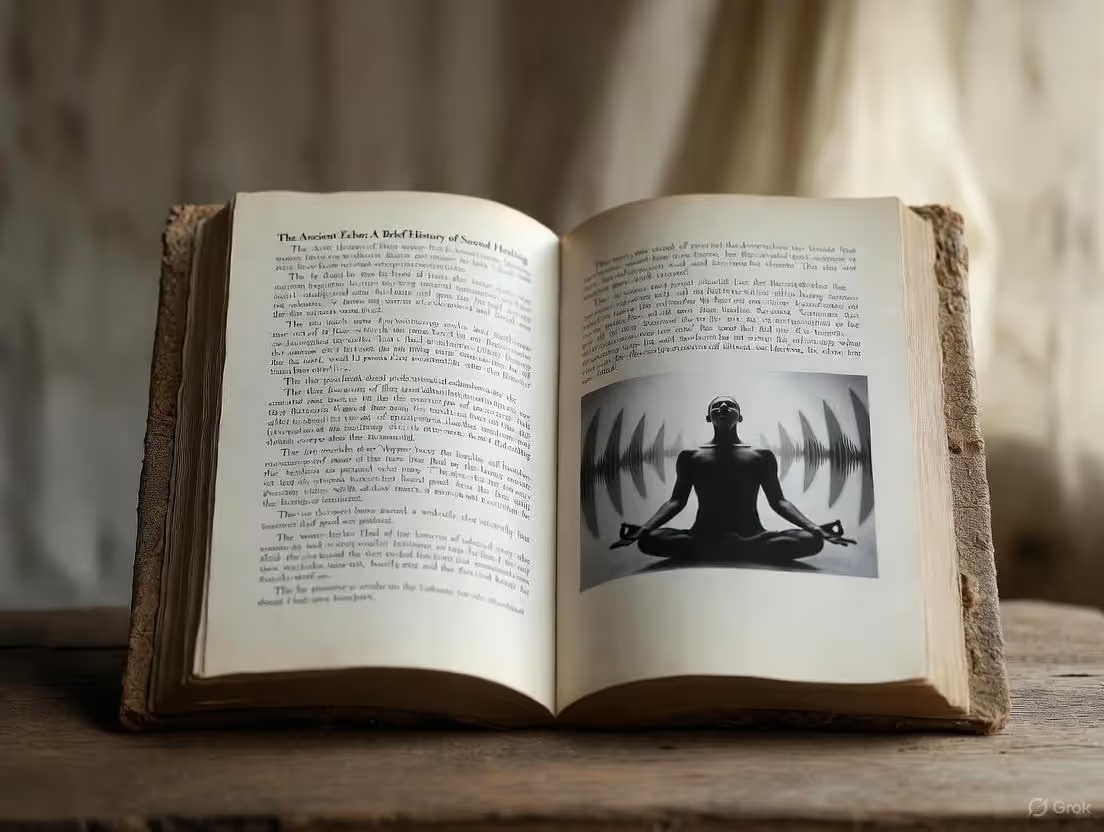
The use of sound as a healing modality is not a new-age invention; it is a primal human technology, as old as civilization itself. The concept that vibration could influence matter, spirit, and health is a thread woven through the tapestry of cultures across millennia. To understand the modern sound bath, we must first listen to its ancient echoes.
In the sacred traditions of Tibet and the Himalayan regions, the skilled crafting and use of singing bowls date back over a thousand years. Made from a secret alloy of seven metals—each corresponding to a celestial body (gold/Sun, silver/Moon, mercury/Mercury, copper/Venus, iron/Mars, tin/Jupiter, lead/Saturn)—these bowls were used for meditation, ritual, and healing. The sound was believed to be a bridge between the physical and spiritual realms, its vibrations aligning the chakras and restoring harmony to the body’s energy system. Similarly, the didgeridoo, used by Aboriginal Australians for over 40,000 years, produces a complex, low-frequency drone used in ceremonial healing to realign energy and treat ailments.
The Greeks were among the first in the Western tradition to formalize the concept. Pythagoras, in the 6th century BC, pioneered "musical medicine." He prescribed specific musical scales and melodies to cure ailments of both mind and body, operating on the principle of "ethos"—the belief that music could directly shape character and health. He used the lyre to soothe passions and induce restorative sleep. In Ancient Egypt, priests used vowel sound chants in the inner chambers of the pyramids, understanding that the architecture itself could amplify specific frequencies for therapeutic and spiritual initiation.
These diverse traditions converged on a fundamental, almost universal principle: entrainment. Entrainment is the phenomenon where two oscillating bodies fall into sync. A classic example is a room full of metronomes, set ticking at different times; eventually, they will all synchronize to the same rhythm. Our brainwaves, which oscillate at different frequencies (Beta for awake, Alpha for relaxed, Theta for meditative, Delta for sleep), are susceptible to this. The consistent, pure frequencies produced by singing bowls, gongs, and tuning forks act as a powerful external rhythm, gently guiding the faster, more chaotic brainwaves into slower, more coherent patterns. This is the silent, scientific mechanism behind the profound calm people report.
The modern sound bath is a direct descendant of this lineage, democratizing what was once esoteric knowledge. It synthesizes these ancient instruments with a contemporary understanding of psychology and neuroscience, creating a accessible gateway to states of consciousness our ancestors worked hard to achieve. As we explore the science behind vibrational wellness, it becomes clear we are not abandoning ancient wisdom, but finally developing the language and tools to understand its profound efficacy. This journey of discovery is core to our mission at Oxyzen, where we bridge timeless wellness practices with modern biometric intelligence.
To comprehend how a sound bath works its magic, we must first become familiar with the internal symphony our brains conduct every moment of our lives: the dance of brainwaves. These electrical impulses, measured by an EEG, are categorized by their frequency (cycles per second, or Hertz) and each correlates with a specific state of consciousness. The sound bath experience is, in essence, a skilled conductor guiding this internal orchestra from a frantic allegro to a serene adagio.
Beta Waves (14-30 Hz) are the waves of our waking, thinking minds. They dominate when we are actively engaged in conversation, solving problems, or feeling anxious. This is the state of "doing." While essential, chronic high-beta activity is linked to stress, anxiety, and an inability to relax.
Alpha Waves (8-13.5 Hz) emerge when we close our eyes and begin to relax. This is the bridge between consciousness and the subconscious, a state of calm alertness, daydreaming, and light meditation. It's associated with creativity, reduced anxiety, and a sense of peaceful flow.
Theta Waves (4-7.5 Hz) are accessed in deep meditation, the hypnagogic state just before sleep, and during REM sleep. This is the realm of vivid imagery, deep intuition, emotional processing, and profound memory consolidation. It's a highly suggestible and regenerative state that is often elusive in our busy lives.
Delta Waves (0.5-4 Hz) are the slowest and are predominant in deep, dreamless sleep. This is the state of physical restoration, healing, and immune system boosting. It is crucial for recovery and overall health.
A sound bath uses the principle of frequency following response (FFR), a type of entrainment, to guide the brain. When the ears receive a consistent, dominant frequency—like the 432 Hz fundamental tone of a large crystal singing bowl—the brain has a natural tendency to synchronize its own electrical activity to match that frequency. If you enter a session buzzing with beta waves, the sustained lower frequencies of the instruments act as an auditory anchor, pulling your brainwave activity down into alpha and theta.
This isn't just theoretical. Neurofeedback studies show measurable shifts in brainwave patterns during sound meditation. Furthermore, the vibrations are not just heard; they are felt. The body, which is over 70% water, is an excellent conductor of sound. These physical vibrations can stimulate cellular processes, release muscular tension, and create a profound sense of somatic awareness, grounding the mind's experience in the physical body. This mind-body resonance is key to the therapeutic effect. For those curious about tracking their own physiological shift into these calmer states, modern technology like the Oxyzen smart ring can provide fascinating insights, as shared by users in our testimonials who monitor their HRV and sleep depth during sound-based wind-down routines.
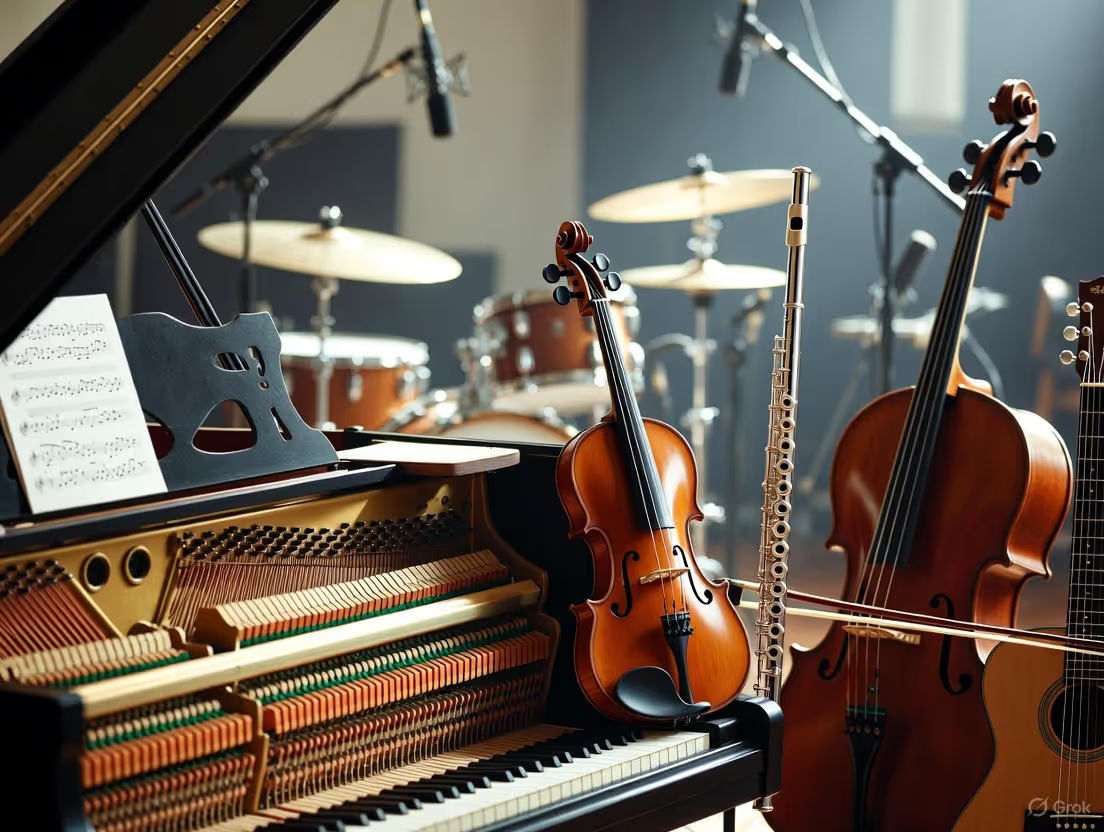
A sound bath is defined by its instruments. Each tool in the practitioner's arsenal produces a unique frequency, texture, and psychological effect. Understanding these instruments deepens the experience, allowing you to identify the sounds that most resonate with your personal journey to calm.
Singing Bowls: The Pillars of Vibration
The Gong: The Cosmic Wave
The gong is the most transformative and powerful instrument in sound therapy. Its sound is not a single note but a cascading "wash" of every audible frequency and harmonic. This creates a sonic experience so complex that the conscious, analytical mind (governed by beta waves) cannot process it. It essentially "short-circuits" mental chatter, forcing the brain to let go and drop into deeper states. The vibration of a large gong is a full-body experience, often described as a cleansing shower of sound. It facilitates deep emotional release and journeys into expanded states of consciousness.
Tuning Forks: The Precision Tuners
Used in both sound baths and targeted applications (like Vibroacoustic Therapy), tuning forks are calibrated to specific frequencies. Weighted tuning forks (often set to Otto 128Hz) are struck and their stems placed on the body or near bones, sending pure vibrations directly into the tissues and nervous system. Unweighted forks (like those tuned to Solfeggio frequencies or the Schumann resonance of 7.83 Hz) are held in the air, their pure tones used to tune the body's energy field. They represent the scientific, precise side of sound healing.
Other Harmonic Textures:
Choosing a sound bath often depends on which instruments call to you. A gong bath is a powerful, immersive reset, while a crystal bowl meditation might be more clarifying and gentle. As you explore these different audio pathways, you begin to curate your own personal toolkit for calm—a concept that extends to the technology we wear. Just as these instruments provide external feedback for internal states, a device like the Oxyzen ring offers internal biometric feedback, creating a complete loop of awareness. For more on how we integrate different wellness technologies, you can learn about our philosophy.
While the experience of a sound bath can feel mystical, a growing body of scientific research is demystifying its effects, grounding them in measurable physiological changes. This research moves the practice from the realm of anecdote into a credible complementary therapy for stress and anxiety.
The primary pathway sound healing affects is the autonomic nervous system (ANS). The ANS has two main branches: the sympathetic (SNS), which triggers the "fight-or-flight" stress response, and the parasympathetic (PNS), which governs "rest-and-digest" recovery. Chronic stress locks us into SNS dominance. Sound meditation, through entrainment and the relaxation response, is shown to powerfully activate the PNS.
Key research findings include:
The data paints a compelling picture: sound baths are not merely placebo. They are a non-invasive, accessible technology for nervous system regulation. They provide a "hardware reset" for a brain bogged down by the software of modern stress. For individuals seeking to quantify their journey from stress to calm, pairing ancient sonic practices with modern biometrics creates a powerful feedback loop. You can read about user experiences with this integrative approach in our customer testimonials.
Walking into your first sound bath can be exciting but also uncertain. Unlike a typical fitness class, the metrics of success are internal. There is no "doing it right" in the traditional sense, but a little preparation can help you surrender more fully to the experience and reap its deepest benefits.
Before the Session:
During the Session:
Aftercare is Crucial:
The sound bath doesn't end when the last note fades. You are in a vulnerable, open, and suggestible state. Drink plenty of water to help process and integrate the vibrational shifts. Move slowly and gently. Avoid rushing into loud environments or intense conversations. Journaling about your experience can help solidify insights. Notice how you feel in the hours and days that follow—often, the deepest integration happens subtly over time.
For those who practice at home using recordings or instruments, creating a consistent ritual enhances the effect. This principle of ritual and consistent tracking for growth is central to our approach at Oxyzen, where we believe sustainable wellness is built on mindful habits and self-awareness. If you have specific questions about preparing for any new wellness practice, our comprehensive FAQ is a great resource.
While attending a group sound bath led by a skilled practitioner is a powerful experience, the true integration of sonic calm happens when you bring the practice into your daily life. Creating a personal sound sanctuary at home makes this tool for nervous system regulation accessible anytime you need it.
Building Your Sonic Environment:
The foundation is a dedicated, quiet space. It doesn't need to be large—a corner of a bedroom will do. The goal is to create a signal to your brain that this space is for relaxation. Add comfortable floor seating or a yoga mat, soft blankets, and perhaps dimmable lighting or candles. The key is to make it inviting and distinct from your work or sleep areas.
Choosing Your Tools (You Don't Need a Gong):
Structuring a Home Session:
The beauty of a home practice is its personalization. You learn what sounds, durations, and times of day work best for your unique system. This journey of self-discovery through data and awareness is at the heart of modern wellness technology. Just as you might use a home sound practice to wind down, pairing it with insights from a device like the Oxyzen ring can show you its direct impact on your sleep readiness and recovery scores, closing the loop between practice and outcome. For more ideas on integrating different wellness modalities, explore the stories and guides on our blog.
The impact of sound bathing extends far beyond the gray matter of the brain, creating a cascade of beneficial effects through the entire organism. This is the mind-body resonance in action, where auditory vibration becomes a form of gentle, whole-system massage.
The Vagus Nerve: The Information Superhighway
The vagus nerve is the longest cranial nerve, a meandering two-way communication channel between the brain and major organs (heart, lungs, gut). It is the command center of the parasympathetic nervous system. Deep, resonant sounds, particularly those with a low fundamental frequency (like a large gong or Tibetan bowl), have been shown to stimulate the vagus nerve. This stimulation triggers a "vagal brake," slowing the heart rate, lowering blood pressure, and promoting digestion and restorative functions. The vibrational massage from sound is a direct, somatic way to "hack" this critical nerve, telling the body it is safe to rest.
The Cellular Level: The "Cymatics" of the Body
The study of visible sound, or cymatics, shows that sound waves can organize matter into intricate geometric patterns. While our cells aren't forming visible mandalas, the principle applies. The human body is a dense, watery matrix of vibrating cells, each with its own resonant frequency. Chronic stress and illness can be thought of as a state of "dissonance" or incoherence at the cellular level. The coherent, pure frequencies from sound bath instruments may help "tune" cellular vibrations back to a state of healthy resonance, promoting homeostasis. This isn't mystical thinking; it's the basis for emerging fields like vibrational medicine.
The Fluid Systems: Vibrational Massage
The body's fluids—blood, lymph, cerebrospinal fluid—are essential for nutrient delivery, waste removal, and cushioning. They are also highly responsive to vibration. The low-frequency waves from sound instruments create gentle pressure waves through these fluids, potentially enhancing circulation and lymphatic drainage. This can reduce inflammation, ease swelling, and contribute to that feeling of "lightness" and fluidity people often report after a session.
Musculoskeletal Release: Letting Go of Armor
We hold stress in our bodies as muscular tension—tight shoulders, a clenched jaw, a rigid pelvis. This is our psychological "armor." The physical vibration of sound can penetrate deep into connective tissue, creating a micro-oscillation that helps release chronic holding patterns. It's a form of passive, deep-tissue work. Many people experience involuntary twitches or yawns during a sound bath; these are often signs of the nervous system discharging stored tension and recalibrating.
Understanding this full-body impact reframes the sound bath from a simple relaxation exercise to a holistic tuning protocol for the entire human instrument. It underscores that mental calm is not a detached, cerebral state, but one that is inextricably linked to the condition of the physical body. This holistic view is core to our vision and values at Oxyzen, where we believe optimal well-being emerges from a symphony of data, awareness, and intentional practice.
We stand at a fascinating crossroads where one of humanity's oldest healing arts is meeting its newest self-quantification tools. This convergence is not a dilution of tradition, but an amplification. Wearable technology, like advanced smart rings, provides the missing link between subjective experience and objective data, transforming the intuitive art of sound healing into a personalized, feedback-rich science.
The Data-Driven Sound Journey:
Imagine concluding a 60-minute sound bath and immediately reviewing its physiological impact. This is now possible. A device like the Oxyzen smart ring, worn during a session, can track key biomarkers in real time:
This biofeedback loop is transformative. It validates the experience for the skeptical mind, provides motivation through tangible results, and, most importantly, helps you personalize your practice. You might discover that 20-minute sessions with crystal bowls before bed improve your sleep readiness score more effectively than longer gong baths. You might see that sound meditation is more effective for your stress recovery than another form of meditation.
Optimizing Sleep with Sonic Wind-Downs:
Sleep is the ultimate recovery sound bath. Pairing a short, home-based sound practice with your evening routine can be a powerful sleep hygiene tool. Tracking this with a wearable allows you to experiment scientifically:
The ring doesn't just track sleep; it helps you engineer it. By correlating your pre-sleep sound ritual with improved sleep architecture (more deep and REM sleep), you create a powerful, reinforcing habit loop. This empirical approach to ancient wisdom is what drives innovation at Oxyzen. We build tools not to replace practices like sound baths, but to illuminate their value and help you integrate them precisely into your life. For those curious about the technical specifics of how this tracking works, our FAQ page offers detailed explanations.
While stress reduction is the most common entry point, the applications of sound and vibration therapy are expanding into clinical and therapeutic settings, supported by a growing research frontier. It is being studied not just as a wellness enhancer, but as a complementary intervention for specific conditions.
Mental Health Support:
Cognitive and Neurological Pathways:
Physical Rehabilitation and Pain Management:
The research landscape is vibrant. Scientists are using fMRI and advanced EEG to map brain changes, conducting larger-scale controlled trials, and exploring the effects of specific frequencies (like the 40Hz gamma frequency being studied for Alzheimer's) with greater precision. This ongoing research validates the ancient intuition of healers and provides a roadmap for the future of integrative medicine. Staying abreast of such developments is part of our commitment, and we often highlight relevant findings in our blog resources for our community.
Not all sound baths are created equal. The instruments, the guide's philosophy, and the structure of the session can vary widely, leading to distinctly different experiences. Understanding these styles will help you find the sonic journey that best aligns with your needs and comfort level.
The Traditional/Classical Sound Bath:
This style focuses primarily on the instruments themselves—singing bowls, gongs, chimes—with little to no spoken guidance. The practitioner is a musician, weaving long, evolving soundscapes. The experience is abstract and open-ended, ideal for those who want to journey inward without verbal direction. It requires a greater ability to surrender to the sound alone.
The Guided Sound Meditation:
Here, the sound instruments provide the foundation, but the practitioner also uses spoken guidance similar to a mindfulness or yoga nidra meditation. They may lead you through body scans, breathwork, or visualizations. This style is excellent for beginners or those whose minds need a little more structure to stay present. The voice becomes another instrument of focus.
Thematic Sound Journeys:
Some practitioners design sessions around specific intentions: Chakra Balancing (using bowls tuned to each energy center), Shamanic Journeys (incorporating drumming to induce trance states), or Seasonal Ceremonies (aligning with lunar cycles or solstices). These sessions often include ritual elements and are chosen by those seeking a specific energetic or symbolic outcome.
Vibroacoustic Therapy (The Clinical Cousin):
This is the most technology-forward and clinical application. You lie on a bed or sit in a chair embedded with speakers that transmit low-frequency vibrations (often 30-120 Hz) directly into the body. It's often accompanied by music and is used in therapeutic settings for pain, Parkinson's, and anxiety. The experience is more targeted and less "musical" than a traditional sound bath.
What to Expect in a Typical Group Session Flow:
Finding your frequency is a personal exploration. Try different styles, practitioners, and settings. Notice how you feel during and after. This journey of self-experimentation is the essence of modern wellness—using both ancient tools and modern data to discover what truly works for you. It’s the same personalized journey we support at Oxyzen, whether you're exploring sound or analyzing your biometric patterns. To understand more about our approach to personalized well-being, you can read our story.

As sound baths move further into the mainstream, they naturally attract curiosity, healthy skepticism, and a host of practical questions. Addressing these head-on removes barriers to entry and allows individuals to approach the practice with informed openness rather than blind faith or unfounded doubt.
"Is this just a placebo effect?"
This is the most common and valid question from a scientific perspective. The short answer is: even if it were only placebo, the profound physiological and psychological benefits reported by thousands would still be "real." However, as outlined in the research section, the mechanisms extend beyond placebo. The measurable changes in cortisol, HRV, and brainwave activity are objective data points. The principle of entrainment is a well-established biological phenomenon. While the expectation of relaxation certainly helps initiate the process, the sound frequencies themselves provide the physical driver to sustain and deepen it. It's a synergistic effect: belief opens the door, but the vibration walks you through.
"What if I fall asleep? Am I doing it wrong?"
Not at all. Falling asleep is one of the most common experiences, especially for those who are chronically sleep-deprived or deeply relaxed. It is a sign that your nervous system feels safe enough to surrender into the theta-delta borderlands. While you may miss the conscious journey, your body and subconscious mind are still bathing in the beneficial vibrations and receiving the restorative benefits. With regular practice, you may find you stay in a hypnagogic, dreamlike state of conscious awareness for longer periods.
"I felt uncomfortable emotions or physical sensations. Why?"
Sound vibration can act as a loosening agent for stored tension, both physical and emotional. As the coherent frequencies move through the body, they can dislodge pockets of incoherent energy—what we might call "stuck" emotions or trauma. Feeling sudden sadness, anxiety, or even nausea is not uncommon and is often a sign of release. The key is not to resist it. Acknowledge the sensation, breathe into it, and trust that the sound wave, like any wave, will peak and then pass, leaving you clearer on the other side. If you have a history of severe trauma, it may be wise to inform the practitioner beforehand or seek one-on-one sessions.
"I didn't have a transcendental experience. I just felt relaxed."
This is a crucial point: Relaxation is the goal, not a consolation prize. The cultural hype around "bliss" and "cosmic oneness" can set unrealistic expectations. For a nervous system steeped in chronic stress, achieving a state of deep, parasympathetic-dominant relaxation is a monumental and transformative shift. It is the foundation upon which all higher states of consciousness and healing are built. Valuing the simple, profound gift of true rest reframes the entire practice as a success.
Practical Concerns:
Answering these questions honestly is part of building a credible, accessible practice. We believe in transparent, evidence-informed wellness at Oxyzen, and encourage anyone with specific health questions to consult professionals, a principle reflected in our FAQ section which covers device-related and general wellness inquiries.
The frontier of sound healing is not static. It is being reshaped by digital innovation, personalized technology, and a deeper scientific understanding of acoustics and human biology. The future points toward a world where sound therapy is increasingly accessible, precise, and integrated into our daily living environments and healthcare systems.
Personalized Frequency Medicine:
The one-size-fits-all approach is evolving. Using biometric feedback from wearables, future applications could analyze your real-time HRV, brainwaves, or stress markers and generate or select soundscapes specifically designed to bring your unique physiology into balance. An app might detect a state of anxious beta dominance and play a sequence of 7Hz theta-entraining tones mixed with grounding 136.1Hz (Root Chakra) bowls. This moves from generic relaxation to targeted neuro-acoustic intervention.
Advanced Delivery Systems:
Digital and AI Composers:
Artificial intelligence is already being used to generate therapeutic soundscapes. AI can compose endless, non-repetitive sound journeys based on parameters like desired emotional outcome (e.g., "focus," "calm," "energy lift"), instrument preference, and session length. These algorithms could learn from your biometric responses, continually optimizing the sonic input for your nervous system.
Mainstream Integration:
Expect sound healing principles to filter into everyday life:
This future is not about replacing the human practitioner or the sacredness of a hand-hammered bowl. It is about democratizing access and increasing efficacy. It aligns with a world where we use technology not to disconnect from our humanity, but to deepen our understanding and care for it. This vision of human-centric tech innovation is what guides our development at Oxyzen. To see how we're thinking about the future of personal wellness technology, you can explore our vision.
A sound bath is not a magic bullet, but a powerful instrument in a larger orchestra of well-being. Its effects are amplified when played in concert with other supportive practices. Integrating sonic meditation into a holistic routine creates a synergistic effect, where each practice supports and deepens the others, building a robust foundation for mental and physical resilience.
Synergy with Movement Practices:
Complementary Meditation Modalities:
Nutritional and Circadian Support:
The state of your body affects your ability to drop into deep relaxation. Avoiding caffeine and heavy sugars for several hours before a sound session prevents physiological jitters that contradict the practice. Aligning your sound rituals with your circadian rhythm is also powerful: using brighter, more melodic sounds (like Koshi chimes) with a morning meditation, and deeper, resonant frequencies (gongs, low bowls) for evening wind-downs.
The Role of Technology as an Integrator:
This is where a smart wellness device becomes the conductor of your personal harmony. It can help you see the connections between your practices:
Building this integrated routine is a personal experiment. It requires curiosity and a willingness to observe the interactions between different lifestyle elements. For inspiration and examples of how others are building their holistic routines, our blog features stories and guides that blend ancient wisdom with modern tracking.

The ultimate goal of exploring sound baths is not to become dependent on 60-minute sessions, but to develop sonic literacy—the ability to consciously curate the soundscape of your daily life to support your mental state. Your environment is already a constant sound bath; the question is whether it’s one of chaos or coherence.
Audit Your Sound Environment:
Spend a day noticing the sounds around you. The aggressive ping of notifications, the droning bad TV, the jarring commute traffic, the oppressive silence of a lonely room. Each of these has a neurological and emotional impact. The first step is awareness.
Creating Micro-Sound Baths:
You don’t need a full session to reset. Integrate sonic moments throughout your day:
Curating for Function:
Match soundscapes to desired cognitive states:
Your Body as Instrument:
Never forget the most accessible tool: your breath and voice. A deep sigh with an audible exhale is a mini sound bath that stimulates the vagus nerve. Humming vibrates the sinus cavities and calms the mind instantly. These are tools you carry everywhere.
Developing your sonic identity is an act of self-care and empowerment. It means taking control of one of the most pervasive, yet often ignored, environmental factors affecting your well-being. It’s a practice that complements the detailed self-awareness gained from tools like the Oxyzen ring. While the ring provides the internal data, sonic curation allows you to actively shape the external environment that influences that data. For more on creating a supportive personal environment, our resources offer continued exploration.
Data and theory provide the framework, but the true power of sound is revealed in personal narrative. The journey to mental calm through sound is unique for each individual, yet common themes of release, insight, and rediscovery emerge. These stories illustrate the profound and often unexpected ways audio pathways can alter our lives.
Elena’s Story: Releasing the Grips of Anxiety
Elena, a 34-year-old software project manager, lived with a constant baseline of anxiety she called "the hum." It was mental static—a relentless to-do list accompanied by tightness in her chest. Medication helped dull the edges but left her feeling disconnected. Her first sound bath, reluctantly attended at a friend’s urging, was a revelation. "When the gong hit, I didn't just hear it. I felt it in my sternum, right where the tension lived. It was like the vibration physically shook something loose. For the first time in years, my mind went quiet. Not empty, but spacious." She didn't have a mystical vision; she had a physiological shift. She began a weekly practice and used short sound recordings with her Oxyzen ring to track her recovery. "Seeing my HRV climb from the low 30s to the high 50s during a session gave me tangible proof I wasn't just 'feeling a bit relaxed.' My body was actually healing. The sound gave me a tool I could use in the moment when I felt panic rising—a 5-minute bowl recording could halt the spiral."
David’s Story: Finding Stillness After Loss
After the sudden passing of his wife, David, 58, found silence unbearable. The quiet of his home amplified his grief into a roar. He filled it with TV, podcasts, anything to avoid the stillness. A bereavement counselor suggested a sound bath, framing it as "a way to be with the silence, but not alone in it." David was skeptical but desperate. "I didn't cry during the session. I just floated. The sounds felt like they were holding me, like a sonic embrace. In that space, I could finally remember her without the searing pain. The memory was wrapped in the warmth of the sound." For David, sound became a bridge back to his own emotions without being overwhelmed by them. He began spending quiet evenings listening to a single singing bowl, a practice that helped him rebuild a relationship with stillness, not as an enemy, but as a container for healing.
Maya’s Story: The Athlete’s Recovery Tool
A competitive marathoner, Maya, 29, used sound as a performance enhancer. "I used to think recovery was just foam rolling and protein shakes. Then I read about vibration and fascia." She started using targeted sound frequencies (via a vibroacoustic app) on her legs after long runs. "The difference in muscle soreness was noticeable." But the bigger shift was mental. The pressure to perform created relentless pre-race anxiety. She incorporated a 20-minute guided sound meditation into her nightly routine, tracked by her smart ring. "My deep sleep scores improved by 25%. On race morning, instead of frantic energy, I felt focused calm. I now see recovery as nervous system first, muscles second." For Maya, sound became a key part of her athletic toolkit, optimizing both physical and mental resilience.
These stories, echoed by many in communities like those who share their Oxyzen testimonials, underscore that the sound bath experience is not a passive luxury. It is an active practice of neural retraining, emotional alchemy, and somatic rediscovery. The pathway it offers is not around life's difficulties, but through them, with a resonance that can hold us steady.
Our exploration of the sound bath experience has traversed from ancient history to cutting-edge science, from the concert hall to the living room, from skepticism to personal transformation. We have seen that the pursuit of mental calm through audio pathways is a deeply rooted, evidence-supported, and profoundly adaptable practice.
The core takeaways resonate with a simple, powerful clarity:
This journey invites you to become both scientist and artist of your own well-being. It asks you to experiment: to lie under the gong, to strike a bowl at home, to notice how different sounds affect your mood and energy, and to observe the data of your own body’s responses. It is an invitation to move from being a passive recipient of environmental noise to an active curator of your sonic world.
The quest for mental calm in a chaotic world is perhaps the defining wellness challenge of our time. The sound bath offers a pathway that is both timeless and timely—a technology that requires no screens, yet aligns perfectly with our understanding of neurobiology. It reminds us that sometimes, the most advanced tool for human healing is not the most complex, but the most resonant.
As you move forward, consider this not as an end, but as a beginning. Let your curiosity be your guide. Attend a session. Download a recording. Sit in silence and simply hum. Observe. Feel. Listen.
And if you are interested in deepening that observational practice, to see the tangible, physiological story that unfolds when you engage in these ancient practices, that is where modern tools can illuminate the path. At Oxyzen, we are dedicated to providing that clarity—not as an end in itself, but as a means to greater awareness, empowerment, and calm. Your journey is unique. We are here to help you listen to it.
To continue exploring the intersection of mindful practice and modern wellness technology, we invite you to discover more stories and insights from our community. The path to calm is before you. Take the first step, and listen.
In our deep dive into the power of sound, we must now turn our attention to its essential counterpart: silence. It is within the spaces between the notes, the pauses between the vibrations, that much of the integration and magic truly occur. Silence is not merely the absence of sound; it is a potent, active element of the sound bath experience and a critical skill for mental calm in its own right.
The Neurology of Silence:
Research into the effects of silence on the brain reveals surprising and powerful benefits. A landmark 2013 study published in the journal Brain Structure and Function found that two hours of daily silence prompted neurogenesis—the creation of new neurons—in the hippocampus of mice, a brain region linked to memory, emotion, and learning. While human studies are ongoing, this points to silence as a profound stimulant for brain plasticity and health. Furthermore, fMRI studies on humans show that during periods of silence, the brain does not go "offline." Instead, it engages the "default mode network" (DMN), a critical network active during self-referential thought, memory consolidation, and creative insight. It is in silence that we process, integrate, and make meaning of our experiences.
Silence as the Canvas for Sound:
In a sound bath, silence serves multiple functions:
Cultivating a Tolerance and Taste for Silence:
For many, silence is uncomfortable—it amplifies inner turmoil. This is why the sound bath is such a gentle gateway. The sound provides a focal point, a "handrail," that allows you to approach the edge of deep silence without fear. With practice, you learn to tolerate, then appreciate, and finally crave these silent intervals. You begin to understand that the mental chatter that arises in silence is not the enemy; it is the contents of your mind coming to the surface to be witnessed and released. The practice becomes one of listening to the inner noise without engaging it, allowing it to pass like clouds in a still sky.
Practical Silence Practices:
Embracing silence is the final step in mastering your sonic environment. It completes the cycle: from chaotic noise, to therapeutic sound, to integrating quiet. This journey toward auditory mindfulness is a core component of holistic well-being, a philosophy that informs everything we do at Oxyzen. To learn more about our integrated approach to wellness, you can explore our story and mission.

To move beyond the theoretical and into the applied art of sound healing, we sat down with Anya Petrova, a certified sound therapy practitioner with over a decade of experience leading group baths and private sessions. Her insights illuminate the nuances of the practice from the other side of the bowl.
Q: Anya, what does a practitioner actually do during a session? It seems like you're just playing instruments.
Anya: "That's a great place to start. The physical act is playing, yes, but the mental and energetic work is deep listening and intention. I am not performing a pre-composed piece. I am listening to the room's resonance. Every group, every space, has a different energy. I start by feeling into that—is it jittery, heavy, scattered? Then, I use the instruments not just to make sound, but to shape that energy. I'm listening for the harmonics in the air, watching for subtle shifts in people's breathing or movement. It's a responsive, almost conversational process between me, the sound, and the collective field of the participants."
Q: How do you choose which instruments to use and when?
Anya: "It's an intuitive map, but guided by principles. I often start with earthier, grounding tools—a deep Tibetan bowl or a light drum pulse—to help people arrive in their bodies. Then I might move into crystal bowls for clearing and emotional space, often around the heart center. The gong is usually a peak, a transformative wave meant to facilitate a surrender of the conscious mind. Finally, I use very gentle sounds—tiny chimes, the softest singing bowl tones—as a sonic ladder to guide everyone back toward gentle awareness. But if I feel the group needs to stay in a deep theta state, I might sustain a low drone instead. The choice is always about what serves the moment's need, not a rigid plan."
Q: What's the most common feedback you hear, and what's the most surprising?
Anya: "The most common is, 'I've never been so relaxed,' or 'I fell asleep immediately!' The most surprising, and meaningful, are the specific somatic releases. People will say, 'That high note made my right shoulder, which has been sore for months, suddenly release and get warm,' or 'When you played the low bowl, I had a memory of my grandmother's house I haven't thought of in years, and it brought me peace.' This shows the vibration is working on a precise, personal level, accessing stored memories and tensions we can't reach with our thinking mind."
Q: For someone considering becoming a practitioner, what's your advice?
Anya: "First, be a client. Immerse yourself in many sessions with different teachers. Your own healing is the foundation. Then, invest in quality training—not just a weekend workshop. Understand the science, the history, and the ethics. Finally, and this is crucial, develop your own personal practice. Play your bowls every day, not for others, but for yourself. Your ability to hold a calm, resonant space for others comes from the depth of your own inner resonance. It's not about having perfect technique; it's about being a clear channel."
Anya’s perspective underscores that sound healing is both an ancient art and a skilled, responsive practice. The practitioner's role is that of a guide, using vibration as the medium to facilitate the client's own innate healing intelligence. This mirrors the philosophy behind supportive technology: the best tools, whether a singing bowl or a smart ring, don't do the work for you; they provide the clear feedback and environment in which your own body's wisdom can flourish. For more perspectives on integrating different wellness tools, our blog features diverse expert insights.
As the sound bath trend accelerates, critical questions about its ethics, origins, and equitable access come to the forefront. Engaging with this practice responsibly requires mindfulness of its cultural roots, the economics of wellness, and who gets to experience its benefits.
Honoring Origins vs. Cultural Appropriation:
Many of the instruments used—specifically Tibetan singing bowls, didgeridoos, and Native American drums—are sacred tools from living cultures that have endured colonization and oppression. Cultural appropriation occurs when these symbols and practices are taken out of context, commercialized, and stripped of their original meaning and reverence by a dominant culture.
The Accessibility Gap:
Wellness often has a price tag. A single sound bath session in a major city can cost $40-$80. High-quality singing bowls can cost hundreds of dollars. This creates a barrier.
Navigating Commercialization:
When a spiritual practice becomes a wellness commodity, dilution and hype are risks. We see "sound bath" infused into everything from spa weekends to corporate team-building.
Engaging ethically means being a conscious consumer and practitioner. It’s about recognizing that the pursuit of personal calm should not come at the expense of disrespecting cultures or creating exclusive enclaves of well-being. This commitment to mindful, accessible wellness is a value we strive to uphold in our own work at Oxyzen, as detailed in our company values and journey.
Sleep is the body's ultimate sound bath—a long, natural dip into delta wave dominance for physical and mental restoration. However, the path to falling and staying asleep is often blocked by a noisy mind and a noisy environment. Strategically using sound can be one of the most effective tools in the sleep hygiene toolkit, acting as both a shield and a guide.
The Problem of Silence and Sudden Noise:
For many, total silence is not conducive to sleep. It allows internal thoughts to become deafening. Furthermore, our nervous system is hardwired to startle at sudden, unpredictable noises (a car alarm, a door slam), which can fragment sleep stages even if we don't fully wake. Consistent, predictable sound masks these disruptions.
The Best Sound Profiles for Sleep:
Research points to specific sonic qualities that promote sleep:
Creating a Personalized Sleep Sound Ritual:
Sound for sleep is a form of environmental engineering. By taking control of your auditory space, you create a sanctuary that actively supports your biology's need for deep, uninterrupted restoration. It’s a practical application of sound healing principles that pays dividends in daytime energy, mood, and cognitive function. For more research-backed tips on optimizing sleep, our blog is a continually updated resource.
Your Trusted Sleep Advocate: Sleep Foundation — https://www.sleepfoundation.org
Discover a digital archive of scholarly articles: NIH — https://www.ncbi.nlm.nih.gov/
39 million citations for biomedical literature :PubMed — https://pubmed.ncbi.nlm.nih.gov/
Experts at Harvard Health Publishing covering a variety of health topics — https://www.health.harvard.edu/blog/
Every life deserves world class care :Cleveland Clinic - https://my.clevelandclinic.org/health
Wearable technology and the future of predictive health monitoring :MIT Technology Review — https://www.technologyreview.com/
Dedicated to the well-being of all people and guided by science :World Health Organization — https://www.who.int/news-room/
Psychological science and knowledge to benefit society and improve lives. :APA — https://www.apa.org/monitor/
Cutting-edge insights on human longevity and peak performance:
Lifespan Research — https://www.lifespan.io/
Global authority on exercise physiology, sports performance, and human recovery:
American College of Sports Medicine — https://www.acsm.org/
Neuroscience-driven guidance for better focus, sleep, and mental clarity:
Stanford Human Performance Lab — https://humanperformance.stanford.edu/
Evidence-based psychology and mind–body wellness resources:
Mayo Clinic — https://www.mayoclinic.org/healthy-lifestyle/
Data-backed research on emotional wellbeing, stress biology, and resilience:
American Institute of Stress — https://www.stress.org/


