


The Stress Contagion Effect: Managing Other People's Stress Daily
Stress is contagious; manage exposure to others' anxiety by setting emotional boundaries and practicing detachment when necessary.
Stress is contagious; manage exposure to others' anxiety by setting emotional boundaries and practicing detachment when necessary.
%402x.svg)
You’ve felt it before. The tightness in your shoulders after a tense meeting. The low-grade anxiety humming in your chest after a phone call with a worried friend. The inexplicable irritability that descends after navigating a room full of hurried, harried strangers. Your to-do list is clear, your own life is relatively in order, yet you’re left feeling emotionally drained and physically on edge.
This isn’t just empathy or a bad day. This is The Stress Contagion Effect—a powerful, often invisible phenomenon where stress transmits from person to person like a common cold, bypassing our conscious filters and embedding itself in our nervous systems. In our hyper-connected world, we are not just managing our own stressors; we are constantly navigating an ocean of other people’s anxiety, pressure, and overwhelm. From the clenched-jaw energy of a manager to the silent despair of a partner, from the digital doomscrolling of a family group chat to the frantic pace of a city street, secondhand stress is a pervasive, silent tax on our well-being.
But what if you could see this contagion in real-time? What if you could objectively measure the physiological impact of a stressful conversation or a chaotic environment on your own body? This is where modern wellness technology, like advanced smart rings from innovators such as Oxyzen, is revolutionizing our understanding. By tracking key biomarkers like heart rate variability (HRV), resting heart rate, and skin temperature, these devices act as a personal biometeorologist, showing you the invisible weather patterns of stress moving through your body. The goal of this deep exploration is not just to diagnose the problem, but to provide a comprehensive, science-backed toolkit for building immunity. We will dissect the neural pathways of contagion, identify the most potent carriers in your life, and ultimately, equip you with strategies to remain grounded, compassionate, and resilient—transforming you from a passive absorber into an active, empowered manager of your emotional and physiological landscape.

We are hardwired for connection. Our brains contain specialized circuitry, most notably mirror neurons, designed to reflect and synchronize with the emotional states of those around us. This neural mirroring is the bedrock of empathy, allowing us to understand and bond with others. However, this same brilliant system has a shadow side: it doesn’t discriminate between joy and distress. When we perceive stress in someone else—through their tone of voice, facial expressions (even a tightened jaw or narrowed eyes), body language (slumped shoulders, rapid tapping), or even their pheromones—our own brain can begin to mirror that state. Our cortisol levels rise, our heart rate may increase, and our fight-or-flight system receives a subtle, often unnoticed, activation alert.
This isn't merely psychological. A landmark study at the University of California, San Francisco, demonstrated that simply observing someone in a stressful situation can cause a measurable increase in the observer’s cortisol levels, the body’s primary stress hormone. This effect is amplified in close relationships and hierarchical structures. Partners co-regulate each other’s nervous systems, for better or worse. A stressed parent can dysregulate a child. A frantic leader can send an entire team’s collective stress levels soaring. In the workplace, research published in the Journal of Applied Psychology has termed this “crossover stress,” showing how job strain and emotional exhaustion reliably transfer between colleagues and from supervisors to subordinates, reducing overall performance and satisfaction.
The contagion has also gone digital and ambient. The constant ping of bad news alerts, the anxious undertone in social media feeds, and the pressured language of urgent emails all act as vectors. We live in what psychologist Dr. Daniel Goleman calls an “open-loop” emotional system, where our biology is profoundly influenced by the people we interact with. “We are in constant emotional transaction with everyone we meet,” he writes. In this environment, your stress is rarely yours alone. You are a node in a vast, humming network of interlocking nervous systems. Recognizing this is the first, crucial step toward mitigation. For a deeper dive into the science of emotional regulation, our blog offers a wealth of resources on how technology is helping us decode these complex biological signals.
The insidious nature of stress contagion lies in its stealth. You might leave an interaction feeling “off” but attribute it to your own inadequacy or general mood. You blame your own lack of resilience, not realizing you’ve just biologically shouldered someone else’s burden. This misattribution leads to self-criticism, which only compounds the stress load. By giving this phenomenon a name and understanding its mechanisms, we externalize the problem. We can begin to ask a vital new question: “Is this stress mine, or did I just contract it?”
To manage stress contagion, we must first understand how it manifests in the temple of our well-being: our body. When you absorb someone else’s stress, your hypothalamus-pituitary-adrenal (HPA) axis kicks into gear, initiating the classic stress response. Cortisol and adrenaline flood your bloodstream. Your heart rate accelerates to pump more blood to your muscles. Your breath becomes shallow. Digestion slows. Your muscles, particularly in the neck, shoulders, and jaw, tense in preparation for action. This is brilliant biology for surviving acute, physical threats. But when triggered by a colleague’s panic or a partner’s worry, this response becomes maladaptive—a false alarm that still exacts a real physiological toll.
Over time, chronic exposure to secondhand stress keeps your system in a state of low-grade, persistent alert. This leads to allostatic load—the cumulative wear and tear on the body from repeated stress responses. The consequences are far from theoretical:
This is where objective data becomes a game-changer. You may think you’re handling a stressful environment well, but your body’s biomarkers tell the unvarnished truth. A smart ring that tracks Heart Rate Variability (HRV) is particularly telling. HRV measures the subtle variations in time between each heartbeat. A higher, more variable HRV generally indicates a resilient, adaptable nervous system that can smoothly transition between stress and relaxation. A low, less variable HRV suggests a system stuck in fight-or-flight, struggling to recover.
Imagine finishing a series of meetings. Subjectively, you feel "okay." But your device shows a steep, 30% drop in your HRV that began during a one-on-one with an agitated peer and has not recovered hours later. That’s concrete, personal data proving the contagion effect. It moves the experience from “I feel kind of drained” to “That specific interaction caused a measurable stress response in my body that is still ongoing.” This biofeedback is empowering. It allows you to connect cause and effect with precision, transforming you from a passive victim of ambient stress into an informed investigator of your own well-being. Understanding your unique biological blueprint is core to our mission at Oxyzen, which is why we focus on providing clear, actionable insights from your physiological data.
Not all stress sources are created equal. To build an effective defense, we must conduct a personal contagion audit, identifying the people, environments, and situations that act as “Prime Carriers.” These are the vectors through which secondhand stress most efficiently invades your system. They typically fall into several categories:
1. The Emotional Sponge’s Dilemma: Empaths & Highly Sensitive People.
If you are naturally empathetic or a Highly Sensitive Person (HSP), your nervous system is literally built for deeper processing. You have a lower threshold for sensory stimulation and a heightened awareness of subtleties in mood and energy. This is a gift for connection and creativity, but it also makes you a super-conductor for stress contagion. You don’t just notice someone’s anxiety; you feel it in your own body as if it were your own. Without strong boundaries, this can lead to chronic overwhelm and burnout, as you perpetually prioritize regulating others’ emotions over your own.
2. The Power Dynamic: Stress from Above and Below.
Hierarchical relationships are potent contagion zones. Stress from Above (managers, clients, authority figures) carries the weight of consequence—their anxiety about outcomes directly impacts your security and status. A leader’s panic about a deadline can infect an entire team with a sense of impending doom. Stress from Below (direct reports, team members you mentor) often comes laden with a sense of responsibility. Their struggle, confusion, or personal crises trigger our caregiving instincts, which, when overactive, become a source of chronic worry and emotional labor.
3. The Intimate Echo: Romantic and Family Stress.
Our closest relationships are the deepest neural pathways for contagion. The stress of a partner—about finances, work, or health—becomes a shared atmospheric condition in the home. Parental stress is exceptionally transmissible to children, shaping their developing nervous systems. Conversely, worrying about an aging parent or a sibling in crisis can create a persistent background hum of stress that colors everything else. In families, stress often doesn’t get “expressed” so much as it gets absorbed into a collective, unspoken field of tension.
4. The Digital Swarm: Social Media, News, and Communication Overload.
Our devices have become constant, passive stress IV drips. The algorithmically amplified anger and fear on social media platforms, the relentless cycle of crisis news, and the expectation of 24/7 communication responsiveness (the “ping” of a messaging app triggering a micro-dose of anxiety) create a pervasive environment of ambient apocalypticism. This digital stress is unique because it is omnipresent, often sensationalized, and lacks the grounding context of a real human face, making it both potent and strangely disembodied.
5. The Ambient Environment: Chaotic Workspaces and Public Spaces.
Never underestimate the power of place. An open-plan office with loud, abrupt conversations and visual clutter is a petri dish for stress contagion. The hurried, aggressive energy of a crowded commute or a busy supermarket checkout line can elevate your physiological stress markers before a single word is exchanged. These environments bombard our senses and force our nervous systems into a state of heightened, defensive awareness.
Identifying your personal Prime Carriers is not an exercise in blame, but in mapping. It’s about recognizing which relationships and contexts require you to bring your most fortified, conscious self. As you read through these categories, which ones resonated most? Which specific person or situation came immediately to mind? That recognition is the seed of your strategy. For real-world examples of how people identify and manage these carriers, our testimonials page shares powerful user stories.

Knowing the sources of contagion is futile without the tools to deflect it. For the naturally empathetic and caring—those most vulnerable—the most essential tool is the psychological boundary. Contrary to popular belief, a boundary is not a wall, nor is it a lack of care. It is a semi-permeable membrane. It says, “I can care for you, listen to you, and support you, without taking your problem into my own nervous system and making it my own to solve.” Building this armor involves both internal shifts and external communications.
Internal Boundary Techniques:
External Boundary Communications:
Setting boundaries is not about delivering ultimatums; it’s about clearly stating your needs and capacities.
Building this armor is a practice, not a perfection. It will feel uncomfortable at first, especially if you derive self-worth from being the “go-to” problem-solver. But true compassion is sustainable. It requires you to keep your own cup full. As the flight safety instruction states: Secure your own oxygen mask before assisting others. In the context of stress contagion, this isn’t selfish—it’s the prerequisite for being of any real, lasting help. Learning to say “no” or “not now” is saying “yes” to your long-term ability to show up. For more practical strategies on sustainable compassion, our blog features several guides on mindful communication and energy management.
When you feel the wave of secondhand stress hit—the clenching in your gut during a tense call, the racing heart after a conflict—you need techniques that work at the speed of biology. These are not hour-long meditation sessions; these are 30-second to 2-minute “decontamination” drills designed to disrupt the stress cascade and signal safety to your nervous system in real-time.
1. The Physiological Sigh (The Instant Reset):
Discovered by Stanford neuroscientist Dr. Andrew Huberman, this is arguably the fastest known way to reduce acute stress. Here’s how:
2. Grounding Through the Senses (The 5-4-3-2-1 Method):
When stress hijacks your brain, grounding brings you back to the present, safe moment. Engage your senses deliberately:
3. Targeted Muscle Release (The Jaw & Shoulder Unlock):
Stress contagion loves to hide in our muscles. Periodically, especially during long work sessions or interactions:
4. The Strategic Exit & Micro-Walk:
When possible, physically remove yourself from the stressful field. Even a 90-second walk to the bathroom, around the block, or to get a glass of water can disrupt the resonant stress loop. The bilateral left-right movement of walking helps process and discharge nervous energy. Use this time to practice the physiological sigh or simply notice your surroundings, breaking the spell of the stressful narrative.
Integrating these micro-practices creates a “clean room” for your nervous system. They are your biological firewall. The key is to use them proactively at the first sign of contamination, not just when you’re already overwhelmed. A device that provides a gentle vibration or notification when your stress markers begin to rise can be the perfect prompt to deploy these techniques, turning passive absorption into active self-regulation. If you have questions about how technology can support these real-time interventions, our FAQ page covers common inquiries on features and functionality.

While real-time techniques are your emergency response, daily rituals are your preventive medicine. They are the non-negotiable practices that lower your baseline stress load, increase your HRV, and fortify your system before you encounter the day’s carriers. Think of them as daily sanitation for your psyche, flushing out the residual stress of yesterday and building resilience for today.
1. The Morning Buffer Zone:
The first hour after waking sets your nervous system’s tone. Protect it fiercely from digital contagion. Create a ritual that might include:
2. The Workday "Air Lock":
Transitioning between work and home, especially if working remotely, is a critical contagion control point. Create a deliberate ritual to mark the end of the “work field” and the entry into your “personal space.”
3. The Evening Nervous System Downtime:
The hour before bed is for convincing your body it is safe and moving it into the parasympathetic “rest-and-digest” state.
These rituals are not about adding more to your to-do list; they are about creating sacred structure that protects your most valuable asset: your regulated nervous system. They build what resilience researchers call “anticipatory capacity”—the ability to handle stressors because your system isn’t already running on empty. The story of Oxyzen is rooted in this belief in proactive, ritual-based wellness, which you can read about in our founding journey.
In the quest to manage stress contagion, subjective feeling is important, but objective data is transformative. Relying solely on how we think we feel is often unreliable—we normalize chronic stress, misattribute its source, or push through until we crash. This is where wearable biofeedback technology, specifically devices that measure Heart Rate Variability (HRV), resting heart rate, sleep stages, and skin temperature, becomes a revelatory tool for self-knowledge.
Think of this data as your personal Contagion Map. By wearing a discreet smart ring like Oxyzen, you generate a continuous, objective record of your nervous system’s state. Over time, patterns emerge that answer critical questions with data, not guesswork:
This process turns abstract management into a science. For example, you might use the data to run an experiment: “For the next two weeks, I will implement a 5-minute post-meeting breathing ritual after my stressful Tuesday sync.” Then, you review the data. Did the post-meeting HRV recovery improve? Did sleep quality that night get better? This empirical feedback loop is empowering. It moves you from being a passenger in your own well-being to being the pilot, with a sophisticated dashboard informing your decisions.
Most importantly, the data celebrates your wins. Seeing your average HRV trend upward over months of consistent practice provides undeniable proof of your growing resilience. It shows you that the boundaries, the rituals, and the decontamination drills are working on a biological level. This positive reinforcement is crucial for maintaining the sometimes-difficult work of behavioral change. To see how others have used this data to transform their relationship with stress, explore the experiences shared on our testimonials page.
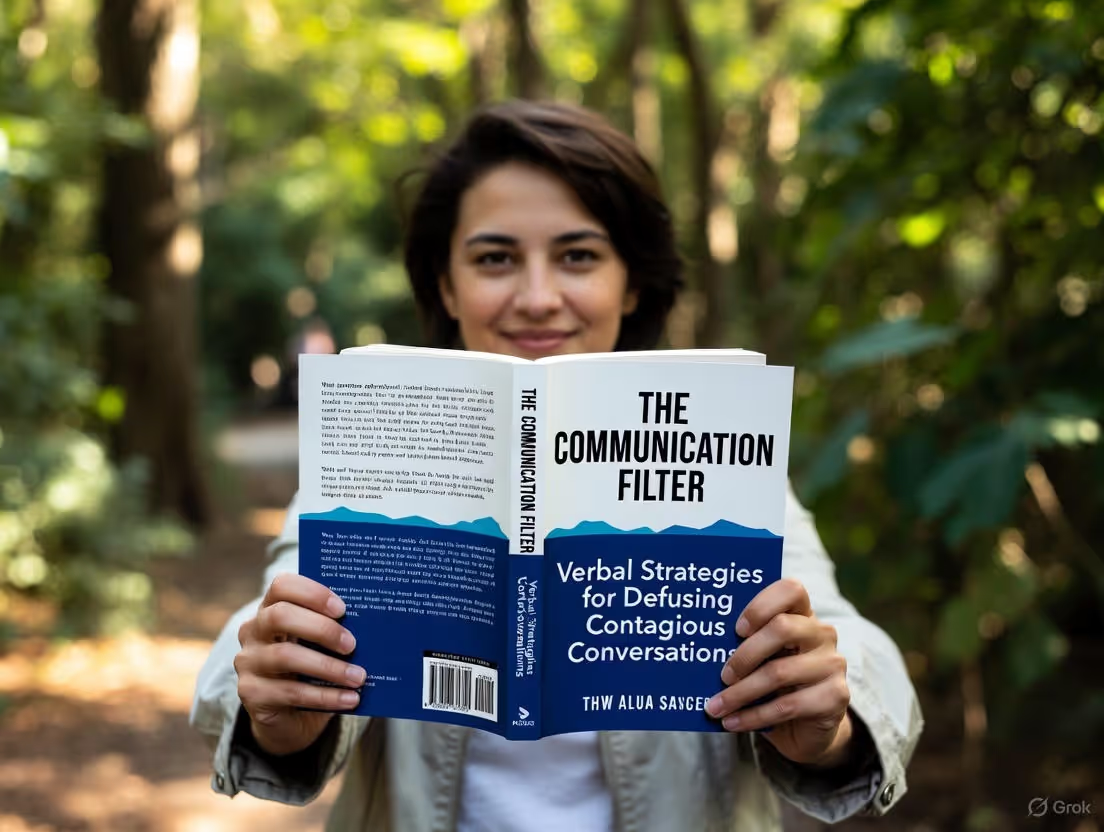
We cannot control other people’s stress, but we can radically influence the conversational container it arrives in. The way we verbally engage with a stressed individual can either amplify the contagion, creating a feedback loop of dysregulation, or help contain and de-escalate it. Mastering a few key communication strategies acts as a conversational HEPA filter, trapping the stress particles before they enter your system.
1. The Validation Buffer (Before Problem-Solving):
A stressed person’s brain needs to feel heard and understood before it can engage rationally. Jumping immediately to “Well, here’s what you should do…” often increases their frustration (and your absorption). Instead, lead with validation:
2. The Detached Inquiry:
Instead of absorbing the problem, ask questions that help the other person engage their own problem-solving prefrontal cortex. This transfers the cognitive load back to its rightful owner.
3. The "We" vs. "You" Shift in Shared Stress:
In team or partnership dynamics, stress often feels like a shared cloud. Language can either cement that or begin to dissipate it. Shift from blame-oriented “you” statements to collaborative “we” frames.
4. The Clear, Calm "No":
Often, stress contagion comes in the form of a request or a dumping of tasks when you are at capacity. A clear, kind, and non-apologetic “no” or “not now” is the ultimate verbal boundary. The formula is simple: Empathy + Boundary + (Optional) Alternative.
Practicing these verbal filters requires mindfulness, but they become more automatic over time. Their power lies in keeping you in the role of a calm, compassionate witness and facilitator, rather than a co-opted participant in the other person’s storm. For more insights on mindful communication in relationships and work, our blog offers dedicated articles on these topics.
Our surroundings are not passive backdrops; they are active participants in our nervous system’s state. Just as we can catch stress from people, we can catch it from places and digital spaces. Proactively editing your environment is a powerful, often overlooked, strategy for reducing ambient contagion and creating sanctuaries of calm that replenish you.
The Physical Workspace Sanitization:
Whether at home or in an office, your immediate workspace should signal “focus” and “safety,” not “chaos” and “pressure.”
The Digital Decontamination Protocol:
Your digital environment is likely your most potent source of unsolicited stress. A ruthless edit is necessary.
Creating Micro-Sanctuaries:
Identify or create small spaces in your day for complete sensory relief. This could be:
In a culture that glorifies “powering through,” the most radical and effective defense against stress contagion may be strategic withdrawal. This is not avoidance or weakness; it is the intelligent, conscious act of removing yourself from a stress field to preserve your regulatory capacity. It is the practice of the pause—creating space between stimulus and response where your choice and wisdom reside.
Recognizing the Threshold:
The first step is learning to recognize your personal Contagion Threshold—the point at which you shift from healthily managing stress to becoming infected by it. Signs include:
The Art of the Tactical Exit:
Once you recognize the threshold, you must give yourself unconditional permission to exit. Have pre-planned, socially acceptable “exit lines” ready:
The Purpose of the Pause:
Withdrawal is useless if you spend the time ruminating on the stressor. The pause must be purposeful. Use the time to:
Strategic withdrawal breaks the hypnotic pull of the contagious stress loop. It is the equivalent of hitting the “reset” button on a chaotic video game. By returning to the interaction regulated, you no longer feed the chaotic energy; you may even begin to calm the field for others. It models that it is okay to step back to step forward more effectively. This practice requires courage, as it goes against the grain of constant availability. But it is the hallmark of true emotional leadership—of yourself and, by extension, of any situation you are in. For support in implementing these pauses and understanding your personal data, our comprehensive FAQ is a great resource.
We have explored the mechanisms and immediate management of stress contagion. But what happens when this is not an occasional event, but the relentless background noise of your life? When the daily drip-feed of other people’s anxiety, urgency, and dysregulation accumulates over months and years? The endpoint is not simply a bad day or a rough week; it is a systemic collapse known as burnout. Understanding stress contagion as a primary, chronic vector for burnout reframes this modern epidemic. It’s not just about working too hard on your own tasks; it’s about the ceaseless, unpaid emotional labor of carrying the unresolved stress of your ecosystem.
Burnout, as defined by psychologists Christina Maslach and Michael Leiter, is a syndrome of emotional exhaustion, depersonalization (cynicism and detachment), and a reduced sense of personal accomplishment. The contagion effect directly fuels all three components:
The path from chronic contagion to burnout is often a stealthy slope. It’s the manager who spends 70% of her time soothing team anxieties rather than on strategic work. It’s the parent who absorbs a child’s social stress until they have no resilience left for their own challenges. It’s the “go-to” friend who becomes the unpaid therapist for a circle’s crises. There is no dramatic moment of breakdown, only a gradual erosion of the self.
This is where long-term biofeedback data becomes a critical early-warning system. A smart ring tracking trends over months can show the silent creep toward burnout before you consciously admit it: a steady, overall decline in HRV; a rising baseline resting heart rate; increasingly fragmented sleep architecture despite more time in bed. This objective data cuts through the denial of “I’m fine, just tired.” It provides the undeniable evidence needed to justify a major life-edit before a full crash occurs. Recognizing this compounding cost is essential to motivating the significant changes required for recovery. The journey of creating Oxyzen was born from witnessing this silent epidemic, a story you can read more about in our founding narrative.
Leadership is not just about direction and decision-making; it is fundamentally a regulatory role. A leader’s emotional and physiological state acts as a powerful thermostat for their team’s collective nervous system. This creates a profound dilemma: leaders are often the greatest recipients of stress (from above, from markets, from crises) and, if unmanaged, become its most potent amplifiers. Conversely, a regulated leader is the single most effective barrier against organizational-wide stress contagion. The modern leader must master not just strategy, but the science of psychological safety and biological regulation.
The Amplifier Trap:
An overwhelmed leader inevitably creates an overwhelmed team. When a manager operates from a state of fight-or-flight—rushing, snapping, catastrophizing, or becoming unpredictably emotional—they trigger mirror neurons in every person they interact with. The message, albeit unconscious, is: “Be alarmed. The system is not safe.” This shuts down higher-order thinking in the team, stifling innovation, risk-taking, and honest communication. Productivity may appear as frantic activity, but it is rarely effective or sustainable.
Becoming the Buffer: The Regulated Leader
The alternative is to consciously become a “stress buffer.” This requires a leader to do their own internal work first. It means using the techniques previously discussed—rituals, real-time decontamination, boundaries—to manage their own contagion intake so they do not spread it. A regulated leader can hear bad news without panicking, navigate a crisis with focused calm, and hold space for a team member’s struggle without taking it on. Their steadiness communicates: “We can handle this. It’s safe to think here.”
Practical Strategies for the Regulating Leader:
The leader’s ultimate tool is self-awareness. Using a device to track their own stress markers can help a leader identify their triggers and recovery patterns. Did that board meeting tank their HRV for the day? That data is a prompt to implement a recovery ritual before interacting with their team, preventing a cascade of stress. The highest leverage investment a leader can make is in their own nervous system regulation, for it pays dividends across the entire organization. For leaders seeking to cultivate this skillset, our blog features dedicated insights on data-driven leadership and building resilient teams.
Our digital lives are a sprawling, always-open portal for stress contagion. Unlike human interactions, digital stress is often asynchronous, disembodied, and amplified by algorithms designed to capture attention through emotional arousal—often negative. Building a basic “news diet” and turning off notifications is Level 1 defense. To truly thrive, we must construct an advanced Digital Firewall—a multi-layered, proactive system of habits and filters.
Layer 1: The Intentional Consumption Protocol
Shift from passive, endless scrolling to active, time-bound consumption.
Layer 2: The Communication Triage System
Not all digital communication is equal. Treat your messaging platforms like an emergency room triage nurse.
Layer 3: The Algorithmic Resistance
Actively train the algorithms that feed you.
Implementing this firewall requires ongoing maintenance, but the payoff is a digital environment that supports, rather than sabotages, your mental peace. Your online world should be a tool for connection and information, not a source of continuous, low-grade psychic assault. This philosophy of intentional design is central to how we think about wellness technology at Oxyzen, where the goal is to provide insights without adding to digital noise.
If stress contagion represents the daily withdrawals from your biological bank account, then deep, restorative sleep and genuine downtime are your essential deposits. You cannot manage contagion on an overdraft. The problem is that contaminated stress directly sabotages the very recovery you need. It leads to rumination, physiological arousal, and poor sleep hygiene, creating a vicious cycle: stress ruins sleep, and poor sleep lowers your stress threshold, making you more susceptible to tomorrow’s contagion. Breaking this cycle requires treating recovery not as a passive hope, but as an active, measurable skill to be optimized.
Sleep: The Master Recovery Protocol
Sleep is not just rest; it is when your brain performs critical sanitation work—flushing out metabolic waste, consolidating memories, and, crucially, processing emotional experiences from the day. When you’ve absorbed secondhand stress, high-quality sleep is your brain’s chance to file those experiences away and reset your nervous system.
Downtime: The Waking Recovery
True downtime is any period where your brain is not in goal-directed, effortful focus and is not passively absorbing stressful digital content. It is active recovery.
Measuring What Matters:
A smart ring becomes your recovery accountant. Key metrics to watch:
By quantifying your recovery, you move from guessing to knowing. You can definitively say, “My current routine is not allowing me to recover from my daily stress load,” and make informed adjustments. This turns the abstract concept of “self-care” into a concrete, data-driven practice of system maintenance. For those curious about how to interpret this data, our FAQ section provides clear guidance on understanding your recovery metrics.
Managing stress contagion is not about achieving a static state of perfect calm. That is an impossible and frustrating goal. The aim is to cultivate resilience—the capacity to withstand, recover from, and adapt to stressors, including the stress of others. Resilience is not a trait you are born with; it is a set of skills and a physiological state that can be built and strengthened over a lifetime. It is the long game, transforming you from someone who is perpetually managing contagion to someone who naturally repels and recovers from it with greater ease.
The Pillars of Lifelong Resilience:
The Role of Technology in the Long Game:
A wellness tracker is not the goal; it is a coach and a compass on this journey. Over months and years, it shows you the long-term trends. Is your baseline HRV gradually increasing? That’s quantifiable proof of growing resilience. Are you recovering from stressful events faster? The data confirms it. It helps you see which pillars need shoring up and celebrates the compounding benefits of your consistent practice. It turns the lifelong practice of resilience from a vague ideal into a tangible, trackable journey of growth. To see how others have integrated this long-term view, explore the real stories from our community.
Our families—whether of origin or chosen—are the most potent crucibles for stress contagion. These are the relationships with the deepest neural grooves, the highest stakes, and the fewest formal boundaries. The family unit operates as a single emotional and physiological ecosystem, a phenomenon known as emotional co-regulation. In healthy dynamics, this creates a beautiful symphony of mutual support. But when stress enters the system, it can ricochet and amplify with devastating efficiency, creating a self-perpetuating loop of dysregulation. Managing contagion here is not about detachment; it’s about cultivating a healthier form of connection.
The Invisible Inheritance: Parent-Child Stress Transmission
A parent’s nervous system is a child’s primary environment. From infancy, a child’s brain and stress-response system are literally built through interaction with their caregivers. A parent’s calm, regulated state teaches a child’s body that the world is safe. A parent’s chronic, unmanaged stress—whether from work, marriage, or financial strain—becomes a background hum of unsafety that the child absorbs. This isn’t about blame; it’s about biology. Studies show that children of highly stressed parents often exhibit higher baseline cortisol levels, altered immune function, and a greater predisposition to anxiety. The contagion is silent, epigenetic, and powerful. The most profound gift a parent can give a child, therefore, is their own regulated nervous system.
The Partnership Pendulum: Romantic Stress Loops
Romantic partners are ultimate co-regulators. In what researcher Dr. Sue Johnson calls an “attachment dance,” each partner’s stress instantly affects the other. A classic negative loop: Partner A comes home from a bad day, withdrawn and irritable (a “deactivating” stress response). Partner B, sensing the disconnect, becomes anxious and pursues with questions (“What’s wrong? Talk to me!”), which feels like pressure to Partner A, who withdraws further. Both are now stressed—one by the original problem, the other by the perceived threat to the connection. The original stressor is now buried under a layer of relational stress, a contagious feedback loop.
Strategies for a Healthier Family Field:
Cultivating a regulated family field is the ultimate act of love. It moves the family from being a source of compounding stress to being a sanctuary of mutual recovery. It’s a challenging practice, but one that breaks generational cycles of anxiety and builds resilience for every member. For more on building mindful family systems, our blog offers resources on connected wellness.
For knowledge workers, artists, writers, and innovators, stress contagion presents a unique paradox. These fields often require deep, solitary focus—a state highly vulnerable to interruption and emotional hijacking. Yet they also frequently involve intense collaboration, where the exchange of ideas can easily become an exchange of anxieties. Protecting the creative process from contagion is not a luxury; it is essential for sustaining output, originality, and professional fulfillment.
The Solitary Deep Focus: Guarding Your Mental Sanctuary
The state of “flow”—where time dissolves and work becomes effortless—is the pinnacle of creative productivity. Entering this state requires a calm, focused nervous system. The ping of a stressful email, the memory of a tense meeting, or even the ambient anxiety of a news headline can shatter this delicate state. For the solo creator, the primary carrier is often their own internalized pressure (“imposter syndrome,” deadline fear) or digital intrusions.
The Collaborative Storm: Brainstorming Without Burnout
Collaboration is a breeding ground for contagion. The excitement of ideation can tip into overwhelm; critique can feel like personal attack; and the stress of one team member can drain the energy of the whole group.
For the creative professional, managing contagion is about becoming a skilled steward of your own attention and the collective energy. It’s recognizing that your most valuable asset is not just your time, but the quality of your consciousness. By defending your focus and facilitating clean collaboration, you protect the very wellspring of your work. The story of Oxyzen is, in many ways, a creative story—one of solving a complex human problem with elegant technology, a journey you can explore here.
We cannot discuss a biological phenomenon like stress contagion without addressing the foundation of our biology: what we eat. Nutrition is not just fuel; it is information that directly modulates our nervous system, hormone balance, and inflammation levels—all key players in our stress response. A diet that inflames and dysregulates makes you a sitting duck for secondhand stress. A diet that supports stability and resilience builds a formidable internal buffer.
The Blood Sugar Rollercoaster: A Primary Stress Amplifier
Nothing makes you more emotionally volatile and cognitively fragile than a sharp drop in blood sugar. When you skip meals or consume refined carbs and sugars, you experience a spike and subsequent crash. This crash is perceived by your body as an emergency, triggering the release of cortisol and adrenaline—the very same stress hormones activated by contagion. Now, when a colleague’s anxiety comes your way, it’s landing on a system already in a pseudo-stress state. The result is an exaggerated, over-the-top reaction.
Gut-Brain Axis: The Second Brain’s Role
Your gut is lined with over 100 million neurons and produces about 90% of your body’s serotonin, a neurotransmitter critical for mood regulation. An unhealthy gut microbiome, fueled by processed foods, low fiber, and high sugar, promotes systemic inflammation and communicates distress signals directly to the brain via the vagus nerve. This creates a background state of agitation and anxiety, lowering your threshold for absorbing external stress.
Building an Anti-Contagion Plate:
Your nutritional strategy should aim for stabilization and anti-inflammatory support.
Hydration: The Simplest Defense
Even mild dehydration increases cortisol. Stress can make us forget to drink water, and dehydration then exacerbates stress—another vicious cycle. Keeping hydrated is a fundamental, often overlooked, pillar of stress resilience.
Think of your diet as the building material for your biological firewall. You wouldn’t build a fortress out of tissue paper. By choosing foods that promote stable energy, reduce inflammation, and support your gut, you are constructing a more resilient vessel, one that is far less permeable to the chaotic energy of others. For practical tips on integrating wellness tracking with nutritional insights, our FAQ has helpful guidance.
One of the most costly impacts of stress contagion is its sabotage of our decision-making capacity. Under the influence of secondhand stress, our cognitive bandwidth shrinks. The prefrontal cortex—the seat of executive function, rational analysis, and long-term thinking—goes offline, while the reactive, emotional amygdala takes the wheel. We become prone to contagious decision traps: short-termism, black-and-white thinking, risk aversion (or irrational risk-taking), and people-pleasing choices that ignore our own needs. To make clear, aligned decisions, we must first filter out the contagion.
Recognizing the Contaminated Decision:
Ask these diagnostic questions when facing a choice under pressure:
The Decontamination Protocol for Big Decisions:
By instituting these filters, you reclaim your agency. You stop being a reactive puppet to the strings of other people’s stress and start being the author of your own choices. This builds a powerful reputation for thoughtful, reliable judgment—even under pressure. For more on cultivating clarity and focus in a distracted world, explore our collection of articles.
Awareness is the prerequisite for change. To move from general understanding to targeted action, you must conduct a personalized Stress Contagion Audit. This is a systematic, kind, and data-informed investigation into the who, what, when, and how of your secondhand stress absorption. Think of it as creating a detailed map of the emotional pollution in your life so you can plan the most effective cleanup routes.
Phase 1: The Two-Week Observation Journal (Qualitative)
For 14 days, keep a simple log. Don’t analyze, just observe.
Phase 2: The Biofeedback Correlation (Quantitative)
If you have a wellness device, this is where it shines. Synchronize your journal with your data.
Phase 3: Categorize Your Carriers
Analyze your journal and data to sort sources into categories. Use the framework from earlier (Empaths, Power Dynamics, Intimate Echo, etc.), but get specific. Create your own labels:
Phase 4: The Impact Assessment
For each major carrier, assess the cost and the necessity.
Phase 5: The Action Plan & Experimentation
Based on your audit, design small, specific experiments for the next month.
The audit is not a one-time event, but a periodic practice of self-awareness. As you implement changes, re-audit. The map will change, revealing new, subtler carriers as the loudest ones are managed. This process turns you from a victim of circumstance into an empowered researcher and engineer of your own well-being. To see how others have approached their own wellness journeys, the stories from our users can be a source of inspiration and insight.
Your Trusted Sleep Advocate: Sleep Foundation — https://www.sleepfoundation.org
Discover a digital archive of scholarly articles: NIH — https://www.ncbi.nlm.nih.gov/
39 million citations for biomedical literature :PubMed — https://pubmed.ncbi.nlm.nih.gov/
Experts at Harvard Health Publishing covering a variety of health topics — https://www.health.harvard.edu/blog/
Every life deserves world class care :Cleveland Clinic - https://my.clevelandclinic.org/health
Wearable technology and the future of predictive health monitoring :MIT Technology Review — https://www.technologyreview.com/
Dedicated to the well-being of all people and guided by science :World Health Organization — https://www.who.int/news-room/
Psychological science and knowledge to benefit society and improve lives. :APA — https://www.apa.org/monitor/
Cutting-edge insights on human longevity and peak performance:
Lifespan Research — https://www.lifespan.io/
Global authority on exercise physiology, sports performance, and human recovery:
American College of Sports Medicine — https://www.acsm.org/
Neuroscience-driven guidance for better focus, sleep, and mental clarity:
Stanford Human Performance Lab — https://humanperformance.stanford.edu/
Evidence-based psychology and mind–body wellness resources:
Mayo Clinic — https://www.mayoclinic.org/healthy-lifestyle/
Data-backed research on emotional wellbeing, stress biology, and resilience:
American Institute of Stress — https://www.stress.org/


