


Stress Relief Through Creative Expression: Art, Music, Writing
Nighttime techniques include gentle yoga, guided meditation, and journaling to release the day's stress before sleep.
Nighttime techniques include gentle yoga, guided meditation, and journaling to release the day's stress before sleep.
%402x.svg)
In the quiet hum of a modern life, stress has become our constant, unwelcome companion. It’s in the ping of a late-night email, the tightness in our shoulders at day’s end, the racing thoughts that steal sleep. We’ve tried meditation apps, breathwork, and high-intensity workouts—all valid tools in the arsenal. But what if one of the most potent, scientifically-backed, and profoundly human antidotes has been within us all along, disguised not as a cure, but as a joy? What if the path to calm isn't always about stillness, but about expression?
Welcome to the transformative frontier of stress relief through creative expression: art, music, and writing. This isn't about talent, gallery exhibitions, or bestselling novels. This is about the visceral, neurological alchemy that occurs when you move paint across a page, strum a chord, or untangle a thought with words. It’s a process where internal chaos finds an external form, and in that translation, its power over us diminishes.
For generations, we've intuitively turned to these outlets in times of turmoil—the diary hidden in a drawer, the playlist for a broken heart, the doodles during a stressful call. Now, cutting-edge neuroscience and psychology are revealing why these acts are so therapeutic. They are not mere distractions; they are active, participatory processes that rewire our stress response, quiet the amygdala (the brain’s fear center), and engage the prefrontal cortex in a state of restorative flow.
This journey into creative wellness is also about knowing yourself more deeply. Imagine having a companion that helps you identify when you need these creative outlets most. This is where modern technology, like the advanced biometric tracking of a smart ring from Oxyzen, intersects with ancient human instinct. By monitoring subtle shifts in your heart rate variability, sleep patterns, and stress indicators, a device like this can provide a data-driven nudge, suggesting that perhaps it’s time to step away and into a creative space before overwhelm sets in. It turns self-awareness from a concept into a measurable, actionable insight. You can discover how Oxyzen works to build this kind of personalized awareness on their official site.
In this exploration, we will delve into the rich, evidence-based tapestry of how art, music, and writing serve as powerful conduits for emotional release and cognitive restructuring. We’ll move beyond anecdote into the realm of brain scans and hormone levels, unpack the unique benefits of each modality, and provide practical, accessible pathways for you to begin, regardless of self-proclaimed "skill." This is an invitation to reclaim a fundamental part of your humanity—the need to create—and to wield it as one of your most effective tools for a balanced, resilient, and less stressful life.

To understand why creativity is such a potent antidote, we must first unpack what stress actually does to us. Stress is not a psychological abstraction; it is a full-body biochemical cascade. When our brain perceives a threat—be it a looming deadline (psychological) or a near-miss car accident (physical)—it triggers the hypothalamus-pituitary-adrenal (HPA) axis. This results in a flood of cortisol and adrenaline: hormones that increase heart rate, blood pressure, and blood sugar, preparing us for "fight or flight." In short, acute bursts, this system is life-saving. In the chronic, low-grade drip of modern life, it becomes corrosive.
Chronic stress keeps the HPA axis in a constant state of low-grade activation. This leads to systemic inflammation, impaired cognitive function (notably in memory and concentration), a weakened immune system, and disrupted sleep. The brain's neural pathways begin to reinforce the stress response, making it a default setting. We get stuck in mental loops of worry, anxiety, and hyper-vigilance.
Enter creative expression. Engaging deeply in a creative act initiates a powerful, opposing cascade:
The science is clear: creative work isn't an escape from reality. It is an active, neurological reorganization of it. It builds cognitive resilience, provides an emotional pressure valve, and restores a sense of agency—the antithesis of the helplessness that stress so often breeds. For a deeper dive into the physiology of stress and recovery, you can explore our blog for more wellness tips and research breakdowns.
Before a single mark is made, the ritual begins. Selecting a paper, arranging paints, choosing a pencil—this itself is a transition, a mental crossing from the domain of demands into a space of potential. Visual art, in its countless forms, offers a unique pathway to stress relief because it is fundamentally non-verbal and visceral. It bypasses the analytical, word-centric parts of our brain and speaks directly to our emotional and sensory centers.
The Act of Making: A Neurological Sanctuary
When you draw, paint, sculpt, or collage, you engage in a complex brain dance. The visual cortex processes shape and color, the motor cortex directs your hand, and the somatosensory cortex revels in the tactile feedback of the medium—the gritty drag of pastel, the slick glide of ink. This multi-sensory engagement is a powerful distraction, a "cognitive load" that leaves little mental bandwidth for worrying. Furthermore, the repetitive motions involved—hatching lines, blending colors, kneading clay—can induce a meditative, almost trance-like state similar to that sought in mindfulness practices. This rhythmic repetition lowers heart rate and reduces cortisol levels, effectively hitting the brakes on the stress response system.
Externalizing the Internal
One of the most therapeutic powers of visual art is its ability to give form to the formless. Stress, anxiety, and overwhelm are often amorphous, cloud-like entities that feel immense and unconquerable inside us. The act of putting it on a page—whether as an abstract swirl of agitated lines, a dark, heavy shape, or a chaotic splash of color—externalizes it. You take the internal experience and objectify it. It is no longer you; it is now separate, something you can observe, analyze, and even alter. This creates psychological distance, a crucial first step in gaining mastery over difficult emotions. You can literally reshape the representation of your stress on the canvas.
Process Over Product: The Liberation of "Bad" Art
The single greatest barrier to using art for stress relief is the ingrained belief that the outcome must be "good." Therapeutic art ruthlessly dismantles this barrier. The goal is not a masterpiece for the Louvre; the goal is the process itself—the sensory experience and emotional release. In fact, embracing "bad" or "ugly" art can be profoundly freeing. It is an act of defiance against perfectionism, a major source of stress itself. When the pressure for a perfect product is removed, play becomes possible. Play is a natural state of joy and exploration, utterly incompatible with high-stress arousal.
Accessible Pathways for Anyone:
You don't need a studio. You need a willingness to experiment.
The evidence for art's impact is robust. Studies have shown that just 45 minutes of creative art activity significantly lowers cortisol levels, regardless of artistic experience. It’s a testament to the fact that this is a biological birthright, not a skill-based luxury. As one explores these practices, tracking biometric trends can reveal their tangible effect. Many users of holistic wellness tools find that after a session of visual art, their physiological stress markers, which they can monitor with devices like a smart ring, show measurable improvement—a feedback loop that reinforces the value of the practice. Reading about real customer reviews and user experiences can illuminate how others integrate these creative practices with mindful technology for a compounded benefit.

Music is perhaps the most ubiquitous and immediate form of creative expression we have. It can lift us to euphoria, plunge us into cathartic sadness, or, most importantly for our purposes, guide our nervous system from chaos to calm. Its power lies in its dual nature: we can be passive listeners, bathed in sound, or active creators, generating rhythm and melody. Both are profoundly therapeutic, but active musical engagement offers a uniquely potent form of stress-alleviating expression.
Listening as a Co-regulation Tool:
Curating a playlist is a creative act of self-care. When we listen to music, sound waves are translated into electrical signals that journey through our auditory cortex and then directly to the limbic system—the emotional core of the brain. This is why a song can trigger a memory and its associated feeling instantly. We can leverage this:
Creating Music: The Ultimate Neurological Workout
While listening is powerful, making music is transformative. Playing an instrument is one of the most complex tasks the human brain can perform. It requires the simultaneous integration of visual (reading music), auditory (listening to pitch and harmony), and motor cortices (fine finger movements), all under the metronomic regulation of timing from the cerebellum. This massive, coordinated neural firing leaves little room for intrusive, stressful thoughts. It is flow state incarnate.
Practical Integration into Daily Life:
The data supporting music's therapeutic effect is staggering, from reducing preoperative anxiety more effectively than medication to improving outcomes in stroke recovery. It is a direct line to our emotional and physiological core. For those tracking their wellness metrics, it's fascinating to observe the direct impact of a music session on heart rate variability—a key indicator of nervous system balance. The team at Oxyzen, for instance, delves into how biometric feedback can help you understand these personal triggers and responses, a story rooted in their mission to make such insights accessible.
If art speaks the language of emotion and music the language of vibration, then writing speaks the language of cognition itself. It is here, in the architecture of sentences and the precision of vocabulary, that we perform what psychologist James Pennebaker famously called "story surgery." Writing for stress relief is the process of taking the tangled, chaotic, often frightening thoughts in our heads and laying them out in linear, manageable lines. In doing so, we gain mastery over them.
Expressive Writing: The Pennebaker Paradigm
Pennebaker's landmark research provided a simple, stunningly effective protocol: write about your deepest thoughts and feelings regarding a significant stressor or trauma, for 15-20 minutes a day, for 3-4 consecutive days. Don't worry about grammar or spelling. The results, replicated across hundreds of studies, showed significant improvements in physical and mental health, including stronger immune function, reduced blood pressure, decreased symptoms of depression and anxiety, and better emotional well-being.
Why does it work?
Journaling Beyond Trauma: Daily Practice for Modern Minds
You don't need a major trauma to benefit. Daily journaling is a proactive tool for managing the accumulated micro-stresses of life.
Creative Writing: Building New Worlds to Escape the Old
Writing stories, poetry, or even song lyrics offers a different kind of escape—not through avoidance, but through transcendence. When you write fiction, you exercise empathy (by getting into characters' minds) and agency (you control the narrative). This can be incredibly empowering when real life feels unpredictable or oppressive. Poetry, with its focus on metaphor, condenses complex feelings into powerful, resonant images, providing a deep sense of clarity and release.
Overcoming the Blank Page:
The intimidation of starting is real. Strategies to begin:
The clarity that comes from written expression often illuminates patterns in our stress responses. It's a form of self-data collection. When paired with objective biometric data—like seeing how your sleep scores correlate with days you journal versus days you don't—you get a powerful, holistic picture of your wellness. This integration of subjective narrative and objective metric is at the heart of modern, personalized well-being strategies, a topic frequently explored in related articles and further reading on holistic health platforms.

We've touched on the concept of "flow" throughout, but this psychological state deserves its own spotlight as the golden nucleus of creative stress relief. Flow is more than just distraction or engagement; it is a temporary dissolution of the self. The inner critic falls silent, the incessant mental chatter ceases, and there is only the dynamic dance between you and the creative task. In this state, stress doesn't just lessen; it becomes irrelevant.
The Anatomy of a Flow State:
Psychologist Mihaly Csikszentmihalyi outlined several conditions that foster flow:
Why Flow Neutralizes Stress:
Neurologically, flow is characterized by a beautiful, efficient brain state. There is a downregulation of the prefrontal cortex's lateral areas related to self-critical judgment and temporal awareness (that's why you lose track of time). Meanwhile, there is an upregulation of the medial prefrontal area and the dopamine-driven reward system. Essentially, your brain temporarily turns off the "narrator" and the "critic" and turns on the "doer" and the "reward center." This pattern is the direct inverse of the anxious brain state, where the critic and narrator are in overdrive and the reward pathways are dim.
Seeking the Mini-Flow:
You don't need hours. Flow can be accessed in micro-moments.
Cultivating the ability to enter flow states through creativity builds a transferable skill: the ability to focus deeply and without self-judgment. This skill becomes a portable sanctuary you can access amid daily turmoil. Interestingly, the very act of tracking wellness can sometimes pull one out of flow by bringing self-awareness back. The ideal is a harmony—using technology like a smart ring to schedule creative flow time based on your body's stress patterns, then letting the device fade into the background as you immerse yourself. Learning about the brand journey and vision behind such integrated wellness tools can provide context for this balanced approach.
While creative expression is profoundly personal, its power multiplies exponentially when shared. Stress and anxiety thrive in isolation, fostering a sense that we are alone in our struggles. Communal creative acts break this isolation, building bridges of empathy and shared vulnerability that are themselves deeply therapeutic.
The Choir Effect: Synchronized Breathing, Synchronized Hearts:
Research on group singing is particularly compelling. When people sing together, their heart rates and breathing patterns begin to synchronize. This physiological entrainment creates a powerful, non-verbal bond. The activity also releases oxytocin, dampening cortisol and fostering feelings of trust and belonging. The result is a collective effervescence—a shared uplift that alleviates individual anxiety. It's a reminder that we are biologically wired to connect through shared expression.
Writing Circles and Shared Vulnerability:
Writing groups or workshops provide a structured yet intimate space for shared expression. Hearing others read work that resonates with your own hidden feelings—and sharing your own—normalizes human experience. The feedback in a supportive environment is not just about craft; it's about witnessing and being witnessed. This process validates emotions and reduces the shame that often attaches to stress and anxiety.
Community Art Projects and Collective Making:
Participating in a mural painting, a community garden mosaic, or a large-scale installation shifts focus from "my creation" to "our creation." This alleviates the pressure of individual performance and replaces it with the joy of contribution. The act of collaborating towards a beautiful, shared goal fosters a sense of purpose and community efficacy, countering feelings of helplessness that fuel stress.
Digital Communities and Shared Passion:
In the digital age, connection isn't limited by geography. Online platforms host vibrant communities of poets, digital artists, musicians, and writers. Sharing your process, struggles, and creations in these spaces can provide encouragement, inspiration, and a sense of being part of a global tribe with a shared passion. This counters the alienating effects of modern life and provides a steady stream of motivational support.
The key to communal creativity as stress relief is the shift from evaluation to contribution. The goal is not to be the best singer, writer, or artist in the room, but to add your unique voice to a chorus of human experience. This re-frames creativity from a potential source of performance anxiety into a guaranteed source of social connection. For those inspired to connect with others on their wellness journey, many find value in communities built around shared goals, much like the community ethos explored in the founding story and values of mission-driven wellness brands.
This is the fortress gate that keeps countless people from the sanctuary within. "I'm not creative," "I have no talent," "I'm not an artist/musician/writer." This belief is not just false; it is the single most damaging obstacle to using creativity for wellness. It conflates creativity with innate, exceptional talent and professional-level output. True therapeutic creativity is something entirely different: it is a fundamental human impulse, a mode of exploration, and a birthright.
Redefining Creativity for Wellness:
For our purposes, redefine creativity as: The courageous act of making something where there was nothing, or of combining existing elements in a new way, without the primary requirement of an external judgment of value.
Strategies to Disarm the Inner Critic:
Remember, the barrier is not a lack of ability; it is a fear of vulnerability. The creative act is vulnerable. It requires risking a piece of your inner world. But it is in that very risk that the reward lies. By being vulnerable with yourself on the page, canvas, or instrument, you build self-trust and resilience. This internal shift is what ultimately protects you from external stressors. For those seeking support in starting this journey, resources and frequently asked questions about building consistent wellness practices can often provide the necessary scaffolding to take the first step.
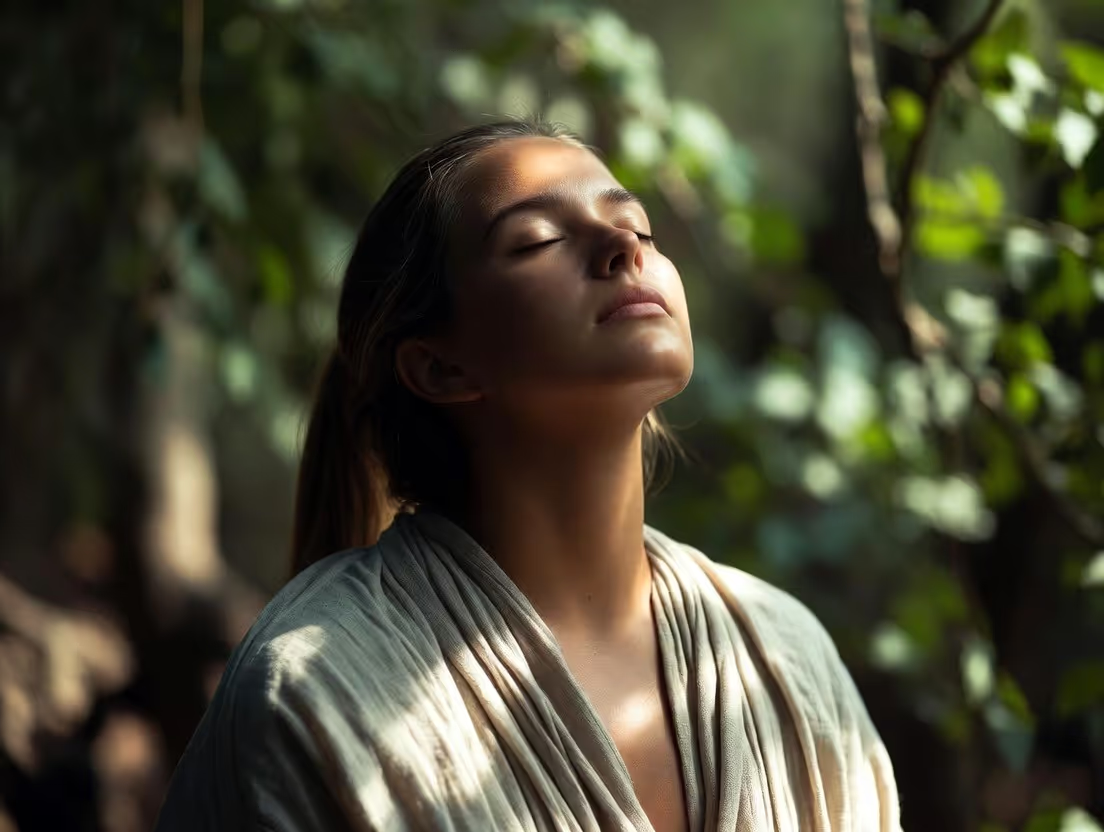
Stress doesn't live only in the mind; it embeds itself in the body. It's the clenched jaw, the tightened shoulders, the knot in the stomach. A purely cognitive approach to stress management can sometimes leave this physical residue untouched. This is where the profoundly physical nature of many creative acts delivers a direct, somatic solution.
Art as Physical Release:
Music as a Somatic Experience:
Writing and the Mind-Body Link:
While less overtly physical, writing can have profound somatic effects. The act of releasing suppressed thoughts and emotions (via expressive writing) has been shown to reduce physical symptoms of stress, such as headaches and muscle pain. Furthermore, the posture of writing—especially handwriting—can be grounding. The tactile feel of pen on paper, the rhythm of your hand moving, creates a gentle, rhythmic physical anchor in the present moment.
The principle here is embodied creativity. It’s about choosing creative activities that get you out of your head and into your senses. By focusing on the feel of the material, the movement of your body, or the resonance of sound, you pull awareness away from anxious thoughts and into physical sensation. This is a cornerstone of somatic therapies for anxiety and trauma. Paying attention to how your body responds after a creative session—the feeling of looseness, the settled breath—is a powerful feedback loop. For a comprehensive look at how physical and mental metrics intertwine, the company information and mission of biometric-focused wellness firms often emphasize this holistic, embodied approach to health data.
The space and mindset in which you create are not trivial details; they are foundational to the practice. Creating a personal sanctuary—both physical and psychological—signals to your brain that it is time to transition from the stress of daily life into a space of safety and exploration. This ritualization lowers the activation energy needed to begin, making the practice more sustainable.
Crafting the Physical Space (Even a Tiny One):
You do not need a sun-drenched studio.
Establishing the Psychological Ritual:
The ritual is the bridge from the external world to your internal creative state.
Time as a Sacred Container:
Block time in your calendar as you would for an important appointment—with yourself. Even 15-20 minutes can be transformative. Protect this time fiercely. This act of self-prioritization is, in itself, an anti-stress statement. It declares that your well-being is non-negotiable.
Your creative sanctuary is a refuge. It's a place where the metrics and pressures of the outside world are left at the door. While we champion the use of technology like smart rings to inform your wellness habits, the creative sanctuary is where you step away from quantification and into pure qualitative experience. It's a balance between using data to understand your patterns and then using creativity to transcend them. This philosophy of balanced self-care is often reflected in the vision & values of organizations dedicated to holistic well-being.
While each creative path is powerful alone, their combination can create a synergistic effect, engaging different parts of the brain and emotional self for a more comprehensive release. Think of it as a full-spectrum approach to emotional processing.
Art-Informed Writing:
Music as the Soundtrack to Visual Art:
Writing to Music, Writing for Music:
The Integrated Creative Session:
Design a personal workshop. For example:
This multi-modal approach ensures that if one channel feels blocked, another can open. It honors the complexity of human emotion, which is rarely just one thing, and provides multiple avenues for its expression. Exploring these combinations is a lifelong creative journey, and additional resources on artistic wellness practices can offer endless inspiration and technique.
This brings us to a fascinating intersection of ancient practice and modern technology. The benefits of creative expression—felt subjectively as calm, clarity, or joy—are now increasingly quantifiable. Devices like advanced smart rings (such as those developed by Oxyzen) can track physiological markers of stress and recovery, providing objective feedback on the efficacy of your creative routines.
Key Metrics That Tell the Story:
Creating a Personal Feedback Loop:
This isn't about making creativity another performance metric. It's about using data for motivation and insight.
This biofeedback transforms creativity from a "nice idea" into a documented, essential component of your physiological well-being. It provides compelling, personal evidence to overcome inertia or self-doubt. Seeing a tangible graph of your body calming down after a creative act is a powerful reinforcement to keep the practice alive. For those curious about the technology that enables such precise personal insight, you can learn more about smart ring technology and its applications in personalized health and wellness optimization.
Understanding the theory and science is one thing. Living it is another. The true antidote to chronic stress is not the occasional creative binge, but the consistent, integrated practice—the small, daily doses that act as a buffer against life's cumulative pressures. The goal is not to add another burdensome "should" to your list, but to seamlessly weave threads of creativity into the existing tapestry of your day, transforming mundane moments into micro-opportunities for expression and release.
The Myth of "Not Enough Time" and the Power of Micro-Sessions:
The most common blockade is time. The solution is to dismantle the idea that creativity requires an uninterrupted hour in a sacred space. Therapeutic creativity thrives in fragments.
Habit Stacking for Effortless Integration:
Link your creative practice to an existing, well-rooted habit. This leverages the established neural pathway.
Creating a "Creativity First-Aid Kit":
Have tools physically and digitally at the ready for when stress strikes unexpectedly.
The Role of the Environment (Revisited in Practice):
Your environment should nudge you toward practice. Leave your journal open on the bedside table. Keep your guitar on a stand, not in the closet. Have a sketchbook next to the couch. These visual cues reduce friction and make the choice to create the default, easy choice.
Tracking for Motivation, Not Judgment:
Use a simple calendar or habit tracker—not to shame yourself for missed days, but to visually celebrate streaks of practice. The focus is on consistency, not duration or quality. Seeing a chain of X's or colored-in dots builds a powerful visual reinforcement of your commitment to self-care. This subjective tracking can be wonderfully complemented by the objective data from a wellness device. Noticing that on months where your creative practice calendar is full, your sleep scores and stress indicators also show marked improvement creates a powerful, holistic confirmation of your efforts. Many users share these kinds of synergistic discoveries when discussing real customer reviews and user experiences with integrated wellness systems.
The daily practice is what transforms creativity from a hobby into a core coping mechanism. It builds resilience not through grand gestures, but through the quiet, repeated assertion that you have a tool, and you know how to use it. It’s the difference between having an umbrella in the closet and knowing to carry it with you when the clouds gather.
Even with the best intentions, you will face days when the blank page glares, the instrument feels alien, and every mark seems wrong. This resistance is not a sign of failure; it is an intrinsic part of the creative process and, by extension, the therapeutic journey. Learning to navigate these blocks with compassion is as crucial as the practice itself.
Understanding the Source of the Block:
Resistance is often a protective mechanism. It can stem from:
Strategies to Gently Bypass Resistance:
Reframing the Block as Part of the Process:
In many artistic traditions, the block or the "fallow period" is seen as a necessary phase of germination. Ideas and emotional energies are composting underground. Your job during a block is not to force production, but to engage in gentle, curious self-care. Go for a walk. Take a bath. Let the mind wander. The block may be your system's way of demanding a different kind of rest or input.
Remember, the therapeutic goal is the attempt, not the masterpiece. Showing up to the page, the canvas, or the instrument with kindness on a blocked day is a profound act of self-loyalty. It reinforces that this practice is a relationship you maintain in all seasons, not a tool you use only when it's easy. This very philosophy of persistence through cycles is often echoed in the brand journey and founding story of companies built on long-term wellness visions, where breakthroughs follow periods of challenge.
The acute stress relief felt after a single creative session is valuable, but the true transformative power lies in the neuroplastic changes fostered by sustained practice. Just as regular physical exercise builds muscular and cardiovascular endurance, regular creative exercise builds cognitive and emotional endurance. It fundamentally alters your brain's default responses to stress over time.
Building Cognitive Flexibility:
Creative expression is, at its core, an exercise in problem-solving under constraints (the blank page, the scale, the grammar of a sentence). Regularly engaging in this strengthens the brain's ability to generate alternative solutions, see different perspectives, and adapt to new information. This cognitive flexibility is the mental antithesis of rigid, catastrophic thinking—a hallmark of anxiety. When a life stressor arises, a brain trained in creativity is more likely to brainstorm adaptive solutions rather than ruminate on the threat.
Strengthening the "Observer Self":
Through practices like expressive writing or reflective art-making, you repeatedly take internal experiences and objectify them. You move from "I am anxious" to "I am experiencing anxiety, and here is what it looks like on the page." This nurtures the "observer self"—the part of your consciousness that can witness thoughts and feelings without being completely fused with them. This metacognitive skill is a cornerstone of mindfulness-based stress reduction and is highly protective against being hijacked by emotional storms.
Enhancing Emotional Granularity:
Creative practice refines your ability to identify and differentiate emotions. Instead of a generalized "stress," you might, through writing, discover it's a mix of "frustration at a lack of control" and "sadness over a missed connection." Through color and form, you might express a nuanced blend of "energized yellow hope" layered over "heavy blue grief." This emotional granularity, studied by neuroscientist Lisa Feldman Barrett, is powerful. The more precisely you can name an emotion, the more effectively you can regulate it. You move from a state of vague distress to having a specific target for compassion and processing.
Cultivating a Growth Mindset:
Every creative session involves small failures and corrections—a wrong note, a color that doesn't work, a sentence that clunks. In a therapeutic context, these aren't failures; they are data points. Regularly engaging in a process where "mistakes" are expected and integrated teaches the brain that setbacks are not permanent or defining, but are part of learning and exploration. This growth mindset directly combats the fixed, helpless mindset that chronic stress can engender.
The Cumulative Effect: A New Default Setting:
Over months and years, this consistent practice doesn't just help you manage stress when it happens; it changes your baseline. The neural pathways associated with flow, focused attention, and emotional differentiation become stronger and more accessible. The pathways of rumination and panic become weaker from disuse. You are not just applying a salve to wounds; you are building a tougher, more resilient skin.
This long-term rewiring is the ultimate goal. It’s about moving from using creativity as a reaction to stress, to living creatively as a proactive state of being. This shift is deeply personal and unfolds at its own pace. For those interested in the interplay of long-term habit formation and measurable physiological change, the about-us page and mission of data-informed wellness companies often articulate this commitment to sustainable, evidence-based transformation.
We live in an age of unprecedented self-knowledge. While the creative process is inherently subjective and qualitative, wearable technology provides a layer of quantitative, objective data that can inform, motivate, and personalize your practice in remarkable ways. This isn't about letting a device dictate your art; it's about using it as a translator for your body's silent language.
From Guesswork to Guided Insight:
Most of us are poor judges of our own stress levels in real-time. We might normalize a clenched jaw or ignore rising irritation until we snap. A smart ring like Oxyzen’s acts as a continuous, passive biofeedback sensor, revealing patterns you might miss.
Validating Subjective Experience:
That deep sense of calm you feel after an hour of painting? The data can confirm it. Seeing a tangible dip in your heart rate and a rise in your HRV after a creative session provides powerful validation. It transforms a felt sense of "that was nice" into a documented "that was physiologically restorative." This positive reinforcement strengthens the habit loop, making you more likely to return to the practice.
Using Data for Recovery, Not Pressure:
The key is to let the data serve you, not judge you. If your device shows poor sleep and high overnight stress, instead of feeling discouraged, you can frame it as: "My body is signaling a need for extra recovery today. Perhaps my creative practice tonight should be especially gentle—maybe just coloring or listening to ambient music, rather than tackling a challenging new piece." It guides you toward the type of creative expression that would be most nurturing in that moment.
The Future of Personalized Creative Wellness:
Imagine a scenario where your wellness device, recognizing a sustained period of high stress, sends a gentle notification: "Your body signals suggest heightened tension. Consider a 5-minute focused breathing exercise or a guided drawing prompt." The device could then link you to a resource, perhaps from a platform like the Oxyzen blog, offering a specific, five-minute "stress-doodle" tutorial. This seamless integration moves wellness from generic advice to hyper-personalized, context-aware support.
This symbiotic relationship between human intuition and machine insight represents the cutting edge of holistic self-care. The creativity comes from you; the data simply helps you listen to yourself more clearly and respond more effectively. To explore the possibilities of this integrated approach, you can discover how Oxyzen works to bridge the gap between biometric insight and actionable, human-centric wellness practices.
Now we arrive at the synthesis. With an understanding of the modalities, the science, the barriers, and the potential role of technology, you are equipped to design a personalized, sustainable plan. This is not a rigid prescription, but a flexible blueprint you can adapt to the seasons of your life and stress.
Step 1: The Self-Assessment (The Creative Inventory)
Start by looking inward with curiosity, not criticism.
Step 2: Start with One Anchor Practice
Choose one of the three pillars (Art, Music, Writing) that feels most accessible or appealing right now. Commit to a micro-practice (5-10 minutes) of that modality, 3 times a week, for two weeks. For example: "I will write three longhand 'morning pages' every Tuesday, Thursday, and Sunday before breakfast."
Step 3: Build Your Support System
Step 4: Schedule and Ritualize
Block the time in your calendar. Design your entry ritual (the cup of tea, the deep breath, the specific playlist). This formalizes the commitment.
Step 5: Embrace the Cycle of Practice, Block, and Break
Accept that some weeks will flow and others will stall. Have your "block-busting" strategies ready. Permit yourself to take a complete break for a few days if needed, trusting that you will return. The plan is a map, not a prison.
Step 6: Review and Evolve
After a month, reflect. What felt good? What felt forced? Did you notice any shifts in your mood or stress levels? Use this reflection—and any supporting biometric data—to adjust. Maybe you need to switch from writing to drawing. Maybe your optimal time is evening, not morning. The plan evolves with you.
A Sample Integrated Weekly Blueprint:
This blueprint is yours to architect. The most sophisticated plan is worthless if it feels like a chore. The goal is to cultivate a sense of playful curiosity, where creative expression becomes a trusted companion on your journey toward a less stressed, more vibrant life. For continued inspiration and to see how others have structured their journeys, exploring related articles and further reading on creative wellness can provide a steady stream of fresh ideas and community wisdom.
The journey of using creative expression for stress relief begins as a deeply personal endeavor, but its benefits rarely stay contained. As you cultivate internal calm and resilience, the effects ripple outward, positively influencing your relationships, your work, and your engagement with the world. This is the expansive, often unexpected, reward of the practice.
In Relationships: From Reaction to Response
A stressed nervous system is often a reactive one—prone to snap judgments, emotional volatility, and poor listening. As creative practice strengthens your emotional regulation and observer self, you bring a calmer, more present presence to your interactions. You become better able to listen without immediately formulating a defense, to empathize with another's perspective (a skill honed through character writing or interpreting art), and to respond thoughtfully rather than react impulsively. The patience learned from navigating a creative block translates directly into patience with a partner, child, or colleague.
In Professional Life: Enhanced Problem-Solving and Innovation
The cognitive flexibility and comfort with ambiguity developed through regular creative practice are directly transferable to the modern workplace. You become more adept at brainstorming unconventional solutions, viewing challenges from multiple angles, and tolerating the "messy middle" phase of projects where the path isn't clear. The flow state experienced in creativity is the same state sought for deep, productive work. By training your brain to enter flow in your personal time, you make it more accessible during work tasks, leading to greater engagement and reduced burnout.
Cultivating a Sense of Purpose and Meaning:
Chronic stress can shrink our world to a tunnel of immediate pressures. Creative expression re-opens that aperture. It connects you to a lineage of human makers and storytellers. The act of creating—of adding something, however small, to the tapestry of human experience—fosters a sense of agency and contribution. Whether it's a poem, a melody, or a painting seen only by you, you are engaging in a fundamental human act of meaning-making. This counters the existential anxiety that often underlies modern stress.
Modeling Resilience for Others:
When you prioritize creative self-care, you silently give others permission to do the same. In a family, a parent who takes time to draw or play music models healthy coping for children. In a team, a leader who values reflective space and creative thinking fosters a healthier culture. Your personal practice becomes a quiet, powerful form of leadership by example, demonstrating that well-being is not a luxury, but the foundation of a sustainable, contributive life.
This outward ripple is perhaps the most beautiful argument for creative wellness: it is not a selfish act, but a generative one. By healing and strengthening yourself, you become a more compassionate, innovative, and grounded participant in the world. The story of personal transformation through such practices is powerful, and it mirrors the vision & values of organizations that believe in technology's role in empowering individuals to live more fully and contribute more meaningfully.
Your Trusted Sleep Advocate: Sleep Foundation — https://www.sleepfoundation.org
Discover a digital archive of scholarly articles: NIH — https://www.ncbi.nlm.nih.gov/
39 million citations for biomedical literature :PubMed — https://pubmed.ncbi.nlm.nih.gov/
Experts at Harvard Health Publishing covering a variety of health topics — https://www.health.harvard.edu/blog/
Every life deserves world class care :Cleveland Clinic - https://my.clevelandclinic.org/health
Wearable technology and the future of predictive health monitoring :MIT Technology Review — https://www.technologyreview.com/
Dedicated to the well-being of all people and guided by science :World Health Organization — https://www.who.int/news-room/
Psychological science and knowledge to benefit society and improve lives. :APA — https://www.apa.org/monitor/
Cutting-edge insights on human longevity and peak performance:
Lifespan Research — https://www.lifespan.io/
Global authority on exercise physiology, sports performance, and human recovery:
American College of Sports Medicine — https://www.acsm.org/
Neuroscience-driven guidance for better focus, sleep, and mental clarity:
Stanford Human Performance Lab — https://humanperformance.stanford.edu/
Evidence-based psychology and mind–body wellness resources:
Mayo Clinic — https://www.mayoclinic.org/healthy-lifestyle/
Data-backed research on emotional wellbeing, stress biology, and resilience:
American Institute of Stress — https://www.stress.org/


