


Stress Relief Through Movement: Exercise Prescriptions for Anxiety
Movement prescriptions include aerobic exercise to burn off stress hormones and mind-body practices like yoga to regulate the nervous system.
Movement prescriptions include aerobic exercise to burn off stress hormones and mind-body practices like yoga to regulate the nervous system.
%402x.svg)
In the quiet hum of modern life, a familiar tension lives in our bodies—a clenched jaw after a difficult meeting, a tight chest before a big presentation, a restless night spent replaying the day’s worries. This isn't just "feeling stressed." This is anxiety, a physiological state that has woven itself into the fabric of our daily existence. We've tried meditation apps, breathwork podcasts, and countless cups of calming tea, often with one eye still on our overflowing inbox. Yet, we overlook the most powerful, innate, and readily available anti-anxiety tool we possess: our body's capacity for movement.
For decades, the conversation around anxiety treatment has been largely cognitive, focused on the mind. But groundbreaking neuroscience reveals a profound truth: anxiety doesn't start as a thought; it begins as a physical sensation. It's a cascade of hormones, a firing of nerves, a preparation of muscles for a threat that often isn't physically there. To calm the mind, we must first address the body. This is not about training for a marathon or achieving a new personal best. This is about exercise as prescription—a targeted, deliberate, and scientifically-grounded use of movement to directly downregulate the nervous system, recalibrate stress hormones, and rebuild a sense of safety within your own skin.
This guide moves beyond the generic advice to "just exercise more." We will delve into the precise "how," "why," and "when" of using movement as medicine for anxiety. We'll explore how different forms of exercise function like different pharmaceuticals in a toolkit—some fast-acting for acute panic, others for long-term resilience. You'll learn to read your body's unique signals and craft a personalized movement protocol. Furthermore, we'll examine how modern technology, like the advanced biometric tracking from Oxyzen smart rings, is revolutionizing our ability to measure the invisible, providing real-time feedback on how movement directly alters your stress response, heart rate variability, and sleep quality—offering a data-driven path to peace.
Your journey from anxious to anchored begins with a single, intentional step. Let's explore how to move your way back to calm.

To effectively use movement as medicine, we must first understand the illness. Anxiety is not a character flaw or an overactive imagination; it is a primal, hardwired survival system gone awry. This system, the autonomic nervous system (ANS), operates like the body's automatic pilot, regulating functions we don't consciously control: heart rate, digestion, respiration, and arousal.
The ANS has two main branches that work in a delicate balance:
In a state of chronic anxiety, the SNS is perpetually idling too high, while the PNS is suppressed. The body exists in a state of low-grade emergency, interpreting the modern world's psychological stressors as existential physical threats. The key to treatment is not to vilify the SNS—it keeps us alive—but to strengthen the capacity and tone of the PNS to apply the brake effectively.
This is where movement enters the equation not as a stressor, but as a teacher. When we engage in deliberate physical activity, we essentially simulate a controlled "fight-or-flight" scenario in a safe context. We elevate the heart rate, we engage our muscles, we mobilize energy. Then, crucially, we stop. This repeated cycle of controlled stress followed by recovery teaches the nervous system a vital lesson: "The alarm was sounded, we mobilized, the event passed, and we are safe." This process builds neurobiological resilience. It recalibrates the hypothalamic-pituitary-adrenal (HPA) axis, the body's central stress response system, making it less reactive over time.
By tracking this process with a device like an Oxyzen ring, you move from guesswork to precision. You can see your heart rate rise during exercise and, more importantly, observe how quickly your Heart Rate Variability (HRV)—a key metric of nervous system flexibility and recovery—improves afterward. This tangible data, visible on your smartphone, transforms an abstract concept like "nervous system regulation" into a measurable, manageable goal. For a deeper dive into the science of biometric tracking, our blog features ongoing research on how these metrics correlate with mental well-being.
Understanding this biology empowers us. It means that the jittery feeling, the rapid pulse, the tense muscles—these are not signs you are failing. They are signs that a deeply ancient, protective system is activated. And with the right movements, you can compassionately show it that it's okay to stand down.
We often believe our thoughts create our feelings: "I'm thinking about this stressful event, therefore my heart is racing." However, modern psychology and neuroscience increasingly support the inverse pathway: our bodily sensations can be the primary drivers of our emotional and cognitive state. This is the foundational principle of interoception—the sense of the internal state of the body.
An individual with high anxiety often has a hyper-alert interoceptive awareness, but it's mis-tuned. A normal flutter in the stomach is interpreted as dread. A slightly elevated heart rate from caffeine signals impending panic. This creates a vicious, self-reinforcing cycle:
Exercise directly disrupts this loop at its source—the body. It does so in two powerful ways:
First, it creates unambiguous, "safe" physical sensations. When you're on a brisk walk or lifting a weight, you expect your heart to pound, your breath to quicken, and your muscles to burn. You cognitively re-associate these intense physical feelings with a positive, controlled activity rather than an unknown threat. This is a form of exposure therapy. You're teaching your brain that a racing heart can mean "I am strong and active," not just "I am in danger."
Second, consistent movement improves interoceptive accuracy. Practices like yoga, tai chi, and mindful running train you to observe bodily sensations with curiosity rather than fear. You learn to distinguish between the ache of muscle growth and the pang of digestive upset, between the breathlessness of exertion and the breathlessness of panic. This refined awareness gives you a crucial moment of pause between sensation and reaction—a space where choice resides.
This is where the narrative of your body can be rewritten. Instead of your body being a source of frightening, unpredictable signals, it becomes a source of strength and information. The story of Oxyzen's founding mission is rooted in this very idea: that by giving people clear, actionable insight into their body's signals, we can empower them to break free from these negative cycles and build a more compassionate relationship with themselves.

If we were to choose a single, most telling metric for anxiety and stress resilience, it would be Heart Rate Variability. HRV has moved from the realm of elite athletic training into the core of personalized wellness because it provides a stunningly clear window into the autonomic nervous system.
Contrary to what one might assume, a healthy heart does not beat with the monotonous regularity of a metronome. The time interval between successive heartbeats fluctuates by milliseconds. This variability is a sign of a heart that is responsive and adaptable. High HRV indicates a strong, flexible nervous system—one that can swiftly accelerate in response to a challenge and then powerfully apply the brakes to recover. Low HRV, conversely, signals a stressed, rigid, or fatigued nervous system that is stuck in a state of alert, struggling to shift into recovery mode. Chronically low HRV is a significant correlate with anxiety disorders, depression, and burnout.
Movement is one of the most potent levers we have to improve HRV. But the relationship is nuanced and follows a "Goldilocks" principle:
This is why "just work out harder" is not only ineffective for anxiety but can be counterproductive. The goal is to use movement to train your recovery, not just your performance.
Modern wearables like the Oxyzen ring make tracking HRV accessible and practical. Instead of guessing, you can see on a daily basis how your nervous system is responding to your lifestyle. Did that morning yoga session boost your HRV last night? Did a stressful work week suppress it? Did a long walk in nature bring it back up? This biofeedback turns self-care into a science. You can experiment and see direct evidence of what works for your unique physiology. For those curious about the specifics of how this technology works, our FAQ page details the sensors and algorithms that make this precise tracking possible.
By focusing on HRV, we shift the goal of exercise from burning calories to building nervous system resilience. The rep in the gym or the step on the trail becomes a direct investment in your biological capacity for calm.
When anxiety strikes with a sharp, sudden intensity—the wave of panic, the surge of restless energy that feels like it will burst out of your skin—slow, mindful movement can feel impossible. The body is screaming to move, fight, flee. In these moments, the most effective prescription is to meet the energy where it is and give it a structured, safe outlet. This is the role of High-Intensity Interval Training (HIIT).
HIIT involves short, all-out bursts of exertion (20-60 seconds) followed by equal or longer periods of active recovery. It works as a panic interrupter for several reasons:
Sample "Panic Interrupter" Protocol (7-10 minutes total):
Crucial Caveat: HIIT is a powerful tool, but it is not for daily use for someone with chronic anxiety. It is a strategic intervention for acute states. Overuse can lead to the overtraining syndrome and lower HRV discussed earlier. The key is to follow it with deliberate recovery. Using your Oxyzen ring to monitor your post-HIIT recovery can be enlightening; you can literally watch your heart rate descend and your nervous system settle, providing objective proof that you successfully navigated the storm.
If HIIT is the emergency responder, steady-state cardio is the steadfast therapist building long-term capacity. This involves maintaining a moderate, consistent intensity for a prolonged period (30-60 minutes)—think brisk walking, jogging, cycling, or swimming at a pace where you can hold a conversation but not sing.
This "therapeutic zone" of exercise, often around 60-70% of your maximum heart rate, is where magic happens for the anxious mind. It stimulates the release of Brain-Derived Neurotrophic Factor (BDNF), a protein that acts like fertilizer for the brain, promoting neural health, growth, and resilience, particularly in the hippocampus—a brain region crucial for memory and emotion regulation that is often impaired by chronic stress.
But the benefits extend beyond biochemistry. The rhythmic, repetitive nature of running, swimming, or walking induces a meditative state. It creates a "moving mindfulness" where the constant, gentle demand on the body helps quiet the cyclical "what-if" thoughts of anxiety. The mind is given just enough to focus on—the rhythm of your breath, the sound of your feet on the pavement—that it can release its grip on worry.
Amplify this effect exponentially by taking your cardio into nature—a practice the Japanese call Shinrin-yoku, or "forest bathing." Studies show that exercising in green spaces lowers cortisol, blood pressure, and pulse rate more effectively than exercising indoors. The combination of rhythmic movement, fresh air, and the visually "soft", unfocused attention required by natural environments is a potent triple-therapy for an overstimulated nervous system.
Creating Your Resilience Routine:
Many users of Oxyzen smart rings have shared in our testimonials how tracking these steady-state activities showed them direct correlations between consistent movement, improved sleep scores, and a calmer baseline HRV, turning an abstract wellness goal into a motivating, data-backed journey.
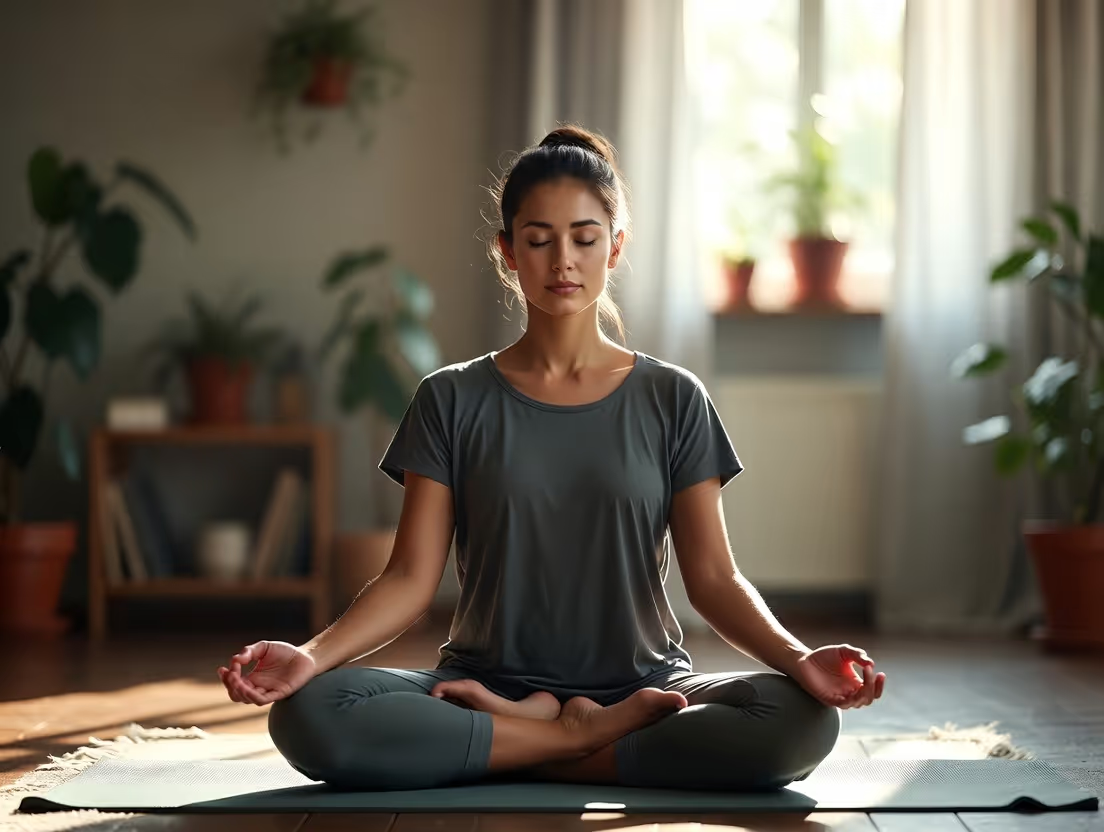
When anxiety manifests as dissociation—a feeling of being untethered, floating, or disconnected from your body and the present moment—high-intensity or even steady-paced cardio can sometimes feel exacerbating. What’s needed is a practice that cultivates embodiment. This is the domain of mindful, somatic practices like yoga, Tai Chi, Qigong, and Pilates.
These disciplines are not primarily about burning calories or building strength (though they do both). They are about re-inhabiting the body with awareness. They function as grounding anchors through:
Starting a Grounding Practice:
The beauty of these practices is that their benefits are immediately accessible. You don't need to be drenched in sweat to feel the shift; a sense of grounding and presence can be achieved in just a few minutes. It’s about quality of attention, not quantity of exertion. This philosophy of mindful, data-informed awareness aligns closely with our values at Oxyzen, where we believe technology should enhance, not replace, this deep inner connection.

Anxiety doesn't just live in the mind; it crystallizes in the body. It’s the rock-hard shoulders, the clenched jaw, the tight hips. This is muscular armoring—the body's attempt to physically protect itself from perceived threat. While mindful movement teaches release, sometimes tension needs to be actively worked through. This is the role of strength training.
Lifting weights or using resistance bands is a form of controlled, productive struggle. You are quite literally engaging with resistance, and in doing so, you:
Designing an Anti-Anxiety Strength Protocol:
Strength training reframes your relationship with your body from a source of symptoms to a source of strength. It is an active, empowering dialogue with physical sensation. Tracking your recovery from these sessions through biometrics can help you find the optimal frequency and volume to build strength without overtaxing your system—a balance many explore using the detailed insights from their Oxyzen wellness tracker.
In a culture obsessed with optimization and "more," the most radical and essential component of an anti-anxiety movement prescription is strategic rest. Exercise creates the stimulus for adaptation, but it is during rest—sleep, relaxation, and gentle movement—that the nervous system actually repairs, strengthens, and grows more resilient. Ignoring recovery is like writing checks your body can't cash, leading to the dreaded state of overtraining where HRV plummets and anxiety soars.
Recovery is not passive; it is an active skill to be cultivated. It encompasses:
Listening to your body's signals for rest is a skill honed over time. Technology can serve as an invaluable coach here. A device that tracks your HRV, resting heart rate, and sleep architecture provides an objective report card on your recovery status. Waking up to a low HRV score and a high resting heart rate is a clear, data-driven message from your body: "Today is a day for gentle movement or rest, not intensity." Honoring that data prevents the boom-bust cycle that fuels anxiety.
Learning to embrace recovery is learning to respect the wisdom of your own biology. It’s understanding that you are not a machine to be driven, but a complex, living system that thrives on rhythm—the rhythm of exertion and ease, of engagement and surrender. For support in interpreting your body's signals and building a sustainable rhythm, our community and resources at Oxyzen.ai are designed to guide you.
With an understanding of the different "medicines" in the movement toolkit, the next step is the most personal: crafting your own protocol. There is no one-size-fits-all prescription for anxiety. Your perfect regimen depends on your unique neurobiology, your current stress load, your lifestyle, and even your preferences. The process is one of compassionate experimentation.
Step 1: Establish a Baseline (Listen).
Before launching into a new plan, spend a week simply observing. Note your energy levels, mood, and anxiety patterns throughout the day. If you have a biometric tracker, note your waking HRV and resting heart rate. Don't judge, just collect data. This establishes your starting point.
Step 2: Start Small & Add Variety (Experiment).
Choose one foundational practice to commit to for two weeks. This might be a 20-minute daily walk (Resilience Cardio) or a 15-minute gentle yoga video every other day (Grounding). Consistency with a small habit is infinitely more valuable than an ambitious plan you abandon. After two weeks, assess. How do you feel? Then, consider adding a second element. Perhaps you add one strength session per week (Tension Release) while keeping your daily walks.
Step 3: Use Data & Sensation as Your Guide (Adapt).
Your body and your data are your primary guides. Ask yourself:
If you feel frayed and your data shows low HRV, scale back intensity and prioritize recovery. If you feel stagnant and energized, you might carefully add more challenge. Your protocol is a living document, not a rigid contract. It should change with your life's seasons, stress levels, and goals.
This iterative, self-aware approach is at the heart of modern, personalized wellness. It moves us from following generic fitness trends to becoming the expert on our own well-being. For inspiration and to see how others have navigated this journey, you can read real-world stories in our collection of user testimonials and experiences.
In the journey of using movement to manage anxiety, intention is the first step, but insight is the catalyst for lasting change. For generations, we've relied on subjective feeling alone—"I think that run helped." While valuable, this leaves us vulnerable to misinterpretation and the placebo (or nocebo) effect. Today, wearable technology bridges the gap between subjective experience and objective physiology, transforming self-care from an art into a science-informed practice.
A sophisticated wellness tracker like the Oxyzen ring acts as a 24/7 biofeedback lab on your finger. It measures what you cannot feel:
How does this translate to practical anxiety management?
Technology is not meant to make you obsessive or override your intuition. Its highest purpose is to refine your intuition. It educates your inner sense, helping you distinguish between a lazy day and a needed recovery day, between good stress (eustress) that builds resilience and bad stress that breaks it down. To explore the full capabilities of this approach to guided insight, you can learn more about the Oxyzen system here.
By integrating this layer of insight, you become an active participant in your own well-being, equipped with knowledge that empowers every step, every breath, and every moment of rest on your path to lasting calm.
For nearly half the population, the blueprint for an effective anti-anxiety movement protocol requires a crucial, often overlooked, layer of personalization: the menstrual cycle. Hormonal fluctuations are not a glitch; they are a powerful, predictable rhythm that dramatically influences energy, mood, resilience to stress, and even injury risk. Exercising in harmony with this rhythm—a practice known as cycle syncing—can transform movement from a potential stressor into a precise tool for hormonal balance and emotional stability.
The cycle is divided into four key phases, each with its own hormonal signature and corresponding exercise prescription:
1. The Menstrual Phase (Days 1-5: Low Estrogen & Progesterone)
2. The Follicular Phase (Days 6-14: Rising Estrogen)
3. The Ovulatory Phase (Days 14-17: Peak Estrogen)
4. The Luteal Phase (Days 18-28: Rising then Falling Progesterone)
Tracking this rhythm, whether through a simple calendar or integrated biometric data, is revolutionary. Imagine knowing that a spike in anxiety in your late luteal phase is hormonally predictable and that a long, mindful walk is not just a nice idea but a targeted, physiological intervention. Technology that tracks physiological markers like basal body temperature and resting heart rate (which often rises in the luteal phase) can provide even deeper personalization, helping you distinguish between cycle-related sensations and other stress triggers. For more on how personalized data informs wellness, the Oxyzen blog regularly explores the intersection of biology and technology.
Anxiety is, at its core, an isolating experience. It convinces you that you are alone in your struggle, that your internal chaos must be hidden. This isolation is not just a symptom; it is a fuel for the fire. Conversely, one of the most potent—and often underutilized—elements of an exercise prescription is social connection. Moving with others transforms a physiological intervention into a profoundly psychological and emotional one.
The benefits of social movement are multilayered:
Implementing the Social Prescription:
The stories we hear from our community at Oxyzen often highlight this synergy. Users will share how tracking their HRV showed a more significant calming effect after a social hike with friends compared to a solitary gym session, providing data-backed proof of connection’s power. It’s a reminder that healing is not a solitary pursuit. As explored in our story, human-centric connection is a core value that guides how we develop technology meant to enhance well-being.
We have addressed movement and we have addressed recovery. But there is a single, constant thread that weaves them together and directly commands the state of the nervous system: the breath. Breath is the remote control for the autonomic nervous system, and intentional breathing—pranayama—is the most powerful tool you can integrate into any movement practice to amplify its anti-anxiety effects.
Breathing is unique among autonomic functions; it happens automatically, but we can also take conscious control of it. By doing so, we send direct signals to the brainstem, influencing heart rate, blood pressure, and stress response.
Key Breath Practices to Integrate:
1. Diaphragmatic Breathing (The Foundation):
2. Coherent Breathing (The Harmonizer):
3. Cyclic Sighing (The Acute Calmer):
4. Box Breathing (The Focus Intensifier):
By consciously marrying breath with movement, you elevate physical exercise into a integrated somatic practice. You are no longer just moving your limbs; you are actively steering your nervous system throughout the journey. The beauty of modern biometrics is that you can see this effect in real-time. Watching your heart rate drop and your HRV improve during a coherent breathing session on your Oxyzen ring provides irrefutable, motivating feedback that this "soft" practice has a "hard" scientific impact. For practical guidance on starting these practices, our FAQ section offers foundational tips for integrating technology with traditional wellness techniques.
Understanding the science and crafting the perfect protocol is one thing. Taking the first step is another. For the anxious mind, the very idea of starting an exercise routine can trigger a cascade of fear-based thoughts: "What if I have a panic attack while running?" "What if people judge me at the gym?" "I tried before and failed." "I'm too tired to even start." This anticipatory anxiety is a formidable barrier, but it can be dismantled with psychological strategy.
Reframe the Goal: The goal is not to become "fit" or to complete a certain workout. The primary, non-negotiable goal is to be kind to your nervous system. Some days, kindness is a 20-minute HIIT session to burn off frantic energy. Other days, kindness is a 10-minute walk or 5 minutes of stretching. When the goal is self-regulation, not performance, there is no such thing as a failed workout. Every intentional movement is a success.
Employ the "5-Minute Rule": The hardest part is putting on your shoes and getting out the door. Commit to just 5 minutes. Tell yourself you can stop after 5 minutes if you want to. Almost invariably, once you begin, the momentum and neurochemical shift make you want to continue. But if you stop at 5, you still won. You honored your commitment and sent a calming signal to your body.
Practice Graded Exposure: If the gym triggers social anxiety, don't start there. Start at home with a YouTube video. Then, maybe go to the gym at an off-peak hour just to walk on the treadmill for 10 minutes. Then, try a machine. Slowly expand your comfort zone without flooding your system with fear.
Focus on Sensation, Not Comparison: In a world of social media fitness influencers, it's easy to think movement must look a certain way. Let go of aesthetics. During movement, tune inward. Ask: "What does this feel like in my muscles? How is my breath changing? Does this feel good?" This interoceptive focus is anti-anxiety training in itself and divorces exercise from ego.
Schedule It & Prepare: Anxiety thrives on ambiguity. Schedule your movement like a crucial medical appointment. Lay out your clothes the night before. Have your water bottle ready. Reducing friction and decision-making in the moment makes action more likely.
Remember, the resistance you feel is not a sign you shouldn't do it; it’s the anxiety itself putting up its last defenses. Each time you move despite the anxious narrative, you are not just building physical resilience; you are practicing a profound form of psychological courage. You are telling your anxiety, "I hear you, but I am doing this anyway." This act of agency is, in many ways, the core therapeutic mechanism. Seeing the tangible result of that courage—a lowered resting heart rate, improved sleep—on your wellness tracker can solidify this new, empowered identity. Reading about others who have overcome similar hurdles can provide powerful motivation, which is why we share real user experiences and testimonials.
You cannot out-move a poor diet when it comes to anxiety. The food you consume is the raw material for your neurotransmitters, the fuel for your mitochondria (the energy powerhouses of your cells), and a direct modulator of inflammation, which is increasingly linked to anxiety and depression. Think of nutrition as the essential foundation that allows your movement prescription to work effectively and your nervous system to rebuild.
Key Nutritional Principles for an Anti-Anxiety Movement Regimen:
1. Stabilize Blood Sugar: The rollercoaster of spikes and crashes in blood glucose mimics the physiology of a panic attack—shakiness, sweating, heart palpitations, and intense dread. It’s a direct assault on nervous system stability.
2. Feed Your Microbiome: The gut is often called the "second brain" due to the vast network of neurons and the production of neurotransmitters like serotonin (95% of which is made in the gut). A dysbiotic gut can directly signal anxiety to the brain via the vagus nerve.
3. Combat Inflammation: Chronic, low-grade inflammation can impair neurotransmitter function and increase the permeability of the blood-brain barrier, contributing to mood disorders.
4. Time Your Nutrients for Movement:
5. Identify Personal Triggers: Common anxiety triggers include excessive caffeine (which mimics adrenaline), alcohol (a depressant that disrupts sleep and blood sugar), and food sensitivities (like gluten or dairy for some individuals). An elimination diet, guided by a professional, can be revealing.
Nutritional biofeedback can be incredibly insightful. For instance, you might notice on your Oxyzen data that on days you skip breakfast or eat a sugary pastry, your HRV is lower and your resting heart rate is higher, even if your exercise routine stays the same. This creates a powerful feedback loop, connecting the dots between the food on your plate and the state of your nervous system. It turns eating into another intentional act of self-regulation. For more on building a holistic wellness strategy that incorporates these pillars, explore our blog for related resources.
In a fitness culture obsessed with linear metrics—pounds lost, pounds lifted, pace improved—managing anxiety requires a radical redefinition of progress. The journey is inherently non-linear. Some days you will feel strong and calm; other days, a wave of anxiety will return despite "doing everything right." This is not failure. This is the nature of healing a complex system. Therefore, your metrics for success must evolve.
Celebrate These Non-Linear Wins:
Biometric data from a tool like the Oxyzen ring is invaluable here not for daily judgment, but for trend spotting. Look at your HRV and resting heart rate averages over 30-day and 90-day periods. Is the line of progress generally sloping upward, even with dips? Those dips are not failures; they are data points that teach you about your unique stressors and resilience. This long-view perspective is antidotal to the all-or-nothing thinking that fuels anxiety.
Progress is found in the subtle shifts, the growing space between trigger and reaction, the increasing moments of embodied presence. It’s about the quality of your days, not the quantity on a scale. By focusing on these nuanced wins, you build a sustainable, compassionate practice for life—a practice supported by both ancient wisdom and modern insight. To see how this philosophy translates into the technology we build, you can learn more about our mission and approach.
Anxiety rarely travels alone. It intertwines with other physiological and psychological states, each requiring a nuanced adjustment to the movement prescription. A one-size-fits-all approach can be ineffective or even harmful. Here, we move from general principles to personalized application, examining how to adapt exercise for common co-occurring profiles.
Profile 1: Anxiety with Depression (The "Heavy" Anxiety)
Profile 2: Anxiety with ADHD (The "Restless" Anxiety)
Profile 3: Anxiety with Chronic Pain or Fatigue (e.g., Fibromyalgia, Long COVID)
Profile 4: Anxiety with Perfectionism & Exercise Avoidance
The core principle across all profiles is compassionate titration. Start far below what you think you can do, observe the effect (both in sensation and, where possible, in data), and adjust with minuscule increments. Your body’s feedback, not a generic plan, is the ultimate authority.
Where you move can be as influential as how you move. Our environments send constant signals to our nervous system. A cluttered, noisy, or high-stimulus space can keep the SNS subtly engaged, undermining the calming effects of your efforts. By intentionally crafting your movement environment, you turn space into a silent co-therapist.
1. The Sanctuary of Home:
2. Harnessing the Ultimate Biohack: Nature (The "Green & Blue" Effect):
3. Navigating the Public Gym (For Those Who Choose It):
Your environment is not a passive backdrop; it's an active participant in your nervous system's training. By making simple, intentional choices about where and how you set up your movement practice, you stack the deck in favor of calm. For ideas on creating holistic wellness environments, our blog often explores the intersection of space and well-being.
Treating exercise as an isolated "dose" of medicine taken a few times a week is helpful, but to build foundational anxiety resilience, movement must be woven into the fabric of your daily life. This is about cultivating a movement-centered lifestyle where physical activity is not an event, but a default state. This approach targets sedentary behavior—a major, independent risk factor for anxiety—by increasing Non-Exercise Activity Thermogenesis (NEAT).
Pillar 1: Redesign Your Day for Incidental Movement
Pillar 2: Integrate Movement Rituals into Daily Transitions
Pillar 3: Cultivate Play & Spontaneous Joy
This lifestyle approach ensures your nervous system receives a steady, gentle stream of regulating input all day long, preventing the buildup of tension that leads to acute anxiety episodes. It transforms your relationship with your body from one of "using it to work out" to "inhabiting it to live well."
Technology can be a brilliant ally in this shift. A smart ring like Oxyzen isn't just for tracking workouts; it's a 24/7 companion that can remind you to move after periods of inactivity, show you how your daily step count correlates with your sleep quality, and prove that those tiny movement "snacks" collectively have a massive impact on your physiological stress load. To understand how this holistic tracking works in practice, you can explore the Oxyzen system and its features.
In our quest to use movement as medicine, we must vigilantly guard against tipping into pathology. For individuals prone to anxiety and perfectionism, exercise can become a compulsive, rigid behavior—a form of "clean" anxiety coping that masks a deeper dysregulation. Exercise addiction and Overtraining Syndrome (OTS) represent the dangerous extreme where the cure becomes the poison.
Recognizing the Warning Signs:
The Physiology of Overtraining and Anxiety:
OTS is a state of profound neuroendocrine exhaustion. The HPA axis, already sensitive in anxiety, becomes dysregulated. Cortisol rhythms flatten or invert, sex hormones plummet, and the immune system is suppressed. Crucially, the nervous system loses its flexibility—it gets stuck in a stressed state. This manifests psychologically as heightened anxiety, depression, emotional lability, and brain fog. Ironically, the very tool used to manage anxiety now becomes its primary driver.
Correcting the Course:
True wellness is found in balance, not in extremes. The most sophisticated exercise prescription includes the wisdom to sometimes not exercise at all. It respects the body’s need for variation and recognizes that sometimes, the most potent movement for an anxious system is complete stillness.
In our pursuit of a calibrated, effective movement protocol, we have championed the use of biometric technology. However, for the anxious mind, data can become a double-edged sword. The very metrics meant to empower can become new sources of obsession, comparison, and anxiety. “Why is my HRV lower today?” “My friend’s sleep score is better than mine.” This turns a tool for self-connection into another vehicle for self-criticism. The goal, therefore, is mindful integration.
Principles for a Healthy Relationship with Biometric Data:
Using Data for Compassionate Inquiry, Not Criticism:
Instead of: "My sleep was terrible last night, I failed."
Try: "My data shows restless sleep. I wonder what contributed? Did I have caffeine too late? Was my mind racing? What can I experiment with tonight?"
This shifts the relationship from one of performance evaluation to one of curious self-study. It aligns with the foundational vision behind Oxyzen's development—to foster a deeper, kinder understanding of oneself. Technology, at its best, should facilitate a richer conversation between you and your body, not a louder monologue of criticism.
By wielding technology with this mindful awareness, it becomes what it was always meant to be: a powerful lens that brings the subtle, invisible workings of your nervous system into view, so you can partner with your biology in your journey toward calm.
The final, and perhaps most important, perspective shift is from viewing movement as an anxiety treatment to embracing it as a core component of your identity—the practice of a person who values resilience, embodiment, and vitality. This is the long game. It’s not about eradicating anxiety forever (an unrealistic goal), but about building a system so robust that anxiety becomes a manageable, occasional visitor rather than a permanent tenant.
Cultivating a Sustainable Practice:
This lifelong practice is the ultimate expression of self-respect. It is a daily commitment to listening to and caring for the incredible biological system that is you. It acknowledges that the body you move today is the same body that will carry you through every challenge and joy for decades to come.
The integration of mindful technology supports this long view beautifully. Looking back over a year of biometric data tells a story far more profound than any single workout. It shows you how you weathered stress, how you recovered, how your resilience grew. It provides a map of your unique path to well-being, a map you can use to navigate whatever comes next. For those ready to begin mapping their own journey, a wealth of supportive information and a community await at Oxyzen.ai.
This long-form exploration has laid the scientific, practical, and philosophical groundwork for using movement as a precise, powerful, and personalized prescription for anxiety. From the cellular mechanics of the nervous system to the psychology of habit formation, we have seen that every step, stretch, and breath is an opportunity to communicate safety to a system on high alert. The path forward is not about adding more to your life, but about transforming what you already do—move—into your most reliable source of strength and calm.
Your Trusted Sleep Advocate: Sleep Foundation — https://www.sleepfoundation.org
Discover a digital archive of scholarly articles: NIH — https://www.ncbi.nlm.nih.gov/
39 million citations for biomedical literature :PubMed — https://pubmed.ncbi.nlm.nih.gov/
Experts at Harvard Health Publishing covering a variety of health topics — https://www.health.harvard.edu/blog/
Every life deserves world class care :Cleveland Clinic - https://my.clevelandclinic.org/health
Wearable technology and the future of predictive health monitoring :MIT Technology Review — https://www.technologyreview.com/
Dedicated to the well-being of all people and guided by science :World Health Organization — https://www.who.int/news-room/
Psychological science and knowledge to benefit society and improve lives. :APA — https://www.apa.org/monitor/
Cutting-edge insights on human longevity and peak performance:
Lifespan Research — https://www.lifespan.io/
Global authority on exercise physiology, sports performance, and human recovery:
American College of Sports Medicine — https://www.acsm.org/
Neuroscience-driven guidance for better focus, sleep, and mental clarity:
Stanford Human Performance Lab — https://humanperformance.stanford.edu/
Evidence-based psychology and mind–body wellness resources:
Mayo Clinic — https://www.mayoclinic.org/healthy-lifestyle/
Data-backed research on emotional wellbeing, stress biology, and resilience:
American Institute of Stress — https://www.stress.org/


