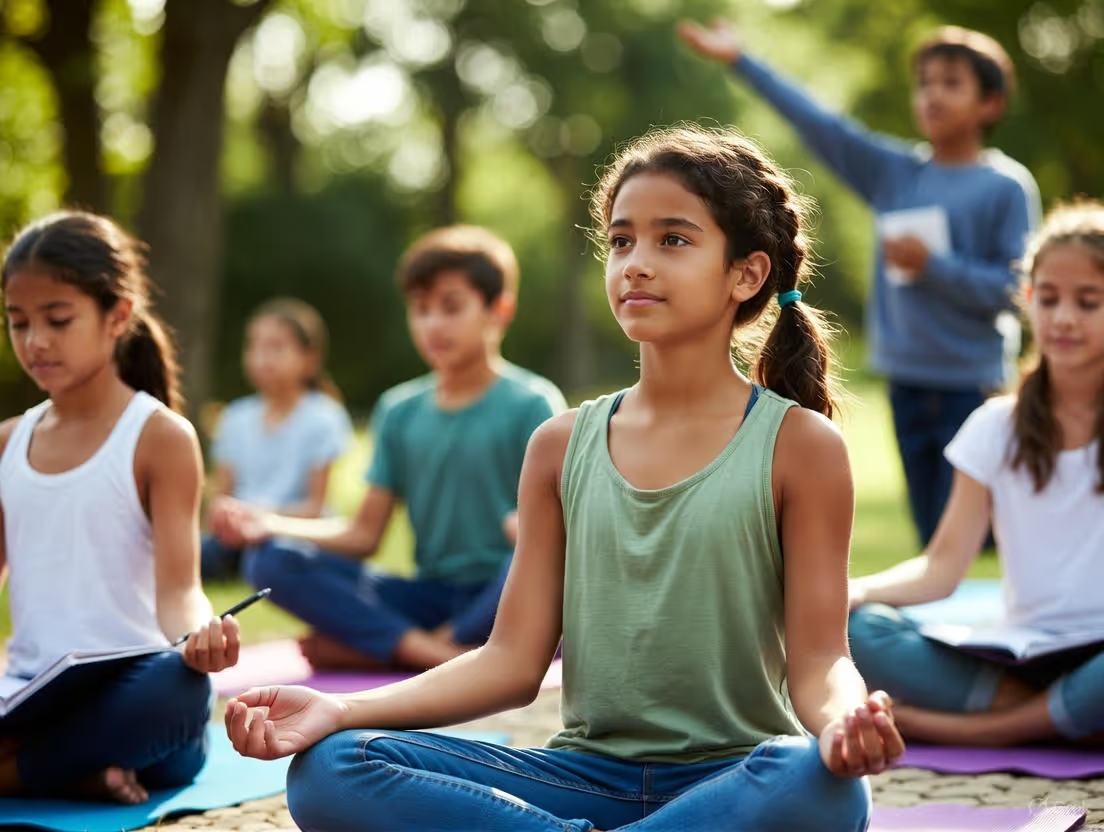
How to Teach Calm Mind Practices to Children and Teens
Teach children and teens through short, engaging practices like mindful listening, belly breathing, or gratitude exercises.
The Silent Crisis: Why Our Children's Minds Are Louder Than Ever
We picture childhood as a time of simple joys—carefree afternoons, boundless imagination, and sleep that comes as easily as breath. Adolescence, though turbulent, is often remembered through the nostalgic lens of first loves and newfound independence. But for today’s young people, the internal reality is starkly different. Beneath the surface of school days and social media feeds, a silent storm is raging. It’s a tempest of chronic worry, digital overstimulation, academic pressure, and social comparison that leaves many children and teens feeling perpetually unmoored.
Consider the data: anxiety is now the most common mental health disorder among youth, with diagnoses soaring. Sleep, the bedrock of development, is increasingly elusive, sacrificed to homework loads and the blue glow of screens. Focus fragments under the relentless pull of notifications. Emotional resilience, the ability to navigate disappointment and stress, seems like a muscle rarely exercised in a world of instant gratification and curated perfection.
This isn't just about feeling "a little stressed." This is about a generation growing up in a state of heightened, persistent neurological arousal. Their "fight, flight, or freeze" response, meant for saber-toothed tigers, is now being triggered by math tests, group chats, and the fear of missing out. The result? A deficit in what we might call a "calm mind." A calm mind isn't a vacant or passive one. It is a mind that is present, regulated, and resilient. It can feel a strong emotion without being hijacked by it. It can face a challenge without spiraling into catastrophic thinking. It can rest, truly rest, and wake up restored.
Teaching calm mind practices is no longer a complementary "nice-to-have" for children and teens; it is an essential survival skill for the 21st century. It is the anchor we must provide in the digital sea. It is the operating system upgrade for brains running on outdated, overwhelmed software. This guide is designed for parents, educators, mentors, and caregivers—anyone who holds a stake in the mental and emotional well-being of a young person. We will move beyond theory into practical, age-appropriate strategy. We will explore the neuroscience of calm, deconstruct the practices that cultivate it, and provide you with the tools to teach these life-changing skills in a way that resonates, sticks, and ultimately, empowers.
This journey is about more than managing symptoms. It’s about laying a foundation of inner awareness and self-compassion that will support your child or teen through every challenge and triumph ahead. It’s about giving them back the quiet confidence that comes from knowing how to find peace within themselves, no matter how loud the world becomes.
The Neurological Blueprint: Understanding the Young Brain Under Stress
To effectively teach calm, we must first understand the mechanics of chaos. The child and adolescent brain is not a miniature adult brain; it is a dynamic, rapidly developing construction site. Key regions mature at different rates, and this asynchronous development explains much about their emotional reactivity and capacity for regulation.
At the heart of our stress response is the limbic system, particularly the amygdala—our brain’s smoke alarm. It scans for threat and, when triggered, can instantly hijack the higher brain, shutting down rational thought and flooding the body with stress hormones like cortisol and adrenaline. In children and teens, the amygdala is highly sensitive and can be quick to sound the alarm. Meanwhile, the prefrontal cortex (PFC)—the brain’s CEO, responsible for executive functions like impulse control, emotional regulation, foresight, and reasoned decision-making—is one of the last areas to fully mature, not reaching completion until the mid-20s.
This means that a young person is often operating with a hyper-vigilant smoke alarm and a construction-site CEO. A forgotten homework assignment, a sideways glance from a peer, or an overwhelming schedule isn't just processed as a problem to solve; it can be perceived as a genuine threat, launching a full-body stress reaction. The PFC, still under construction, struggles to step in and calmly say, "This is uncomfortable, but it's not an emergency. Let's figure this out."
Modern life exacerbates this biological reality:
The Digital Onslaught: Constant notifications create a state of "continuous partial attention," preventing the brain from ever entering a truly resting state. Social media platforms are engineered to trigger dopamine-driven feedback loops that can feel rewarding but also fuel anxiety and comparison.
Performance Culture: The pressure to excel academically, athletically, and socially places a chronic, low-grade stress on the developing system, keeping cortisol levels elevated and impeding the brain's natural repair and growth processes during sleep.
Sleep Deprivation: Perhaps the most significant disruptor. Sleep is when the brain's glymphatic system clears metabolic waste, when memories consolidate, and when emotional events are processed. Chronic sleep loss, rampant among teens, leaves the amygdala even more reactive and the PFC even less effective.
The goal of calm mind practices is not to shut down the amygdala—it’s a vital protector—but to strengthen the pathways between the amygdala and the prefrontal cortex. We are essentially helping to build a stronger, more efficient “CEO office” that can receive the alarm signal, assess it accurately, and manage the response calmly. Practices like mindfulness and breathwork directly stimulate and strengthen the PFC and the insula (involved in interoception, or feeling bodily sensations), while calming the amygdala. This is the neural foundation of emotional intelligence: the ability to pause between stimulus and response.
Understanding this blueprint changes our approach. A teen’s "overreaction" is not defiance; it’s often a neurological overwhelm. Our job as guides is not to dismiss the emotion but to help them build the infrastructure to navigate it. By teaching their brain to find calm, we are doing literal, structural neuroengineering, wiring them for greater resilience, focus, and well-being for life. For those interested in how technology can support this by providing data on stress and recovery, companies like Oxyzen are exploring how wearable devices can offer insights into these physiological states, helping users recognize patterns and triggers.
Planting the First Seed: Introducing Mindfulness to Young Children (Ages 3-7)
With young children, the concept of "mindfulness" is far too abstract. We must translate it into the language of experience: noticing, playing, and exploring. The goal at this stage is not silent, seated meditation, but playful attention training. We are planting seeds of awareness that will sprout in later years.
The core principle is "noticing without judgment." We help them become curious explorers of their present-moment experience—their breath, their bodies, their senses, and their emotions. This builds the foundational skill of metacognition: the ability to observe one's own thoughts and feelings.
Making it Playful & Concrete
Breath as a Superpower: Don't say "meditate." Say, "Let's be breathing buddies!" Have them lie down with a stuffed animal on their belly and watch it rise and fall with their breath. Try "bunny breaths" (short, quick sniffs) or "dragon breaths" (long, strong exhales). Use a pinwheel or bubbles to give the breath a visible, magical effect.
Sensory Safari: Turn a walk in the park or even just sitting in the backyard into a sense-based adventure. "What are five things you can see that are green?" "Close your eyes. What are three things you can hear?" "Can you find something super smooth to touch?" This anchors them directly into the present.
Body Scan for Kids: Guide them on a "magic spotlight" journey through their body. "The warm, friendly spotlight is on your toes... can you wiggle them and say hello? Now it's shining on your knees... let's make them feel soft and relaxed." This builds body awareness and the mind-body connection.
Emotion Weather Reporting: Teach them that feelings are like weather—they come and go. "Are you feeling sunny and happy right now? Or is there a little thundercloud of frustration? It's okay, all weather passes." This externalizes the emotion, making it less intimidating.
The Adult's Role: Modeling and Weaving it In
For this age group, you are the primary practice. Your own regulated presence is their greatest teacher.
Model "I notice" statements: "I notice I'm feeling a bit wiggly. I'm going to take three deep dragon breaths."
Weave it into daily routines: A mindful moment while washing hands ("Feel the cool water and smell the soap"). A mindful bite at snack time ("What does this strawberry feel like on your tongue?").
Use stories and books: There are wonderful children's books that introduce mindfulness concepts through narrative. Read them together and talk about the characters' experiences.
Keep it short and sweet: 30 seconds to 2 minutes is plenty. The key is consistency and positive association. Make it a special, connected time, not a chore.
By framing calmness as a fun, curious exploration, we build a positive foundation. The child learns that paying attention to their inner world is safe, interesting, and even empowering. They begin to develop an internal compass, a early version of the calm mind that will serve as a refuge in the more complex storms of adolescence. For more activities and resources to engage young minds, you can always explore our blog for fresh ideas and inspiration.
Navigating the Storm: Guiding Pre-Teens (Ages 8-12) Toward Self-Regulation
The pre-teen years mark a significant shift. Cognitive abilities expand, social worlds become more complex, and academic pressures subtly increase. Children in this "tween" stage are developing a stronger sense of self and a growing capacity for introspection, but they are often caught between childhood dependency and adolescent desire for autonomy. Their emotional storms can be sudden and intense. Our teaching must evolve from pure play to skill-building with a purpose.
At this stage, we can introduce the idea that these practices are tools for their personal toolkit. They are not something done to them, but skills they can learn to use for themselves to feel better, focus more, or handle difficult moments.
Skill-Based Practices for Tweens
Breath as an Anchor: Move beyond playful breath to more intentional techniques. Teach "5-Finger Breathing": Trace the outline of your hand with a finger from the other hand. Inhale as you go up a finger, exhale as you go down. This combines tactile sensation with breath control, perfect for calming before a test or after an argument. Box Breathing (inhale 4, hold 4, exhale 4, hold 4) can also be introduced as a "secret agent" or "athlete" technique for focus.
Mindfulness of Thought: Introduce the powerful concept that "you are not your thoughts." Use metaphors like "Thoughts are like clouds passing in the sky" or "Thoughts are like trains coming and going at a station—you don't have to get on every one." Have them practice naming their thoughts: "Ah, that's a worry thought." "There's a planning thought." This creates critical distance.
Body Awareness for Emotional Insight: Teach them to "listen to their body" as an emotion meter. "Where do you feel that frustration? A tightness in your chest? Clenched fists? That's your body giving you information." Guide them to use a simple body scan to release tension, often by tightening and then relaxing each muscle group.
Gratitude as a Perspective Shifter: The developing brain has a natural negativity bias. A daily or weekly gratitude practice (a "Three Good Things" journal) actively trains the brain to scan for the positive, building a more resilient and optimistic outlook.
Integration and Empowerment
Co-create a "Calm Down Corner": Designate a small, comforting space in the home with items that help them self-soothe: a favorite book, a stress ball, a cozy blanket, headphones with calming music. This empowers them to recognize their own dysregulation and choose a tool.
Normalize the Practice: Link practices to specific, relatable challenges. "That big project is coming up—want to try a 2-minute focusing breath to clear your head?" "You seem really jazzed up after soccer practice—should we do a quick body scan to help settle for dinner?"
Use Technology Wisely: This is a prime age for short, guided meditation apps designed for kids. A 5- or 10-minute guided session before bed can be a fantastic routine. The key is to use tech as a guided gateway, not a passive activity.
The message for the pre-teen is one of growing competence: "You are learning to be the boss of your own brain and body." By giving them a practical, personalized toolkit, we help them navigate social dilemmas, academic stress, and big emotions with increasing confidence. They begin to see calm not as something that just happens, but as a state they can actively cultivate. To understand the broader mission behind empowering young people with these tools, you can learn more about the values that drive such educational initiatives on our about page.
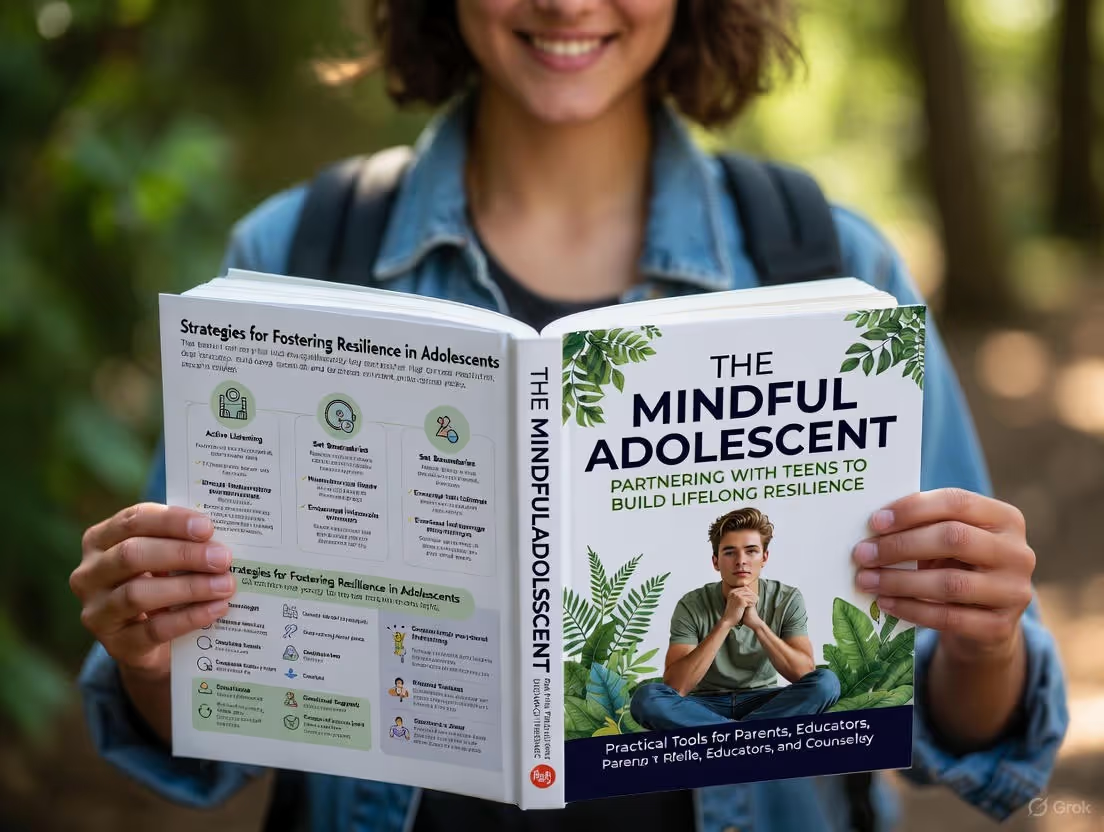
The Mindful Adolescent: Partnering with Teens to Build Lifelong Resilience
Adolescence is the crucible where calm mind practices are truly put to the test—and where they can yield the most profound rewards. The teen brain is a powerhouse of neuroplasticity, capable of remarkable learning and change, but it is also navigating a perfect storm of hormonal shifts, identity formation, peer pressure, and looming future decisions. A teen’s relationship to mindfulness must be one of collaboration, not instruction. They will reject anything that feels infantilizing or imposed. Our role shifts from teacher to informed guide and consultant.
The pitch to a teen must be framed in terms of autonomy, performance, and authentic self-discovery. We are not offering to "fix" them, but to provide evidence-based tools for mastering their own inner experience to achieve their goals—whether that's acing an exam, managing social anxiety, improving sports performance, or simply feeling less at the mercy of their moods.
Practices That Resonate with the Teenage Reality
Breathwork for Performance & Anxiety: Introduce breath as a biohack. Teach them how diaphragmatic breathing activates the parasympathetic nervous system (the "rest and digest" response) to counter acute anxiety or panic. Explain how alternate nostril breathing (Nadi Shodhana) can balance the left and right brain hemispheres, used by elite athletes and performers before big events. This frames it as a powerful, insider technique.
Mindfulness for Digital Detox & Focus: Speak directly to the challenge of distraction. Introduce "single-tasking" or "Pomodoro" sessions with a mindful beginning: Before starting 25 minutes of focused work, take one minute to simply notice the body in the chair, the intention for the work, and a few deep breaths to settle in. This dramatically increases focus depth.
Loving-Kindness (Metta) for the Inner Critic & Social Stress: The adolescent inner critic is often brutal. Loving-kindness meditation is a direct antidote. Guide them in offering phrases of well-being to themselves ("May I be safe, may I be happy, may I be healthy, may I live with ease"). This builds self-compassion, which research shows is a far greater predictor of resilience than self-esteem. It can then be extended to others, softening social comparisons.
Mindful Movement: For teens who can't sit still, mindful movement is key. This could be yoga, a walking meditation (noticing each step, the air on skin), or even mindful weightlifting (fully feeling the muscle engagement). It channels their physical energy into present-moment awareness.
The "Noting" Practice for Overwhelm: Teach them a simple, immediate tool for emotional surges: S.T.O.P.
Stop. Just pause.
Take a breath. Feel the inhalation and exhalation.
Observe. What's happening in my body? What emotion is here? What thoughts are spinning?
Proceed. With more awareness, choose what to do next.
The Partnership Model
Offer Choices, Not Mandates: "Here are a few techniques that might help with test stress. Want to try one and see if it fits?"
Be Transparent About the Science: Share the brain scans. Explain how mindfulness thickens the prefrontal cortex and shrinks the amygdala. Teens respect data and logic.
Honor Their Skepticism: Validate that it can feel weird or boring at first. Encourage them to be curious scientists, experimenting to see what, if any, effect a practice has.
Leverage Technology (Mindfully): Recommend high-quality, secular meditation apps (like Insight Timer, Calm, or Headspace) that have specific content for teens, sleep, and performance. This puts the practice in their pocket, on their terms.
Teaching a teen calm mind practices is an invitation to become the author of their own life. It is the ultimate tool for self-regulation in a world of external chaos. When they discover they can find a center of calm amidst internal and external storms, it instills a profound, unshakable confidence. It is one of the greatest gifts we can give them as they prepare to step into adulthood. For teens who are particularly tech-savvy and data-curious, exploring the role of wearable tech in tracking stress and sleep patterns can be an engaging entry point into understanding their own biology; our FAQ addresses many common questions about how such technology integrates with wellness practices.
The Foundation of Calm: Breathwork Techniques for Every Age and Stage
If calm mind practices had a first principle, it would be breath. Breathing is the only autonomic function we can also control voluntarily, making it a direct bridge between the conscious mind and the unconscious nervous system. It is our built-in, always-available regulator. Teaching a child or teen to harness their breath is giving them a remote control for their state of being. The techniques must be scaled to developmental understanding, but the core lesson is universal: Your breath can change how you feel.
The Developmental Progression of Breath Awareness
Ages 3-7 (The Playful Breath): The goal is association and awareness.
Belly Breathing with a Buddy: Lying down with a stuffed animal on the belly, making it "rock to sleep" with slow breaths.
Smell the Flower, Blow out the Candle: A classic for a reason. Inhale deeply through the nose as if smelling a flower, exhale slowly through the mouth as if blowing out a birthday candle.
Ages 8-12 (The Purposeful Breath): The goal is skill and application.
5-Finger Breathing: A brilliant, portable technique. Using one hand to trace the other, matching breath to movement. It’s tactile, visual, and cognitive, perfect for grounding.
Counted Breathing: Simple "Breathe in for 4, out for 4." This introduces rhythm and gives the thinking mind a gentle task to focus on.
"Bee Breath" (Bhramari): Humming on the exhale. The vibration is deeply calming to the nervous system and can be a fun, private way to soothe frustration.
Ages 13+ (The Strategic Breath): The goal is mastery and integration.
Box Breathing (4-4-4-4): Inhale 4, hold 4, exhale 4, hold 4. Used by Navy SEALs to stay calm under extreme pressure. This framing is highly effective for teens.
Alternate Nostril Breathing (Nadi Shodhana): A balancing practice that harmonizes the two hemispheres of the brain. Excellent for pre-study focus or post-conflict equilibrium.
Physiological Sigh: Two quick inhales through the nose followed by a long, slow exhale through the mouth. This is the body's most efficient natural mechanism for rapidly reducing stress (it's what you do spontaneously when relieved). Teach it as an "instant reset button."
How to Teach Breathwork Effectively
Start When Calm: Never introduce a new breathing technique in the middle of a meltdown. Practice during neutral, quiet times so the skill is familiar when needed.
Keep it Short: Even 60 seconds of intentional breathing has a measurable neurological effect. Start with "Let's just do three breaths together."
Focus on the Exhale: The magic of calming breath lies in the extended, gentle exhale, which directly stimulates the vagus nerve and the parasympathetic nervous system. Cue them to "make the out-breath a little longer and slower than the in-breath."
Normalize the Practice: Say, "I'm feeling a bit scattered, I'm going to do a minute of box breathing to reset." Modeling is the most powerful teaching tool.
Breath is the anchor that holds fast in all emotional weather. By making these techniques a normal part of a family's or classroom's vocabulary, we give young people a profound and portable source of agency over their own well-being. It is the cornerstone upon which all other calm mind practices are built.
Beyond Sitting Still: Mindfulness as a 24/7 Way of Being
A common misconception, especially among young people, is that mindfulness is synonymous with seated meditation—something you do for 10 minutes a day. While formal practice is invaluable, this view can be limiting and even discouraging. True mindfulness is a quality of attention that can be brought to any moment. It is the art of showing up fully for your own life. For children and teens, teaching this applied, integrated mindfulness is often more accessible and sustainable than asking them to sit in silence.
The core skill here is "remembering to notice." We are helping them build little "mindful checkpoints" throughout their day, transforming ordinary activities into opportunities for presence and calm.
Everyday Anchors for Mindfulness
Mindful Eating: Turn one meal or snack a day into a practice. Before eating, pause to look at the food. Eat the first bite with full attention: texture, taste, temperature. This not only cultivates mindfulness but can positively impact eating habits and digestion.
Mindful Movement: The body is always in the present moment. Encourage them to notice the sensations of walking—the feel of the ground, the rhythm of their stride. Brushing teeth can become a focus on taste, sound, and sensation. A few stretches in the morning can be done with full attention to muscle tension and release.
Mindful Listening: Play a "listening game." Sit quietly for one minute and count all the different sounds you can hear, both near and far. This instantly pulls awareness out of ruminative thoughts and into the sensory world.
Mindful Waiting: Transform dead time (in line, in the car, waiting for an app to load) into practice time. Instead of defaulting to their phone, prompt: "Check in with your breath." "Notice how your body feels in the chair." "Look around and find three things you've never noticed before."
The "One Thing" Challenge: When overwhelmed with homework or chores, practice doing one single thing at a time with full attention. Put the phone in another room, set a timer for 20 minutes, and just do the math worksheet. The relief that comes from single-tasking is profound.
The Role of Technology: From Distraction to Tool
We cannot ignore the digital elephant in the room. Instead of framing tech as the enemy of mindfulness, we can teach mindful tech use.
Conscious Consumption: Encourage them to pause for one breath before opening a social media app and ask, "What is my intention here? Am I bored, lonely, or seeking connection?" This simple pause can break autopilot scrolling.
Notification Hygiene: Work with them to turn off non-essential notifications. Each ping is an intentional interruption of attention. Reclaiming control of their attention environment is a massive act of mindfulness.
Tech as a Mindfulness Aid: As mentioned, use apps for guided practice. Use a phone's timer for a focused work session. The device itself is neutral; the intention behind its use determines its impact.
By reframing mindfulness as something they can be rather than just something they do, we demystify it and make it infinitely practical. It becomes the thread of awareness woven through the fabric of their day, turning the whole of life into a practice ground for a calm and present mind. For additional strategies on integrating wellness into a digital lifestyle, you can find a wealth of related articles and tips on our blog.
Taming the Inner Critic: Cultivating Self-Compassion in Young People
Perhaps no voice is more disruptive to a calm mind than the inner critic. In children, it might whisper, "You're stupid," after a mistake. In teens, it can become a relentless roar: "Everyone is judging you," "You'll never be good enough," "You're a fraud." This critical self-talk is a major source of anxiety, depression, and self-sabotage. Traditional self-esteem building ("You're the best!") often rings hollow and can create a fragile ego dependent on external validation. The antidote is self-compassion, a revolutionary and evidence-based approach developed by researcher Dr. Kristin Neff.
Self-compassion is not about boosting self-esteem or eliminating self-doubt. It is about changing one's relationship to suffering, failure, and imperfection. It involves three core components, which we can teach in age-appropriate ways:
Mindfulness: Acknowledging the painful thought or feeling without over-identifying with it. ("This is really hard right now" vs. "I am a failure.").
Common Humanity: Recognizing that suffering and personal inadequacy are part of the shared human experience. ("I'm not alone in feeling this way.").
Self-Kindness: Responding to one's own pain with warmth and understanding, rather than harsh judgment.
Teaching Self-Compassion Across Ages
For Young Children (Ages 5-8):
The Kind Friend Talk: When they are self-critical, ask, "What would you say to your best friend if they felt this way?" Then gently note, "You deserve kind words, too."
Use Stories: Read books about characters who make mistakes, feel scared, or struggle, and emphasize how they are still loved and worthy.
For Pre-Teens (Ages 9-12):
Name the Critic: Help them personify the inner critic as "The Bully in the Brain" or "Judge Judy." This creates separation. The goal isn't to silence the critic, but to recognize its voice isn't the ultimate truth.
The Self-Compassion Break: Teach a simple mantra for tough moments: "This is a moment of suffering. Suffering is a part of life. May I be kind to myself."
For Teens (Ages 13+):
Normalize the "Second Arrow": Teach the Buddhist parable: The first arrow is the initial pain (failing a test, being left out). The second arrow is the self-judgment we shoot ourselves with about the pain ("I'm so lazy," "No one likes me"). Much of our suffering is from the second arrow. Self-compassion is about putting down the second arrow.
Loving-Kindness (Metta) Meditation: This formal practice is incredibly powerful for teens. Guide them in silently offering phrases of care to themselves, a loved one, a neutral person, and even a difficult person. It systematically builds the muscle of kindness.
Self-Compassionate Journaling: Encourage them to write about a recent upset, but through the lens of the three components: What happened (mindfulness)? How is this a human experience (common humanity)? What kind, supportive words can I offer myself right now (self-kindness)?
Why This is Critical for Calm
A mind at war with itself can never be calm. Self-compassion provides a sanctuary within that war. It teaches young people that their worth is not contingent on performance, appearance, or social success. It creates an internal safe space where difficult emotions can be held with care, rather than fear or aggression. This internal safety is the very essence of a calm mind. When they learn to be a friend to themselves, the external world becomes significantly less threatening. The journey of fostering this kind of internal resilience is often a personal one, and you can read about the real-life impact of such practices in the testimonials of families and educators who have embraced them.
The Family Ecosystem: Creating a Home Environment that Nurtures Calm
A child or teen does not practice calm in a vacuum. They are embedded in a family ecosystem—a system with its own rhythms, rules, and emotional weather patterns. Teaching individual practices is essential, but their efficacy is multiplied or undermined by the home environment. We cannot expect a young person to cultivate inner peace if their external world is perpetually chaotic, conflict-driven, or hyper-stimulating. Therefore, building a "calm-conscious" family culture is a parallel and vital project.
This is not about creating a perfectly serene, silent home (an impossible goal), but about intentionally designing an environment that supports regulation and connection over reactivity and fragmentation.
Pillars of a Calm-Conscious Home
Rituals of Connection: In the busyness of life, connection must be scheduled and protected.
Device-Free Meals: Even a few meals a week with all screens put away. The conversation may be trivial, but the ritual of face-to-face, undistracted presence is profound.
Weekly Family Check-In: A brief, structured time (10-15 minutes) where each person shares a high, a low, and something they're looking forward to. This builds emotional vocabulary and ensures everyone feels heard.
Bedtime Routines for All Ages: For young kids, it's stories. For teens, it might be a 10-minute chat in their room with the phone charging elsewhere. A predictable, winding-down ritual signals safety to the nervous system.
Regulating the Digital Environment:
Collective Charging Station: Establish a central charging location (not in bedrooms) where all family devices sleep overnight. This single rule improves sleep hygiene for everyone and removes the temptation for midnight scrolling.
Media Agreements: Collaboratively create family guidelines for screen time, social media use, and gaming. When teens are part of creating the rules, they are more likely to buy into them.
Model Healthy Tech Use: Parents must walk the talk. If you are constantly on your phone, you are implicitly endorsing that behavior. Practice putting your own device down during family time.
Designing for Calm:
Create Physical "Calm Zones": As mentioned, a cozy corner with pillows and books. But also consider reducing sensory clutter in common areas. A less chaotic visual space can contribute to a less chaotic mental space.
Manage the Auditory Environment: Be mindful of constant background noise from TVs or music. Introduce periods of quiet, or use calming, instrumental music during homework or dinner prep.
Emotional Culture:
Parents, Regulate Yourselves First: The single most important factor. When stress hits, your ability to pause and breathe before reacting is the master class your child is watching. Say out loud, "I'm feeling really frustrated, so I'm going to take a minute to calm down before we talk about this."
Normalize All Emotions: Make it clear that anger, sadness, fear, and joy are all welcome. The rule is not "don't feel," but "let's feel this in a way that's safe for everyone." Help them name emotions and find healthy outlets.
Repair is Mandatory: After conflicts, model repair. "I'm sorry I yelled. I was overwhelmed, but that wasn't okay. How are you feeling?" This teaches that relationships—including the one with themselves—can withstand and heal from ruptures.
By treating the home as an ecosystem to be cultivated, we move beyond individual "fixes" for our children. We create a nutrient-rich soil in which the seeds of calm, resilience, and self-compassion can take deep root and thrive. This systemic approach acknowledges that the well-being of each family member is interconnected. For more on the philosophy of creating supportive ecosystems for growth and wellness, you can delve into our story and the vision that guides our community-building efforts.
The Educator's Toolkit: Integrating Calm Mind Practices into the School Day
The classroom is a microcosm of the modern world's challenges: performance pressure, social dynamics, information overload, and the constant demand for focused attention. It is also the place where children and teens spend a significant portion of their waking hours. Educators, therefore, are in a uniquely powerful position to democratize access to calm mind practices, reaching students who might never encounter them at home. Integrating these practices into the school day isn't an "add-on" to the curriculum; it is a force multiplier for learning itself.
Neuroscience confirms that a stressed, anxious, or emotionally dysregulated brain cannot effectively encode, retain, or retrieve academic information. By dedicating time to regulate the nervous system, we are, in fact, priming the brain for optimal cognitive function, creativity, and memory.
Practical Strategies for the Classroom
Start with Yourself: The teacher's regulated nervous system is the most powerful tool in the room. Taking a deep, centering breath before class begins or during a stressful moment models self-regulation and can change the entire classroom's emotional climate.
Ritualize Transitions: The moments between subjects or activities are often chaotic. Use them as mindful reset points.
A 60-Second Breathing Bell: Use a gentle chime or bell. When it rings, everyone stops, closes their eyes (or lowers their gaze), and takes three deep, quiet breaths together.
Mindful Movement Breaks: Lead a 2-minute stretch, asking students to notice the sensations in their muscles. A simple "starfish stretch" (reaching arms and legs out) can release pent-up energy.
Embed Mindfulness into the Curriculum:
Mindful Listening: Before a listening exercise or a piece of music, ask students to sit quietly and notice the sounds they hear, both inside and outside the room, for one minute.
Mindful Reading/Writing: Pause during a reading and ask, "What bodily sensations or emotions are coming up as we read this passage?" Before a writing assignment, guide a one-minute focus breath to settle the mind.
Create a "Peace Corner" or "Reset Station": A designated, quiet area of the classroom with simple tools (a timer, a stress ball, a glitter jar, breathing exercise cards) where a student can self-regulate when feeling overwhelmed. This teaches emotional autonomy and prevents disruptions.
Teach Emotion Literacy: Integrate the "feelings weather report" or emotion wheel into morning check-ins. Normalize the language of emotion. "I see a lot of cloudy, frustrated faces after that math test. Let's all take a 'balloon breath' (deep inhale, slow exhale) to let some of that go before we move on."
Leverage Technology for Calm: Use a projector to lead a short, guided breathing exercise from a reputable app or YouTube channel. Use calm, instrumental music during independent work time to support focus.
Addressing Challenges and Objections
"We don't have time!": Frame it as an investment. Two minutes of regulation can save 20 minutes of managing dysregulated behavior and poor focus. Start with one tiny practice.
"It's too woo-woo/religious.": Use secular, science-based language. Call it "focus training," "brain breaks," or "self-regulation skills." The evidence from educational neuroscience is on your side.
Student Resistance: Make it voluntary at first. "If you'd like to join in, close your eyes. If not, just sit quietly." Often, the holdouts will eventually participate when they see their peers benefiting.
When schools embrace this integrative approach, they do more than boost test scores. They become environments that teach the whole child—nurturing not just academic proficiency, but the emotional and attentional skills essential for lifelong well-being and success. They send the powerful message that a calm mind is a prerequisite for a curious, capable, and compassionate mind.
When to Seek Support: Recognizing the Limits of Practice and the Role of Professional Care
Calm mind practices are powerful, preventative, and therapeutic tools. However, they are not a panacea or a substitute for professional mental health care. A crucial part of our role as guides is to recognize the boundary between normal developmental stress/anxiety and symptoms that indicate a deeper clinical issue. Teaching a child to breathe through test anxiety is appropriate; expecting mindfulness alone to treat generalized anxiety disorder or depression is not only ineffective but potentially harmful, as it may delay necessary intervention.
We must view these practices as one vital component of a holistic mental wellness plan, which may also include therapy, counseling, and in some cases, medication. Our responsibility is to normalize seeking help and to know the signs that suggest it's time to reach beyond the toolkit we can provide.
Red Flags: When Practice Isn't Enough
It's time to consult a pediatrician, school counselor, or child mental health professional if you observe persistent (lasting several weeks) and significant changes that interfere with daily functioning:
Emotional: Persistent sadness, hopelessness, or irritability; frequent, intense panic attacks or meltdowns; extreme mood swings; excessive anger or rage; talk of worthlessness or guilt.
Behavioral: Withdrawing from friends, family, and activities they once enjoyed; major changes in eating or sleeping patterns (too much or too little); self-harm behaviors (cutting, burning); talking about death or suicide (this requires immediate attention); reckless or risky behavior.
Cognitive: Inability to concentrate that severely impacts school performance; persistent, irrational worries or fears; expressing delusional thoughts or hearing/seeing things that aren't there.
Physical: Frequent headaches or stomachaches with no clear medical cause; constant fatigue and low energy.
How to Approach the Conversation and Next Steps
Lead with Compassion, Not Alarm: "I've noticed you've been having a really hard time lately, and it seems like more than just regular stress. I care about you, and I want to help us figure this out together."
Normalize Therapy: Frame it as a skill-building resource, not a stigma. "Just like we'd see a coach to get better at a sport, or a tutor for a tough subject, sometimes we can work with a therapist to get better at managing really big feelings and thoughts. It's a sign of strength to ask for help."
Collaborate with Professionals: If you begin therapy, share with the therapist (with your child's consent) what mindfulness or breathwork practices you've been using at home. A good therapist can integrate these tools into a broader treatment plan.
Support the Process: Driving to appointments, respecting privacy, and asking your child, "How can I best support you right now?" shows that you are a partner in their healing.
By understanding this boundary, we protect the integrity of the practices themselves. We ensure they are seen as empowering life skills, not a failed "cure" for clinical conditions. We demonstrate that true strength lies in a wise and layered approach to well-being—one that includes self-help, community support, and professional expertise when needed. This honest, comprehensive approach is the ultimate modeling of a calm and prudent mind. For families navigating these complex decisions, having a supportive community and access to resources can make all the difference, a principle central to our mission and detailed further in our story.
Building the Scaffolding: A Developmental Roadmap for Teaching Calm
Successfully guiding a young person toward a calm mind is not a one-size-fits-all endeavor. It requires a nuanced understanding of developmental psychology—what is cognitively accessible, emotionally relevant, and behaviorally appropriate at each stage. This roadmap provides a scaffold, ensuring that the practices we introduce are not only understandable but also genuinely useful and engaging. The core principle is to match the method to the maturity level, always aiming to build upon previous skills in a progressive, non-overwhelming way.
Early Childhood (Ages 3-6): The Sensory & Imaginative Foundation
At this stage, the brain is predominantly right-hemisphere dominant—focused on sensory experience, emotion, and imagination. Abstract concepts like “mindfulness” are meaningless. The goal is embodied awareness through play.
Cognitive Access: Very concrete, present-moment focus. Link everything to the five senses and simple body awareness.
Emotional Relevance: Safety, comfort, and connection are paramount. Practices must feel like a game or a cozy ritual shared with a caring adult.
Key Skills to Cultivate: Noticing sensations (hot/cold, soft/hard), identifying basic emotions (happy, sad, mad, scared), simple breath awareness through play, and the beginning of impulse control via "pause" games like "Freeze Dance."
Adult Role: The primary model and guide. Use abundant physical comfort, simple language, and keep sessions extremely short (30-90 seconds). Your calm presence is the practice.
Middle Childhood (Ages 7-10): The Concrete & Skill-Building Phase
The logical left hemisphere begins to integrate more fully. Children can think more sequentially, understand cause and effect, and follow simple instructions. They enjoy mastering new "skills" and using "tools."
Cognitive Access: Concrete operational thinking. They can understand that a breath tool can change a feeling state. They benefit from simple metaphors (brain as a muscle, mind like a puppy that needs training).
Emotional Relevance: Competence, fairness, and social belonging. Practices should be framed as building a "superpower" or "toolkit" to help them feel more capable with schoolwork, friendships, and sports.
Key Skills to Cultivate: Intentional breath regulation (5-finger breathing, counted breaths), basic body scans for tension, naming thoughts and emotions with more nuance (frustrated, disappointed, anxious), and introductory gratitude practices.
Adult Role: The coach and co-creator. Offer choices, explain the "why" in simple terms, and help them apply tools to real-life scenarios (before a spelling test, after a disagreement with a friend).
Early Adolescence (Ages 11-14): The Social & Exploratory Phase
The social brain takes center stage. Peer opinion becomes critically important, and self-consciousness peaks. There is a growing capacity for introspection but also a vulnerability to social comparison and rejection sensitivity.
Cognitive Access: Emergence of abstract thinking. They can grasp concepts like neuroplasticity and the stress response system. Metaphors can be more sophisticated (the amygdala as an alarm, the prefrontal cortex as the wise leader).
Emotional Relevance: Autonomy, social acceptance, and identity exploration. Practices must be framed as personally empowering and private. Avoid anything that feels childish or could invite social ridicule.
Key Skills to Cultivate: Mindful observation of social anxiety, self-compassion practices to counter the inner critic, loving-kindness for peer relationships, and mindful technology use. Movement-based practices (yoga, mindful walking) are often preferred over seated meditation.
Adult Role: The consultant and respectful guide. Offer resources and suggestions, then step back. Privacy is key. Focus on collaboration: "I heard about this app for sleep; want to check it out with me?"
Late Adolescence (Ages 15-19): The Integrative & Purpose-Driven Phase
The brain's executive centers are in their final, intense phase of development. Teens are formulating their worldview, values, and future goals. They can think hypothetically and ethically.
Cognitive Access: Full capacity for abstract and critical thinking. They can engage with the philosophy and science behind practices. They appreciate data and logic.
Emotional Relevance: Purpose, authenticity, and performance. Practices are best framed as biohacks for performance (academic, athletic, artistic) and as tools for authentic self-discovery and stress management in the transition to adulthood.
Key Skills to Cultivate: Advanced breathwork for performance anxiety, mindfulness for sustained focus (e.g., study sessions), insight meditation for understanding thought patterns, and practices that connect to personal values and meaning.
Adult Role: The mentor and fellow traveler. Engage in discussions about the science and philosophy. Share your own challenges and practices authentically. Respect their autonomy completely; your influence now comes from wisdom, not authority.
This developmental roadmap is not rigid, but a fluid guide. The most effective teachers are those who observe the individual child or teen in front of them and adapt accordingly, always aiming to present the next appropriate challenge in their journey toward self-mastery. It’s a process we are deeply passionate about supporting, which is why our mission focuses on providing resources for every stage of this developmental journey.
The Digital Dilemma: Teaching Mindful Tech Use in an Age of Distraction
The smartphone is the single greatest environmental shift for the developing mind in modern history. It is not inherently evil, but it is a profoundly powerful and often unregulated force. We cannot teach calm mind practices while ignoring the device that is, for many young people, the primary disruptor of calm. Therefore, a critical component of our teaching must be digital literacy for the inner world—helping them understand how technology affects their brain and equipping them to use it with intention, rather than by compulsion.
This goes far beyond simple screen time limits. It's about cultivating an awareness of the attention economy in which they are the product, and building skills to protect their most valuable resource: their focused attention and emotional equilibrium.
The Neuro-Impact of Hyper-Connectivity
We must teach them the science:
Dopamine Loops & The Slot Machine Effect: Social media likes, notifications, and infinite scroll are designed to trigger variable reward schedules—the same mechanism that makes slot machines addictive. This trains the brain to seek constant, shallow stimulation, eroding the capacity for sustained attention on deeper, less immediately rewarding tasks (like homework or a book).
The Myth of Multitasking: Brain imaging shows that what we call multitasking is actually "task-switching," which is cognitively exhausting, error-prone, and increases the production of stress hormones. The constant context-switching demanded by digital life leaves them feeling perpetually fatigued and unfocused.
Social Comparison & The Highlight Reel: The adolescent brain is exquisitely tuned to social status. Curated feeds present a relentless "highlight reel" of peers' lives, fueling unrealistic comparisons, envy, and a distorted sense of normalcy. This is a direct assault on self-compassion and contentment.
Blue Light & Sleep Architecture: The blue light emitted by screens suppresses melatonin production, delaying sleep onset and reducing REM sleep—the phase crucial for emotional processing and memory consolidation. A tired brain is an anxious, irritable, and dysregulated brain.
Practical Strategies for Mindful Tech Use
Conduct a "Personal Tech Audit": Help them become scientists of their own behavior. Have them use their phone’s screen time report (or a similar app) for a week, not to judge, but to observe. "What surprises you? When do you pick up your phone mindlessly? How do you feel after 30 minutes on Instagram vs. after 30 minutes reading or being outside?"
Master the Notification: This is the frontline of the attention battle. Sit down together and turn off all non-essential notifications. The rule: if it’s not from a real person trying to reach you in real time, it likely doesn’t need to interrupt you. Reclaim the right to check your phone, not be checked by it.
Create "Sacred Spaces" and "Focus Sprints": Establish tech-free zones (bedrooms, dinner table) and tech-free times (the first hour after school, the hour before bed). Use the Pomodoro Technique for homework: 25 minutes of phone-in-another-room focused work, followed by a 5-minute conscious tech break.
Practice "Posture Before Posting": Teach a mindful pause before engaging on social media or sending a message. Breathe. Ask: "What is my intention here? Is this kind? Is it necessary? How might this make me or someone else feel in an hour? A day?"
Curate the Feed Consciously: Encourage them to periodically unfollow accounts that trigger anxiety, envy, or inadequacy, and to follow accounts that inspire, educate, or uplift. They have control over their digital environment.
Embrace "JOMO" (Joy Of Missing Out): Counteract FOMO by actively celebrating disconnection. Plan and savor tech-free activities—a hike, a board game night, creating art—and reflect on the richer quality of presence and connection experienced.
By integrating these digital mindfulness practices, we do not preach a Luddite rejection of technology. Instead, we empower young people to become the conscious, ethical users of powerful tools. We help them see that a calm mind often begins with creating space between the impulse to check and the action itself—a space where their own thoughts and feelings can arise and be heard. For ongoing support and discussions on navigating the digital world with balance, our community frequently shares insights and strategies on our blog.
Measuring Progress: Beyond "Feeling Better" – Signs of a Growing Calm Mind
In a results-driven culture, it’s natural to wonder, "Is this working?" With internal practices like mindfulness and breathwork, traditional metrics fall short. We cannot measure calm in the same way we measure height or test scores. Progress is often subtle, non-linear, and deeply personal. Pressuring a child or teen for "results" can undermine the very essence of the practice, which is non-striving awareness. Instead, we must become skilled observers of the indirect, behavioral, and relational markers that indicate the seeds of calm are taking root.
Look for these signs of integration, which often appear gradually over weeks and months:
Behavioral & Emotional Indicators
Increased Pause Between Stimulus and Reaction: This is the hallmark of a strengthening prefrontal cortex. Instead of an immediate meltdown over a broken toy or a harsh word from a sibling, you might see a moment of visible frustration followed by a deep sigh, a walk to their calm corner, or a verbal expression like, "I'm so mad I need a minute." This pause is a monumental victory.
Enhanced Emotional Vocabulary: Moving from "I'm fine" or "I'm mad" to more nuanced states: "I'm feeling overwhelmed by all this homework," "I'm disappointed I wasn't chosen," "I'm anxious about the party, but also excited." This indicates they are observing their internal landscape with more clarity.
Self-Initiated Use of Tools: You find them in their room doing 5-finger breathing before diving into homework, or you hear them humming (Bee Breath) after a frustrating phone call with a friend. This shows the practice has moved from an external suggestion to an internal resource.
Improved Recovery Time: They still get upset, angry, or anxious—this is human. But the storms pass more quickly. They are able to "come down" from heightened states and re-engage with the family or activity sooner, with less residual resentment or fatigue.
Cognitive & Relational Indicators
Moments of Genuine Presence: Catching them fully absorbed in a non-digital activity—building a complex Lego set, drawing, reading a book, watching clouds—with a sense of quiet contentment. This is the antithesis of fragmented attention.
Increased Self-Compassion in Failure: After a poor grade or a sports mistake, instead of global self-attacks ("I'm the worst"), you might hear a more balanced assessment: "That test was really hard. I studied but I got tripped up. I'll ask the teacher for help." This reflects the voice of a kind inner coach, not a cruel critic.
Curiosity About Their Own Mind: They ask questions: "Why do I always get so nervous before piano lessons?" "Why is it so hard for me to fall asleep?" This reflective curiosity is the engine of lifelong emotional growth.
Empathy and Perspective-Taking: You observe them offering comfort to a friend or sibling in distress, or considering another person's point of view in a disagreement. A calmer, less self-absorbed mind has more capacity to care for others.
How to Nurture Progress Without Pressure
Notice and Name it Gently: "I noticed you took a few deep breaths when you were frustrated with your project. That seemed to help you get back to it." This positive reinforcement focuses on the action, not a global "good job."
Abandon the Timeline: Progress is not a straight line. There will be regressions, especially during developmental leaps, hormonal shifts, or external stressors. Trust the process.
Focus on the "Being," Not the "Doing": The goal is not to create a child who meditates for 20 minutes daily. The goal is to cultivate a human who can be present, kind to themselves, and resilient. Measure that by the quality of your connection and their engagement with life.
By shifting our measurement from external compliance to these subtle internal shifts, we honor the true purpose of the work. We are not building robots of calm; we are nurturing humans who can navigate the full, messy spectrum of life with increasing wisdom, grace, and kindness towards themselves and others. Witnessing this growth in real people is what fuels our passion, and their stories of transformation are a testament to the power of these practices.
Overcoming Resistance: "This is Stupid!" – Strategies for the Reluctant Practitioner
"I don't want to." "This is boring." "This is stupid." If you haven't heard some version of this, you likely will. Resistance is not a sign of failure; it is a natural part of the process, especially for pre-teens and teens for whom autonomy and skepticism are developmental imperatives. How we respond to this resistance can either solidify their opposition or gently invite them to explore. The key is to drop the agenda, validate the feeling, and get creative.
Understanding the Roots of Resistance
Developential Push for Autonomy: For teens, rejecting a parent's suggestion is sometimes less about the activity itself and more about asserting independence. It’s a feature, not a bug, of their development.
Fear of the Unfamiliar: Sitting quietly with one's own thoughts can be genuinely intimidating, especially if their inner world is filled with anxiety, self-criticism, or sadness. Resistance can be a protective mechanism.
Misconceptions: They may think mindfulness is religious, "woo-woo," or about suppressing emotions. They may see it as a passive, pointless activity in a world that values constant doing.
Poor First Experience: If their first exposure was a long, forced, silent sit, it’s no wonder they're resistant. The practice must be matched to their energy and interest.
Effective Response Strategies
Validate, Don't Invalidate: Never say, "No it's not stupid, you just don't understand." Instead, try: "It can feel weird at first, I get that. Sitting still isn't something we practice much." Or, "Totally fair. It's not for everyone all the time." Validation disarms the power struggle.
Inquire with Curiosity: "What about it feels boring/stupid?" You might learn they think they have to "clear their mind" (an impossible task) or that they tried an app with a voice they hated. This gives you valuable intel to adapt your approach.
Reframe and Rebrand: Ditch the word "mindfulness" if it's a trigger.
For the athlete: "This is focus training for your sport." (Use breathwork before free throws or visualization of perfect form).
For the musician/artist: "This is about getting into flow state and dealing with performance nerves."
For the anxious student: "This is a brain hack to lower test anxiety. It's like a secret weapon."
For the tech-loving teen: "Let's do an experiment. We'll use the heart rate sensor on this watch/app to see how three minutes of breathing actually changes your physiology."
Lead with Science, Not Spirituality: Teens respect data. Explain the amygdala and prefrontal cortex in simple terms. Show them a brief video on the neuroscience of mindfulness. Say, "The research shows this literally changes your brain structure to be less reactive to stress. That's pretty cool."
Make it an Invitation, Not a Requirement: "I'm going to do a 5-minute body scan after dinner to unwind. You're welcome to join me if you'd like, no pressure." Often, they will wander in curiously after a few sessions.
Start with the Body, Not the Mind: For the highly resistant, bypass the mind entirely. Go for a walk together in nature without headphones. Suggest a yoga or martial arts class (a "movement meditation"). Bake together, focusing on the sensory details. These are gateways to presence.
Use Humor and Extremely Short Bursts: "Okay, we're not meditating. We're just going to be weird scientists for 30 seconds. Close your eyes and just listen. What's the farthest away sound you can hear? Go!" Making it a 30-second game removes the pressure.
The Ultimate Strategy: Unwavering Modeling
Your consistent, non-forceful practice is your most persuasive tool. When they see you using your breath to manage stress, taking a mindful walk instead of scrolling when overwhelmed, or simply sitting quietly for a few minutes, you are demonstrating its value in real-time. Without saying a word, you make it a normal, adult coping skill. Eventually, in a moment of their own crisis, they may remember and think, "Maybe I'll try that breathing thing mom/dad does."
Resistance is an invitation to deepen our own understanding and flexibility as teachers. It asks us to connect with the individual's unique needs and worldview. By meeting resistance with empathy and creativity, we open a door that a direct push would only slam shut. For more insights on navigating challenges and personalizing wellness approaches, our FAQ section is a valuable resource for common hurdles and solutions.
The Role of Nature: Why the Outdoors is the Ultimate Calm Mind Classroom
Long before we had guided meditations and breathwork apps, humans had access to the most profound and readily available calm mind technology: the natural world. A growing body of research in ecotherapy and environmental psychology confirms what we intuitively feel: time in nature is not merely recreational; it is essential for neurological and psychological regulation. For children and teens growing up in a digitized, indoor, and accelerated culture, nature acts as a vital counterbalance—a "reset button" for the overstimulated brain and nervous system.
Understanding why nature is so effective helps us frame it not as an optional extra, but as a core component of a calm mind curriculum.
The Science of Nature's Calm
Attention Restoration Theory (ART): Urban and digital environments demand "directed attention"—the effortful, draining focus needed for tasks and filtering out distractions (like sirens, ads, notifications). Nature engages "soft fascination." The patterns of clouds, leaves, or flowing water hold our attention gently, allowing the brain's directed attention circuits to rest and replenish. This reduces mental fatigue and improves subsequent focus.
Reduction in Cortisol & Rumination: Studies show that even short exposures to green space lower levels of the stress hormone cortisol. Time in nature, especially without digital devices, is also linked to decreased activity in the subgenual prefrontal cortex—a brain area associated with rumination, the repetitive, negative self-focused thought pattern at the core of anxiety and depression.
Sensory Grounding: Nature provides a rich, multi-sensory experience that is analog, variable, and non-demanding. The feel of bark, the smell of soil after rain, the sound of wind, the sight of fractal patterns in ferns—these sensations anchor us firmly in the present moment, pulling us out of the abstract, future-oriented worries that dominate anxious thinking.
Embodied Perspective: The vastness of a landscape or the age of a tree can provide a healthy, humbling perspective. It subtly reminds a teen mired in social drama or academic pressure that their world is part of a much larger, older, and enduring system. This can reduce the intensity of personal stressors.
Practical Ways to "Prescribe" Nature
Move beyond the generic "go play outside." Be intentional:
The 20-Minute "Green Pill": Research suggests that 20-30 minutes in an urban park or natural setting is enough to significantly lower cortisol levels. Frame it as a daily or weekly dose: "Let's take your brain for a green bath."
Adventure & "Awe" Walks: Don't just walk; seek. Go on a "texture walk" to find five different natural textures. Or an "awe walk," where the sole intention is to look for something that inspires a sense of wonder—a majestic tree, a intricate spiderweb, a panoramic view. Awe is a powerful emotion that dissolves self-focused worry.
Forest Bathing (Shinrin-yoku) for Families: Adapt the Japanese practice of mindful immersion in a forest. Go to a wooded area and encourage slow, silent wandering. Prompt them to engage each sense deliberately: "What do you smell right now?" "Touch this moss. How would you describe it?"
Gardening as Grounding: Caring for a plant, from a windowsill herb to a garden plot, is a lesson in patience, care, and connection to life cycles. The tactile act of digging in soil has been shown to have antidepressant effects, partly due to beneficial microbes in the soil.
Nature as a Digital Detox Zone: Establish a family rule: no phones on nature walks or at the beach. The goal is to experience the environment directly, not through a screen. The initial complaint often gives way to deeper relaxation and conversation.
Overcome Weather Resistance: Calm isn't only for sunny days. A walk in the rain (with proper gear) or watching a storm from a safe, cozy spot can be incredibly regulating and awe-inspiring. It teaches that we can find calm amidst intensity.
By intentionally weaving nature into the fabric of family and school life, we provide a direct, experiential pathway to a calm mind. We teach young people that peace is not something they must manufacture solely from within; it is also something they can connect to in the world around them. It is a timeless, always-available sanctuary. This connection to the fundamental elements of well-being is a thread that runs through our story, from our earliest inspirations to the tools we champion today.
The Power of Storytelling and Metaphor: Making the Abstract Tangible
The human brain is wired for narrative. We understand complex ideas, remember information, and make emotional sense of our experiences through story. For a child or teen, abstract concepts like "observing your thoughts" or "regulating your nervous system" can be confusing and intangible. This is where the ancient, powerful tools of storytelling and metaphor become essential. They translate cerebral instructions into vivid, memorable images that the mind can easily grasp and recall, especially in moments of distress.
A well-chosen metaphor acts as a mental shortcut. It bypasses resistance and lands directly in the imagination, where it can shape perception and behavior.
Essential Metaphors for a Calm Mind
Here are several powerful metaphors, scaled for different ages, that you can weave into your teaching:
For the Amygdala & Stress Response:
The Guard Dog (Ages 5-10): "You have a very loyal guard dog in your brain called the amygdala. Its job is to keep you safe by barking (making you feel scared/angry) at anything that seems like a threat. Sometimes it barks at real dangers, like a car speeding by. But sometimes it barks at shadows, like a big test or a new school. Our calming practices are how we gently pet the guard dog and say, 'It's okay, I've got this.'"
The Smoke Alarm (Ages 11+): "Your amygdala is like a super-sensitive smoke alarm. It's supposed to go off for fire (real danger), but it can also go off for burnt toast (stress, embarrassment, worry). Mindfulness is learning to check if there's a real fire before the whole body's sprinkler system (stress response) goes off."
For Mindfulness & Observing Thoughts:
The Thought Train (All Ages): "Your thoughts are like trains coming and going at a busy station. You can sit on the platform (that's your mindful awareness) and watch them come in—'Oh, there's the Worry Train... there's the Remembering-To-Do-Homework Train.' You don't have to get on and ride every single train. You can just let them pass by."
The Sky and the Weather (Ages 8+): "Your mind is like the sky—always open, clear, and spacious. Thoughts and feelings are like the weather—clouds (sadness), sunshine (joy), thunderstorms (anger). The weather changes all the time, but the sky holds it all. You are the sky, not the passing storm."
The Mind as a Web Browser (Teens): "When you're anxious, it's like having 50 tabs open in your brain, with music playing from three of them. Mindfulness is the task manager that lets you see all the tabs and choose to close the ones you don't need right now."
For Self-Compassion:
The Two Arrows (Teens): "When something painful happens (a failure, rejection), it's like being shot with an arrow. That's the first arrow. The second arrow is the one we shoot ourselves with: 'I'm such a loser,' 'This always happens to me.' Self-compassion is about learning to feel the pain of the first arrow without shooting the second one."
Treating Yourself Like a Friend (Ages 6+): "If your best friend skinned their knee, would you yell at them and say, 'You're so clumsy!'? No, you'd help them up and be kind. We can learn to talk to ourselves like that friend on the inside."
How to Use Stories and Metaphors Effectively
Introduce Them During Calm Times: Explain the metaphor during a quiet moment, not in the heat of a meltdown.
Use Them as Prompts: When they're upset, you can gently reference the metaphor. "Is your guard dog barking at a shadow right now?" "Can you let that thought-train pass by?"
Encourage Them to Create Their Own: Ask, "What does your worry feel like? An animal? A monster? A machine?" This helps them externalize and relate to their experience creatively.
Read Relevant Stories: Countless children’s books use allegory to teach emotional regulation (e.g., "Moody Cow Meditates," "A Handful of Quiet"). For older kids and teens, use parables from various traditions or anecdotes from biographies about how influential people managed stress.
By speaking the language of imagination, we make the invisible world of the mind visible and manageable. We give young people a friendly, internal cast of characters and landscapes they can navigate with increasing skill. This is not dumbing down the science; it is embodying it, making the path to a calm mind colorful, relatable, and deeply human. Sharing these stories and metaphors is a key part of the content we develop to make wellness accessible, as you’ll find in many articles on our blog.
Building a Personal Practice: Guiding Young People to Find What Works for Them
The ultimate goal of all this teaching is not to create a dependent student, but an empowered, self-aware individual who can maintain and adapt their own calm mind practice for life. This transition from guided practice to personal practice is a delicate and crucial phase. It’s about helping them curate their own toolkit based on self-knowledge and preference. Our role shifts from instructor to resource facilitator and sounding board.
The guiding question becomes: "What helps YOU connect to a sense of calm and presence?" The answer will be as unique as they are.
Steps to Facilitate a Personal Practice
The "Try-It-On" Phase: Expose them to a wide menu of options over time—different types of breathwork, guided meditations (body scan, loving-kindness, visualization), mindful movement (yoga, tai chi, walking), sensory practices, journaling, etc. Frame it as an experiment: "Let's try this 3-minute breathing space for a week and see what you notice."
The "Notice the Effect" Phase: After trying a practice, engage in non-judgmental inquiry. Not "Did you like it?" but "What did you notice in your body or mind afterwards? Did you feel more focused, more relaxed, more spaced out, more agitated?" Help them connect the practice to its outcome. A tech-inclined teen might even use a basic journal or a note on their phone to track: "Before practice: feeling scattered 7/10. After 5-min breath: feeling focused 4/10."
Identify Personal Triggers & Needs: Help them become detectives of their own stress. "What situations usually wind you up? (e.g., social gatherings, math class, family conflicts). What do you usually need? (e.g., to ground energy, to build energy, to soothe anxiety, to release anger)." Then, match the tool to the need.
For pre-performance anxiety: Box Breathing or a brief visualization.
For anger/frustration: Vigorous mindful movement or Bhramari (Bee Breath) to hum out the vibration.
For sadness/heartache: A self-compassion meditation or a walk in nature.
For overwhelm: A body scan or 5-finger breathing to ground.
Simplify and Shorten: A personal practice doesn't need to be 30 minutes of seated silence. Emphasize that "something is better than nothing." A single conscious breath is a practice. Noticing the warmth of the sun for 10 seconds is a practice. The habit of micro-moments of awareness is more sustainable than an ambitious routine they'll abandon.
Help Them Problem-Solve Barriers:
"I forget to do it." Suggest pairing it with an existing habit: "Do one breath before you open your phone in the morning." Or use a gentle, non-judgmental reminder app.
"I can't sit still." Champion movement practices! Mindfulness is not stillness; it's awareness in movement.
"It makes me more anxious." This is important. Sometimes focusing inward can initially heighten awareness of discomfort. Reassure them this is normal. Suggest they shift to a more external focus (sounds, textures) or a loving-kindness practice, which is more actively soothing.
Normalize the Ebb and Flow: Teach them that a practice is not a straight line. There will be weeks they do it daily and weeks they forget entirely. The skill is in gently returning, without self-criticism. The practice is the returning.
By guiding them through this process of self-discovery, we do the most important work: we hand them the reins. We affirm that they are the experts on their own inner life. Their calm mind practice becomes a personal refuge, a self-built sanctuary they can access anytime, anywhere, for the rest of their lives. It is the culmination of all our teaching—not a technique we gave them, but a capacity they have claimed for themselves. This journey of empowerment is at the heart of what we do, and learning more about our approach can provide further context for fostering this kind of lasting self-awareness.



%402x.svg)