The Beginner-Friendly Guide to Preventing Creative Fatigue: Ring Balance
Preventing creative burnout by balancing output with renewal, tracked by your ring.
The Beginner-Friendly Guide to Preventing Creative Fatigue: Ring Balance
In the quiet before the dawn, in the space between finishing a project and starting the next, in the muted glow of a screen after hours of deep work—you’ve likely felt it. That hollow, grinding sense of creative depletion. It’s more than tiredness. It’s a fog over your imagination, a weight on your motivation, a whisper that you’ve got nothing left to give to your craft, your work, or your passion. This is creative fatigue, and in our always-on, output-obsessed culture, it has become a silent epidemic.
For centuries, we’ve romanticized the "tortured artist" and the "burnt-out genius," believing great work must be born from struggle and exhaustion. But what if the opposite is true? What if our most innovative, sustainable, and joyful creative output comes not from depletion, but from a state of profound balance?
Welcome to the future of managing your creative energy. This isn't another lecture on taking breaks or practicing "self-care" as an abstract concept. This is a tactical, measurable, and deeply personal guide to achieving what we call Ring Balance.
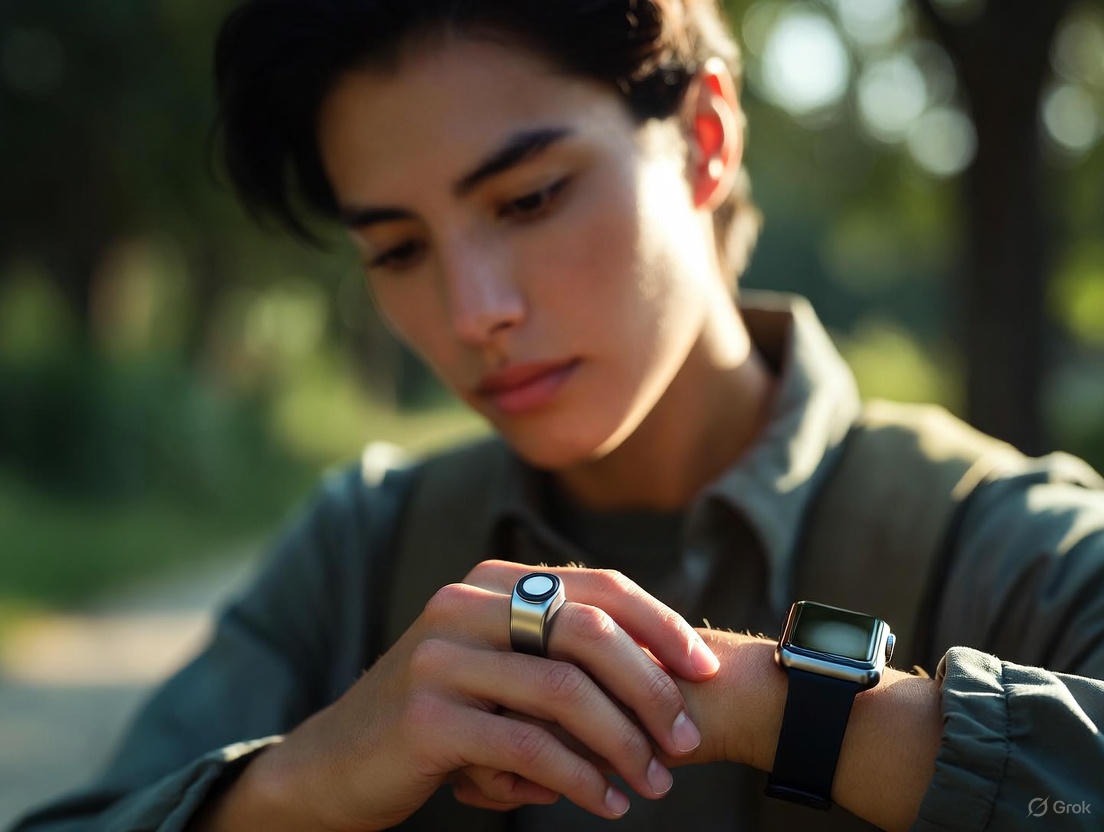
Ring Balance is the dynamic, data-informed equilibrium between your body’s physiological readiness and your mind’s creative demand. It’s the understanding that your best ideas don’t just come from your brain; they are choreographed by your sleep, fueled by your recovery, tempered by your stress, and illuminated by your daily rhythms. And for the first time in history, we can now see this balance—or lack thereof—with crystal clarity, thanks to a simple, elegant piece of technology worn on your finger.
This guide is your beginner-friendly blueprint. We will dismantle the myth that creativity is a mysterious, uncontrollable force and rebuild it as a practice that can be nurtured, protected, and optimized through the intelligent lens of your own biometric data. We’ll explore the science of the creative drain, learn the language of your body’s signals, and build a personalized system to prevent fatigue before it starts.
The journey begins not with a grand gesture, but with a single, fundamental shift: viewing your creative capacity as the ultimate asset, and learning to manage it with the same precision and respect as a master craftsman tends their tools. Let’s begin.
What is Creative Fatigue? (It’s Not Just “Being Tired”)
We’ve all had days where we feel spent. But creative fatigue is a specific, multidimensional syndrome that impacts the core of your generative abilities. It's the systemic depletion of the cognitive, emotional, and physiological resources required for original thought, problem-solving, and artistic expression.
Think of your creative capacity not as an endless well, but as a sophisticated battery. This battery has multiple cells:
The Cognitive Cell: Fueled by neurotransmitters like dopamine and norepinephrine, responsible for focus, idea association, and executive function.
The Emotional Cell: Powered by your sense of safety, motivation, and emotional resilience. It’s drained by anxiety, self-doubt, and external pressure.
The Physiological Cell: The foundation of it all, dependent on deep sleep, cellular recovery, balanced nervous system states (stress vs. rest), and stable energy metabolism.
Creative fatigue occurs when one or more of these cells is critically low. You’re not just sleepy; you’re staring at a blank page with a sense of dread. You’re not just busy; you’re generating ideas that feel stale, derivative, or forced. The hallmark is a disconnect between your desire to create and your capacity to do so.
Why Traditional Advice Falls Short: Telling a creatively fatigued person to "take a vacation" or "work harder" is like telling a car with a flat tire to either park forever or floor the accelerator. Both miss the point. The solution lies in diagnosis. Without data, we’re guessing. We blame a lack of inspiration or willpower, when the true culprits are often hidden in plain sight: a week of poor sleep quality, chronic low-grade stress keeping your nervous system on alert, or inadequate physical recovery that fails to clear the metabolic debris of intense mental work.
This is where the paradigm shifts. By moving from guesswork to guided insight—specifically, by using a wellness ring that enables lifelong health monitoring—you stop fighting symptoms and start addressing root causes. You learn to read your body’s pre-fatigue signals, the whispers before the crash. The journey to preventing creative fatigue starts with this fundamental understanding: your body is the platform for your mind’s greatest work. To ignore its signals is to sabotage your own potential.
The Mind-Body Link: How Physical Imbalance Kills Creativity
Creativity has long been considered the domain of the mind and spirit. Yet, modern neuroscience and physiology paint a different picture: your most brilliant ideas are utterly dependent on the state of your physical vessel. The brain is an organ—a demanding, energy-hungry one, consuming about 20% of the body’s resources. When the body is out of balance, the brain’s sophisticated creative networks are the first to go offline.
Let’s break down the primary physical saboteurs of creativity:
1. The Sleep-Creativity Cycle: During deep sleep (NREM) and REM sleep, your brain isn’t resting—it’s working differently. It’s performing critical maintenance: consolidating memories, forging novel connections between disparate ideas, and clearing out metabolic waste like beta-amyloid (often associated with brain fog). A study from the University of California, Berkeley, demonstrated that REM sleep specifically enhances integrative processing, allowing the brain to solve problems by connecting distant concepts. When your sleep quality is poor, you’re not just tired; you’re literally preventing your brain from performing its essential creative synthesis. You wake up with a fragmented mental landscape, unable to see the bigger picture.
2. The Stress Cascade: Acute stress can sometimes sharpen focus. Chronic, low-grade stress, however, is a creativity killer. It keeps your nervous system in a sympathetic ("fight-or-flight") state, flooding your system with cortisol. Elevated cortisol over time:
Impairs Prefrontal Cortex Function: This is your brain’s "CEO," responsible for complex thinking, decision-making, and original idea generation. It goes offline under stress.
Disrupts Neurogenesis: It inhibits the growth of new neurons in the hippocampus, a region vital for memory and learning—key components of the creative process.
Drains Emotional Resilience: It leaves you irritable, anxious, and less open to the playful experimentation that creativity requires.
3. The Energy Crisis: Your brain runs primarily on glucose. Unstable blood sugar levels—from poor nutrition, irregular meals, or chronic inflammation—lead to energy crashes, brain fog, and an inability to sustain focused mental effort. Creativity is a marathon, not a sprint; it requires stable, long-burning fuel.
The common thread here is invisibility. You might not consciously feel your shallow sleep, your elevated resting heart rate, or your dipping heart rate variability (HRV)—a key metric of recovery and resilience. But your creative mind feels it all. This is the critical gap that wearable technology bridges. A device like a smart ring passively tracks these biomarkers (sleep stages, HRV, resting heart rate, temperature trends), translating your body’s silent language into a clear dashboard of readiness.
Understanding that a creative block is often a physiological block first is the most empowering step you can take. It moves the challenge from the intangible realm of "muse" to the actionable realm of lifelong health strategies. By learning to support hormonal balance and build stress resilience over decades, you’re not just improving your health; you’re building a bulletproof foundation for a lifetime of creative output. This foundational work is what allows for true, sustainable innovation.
Introducing Ring Balance: Your New Creative Vital Sign
We track steps, calories, and hours slept. We have KPIs for our projects and financial goals. But what is the KPI for your creative capacity? For most of us, it’s a vague feeling, a hopeful guess. This ends now.
Ring Balance is a conceptual and practical framework that defines your creative readiness as a tangible, data-informed state. It is the harmonious alignment between your physiological readiness (as measured by key biomarkers) and your creative demand (the cognitive and emotional load of your projects). Think of it as your creative forecast—not just for today, but a predictive model for your week.
The "Ring" in Ring Balance is dual-purpose:
It represents the circadian and ultradian rhythms that govern your energy—the natural cycles of exertion and recovery that, when honored, lead to peak performance.
It signifies the wearable technology—the smart ring—that makes this balance visible, turning abstract concepts into concrete numbers and trends.
So, what are the core components of Ring Balance? They are the vital signs of your creative engine:
Sleep Score: A composite metric of your sleep duration, consistency, and quality (deep sleep, REM). This is your brain’s nightly repair and integration shift.
Readiness/Recovery Score: Often derived from Heart Rate Variability (HRV), resting heart rate, and sleep data. This score answers: "How well has my body recovered from yesterday's stresses, and how prepared is my nervous system for today’s demands?" A high readiness score suggests you’re primed for deep, focused creative work. A low score is a flag to prioritize restoration.
Stress/Strain Metrics: Tracking your body’s stress responses throughout the day, often via heart rate and HRV analysis. This helps you identify not just that you’re stressed, but when and potentially why.
Activity & Rest: The balance between purposeful movement (which boosts brain-derived neurotrophic factor/BDNF, a fertilizer for brain cells) and genuine rest. It’s the rhythm between doing and being.
By synthesizing this data, your ring gives you a daily Ring Balance score—a single, at-a-glance indicator of your creative fuel level. It transforms the question "Do I feel like working?" into "Is my biology optimized for the type of work I need to do?"
This is not about becoming a slave to data. It’s about empowerment. For instance, seeing a low readiness score allows you to strategically adapt your day: swapping a high-creative-demand task for administrative work, scheduling a mindfulness session, or prioritizing an early night. This proactive adjustment is the essence of lifelong health strategies that adapt to every life stage. You learn to work with your body, not against it. Over time, you’ll start to recognize the subtle physical sensations that correspond to your data, developing an intuitive sense of your own balance. The ring becomes a validation tool, confirming what your body already knows and revealing patterns you would have otherwise missed. This is how smart ring data guides lifelong health decision-making—and, by extension, lifelong creative decision-making.
Why a Smart Ring? The Unobtrusive Power of Continuous Monitoring
In the quest for better health and performance data, we’ve been offered clip-ons, wristbands, and chest straps. So, why a ring? For the creative professional, artist, or knowledge worker, the form factor isn’t just an aesthetic choice—it’s a functional imperative for accurate, sustainable, and meaningful monitoring.
1. The Science of the Finger: The finger contains rich vascular beds, allowing for strong, consistent photoplethysmography (PPG) signals—the same optical technology used to measure heart rate and blood oxygen on the wrist. However, the finger is less prone to motion artifacts caused by hand and wrist movements (typing, writing, cooking, etc.). This leads to more accurate, continuous heart rate and HRV data, especially during sleep. For metrics like sleep quality and stress resilience, this consistency is paramount. You get a cleaner signal, not a story interrupted by daily motions.
2. Unobtrusive & Always-On: Creativity doesn’t happen on a schedule. It strikes in the shower, on a walk, or in the quiet moments before sleep. A smart ring, due to its small size and comfort, is designed to be worn 24/7. You forget it’s there. This "always-on" capability is critical for capturing your true baseline—not just your workout or sleeping stats, but your body’s response to a difficult conversation, a flow state while painting, or the relaxing effect of an evening read. It tracks the full narrative of your day and night, providing a holistic picture that a device you take off for hours cannot match.
3. The Psychological Advantage: A ring is personal and discreet. Unlike a screen-on-the-wrist that buzzes with notifications and tempts you into digital distraction, a well-designed smart ring is a passive observer. It collects data without demanding your attention, allowing you to stay immersed in your creative work. You review the insights on your phone at a chosen time, turning data reflection into a mindful practice, not a constant interruption. This separation is vital for maintaining deep focus, the very state creative work requires.
4. Long-Term Adherence: The biggest failure of any health tool is abandonment. Watches need charging nightly and can be uncomfortable to sleep in. A smart ring, with a battery life often spanning 4-7 days and a comfortable, jewelry-like fit, faces a much lower barrier to consistent use. Long-term data is where the real magic happens; it’s how you see seasonal trends, understand the impact of lifestyle changes, and ultimately, how a wellness ring supports lifelong health goals. You can’t manage what you don’t measure consistently.
For the creative individual, this unobtrusive, continuous insight is revolutionary. It means you can finally see the direct correlation between a night of deep, restorative sleep and a morning of fluent writing. Or between a week of high stress and a period of creative stagnation. The ring becomes your silent partner, offering objective feedback on the lifestyle choices that either fuel or hinder your imagination. It provides the hard evidence that makes the mind-body link undeniable and actionable, proving that smart rings have changed the game for lifelong health tracking.
Your First Week: Setting Up Your Ring & Establishing a Baseline
The excitement of unboxing a new tech gadget often leads to immediate, frantic analysis. Resist this urge. Your first week with a smart ring is not about judgment or optimization. It is a week of gentle, non-judgmental observation—a scientific mission to discover your unique, unvarnished baseline.
Step 1: The Setup & Forget-It Phase (Days 1-3)
Fit is Everything: Follow sizing instructions carefully. The ring should be snug but not tight, comfortable enough to forget you’re wearing it. A proper fit ensures optimal sensor contact and accurate data.
Wear It Consistently: Put the ring on and commit to wearing it continuously, day and night. Charge it only when instructed (often when the battery dips below 20%).
Live Your Normal Life: Do not try to "be good" for the ring. Eat your regular diet, keep your usual sleep schedule, engage in your normal work and stress. The goal is to capture an honest snapshot of your current reality, not an idealized version. This honest baseline is the only valid starting point for meaningful change.
Avoid Data Obsession: Mute app notifications if needed. Check the app once a day, perhaps in the evening, simply to see what’s being recorded. Don’t analyze, just observe.
Step 2: Initial Observation & Pattern Spotting (Days 4-7) By the end of the first week, you’ll have enough data to see preliminary patterns. Open your app with a curious, not critical, mindset. Look for:
Sleep Consistency: What time do you typically fall asleep and wake up? How variable is it? Is your sleep quality score stable or erratic?
Recovery Trends: What’s your average nightly Readiness or Recovery score? Did any day stand out as particularly high or low? Can you connect it to a specific event (a hard workout, a stressful workday, a late night out)?
Daily Stress Peaks: Look at your daytime stress/strain graph. Are there consistent spikes at certain times (e.g., morning commute, afternoon meetings)? These are your "stress signatures."
Document Your Subjective Experience: Alongside the ring’s data, keep a simple journal. Each evening, note:
Your subjective energy level (1-10).
Your perceived creative output or mental clarity (e.g., "focused and ideas flowed," "foggy and struggled to write").
Key events: meals, exercise, work deadlines, social interactions.
After one week, place your journal notes side-by-side with your ring data. This is where the "aha" moments begin. You might see that your noted "foggy" day perfectly aligns with a poor sleep score and a low HRV. Or that your "brilliant idea" moment came on an afternoon following a high-recovery score.
This baseline week establishes your personal creative-physiological dictionary. It starts to answer: What does "ready to create" look like, in numbers, for my body? What does "draining" feel like and measure like? This foundational knowledge is the first, crucial step in creating a lifelong health strategy using a wellness ring. You are moving from being a passenger in your body to becoming its informed pilot.
Decoding Your Data: Sleep, Readiness, and Stress Scores
The dashboard of your wellness app can be overwhelming—a sea of numbers, graphs, and colorful metrics. Let’s translate these into plain language about your creative potential. We’ll focus on the three core pillars.
1. The Sleep Score: Your Brain’s Creative Reset Your sleep score is more than just hours in bed. It’s a grade on your brain’s nightly maintenance shift.
Deep Sleep (NREM): This is the physical restoration phase. It’s when tissue repair occurs, growth hormone is released, and the brain’s glymphatic system power-washes away metabolic waste. Low deep sleep can mean you wake up physically achy and mentally foggy.
REM Sleep: This is the creative incubator. Your brain is highly active, consolidating memories, processing emotions, and—most importantly—forming novel neural connections. This is where your subconscious works on problems, often leading to "aha!" moments upon waking. Suppressed REM sleep (often due to alcohol, late-night screen time, or inconsistent schedules) directly stifles creative insight.
Consistency: Your brain craves rhythm. Going to bed and waking up at wildly different times each day (social jet lag) disrupts your circadian biology, confusing the systems that regulate energy, mood, and cognition. A high sleep score reflects not just good sleep, but regular sleep.
Actionable Insight: If your sleep score is chronically low, don’t just aim for "more sleep." Look at the breakdown. Is REM low? Prioritize a wind-down routine and limit alcohol. Is deep sleep poor? Evaluate evening exercise timing and caffeine cut-off times. Improving your lifelong health strategies to optimize sleep quality is the single highest-impact change for creative endurance.
2. The Readiness/Recovery Score: Your Creative Fuel Gauge This is your most important number of the day. It synthesizes data (typically HRV, resting heart rate, sleep, and temperature) to answer: "How recovered am I?"
Heart Rate Variability (HRV): The gold standard metric for autonomic nervous system balance. A higher HRV indicates a resilient, adaptable system with strong parasympathetic ("rest-and-digest") tone. It means your body can handle stress and recover from it efficiently. A low or dropping HRV is a clear sign of accumulated stress, overtraining, or illness—a red flag for impending creative fatigue.
Resting Heart Rate (RHR): A elevated RHR (compared to your personal baseline) can indicate your body is under stress, fighting inflammation, or hasn’t recovered from prior exertion.
Actionable Insight: Let your Readiness Score guide your creative schedule.
High Score (Green Zone): This is your deep work window. Schedule your most demanding creative tasks: writing new chapters, designing concepts, strategic planning. Your biology is primed for focus and innovation.
Moderate Score (Yellow Zone): Ideal for editing, research, administrative tasks, collaborative meetings, and learning. It’s a maintenance and preparation day.
Low Score (Red Zone): A non-negotiable signal to prioritize restoration. This is a day for gentle movement (a walk in nature), light reading, and early sleep. Pushing through creative work on a red day often leads to poor output and deeper depletion. Honoring this score is practicing lifelong health strategies where consistency beats perfection.
3. The Stress/Strain Metric: Mapping Your Creative Drain This graph shows your nervous system’s reactions throughout the day. It helps you move from a vague sense of "being stressed" to pinpointing triggers.
Acute Spikes: Short, high-stress events (a presentation, a conflict). These are normal. The key is whether your body returns to baseline afterwards.
Chronic Elevation: A stress graph that stays elevated for hours indicates your system is stuck in "fight-or-flight." This state drains the cognitive and emotional resources needed for creativity.
Actionable Insight: Use this data for environmental design. If you see a chronic spike every day from 2-4 PM, investigate. Is it post-lunch blood sugar crash? A draining recurring meeting? Poor workspace lighting? You can then experiment with solutions: a protein-rich lunch, rescheduling the meeting, or a short walk outside. This is proactive stress resilience training, using data to protect cognitive function before it’s impaired.
The Creative’s Daily Rhythm: Aligning Work with Biology
Armed with an understanding of your data, you can now design a daily routine that aligns with your biology, not against it. This isn’t a rigid schedule, but a flexible rhythm that honors your natural energy waves—your ultradian rhythms, which are 90-120 minute cycles of peak focus followed by a need for recovery.
The Ring-Balanced Creative Day:
Morning (Leverage High Readiness):
Upon Waking: Check your Readiness Score. Let it set the tone for the day without judgment. Drink water, get natural light exposure to anchor your circadian rhythm.
The "Creative Prime" Block (First 90-120 mins after starting work): This is your most precious window. If your score is high, guard this time ferociously. Work on your most important, generative creative task. No email, no social media, no meetings. This is when your prefrontal cortex is freshest and your willpower is strongest.
Why it works: Cortisol naturally peaks in the morning, aiding focus and alertness. Following a night of recovery, your brain’s resources are fully stocked.
Mid-Day (Navigating the Dip):
Post-Prime Recovery: After your deep work block, take a genuine break. Step away from your screen. Move your body—a 10-minute walk is ideal. This allows your brain to replenish neurotransmitters and process what you’ve just done.
The "Administrative & Associative" Block: Use this time for tasks that require less raw creative power: answering emails, logistical planning, research, or editing. This is also an excellent time for "associative creativity"—consuming inspiring content, browsing art, listening to podcasts. You’re feeding your brain input for future output.
Post-Lunch Awareness: Be mindful of the natural post-prandial dip. A heavy lunch can exacerbate brain fog. Use your ring’s stress data to see how your body reacts to different foods.
Afternoon (Strategic Execution):
The "Secondary Creative" or "Completion" Block: Many experience a second, smaller energy peak in the late afternoon (around 3-5 PM). If your data shows you’re still in a good state, use this for creative tasks that build on your morning work or require slightly less cognitive load.
Collaboration Window: The afternoon can also be ideal for collaborative meetings, brainstorming sessions, or giving/receiving feedback. The social interaction can provide an energy boost.
Evening (Intentional Wind-Down):
The Digital Sunset: Begin winding down screens 60-90 minutes before bed. Blue light suppresses melatonin, disrupting the onset of sleep.
Reflection & Gentle Processing: Journal about your day, lightly sketch ideas, or read fiction. This allows your subconscious to gently mull over the day’s work without the pressure of output.
Prime the Sleep Engine: A consistent bedtime routine (light stretching, meditation, listening to calm music) signals to your nervous system that it’s safe to shift into the restorative parasympathetic state. Your ring will show you how this routine improves your sleep quality over time.
This rhythmic approach turns each day into a intentional dance between exertion and recovery. By scheduling tasks according to your biological capacity, you reduce friction and increase flow. You’ll find that 90 minutes of focused, high-readiness work produces more valuable output than 4 hours of forced, low-readiness grinding. This is the practical application of letting smart ring data guide your lifelong health decision-making on a daily, hourly basis. Your schedule becomes dynamic, responsive, and uniquely yours.
Nutrition for Creative Energy: Fueling the Innovative Mind
Your brain, though only 2% of your body weight, consumes 20% of its energy. The quality of that energy is paramount. The food you eat directly influences neurotransmitter production, inflammation levels, blood sugar stability, and ultimately, cognitive clarity and creative thinking.
The Core Principles of Creative Nutrition:
1. Stabilize Your Blood Sugar: Creative work requires sustained mental energy. The rollercoaster of sugar spikes and crashes leads to irritability, brain fog, and an inability to concentrate.
Action: Pair carbohydrates with protein, fat, and fiber at every meal. Instead of a plain bagel (quick spike/crash), have eggs with avocado and whole-grain toast. This provides a slow, steady release of glucose, fueling your brain for hours.
Ring Connection: Watch your stress/strain graph after meals. A major spike can indicate a blood sugar surge and the subsequent stress response. This biofeedback helps you identify which foods truly fuel you and which disrupt your balance.
2. Fight Inflammation with a "Brain-Protective" Diet: Chronic systemic inflammation is linked to brain fog, depression, and reduced neuroplasticity (the brain's ability to form new connections—the essence of creativity).
Action: Emphasize omega-3 fatty acids (fatty fish, walnuts, chia seeds), antioxidants (berries, leafy greens, dark chocolate), and polyphenols (colorful vegetables, green tea, spices like turmeric). Minimize processed foods, refined sugars, and industrial seed oils, which are pro-inflammatory.
Ring Connection: Over time, as you reduce inflammatory foods, you may see improvements in baseline metrics like resting heart rate and HRV, indicating a calmer, more resilient system. This supports long-term cognitive function protection.
3. Hydrate for Optimal Brain Function: Even mild dehydration (as little as 1-2%) can impair concentration, short-term memory, and mood.
Action: Sip water consistently throughout the day. Don’t wait for thirst. Herbal teas and water-rich foods (cucumbers, watermelon) count.
Ring Connection: Poor hydration can elevate your resting heart rate and negatively impact your HRV and sleep. Good hydration is a simple, high-leverage habit for better data—and better thinking.
4. Time Your Fuel for Creative Sessions:
Before a Deep Work Block: Eat a meal or snack that provides steady energy (e.g., Greek yogurt with berries, apple with almond butter). Avoid heavy, high-fat meals right before, as blood is shunted to digestion, away from the brain.
For Sustained Output: For long creative sessions, have a brain-friendly snack on hand (a handful of nuts, a piece of dark chocolate) to maintain glucose levels without a crash.
The Role of the Ring in Nutritional Biohacking: Your smart ring turns nutrition from a guessing game into a personal science experiment.
Track & Correlate: Note what you eat in your journal or app. Later, review your sleep and recovery scores. Do you sleep poorly after a late, heavy dinner? Does your afternoon HRV dip after a sugary lunch?
Discover Sensitivities: You might find that certain foods you thought were fine cause subtle but measurable increases in nighttime resting heart rate or reduce sleep quality, indicating an inflammatory or disruptive response.
Optimize for Recovery: Your post-workout meal is crucial. Data can show how different post-exercise nutrition (e.g., a protein shake vs. nothing) affects your overnight recovery score.
This data-driven approach to food helps you build lifelong health strategies to maintain metabolic health. You learn to eat not just for weight or pleasure, but for optimal cognitive and creative function. Food becomes strategic fuel, and your ring provides the performance report.
Movement as a Creative Catalyst (Not a Chore)
For the creative professional glued to a desk or studio, movement is often the first thing sacrificed. This is a catastrophic error for creative output. Physical activity is not a distraction from your work; it is a direct catalyst for it. It’s one of the most powerful tools you have to reset your brain, spark new ideas, and prevent the physical stagnation that leads to mental stagnation.
How Movement Fuels Creativity:
1. It Enhances Brain Plasticity & Grows New Brain Cells: Exercise increases the production of Brain-Derived Neurotrophic Factor (BDNF), a protein that acts like fertilizer for your brain cells. It promotes the growth of new neurons (neurogenesis) and strengthens connections between them, particularly in the hippocampus—a region vital for memory and learning. A brain with high BDNF is more adaptable, resilient, and capable of forming the novel connections that underpin creative insight.
2. It Shifts Brain States & Breaks Blocks: When you’re stuck on a problem, continuing to hammer at it often leads to frustration. Getting up and moving—especially in a rhythmic, low-cognitive-demand way like walking, running, or cycling—allows your default mode network (DMN) to activate. The DMN is the brain’s "idle" or "daydreaming" network, and it’s incredibly active during movement without focused thought. This is when your subconscious connects disparate ideas, leading to breakthroughs. History is filled with anecdotes of great ideas born on walks.
3. It Regulates Mood and Reduces Anxiety: Exercise is a potent modulator of key neurotransmitters. It boosts serotonin and dopamine (improving mood and motivation) and reduces levels of stress hormones like cortisol. A calmer, more positive mental state is far more conducive to playful, open-ended creative exploration than an anxious or depressed one.
4. It Improves Physiological Metrics for Better Recovery: Regular, appropriate exercise improves cardiovascular health, lowers resting heart rate, and can enhance HRV over time—all of which contribute to a higher daily Readiness Score. It also promotes deeper sleep.
Designing a "Creativity-Enhancing" Movement Protocol:
Low-Intensity Steady State (LISS) for Thinking: Walking, easy cycling, or gentle swimming. This is your primary creative movement. Schedule a 20-30 minute walk when you feel stuck or as a break between deep work sessions. Take no agenda; let your mind wander.
Moderate-Intensity for Energy & Resilience: Strength training, yoga, dance, or a brisk hike. This type of movement builds physical and mental resilience, improves posture (combating desk hunch), and boosts overall energy levels. Aim for 2-3 sessions per week, but always listen to your Readiness Score. A red score is a day for rest or gentle movement, not a hard workout.
The Importance of Non-Exercise Activity Thermogenesis (NEAT): Don’t underestimate small movements throughout the day: taking the stairs, stretching at your desk, pacing during phone calls. These keep blood flowing and prevent the physical stiffness that can contribute to mental rigidity.
Using Your Ring to Optimize Movement: Your wellness ring transforms exercise from a generic prescription to a personalized practice.
Pre-Workout Check: Glance at your Readiness Score. Green? Go for a challenging session. Yellow? Maybe opt for moderate or LISS. Red? Choose gentle movement or rest. Pushing hard on a low-recovery day can lead to injury and prolonged fatigue, sabotaging your creativity for days.
Post-Workout Recovery Tracking: The true benefit of exercise comes during recovery. Your ring tracks how well your body bounces back. Did that hard workout lead to a super-compensation (higher HRV after 1-2 days) or to excessive strain (lower HRV for multiple days)? This feedback helps you find your optimal training "dose."
Prevent Overtraining: A consistently dropping HRV trend and elevated resting heart rate are classic signs of overtraining—a surefire path to creative burnout. Your ring provides an early warning system.
By aligning movement with your body’s readiness, you ensure it serves your creative goals, not hinders them. This mindful approach to activity is a cornerstone of lifelong health strategies to preserve mobility and ensure your body can support your creative endeavors for decades to come. It turns movement from a separate task into an integrated part of your creative process.
Mastering Stress & Recovery: The On/Off Switch for Creativity
If creativity is a light, then stress is the dimmer switch and recovery is the power source. You cannot have sustainable creative output without mastering the dynamic interplay between the two. In our modern world, stress is chronic and low-grade—the constant hum of emails, news cycles, financial pressure, and social comparison. This state of perpetual "sympathetic tone" doesn't just feel bad; it systematically disables the neural networks required for original thought.
Understanding the Creative Stress Paradox: Not all stress is bad. Eustress—the positive, motivating stress of a challenging project or a tight deadline—can sharpen focus and drive performance. It’s acute, time-bound, and followed by recovery. The enemy is distress: chronic, uncontrolled stress that leaves your nervous system perpetually on alert. This is the stress that flattens creativity. It does so by:
Hijacking the Prefrontal Cortex (PFC): Under chronic stress, the amygdala (the fear center) becomes hyperactive and effectively shuts down the PFC, your brain’s CEO for planning, decision-making, and innovative thinking.
Constricting Perception: Stress triggers a survival-mode narrowing of attention. You become focused on the perceived threat, losing the broad, associative thinking style that allows you to connect disparate ideas—the heart of creativity.
Depleting Neurochemical Resources: Chronic cortisol exposure depletes dopamine and serotonin, leading to anhedonia (inability to feel pleasure) and lack of motivation—the death knell for passionate creative work.
Recovery: The Non-Negotiable Creative Ingredient Recovery is not laziness. It is the active process during which the body and brain repair, rebuild, and strengthen. It’s when the benefits of stress (the adaptive challenge) are realized. Without deliberate recovery, you are simply accumulating damage. There are two main types:
Passive Recovery: Sleep is the ultimate form. This is when the glymphatic system cleanses metabolic waste from the brain, memories are consolidated, and hormonal systems are re-balanced.
Active Recovery: Conscious activities that shift your nervous system from "fight-or-flight" (sympathetic) to "rest-and-digest" (parasympathetic). This is the state where creativity can germinate.
Building Your Active Recovery Toolkit with Ring Feedback: Your smart ring’s stress and readiness metrics provide real-time feedback on what works for you. Experiment with these active recovery techniques and watch your data respond:
Breathwork (The Instant Reset): Slow, diaphragmatic breathing (e.g., 4-7-8 technique: inhale 4, hold 7, exhale 8) directly stimulates the vagus nerve, triggering the parasympathetic response. Action: When you see a stress spike on your ring’s graph, pause for 2-3 minutes of deep breathing. Notice if the elevated heart rate comes down.
Nature Immersion ("Soft Fascination"): Time in nature, especially without digital devices, provides "soft fascination" that allows the brain’s directed attention networks to rest and replenish. A 20-minute walk in a park can significantly lower cortisol. Ring Connection: Track a walk in a busy urban area vs. a quiet green space. The latter will likely show a more pronounced calming effect on your stress graph.
Digital Detox & Boredom: Scheduled periods of true boredom—no podcasts, no music, no screens—are fertile ground for the default mode network to activate. This is where mind-wandering and spontaneous creative connections occur. Action: Schedule 15 minutes of sitting quietly with no agenda. Observe if this practice, over time, correlates with improved sleep or higher morning readiness.
Non-Goal-Oriented Play: Engage in a creative activity with no professional outcome: doodling, playing an instrument for fun, building with Legos, cooking a new recipe simply for joy. This separates creativity from performance pressure.
The Ring as Your Recovery Coach: Your device transforms recovery from an abstract concept to a measurable outcome.
Quantifying "Calm": You can see, in graph form, how a 10-minute meditation or listening to calm music lowers your real-time stress score. This positive reinforcement makes the practice stick.
Identifying Hidden Stressors: You might discover that scrolling social media or watching intense news before bed keeps your nighttime heart rate elevated, impacting sleep. The data provides the motivation to change those habits.
Validating Your Efforts: When you commit to a week of dedicated wind-down routines and see your sleep score and HRV trend upward, you get concrete proof that your efforts are building stress resilience over decades. This is how smart ring data validates lifelong health choices.
The goal is not to eliminate stress, but to become a master of the stress-recovery cycle. By using your ring’s data to identify your unique stress signatures and discover your most effective recovery levers, you build a system that protects your creative capacity from burnout. You learn to turn the dimmer switch up for focused work, and decisively turn it down—and off—to recharge.
The Deep Work Protocol: Maximizing Creative Output in High-Readiness Windows
Deep work, a term popularized by Cal Newport, is the ability to focus without distraction on a cognitively demanding task. It is the state where high-value creative work gets done: writing, coding, designing, composing, strategizing. Yet, in an age of constant notifications and fragmented schedules, deep work is increasingly rare. The Ring Balance framework provides the missing piece: timing. It tells you not just how to do deep work, but when you are biologically primed to do it most effectively.
The Physiology of Deep Work: Deep work consumes significant metabolic resources from your prefrontal cortex. To enter and sustain this state, your brain needs:
Stable, ample glucose and oxygen.
Optimal neurotransmitter levels (particularly dopamine and norepinephrine for focus and motivation).
A quiet, non-reactive amygdala (low anxiety).
A well-rested, recovered nervous system.
Attempting deep work when your Readiness Score is low is like trying to run a power-hungry application on a laptop with a 10% battery. It will sputter, crash, and the process will be agonizingly slow.
Building Your Ring-Informed Deep Work Protocol:
Phase 1: Preparation (The Night & Morning Before)
The Sleep Foundation: Your deep work session tomorrow is built on tonight’s sleep. A high sleep score, rich in deep and REM sleep, is your first prerequisite. This is non-negotiable.
Morning Readiness Assessment: Before planning your day, check your Readiness Score. A score in the green (or high yellow) zone is your license to schedule a deep work block. A red zone score means you reschedule or radically shorten the ambition of the block.
Fueling: Consume a brain-supportive breakfast that provides steady energy (e.g., eggs, avocado, oats). Avoid a sugary cereal that will cause a mid-morning crash.
Phase 2: Execution (The Deep Work Block Itself)
Time Blocking: Schedule a 90-120 minute block in your calendar. This aligns with the natural length of an ultradian focus cycle.
The Priming Ritual: Create a consistent 5-minute ritual to begin. This could be: pouring a glass of water, putting on noise-cancelling headphones with a specific focus playlist, turning off all notifications (phone on airplane mode), and stating your single objective for the block. This ritual signals to your brain, "It is time to go deep."
The Environment: Your ring’s stress data can inform your environment. Do you work better in complete silence or with ambient sound? Does natural light lower your stress reading compared to harsh overhead lights? Optimize your workspace based on what your physiology tells you.
The "No-Switch" Rule: The single greatest enemy of deep work is context switching. Every time you check email, Slack, or your phone, you incur a "attention residue" cost, making it harder to re-enter a state of depth. The rule is simple: during the block, you work on the one chosen task. Nothing else.
Phase 3: Recovery (The Strategic Break)
Honor the Break: When the timer goes off, stop. Do not "just finish this one thing." The break is part of the protocol.
Active Recovery: Do not spend your break on digital consumption (social media, news). This is merely switching to shallow work. Instead, engage in active recovery: stand up, stretch, gaze out a window, take a short walk (without your phone), make a tea. This allows your brain to replenish its cognitive resources.
Ring Check-In: After your break, you might glance at your live stress reading. A successful deep work block followed by true recovery should leave you feeling energized, not depleted, and this may be reflected in a stable or even improved stress score post-break.
Advanced Tactic: Batching Deep Work by Biological State Over time, you’ll notice patterns. You may have the highest readiness for generative work (writing new material) in the morning, and better readiness for analytical deep work (editing, complex problem-solving) in the late afternoon. Use your historical ring data to identify these personal patterns and batch your creative tasks accordingly. This is the pinnacle of personalization—designing your workflow around your unique biological blueprint.
By marrying the principles of deep work with the biological intelligence of your ring, you transform from someone who hopes to do creative work into someone who engineers the conditions for it to flourish. You move from fighting resistance to flowing with readiness. This systematic approach ensures that your most valuable creative energy is invested, not spent. It is the ultimate application of using technology not to work more, but to work better—a key strategy in any plan to optimize every decade of your creative life.
Social Energy & Creative Circles: Managing Your Relational Battery
Creativity is often portrayed as a solitary pursuit, but it is deeply social. Collaboration sparks new ideas, feedback refines them, and community provides the encouragement to persist. However, social interaction is a significant consumer of cognitive and emotional energy. For every introvert who finds a party draining, and for every empath who absorbs the stress of a team conflict, the toll on creative resources is real. This is your "relational battery," and managing its charge is critical for creative wellness.
The Double-Edged Sword of Social Connection:
The Upside: Positive, supportive social interactions release oxytocin and endorphins, reduce cortisol, and foster a sense of safety and belonging. This state is ideal for the playful, risk-taking mindset creativity requires. Brainstorming with trusted colleagues or sharing your work-in-progress with a supportive circle can provide breakthroughs and motivation.
The Downside: Obligatory socializing, toxic dynamics, conflict, and even the performance anxiety of networking drain your emotional and cognitive reserves. They activate the brain’s threat detection systems, pulling energy away from creative centers.
Using Your Ring to Map Your Social Energy Profile: Your wearable data provides objective insight into how different social contexts affect your physiology, moving you beyond vague feelings of being "drained" or "energized."
The Post-Interaction Audit: After different types of social engagements (a one-on-one coffee with a friend, a large industry mixer, a fraught family dinner, a collaborative workshop), check your stress graph and note your subjective feeling.
Pattern A (Recharging): The interaction ended, and your stress levels decreased or remained low. You feel calm or energized. This is a net-positive interaction for your system.
Pattern B (Depleting): The interaction ended, but your stress graph shows elevated readings for an hour or more afterward. You feel anxious, irritable, or exhausted. This interaction cost you significant recovery capital.
Strategies for a Ring-Balanced Social Life:
Schedule Socializing According to Readiness: Just like work tasks, schedule social activities based on your battery. A high-readiness day might be perfect for that important networking lunch or a stimulating mastermind group. A low-readiness day calls for quiet, restorative time alone or with a very close, low-demand companion.
Design Creative Circles with Intention: Curate your inner creative circle carefully. These should be people who trigger "Pattern A" responses—individuals who offer psychological safety, constructive feedback, and mutual inspiration. The data doesn’t lie: time with these people should support your recovery metrics, not hinder them.
Set Boundaries Based on Data, Not Guilt: When you see clear data that certain obligations (e.g., weekly happy hours, certain family dynamics) consistently tank your recovery scores, you have an objective basis for setting boundaries. You can say, "I need to protect my evening wind-down routine for my work," with the backing of your own biological evidence.
Leverage Asynchronous Connection: Not all creative community needs to be real-time. Engaging in a thoughtful online forum, sharing work via email for feedback, or using collaborative documents can provide the benefits of connection without the instantaneous energy expenditure of a meeting.
The Long-Term View: Social Fitness Just as physical exercise stresses and strengthens the body, positive social challenge can build "social fitness" and emotional resilience. The key is the recovery afterward. Your ring helps you ensure you’re getting that recovery. By intentionally managing your social energy as part of your overall Ring Balance, you ensure that your relationships fuel your creativity instead of fragmenting it.
This mindful approach to connection is a critical, often overlooked, component of lifelong health strategies that recognize the social connection factor. Loneliness is a health risk, but exhausting social burnout is a creativity risk. The balance lies in conscious, data-informed curation of your relational world, ensuring it serves as a net-positive source of energy and inspiration for your craft.
Long-Term Trends & The Creative Seasonality: Playing the Long Game
The daily and weekly focus of Ring Balance is essential, but the true magic—and the ultimate prevention against chronic creative fatigue—reveals itself over months and years. Your creative energy is not a flat line; it has a rhythm that dances to the beat of seasons, life cycles, and long-term projects. By analyzing the long-term trends in your ring’s data, you graduate from managing days to orchestrating creative seasons.
Identifying Your Personal Creative Seasons:
Cyclical Energy Patterns: Over a full year of data, you may discover you have naturally higher average Readiness Scores and sleep quality in the spring and fall, with dips in the high heat of summer or the deep dark of winter. This isn't a flaw; it's human biology responding to light, temperature, and ancient seasonal rhythms.
Project-Based Cycles: The arc of a major creative project (conception, intense production, editing, launch) will leave a distinct signature on your data. The intense production "sprint" phase may show elevated stress and slightly lower recovery. The post-launch period might show a physical crash if not managed carefully.
How to Use Long-Term Trend Data:
1. For Strategic Planning:
Seasonal Scheduling: If your data shows you consistently have more energy and better sleep in October, that’s the time to schedule your most ambitious, generative work phase. If February is always a lower-energy month, plan that for research, administrative catch-up, and vacation planning. This is proactive energy management on a macro scale.
Project Phasing: Before embarking on a big project, review your historical trends. Know that the final push will be demanding. Proactively schedule a deliberate "creative recovery" period immediately after the project milestone. Block it on your calendar as seriously as the work itself. This prevents the post-project crash that can spiral into prolonged fatigue.
2. For Lifestyle Audit & Continuous Optimization:
The Quarterly Review: Every 3 months, spend 30 minutes reviewing your trend lines. Look at your 90-day averages for Sleep Score, HRV, and Resting Heart Rate.
Are your baselines improving? This indicates your overall lifelong health strategies are working. You’re becoming more resilient.
Are they declining? This is a crucial early warning. It prompts investigation: Has work become unsustainable? Has a new habit (e.g., late-night screen time) crept in? Have you stopped exercising? This data-driven audit allows for course correction before you hit a wall.
Correlate with Life Events: Overlay your personal calendar. Did a period of travel disrupt your sleep baseline for weeks? Did starting a meditation practice correspond with a gentle upward drift in your HRV? This turns life into a series of informed experiments in lifelong health.
3. Embracing Creative Dormancy: Perhaps the most profound lesson from long-term data is the validation of rest. In nature, winter is not death; it is dormancy, a period of essential rest and consolidation below the surface. Your data may show you need a "creative winter"—a period of lower output, more input, and deep restoration. This is not burnout; it is a necessary phase in the cycle. Fighting it leads to burnout. Honoring it, because your data shows your body needs it, leads to renewed springtimes of vibrant creativity.
The Ultimate Goal: Compound Interest on Wellness This long-view approach is where Ring Balance transcends fatigue prevention and becomes a framework for lifelong creative flourishing. Small, consistent daily habits—prioritizing sleep, managing stress, aligning work with biology—compound over time. Just as financial wellness is connected to health, investing in your physiological capital pays compound interest in the form of sustained creativity, sharper thinking, and protected passion over a lifetime.
Your ring’s long-term data is the ledger of that investment. It shows you the growth, warns you of withdrawals, and helps you allocate your energy resources wisely across the decades of your creative journey. It moves you from surviving your projects to thriving through them, year after year.
The Digital Environment Audit: Engineering Your Space for Focus
Our creative minds are not sealed off from the environments we inhabit. The digital spaces we occupy—the constant pings, the endless scroll, the barrage of information—create a low-grade cognitive frenzy that directly competes for the neural resources needed for deep, imaginative work. Preventing creative fatigue requires more than managing your body; it requires managing your digital ecosystem. This is an environmental audit, and your ring provides the hard data on its toxic effects.
How Digital Clutter Drains Creative Energy:
The Attention Fragmentation Tax: Every notification, whether you check it or not, creates a "attention residue." A part of your brain stays with the unresolved alert, reducing the cognitive capacity available for your primary task. This constant switching is mentally exhausting and prevents the sustained focus required for creativity.
The Dopamine Trap: Social media, email, and news apps are designed to deliver variable rewards, hijacking your brain's dopamine system. This conditions you to seek the quick hit of a new message over the slower, deeper satisfaction of creative accomplishment, eroding your motivation for challenging work.
The Sleep Saboteur: Evening screen exposure to blue light suppresses melatonin production, delaying sleep onset and reducing sleep quality. A poorly rested brain is a creatively impotent brain.
Using Your Ring to Measure the Digital Drain:
Your wellness data offers a shocking mirror to your digital habits.
Correlate Screen Time with Stress: Enable screen time reports on your phone. At the end of the week, compare days with high screen time to your ring’s daily stress graphs and sleep scores. You will likely see a direct correlation: more screen time, especially in the evening, equals higher stress readings and lower sleep scores.
The "Do Not Disturb" Experiment: For one full workday, enable Do Not Disturb mode (or even Airplane mode) during your planned deep work blocks. Use your ring’s stress graph to track your physiological state. Compare it to a normal, interruption-filled day. The difference in your stress baseline can be profound.
Pre-Sleep Digital Sunset Test: Commit to a 60-minute screen-free buffer before bed for one week. Watch what happens to your sleep score, particularly your "time in deep sleep" metric. The improvement can be immediate and dramatic.
The Ring-Balanced Digital Hygiene Protocol:
Based on your data audit, implement these environmental fixes:
Notification Armageddon: Go into your device settings and turn off all non-essential notifications. This includes social media, news apps, and most email. Allow only true emergency contacts. Reclaim the right to check information on your schedule.
Single-Purpose Devices & Space: Whenever possible, use devices for single purposes. Your work laptop is for work. Your tablet is for reading. Your phone is for communication and photos. This reduces the temptation to context-switch. Physically leave your phone in another room during deep work sessions.
Schedule "Broadcast" Time: Instead of living in your inbox or messaging apps, schedule 2-3 specific times per day to process communication. Close email and Slack outside these windows. This creates vast, uninterrupted stretches for creative work. Your ring data will show these are your most physiologically calm and focused periods.
Curate Your Inputs: Unfollow, unsubscribe, and mute accounts that trigger anxiety, comparison, or mindless scrolling. Actively follow feeds that inspire, educate, and spark joy. Your digital environment should feel like a curated gallery, not a noisy stock exchange.
Implement a Physical Charging Station: Designate a spot in your home—not your bedroom—where all devices charge overnight. This accomplishes two things: it prevents bedtime scrolling, and it gives you a screen-free sanctuary for sleep and morning reflection.
By engineering a digital environment that minimizes distraction and cognitive load, you free up massive amounts of mental energy for your creative priorities. Your ring validates this, showing lower ambient stress and higher recovery scores. This isn't just productivity hacking; it's creating the mental silence in which original ideas can finally be heard. It’s a foundational practice for lifelong health strategies that protect cognitive function in an increasingly noisy world.
The Art of Strategic Rest: Beyond Sleep to True Restoration
We’ve established sleep as the cornerstone of recovery. But rest is a broader category—it’s the spectrum of activities that restore your nervous system and creative spirit outside of sleep. In our hustle culture, rest is often viewed as passive, lazy, or a reward for exhaustion. In the Ring Balance framework, strategic rest is an active, scheduled, and non-negotiable component of the creative process itself. It’s the space between the notes that makes the music.
The Four Types of Creative Rest (All Measurable):
Sensory Rest: Diminishing the constant sensory input of modern life. This means quieting noise, reducing visual clutter, and stepping away from screens.
Ring Data Link: Practice 20 minutes of sitting in a dim, quiet room. Observe your real-time heart rate and stress score drop. This is a quantifiable sensory rest state.
Emotional Rest: The freedom to be authentic without performing or managing the emotions of others. It’s found in safe relationships where you can say, "I’m not okay," or in solitude where no emotional performance is required.
Ring Data Link: Compare time spent with people you feel you must "perform" for versus time with a trusted, easy companion. The latter will likely show a lower physiological stress signature.
Creative Rest: Stopping the act of output to deliberately seek inspiring input. This is admiring art, walking in nature, listening to beautiful music, or reading poetry—activities that fill the well without asking you to draw from it.
Ring Data Link: While harder to measure directly, the after-effects are visible. A day rich in creative rest often leads to a calmer stress graph and can prime the brain for a high-readiness, productive day tomorrow.
Spiritual Rest: Connecting to something larger than yourself and your work. This could be through meditation, prayer, community service, or a profound experience of awe in nature.
Ring Data Link: Practices like meditation have a clear, measurable impact on HRV and real-time stress scores, moving the nervous system into a restorative state.
Designing Your Personal Rest Protocol:
Your ring helps you move from generic advice to a personalized rest prescription.
The Rest Audit: For one week, log your non-sleep "rest" activities. Then, correlate them with your subsequent readiness scores. Did an hour of scrolling Instagram (often mistaken for rest) leave you feeling refreshed or agitated? Did it correlate with poor sleep? Did an afternoon reading a novel in the park lead to a higher readiness score the next morning?
Schedule Rest Like a Meeting: Based on your audit, block time for the types of rest that genuinely replenish you. Tuesday evening might be "sensory rest" (no screens, calm music). Sunday afternoon might be "creative rest" (visit a museum or hike a new trail).
Implement "Micro-Rests" Based on Biofeedback: Use your ring’s live stress reading throughout the day. When you see an unexplained or sustained spike, that’s your cue for a 5-minute micro-rest. Step away from your desk, practice box breathing, or look out the window at the sky. This is biofeedback-driven recovery in real-time.
The Role of Boredom: In the context of strategic rest, boredom is not the enemy. It is a potent catalyst. In the absence of external stimulation, the brain’s default mode network activates, making spontaneous connections and processing subconscious material. Schedule short periods of intentional boredom—sitting with no phone, no book, no agenda. It’s in these spaces that some of your best creative insights will emerge.
By elevating rest to the level of strategic importance as focused work, you break the cycle of boom-and-bust creativity. You move from depleting your creative reserves to constantly replenishing them. This balanced rhythm is the essence of lifelong health strategies where recovery is a long-term investment. It ensures you don't just have one great creative project in you, but a lifetime's worth.
Overcoming Creative Plateaus & Blocks with Biometric Insight
Every creator hits the wall. The blank page mocks you. The project you loved yesterday feels stale. The ideas stop flowing. The traditional advice—"push through," "wait for the muse," "take a break"—feels vague and unhelpful. With a Ring Balance mindset, a creative block is not a mystical failure; it’s a biometric data point. It’s a signal to diagnose, not a verdict to despair.
Reframing the Block: It’s a Symptom, Not a Cause.
When you hit a plateau, ask your data, not just your emotions. Pull up your ring’s metrics from the past week.
The Exhaustion Block: Are your sleep scores chronically in the yellow or red? Is your HRV on a downward trend? Is your resting heart rate elevated? This block is your body saying it has no fuel left for the high-energy task of creation. The solution is not to try harder; it’s to strategically rest and rebuild your physiological capital.
The Stress Block: Is your daily stress graph a constant plateau of elevated readings? Have you been in a prolonged period of life or work anxiety? This block is your amygdala hijacking your prefrontal cortex. The solution is active stress-downregulation techniques (breathwork, nature, therapy) to quiet the noise so your creative brain can come back online.
The Rhythm Block: Have you been working erratic hours, neglecting movement, eating poorly? This block is a sign of circadian and ultradian rhythm disruption. Your brain doesn’t know when it’s supposed to be "on." The solution is a return to ritual and rhythm—consistent sleep, scheduled work blocks, regular meals and movement.
The Inspiration Block: Sometimes, the data looks fine. You’re rested, calm, and rhythmic… but still empty. This is often a signal for creative rest—a need for input, not output. Your well is dry and needs refilling.
A Data-Driven Protocol for Breaking Through:
Diagnose (Day 1): Check your key ring metrics from the preceding 3-5 days. Categorize the likely block type (Exhaustion, Stress, Rhythm, Inspiration).
Prescribe (Day 1-3):
For Exhaustion: Cancel non-essential work. Prioritize sleep above all else. Go to bed 60 minutes early. Take naps. Eat nourishing foods. No intense exercise. Your only KPI is your Readiness Score rising.
For Stress: Schedule two 15-minute stress reset sessions per day (guided meditation, forest bathing, progressive muscle relaxation). Use your ring to see their immediate effect. Reduce caffeine. Write in a journal to dump anxious thoughts.
For Rhythm: Re-establish a strict schedule for 72 hours: consistent wake time, meals, work blocks, and bedtime. Go for a walk at the same time each day. The predictability signals safety to your nervous system.
For Inspiration: Consume art unrelated to your field. Watch a documentary. Visit a botanical garden. Have a conversation with someone in a completely different profession. Do not try to produce.
Experiment & Re-engage (Day 4+): After 3 days of targeted "treatment," check your data. Has your baseline improved? On a higher-readiness morning, re-engage with your work not with the goal of finishing, but with the goal of playful exploration. Set a timer for 25 minutes and just play with ideas. The pressure is off.
This process removes the stigma and panic from creative blocks. It gives you agency. Instead of feeling victimized by a lack of ideas, you become a scientist troubleshooting your own creative system. The block becomes a valuable feedback loop in your lifelong health strategy, prompting necessary course corrections before you veer into full burnout.
Travel, Deadlines & Life Events: Maintaining Balance in the Storm
Life is not a controlled lab environment. Creative professionals must navigate intense periods—crunch times before a launch, travel for research or speaking, personal life events like moving or family needs. These periods are high-risk for creative fatigue because they disrupt all your carefully built rhythms. The Ring Balance approach doesn’t expect you to maintain perfect balance during a storm; it gives you the tools to navigate the storm with minimal damage and recover faster on the other side.
Strategy 1: The Deadline Surge (Controlled Burn) A deadline is a finite period of increased demand. The goal is to support your biology through the surge so you don’t crash after.
Pre-Surge Preparation: In the week before the intense period, be hyper-vigilant about sleep, nutrition, and recovery. Build up your physiological reserves. Think of it as carbo-loading before a marathon.
Surge Monitoring: During the deadline period, your Readiness Score will be your most important guide.
Protect Sleep at All Costs: Even if you work later, protect a 7-hour sleep window. Sacrificing sleep destroys cognitive capacity, making the next day’s work slower and lower quality. It’s a self-defeating trade.
Fuel Strategically: Have brain-food snacks ready (nuts, fruit, dark chocolate). Avoid sugary, processed foods that will cause energy crashes.
Schedule Micro-Recovery: Use time-blocking to schedule 10-minute recovery breaks every 90 minutes. Stand, stretch, breathe. This is not lost time; it’s efficiency preservation.
Post-Surge Mandatory Rest: The day after the deadline is non-negotiable recovery. Do not jump into the next thing. Schedule a complete off-day. Your ring will show you how long it takes your body (via HRV and resting heart rate) to return to baseline. This prevents the cumulative damage of back-to-back surges.
Strategy 2: Travel & Rhythm Disruption Travel, especially across time zones, is a direct assault on your circadian rhythm, the master conductor of your creative energy.
Pre-Travel: If traveling across time zones, begin adjusting your sleep/wake schedule by 30-60 minutes per day in the direction of your destination a few days before you leave.
During Travel:
Light is Your Lever: Upon arrival, get sunlight exposure during local morning hours to help reset your circadian clock. Avoid bright light in the local evening.
Hydrate Aggressively: Air travel is dehydrating, which immediately impacts cognition.
The First Night Rule: Don’t expect good sleep the first night. The goal is to be kind to your body, not to fight it. Use your ring to track your adjustment. It often takes about one day per time zone crossed to fully adapt.
Maintain Mini-Rituals: Keep a small part of your home routine (e.g., a 5-minute morning meditation, reading before bed) to create anchors of familiarity.
Post-Travel Recovery: Give yourself 1-2 days of reduced creative demand after returning home to re-synchronize. Your ring data will show when your sleep architecture and HRV have normalized.
Strategy 3: Personal Life Events Stressful or exciting personal events (illness, moving, a wedding) consume enormous emotional and logistical energy.
Radical Permission to Pivot: During these times, your creative work may need to move to "maintenance mode" or be paused. Use your ring data to give yourself objective permission to do this. Seeing a low, red Readiness Score for days on end validates that your body’s resources are being directed elsewhere.
The 1% Rule: If you can’t do your full creative practice, commit to a 1% version. This could be jotting down a single idea in a notebook, sketching for 5 minutes, or reading one page related to your field. This keeps the thread of your creative identity alive without adding burden.
Plan the Re-entry: As the life event winds down, proactively schedule your "creative re-entry" week. It should be gentle, focused on re-establishing rhythm and inspiration, not on aggressive output.
By having strategies for life’s inevitable disruptions, you build resilience. You learn that balance is not a permanent state you achieve, but a center of gravity you can return to, time and again. This flexibility is the hallmark of lifelong health strategies that adapt to every life stage. The ring provides the objective map, showing you where you are in relation to your center, and guiding you back after every detour.



%402x.svg)