


The Biofeedback Method for Anxiety Reduction: Technology-Assisted Training
Using technology to monitor bodily signals and train anxiety reduction.
Using technology to monitor bodily signals and train anxiety reduction.
%402x.svg)
To understand why biofeedback is so revolutionary, we must first map the enemy: the self-perpetuating cycle of modern anxiety. Unlike fear—a sharp, immediate reaction to a present threat—anxiety is often a vague, persistent state of apprehension about a future that may never arrive. Yet, your ancient survival machinery treats them identically.
When your brain's amygdala sounds the alarm, it triggers the sympathetic nervous system, launching the classic "fight-or-flight" cascade. Adrenaline and cortisol flood your bloodstream. Your heart rate and blood pressure spike to send more oxygen to muscles. Your breathing becomes rapid and thoracic (chest-based) to fuel exertion. Blood diverts from your digestive system and prefrontal cortex—the seat of rational thought—to your limbs. This is brilliant for outrunning a predator. It’s disastrous for preparing a presentation, navigating social conflict, or lying awake at night worrying about finances.
The critical, often overlooked, problem is the feedback loop. Your racing heart and shallow breath send signals back to your brain, reinforcing the message: "Danger is here. Stay alert." Your mind, receiving this physiological distress call, scours the environment for a threat, often latching onto amorphous worries, which in turn fuels more physical arousal. You become trapped in a closed circuit where psychology and physiology amplify each other.
Traditional cognitive approaches try to break the loop at the "thought" end. Biofeedback offers a more direct path: it intervenes at the "body" end. By giving you conscious control over physiological processes believed to be automatic, you can send a powerful counter-signal to your brain: "Stand down. All is well." You learn to disrupt the loop at its source, creating a new, calming feedback cycle of self-regulation. This isn't about suppressing anxiety; it's about developing the somatic literacy to understand its language and respond with skill, not panic.
Biofeedback is a mind-body technique that uses electronic monitoring to convey information about physiological functions—in real-time—to the user. Think of it as a high-tech mirror reflecting your internal state, not your external appearance. The core principle is operant conditioning: when you are provided with immediate, clear data about a biological process, you can, through practice, learn to influence it.
In a clinical setting, a therapist attaches sensors to your skin to measure specific signals. These might include:
This data is displayed on a screen through simple, intuitive graphics—a rising bar, a changing tone, a video game-like landscape that flourishes or withers based on your physiological state. The therapist guides you through mental and physical strategies (like deep breathing, visualization, or mindfulness) while you watch how they directly impact the readout. Over sessions, you strengthen the neural pathways between conscious intention and autonomic control.
The ultimate goal is generalization: transferring the skills learned with the equipment to everyday life without it. When you feel anxiety rising in a meeting, you can deploy your trained breathing technique, knowing from experience exactly how it will shift your physiology. Biofeedback turns vague advice like "just relax" into a precise, measurable skill. For a deeper dive into the core science behind these measurements, you can explore our blog for detailed articles on HRV and nervous system health.
The journey to biofeedback is a fascinating story of psychology's expanding understanding of anxiety. For much of the 20th century, the dominant paradigms were psychoanalysis (rooting anxiety in unconscious conflicts) and, later, cognitive-behavioral therapy (CBT) (rooting it in distorted thought patterns). The body was often a secondary character in the narrative.
The shift began in the 1960s and 70s with pioneers like Neal Miller, who demonstrated that so-called "involuntary" functions could be brought under voluntary control. Early biofeedback machines were bulky, expensive, and confined to research labs and specialist clinics. Treatment was episodic—you might get a 30-minute session once a week, leaving a vast gulf of untracked, unmanaged time between appointments.
The first digital revolution brought desktop software and simpler home devices, but they often remained cumbersome, involving wires and dedicated session time. The connection between the training and real-life application was still a leap.
Today, we are in the midst of a second, more profound revolution: ambulatory and wearable biofeedback. This is the critical leap from episodic intervention to continuous practice and awareness. Devices like the Oura Ring, Apple Watch, and specialized clinical wearables have begun incorporating HRV and other metrics. The next frontier, embodied by devices like the Oxyzen smart ring, is moving beyond passive tracking to active, guided biofeedback training.
This evolution represents a paradigm shift:
The treatment of anxiety is finally becoming holistic, acknowledging that the mind and body are a single, interconnected system, and empowering us with the tools to steward both.
If you were to choose one physiological metric to be the north star of your anxiety management journey, it would undoubtedly be Heart Rate Variability. HRV is not your heart rate (beats per minute), but the variation in the time intervals between those beats. A healthy, resilient heart doesn't beat like a monotonous metronome; it has subtle, complex variability, orchestrated by the continuous tug-of-war between your sympathetic ("fight-or-flight") and parasympathetic ("rest-and-digest") nervous systems.
High HRV is a sign of a flexible, adaptive system. It means your body can ramp up effectively to meet a challenge and then recover quickly to a calm state. It is strongly correlated with better emotional regulation, reduced anxiety, and overall resilience.
Low HRV indicates a system stuck in a state of stress or fatigue. The nervous system is less adaptable, often favoring a dominant sympathetic tone. This is a hallmark of chronic anxiety, burnout, and poor stress recovery.
In biofeedback training for anxiety, HRV is often used in a protocol called HRV Coherence Training or Resonant Frequency Breathing. The goal is to find your unique breathing pace (typically around 5-7 breaths per minute for adults) that synchronizes your heart rate, breathing, and blood pressure waves. This state, called psychophysiological coherence, is marked by a smooth, sine-wave-like pattern in your heart rate and a sharp increase in HRV.
When you achieve coherence, several things happen:
Wearable technology now allows you to monitor your HRV not just in a quiet room, but throughout your day—seeing how meetings, conversations, exercise, and sleep affect your nervous system balance. This continuous data transforms HRV from an abstract concept into a daily dialogue with your own body, providing objective feedback on the effectiveness of your anxiety management strategies. For those curious about how this is implemented in a wearable format, our FAQ section addresses common questions about HRV tracking and coherence training.
The landscape of biofeedback technology has exploded, offering a suite of tools tailored to different needs and lifestyles. These modalities make the practice more accessible, engaging, and data-rich than ever before.
1. Wearable Devices (Smart Rings & Watches): This is the most significant category for daily, integrated training. Modern smart rings are becoming powerful biofeedback hubs. They use photoplethysmography (PPG) sensors to measure blood flow and derive HRV, pulse rate, and often blood oxygen saturation. The most advanced ones, like those developed by Oxyzen, pair this hardware with software that provides real-time visual or haptic (vibration) feedback. Imagine your ring gently glowing a calm blue as you enter coherence, or feeling a subtle pulse to guide your breathing pace. This turns any moment—waiting in line, starting your car, beginning a work session—into an opportunity for micro-training.
2. Mobile App-Based Biofeedback: Numerous apps use your phone's camera or a simple peripheral pulse sensor to provide HRV or heart rate feedback. They often gamify the experience, having you grow a virtual garden or guide a spaceship by maintaining a calm state. These are excellent entry points for understanding the basic mind-body connection.
3. Dedicated Home Devices: For more targeted training, there are FDA-cleared devices like heart rate variability monitors with dedicated sensors and software, or even wearable patches that provide EDA and HRV feedback for extended periods. These often come with structured clinical protocols.
4. Immersive Tech (VR & AR): Virtual Reality biofeedback places you in a calming, immersive environment (a forest, a beach) that visually responds to your physiological state. The scene becomes brighter, more vibrant, or more interactive as you achieve calm. This is particularly powerful for engagement and for individuals who struggle with traditional meditation.
5. Neurofeedback (EEG Biofeedback): While traditional biofeedback focuses on the body, neurofeedback targets the brain directly. It uses EEG sensors to measure brainwave activity, training users to increase patterns associated with calm focus (like alpha waves) and decrease those linked to anxiety (like high beta waves). This is a more specialized modality often used for anxiety, ADHD, and peak performance.
The common thread across all modern modalities is democratization. They take the core clinical power of biofeedback and deliver it in user-friendly, engaging, and continuous formats. The data from these devices doesn't just live on a clinic report; it flows into personal dashboards, helping you identify your unique stress triggers and track your progress over weeks and months, turning self-regulation into a tangible, measurable journey. For real-world examples of how individuals are integrating this technology into their lives, our testimonials page shares powerful user experiences.
Biofeedback isn't a wellness fad; it's a modality backed by decades of rigorous research. Its efficacy for anxiety disorders is supported by a substantial body of evidence, earning it a respected place in evidence-based practice.
A meta-analysis of research consistently shows that biofeedback interventions produce significant, medium-to-large effect sizes in reducing symptoms of anxiety. It is considered "Probably Efficacious" for Generalized Anxiety Disorder (GAD) and "Efficacious" for anxiety in general by the standards of the Association for Applied Psychophysiology and Biofeedback. Let's break down the key findings:
How does it work neurologically? Functional MRI studies provide clues. Biofeedback training appears to:
The integration of technology doesn't dilute this science; it amplifies it. Wearables enable the high-dose, high-frequency practice that drives neuroplastic change. They provide the objective data that proves to the skeptical mind that change is happening—a powerful motivator in itself. This strong scientific foundation is what guided the development of our own technology, a journey you can read more about in our brand's story.
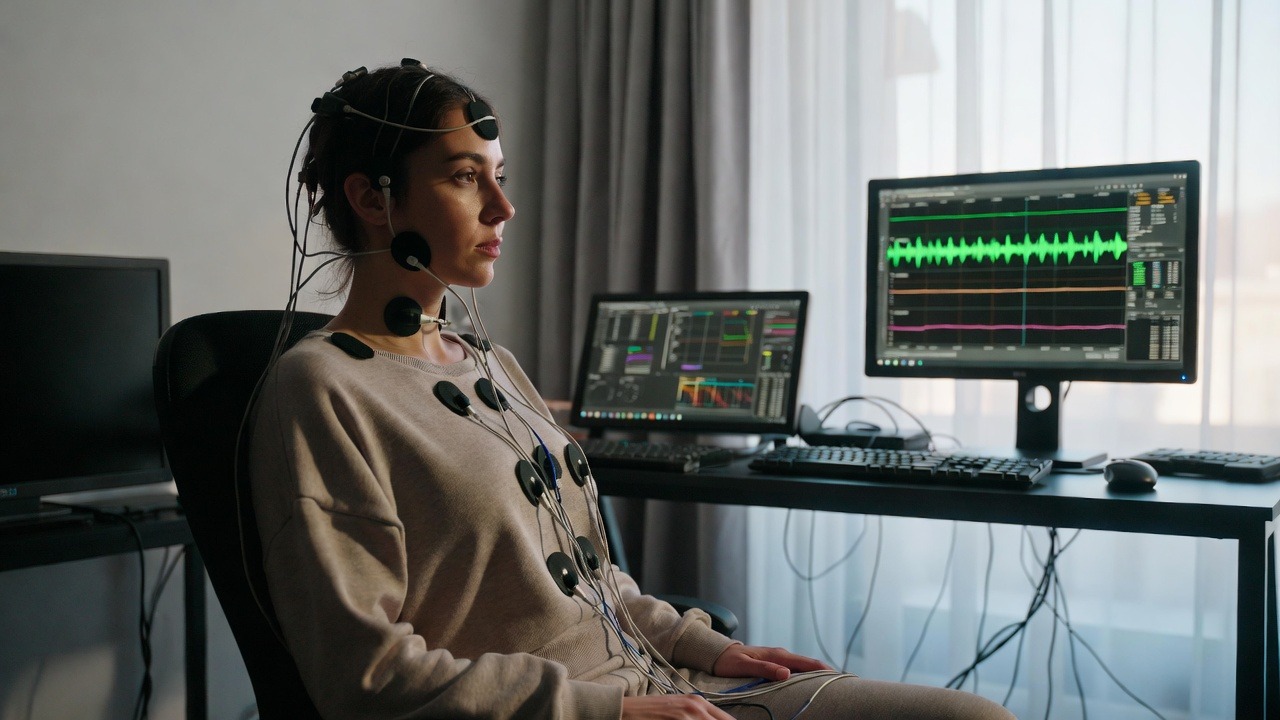
Understanding the theory is one thing; applying it is where transformation begins. Starting a biofeedback practice with modern technology is straightforward. Here is a foundational protocol you can begin today, using a device capable of measuring HRV or heart rate.
Step 1: Establish Your Baseline.
Before you try to change anything, simply observe. Wear your tracking device normally for 3-5 days. Pay attention to your dashboard. What is your resting HRV upon waking? How does your heart rate respond during your commute, a difficult work task, or a relaxing evening? Don't judge the data; become a curious scientist of your own physiology. This baseline is your personal benchmark.
Step 2: Find Your Resonant Frequency.
This is the breathing pace that maximizes your HRV and induces coherence. A common starting point is 5.5 breaths per minute (about 5.5 seconds inhale, 5.5 seconds exhale). Many biofeedback apps have "paced breathing" guides.
Step 3: Engage in Daily Coherence Sessions.
Formal practice is key. Aim for two 10-20 minute sessions per day. Use your device's biofeedback mode, where you can see a real-time graph of your HRV or coherence score. Your goal is not to "force" a high score, but to gently use your breath as a tool and observe the effect. If your mind wandens, gently return to the breathing guide. The feedback is your teacher—it shows you what mental states (a gentle focus, a positive emotion like appreciation) help your physiology synchronize.
Step 4: Apply "Mini-Check-Ins” Throughout the Day.
This is how you generalize the skill. Set random reminders on your phone. When one goes off:
Step 5: Use Tech Before and During Stressful Events.
Proactively use your tool. Before a known stressor (a difficult conversation, a doctor's appointment), do a 3-5 minute coherence session with your device to pre-load a state of calm. If you feel anxiety rising in the moment, if possible, excuse yourself for 60 seconds and use your breathing skill. The technology provides the proof that you can shift your state, which is incredibly empowering in the moment.
Remember, consistency trumps duration. Five minutes daily is far better than an hour once a week. You are building a new muscular skill—the muscle of your autonomic nervous system. For a structured program and guided sessions tailored to different goals, our platform offers a wealth of resources to support your practice.
Biofeedback is not meant to replace traditional therapies for anxiety; it is a potent complement that can accelerate and deepen their effectiveness. It creates a powerful synergy by addressing both the top-down (cognitive) and bottom-up (physiological) pathways of anxiety.
With Cognitive-Behavioral Therapy (CBT): CBT helps you identify and reframe catastrophic thoughts ("I'm going to fail"). Biofeedback provides a tangible tool to manage the physiological arousal that those thoughts trigger. In session, a therapist can have a client use a heart rate monitor to see, in real-time, how challenging a "hot thought" spikes their arousal, and then use breathing to bring it down. This provides concrete evidence of self-efficacy. Homework becomes practicing biofeedback skills when anxiety-provoking thoughts arise, creating a direct behavioral link.
With Mindfulness-Based Stress Reduction (MBSR): Mindfulness teaches non-judgmental awareness of the present moment, including bodily sensations. Biofeedback supercharges this by quantifying those sensations. Instead of just "noticing" your heart pounding, you can see your HRV dip, and then observe mindfully as your breath practice brings it back up. The data deepens interoceptive awareness (the sense of your internal state) and provides immediate reinforcement for mindful attention.
With Exposure Therapy: For phobias, OCD, or PTSD, exposure therapy involves gradual confrontation with feared stimuli. This is highly stressful. Using a wearable biofeedback device during exposure sessions allows both client and therapist to monitor physiological arousal objectively. The client can use their coherence skills to actively down-regulate their nervous system while facing the fear, which enhances the learning that "I can handle this." It turns passive endurance into active mastery.
With Medication: For individuals on anti-anxiety medications, biofeedback can serve as a complementary skill-building tool. It can help manage breakthrough anxiety and may, under a doctor's guidance, provide a sense of control that supports eventual medication tapering if desired. The data can also offer insights into the medication's physiological effects.
The integrative model is the future of holistic anxiety treatment. It recognizes that sustainable healing involves changing thoughts, behaviors, and the underlying physiological substrate of anxiety. Technology-assisted biofeedback seamlessly bridges these domains, giving clients and patients an active, measurable role in their own recovery process every single day.
The true power of this integrated approach lies in its personalization. A therapist equipped with your longitudinal biofeedback data—seeing which days your HRV was lowest, what times of day you’re most physiologically reactive—can tailor strategies with unprecedented precision. This moves therapy from a generic protocol to a truly bespoke healing journey, built on the objective language of your own body.
Mastering any skill requires the right environment for practice. While the beauty of wearable biofeedback is its applicability anywhere, establishing a dedicated “training sanctuary” for your formal sessions dramatically accelerates learning. This isn’t about building a meditation room; it’s about crafting the conditions for your nervous system to feel safe enough to learn a new, vulnerable skill—down-regulation.
The Physical Space:
Choose a consistent spot. It could be a corner of your bedroom, a favorite chair, or even your parked car during a lunch break. The key is consistency and minimal interruptions. Ensure the temperature is comfortable—being too cold can constrict blood vessels and skew readings, while being too warm can induce lethargy. Lighting should be soft and indirect. This cues your brain that this is a time for settling, not for alertness.
The Technological Setup:
This is where your device becomes your guide. Ensure it is charged and properly fitted. For a smart ring, it should be snug but not tight on your finger. Open the associated app and navigate to the biofeedback or training module. Familiarize yourself with the interface before you begin your session. What does the visual feedback look like? Is it a simple coherence score, a graph, or an immersive landscape? Knowing this prevents fumbling and frustration during practice. If you have questions about optimizing device placement or interpreting your app’s interface, a great resource is our comprehensive FAQ for technical and practical guidance.
The Mental & Temporal Framework:
Schedule your sessions like important meetings with yourself. Two 10-20 minute blocks per day, perhaps upon waking and before dinner, are ideal. The goal is to practice not when you’re highly anxious, but when you’re in a neutral state, building the skill proactively. Before beginning, set a clear, gentle intention: “I am going to observe my body’s signals with curiosity,” or “My goal is to follow my breath for the next ten minutes.”
Pre-Session Rituals:
A brief ritual signals transition. This could be:
These small acts build a Pavlovian cue for your nervous system: it’s time to train. By honoring the process with a dedicated setup, you communicate to your deepest self that this practice matters. This foundational respect is what transforms a tech-assisted exercise into a profound ritual of self-care and neural re-education.
To understand how these principles come to life in a seamless, user-centric product, let’s examine a dedicated approach. The Oxyzen smart ring and its accompanying platform exemplify the next generation of personalized biofeedback, moving beyond passive tracking to active, AI-guided training. This method provides a practical blueprint for how technology can serve as a constant companion in anxiety management.
Philosophy: Data with Direction.
The core philosophy is that raw data (a low HRV score) can be alarming without context and useless without a path forward. The Oxyzen method focuses on actionable insight. It doesn’t just tell you you’re stressed; it guides you through a specific, 5-minute "Balance" session tailored to your current physiological state to help reverse that stress in real-time.
The Three-Pillar System:
Real-World Application:
Imagine a user, Alex, who has a major presentation at 2 PM. His Oxyzen app sends a proactive morning notification: “Your overnight recovery was lower than usual. Consider a Balance Session before your day.” He completes a 7-minute guided breathing exercise with the ring. At 1:45 PM, feeling the familiar flutter of performance anxiety, he opens the app. Using his real-time HRV, it suggests a short, 3-minute "On-the-Spot Calm" exercise. He follows the breathing pacer on his phone, sees his coherence score climb, and walks into the meeting with a physiologically grounded confidence. Later, the app provides insight: “Your stress biomarkers spiked before your meeting but recovered 40% faster than your average after you used a session.”
This closed-loop system—Measure, Understand, Act—creates a virtuous cycle. The training becomes smarter and more personalized over time, and the user gains not just data, but demonstrable self-efficacy. The story of creating such an integrated, user-focused system is rooted in a mission to make advanced self-regulation accessible, which you can explore in detail through our brand’s founding journey and values.
Once you’ve established proficiency with resonant frequency breathing and can reliably elevate your HRV coherence score, a world of advanced techniques opens up. These methods leverage the same core technology but engage different cognitive and physiological pathways for deeper mastery over the anxiety response.
1. Variable Resistance Training (VRT) for Resilience:
Instead of always breathing at your perfect, calm resonant frequency, VRT intentionally introduces mild physiological challenges to build "stress resilience." Using your biofeedback device, you might:
2. Integrating Positive Emotion Refocusing:
Physiological coherence is most easily sustained when paired with a positive emotional state. Advanced practice involves actively generating a feeling of appreciation, care, or compassion while doing your breathing. Your biofeedback device will typically show an even stronger, more stable coherence signal. You are literally training your heart and brain to synchronize in a state of heartfelt calm, creating a powerful neural association between the physiological state and the emotional one.
3. Somatic Scanning with Biofeedback Validation:
This technique combines body scanning with objective validation. Close your eyes and slowly scan your body from head to toe. When you identify an area of tension (e.g., tight jaw), consciously release it. Then, open your eyes and check your biofeedback display. Did your HRV tick up or your muscle tension (if measured) go down? This sharpens your interoceptive accuracy—your gut feeling about your internal state becomes data-verified, building profound body trust.
4. Scenario-Based Visualization:
Use your established calm state as a foundation for mental rehearsal. Once you’ve achieved a high coherence score for a few minutes, while maintaining that physiological state, vividly imagine a typically anxiety-provoking scenario (e.g., walking into a crowded room). The goal is to keep your HRV high and stable while visualizing the stressor. This is a form of exposure therapy conducted from a physiologically safe platform, powerfully rewiring the brain’s association between the trigger and the panic response.
These advanced techniques turn biofeedback from a relaxation tool into a high-resolution training system for autonomic fitness. They prepare you not just for calm in a quiet room, but for poised resilience in the unpredictable turbulence of real life. For those eager to explore these advanced protocols and how they can be structured, our blog features ongoing deep dives into technique and application.

In biofeedback, progress is rarely a straight line upward. It’s a dynamic landscape of peaks, valleys, and plateaus. Learning to interpret your data with wisdom—not judgment—is crucial for sustained motivation and accurate insight. Your wearable device provides a torrent of data points; the art lies in knowing which to watch and how to contextualize them.
Key Metrics and Their Stories:
The Journal Integration: Quantitative Meets Qualitative.
Your data tells the what; your journal tells the why. Create a simple daily log:
Navigating Plateaus and Setbacks:
Expect periods where progress seems to stall. This is normal in any learning process. During a plateau:
By learning to read your body’s data with curiosity and compassion, you transform numbers on a screen into a conversation—a continuous dialogue that deepens your self-awareness and guides your path to lasting calm. This process of mindful tracking is central to the philosophy behind creating a supportive wellness technology, a principle you can learn more about in our company’s core mission.
Of course. Here is the next and final portion of this first third of the long-form article, designed to flow seamlessly from the previous sections and set the stage for the next major segments of the full work.
This ongoing dialogue with your data ultimately fosters a new kind of intuition—a "data-informed gut feeling." You begin to sense a rising anxiety not just emotionally, but as a subtle physiological shift you've learned to recognize and trust from your charts. This is the moment biofeedback training transcends the technology and becomes an integrated part of your self-awareness.
As with any transformative practice, the path of technology-assisted biofeedback is not without its hurdles and misconceptions. Anticipating these challenges and dispelling myths is key to maintaining a resilient and informed practice.
Challenge 1: "I Can't Get a Good Reading / My Data is All Over the Place."
Fluctuation is normal, especially at the start. Inconsistent readings can stem from:
Challenge 2: "It Feels Like I'm Forcing It. Am I Cheating?"
A common concern is that by consciously controlling your breath to change the feedback, you're not "genuinely" calming down. This misunderstands the mechanism. The initial "forcing" is the practice—the deliberate repatterning of a reflex. Just as lifting a weight feels forced at first but eventually builds real muscle strength, deliberately pacing your breath builds autonomic strength. The "cheating" is the entire point: you are learning to volitionally intervene in an automatic process. Over time, the need for conscious effort diminishes, and the calm state becomes more accessible and automatic.
Challenge 3: "I Get Frustrated When My Score is Low."
Attachment to a high score is the quickest way to undermine the practice. Biofeedback is not a performance. It is a mirror. A low coherence score during a session is not a failure; it is valuable information. It tells you, "Right now, my nervous system is agitated." The appropriate response is not frustration but curiosity and compassion: "Ah, I see. Let me gently be with this agitation and see if I can accompany my body toward calm." The goal is to develop a friendly relationship with all your states, not to judge them.
Debunking Common Myths:
Navigating these challenges with the right mindset is crucial. For persistent technical or practice-based questions, having a reliable support resource is invaluable, which is why we maintain a detailed FAQ section to help users overcome common hurdles.
We are standing at the precipice of a monumental shift in mental wellness: moving from a reactive, symptom-based model to a predictive and proactive model of resilience. Technology-assisted biofeedback is the engine driving this change, and its future lies in the power of predictive analytics and closed-loop systems.
From Reactive to Predictive:
Current wearables tell you you're stressed after your HRV has dropped. The next generation will anticipate it. By analyzing long-term trends, sleep data, calendar integration, and even speech patterns via microphone (with user consent), AI will identify subtle pre-cursors to an anxiety spike. You might receive an alert: "Based on your physiological trends and your packed schedule today, your stress resilience is predicted to be low at 3 PM. A 10-minute Balance session at 2 PM is recommended to buffer this." This shifts the intervention upstream, preventing the cascade before it gains momentum.
Hyper-Personalized Intervention:
Future systems will not just suggest "a breathing exercise." They will prescribe a specific protocol tailored to your neurotype and current state. Using a combination of HRV, EEG, and EDA data, the system might discern: "Your anxiety today is characterized more by rumination (high frontal beta waves) than somatic panic (low HRV). Today's session will focus on a visualization-based neurofeedback protocol to quiet the default mode network." The biofeedback becomes as personalized as a prescription.
Closed-Loop Environments:
Imagine your smart home or car integrated with your biofeedback stream. Your car detects rising stress biomarkers during a hectic commute and automatically adjusts the lighting, plays your coherence-inducing playlist, and gently guides you through a breathing exercise via the speakers. Your smart office lighting and climate system could subtly shift to support calm focus when it detects you entering a productive flow state or could suggest a micro-break when cognitive fatigue sets in.
Longitudinal Biomarkers for Lifelong Health:
The continuous stream of autonomic data will become a powerful longitudinal biomarker, not just for anxiety, but for overall health. Consistently depressed HRV can be an early warning sign for cardiovascular risk, inflammation, or depression long before clinical symptoms appear. Your therapist or doctor, with your permission, could use this data to monitor treatment efficacy in real-time, adjusting therapeutic approaches with unprecedented agility.
This future is not science fiction; it is the logical extension of the wearable biofeedback revolution. It promises a world where we are no longer blindsided by our emotions, but are empowered stewards of our own nervous systems, supported by ambient, intelligent technology. The journey to build this future is driven by a vision of proactive wellness, a vision you can explore further in our company's narrative and aspirations.
The journey through the science, technology, and practice of biofeedback for anxiety reveals a fundamental truth: anxiety is not a life sentence written in stone. It is, in large part, a habit of the nervous system—a well-worn pathway that can be rerouted. Technology-assisted biofeedback provides the map, the tools, and the real-time feedback necessary for this rewiring project.
You have learned that anxiety is a full-body feedback loop, and biofeedback offers a direct portal to interrupt it. You've seen how Heart Rate Variability serves as the master metric for nervous system balance and how modern wearables transform this clinical tool into a daily companion. You've explored a practical framework for beginning your practice, advanced it with sophisticated techniques, and discovered how to interpret your progress with wisdom. You've confronted the myths and are now looking toward a future where managing mental well-being becomes predictive and seamlessly integrated into life.
This knowledge is empowering, but it is only the beginning. The true transformation lies in the consistent, patient application of these principles. Start small. Choose one element—perhaps establishing your baseline with a wearable device, or practicing resonant frequency breathing for five minutes each morning using a simple app. Observe without judgment. Celebrate the subtle shifts.
The goal is not to eliminate anxiety entirely—a certain amount is a natural, functional part of the human experience. The goal is to change your relationship with it: to recognize its signals early, to understand its language, and to possess a reliable toolkit to return to a state of equilibrium. You are building resilience, not constructing an impenetrable fortress.
As you move forward, remember that this is a deeply personal exploration. Let the data guide you, but let your own lived experience be the ultimate authority. The combination of objective technology and subjective awareness is where profound healing and growth occur. To continue this exploration and find a community and resources dedicated to this very journey, we invite you to discover more through our central platform and blog.
The next chapters of this comprehensive guide will delve even deeper. We will explore specific protocols for different anxiety subtypes (social anxiety, panic disorder, generalized anxiety), examine the crucial role of sleep and nutrition in supporting your biofeedback training, and provide detailed interviews with clinicians and users who have walked this path. We will also conduct in-depth comparisons of the current technology landscape to help you choose the right tools for your journey.
The path to mastering your stress response begins with a single breath, observed, understood, and guided. That journey starts now.
For millions, anxiety crystallizes not in the solitude of worry, but in the spotlight of social or performance situations. The fear of judgment, embarrassment, or negative evaluation triggers a cascade of visible symptoms—blushing, trembling, a shaky voice, mental blankness—which then fuels more fear, creating a paralyzing loop. Biofeedback offers a powerful way to break this cycle by targeting both the anticipatory anxiety and the in-the-moment physiological hijacking.
The Pre-Event Preparation Protocol: Rewriting the Prelude.
Social and performance anxiety often begin hours or days before the event, in the form of "anticipatory anxiety." This is a critical window for biofeedback intervention.
The In-the-Moment Toolkit: Discreet Mastery.
When anxiety spikes during a conversation or presentation, lengthy breathing exercises aren't feasible. This requires micro-techniques, validated by your prior training:
The Post-Event Re-framing: After the event, use your device. Don't just check for spikes; look at your recovery time. How long did it take for your HRV to return to baseline after the stressful interaction? This is a metric of resilience. Over weeks of practice, you'll see this recovery time shorten, providing objective proof that you're becoming less physiologically impacted by social triggers. Documenting these progress milestones can be incredibly affirming, much like the transformative stories shared by users who have detailed their journeys with performance anxiety on our testimonials page.
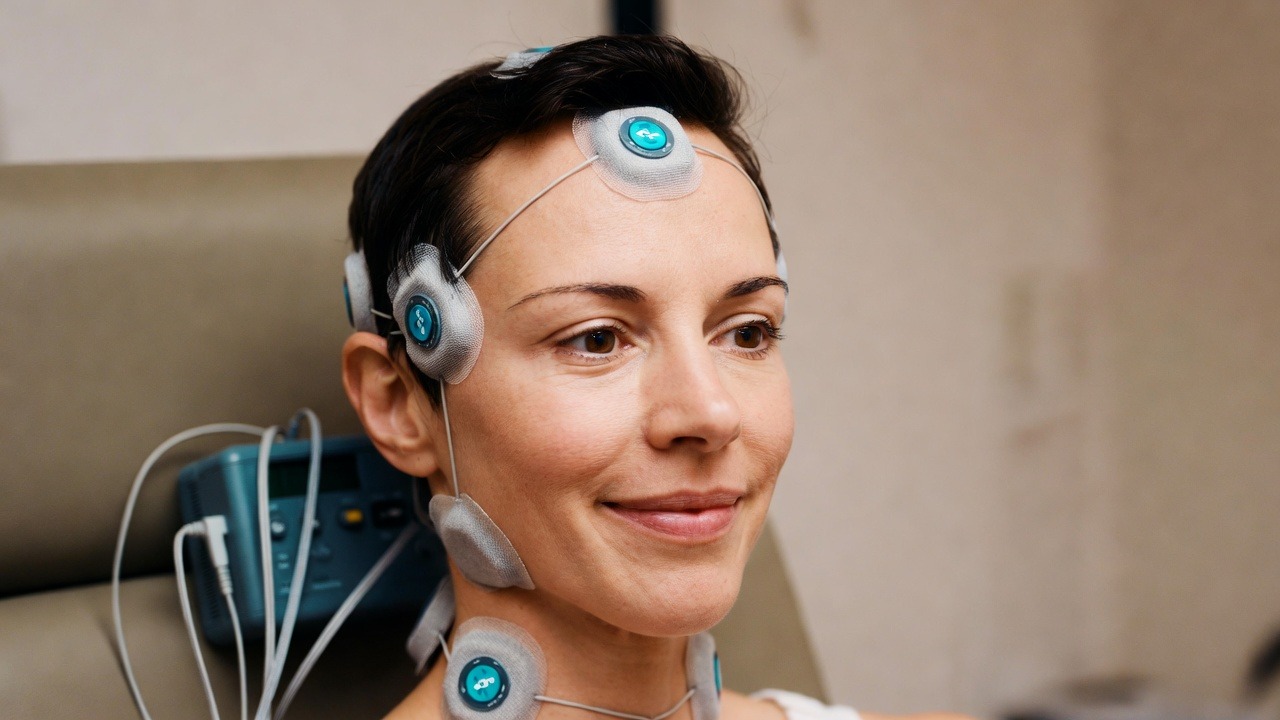
Panic attacks and phobic responses represent the autonomic nervous system in a state of extreme, runaway alarm. The sensation is often one of imminent doom, accompanied by intense physical symptoms: heart palpitations, shortness of breath, dizziness, and derealization. Biofeedback, particularly capnometry-assisted respiratory training, is a first-line, evidence-based intervention for this specific dysregulation.
Targeting the Hidden Driver: Carbon Dioxide.
Many panic attacks are triggered or exacerbated by subtle, chronic hyperventilation (over-breathing), which blows off too much carbon dioxide (CO2). Low blood CO2 (hypocapnia) causes blood vessels in the brain to constrict and alters neuronal excitability, leading to dizziness, tingling, and a sense of breathlessness—which then triggers more panic. Traditional "take a deep breath" advice can worsen this.
Capnometry Biofeedback Protocol:
This uses a small sensor that measures the CO2 in your exhaled breath, providing real-time feedback.
Applied Tension for Blood-Injection-Injury Phobia:
For specific phobias that cause a vasovagal drop in heart rate and blood pressure (leading to fainting), a different biofeedback technique is used: applied tension. Using a device that shows heart rate or blood pressure, the individual learns to tense their major muscle groups (arms, legs, torso) to deliberately increase their blood pressure, counteracting the fainting response. This provides a powerful sense of control over a terrifying physiological reaction.
Wearable Integration for Panic:
While clinical capnometers are used for formal diagnosis and training, the principles translate to wearable management. Individuals with panic disorder can use HRV-based wearables to:
This highly specific application of biofeedback demonstrates its power not as a generic relaxant, but as a precise surgical tool for correcting faulty physiological algorithms at the root of debilitating conditions. The development of such targeted, evidence-based applications is core to the research-driven mission behind advanced wellness technology companies.
Anxiety and insomnia are partners in a cruel dance. A racing mind at night prevents sleep, and poor sleep lowers stress resilience, fueling next-day anxiety, which in turn worsens the next night's sleep. Biofeedback provides a unique leverage point to break this cycle by focusing on the physiological gatekeeper of sleep: the autonomic nervous system transition.
Pre-Sleep Wind-Down Protocol: The 60-Minute Transition.
The goal is to orchestrate a smooth shift from sympathetic to parasympathetic dominance. Relying on willpower ("I need to sleep") is ineffective; guiding physiology is.
Overnight Biofeedback: Understanding Your Sleep Architecture.
Your wearable device becomes a sleep lab on your finger. The next morning, review not just "how long" you slept, but how well your nervous system rested.
Using Data for Daytime Behavior Change:
This is where biofeedback closes the loop. You may see that on days you have an afternoon coffee, your sleep HRV drops by 20%. Or that a 20-minute evening biofeedback session adds 15 minutes of deep sleep. This turns sleep hygiene from a list of generic tips ("avoid caffeine") into a personalized, data-driven experiment. You are no longer guessing what works for your nervous system; you are measuring it. For a deeper exploration of sleep science and tailored strategies, our blog regularly publishes insights on optimizing sleep through data.
The food you consume is the raw material for your neurotransmitters, hormones, and the very cells of your nervous system. While biofeedback trains the software of your stress response, nutrition builds resilient hardware. A dysregulated gut and nutrient deficiencies can sabotage even the most diligent biofeedback practice. This synergy is often called "nutritional biofeedback"—using dietary choices to create an internal environment primed for calm.
Key Nutrients for Autonomic Balance:
The Caffeine & Glucose Biofeedback Experiment:
Two of the most powerful nutritional levers are stimulants and blood sugar.
Hydration as Foundational Biofeedback:
Even mild dehydration increases cortisol levels. A simple practice is to start your biofeedback session by drinking a full glass of water. Notice if adequate hydration makes it easier to achieve a higher, more stable coherence score. This turns a basic health habit into a directly observable tool for self-regulation.
By marrying the precise training of technology-assisted biofeedback with intentional nutritional support, you address anxiety from the inside out and the outside in, creating a holistic fortress of resilience. Understanding this full-system approach is part of the comprehensive educational resources we aim to provide, which you can find more of through our main resource hub.
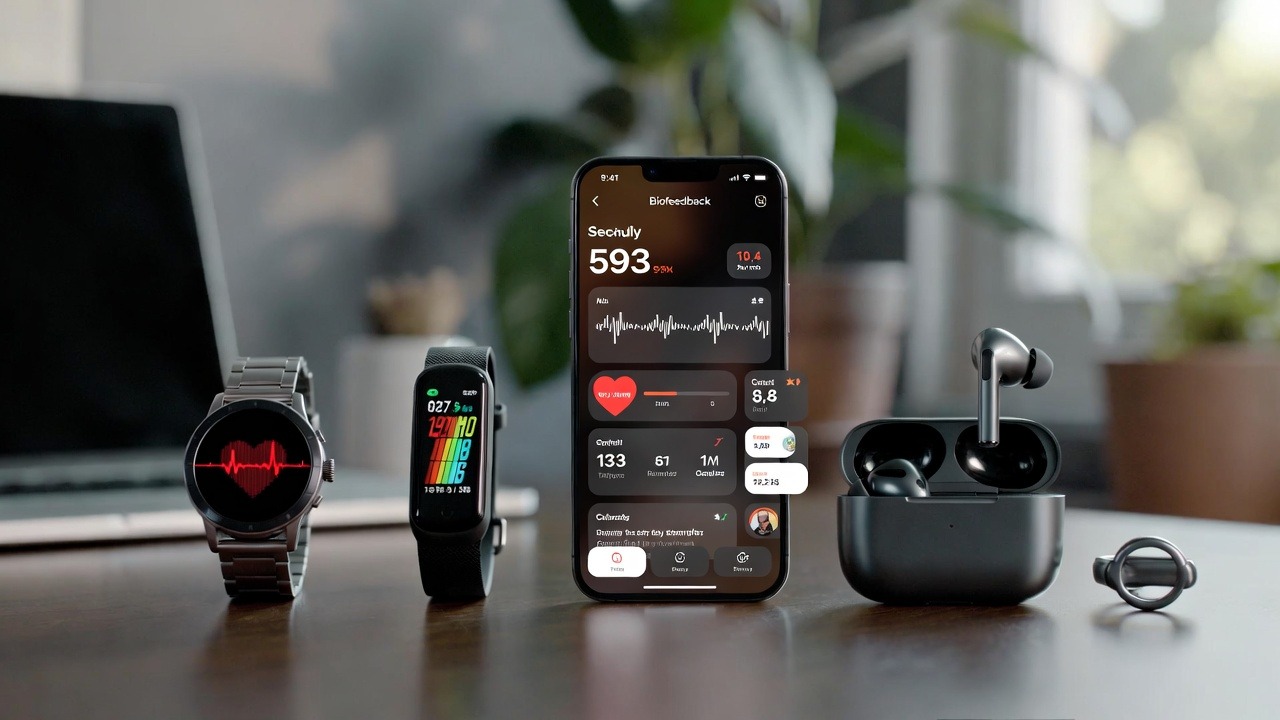
The market for biofeedback technology is rich but can be overwhelming. Selecting the right tool is not about finding the "best" one in a vacuum, but the best one for you—your goals, lifestyle, and commitment level. Here is a framework for comparison, focusing on the key differentiators that matter for effective anxiety management.
Core Decision Factors:
Recommendations by User Profile:
Ultimately, the best device is the one you will use consistently. It should feel less like a piece of tech and more like a partner in your well-being. Reading unbiased, detailed user experiences and reviews can be invaluable in this selection process.
The initial excitement of a new tool can wane. The key to lasting change is integrating biofeedback into the fabric of your daily life through behavioral psychology and social connection. Technology provides the signal; habit formation and community provide the staying power.
Habit Stacking: The "When-Then" Strategy.
Attach your biofeedback practice to existing, non-negotiable daily habits. The formula is: "When I [existing habit], then I will [do biofeedback practice]."
This method leverages existing neural pathways, making the new habit (biofeedback) easier to adopt. The wearable device serves as the perfect cue—seeing it on your finger reminds you of the stacked habit.
Micro-Practices Throughout the Day:
Formal sessions are the gym workouts. Micro-practices are the movement that keeps you fit all day. Use environmental triggers:
Leveraging Community and Accountability:
Anxiety thrives in isolation; healing flourishes in connection.
Embracing the Non-Linear Journey:
Some days your practice will feel effortless; other days it will feel like a chore. Some weeks your data will show clear progress; other weeks it will mystify you. This is all part of the process. The practice itself—the daily decision to listen to and guide your body—is the transformation. The data is merely the map; you are the traveler.
By weaving biofeedback into your habits and connecting it to a purpose larger than yourself, you move from using a tool to embodying a new way of being: one of responsiveness instead of reactiveness, of curiosity instead of fear, of empowered agency over your own inner state.
This concludes the second major portion of our comprehensive guide. In the final third, we will explore the clinical frontier—how biofeedback is integrated into professional therapy. We will also tackle advanced ethical considerations, look at the future of brain-based neurofeedback, and provide a definitive, step-by-step integration plan to weave all these threads into a sustainable lifelong practice of resilience. The journey from understanding to mastery continues.
Your Trusted Sleep Advocate (Sleep Foundation — https://www.sleepfoundation.org/)
Discover a digital archive of scholarly articles (NIH — https://www.ncbi.nlm.nih.gov/
39 million citations for biomedical literature (PubMed — https://pubmed.ncbi.nlm.nih.gov/)
experts at Harvard Health Publishing covering a variety of health topics — https://www.health.harvard.edu/blog/)
Every life deserves world class care (Cleveland Clinic -
https://my.clevelandclinic.org/health)
Wearable technology and the future of predictive health monitoring. (MIT Technology Review — https://www.technologyreview.com/)
Dedicated to the well-being of all people and guided by science (World Health Organization — https://www.who.int/news-room/)
Psychological science and knowledge to benefit society and improve lives. (APA — https://www.apa.org/monitor/)
Cutting-edge insights on human longevity and peak performance
(Lifespan Research — https://www.lifespan.io/)
Global authority on exercise physiology, sports performance, and human recovery
(American College of Sports Medicine — https://www.acsm.org/)
Neuroscience-driven guidance for better focus, sleep, and mental clarity
(Stanford Human Performance Lab — https://humanperformance.stanford.edu/)
Evidence-based psychology and mind–body wellness resources
(Mayo Clinic — https://www.mayoclinic.org/healthy-lifestyle/)
Data-backed research on emotional wellbeing, stress biology, and resilience
(American Institute of Stress — https://www.stress.org/)


