


The Hidden Factors That Lower Your Sleep Score
Hidden factors include late-night eating, alcohol, an irregular schedule, stress, and an unsupportive sleep environment.
Hidden factors include late-night eating, alcohol, an irregular schedule, stress, and an unsupportive sleep environment.
%402x.svg)
You wake up feeling groggy, unrested, and reach for your phone. You tap open your sleep-tracking app, and there it is: a disappointing number. A "Sleep Score" that feels like a personal grade for a test you didn't know you were taking. You followed all the standard advice—dimmed the lights, avoided caffeine, went to bed at a decent hour. So why is your score still stubbornly low?
Welcome to the hidden world of sleep optimization, where the obvious factors are just the tip of the iceberg. In our pursuit of the perfect eight hours, we've become adept at tracking the basics: duration, time asleep, and restlessness. Devices like the Oxyzen smart ring and others have democratized access to profound biometric data, giving us a numerical representation of our nocturnal lives. But this very number can become a source of frustration when it doesn’t budge, despite our best efforts.
The truth is, your sleep score is a complex algorithm influenced by a symphony of physiological processes. It’s not just about being in bed for eight hours. It’s about the quality of the four to five sleep cycles you journey through each night, each with its own vital purpose for physical repair, memory consolidation, and emotional regulation. The score is a summary, but the devil—and the opportunity for transformative change—is in the invisible details.
This article is a deep dive beneath the surface. We will excavate the hidden, overlooked, and often misunderstood factors that silently sabotage your sleep score. These are the elements your tracker might sense but your conscious mind misses: the micro-stresses, the circadian misalignments you can't feel, the dietary choices hours before bed, and the environmental pollutants you never thought to measure. By understanding these covert culprits, you can move beyond generic sleep hygiene and into the realm of truly personalized, precision recovery.
Consider this your guide to decoding the secret language of your sleep data. Let’s begin by understanding the very metric we’re trying to improve.
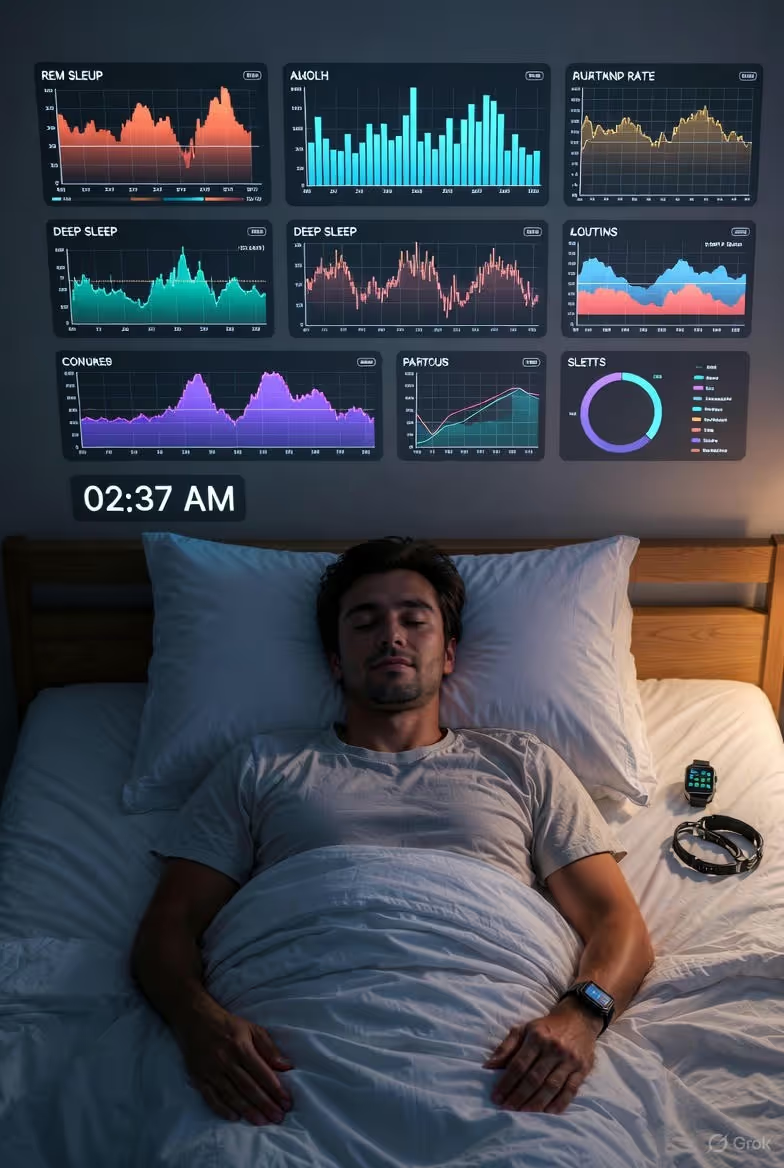
Before we can fix a problem, we must understand how it’s diagnosed. Your sleep score isn’t a random number; it’s a carefully calculated index derived from multiple data streams. While each app or device has its own proprietary algorithm, they generally converge on a few core pillars.
First, sleep duration is the most straightforward metric, but it’s not a simple tally of time in bed. Algorithms distinguish between total time in bed, total sleep time (TST), and time spent in each sleep stage (light, deep, REM). Consistently hitting your personalized sleep need—which may not be exactly eight hours—is foundational to a high score.
Second, sleep efficiency is a critical, often overlooked ratio. It’s the percentage of time you were actually asleep versus the time you spent in bed. Lying awake for an hour before drifting off, or staring at the ceiling at 3 a.m., drastically reduces this efficiency. A score of 90% or higher (e.g., 8 hours asleep in an 8.5-hour bed period) is typically considered excellent.
Third, sleep architecture, or the balance of your sleep stages, is the qualitative heart of the score. Deep sleep (slow-wave sleep) is for physical restoration and immune function. REM sleep is for cognitive processing and emotional balance. Disruptions to the natural progression and proportion of these stages—even if you sleep a long time—will lower your score. Advanced wearables like the Oxyzen smart ring use sensors like PPG (photoplethysmography) and accelerometers to estimate these stages by tracking heart rate variability (HRV), body temperature, and movement.
Fourth, restfulness or disturbances are measured. This includes how often you toss and turn, your periods of wakefulness after sleep onset (WASO), and environmental interruptions. A completely still night is not the goal (movement is normal between cycles), but excessive restlessness indicates disrupted sleep.
Finally, timing and consistency are increasingly factored in. Going to bed and waking up at vastly different times each day, even on weekends, confuses your internal clock (circadian rhythm), leading to poorer quality sleep. This is known as social jetlag.
Understanding this anatomy is crucial because it reveals that a low score isn’t one problem—it’s a symptom with many possible causes. A dip in deep sleep points to different hidden factors than a high restlessness score. To explore the depths of these causes, we must first look at the master conductor of it all: your circadian rhythm.
You’ve heard of blue light. You know to avoid screens before bed. But the influence of your circadian rhythm extends far beyond your eyes. This ~24-hour internal clock, governed by the suprachiasmatic nucleus (SCN) in your brain, regulates not just sleepiness but core body temperature, hormone secretion (like melatonin and cortisol), digestion, and even gene expression.
A hidden factor that demolishes sleep scores is circadian misalignment—when your external behavior is out of sync with this internal timing. Light is the primary "zeitgeber" (time-giver), but it’s not the only one.
Consider food as a zeitgeber. Eating a large, late-night meal sends a powerful signal to your peripheral organs (like your liver and gut) that it’s time to be active, not to rest. Your body must focus on digestion when it should be winding down, raising core temperature and disrupting the natural dip needed for sleep onset. This internal conflict is rarely captured as a "disturbance" but shows up as reduced sleep efficiency and suppressed deep sleep.
Similarly, temperature is a profound circadian cue. Your body needs to drop its core temperature by about 1-2 degrees Fahrenheit to initiate and maintain sleep. A hidden factor here isn't just a warm room, but your own thermoregulatory capacity. Poor circulation, an overly insulated mattress, or even the wrong pajamas can prevent this necessary heat dissipation from your core to your extremities. Devices that track skin temperature, like the Oxyzen ring, can reveal these subtle patterns, showing you if your body is truly achieving its optimal thermal curve for sleep.
Even exercise timing sends a circadian signal. While exercise generally improves sleep, intense late-evening workouts can elevate core temperature and stimulate cortisol release too close to bedtime, delaying melatonin production. The effect is highly individual—some thrive on evening exercise—but for many, it’s a hidden disruptor.
The fix isn’t just about darkness after sunset. It’s about aligning all your behaviors—eating, activity, exposure to warmth, and even social interaction—with a consistent daily rhythm. Your body craves predictability. When you provide it, your sleep score reflects that harmony. For a deeper exploration of aligning your daily habits for optimal recovery, our resource hub offers extensive guides.
But what if your rhythm is aligned, yet something inside your body is still sounding the alarm? This brings us to a hidden factor operating on a microscopic level.
Hormones are the body’s chemical messengers, and the evening hours are supposed to be a carefully choreographed hormonal ballet. Cortisol, the alertness hormone, should decline steeply in the afternoon and evening. Melatonin, the darkness hormone, should rise as cortisol falls, ushering in sleepiness. Insulin should stabilize. Growth hormone, vital for repair, should surge during deep sleep.
This cascade is fragile. Hidden stressors can hijack it, and you may not feel consciously "stressed" at all.
A major hidden disruptor is dysregulated cortisol. We associate cortisol with acute stress—a work deadline, an argument. But chronic, low-grade stressors cause a subtler, more damaging pattern: a flattened cortisol curve. Instead of a sharp morning peak and a low evening trough, cortisol levels remain slightly elevated all day, including at night. This creates a state of hyper-arousal that directly antagonizes melatonin, making it hard to fall asleep and fragmenting sleep throughout the night. Sources of this low-grade cortisol drip include persistent work anxiety, financial worry, relationship tension, or even chronic inflammation in the body from a poor diet.
Next is the insulin-glucose rollercoaster. Consuming high-glycemic foods or sugary snacks in the hours before bed causes a rapid spike in blood glucose, followed by a compensatory spike in insulin. This can lead to a reactive drop in blood sugar (hypoglycemia) during the night. Your brain, which runs on glucose, perceives this drop as a crisis. It then signals the release of cortisol and adrenaline to mobilize more glucose, pulling you out of deep sleep or causing a restless, unsettling awakening around 2 or 3 a.m. You might wake up anxious or with a racing heart, unaware that the dessert four hours prior is the culprit.
Finally, consider sex hormone fluctuations. For both men and women, imbalances in testosterone, estrogen, and progesterone can profoundly affect sleep. For example, declining estrogen levels during perimenopause or menopause can lead to hot flashes (a thermoregulatory disaster) and increased sleep fragility. Low testosterone in men is linked to increased sleep disturbances and reduced sleep efficiency. These shifts happen gradually and are often written off as "just aging," but they are tangible, measurable factors lowering your sleep score.
The insidious nature of these hormonal factors is that they operate below the level of conscious thought. You can't "feel" your cortisol being too high at 10 p.m. You just can't quiet your mind. This is where biometric tracking becomes invaluable. By monitoring long-term trends in resting heart rate and HRV—which are directly influenced by cortisol and autonomic nervous system balance—a device like the Oxyzen ring can provide the objective data to connect these invisible dots. For personalized insights into how your unique physiology responds to daily stressors, visiting our FAQ page can be a great starting point.
Once we recognize the internal chemical warfare, we must look at the external battlefield: your bedroom.
You’ve optimized your mattress and blacked out the windows. But are you breathing easy? The air in your bedroom is an invisible soup of compounds that can silently degrade sleep architecture. This isn't about obvious odors; it's about subtler pollutants that trigger inflammation and disrupt breathing.
First, volatile organic compounds (VOCs). These are gases emitted from common household items: new furniture, carpets, paint, cleaning products, scented candles, and even some air fresheners. While you sleep, your exposure is prolonged. VOCs like formaldehyde and benzene can cause low-grade respiratory irritation and systemic inflammation. Your body, in a state of repair, must now also deal with this toxic load, which can manifest as lighter, less restorative sleep and more awakenings.
Second, particulate matter (PM2.5). These microscopic particles from dust, outdoor pollution, candles, and cooking can penetrate deep into the lungs and enter the bloodstream. Studies have shown a clear association between elevated PM2.5 levels and reduced sleep efficiency, increased sleep stage disturbances, and lower blood oxygen saturation during sleep. You may not wake up coughing, but your nervous system and cardiovascular system are under subtle strain.
Third, the allergen load. Dust mites, pet dander, and mold spores are classic sleep disruptors. Even if you don’t have a full-blown allergic reaction, they can cause minor inflammation in the nasal passages and airways. This increases "airway resistance," meaning your body must work slightly harder to breathe. This effort can prevent you from descending into the deepest, most restorative stages of sleep and can fragment your sleep cycles. The result is a full night of "sleep" that leaves you unrefreshed and a sleep score that reflects the constant, low-level struggle.
Fourth, carbon dioxide (CO2) buildup. In a tightly sealed, energy-efficient bedroom, with every exhale, CO2 levels rise. High CO2 concentrations (above 1,000 ppm) have been shown to impair cognitive function and sleep quality. They can cause headaches, restlessness, and a feeling of stuffiness, leading to more arousals and lighter sleep. It’s not a lack of oxygen, but an excess of waste gas.
The solution is not just an air purifier (though a good HEPA filter with carbon can help). It’s about awareness: choosing low-VOC materials, avoiding aerosols in the bedroom, washing bedding in hot water weekly, and ensuring adequate ventilation. The impact on your sleep can be as significant as any mattress upgrade. To see how others have transformed their sleep environment, browse through real user experiences in our testimonials section.
Yet, even with pristine air, a silent predator in your own body might be at work: your breathing pattern itself.
When we think of sleep-disordered breathing, we picture loud, chronic snoring or obstructive sleep apnea (OSA). But there is a vast spectrum of breathing disturbances that fly under the radar, undiagnosed yet systematically lowering sleep quality. These are the hidden thieves of deep and REM sleep.
Upper Airway Resistance Syndrome (UARS) is a prime example. Unlike classic OSA with full breathing pauses, UARS involves increased effort to breathe due to a partially collapsed airway. There’s no loud snoring, just silent straining. The brain experiences hundreds of micro-awakenings per night (called respiratory effort-related arousals, or RERAs) to tighten the airway muscles and reopen the passage. Each arousal fragments a sleep cycle, pulling you out of deep or REM sleep. You wake up exhausted with a poor sleep score, and a standard at-home sleep test might even miss it, as it often focuses on oxygen drops, not effort.
Then there’s sleep-related hypoventilation. This is when you simply breathe too shallowly, not exchanging air efficiently. Carbon dioxide builds up in your blood. This can be related to medication (like opioids or certain anxiety drugs), neuromuscular conditions, or even poor habits from chronic stress that lead to chest breathing instead of diaphragmatic breathing. The result is poor sleep quality and unrefreshing sleep.
Most insidiously, chronic mouth breathing during sleep is a hidden disaster. Breathing through your mouth dries out the oral and airway tissues, increasing inflammation and susceptibility to collapse. It also reduces nitric oxide production—a gas produced in the sinuses that improves oxygen uptake in the lungs, regulates blood pressure, and may influence sleep depth. Nasal breathing is physiologically optimal for sleep; mouth breathing is a sign of and contributor to dysfunction.
The impact on your sleep score is direct: reduced deep sleep, increased wakefulness, and a heart rate that remains elevated because your nervous system is constantly being agitated. Advanced wearables that track blood oxygen saturation (SpO2) and heart rate variability throughout the night, like the Oxyzen smart ring, can provide critical clues—such as frequent, slight dips in SpO2 or a chaotic HRV pattern—that point toward these hidden breathing issues. It’s data that empowers you to seek the right kind of professional evaluation.
Your breath is a bridge between the conscious and autonomic nervous systems. To understand how daily stress entrenches these poor patterns, we must look at the day before the night.
You can’t compartmentalize your brain. The mental and emotional events of your day don’t magically vanish when your head hits the pillow. They linger in the form of "cognitive pre-sleep arousal" and "emotional residue," creating a hidden barrier to sleep initiation and quality.
Unfinished Tasks & The Zeigarnik Effect. Psychologist Bluma Zeigarnik found that people remember uncompleted or interrupted tasks better than completed ones. Your brain holds onto open loops—the unanswered email, the unpaid bill, the unresolved conversation. As you try to sleep, your mind attempts to "close" these loops, generating intrusive thoughts and preventing the shift into the quiet, default mode network state necessary for sleep onset. This directly impacts your sleep latency (time to fall asleep) and efficiency score.
Suppressed Emotions. The day’s frustration, anger, sadness, or anxiety that you didn’t fully process or express doesn’t dissolve. Emotion suppression requires constant cognitive effort. At night, when your conscious guard is down, these emotions can surface, often disguised as worry or generic rumination. They activate the sympathetic nervous system (fight-or-flight), increasing heart rate and body temperature—the exact opposite of the parasympathetic (rest-and-digest) state required for sleep.
The "Moral Injury" of Small Betrayals. Did you say "yes" when you meant "no"? Did you compromise a personal value for convenience or peace? These minor self-betrayals create a low-grade sense of unease or inauthenticity that can manifest as restlessness at night. Your sleep, a time of integration and processing, becomes tangled with this unresolved internal conflict.
This mental load has a direct, measurable physiological correlate: elevated nighttime heart rate and reduced heart rate variability (HRV). HRV, the variation in time between heartbeats, is a key marker of autonomic nervous system balance and resilience. High HRV indicates a flexible, adaptable system that can smoothly transition into restorative rest. Low HRV indicates a system stuck in a state of sympathetic dominance—on high alert. Seeing your HRV remain low overnight, via a detailed biometric tracker, is the quantitative proof of this hidden "weight of the day."
The remedy isn’t just journaling before bed (though that helps). It’s about building emotional and cognitive closure rituals throughout the day. It’s about making decisions, having difficult conversations, and scheduling worry time so your brain isn’t doing this work during the sleep gate. For more strategies on managing daily stress for better sleep, our blog is a rich repository of actionable techniques.
This mental weight, however, is often compounded by a modern malady that has rewired our very perception of rest.
The advice to avoid screens before bed is ubiquitous. But the hidden factor isn't just the blue light hitting your retina at 10 p.m.; it's the neurobiological after-effect of a whole day spent in a state of digital hyper-stimulation. Your brain’s baseline state has been altered.
We live in a perpetual state of continuous partial attention. Notifications, rapid context switching between apps, endless scrolling, and the pressure to be constantly available train your brain for high arousal, novelty-seeking, and instant gratification. This state is neurologically antithetical to the slow, rhythmic, monotonous brainwave patterns of deep sleep (delta waves) and the dream-rich, integrative state of REM sleep.
The consequence is a phenomenon we might call "sleep inertia resistance." Even after you put the phone down, your brain’s reward pathways (dopamine system) are still primed for the next hit of novelty. The quiet darkness feels like deprivation, not relief. This makes the wind-down process longer and less effective, increasing sleep latency. It also leads to lighter, more fragmented sleep, as a brain accustomed to micro-alerts remains in a state of higher vigilance, more prone to waking at minor disturbances.
Furthermore, the content itself leaves emotional and cognitive echoes. A stressful work email, a distressing news headline, or even an engaging but mentally taxing video game or TV show can trigger emotional responses and complex thoughts that your brain continues to process for hours. The stimulating content activates your limbic system (emotional center) and prefrontal cortex (thinking center), delaying the natural shutdown sequence.
This goes beyond blue-light-blocking glasses. It requires a deliberate digital diet and the cultivation of "slow brain" activities throughout the day—periods of boredom, focused deep work without switching, and engagement with the analog, physical world. These practices rebuild your brain’s tolerance for the low-stimulation environment of optimal sleep. To understand how our technology is designed to support, not disrupt, this balance, you can learn more about Oxyzen's philosophy on our dedicated page.
Our final hidden factor for this portion of our exploration is perhaps the most intimate: the person or animal sharing your bed.
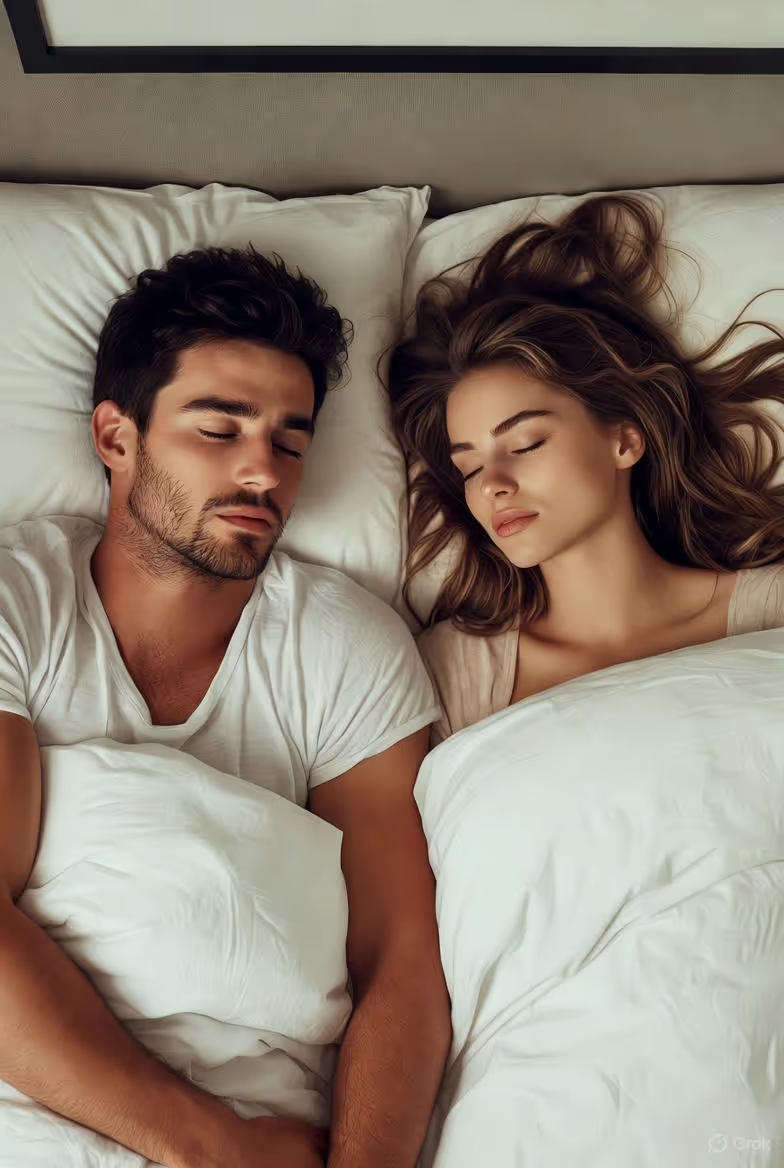
Sharing a bed is an expression of intimacy, but from a purely biological sleep perspective, it can be a significant hidden challenge. Unless perfectly synchronized, you and your partner are essentially conducting two separate, potentially interfering, physiological symphonies every night.
Movement Transference. You are 25% more likely to have your sleep disturbed if you share a bed. Every toss, turn, or kick from your partner can cause a micro-arousal in you, pulling you out of a deep sleep stage. Even if you don’t fully wake, the sleep cycle is fragmented. This is a direct hit to sleep efficiency and restfulness scores.
Thermal Dissonance. Your ideal sleep temperature is personal. One partner may be a "furnace," raising the ambient micro-climate under the covers, while the other is cold. This can prevent one or both from achieving their ideal core temperature drop. Heated arguments over blankets and thermostats are literal manifestations of a hidden sleep score killer.
Sleep Schedule Mismatch (Asynchrony). An early bird and a night owl sharing a bed creates a constant low-grade conflict. The night owl’s late-night light exposure can suppress the early bird’s melatonin. The early bird’s morning movements and light can truncate the night owl’s crucial late-cycle REM sleep. This social jetlag within a single bed is incredibly disruptive yet often accepted as a relationship compromise.
Snoring and Breathing Sounds. Beyond the obvious disruption of loud snoring, even the regular sound of a partner’s breathing can be a stimulus that prevents the brain from fully descending into its deepest, most restorative states. For some, it becomes white noise; for others, it’s a constant, low-level trigger for vigilance.
The solution isn't necessarily separate bedrooms (though "sleep divorce" is a valid and healthy option for some). It involves conscious sleep partnership: investing in a larger mattress with motion isolation, using dual-zone heating/cooling systems (like BedJet or Chilipad), and even syncing bedtime routines as much as possible. Open communication about sleep needs, free from judgment, is essential. Sometimes, the best tool is awareness—using individual sleep trackers to gather objective data. When both partners can see how their routines affect the other’s scores, it moves the conversation from blame ("you kept me up") to collaborative problem-solving.
As we’ve journeyed through these eight hidden factors—from circadian signals and hormonal cascades to bedroom air and digital ghosts—a common thread emerges: sleep is a whole-system phenomenon. It cannot be optimized in isolation. In our next section, we will begin to synthesize these insights into a framework for action, starting with the most powerful tool at your disposal: your own data.
You know the feeling: you wake up after seven hours of sleep feeling surprisingly refreshed, clear-headed, and ready for the day. You check your sleep score, expecting a triumphant 90+, only to find a mediocre 78. Or the opposite occurs—you drag yourself out of bed feeling like you were hit by a truck, but your tracker reports a solid 85 with "good" sleep stages. This dissonance between subjective sleep quality (how you feel) and objective data (the score) is one of the most confusing and frustrating aspects of using a sleep tracker.
This disconnect isn't a flaw in you or necessarily a flaw in the device. It's a signal. It points to a gap in our understanding of what the data represents and what truly constitutes "rest." Unpacking this gap reveals the ninth, and perhaps most nuanced, hidden factor: the limitation and interpretation of the metrics themselves.
First, understand that sleep trackers are estimators, not medical devices. The gold standard for sleep staging is a polysomnogram (PSG) in a lab, using EEG to measure brain waves. Consumer wearables like the Oxyzen ring use physiological proxies—heart rate, heart rate variability, movement, and temperature—to infer sleep stages with sophisticated algorithms. While these have become remarkably accurate for detecting sleep versus wake and often good at identifying deep sleep, they can sometimes misestimate the boundaries of light and REM sleep. A feeling of refreshment despite a lower score could mean the algorithm underestimated your restorative deep sleep or that you had highly efficient, uninterrupted cycles that left you subjectively restored.
Second, your sleep need is dynamic, not static. The 8-hour rule is a population average. Your personal need fluctuates with training load, immune system activity, mental stress, and hormonal cycles. A score of 78 on a night after a intense workout or while fighting off a cold might represent optimal recovery for that context. Your body may have prioritized intense, restorative deep sleep over duration, leaving you feeling good despite a shorter, lower-scoring sleep. The score evaluates against a general benchmark, but your feeling evaluates against your body's specific demand on that night.
Third, the score often misses "sleep quality" intangibles. Did you wake up at the optimal point in your sleep cycle (at the end of a light sleep phase), making the transition to wakefulness smooth? This can make a short sleep feel refreshing. Conversely, did you wake from deep sleep to an alarm, causing intense grogginess (sleep inertia) that colors your entire morning feeling, despite a high score? The brutal feeling upon waking from a high-scoring sleep is often a sign of poor wake timing, not poor sleep quality—a critical distinction the raw score may not reflect.
Finally, psychological factors powerfully filter objective reality. If you have sleep anxiety—a preoccupation with achieving a perfect score—the very act of checking the data can induce stress that dictates your daytime feeling, regardless of the number. You might feel tired because you saw a 75, engaging in a nocebo effect. Conversely, a placebo effect from seeing a high score can boost morning mood. Your relationship with the data itself becomes a hidden factor.
The key is to use the data as a trend-line, not a daily verdict. Look at your scores and how you feel over weeks and months. Does a pattern emerge where certain behaviors consistently lead to both a low score and feeling bad? That's a true signal. Does a certain pattern (like a slightly shorter sleep after exercise) often lead to a lower score but a better feeling? That's valuable personal insight. The goal is to make the subjective and objective converge more often. To start this journey of personalized interpretation, exploring the Oxyzen blog can provide frameworks for reading your own data story.
But to truly align feeling with data, we must address one of the most powerful yet clandestine disruptors of modern sleep: a force that alters the very structure of our rest.
We’ve addressed evening screen time, but the problem of light extends far beyond our direct gaze. We live in a perpetual electrical twilight. Streetlights bleed through blinds. Charger LEDs glow like tiny constellations. Digital clocks cast a faint haze. This ambient artificial light at night (ALAN) is a chronic, low-grade disruptor of our evolutionary sleep biology, with effects that are more profound than a single night of poor sleep.
The mechanism is stealthy. Even low-level light exposure during sleep—enough to barely make out shapes in the room—can suppress melatonin production by up to 50% compared to true darkness. Melatonin isn't just a "sleep switch"; it's a powerful antioxidant and a regulator of the sleep-wake cycle. Its suppression doesn't just make it harder to fall asleep; it results in shallower sleep architecture. Studies show that sleeping in a room with even dim light leads to a reduction in time spent in the restorative stages of deep sleep and REM, and more frequent arousals as measured by brainwave activity. Your tracker might log this as increased restlessness and a lower "deep sleep" score, without a clear cause.
Furthermore, light exposure fragments sleep by disrupting the circadian regulation of core body temperature. The natural sleep-promoting temperature drop is blunted. Your body remains in a state of higher metabolic alertness, preventing full descent into the most restorative stages. This is why you can sleep for eight hours in a moderately lit room and still wake up feeling unrefreshed—your sleep was long but shallow.
The spectrum of light matters immensely. Blue light is the most potent suppressor of melatonin, but it’s a mistake to focus on blue alone. White light contains blue wavelengths. The dim red glow of an electronics panel is less disruptive than a white or blue one, but any light is suboptimal. The hidden factor here is the cumulative photonic load from all sources throughout the night: the streetlamp, the wifi router, the smoke detector, the crack under the door.
The impact is also systemic. Research links chronic exposure to ALAN to increased risks of metabolic disorders, depression, and even certain cancers, likely mediated through circadian disruption. Your sleep score is the canary in the coal mine, providing an early, personal metric for this global environmental issue.
The solution is an uncompromising pursuit of true darkness. This means:
Creating a cave-like environment isn't an aesthetic choice; it's a biological imperative for achieving the sleep structure that yields high scores and true rejuvenation. For those keen on optimizing every element of their sleep sanctuary, our FAQ section dives deeper into environmental tweaks.
However, even in perfect darkness, a deeply ingrained habit can sabotage our efforts from within: our nightly routine itself.
The concept of a "wind-down routine" is sacrosanct in sleep hygiene. Take a warm bath, drink herbal tea, read a book, meditate. But for many, this well-intentioned practice morphs into a new source of sleep anxiety—a performance with a singular goal: to achieve sleep. This performative wind-down is a hidden psychological factor that can keep you awake.
The paradox is this: trying to relax often induces stress. When you engage in "relaxing" activities with a clock-watching mentality ("I must start my routine by 9:30 p.m. to be asleep by 10:30"), you introduce pressure. The bath becomes a task. The meditation becomes a test of whether you can clear your mind. If sleep doesn't follow, you feel you've failed the routine, which generates frustration and alertness, the exact opposite of the intended effect.
This is a form of orthosomnia, a term coined by researchers to describe the preoccupation with perfecting sleep data. When the wind-down becomes a rigid, data-chasing protocol, it can backfire. The routine is no longer about genuine relaxation and disconnection; it's about earning a high score. The fear of a bad score can then heighten pre-sleep arousal, creating a self-fulfilling prophecy.
Furthermore, a mismatched routine can be stimulating. For some, reading a gripping novel activates the mind. For others, a warm bath raises core body temperature too close to bedtime (the beneficial effect comes from the rapid cooling afterward, which signals sleep, but if you get into bed while still warm, it can be counterproductive). Your "perfect" routine might be someone else's sleep kryptonite.
The key is to reframe the wind-down as "transition time," not "sleep preparation." The goal is not to fall asleep, but to gently signal to your body and mind that the demands of the day are over. This is a subtle but powerful shift. It means engaging in activities you find genuinely pleasant and decoupled from outcome. It could be light stretching while listening to music, doodling, having a calm conversation, or doing a simple puzzle. The activity should have no performance metric and no direct link to sleep in your mind.
Consistency in timing is more important than consistency in activity. Going through a transition at roughly the same time each evening is the powerful circadian cue. What you do can vary based on your needs that day. Some nights you might need quiet reflection; others, you might need to gently process the day's events with a partner.
By dismantling the performance trap, you reclaim the wind-down as a sanctuary of low pressure. This reduces sleep effort, which is one of the primary drivers of insomnia. Your sleep score then becomes a reflection of natural rest, not a graded exam on your pre-sleep behavior. To discover how different individuals craft their unique transition rituals, the stories shared on our testimonials page offer a wealth of real-world inspiration.
Yet, there is a physical substance, often embraced as part of a wellness routine, that has a direct and paradoxical effect on sleep architecture that most trackers fail to nuance.
In the quest for better sleep, many turn to supplements. Melatonin, magnesium, valerian root, CBD, and adaptogens like ashwagandha are ubiquitous. While these can be beneficial tools, their hidden impact on sleep architecture is rarely discussed and can lead to a confusing scenario: you fall asleep faster but wake up feeling unrefreshed, and your sleep score shows poor stage distribution.
Let's deconstruct the paradox of the most common ones:
Exogenous Melatonin is a timing signal, not a knockout pill. Taking it can help reset a delayed circadian rhythm (like from jet lag) or initiate sleep onset. However, its effect on the structure of sleep is complex. Some studies show it can increase REM sleep latency (the time to your first REM period) and, depending on dose and release profile, may lead to more fragmented sleep later in the night as the exogenous hormone clears. A high dose can also cause next-day grogginess. Your tracker might show great sleep latency but reduced REM or increased wakefulness after 4 a.m., lowering your overall score.
Magnesium is rightly praised for its role in nervous system calming. It can improve sleep quality, particularly for those deficient. However, certain forms (like magnesium citrate) have a laxative effect for some people. The hidden disruption isn't from the magnesium itself, but from potential mid-night bathroom trips that fragment sleep continuity—a direct hit to sleep efficiency.
CBD (Cannabidiol) shows promise for anxiety and pain, which can improve sleep. However, its influence on sleep stages is dose-dependent. Some research indicates that while it may increase total sleep time, it can suppress REM sleep. REM is crucial for emotional processing, memory, and creativity. A night of long sleep with suppressed REM might yield a decent score based on duration and efficiency but leave you feeling emotionally ragged or cognitively dull, creating another subjective-objective disconnect.
Alcohol – The Ultimate Wolf in Sheep's Clothing. While not a "supplement," it's the world's most popular self-prescribed sleep aid. Alcohol is a powerful sedative; it knocks you out, dramatically reducing sleep onset latency. This is where the illusion lies. As alcohol metabolizes, it acts as a stimulant. It devastates sleep architecture: it severely suppresses REM sleep in the first half of the night and causes a rebound of intense, often vivid and disruptive REM in the second half. It also relaxes the throat muscles, exacerbating breathing disturbances. The result is a night of highly fragmented, shallow sleep with poor breathing metrics. A tracker will see this as high restlessness, low deep/REM balance, and possible SpO2 dips. The sleep score will be abysmal, even though you "passed out" quickly.
The hidden factor is the quest for a simple chemical solution. Sleep is a state your body generates, not a state you can force. Supplements should be used strategically, with awareness of their potential architectural impact, and ideally under guidance. The data from a detailed tracker is invaluable here—it can help you see if your chosen aid is helping you fall asleep at the cost of staying asleep or getting the right kind of sleep. For a deeper discussion on navigating the world of sleep supplements, our blog features expert-led analyses.
This brings us to a factor that intertwines physical sensation and mental state, often manifesting in the dead of night.
You're drifting into sleep when an irresistible urge to move your leg strikes. Or a vague, crawling sensation on your skin demands a scratch. Or you simply cannot find a comfortable position, feeling a pervasive inner restlessness. These sensorimotor disturbances are not just annoyances; they are direct neurological antagonists to sleep continuity and depth, and they are more common than most realize.
Restless Legs Syndrome (RLS) is the most recognized form. It's a compelling urge to move the legs, usually accompanied by uncomfortable sensations, worse at rest and in the evening. But mild or "subclinical" RLS often goes undiagnosed. You might not have full-blown symptoms, but a subtle fidgeting or leg discomfort that delays sleep onset and causes frequent micro-awakenings. Every time you move to relieve the sensation, you lighten your sleep stage. This is captured vividly by wearables as prolonged sleep latency and high restlessness scores, often with no clear environmental cause.
Periodic Limb Movement Disorder (PLMD) is RLS's nocturnal cousin. It involves involuntary, repetitive leg (or sometimes arm) jerks or cramps during sleep, every 20-40 seconds. You are often unaware of them, but your partner might complain of being kicked. Each jerk causes a cortical arousal—a brief awakening of the brain that fragments sleep. The result is dramatically reduced sleep efficiency and suppressed deep sleep. You wake up exhausted, as if you ran a marathon in your sleep, and your sleep score reflects the storm of disturbances.
Formication & "Phantom Itch" is a lesser-discussed but potent disruptor. This is the sensation of insects crawling on or under the skin. It can be a side effect of medications, withdrawal from substances, or related to conditions like fibromyalgia or certain nutrient deficiencies (like B12 or iron). The constant need to attend to these sensations prevents the mind from disengaging and descending into deep sleep.
The hidden nature of these issues is twofold. First, they are often dopamine-dependent. Iron is a cofactor for dopamine production, and low brain iron stores are a key cause of RLS/PLMD. This links back to our hormonal cascade—a neurotransmitter imbalance manifests as a physical sleep disruptor. Second, they are highly state-dependent. They worsen with fatigue, stress, and certain medications. You might have a "good leg night" and a "bad leg night" and not know why.
Tracking is crucial for diagnosis. A device that charts your movement and restlessness can show the telltale signs: rhythmic, periodic spikes in movement (for PLMD) or a long period of high movement at sleep onset (for RLS). This objective data is powerful when seeking medical help. It moves the conversation from "I can't sleep" to "My data shows 300 periodic limb movements per night." Addressing the root cause—often through iron supplementation, medication, or lifestyle change—can transform sleep scores and daytime energy almost overnight.
Our exploration now turns from internal neurological signals to a vast, external system that communicates with our own in surprising ways: the natural world.
Our modern life is increasingly spent in climate-controlled boxes, under artificial light, isolated from the natural rhythms that shaped our physiology for millennia. This disconnect from natural zeitgebers—environmental time-givers beyond light—is a subtle but profound hidden factor eroding sleep quality.
The primary missing signal is the natural temperature cycle. Our ancestors experienced a steady drop in ambient temperature from afternoon through the night, a powerful cue for the body's own thermal down-regulation for sleep. We now live in a constant 70-72°F (21-22°C) environment. While we can set our thermostats lower at night, we miss the gradual external cooldown that naturally primes our internal clock. This disconnection can blunt the precision of our circadian thermoregulation.
Next is the loss of grounding (Earthing). This is the concept of direct skin contact with the Earth's surface, which has a natural, subtle negative electrical charge. Emerging, though debated, research suggests that grounding may stabilize the circadian rhythm, reduce cortisol levels, and improve sleep by syncing our biological rhythms with the Earth's natural electromagnetic field. Whether the mechanism is electrochemical, psychological, or both, the reality is that we are almost perpetually insulated from the ground by shoes and flooring. The loss of this connection, theorize some, may contribute to a state of physiological "noise" or dysregulation.
Furthermore, we lack exposure to natural light dynamism. Natural light isn't just bright; it has a specific spectral quality and intensity that changes predictably from dawn to dusk (high blue content in the morning, shifting to long red wavelengths at sunset). This dynamic pattern is a far more potent circadian regulator than the static, often dim, and spectrally flat light of indoor environments. Poor daytime light exposure leads to a weaker circadian signal, making the sleep-wake rhythm less robust and more easily disrupted by minor evening light.
Finally, there is the sensory poverty of nature. The constant, predictable hum of HVAC systems, electronics, and traffic is a form of sensory monotony. In contrast, natural environments provide a rich, varied, and non-threatening sensory input—wind in leaves, bird sounds, water flowing—that promotes a state of gentle attention restoration and parasympathetic activation, lowering the allostatic load (cumulative stress) we carry into the night.
The impact on sleep is indirect but significant. A weaker circadian drive, higher baseline stress, and less-clear environmental time cues result in less consolidated, more fragile sleep. You might be more prone to waking at slight disturbances and have less "sleep depth" resilience.
Reconnecting doesn't require moving to a cabin in the woods. It involves deliberate practices:
These practices strengthen your biological rhythms at a foundational level, making your sleep more stable and resistant to disruption. They are the bedrock upon which good sleep hygiene is built. To learn more about integrating these principles into a modern lifestyle, our blog features practical guides on bridging the nature-technology gap for wellness.
As we strengthen our foundation with nature's rhythms, we must also examine a societal rhythm that wars against them: our work culture.
For the knowledge worker, the end of the workday is often a fiction. Emails ping on phones at 9 p.m. Unfinished tasks loom mentally. The pressure to perform and the fear of falling behind create a state of chronic cognitive activation that does not respect the boundaries of the bedroom. This "productivity hangover" is a potent hidden factor, operating through several distinct channels.
Cognitive Intrusions and Problem-Solving in Bed. The bed becomes an extension of the desk. As you lie down, your mind automatically rehearses the day's conflicts, replays conversations, and drafts tomorrow's to-do list. This is not conscious worrying; it's the default mode of a brain still in "work mode." This cognitive activity elevates heart rate and brainwave frequency, directly blocking the transition into the alpha and theta waves that precede sleep. Your tracker will log this as extended sleep latency.
The Cortisol-Timing Disruption. High-demand jobs, especially those with low control, are classic recipes for that flattened cortisol curve we discussed earlier. The sustained psychological pressure keeps cortisol elevated, delaying and diminishing the melatonin rise. Even if you physically leave work, your endocrine system hasn't gotten the memo. This creates the common experience of being "tired but wired" at bedtime.
Email Apnea and Screen Posture. The physical act of late-night work has hidden costs. Checking email on your phone often induces shallow breathing or breath-holding—a phenomenon dubbed "email apnea"—which activates the stress response. Furthermore, the hunched, forward-head posture we adopt over screens strains the neck and shoulder muscles, creating tension that can manifest as pain or restlessness when you try to relax horizontally.
The Erosion of the Work-Life Boundary. When your work device is also your personal device, and your home is your office, the environmental cue that "work is over" vanishes. There's no commute to decompress, no physical shift in location to signal a shift in mode. The lack of a spatial and ritualistic boundary means work stress infiltrates the entire domestic sphere, including the sleep sanctuary.
The sleep score impact is clear: poor sleep efficiency, high resting heart rate, low HRV, and reduced deep sleep. You may also experience stress dreaming—intense, work-themed dreams that are not restorative but are a sign of your brain struggling to process unresolved cognitive and emotional material from the day.
Combatting this requires building firewalls, not just winding down.
By compartmentalizing work stress, you protect your sleep physiology from its invasive reach. This isn't about working less; it's about working smarter to preserve your recovery capacity. For insights on managing tech-life balance in a hyper-connected world, the resources at Oxyzen.ai/about-us touch on our core mission of sustainable human performance.
Now, we arrive at a factor that represents the culmination of all daily inputs, a final nightly process that, if disrupted, turns rest into a state of silent biological chaos.
This hidden factor is not an input but an output—a core function of sleep that, when impaired, creates a vicious cycle. During deep NREM sleep, your brain's glymphatic system kicks into high gear. This recently discovered waste-clearance network uses cerebrospinal fluid to flush out metabolic debris that accumulates between brain cells during waking hours. This debris includes beta-amyloid and tau proteins, which are associated with neurodegenerative diseases.
Here’s the hidden link to your sleep score: Every factor that reduces deep sleep or fragments sleep continuity directly impairs glymphatic function.
Think of it this way: Your sleep score isn't just a grade on your rest; it's a proxy report card for your brain's nightly cleaning service. A low score often means the cleaning crew was interrupted, worked inefficiently, or didn't get enough time on the job.
Sleep Fragmentation is a Flow Killer. The pulsing flow of cerebrospinal fluid is tightly coupled to the slow, synchronized brainwaves of deep sleep. Each micro-arousal or shift to a lighter stage disrupts this slow-wave activity and pauses the cleansing pulse. A night with high "restlessness" isn't just annoying; it's a night of stop-start cleaning, leaving metabolic trash in the neural pathways.
Short Sleep Duration Denies Service Time. The glymphatic system is most active during deep sleep, which predominates in the first half of the night. However, a full cycle of clearance requires sufficient total sleep time. Consistently cutting sleep short denies the brain the later cycles needed to complete the process, leading to a cumulative buildup of waste products.
The Vicious Cycle. This is where it becomes self-reinforcing. The buildup of metabolic waste and inflammatory proteins itself can impair the function of the neurons and glial cells that regulate sleep. It can make it harder to generate and sustain the deep, slow-wave sleep needed for clearance. Poor sleep leads to inefficient cleaning, which in turn leads to poorer sleep quality—a downward spiral reflected in ever-worsening scores and daytime brain fog.
This explains why even after one or two "bad" nights, you feel cognitively dull. Your brain is literally operating in a toxic environment it hasn't had a chance to clean. The factors we've discussed—from apnea (which fragments sleep) to alcohol (which suppresses deep sleep) to light exposure (which shallowes sleep)—all converge on this one critical point: they cripple your brain's essential maintenance.
Protecting and prioritizing deep, consolidated sleep is therefore not a luxury for feeling good; it is a non-negotiable preventive maintenance for long-term brain health. Your sleep tracker’s "deep sleep" metric and "restlessness" score are the closest you can get to monitoring this vital nightly process. Investing in the factors that protect deep sleep is an investment in your cognitive future.
This concludes our deep investigation into the specific hidden factors. We have journeyed from circadian clocks to brain-cleaning systems, from bedroom air to digital ghosts. In the final portion of this exploration, we will synthesize this knowledge into a practical, actionable framework. We will move from diagnosis to protocol, building your personalized plan to silence these saboteurs and unlock the truly restorative sleep that both you and your tracker will celebrate.
Understanding the hidden saboteurs is only half the battle. The true transformation lies in systematically, yet sustainably, building them out of your life. This is not about implementing 20 drastic changes overnight, which is a recipe for failure and more sleep anxiety. It’s about strategic, layered interventions—creating a personalized Sleep Defense System.
Think of it like cybersecurity for your rest. You don't just get a password; you build layers: a firewall (boundaries), anti-virus (direct countermeasures), encryption (optimization), and continuous system updates (adaptation). We will construct your system across four pillars: Environment, Routine, Mindset, and Data Interpretation.
Your bedroom must become a bio-hacked cave, engineered for one purpose only: unimpeded physiological rest. This goes far beyond a good mattress.
The Light Lockdown Protocol:
The Thermoregulation Tune-Up:
The Air & Soundscape Engineering:
This fortified environment is your non-negotiable foundation. It operates passively, protecting you every night regardless of your mental state. For product recommendations and deeper dives into creating the perfect sleep environment, our community often shares their setups and experiences.
This is the set of daily active behaviors that synchronize your internal clock and drain the day’s stress, preventing it from infecting your night.
The Anchor Habits:
The Digital Sunset & Transition Ritual:
This routine isn't rigid; it's rhythmic. It provides the predictable cues your circadian rhythm and nervous system crave to smoothly transition into rest mode.
This is the internal software that determines how you relate to sleep and your data. It protects you from psychological sabotage.
Reframing the Sleep Score:
Managing Sleep Effort:
This mindset layer encrypts your efforts, turning them from a source of stress into a source of curious self-exploration. For many, connecting with a brand’s philosophy and user community reinforces this mindset shift, which is part of the journey we detail.
This is where you move from passive tracking to active dialogue with your body. Your wearable provides a language; you must learn to speak it.
Key Metrics to Form a Relationship With:
The Weekly Review Ritual:
Set aside 20 minutes once a week (e.g., Sunday evening) to review your data. Ask:
This turns data into actionable, personal science. You become the expert on your own sleep.
Do not attempt to install all four layers at once. You will overwhelm yourself. Follow this phased approach over 4-6 weeks:
Phase 1 (Weeks 1-2): The Foundation Fortress.
Phase 2 (Weeks 3-4): The Rhythm Reset.
Phase 3 (Weeks 5-6): The Mindset & Mastery Shift.
This patient, phased method allows each layer to become habit before adding the next, creating sustainable, lasting change.
Your Sleep Defense System is powerful, but it has limits. Your tracker and your own interventions are not a substitute for medical diagnosis. Seek professional consultation if your data consistently shows:
Use your data as the compelling evidence to advocate for your health with a professional. Bring your charts, your trends, your observations. You are the best witness to your own sleep.
The journey to a higher sleep score is not, in the end, about chasing a number. It is a journey back to a fundamental biological truth: you are designed to rest deeply. The hidden factors we’ve exposed—from circadian misalignment and hormonal hijackings to digital ghosts and the productivity hangover—are the artifacts of a modern world that has declared war on this innate design.
By building your personalized Sleep Defense System, you are not just optimizing sleep; you are engaging in a radical act of reclamation. You are reclaiming your right to recover, your right to mental clarity, your right to emotional resilience, and your right to long-term brain health. You are moving from being a passive victim of your environment and habits to being the architect of your own restoration.
Your sleep score will become a natural byproduct of this harmony—a confirmation, not a goal. Some nights it will be high, some nights lower. But armed with understanding, you will no longer fear the low scores. You will investigate them with curiosity, understand their message, and trust in your system’s ability to course-correct.
The path to truly restorative sleep begins not with trying harder, but with seeing clearer. It begins by listening to the hidden whispers of your physiology, which are now, thanks to the technology on your finger and the knowledge in your mind, silent no more.
Begin your journey of deeper understanding. Explore our comprehensive resource hub for more on integrating these principles into your life, or to discover how technology like the Oxyzen smart ring can serve as your guide. For any specific questions on applying these protocols, our dedicated support team is ready to assist.
Your Trusted Sleep Advocate: Sleep Foundation — https://www.sleepfoundation.org
Discover a digital archive of scholarly articles: NIH — https://www.ncbi.nlm.nih.gov/
39 million citations for biomedical literature :PubMed — https://pubmed.ncbi.nlm.nih.gov/
Experts at Harvard Health Publishing covering a variety of health topics — https://www.health.harvard.edu/blog/
Every life deserves world class care :Cleveland Clinic - https://my.clevelandclinic.org/health
Wearable technology and the future of predictive health monitoring :MIT Technology Review — https://www.technologyreview.com/
Dedicated to the well-being of all people and guided by science :World Health Organization — https://www.who.int/news-room/
Psychological science and knowledge to benefit society and improve lives. :APA — https://www.apa.org/monitor/
Cutting-edge insights on human longevity and peak performance:
Lifespan Research — https://www.lifespan.io/
Global authority on exercise physiology, sports performance, and human recovery:
American College of Sports Medicine — https://www.acsm.org/
Neuroscience-driven guidance for better focus, sleep, and mental clarity:
Stanford Human Performance Lab — https://humanperformance.stanford.edu/
Evidence-based psychology and mind–body wellness resources:
Mayo Clinic — https://www.mayoclinic.org/healthy-lifestyle/
Data-backed research on emotional wellbeing, stress biology, and resilience:
American Institute of Stress — https://www.stress.org/


