The Unbeatable Low-Cost Nighttime Wellness Routine: Transform Your Sleep and Health Without Breaking the Bank

You know the feeling. It’s late, the day is finally done, and you collapse into bed, only for your mind to race with tomorrow’s to-do list, today’s stresses, and that nagging worry you just can’t shake. You wake up feeling as tired as when you went to sleep, reaching for another expensive coffee, another adaptogen tincture, another quick fix in a market saturated with high-priced "solutions" to poor sleep and low energy.

But what if the most profound wellness upgrade isn't found in a luxury supplement or a $5,000 mattress? What if it’s meticulously crafted in the quiet, intentional hour before bed, using tools that cost little to nothing, yet yield returns that compound exponentially for your health, mood, and cognitive function?

Welcome to the era of the low-cost nighttime wellness routine. This is not about deprivation or settling for less. It’s about strategic, evidence-based simplification. It’s about hacking your biology’s natural processes—your circadian rhythm, your nervous system, your recovery cycles—using principles that are virtually free. In this comprehensive guide, we’ll build a powerful, personalized evening protocol that prioritizes what your body truly needs to repair and rejuvenate, saving you money while delivering superior results. And we'll explore how a single, intelligent investment—a device like the Oxyzen smart ring—can provide the precise data to optimize every free step, ensuring your budget-friendly routine is working perfectly for you.

The Foundation: Why Your Night Holds the Key to Daytime Wealth

We often think of wellness as an active pursuit: the workouts we crush, the superfoods we eat, the meditation sessions we schedule. But human biology tells a different story. Wellness is fundamentally a passive process. It’s what happens to you when you stop doing. Muscle grows not during the lift, but in the repair phase after. Memories consolidate not during study, but during deep sleep. Hormones like growth hormone and leptin (which regulates appetite) are primarily secreted at night. Your brain’s glymphatic system, a waste-clearance system, kicks into high gear during sleep, literally flushing out the metabolic toxins linked to neurodegenerative diseases.

This isn’t just about feeling rested. This is about cellular housekeeping, metabolic regulation, and cognitive optimization. A dysfunctional night unravels your entire day: impaired glucose metabolism, heightened stress cortisol, reduced immune vigilance, and poor emotional regulation. The Centers for Disease Control and Prevention (CDC) has declared sleep deficiency a public health epidemic, linking it to heart disease, kidney disease, high blood pressure, diabetes, stroke, and obesity.

The beautiful paradox? Maximizing this critical recovery window doesn’t require lavish spending. It requires an understanding of environmental cues and behavioral triggers. Your nighttime routine is the launch sequence for this vital biological programming. By getting it right, you invest in the compound interest of health, where every high-quality night deposits more energy, clarity, and resilience into your account for the next day. It’s the ultimate high-return, low-cost investment strategy for your well-being.

The Silent Saboteurs: How Modern Evenings Undermine Wellness (And Your Wallet)

Before we build the ideal routine, we must diagnose the problem. Our modern environment is functionally antagonistic to quality sleep and recovery, often while tricking us into spending money to counteract its effects. Let’s break down the primary saboteurs:

1. Light Pollution, The Circadian Disruptor: Our circadian rhythm, the internal 24-hour clock governing sleep, hormone release, and body temperature, is anchored by light. The setting sun should trigger a rise in melatonin, the sleepiness hormone. Instead, we bathe in a sea of blue-light emissions from LEDs, smartphones, laptops, and TVs. This light hits photoreceptors in our eyes, sending a direct "it's daytime!" signal to the brain's suprachiasmatic nucleus (SCN), suppressing melatonin production sometimes by over 50%. The result? We feel alert when we should be winding down, leading to later bedtimes and fragmented sleep. We then spend money on melatonin supplements to replace what our environment artificially destroyed.

2. Cognitive Looping, The Stress Amplifier: The evening is often the first true pause we get. Without structure, this mental space is immediately filled with a review of the day’s conflicts, anxieties about tomorrow, and an endless "mental inbox" of unresolved tasks. This activates the sympathetic nervous system (fight-or-flight), increasing heart rate and releasing cortisol—the very opposite of the relaxation response needed for sleep. This leads to "revenge bedtime procrastination," where we scroll mindlessly to numb the anxiety, further exposing ourselves to sleep-disrupting light and stimulating content. The wellness industry sells us expensive adaptogens, stress-relief supplements, and meditation apps to manage a stressor we actively cultivate every night.

3. Thermal Misalignment, The Sleep Architecture Wrecker: Core body temperature is a key circadian signal. To initiate sleep, our core temperature must drop, facilitated by the release of heat from our extremities. Many modern habits disrupt this: late, heavy meals that demand digestive thermogenesis (heat production), hot showers right before bed (which initially cool the core but can disrupt the natural drop if timed incorrectly), and poorly regulated bedroom temperatures. We then invest in expensive cooling mattresses or bedding to solve a problem rooted in timing.

4. Inconsistent Scheduling, The Rhythm Breaker: The circadian rhythm thrives on predictability. An erratic bedtime—varying by two or more hours on weekends versus weekdays—creates a state similar to social jet lag. It confuses your internal clock, leading to poorer sleep quality, daytime fatigue, and metabolic confusion. We compensate with stimulants like caffeine, creating a vicious cycle.

The cost of these saboteurs is twofold: the direct financial cost of bandaids (supplements, sleep aids, extra coffee) and the immense, uncaptured cost of lost potential, health, and vitality. The low-cost routine we’re about to build systematically dismantles each saboteur, replacing them with powerful, pro-sleep cues.
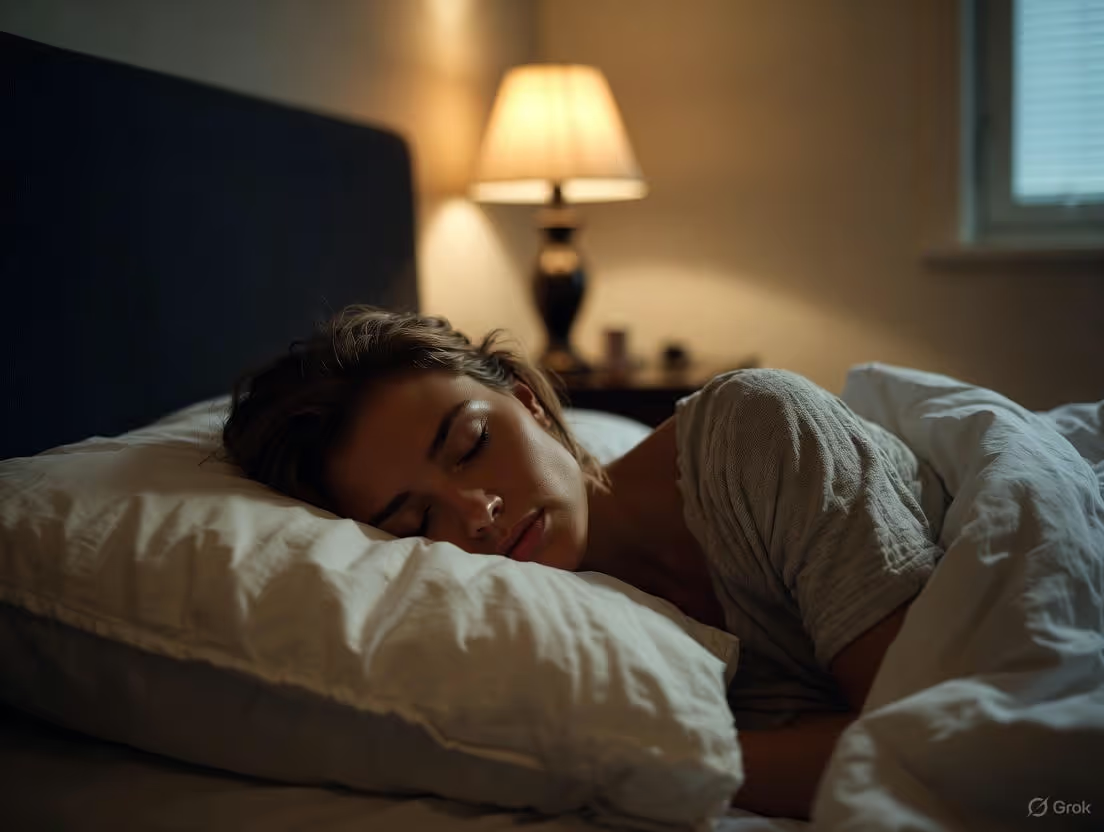
Principle #1: Harnessing The Power of Light & Darkness (Your Free Sleep Drug)

Light is the most powerful zeitgeber (time-giver) for your circadian rhythm. You don't need a fancy $300 light therapy lamp to master this; you need an understanding of timing and simple, accessible tools.

The 90-Minute Sunset Simulation: Begin your wind-down 90 minutes before your target bedtime. This is your "light hygiene" period.

  • Dim the Overheads: Switch from bright ceiling lights to low-wattage lamps, preferably with warm-white or amber bulbs (under 2700 Kelvin). If you own smart bulbs, program them to automatically shift to a sunset mode.
  • Digital Sunset: This is non-negotiable. Set a firm time to turn off all major screens (TV, laptop, tablet). For your smartphone, enable "Night Shift" or "Blue Light Filter" at maximum strength, but better yet, stop using it for passive consumption. If you must use a device, consider affordable blue-light blocking glasses with amber lenses, which have been shown in studies to improve melatonin levels and sleep quality.
  • Candlelight or Salt Lamps: The warm, flickering light of a candle or the gentle glow of a Himalayan salt lamp provides ample illumination for evening activities without sending disruptive signals to your SCN. They also create a powerful psychological cue for relaxation.

Morning Light Anchor: Your evening routine truly begins the moment you wake up. Getting 10-15 minutes of bright, natural sunlight within an hour of waking is the single best way to set your circadian clock for the day. It creates a strong cortisol pulse (the healthy, alerting kind) and starts the timer for melatonin release roughly 12-14 hours later. This costs nothing. A morning walk is the ultimate low-cost biohack.

The Pitch-Black Bedroom: Complete darkness is crucial for melatonin production and sustaining deep sleep. Invest in blackout curtains (a one-time, modest cost) or use a comfortable, affordable sleep mask. Cover or remove any tiny LED lights from electronics. The goal is darkness so profound you cannot see your hand in front of your face. As explored in resources on the Oxyzen.ai blog, even small amounts of light pollution at night can fragment sleep and impact heart rate variability, a key recovery metric.

Principle #2: The Cognitive Shutdown Sequence (From Racing Mind to Restful State)

You cannot command your brain to "stop thinking." But you can give it a structured, gentle task that allows the chatter to subside naturally. This sequence transitions your mind from the sympathetic (stressed) to the parasympathetic (rest-and-digest) state.

1. The Brain Dump (The $2 Notebook Hack): 60 minutes before bed, take a simple notebook—the cheaper, the better—and perform a complete download. Write down every lingering task, worry, idea, and reminder. The act of externalizing these thoughts onto paper signals to your brain, "It is safe to let this go for now. It has been captured." Research shows this practice, especially when combined with writing a brief to-do list for tomorrow, significantly speeds up sleep onset.

2. Gratitude Re-framing: On the next page, list three specific things you are grateful for from the day. They can be mundane (a warm cup of tea, a pleasant interaction) or profound. This isn't naïve positivity; it’s a neural re-training exercise. It actively shifts your cognitive focus from threat detection (anxiety) to reward recognition, fostering a state of safety and contentment conducive to sleep.

3. Guided Breathwork (The 4-7-8 Method): Once in bed, practice the 4-7-8 breathing technique, popularized by Dr. Andrew Weil. Inhale quietly through your nose for a count of 4. Hold your breath for a count of 7. Exhale completely through your mouth, making a whoosh sound, for a count of 8. Repeat this cycle 4 times. This breathing pattern acts as a natural tranquilizer for the nervous system, slowing the heart rate and promoting relaxation. It is a completely free, always-available tool.

4. The 5-Minute Body Scan: Starting at your toes and moving slowly up to your scalp, simply bring your attention to each part of your body. Don’t try to change anything; just notice sensations—warmth, coolness, tension, the weight against the mattress. This practice of non-judgmental awareness grounds you in the physical present, pulling you away from the abstract worries of the past and future.

Principle #3: Optimizing Your Thermal Environment for Sleep

Remember, you are not just a brain seeking silence; you are a thermodynamic system seeking the right temperature for optimal function. Your sleep environment’s temperature is one of the most important yet inexpensive factors to control.

The Goldilocks Zone: 65–68°F (18–20°C): For most people, this is the ideal range for initiating and maintaining sleep. A cool room facilitates the necessary drop in core body temperature. If controlling your home's thermostat is costly, focus on your microenvironment: use a fan for airflow, wear light, breathable cotton or moisture-wicking sleepwear, and use layers of blankets you can adjust rather than one heavy duvet.

The Pre-Sleep Warm-Up to Cool-Down: A warm bath or shower 60-90 minutes before bed is a powerful tool. The key is the cool-down that follows. As you leave the warm water, blood vessels at your skin’s surface dilate, radiating heat out of your core. This accelerated cooling mimics the body's natural pre-sleep temperature drop and can shorten the time it takes to fall asleep. No expensive gadgets required—just your shower and a bit of timing.

Beware of Metabolic Heat: A large, protein-heavy meal right before bed forces your body to generate heat for digestion, raising your core temperature at the wrong time. Aim to finish your last meal 2-3 hours before bedtime. If you need a small snack, opt for something that combines a little complex carbohydrate with a tryptophan source (like a small bowl of oatmeal or a banana)—this can actually facilitate serotonin and melatonin production.

Principle #4: Cultivating a Sensory Sanctuary in Your Bedroom

Your bedroom should be a sanctuary for sleep and intimacy only—not work, entertainment, or stress. This is a psychological and sensory redesign that costs little but pays enormous dividends.

Auditory Hygiene: Complete silence isn't always ideal, as sudden noises can jolt you awake. Instead, create a buffer of consistent, monotonous sound. A simple box fan provides excellent white noise, masking traffic, voices, or other disturbances. Free or low-cost smartphone apps can generate white noise, pink noise (deeper, more soothing), or brown noise. Alternatively, explore nature soundscapes like steady rain or ocean waves.

Olfactory Anchoring: The sense of smell is directly wired to the brain's limbic system, which governs emotion and memory. You can use this to create a powerful sleep anchor. A few drops of lavender, chamomile, or cedarwood essential oil on a cotton ball near your pillow or in a simple, inexpensive diffuser can signal to your brain that it’s time for sleep. The key is consistency: using the same scent each night creates a conditioned relaxation response.

Tactile Comfort on a Budget: You don't need Egyptian cotton with a four-digit thread count. Focus on clean, comfortable, and allergen-free. Wash your bedding weekly in hot water to remove dust mites. If your mattress is old and sagging, a high-quality, firm mattress topper (a one-time investment far less than a new mattress) can dramatically improve support. The goal is to associate your bed with physical comfort and relief.

The Role of Technology: From Disruptor to Essential Tool (The Smart Ring Advantage)

Thus far, we’ve built a formidable, low-cost routine using behavioral and environmental changes. But how do you know it’s working? How do you differentiate between feeling "okay" and achieving truly restorative, high-quality sleep? How do you pinpoint if the 4-7-8 breathing is improving your heart rate variability, or if your new bedtime is actually increasing your deep sleep?

This is where a single, intelligent investment can transform your understanding and optimization: a 24/7 wellness tracker like the Oxyzen smart ring.

Think of Oxyzen not as an expense, but as a personal sleep and recovery lab on your finger. While you execute your free routine, it provides the objective data to validate and refine it. It moves you from guesswork to precision.

  • Sleep Staging: It analyzes your sleep architecture—tracking light, deep, and REM sleep cycles—so you know if your wind-down routine is translating into more restorative deep sleep.
  • Recovery Metrics: It measures Heart Rate Variability (HRV)—a gold-standard, non-invasive indicator of your autonomic nervous system’s balance and recovery readiness. A rising HRV trend is a clear sign your routine and lifestyle are effectively reducing stress.
  • Body Temperature & Readiness: By tracking subtle changes in skin temperature and resting heart rate, it can provide a "Readiness Score," telling you how prepared your body is for the day’s demands. Did that late-night conversation actually impact your recovery more than you thought? The data doesn’t lie.
  • The Feedback Loop: This is the true power. You try drinking tart cherry juice (a natural melatonin source) for a week. Oxyzen shows you if your sleep latency (time to fall asleep) decreased. You experiment with an earlier dinner time. The data reveals if your deep sleep percentage improved. This creates a hyper-personalized, iterative process where your free routines become finely tuned to your unique biology.

As highlighted in Oxyzen.ai testimonials, users often discover unexpected insights—like how their perceived "good sleep" was actually fragmented, or how a simple change like cooler room temperature dramatically improved their recovery scores. It turns self-experimentation into a science. To understand the technology and mission behind such a device, you can learn more about Oxyzen’s approach here.

Building Your Personalized, Low-Cost Nighttime Protocol: A Step-by-Step Framework

Now, let’s synthesize these principles into a flexible, 60-to-90-minute protocol you can adapt. Remember, consistency beats perfection. Start with one or two elements and build.

T-90 Minutes: The Wind-Down Commences

  • Digital Sunset: Turn off the TV. Put your phone on "Do Not Disturb" and place it in another room to charge.
  • Light Shift: Dim the lights. Turn on your salt lamp or light a candle.
  • Thermal Prep: Take a warm bath or shower if desired.
  • Brain Dump & Gratitude: Spend 10 minutes with your notebook, dumping worries and listing gratitudes.

T-60 Minutes: The Relaxation Phase

  • Gentle Movement: 10-15 minutes of very gentle stretching, restorative yoga poses (like Legs-Up-The-Wall), or foam rolling. This is not exercise; it’s about releasing physical tension.
  • Caffeine-Free Herbal Tea: Brew a cup of chamomile, valerian root, or passionflower tea. The ritual is as important as the mild sedative properties.
  • Engage in Analog Leisure: Read a physical book (avoid thrillers!), listen to calming music or a podcast (using a device with a blue-light filter if a screen is involved), or have a quiet conversation.

T-30 Minutes: The Bedroom Sanctuary

  • Enter the Bedroom: Make this your final transition.
  • Prepare Your Environment: Turn on your white noise, diffuse your sleep scent, ensure the room is cool and dark.
  • Personal Hygiene: Complete your dental care and skincare routine. This acts as a strong behavioral cue that the day is ending.

T-0 Minutes: In Bed

  • Body Scan & Breathwork: Perform your 5-minute body scan followed by 4 cycles of 4-7-8 breathing.
  • Let Go: Settle into your preferred sleep position. If thoughts arise, gently return your focus to the sensation of your breath or the weight of your body. Trust that the routine has done its job.

Morning (The Routine’s Bookend):

  • Light Anchor: Open the curtains immediately. Get outside for morning sunlight within an hour of waking.
  • Hydrate: Drink a large glass of water to rehydrate after a night of breathing and minimal fluid intake.
  • Check Your Data: If using a tool like Oxyzen, review your sleep and recovery scores. This connects your actions to outcomes, providing motivation and insight for the next night. For common questions on interpreting such data, resources like the Oxyzen.ai FAQ can be incredibly helpful.

Troubleshooting Your Routine: Common Hurdles and Solutions

Even the best-designed routine can hit snags. Here’s how to troubleshoot common issues without spending money:

  • "I can't stop my mind from racing during the body scan." This is normal. The goal isn't to empty the mind, but to gently return your focus each time it wanders. Think of it as a rep at the gym for your "attention muscle." Each return is a success.
  • "I don't have 90 minutes every night." Start with 30. The non-negotiable core is the Digital Sunset and the Brain Dump. Protect even 10 minutes for these. Scale up as you can.
  • "I fall asleep on the couch, then wake up when I move to bed." This fragments your sleep. If you’re tired, go straight to bed. The routine can be shortened, but the association of "bed = sleep" must be preserved.
  • "My partner has a different schedule/habits." Communicate the importance of your wind-down. Use eye masks and white noise for individual control. Perform the brain dump and reading in another room before entering the shared bedroom space.

Remember, the story of effective wellness is often one of rediscovering simple truths. As detailed in Oxyzen’s our-story page, the journey often begins with the realization that the most advanced solutions are those that work in harmony with fundamental human biology. This low-cost nighttime routine is exactly that—a return to the signals your body was designed to follow, amplified by modern understanding and, if you choose, precise data.

The Long-Term Payoff: Beyond Sleep to Holistic Wellness

Adhering to a low-cost nighttime routine does more than improve sleep. It initiates a cascade of positive feedback loops across your entire life:

  • Financial Wellness: You directly save money on sleep aids, excessive caffeine, and impulsive "quick-fix" purchases. You may also save on future healthcare costs by mitigating chronic disease risk.
  • Emotional Regulation: With improved sleep, your amygdala (the brain's fear center) is less reactive. You gain a greater capacity for patience, resilience, and positive interaction.
  • Cognitive Performance: Enhanced memory consolidation, creativity, and problem-solving abilities become your new baseline. You learn and work more efficiently.
  • Physical Health: Your immune system strengthens, hormonal balance improves, and your body’s repair mechanisms function optimally, supporting fitness goals and overall vitality.

The Ultra-Low-Cost Toolkit: Free & Frugal Rituals for Deep Relaxation

We’ve laid the philosophical and structural foundation. Now, let’s populate your new nighttime sanctuary with specific, actionable, and virtually free rituals. These are the practices that transform the principle of "wind down" into a tangible, sensory experience. Forget expensive spa retreats; your living room and bedroom are about to become your personal wellness cocoon.

The Art of Non-Sleep Deep Rest (NSDR) and Yoga Nidra

If you could only adopt one practice from this entire guide, this might be it. Non-Sleep Deep Rest (NSDR), particularly in the form of Yoga Nidra ("yogic sleep"), is a state of conscious deep relaxation that lies between wakefulness and sleep. It’s a systematic method of inducing complete physical, mental, and emotional relaxation while maintaining full awareness. Studies show that a 20-30 minute Yoga Nidra session can be as restorative as several hours of sleep, significantly reducing stress hormones like cortisol and enhancing parasympathetic nervous system activity.

How to Practice for Free:

  1. Find a Space: Simply lie on your back on a yoga mat, carpet, or even your bed (though be careful not to fall asleep if practicing before your official bedtime). Use a thin pillow under your head and a blanket for comfort.
  2. Guided Journeys: A wealth of free, high-quality guidance exists. Platforms like YouTube host numerous Yoga Nidra scripts. Search for "20-minute Yoga Nidra for sleep" or "NSDR with Andrew Huberman" (a neuroscientist who has popularized the term). The voice will guide you through a body scan, breath awareness, and visualization.
  3. The DIY Approach: Once familiar, you can guide yourself. The template is simple: set an intention (Sankalpa), rotate awareness through body parts (61-points relaxation), observe the natural breath, witness opposite sensations (heat/cold, heaviness/lightness), and then visualize a peaceful setting before gently returning.

The Budget Benefit: This practice costs nothing, requires no equipment, and delivers a profound physiological shift that can decrease anxiety, improve sleep latency, and enhance next-day focus. It is a direct, zero-cost intervention into your nervous system’s operating mode.

Breathwork as Your Built-In Pharmacy

We touched on the 4-7-8 method, but your breath is an entire apothecary of states waiting to be accessed. Evening breathwork is not about intense, energizing patterns (like the Wim Hof Method, best for mornings). It’s about down-regulating the nervous system.

Three Free, Powerful Evening Breath Techniques:

  1. Coherent or Resonant Breathing (5.5 breaths per minute):
    • The Science: Breathing at this specific rate (inhale for 5.5 seconds, exhale for 5.5 seconds) has been shown to maximize Heart Rate Variability (HRV) and create synchronization between heart rate, blood pressure, and breath rhythms. This is the state of peak coherence in the autonomic nervous system.
    • The Practice: Sit or lie comfortably. Use a free metronome app set to 5.5 beats per minute (one beat for inhale, one for exhale), or simply count steadily. Aim for 5-10 minutes. This is an excellent practice to do after your brain dump, as it systematically calms the physiological engine of stress.
  2. Extended Exhalation Breathing (Box Breathing Variant):
    • The Science: The exhalation is directly tied to vagus nerve activation, which commands the "rest-and-digest" response. Lengthening it relative to the inhale is a direct signal of safety.
    • The Practice: Try a 4-6 pattern. Inhale gently through the nose for a count of 4. Exhale slowly and completely through the nose for a count of 6. Pause briefly at the bottom of the exhale. Repeat for 5-7 minutes. This is remarkably effective for quieting a racing mind.
  3. Humming Bee Breath (Bhramari Pranayama):
    • The Science: The vibration created by humming stimulates the vagus nerve through the sinus cavities and the inner ear. It also creates a soothing, internal white noise that crowds out anxious thoughts.
    • The Practice: Sit comfortably, shoulders relaxed. Gently close your eyes. Place your index fingers on the cartilage of your ears (the tragus). Inhale deeply. As you exhale, gently close your ears with your fingers and produce a low, steady humming sound, like a bee. Feel the vibration in your skull. Repeat 5-7 times. Notice the immediate calm.

Integrating Breathwork: You don’t need to do all three. Pick one that resonates and practice it for a week as part of your T-30 minute ritual. It becomes a powerful anchor, a signal to your body that the day’s demands are officially over.

The Power of Pen & Paper: Beyond the Brain Dump

The simple notebook is arguably the most cost-effective therapeutic tool ever created. Let’s expand its use beyond the basic download.

1. The "Three Wins" Reflection: Next to your gratitude list, add three "wins" from the day. A win is anything you did effectively, no matter how small. "Stayed patient in a long line." "Finished a report section." "Drank eight glasses of water." This practice, rooted in positive psychology, builds self-efficacy and ends the day on a note of accomplishment, countering the brain's innate negativity bias.

2. The "Rumination-to-Problem-Solving" Flip: When you write down a worry, don’t just leave it. Force one small, actionable next step onto the page. Instead of "Worried about the quarterly presentation," write "Spend 15 minutes tomorrow outlining slide 3." This transforms an amorphous anxiety into a concrete, manageable task, effectively closing the cognitive loop. Your brain can let it go because a plan exists.

3. One-Sentence Journaling: If time is ultra-short, the absolute minimum ritual is this: Write one single sentence that captures the day. It can be factual, emotional, or observational. "Felt the first real breeze of spring." "Navigated a tough conversation with grace." This tiny act creates narrative coherence, giving the day a sense of closure and meaning.

Creating a Sensory Wind-Down Kit (Under $30)

While the core practices are free, a few small, intentional purchases can elevate your sensory environment for less than the cost of a monthly subscription box.

  • A Dedicated Notebook & Pen ($5): The physicality matters. A notebook you enjoy opening and a pen that writes smoothly make the ritual feel special.
  • An Essential Oil Rollerball ($8): Instead of a diffuser, opt for a pre-diluted rollerball of lavender, frankincense, or vetiver. Apply to wrists and temples during your wind-down. The act of application is a ritual in itself.
  • A Warm, Weighted Eye Pillow ($15): This is a multi-sensory gem. The gentle weight on your eyes (a form of light pressure therapy) is deeply calming. You can warm it in the microwave for 30 seconds (if filled with flaxseed) or keep it cool in the fridge for a soothing effect on tired eyes. Use it during your breathwork or NSDR practice.
  • A Simple Timer or Hourglass ($10): To break the phone-checking habit, use a physical timer for your reading session or a 30-minute hourglass for your entire wind-down. Watching the sand fall can be a meditative focus point.

This "kit" isn't necessary, but it creates tangible touchpoints that demarcate your wellness time from your daily grind, all for a minimal one-time investment.

Leveraging Your Public Library: The Ultimate Free Wellness Hub

Your local library card is a goldmine for supporting a nighttime wellness routine, offering more than just books.

  • Audiobooks & E-Books: Borrow audiobooks for gentle listening instead of screen-based entertainment. Borrow e-books to read on a device in night mode. Libraries use apps like Libby or OverDrive, making borrowing seamless.
  • Music Streaming: Many library systems now offer free access to music streaming services like Freegal, which offer curated playlists of ambient, classical, or nature sounds.
  • Wellness Programs: Libraries frequently host free evening workshops on meditation, gentle yoga, or stress management. Attending one can provide community and new techniques.

This approach aligns perfectly with the low-cost philosophy: leveraging communal resources to enrich your personal practice without personal expenditure.

The Ritual of Tidy Space, Tidy Mind

A cluttered environment subconsciously signals unfinished tasks and creates low-grade visual stress. The act of tidying your living space for 10-15 minutes in the evening is a powerful, physical metaphor for tidying your mind.

  • The "Reset" Practice: Focus on high-impact zones: clear the kitchen counters, put away any stray items in the living room, fluff the couch cushions. Make your main living area visually peaceful.
  • Prepare for Tomorrow: Lay out your clothes, prepare your coffee maker, pack your bag. This is a proactive act that reduces morning decision fatigue and frantic energy, allowing you to end the day with a sense of preparedness.
  • Bedroom Sanctity: Ensure your bedroom is a clutter-free zone. Clothes go in the hamper or closet. Books go on the nightstand. Screens are absent. This reinforces the room’s singular purpose: rest and intimacy.

This ritual costs nothing but a small investment of time and energy, yet it pays off in reduced morning anxiety and a more serene evening atmosphere.

Storytelling & Oral Traditions: The Lost Art of Unwinding

Before screens, humans unwound with stories. We can reclaim this.

  • Read Aloud: With a partner, family member, or even to yourself, read a chapter from a novel or a book of poetry. The cadence of spoken language is inherently soothing.
  • Share the "Rose, Thorn, Bud" of Your Day: At dinner or before bed, share: a Rose (the best part of your day), a Thorn (a challenge), and a Bud (something you're looking forward to). This simple framework fosters connection and emotional processing.
  • Listen to Story Podcasts: Choose narrative podcasts that are gentle, not thrilling or suspenseful. Think "The Moth," "This American Life" (select calming stories), or podcasts that read classic literature. Listen in the dim light, perhaps while doing a simple handcraft.

These practices engage the mind in a nourishing, sequential narrative flow, which is the antithesis of the fragmented, reactive scrolling that typifies modern evenings.

By integrating these free and frugal tools, you build a rich tapestry of relaxation cues. Your body and mind will begin to anticipate this sequence, triggering physiological relaxation responses earlier and more completely each night. The goal is to become so adept at self-regulating your state that tranquility is a skill you carry, not a product you buy.

In the upcoming sections, we'll examine how to intelligently navigate the world of supplements, when a small investment might be warranted, and how to use technology like the Oxyzen smart ring to measure the real-world impact of these free rituals on your deep sleep and recovery metrics. For a deeper dive into specific breathwork protocols and their measured effects, resources like those found on the Oxyzen.ai blog can provide valuable, data-backed insights. The journey continues by moving from the behavioral to the nutritional, ensuring your body's internal chemistry is primed for the restoration you're now so expertly setting the stage for.

The Truth About Sleep Supplements: A No-Nonsense, Budget-Conscious Guide

You’ve mastered the behavioral and environmental pillars of your low-cost routine. Now we enter the realm of internal optimization: the world of sleep supplements. This is a multi-billion dollar industry rife with hyperbole, under-dosed products, and clever marketing that preys on desperation. The promise is alluring—a simple capsule to grant you perfect sleep. The reality is more nuanced. For the budget-conscious wellness seeker, a strategic, evidence-based approach is essential to avoid wasting money on ineffective solutions.

This section will cut through the noise. We will separate the well-researched ingredients from the hype, provide guidance on sourcing quality options without overspending, and highlight when you might be better off investing in a different area entirely (like your sleep environment or a tool for measurement). Remember, no supplement can override a poor sleep routine, but the right one can provide a meaningful, supportive nudge.

The Golden Rule: Supplements are Support, Not Salvation

Before we discuss a single ingredient, this principle must be cemented. Viewing a supplement as a "sleeping pill" alternative sets you up for failure and wasted money. The goal of an evening supplement in a holistic routine is to:

  • Gently encourage physiological processes already primed by your wind-down (like melatonin production).
  • Address a specific, identified nutrient gap that may be impacting sleep (like magnesium deficiency).
  • Provide non-habit-forming support for calming the nervous system during times of acute stress or schedule disruption.

If your foundation is cracked—you’re scrolling in bed, your room is 75 degrees, and your mind is racing—a supplement is merely an expensive placebo. It’s like putting premium fuel in a car with flat tires. First, ensure your behavioral tires are fully inflated.

The Evidence-Based, Budget-Friendly Contenders

Here are the supplements with substantial scientific backing for sleep support, along with practical, cost-effective advice.

1. Magnesium: The Mineral Powerhouse (The Most Likely Need)

The Science: Magnesium is a cofactor in over 300 enzymatic reactions in the body. It plays a critical role in regulating neurotransmitters that calm the nervous system (like GABA) and in muscle relaxation. Modern diets are often deficient in magnesium. Studies show supplementation can improve sleep quality, especially in those with low levels, reduce cortisol, and alleviate restless legs syndrome.

Budget-Conscious Strategy:

  • Form Matters: Not all magnesium is equal for sleep. Magnesium Glycinate and Magnesium L-Threonate are the most recommended for their high bioavailability and potent calming effects (glycinate is particularly good for relaxation, threonate may have cognitive benefits). Avoid Magnesium Oxide—it’s poorly absorbed and often causes digestive upset.
  • Food First: Increase dietary magnesium through low-cost foods: pumpkin seeds, spinach, black beans, almonds, and dark chocolate (85%+). This is the most cost-effective approach.
  • Smart Supplementing: If supplementing, you don’t need a fancy, multi-ingredient "sleep complex" often marked up 300%. Buy a standalone, high-quality magnesium glycinate. A dose of 200-400mg about 30-60 minutes before bed is standard. Start low.
  • The Epsom Salt Soak: For a topical, zero-ingestion method, a warm bath with 2 cups of Epsom salts (magnesium sulfate) before bed can promote relaxation through transdermal absorption. A large bag is extremely inexpensive per use.

2. Melatonin: The Timing Hormone (Use Sparingly & Smartly)

The Science: Melatonin is a hormone your pineal gland secretes in response to darkness. It doesn't make you sleep; it signals when it’s time to sleep, helping to regulate your circadian rhythm. Supplementation can be effective for specific situations: jet lag, shift work disorder, or occasional trouble falling asleep.

Budget-Conscious Strategy:

  • Low Dose is Key: More is not better. Doses of 0.5mg to 3mg are often sufficient. Many pills come in 5mg or 10mg—these can cause morning grogginess and disrupt your own natural production over time. Seek out low-dose options or use a liquid dropper to titrate.
  • It’s Not a Chronic Sleep Aid: Do not use melatonin nightly as a first resort. Use it strategically: for resetting after a late night, managing jet lag, or during periods of acute schedule disruption. Your goal should always be to optimize your own endogenous production through light hygiene.
  • Timing is Everything: Take it 30-60 minutes before your desired bedtime. If you take it at midnight when you normally sleep at 11 p.m., you’re further confusing your clock.

3. L-Theanine: The Calm Focus Agent

The Science: An amino acid found predominantly in green tea, L-Theanine promotes relaxation without sedation. It increases alpha brain waves (associated with relaxed alertness), GABA, and serotonin. It can take the "edge" off anxiety that prevents sleep onset, without causing next-day drowsiness.

Budget-Conscious Strategy:

  • The Free Source: Drink a cup of decaffeinated green tea in the early evening. You’ll get a small dose of L-Theanine along with the ritual of a warm beverage.
  • Supplement Smartly: For a more pronounced effect, a standalone L-Theanine supplement (100-200mg) is very affordable. It pairs exceptionally well with the other practices in your routine, like your brain dump or breathwork, by smoothing out residual mental chatter.

4. Apigenin & Tart Cherry Juice: The Natural Cycle Supporters

The Science:

  • Apigenin: A flavonoid found in chamomile, parsley, and celery. It acts as a mild sedative by binding to GABA receptors. It’s one of the primary active ingredients in chamomile tea.
  • Tart Cherry Juice: A natural source of melatonin and may also help reduce inflammation and increase tryptophan availability. Some studies show it can increase sleep time and efficiency.

Budget-Conscious Strategy:

  • Go Direct to the Source: This is the ultimate budget hack. Brew a strong cup of chamomile tea (let it steep for 5+ minutes) for your apigenin. For tart cherry, look for 100% tart cherry juice concentrate (not the sugary cocktail). A small shot (1-2 oz) diluted in water is sufficient and makes the bottle last for weeks.
  • Skip the Expensive Extracts: Unless you have a specific need confirmed by a professional, the whole food/beverage source is effective, pleasant, and far cheaper than a capsule of apigenin extract.

The Overhyped & Overpriced: Where to Save Your Money

Be highly skeptical of these commonly marketed ingredients unless you have a specific, diagnosed condition.

  • Valerian Root: While some studies show benefit, the evidence is mixed. It has a strong, unpleasant odor and can interact with many medications. For the price and uncertainty, focusing on magnesium and L-Theanine is a more reliable investment.
  • 5-HTP: This is a direct precursor to serotonin. While it can affect mood and sleep, it should not be used casually or without understanding its place in a complex biochemical pathway. It can interact seriously with antidepressants (SSRIs/SNRIs). This is not a general sleep aid.
  • Proprietary "Sleep Complex" Blends: These are often marketing traps. They combine small, under-dosed amounts of many ingredients (a "pinch of this, a dash of that") to make the label look impressive. You pay a premium for what is essentially a weak multivitamin for sleep. It’s almost always more effective and cheaper to buy one or two high-quality, single-ingredient supplements.

How to Vet & Source Supplements Intelligently

Throwing darts at the supplement aisle is a recipe for wasting money. Use this checklist:

  1. Third-Party Testing: Look for seals from independent labs like USP (United States Pharmacopeia), NSF International, or ConsumerLab.com. This verifies that what’s on the label is in the bottle and that it’s free from contaminants like heavy metals. This is non-negotiable for quality.
  2. Transparent Labeling: The supplement should clearly state the form (e.g., "Magnesium Glycinate") and the elemental magnesium dose. Avoid proprietary blends that hide individual ingredient amounts.
  3. Price Per Dose: Calculate the cost per serving. A more expensive bottle that lasts three months may be cheaper than a low-cost bottle that lasts one month. Bulk powders (like pure magnesium glycinate powder) can be extremely cost-effective.
  4. Start with One: When experimenting, introduce only one new supplement at a time for at least a week. This allows you to gauge its effects (positive or negative) on your sleep and overall feeling. If you start three at once and sleep better, you won’t know which one is helping—and you’ll be paying for all three indefinitely.

The Ultimate Tool: Data Over Guesswork

This is where the concept of a smart investment truly shines. How do you know if that $30 bottle of magnesium is actually improving your sleep architecture? Are you getting more deep sleep? Is your sleep latency decreasing? Are you spending less time awake after sleep onset?

This is the precise value of a 24/7 wellness tracker like the Oxyzen smart ring. While you conduct your personal sleep experiments (adding chamomile tea, trying a magnesium supplement), Oxyzen provides the objective lab results.

  • Before & After Analysis: Establish a one-week baseline with your behavioral routine alone. Note your average deep sleep percentage, sleep latency, and HRV. Then, introduce your chosen supplement. After a full week, review the data. Did the metrics improve meaningfully? Or did they stay the same, suggesting the supplement may not be a necessary expense for you?
  • Avoiding the Placebo Trap: It’s easy to feel like you slept better. Hard data tells you if you actually did. This prevents you from spending hundreds of dollars annually on supplements based on subjective feeling alone.
  • Personalized Dosage & Timing: You might find through data that taking magnesium 90 minutes before bed yields better HRV scores than taking it 30 minutes before. This level of optimization turns a generic recommendation into a personalized protocol.

For individuals who are serious about maximizing their wellness budget, this feedback loop is invaluable. It transforms supplementation from a shot in the dark to a targeted, data-informed strategy. You can learn more about how this technology integrates with holistic health approaches by exploring the resources at Oxyzen.ai/about-us.

The Final Verdict: A Prudent Supplement Strategy

For a truly low-cost, high-impact approach, follow this hierarchy:

  1. Foundational (Free): Optimize light, temperature, routine, and stress management through the behavioral practices already outlined. This addresses 80% of the issue.
  2. Dietary First Pass (Low Cost): Increase magnesium-rich foods, drink decaf green tea or chamomile tea in the evening, consider a small dose of tart cherry juice concentrate.
  3. Strategic, Single-Ingredient Supplement ($): If after 4 weeks of solid routine you still need support, invest in a third-party tested Magnesium Glycinate. This is the most likely single supplement to offer a tangible benefit for the majority of people.
  4. Occasional Use ($): Keep a bottle of low-dose (1mg) Melatonin for jet lag or the rare "can't shut off" night.
  5. Measure & Refine (Investment): Consider a tool like Oxyzen to move from guessing to knowing, ensuring every dollar you spend on your health is generating a measurable return.

Adapting Your Routine to the Seasons: Honoring Nature’s Rhythms for Year-Round Wellness

Your low-cost nighttime routine is not a rigid, monolithic prescription. It is a living, breathing practice that should—and must—flow with the natural world. The relentless pursuit of static, optimized sleep can itself become a stressor if it ignores the fundamental truth: human beings are seasonal creatures. Our ancestors' sleep patterns, energy levels, and even social behaviors shifted dramatically with the lengthening and shortening of days, changes in temperature, and food availability.

Modern life, with its artificial light and climate control, has severed this connection, often to our detriment. We fight to sleep eight solid hours in the bright, buzzing summer and wonder why we feel sluggish and crave carbohydrates in the deep, dark winter. By consciously aligning your evening ritual with the seasons, you not only enhance its effectiveness but also deepen your sense of being part of a larger, intelligent cycle. This alignment costs nothing but attention and yields profound dividends in vitality and harmony.

The Core Principle: Light, Temperature, and Activity Sync

Every seasonal adjustment stems from three environmental shifts: the quantity and quality of light, the ambient temperature, and the level of natural activity (both in nature and, historically, in human communities). Your routine’s goal is to gently echo these shifts.

Spring: The Gentle Reawakening

Spring is a season of increasing light, rising energy, and renewal. The challenge is managing the surge of vitality without letting it disrupt evening calm.

Seasonal Shifts & Saboteurs:

  • Later Sunsets: Daylight extends, potentially pushing your natural melatonin onset later. Fighting to sleep at 9 p.m. when it's still light out can be frustrating.
  • Increased Energy: A natural rise in energy and motivation can lead to packing more into evenings—social events, projects—which can collide with wind-down time.
  • Allergens: For many, spring allergies disrupt sleep with congestion and post-nasal drip.

Low-Cost Routine Adaptations:

  1. Embrace a Slightly Later Schedule: Listen to your body. It’s natural and healthy for your bedtime to shift 30-60 minutes later than in deep winter. Don't force an early bedtime if you're not tired; you’ll only lie there frustrated. Adjust your wind-down start time accordingly.
  2. Prioritize Morning Light Even More: This is crucial for anchoring your rhythm against the later sunset. Make your morning sunlight exposure non-negotiable. It will help regulate your energy spike and keep your circadian clock set.
  3. Incorporate "Energy Drain" Movement: Channel the season's vitality with intentional, moderate exercise earlier in the day. A 20-minute afternoon walk or gentle bike ride helps use the physical energy so it doesn't manifest as mental restlessness at night.
  4. Evening Nasal Hygiene: Combat allergy disruption with a simple, cost-effective neti pot or saline nasal rinse before bed. This clears allergens, reduces congestion, and can improve sleep quality dramatically. A humidifier can also soothe irritated airways.
  5. Lighter Evening Meals: As metabolism subtly increases with activity, you may tolerate dinner later, but keep it light. Focus on spring greens and lean proteins. Heavy, winter-style meals will feel burdensome.

Spring Mindset: Permission to expand. Your routine becomes a graceful container for rising energy, not a rigid cage against it.

Summer: The Expansive, Bright Season

Summer presents the greatest environmental challenge to sleep: maximum light and heat. The key is strategic retreat and cooling.

Seasonal Shifts & Saboteurs:

  • Peak Light & Late Sunsets: The sun sets very late, providing a strong biological cue to stay awake.
  • High Evening Temperatures: Bedrooms can retain heat, making it difficult for the core body temperature to drop.
  • Social & Vacation Schedules: Routines are most likely to be disrupted by travel, guests, and long, social evenings.

Low-Cost Routine Adaptations:

  1. The Blackout Bedroom is Non-Negotiable: This is the season where blackout curtains or a high-quality sleep mask pay for themselves tenfold. Create an artificial night inside your bedroom well before the actual sunset outside.
  2. Master the Art of Cooling:
    • Pre-Cool the Room: Use a fan to circulate air from a cooler part of the house or draw in night air. If you have AC, start it an hour before bed.
    • The Cold Foot Bath: 30 minutes before bed, soak your feet in cool water for 5-10 minutes. This is a remarkably effective way to dump heat from the body's core.
    • Chill Your Pillowcase or Sheets: Place them in a plastic bag in the freezer for 15 minutes before bed.
    • Strategic Hydration: Sip cool water throughout the evening, but avoid a huge volume right before bed to prevent nocturia (nighttime bathroom trips).
  3. Flexible, Later Wind-Down: Accept that your summer routine may start at 10 p.m. instead of 9 p.m. The consistency is in the sequence, not the absolute clock time. If you're out socializing, commit to a 30-minute "re-entry" ritual when you get home (dim lights, herbal tea, 5 minutes of deep breathing) rather than crashing straight into bed.
  4. Emphasize Cooling Herbs: Swap out warm chamomile tea for iced herbal infusions like peppermint or lemon balm in the evening. Use lighter, linen bedding.

Summer Mindset: Strategic surrender and cooling. It’s about creating a cool, dark haven against the external intensity.

Autumn: The Great Transition Inward

Autumn is the most supportive season for sleep. It’s nature’s perfect wind-down: decreasing light, cooling temperatures, and a natural inclination toward introspection. Your job is to harmonize with this powerful momentum.

Seasonal Shifts & Saboteurs:

  • Rapidly Decreasing Light: The earlier dusk is a strong sleep cue, but the sudden shift can trigger Seasonal Affective Disorder (SAD) in some, leading to low mood and fatigue.
  • Temperature Fluctuation: Nights become cooler, but homes may not yet be heated, leading to chilly bedrooms.
  • Back-to-School/Work Stress: The return of structure can bring anxiety that invades the evening.

Low-Cost Routine Adaptations:

  1. Harness the Early Dusk: Let the early sunset be your guide. Begin your digital sunset and light dimming as soon as it gets dark outside. This is the easiest time of year to fall into a naturally earlier rhythm.
  2. Embrace Warmth & Nourishment:
    • Warm Beverages: Reintroduce warm herbal teas like chamomile, ginger, or rooibos.
    • Warming Spices: Incorporate cinnamon, nutmeg, and cloves into your evening snack or tea.
    • Bedding Transition: Switch to warmer blankets and consider pre-warming your bed with a hot water bottle (a classic, frugal tool) 15 minutes before you get in. Remove it when you enter the bed.
  3. The Ritual of Letting Go: Autumn is the season of release. Deepen your brain dump practice. Write down not just tasks, but things you wish to release—old grudges, outdated self-concepts, summer worries. Symbolically tear the page and compost it or safely burn it in a fireproof bowl. This powerful psychological ritual aligns with the season's energy.
  4. Plan for Light Deprivation: If you are prone to winter blues, start your light therapy now. Use your morning light exposure religiously. If gray days dominate, consider a budget-friendly, high-quality light therapy lamp for a 20-minute morning session. This proactive approach is more effective than reacting in December.

Autumn Mindset: Deep alignment and grateful surrender. It’s about letting the season carry you naturally toward rest.

Winter: The Deep Restoration Phase

Winter demands the most profound honoring of rest. It is the season of hibernation, conservation, and deep inner work. Fighting it with summertime energy levels leads to burnout.

Seasonal Shifts & Saboteurs:

  • Minimal Light: Short days and long nights can lead to oversleeping yet unrefreshing sleep, and exacerbate SAD.
  • Dry, Heated Air: Indoor heating systems drastically reduce humidity, leading to dry sinuses, skin, and airways that disrupt sleep.
  • Holiday Stress & Disruption: Financial pressures, social obligations, travel, and rich food can completely dismantle routines.
  • Desire to Hibernate: A natural, biological pull to sleep more and move less, which can feel like "laziness" in a productivity-obsessed culture.

Low-Cost Routine Adaptations:

  1. Honor the Need for More Sleep: Give yourself explicit permission to sleep 8.5 or even 9 hours if your body asks. This is biologically normal. Adjust your bedtime earlier to accommodate this without cutting morning time.
  2. Defend Your Routine Ruthlessly: During the holidays, your routine is your anchor. Politely decline late-night events that will wreck your next day. Carve out your 60-minute wind-down even at a family home—retreat to a quiet room with a book and your notebook.
  3. Battle Dry Air Economically:
    • Humidifier: A cool-mist humidifier in the bedroom is a vital winter investment for sleep and respiratory health.
    • The "Shower Steam" Method: If you don't have a humidifier, leave the bathroom door open after a hot shower to let steam permeate your living space.
    • Nasal Ointment: A dab of plain petrolatum (Vaseline) or saline gel inside the nostrils before bed prevents painful dryness and cracking.
  4. Focus on Deep, Nourishing Rituals: This is the time for long Yoga Nidra sessions, extended journaling, and reading by lamplight. Your evening practice becomes a cozy, cherished winter sanctuary.
  5. Embrace Candlelight & Firelight: Use candles (safely) or enjoy the light of a fireplace as your primary evening illumination. This provides not just the right light spectrum, but also a primal, soothing focal point.

Winter Mindset: Sacred hibernation and radical self-care. It’s about viewing rest not as idleness, but as the essential, fertile ground for next spring’s growth.

The Role of Continuous Monitoring Across Seasons

How do you know if your seasonal adaptations are working? How can you tell the difference between healthy winter lethargy and a dip in recovery that signals a problem?

This is where a year-round wellness tracker like the Oxyzen smart ring provides irreplaceable insight. It removes the guesswork from seasonal living.

  • Quantifying "Winter Rest": You might feel like you need more sleep. Oxyzen data can show if your deep sleep and HRV are actually higher in winter, validating your need for extended time in bed. Or, it might show that despite sleeping longer, your rest is fragmented due to dry air or stress, prompting you to adjust your humidifier use or holiday boundaries.
  • Tracking Light's Impact: By correlating your daily morning light exposure (a journal note) with your nightly sleep scores and daytime readiness, you can see firsthand how crucial that autumn morning walk is for your winter mood stability.
  • Navigating Seasonal Transitions: The data helps you smoothly transition between seasons. You'll see when your sleep patterns naturally begin to shift in early spring, allowing you to adjust your schedule proactively rather than reactively.

This objective feedback turns seasonal living from a poetic concept into a precise, personalized wellness strategy. You learn the unique cadence of your body within nature's grand cycle. To see how others have used data to harmonize their lives with natural rhythms, the real-world experiences shared in Oxyzen testimonials can be illuminating.

Navigating Life’s Disruptions: Protecting Your Sleep Sanctuary Through Change & Chaos

A perfect routine in a vacuum is a fantasy. Life, in its beautiful, messy reality, is a series of disruptions: the red-eye flight, the new baby’s cry at 2 a.m., the mandatory overtime during a project crunch, the head cold that leaves you congested and restless. The true test of a resilient wellness practice isn't how well it works on a calm Tuesday in October, but how it bends without breaking during a stressful Thursday in a hotel room or a sleepless night with a sick child.

This section is about tactical adaptability. We will move from the ideal to the practical, providing a toolkit for protecting the core of your low-cost nighttime routine through life’s most common upheavals. The goal is not perfection, but damage control and rapid recovery. By having a plan, you prevent a temporary disruption from becoming a permanent derailment, all while maintaining your budget-conscious principles.

The Traveler’s Dilemma: Sleep in Unfamiliar Territory

Travel, whether for work or pleasure, is a perfect storm for sleep disruption: jet lag, unfamiliar environments, uncomfortable beds, and disrupted routines. Yet, with strategy, you can mitigate its impact dramatically.

The Low-Cost, High-Impact Travel Sleep Kit:

Assemble a small pouch you never travel without. Its contents are inexpensive but invaluable.

  1. The Unbeatable Duo: Sleep Mask & Earplugs: Invest in a good contoured sleep mask that blocks all light (not a flimsy freebie) and a pair of high-fidelity earplugs like those from a hardware store or reusable silicone putty plugs. These are your first line of defense against a bright, noisy hotel hallway or a partner who snores.
  2. Portable White Noise: Use a free white noise app on your phone (set to airplane mode). Alternatively, a tiny, portable white noise machine is a one-time purchase under $20. This masks unpredictable environmental sounds.
  3. Scent Anchor: Bring your small essential oil rollerball (lavender, cedarwood). Apply it to your wrists and temples upon arrival in your hotel room and again before bed. This creates a consistent olfactory cue for sleep, overriding unfamiliar smells.
  4. Thermal Control Aid: A small, packable silk or linen sleep sack. It provides a hygienic layer between you and questionable hotel bedding and helps regulate temperature. In a pinch, a large, lightweight scarf can serve a similar purpose.

Behavioral Strategy for Jet Lag & New Time Zones:

  • Use Light Strategically (It’s Free): Upon arrival, immediately seek or avoid bright light based on the local time. If you land in the morning local time, get outside into sunlight, even if you’re exhausted. This is the single most powerful tool to reset your clock. If you land at night, wear blue-light blocking glasses if you’re exposed to screens and seek dim environments.
  • The 20-Minute "Home" Ritual: No matter where you are, protect the last 20 minutes before bed for your non-negotiable micro-routine: brain dump in your notebook, 4-7-8 breathing, and your scent application. This tiny slice of familiarity tells your brain, “It is safe to sleep here.”
  • Hydrate, But Time It: Air travel is dehydrating. Drink plenty of water upon arrival, but taper off 90 minutes before your target bedtime to minimize disruptive nighttime bathroom trips in an unfamiliar space.

The Shift Worker’s Reality: Finding Rhythm in the Reverse

For nurses, factory workers, pilots, and countless others, working overnight or rotating shifts is a necessity that flies in the face of human biology. The health risks are well-documented. Your low-cost routine must be militant and flipped.

Creating a "Nighttime" During the Day:

  1. The Blackout Cave: This is non-negotiable. Your bedroom must become a light-proof bunker. Use blackout curtains and aluminum foil or blackout vinyl cut to your windowpanes, secured with painter’s tape. This creates total darkness, allowing your brain to produce melatonin during daytime sleep.
  2. Defend Your Sleep Time with Aggressive Communication: Use a “Do Not Disturb” sign on your door. Inform family and friends of your sacred sleep hours as if they were a medical appointment. Consider a white noise machine outside your bedroom door to mask daytime household sounds.
  3. The Pre-Sleep Meal: After your shift, you’ll be hungry. Eat your largest meal as your "dinner" before your wind-down, even if it’s 7 a.m. Keep it balanced but not overly heavy. Then, before getting into bed, have a small, sleep-supportive snack (like a banana or oatmeal) to prevent hunger from waking you.
  4. The Caffeine Cut-off: Establish a strict caffeine curfew relative to your sleep time, not clock time. If you sleep at 8 a.m., no caffeine after 2 a.m.
  5. Use Light as Your On/Off Switch: Wear blue-light blocking glasses for the last 1-2 hours of your shift and during your commute home if it’s daylight. Upon waking in the afternoon/evening, immediately seek bright light (a walk outside, a light therapy lamp) to forcefully signal “morning” to your system.

The Data Advantage: For shift workers, a tool like the Oxyzen smart ring is particularly powerful. It can objectively show you which sleep strategies are yielding the most restorative sleep, track your cumulative sleep debt, and provide a readiness score to help you gauge your resilience on any given “day.” This feedback is crucial for managing a biologically challenging lifestyle. Exploring the Oxyzen.ai FAQ can provide specific insights into using data for non-traditional schedules.

The New Parent’s Survival Mode: Sleep in Fragments

New parenthood is a beautiful, brutal recalibration where the very concept of an 8-hour sleep block becomes a distant memory. The goal shifts from "optimal sleep" to "functional survival and maximizing micro-rest."

The Mindset Shift: Accumulation, Not Consolidation:

  • Sleep When the Baby Sleeps (Seriously): Dishes can wait. Email can wait. When your infant naps, your primary job is to rest. Lie down in a dark room with your eye mask and earplugs (with a baby monitor at your side). Even 20 minutes of non-sleep deep rest (NSDR/Yoga Nidra) is reparative.
  • Tag-Team Sleep Shifts: If you have a partner, implement shifts. One parent is “on duty” from 8 p.m. to 2 a.m., the other from 2 a.m. to 8 a.m. This guarantees each adult one 4-6 hour block of uninterrupted sleep, which is the minimum to stave off severe impairment. This is more valuable than any product you can buy.

Citations:

Your Trusted Sleep Advocate: Sleep Foundation — https://www.sleepfoundation.org

Discover a digital archive of scholarly articles: NIH — https://www.ncbi.nlm.nih.gov/

39 million citations for biomedical literature :PubMed — https://pubmed.ncbi.nlm.nih.gov/

Experts at Harvard Health Publishing covering a variety of health topics — https://www.health.harvard.edu/blog/  

Every life deserves world class care :Cleveland Clinic - https://my.clevelandclinic.org/health

Wearable technology and the future of predictive health monitoring :MIT Technology Review — https://www.technologyreview.com/

Dedicated to the well-being of all people and guided by science :World Health Organization — https://www.who.int/news-room/

Psychological science and knowledge to benefit society and improve lives. :APA — https://www.apa.org/monitor/

Cutting-edge insights on human longevity and peak performance:

 Lifespan Research — https://www.lifespan.io/

Global authority on exercise physiology, sports performance, and human recovery:

 American College of Sports Medicine — https://www.acsm.org/

Neuroscience-driven guidance for better focus, sleep, and mental clarity:

 Stanford Human Performance Lab — https://humanperformance.stanford.edu/

Evidence-based psychology and mind–body wellness resources:

 Mayo Clinic — https://www.mayoclinic.org/healthy-lifestyle/

Data-backed research on emotional wellbeing, stress biology, and resilience:

 American Institute of Stress — https://www.stress.org/