


The Simple Truth About HRV: What Those Numbers Really Mean
A simple explanation of what HRV numbers actually mean.
A simple explanation of what HRV numbers actually mean.
%402x.svg)
Have you ever stared at a metric on your health dashboard and felt a twinge of anxiety, completely unsure if a higher number was good or bad? In the age of quantified self, we’re flooded with data—steps, calories, sleep stages, resting heart rate. But few metrics are as powerful, yet as misunderstood, as Heart Rate Variability, or HRV.
For years, HRV was the secret language of cardiologists and elite athletes, a subtle signal buried in the noise of a heartbeat. Today, it’s on the wrist or finger of anyone with a modern wellness wearable. You see the number, the trend line, the daily score. A pop-up congratulates you on a “balanced nervous system,” while another day, a low score warns of “high stress.” It can feel like a judgement, a daily report card on your very being. But what is it actually telling you?
The simple truth about HRV is this: it is not just another number to optimize. It is a profound, non-invasive window into the delicate dance between your stress and recovery, your effort and resilience. It measures the tiny, millisecond variations in the time between each heartbeat. Far from being a sign of an irregular or unhealthy heart, higher variability (within a normal range) is typically a sign of a robust, adaptable, and resilient nervous system. Your heart isn’t a metronome; it’s a symphony, and HRV is its conductor.
This article is your definitive guide to cutting through the noise. We will move beyond the simplistic “high is good, low is bad” mantra and dive into the rich, personal story your HRV is trying to tell you. We’ll explore the fascinating science behind why your heart beats the way it does, how your brain and body communicate through these micro-moments, and most importantly, how to interpret your unique numbers in the context of your own life—not compared to anyone else’s.
Whether you’re using a smart ring like Oura, Whoop, or one of the new generation of devices like Oxyzen, or you’re simply HRV-curious, understanding this metric can transform how you approach training, manage stress, prioritize sleep, and ultimately, listen to the wisdom of your own body. Let’s begin by unraveling the most fundamental question: what are we actually measuring?
To understand HRV, we must first dismantle a common misconception: that a healthy heart beats with the steady, unchanging rhythm of a drum. In reality, a healthy heart is dynamic, responsive, and beautifully irregular from one beat to the next. If your heart beats exactly 60 times per minute, it doesn’t mean there is precisely one second between each beat. There might be 1.05 seconds between one pair of beats, and 0.95 seconds between the next. That tiny difference, measured in milliseconds, is the essence of Heart Rate Variability.
Think of it like your breathing. When you are relaxed, your inhalations and exhalations are long, slow, and varied in timing. When you are startled or sprinting, your breathing becomes rapid and more uniform. Your heart’s rhythm operates on a similar principle, governed not by a single pacemaker, but by a constant tug-of-war between two branches of your autonomic nervous system (ANS).
HRV is the output of this continuous conversation. A higher HRV (more variability) suggests a dominant parasympathetic influence, meaning your body is in a state conducive to recovery, adaptation, and resilience. A lower HRV suggests sympathetic dominance, indicating your body is under load—be it from physical training, psychological stress, illness, or poor sleep.
It’s crucial to note that a low HRV isn’t inherently "bad." It’s a correct and appropriate response to acute stress. It’s your body mobilizing resources to meet a demand. The problem arises when HRV remains chronically low, signaling that your system is stuck in overdrive without adequate recovery. This is where the true power of tracking comes in—not to chase a high number, but to understand your personal rhythm of stress and recovery. For a deeper dive into the technology that captures this delicate signal, especially from your finger, you can explore our blog for more on the science of photoplethysmography (PPG).
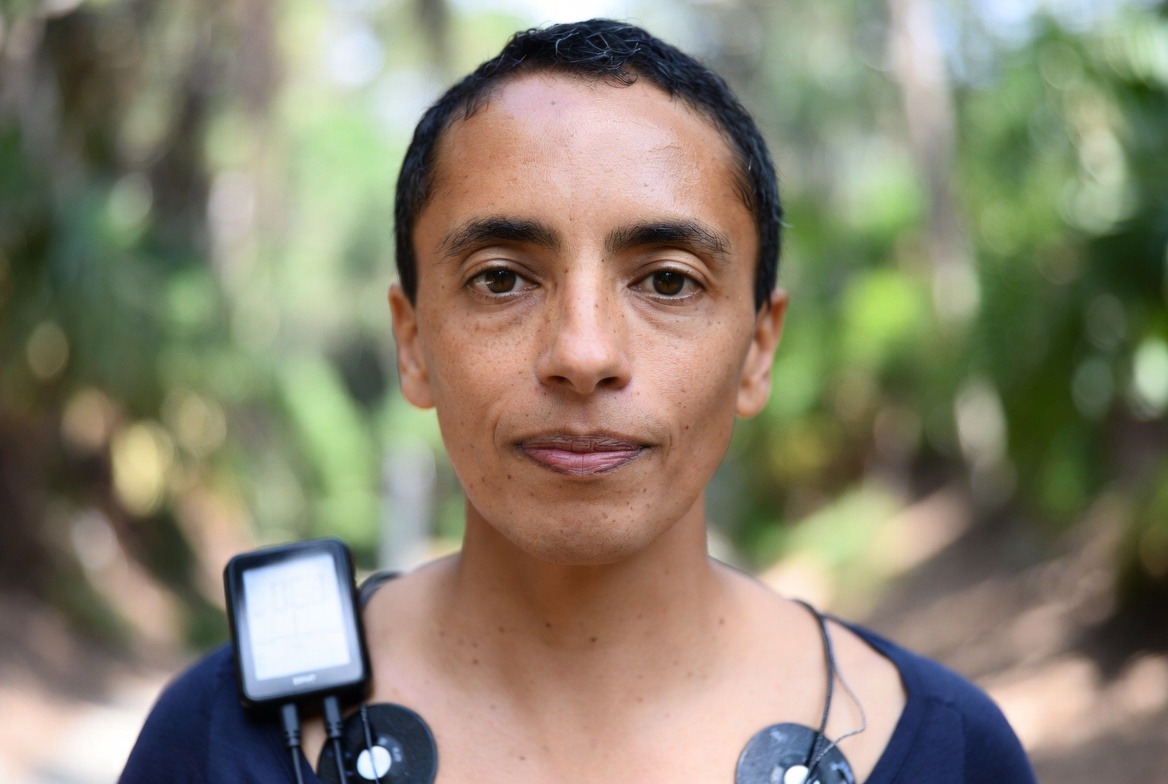
If HRV is the readout, then the Autonomic Nervous System (ANS) is the control panel. To truly grasp what your numbers mean, you need a working knowledge of this behind-the-scenes director of your involuntary bodily functions. The ANS regulates everything from your pupil dilation and saliva production to your digestion and, most importantly for our discussion, your heart rate.
As outlined above, the ANS has two primary co-pilots constantly vying for control. Their balance is not static; it shifts fluidly throughout your day based on your environment, thoughts, and actions.
The Sympathetic Surge: Necessary Stress
Imagine you’re about to give a presentation. Your SNS activates. Your heart rate climbs, blood is shunted to your muscles, your senses sharpen. This is a healthy, adaptive stress response. Your HRV will drop accordingly. The same happens during a vigorous workout—your body is all systems go, and variability decreases to provide a steady, powerful rhythm to fuel your muscles. This is a good, purposeful low HRV.
The Parasympathetic Pull: The Art of Recovery
Now, imagine you’ve finished that presentation or workout, and you’re now lying on the couch, reading a book. Your PNS engages. Your heart rate descends, digestion activates, and your body begins the repair processes. The vagus nerve, the superhighway of the parasympathetic system, sends signals to your heart, introducing subtle decelerations that create variability. Your HRV rises. This state is when growth, healing, and memory consolidation occur.
The Key is Dynamic Range
A healthy, resilient system isn’t one that is always relaxed. It’s one that can mount a robust sympathetic response when needed and then efficiently switch back into a deep parasympathetic state for recovery. Your HRV reflects this capacity. A person with good "autonomic flexibility" will show a wide swing in HRV: it can go low during appropriate stress and bounce back high during rest. Someone who is chronically fatigued, over-trained, or burnt out may have a blunted response—their HRV may be stuck in the middle, unable to go very high or very low, indicating the system is fatigued and struggling to adapt.
This is why context is everything. A low HRV reading after a hard training block makes sense. A low HRV reading when you’ve been sedentary and on vacation is a much stronger signal that something is off—perhaps you’re fighting off a virus, are emotionally stressed, or had one too many glasses of wine the night before. Understanding this puppet master is the first step to moving from passive data observation to active body interpretation.
The clinical gold standard for measuring HRV is an electrocardiogram (ECG or EKG). This medical-grade tool uses electrodes placed on the chest to detect the heart’s electrical activity with extreme precision, pinpointing the exact moment of each heartbeat (the R-wave). The sequence of times between these R-waves is called the RR interval, and analyzing the variance in these intervals is how HRV is calculated.
Obviously, we don’t have ECGs strapped to us daily. This is where wearable technology has revolutionized accessibility. Modern devices, like chest straps, wristwatches, and smart rings, use a different method: photoplethysmography (PPG).
PPG Explained: Light and Blood Flow
A PPG sensor, often a small green LED light on the underside of your device, shines into your skin. A photodetector then measures the amount of light reflected back. Blood is a strong light absorber, so as your blood volume pulses with each heartbeat, the amount of reflected light changes. This creates a waveform—a "blood volume pulse"—that corresponds to your heartbeat.
The Challenge and The Innovation
The key point is this: PPG measures blood flow pulses, not the heart’s electrical activity directly. It’s inherently "noisier" than an ECG. Movement, poor fit, cold fingers, or low peripheral circulation can distort the signal. This is why early wrist-based optical HRV measurements were often unreliable.
This is also where design and placement matter profoundly. The finger is a uniquely advantageous site for PPG. It has rich vascularity, and a ring form factor can achieve a consistent, snug fit that minimizes motion artifact, especially during sleep—the ideal time for consistent HRV measurement. Companies like Oxyzen have focused on this precise engineering challenge, understanding that accurate data starts with capturing a clean signal from a stable location on the body.
From Pulses to Numbers: Time and Frequency Domains
Once the device captures a clean sequence of beat-to-beat intervals (often called "NN intervals" in HRV parlance), it uses mathematical algorithms to calculate your HRV score. The most common methods include:
Your wearable takes these complex calculations and delivers a single, simple number or score for you to track. The magic—and the responsibility—lies in interpreting that number through the lens of your life.
This is perhaps the most important principle in the entire HRV conversation, and the one most often ignored in the pursuit of a "good" score: HRV is highly individual. Comparing your number to someone else’s is meaningless and often counterproductive.
A person with an HRV (using RMSSD) of 25 ms is not necessarily less healthy than someone with an HRV of 100 ms. Age, genetics, sex, fitness level, and even your unique physiology play enormous roles in determining your baseline.
Therefore, the absolute number is far less important than the trend and the deviations from your own personal baseline. Your wearable should help you establish what "normal" looks like for you. This is the cornerstone of practical use.
Your Baseline and Meaningful Deviations
Your baseline is your rolling average, typically calculated over several weeks. Once this is established, you stop asking "Is my HRV high?" and start asking the powerful questions:
This shift in perspective—from comparison to self-awareness—is transformative. It turns HRV from a judgement into a conversation. It’s your body’s way of giving you feedback on your lifestyle choices. To see how real people use this personalized feedback in their lives, you can browse some real user experiences and testimonials.
Your daily HRV reading is a composite signal, a summary of all the inputs your nervous system processed in the last 24 hours. By understanding the major levers that influence it, you can start to decode the message and, more importantly, take intelligent action. These factors don’t operate in isolation; they interact in a complex web.
1. Sleep: The Foundation of Recovery
Sleep is the prime time for parasympathetic (PNS) dominance and physical restoration. Both the quantity and quality of your sleep have a direct, powerful impact on your morning HRV.
2. Exercise: The Double-Edged Sword
Physical activity is a potent stressor that, when applied correctly, builds resilience. When mismanaged, it leads to overreaching and burnout.
3. Psychological & Emotional Stress
Your brain doesn’t distinguish well between physical and psychological threats. A looming deadline, a difficult conversation, or financial worries can trigger the same sympathetic response as a physical threat.
4. Nutrition and Hydration
What and when you eat sends direct signals to your ANS.
5. Circadian Rhythm & Timing
Your ANS follows a daily rhythm. HRV is typically highest during the night, in the early sleep cycles, and often shows a natural dip in the mid-afternoon (the "post-lunch dip"). Disrupting this rhythm with late nights, shift work, or erratic eating patterns can flatten your HRV profile.
Understanding these levers empowers you to be a detective. A low HRV score isn’t a dead end; it’s the starting point for a series of reflective questions about your sleep, stress, training, and habits from the previous day.

For most people using wearables, the primary HRV metric is a single reading taken during a specific period—often during deep sleep or the last few hours of sleep, or upon waking. This practice, popularized by devices like the Oura Ring, provides a standardized, comparable daily data point. Here’s a framework for making sense of that morning number.
Step 1: Check Your Baseline & Trend
Before looking at today’s absolute number, open your app and look at the trend line over the past 2-4 weeks. Is the general direction up, down, or flat? A rising trend suggests you are adapting well to your lifestyle and recovering effectively. A downward trend is a yellow flag to assess your overall load and recovery practices.
Step 2: Assess the Daily Deviation
Now, look at today’s score relative to your personal baseline (usually displayed as an average line or range in the app). Most apps will flag a significant deviation (e.g., "HRV is balanced" vs. "HRV is lower than usual").
Step 3: Correlate with Other Metrics
Never interpret HRV in a vacuum. It is part of an ensemble cast. Cross-reference with:
Step 4: Make an Informed Decision, Then Let It Go
Use the data to inform your day’s choices, but do not become a slave to it. If your HRV is low, treat it as a nudge to be kinder to yourself, not as a failure. Make one or two supportive choices, then put the app away and live your life. Obsessive checking creates its own form of stress, which will, ironically, lower your HRV. For common questions on getting the most from your metrics, our FAQ section offers detailed support.
As HRV enters the mainstream, it’s accompanied by oversimplifications and myths. Let’s clear the air on some of the most prevalent ones.
Myth 1: A High HRV is Always Good, a Low HRV is Always Bad.
Truth: As we’ve established, context is king. A temporarily low HRV after a heroic workout or during a productive, challenging work period is a normal, appropriate physiological response. A chronically high HRV that never drops could theoretically indicate a lack of adaptive stress (though this is rare). It’s the trend and response to stimuli that matter.
Myth 2: You Can "Train" Your HRV Directly in a Linear Fashion.
Truth: You don’t train HRV like you train a muscle for size. You build habits that create an environment where a healthy, resilient autonomic nervous system can flourish. Consistent aerobic exercise, quality sleep, stress management, and good nutrition will raise your baseline over time. Chasing the number directly through acute hacks (like doing breathwork right before measurement) misses the point of it being a marker of overall system state.
Myth 3: The HRV Score on My Wearable is Medical-Grade and Diagnostic.
Truth: Consumer wearables provide fantastic trending data and relative insights for wellness purposes. They are not medical devices. The algorithms and measurement conditions (PPG vs. ECG) are different. Do not use your wearable’s HRV to diagnose cardiac conditions or autonomic disorders. It is a tool for self-awareness and lifestyle optimization, not a clinical tool.
Myth 4: There is an "Ideal" HRV Number for My Age.
Truth: While population studies provide broad averages and percentiles for age groups, the range is enormous. An "average" HRV for a 40-year-old might span from 20ms to 80ms+ depending on the metric (RMSSD). Your ideal number is the one that is normal for you when you are feeling healthy, rested, and energized. Comparing yourself to population charts is less useful than establishing your own personal range.
Myth 5: A Single Night of Poor Sleep Will Destroy My HRV.
Truth: A resilient system can handle an acute stressor. One bad night might lower your HRV, but it should bounce back quickly if your underlying health and recovery capacity are strong. If one bad night crashes your HRV for three days, that in itself is valuable data about your current resilience threshold.
Dispelling these myths brings us back to the simple truth: HRV is a profoundly personal feedback mechanism, not a scoreboard. It asks for curiosity, not condemnation.
Now that we have a solid foundation, let’s explore how HRV insight can be applied to specific life goals. It moves from a abstract metric to a practical co-pilot.
For the Athlete & Fitness Enthusiast: From Periodization to Daily Readiness
This is where HRV-guided training has shown tremendous promise. The concept is called autoregulation.
This approach personalizes training load in real-time, potentially reducing the risk of overtraining and injury while maximizing performance gains by ensuring hard efforts are done when the body is truly ready to absorb them. Research, particularly in endurance sports, supports this method as effective.
For the Stress-Prone Professional: An Objective Barometer
Mental stress is subjective and easy to rationalize or ignore. HRV provides an objective, physiological correlate.
For the Longevity & Health Optimizer: A Marker of Biological Age
HRV is increasingly studied as a biomarker of aging and overall system integrity. A higher HRV (for your age) is associated with better cardiovascular health, improved emotional regulation, and even cognitive function. It reflects the functional capacity of your autonomic nervous system, which governs so many vital processes.
In each case, HRV serves as a translator, converting the silent language of your nervous system into actionable insight for a smarter, more responsive approach to living well. To learn more about integrating this data into a holistic wellness plan, our blog features ongoing research and practical guides.
With great data comes great responsibility. It is vital to approach HRV tracking with a clear-eyed view of its limitations and the potential psychological pitfalls.
Technical and Physiological Limitations:
Psychological and Ethical Pitfalls:
The Healthy Mindset: HRV as a Guide, Not a Judge
The goal is to cultivate a detached, curious relationship with your data. Use it as a gentle guide, a source of hypothesis ("I wonder if X is affecting my recovery?"), not as an absolute verdict on your worth or health. If tracking is making you more anxious, it’s time to take a break from the app or hide the score for a week. The ultimate biofeedback device is still your own felt sense of energy, mood, and vitality. The numbers should serve that awareness, not replace it. Our company mission has always been to empower, not overwhelm, users with their own data.
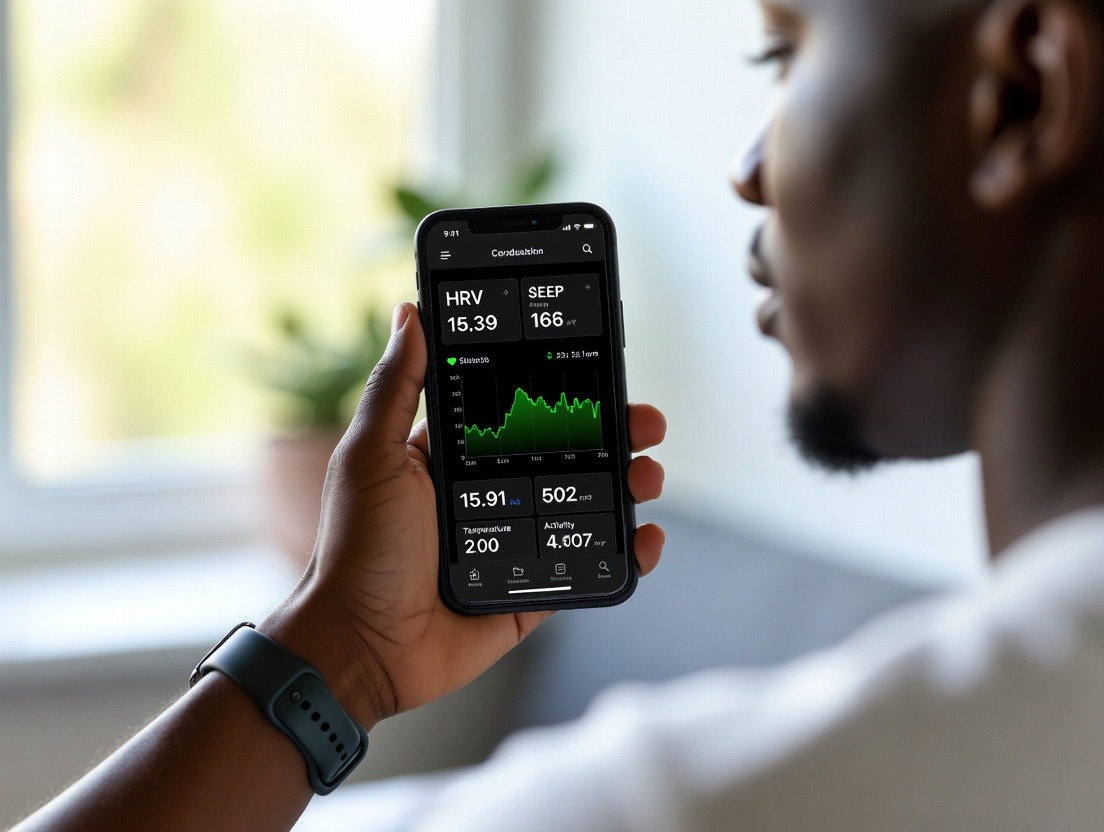
Beyond the single-number daily score lies a deeper layer of analysis primarily used in research but slowly trickling into advanced consumer platforms. Understanding these concepts gives a glimpse into the future of personalized physiology.
Frequency Domain Analysis: The Heart's Symphony Broken Down
While time-domain measures like RMSSD give a summary of variability, frequency-domain analysis uses a mathematical tool (Fast Fourier Transform) to break the heart rate rhythm into its constituent "frequencies," much like an audio equalizer separates bass, midrange, and treble.
The LF/HF Ratio was historically used as a "sympathovagal balance" index, but its interpretation is now seen as overly simplistic. The real power for consumers may come from seeing how these power bands shift with interventions like coherent breathing (which can increase HF power) or chronic stress (which can alter the overall spectral profile).
HRV as a Biomarker for Specific Conditions:
Research is exploring HRV’s role beyond general wellness:
The Future: Integrated Multimodal Biomarkers
The future of devices like advanced smart rings lies not in HRV alone, but in its integration with other continuous biomarkers: core body temperature, continuous glucose monitoring (via non-invasive methods), nocturnal blood oxygen (SpO2), and even galvanic skin response. By layering these signals, an AI-powered system could move from telling you that you are stressed or fighting illness to hypothesizing why and suggesting more precise, personalized interventions.
This is where the frontier lies—not in more data for data’s sake, but in smarter synthesis that gives you back your time and confidence, allowing you to make fewer, better decisions about your health. It’s a future where technology enhances human intuition, rather than replacing it. To see how one company is approaching this integrated vision, you can learn more about our holistic product development journey.
Having laid the foundational science, debunked the myths, and explored the major lifestyle levers, we now move from theory to practice. This portion of our deep dive is dedicated to the application of HRV wisdom. How do you build a sustainable practice around this metric? How do you navigate real-world scenarios, from illness to travel? And how do you integrate this feedback into a holistic life that isn't dominated by the numbers?
The goal is to equip you with actionable frameworks, real-life examples, and the nuanced understanding required to make HRV a seamless, empowering part of your wellness toolkit.
Knowledge is passive until it is systematized. To truly benefit from HRV tracking, you need a simple, repeatable protocol—a morning routine for data interpretation that leads to intelligent action. Here is a practical, 5-step framework you can adopt.
Step 1: The Mindful Check-In (Before You Look)
Before you even reach for your phone or open your wearable’s app, take 60 seconds to check in with yourself. Ask:
This practice grounds you in your subjective experience, ensuring the data serves your intuition, not the other way around.
Step 2: Observe the Data Triad
Now, open your app. Look at three data points together, in this order:
Step 3: Correlate and Hypothesize
This is the detective work. Cross-reference the objective data (Step 2) with your subjective check-in (Step 1).
Step 4: Make an Adaptive Decision
Based on your hypothesis, make one or two intentional choices for the day. The key is adaptation, not overhaul.
Step 5: Release and Reassess
Close the app. Put the data out of your mind. Your job is done. Go live your day according to your adaptive plan. The final step is to reassess tomorrow, not to obsessively re-check throughout the day. This nightly or morning rhythm creates a sustainable feedback loop that respects both the data and your lived experience.
This protocol transforms HRV from a cryptic score into a conversation starter with your body. For more personalized guidance on setting up such routines, our FAQ section offers detailed advice on habit stacking and data interpretation.
Life isn't a controlled lab experiment. Your HRV protocol must be flexible enough to handle real-world disruptions. Understanding how HRV behaves during these periods prevents misinterpretation and helps you navigate them more intelligently.
HRV and Sickness (The Ultimate Red Flag)
When your body is fighting an infection, the immune response creates significant systemic stress. This is one of the clearest and most valuable signals HRV provides.
HRV and Jet Lag / Travel
Travel disrupts your core circadian regulators: light exposure, meal timing, and sleep schedule. Your ANS is deeply tied to this circadian rhythm.
HRV and Major Life Stress (Bereavement, Job Loss, Relationship Strain)
Chronic psychological stress creates a sustained, low-grade sympathetic activation that can flatten your HRV for weeks or months.
In all these scenarios, HRV acts not as a taskmaster, but as a compassionate biofeedback tool, giving you objective permission to care for yourself in ways that society often discourages.
To solidify these concepts, let's walk through anonymized, composite case studies that illustrate the power of contextual interpretation.
Case Study 1: Maria – The Overtrained Marathoner
Case Study 2: David – The Stressed Executive
Case Study 3: Chloe – Navigating Perimenopause
These stories highlight that the value of HRV is unlocked not by the number itself, but by the patient, curious work of correlating it with the unique narrative of one's own life. You can read more about how individuals integrate this data into their lives in our user testimonials.
While most consumer use focuses on passive monitoring, there is a powerful active application: HRV Biofeedback. This is the practice of consciously influencing your HRV in real-time, often using breathwork, to build autonomic resilience.
The Science of Coherent Breathing
Research has identified a specific breathing rhythm—typically around 5 to 6 breaths per minute (an inhalation for 5 seconds, exhalation for 5 seconds)—that can synchronize your heart rate, blood pressure, and respiratory rhythms. This state, called cardiorespiratory coherence or psychophysiological coherence, is marked by a smooth, sine-wave-like pattern in your heart rate and a significant, acute increase in HRV (specifically in the High Frequency power band).
How to Practice Basic HRV Biofeedback:
The Benefits of Regular Practice:
Integration with Wearables:
Some advanced wearable systems are beginning to offer real-time HRV or coherence feedback during breathing sessions. They display your heart rhythm on screen, showing you how your breath directly smoothes the pattern—a potent visual reinforcement of mind-body connection. This turns abstract practice into an engaging, gamified skill-building exercise.
Incorporating HRV biofeedback moves you from being a passive observer of your nervous system to an active participant in its training. It embodies the most empowering aspect of this technology: the ability to not just measure your state, but to change it.
We touched on sleep and nutrition as major levers. Let's now examine the specific, nuanced relationships.
Sleep Architecture and Nocturnal HRV:
Your HRV isn't static during sleep; it follows a fascinating architecture that mirrors your sleep stages.
Nutritional Levers: Timing, Composition, and Fasting
The Alcohol Effect: A Clear Demarcation
No discussion of HRV and nutrition is complete without highlighting alcohol. Alcohol is a central nervous system depressant that disrupts ANS balance. It:
By paying attention to these intersections, you can move beyond generic advice to personalized nutrition and sleep hygiene strategies that directly support your autonomic resilience.

A one-size-fits-all approach fails with a metric as personal as HRV. Key populations have specific considerations.
Women and the Hormonal Cycle:
The female hormonal cycle, governed by estrogen and progesterone, exerts a significant influence on the ANS.
Aging and HRV: Embracing a New Baseline
The decline of HRV with age is one of the most robust findings in physiology. It reflects the natural decrease in autonomic flexibility.
Beginners: The First 90 Days of Tracking
If you are new to HRV tracking, the initial period is for observation, not intervention.
For all populations, the core principle remains: HRV is a guide to your unique physiology. Its greatest gift is the invitation to cultivate self-awareness and respond with self-care. To continue your learning journey, our blog features dedicated deep dives on population-specific wellness strategies.
The field of personal physiology monitoring is accelerating rapidly. HRV is a foundational pillar, but it is just the beginning. Here’s what the near future may hold for integrated autonomic health tracking.
Multimodal Sensor Fusion: The Holistic Picture
The next generation of devices won't measure HRV in isolation. They will fuse it with other continuous streams of data:
AI-Powered Personalized Insights: From Data to Wisdom
With these multimodal data streams, artificial intelligence will move beyond simple trend lines.
The Democratization of Advanced Biomarkers
What was once confined to sports science labs and hospitals is becoming accessible. The mission of forward-thinking companies in this space is not to create more anxiety-inducing data, but to synthesize complexity into simple, actionable wisdom. The goal is a device that doesn't just tell you what is happening, but helps you understand why and suggests the most effective, personalized action to take. This is the evolution from a "fitness tracker" to a true "health and resilience partner."
As this future unfolds, the ethical considerations around data privacy, algorithmic bias, and the doctor-patient relationship will become increasingly important. The ideal path forward marries groundbreaking technology with timeless principles of patient autonomy, holistic health, and the irreplaceable value of human clinical judgment. Our vision for this future is rooted in empowering individuals with knowledge while maintaining human-centric design.
We’ve journeyed through the science, the practical protocols, and the future possibilities. Now, we arrive at the ultimate destination: integration. How do you move from tracking and reacting to building a lifestyle that naturally cultivates a high-functioning, resilient autonomic nervous system? This final portion is about the long game—transforming insights into identity, and data into durable well-being.
The goal is no longer just to understand your HRV, but to use its feedback loop to build habits and an environment so supportive that checking the number becomes less about course-correction and more about confirmation of a life well-lived.
Sustained engagement with any biometric requires a healthy psychological relationship. Over months and years, the initial novelty fades, and the risk of data fatigue or obsessive checking grows. Cultivating the right long-term mindset is critical.
The Quarterly Review: Zooming Out
While daily and weekly checks are for tactical adjustments, the real wisdom emerges when you zoom out. Every 3-4 months, schedule a "Quarterly HRV Review."
This macro-view helps you see progress that daily fluctuations obscure and reinforces that HRV tracking is a tool for self-evolution, not daily judgement.
Embracing the Plateaus
In fitness, progress isn't linear; it's a series of steps and plateaus. The same is true for autonomic resilience. Your HRV baseline will not climb endlessly. It will reach new plateaus. A long, stable plateau at a higher level than before is a massive success. It means you have successfully integrated habits that support a new, higher "set point" for your nervous system. Celebrate the plateau. The chase for perpetual upward trends leads to unhealthy optimization.
Knowing When to Take a Break
If you find yourself feeling anxious about your score, or if checking the app elicits dread rather than curiosity, it’s time for a biometric holiday. Put the ring in a drawer for a week or a month. Reconnect with how you feel in your body without the quantification. Often, this break resets your relationship to the data, allowing you to return with a renewed sense of partnership rather than pressure. Your wellness is not in the device; it’s in you.
Beyond sleep, nutrition, and exercise, there are potent, research-backed practices that directly target vagal tone and autonomic balance. Incorporating these can be your proactive "training" for a more resilient nervous system.
Cold Exposure: The Vagal Shock and Adaptation
Deliberate cold exposure (cold showers, ice baths, cold plunges) creates a acute, massive stressor that triggers a powerful, reflexive parasympathetic rebound.
Resonance Frequency Breathing (A Deeper Dive)
We introduced coherent breathing. Resonance Frequency (RF) breathing takes it a step further by personalizing the breath rate to your unique physiology—the specific pace (usually between 4.5 and 6.5 breaths per minute) that generates the greatest amplitude in your heart rate oscillations (and thus HRV).
Social Connection and Vagus: The Polyvagal Lens
Dr. Stephen Porges's Polyvagal Theory provides a profound framework linking HRV to our social world. It posits that the evolution of the vagus nerve is tied to our need for social engagement and safety.
Your nervous system is constantly sampling your environment. You can design your surroundings to send signals of safety and calm, passively supporting higher HRV.
Light: Your Master Circadian Cue
Soundscape and Noise Pollution
Chronic low-level noise pollution (traffic, constant office hum, a loud refrigerator) is a subtle but persistent sympathetic stressor. Your brain's threat detection centers are subconsciously activated.
Digital Hygiene: The Unseen Stress Load
The constant ping of notifications, the endless scroll, the work email at 10 PM—these fragment attention and create a state of chronic, low-grade alertness. This is "sympathetic drip."
By thoughtfully designing your light, sound, and digital environments, you create a backdrop that passively supports the very states of being that HRV reflects. It’s the ultimate form of self-care: building a world that cares for you. For practical tips on crafting such an environment, our blog offers a wealth of actionable guides.
While a powerful wellness tool, HRV exists within a broader healthcare context. Knowing when to involve a professional is a sign of sophisticated self-care.
Integrating Data with Medical Care:
HRV Biofeedback Therapy:
For specific conditions, HRV biofeedback is a clinically administered therapy.
Red Flags: When to Pause Tracking and See a Doctor
If you observe any of the following, stop trying to interpret the data through a wellness lens and consult a physician:
Your wearable is a companion for health optimization and awareness. A doctor is your partner for health diagnosis and treatment. Use each for their intended, powerful purpose.
Ultimately, HRV should not exist in a silo. It is most powerful as the central metric in a personal dashboard of resilience—a small set of indicators that, together, give you a holistic picture of your capacity.
The Core Dashboard Metrics:
The Weekly Review Ritual:
Each Sunday, spend 10 minutes reviewing your dashboard.
This simple ritual moves you from passive data collection to active life management. It makes you the CEO of your own health, with a clear, concise report on your most important asset: your capacity to thrive.
We have traversed a considerable landscape—from the milliseconds between heartbeats to the design of our daily lives. The simple truth about HRV, as we now see, is beautifully complex. It is not a score to be gamified, but a language to be learned.
The simple truth is that HRV is a mirror. It reflects the sum of your inputs—physical, mental, emotional, environmental. It doesn't lie, but it requires interpretation through the lens of your unique story.
The simple truth is that HRV is a conversation. It is your body's way of giving you subtle, nuanced feedback long before it sends louder signals like injury, burnout, or illness. Learning to listen to this conversation is the ultimate proactive health strategy.
The simple truth is that HRV is a compass, not a destination. It doesn't tell you exactly where to go, but it reliably indicates when you are heading toward resilience or away from it. A high number isn't the goal; the goal is a life that naturally generates a healthy, adaptive rhythm.
The power of this knowledge is not in becoming a perfect, stress-free, optimized human. That is neither possible nor desirable. The power is in building a more responsive, forgiving, and intelligent relationship with yourself. It’s about knowing when to push and when to rest, when to engage and when to step back, with a confidence grounded in your own physiology.
By choosing to understand this metric, you’ve taken a step away from generic health advice and toward a personalized science of self-care. You’ve equipped yourself to navigate modern life’s demands with greater grace, to train smarter, sleep deeper, connect more fully, and recover more completely.
The journey with your HRV is lifelong. Some days the numbers will affirm your good choices; other days they will gently challenge you to make better ones. In all cases, they offer an opportunity for greater awareness. That is the greatest gift of this technology: not a number on a screen, but a deeper connection to the wise, rhythmic, resilient life pulsing within you.
Continue Your Journey
This exploration is just the beginning. The world of autonomic health is rich and ever-evolving. To stay updated on the latest research, practical tips, and stories from others on the same path, we invite you to explore our blog for ongoing resources and insights. If you’re curious about the technology that makes this personal discovery possible, you can learn more about our approach and mission here. And remember, if you ever have questions, our community and support resources are here to help you navigate your own path to resilience.
Your Trusted Sleep Advocate (Sleep Foundation — https://www.sleepfoundation.org/)
Discover a digital archive of scholarly articles (NIH — https://www.ncbi.nlm.nih.gov/
39 million citations for biomedical literature (PubMed — https://pubmed.ncbi.nlm.nih.gov/)
experts at Harvard Health Publishing covering a variety of health topics — https://www.health.harvard.edu/blog/)
Every life deserves world class care (Cleveland Clinic -
https://my.clevelandclinic.org/health)
Wearable technology and the future of predictive health monitoring. (MIT Technology Review — https://www.technologyreview.com/)
Dedicated to the well-being of all people and guided by science (World Health Organization — https://www.who.int/news-room/)
Psychological science and knowledge to benefit society and improve lives. (APA — https://www.apa.org/monitor/)
Cutting-edge insights on human longevity and peak performance
(Lifespan Research — https://www.lifespan.io/)
Global authority on exercise physiology, sports performance, and human recovery
(American College of Sports Medicine — https://www.acsm.org/)
Neuroscience-driven guidance for better focus, sleep, and mental clarity
(Stanford Human Performance Lab — https://humanperformance.stanford.edu/)
Evidence-based psychology and mind–body wellness resources
(Mayo Clinic — https://www.mayoclinic.org/healthy-lifestyle/)
Data-backed research on emotional wellbeing, stress biology, and resilience
(American Institute of Stress — https://www.stress.org/)


