


The Sleep Score Plateau: Why You're Stuck and How to Break Through
A plateau is common; break through by adjusting routines, managing stress, or consulting a professional if scores remain low.
A plateau is common; break through by adjusting routines, managing stress, or consulting a professional if scores remain low.
%402x.svg)
You’ve meticulously tracked your sleep for months. You’ve followed the rules: blue light blockers after sunset, a consistent bedtime, a cool, dark room. Your smart ring dutifully recorded your progress, and for a while, the rewards were sweet. Your Sleep Score—that satisfying, single-digit metric of nocturnal success—climbed steadily from the 70s into the mid-80s. You felt the difference: waking up clearer, feeling more resilient. You were winning at sleep.
Then, it happened. The line on your weekly graph flattened. An 85. An 86. An 85 again. For weeks, then months. No matter what you tweak, you can’t seem to breach that elusive 90+ zone—the promised land of true sleep mastery. Frustration sets in. Is this as good as it gets? Are you doomed to a lifetime of "good, but not great" recovery?
Welcome to the Sleep Score Plateau, a universal yet deeply personal rite of passage for anyone on the quantified self-journey. It’s not a sign of failure, but a signal. Your body and your technology are telling you that the basic playbook has been exhausted. The low-hanging fruit is gone. You’ve graduated from Sleep 101, and now the real, nuanced work begins.
This plateau is where the journey separates casual trackers from true sleep optimizers. It’s where generic advice fails and personalized, systems-based understanding takes over. This isn’t just about spending more time in bed; it’s about upgrading the quality of every single minute you spend there, and how your entire day builds towards it. By understanding the multi-layered reasons for your stall—from biometric blind spots to lifestyle integration gaps—you can engineer your breakthrough. Let’s diagnose why you’re stuck and build a precise, actionable blueprint to shatter that ceiling for good.
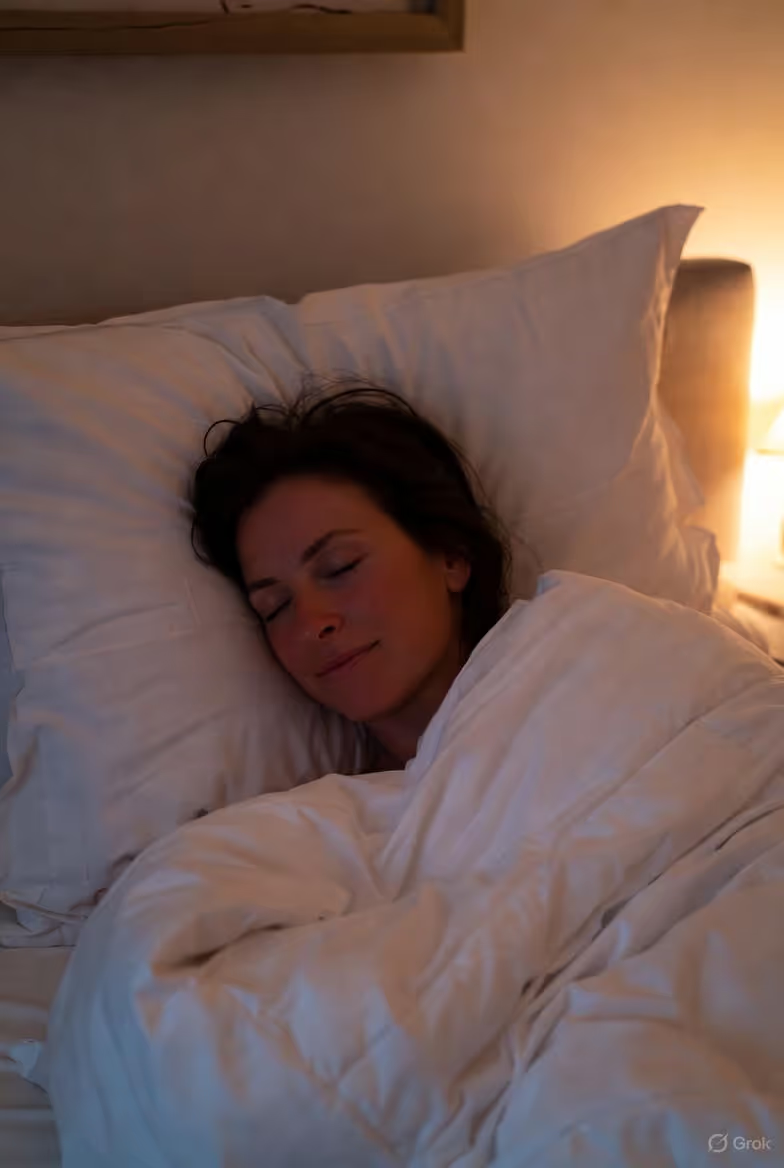
To break through a plateau, you must first understand the battlefield. Your Sleep Score isn't a simple timer measuring hours in bed. It's a sophisticated algorithm, a digital sleep architect synthesizing multiple physiological streams into a single, digestible metric. When you see "87," you're looking at the culmination of a hidden conversation between your body and the sensors on your finger.
Most advanced sleep tracking systems, like those found in cutting-edge smart rings, deconstruct your night into core pillars. Typically, these are Sleep Duration, Sleep Quality, and Restoration. Each pillar is itself an aggregate of raw biometric data.
Sleep Duration seems straightforward, but the algorithm distinguishes between total time in bed and total asleep time. More importantly, it evaluates this against your personal, age-required needs. Sleeping 9 hours when your baseline need is 7.5 might not boost your score, as excess can indicate poor sleep efficiency.
Sleep Quality is the complex heart of the score. This is where your ring acts as a nocturnal detective, parsing:
Restoration focuses on your body's repair work. This often incorporates:
The final score is a weighted composite of these elements. A plateau, therefore, isn't one problem; it's a systemic equilibrium. You might be acing Duration and have decent Sleep Quality, but a stagnant, low HRV is capping your Restoration pillar. Or, you might be getting 8 solid hours with great HRV, but your sleep is riddled with unconscious micro-awakenings that sabotage deep sleep, creating a Quality ceiling.
This is the first critical insight: You cannot optimize what you do not see in detail. Generic sleep tips address these pillars broadly. To break a plateau, you must drill into your specific data to identify which sub-metric is holding you back. Is it your Deep sleep duration that's maxed out? Is your HRV not climbing despite good habits? Your ring’s detailed breakdown is the map. The journey beyond the plateau begins with learning to read it with expert eyes. For a deeper dive into how this technology translates biometrics into insight, you can explore our detailed guide on smart ring technology.
You’ve mastered the fundamentals. Your caffeine curfew is 2 PM. Your bedroom is a cave. You have a winding-down routine. These are monumental, foundational wins that got you to the 80s. But here’s the uncomfortable truth: the very resources that taught you these basics are now the reason you’re stuck. The plateau is the brick wall where one-size-fits-all wellness advice meets the unique, complex system that is you.
Generic advice operates on averages and isolates single variables. "Reduce blue light." "Sleep at a consistent time." "Exercise." These are levers, and you've pulled them. But human physiology isn't a machine with independent knobs; it's a dynamic, interconnected network. The plateau appears when the interactions between these levers—your sleep system—become the limiting factor.
Consider the classic advice: "Get more Deep Sleep." You might try going to bed earlier. But if you have undiagnosed mild sleep apnea (which increases with age, weight, or even jaw structure), the extra time in bed just means more apneic events, more oxygen desaturations, and more stress on your system, lowering your restoration score. The solution wasn't duration; it was addressing an airway issue.
Or take the revered practice of evening meditation. For most, it lowers cortisol and aids relaxation. But for some, a silent, sitting meditation can become a locus of anxious rumination, increasing pre-sleep cognitive arousal. Your generic advice succeeded for your friend but subtly failed you. The solution might be a movement-based meditation like gentle yoga nidra instead.
The failure points of generic advice at the plateau stage are numerous:
To move beyond the plateau, you must transition from a checklist mentality to a systems mindset. You are no longer just "doing sleep things." You are conducting a personalized experiment on a single subject: yourself. Your smart ring is your lab instrument, providing the feedback. The question shifts from "What should I do?" to "What is my data telling my body needs, and how do these levers interact for me?" This requires curiosity, patience, and a willingness to challenge blanket recommendations. It's the path from passive consumer of wellness trends to active architect of your own recovery, a journey we are deeply passionate about supporting at Oxyzen, as detailed in our story and mission.

You sleep 8 hours from 1 AM to 9 AM and feel groggy. You sleep 7 hours from 10 PM to 5 AM and feel refreshed. The difference isn't just duration; it's timing. Your circadian rhythm—the roughly 24-hour master clock in your brain's suprachiasmatic nucleus—governs the predictable rise and fall of nearly every bodily process, from hormone secretion (cortisol, melatonin) to core body temperature to digestion. When your sleep schedule is misaligned with this internal rhythm, you experience Social Jetlag, and it’s a prime, silent assassin of high Sleep Scores.
Social Jetlag is the chronic mismatch between your biological clock (your chronotype-driven sleep preference) and your social clock (work, family, social obligations). The late-nighter ("Wolf") forcing themselves to sleep at 10 PM for a 6 AM job is perpetually jetlagged. So is the early bird ("Lark") who stays up late for social events. This misalignment doesn't just make you tired; it creates systemic disorder.
Your smart ring can detect this even if you feel "used to it." The signs in your data are telltale:
Breaking the plateau often requires a ruthless audit of your alignment. Are you fighting your own biology?
Strategies for Circadian Realignment:
Aligning your life with your rhythm, not against it, is a profound leverage point. It reduces the physiological stress of misalignment, allowing your sleep architecture to optimize naturally. The result in your data? Faster sleep onset, consolidated sleep cycles, and a higher Quality score. It’s about working with your biology, not against it—a core principle behind the technology and guidance we develop at Oxyzen, which you can learn more about here.
Sleep is not your body's only mode of restoration. Dr. Andrew Huberman popularized the term Non-Sleep Deep Rest (NSDR) to describe periods of wakeful, deep relaxation that activate the parasympathetic nervous system—the same "rest-and-digest" system critical for nighttime restoration. Protocols like yoga nidra, deliberate diaphragmatic breathing, and certain forms of meditation are forms of NSDR.
Here’s the plateau connection: If your waking life is a constant barrage of sympathetic ("fight-or-flight") arousal—emails, deadlines, traffic, news, social media scrolling—your nervous system is stuck in high-idle. Expecting it to slam into deep, restorative sleep the moment your head hits the pillow is like asking a Formula 1 car to park instantly. It needs to downshift. A chronic NSDR deficit means you're starting your sleep journey from a state of high stress, consuming your sleep "bandwidth" just to calm down, leaving less capacity for physical repair and memory consolidation (Deep and REM sleep).
Your smart ring’s daytime HRV data is a direct window into this. Chronically low daytime HRV indicates sustained sympathetic tone. If your HRV doesn't show a healthy rise during deliberate relaxation or sleep, your restoration engine is capped.
How an NSDR Deficit Caps Your Sleep Score:
Integrating NSDR to Break the Plateau:
By addressing your 24-hour stress-recovery balance, you relieve the burden on your sleep. You arrive at bedtime already in a state of lower arousal, ready for your sleep to be dedicated to deep restoration, not basic calming. This is how you unlock higher Quality and Restoration scores. For more resources on integrating NSDR and other nervous system tools into your day, our blog offers a wealth of practical guides.
You have no official diagnosis. You don't gasp for air (that you notice). You don't remember kicking. But beneath the surface of your seemingly peaceful sleep, minor physiological disruptions may be eroding your sleep architecture, grain by grain, night after night. These are subclinical or undiagnosed sleep disorders—the silent saboteurs of the sleep score plateau.
1. Sleep-Disordered Breathing (Upper Airway Resistance Syndrome / Mild Sleep Apnea): You may not have full-blown, obstructive sleep apnea (OSA), but you could have a partially restricted airway. This causes increased respiratory effort, micro-arousals (brief awakenings your brain registers to reopen the airway), and oxygen dips. The result? Fragmented sleep, suppressed Deep and REM sleep, and elevated nighttime heart rate. You might wake with a dry mouth, a mild headache, or unrefreshed. Your ring may show elevated average nighttime heart rate or frequent, subtle HR spikes.
2. Restless Legs Syndrome (RLS) / Periodic Limb Movement Disorder (PLMD): RLS is the uncomfortable urge to move legs at rest, often in the evening. PLMD is the actual involuntary kicking or jerking during sleep. Both cause micro-arousals and prevent sustained deep sleep. You might be unaware of PLMD, but a partner might notice, or your ring's accelerometer may detect unusual movement patterns.
3. Sleep Bruxism (Teeth Grinding/Clenching): Often stress-related, bruxism creates immense jaw tension and can trigger micro-arousals. It’s a sign your nervous system is not fully relaxing, even in sleep. It can lead to morning jaw pain, headaches, and tooth damage.
Why They Cause a Plateau: You’ve optimized everything around your sleep, but these intrinsic mechanics of your sleep are flawed. No amount of lavender or a perfect bedtime will stop a micro-arousal from an airway collapse or a leg jerk. They impose a hard ceiling on sleep continuity and depth.
The Investigation & Action Plan:
Facing these possibilities isn't about finding something "wrong" with you; it's about moving from optimization of the environment to optimization of the internal sleep machinery itself. It's advanced work, and it’s often the key that unlocks the next level. For support on interpreting your data in the context of these factors, our FAQ and support resources can be a helpful starting point.

You eat "healthy." You drink water. But the devil—and the divine—of plateau-breaking is in the nutritional details. At the elite level of sleep optimization, macro-nutrients give way to micro-timing, specific nutrients, and hydration strategy. What you consume, and when, sends direct chemical signals that either reinforce or disrupt sleep biology.
The Glycemic Roller Coaster: A large, high-glycemic meal within 3 hours of bed can cause a blood sugar spike, followed by a reactive insulin surge and a subsequent crash. This crash can trigger a cortisol and adrenaline release in the middle of the night (often between 2-4 AM), causing a wake-up with a racing mind. Your ring will show an elevated heart rate during that period and a fragmented sleep graph.
The Magnesium & Electrolyte Gap: Magnesium is a cofactor for over 300 enzymatic reactions, including those regulating GABA (a calming neurotransmitter) and melatonin. A suboptimal intake, common even in healthy diets, can limit your nervous system's ability to relax deeply. Similarly, an imbalance of sodium, potassium, and calcium can affect nerve transmission and muscle relaxation (think: night-time leg cramps or RLS-like symptoms).
The Covert Caffeine & Stimulant Effect: You know not to drink coffee at 8 PM. But are you aware of the half-life? Caffeine has a half-life of 5-6 hours. A 3 PM coffee means 25% of that caffeine is still in your system at 9 PM. For slow metabolizers (a genetic trait), it's worse. Dark chocolate, some teas, and even some medications are hidden sources.
The Hydration Paradox: Dehydration thickens blood, raises heart rate, and can cause nocturnal leg cramps. But drinking a large volume of water right before bed guarantees disruptive bathroom trips. The solution is strategic daytime hydration.
Advanced Nutritional Tweaks for the Plateau:
Nutrition for sleep is not about one magic food. It's about creating stable internal chemistry that allows your sleep physiology to operate without interference from blood sugar swings, nutrient deficiencies, or covert stimulants. It’s fine-tuning the fuel for the most important recovery process of your day.
Here is the ultimate irony of the quantified-self journey: the very tool you use to improve your sleep can become the obstacle to achieving it. This is Orthosomnia—a term coined by researchers to describe the preoccupation with perfecting sleep data, leading to increased anxiety and, counterintuitively, worse sleep. If you find yourself anxiously checking your ring’s app first thing in the morning, feeling a spike of frustration at an 84, or lying in bed thinking, "My HRV better be high tonight," you've encountered the Data Paradox.
This anxiety creates a vicious, self-fulfilling cycle:
Your smart ring, meant to be a guide, becomes a judge. This psychological burden places a hard, invisible ceiling on your score that no lifestyle hack can overcome.
How to Break the Data Paradox and Use Your Ring Wisely:
The goal is to make the technology serve your well-being, not define it. By mastering your relationship with the data, you remove a massive psychological barrier, clearing the way for authentic, unforced physiological improvement. Understanding this balance is part of the holistic philosophy we embrace; you can read more about our user-centric approach here.
You have blackout curtains and a white noise machine. Congratulations—you’ve conquered Sleep Environment 101. But at the plateau, the subtlety of your surroundings matters immensely. We move from gross factors to fine-tuning the sensory and physical inputs that your brain still processes, even in sleep.
1. Temperature Precision: The general advice is "cool." But the optimal range is 60-67°F (15.5-19.5°C). More importantly, it's about the dynamic. Your body needs to dump heat to initiate sleep. A room that's static and cool is good; a room that facilitates heat loss is better.
2. Sound Engineering, Not Just Masking: White noise is effective at masking irregular spikes (a door slam). But pink noise (deeper, more like steady rain) or brown noise (even deeper, like a waterfall) may be more conducive to sustaining deep sleep. Some studies suggest pink noise can increase slow-wave (Deep) sleep activity.
3. The Earthing (Grounding) Hypothesis: Emerging, though debated, research suggests direct skin contact with the Earth's surface electrons may stabilize circadian rhythms, reduce inflammation, and improve sleep. The theory is that modern life insulates us from this natural electrical field.
4. Geopathic Stress & EMFs—A Contested Frontier: While mainstream science is skeptical, some sleep optimizers report sensitivity to low-frequency electromagnetic fields (EMFs) from wiring in walls, power strips, or wireless routers, or to "geopathic stress" from underground water lines.
5. Air Quality: CO2 levels can rise significantly in a sealed bedroom overnight from your own respiration. Elevated CO2 (>1000 ppm) has been linked to reduced sleep depth, more awakenings, and morning grogginess.
Environment 2.0 is about moving from a static "set and forget" room to a dynamic, responsive sleep pod engineered for your specific physiology. Each tweak is a small lever, but in combination, they can create the perfect, silent, thermally ideal, sensory-neutral cradle for breakthrough sleep. For real-world examples of how users have fine-tuned their environments, our testimonials page offers inspiring stories.
Sleep is not an isolated event. It is the mirror that reflects the totality of your day. The plateau often exists because we compartmentalize "sleep optimization" into the hours surrounding bed. True mastery requires integrating sleep-supportive behaviors into the very fabric of your daylight hours. Your 9 AM decisions are crafting your 2 AM sleep architecture.
The Pillars of Daytime Integration:
1. Exercise – Timing, Type, and Dose: Exercise is a powerful sleep promoter, but its effects are biphasic and time-sensitive.
2. Light – The Master Zeitgeber, Revisited: We discussed light for circadian alignment, but its daytime role is non-negotiable.
3. Stress Management – Not an Event, but a Practice: You cannot "de-stress" for 10 minutes at night if you've been marinating in cortisol all day. Nervous system regulation must be continuous.
4. The Afternoon Slump – Navigate, Don't Surrender: The post-lunch dip in energy and alertness is a normal circadian phenomenon. How you handle it impacts your night.
By viewing every daytime choice—from your morning walk to your lunch composition to your handling of a stressful email—as a input into your nightly sleep algorithm, you take systemic control. You are no longer trying to fix sleep at bedtime; you are earning it all day long. This integrated lifestyle is the final, most powerful lever for transcending the plateau and achieving sustainably elite sleep. To see how others have successfully integrated these principles, you can discover user experiences and journeys.
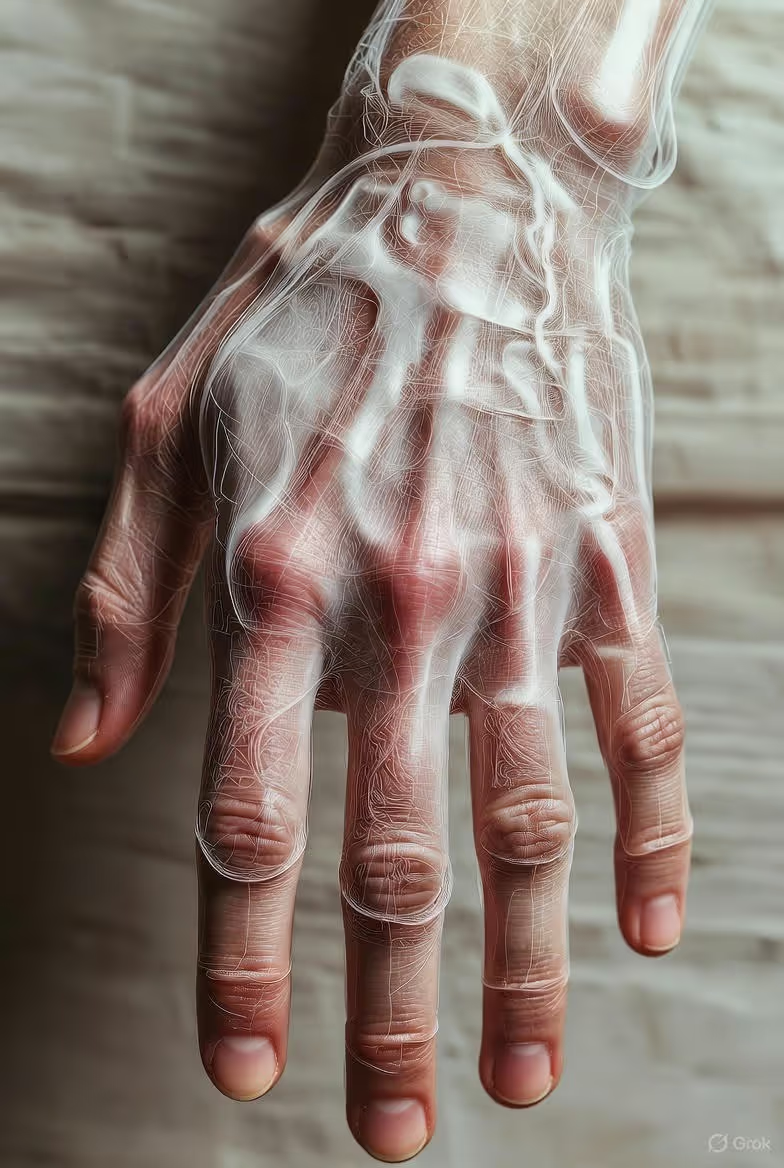
You’ve identified the external levers—light, food, stress. Now, we turn the lens inward, to the real-time physiological language your body speaks throughout the 24-hour cycle. This is the domain of your Recovery Signature—the unique, dynamic pattern of your heart rate variability (HRV), resting heart rate (RHR), and respiratory rate. Understanding this signature isn't just data analysis; it's learning to listen to the whispers of your autonomic nervous system before they become shouts that crash your sleep score.
Your Recovery Signature is your body’s truth-teller. It bypasses your subjective feelings ("I feel fine") and reveals your objective physiological state ("Your nervous system is under significant stress"). A plateau often persists because we are interpreting our readiness through mood or energy alone, while our biometrics are screaming a different story.
The Core Triad and What They Reveal:
How to Read Your Signature and Break the Plateau:
By shifting your focus from chasing a sleep score to optimizing the inputs that create your Recovery Signature, you address the root cause. You become a master mechanic, tuning the engine (your nervous system) so it naturally produces the desired output (elite sleep). For a deeper exploration of how to track and interpret these critical metrics, our blog features several detailed primers.
Armed with awareness of hidden culprits and your biometric blueprint, you now graduate from follower of advice to designer of your own research. The plateau is your laboratory. The scientific method—hypothesis, experiment, measure, conclude—is your framework for breakthrough. This is N=1 experimentation: the most powerful form of health optimization because the only subject that matters is you.
The 4-Step Protocol to Systematically Break Your Plateau:
Step 1: Isolate & Hypothesize
Review your last 30 days of sleep and biometric data. Identify your weakest link. Is it consistently low Restoration? Is it frequent awakenings? Pick one metric to improve. Form a specific, testable hypothesis.
Step 2: Design a Clean Experiment
Change only one major variable at a time. If you start magnesium, change your pillow, and begin meditation all in the same week, you will have no idea what worked. Maintain all other habits (diet, exercise, bedtime) as consistently as possible. Decide on a trial duration—a minimum of 7-14 nights is required to see a signal through the noise of natural variation.
Step 3: Measure Rigorously & Contextually
Use your smart ring as your primary data collector. But also keep a simple journal. Note subjective feelings: "Woke up feeling more refreshed," "Fewer memories of waking up," "Jaw feels relaxed." Context is key: if you get sick during the experiment or have a massively stressful work week, note it. This data may explain outliers and prevent you from discarding a potentially useful intervention.
Step 4: Analyze & Iterate
At the end of the trial, analyze the trends. Did your target metric improve? Did other metrics change unexpectedly (e.g., HRV went up but sleep onset got worse)? Compare the experimental period to the 2-week baseline period before it.
Powerful Experiment Ideas for the Plateau:
This protocol transforms frustration into curiosity. Every "failed" experiment is a discovery. Every successful one is a permanent upgrade. You are iteratively building a sleep system perfectly customized to your unique biology, lifestyle, and goals. It’s the essence of personalized wellness, a journey we are designed to support—learn more about our approach to personalized data here.
You cannot supplement your way out of a bad lifestyle, nor can you out-exercise chronic stress. The final leap from the high-80s into the consistent low-90s is rarely about one monumental change. It's about habit stacking—the strategic layering of synergistic, micro-actions that create a compounded effect greater than the sum of their parts. This is where optimization becomes artistry.
Think of your sleep drive as a bucket you need to fill each night. The plateau means your bucket has a slow leak or isn't being filled efficiently. Single interventions plug one small hole or add one cup of water. Synergistic stacking plugs multiple holes and uses a hose.
Build Your Evening Synergy Stack:
This is a 90-minute "performance routine" for sleep. Each element prepares a different physiological system.
Build Your Daytime Synergy Stack:
Your evening stack can only work if the day has set the stage.
The magic is in the transitional flow. Each habit cues the next and creates the ideal physiological state for the one that follows. The warm bath makes the NSDR more effective. The NSDR makes journaling more mindful. The consistent timing makes your circadian clock more robust. This stacked system reduces the cognitive load of decision-making ("What should I do now?") and automates excellence. It tells a cohesive, uninterrupted story to your biology: "It is time to rest deeply now." Witnessing how small, consistent habits compound is a core part of the user experiences shared in our community.
Breaking the plateau is a victory. But the ultimate goal is not a single night at 92; it's sustained, resilient sleep health across decades, through life's inevitable changes—stress, travel, aging, parenthood, career shifts. The final piece of mastery is understanding that your sleep needs and responses are not static. They require periodization—the intentional variation of your sleep and recovery practices—just as an athlete periodizes training.
The Concept of Sleep Periodization:
You cannot operate at "breakthrough" intensity 365 days a year. Life imposes different loads: a high-stress project at work, a training block for a marathon, the seasonal flu, a vacation. Your sleep strategy must adapt.
Navigating Life’s Specific Sleep Disruptors:
The long-game mindset liberates you from daily score anxiety. Some days, your job is to hold the line during a storm. Other days, your job is to press for a new peak. By accepting the dynamic nature of sleep and building a flexible, responsive system around it, you achieve not just a high score, but true sleep resilience—the ability to bounce back quickly from any disruption. This philosophy of adaptable, lifelong wellness is woven into our brand's vision and values.
After thousands of words of tactics, protocols, and hacks, we arrive at the most profound lever of all: your mindset. The plateau often carries an emotional charge—frustration, inadequacy, obsession. The final breakthrough may require not another intervention, but a shift in perspective: from sleep optimizer to integrated human.
The Dangers of Hyper-Optimization:
When sleep becomes a performance metric to be maximized, it can distort your relationship with life itself. You may decline social evenings, become rigid around routines, and experience anxiety when life interferes. This rigidity creates its own stress, negating the benefits of the optimization. It’s the orthosomnia trap on a philosophical level.
Cultivating an Integrated Mindset:
This mindset shift is the safety valve that prevents wellness from becoming a pathology. It allows you to use all the advanced tools and knowledge not as a cage, but as a scaffold to build a more vibrant life. You are not a sleep score. You are a complex human who sleeps, and you are learning to do it better to enjoy everything else more. For many, finding this balance is the most rewarding part of the journey, as echoed in the stories from our community of users.
You began this journey stuck on a plateau, frustrated by a static number. You now possess a comprehensive map of the territory beyond it. We have moved from the anatomy of a score, through the failures of generic advice, into the hidden culprits of misalignment, NSDR deficits, subclinical disruptors, and nutritional blind spots. We've navigated the data paradox, optimized Environment 2.0, and integrated daytime choices. We then dove into the biometric blueprint, the N=1 experimentation protocol, the power of synergy stacking, the long game of periodization, and the essential mindset shift.
This is not a list of tips. It is a systems-thinking framework for sleep mastery. Your path forward is clear:
The plateau was never a wall. It was a doorway. A doorway from passive tracking to active creation, from following rules to understanding principles, from seeking a quick fix to cultivating a resilient system. Your smart ring is the key that unlocked that door. The data it provides is the light on the path ahead.
Now, the work—the exciting, curious, personal work—begins. Your breakthrough is not in this guide. It is in the quiet application of this framework to your unique life. It is in the patience to experiment, the wisdom to interpret, and the courage to both push for more and accept what is. You have the knowledge. You have the tools. Go and build the sleep—and the life—you are capable of.
For ongoing support, deeper dives into specific topics, and a community of like-minded individuals on the same journey, remember that resources like our comprehensive blog and support center are here to assist as you continue to write your own story of wellness and recovery.
The plateau you experience today is, in part, a limitation of current technology and scientific understanding. But we stand on the cusp of a revolution in sleep optimization, where passive tracking evolves into active guidance, and generic data transforms into hyper-personalized, predictive insights. Breaking through your current plateau may involve the tools of today, but understanding the horizon illuminates the path to lifelong mastery.
From Descriptive to Predictive and Prescriptive Analytics:
Today’s smart rings are brilliantly descriptive. They tell you what happened last night. The next generation will be predictive and prescriptive. Imagine your device analyzing your daytime stress load, exercise, and evening biometrics, then sending a proactive alert: *“Your HRV is declining rapidly and your body temperature is elevated. Based on your pattern, you have an 85% chance of fragmented sleep tonight. Recommended action: Take 400mg magnesium now and begin your wind-down routine 45 minutes early.”*
This shift leverages machine learning on your personal historical data, combined with population research, to move from hindsight to foresight. It turns your ring from a historian into a coach.
Multi-Modal Sensing: The Whole-Body Picture:
Future devices will move beyond the finger, integrating data streams for a holistic view.
Your “Sleep Score” of the future may be a multi-dimensional dashboard, incorporating brain, heart, breath, temperature, and metabolism into a truly complete picture of your night.
Closed-Loop Environment Integration:
Your sleep tracker won’t just observe your environment; it will control it. Through IoT (Internet of Things) connectivity, it will create a dynamic sleep cocoon:
The environment will cease to be a static setting and become an active, responsive partner in your sleep architecture.
The Role of AI and Genetic Insights:
Artificial intelligence will synthesize your multi-modal data, lifestyle logs, and even genetic predispositions. By understanding your genetic profile (e.g., are you a fast or slow caffeine metabolizer? Do you have a genetic predisposition for lower melatonin production?), AI can tailor recommendations with unprecedented precision. Your protocol won’t be based on what works for “people,” but on what works for people with your specific biological blueprint.
Navigating the Future Responsibly:
With great data comes great responsibility. This future raises critical questions about data privacy, algorithmic bias, and the potential for increased health anxiety. The goal must remain empowerment, not dependence; insight, not obsession. The most advanced technology should ultimately make the complex simple, freeing your mind from the minutiae so you can simply live well and sleep soundly.
Your current journey through the plateau is building the foundational habits and self-knowledge that will allow you to harness these future technologies wisely. You are learning the language of your body so that when the tools become more fluent, the conversation will be transformative. To stay abreast of these evolving technologies and how they integrate into holistic wellness, following informed resources is key.
We’ve treated sleep as a physiological and technological challenge. Yet, for many, the deepest plateau is rooted not in biology, but in belief. Our culture’s relationship with sleep is profoundly broken. We wear sleep deprivation as a badge of honor, glorifying “hustle culture” that sacrifices rest on the altar of productivity. To truly break through, you may need to heal your emotional and social connection to sleep itself.
Unpacking Limiting Beliefs About Sleep:
These beliefs create subconscious resistance, a subtle guilt or impatience around dedicating time to rest. This psychological friction can manifest as difficulty surrendering to sleep, even when physiologically ready.
The Social Contagion of Sleep Habits:
Sleep is socially contagious. In a household where one partner stays up late scrolling, the other is more likely to do the same. In a workplace where late emails are the norm, the pressure to be “always on” bleeds into the night. Breaking your plateau might require social engineering:
Cultivating Sleep as a Sacred Ritual:
Move sleep hygiene from a clinical checklist to a cherished ritual. This taps into the power of neuro-association.
When you repair your relationship with sleep, viewing it not as an obstacle to your life but as the very source of it, you remove the final, invisible barrier. The mind and body align in the shared purpose of rest. This holistic perspective is central to a sustainable wellness journey, a topic we explore in depth within our company’s foundational philosophy.
For the individual who has mastered the foundational and intermediate layers, the plateau may demand exploring advanced, evidence-adjacent modalities that directly influence the nervous system and cellular repair processes. These are not for beginners, but for the seasoned optimizer looking for the final 5%.
1. Targeted Photobiomodulation (PBM):
Also known as low-level light therapy, PBM involves exposing the body to specific wavelengths of red or near-infrared light. Research suggests it can:
2. Pulsed Electromagnetic Field (PEMF) Therapy:
PEMF devices deliver low-frequency electromagnetic fields to the body. Originally used for bone healing, it’s now explored for systemic recovery.
3. Hyperbolic Oxygen Therapy (HBOT):
Breathing pure oxygen in a pressurized chamber dramatically increases oxygen dissolution in the blood plasma. While used medically for wounds and carbon monoxide poisoning, it’s accessed by recovery enthusiasts for:
4. Advanced Cold & Heat Exposure (Contrast Therapy):
Beyond a cold shower, systematic contrast therapy (e.g., 3 minutes hot sauna, 1 minute cold plunge, repeated 3-4 times) is a powerful hormetic stressor.
A Critical Caveat on Advanced Modalities:
These are tools, not magic. They are most effective when layered upon an already-optimized foundation of nutrition, exercise, light, and stress management. They represent the “fine-tuning” stage of optimization. Without the foundation, their effects will be muted or unsustainable. Always prioritize the free, fundamental levers (light, timing, breathing) before investing in advanced technology. For anyone considering these steps, thorough research and professional consultation are paramount—our FAQ can be a starting point for informed questions.
In a market saturated with devices that simply report data, a deeper philosophy is required to guide users from plateau to breakthrough. At Oxyzen, we believe technology should not just quantify your life, but qualify it. It should foster understanding, not anxiety; empowerment, not dependence. Our approach is built on three core principles that directly address the journey you’ve been on in this guide.
1. The Principle of Compassionate Measurement:
Data without context is noise. A low HRV score can mean you’re unfit, or it can mean your body is heroically fighting a virus, or that you’re emotionally processing a significant life event. Our systems are designed to prompt inquiry, not judgment. Notifications might ask: “Noticed a change in your recovery. Was your day unusually stressful, or are you feeling under the weather?” This frames data as a conversation starter with yourself, encouraging mindful reflection rather than reactive stress.
2. The Principle of Integrated Insight:
A sleep score is meaningless in isolation. It must be woven into the tapestry of your day. The Oxyzen ecosystem doesn’t silo sleep, activity, and stress. It shows you the direct lines: how your afternoon walk influenced your sleep onset, how yesterday’s poor sleep made today’s workout feel harder, how a moment of mindfulness lifted your HRV. This creates a cohesive narrative of your 24-hour rhythm, which is essential for systems-thinking and breaking plateaus. You can see how this philosophy translates into real user experiences.
3. The Principle of Gradual Mastery:
We recognize that the journey is layered. You cannot and should not tackle everything at once. Our guidance is tiered:
The technology meets you where you are, providing relevant insights for your current stage, preventing overwhelm. It celebrates the victory of a consistent bedtime as heartily as a new personal best HRV.
This human-centric philosophy is what transforms a tracking device into a true recovery partner. It’s designed for the long game—for the person who wants to understand themselves better, not just for the night, but for a lifetime of vitality. This commitment to meaningful, personalized wellness is at the core of everything we do.
Knowledge is potential energy. This action plan is the kinetic energy that turns insight into results. Here is a structured, phased 90-day protocol to systematically diagnose, experiment, and break through your sleep score plateau. Treat this as your personalized blueprint.
Phase 1: Foundation & Audit (Days 1-30) – The Detective Phase
Phase 2: Targeted Intervention (Days 31-60) – The Scientist Phase
Phase 3: Integration & Synergy (Days 61-90) – The Architect Phase
Post-90 Days: The Mastery Loop
You are now no longer on a protocol, but in a Mastery Loop:
This cyclical process ensures continuous, lifelong improvement, turning plateaus into stepping stones. For ongoing ideas and community support as you run your experiments, remember that resources like our blog are continually updated with the latest insights and user stories.
We began with a number—a stubborn, static Sleep Score that refused to budge. We will end not with a promise of a guaranteed 95, but with a redefinition of what success truly means in the realm of sleep and recovery.
Success is Understanding, Not Just a Number.
The ultimate breakthrough is the knowledge you’ve gained. You now understand the symphony of your circadian rhythm, the language of your HRV, the impact of your breathing, and the subtle interactions between food, light, and movement. This understanding grants you agency. A bad night is no longer a mysterious failure; it is a solvable equation. This is power far greater than any single metric.
Success is Resilience, Not Perfection.
A successful sleep practice is not one that never gets disrupted. It is one that allows you to be disrupted—by life, by travel, by stress—and bounce back quickly. Your optimized system is your safety net. It ensures that a bad night is an outlier, not a norm; that a period of high stress doesn’t unravel into chronic insomnia. This resilience is the true hallmark of health.
Success is the Energy for a Life Well-Lived.
The final score is not on your app. It’s in your life. It’s the sustained energy to play with your kids after work. The mental clarity to solve complex problems. The emotional stability to handle stress with grace. The joyful engagement in your hobbies and relationships. This is the dividend paid by your investment in sleep. When you focus on this lived experience, the daily number on your screen assumes its proper role: a helpful guide, not a final judge.
Your journey through the sleep score plateau is a microcosm of the modern wellness journey itself. It moves from external seeking to internal knowing, from generic solutions to personalized systems, from obsession with metrics to appreciation of the qualitative human experience.
You have the map. You have the tools. The path beyond the plateau is now clear. It is a path of curiosity, patience, and self-compassion. Go forward not just to sleep better, but to live more fully, armed with the profound understanding that in the quiet of the night, you are actively building the vitality of your days.
We are honored to be a part of your journey. For continued exploration, support, and community, all our resources—from practical guides to our founding vision—are here to support your lifelong path to recovery and wellness.
Your Trusted Sleep Advocate: Sleep Foundation — https://www.sleepfoundation.org
Discover a digital archive of scholarly articles: NIH — https://www.ncbi.nlm.nih.gov/
39 million citations for biomedical literature :PubMed — https://pubmed.ncbi.nlm.nih.gov/
Experts at Harvard Health Publishing covering a variety of health topics — https://www.health.harvard.edu/blog/
Every life deserves world class care :Cleveland Clinic - https://my.clevelandclinic.org/health
Wearable technology and the future of predictive health monitoring :MIT Technology Review — https://www.technologyreview.com/
Dedicated to the well-being of all people and guided by science :World Health Organization — https://www.who.int/news-room/
Psychological science and knowledge to benefit society and improve lives. :APA — https://www.apa.org/monitor/
Cutting-edge insights on human longevity and peak performance:
Lifespan Research — https://www.lifespan.io/
Global authority on exercise physiology, sports performance, and human recovery:
American College of Sports Medicine — https://www.acsm.org/
Neuroscience-driven guidance for better focus, sleep, and mental clarity:
Stanford Human Performance Lab — https://humanperformance.stanford.edu/
Evidence-based psychology and mind–body wellness resources:
Mayo Clinic — https://www.mayoclinic.org/healthy-lifestyle/
Data-backed research on emotional wellbeing, stress biology, and resilience:
American Institute of Stress — https://www.stress.org/


