


The Worry Window Technique: Scheduled Anxiety Management
A technique of scheduling a specific time to address worries.
A technique of scheduling a specific time to address worries.
%402x.svg)
In the quiet hum of 3 AM, a familiar visitor arrives. It doesn’t knock. It slips through the cracks of your fading dreams and settles on your chest. A deadline you missed in your mental checklist. A vague, offhand comment from your boss that now feels loaded with meaning. The upcoming doctor’s appointment, the political news alert, the creeping “what if” about your kids. Your mind, free from the day’s distractions, becomes a high-definition theater of anxiety. Your heart rate climbs, your thoughts race, and sleep dissolves into a frustrating battle between exhaustion and alarm. You’re not having a panic attack; you’re just… worrying. And it feels utterly pointless, yet completely inescapable.
This phenomenon is so universal it has names: “the midnight anxiety spiral,” “bedtime rumination.” We’ve been taught countless ways to stop worrying—to meditate it away, breathe through it, journal it out, or challenge it with cognitive behavioral therapy. These are powerful, evidence-based tools. But what if the problem isn’t the worry itself, but its timing? What if the relentless, intrusive nature of anxiety stems from our attempt to suppress it all day, only to have it ambush us when our defenses are down?
Enter a deceptively simple, yet profoundly effective concept: The Worry Window Technique. This isn’t about eliminating worry. That’s an impossible and counterproductive goal. Worry, at its core, is a cognitive function—an attempt to problem-solve for potential future threats. The problem arises when this function becomes a background process that hijacks your focus, drains your energy, and steals your peace at all hours.
The Worry Window Technique is a structured method of Scheduled Anxiety Management. It’s the practice of consciously relegating your worries to a designated, limited time slot each day—a dedicated “window.” Outside of that window, when a worry arises, you gently but firmly defer it: “Not now. I have an appointment with you at 5:30 PM.”
This article is your comprehensive guide to mastering this technique. We will explore not just the “how,” but the deep “why” behind its efficacy, rooted in neuroscience and behavioral psychology. We’ll dismantle the cultural myth of “just don’t worry,” and replace it with a sustainable system of cognitive control. Furthermore, we’ll examine how modern technology, particularly continuous biometric feedback from devices like the Oxyzen smart ring, can transform this practice from a mere mental exercise into a quantifiable, personalized wellness ritual. By the end of this guide, you will have a complete framework to build your own Worry Window, reclaim your mental real estate, and fundamentally change your relationship with anxiety.
We live in a culture obsessed with control and positivity. The well-intentioned advice we receive—“Don’t sweat the small stuff,” “Just think positive,” “Stop worrying about things you can’t control”—creates a psychological paradox that actually fuels the anxiety fire. This is known as ironic process theory, or the “white bear problem.” Try this: for the next 30 seconds, do not think of a white polar bear. Whatever you do, keep that image out of your mind.
What happened? For most, the forbidden image becomes incessant. The very act of suppression makes the thought more persistent and powerful. Now, replace “white polar bear” with “that awkward thing I said yesterday” or “my looming mortgage payment.” The command “stop worrying” functions identically. It sets up a mental monitoring process where part of your brain is constantly scanning for the presence of the forbidden worry, thereby ensuring it remains at the forefront of your consciousness.
The Illusion of Urgency
Anxiety often presents itself with a frantic, urgent quality. It feels like an alarm that must be addressed right now. This is a trick of the amygdala, the brain’s threat-detection center. In a state of anxiety, the prefrontal cortex—the seat of rational planning and time management—is partially hijacked. The worry feels like an imminent crisis requiring immediate resolution, even when it’s about an event weeks away or a hypothetical scenario. By trying to “solve” or “stop” this worry on its erratic schedule, we reinforce the false belief that it is, in fact, an emergency. We train our brain to treat all anxious thoughts as five-alarm fires.
The Cognitive Load of Unfinished Business
Psychologist Bluma Zeigarnik identified a fascinating phenomenon: people remember uncompleted or interrupted tasks better than completed ones. This is the Zeigarnik Effect. Our brains hate open loops. An unresolved worry is the ultimate open loop—a task (problem-solving for a threat) that feels perpetually incomplete. These open loops create background cognitive load, draining mental energy and attention throughout the day. Each deferred worry is like an unresolved browser tab consuming your psychic RAM. The command to “stop” doesn’t close the tab; it just minimizes it, where it continues to run and slow down your system.
The Worry Window Technique elegantly resolves this paradox. It doesn’t command suppression. Instead, it offers structured acknowledgment. It tells your brain, “I hear this concern. It is noted. It has a reserved time and place for full attention.” This closes the open loop temporarily, dramatically reducing the background cognitive load and disarming the false urgency. You move from a state of reactive suppression to one of proactive management. It’s the difference between frantically trying to swat away a buzzing fly all day (exhausting and ineffective) and calmly scheduling a time to install a screen on the window.
To understand how to build this screen, we must first delve into the very nature of the worry itself. What function does it serve, and when does that function become dysfunctional? For a deeper exploration of how our physiology and mindset interact, our blog offers a wealth of resources on modern anxiety management.
Not all worry is created equal. To use the Worry Window effectively, you must become a connoisseur of your own anxiety, learning to distinguish between a signal worth heeding and mental noise that needs redirecting.
Productive Concern: The Signal in the Noise
Productive worry is specific, actionable, and time-bound. It is your brain’s project manager kicking into gear.
Toxic Rumination: The Broken Record
Toxic rumination is repetitive, abstract, catastrophizing, and circular. It is your brain’s threat-detection system stuck in a feedback loop.
The Role of Intrusive Thoughts
Often, the thoughts that plague us are intrusive—they pop up unbidden, feel alien or against our values, and cause distress precisely because we react to them with horror. “What if I swerve into oncoming traffic?” “What if I scream in this quiet meeting?” The Worry Window is particularly powerful for these. By scheduling a time to “entertain” the thought, you paradoxically rob it of its intrusive, shocking power. You move from “Oh my god, I had that terrible thought!” to “Ah yes, that familiar intrusive thought. I’ll consider it during my window at 5 PM.” Spoiler: at 5 PM, the thought often feels mundane and powerless.
The Body Keeps the Score: Biometric Feedback
Here is where technology like a smart ring becomes a game-changer. Toxic worry isn’t just a mental experience; it’s a full-body event. It elevates heart rate, increases heart rate variability (HRV) instability, can spike skin temperature, and disrupts sleep architecture.
With a device like the Oxyzen ring, you move from subjective guesswork to objective data. You might think you’re handling a stressful day well, but your biometric data could tell a different story—showing elevated resting heart rate and poor HRV recovery overnight. Conversely, after implementing the Worry Window, you can see the tangible impact: a gradual lowering of your nighttime resting heart rate, improved HRV scores (indicating better nervous system resilience), and more deep sleep.
This data provides irrefutable proof that the technique is working on a physiological level, far beyond just “feeling better.” It turns abstract mental management into a quantifiable biohack. You can discover how Oxyzen works to provide this kind of continuous, nuanced feedback, making your wellness journey measurable.
By learning to categorize your worries, you can begin to triage them. The Worry Window becomes the designated clinic where all concerns are assessed—some are quickly discharged with a simple plan, while others are recognized as “frequent flyers” that need a different kind of attention.
The power of the Worry Window isn’t just psychological; it’s biological. It works because it speaks directly to the structure and function of your brain in a language it understands: predictability and safety.
Prefrontal Cortex vs. Amygdala: The CEO and the Security Guard
Imagine your brain as a company. Your prefrontal cortex (PFC) is the CEO: rational, forward-thinking, and capable of complex planning. Your amygdala is the overzealous security guard, wired for one job: detect threat and sound the alarm. In chronic anxiety, the security guard is micromanaging the company, constantly pulling the fire alarm for minor issues—a dropped pen, a loud noise, a suspicious email. The CEO spends all its time responding to false alarms and can’t focus on long-term strategy.
When a worry pops up at 10 AM, your amygdala tags it as a “potential threat.” If you engage with it immediately—ruminating, catastrophizing—you are essentially letting the security guard call an emergency board meeting. You reinforce its power. If you try to brutally suppress it (“Stop thinking that!”), you create the ironic rebound effect, further stressing the system.
The Worry Window technique is the CEO instituting a new policy. It tells the security guard: “I value your reports. Bring them to me. But we now have a standing daily briefing at 5:30 PM. Bring all your concerns then, and I will give them my full attention.” Initially, the guard might still burst in with “URGENT” reports. Your job is to calmly say, “Noted. Agenda item for 5:30.” Over time, the amygdala learns the new protocol. The predictable, scheduled “briefing” reduces its sense of frantic urgency. It learns that threats will be addressed, just not this second.
Cognitive Defusion and the Power of Labeling
A core process within the Window is cognitive defusion—a technique from Acceptance and Commitment Therapy (ACT) that involves creating space between yourself and your thoughts. Instead of being fused with the thought (“I am a failure”), you learn to observe it (“I am having the thought that I am a failure”).
Scheduling worry institutionalizes defusion. The act of saying, “I will worry about this at 5:30 PM,” requires you to step back and label the process: “This is a Worry. It goes in the Window.” This simple act engages the prefrontal cortex and weakens the emotional grip of the thought. It transforms the worry from a overwhelming reality to a manageable object you can place on a shelf until later.
Building Neural Pathways of Delay
Every time you successfully defer a worry to your Window, you are not just behaving differently; you are literally rewiring your brain. You are strengthening the neural pathway between “anxious thought trigger” and “response of scheduled delay” instead of the old pathway of “anxious thought trigger” and “response of immediate panic/rumination.” This is neuroplasticity in action. With consistent practice, the new pathway becomes the default route, making deferment automatic and effortless. This journey of self-mastery is at the heart of our vision and values at Oxyzen, which focuses on empowering individuals with the tools and knowledge for sustainable mental fitness.
Understanding the brain science builds confidence in the method. But a theory is useless without a practical blueprint. Let’s now move from the why to the exact how, laying out the step-by-step architecture of your personalized Worry Window.
Creating your Worry Window is a deliberate act of self-governance. It’s less about finding time and more about making a sacred appointment with your own mind. Here is your actionable blueprint.
Step 1: Choosing Your Time and Place
This is the foundation. The time must be:
The place should be quiet, where you won’t be interrupted. The same chair, the same notebook. This ritualistic consistency further signals to your brain that this is the designated “worry space.”
Step 2: Gathering Your Tools
You need two primary tools:
Step 3: The Daily Practice – The Three-Phase Window
Your Window session has a clear structure:
Phase 1: The Download (5 minutes)
Open your “Worry Capture” tool and transfer all the worries you’ve logged throughout the day into your Journal. Simply list them. No analysis yet.
Phase 2: The Triage & Analysis (15-20 minutes)
Go down your list. For each worry, ask these questions, derived from Cognitive Behavioral Therapy (CBT):
Phase 3: The Closure Ritual (5 minutes)
This is non-negotiable. You must formally close the Window. You can:
This ritual signals to your brain that the “briefing” is over. The CEO has adjourned the meeting. For common questions on establishing new rituals, our FAQ section provides helpful support.
Step 4: Managing Intrusions Outside the Window
What happens when a worry barges in at 10 AM? You deploy the deferral script. Gently but firmly tell yourself: “This is a worry. It is important. I will give it my full attention during my Worry Window at [your time]. For now, I’m going to jot it down and release it.” Then, use your capture tool and consciously return your focus to the present moment. The first few weeks require discipline, but it quickly becomes second nature.
With your Window built, the next challenge is populating it effectively. How do you move from just listing fears to truly processing and dismantling them? This requires a set of cognitive tools.
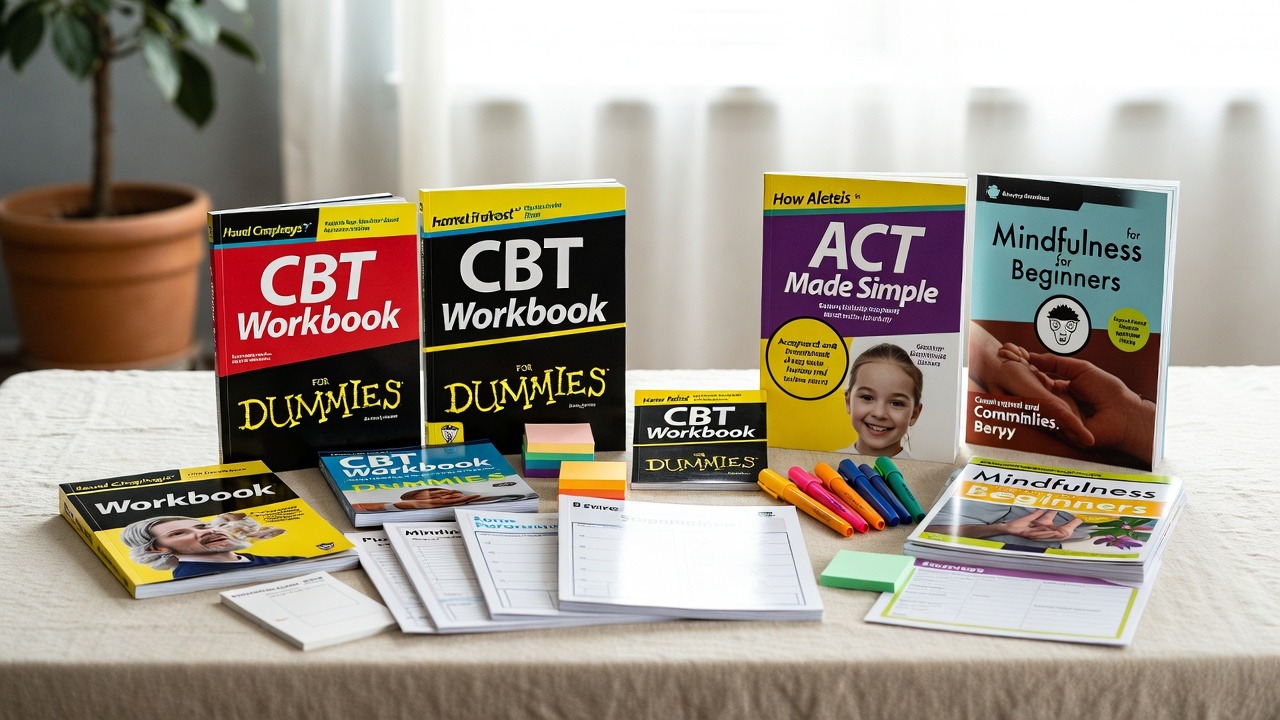
Your Worry Window is a structured space, but it shouldn’t be an empty one. Filling it with effective mental tools turns it from a simple “worry review” into a powerful workshop for cognitive restructuring. Here are the most effective modalities to employ during your 20-minute session.
Cognitive Behavioral Therapy (CBT) Techniques: The Detective
CBT is based on the idea that our thoughts, feelings, and behaviors are interconnected. Inside your Window, become a detective on your own thoughts.
Acceptance and Commitment Therapy (ACT) Techniques: The Observer
ACT complements CBT by focusing on acceptance and values, not just challenging thoughts.
Mindfulness and Grounding: The Anchor
Your Window shouldn’t end in a state of agitation. Use the final minutes for grounding.
Integrating these tools makes your Worry Window a dynamic training ground. But knowing what to do is only half the battle. The real-world application is where most people stumble. Let’s explore how to navigate the common pitfalls and make this technique stick.
Once you’ve mastered the standard Worry Window, you’ll encounter worries that seem resistant to the usual triage. These are your “frequent flyers”—themes of anxiety that return daily with slightly different details. This is where you level up your protocol.
The “Worry Theme” Analysis
Don’t just look at individual worries; look for patterns over a week. Are 70% of your worries about work performance? Another 20% about family health? Identify your top 2-3 worry themes. This reveals your core vulnerabilities. Now, you can address them at a systemic level, perhaps by setting a goal to improve skills in a work area or scheduling a family check-up. This moves you from managing symptoms to addressing root causes.
The “Fear Setting” Exercise (Inspired by Tim Ferriss)
For a big, scary, future-oriented worry (e.g., “What if I quit my job to start a business?”), dedicate a full Worry Window session to this structured exercise:
The “Scheduled Fear” for Phobias and OCD-Like Thoughts
For persistent intrusive thoughts or specific fears (e.g., fear of flying, health anxiety), you can use a hyper-scheduled approach. Beyond your daily Window, schedule 2-3 extra 5-minute “worry sessions” throughout the day specifically for that one fear. When the fear arises outside those times, you defer it. During the scheduled fear session, you deliberately and intensely focus only on that fear. This paradoxical approach—scheduling the thing you want to avoid—often leads to rapid habituation and boredom with the fear itself.
Integrating with Sleep Hygiene: The Pre-Bed Buffer
If nighttime rumination is your primary issue, create a mandatory buffer zone between your last Worry Window of the day and bedtime. Your Window must end at least 2-3 hours before you sleep. After the Window, engage in a “mental cool-down”: read fiction, listen to calm music, do gentle stretching—anything non-problem-solving. This ensures your brain has processed the day’s open loops and entered a restful state long before your head hits the pillow. To see how others have successfully integrated these techniques into their lives, you can find inspiration in real customer reviews and experiences.
Mastering these advanced techniques turns you from a passive recipient of anxiety into an active architect of your mental landscape. But to truly validate and optimize this work, we need to move beyond subjective feeling and into the realm of objective measurement.
In the world of modern wellness, what gets measured gets managed. The subjective feeling of “less anxiety” is wonderful, but pairing it with objective data creates an unstoppable feedback loop for growth. This is where wearable technology, specifically a continuous biometric tracker like the Oxyzen smart ring, elevates the Worry Window from a psychological tool to a precision biohack.
Establishing Your Baselines
Before you begin your Worry Window practice, it’s crucial to understand your starting point. A smart ring tracks key metrics 24/7:
Wear your ring for a week before starting the technique. Note your average RHR, HRV, and sleep quality. This is your anxiety baseline.
Tracking the Impact
As you implement your daily Worry Window, watch the data for trends over 4-6 weeks. Success looks like:
The “Aha!” Moment of Correlation
The power comes in correlation. You’ll have days where your Window session felt messy or difficult. Check your data. You might see that your sleep HRV was still high, proving that the ritual itself was calming your nervous system, regardless of the content. Conversely, on a day you skipped your Window, you might see a spike in RHR and a drop in HRV that night. This data provides undeniable motivation. It turns “I should do my Worry Window” into “My body needs me to do my Worry Window to recover properly.”
Optimizing Timing
Your biometrics can even help you optimize the time of your Window. Experiment! Try a morning Window for a week and track your daytime stress levels (many rings provide a “stress” or “readiness” score). Try an afternoon Window. Does one lead to better nighttime recovery? Let your body’s data guide you to your personal sweet spot.
This empirical approach demystifies mental wellness. It’s no longer a vague hope; it’s a science experiment you run on yourself, with clear inputs (the Worry Window practice) and measurable outputs (improved biometrics). For more on the technology that enables this deep self-knowledge, you can learn more about smart ring technology and its applications.
With data in hand, you are no longer practicing in the dark. But a tool is only as strong as the foundation it’s built upon. The Worry Window rests on a deeper philosophical pillar: radical acceptance.
At its core, the Worry Window Technique is a profound practice in radical acceptance. It requires a fundamental shift in your relationship with your own inner experience. This shift moves you from a state of war to a state of wise governance.
Making Peace with the Predictive Brain
Human brains are prediction engines. They are constantly scanning the environment, running simulations, and trying to avoid danger. Worry is a bug in this brilliant system—a simulation that gets stuck on a loop. The goal of the Worry Window is not to shut down the simulation engine (an impossible task that leads to more problems), but to install a better operating system that manages its processing power. You accept that the engine will generate worrisome predictions; you simply change how and when you review the reports.
The Gift of Containment
Containment is a core psychological concept. A child feels safe when a parent contains their big emotions with calmness. Similarly, your psyche feels safe when your conscious mind can contain anxious thoughts within a reliable structure. The Worry Window is that container. It says, “No matter how chaotic or scary you get, you have a bounded space where you are allowed to exist fully. And you cannot exist outside of it.” This containment alone reduces the free-floating terror of anxiety.
From Self-Judgment to Self-Compassion
A huge component of anxiety is meta-worry: “Why am I worrying so much? What’s wrong with me? I’m so weak.” The Window technique inherently cultivates self-compassion. By scheduling time for your worries, you are essentially saying to yourself, “Your concerns are valid enough to deserve dedicated time and attention. I care about what troubles you.” This is an act of kindness toward the scared part of yourself. It replaces judgment with curious inquiry. This alignment with self-care is central to our mission at Oxyzen, which is to provide tools that foster a kinder, more informed relationship with oneself.
The Liberation of “And”
This philosophy embraces the concept of “both/and.” You can be both a competent, high-functioning professional and a person who needs 20 minutes a day to process fears. You can both love your family deeply and worry about them. The Worry Window allows these truths to coexist without conflict. It legitimizes your full humanity.
Embracing this philosophy ensures the technique remains sustainable. It’s not a hack you “do” until you’re “fixed”; it’s a practice you integrate, a lifelong skill of mental hygiene. But how do you ensure this practice endures, weaving itself seamlessly into the fabric of your daily life? The final piece is integration.
A technique, no matter how powerful, remains just that—a technique—until it becomes an unconscious habit, a natural rhythm of your day. The true victory of the Worry Window isn't a perfect 20-minute session; it's the gradual quieting of the background mental static, the reclaimed mental space, and the newfound ability to be present. This chapter is about moving from disciplined practice to seamless integration, transforming conscious effort into automatic cognitive architecture.
The Habit Stack: Hooking Your Window to Existing Routines
Behavioral science shows that the most effective way to build a new habit is to "stack" it onto an existing one. Your Worry Window should be chained to a non-negotiable daily pillar.
Environmental Design: Building Cues and Reducing Friction
Make the practice easy and the distractions hard.
The Role of Accountability and Community
While this is a personal practice, external accountability can cement it.
Automating the Deferral Script
The ultimate sign of integration is when the deferral of worry becomes automatic. In the beginning, you consciously recite the script. With weeks of practice, the process condenses. A worry arises, and in a split second, your mind files it away without emotional fanfare. It feels less like a struggle and more like a swift, efficient administrative task—a cognitive reflex. This is the neural pathway you've been building becoming the default highway. For those seeking community and shared experiences on this journey, exploring our blog can connect you with others who are building these same resilient pathways.
Once your Worry Window is a cemented ritual, it stops being a task and starts being a sanctuary. It becomes a non-negotiable meeting with yourself that you value and protect. This level of integration frees up immense cognitive resources. But our minds and anxieties do not exist in a vacuum. They are deeply influenced by our physical state. To optimize your Window's effectiveness, you must look at the foundational pillars of biology that regulate mood and anxiety.

The Worry Window manages the software of your anxiety, but it runs on the hardware of your body. Ignoring foundational health is like running sophisticated stress-management software on a broken computer with no battery. Your biology sets your anxiety baseline. Let's explore how to optimize the core pillars to ensure your mind is receptive to cognitive techniques.
Sleep: The Master Regulator of Emotional Resilience
Sleep is not a passive state; it is an active therapy session for your brain. During deep sleep, your body clears metabolic waste from the brain, including beta-amyloid proteins linked to stress. During REM sleep, your brain processes emotional memories, stripping away the sharp, painful edges of the day's experiences.
Nutrition: Fueling the Prefrontal Cortex
Your brain is 2% of your body weight but consumes 20% of its energy. What you eat directly impacts neurotransmitter production and inflammation, both key players in anxiety.
Movement: The Anxiety Antidote
Exercise is arguably the most potent, readily available anti-anxiety tool. It works on multiple levels:
By treating your biology as a co-pilot, you widen the "Window of Tolerance" for stress. You're not just managing worries; you're building a sturdier vessel to sail through them. As you strengthen this vessel, you'll inevitably face one of the most challenging modern disruptors of calm: the digital environment.
Our Worry Windows now compete with a relentless, global Worry Firehose: our digital devices. The 24/7 news cycle, social media comparison, work Slack pings, and doomscrolling create a unique form of ambient anxiety that seeps into our psyche. The Worry Window technique must be adapted to manage this digital deluge.
The "Doomscroll" as Toxic Rumination
Doomscrolling—the compulsive consumption of negative news—is not information gathering; it is a modern manifestation of toxic rumination. It's abstract (global problems you can't solve), catastrophizing (the algorithm surfaces the worst events), and circular (endless scrolling for "just one more update"). It fills your mental capture tool with amorphous, unactionable global fears that crowd out your personal, actionable concerns.
Creating a Digital Capture System
Extend the "Worry Capture" tool to your digital life.
Scheduled Information Intake
Just as you schedule worry, schedule your news consumption. Designate two specific, time-bound slots per day to check reputable news sources (e.g., 8 AM for 15 minutes, 5 PM for 15 minutes). Outside of those windows, you do not check news apps or social media feeds. This contains the "infinite worry" of the digital world into a finite container, preventing it from bleeding into your entire day. The Oxyzen smart ring can provide stark data here: you may see a direct correlation between unregulated screen time and a depressed HRV score, giving you physical proof of the need for digital boundaries.
Notifications as Anxiety Ping-Pong
Every buzz, beep, and banner is a potential micro-worry—a demand for your attention and cognitive shift. Audit your notifications ruthlessly. Turn off everything that is not essential from a human you know. Each notification you prevent is a potential anxiety intrusion you avoid, making it easier to maintain focus and defer legitimate worries to your Window. For support in setting these healthy digital boundaries, our FAQ section offers practical tech-wellness tips.
Taming the digital chaos creates a quieter mental landscape, making your scheduled Worry Window more potent. But life, of course, is not always quiet. How does this technique hold up when real, acute crisis strikes?
A foundational question arises: Is scheduling worry dismissive of genuine, acute problems? What about the anxiety of a true medical scare, a sudden job loss, or a family emergency? The Worry Window is not a denial tool; it's a management tool. And during a crisis, its structure becomes more vital than ever.
From Management to Headquarters
In a crisis, your Worry Window ceases to be a mere "window" and transforms into your Crisis Command Center. The time limit can be extended (to 30 or 45 minutes), and the focus shifts dramatically from triage to active, strategic planning.
The Sanctuary Function
Even in crisis, maintaining the boundary of the Window is crucial. It creates a psychological sanctuary. It tells your terrified brain: "For the next 22 hours, you do not have to solve this. You have done your work. You have a plan. Now, we must rest and fuel ourselves to execute it." This prevents burnout and decision fatigue. It allows for moments of respite—watching a show, hugging a loved one—without the guilt of "I shouldn't be relaxing, I have this huge problem." You've already dedicated sacred time to it.
Leaning on Data for Reassurance
In a health crisis, for instance, biometrics can be a grounding force. Seeing your HRV dip is expected; watching it begin a slow recovery as you process the news and make plans can be a powerful sign of your nervous system's innate resilience. It's objective proof that you are, physiologically, handling the unthinkable. This journey of facing challenges with tools and data is part of the deeper story we champion at Oxyzen.
The Worry Window doesn't eliminate the pain of a crisis, but it prevents the anxiety from becoming a form of chaotic, additional suffering on top of the actual pain. It brings order to the internal chaos. And as you navigate both daily hassles and real storms, you'll begin to notice a profound shift not just in your anxiety, but in your overall capacity for a richer life.
When you successfully contain the cognitive sprawl of anxiety, you free up a staggering amount of mental bandwidth. The benefits of the Worry Window extend far beyond simply "feeling less anxious." They cascade into every domain of your life, unlocking potentials that were previously blocked by the static of worry.
Reclaiming Focus and Deep Work
Cal Newport's concept of "Deep Work"—the ability to focus without distraction on a cognitively demanding task—is the antithesis of the anxious mind. Anxiety is the ultimate distraction. By deferring worries, you create mental continuity. You can enter a state of flow in your work, your hobbies, or your conversations because you are not constantly being pulled away by internal alarms. The "monkey mind" is given its own playground (the Window), allowing the "deep mind" to engage fully elsewhere. This can lead to dramatic increases in productivity and the quality of your output.
Unleashing Creativity
Creativity requires a mind that can make novel connections, play with ideas, and tolerate ambiguity. Anxiety hates ambiguity; it demands certainty and often defaults to worst-case scenarios. A mind preoccupied with "what ifs" has no space for "what could be." By compartmentalizing your fear-based thinking, you create psychological safety for your creative, exploratory thinking to emerge. Many artists and writers report that their scheduled "worry time" or "admin time" directly clears the path for their most inspired work to flow later.
Deepening Relationships and Presence
How often have you been with a loved one, physically present but mentally miles away, ruminating on a work problem or a future fear? This "phubbing" of your own life is a tragic cost of unchecked anxiety. The Worry Window technique cultivates the muscle of presence. When you know your worries have a dedicated home, you can more easily mentally arrive at the dinner table, during your child's bedtime story, or on a walk with a friend. You listen better. You connect more deeply. You are there. This improves not only your relationships but also your own experience of joy, which is always found in the present moment.
Enhanced Decision-Making
Anxiety clouds judgment. It pushes you toward short-term, safety-seeking decisions and away from calculated risks that could lead to growth. With a clear mind, you can weigh options more rationally, consult your values more clearly, and make choices from a place of considered intention rather than fearful reactivity. Your daily Window practice is a training ground for this: you are literally practicing clear-headed analysis of concerns on a small scale, building the skill for bigger life decisions.
This expansion of life capacity is the ultimate goal. It's not just about removing a negative (anxiety); it's about reclaiming a positive (a engaged, meaningful life). And this transformative potential is something we see echoed in the experiences of our community, as shared in their own testimonials and stories.
As you experience these ripples, your relationship with yourself and your inner world undergoes a fundamental change. The final piece of this journey is understanding that evolution and committing to the path of lifelong practice.
The Worry Window is not a static solution. It is a living, breathing practice that must evolve with you. The anxieties of your 20s (career launch, relationships) differ from those of your 40s (aging parents, financial security) or your 60s (retirement, health). Your Window should adapt, reflecting your changing values, responsibilities, and vulnerabilities.
Life Stage Adaptations:
Seasonal and Cyclical Adjustments
Your biology and environment are cyclical. Honor that.
The Window as a Compass, Not a Cage
As you mature in the practice, the rigid structure can soften. Some days, your "Window" might be a 10-minute mind-dump. Other days, it might be a 30-minute walk where you process things mentally. The core principles remain: dedicated time, deferred intrusion, and conscious processing. The form can become fluid. The goal is to internalize the philosophy of containment and compassionate attention so deeply that it informs your moment-to-moment awareness.
Passing It On: Teaching the Next Generation
One of the most powerful applications of this mastered skill is teaching it to others—to your children, your team at work, or your community. Framing it not as a tool for the "anxious" but as a skill for mental clarity and emotional fitness destigmatizes it. You become an architect of a more resilient environment around you.
This lifelong journey of adaptation and mastery underscores that mental fitness is no different than physical fitness. It requires consistent practice, smart tools, and the willingness to listen to your own data. It is a commitment to showing up for yourself, day after day, with structure and kindness.

Theory illuminates the path, but lived experience walks it. To truly internalize the transformative potential of the Worry Window, let’s move from abstract principles to concrete narratives. These anonymized case studies illustrate how the technique adapts to different personalities, professions, and anxiety triggers, providing a blueprint you can map onto your own life.
Case Study 1: The High-Performing Executive & the 3 AM Board Meeting
Profile: Michael, 42, a VP of Strategy in a tech firm. Externally unflappable, but internally plagued by a phenomenon he called "the 3 AM Board Meeting." Every night, his mind would stage a detailed review of every potential risk in his division, every ambiguous comment from the CEO, leading to sleeplessness and morning exhaustion.
The Intervention: Michael was skeptical of "touchy-feely" anxiety techniques but was drawn to the structured, almost corporate, framing of the Worry Window. He implemented a 5:15 PM Window in his office, after his last call but before heading home.
Practice & Adaptation: His capture tool was a dedicated notes app. During the day, when a risk thought arose, he typed a quick headline ("Q3 forecast risk in EU market"). His 20-minute Window was ruthlessly efficient. He used a simple spreadsheet: Column A: Worry. Column B: Actionable? (Y/N). Column C: Next Physical Step. Column D: Owner (Me/Delegate?). If not actionable, he wrote "Hypothetical" and practiced the "What If" game.
The Data & Outcome: Using his Oxyzen ring, Michael tracked two key metrics: sleep latency (time to fall asleep) and resting heart rate during his first deep sleep cycle. Within three weeks, his sleep latency dropped from 45+ minutes to under 15. His deep-sleep heart rate stabilized. "The Window didn't make my job less stressful," he reported. "It gave me a proxy for control. I'm not at the mercy of the 3 AM meeting anymore; I've already chaired it at 5:15."
Case Study 2: The New Parent & the Ambient Cloud of "What If"
Profile: Sofia, 34, a freelance graphic designer and new mother to a 6-month-old. Her anxiety was no longer about specific tasks but a constant, low-grade "hum" of worry about the baby's health, her own lost identity, and financial instability. It felt like an ambient cloud she couldn't escape, sapping her joy.
The Intervention: Sofia needed to shatter the amorphous cloud into discrete particles. Her capture tool was a small notebook placed in every room. When a worry flitted through ("Is she breathing too fast?"), she would jot a word ("breathing") and immediately pick up the baby for a snuggle, anchoring in the present.
Practice & Adaptation: Her Window was during the baby's first, most reliable nap. She limited it to 15 minutes. She would take her captured words and draw them—literally sketching a tiny cloud labeled "health," a money bag labeled "freelance," a blank canvas labeled "me." This visual defusion helped her see the worries as separate from herself. For each sketch, she asked: "Is this a right now need?" If yes (the baby was currently healthy), she practiced a mantra: "Right now, we are safe." If it was a future need (finding clients), she scheduled one tiny action (update portfolio website for 10 minutes tomorrow).
The Data & Outcome: Sofia's biometric data showed a critical insight: her stress score spiked during nighttime feedings when she'd fall into doomscroll rabbit holes. Implementing a "no-phone" rule during feeds, combined with the daily Window, dramatically improved her sleep efficiency score. "The cloud is still there sometimes," she said, "but now I have a sieve. I can let the big, real things through to deal with, and the mist just passes by."
Case Study 3: The Chronic Illness Warrior & the "Scanxiety" Spiral
Profile: David, 58, living with a managed but unpredictable autoimmune condition. His primary anxiety trigger was "scanxiety"—the period before and after medical scans and bloodwork. The worry was cyclical and intense, centered on a very real threat, making standard deferral feel impossible.
The Intervention: David's Worry Window needed to be a dynamic system that intensified and relaxed with his medical calendar. We created a tiered system:
These cases show the technique's versatility. The core framework is rigid, but its application is an art form. The next step in mastery involves integrating this art with the science of professional therapeutic modalities, supercharging your Window with clinical-grade tools.
The Worry Window is a potent standalone practice, but it functions as a force multiplier when integrated with formal therapy. It becomes the daily practice ground for the skills learned in session, turning weekly insights into ingrained habits. Here’s how to weave specific modalities into the fabric of your Window.
Supercharging with Cognitive Behavioral Therapy (CBT)
CBT is the natural companion to the Worry Window. The Window provides the when and where; CBT provides the how.
Deepening with Acceptance and Commitment Therapy (ACT)
ACT shifts the goal from controlling thoughts to living a values-driven life despite them. This philosophical alignment is profound for the Window.
Incorporating Dialectical Behavior Therapy (DBT) Skills
DBT excels in emotion regulation and distress tolerance—key skills for managing the intense feelings that accompany worry.
The Therapist as a Coach for Your Practice
A skilled therapist can help you audit your Worry Window process. Are you using it to ruminate rather than process? Are your "next steps" too vague? They can help refine your technique, suggest new questions to ask during triage, and celebrate the data-backed wins from your biometric tracking. This collaborative approach represents the future of personalized mental fitness, a principle central to our vision at Oxyzen.
By marrying the self-structured discipline of the Window with the expert-guided skills of therapy, you build a comprehensive mental immune system. But a system is only as strong as its tools. Let’s now curate the ultimate physical and digital toolkit to support this practice at every level.
Mastery requires the right instruments. Your toolkit should support the three phases of the practice: Capture, Process, and Integrate. Here is a curated selection, from timeless analog to cutting-edge digital, to equip your journey.
The Analog Foundation (For Unplugged Clarity)
The Digital Arsenal (For Efficiency and Backup)
The Biometric Cornerstone (For Objective Insight)
This is where modern technology transforms practice from guesswork to science.
Curating Your Environment
Your toolkit extends to your space.
With a refined toolkit, your practice becomes efficient, insightful, and even enjoyable. You are now a skilled craftsperson of your own mind. But knowledge and tools must be shared to create lasting change. The final step in this portion of our journey is to look outward, at how this individual practice can ripple into a collective culture of mental fitness.
The profound impact of the Worry Window need not stop at the boundaries of your own mind. Its principles of containment, scheduled processing, and values-aligned action can be scaled to transform group dynamics, reducing collective anxiety and fostering psychological safety in your most important circles: your family and your work team.
The Family Worry Window: Building Emotional Resilience Together
Introducing this practice at home teaches emotional regulation as a family value, not a personal failing.
The Team Worry Window: Fostering Psychological Safety at Work
In a professional setting, renamed as a "Risk & Blockers Review" or "Clear Mind Huddle," this practice can dismantle toxic stress culture.
The Couple's Window: Preventing Resentment and Building Intimacy
For partners, an adapted Window can be a relationship-saving communication tool.
Scaling the practice requires subtlety and consent. It’s about inviting, not imposing. But when adopted willingly, it creates ecosystems of remarkable resilience, where the collective capacity to handle stress multiplies. As we near the culmination of this portion of our exploration, we turn to the horizon, to the future of anxiety management where techniques like the Worry Window converge with emerging technology.

We stand at the frontier of a new era in mental wellness, where behavioral techniques like the Worry Window will be augmented by artificial intelligence and predictive analytics. This isn't about replacing human insight; it's about enhancing it with hyper-personalized, anticipatory support.
Predictive Biometrics and Proactive Nudges
Imagine your smart ring or wearable not just showing you yesterday's stress, but predicting tomorrow's vulnerability.
AI-Enhanced Window Sessions
Your digital journaling within your Worry Window could become interactive.
Integration with Digital Therapeutics
The Worry Window protocol could be integrated into prescription digital therapeutics (PDTs) for anxiety disorders. A clinician could "prescribe" a structured Worry Window practice via an app, monitor adherence through usage data, and review aggregated, anonymized biometric trends to gauge treatment efficacy, adjusting therapeutic strategies in real-time.
The Ethical Imperative: Human-Centric Design
This future must be built on a foundation of ethics. The goal of technology should be to increase human agency and self-knowledge, not create dependency. Data must remain the user's property, used to empower them, not to manipulate or exploit. The Worry Window's core—a human deliberately setting aside time for self-reflection—must remain inviolate at the center, with technology acting as a insightful satellite, not the sun itself. This commitment to ethical, human-first innovation is woven into the very fabric of our story at Oxyzen.
This future is not a distant sci-fi fantasy; it is the logical next step in the quantified self-movement, applied to mental fitness. It promises a world where managing our inner landscape is as sophisticated, data-informed, and proactive as managing our physical health.
We have journeyed from the desperate 3 AM spiral to a vision of AI-augmented serenity. Through this exploration, the Worry Window Technique has revealed itself to be far more than a time-management trick for anxiety. It is a philosophy of engagement with your own mind.
It is the practice of meeting yourself with structure instead of chaos, with compassion instead of judgment, and with curiosity instead of fear. It is the deliberate cultivation of the executive within you—the wise CEO who respects the reports of the vigilant security guard but insists on running orderly briefings.
You have been equipped with the neuroscience behind its efficacy, a step-by-step blueprint for its construction, advanced protocols for stubborn fears, and case studies proving its versatility. You have seen how it integrates with therapy, scales to families and teams, and how it can be supported by both a simple notebook and the most advanced biometric technology.
The common thread is agency. The Worry Window restores the sense that your mental and emotional experience is something you can influence, structure, and dialogue with—not a force that simply happens to you.
As you move forward, remember that mastery is not measured by days without worry, but by the seamless grace with which you welcome worry, hold it in the designated space, learn from it, and then let the window close, returning your vast attention to the vivid, present-moment experience of your one precious life.
Your Trusted Sleep Advocate (Sleep Foundation — https://www.sleepfoundation.org/)
Discover a digital archive of scholarly articles (NIH — https://www.ncbi.nlm.nih.gov/
39 million citations for biomedical literature (PubMed — https://pubmed.ncbi.nlm.nih.gov/)
experts at Harvard Health Publishing covering a variety of health topics — https://www.health.harvard.edu/blog/)
Every life deserves world class care (Cleveland Clinic -
https://my.clevelandclinic.org/health)
Wearable technology and the future of predictive health monitoring. (MIT Technology Review — https://www.technologyreview.com/)
Dedicated to the well-being of all people and guided by science (World Health Organization — https://www.who.int/news-room/)
Psychological science and knowledge to benefit society and improve lives. (APA — https://www.apa.org/monitor/)
Cutting-edge insights on human longevity and peak performance
(Lifespan Research — https://www.lifespan.io/)
Global authority on exercise physiology, sports performance, and human recovery
(American College of Sports Medicine — https://www.acsm.org/)
Neuroscience-driven guidance for better focus, sleep, and mental clarity
(Stanford Human Performance Lab — https://humanperformance.stanford.edu/)
Evidence-based psychology and mind–body wellness resources
(Mayo Clinic — https://www.mayoclinic.org/healthy-lifestyle/)
Data-backed research on emotional wellbeing, stress biology, and resilience
(American Institute of Stress — https://www.stress.org/)


