


How to Use Sleep Pattern Data to Optimize Your Life
By analyzing your sleep pattern data, you can schedule demanding tasks during your peak alertness hours and align your rest periods with natural energy dips.
By analyzing your sleep pattern data, you can schedule demanding tasks during your peak alertness hours and align your rest periods with natural energy dips.
%402x.svg)
For centuries, we’ve treated sleep as a passive void—a necessary shutdown between days. We’ve measured our lives in waking hours, often viewing time spent asleep as time lost. But what if we’ve had it backwards? What if those quiet hours are not a blank slate, but the most critical, data-rich period of our entire 24-hour cycle? The emergence of advanced, wearable technology like smart rings is revealing a profound truth: sleep is not an interval. It is the foundation.
Your sleep pattern data is the continuous readout of your body’s most vital operating system. Every night, your brain and body perform a symphony of regulated processes: memory consolidation, hormonal regulation, cellular repair, and emotional processing. How that symphony plays—its tempo, its harmony, its disruptions—directly dictates the quality of your waking life. Your cognitive sharpness, emotional resilience, physical energy, metabolic health, and even your long-term disease risk are being programmed while you sleep.
Until recently, accessing this data was the realm of clinical sleep labs. Now, with discreet, comfortable devices like the Oxyzen smart ring, this powerful biometric feedback loop is available every single night, right on your finger. This isn't just about counting sheep or hours in bed. It’s about translating the complex language of your sleep architecture—your heart rate variability (HRV), your resting heart rate (RHR), your sleep stages, your blood oxygen saturation (SpO2), and your body temperature—into actionable intelligence.
This article is your guide to moving from simply tracking sleep to truly understanding and optimizing it. We will dive deep into the science of sleep metrics, learn what they reveal about your physical and mental state, and build a practical framework for using this data to make transformative changes. This is about optimizing your life from the ground up, using the most personal dataset you own. The journey begins not with your morning coffee, but with last night’s deep sleep.
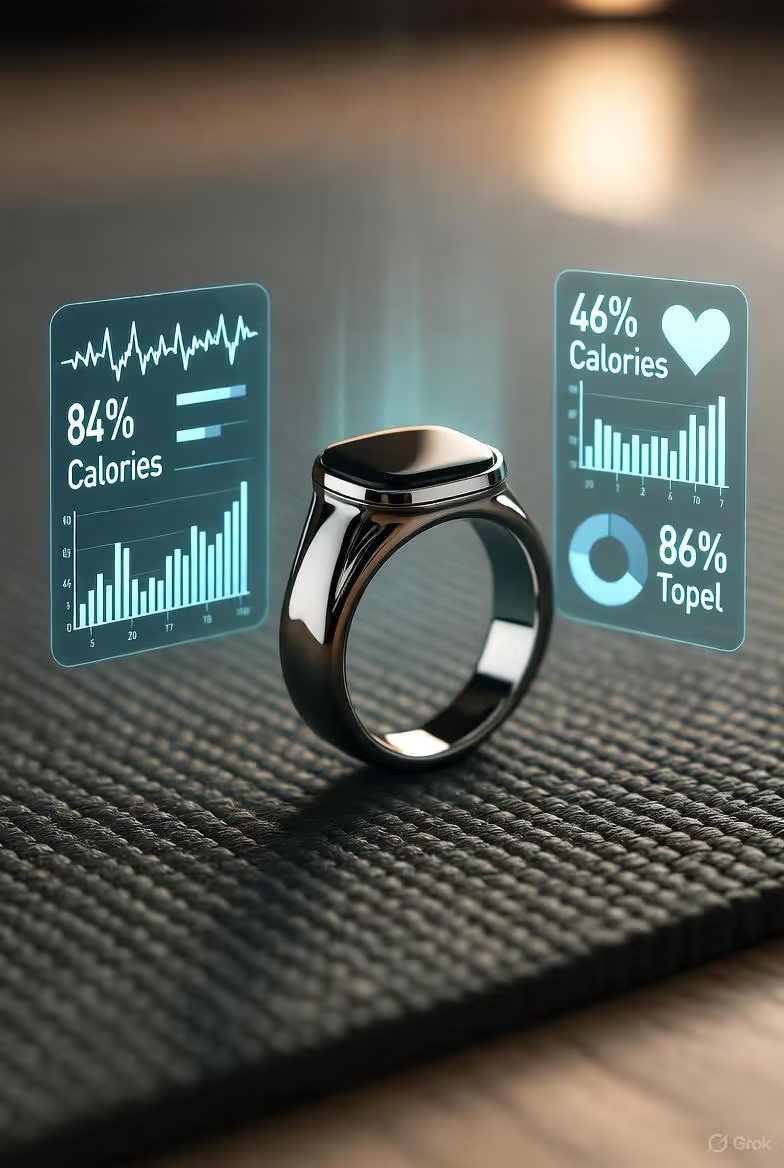
We live in a world saturated with sleep trackers. So, why the focus on the smart ring? To understand the power of the data we’re about to explore, we must first appreciate the superiority of the form factor and sensor technology. Wrist-based devices have a fundamental flaw: they are prone to significant motion artifact, especially during the frequent, small movements of sleep. Your finger, however, provides a more stable, vascular-rich location for continuous, medical-grade sensing.
A device like the Oxyzen smart ring, worn on the finger, leverages photoplethysmography (PPG) sensors in an optimal position to capture precise heart rate, HRV, and blood oxygen levels. Its thermistor accurately tracks subtle circadian shifts in peripheral body temperature—a key biomarker for sleep-wake cycles and recovery status. Because it’s worn on a less mobile part of the body, the data it collects overnight is remarkably clean and consistent. This isn't guesswork; it's a high-fidelity biometrical broadcast from your autonomic nervous system.
Think of it this way: you wouldn't measure the precise vibration of a fine engine with a tool held loosely on a moving hood. You’d attach the sensor directly to the block. For your body’s cardiovascular and nervous systems, the finger is that direct attachment point. This precision transforms your sleep data from a vague "score" into a reliable diagnostic and optimization tool. As you’ll see in the following sections, small, accurate deviations in metrics like your overnight heart rate or HRV are meaningful. They can signal everything from an oncoming illness to overtraining, from chronic stress to dietary missteps.
This foundational accuracy is what allows us to trust the data enough to act on it. It turns the ring from a gadget into a personal bio-feedback coach, whispering insights about your physiology that your conscious mind would otherwise miss. For a deeper look at the technology that makes this possible, you can always explore the science behind Oxyzen's sensors.
You’ve woken up and synced your ring. A dashboard of numbers and graphs appears. What does it all mean? To optimize, we must first speak the language. Let's decode the core metrics that form the story of your night.
Sleep Stages (Light, Deep, REM): Sleep is not monolithic. We cycle through 90-120 minute periods of light, deep, and REM (Rapid Eye Movement) sleep. Light sleep is a transition phase, making up about 50% of the night. Deep sleep, often called "slow-wave sleep," is the physically restorative phase where tissue growth and repair occur, energy is restored, and crucial hormones are released. REM sleep is the mentally restorative phase, vital for memory consolidation, learning, and emotional processing. Optimal health requires sufficient time in each. Disruptions in this architecture—like fragmented deep sleep or insufficient REM—can be early warning signs.
Resting Heart Rate (RHR): This is your heart's idle speed, typically measured during your deepest sleep. A well-rested, fit body will have a lower, stable RHR. A sudden, unexplained elevation in your nocturnal RHR (by 5-7+ BPM above your baseline) is one of the clearest biometric signals of physical stress. This could be from an impending infection, dehydration, excessive alcohol, intense training, or psychological anxiety. Your RHR is a direct window into your systemic load.
Heart Rate Variability (HRV): Perhaps the most insightful metric, HRV measures the subtle variations in time between each heartbeat. Contrary to intuition, a higher HRV is better. It indicates a resilient, adaptable autonomic nervous system—your body can easily switch from stress (sympathetic) mode to rest-and-digest (parasympathetic) mode. A low or dropping HRV suggests your system is under sustained stress and is less resilient. Tracking HRV trends is like having a daily report card on your nervous system's fitness.
Blood Oxygen (SpO2): This measures the saturation of oxygen in your blood. While you sleep, it should remain consistently high (generally above 95%). Frequent, significant dips (below 90%) can signal sleep-disordered breathing like sleep apnea, but even subtle, repeated fluctuations can point to respiratory issues or environmental factors like high-altitude or poor air quality. Consistent monitoring provides a long-term picture of your respiratory health.
Body Temperature: Your core body temperature follows a circadian rhythm, dropping to its lowest point during deep sleep and rising toward morning. A smart ring tracks the peripheral temperature at your finger. Deviations from your personal norm—like an elevated nighttime temperature—can indicate inflammation, the start of an immune response, or hormonal changes. It’s a key puzzle piece in understanding your readiness for the day.
By learning to read these metrics in concert, you stop seeing isolated numbers and start reading a cohesive narrative about your body’s recovery, stress, and preparedness. For example, a night with low deep sleep, elevated RHR, and low HRV paints a clear picture of incomplete recovery, signaling a need for a lighter day.
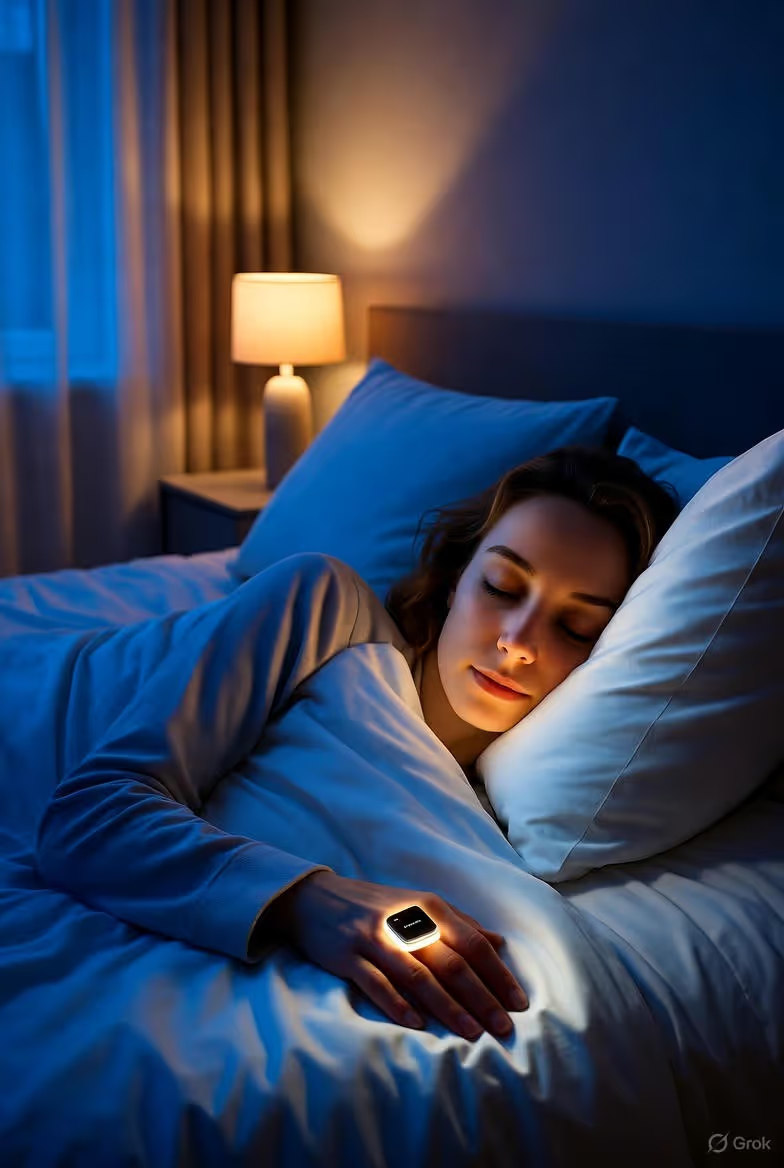
Forget the rigid, universal mandate of "eight hours." Sleep optimization is personal, and your architecture—the unique composition and timing of your sleep stages—holds the real keys. Two people could both sleep 7.5 hours, but one might spend 90 minutes in deep sleep and 110 in REM, while the other gets only 45 minutes of deep and fragmented REM. Their waking experiences will be worlds apart.
Your personal architecture is influenced by genetics, age, lifestyle, and even your activities the prior day. Endurance exercise, for instance, can boost deep sleep need. Intense cognitive work or emotional experiences can increase REM sleep demand. Your data allows you to move beyond duration and focus on quality and distribution.
The Deep Sleep Deficit: In our modern, stressed world, deep sleep is often the first casualty. High cortisol levels, late-night eating, alcohol consumption, and even sleeping in a room that's too warm can truncate deep sleep. In your data, this manifests as short or nonexistent periods of very low heart rate and high HRV (the signature of deep sleep) in the first half of the night. The consequence? You wake up feeling physically unrefreshed, muscle soreness lingers, and your immune system may be compromised.
The REM Rebound Effect: REM sleep tends to dominate the later cycles of the night. If you consistently cut your sleep short with an early alarm, you are chronically depriving yourself of REM. Your brain will attempt a "REM rebound" on nights you can sleep in, leading to vivid dreams and a groggy, "sleep drunk" feeling upon waking. This imbalance can affect mood regulation, creativity, and procedural memory. Your data will show a sharp truncation of sleep just as REM periods are lengthening.
Sleep Latency & Fragmentation: How long it takes you to fall asleep (latency) and how many times you wake up briefly (fragmentation) are critical architecture metrics. Ideal sleep latency is between 10-20 minutes. Consistently falling asleep in <5 minutes can indicate significant sleep deprivation, while taking >30 minutes can point to poor sleep hygiene or anxiety. Frequent fragmentation, seen as spikes in heart rate and movement, destroys sleep cycle continuity. The cause could be anything from sleep apnea (often paired with SpO2 dips) to a restless partner, a noisy environment, or digestive issues.
Analyzing your architecture over weeks, not days, reveals your true personal needs. You might discover you are a "REM dominant" sleeper who needs 8.5 hours to feel sharp, or a "deep sleep responder" who thrives on 7 solid hours but is exquisitely sensitive to evening alcohol. This knowledge is empowering. It allows you to tailor your schedule and habits not to an abstract rule, but to the empirical reality of your biology. You can find more case studies and examples of personal sleep patterns on our blog dedicated to wellness optimization.

If sleep architecture is the "what," then Heart Rate Variability (HRV) and Resting Heart Rate (RHR) are the "why." Together, they form the most direct feedback loop between your daily life and your nocturnal recovery, creating a real-time stress-recovery dashboard.
HRV: Your Nervous System's Tone Gauge. Think of your autonomic nervous system as a see-saw. On one end is the sympathetic branch (gas pedal—stress, alertness, action). On the other is the parasympathetic branch (brake pedal—rest, digest, recover). HRV is the measure of how easily that see-saw can move. High HRV means a flexible, resilient system that can rev up for a challenge and then smoothly downshift into recovery. Low HRV indicates a system that’s either stuck on high (chronic stress) or, less commonly, stuck on low (fatigue, burnout).
By observing your sleeping HRV (its most stable reading), you get a pure measure of your recovery status. A rising trend suggests you are adapting well to your lifestyle stressors (work, exercise, etc.). A sharp or sustained drop is a red flag. It’s your body’s way of saying, "The load is too high. I need a break." This could be physical (overtraining), emotional (work crisis), or immunological (fighting a bug).
RHR: Your Body's Idle Speed. While HRV measures system flexibility, RHR measures system load. When your body is under stress—any kind of stress—it requires more resources. Your heart has to work harder, even at rest. That’s why your RHR climbs with infection, dehydration, heavy training, poor sleep, and anxiety. It’s a lagging indicator; it shows the effect of yesterday’s (or the past few days') stress on your cardiovascular system.
The Powerful Duo in Action: Here’s how to read them together:
By making a habit of checking this duo each morning, you move from guessing how you feel to knowing how recovered you are. This data-driven self-awareness allows for dynamic living. You can adjust your workout intensity, schedule important meetings on high-readiness days, and practice extra recovery on low-readiness days. It turns intention into intelligent, responsive action. For those curious about how real users interpret this data, our testimonials page is filled with stories of people who've transformed their approach to stress and recovery.
While HRV and RHR speak to internal stress and recovery, your blood oxygen (SpO2) and skin temperature metrics are your sentinels, watching for external threats and internal imbalances. They are often the first to sound a silent alarm.
Nocturnal SpO2: The Breath Watchdog. During peaceful sleep, your breathing should be steady, and oxygen levels stable. Significant, repeated drops in SpO2 (below 90%, and especially into the 80s) are the primary indicator of obstructive sleep apnea (OSA), where the airway collapses intermittently. However, even for those without OSA, SpO2 is insightful.
Peripheral Temperature: The Inflammation and Rhythm Gauge. Your body's core temperature cycle is a master circadian conductor. A smart ring tracks the echo of this cycle at your skin.
Using these two metrics turns your ring into a 360-degree health monitor. They provide objective evidence to:
This isn't about fostering hypochondria; it's about cultivating a profound connection to your body's subtle signals. It’s the difference between wondering why you feel groggy and knowing your elevated temperature and lowered SpO2 suggest your body is fighting something, prompting you to take a restorative day. To understand how we built a device focused on these crucial health signals, you can read about our mission and design philosophy.
Raw data is inert. Its power is unleashed only when it fuels action. Now that you can interpret the signals, it's time to build your Personalized Sleep Hygiene Protocol—a set of habits tailored not from generic advice, but from your unique biometric feedback. This is the core of optimization.
1. The Wind-Down Experiment: Your sleep latency data (time to fall asleep) is your guide. If it's consistently long, your wind-down routine is insufficient. Experiment with different, screen-free activities 60-90 minutes before bed: reading fiction, light stretching, meditation, or a mindfulness practice. Track how each affects your latency and HRV. You might find that a hot bath (which actually helps by moving blood to the extremities to cool your core) shaves 15 minutes off your latency.
2. The Food & Drink Log: Alcohol is a potent deep sleep and REM sleep disruptor. It may help you fall asleep faster, but your data will show the wreckage: elevated RHR, suppressed HRV, and a fragmented second half of the night. Similarly, a late, heavy meal can elevate nighttime metabolism and temperature. Use your data to find your personal "cut-off times." Maybe you discover that caffeine after 2 PM doesn't affect your sleep onset but does reduce your total deep sleep by 10%.
3. Light & Temperature Engineering: Your temperature curve is your best guide for the bedroom. Aim for a cool room (65-68°F or 18-20°C). Use blackout curtains to eliminate light pollution, which can shallow sleep and blunt melatonin. If your data shows a poor temperature drop, experiment with lighter pajamas, a cooling mattress pad, or a fan. The goal is to support your body's natural thermoregulation, not fight it.
4. The Wake-Up Consistency Test: This is the most powerful lever for circadian health. Go to bed and wake up at the same time every day, even on weekends, for two weeks. Your data will likely show a regularization of your sleep architecture, improved HRV, and a more robust temperature rhythm. The weekend "social jetlag" of sleeping in destroys this rhythm. Your data provides the motivation to prioritize consistency.
5. The Stress Inoculation Practice: If your data shows low HRV and high RHR indicative of stress, your protocol must include daytime nervous system training. This isn't just about sleep; it's about building resilience. Practices like box breathing, daily meditation, or even leisurely walks in nature have been shown to improve HRV over time. The ring provides the proof: as you stick with the practice, watch your sleeping HRV trend upward.
Treat this protocol as a living document. Implement one change at a time, observe the data for at least a week, and note the effects. The Oxyzen ring provides the objective results to see what truly works for you. For a repository of science-backed tips and experiments to try, our blog is constantly updated with new insights from the forefront of biohacking and wellness.
The myth that sleep needs are static is doubly false when we consider the powerful, rhythmic influence of hormones. While most pronounced in individuals with menstrual cycles, hormonal fluctuations affect everyone to varying degrees. Your sleep data is the key to syncing your life with these inner tides, not fighting against them.
For Menstrual Cycles: The cycle's two main phases—follicular and luteal—create two distinct physiological landscapes.
For Androgen Cycles: While less dramatic, testosterone in all genders follows a circadian rhythm (highest in the morning) and can be impacted by sleep quality. Poor sleep, especially loss of deep sleep, blunts testosterone production. Furthermore, men experience a milder ultradian rhythm of testosterone throughout the day. Chronic sleep deprivation seen in your data is a direct contributor to lowered testosterone and its associated effects on energy, mood, and body composition.
For Cortisol Rhythms: This is universal. Cortisol, your main stress hormone, should be high in the morning (helping you wake) and drop to its lowest point at night. Chronic stress and poor sleep hygiene can flatten this rhythm, leading to high nighttime cortisol. In your data, this manifests as elevated nighttime RHR, low HRV, and difficulty falling/staying asleep. Optimizing sleep directly helps restore a healthy cortisol curve, creating a virtuous cycle of better days and better nights.
By tracking your sleep biomarkers alongside your cycle (if applicable), you move from a one-size-fits-all approach to cycle-syncing your life. You can plan projects, social events, and recovery periods in harmony with your natural energy fluctuations. This isn't about limitation; it's about strategic alignment, using your body's innate wisdom as a guide. For anyone navigating the intersection of hormonal health and performance, we've compiled user experiences and deeper dives into this topic in our community stories and FAQs.
For athletes, knowledge workers, and anyone seeking peak performance, sleep data is the ultimate legal performance-enhancing drug. It provides the missing link between effort and outcome, allowing you to train and work smarter.
Precision Physical Recovery: Fitness is built not in the gym, but during recovery. Your sleep metrics are the definitive measure of that recovery.
Cognitive and Creative Optimization: Your brain's performance is inextricably linked to sleep architecture.
By aligning your most demanding mental tasks with days of high sleep-based readiness and protecting the sleep that fuels different types of cognitive work, you gain a systematic edge. You're no longer working against your biology; you're harnessing its natural rhythms to produce higher-quality work with less strain. This philosophy of bio-synced performance is at the heart of why we started Oxyzen, and you can learn more about our story and vision here.

The true transformative power of sleep data is revealed not in daily snapshots, but in the long-term trends viewed over weeks and months. This panoramic view allows you to spot insidious patterns, course-correct before crisis, and build a sustainable life architecture that prevents burnout.
The Signature of Sustainable Strain: Healthy progress in any endeavor—career, fitness, parenting—involves stress followed by recovery. On a weekly graph, this looks like small dips in HRV (or peaks in RHR) after challenging days, followed by recoveries that bring you back to or above your baseline. The trendline over a month should be stable or slowly improving. This is the pattern of growth.
The Descent into Burnout: Burnout doesn't happen overnight. It's a gradual erosion of your physiological buffer. The long-term data tells a clear story:
Pattern Recognition for Life Design: Beyond burnout, long-term data reveals life-impacting patterns.
This long-view turns your ring into a personal health auditor. It provides undeniable, objective evidence of what is and isn't working in your lifestyle. It moves optimization from a tactical daily game to a strategic lifelong practice. It's the tool that helps you design a life that doesn't just look good on paper, but feels sustainable in your very cells. For anyone who has felt the slow creep of exhaustion, exploring real user testimonials can show how this data-driven awareness creates lasting change.
The final, crucial step in closing the optimization loop is establishing a purposeful morning ritual centered on your data. This isn't about obsessive checking; it's a 5-minute mindful review to set the tone for a proactive, aligned day. Ditch the social media scroll and start with self-awareness.
Step 1: The Holistic Check-In (60 seconds). Before you even look at your phone, take two deep breaths. Ask yourself subjectively: How do I feel? Rested? Groggy? Achy? Anxious? Note this internal feeling first.
Step 2: The Data Triangulation (3 minutes). Now, open your app. Look at three key things in this order:
Step 3: The Intentional Alignment (1 minute). This is where data turns into decision. Based on the composite picture:
Step 4: The Gratitude & Release (30 seconds). The data is information, not identity. A red day isn't "bad"; it's incredibly valuable information that prevents a worse outcome. Acknowledge the insight, make your plan, and then release the need to over-analyze. Your job is to respond, not obsess.
This ritual transforms you from a passive recipient of your day into an active, intelligent director of your energy. It fosters a profound partnership with your body, where you listen to its signals and respond with respect. This daily practice of alignment is, ultimately, the foundation of an optimized life. For more guidance on building effective routines and interpreting daily data, our comprehensive FAQ and support section is an excellent resource.
We often compartmentalize health: sleep, diet, and exercise exist in separate silos. Your sleep data shatters this illusion, revealing a continuous, intimate dialogue between your nightly recovery and your daily metabolism. The food you eat doesn't just affect your waistline; it directly programs your sleep quality. And the sleep you get doesn't just affect your energy; it governs the hormones that control hunger, satiety, and fat storage. This is the metabolic connection, and it’s visible in your biometrics.
The Hormonal Cascade of Poor Sleep: When you experience short or low-quality sleep (indicated by low deep sleep, high fragmentation, low HRV), your body undergoes a predictable hormonal shift:
In your data, this hormonal storm often manifests as an elevated morning resting heart rate and a lower HRV. Subjectively, you wake up craving carbohydrates and sugar for quick energy. This isn't a lack of willpower; it's a biological drive rooted in your sleep architecture.
Dietary Choices as Sleep Inputs: Conversely, your evening meals and alcohol consumption leave a clear fingerprint on your night.
Using Data for Nutritional Timing and Choices: This feedback loop is a powerful tool for dietary optimization.
By cross-referencing your nutrition log with your sleep dashboard, you move from blind eating to strategic nourishment. You learn which foods fuel not just your day, but your recovery night, creating a virtuous cycle where good sleep supports better food choices, and better food choices support deeper sleep. For a deeper exploration of the science behind nutrition and recovery, our blog features ongoing research and practical guides.
Your sleep sanctuary is not a matter of aesthetics alone; it is a life-support pod for your nervous system. Every element—light, sound, temperature, and air—interacts with your physiology in measurable ways. Your sleep data provides the hard evidence to transform your bedroom from a passive space into an actively engineered recovery chamber.
Light: The Master Circadian Signal: Even tiny amounts of blue and green light wavelengths can suppress melatonin and delay your body's internal clock. This isn't just about phone screens; it's about LED alarm clocks, streetlights, and charging indicators.
Temperature: The Goldilocks Principle: As we've seen, your body needs to drop its core temperature by about 1-2 degrees Fahrenheit to initiate and maintain sleep. A room that's too warm is one of the most common yet overlooked disruptors.
Sound: The Threat Detector: Your brain remains a vigilant sentinel for sound, even in sleep. Sudden noises trigger micro-arousals, shifting you from deep to light sleep without full awakening.
Air Quality: The Invisible Factor: The air you breathe while sleeping is critical. Allergens, dust mites, and poor ventilation can trigger low-grade inflammation and subtle respiratory stress.
Conduct a weekly "environmental audit" alongside your data review. Change one variable at a time—try a cooler room one week, absolute darkness the next—and observe the biometric results. This turns home optimization from a guessing game into a science, where your body's own signals guide you to create the perfect habitat for restoration. The mission behind Oxyzen has always been to provide the data needed for these precise personal optimizations, a journey you can read more about in our story.
Sleep is often a solitary pursuit, but its quality is frequently a team sport. The ripple effects of one person's poor sleep—through snoring, restlessness, mismatched schedules, or irritability—can impact an entire household. When partners or families begin to share and understand their sleep data, it moves the conversation from blame ("you're keeping me up!") to collaborative problem-solving ("our data shows we both have fragmentation between 2 and 4 AM. Let's figure out why.").
The Snoring & Sleep Apnea Conversation: This is the most common and medically important use case. One partner's snoring (often linked to SpO2 drops) is not just a nuisance; it's a health signal. Presenting objective data—"Your SpO2 dipped below 88% fifteen times last night, and my data shows I was awake during each of those events"—can be the compassionate nudge needed to seek a sleep study. It frames the issue as a shared health goal, not a personal fault.
The Mismatched Chronotype Dilemma: The classic "night owl" and "early bird" pairing can create persistent circadian friction. Data provides clarity and fairness.
The Stress Contagion Effect: Stress is physiologically contagious. One partner experiencing a period of high stress (visible in their tanking HRV and elevated RHR) can subtly impact the other's sleep through subtle nighttime movements, temperature, or simply an aura of anxiety. Seeing this pattern in both datasets can inspire joint stress-reduction rituals—evening walks, shared meditation, or simply dedicating 30 minutes to "vent and reset" before bed to prevent the stress from spilling into the sleep sanctuary.
Creating a Shared Sleep Sanctuary: Using both sets of data, couples can optimize their shared environment more effectively. Maybe the data shows both have elevated temperatures, prompting an investment in a dual-zone cooling mattress. Perhaps fragmentation is high for both, leading to a joint decision to ban phones from the bedroom permanently. It becomes a project of mutual care.
This shared, data-informed approach transforms the bedroom from a potential battleground into a collaborative wellness lab. It builds intimacy through a shared language of care and objective evidence, strengthening the relationship while improving the health of both individuals. Many couples in our community have found this to be a game-changer, as echoed in some of the powerful testimonials from our users.
Jet lag is the brute-force evidence that our biology is ruled by circadian rhythms, not clocks. The discomfort—fatigue, brain fog, digestive issues—is the feeling of your internal organs and brain stem arguing over what time it is. For frequent travelers or shift workers, mastering this disruption is a superpower. Your sleep data is the map and compass for this mastery, allowing you to hack your biology and adapt with unprecedented speed.
Pre-Flight Preparation (The "Pre-Tail"): The strategy begins before you board the plane.
In-Flight and Immediate Arrival Tactics: This phase is about managing the acute assault and sending clear signals to your suprachiasmatic nucleus (your brain's clock).
The Data-Driven Recovery Timeline: Post-trip, don't just guess when you're over jet lag. Let your biometrics tell you.
By tracking this, you can schedule important meetings or workouts accordingly. You learn your personal "rebound time"—perhaps you recover from west-bound travel in 3 days, but east-bound takes 6. This allows for intelligent scheduling. You stop fighting your body and start guiding it with evidence-based cues, turning a week of dysfunction into a minor, manageable blip. For more specific protocols and user experiences with travel hacking, our FAQ section has a dedicated area for these advanced topics.
The ancient link between a "bad night's sleep" and a "bad day" is not just folk wisdom; it's neurobiology. Your sleep data provides the quantitative bridge between the subjective world of mood and the objective state of your brain. Anxiety, depression, and emotional volatility have clear biometric signatures during sleep, and conversely, sleep disruption is a potent trigger for mental health challenges.
REM Sleep: The Emotional Thermostat: During REM sleep, your brain processes emotional experiences, stripping away the sharp, visceral charge from memories while retaining the lesson. This is emotional metabolism.
Deep Sleep: The Cognitive Cleanser: Deep sleep is when the brain's glymphatic system activates, flushing out metabolic waste products like beta-amyloid, which is associated with cognitive decline and negative mood states.
HRV: The Number for Nervous System Peace: Heart Rate Variability is arguably the single best objective measure of your mental and emotional state. It reflects the balance between your sympathetic (fight-or-flight) and parasympathetic (rest-and-digest) nervous systems.
Using this data fosters a compassionate self-awareness. A bad mood is no longer a personal failing but a potential data point. You can ask, "Did I sleep poorly?" before spiraling into self-criticism. It empowers you to address mental wellbeing at the root physiological level, creating a sturdier foundation for lasting emotional health. This holistic view of wellness is central to our vision at Oxyzen, and you can learn more about our approach here.
Aging, at a biological level, is the gradual loss of system complexity and resilience. Remarkably, the decline of sleep quality is both a consequence and an accelerator of this process. Therefore, your longitudinal sleep data becomes one of the most valuable early-warning dashboards for long-term health, allowing you to track the rate of biological aging and intervene proactively to promote vitality.
The Natural Decline vs. Pathological Acceleration: Some change is normal. With age, total sleep time often decreases slightly, deep sleep percentage gradually diminishes, and sleep becomes more fragmented. However, a rapid or precipitous decline in these metrics is not inevitable; it's often a signal of underlying issues.
Sleep Data and Chronic Disease Risk: Research robustly links poor sleep to the risk of Alzheimer's, cardiovascular disease, diabetes, and obesity. Your data provides a daily window into the modifiable risk factors.
The "Healthspan" Optimization Goal: The goal isn't just to live longer, but to live vibrantly longer. Your sleep metrics are real-time feedback on your "healthspan."
By treating your sleep dashboard as a lifelong vitality tracker, you shift from reactive healthcare to proactive health building. You have the data to see if your current lifestyle is accelerating or decelerating your biological age. This long-game perspective turns nightly sleep from a routine into a foundational practice for a long, capable, and vibrant life. For those interested in the broader journey of building a company focused on this long-term vision of health, our founding story delves deeper.
While a smart ring is a powerful wellness tool, it is not a medical device for diagnosis. Its supreme value in a clinical context is as a high-resolution screening and monitoring tool. It equips you with objective, long-term data to have more productive, evidence-based conversations with healthcare professionals, moving from "I feel tired" to "Here is a month of data showing my oxygen dips below 88% an average of 12 times per night, and my resting heart rate is elevated."
The Clear Red Flags: Certain patterns in your data are strong indicators to schedule a consultation.
Preparing for the Appointment: The Data Dossier: Walking into a doctor's office with data transforms the dynamic.
Post-Diagnosis Monitoring: For those managing a known condition (e.g., sleep apnea, insomnia, anxiety), the ring becomes a crucial tool for tracking treatment efficacy.
By bridging the gap between subjective feeling and objective measurement, you become an empowered, collaborative partner in your own healthcare. You provide the continuous, at-home data that a 10-minute clinical visit could never capture, enabling more accurate diagnoses and personalized treatment plans. For any technical questions about how your data can be best used or shared with professionals, our support and FAQ section is a great starting point.
We are standing at the frontier of a new era in human optimization: the era of bio-personalization. The continuous stream of sleep and recovery data is the foundational layer for a future where every aspect of our lives—from our work schedules to our meals to our medications—can be dynamically tailored to our unique, fluctuating biology. This isn't science fiction; it's the logical next step from the insights we're already gathering today.
Dynamic Scheduling and "Cognitive Mapping": Imagine your calendar syncing with your readiness data. On high-HRV, high-deep-sleep mornings, your AI assistant automatically blocks time for your most demanding, creative work. On lower-readiness days, it schedules administrative tasks, meetings, and recovery breaks. Your work rhythm would flow with your biology, not against it, maximizing output and minimizing burnout. Your sleep data would feed into a predictive model of your weekly cognitive capacity.
Nutrigenomics Meets Real-Time Biomarkers: The field of nutrigenomics examines how your genes affect your response to food. Pair that with real-time sleep data (a reflection of your current metabolic and inflammatory state), and you have a powerful combination. An app could cross-reference your genetic predispositions with last night's elevated inflammation markers (from temperature/RHR) and suggest an anti-inflammatory meal plan for the day. Did your deep sleep suffer after a high-histamine meal? Your data could help you identify food sensitivities with precision.
Pharmaceuticals and "N-of-1" Trials: The future of medication is personalized dosing and timing. Sleep data could help determine the optimal time to take certain medications (chronotherapy) based on your personal circadian rhythm. For individuals managing chronic conditions, longitudinal sleep and HRV data could be used in "N-of-1" trials—where the patient is their own control—to see how different supplements or lifestyle changes affect their physiology over time, creating a truly personalized treatment protocol.
The Integrated Health Ecosystem: Your sleep ring won't be a siloed device. It will be the core hub in an integrated ecosystem. It will talk to your smart scale (connecting poor sleep to water retention), your continuous glucose monitor (correlating glucose spikes with sleep fragmentation), and your fitness tracker (automatically adjusting your workout plan based on recovery). This holistic data portrait will be analyzed by sophisticated algorithms, providing you with a simple, daily "Life Optimization Protocol" unique to your body's current needs.
Preventive Health at Scale: On a population level, aggregated, anonymized sleep data could become the most powerful public health tool ever devised. It could identify community-wide sleep disruptions linked to environmental factors (e.g., a heatwave or air quality event), track the physiological impact of stressors like economic downturns, and provide early warning signs for mental health trends.
This future is built on the foundation we are laying today—by wearing a device, understanding our metrics, and learning to respond to our bodies. It starts with the simple act of valuing sleep not as downtime, but as the most critical data-generating activity of our lives. By beginning this journey now, you are not just optimizing your sleep; you are stepping into the future of personalized health. To stay updated on these evolving trends and the technology enabling them, following our blog is an excellent way to stay informed.
Your Trusted Sleep Advocate: Sleep Foundation — https://www.sleepfoundation.org
Discover a digital archive of scholarly articles: NIH — https://www.ncbi.nlm.nih.gov/
39 million citations for biomedical literature :PubMed — https://pubmed.ncbi.nlm.nih.gov/
Experts at Harvard Health Publishing covering a variety of health topics — https://www.health.harvard.edu/blog/
Every life deserves world class care :Cleveland Clinic - https://my.clevelandclinic.org/health
Wearable technology and the future of predictive health monitoring :MIT Technology Review — https://www.technologyreview.com/
Dedicated to the well-being of all people and guided by science :World Health Organization — https://www.who.int/news-room/
Psychological science and knowledge to benefit society and improve lives. :APA — https://www.apa.org/monitor/
Cutting-edge insights on human longevity and peak performance:
Lifespan Research — https://www.lifespan.io/
Global authority on exercise physiology, sports performance, and human recovery:
American College of Sports Medicine — https://www.acsm.org/
Neuroscience-driven guidance for better focus, sleep, and mental clarity:
Stanford Human Performance Lab — https://humanperformance.stanford.edu/
Evidence-based psychology and mind–body wellness resources:
Mayo Clinic — https://www.mayoclinic.org/healthy-lifestyle/
Data-backed research on emotional wellbeing, stress biology, and resilience:
American Institute of Stress — https://www.stress.org/


