


Wearable Health Tech Guide: Medical Grade vs Consumer Devices
The difference between medical-grade devices and consumer-grade wearables.
The difference between medical-grade devices and consumer-grade wearables.
%402x.svg)
We are living in a world where the lines between healthcare and everyday life are blurring. On our wrists and fingers, we wear tiny computers that promise to unlock the secrets of our own biology—tracking our steps, monitoring our sleep, and even checking our heart rhythms. This explosion of wearable health technology has empowered millions to take a proactive role in their well-being. But it has also created a landscape of confusion. What is the real difference between the sleek smart ring you bought online and the medical-grade device your cardiologist recommends? When does a helpful wellness gadget cross the line into a legitimate health tool?
This comprehensive guide is designed to be your definitive map through this complex terrain. We will dissect the fundamental divide between consumer-grade wearables and medical-grade devices, moving beyond marketing buzzwords to explore the hard truths about data accuracy, regulatory pathways, and clinical validation. You’ll learn how the same green LED light on two different devices can produce data with vastly different levels of trustworthiness and consequence. We’ll delve into the rigorous world of FDA clearances and CE marks, explore the critical role of clinical studies, and examine the technologies—from PPG sensors to ECG and skin temperature measurement—that power these devices.
Understanding this distinction isn't just academic; it's practical and potentially lifesaving. It informs whether you use a device to gauge your general readiness for the day or to manage a diagnosed chronic condition. It determines if the data can be safely used by a doctor to inform a diagnosis or if it should remain a conversation starter. As we journey from the fitness tracker’s motivational notifications to the clinical monitor’s silent alarms, we will equip you with the knowledge to make informed decisions about the technology you invite to monitor your most valuable asset: your health.

At first glance, a high-end consumer smartwatch and a prescribed medical wearable might look similar. Both may track heart rate, both might have sleek screens, and both likely sync with a smartphone app. This surface-level similarity is where the confusion begins. The core distinction between medical-grade and consumer health devices is not primarily about hardware; it is about intended use, evidence-based validation, and regulatory oversight.
Intended Use: Wellness vs. Medicine
The foundation of the divide lies in the device's stated purpose. Consumer wearables, like most smart rings and fitness trackers, are designed and marketed for wellness and general fitness. Their goal is to provide trends and insights to encourage a healthier lifestyle—to motivate you to move more, sleep better, and manage stress. They answer questions like: "How did I sleep last night compared to my average?" or "Was my workout more intense than yesterday?"
Medical-grade devices, in contrast, are engineered for a specific clinical purpose. Their intended use is to assist in the screening, diagnosis, monitoring, or treatment of a disease or medical condition. They answer clinical questions: "Is this patient experiencing atrial fibrillation?" "Has their nocturnal oxygen saturation dropped to a dangerous level?" "Is their post-surgical heart rate trending abnormally?" This fundamental difference in mission dictates every subsequent choice in design, testing, and regulation.
Validation: Trend vs. Truth
For a consumer device, data consistency is often prioritized over absolute clinical accuracy. If your smart ring reliably shows that your resting heart rate is 5 BPM lower on days after good sleep, that trend is valuable for wellness, even if the absolute BPM reading has a margin of error. The focus is on relative change over time for a single user.
A medical device must provide diagnostically accurate data that can be trusted for individual clinical decision-making. A pulse oximeter reading of 89% must mean a true blood oxygen saturation of ~89%, not "somewhere between 85% and 93%." This level of accuracy is non-negotiable, as treatment decisions—like administering supplemental oxygen—depend on it. Achieving this requires rigorous validation against gold-standard medical equipment in controlled clinical settings with diverse patient populations.
Regulation: The Gatekeeper of Trust
This is where the path diverges irrevocably. In the United States, the Food and Drug Administration (FDA) regulates medical devices to ensure their safety and effectiveness for their intended use. Gaining FDA clearance or approval is a demanding, evidence-intensive process that can take years and cost millions. It requires submitting extensive data from clinical studies, detailed documentation of manufacturing quality systems (like ISO 13485), and robust risk analysis.
Consumer wellness devices operate under no such obligation. They are governed by general consumer product safety laws, not medical device regulations. While many reputable companies conduct internal testing, they are not required to prove to a government body that their device is safe and effective for diagnosing or managing health conditions. This regulatory firewall is the most critical differentiator. When you see "FDA-cleared" on a wearable's spec sheet, it signifies a specific, vetted medical claim. The absence of such a mark, regardless of marketing language, places it firmly in the consumer wellness category.
The consequences of this divide ripple through data privacy, liability, and integration with healthcare systems. Medical device data is protected under stringent laws like HIPAA and must be integrated into clinical workflows in a secure, actionable manner. Consumer data, while often protected by company privacy policies, exists in a different legal and practical ecosystem. Understanding this great divide is the first step in navigating the wearable world wisely, whether you're optimizing your fitness or managing a health condition. For those curious about how cutting-edge consumer technology approaches this line with integrity, you can discover how Oxyzen works to provide high-fidelity wellness insights.
Navigating the alphabet soup of regulatory marks on health tech can be daunting. Yet, these acronyms—FDA, CE, ISO—are the most reliable indicators of a device's claimed capabilities and the rigor behind its development. They are not mere stamps; they are stories of validation, risk assessment, and legal permission.
FDA: The Gold Standard for Medical Claims in the U.S.
The U.S. Food and Drug Administration (FDA) categorizes medical devices based on their risk to patients. Class I devices (like a tongue depressor) pose the lowest risk and require general controls. Class II devices (like a blood pressure cuff or a diagnostic ECG wearable) require special controls to assure safety and effectiveness. Class III devices (like implantable pacemakers) sustain life and undergo the most rigorous pre-market approval.
For wearables, the most relevant pathway is the 510(k) clearance. This doesn't mean the FDA "approved" the device from scratch. It means the manufacturer demonstrated to the FDA that their new device is "substantially equivalent" to a predicate device already legally marketed for the same intended use. The submission includes technical specifications, performance testing data, and often clinical data. When a wearable is "FDA-cleared," it is cleared for a specific medical indication. For example, a smartwatch may be cleared "for the recording, storage, and transfer of a single-channel electrocardiogram to detect atrial fibrillation," but not for detecting heart attacks or other arrhythmias. It's a precise, narrow claim.
CE Mark: The Gateway to the European Market
In the European Union, the CE mark indicates a product's compliance with health, safety, and environmental protection legislation. For medical devices, this means conformity with the Medical Device Regulation (MDR) or its predecessor, the Medical Device Directive (MDD). The process involves a conformity assessment, often with a "Notified Body" (an independent auditing organization), to ensure the device meets essential requirements.
It's crucial to understand that a CE mark can be obtained for both wellness products and medical devices, under different classifications. A consumer fitness tracker may have a CE mark as a consumer electronic. A medical-grade wearable will have a CE mark under the medical device classification (Class I, IIa, IIb, or III). Simply seeing "CE" does not automatically mean it's a medical device; you must look for the accompanying classification or intended use statement.
ISO Standards: The Framework for Quality
While not a regulatory mark itself, the International Organization for Standardization (ISO) provides critical frameworks. ISO 13485 is the quality management system standard for medical devices. A company certified to ISO 13485 demonstrates it has a systematic process for design, development, production, and post-market surveillance that ensures consistent quality and safety. It is often a prerequisite for regulatory submissions. For consumer devices, ISO 27001 (information security) and general quality standards like ISO 9001 are more common.
The "For Wellness Purposes Only" Disclaimer
This is the most telling phrase in consumer health tech. When you see this in a device's manual or website footer, it is a direct acknowledgment that the device and its data are not intended for medical use. It is a legal safeguard, distancing the product from the heavy burdens of medical device regulation. It means the company is explicitly stating that the outputs should not be used to diagnose, treat, or manage any health condition.
Why This Matters to You
As a user, these marks and disclaimers are your key to setting realistic expectations. An FDA-cleared ECG feature offers a level of diagnostic trust that a non-cleared "heart health" app cannot. A CE-marked medical device has undergone a different but substantial review for the European market. The absence of these, accompanied by a wellness disclaimer, tells you the device is a lifestyle companion, not a clinical tool. Always dig into the "Regulatory" or "Legal" section of a product website to understand exactly what claims are being made and validated. To see how one brand transparently communicates its mission within this landscape, you can learn about the vision & values at Oxyzen.ai.

In the context of wearables, the words "accuracy" and "precision" are often used interchangeably, but in science and medicine, they have distinct and critical meanings. Understanding this distinction is paramount to interpreting the data on your dashboard and knowing how much weight to give it.
Precision: The Consistency of Measurement
Precision, often called reliability or repeatability, answers the question: "If I measure the same thing repeatedly under the same conditions, do I get the same result?" A device with high precision will give you very similar heart rate readings each time you sit still and measure. It is internally consistent. This is valuable for tracking trends for an individual. If your device is precise, you can trust that a steady drop in your resting heart rate over months is a real trend, even if the exact number is off by a few beats.
Accuracy: The Truth of Measurement
Accuracy, in contrast, answers the question: "Is my measurement close to the true, real-world value?" It requires comparison against a gold-standard reference method. For heart rate, this might be a clinical-grade ECG. For blood oxygen (SpO2), it's arterial blood gas analysis. A device can be precise but not accurate—it could consistently read your heart rate 10 BPM lower than it actually is. For wellness trends, this might be acceptable. For medical diagnosis, it is disastrous.
Clinical Validation: The Bridge to Accuracy
This is where medical-grade devices separate themselves. To claim accuracy, a manufacturer must conduct clinical validation studies. These are not simple lab tests on engineers. They involve:
Consumer devices rarely undergo this level of independent, published validation. Their "accuracy" is often based on internal testing against a small sample or other consumer devices. The results are typically presented as "comparable to" or "correlates with," not "clinically equivalent to."
The Challenge of Real-World Conditions
A device validated as accurate in a calm, well-lit clinic faces a brutal reality on your wrist. Motion artifact (from walking, typing), ambient light, skin perfusion (blood flow to the skin), tattoos, and even hair can interfere with optical sensor readings. Medical-grade devices employ advanced algorithms, signal processing, and sometimes redundant sensors to mitigate these interferences and either reject poor-quality data or correct for it. Consumer devices may struggle more with these artifacts, leading to occasional wild outliers or "missing data" periods.
What This Means for Your Decision
Ask the right questions:
Your use case dictates your need. A precision tool is excellent for behavioral coaching. An accurate tool is essential for clinical monitoring. The most trustworthy devices in the consumer space are those that transparently discuss their validation efforts and limitations, aiming to bring a higher standard of data fidelity to the wellness world. For a deeper dive into the technology behind reliable data, explore our blog for more wellness tech insights.
Beneath the sleek exterior of every health wearable lies a universe of miniature sensors, each capturing a different whisper from your body's symphony. The type, quality, and implementation of these sensors are the fundamental determinants of what data can be collected and how reliable it is. Let's explore the key technologies powering today's devices.
Photoplethysmography (PPG): The Workhorse of Wearables
PPG is the flashing green LED light found on the back of nearly every wrist-based wearable and smart ring. It's a deceptively simple optical technique.
Electrocardiogram (ECG/EKG): The Clinical Standard
While PPG measures blood flow pulses, an ECG measures the heart's electrical activity directly. It is the clinical gold standard for diagnosing arrhythmias.
Skin Temperature: A Subtle but Powerful Signal
Continuous skin temperature monitoring is a feature gaining prominence, especially in smart rings worn on the finger, a site with good perfusion.
Accelerometer & Gyroscope: The Motion Context
These are the sensors that track movement. They answer the critical question: "Is the user moving or still?" This data is essential for:
The Sensor Fusion Frontier
The true magic of modern wearables lies not in individual sensors, but in sensor fusion—the sophisticated blending of data streams in real-time. An algorithm might use the accelerometer to identify a period of stillness, use the clean PPG signal from that period to calculate HR and HRV, cross-reference it with a stable skin temperature reading, and layer on historical data to provide a "Recovery" or "Readiness" score. Medical-grade devices take this further, fusing ECG and PPG to provide redundant, validated cardiac data.
The takeaway is that not all PPG sensors, nor all ECGs, are created equal. The lens through which a device views your physiology defines its potential. When evaluating a wearable, look beyond the feature list to understand the sensor configuration and how the data is synthesized, as this engineering is what ultimately translates raw signals into meaningful insights. For real-world examples of how users interpret this fused data, you can read authentic user experiences in our testimonials.

For a medical device, a feature list is just a promise. Clinical validation is the proof. It is the rigorous, often lengthy, and always expensive process of demonstrating that a device is safe and effective for its intended medical purpose. This process transforms an interesting piece of technology into a trusted clinical tool.
The Hierarchy of Evidence
Not all studies are created equal. The strength of validation follows a well-established hierarchy:
Key Components of a Robust Clinical Study
A high-quality validation study will be transparent about its methodology, which typically includes:
Case Study: Validating an AFib Detection Algorithm
Imagine a company wants FDA clearance for a smartwatch that detects AFib. The pathway might look like this:
The Absence of Validation in Consumer Tech
Most consumer wearables skip this entire process. Their algorithms are developed using internal data and are designed for wellness, not diagnosis. They may use terms like "heart health monitoring" or "sleep analysis," but these are generally based on correlations and population averages, not diagnostic validation. This is why they carry the "not a medical device" disclaimer.
As an informed user, you should seek out validation. Ask: "Has this feature been clinically validated? For what specific purpose? Where is the study published?" A company confident in its medical-grade claims will make this information accessible. This rigorous journey from concept to clinic is what separates a health gadget from a healthcare device. For more detailed explorations of health tech research and its implications, our resource hub offers additional resources and related articles on our blog.
A wearable can generate terabytes of raw sensor data, but that data is meaningless without interpretation. The journey from a fluctuating PPG signal to a "Stress Score of 72" or a "Deep Sleep duration of 1.5 hours" is governed by algorithms—proprietary mathematical models that are the secret sauce of every device. The sophistication and intent of these algorithms mark another critical divide between consumer and medical-grade platforms.
The Black Box of Consumer Algorithms
Most consumer wearables use algorithms focused on behavioral trends and general wellness categorization. They often rely on:
Clinical Algorithms: Focused and Validated
Medical-grade interpretation is starkly different. Algorithms are built for specific, measurable outputs tied to a clinical condition.
The Role of Context and Human-in-the-Loop
Even the best medical device algorithm is not a replacement for a clinician. The output is a piece of diagnostic information, not a diagnosis itself. A clinician interprets the device data in the full context of the patient's history, symptoms, and other tests. This "human-in-the-loop" is a safety principle. In contrast, consumer devices often present their insights as direct, personalized advice, bypassing clinical context.
Actionability: The End Goal
The true value of interpretation lies in what action it enables.
Transparency and User Education
Trustworthy companies, whether in the consumer or medical space, educate their users on how to interpret data. They explain what their scores mean, what the limitations are, and when to seek professional help. They avoid sensationalist or diagnostic language unless they have the validation to back it up. The most responsible consumer wearables will say, "Your elevated resting heart rate may indicate illness or overtraining; consider your symptoms," not "You are sick."
When choosing a device, consider not just the data it collects, but the intelligence and transparency behind its interpretation. Ask: Does the app explain the metrics clearly? Does it provide resources for further learning? Does it know its limits and prompt you to consult a professional when data is concerning? The bridge from data to wisdom is the most important one a wearable can build. If you have specific questions about how data is processed and presented, our comprehensive FAQ provides detailed support.
The wearable market is not one-size-fits-all. Your needs, health status, and goals should drive your choice between a sophisticated consumer device and a medically-prescribed one. Mapping the right technology to the right user is key to realizing its benefits and avoiding frustration or false reassurance.
Profile 1: The Health-Optimizing Biohacker
Profile 2: The Chronic Condition Manager
Profile 3: The Post-Operative or Acute Care Patient
Profile 4: The At-Risk Individual for Screening
Profile 5: The General Wellness Enthusiast
Choosing wisely means honest self-assessment. Are you managing a disease, optimizing health, or simply looking to move more? Aligning the device's capability with your profile ensures you get value, not noise or false expectations. For more perspectives on how different users interact with this technology, browse the real customer reviews and experiences shared on our testimonials page.
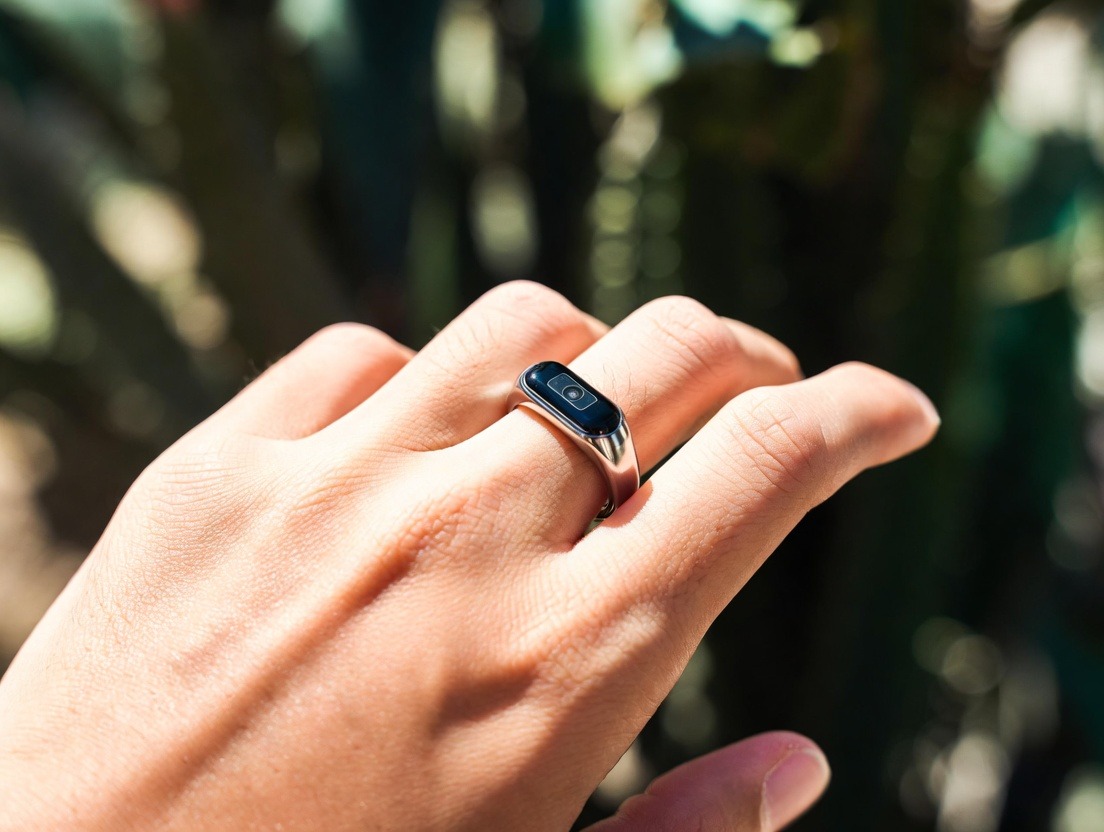
While smartwatches dominate the wearable conversation, smart rings are emerging as a powerful, discreet alternative, particularly in the high-fidelity wellness space. The choice of form factor—wrist versus finger—is not just aesthetic; it has profound implications for data quality, user compliance, and the types of insights that can be gathered.
Physiological Advantages of the Finger
The finger, and specifically the base of the finger, offers unique benefits for sensor technology:
User Experience and Compliance
Technological and Use-Case Focus
Smart rings have largely carved out a niche as dedicated wellness and recovery monitors. They often forgo GPS and large screens to double down on biometric sensors (advanced PPG, skin temperature, accelerometer) and battery life (often 5-7 days). Their apps tend to focus deeply on sleep analysis, recovery scores, and activity tracking rather than app ecosystems or communications. This focus aligns them closely with the needs of the "Health-Optimizing Biohacker" and the "Chronic Condition Manager" seeking robust trend data.
Limitations and Considerations
The Medical-Grade Ring Frontier
The ring form factor is also being explored for medical applications. Its advantages for continuous, comfortable monitoring make it suitable for long-term studies and specific monitoring use cases (e.g., continuous temperature for fertility or infection monitoring, sleep apnea screening with SpO2). While few are currently FDA-cleared as medical devices, the platform's potential is significant.
For users whose priority is high-quality, continuous biometric data for recovery, sleep, and stress management—without the distraction of a watch—a high-end smart ring represents a compelling and technologically advantageous choice. It embodies the principle that sometimes, the best health tech is the kind you can forget you're wearing, until it provides you with profound insights. To learn more about the potential of smart ring technology, we invite you to explore the resources available on our homepage.
A wearable's utility is fundamentally constrained by its battery life and design. These are not mere spec sheet items; they are direct determinants of data continuity, user compliance, and ultimately, the device's ability to fulfill its intended purpose—be it wellness encouragement or clinical surveillance.
The Battery Life Imperative
For health monitoring to be meaningful, it must be continuous or near-continuous. Gaps in data create blind spots. A device that dies halfway through the night misses the critical sleep and recovery window. A medical monitor that needs daily charging risks missing an acute event.
Design Philosophy: Wearability as a Feature
Design dictates whether a device is worn consistently, which is the first prerequisite for good data.
The Sensor Placement Conundrum
Design choices directly impact sensor performance, creating inherent trade-offs:
Arm & Torso: New form factors like armbands or "smart shirts" offer a compromise—better signal than the wrist, more comfortable than the chest for some applications, and suitable for continuous monitoring during specific activities or recovery.
The Charging Paradigm
How a device charges also affects usability and compliance.
The Invisible Goal: Effortless Data Capture
The pinnacle of wearable design is a device that users forget they are wearing, yet one that never forgets to collect data. This requires a harmonious balance:
When evaluating a device, look beyond the advertised "up to 7 days" battery claim and research real-world usage. Ask: If I use all the features, how long does it really last? Can I sleep and track a full night without charging? For a medical device, the battery life should comfortably exceed the prescribed monitoring period. The design should invite constant wear, not become a burden. This seamless integration of technology into daily life is what transforms a gadget from a novelty into a genuine health partner. For insights into how one brand approaches this balance of form and function, you can read about the brand journey and design philosophy at Oxyzen.ai.
In the wearable ecosystem, data is the currency. Every heartbeat, every step, every minute of sleep is a data point collected, transmitted, stored, and analyzed. But who truly owns this intimate portrait of your life? How is it protected, and how might it be used? The answers vary dramatically between consumer and medical devices and represent one of the most critical considerations for any user.
The Legal and Ethical Frameworks
Key Questions to Ask About Data Handling
The "De-Identification" Dilemma
A common corporate practice is to state that they "do not sell your personal data." However, they may sell or share "de-identified" or "aggregated" data. While this removes your name and email, sophisticated algorithms can sometimes re-identify individuals based on unique patterns in biometric and location data. This is a hotly debated area in data ethics.
Medical-Grade Data Ecosystems
In a clinical remote monitoring setup, the chain of custody is clearer. Data flows from the device to a secure, HIPAA-compliant platform accessed only by authorized members of your care team. The data is part of your medical record. The business model is based on healthcare provider payments, not data monetization, which aligns incentives more directly with patient welfare.
Your Rights and Responsibilities
The Future: Data Portability and Ownership
Movements like "My Data, My Choice" advocate for true user ownership of biometric data, where you control a digital copy of your health information and grant time-limited access to apps or doctors as you see fit. Technologies like blockchain and personal health data vaults are exploring this future.
Ultimately, using a wearable requires a measure of trust. Prioritize companies that are transparent about their data practices, offer robust security, and align their business model with your well-being rather than data exploitation. Your health data is a profound reflection of you; understanding its journey is a non-negotiable part of the wearable health tech conversation. For transparent information on how one company views its responsibility in this area, you can learn about the mission and values that guide our data practices.
For wearable data to fully realize its potential in improving health outcomes, it must move beyond the smartphone app and into the clinical workflow. The seamless integration of patient-generated health data (PGHD) into electronic health records (EHRs) and provider decision-making is the holy grail—a bridge connecting daily life to clinical care. However, building this bridge is fraught with technical, cultural, and practical challenges.
The Promise: Proactive, Personalized, and Preventative Care
Imagine a world where:
This is the vision of continuous, ambient monitoring that provides a richer, more realistic picture of a patient's health than sporadic snapshots taken in a clinic.
The Technical Hurdles: Interoperability
The biggest technical barrier is the lack of seamless interoperability—the ability of different information systems to exchange and use data.
The Cultural and Practical Hurdles
Current Models of Integration
The Role of the User
As a patient or health-conscious individual, you can be a catalyst. Ask your doctor: "Do you review data from wearables? Is there a preferred device or platform you use with patients?" Your interest can drive adoption. Always obtain and share summary reports, not raw data streams, to make the information digestible for time-pressed clinicians.
The integration journey is complex, but the direction is clear. The future of healthcare is hybrid, blending episodic clinical care with continuous personal monitoring. As standards solidify and trust in validated data grows, the divide between your daily health and your medical record will continue to dissolve, paving the way for a more collaborative and preventative model of medicine. For those interested in how this future is being built from a product perspective, you can explore our blog for articles on the convergence of wellness and clinical tech.
The price tags on wearable health technology span a vast spectrum, from a $50 fitness band to a $500+ smart ring to a $2,000+ prescribed medical monitor. Understanding what drives these costs—and what value you receive in return—is essential for making a sound investment. Furthermore, the question of who pays, especially for medical-grade devices, adds another layer of complexity.
Deconstructing the Cost: What Are You Paying For?
Value Proposition: What Are You Actually Buying?
Insurance Coverage and Reimbursement
This is a pivotal differentiator.
The Total Cost of Ownership
Look beyond the sticker price:
Making a Financially Smart Choice
The cost analysis ultimately circles back to the core distinction: wellness vs. medicine. Investing in a high-quality consumer device for self-knowledge is a valid personal health expenditure. The path to insurance-covered medical wearables is a clinical one, paved with diagnosis and necessity. Aligning your budget with your true objectives ensures your investment pays off in the currency that matters most—your health. For support on specific questions about device value and use cases, our FAQ section provides detailed guidance.
The frontier between consumer wellness and medical-grade technology is not a static wall; it is a dynamic, permeable membrane. Driven by rapid advancements in sensor technology, artificial intelligence, and regulatory innovation, we are witnessing a powerful convergence. This blurring of lines promises to democratize access to sophisticated health monitoring, but it also raises new questions about responsibility and oversight.
1. The Rise of the "Prosumer" Medical Device
A new category is emerging: high-fidelity consumer wearables with FDA-cleared features. The Apple Watch’s ECG and Afib detection is the canonical example. These are consumer products, sold directly to individuals, that contain one or more sensors or algorithms that have undergone the rigorous 510(k) clearance process for specific indications. The device itself is not a prescription, but its capability is medically validated. This trend is accelerating, with companies seeking clearances for features like sleep apnea screening (using SpO2 and motion), hypertension detection (via pulse arrival time), and even glucose trend monitoring (via non-invasive sensors). This puts powerful screening tools directly on millions of wrists and fingers, shifting early detection from the clinic to daily life.
2. AI and Predictive Analytics: From Description to Prescription
Current wearables are largely descriptive—they tell you what happened (your heart rate averaged 62 BPM last night). The next leap is to predictive and prescriptive analytics powered by AI.
3. Non-Invasive Multi-Modal Sensing
The quest for the "holy grail" of non-invasive, continuous blood glucose monitoring is just the tip of the iceberg. Research is exploding into using advanced optical sensors (like Raman spectroscopy), bioimpedance, and sweat analysis to estimate a wider range of biomarkers from the skin's surface. Future wearables may provide insights into hydration and electrolyte levels, lactate (for athletic performance), cortisol (stress hormone) trends, and even certain blood chemistry markers. This would transform wearables from fitness and cardiovascular monitors into comprehensive metabolic and biochemical dashboards.
4. Regulatory Evolution: The FDA's Digital Health Pre-Cert Program
Recognizing the pace of software innovation, the FDA has explored programs like Digital Health Pre-Certification (Pre-Cert). The concept is to shift focus from reviewing individual products to certifying the software development practices and culture of quality at the company level. A "pre-certified" company could then bring lower-risk software-based medical devices (like certain AI algorithms) to market with a streamlined review. While the full program is still in development, it signals a regulatory mindset adapting to agile, iterative tech development, potentially allowing validated medical insights to reach consumers faster.
5. Personalized Baselines and Digital Twins
The future moves away from population norms toward hyper-personalized baselines. Your device will learn your unique physiology—what a "normal" HRV is for you in different seasons, how your temperature fluctuates with your menstrual cycle. This creates a highly sensitive detector of deviations from your normal. Pushing this further is the concept of a "digital twin"—a sophisticated computer model of your individual physiology, fed by continuous wearable data. Doctors could simulate how you might respond to a new medication or treatment plan on your digital twin before administering it to you in the real world.
The Challenges Within the Convergence
This exciting future is not without its perils:
The horizon is one of incredible empowerment, where advanced health insights become seamlessly woven into the fabric of our lives. The goal is no longer just to track, but to understand, predict, and ultimately, to empower individuals and their clinicians with a continuous stream of personalized, actionable intelligence. Navigating this future will require not just smarter technology, but also wiser users, more agile regulators, and a healthcare system ready to embrace a continuous flow of patient data. To follow the ongoing developments and thought leadership in this space, you can explore our blog for articles on the future of health tech.
Armed with a deep understanding of the landscape, how do you, as an individual, cut through the noise and choose the right device? This decision framework will guide you through a series of purposeful questions, leading you to a choice that aligns with your needs, budget, and expectations.
Step 1: Define Your Primary Objective (The "Why")
This is the most critical step. Be brutally honest with yourself. Select your dominant driver:
Step 2: Match Objective to Device Category
Step 3: Evaluate Key Specifications (The "How")
Once you have a category, drill into specifics:
Step 4: Consider the Ecosystem and Longevity
Step 5: Consult and Purchase
Final Guiding Principle: Trust but Verify
For wellness and fitness, trust is built on consistency and a good user experience. For anything approaching health management, verification is key. Look for the evidence behind the claims: regulatory marks, published studies, and clinical partnerships. The most responsible companies in the space are those that educate their users about both the power and the limits of their technology.
Choosing a wearable is a personal investment in your health journey. By following this framework, you move from being a passive consumer to an empowered decision-maker, selecting a tool that will become a meaningful and trustworthy companion. To see how real people have navigated this choice for their own goals, you can read authentic user experiences and reviews in our testimonials section.
Your Trusted Sleep Advocate: Sleep Foundation — https://www.sleepfoundation.org
Discover a digital archive of scholarly articles: NIH — https://www.ncbi.nlm.nih.gov/
39 million citations for biomedical literature :PubMed — https://pubmed.ncbi.nlm.nih.gov/
Experts at Harvard Health Publishing covering a variety of health topics — https://www.health.harvard.edu/blog/
Every life deserves world class care :Cleveland Clinic - https://my.clevelandclinic.org/health
Wearable technology and the future of predictive health monitoring :MIT Technology Review — https://www.technologyreview.com/
Dedicated to the well-being of all people and guided by science :World Health Organization — https://www.who.int/news-room/
Psychological science and knowledge to benefit society and improve lives. :APA — https://www.apa.org/monitor/
Cutting-edge insights on human longevity and peak performance:
Lifespan Research — https://www.lifespan.io/
Global authority on exercise physiology, sports performance, and human recovery:
American College of Sports Medicine — https://www.acsm.org/
Neuroscience-driven guidance for better focus, sleep, and mental clarity:
Stanford Human Performance Lab — https://humanperformance.stanford.edu/
Evidence-based psychology and mind–body wellness resources:
Mayo Clinic — https://www.mayoclinic.org/healthy-lifestyle/
Data-backed research on emotional wellbeing, stress biology, and resilience:
American Institute of Stress — https://www.stress.org/


