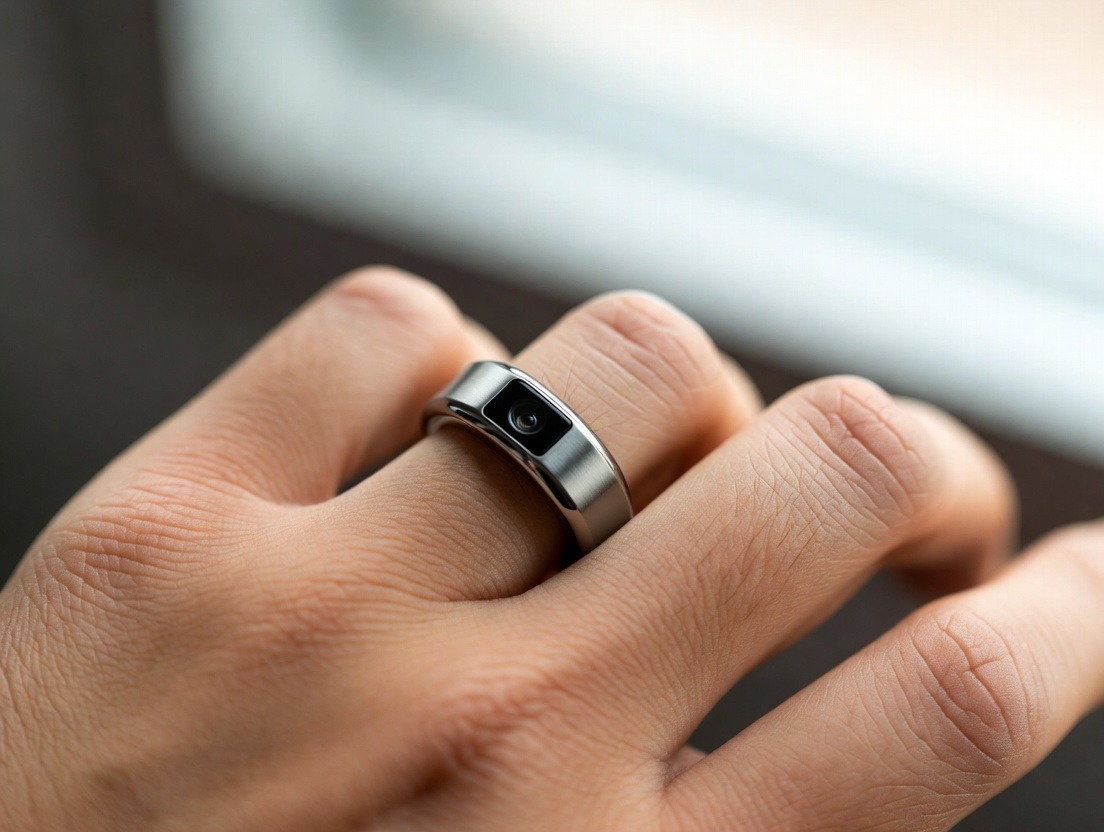
The Wearable Health Tech Guide to Water Resistance and Durability
A guide to water resistance and overall durability of wearables.
The Wearable Health Tech Guide to Water Resistance and Durability: Mastering the Elements with Your Smart Ring
In a world where we track our steps, monitor our heart rate, and analyze our sleep, our commitment to health data has become a 24/7 pursuit. We wear our dedication on our sleeves—or more precisely, on our fingers. The smart ring, a marvel of miniaturized engineering, promises a seamless, unobtrusive window into our well-being. It journeys with us from the pre-dawn sleep cycle to the midday workout, the post-work shower, and the evening dishwashing. Yet, this constant companionship demands a resilience that many of us take for granted: the ability to withstand water, sweat, impacts, and the relentless wear of daily life.
This isn't just about whether your device survives a splash. It’s about the integrity of your continuous health data, the longevity of a significant investment, and the freedom to live your life without constantly worrying about your tech. Understanding water resistance and durability is the difference between a fragile novelty and a trusted wellness partner. A broken sensor from a single knock or fogged internals from a steamy room can sever the very connection to your health that you seek to strengthen.
This definitive guide will dive deep beneath the surface of marketing terms and technical jargon. We’ll explore the science of sealing tiny electronics, decode the often-misunderstood language of IP and ATM ratings, and reveal the real-world threats that specifications sheets leave out. Whether you’re a dedicated athlete, a busy parent, a professional in demanding environments, or simply someone who values reliable data, this knowledge will empower you to choose, use, and protect your wearable companion. It’s time to ensure your journey to better health isn’t interrupted by a spilled glass of water or an accidental bump against a doorframe. Let’s begin by understanding the foundational challenge: protecting the miniature world of sensitive technology nestled on your finger.
The Invisible Battle: Why Your Tiny Tech Needs Big Protection
Consider for a moment the environment your smart ring calls home. Your finger is a dynamic landscape. Its temperature fluctuates. It swells and contracts slightly with heat, cold, and sodium intake. It is the launch point for thousands of micro-movements daily—typing, gripping, tapping. It is exposed to sunlight, lotions, soaps, and the constant, omnipresent threat of moisture in the form of sweat, rain, and washing. Now, place within this environment a device packed with LEDs for optical heart rate and blood oxygen monitoring, a temperature sensor, an accelerometer, a gyroscope, a radio for Bluetooth connectivity, and a tiny battery. Every component is a masterpiece of miniaturization, and each is profoundly vulnerable.
The primary enemy is water ingress. It’s not merely about “getting wet.” Water is a brilliant conductor and corrosive agent. A single droplet finding its way to the circuit board can create short circuits, corrode solder points, and permanently disable sensors. The damage is often gradual and insidious; a device might function for days after a minor breach before succumbing to internal corrosion. Furthermore, water can fog optical sensors, rendering heart rate and SpO₂ readings useless. The seals that keep water out are also the first line of defense against other invaders: dust, skin cells, sweat salts, and cosmetic products. These can clog sensor windows, degrade seals over time, and create abrasive pastes that scratch lenses.
Then there is the physical battlefield. Unlike a smartwatch with a broad, flat screen, a ring is a continuous band that presents all its surfaces as potential impact points. A glancing blow against a granite countertop transmits force through the entire housing. The materials must therefore balance beauty with brawn—resisting scratches that obscure sensors while maintaining structural integrity against deformation. A bent ring can break a seal as effectively as a failed gasket.
Finally, we have the environmental and chemical threats. Sunlight’s UV rays can degrade certain polymers and discolor metals. Oils from your skin, alcohol-based sanitizers, chlorine from pools, and salts from sweat can all, over time, interact with the ring’s exterior materials and sealing agents. This isn’t a one-time test but a war of attrition fought every single day.
The engineering challenge is monumental. It requires creating a hermetic seal that can flex with finger movements, withstand pressure changes, and resist chemical attack—all while being small enough to be comfortable and aesthetically pleasing. This is why water resistance and durability are not mere features; they are the foundational pillars that determine whether a smart ring can deliver on its promise of continuous, reliable health insights. It’s an invisible battle, but one with very visible consequences for your data and your device. To appreciate the solutions, we must first become fluent in the language used to describe them.
Decoding the Jargon: IP, ATM, and What Those Ratings Really Mean
Walk into any wearable tech spec sheet, and you’ll be met with a cryptic alphabet soup: IP68, 5 ATM, water-resistant to 50 meters. These ratings are your primary guide to a device’s ruggedness, but they are also among the most misunderstood terms in consumer tech. Let’s demystify them, because relying on a simplistic interpretation can lead to a very expensive misunderstanding.
The IP Code: Ingress Protection
The International Protection (IP) code, governed by standard IEC 60529, is a two-digit classification system. The first digit indicates protection against solid particles (dust), and the second digit indicates protection against liquids (water). It’s crucial to note that this rating is awarded based on controlled laboratory tests, not real-world longevity.
First Digit (Solids): Ranges from 0 (no protection) to 6 (dust-tight). For a smart ring, an IP6X rating is the gold standard, meaning no dust ingress during prolonged testing. This is critical for keeping sensors clean.
Second Digit (Liquids): This is where nuance is key. It ranges from 0 to 9. Common ratings for wearables include:
IPX7: Protected against immersion in water up to 1 meter for 30 minutes. This is good for accidental drops in water but not for swimming or showering under pressure.
IPX8: Protected against continuous immersion in water under conditions specified by the manufacturer (often deeper than 1 meter for longer periods). This specification varies by brand.
IPX9K: Protected against high-pressure, high-temperature water jets. Rare for wearables.
The Critical Fine Print: An IP rating is not a guarantee of permanent condition. It reflects the device’s state when new. Seals degrade over time due to heat, chemicals, and physical wear. Furthermore, the tests are done with fresh, still water. They do not account for the dynamic pressure of swimming strokes, the hot water and soaps of a shower, the chemicals in a pool, or the salt in seawater. An IPX8 rating does not mean “swim-proof for life.”
The ATM and Meter Ratings
Commonly used for watches and rings, ATM (atmospheres) or simple meter depth ratings (e.g., 10m, 50m, 100m) originate from the watch industry. This rating indicates the static water pressure a device can withstand in a lab.
3 ATM / 30 meters: Suitable for everyday splashes, rain, and handwashing. Not suitable for showering, swimming, or snorkeling.
5 ATM / 50 meters: Suitable for swimming in a pool (surface swimming, not diving). Often considered the minimum for serious fitness wearables.
10 ATM / 100 meters: Suitable for recreational swimming and surface water sports.
The Massive Caveat: These depth ratings are deeply misleading. A “50m water-resistant” ring is not designed for scuba diving to 50 meters. The rating simulates the static pressure at that depth, not the dynamic, variable pressures created by movement. Arm movement during a vigorous swim can create localized pressure spikes well beyond the static rating. As a rule of thumb, for any water sports, you need a rating significantly higher than the actual depth you’ll encounter.
The Smart Ring Specifics: Going Beyond the Standard
Leading smart ring manufacturers, like those focused on genuine 24/7 health tracking, understand these limitations. They often design to exceed these standard ratings to account for real-world abuse. For instance, a ring might be rated 5 ATM but be tested to withstand the higher, variable pressures of lap swimming. The best companies are transparent about their testing protocols. When evaluating a ring, look for explicit language: “swim-proof,” “shower-proof,” “designed for continuous wear during high-intensity activities.” This practical commitment is more telling than a standalone number.
Always remember: these ratings are your starting point for comparison, not your final assurance. Your habits are the ultimate test. For a deeper dive into how leading companies approach this engineering challenge, you can explore the philosophy behind Oxyzen’s design and testing. Now, let’s move from theory to the tangible, examining the very materials that form your ring’s first line of defense.
Materials Matter: From Titanium to Coatings – The Anatomy of a Durable Ring
The quest for durability begins with substance. The materials chosen for a smart ring’s housing, inner lining, and sensor windows determine not only its look and feel but its very ability to survive on your finger. This is a careful balancing act between hardness, weight, biocompatibility, and signal transparency.
The Housing: The Primary Shield
The outer band material must be tough, lightweight, and resistant to corrosion.
Titanium (Grade 5/Ti-6Al-4V): The current elite standard. It offers an exceptional strength-to-weight ratio, meaning it can be very strong without being bulky. It is highly corrosion-resistant, hypoallergenic, and biocompatible. Its natural hardness makes it highly scratch-resistant compared to other metals. For a device meant to be worn for years, titanium’s longevity is a key advantage.
Medical-Grade Cobalt Chrome: Another premium option, known for its extreme hardness and brilliant, lustrous finish that is highly resistant to scratches and wear. It’s also hypoallergenic and very durable.
Stainless Steel (e.g., 316L): A common and cost-effective choice. It offers good corrosion resistance and durability but is generally softer than titanium or cobalt chrome, making it more prone to fine scratches over time. It is also denser, resulting in a heavier ring for the same size.
Ceramic (e.g., Zirconia): Gaining popularity for its sleek, modern look and remarkable scratch resistance—it’s harder than steel. It is also hypoallergenic and chemically inert. However, its potential brittleness compared to metals is a consideration; it can be more susceptible to chipping or cracking from a sharp, high-impact blow.
The Inner Liner: Comfort and Signal Integrity
The inside of the ring is just as critical. It must be comfortable for 24/7 wear and not interfere with sensor operation.
Medical-Grade Resins/Polymers: These are often used to create a smooth, comfortable inner surface that reduces skin irritation. They can also be engineered to have specific thermal properties, helping to isolate the skin-temperature sensor from the ambient temperature of the metal outer band.
Direct Skin Contact Design: Some high-end rings forgo a separate liner, instead polishing the interior titanium or cobalt chrome to a supremely smooth finish. This maximizes sensor contact and minimizes places for sweat and debris to collect, but requires a perfect fit.
The Sensor Window: The Eye of the Device
This is perhaps the most delicate point. The optical sensors (PPG) need a completely clear, unobstructed path to your skin.
Scratch-Resistant Glass or Sapphire Crystal: A flat, durable transparent material is embedded in the ring’s underside. Sapphire crystal, used in high-end watches, is virtually scratch-proof under everyday conditions, ensuring long-term sensor clarity. This is a hallmark of a well-built device.
Precision Sealing: The junction where this window meets the metal housing is a critical failure point. It must be sealed with microscopic precision using durable, flexible adhesives or via a compression gasket, forming a permanent watertight bond.
Invisible Armor: Advanced Coatings
Beyond the base materials, advanced surface treatments add another layer of protection.
Diamond-Like Carbon (DLC) or PVD Coatings: These ultra-hard, thin-film coatings can be applied to metals to dramatically increase surface hardness and scratch resistance. A DLC-coated titanium ring approaches the hardness of sapphire.
Oleophobic and Hydrophobic Coatings: Applied to sensor windows and sometimes the entire ring, these coatings repel oils and water. Water beads up and rolls off, helping to keep the sensors clean and reducing mineral deposits from hard water.
The choice of materials is a direct reflection of a brand’s commitment to durability. It’s an area where cutting corners leads to rapid degradation. When researching, prioritize companies that are transparent about their material specifications. For example, you can discover how Oxyzen selects and engineers its materials for lifelong resilience. With a sturdy physical form established, we must next peer inside to see how the delicate electronics are safeguarded.
Sealing the Core: Gaskets, Adhesives, and Hermetic Seals in Micro-Engineering
If the housing is the castle wall, the internal seals are the mortar, gates, and vaults protecting the kingdom’s treasure: the sensor array and battery. This is where engineering moves from the macroscopic to the microscopic. Creating a permanent, flexible, impenetrable barrier in a device so small is a feat of modern materials science.
The Challenge of Miniaturization and Flex
A smart ring is not a solid block of metal. It contains a channel or chamber for the internal electronics module. This module must be perfectly sealed, yet the ring itself must have a tiny degree of flex to be comfortable and safe (a completely rigid ring could be dangerous in certain situations). Furthermore, the ring experiences thermal expansion and contraction. The sealing system must accommodate these micro-movements without failing.
Primary Sealing Methodologies
Unibody Construction with Internal Potting: The most robust approach. Here, the ring’s outer shell (e.g., titanium) is machined or molded as a single, seamless piece with an internal cavity. The electronics module is then inserted, and the entire cavity is filled with a specialized potting compound. This is a liquid resin that cures into a solid, flexible elastomer. It encases every component, creating a shock-absorbent, water-blocking barrier that also provides excellent thermal management. The final opening is then sealed with a laser-welded or adhesively bonded plate that holds the sensor window. This method is complex and expensive but offers superior protection.
Two-Piece Construction with Compression Gaskets: The ring is manufactured in two halves (often a top and bottom) that screw or snap together. Between them sits a precision-molded elastomeric gasket (often made from silicone, fluorosiliconerubber, or EPDM). When the halves are joined under precise torque, the gasket compresses, forming a watertight seal. The quality of this seal depends entirely on the gasket material’s longevity and the precision of the mating surfaces. A well-designed compression seal can be very effective but may have more potential failure points over decades than a potted unibody.
Advanced Adhesive Bonding: High-performance, medically approved adhesives are used to bond components like the sensor window to the housing. These aren’t ordinary glues; they are engineered for specific coefficients of thermal expansion, flexibility, and long-term resistance to moisture and chemicals. They often cure under UV light or heat to form bonds stronger than the surrounding materials.
The Role of “O-Rings” and Channel Seals
In designs with a removable inner core or charging contacts, tiny O-rings—small, looped gaskets—are used. For example, where charging pins meet the ring, a microscopic O-ring seals each pin. The precision here is astounding, as any imperfection in the O-ring’s cross-section or the groove it sits in can lead to a leak.
Testing the Seal: Helium Leak Detection
How do manufacturers know the seal is perfect? One gold-standard method is helium mass spectrometry leak testing. The device is placed in a chamber filled with helium, an atom so small it can find the most minuscule leak. A mass spectrometer then sniffs for any helium that has penetrated the seal. This test can detect leaks far smaller than water molecules could exploit, ensuring the seal is truly hermetic when it leaves the factory.
This internal sealing is the unsung hero of smart ring durability. It’s a process you’ll never see, but its failure is immediately apparent. A company’s investment in this area speaks volumes about its confidence in the product’s lifespan. For those curious about the rigorous processes behind reliable health tech, our blog often details the engineering behind seamless wearable design. Now that we understand how the ring is sealed, let’s confront the realities of what truly threatens it in daily life.
Beyond the Lab: Real-World Threats to Your Ring’s Lifespan
Laboratory tests provide a controlled baseline, but your life is wonderfully uncontrolled. The true test of your smart ring’s durability happens in the messy, unpredictable, and often chemically hostile real world. Understanding these threats is the first step in mitigating them and setting realistic expectations for your device’s lifespan.
The Chemical Assault
Water is rarely pure. The substances mixed with it pose unique dangers.
Chlorine & Bromine (Pools & Hot Tubs): These disinfectants are highly corrosive oxidizers. They can accelerate the degradation of seals, discolor certain metals, and damage oleophobic coatings over time. While a swim-proof ring should handle occasional pool use, frequent, prolonged immersion in heavily chlorinated water is an extreme stressor.
Saltwater (Ocean & Sea): Salt is corrosive and, when water evaporates, it leaves behind crystalline deposits that can be abrasive and clog ports or sensor windows. Saltwater also conducts electricity more efficiently, raising the stakes of any potential ingress.
Soaps, Shampoos, & Body Washes: These often contain surfactants, alcohols, and fragrances. Surfactants reduce water’s surface tension, theoretically making it easier for water to seep past microscopic imperfections in a seal during a shower. Lotions and sunscreens can create a film on sensor windows, affecting readings.
Hand Sanitizers & Cleaning Alcohols: High-concentration alcohols can be particularly harsh on certain polymers and adhesives, potentially drying out or degrading sealants over repeated exposure.
Sweat: An often-overlooked agent, sweat is a complex brine of water, salts (electrolytes), lactic acid, and urea. Its acidic nature and salt content can slowly corrode metals and degrade non-metallic surfaces with constant contact.
Physical & Thermal Stressors
High-Impact Activities: Weightlifting (especially with metal bars), rock climbing, CrossFit, or any activity where the ring might be forcefully struck or pinched poses a high risk of deforming the housing or cracking a sensor window.
Extreme Temperature Swings: Moving rapidly from a cold environment to a hot shower causes materials to expand at different rates, stressing seals. Leaving the ring in direct, hot sunlight (e.g., on a car dashboard) can also exceed safe internal temperature ranges for the battery and electronics.
High-Pressure Water Jets: A direct blast from a powerful showerhead, pressure washer, or water jet in a hot tub/spa can force water past seals in a way that gentle immersion does not. This is why an IPX7 rating (immersion) does not imply resistance to jets (IPX6 or IPX9K).
Abrasive Contact: Repeated contact with rough surfaces like concrete, bricks, or certain types of sandpaper-like work materials can slowly grind away coatings and polished finishes.
The Inevitable: Gradual Wear and Tear
Even in a perfect, hazard-free environment, all seals have a finite lifespan. Elastomers like gaskets and O-rings can dry out, lose elasticity, and compress permanently over time (a process accelerated by heat and UV exposure). This is a normal aspect of material science, not a manufacturing defect. A ring that is water-resistant when new may not be water-resistant forever.
The key takeaway is that your “waterproof” ring is actually water-resistant under specific, and often ideal, conditions. Treating it as invincible will shorten its life. Smart usage involves recognizing these threats and adapting your habits accordingly, which is exactly what we will explore next. For common questions on how to navigate these real-world scenarios, our FAQ page provides practical guidance on care and maintenance.
The Care and Feeding of a Smart Ring: A Practical Maintenance Guide
Knowledge of threats empowers proactive protection. With the right habits, you can dramatically extend the functional life and appearance of your smart ring, ensuring it delivers reliable data for years to come. Think of this not as coddling a fragile device, but as partnering with a precision tool to maximize its potential.
Daily & Weekly Rituals
Cleaning: Clean your ring regularly with a soft, lint-free cloth slightly dampened with fresh, lukewarm water. This removes sweat, oils, and lotions that can degrade surfaces and interfere with sensors. For a deeper clean, use a drop of mild, fragrance-free soap. Avoid: paper towels (can be abrasive), harsh soaps, and chemical cleaners.
Drying: After exposure to water (washing hands, swimming, sweating), dry the ring thoroughly, paying special attention to the sensor window and any crevices. Don’t put it on while your finger is still wet, as this traps moisture against the skin.
Sensor Window Check: Make it a habit to visually inspect the sensor window for film or debris. A clean window is critical for accurate heart rate, SpO₂, and sleep data.
Activity-Specific Guidance
Exercise & Heavy Sweating: It’s generally fine to wear your ring. Afterward, rinse it with fresh water and dry it to remove corrosive sweat salts.
Showering: Check your manufacturer’s guidelines explicitly. While many rings are rated for it, the combination of hot water, soaps, and high-pressure jets is stressful. If you do shower with it, rinse it with fresh water afterward to remove soap residue. Consider taking it off for a deep, exfoliating scrub with gritty soaps.
Swimming (Pool/Ocean): If your ring is explicitly rated for swimming, it should be safe. After swimming in any water—pool, ocean, or lake—always rinse the ring thoroughly under a gentle stream of fresh, clean water and dry it immediately. This single habit is the most important for preventing chemical and salt damage.
High-Impact Sports & Manual Labor: When in doubt, take it off. Weightlifting, rock climbing, carpentry, mechanics, or any activity with a high risk of crushing impact or abrasion warrants removing the ring. Store it safely in its provided case or a soft cloth. A short data gap is far better than permanent physical damage.
Applying Lotions, Sunscreen, or Insect Repellent: Apply these products and let them fully absorb/dry before putting your ring back on. These substances can gum up sensors and are difficult to remove.
Long-Term Preservation
Storage: When not worn for extended periods (a rare event for a 24/7 tracker!), store the ring in its provided case in a cool, dry place away from direct sunlight.
Battery Health: Follow charging guidelines. Avoid letting the battery fully deplete and sit for weeks, and avoid exposing it to extreme heat while charging.
Professional Inspection: Some manufacturers offer periodic check-ups. If you have concerns about seal integrity or sensor performance, reach out to the support team for advice.
This mindful approach transforms you from a passive user into an active steward of your health technology. By integrating these simple practices, you safeguard your investment and your continuous data stream. Next, we’ll examine how this durability directly impacts the most important aspect: the quality and reliability of the health insights you depend on.
Data Integrity: How Durability Impacts the Accuracy of Your Health Metrics
Your smart ring is not a piece of jewelry with incidental tech; it is a biomedical data acquisition device. Its primary purpose is to generate accurate, continuous streams of physiological information. Every scratch, every droplet of moisture, every micro-fracture in a seal doesn’t just risk hardware failure—it can silently corrupt the very data you rely on to make informed decisions about your health and fitness.
The Sensor-Environment Interface
The quality of data begins at the precise point where the sensor meets your skin. Any compromise here creates noise and error.
Scratched or Cloudy Sensor Windows: The optical PPG (photoplethysmography) sensors fire LEDs into your skin and measure the reflected light to determine heart rate and blood oxygen variation. A scratched or dirty window scatters this light, reducing signal strength and introducing artifacts. This can lead to inaccurate readings, missed heart rate spikes during exercise, or failed SpO₂ measurements during sleep.
Moisture or Debris Under the Ring: Sweat, water, or lotion forming a layer between the sensors and your skin acts as an optical barrier, dampening the signal. This is a common cause of “signal loss” errors during activity or sleep tracking, creating gaps in your data.
Poor Fit Due to Damage: A ring that has been bent or dented may not sit flush against your skin. An uneven fit creates pressure points and gaps, leading to inconsistent sensor contact and unreliable data, especially for temperature and precise heart rate variability (HRV) measurements, which require stable conditions.
Internal Compromises
Moisture Ingress and Sensor Fogging: If water vapor penetrates the seal and condenses inside on the sensor window or lens, it will severely distort optical measurements, often rendering them useless until the device is completely dried out internally—if that’s even possible.
Impact Damage to Internal Components: A sharp blow could misalign a sensor microscopically or damage its calibration. The ring might still turn on and sync, but its accelerometer could be off-axis, skewing activity and sleep stage detection, or its temperature sensor could be biased.
The Cascade of Inaccurate Insights
Inaccurate raw data corrupts every downstream metric and insight:
Sleep Staging Becomes a Guess: Sleep algorithms use heart rate, HRV, and movement. Noisy heart rate data leads to misidentified sleep stages (e.g., mistaking light sleep for REM, or missing wake periods).
Recovery Scores Lose Meaning: Your readiness or recovery score is often derived from nocturnal HRV, resting heart rate, and sleep quality. If your HRV is artificially low due to poor signal, you may get a “strained” score despite feeling great, leading to unnecessary deloading.
Activity and Calorie Estimates Drift: An inaccurate accelerometer will misjudge the intensity and type of your movement, throwing off calorie burn estimates.
Long-Term Trends Are Skewed: The greatest power of wearables is spotting trends over weeks and months—a gradual change in resting heart rate, a shift in sleep architecture. Persistent, low-level data corruption can create false trends or mask real ones, undermining your ability to see the true effects of lifestyle changes.
Therefore, durability is not a separate concern from accuracy; it is its prerequisite. A ring that cannot withstand your life cannot accurately measure it. Protecting the physical device is synonymous with protecting the fidelity of your personal health dataset. To see how a commitment to durable design supports consistent, meaningful data for real users, you can read about their experiences in Oxyzen testimonials. Now, let’s shift our focus to those who demand the most from their gear: the athletes and fitness enthusiasts.
For the Active User: Stress-Testing Your Ring in Fitness & Sports
For the athlete, the smart ring is a critical training partner. It’s there for the grueling track intervals, the heavy squat sessions, the open-water swims, and the marathon training miles. This environment represents the ultimate durability stress test, combining intense physical impacts, corrosive sweat, temperature extremes, and dynamic water pressure. Choosing and using a ring here requires a strategic approach.
Sport-Specific Risk Assessment
Weightlifting & Powerlifting: High Risk (Impact/Deformation). Metal barbells pose a severe crushing hazard. A ring can get pinched between the bar and a rack, or simply endure massive pressure during lifts like deadlifts or kettlebell work. Recommendation: Always remove your ring. Use a secure, designated spot like a small pouch on your gym bag. The risk of damaging the ring—or worse, causing a finger injury called “degloving”—is too high.
CrossFit & HIIT: High Risk (Impact/Abrasion). Similar to weightlifting, with added elements like rope climbs, box jumps, and dynamic movements where the ring can slam against equipment. Removal is the safest policy for heavy lifting components.
Running & Cycling: Low-to-Moderate Risk. These are generally safe for ring wear. The primary concerns are sweat management and sun exposure. Ensure a good fit to prevent rotation that could obscure the sensors. Rinse sweat off afterward.
Swimming & Triathlon: Moderate Risk (Chemical/Dynamic Pressure). If your ring is explicitly designed and rated for lap swimming (look for 5 ATM+ and explicit “swim-proof” claims), it should withstand pool use. For triathletes, the transition from swim to bike/run is key. Rinse salt or chlorine off immediately after the swim leg if possible. Open-water swimming adds the risk of impact with rocks or debris.
Rock Climbing & Bouldering: Very High Risk (Abrasion/Crushing). Constant abrasive contact with rock surfaces will quickly destroy any coating and scratch sensor windows. Gripping holds also creates high, uneven pressure points. Remove your ring.
Team Sports (Basketball, Soccer, etc.): Moderate Risk (Impact). The risk comes from accidental impacts with balls, other players, or the ground. A protective silicone cover (if available for your model) could be considered, but may affect sensor function.
The Sweat and Element Factor
Sweat Management: Prolonged, sweaty sessions can lead to data gaps. Wiping your finger and the ring periodically can maintain sensor contact. Post-workout, the cleaning ritual is non-negotiable.
Extreme Environments: Trail running in the mud, skiing in the cold, cycling in the rain—your ring must handle it. Mud is abrasive and should be rinsed off gently. Extreme cold can temporarily reduce battery life but isn’t typically damaging. Ensure the ring is dry before going into sub-freezing temperatures to avoid freezing moisture.
The Athlete’s Checklist
Verify the Specs: Don’t assume. Ensure the ring is rated for the specific activities you do (swimming, etc.).
Establish a Removal Protocol: Know which activities necessitate removal and have a foolproof system (a dedicated case clipped to your bag) so you don’t lose it.
Post-Activity Care is Mandatory: Make rinsing and drying your ring as routine as stretching after a workout.
Listen to the Data: If you start seeing constant signal drops during a specific activity, it may be a sign of fit issues or the ring telling you it’s not suited for that environment.
For the active user, the ring is a tool. And like any precision tool, knowing its limits allows you to use it to its fullest potential without breaking it. The company behind your ring should understand this athletic mindset; you can learn more about Oxyzen’s mission to create devices for life in motion. But what about the long-term outlook? How does this all translate into the lifespan of your device?
Longevity and Value: How Durability Translates to Years of Service
In the world of consumer electronics, we’ve become accustomed to a two- to three-year upgrade cycle. Smartphones slow down, batteries degrade, and new features beckon. The smart ring, however, occupies a different space. It’s a health heirloom, a device whose value is intrinsically tied to its ability to provide consistent, long-term biometric trends. Therefore, its durability directly dictates its total cost of ownership and its ultimate value to you.
The Economics of Durability
A premium smart ring is a significant investment, often comparable to a high-end smartwatch. The justification for this cost lies not in flashy features that age quickly, but in built-to-last construction that delivers value over many years.
Cost-Per-Day Calculation: A $300 ring that fails after 18 months costs you about $0.55 per day of use. A $400 ring built with premium materials (titanium, sapphire glass, superior potting) that functions flawlessly for 5+ years costs about $0.22 per day—less than half. More importantly, it provides an unbroken, comparable dataset over that entire period, which is scientifically invaluable for tracking health trends.
Avoiding Premature Replacement: The hidden costs of a less durable device include the inconvenience of being without your tracker, the time spent on support and warranty claims, and the potential cost of out-of-warranty repair or replacement.
What Enables a Decade-Long Lifespan?
Material Selection (Revisited): Titanium and sapphire crystal don’t just look good on day one; they look and function nearly the same on day 3,650. Their resistance to corrosion and scratching ensures the device’s core functionality and aesthetics endure.
Seal Longevity: High-quality elastomers and potting compounds are engineered for environmental resistance. They are tested not just for initial waterproofing, but for resistance to “hardening” or “compression set” over years of thermal cycling and chemical exposure.
Battery Technology & Management: The battery is often the first component to wear out. A durable ring pairs a high-quality cell with intelligent charging circuitry that avoids stress (like trickle charging past 100%, or deep discharges). Some forward-thinking designs even consider future battery serviceability.
Software Support: Longevity isn’t just physical. A company must commit to updating the device’s algorithms and firmware for years, extracting more insights from the same robust hardware, much like a classic watch that never goes out of style.
The Warranty as a Confidence Signal
A manufacturer’s warranty is a direct reflection of their confidence in the product’s durability. A standard one-year warranty is the legal minimum. A two-year or longer warranty signals that the company expects the device to perform well beyond the typical failure curve. It’s a promise that aligns their interests with yours: they don’t want to pay for replacements, so they build it right the first time.
The Intangible Value of a Continuous Dataset
This is the most profound aspect. Your resting heart rate trend from age 35 to 40. Your sleep structure evolution as you adjust your training. Your body temperature variations across seasons and life stages. This longitudinal data is a personal health asset. A durable ring is the guardian of this asset. Its failure isn’t just a broken gadget; it’s a severed timeline, a lost chapter in your health narrative.
Choosing for durability is an investment in a long-term partnership with your data. It’s a rejection of disposable tech in favor of a tool that matures with you. For a closer look at a brand built on this principle of lasting value, you can explore Oxyzen’s story and vision. As we near the end of this portion of our guide, we must equip you with the final, critical skill: how to separate marketing hype from engineering reality when you make your choice.
Making the Informed Choice: Key Questions to Ask Before You Buy
Armed with knowledge of materials, seals, ratings, and real-world threats, you are now empowered to cut through marketing fluff and evaluate smart rings like an expert. Your purchasing decision should be a forensic investigation, not an impulse driven by aesthetics alone. Here are the crucial questions to ask, and where to find the answers.
Interrogating the Specifications Sheet
Don’t just read it—challenge it.
Q: What is the EXACT water resistance rating?
Look for: “IPX8” or “5 ATM/50 meters” along with explicit, plain-language claims like “swim-proof” or “shower-proof.” The combination of a technical rating and a practical claim is stronger than either alone.
Red Flag: Vague terms like “water-resistant,” “splash-proof,” or “sweat-resistant” without a supporting IP/ATM rating.
Q: What materials are used for the housing, inner liner, and sensor window?
Look for: Specifics. “Titanium” (what grade?), “sapphire crystal” or “hardened mineral glass,” “medical-grade polymer.”
Red Flag: Generic terms like “alloy,” “durable metal,” or “scratch-resistant glass.”
Q: What is the warranty period, and what does it specifically cover?
Look for: At least 2 years. Clear coverage for manufacturing defects, seal failure, and water damage resulting from normal use as defined by the ratings.
Red Flag: A 1-year warranty that excludes water damage or has a very narrow definition of “defect.”
Researching Beyond the Marketing
The truth often lies in third-party spaces and fine print.
Scour the FAQ and Support Pages: This is where companies address real user concerns. Look for detailed care instructions—if they are meticulous and cautionary, it reflects an understanding of real risks. The Oxyzen FAQ, for instance, is a good model for the level of detail to seek.
Seek Out Long-Term Reviews: Look for reviews from users who have had the device for 6+ months. Do they mention scratches? Has battery life held up? Any issues with sensor fogging or failure after swimming?
Analyze the Brand’s Communication: Does the brand engage honestly with durability questions on social media or forums? Do they transparently discuss the limitations of their device, or do they only promote its strengths? A brand that respects its customers will not overpromise.
Ask Directly: Use customer support channels. Ask: “Is the ring safe for daily showering with soap?” or “Can I wear it while weightlifting?” The specificity of their answer will be telling.
The Fit-First Principle
All the durability in the world is useless if the ring doesn’t fit perfectly. An ill-fitting ring is more prone to knocks, will provide poor data, and can even be a safety hazard.
Use the Brand’s Sizer Kit Meticulously: Follow instructions exactly, measure at different times of day and in different temperatures.
Consider Knuckle vs. Base: The ring must fit snugly enough that it won’t spin easily or fly off during a hand gesture, but must also pass over your knuckle comfortably. The ideal fit is a slight resistance at the knuckle.
Your choice of a smart ring is a commitment. By asking these questions, you’re not just buying a product; you’re vetting a partner for your health journey. You are ensuring that the device on your finger is built to be a resilient, reliable witness to your life, not a fragile ornament. This due diligence is the final, and most important, layer of protection you can provide. In our final section for this part of the guide, we’ll gaze into the near future to see how emerging technologies will redefine what “durable” even means.
The Future of Fortitude: Emerging Technologies in Wearable Durability
The quest for the indestructible, yet imperceptible, health wearable is a driving force in materials science and micro-engineering. Today’s titanium and sapphire crystal represent a pinnacle, but tomorrow’s rings will be forged from innovations that sound like science fiction. The next generation of durability won’t just be about better resistance; it will be about adaptive resilience, self-maintenance, and seamless integration with the human body. Let’s explore the frontiers that will define the smart rings of the coming years.
Materials Revolution: Beyond Metals and Ceramics
Liquidmetal and Amorphous Alloys: These metals have a non-crystalline, glass-like atomic structure. They are harder than titanium, more elastic, and highly corrosion-resistant. For a ring, this could mean a band that is virtually scratch-proof, can flex under impact without permanently deforming, and feels incredibly smooth to the touch. Companies like Apple have already used variants in SIM ejector tools and watch hinges; scaling it for a full ring housing is the next logical step.
Graphene-Infused Composites: Graphene, a single layer of carbon atoms, is the strongest material known. Infusing it into polymers or resins could create ultra-light, ultra-strong inner liners or structural elements. Its conductive properties could also be harnessed to create more efficient, flexible antennae or even integrated, transparent electrodes for new sensor types, all while adding tremendous tensile strength.
Self-Healing Polymers: Researchers are developing polymers that can repair small scratches or cracks when exposed to heat, light, or even ambient air. Imagine a ring coating that “heals” minor scuffs from a day of work, maintaining a pristine optical path for sensors indefinitely. This technology is in early stages but holds transformative potential for long-term aesthetics and function.
Biocompatible, "Living" Coatings: Inspired by nature, coatings that mimic the lotus leaf’s super-hydrophobic properties or shark skin’s anti-microbial texture are being refined. Future coatings could actively repel water, oils, and bacteria more effectively, keeping sensors cleaner and reducing skin irritation over decades of wear.
Sealing and Power: The Path to True Permanence
Monolithic (Chip-in-Ring) Construction: The ultimate sealing method is to eliminate seals altogether. Advances in flexible electronics could allow sensor arrays and microchips to be embedded directly into the ring material itself during a molding or sintering process, creating a single, solid object with no seams, joints, or glued interfaces. This would represent a quantum leap in water, dust, and shock resistance.
Advanced Vapor Deposition Barriers: For internal components, ultra-thin, nanoscale barrier films deposited via atomic layer deposition (ALD) can coat individual circuit elements, making them inherently water and corrosion-resistant even if the primary seal were to eventually fail.
Energy Harvesting & Solid-State Batteries: Durability isn’t just about survival; it’s about sustained function. Solid-state batteries promise greater energy density, faster charging, and significantly longer cycle life without the degradation and leakage risks of liquid electrolytes. Coupled with micro-scale energy harvesting—converting body heat, kinetic movement from finger gestures, or even ambient light into tiny trickles of power—the goal shifts from “battery life” to “perpetual operation,” removing the cyclical stress of charging and the need for charging ports (a major sealing vulnerability).
Sensor Durability and Novel Biometrics
Lensless and Embedded Optical Sensors: Moving away from a discrete, glued-in sensor window, future designs might use the ring material itself as an optical waveguide. Sensors could be placed along the band, reading signals through the titanium or ceramic, which would be engineered to transmit specific light wavelengths. This eliminates the weakest point in the current design.
Multi-Modal and Redundant Sensing: Durability also means data integrity. Rings will employ multiple sensor types to measure the same metric (e.g., using both optical and bioimpedance for heart rate). If one sensor is temporarily compromised, the system seamlessly switches to another, ensuring no data gap. This redundancy is a software-hardware approach to fault-tolerant durability.
The Human-Machine Interface: Durability as Disappearance
The final frontier of durability is biological integration. The ring shouldn’t feel like a separate device that needs protection, but as a natural extension of the self.
Custom, 3D-Printed Fit: Using detailed 3D scans of your finger, rings could be printed to match its exact topography, distributing pressure perfectly and eliminating all movement that leads to wear and impact. This perfect fit is the ultimate shock absorption system.
Biocompatible Form Factors: Research into flexible, stretchable electronics that can laminate onto the skin like a temporary tattoo points to a distant future where the “ring” is a flexible, breathable band that moves and feels like skin itself. Durability here is defined by elastic recovery and biocompatibility over decades.
These innovations are not mere fantasies; they are active R&D pathways in university labs and corporate research centers. The company that leads the next wave of wearables will be the one that masters not just biometric algorithms, but these profound advancements in physical integration. For a brand committed to staying at this cutting edge, you can follow our ongoing exploration of next-gen wellness tech on the Oxyzen blog.
Understanding this future context reframes today’s purchasing decision. You’re not just buying for now; you’re investing in a platform. A ring built with today’s best materials and sealing is more likely to remain a reliable performer until these future technologies mature into consumer-ready products. It bridges the gap between present utility and future potential. Now, let’s solidify everything we’ve learned into a set of actionable, conclusive principles.
Conclusion: Embracing a Philosophy of Resilient Health Tracking
Our journey from the microscopic weakness of a failed seal to the futuristic vision of self-healing polymers brings us to a fundamental realization: durability is a philosophy, not just a specification. It is the shared commitment between engineer and user to protect the sacred, continuous thread of personal health data. This guide has armed you with the knowledge to become an expert participant in that commitment.
Let’s crystallize the core tenets of this philosophy:
Respect the Engineering, Understand the Limits. The IP68 or 5 ATM rating is a testament to brilliant engineering, but it is a snapshot from a controlled lab. It is not an infinite license for abuse. Real-world chemicals, dynamic pressures, and thermal shocks present a harsher, more complex test. Your informed respect for this gap is the first layer of protection.
Durability and Data Integrity are Inseparable. A scratch is not merely cosmetic; it’s a data filter. A compromised seal isn’t just a hardware flaw; it’s a threat to your multi-year health trends. Protecting the physical device is synonymous with protecting the accuracy and continuity of your self-knowledge.
Proactive Care is a Feature, Not a Burden. The ritual of rinsing after a swim, drying after a shower, and removing the ring before lifting weights is not an inconvenience. It is the essential software update for the hardware of your ring. It is the practice that translates engineering potential into years of reliable service.
Choose for the Long Journey, Not the Short Trip. In a market flooded with options, prioritize transparency over hype, material specificity over vague promises, and warranty length over flashy short-term features. Select a partner whose story is about longevity, like those who share their commitment to sustainable design, which you can see in the values and journey behind Oxyzen. Your ring should be a constant through life’s chapters, not a footnote.
You Are the Final Layer of the Seal. No technology is truly “set and forget.” Your awareness—knowing when to wear it and when to stow it, how to clean it and how to charge it—completes the durability circuit. You transform a well-built device into a resilient partner.
The modern smart ring sits at a fascinating intersection: it is jewelry, a medical device, a computer, and a personal journal. Its ability to withstand the elements is what allows it to fulfill all these roles without compromise. By choosing wisely and caring thoughtfully, you secure more than a piece of tech; you secure a clearer window into your own well-being, empowering you to live with greater awareness, performance, and peace of mind.
The path to better health is paved with consistent, accurate data. Ensure your chosen companion is built to walk every step of that path with you. For further insights, user experiences that bring these principles to life, and ongoing discussions about thriving with wearable tech, a wealth of resources and community stories await you in our dedicated blog and testimonials section.
The Anatomy of Trust: A Comparative Look Inside Popular Ring Technologies
While specifications and marketing claims provide one narrative, the true story of a smart ring's durability is written inside its sealed chamber. To move beyond theory, we must adopt a "tear-down" mentality—not physically, but analytically—examining the build philosophies, material choices, and construction methods of leading devices. This comparative analysis reveals why some rings become long-term health partners while others falter under the strain of daily life.
Construction Philosophies: The Unibody vs. Modular Debate
The fundamental architectural choice defines a ring's resilience.
The Unibody (or "Capsule") Philosophy:
Concept: The electronics are permanently encapsulated within a single, seamless outer shell. Think of a pill where the casing is titanium and the interior is potted resin.
Durability Advantages:
Superior Sealing: With no seams to seal along the band's circumference, the primary failure point is eliminated. Water ingress risk is concentrated only at the sensor window, which is easier to engineer robustly.
Structural Integrity: The one-piece housing distributes impact force across the entire structure, like a monocoque chassis in a race car. It resists deformation from crushing forces.
Long-Term Stability: Potting compounds protect components from micro-vibrations and thermal cycling, preventing solder joint fatigue over years.
Trade-offs: This design is often associated with non-replaceable batteries. The device's lifespan is intrinsically tied to the battery's cycle life. It also makes repairs virtually impossible, placing a premium on flawless initial manufacturing and rigorous quality control. Brands employing this method express supreme confidence in their battery longevity and sealing.
The Modular (or "Core-and-Shell") Philosophy:
Concept: The ring features a removable inner core (containing the battery and electronics) that snaps or screws into an outer band.
Durability Advantages:
Serviceability & Battery Replacement: The core can potentially be replaced, extending the ring's functional life indefinitely. A worn-out battery is no longer a death sentence for the device.
Modularity: Allows for different outer band materials or styles to be paired with a single core.
Trade-offs & Critical Risks:
The Sealing Challenge is Multiplied: Now, there are two critical sealing interfaces: 1) the sensor window, and 2) the entire perimeter where the core meets the shell. This creates a much longer "seam" that must remain perfect.
Dependency on Gaskets: This interface relies on a tiny, continuous gasket. Any speck of dust, hair, or wear on this gasket can compromise the seal. User error in re-seating the core after charging is a real-world risk.
Structural Weak Point: The junction between core and shell can be a point of flex or weakness under impact.
The Analysis: There is no universal "best" choice, but there is a clear trade-off. The unibody prioritizes maximum, foolproof environmental sealing at the potential cost of ultimate lifespan due to battery chemistry. The modular design prioritizes theoretical long-term serviceability but introduces more complex sealing challenges and potential user-error vulnerabilities. The superior design is the one whose execution most perfectly mitigates its inherent trade-offs.
Sensor Window Integration: The Critical Detail
This is the Achilles' heel of all smart rings. How the transparent material is married to the metal housing is a telltale sign of engineering rigor.
Bonded/Glued Windows: A flat piece of glass or sapphire is adhered into a milled recess using a high-performance, flexible optical adhesive. The quality of this bond—the precision of the recess, the cleanliness during application, the adhesive's long-term resistance to yellowing and degradation—is paramount. Under a magnifying glass, a perfectly flush, bubble-free interface indicates high manufacturing precision.
"Domed" or Over-Molded Windows: Some designs use a gently curved sensor window that is over-molded or compression-fitted. This can reduce sharp edges where debris can collect and potentially allow for a thicker, more robust piece of transparent material.
Red Flag Signs: A window that is not perfectly flush (proud or recessed), has visible adhesive residue, or shows any hint of cloudiness at the edges in a new device suggests quality control issues that will likely worsen over time.
While we won't name specific competitors, we can categorize approaches based on public teardowns, patent filings, and manufacturer disclosures:
The "Fortress" Archetype: Employs a Grade 5 titanium unibody, a sapphire crystal sensor window bonded with aerospace-grade adhesive, and a fully potted interior. The marketing is understated on "features" but emphatic on military-grade testing and swim-proof guarantees. This ring feels dense, solid, and monolithic. Its story is one of unwavering resilience.
The "Modular Innovator" Archetype: Uses a lightweight cobalt chrome or ceramic shell with a removable core. Patents focus on ingenious magnetic alignment and sealing systems with dual O-rings. Their narrative emphasizes sustainability and upgradability. The feel might be slightly lighter, and the user must be mindful of keeping the core and its seat impeccably clean.
The "Feature-First" Archetype: Prioritizes sensor count and low cost. May use stainless steel with a mineral glass window and a simpler compression seal. Its specifications may list strong water resistance ratings, but long-term user reports often mention issues with sensor fogging or scratches after several months. The initial impression is sleek and capable, but the materials feel less substantial under close inspection.
The Informed Consumer's Takeaway: When researching, look for videos or articles that show the ring's construction. Does the brand openly discuss its sealing methodology? Do they highlight the specific type of titanium or the hardness of the glass? This transparency is a powerful proxy for confidence. A company that stands behind its engineering, like Oxyzen, invites you to learn more about their approach to building for longevity.
This internal perspective shifts the buying criteria from "what it does" to "how it's built to keep doing it." With this foundational understanding of how rings are built to last, we must now prepare for when reality intrudes. Even the best-engineered device can encounter problems.
When Things Go Wrong: Advanced Troubleshooting and Longevity Preservation
Despite our best efforts and a manufacturer's rigorous testing, wearables exist in a hostile world. Understanding how to diagnose, troubleshoot, and potentially salvage a situation is the final skill in the durability masterclass. This goes beyond basic care into the realm of forensic problem-solving and proactive preservation.
Diagnosing Common Failure Modes
Condensation/Fogging Under the Sensor Window:
Symptom: A visible mist or droplets inside the ring, behind the glass. Heart rate and SpO₂ sensors may fail or provide erratic data.
Likely Cause: Seal failure. This is the most serious physical failure. Moisture vapor has penetrated the primary seal (at the window or, in modular designs, the core interface) and condensed. This is often a progressive issue, starting small and worsening with temperature changes.
Immediate Action: Power down the ring if possible (via app). Do not charge it. Place it in a sealed container with a desiccant packet (silica gel) for 48-72 hours. This can sometimes draw out minor moisture before it causes corrosion.
Long-Term Prognosis: If the fogging clears and doesn't return, you may have caught it early. However, the seal integrity is compromised. The ring should no longer be considered water-resistant. Contact support immediately—this is a definitive warranty issue if within period. For ongoing support questions, Oxyzen's FAQ is a structured resource.
Sudden, Permanent Battery Drain or Failure to Charge:
Symptom: The ring dies quickly, won't hold a charge, or doesn't respond when placed on the charger.
Likely Causes: A. Battery End-of-Life (after 2-4 years of cycles). B. Charging Port Corrosion (from moisture ingress at the pins). C. Internal Short Circuit from seal failure.
Troubleshooting: Clean the charging pins on both the ring and dock with a dry, soft toothbrush. Try a different USB power source and cable. If it’s a modular ring, ensure the core is perfectly seated.
Proactive Preservation: To maximize battery lifespan, avoid frequent 0%-100% cycles. Try to keep it between 20% and 80% when possible. Avoid charging it on a hot surface (like a car dashboard).
Inaccurate or Dropping Sensor Data (Without Physical Damage):
Symptom: Heart rate readings are erratic, sleep tracking is nonsensical, or the app frequently shows "searching for signal."
Likely Causes: A. Film/Debris on Sensor Window (most common). B. Poor Fit (ring is spinning). C. Software Glitch. D. Early-stage internal sensor damage.
Troubleshooting Tree:
Step 1: Meticulously clean the sensor window.
Step 2: Verify fit. The ring should not spin easily with a light flick.
Step 3: Reboot the ring via the app and ensure your phone's Bluetooth and app are updated.
Step 4: Perform a factory reset (as a last resort, knowing you may lose some stored data).
The "Pre-Mortem" and Periodic Health Check
Adopt a quarterly "Ring Health Check":
Visual Inspection: Under a bright light, examine the sensor window for micro-scratches that could scatter light. Check the housing for deep dings or deformation, especially around the sensor window edge.
Seal Check (For Modular Rings): Remove the core. Inspect the tiny gasket for any nicks, flat spots, or debris. Clean the channel in the shell with a dry cotton swab.
Functional Test: Note if battery life has degraded significantly from when new. Use the app's sensor test function if available (e.g., a "heart rate sensor check").
Data Audit: Look at your nightly HRV and resting heart rate graphs. Are there more unexplained spikes or dropouts than before? This can be a software issue, but it can also indicate a weakening sensor signal.
When to Seek Professional Help vs. When to Retire
Seek Support (Warranty/Repair): For any physical seal failure (fogging), charging port damage, significant housing deformation, or sudden total failure within the warranty period. Have your proof of purchase and a clear description of the problem ready.
Consider Retirement: If the battery lasts less than a day after 3+ years of use (and it's not replaceable), or if sensor inaccuracies are persistent and unfixable via software/resets, the device may have reached its functional end-of-life. The cost of repair (if offered) may approach that of a new device.
The Mindset of Longevity Preservation
This isn't about paranoia; it's about stewardship. You are the curator of a device designed to curate your health. By learning its failure language, you engage in a dialogue with the technology. This proactive, diagnostic approach ensures you extract every possible day of value from your investment and that when a real problem occurs, you act swiftly to protect your data and your device. For insights from others who have navigated these journeys, real-world experiences can be invaluable, as shared in Oxyzen user testimonials.
Durability, we now see, is a partnership. But this partnership has a footprint beyond our own health. The materials, energy, and lifecycle of these devices intersect with the health of our planet—a consideration that is becoming inseparable from modern consumer wisdom.
The Green Ring: Environmental Impact and the Ethics of Durable Design
In an era of climate consciousness, the very concept of durability takes on a profound ethical and environmental dimension. The most durable smart ring is not only one that lasts on your finger but one whose entire lifecycle—from mined ore to eventual disposal—minimizes harm to the planet. Choosing a ring becomes a statement about sustainable consumption and technological responsibility.
The Environmental Cost of Miniaturization
The tiny, powerful package on your finger carries a hidden material footprint:
Rare Earth Elements & Conflict Minerals: Sensors, batteries, and circuitry contain elements like lithium, cobalt, neodymium, and tantalum. Mining these can be environmentally destructive and, in some regions, linked to human rights abuses.
Energy-Intensive Manufacturing: Machining titanium or sintering ceramic to micron-level precision requires significant energy. The same is true for the clean-room fabrication of microchips and sensors.
E-Waste Crisis: The global tsunami of electronic waste is the terminal problem. A device that fails in two years becomes a complex, non-biodegradable piece of trash, leaking toxic materials into landfills.
How Durability is the Ultimate Sustainability Feature
Against this bleak backdrop, longevity is the most powerful green feature a tech product can have.
Amortizing the Initial Footprint: The immense environmental cost of production is "spread" over many more years of use. A ring used for 5 years has half the annual footprint of a ring used for 2.5 years, even if the latter is made of slightly "greener" materials.
Reducing E-Waste Frequency: The most direct way to reduce e-waste is to not create it in the first place. A durable, repairable device that stays out of the landfill for a decade is an environmental victory.
Driving a Culture of Quality Over Quantity: By valuing and investing in durable goods, consumers signal to the market that planned obsolescence and disposable tech are unacceptable. This supports companies committed to circular design principles.
The Hallmarks of an Ethically Durable Ring
When evaluating a brand's environmental ethics, look for these tangible commitments:
Material Sourcing Transparency: Does the brand disclose its supply chain? Do they adhere to standards like the Responsible Minerals Initiative (RMI) to avoid conflict minerals? A commitment to traceability is a first step.
Design for Repairability and Upgradeability: This is the modular vs. unibody debate through an environmental lens. A modular design with a user-replaceable battery is often the greener long-term choice, as it can overcome the single point of failure that dooms most electronics. Some brands are exploring standardized, tool-free core replacement programs.
End-of-Life Programs: The most responsible brands offer a clear path for the device's retirement. This includes:
Take-Back/Recycling Programs: They facilitate the return of the device for professional disassembly, where precious metals can be recovered and toxic elements safely contained.
Refurbishment and Resale: For devices returned in good condition, they can be refurbished and sold as certified pre-owned, extending life to a second user.
Core Recycling: For modular designs, allowing users to mail back only the depleted electronic core for recycling while keeping the durable outer shell.
Packaging from Recycled/ Sustainable Materials: A company serious about its footprint extends this philosophy to packaging, using minimal, recycled, and plastic-free materials.
The Consumer's Role in the Green Cycle
Our responsibility doesn't end at purchase:
Buy Once, Buy Well: Resist the upgrade cycle driven by minor feature iterations. If your durable ring still works and meets your needs, keeping it is the greenest choice.
Utilize End-of-Life Services: When the time finally comes, do not throw the ring in the trash. Use the manufacturer's take-back program or find a certified e-waste recycler.
Consider Pre-Owned: The secondary market for high-quality, durable wearables is growing. Buying a refurbished premium ring is an excellent way to acquire technology with a near-zero incremental production footprint.
Choosing a durable smart ring is, therefore, an act of environmental stewardship. It aligns your personal wellness with planetary wellness. It's a choice to participate in a slower, more thoughtful tech economy. Brands built on this deeper vision, such as those who share Oxyzen's story of purposeful creation, are paving the way for a more sustainable future in wearable tech.
Having explored the internal engineering, the user's role, and the broader planetary impact, we now turn to the human source of all this innovation: the engineers themselves. What does the pursuit of perfect durability look like from their perspective?
Voices from the Lab: Engineering Perspectives on the Durability Challenge
To truly grasp the magnitude of creating a waterproof, dust-proof, shock-resistant computer for your finger, we must listen to the people who wrestle with the laws of physics daily. Through interviews and published insights from materials scientists, mechanical engineers, and quality assurance leads in the wearable industry, a clear picture emerges: this is a field defined by relentless iteration, paranoia-level testing, and profound attention to detail.
The "Paradox of Miniaturization"
A common theme from engineers is the inverse relationship between size and difficulty.
Quote from a Senior Mechanical Engineer: *"In a smartwatch, you have internal volume. You can use standard O-rings, you have space for screw threads, you can add internal ribs for strength. In a ring, every cubic millimeter is a battle. A seal that would be 2mm wide in a watch must be 0.5mm wide in a ring, but it must perform just as well. The tolerances are not linear; they become exponential. A hair's breadth is a canyon."*
The Challenge: This forces innovation. It leads to exploring liquid injection molding of gaskets directly onto components, using laser welding to fuse materials without adhesives, and developing custom potting compounds with specific viscosities to flow into microscopic cavities without air bubbles.
The Testing Regime: Seeking Failure
Engineers don't test to pass; they test to find the breaking point. This destructive mindset is what defines a rigorous development cycle.
Accelerated Life Testing (ALT): Rings are subjected to years of simulated wear in weeks. They are placed on robotic fingers that simulate hand movements thousands of times an hour, cycled through temperature and humidity chambers (-20°C to 60°C, 10% to 90% RH), and dunked in agitated chemical baths mimicking sweat, pool water, and sunscreen.
"Drip and Swim" Dynamics: One test engineer shared: "Static immersion is kindergarten. We have machines that simulate the specific arm cadence of freestyle swimming, because the pressure wave ahead of your hand is greater than just being at depth. We test showerheads at different pressures and temperatures. We even have a 'splash simulator' that replicates washing dishes—it's surprisingly aggressive."
The "Coffee Table Test": A classic, informal but telling test. How does the ring survive being accidentally swiped off a coffee table onto a hardwood floor? This simple drop test informs choices about coating hardness and impact-resistant geometry.
The Most Feared Enemy: The User
A humorous, but sober, consensus among engineers is that while they design for extremes, the user always finds the unexpected.
A QA Director's Anecdote: "We tested against every sport, every chemical we could think of. Then we got a return. The user was a potter. Fine clay dust, which is incredibly abrasive and gets everywhere, had penetrated the charging port and ground down the contacts after six months. We now include 'potter's clay' in our particulate test suite."
The Lesson: Real-world feedback loops are critical. Support tickets and warranty returns are mined for data on failure modes that lab tests missed. This is why companies that foster close user communities, inviting feedback and sharing transparent updates, often iterate to greater robustness faster. Engaging with a brand's broader community, like through the Oxyzen blog, can offer a window into this iterative process.
The Pride in the "Black Box"
For all the challenges, there is immense pride in creating a "black box" of health tracking—a device whose incredible complexity is hidden behind a simple, resilient facade.
A Materials Scientist's Reflection: "When I see someone wearing our ring in the ocean, or read a review from someone who's worn it through a marathon and a construction project, that's the victory. The technology disappears, and all that's left is the insight. We've built a bridge between the human body and data that doesn't break in the storm."
This perspective humanizes the specifications. An IP68 rating isn't just a number; it's the culmination of thousands of hours of frustrating failures and hard-won breakthroughs. It’s a covenant between the engineer's diligence and the user's trust. Understanding this deepens our appreciation for the device and reinforces the importance of the care guidelines—they are the user's side of that covenant.
With a full understanding of the past, present, and future of durability, from the atomic to the planetary scale, we now arrive at the moment of synthesis. How do we distill all this knowledge into a living, breathing practice? The final portion of our guide provides the ultimate toolkit.
Your Personal Durability Audit: A Step-by-Step Action Plan
Knowledge remains theoretical until it is applied. This section transforms the preceding 10,000+ words into a practical, personalized action plan. Whether you are researching your first smart ring, seeking to maximize the life of your current device, or troubleshooting a problem, this audit provides a structured pathway. Follow these steps to become the ultimate guardian of your wearable's longevity and your data's integrity.
Phase 1: The Pre-Purchase Audit (For Buyers)
Step 1: Interrogate the Spec Sheet with Our Glossary.
Action: Open the product page. Find the durability specs. Cross-reference with Section 2 of this guide.
Key Questions:
Is there a clear IP/ATM rating? Is it paired with plain-language claims (e.g., "swim-proof")?
Are the materials specified by name (Grade 5 Titanium, Sapphire Crystal)?
What is the warranty length? Does it explicitly cover water damage under rated use?
Document Your Findings: Create a simple comparison chart for your top 2-3 contenders.
Step 2: Conduct Deep-Dive Research.
Action: Go beyond the marketing. Resources to mine:
The Brand's Support/FAQ Pages: Look for detailed care instructions and troubleshooting. Depth here indicates realism. For example, Oxyzen's FAQ provides a benchmark for detail.
Long-Term User Reviews (6+ months): On retail sites, Reddit, or dedicated forums. Search for terms: "scratch," "battery life after a year," "fogging," "swim."
Professional Teardowns/Reviews: Tech sites that examine build quality.
Key Question: Does the brand's long-term reputation match its initial claims?
Step 3: Evaluate the Environmental & Ethical Stance.
Action: Check for sustainability reports, recycling programs, and supply chain statements.
Key Questions: Do they offer a take-back program? Is there any mention of repairability or battery replacement? Does their story reflect values you align with? You can explore how one brand frames its mission on the Oxyzen 'About Us' page.
Phase 2: The Ownership Optimization Audit (For Current Users)
Step 1: Establish Your Baseline (Month 1).
Action: When you first get your ring, document its normal state.
Take a macro-style photo of the sensor window and housing.
Note the average battery life over a full cycle.
Record your typical nightly HRV/RHR range from the app.
Why: This gives you a reference point to detect subtle degradation later.
Step 2: Implement the Core Habit Stack.
Action: Integrate these non-negotiable routines:
Post-Water Rinse: After swimming, showering, or heavy sweating, a 10-second freshwater rinse and dry.
Weekly Cleaning: A gentle wipe with a damp, soft cloth.
Pre-Activity Check: A mental checklist: "Am I lifting, climbing, or using harsh chemicals?" If yes, remove the ring.
Charging Wisdom: Avoid extreme heat while charging; try to keep battery between 20-80% for daily maintenance.
Step 3: Perform the Quarterly Health Check.
Action: Every 3 months, conduct a 10-minute inspection:
Visual: Compare current state to your baseline photo. Look for new scratches, dings, or any discoloration.
Seal (if modular): Inspect and clean the gasket and channel.
Functional: Has battery life degraded noticeably? Are sensor data dropouts more frequent?
Data: Review app data for new inconsistencies.
Phase 3: The Diagnostic & Action Audit (When Issues Arise)
Step 1: Symptom Triangulation.
Action: Don't jump to conclusions. Write down:
Symptom: e.g., "Fog inside window."
Timeline: "Noticed after hot yoga class yesterday."
Preceding Events: "Wore it in a 90-minute hot yoga session, showered with it after."
Action: Cross-reference with Section 9 (Troubleshooting) to identify the most likely cause.
Step 2: Execute First-Line Response.
Action: Perform the immediate recommended action (e.g., desiccant pack for fogging, cleaning pins for charging issues, reboot/reset for software glitches).
Rule: When in doubt, power down and stop charging.
Step 3: Escalate or Accept.
Action: Based on the outcome:
If Resolved & Under Warranty: Still contact support to report the incident. It creates a record and may inform future engineering.
If Not Resolved & Under Warranty: Initiate a formal support ticket with your symptom triangulation notes and photos.
If Out of Warranty & Critical: Evaluate repair cost vs. replacement value, considering the device's age and the environmental impact of disposal. Always use a take-back program if retiring the device.
The Living Document
Print this audit or save it digitally. Revisit it annually. The landscape of your life and the technology will change. This plan ensures your approach to durability evolves with them. By adopting this structured, mindful practice, you cease to be just a consumer and become a connoisseur of resilience, ensuring your portal to personal data remains clear, reliable, and trusted for the long journey ahead.
This actionable framework concludes our comprehensive exploration of water resistance and durability in wearable health tech. From the atomic bond of a sealant to the global impact of e-waste, we have traversed the full spectrum of what it means to build, choose, and care for a device that is equal part jewelry, computer, and medical instrument. The journey toward better health is lifelong; may your chosen companion be built to last the entire way.



%402x.svg)