


The Weighted Blanket Effect: Deep Pressure Therapy for Stress
Self-compassion involves treating yourself with kindness during stress rather than criticism, which reduces shame and additional stress.
Self-compassion involves treating yourself with kindness during stress rather than criticism, which reduces shame and additional stress.
%402x.svg)
The deep, settling comfort of a weighted blanket. The reassuring hand of a loved one on your shoulder during a moment of panic. The feeling of a swaddled newborn, instantly soothed. These aren't just random acts of comfort; they are manifestations of a powerful, hardwired neurological phenomenon known as Deep Pressure Touch Stimulation (DPTS), or simply, Deep Pressure Therapy (DPT).
In our modern world, a low-grade hum of stress has become the background noise of life. We juggle digital notifications, financial pressures, and an endless stream of information, leaving our nervous systems in a perpetual state of high alert. This constant “fight-or-flight” mode erodes our sleep, clouds our focus, and diminishes our overall well-being. While the causes are complex, the solution, in part, might be elegantly simple: a return to a fundamental sensory experience of safety and containment.
This is not just a theory; it's a science-backed approach to calming the central nervous system. Deep Pressure Therapy works by applying gentle, distributed pressure across the body, mimicking a therapeutic hold. This pressure sends signals to the brain that trigger a cascade of calming biochemical events, effectively switching the nervous system from sympathetic (stressed) to parasympathetic (restful) dominance. The result? A tangible reduction in anxiety, a measurable improvement in sleep quality, and a profound sense of grounded peace.
But what if the profound benefits of this grounded, regulated state could extend beyond the moments you're under a blanket? What if you could measure, understand, and optimize your body's response to Deep Pressure Therapy and other wellness practices in real-time? This is where modern technology, specifically advanced biometric tracking, converges with ancient wisdom about the body's need for tactile regulation. Devices like the Oxyzen smart ring are pioneering this convergence, offering users a window into their nervous system, allowing them to see firsthand how interventions like weighted blankets affect their heart rate variability, sleep stages, and stress readiness. To understand how this data-driven approach complements tactile therapy, you can discover how Oxyzen works on a physiological level.
This article is your definitive guide to the Weighted Blanket Effect. We will journey from the neuroscience of pressure to the practical tools you can use to harness its power. We'll explore the history, biology, and profound applications of Deep Pressure Therapy, and examine how integrating biometric feedback can personalize your path to a calmer, more centered life.
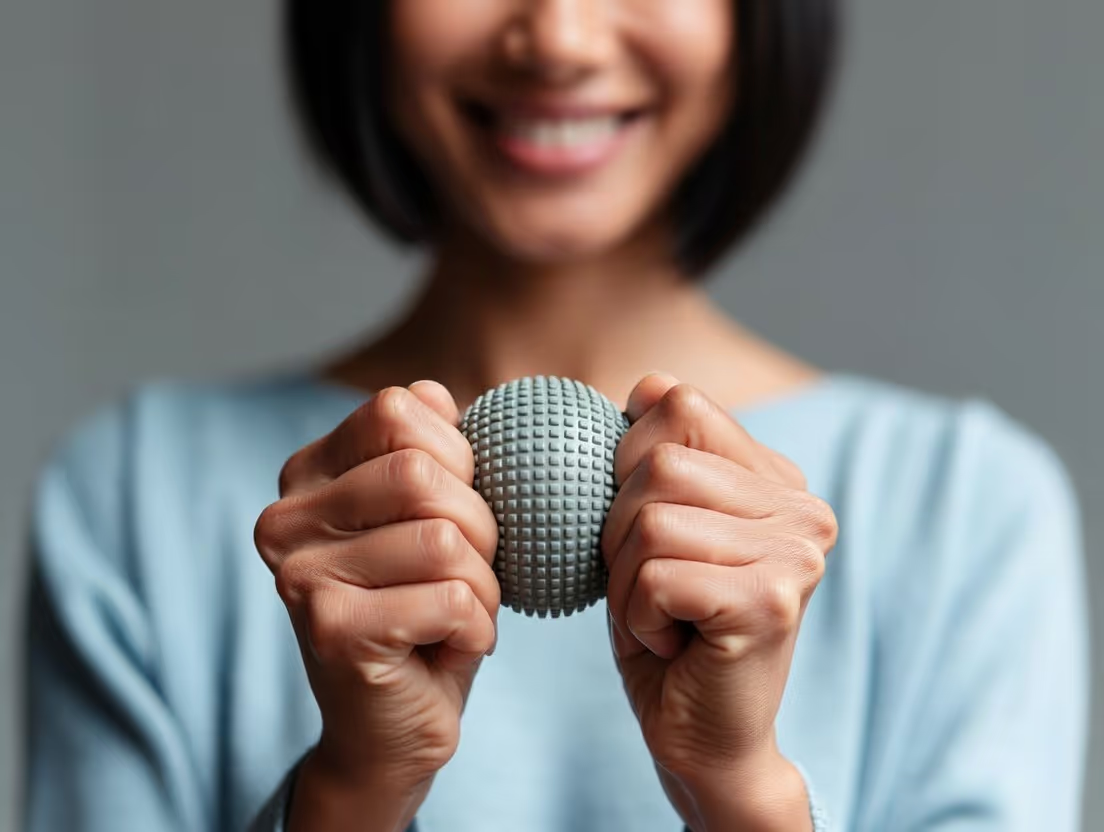
To comprehend why a weighted blanket feels so instinctively good, we must travel down a neural pathway to a fascinating, pressure-sensitive system that often plays second fiddle to our traditional five senses: the tactile sensory system, with a starring role for a network of nerves dedicated to deep touch.
Our skin is not merely a barrier; it is our largest and most complex sensory organ, packed with millions of receptors. Among these are Merkel cells and Ruffini endings, which are slow-adapting receptors specifically tuned to sustained pressure and skin stretch. When a weighted blanket settles over you, or a firm hug envelops you, these receptors are activated.
They send signals via large-diameter nerve fibers (A-beta fibers) directly to the brainstem, a primitive part of the brain that acts as a command center for autonomic functions like heart rate, breathing, and the stress response. Here, in a region called the solitary nucleus, these "safe touch" signals have a direct inhibitory effect on the amygdala, the brain's fear and alarm center. It's as if the gentle pressure sends a direct memo to the amygdala: "Stand down. The body is safe and contained."

This neurological signal translates into a powerful biochemical shift. Deep Pressure Therapy (DPT) is shown to:
This trio of effects—more calm (serotonin), better sleep (melatonin), and less stress (cortisol)—forms the holy trinity of the weighted blanket effect.
DPT also powerfully engages our proprioceptive system. Proprioception is the body's ability to sense its own position, movement, and force in space. It's the sense that tells you your feet are on the ground without looking. For individuals with anxiety, ADHD, or autism, this internal "map" can feel faint or disorganized, leading to a sense of being ungrounded or disconnected.
The distributed, heavy pressure of a weighted blanket provides massive proprioceptive input. It clearly outlines the body's boundaries, creating a strong, unmistakable signal of where the self ends and the world begins. This input is inherently organizing for the brain. It reduces sensory "static" and creates a focal point of physical awareness that can quiet mental chatter. Think of it as a gentle, full-body anchor holding you firmly in the present moment.
This foundational science explains the almost universal appeal of deep touch. It’s not a placebo or a trend; it’s a biological imperative for regulation. The modern weighted blanket is simply a tool to access this primal pathway on demand, offering a portable haven of neurological calm in an overstimulating world.
While the term "Deep Pressure Therapy" may sound clinical and modern, the intuitive application of weight and firm touch for comfort, healing, and ritual is as old as humanity itself. Our ancestors may not have understood the neurobiology, but they observed and harnessed its effects, weaving practices of deep pressure into the very fabric of caregiving, medicine, and spiritual practice across cultures and millennia.

The most universal and ancient example is the act of swaddling. For centuries, cultures worldwide have wrapped infants snugly in cloth. This practice, far from being merely practical, provides the newborn—fresh from the tight containment of the womb—with continuous deep pressure. The result is famously observed: reduced crying, longer sleep, and a soothed baby. This is primal DPT in action.
Healing traditions have long incorporated pressure. In many indigenous cultures, the application of herbal poultices bound tightly to the body or the use of heated stones placed on specific points combined thermal therapy with deep pressure. Various forms of body wrapping in rituals, from mummification to vision quests, used constriction as a means to alter consciousness, induce trance states, or symbolize rebirth—hinting at the profound psychological impact of containing the body.
The modern clinical understanding of Deep Pressure began to coalesce in the mid-20th century, largely through pioneering work with individuals on the autism spectrum and with developmental disabilities. Dr. Temple Grandin, a renowned animal scientist and autism advocate, provided a pivotal breakthrough. As a person with autism overwhelmed by sensory input, she invented the "Hug Machine" (or squeeze box) in the 1960s.
Inspired by observing the calming effect of squeeze chutes on cattle, she built a device that applied adjustable, lateral pressure to her body. She found it dramatically reduced her anxiety and sensory overload. Grandin's work provided the first major, first-person clinical insight: deep, lateral pressure could be a self-regulated tool for neurological calming. "The Hug Machine settled me down," she wrote, providing a prototype for the principle that would guide future therapeutic tools.
Building on such observations, Occupational Therapists (OTs) became the primary champions of Deep Pressure Therapy within clinical settings. They began formally integrating it into Sensory Integration Therapy, a framework developed by Dr. A. Jean Ayres. OTs recognized that for individuals with sensory processing disorders, the proprioceptive system was a key lever for achieving a "just right" state of arousal.
They employed tools like:
These practices moved DPT from an instinctual comfort to a deliberate, evidence-based intervention within therapeutic communities. The success seen in clinical settings sparked the question: If this works so powerfully for those with sensory dysregulation, could it benefit the general population living with everyday stress? This question led directly from the clinic to the bedroom and living room, paving the way for the consumer wellness product we know today. The journey from therapeutic tool to mainstream wellness aid mirrors our own brand journey at Oxyzen, where we sought to bring advanced biometrics from clinical research into the hands of everyday individuals seeking better health.

The weighted blanket is the contemporary poster child for Deep Pressure Therapy, but it is just one point of access in a wide spectrum of applications. DPT is a principle, not merely a product. Understanding its varied forms allows you to integrate this powerful tool into your life in ways that are practical, personalized, and context-specific.
The most direct form of DPT comes from human contact, carrying with it the added benefit of emotional connection and oxytocin release (the "bonding hormone").
For sustained input throughout the day, wearable options provide constant, low-level DPT.
The "best" form of DPT depends entirely on the situation:
The beauty of DPT lies in its adaptability. It invites you to become an experimenter with your own nervous system, discovering which type of pressure, in what context, brings you the most profound sense of calm and organization. And to truly personalize this experimentation, objective data is key. Tracking your heart rate, sleep depth, and stress markers with a device like the Oxyzen smart ring can help you determine not just what feels calming, but what is measurably moving your physiology toward a more regulated state. For those with specific questions on how biometric tracking integrates with such practices, our FAQ page offers detailed support.
When you lie down under a weighted blanket, a silent, intricate ballet of physiological changes begins. This isn't just a feeling of relaxation; it's a measurable shift in your body's core operating systems. Let's move beyond the brain's neurotransmitters and trace the tangible effects of Deep Pressure Therapy (DPT) as it echoes through your cardiovascular, respiratory, and muscular systems.
The most critical shift occurs in your Autonomic Nervous System (ANS), the automatic control center for your involuntary bodily functions. The ANS has two primary branches:
DPT's primary action is to suppress SNS activity and enhance PNS dominance. The deep pressure signals act as a direct command to down-regulate the stress response. You can think of it as manually switching your body's internal channel from an action thriller to a nature documentary.
A key biomarker for this ANS shift is Heart Rate Variability (HRV). Contrary to what one might think, a healthy heart does not beat like a metronome. The time between beats varies slightly. High HRV indicates a flexible, resilient nervous system that can efficiently switch between SNS and PNS as needed. Low HRV is associated with chronic stress, anxiety, and poor cardiovascular health.
Studies on DPT, particularly using weighted blankets, consistently show an increase in HRV. This is a concrete, numerical indicator that the body is entering a more relaxed, resilient state. It's proof that the calming effect is not subjective but physiological. For individuals using wellness technology, observing a rise in nightly HRV while using a weighted blanket provides powerful, positive feedback and motivates continued practice.
The shift toward PNS dominance is largely mediated by the vagus nerve, the longest cranial nerve in the body. It is the main communication line between the brain and major organs (heart, lungs, gut). "Tonifying" or increasing vagal tone is associated with better emotional regulation, reduced inflammation, and enhanced social connection.
DPT is a potent vagus nerve stimulant. The pressure on the torso, particularly the chest and abdomen, activates vagal pathways. This stimulation is what directly slows the heart rate (via the sinoatrial node), deepens diaphragmatic breathing, and initiates the digestive processes. The sigh of relief you feel under pressure is, quite literally, your vagus nerve engaging.
Chronic stress and anxiety often manifest as unconscious, sustained muscle tension—clenched jaws, tight shoulders, a rigid back. This tension itself can become a source of discomfort and a feedback loop to the brain signaling "danger."
The profound relaxation induced by DPT allows these muscles to finally release. As the nervous system calms, it sends "stand down" signals to the muscular system. This release of tension is often felt as a wave of warmth, a feeling of sinking, or a deep sigh. This "let-down" effect is a direct physical consequence of the ANS shift and is a major contributor to the alleviation of physical pain and the promotion of restful sleep.
In essence, the weighted blanket creates a biomechanical environment that coaxes the body back into its natural state of equilibrium. It's not forcing relaxation; it's creating the precise conditions—through pressure, warmth, and containment—under which the body's own self-regulating mechanisms can effortlessly take over. This profound physiological reset is what makes DPT far more than a comforting trend; it's a legitimate, accessible tool for systemic health.
For many, the introduction to Deep Pressure Therapy comes not through a therapist's office, but through a desperate search for better sleep. Insomnia, restless nights, and waking up feeling unrefreshed are epidemics of the modern age. The weighted blanket has emerged as a revolutionary, drug-free sleep aid, and its effectiveness is rooted in its ability to address the very physiological barriers to good sleep.
One of the biggest obstacles to falling asleep is the anxiety about not sleeping. As you lie in bed, your mind races, your body feels tense, and the ticking clock becomes a source of panic. This activates the Sympathetic Nervous System (SNS), the exact opposite state needed for sleep onset.
A weighted blanket acts as a physical circuit breaker for this cycle. The deep pressure provides an immediate, tangible focal point that draws attention away from anxious thoughts and into bodily sensation. It signals safety to the amygdala, dampening the fear response. By reducing cognitive and physiological anxiety at the bedside, it creates the mental quietude necessary for sleep to initiate.
Good sleep isn't just about being unconscious; it's about cycling properly through different stages, each with vital functions. DPT has been shown to positively influence this sleep architecture.
While larger-scale, long-term studies are ongoing, existing research and a mountain of user testimony paint a compelling picture.
The weighted blanket is most powerful as the centerpiece of a holistic sleep hygiene practice. Pair it with:
Together, these practices and the blanket's physiological effects orchestrate the ideal internal and external environment for sleep. It's a return to the feeling of being safely tucked in, a sensation that, for many adults, had been lost. The result is not just more sleep, but higher-quality, more restorative sleep that forms the foundation for daytime resilience. To see how others have integrated technology and tradition to improve their sleep, you can read real customer reviews and experiences with tracking their wellness journey.
If sleep is where Deep Pressure Therapy (DPT) offers restoration, then waking life is where it provides crucial stability. Anxiety disorders are among the most common mental health challenges globally, characterized by persistent worry, physical tension, and a nervous system perpetually braced for threat. DPT functions as a powerful, portable anchor in the storm of anxiety, offering a tool for immediate grounding and long-term emotional regulation.
Anxiety is a full-body experience. A worried thought (e.g., "What if I fail?") triggers a physiological stress response: heart races, breath shortens, muscles tense. These physical sensations then feed back to the brain as confirmation of danger ("My heart is pounding, something must be wrong!"), amplifying the anxious thought. This creates a vicious, self-reinforcing loop.
DPT intervenes directly in this loop at the physiological level. By applying a calming, organizing signal to the body (reducing heart rate, increasing HRV, relaxing muscles), it provides undeniable physical evidence of safety that the cognitive mind must accept. It's much harder to believe "I am in danger" when your body is physiologically demonstrating a state of deep calm. The blanket doesn't argue with your thoughts; it simply changes the conversation your body is having with your brain.
DPT is a quintessential grounding technique. Grounding is the practice of pulling one's attention away from internal distress and into the present physical environment. The weighted blanket is a grounding tool par excellence because its input is constant, undeniable, and pleasant.
It pairs perfectly with cognitive grounding exercises like the 5-4-3-2-1 technique:
When paired with the deep somatic input of the blanket, this exercise becomes profoundly more effective, as the "feel" sense is already saturated with calming data.
During a panic attack, the body is in full SNS overload. The world can feel unreal, and thoughts can spiral. A weighted blanket (or a heavy coat, a stack of books on the lap) can serve as a first-aid intervention. The intense, enveloping pressure provides a "container" for the overwhelming physical sensations, making them feel more manageable. It gives the person something external and solid to focus on, preventing complete dissociation. Many users keep a weighted blanket in their car, office, or living room specifically for this purpose.
Beyond acute intervention, regular use of DPT can build longer-term emotional resilience. By consistently providing the nervous system with experiences of safe containment, it can help lower the baseline level of anxiety. Think of it as exercise for the parasympathetic nervous system. The more you practice accessing that calm state via DPT, the easier it becomes to find it without the tool, or to return to it more quickly after a stressor.
It's a form of somatic re-education, teaching the body a new, healthier default setting. For individuals tracking their wellness, this shift can be observed in daytime stress metrics and recovery scores provided by advanced wearables, offering concrete proof of progress and reinforcing the habit. For more on the science of resilience and how to track it, we invite you to explore our blog for more wellness tips.
While Deep Pressure Therapy (DPT) offers broad benefits for general stress, its impact is often most profound and life-changing for individuals with neurological conditions like Attention-Deficit/Hyperactivity Disorder (ADHD), Autism Spectrum Disorder (ASD), and Sensory Processing Disorder (SPD). For these communities, DPT isn't just a relaxation tool; it's a critical sensory integration strategy that can modulate arousal levels, improve focus, and facilitate participation in daily life.
Individuals with ADHD, ASD, and SPD often experience the world with a different sensory volume knob. Sounds can be painfully loud, lights unbearably bright, and light touches can feel like sandpaper. This is sensory hypersensitivity. Conversely, some may seek intense sensory experiences, constantly moving, crashing, or chewing to feel "just right"—a state of sensory hyposensitivity or seeking.
The common thread is a nervous system that struggles to filter, integrate, and respond appropriately to sensory information. This leads to a state of dysregulation, manifesting as meltdowns, shutdowns, distractibility, anxiety, or avoidance.
Occupational Therapists (OTs) often prescribe a "sensory diet"—a personalized plan of sensory activities throughout the day to help maintain optimal arousal and regulation. DPT is almost always a cornerstone of this diet.
For individuals with ADHD, the challenge often lies in sustaining attention and managing impulses. The brain's "executive function" center—the prefrontal cortex—can be under-activated.
DPT's organizing proprioceptive input appears to have a "focusing" effect on the brain. By providing a strong, constant stream of sensory data from the body, it may reduce the need for the brain to seek stimulation through distraction or fidgeting. This allows cognitive resources to be directed toward the task at hand. A weighted lap pad during homework or a compression shirt under school/work clothes can be a discreet, powerful aid for concentration.
Meltdowns in autism are often the result of overwhelming sensory or emotional overload—a system pushed past its breaking point. DPT can be used both preventively and reactively.
Perhaps one of the most empowering aspects of DPT for neurodivergent individuals is that it provides a tool for self-regulation. It offers a way to manage one's own sensory state independently. Learning to recognize the need for pressure ("I feel scattered, I need my weighted vest") and acting on it is a profound step toward self-understanding and advocacy. This journey of self-discovery through sensory tools aligns with our core vision & values at Oxyzen, which champion personalized, data-informed empowerment in health.
The evidence from clinical practice and lived experience is clear: for those whose brains process the world differently, Deep Pressure Therapy is not a luxury; it's a legitimate, often essential, strategy for navigating a sensorily intense world with greater comfort, focus, and control.
At its core, the profound appeal of Deep Pressure Therapy (DPT) is its uncanny ability to simulate one of our most fundamental human experiences: the loving, protective embrace. In an era where genuine physical connection can be scarce, and where stress and loneliness are rampant, tools like weighted blankets offer a technological bridge back to a primal sense of security. They don't replace human touch, but they intelligently replicate its most calming physiological component.
A genuine hug between loved ones is a multisensory event combining pressure, warmth, scent, and emotional resonance. It triggers a powerful cocktail of neurochemicals:
While a weighted blanket cannot replicate the oxytocin surge from emotional connection, it perfectly mimics the deep pressure stimulus that is a primary physical trigger for the subsequent serotonin and cortisol responses. It provides the foundational, somatic "safety" signal of an embrace.
Modern life, with its digital communication and, as seen during pandemic isolation, physical distancing, has led to widespread "skin hunger" or "touch hunger." This is a chronic, unmet need for affirmative, caring touch, linked to increased anxiety, depression, and immune dysfunction.
For those living alone, grieving, or simply not in a season of life rich with physical affection, a weighted blanket can serve as a surrogate for the physical aspect of connection. It fulfills the body's deep, neurological craving for containment and pressure. Users often describe the sensation as "being held" or "getting a hug all night long." This isn't mere marketing; it's a description of a real neurological phenomenon. The blanket tells the body, in a language it understands, "You are not alone; you are safe and contained."
The innovation in simulating therapeutic touch extends beyond textiles:
It is crucial to acknowledge what technology like this cannot do. A weighted blanket cannot look into your eyes, speak words of comfort, or share in your joy. It cannot replace the complex, reciprocal exchange of a human relationship. The emotional co-regulation that occurs between caregiver and child, or between partners, involves a dynamic, responsive dance that inert technology cannot replicate.
Therefore, the most powerful approach is integrative. Use the weighted blanket as a powerful tool to regulate your own nervous system, to build a baseline of calm and safety. From that regulated place, you are better equipped to seek out and engage in healthy human connection. The blanket prepares the soil, so to speak, making you more receptive to the sunlight of social bonds.
In this way, DPT technology acts not as a substitute, but as a supplement and a bridge. It meets a basic physiological need, allowing individuals to reduce their anxiety and touch hunger enough to more fully participate in the rich, messy, and irreplaceable world of human relationships. For a deeper look at how we think about technology's role in human wellness, you can learn more about our company mission and philosophy.
The decision to try Deep Pressure Therapy (DPT) often starts with the purchase of a weighted blanket. But walking into this market can be overwhelming. Prices, materials, weights, and sizes vary dramatically. Choosing the wrong blanket can lead to discomfort, overheating, and a disappointing experience that turns you away from a potentially transformative tool. This guide will help you navigate the key considerations to find your perfect match.
This is the most critical factor.
A weighted blanket should be sized for your body, not your bed.
The type of filling determines the blanket's feel, drape, and temperature.
Investing time in selecting the right blanket is investing in your success with DPT. It’s a personal tool, and the "best" blanket is the one that feels like a comforting hug, not a burdensome weight. For more personalized guidance and to see what has worked for others in our community, our FAQ page provides further support on integrating wellness tools into your life.
We've explored the profound, science-backed effects of Deep Pressure Therapy (DPT) on anxiety, sleep, and sensory regulation. But in a world driven by data, how can we move beyond subjective feeling ("I feel calmer") to objective knowing ("My nervous system is measurably more relaxed")? This is where the fusion of ancient comfort and modern technology becomes truly revolutionary. By pairing your weighted blanket with a biometric tracking device like a smart ring, you can visualize the "weighted blanket effect" in real-time, transforming wellness from an art into a personalized science.
Your body is constantly communicating its state through physiological signals. A smart ring, worn continuously, acts as a translator for these signals, providing insights that are otherwise invisible.
Key biomarkers relevant to DPT include:
With this data, you become the lead researcher in your own wellness lab.
Seeing concrete data creates a powerful positive feedback loop. When you see your HRV jump after a night under the blanket, it validates the practice and motivates you to continue. It turns an abstract self-care ritual into a documented, successful wellness strategy.
Furthermore, data allows for personalization. Perhaps the data shows the blanket helps you fall asleep faster but doesn't improve your deep sleep. This might lead you to experiment with:
Data removes the guesswork. It can also help you identify what doesn't work, saving you time and effort on ineffective trends.
The benefits of DPT aren't confined to the night. Use your tracker to observe its impact on daytime stress. Before a known stressful event (a big meeting, a difficult conversation), spend 15-20 minutes under your weighted blanket. Use the device's "stress" or "readiness" score, or simply observe your real-time heart rate, to see how quickly you can physiologically down-regulate. This trains you to use DPT as a precision tool for emotional regulation.
The marriage of Deep Pressure Therapy and biometric tracking represents the future of proactive wellness: using time-honored, somatic tools, guided by real-time, personal data to create a life of optimized calm and resilience. To begin this journey of quantified self-discovery, you can learn more about smart ring technology and how it illuminates the path to well-being.
The profound benefits of Deep Pressure Therapy (DPT) are clear, but like any therapeutic intervention, it is not a universal tool to be used without consideration. Responsible and effective use requires an understanding of safety guidelines, contraindications, and best practices to ensure this powerful modality provides comfort without risk. Prioritizing safety transforms DPT from a casual purchase into an intentional, wellness-enhancing practice.
Certain medical conditions make the use of weighted blankets or other forms of sustained, heavy pressure potentially dangerous. Always consult with a physician or qualified occupational therapist before use if you have any of the following:
Other conditions require heightened awareness, careful monitoring, and often, professional guidance.
The most repeated and crucial safety guideline is the weight guideline: 7-12% of the user’s body weight, with 10% as the standard starting point. This is not arbitrary; it is calibrated to provide effective input without being oppressive or restrictive.
More important than the percentage, however, is the Principle of Self-Removal. The user must always have the physical strength and mobility to remove the blanket or other weighted item without assistance. This is non-negotiable. It ensures the individual maintains autonomy and control, preventing feelings of entrapment and ensuring safety if they become uncomfortable, too hot, or need to get up quickly.
Even with a correctly weighted blanket, it’s vital to listen to your body. Discontinue use and consult a professional if you experience:
While weighted blankets are widely available as consumer products, they are rooted in occupational therapy. For individuals with diagnosed medical, psychological, or developmental conditions, seeking guidance from an Occupational Therapist (OT) is invaluable. An OT can:
Understanding these safety parameters ensures that your journey with Deep Pressure Therapy is not only effective but also secure. It respects the power of the intervention while empowering you to use it wisely. For individuals tracking their health data, this awareness adds another layer; you can monitor your overnight blood oxygen levels (SpO2) and heart rate for any signs of respiratory distress, adding a data-driven safety net. To understand how such metrics are tracked, you can discover how Oxyzen works to monitor vital signs during sleep.
The commercial weighted blanket market is vast, but it's not the only path to experiencing Deep Pressure Therapy (DPT). Whether driven by budget, creativity, or the need for an immediate solution, there are numerous effective DIY and alternative approaches. These methods democratize access to DPT and encourage a mindset of experimentation, allowing you to discover what form of pressure resonates most with your unique nervous system before making a larger investment.
Creating your own weighted blanket is a feasible project for those with basic sewing skills. The key to success is planning.
Materials & Planning:
The Process:
Pros: Cost-effective, fully customizable (fabric, weight, size), and deeply satisfying.
Cons: Time-consuming, requires sewing skill, and sourcing quality fill can be tricky.
For immediate relief or to test your response to pressure, look no further than your own home.
The core principle of DPT is providing organizing sensory input. You can achieve this through activities that generate deep pressure against your joints and muscles—a concept known as heavy work.
Proprioceptive "Heavy Work" Activities:
These activities stimulate the same proprioceptive receptors that a weighted blanket does, promoting focus and calm through active engagement rather than passive reception. They are a brilliant way to integrate DPT into your daily movement.
Exploring these alternatives reinforces that Deep Pressure Therapy is a flexible principle, not a single product. It invites creativity and body awareness, turning your entire environment into a potential toolkit for regulation. Documenting your experiments with different methods—noting which ones help you feel more grounded or sleep better—is a powerful practice. Pairing these observations with data from a wellness tracker can reveal which improvised techniques are most effective for you, a topic we often explore in related articles on our blog.
To move beyond theory and into the nuanced reality of clinical application, we turn to the professionals who use Deep Pressure Therapy (DPT) daily. Their insights, born from countless hours with clients, provide a critical bridge between academic research and lived experience. Here, we synthesize common themes and pivotal advice from occupational therapists, sleep specialists, and mental health professionals.
Dr. Sarah Jensen, OTD, OTR/L (a composite expert based on common clinical perspectives), emphasizes the individualized nature of DPT. "The weighted blanket is never the first or only tool in our kit. It's part of a comprehensive sensory diet. We assess a person's proprioceptive needs—are they seeking or avoiding? How does their arousal level fluctuate? A blanket might be perfect for nighttime, but a weighted vest or compression shirt may be the tool for navigating a noisy classroom or office."
She highlights the educational role OTs play: "We teach clients and families to recognize the signs of dysregulation—the fidgeting, the irritability, the zoning out—and to use DPT proactively, not just as a crisis intervention. It's about building self-regulation skills. We also spend considerable time on safety: ensuring the weight is correct, that the child can remove it, and that it's never used as a punishment or restraint."
On the explosion of consumer popularity, she notes: "It's a double-edged sword. Wonderful that people have access, but concerning when used without understanding contraindications. I've had clients come in with blankets that are 20% of their body weight, complaining of restless sleep. It was simply too heavy."
Dr. Marcus Chen, a sleep neurologist, approaches DPT from a data-centric perspective. "In my clinic, we see many patients for whom pharmacological sleep aids are undesirable or ineffective. We're increasingly interested in robust behavioral interventions. The preliminary data on weighted blankets is promising, particularly regarding sleep continuity and subjective sleep quality."
He points to the physiological mechanisms: "The reduction in nighttime cortisol and potential increase in melatonin are tangible pathways. But I'm most interested in its impact on sleep architecture—specifically, slow-wave sleep. If a non-pharmacological tool can safely enhance deep sleep, that's significant for cognitive restoration and physical recovery." He cautions, however, that "it is not a treatment for sleep disorders like obstructive sleep apnea. In fact, for those patients, anything that could further impede respiration is contraindicated unless closely monitored."
Dr. Chen is optimistic about the synergy with technology: "When patients use a weighted blanket and track their sleep with a validated device, we get an objective report. Seeing their own heart rate variability improve and deep sleep increase is incredibly motivating and turns a passive recommendation into an engaged partnership in their care."
Lisa Morales, LCSW, a therapist specializing in anxiety and trauma, provides a crucial psychological perspective. "For clients with anxiety, the blanket can be a grounding anchor. It literally holds them when the world feels chaotic. For trauma survivors, particularly those with a history that impacts bodily autonomy, the element of control is paramount. They choose to put it on, they can take it off. This can be a gentle, safe way to re-inhabit the body and practice experiencing physical sensation without threat."
She introduces an important caveat: "It's not for everyone with trauma. For some, any feeling of being pinned or held down is triggering. We might start with a weighted lap pad or even just a heavy pillow on the lap. It's a slow, collaborative process of titration." Morales uses DPT as part of a "window of tolerance" model. "The blanket can help widen that window—the range of arousal in which a person can function effectively. When they feel themselves nearing the hyperarousal (panic) edge, the blanket can help bring them back to center."
Across these disciplines, several key themes emerge:
These expert insights ground the weighted blanket phenomenon in professional practice, offering a roadmap for anyone seeking to use DPT not as a trendy gadget, but as a intentional, integrated component of their health and well-being. For those inspired by these professional insights to begin their own data-informed wellness journey, you can read our complete guide to integrating various health practices.
Deep Pressure Therapy (DPT) has evolved from a niche therapeutic technique to a mainstream wellness staple. But this is not the end of the story; it is an exciting inflection point. The frontier of DPT is being pushed by technological innovation, deeper scientific inquiry, and a growing understanding of its potential applications. The future points toward more personalized, dynamic, and integrated systems for harnessing the power of touch for regulation and healing.
The next generation of weighted blankets and garments will likely be "smart." Imagine a blanket embedded with biometric sensors that adapts its pressure in real-time based on your physiological state.
Research is moving beyond "does it work?" to "for whom does it work best, and why?" Future studies may identify genetic or neurological biotypes that are particularly responsive to DPT. This could involve:
The success of DPT for anxiety, sleep, and sensory conditions is opening doors to research in other challenging areas:
DPT will not exist in a vacuum. Its future is in multimodal integration.
The trajectory is clear: Deep Pressure Therapy is transitioning from a static tool to a dynamic, intelligent, and deeply integrated component of holistic health. It promises a future where our environments and garments actively cooperate with our biology to foster resilience and calm. This vision of a responsive, health-supporting world is at the heart of our mission at Oxyzen, as we work to build technology that seamlessly supports human well-being.
A weighted blanket is a powerful tool, but it is not a magic bullet. Its true potential is unlocked when it becomes part of a cohesive, intentional wellness ecosystem—a set of daily practices that work synergistically to build a resilient nervous system from the ground up. Deep Pressure Therapy (DPT) then acts as a potent amplifier and anchor within this system, reinforcing the benefits of other habits and providing a reliable fallback during times of strain.
Think of your wellness as a pyramid. DPT is a key support, but it rests on a foundation.
With this ecosystem in mind, you can intentionally place DPT throughout your day.
This is where technology transforms a routine into a refined practice. A smart ring or other tracker helps you see the connections.
Finally, the goal of any tool is to eventually strengthen your internal resources. Use DPT to create windows of calm. In those windows, practice other regulation skills: noticing your breath, labeling emotions, gentle movement. Over time, the neural pathways for calm become stronger and more accessible, even without the tool.
The weighted blanket is not a crutch, but a trainer. It supports you while you build the intrinsic strength of your own nervous system. By weaving it into a holistic tapestry of wellness practices, you honor its power while cultivating a broader, more durable resilience that can sustain you through all of life’s pressures. For those seeking to build this kind of integrated, data-informed wellness lifestyle, our community shares their journeys and insights in real customer reviews and experiences.
Your Trusted Sleep Advocate: Sleep Foundation — https://www.sleepfoundation.org
Discover a digital archive of scholarly articles: NIH — https://www.ncbi.nlm.nih.gov/
39 million citations for biomedical literature :PubMed — https://pubmed.ncbi.nlm.nih.gov/
Experts at Harvard Health Publishing covering a variety of health topics — https://www.health.harvard.edu/blog/
Every life deserves world class care :Cleveland Clinic - https://my.clevelandclinic.org/health
Wearable technology and the future of predictive health monitoring :MIT Technology Review — https://www.technologyreview.com/
Dedicated to the well-being of all people and guided by science :World Health Organization — https://www.who.int/news-room/
Psychological science and knowledge to benefit society and improve lives. :APA — https://www.apa.org/monitor/
Cutting-edge insights on human longevity and peak performance:
Lifespan Research — https://www.lifespan.io/
Global authority on exercise physiology, sports performance, and human recovery:
American College of Sports Medicine — https://www.acsm.org/
Neuroscience-driven guidance for better focus, sleep, and mental clarity:
Stanford Human Performance Lab — https://humanperformance.stanford.edu/
Evidence-based psychology and mind–body wellness resources:
Mayo Clinic — https://www.mayoclinic.org/healthy-lifestyle/
Data-backed research on emotional wellbeing, stress biology, and resilience:
American Institute of Stress — https://www.stress.org/


