How Your Wellness Ring Calculates Complex Health Metrics
How your wellness ring calculates complex health metrics.
The Invisible Lab on Your Finger: How Your Wellness Ring Calculates Complex Health Metrics
In the hushed darkness before dawn, a tiny constellation of lights pulses gently on your finger. It’s your wellness ring—a silent sentinel on a mission to decode the most intricate story ever told: the story of your body. While you sleep, it’s awake, gathering a river of raw data—light, motion, electrical impulses. By morning, this unassuming piece of wearable tech has transformed those billions of data points into clear, actionable insights: your readiness score, your sleep stages, your stress resilience, your recovery status.
It feels like magic, but it’s not. It is a triumph of modern engineering, sensor fusion, and algorithmic intelligence. For the curious wearer, the natural question arises: How? How can a device so small, worn on the finger of all places, possibly calculate metrics that once required a lab full of equipment?
This article is your backstage pass. We’re pulling back the curtain on the sophisticated, multi-layered process that turns flickers of light and twitches of motion into a comprehensive health dashboard. From the physics of photoplethysmography to the black box of machine learning, we’ll journey through the data pipeline that makes your wellness ring one of the most powerful personal health tools you’ve ever owned. For those keen to understand the philosophy behind such technology, our mission and values at Oxyzen detail our commitment to making this complexity elegantly simple.
By the end of this deep dive, you’ll never look at your ring the same way again. You’ll see it for what it truly is: an invisible laboratory, a personal health researcher, and a computational powerhouse, all forged into a band of titanium designed for your life.
Beyond Steps and Heartbeats: What Makes a Metric “Complex”?
When fitness trackers first hit the scene, their promise was straightforward: count steps, estimate calories, maybe track heart rate. The metrics were simple, often descriptive rather than analytical. A "complex" health metric is an entirely different beast. It’s not a direct measurement; it’s a sophisticated derivation. It’s the answer to a multi-variable equation where the inputs are noisy, biological, and constantly in flux.
Think of it this way: A simple metric is like reading a thermometer. A complex metric is like a weather forecast, which synthesizes temperature, pressure, humidity, wind patterns, and satellite imagery to predict the future state of the atmosphere.
So, what defines a complex health metric in the context of your wellness ring?
Multi-Sensor Data Fusion: It cannot be derived from a single sensor. It requires the synchronized marriage of data from optical heart rate sensors, accelerometers, temperature sensors, and sometimes galvanic skin response sensors.
Temporal Context: It’s not a snapshot; it’s a movie. Calculating heart rate variability (HRV) requires analyzing the millisecond-level intervals between heartbeats over time (often during sleep). Sleep staging analyzes patterns of movement and heart rate trends across an entire night.
Algorithmic Interpretation: Raw data is meaningless. Complex metrics are born in algorithms—sets of rules and, increasingly, machine learning models—that find patterns invisible to the human eye. These algorithms are trained on massive datasets of clinical and user data to recognize what "good recovery" or "deep sleep" looks like.
Personalized Baselines: A metric is only meaningful in context. Your ring doesn’t just give you a score; it compares your nightly HRV to your established baseline. This personalization is what turns data into insight. Is your body battery score of 72 "good"? It depends on whether your personal baseline is 65 or 85.
Examples of these complex metrics include:
Sleep Score & Stages: Not just total sleep time, but a qualitative analysis of light, deep, and REM sleep, and awakenings.
Readiness/Recovery Score: A composite index often factoring sleep quality, HRV, resting heart rate, and body temperature.
Heart Rate Variability (HRV): A critical marker of autonomic nervous system balance and recovery status.
Body Temperature Trends: Not a single reading, but a circadian rhythm analysis, crucial for identifying deviations like illness onset or menstrual cycle phases.
Stress/Relaxation Scores: Inferred from a combination of HRV, heart rate, and sometimes electrodermal activity.
Understanding that these are synthesized insights, not raw measurements, is the first step. The journey from your finger to your smartphone app is a fascinating pipeline of physics, data science, and biological interpretation. For a broader look at how these metrics translate into daily wellness, our blog features numerous articles on applying this data to your life.
The Sensor Suite: Your Ring’s Eyes and Ears on Your Body
Beneath the sleek exterior of your wellness ring lies a miniaturized marvel of modern electronics. This sensor suite is the front line, the data-gathering apparatus that interfaces directly with your biology. Each sensor plays a specific, crucial role in the symphony of data collection.
The Optical Heart Rate Sensor (PPG): The Workhorse
This is the most prominent sensor, usually a cluster of green (and sometimes red/infrared) LEDs paired with a photodetector. Its operation is based on Photoplethysmography (PPG). Here’s the elegant physics behind it:
The LEDs shine light into the skin and underlying capillaries in your finger.
Blood absorbs light. As your heart beats, blood volume in the capillaries pulses.
The photodetector measures the amount of light reflected back. More blood (during a heartbeat) means more light absorbed and less reflected.
This creates a waveform—the PPG signal—where each peak corresponds to a heartbeat.
From this primary waveform, a world of data is extracted: heart rate (the frequency of peaks), HRV (the precise timing between peaks), and even insights into blood oxygen saturation (SpO2) using the differential absorption of red and infrared light.
The 3D Accelerometer: The Motion Detective
This micro-electromechanical system (MEMS) measures acceleration forces. In simple terms, it knows when and how you move.
For Sleep: It detects gross body movement to differentiate between restless sleep and periods of stillness that may indicate deep or REM sleep. It’s also the primary tool for detecting when you fall asleep and wake up.
For Activity: It counts steps, gauges exercise intensity, and can even recognize specific activity types (like running vs. cycling) based on movement patterns.
For Data Cleaning: It’s critical for identifying and filtering out motion artifacts from the PPG signal. A spike in the heart rate data during a bout of hand movement can be flagged as potentially unreliable.
The Skin Temperature Sensor: The Silent Sentinel
A tiny, high-precision thermistor measures the temperature at the skin surface of your finger. The absolute value is less important than the trend over time. Your ring tracks the circadian rhythm of your peripheral temperature, which dips during sleep and rises upon waking. A sustained elevation from your personal baseline can be one of the earliest signs of illness, inflammation, or hormonal shifts like ovulation.
The Advanced Players: EDA and IMU
Some advanced rings incorporate additional sensors:
Electrodermal Activity (EDA) Sensor: Measures tiny changes in the skin’s electrical conductivity caused by sweat gland activity, which is linked to emotional arousal and stress responses.
Improved Inertial Measurement Units (IMUs): Combining accelerometers with gyroscopes (measuring orientation) and magnetometers (compass) for even more precise movement and gesture recognition.
This suite works in concert. While you sleep, the accelerometer confirms you are still. In that quiet state, the PPG sensor gets a clean signal to calculate precise HRV. Simultaneously, the temperature sensor logs its nightly nadir. It is this sensor fusion that provides the robust, multi-layered raw data required for the next stage: the algorithmic crucible.
From Raw Signal to Clean Data: The Crucial Art of Noise Reduction
The data streaming from your ring’s sensors is not clinical-grade, clean-room data. It is a messy, real-world signal, riddled with what engineers call "noise." Imagine trying to listen to a faint, distant melody while standing in a bustling city square. The melody is your true physiological signal; the city noise is everything else. The first and perhaps most critical computational task your ring performs is noise reduction and signal processing.
The Enemies of Clean Data
Motion Artifact: This is the biggest culprit. Any movement of the ring relative to your skin—typing, gesturing, even scratching your head—can cause massive, false fluctuations in the PPG signal that drown out the true heart pulse. The accelerometer is the primary weapon here, used to identify and tag these periods.
Poor Fit: A ring that’s too loose allows ambient light ("optical noise") to bleed into the photodetector, corrupting the PPG signal.
Physiological Noise: Things like peripheral vasoconstriction (cold fingers reducing blood flow) or sudden changes in blood pressure can alter the signal strength.
Environmental Factors: Extreme temperatures can affect sensor readings.
The Cleaning Pipeline
So, how does the ring’s onboard processor clean this up?
Filtering: Digital filters are applied to the raw signal. A high-pass filter might remove slow drifts, while a low-pass filter removes high-frequency jitter. This isolates the frequency band where a human heart rate (typically 0.5 Hz to 4 Hz, or 30 to 240 BPM) resides.
Motion-Artifact Rejection: Using the synchronized data from the accelerometer, the algorithm identifies periods of high acceleration. Data from these periods can be down-weighted or discarded for HRV analysis, though they may still be useful for estimating exercise heart rate with different processing.
Signal Quality Indexing: Advanced algorithms assign a real-time "quality score" to each chunk of PPG data. Only high-quality segments are passed forward for precise metrics like HRV. Low-quality segments might only be used for a crude heart rate estimate or be discarded entirely.
Interpolation and Smoothing: For metrics like continuous heart rate, small gaps or noisy points can be intelligently filled in or averaged to create a smoother, more usable waveform.
This stage is unglamorous but foundational. As we detail in our FAQ section on accuracy, the quality of all downstream insights—your sleep score, your readiness—is wholly dependent on the quality of this cleaned signal. It’s a testament to the engineering that this all happens in real-time, on a device with the battery size of a small button.
The Heart of the Matter: How PPG Unlocks Pulse, HRV, and More
With a clean PPG signal in hand, the ring can now begin its most vital calculations. That wavelike pattern of reflected light is a treasure map to your cardiovascular and autonomic nervous system state.
Extracting the Heartbeat
The primary peak-detection algorithm scans the cleaned PPG waveform. Each local maximum (peak) is identified as a heartbeat. The time between consecutive peaks is called the R-R interval (borrowing terminology from an ECG). The simplest calculation is Heart Rate (HR): 60,000 milliseconds divided by the average R-R interval in milliseconds gives beats per minute.
But the real magic lies in the variability between those intervals.
Calculating Heart Rate Variability (HRV)
If your heart beat like a metronome, it would be a sign of stress, fatigue, or poor health. A healthy, resilient system has a natural, slight irregularity—variations of tens of milliseconds between beats. This is HRV, a direct window into the tug-of-war between your sympathetic ("fight or flight") and parasympathetic ("rest and digest") nervous systems.
Calculating HRV is not straightforward. There are multiple methods, but the time-domain method most commonly used by consumer devices is rMSSD (the root mean square of successive differences).
The system takes a series of consecutive R-R intervals (e.g., over a 5-minute period during deep sleep).
It calculates the difference between each pair of successive intervals.
It squares each of those differences, calculates the mean of the squares, and then takes the square root of that mean.
The result, rMSSD, is a number in milliseconds. A higher rMSSD generally indicates stronger parasympathetic activity and better recovery. This is a cornerstone metric for your readiness score.
Estimating Blood Oxygen (SpO2)
Using additional LED colors (red and infrared), the ring can perform pulse oximetry. Hemoglobin with oxygen (oxyhemoglobin) absorbs infrared light more than red light. Deoxygenated hemoglobin absorbs red light more.
The algorithm looks at the ratio of red to infrared light absorption in the pulsatile (AC) part of the PPG signal.
By comparing this ratio to a calibrated curve, it can estimate the percentage of oxygen-saturated hemoglobin in your blood.
This calculation is more sensitive to noise and fit than heart rate, which is why SpO2 readings are often taken during sleep or rest and presented as an average trend rather than a real-time stream.
From this single PPG sensor stream, filtered and processed, your ring has now derived three of the most critical inputs for holistic health assessment: continuous heart rate, HRV, and SpO2. It’s a powerful demonstration of how sophisticated signal processing can extract profound biological insights from the simple interplay of light and skin.
Motion as a Language: How Accelerometers Decode Sleep, Activity, and Life
While the PPG sensor listens to your blood, the accelerometer watches your life. It translates the physics of movement into a digital diary of your activity and rest. This isn't just about counting steps; it's about interpreting the context and quality of your motion.
The Anatomy of Movement Data
The accelerometer provides a continuous stream of data along three axes (X, Y, Z). This triaxial data creates a signature for every movement:
A step creates a characteristic, repetitive pattern of acceleration and deceleration.
Typing produces a high-frequency, low-amplitude jitter.
Running creates a higher amplitude, lower frequency oscillation than walking.
Sleeping shows long periods of near-zero acceleration, punctuated by brief bursts of movement during position shifts.
The Science of Sleep Staging
This is where accelerometer data becomes analytical. Sleep is not a monolithic state. Clinical sleep labs use polysomnography (EEG, EOG, EMG) to definitively stage sleep. Your ring uses a sophisticated proxy model powered by movement and heart rate.
Sleep/Wake Detection: The primary gate. Periods of prolonged inactivity (e.g., 20+ minutes with minimal movement) suggest sleep onset. Morning movement confirms wake-up.
Sleep Stage Estimation:
Wake Periods: Detected as brief arousals within the sleep period via movement or heart rate spikes.
Light Sleep (N1/N2): Characterized by more frequent small movements and a heart rate that begins to descend from waking levels.
Deep Sleep (N3/Slow-Wave Sleep): The body is physically still. The accelerometer shows minimal motion. The PPG shows a slow, steady heart rate at its nightly lowest and high, stable HRV. This is the most physically restorative phase.
REM Sleep: The brain is active, but the body is paralyzed (atonia). The accelerometer still shows minimal gross movement. The giveaway is the heart rate. It becomes more variable and can spike, resembling waking patterns, while breathing becomes irregular. The ring fuses the "motionlessness" from the accelerometer with the "active" heart rate from PPG to infer REM.
No consumer device is 100% accurate compared to a lab, but the fusion of these signals creates a highly reliable estimate of sleep architecture. You can read testimonials from users who have transformed their sleep hygiene based on these insights.
Activity Recognition and Metabolic Calculation
Beyond counting steps, advanced algorithms can classify activity type. The pattern of oscillations from a 3D accelerometer while cycling is distinct from running. By classifying the activity, the ring can apply the appropriate metabolic equations (METs) to more accurately estimate calorie expenditure.
Furthermore, the intensity of movement (the amplitude of the acceleration signal) helps gauge exercise effort. A brisk walk creates a stronger signal than a stroll. This data feeds into your Activity Score or contributes to your overall daily strain, creating a balance with your recovery metrics.
The accelerometer transforms the ring from a passive monitor into an active lifestyle interpreter. It tells the story of your day’s exertions and your night’s restoration, providing the essential behavioral context for the purely physiological data from the other sensors.
The Temperature Timeline: Tracking Your Body’s Subtlest Rhythms
Your skin temperature is a whisper of a metric, but over time, it tells a profound story. Unlike a clinical thermometer seeking a single, accurate "fever" reading, the wellness ring’s temperature sensor is a biographer of your circadian rhythm and internal balance.
The Precision of Trends
The sensor itself is remarkably sensitive, capable of detecting changes as small as 0.1°C. However, its placement on the finger—a periphery—means the absolute number is influenced by environment. The genius lies in tracking the relative change over the course of 24 hours.
As you approach sleep, your core temperature drops, and blood flows to the extremities to release heat. Your finger temperature may rise slightly at bedtime.
During the night, as you enter deep sleep, your core temperature hits its lowest point.
Upon waking, as cortisol rises, your core temperature begins its ascent for the day.
The ring charts this circadian wave. It establishes a personalized baseline over weeks of data. This baseline is your thermal fingerprint.
The Power of Deviation
Deviations from this personal baseline are the key insights:
Illness Onset: A sustained elevation of 0.5-1.5°C above your baseline, often starting before other symptoms, can be a powerful early warning sign of infection or inflammation. Your ring might flag a higher "temperature deviation" in your readiness report.
Menstrual Cycle Tracking: For those who menstruate, body temperature follows a biphasic pattern relative to the cycle. A sustained shift to a higher temperature plateau after ovulation is a key biomarker for predicting phases. This turns the ring into a powerful, passive fertility and cycle awareness tool.
Training Overtraining: Inadequate recovery from intense exercise can lead to low-grade systemic inflammation, which may manifest as a slightly elevated baseline temperature over several days.
Sleep Quality Validation: The expected temperature drop is associated with sleep initiation and deep sleep. A night where your temperature doesn’t follow its typical decline may correlate with poor sleep quality, even if you were still for 8 hours.
This metric exemplifies the power of longitudinal, personalized data. A single reading of 36.7°C is meaningless. But knowing you are 0.8°C above your own well-established 3 AM average is a significant, personalized data point. It is seamlessly woven into the composite algorithms for readiness and recovery, adding a layer of physiological truth that motion and heart rate alone cannot provide.
The Algorithmic Brain: How Machine Learning Weaves the Story
We now have multiple streams of clean, processed data: heart rate, HRV, movement, temperature. Individually, they are informative. Together, they have the potential to be transformative. The entity that synthesizes them into a cohesive narrative—your Sleep Score, your Readiness Index, your Stress Level—is the algorithmic brain, increasingly powered by machine learning (ML).
From Rules-Based to Learning-Based
Early wellness devices used rules-based algorithms. Engineers and physiologists would set explicit thresholds: "IF average night HRV > baseline AND sleep time > 7 hours AND temperature deviation < 0.5°C, THEN readiness score = 'High.'" While logical, these can be rigid and fail to capture complex, non-linear interactions.
Modern systems employ machine learning models. These are not explicitly programmed with rules. Instead, they are trained.
Training Data: Developers use massive, anonymized datasets where the sensor data (inputs) is paired with known outcomes (labels). For sleep, this could be thousands of nights of ring sensor data paired with corresponding clinical polysomnography results.
Model Training: The ML model (e.g., a neural network) iteratively processes this data, learning the complex, multi-dimensional patterns that correlate with, say, "Deep Sleep" or "High Stress."
Deployment: The trained model is then compressed and loaded onto your ring’s firmware or your phone’s app. When your nightly data is processed, it runs through this model, which outputs its prediction: "From all the patterns in this data, this period has an 85% probability of being REM sleep."
Building Composite Scores
This is where the true "complex metric" is born. Your Readiness Score is a prime example.
Inputs: Last night’s sleep duration, sleep stage distribution, HRV (vs. baseline), resting heart rate (vs. baseline), temperature deviation, and maybe previous day’s activity load.
The Model’s Job: The ML model has learned, from aggregated data across millions of user-nights, how these factors interplay to predict self-reported energy levels, performance on cognitive tests, or susceptibility to illness. It weighs the inputs not with fixed rules, but with learned relationships. A surprisingly low HRV might be heavily weighted, but less so if sleep was exceptionally long and deep, which could explain it as "paradoxical" super-compensation.
The Output: A single, digestible number or descriptor (e.g., 87, "Peak") that encapsulates your body’s predicted capacity for strain that day.
This process turns the ring from a data reporter into a health interpreter. It handles the complexity so you don’t have to. The continuous refinement of these models is at the core of a great wellness tech company. You can learn about our data science philosophy and commitment to ethical AI in our company story.
Personalization: The Secret Sauce of Relevant Insights
A universal truth in health is that one size does not fit all. A heart rate of 55 BPM might be elite for an endurance athlete and concerning for someone else. This is why personalization isn’t just a feature of advanced wellness rings; it’s the foundational principle that makes the data meaningful.
Establishing Your Baselines
The first weeks of wearing your ring are a calibration period. The ring is quietly learning you.
It calculates your average nightly HRV and resting heart rate.
It maps your typical sleep duration and temperature rhythm.
It observes how your body responds to different activity loads.
These become your personal baselines—the "normal" against which all future data is compared. Your readiness score isn't comparing you to a 25-year-old marathon runner; it's comparing you to yourself at your rested, recovered best.
Adaptive Learning and Life Context
The best systems don’t just set a baseline and stick to it. They adapt.
Seasonal Changes: Your baseline HRV might naturally be lower in winter. The algorithms can learn these longer-term cycles.
Training Adaptation: As you get fitter, your resting heart rate may trend down. Your ring’s baselines should gently follow, raising the bar for what constitutes "recovered" for your new, fitter self.
Life Events: Some platforms allow you to log tags like "Started a new job," "Drank alcohol," or "Felt ill." This creates a feedback loop. Over time, the system can learn, for example, that two glasses of wine reliably drop your HRV by 15% and increase your resting heart rate by 5 BPM, quantifying the impact of lifestyle choices.
This personalization transforms generic health data into a private dialogue with your own body. It moves the conversation from "Is this good?" to "What is this telling me about my state today?" For answers to common questions about how this calibration works, our comprehensive FAQ is an excellent resource.
The Data Pipeline: From Your Finger to Your Dashboard
The computational journey doesn't all happen on the ring. It's a sophisticated dance between the on-device processing (the edge) and cloud processing (the hub), designed for efficiency, battery life, and power.
On-Device Processing: The First Filter
Your ring is a smart device, but its battery and size impose limits. Its primary jobs are:
Continuous Sensor Sampling: Gathering raw data from all sensors.
Real-Time Signal Processing: Running the filtering and cleaning algorithms we discussed.
Basic Calculations & Compression: Calculating real-time heart rate, counting steps, and packaging cleaned data into efficient bundles.
Bluetooth Transmission: Periodically syncing these data packets to your smartphone app when in range.
By handling the computationally heavy signal cleaning on the ring, it ensures only high-quality, compact data is sent, saving battery on both the ring and your phone.
Smartphone App: The Local Bridge
The companion app on your phone acts as a middleman:
It receives the data packets from the ring via Bluetooth.
It may run some intermediate algorithms or further process the data.
It securely uploads the data to the cloud server for heavy lifting. It also stores a local copy for offline viewing.
Cloud Servers: The Analytical Powerhouse
This is where the magic of complex metrics truly happens. In the cloud, unlimited computational power is available.
Algorithm Execution: The full night's data is run through the sophisticated sleep staging and readiness score machine learning models.
Long-Term Storage & Trend Analysis: Your entire historical data is stored here, enabling the calculation of 30-day baselines, long-term trends, and insightful weekly/monthly reports.
Comparative Analysis (Anonymized & Aggregated: For features like population norms (e.g., "Your deep sleep is in the top 20% for your age/gender"), this is done using aggregated, anonymized data from all users.
Update Delivery: When the data science team improves an algorithm, the update is pushed from the cloud to your app, instantly making your insights more accurate without needing a new ring.
The Return to Your Dashboard
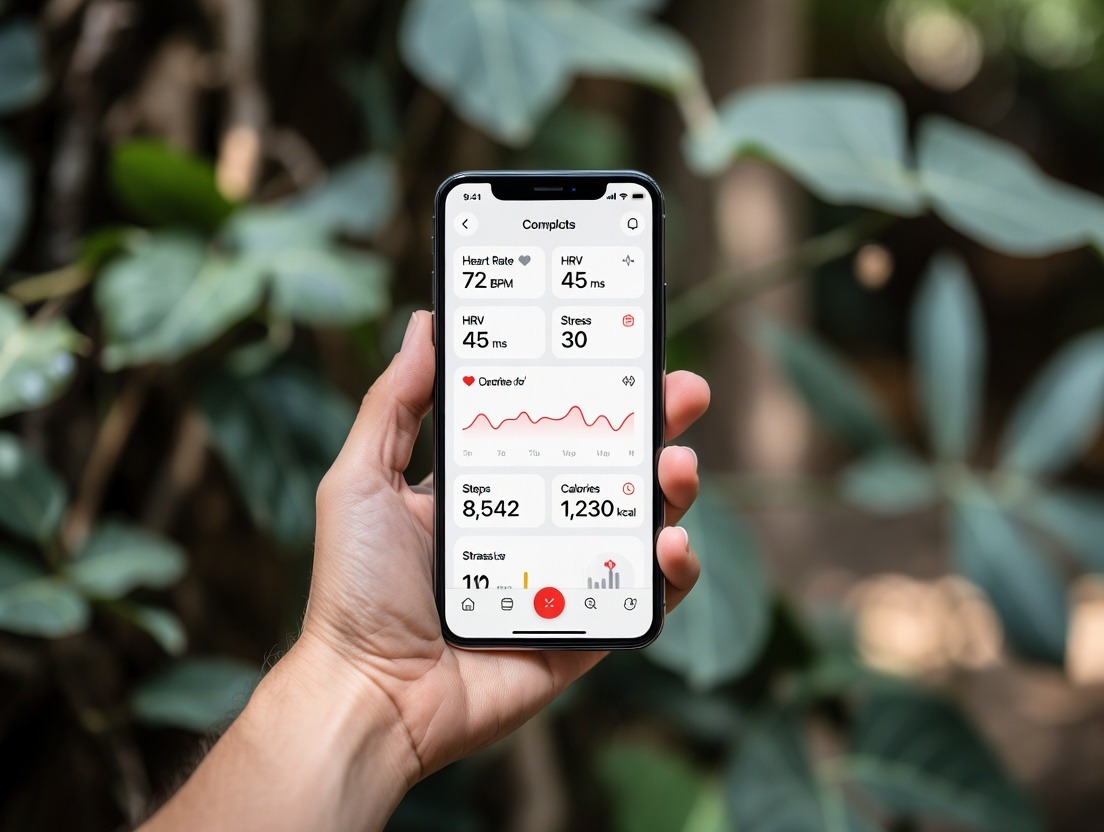
The processed results—your scores, graphs, and insights—are then sent back from the cloud to your app, where they are displayed in the clean, intuitive dashboard you see every morning. This entire pipeline, from finger pulse to readiness score, often completes in minutes after you wake up and open your app.
This seamless flow is the invisible infrastructure of your wellness insight. It’s a system designed for privacy (with encrypted data) and power, ensuring you get the most sophisticated analysis possible from the humble device on your finger. To see the final result of this pipeline and how it empowers users, explore the real-world experiences shared by our community.
The Limits of the Lab: Understanding Accuracy and Confidence Intervals
It’s the inevitable and crucial question: "How accurate is this?" As we’ve demystified the process, it’s equally important to understand its boundaries. Your wellness ring is an incredibly powerful estimator and trend tracker, but it is not, nor does it claim to be, a medical diagnostic device.
The Gold Standard Comparison
Every metric has a clinical gold standard:
Heart Rate/HRV: Electrocardiogram (ECG), with electrodes directly measuring the heart's electrical activity.
Sleep Stages: Polysomnography (PSG) in a lab, with EEG, EOG, and EMG.
Blood Oxygen: Medical-grade pulse oximeter, often on the fingertip or earlobe.
Core Temperature: Ingestible thermometer pill or rectal thermometer.
In validation studies, wellness rings are compared against these standards. The results generally show:
High Accuracy for Heart Rate at Rest: Often within 1-2 BPM of an ECG during sleep or quiet sitting.
Good Correlation for HRV: Strong agreement on relative changes and trends, though absolute rMSSD values may differ slightly from an ECG.
Good-to-Moderate Sleep Stage Agreement: Typically 70-85% agreement with PSG for distinguishing Wake, Light, Deep, and REM sleep. It’s excellent at detecting sleep vs. wake and total sleep time, with stage estimation being a probabilistic inference.
Trend Accuracy for SpO2 and Temperature: Excellent at showing meaningful dips or rises, though the absolute number may have a wider margin of error than a medical device.
The Concept of the Confidence Interval
This is a key mindset shift. Instead of a single "true" number, think of ring data as providing a high-probability range.
Your sleep last night wasn't exactly 1h 24m of deep sleep. It was most likely between 1h 15m and 1h 35m of deep sleep.
Your readiness score of 72 doesn't mean your body is at exactly 72/100 capacity. It means that, given the data patterns, your physiological state is consistent with a high probability of being well-recovered.
The ring's value is not in clinical-grade precision for a single moment, but in high-resolution, longitudinal tracking. Seeing your HRV trend down over five days is a massively significant and reliable insight, even if each night's individual number has a small margin of error. It’s the trend that tells the truth.
Factors That Reduce Accuracy
Understanding the limits helps you use the device better:
Motion Artifacts: As discussed, heavy movement corrupts PPG data.
Device Fit: Too loose or worn on a finger with poor circulation (cold hands) degrades signal.
Tattoos and Skin Tone: Very dark tattoos can interfere with light sensors. Modern multi-wavelength LEDs have largely mitigated issues with skin tone, but extreme pigmentation can pose challenges.
Biological Individuality: Some people's physiology generates cleaner PPG signals than others.
The responsible approach is to use your ring’s data as a guide for self-experimentation and awareness, not for self-diagnosis. Notice trends, observe correlations with your lifestyle, and use it to ask better questions about your health. For a deeper dive into the science behind our specific approach to accuracy, our blog features technical deep dives written by our data science team.
Decoding Your Morning Report: A Framework for Intelligent Response
You wake up, reach for your phone, and open your wellness app. A readiness score of 62, a sleep score of 79, HRV is 12% below your baseline, and your resting heart rate is elevated. What now? This daily "morning report" is your strategic briefing for the day ahead. Interpreting it requires a framework, not a fixation on any single number.
The Hierarchy of Metrics: What Demands Your Attention First?
Not all metrics are created equal, especially when they seem to conflict. Follow this prioritized lens:
The Composite Readiness/Recovery Score: Start here. This is the algorithm’s synthesized conclusion. Treat it as your executive summary. A "Low" or "Poor" score is a flag to dig deeper, even if you feel subjectively fine. Conversely, a "High" score is a green light, but should be validated by how you feel.
The Underlying Contributors: Click into the score. Why is it low?
Low HRV + Elevated RHR: This is the classic sign of systemic stress. Your autonomic nervous system is tilted toward sympathetic dominance. The cause could be physical (lingering workout fatigue, illness onset), psychological (work anxiety, emotional strain), or lifestyle (poor sleep, alcohol).
Poor Sleep Score with Adequate Time: Look at the breakdown. Was it low sleep efficiency (tossing and turning)? That points to sleep hygiene or evening routine issues. Was it lack of deep or REM sleep? This can be linked to timing (going to bed too late misses the early deep sleep window), alcohol consumption (which suppresses REM), or late-night eating.
High Temperature Deviation: A significant sustained elevation is a major red flag, often trumping other metrics. It strongly suggests your body is fighting something—prioritize rest, hydration, and avoid intense strain.
The Trend is Your Friend: A single "off" day is noise. Three consecutive days of declining HRV and rising RHR is a clear signal. The trend overrides any single morning’s data. The ring’s greatest power is revealing these patterns before you consciously feel them.
Actionable Responses, Not Prescriptions
Your ring provides the "what," not the "why." It’s your job, as the expert on your own life, to diagnose the "why" and choose the "how."
Scenario: Readiness 45, HRV -30%, Temp +0.9°C.
Interpretation: High likelihood of immune system activation.
Intelligent Response: Cancel high-intensity training. Prioritize hydration, nutrition rich in antioxidants, gentle movement like walking, and early bedtime. Monitor. This is not the day to push.
Scenario: Readiness 72, Sleep Score 65 due to low efficiency, HRV stable.
Interpretation: Physical recovery is adequate, but sleep quality was fragmented.
Intelligent Response: Maintain planned workout but perhaps reduce volume/intensity slightly. Focus today on sleep hygiene: cool, dark room, no screens before bed, consistent wind-down routine. Consider a brief nap if possible.
Scenario: Readiness 90, all metrics optimal.
Interpretation: Your body is primed for strain and adaptation.
Intelligent Response: This is the day to attempt a personal record in your workout, tackle a demanding cognitive project, or engage in high-volume training. Don’t waste a peak day.
This framework turns anxiety-inducing data into empowering intelligence. For a deeper library of scenario-based advice and user stories, our blog is a continually updated resource.
Sleep as a Foundation: Moving Beyond Duration to Quality Architecture
Your ring’s analysis elevates sleep from a simple quantity to a complex quality. Understanding your sleep architecture—the cyclical journey through light, deep, and REM sleep—is the key to optimizing this foundational pillar of health.
The Four-Stage Cycle and Its Unique Benefits
Each sleep stage serves a distinct, non-negotiable purpose:
Light Sleep (Stages N1 & N2): The gateway and majority of the night. It’s crucial for memory consolidation, synaptic pruning (learning), and physical relaxation. Your ring tracks how quickly you enter light sleep (sleep latency) and how stable it is.
Deep Sleep (Slow-Wave Sleep): The physically restorative phase. This is when human growth hormone is released, tissue repair and muscle growth occur, and the brain’s glymphatic system performs a "deep clean," flushing out metabolic waste like beta-amyloid. It’s dominant in the first half of the night. Your ring identifies this by the combination of minimal movement and your lowest, steadiest heart rate.
REM Sleep: The mentally restorative phase. The brain is highly active, processing emotions, solidifying memories, and fostering creativity. It’s essential for mental health and cognitive function. It dominates the second half of the night. Your ring infers this from an active, variable heart rate coupled with physical stillness.
A healthy night shows a rhythmic, 90-minute oscillation through these stages, with deep sleep front-loaded and REM sleep increasing in duration with each cycle.
Interpreting Your Sleep Score Breakdown
When your ring gives you a sleep score of 78, what does it mean? The breakdown is critical:
Duration: Simple but fundamental. Most adults need 7-9 hours of total sleep time to complete enough cycles.
Efficiency: The percentage of time in bed actually spent asleep. An 85%+ efficiency is good. Low efficiency suggests insomnia traits or poor sleep environment.
Depth: The amount of deep sleep. While it varies, consistently less than ~15% of your total sleep may be a concern for physical recovery.
Regularity: Going to bed and waking up at consistent times stabilizes your circadian rhythm, improving all other metrics.
Actionable Levers for Better Sleep Architecture
Your ring’s data pinpoints where to intervene:
To Increase Deep Sleep: Prioritize sleep consistency, ensure your room is cool (65-68°F is ideal), engage in regular resistance training, and avoid alcohol—which dramatically suppresses deep sleep in the second half of the night.
To Protect REM Sleep: Manage stress and anxiety (which can truncate REM), allow for adequate total sleep time (REM periods lengthen later in the night), and be cautious with late-afternoon caffeine, which can delay REM onset.
To Improve Efficiency: Establish a powerful wind-down routine 60 minutes before bed (no screens, dim lights, reading, meditation). Make your bedroom a cave: pitch black and quiet. Address any environmental disruptions your ring might be detecting via movement.
By focusing on architecture, you move beyond chasing arbitrary hours and start engineering truly restorative sleep. For more personalized troubleshooting, our community FAQ addresses common sleep-tracking questions.
HRV: Your North Star Metric for Autonomic Balance and Resilience
If you could only track one complex metric from your wellness ring, Heart Rate Variability (HRV) would be the choice of physiologists and elite athletes alike. It is the most direct, non-invasive window into your autonomic nervous system (ANS) and your body’s overall resilience to stress.
The Physiology Behind the Number
Recall that HRV measures the millisecond variations between heartbeats. This variation is orchestrated by the continuous interplay of two branches of your ANS:
Sympathetic Nervous System (SNS): "Fight or flight." Releases adrenaline, increasing heart rate and reducing HRV (making beats more regular) to prepare for action.
Parasympathetic Nervous System (PNS): "Rest and digest." Governed by the vagus nerve, it slows the heart rate and, critically, increases HRV, promoting recovery, digestion, and relaxation.
A higher HRV generally indicates strong vagal tone and a resilient system that can easily switch from stress to recovery modes. A lower HRV suggests sympathetic dominance, meaning your body is under strain and has a reduced capacity to recover.
How to Interpret Your HRV Data
HRV is highly personal. Comparing your 35 ms to someone else’s 80 ms is meaningless. What matters are your trends.
The Acute Dip: A sudden drop in your HRV (compared to your rolling baseline) after a day of hard training is normal and expected—it’s a sign of stress. The key is the rebound. A resilient system will see HRV recover to or above baseline within 1-2 days.
The Chronic Decline: A steady, multi-day or week-long downward trend in your HRV baseline is a major warning sign. It indicates accumulating, non-recovering stress from any combination of overtraining, psychological pressure, poor sleep, or diet.
The Positive Trend: A gradual increase in your HRV baseline over weeks or months is one of the best objective signs of improving fitness and overall health. It reflects true physiological adaptation.
Using HRV to Guide Training and Life
This is where "biofeedback" becomes practical:
For Athletes: The HRV-guided training model is powerful. On a morning when HRV is significantly below baseline, swap a high-intensity session for active recovery or rest. When HRV is at or above baseline, you’re clear to train hard. This personalized approach optimizes adaptation and reduces injury/illness risk.
For Everyone: View your HRV trend as a gauge of your overall life load. A declining trend is a cue to audit your stressors: Are you working too much? Are relationships strained? Is your diet poor? It provides objective data to support the decision to prioritize a rest day, a meditation session, or an early night.
HRV demystifies the vague feeling of being "run down." It quantifies your resilience, making you the pilot of your own recovery rather than a passenger to fatigue. To see how real people integrate this metric into their lives, browse the experiences shared in our testimonials.
The Readiness Score Deconstructed: Your Daily Strategic Guide
The readiness (or recovery) score is the pinnacle output of your wellness ring’s analytical engine. It’s a single, composite metric designed to answer the core question: "How prepared is my body to handle stress today?" Deconstructing how it’s built reveals its profound utility.
The Common Pillars of a Readiness Algorithm
While each brand has its own secret sauce, most readiness scores are built on a similar foundation of weighted inputs:
Sleep Quality (Often the Highest Weight): This includes not just duration, but crucially, the architecture (deep/REM) and efficiency from the previous night. Poor sleep is the most common detractor from readiness.
Heart Rate Variability (HRV): Typically the second most important input. Your score compares your last night’s HRV to your personal baseline. A significant positive deviation boosts your score; a negative deviation lowers it.
Resting Heart Rate (RHR): Compared to your baseline. An elevated RHR is a classic sign of residual fatigue, dehydration, or immune system activity, and will lower your score.
Body Temperature: Deviation from your personal circadian baseline. A sustained elevation is heavily weighted as a negative, as it’s a strong physiological signal of systemic disturbance.
Activity Load/Recovery Balance: Some scores incorporate your recent activity history. Were the past few days very strenuous? The algorithm may moderate today’s score to encourage recovery, even if last night’s sleep was good.
Navigating the "Readiness Paradox"
Sometimes, the score seems to contradict how you feel. Understanding common paradoxes is key:
"I feel great, but my score is low." This is a vital early warning. Your subjective feeling can lag behind physiological markers by 24-48 hours. Your ANS may already be stressed (low HRV) from a workout or work pressure you haven’t yet consciously registered. Trust the score and take it easier; you may avoid crashing tomorrow.
"I feel tired, but my score is high." This can happen after a full night of high-quality sleep following heavy strain. Your body has done its acute recovery (HRV rebounded), but you may still have muscular fatigue or feel psychologically drained. The score is saying your physiological systems are recovered; you can safely engage in light activity, which may actually help with the subjective fatigue.
Making the Score Actionable
Treat your readiness score as a daily dial for your life’s intensity:
Low (e.g., 0-40): Protect. Focus on recovery: hydration, nutrition, gentle movement like walking or yoga, stress management (meditation, nature), and early sleep. Defer demanding decisions.
Medium (e.g., 41-70): Maintain. Proceed with your normal routine, but stay mindful. You can work out, but perhaps keep intensity in check. Be diligent with sleep hygiene to set up for a better tomorrow.
High (e.g., 71-100): Push. This is your opportunity for peak performance. Schedule important meetings, hard workouts, creative work, or social engagements. Your body is primed to adapt and excel.
This score transforms guesswork into strategy. It is the ultimate application of the ring’s complex calculations, synthesized for immediate, practical use. For a deeper exploration of how to leverage this daily, visit our blog for case studies and guides.
Stress and Recovery: Quantifying the See-Saw of Daily Life
Modern life is a constant ballet between stress and recovery. Your wellness ring moves this dynamic from the realm of vague feeling into the domain of quantifiable biology. It helps you measure both sides of the equation, creating a balanced budget for your nervous system.
How Your Ring "Measures" Stress
It’s important to note that rings don’t measure emotions; they measure physiological arousal, which is the body’s component of the stress response.
Primary Signal: HRV. A sharp drop in HRV is the clearest indicator of acute stress activation, whether from a hard interval, a tense work call, or an emotional conversation.
Supporting Signals: Heart Rate & EDA. A sudden spike in heart rate without physical exertion, and (if your ring has it) a spike in electrodermal activity (sweat gland arousal), confirm a stress response.
The "Stress Score": Algorithms combine these signals over time to estimate periods of high sympathetic nervous system load. They may present this as a daily "stress" graph or an average score.
Tracking Active Recovery
Recovery is not passive; it’s an active biological process. Your ring tracks its signatures:
Physiological Recovery: This is seen in the data during true rest. A rising HRV during sleep or meditation, a resting heart rate dipping to its nightly low, and a normal temperature rhythm are all biomarkers of effective recovery.
Behavioral Recovery: The ring validates your recovery activities. A 20-minute meditation session where your heart rate visibly declines and HRV increases provides biofeedback that the practice is working. A gentle walk that doesn’t spike your heart rate is registered as active recovery, not stress.
Creating Your Stress-Recovery Budget
The goal isn’t zero stress—stress is necessary for growth. The goal is to balance it with adequate recovery.
Audit Your Daily Strain: Look at your daily timeline in the app. When are your stress peaks? Are they linked to work, commutes, certain people, or specific times of day?
Schedule Intentional Recovery: Use the data to justify and plan recovery blocks. If your data shows you’re consistently stressed from 2-5 PM, schedule a 10-minute breathing exercise at 1:45 PM as a preemptive buffer.
Evaluate the 24-Hour Balance: At the end of the day, did you have more physiological signatures of recovery (through sleep, relaxation, etc.) than of stress? Is your overnight data showing you’re able to "digest" the day’s strain? If not, you need to either reduce stress inputs or increase recovery activities.
This quantified approach empowers you to move from being a victim of stress to being a manager of your nervous system. It turns self-care from a vague concept into a data-driven practice. For support on integrating these practices, our community and FAQ section offer shared wisdom.
Lifestyle Integration: Using Data to Fuel Positive Change
Data in a vacuum is inert. Its power is unleashed only when it sparks behavior change. The most successful users of wellness rings are those who treat them as a feedback loop for experimentation, using the data to validate what works for their unique biology.
The "N of 1" Experimentation Mindset
You are a clinical trial of one. Your ring provides the measurement tools.
Form a Hypothesis: "If I stop drinking coffee after 2 PM, my sleep depth will improve." Or, "If I add a 10-minute meditation before bed, my morning HRV will increase."
Intervene & Isolate: Change one variable at a time for a meaningful period (at least 3-7 days to account for natural variation).
Measure the Outcome: Use your ring’s trends—not just a single day’s data—to see if the change moved the needle on your target metrics (sleep score, HRV baseline, readiness).
Adapt: Did it work? Make it a habit. Did nothing happen? Maybe that lever isn’t important for you. Did it make things worse? Abandon it.
Common Levers for Experimentation
Your ring data helps you find your optimal settings for:
Caffeine Curfew: Track how late-day caffeine affects your sleep efficiency and resting heart rate.
Alcohol Impact: Observe the dramatic, data-backed impact of even one or two drinks on HRV, REM sleep, and resting heart rate. It’s often the most glaring correlation users see.
Exercise Timing: Does late-evening vigorous exercise disrupt your sleep onset or deep sleep? Does morning exercise improve your daytime HRV?
Meal Timing: Does a large meal within 2 hours of bedtime elevate your nighttime heart rate or reduce sleep quality?
Digital Sunset: Does implementing a screen curfew 60 minutes before bed improve your sleep latency (time to fall asleep)?
Beyond the Ring: The Holistic Picture
The ring’s data is a cornerstone, but it’s not the whole temple. Integrate it with:
Subjective Feelings: Use a simple 1-5 scale for energy, mood, and focus in the app’s journal feature. Correlate this with your objective scores.
Performance Metrics: Your workout times, weights lifted, or cognitive task performance.
Life Events Logging: Tag days with travel, sickness, menstruation, high-workload projects. This context turns data points into a coherent life story.
This process of self-experimentation fosters a profound sense of agency. You are no longer following generic health advice; you are writing your own personalized guide to thriving, supported by data. To be inspired by others on this journey, explore the real stories from our users.
The Evolution of the Tech: What’s Next for Wellness Rings?
The wellness ring on your finger today is a snapshot of rapid technological progress. To understand where it’s going, we must look at the cutting-edge research and emerging sensor technologies that will define the next generation.
Non-Invasive Blood Biomarkers: The Holy Grail
The most exciting frontier is the move beyond physiology to biochemistry—measuring biomarkers from blood, but without a needle. This is done via advanced spectral analysis.
Continuous Glucose Monitoring (CGM) via Light: Researchers are developing optical sensors that use specific wavelengths of light to estimate glucose levels in interstitial fluid. While not yet as accurate as a needle-based CGM, the potential for non-invasive, trend-based glucose insight is revolutionary for metabolic health awareness.
Lactate, Hydration, and More: Similar techniques are being explored to monitor lactate threshold during exercise, hydration status via light refraction, and even key electrolytes.
Enhanced Cardiovascular Insights
Next-gen PPG sensors and algorithms will provide clinical-grade insights:
Blood Pressure Trends: While absolute cuff-less blood pressure measurement is extremely challenging, tracking relative changes and trends in blood pressure from pulse wave analysis (the shape and speed of the PPG waveform) is an active area of development.
Arrhythmia Detection: More sophisticated on-device algorithms can perform basic screening for atrial fibrillation (AFib) by detecting irregularly irregular pulse patterns, similar to features in some smartwatches.
Contextual and Environmental Sensing
Future rings will know more about your world:
Ambient Light & Sound Sensing: To automatically assess your exposure to circadian-altering blue light in the evening or sleep-disrupting noise pollution.
Advanced Location Context (via phone link): To understand if a stress response is linked to a specific location (e.g., the office) or activity.
The AI Health Coach
The ultimate evolution is from a data reporter to an intelligent health partner:
Predictive Analytics: Algorithms will not just tell you your current state, but predict future states. "Based on your current HRV trend and sleep debt, you have a 65% likelihood of catching a cold in 3 days if you don’t prioritize recovery."
Personalized, Adaptive Guidance: The AI will learn from your successful experiments and failures, offering increasingly tailored recommendations. "Last time your readiness was this low and you took a 20-minute nap, your recovery improved by 30%. Would you like to schedule a nap today?"
Integrated Health Ecosystem: Your ring’s data will seamlessly integrate with your electronic health records (with your consent), providing your doctor with unparalleled longitudinal data between visits.
This future isn't science fiction; it's the logical extension of the computational pipeline we've already explored. It points toward a world of truly proactive, personalized, and preventative health. To follow our journey as we explore these frontiers, you can learn more about our vision and roadmap.
The Invisible Lab on Your Finger: Mastering Your Wellness Intelligence
We have journeyed from the micro-level physics of sensors to the macro-level application of daily insights. We've seen how raw light and motion are transformed into a language of resilience, recovery, and readiness. Now, we arrive at the final, crucial dimension of owning a wellness ring: navigating its place in our broader life, health ecosystem, and society. This final section addresses the responsible use of this powerful technology, compares it to the wider landscape of wearables, explores specialized applications, and provides a blueprint for long-term mastery.
The ultimate goal is not to become a slave to data, but to use this unprecedented self-knowledge to live with more agency, balance, and vitality. To move from being tracked to being truly empowered.
Data Privacy and Ethics: Who Owns Your Biological Story?
In an age where data is currency, the information flowing from your body is perhaps the most intimate and valuable of all. Your sleep patterns, stress responses, and physiological rhythms paint a detailed portrait of your life. As such, understanding how this data is handled is not a technical footnote—it's a fundamental requirement for trust.
The Privacy Model of Modern Wellness Tech
Responsible companies adhere to a core set of privacy principles, which you should look for:
Anonymization & Aggregation: Your raw, personally identifiable data should never be sold. For research and improving algorithms, data is anonymized (stripped of identifying information like name and email) and aggregated (combined with millions of other data points so no individual can be identified).
User Control and Transparency: You should have clear, accessible controls. This includes the ability to download all your raw data (data portability) and to delete your account and data entirely (the right to be forgotten). Transparency reports should outline what data is collected and for what primary purposes.
End-to-End Encryption: Data should be encrypted both in transit (from your ring to the cloud) and at rest (on the servers). This protects it from interception or breach.
Purpose Limitation: Your health data should only be used to provide and improve the wellness service you signed up for, not for unrelated advertising or third-party marketing.
The Ethical Questions We Must Ask Ourselves
As users, we also bear responsibility:
Informed Consent: Do we truly read the privacy policies before clicking "agree"? We must understand what we’re opting into.
Data for Good vs. Data for Exploitation: There is immense potential for this aggregated, anonymized data to fuel public health research on sleep, stress, and disease patterns. The ethical line is clear: this must be done with explicit, opt-in research consent, not hidden in terms of service.
The Insurance and Employer Dilemma: While currently rare and heavily regulated (e.g., by HIPAA in the US and GDPR in Europe), the potential for health data to be used by insurers or employers is a societal debate. A core ethical stance for companies is to never voluntarily share identifiable user data with these entities without explicit, separate consent.
Your biological story belongs to you. Choosing a wellness partner that enshrines this principle in its architecture is paramount. At Oxyzen, we believe transparency is the foundation of trust, and we detail our commitments in our company principles and privacy documentation.
Beyond the Ring: How It Compares to Watches, Patches, and Clinical Gear
The wellness ring exists within a broader ecosystem of health-tracking technology. Understanding its unique advantages and deliberate trade-offs compared to other devices helps you choose the right tool for your goals.
Smartwatches: The Jack-of-All-Trades
Advantages: Larger battery enables continuous, bright screens, GPS for precise outdoor activity mapping, call/text notifications, and more robust third-party app ecosystems. Some now include ECG sensors for atrial fibrillation detection.
Trade-offs for Wellness: The wrist is a noisier location for PPG. Hand and wrist movements are constant, making clean HRV and sleep data harder to capture. The form factor can be bulky and uncomfortable for sleep, leading to user non-compliance. The focus is often skewed toward fitness and connectivity over deep physiological recovery.
Chest Strap Heart Rate Monitors: The Fitness Gold Standard
Advantages: Electrocardiography (ECG) sensors provide the most accurate, real-time heart rate and HRV data during exercise, as they measure the heart's electrical activity directly. Essential for serious athletes training in specific heart rate zones.
Trade-offs for Wellness: Not designed for 24/7 wear. They provide no sleep, temperature, or all-day recovery data. They are a tool for measuring acute strain, not chronic recovery.
Continuous Glucose Monitors (CGMs): The Metabolic Microscope
Advantages: Provides a real-time, biochemical stream of glucose levels, revealing individual responses to food, stress, and exercise. Unparalleled for understanding metabolic health.
Trade-offs: Currently invasive (requires a subcutaneous filament), expensive, and focused on a single, albeit critical, biomarker. It doesn't track sleep architecture, HRV, or temperature natively.
Clinical Polysomnography: The Sleep Lab Benchmark
Advantages: The undisputed gold standard for sleep diagnosis. Measures brain waves (EEG), eye movement (EOG), muscle activity (EMG), and breathing to definitively stage sleep and diagnose disorders like sleep apnea.
Trade-offs: A single night, in an unnatural lab environment, with dozens of wires attached. It provides no longitudinal, at-home data on trends or daily readiness.
The Wellness Ring’s Niche: The 24/7 Recovery Specialist
The ring’s value proposition is unobtrusive, continuous, multi-sensor physiological monitoring with a focus on recovery and readiness.
Its Superpower: The finger is a superior location for optical PPG during sleep and rest, leading to more reliable night-time HRV and sleep staging. Its always-on, comfortable form factor guarantees high compliance for longitudinal baselining.
Its Philosophy: It asks, "Is your body prepared for what life brings?" rather than just "How many steps did you take?" It is the specialist in the background, ensuring the foundation (recovery) is solid so you can excel in your focused activities (tracked by other devices).
For most people seeking a holistic view of their stress-recovery balance and sleep quality, the ring offers the deepest, most consistent insight with the least lifestyle interference. To compare how this philosophy translates into user experiences, you can read authentic stories from our community.
Advanced Use Cases: Athletes, Shift Workers, and Chronic Condition Management
While invaluable for the general population, the nuanced data from a wellness ring can be transformative for specific groups with unique physiological challenges.
For the Serious and Elite Athlete
For athletes, the line between peak performance and overtraining is razor-thin. The ring provides the objective data to walk that line.
Precision Periodization: HRV and readiness scores guide daily training adjustments. A low score prompts an automatic switch to a recovery day, preventing the accumulation of non-functional overreaching.
Identifying Strengths & Weaknesses: Sleep data can reveal if an athlete is physically recovered (good deep sleep) but mentally fatigued (low REM), guiding sport psychology interventions.
Travel & Acclimation: Monitoring how travel across time zones disrupts sleep architecture and HRV helps tailor light exposure and training schedules to accelerate acclimation.
Injury Comeback: During return-to-play, the ring can objectively show when physiological recovery metrics have normalized, even before an athlete feels "100%," adding a layer of safety to the process.
For the Shift Worker and Circadian Disruptor
Those who work nights or irregular schedules wage a constant war against their natural circadian biology. The ring becomes a crucial ally.
Mapping Your Unique Rhythm: It helps you discover your personal best sleep window given your schedule, which may not align with standard advice.
Quantifying the Cost: It objectively shows the physiological toll of night shifts—elevated resting heart rate, suppressed HRV, fragmented sleep—empowering you to advocate for better schedules or recovery time.
Optimizing the "Possible": Data can show if blackout curtains are effectively improving your daytime sleep depth or if a strategic caffeine timing is helping or harming your main sleep block.
For Managing Chronic Conditions (As a Complementary Tool)
Crucial Disclaimer: A wellness ring is not a medical device and should never be used for diagnosis or treatment modification without a doctor's guidance. However, it can provide valuable context.
Autoimmune & Inflammatory Conditions: Tracking temperature trends and resting heart rate can help individuals identify subtle early signs of a flare-up, allowing them to proactively manage stress and activity.
Mental Health Management: For conditions like anxiety and depression, tracking sleep architecture (especially REM) and HRV trends can provide objective correlates to subjective mood logs, showing the physiological impact of therapy or medication.
Long COVID & Post-Viral Fatigue: The extreme dysregulation of the autonomic nervous system common in these conditions is vividly captured by HRV and heart rate data. Patients can use it to "pace" themselves, stopping activity before they crash, based on physiological signals rather than just pushing through.
In these use cases, the ring transitions from a wellness tool to a essential biofeedback device for navigating a complex health landscape. For more nuanced discussions on these applications, our blog features expert insights and user experiences.
The Pitfalls: Avoiding Data Obsession and Interpretation Errors
With great data comes great responsibility. The potential downside of any biometric tracking tool is the development of unhealthy fixations, anxiety, or misinterpretations—a phenomenon sometimes called "orthosomnia" (an unhealthy preoccupation with perfect sleep data).
Common Psychological Traps
Chasing Arbitrary Numbers: Becoming obsessed with hitting a specific HRV number or a 90+ sleep score every night is counterproductive. Biology is variable. Fluctuations are normal.
Ignoring Subjective Feelings: Dismissing how you truly feel because "the ring says I'm 90% ready" when you feel exhausted creates a mind-body disconnect. The data is one input; your lived experience is another.
Creating Unnecessary Stress: Worrying about your data can itself lower your HRV. Checking your sleep score in the middle of the night after waking up is a surefire way to prevent falling back asleep.
Common Interpretation Errors
Overreacting to Single Data Points: A single bad night or low HRV reading is noise. Only act on clear trends (3+ days).
Misattributing Causes: A low readiness score could be from a hard workout, an emotional argument, a hidden infection, or poor sleep. Jumping to conclusions without life context leads to wrong actions.
Comparing Your Data to Others: This is the most fruitless error. Your baselines are yours alone. Comparing absolute numbers is meaningless and often demoralizing.
Strategies for Healthy Engagement
Set a Review Rhythm: Don't check your app constantly. Make a ritual of reviewing your data once in the morning to set your day's intention, and perhaps once weekly for trend-spotting.
Embrace the Range: Think in terms of "green zones," "yellow zones," and "red zones" rather than perfect scores. Most days should fall in your personal green zone. An occasional yellow is a cue for awareness; a red is a cue for action.
Use Journaling: Integrate subjective notes with your objective data. This builds a holistic picture and prevents you from reducing your rich human experience to a set of numbers.
Take Data Holidays: If you find yourself becoming anxious, it's perfectly healthy to take the ring off for a weekend or a vacation. Reconnect with how you feel without quantification.
The ring is a servant to your well-being, not its master. It should reduce anxiety about your health by providing clarity, not increase it by creating new metrics to worry about. For balanced perspectives and user discussions on this topic, our community forums and FAQ can be a helpful resource.
Your Long-Term Health Dashboard: Building a Timeline of Your Wellness
The most profound value of a wellness ring accrues not day-by-day, but year-over-year. It allows you to build a longitudinal health record owned by you, revealing patterns that are invisible in any quarterly doctor's visit.
From Data Points to a Health Narrative
Over time, your data tells a story:
Aging Trajectories: How is your deep sleep percentage changing as you enter a new decade? Is your resting heart rate creeping up, or is it staying stable due to consistent fitness? You have objective data on your personal aging process.
Seasonal Patterns: Do you see a dip in HRV every February? Perhaps it's a seasonal affective pattern, prompting you to proactively use a light therapy lamp next year.
Lifestyle Change Validation: Started a new meditation practice? You can see its impact on your 6-month HRV trend graph. Improved your diet? Watch your resting heart rate trend downward.
Major Life Events: The physiological impact of changing jobs, moving houses, having a child, or going through a period of grief is etched into your data. This can be validating and help you give yourself grace during difficult times.
Proactive Health Forecasting
With a multi-year dataset, you move from reactive to proactive:
Illness Prediction: By knowing your precise temperature and RHR baselines, you can identify deviations far earlier than waiting for full-blown symptoms.
Preventative Tuning: If you notice your sleep scores consistently decline during high-workload periods every quarter, you can preemptively strengthen your sleep hygiene routines during those times.
Creating a Powerful Patient Toolkit
When you do visit a healthcare professional, you come prepared not with vague descriptions but with data.
"Doctor, I've been feeling fatigued. My data shows my HRV has been 30% below my baseline for 6 weeks, and my deep sleep has dropped by 20%, even though I'm in bed for 8 hours."
This objective information can lead to more targeted testing and faster, more accurate diagnoses.
Your long-term dashboard is your most valuable health asset—a quantitative diary of your body's journey. It empowers you to have informed, collaborative conversations about your health. To understand how we envision this long-term partnership, you can read about our foundational story and vision.
The Future is Integrated: The Coming Era of the Digital Health Ecosystem
The standalone wellness ring is just the beginning. The true future of personal health lies in secure, user-controlled data integration—where your ring data speaks to other apps and devices, creating a unified, intelligent health ecosystem.
The Interoperability Dream
Imagine a world where:
Your ring’s readiness score automatically adjusts the day’s workout prescription in your training app (like TrainerRoad or Whoop).
Your sleep data informs your smart alarm clock (like Philips Hue) to wake you at the optimal point in your sleep cycle.
Your stress metric triggers a prompt from your meditation app (like Calm or Headspace) to take a guided breathing break.
Your temperature and HRV data is shared, with your explicit consent, with your doctor’s telehealth platform, providing context before a virtual visit.
This is not science fiction. It is the direction of the industry, enabled by frameworks like Apple Health and Google Fit, which act as secure hubs where you choose what data to share with which services.
The Role of AI and the Personal Health Avatar
The endgame is a personal health AI—a digital twin that learns from all your integrated data streams.
It would analyze your ring data, nutrition logs (from apps like MyFitnessPal), workout history, and even genetic data.
It would run predictive simulations: "If you have this big presentation on Thursday, and you want to be at peak readiness, the model suggests you need to be in bed by 10:15 PM Tuesday and Wednesday, and avoid alcohol after Monday."
It would provide truly personalized recommendations, moving from generic advice ("eat less sugar") to specific, predictive guidance ("Based on your glucose response data, having oatmeal with berries at 8 AM will give you more stable energy for your 10 AM meeting than your usual bagel").
Your Role in This Future: The Curator
In this ecosystem, you become the curator and gatekeeper of your own health data. You decide which devices talk to each other and for what purpose. The principles of privacy, user ownership, and transparency will be more critical than ever.
The wellness ring, with its rich, continuous physiological stream, will be a cornerstone data source for this integrated future, providing the foundational recovery and readiness layer upon which all other activity and health decisions are built.
Conclusion: Becoming the Author of Your Own Well-Being
We began this exploration inside the invisible lab on your finger, peering at LEDs and accelerometers. We followed the data through filters and algorithms, watched it transform into scores and insights, and finally learned how to wield those insights with wisdom and balance.
The journey of the wellness ring is a metaphor for the modern approach to health itself. It moves us:
From Generic to Personal: From following population-level advice to understanding your unique, evolving biology.
From Reactive to Proactive: From waiting until you feel sick to seeing subtle deviations and acting to preserve health.
From Subjective to Informed: From guessing how you feel to understanding the physiological underpinnings of your energy, mood, and resilience.
From Isolated to Integrated: From seeing health metrics as separate numbers to understanding the interconnected system of sleep, stress, activity, and recovery.
Your ring does not give you health; it gives you information. Health is what you build with that information. It is the early bedtime you choose after seeing a low readiness score. It is the mindful walk you take when your stress graph is high. It is the empowered conversation you have with your doctor, backed by months of personal data.
This tool represents a quiet revolution in self-care—one rooted in curiosity, empowered by knowledge, and guided by the most intimate data stream possible: the ongoing story of your body. Wear it not as a critic, but as a compassionate observer. Use its insights not as commands, but as conversation starters with yourself.
The ultimate complex metric it helps you calculate is not in its app, but in your life: the balance between challenge and rest, effort and ease, doing and being. That is the calculation that leads to a life not just of longer years, but of richer, more vital days.



%402x.svg)