


What Is a Good Sleep Score? Benchmarks by Age and Lifestyle
A "good" sleep score varies but is typically above 80/100 for most adults; benchmarks change with age and activity level.
A "good" sleep score varies but is typically above 80/100 for most adults; benchmarks change with age and activity level.
%402x.svg)
You wake up feeling groggy, reach for your phone, and check your sleep tracker. A number stares back at you: 78. Is that good? Should you be celebrating with a green smoothie or scheduling an urgent nap? In our quantified-self era, we’re drowning in data but often starved for meaning. A sleep score isn't just a digit; it's a cryptic message from your body about the quality of your most vital biological process. Yet, without the right key to decipher it, this powerful tool becomes just another source of anxiety or confusion.
For generations, we judged sleep by instinct alone—how we felt stumbling to the coffee maker. Today, advanced technology like the Oxyzen smart ring offers an unprecedented, objective look beneath the surface of our slumber, translating the complex symphony of your heart rate, movement, temperature, and breathing into a simple, comprehensible score. But this innovation brings a new challenge: understanding the benchmark. What is a good sleep score? And more importantly, good for whom?
The truth is, there is no universal perfect number. A stellar score for a busy new parent looks different than for a retired athlete. A 25-year-old’s ideal sleep architecture isn’t the same as a 65-year-old’s. Your lifestyle, stress levels, age, and even your DNA all conspire to make your personal sleep benchmark uniquely yours. Chasing an arbitrary "90+" without context is like trying to hit a bullseye in the dark.
This definitive guide is your decoder ring. We will demystify sleep scores, moving beyond the generic app summary into a world of personalized understanding. We’ll explore the science behind the score, establish realistic benchmarks by age and lifestyle, and show you how to use this knowledge not for self-judgment, but for empowered, actionable improvement. Consider this the beginning of a journey to not just track your sleep, but to truly understand and ultimately, master it. Let’s dive into the first layer: what this score is actually measuring.
A sleep score is a composite metric, a single value designed to summarize the overall quality and structure of your previous night's sleep. Think of it not as a grade, but as a holistic health report card. It distills hours of complex physiological data into an accessible format, providing a daily touchpoint for your wellness. But to trust the score, you must understand the orchestra of biometrics playing behind it.
Modern sleep tracking, especially from advanced wearable devices like the Oxyzen smart ring, doesn't rely on guesswork. It uses a combination of sensors—often including photoplethysmography (PPG) for heart rate, a 3-axis accelerometer for movement, and a skin temperature sensor—to paint a detailed picture of your sleep stages and disruptions. The score itself is typically calculated by weighing several key components:
Sleep Duration: This is the most straightforward factor—the total time you spend asleep. While foundational, it’s just the opening chapter. Both short (less than 7 hours for most adults) and excessively long sleep can negatively impact the score.
Sleep Efficiency: This is a critical, often overlooked metric. It’s the percentage of time you were actually asleep while in bed. If you spent 9 hours in bed but only 7 hours asleep, your efficiency is roughly 78%. High efficiency (90% or above) indicates you’re falling asleep quickly and experiencing few wake-ups. Poor efficiency, even with adequate total sleep, can crater your overall score and is a hallmark of sleep fragmentation.
Sleep Stages (Architecture): This is where the science gets profound. A healthy night’s sleep cycles through four main stages multiple times:
A “good” score requires not just the presence of these stages, but a balanced, cyclical structure between them. Disproportionate time in one stage at the expense of others can lower your score.
Restlessness & Awakenings: Even brief, unconscious arousals—measured by micro-movements and heart rate spikes—can fragment sleep and prevent you from progressing through vital stages. A robust tracking device will count these disruptions, and fewer is always better for your score.
Timing (Chronobiology): Going to bed and waking up at consistent times that align with your body’s natural circadian rhythm supports a higher score. Erratic schedules confuse your internal clock, leading to poorer quality sleep even if the duration is the same.
By synthesizing these elements, your device generates a score, usually on a scale of 0-100. But the algorithm’s interpretation is just the first step. The real insight begins when you contextualize that number with who you are. As you’ll see, the definition of "good" is wonderfully fluid. To learn more about the specific technology that powers this advanced analysis, you can explore how Oxyzen’s sensors work.
Walk into any wellness forum or product review section, and you’ll see it: the obsession with the elite sleep score. “I finally hit 95!” “Why can’t I get above 85?” This cultural fixation creates a misleading paradigm, suggesting that sleep quality is a linear competition with a single finish line. This is the myth of the universal 90, and it’s time to debunk it.
Your sleep score is a personal biomarker, not a standardized test. Two people with the same score of 82 can have had vastly different nights. One might have had excellent duration and efficiency but lighter-than-ideal deep sleep. The other might have had fragmented sleep but exceptionally long, high-quality REM periods. The raw number alone doesn't tell these stories. More importantly, the impact of that score is filtered through your individual physiology and life circumstances.
Consider these personalizing factors:
Your Genetic Blueprint: Some people are naturally short sleepers, genetically wired to thrive on less than 7 hours of high-efficiency sleep. Others are long sleepers, needing a solid 9+ hours to feel optimal. For the former, an 85 on 6.5 hours might be phenomenal. For the latter, it could signal a deficit.
Your Sleep History (Sleep Debt): Your score isn’t evaluated in a vacuum. It exists in the context of your recent sleep patterns. A score of 80 following three nights of poor sleep is a sign of recovery and might feel subjectively wonderful. The same 80 after a week of perfect 90s might feel like a noticeable dip. The body keeps a running tab, known as sleep debt, and your score reflects your current balance.
Your Subjective Feeling: This is the most crucial validator. How do you feel when you see that number? Do you wake up refreshed, alert, and emotionally stable? Or do you feel foggy and fatigued despite a "good" score? If your subjective experience and objective data are misaligned, it’s a signal to look deeper, not to ignore your feelings. The score is a tool for correlation, not the ultimate truth.
Your Life Context: Are you training for a marathon? Your body may prioritize deep sleep for muscle repair, altering your stage balance. Are you processing complex emotional information or learning a new skill? You might see a spike in REM. Are you fighting a virus? Your sleep will likely be longer and more fragmented as your immune system works overtime. A “good” score during these times adapts to your body’s demands.
Chasing an arbitrary high number can lead to "orthosomnia"—a unhealthy preoccupation with perfect sleep data that ironically creates more anxiety and worse sleep. The goal is not to maximize your score at all costs, but to understand the trends in your personal baseline and use the data to support how you want to feel. For a deeper dive into interpreting your personal data trends, our blog features numerous guides on sleep analysis.

If you’ve ever worn two different sleep trackers or compared notes with a friend who uses a different brand, you’ve likely encountered a confusing reality: the scores don’t match. You might get an 88 on your Oxyzen ring and a 72 on your partner’s bedside tracker for the same night. This discrepancy doesn’t necessarily mean one device is wrong; it often means they are measuring and calculating differently. Understanding this calibration is key to trusting your data.
The clinical gold standard for sleep analysis is polysomnography (PSG), conducted in a sleep lab. It involves measuring brain waves (EEG), eye movements (EOG), muscle activity (EMG), heart rhythm (ECG), and more through sensors attached to the body. This provides the most accurate picture of sleep stages and disturbances. Consumer wearables, however, must approximate this using a limited set of sensors from the wrist or finger.
Here’s where calibration comes in. Each company uses its own proprietary algorithm—a secret recipe—to translate sensor data into a sleep score. These algorithms differ in several ways:
1. The Weighting of Factors: Company A’s algorithm might weigh sleep efficiency as 40% of the total score, while Company B prioritizes sleep stage balance at 50%. For the same night, if you had high efficiency but poor stage balance, your scores from these two companies would diverge significantly.
2. The Sensitivity of Detection: How does the device define the moment you fall asleep? Some use a combination of heart rate drop and lack of movement after a "lights out" command. Others, like a smart ring worn continuously, can detect the onset of sleep without any user input, potentially capturing brief naps or dozing on the couch. The sensitivity to awakenings also varies; some might ignore arousals shorter than 2 minutes, while others log them all.
3. The Reference Population: Algorithms are often trained on vast datasets of sleep. If a company’s training data was heavily skewed toward young, healthy adults, its "ideal" stage percentages might not be calibrated correctly for older populations. The most advanced devices continuously refine their algorithms based on broader, more diverse datasets.
4. The Scoring Scale Itself: While most use a 0-100 scale, the curve isn’t linear. Is an 80 a "B-" or a "B+"? The distribution of scores across the population defines this. Some platforms are notoriously strict, where a 90 is rare. Others are more generous. The important thing is consistency within your own device’s ecosystem.
This is why the most valuable practice is consistent tracking with a single, reliable device. The absolute number matters less than the trend over time from that same device. A sudden 15-point drop on your trusted tracker is a meaningful signal, regardless of whether that new number is a 70 or an 80. The goal is to understand your personal baseline using a consistent measuring stick. For answers to common questions about how specific devices track and score, you can always visit our comprehensive FAQ page.
Now that we understand the score is personal and device-specific, we can explore the general meaning behind the broad categories most apps and devices use: Poor, Fair, Good, and Excellent. These labels are not verdicts but descriptive feedback loops. Let’s translate them into actionable insights.
Poor (Typically scores below 70): This is a red flag from your body. A score in this range usually indicates multiple compounding issues. You likely experienced severely short sleep duration (e.g., under 6 hours for an adult) coupled with low efficiency (frequent, long awakenings or trouble falling asleep). The sleep architecture is often disrupted—you may see almost no deep sleep, very fragmented REM, or an inverted pattern. How you feel: Unrefreshed, cognitively impaired, highly irritable, and with intense cravings for caffeine and sugar. This is the zone of significant sleep debt.
Fair (Scores typically 70-79): This is the "it’s complicated" zone. It often represents a night of trade-offs. Maybe you got a full 8 hours in bed, but your efficiency was only 75% due to restlessness. Alternatively, you might have fallen asleep quickly and slept soundly, but only for 6 hours—a moderate duration deficit. The stage balance might be okay but not optimal. How you feel: You’re functional, but not at your best. You might need an extra coffee, feel a mild brain fog in the afternoon, or lack your usual motivation. It’s sustainable for a night or two, but a pattern of "Fair" scores leads to accumulating debt.
Good (Scores typically 80-89): This is the target range for sustainable wellness for most adults. It signifies you’re doing most things right. You likely achieved:
How you feel: Rested, alert, emotionally steady, and productive. Your physical and cognitive recovery is solid. This is the sweet spot for long-term health, performance, and vitality. Celebrating and maintaining a pattern of "Good" scores is a major win.
Excellent (Scores typically 90-100): This is the peak recovery zone. It’s not required every night, but it’s a gift when it happens. An excellent score often combines optimal duration (e.g., 8+ hours), near-perfect efficiency (90-95%), ideal stage balance, and profound restfulness. It can also occur when you repay a significant chunk of sleep debt, with your body prioritizing deep, restorative sleep. How you feel: You spring out of bed (or at least wake up calmly), with mental clarity, high energy, and a positive mood. It’s the feeling of operating at your full potential.
Remember, these are generalized interpretations. A new parent might celebrate a "Fair" 75 as a major victory. An athlete in peak training might see a string of "Excellent" scores as non-negotiable. The labels are a starting point for reflection, not an end point for judgment. To see how real people interpret their scores across different lifestyles, you can read through authentic user testimonials.
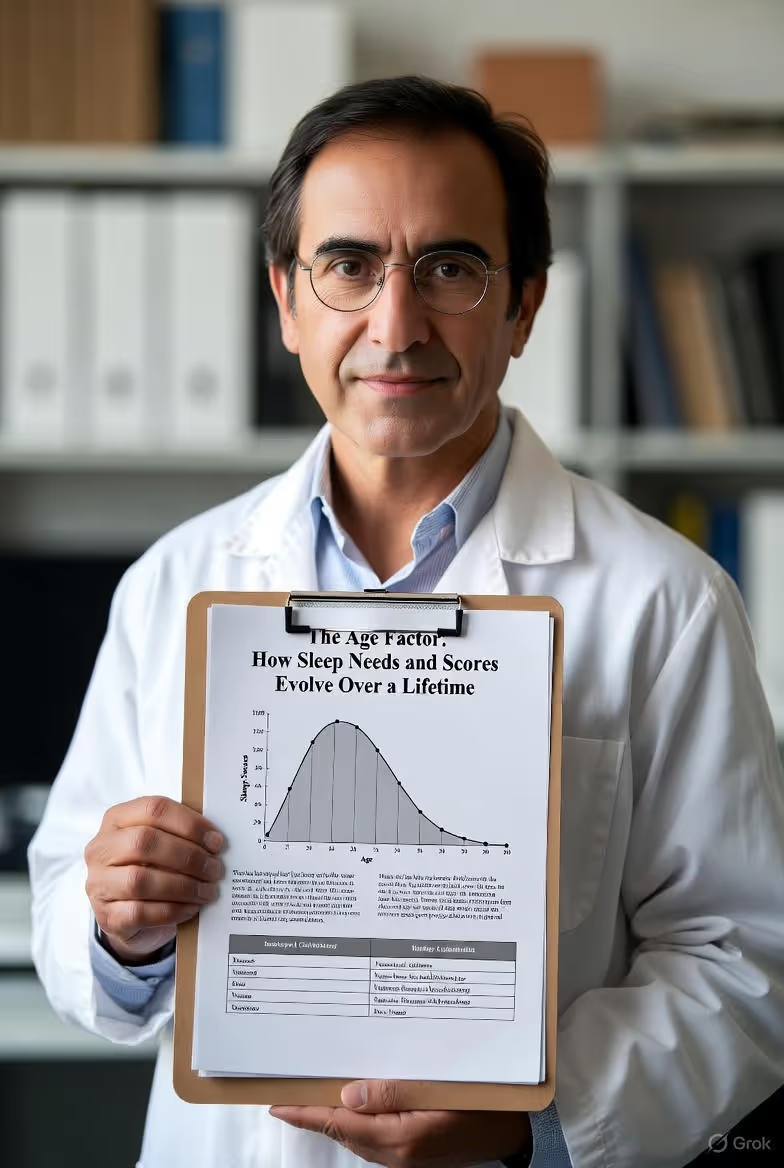
One of the most powerful ways to personalize your sleep score interpretation is through the lens of age. The sleep you need at 5 is fundamentally different from the sleep you need at 25, 45, or 75. These changes are normal, biological, and predictable. Understanding them prevents unnecessary worry and helps you set age-appropriate goals. Let’s walk through the lifespan of sleep.
Childhood & Adolescence (Ages 5-17): This is the era of sleep-dependent growth and learning. Children need copious amounts of sleep (9-12 hours) with a very high proportion of deep sleep, which supports physical development, tissue growth, and immune system strengthening. Teenagers experience a biological shift in their circadian rhythm, making them natural night owls, yet they still require 8-10 hours. A "good" score for this group is one that reflects ample duration and abundant deep sleep.
Early & Mid-Adulthood (Ages 18-40): This period often sees the greatest conflict between biological need and societal demand. The biological need remains strong at 7-9 hours. However, this is the life stage of building careers, raising young children, and active social lives—the prime time for sleep deprivation. A "good" score here is often a triumph over lifestyle pressures. The focus should be on protecting sleep consistency and efficiency amidst the chaos. Deep sleep starts its very gradual decline in the late 20s and 30s, so stage balance begins to subtly shift.
Middle Age (Ages 40-65): Physiological changes become more pronounced. The percentage of deep sleep continues to decrease, and sleep naturally becomes more fragmented with more frequent, brief awakenings (often without full consciousness). This is often when people first notice they don’t sleep "like they used to." A "good" score in this stage realistically accounts for this fragmentation. The emphasis shifts to sleep hygiene perfection: optimizing the bedroom environment, managing stress, and prioritizing consistent timing to maximize the quality of the sleep you can get.
Older Adulthood (Ages 65+): Sleep architecture changes further. Total sleep time may decrease slightly or become more distributed (e.g., a nap in the afternoon). Deep sleep is often markedly reduced, and time in lighter sleep stages increases. The circadian rhythm also tends to shift earlier, leading to earlier bedtimes and wake times. A "good" score for a healthy older adult is not about chasing the deep sleep of youth, but about achieving restful, consistent sleep with minimal discomfort and good alignment with their natural rhythm. Frequent, long awakenings or very low efficiency are concerns, but a slightly lower overall score with stable patterns can be perfectly normal and healthy.
By benchmarking your scores against age-appropriate expectations, you move from frustration to informed awareness. The mission is to get the best possible sleep for your current stage of life. This philosophy is core to our approach at Oxyzen; you can learn more about our mission to provide personalized insights for every life stage.
Beyond age, your daily life imposes its own unique demands and constraints on sleep. Let’s craft realistic benchmarks for three archetypal, sleep-challenged lifestyles.
The Athlete or Heavy Trainer: For this group, sleep isn’t downtime; it’s active recovery. It’s when muscles repair, hormones like human growth hormone are released, and neural pathways for skill are solidified. Therefore, their benchmark for a "good" score is higher.
The New Parent or Caregiver: This is the ultimate test of sleep resilience. The goal shifts from "optimal" to "optimal under the circumstances."
The Shift Worker or Irregular Schedule Worker: This group is in a constant state of circadian misalignment, fighting their fundamental biology. Their benchmark is about damage control and strategic recovery.
Each lifestyle requires a different lens. The athlete’s 85 and the parent’s 85 represent different journeys. Your life context is the essential filter through which to view your data. For more stories on how individuals from all walks of life adapt their sleep strategies, our blog is a rich resource of experiences.
To move from passive observation to active improvement, you must look under the hood of your sleep score. The composite number is the headline; the underlying metrics are the full story. By understanding these five pillars, you can diagnose the specific "why" behind a low score and take targeted action.
1. Total Sleep Time: The foundational pillar. This is the raw minutes of actual sleep. The famous "7-9 hour" guideline for adults is a population average. Your personal sweet spot is the amount that allows you to wake up without an alarm feeling refreshed. Consistently missing your personal target will drag your score down linearly. Action Step: Use your tracker to find your natural duration over a vacation or period without alarms.
2. Sleep Efficiency: The quality control pillar. Calculated as (Total Sleep Time / Time in Bed) x 100. A score below 85% indicates significant fragmentation or difficulty initiating sleep. This is often the most improvable metric through behavioral changes. Action Step: If efficiency is low, examine your pre-bed routine (too much screen time?) or bedroom environment (too hot, noisy, or bright?).
3. Sleep Latency: The gateway pillar. This is how long it takes you to fall asleep after deciding to. An ideal latency is between 10-20 minutes. Consistently under 5 minutes may indicate severe sleep deprivation; consistently over 30 minutes may indicate insomnia, anxiety, or poor sleep hygiene. Action Step: A long latency calls for wind-down rituals and stimulus control (only using the bed for sleep and intimacy).
4. Sleep Stage Breakdown: The architectural pillar. While individual needs vary, significant deviations from healthy ranges for your age can be insightful.
Action Step: Don’t hyper-fixate on nightly fluctuations (they’re normal). Look at weekly trends. Chronic deficiencies in a specific stage warrant a look at lifestyle factors or a conversation with a doctor.
5. Restlessness & Awakenings: The disruption pillar. This includes both conscious wake-ups and brief, unconscious arousals. More than a few per night fragments your sleep cycle. Common culprits include stress, an uncomfortable sleep environment, a full bladder, or sleep disorders like apnea (often signaled by snoring or gasping). Action Step: If your device shows frequent, regular disturbances, especially paired with snoring, consider a sleep study.
By analyzing which of these pillars is weak on a given night, you transform a disappointing score into a precise diagnosis. Instead of "I slept poorly," you can say, "My efficiency was low because I was restless—maybe I had that late coffee." This is the power of detailed biometric data, a principle at the heart of devices designed for true insight, like the Oxyzen smart ring.
Your nightly sleep score is more than a daily report card; it’s a leading indicator of your long-term health trajectory. While one "poor" night is a blip, consistent patterns paint a startlingly accurate forecast for your physical and mental future. Let’s contrast the two paths.
The Forecast of Consistently Low Scores (Chronic Sleep Deprivation & Disruption):
Living with an average score in the "Poor" to "Fair" range is like making constant withdrawals from your health bank with no deposits. The compounding effects are systemic:
The Forecast of Consistently High Scores (Prioritized Sleep & Recovery):
Averaging in the "Good" to "Excellent" range is the ultimate preventive medicine and performance enhancer. It represents consistent deposits into your health capital:
The message is clear: your sleep score trend is a non-negotiable pillar of your health forecast. Investing in improving and maintaining a higher average score is one of the highest-return actions you can take for your future self. It’s a commitment that goes beyond feeling tired or rested—it’s about the quality of your entire life. Our company was founded on this profound belief; you can read about the vision and values that drive us to create tools for this very purpose.
We've established that a good sleep score is deeply personal, shaped by age and lifestyle. Now, we must sharpen our focus further. Biological sex, hormonal cycles, and specific professional demands create unique sleep landscapes. A one-size-fits-all benchmark fails here. To truly personalize your understanding, we must explore how sleep scores manifest across different physiological and professional profiles.
While the fundamental need for sleep is universal, the journey through it is often gendered. Hormonal fluctuations across the menstrual cycle, pregnancy, and menopause create a dynamic sleep environment for women that is rarely accounted for in generic sleep tracking algorithms. Men, while less cyclical, face their own hormonal and societal sleep challenges. Understanding these differences is crucial for accurate interpretation and self-compassion.
The Female Sleep Cycle: A Monthly Rhythm
For menstruating women, the sleep score is best viewed through a 28-day (or individual cycle length) lens, not a nightly one.
Pregnancy and Postpartum: The Ultimate Sleep Transformation
Pregnancy redefines sleep. Each trimester brings new challenges: first-trimester fatigue and nausea, second-trimester relative calm, and third-trimester physical discomfort, frequent urination, and fetal movement.
Menopause and Perimenopause: A New Frontier
The decline in estrogen and progesterone during perimenopause and menopause often brings profound sleep disturbances: hot flashes/night sweats (which cause abrupt awakenings), increased insomnia, and a higher risk of sleep-disordered breathing.
The Male Sleep Profile: Consistency and Disorders
Men’s sleep tends to be less cyclically variable but faces other headwinds.
For both sexes, the principle is the same: context is everything. Your sleep score gains its true meaning when layered with the context of your hormonal phase, life stage, and unique physiology. Ignoring this context leads to misinterpretation; embracing it leads to empowerment and targeted action. For more insights on tailoring wellness tracking to your specific physiology, our blog features ongoing research and user stories.
For many professionals, sleep isn't just about health—it's a critical component of performance, decision-making, and safety under pressure. The cognitive cost of poor sleep is a direct professional liability. Let's examine the sleep score realities and strategies for those in high-stakes fields.
The Executive and Knowledge Worker: Cognitive Capital
For CEOs, lawyers, strategists, and analysts, sleep is the foundation of executive function, ethical decision-making, and creativity. Studies show sleep deprivation leads to rigid thinking, impaired moral judgment, and reduced innovation.
The Healthcare Worker and First Responder: Sleep in the Crucible
Shift work, chronic stress, trauma exposure, and moral injury define sleep in these fields. The stakes are literal life and death, making sleep critical for vigilance, motor skills, and emotional resilience.
The Creative Professional: The Artist, Writer, and Innovator
For creatives, sleep is part of the process. REM sleep is where the brain makes novel connections, integrating disparate ideas—the essence of creativity.
The Safety-Critical Professional: Pilots, Air Traffic Controllers, Truck Drivers
Here, sleep is a public safety issue. Fatigue is equivalent to intoxication. Regulations exist, but individual sleep quality is the final defense.
Across all professions, the common thread is this: high performance is unsustainable without high-quality recovery. Your sleep score is a direct measure of your recovery capital. To ignore it is to deplete your most valuable professional asset. Understanding the story behind your specific score is a competitive advantage, a topic we explore in our guide to performance optimization.
Modern wellness technology provides a dashboard of biomarkers, not a single gauge. Your sleep score is profoundly interconnected with two other critical metrics: Heart Rate Variability (HRV) and Readiness (or Recovery) Scores. Viewing them in isolation is like reading one chapter of a novel; viewing them together reveals the full narrative of your body's stress-recovery balance.
Heart Rate Variability (HRV): The Master Metric of Nervous System Balance
HRV measures the subtle variations in time between each heartbeat. A higher HRV indicates a flexible, resilient autonomic nervous system—one that can switch effectively between stress (sympathetic) and recovery (parasympathetic) modes. A low, declining HRV suggests your system is under strain, stuck in a "fight or flight" state.
Readiness/Recovery Score: The Daily Prescription
Many advanced platforms synthesize data from sleep, HRV, resting heart rate (RHR), and sometimes activity and temperature to generate a single Readiness Score. This score answers the question: "Based on my body's recovery last night, how prepared am I for stress today?"
Creating Your Personal Baseline Triad:
The goal is to establish your personal healthy ranges for this triad over 30 days of consistent tracking:
When all three metrics are in their respective healthy zones, you are in harmony. When one or more are out of zone, it's a diagnostic clue. This holistic view moves you from simply tracking sleep to managing your overall recovery capacity. It’s the difference between knowing the weather today and understanding the climate patterns. For a deeper exploration of how these metrics interact, our blog features expert analyses and case studies.
You’ve identified a troubling trend: consistently low scores, signs of possible apnea in your data, or a perplexing mismatch between how you feel and what your tracker says. The next, most important step is to bring this data to a professional. But how? Walking into a doctor’s office and saying "My sleep score is bad" is ineffective. You need to translate your consumer data into a clinically relevant patient narrative.
Pre-Appointment Preparation: Building Your Data Portfolio
Don't just show the app on your phone. Prepare a concise, visual summary.
The Productive Conversation: Framing Your Concerns
Structure the conversation to be collaborative and evidence-based.
What a Good Provider Will Do (And What They Might Say):
Managing Expectations and Advocacy:
Bringing your sleep score to your doctor transforms you from a passive patient into an active participant in your health. It provides a shared, objective starting point for a crucial health conversation. For support on preparing for such conversations, you can find helpful resources in our FAQ and support section.
Sometimes, a low sleep score isn't about lifestyle or stress—it's a symptom of an underlying medical condition. Your wearable data can be the canary in the coal mine, revealing patterns highly suggestive of specific sleep disorders. Knowing these red flags empowers you to seek appropriate medical help.
Pattern 1: The Sawtooth of Sleep Apnea
Obstructive Sleep Apnea (OSA) involves repeated pauses in breathing during sleep, often causing loud snoring, gasping, and fragmented sleep.
Pattern 2: The Twilight Restlessness of RLS
Restless Legs Syndrome (RLS) involves an uncomfortable, irresistible urge to move the legs, primarily in the evening and at rest.
Pattern 3: The Erratic Architecture of Insomnia
Chronic insomnia involves persistent difficulty falling asleep, staying asleep, or waking too early, despite adequate opportunity.
Pattern 4: The Advanced Rhythm of Delayed Sleep Phase Disorder
This is a circadian rhythm disorder where your internal clock is significantly delayed (e.g., 3 AM to 11 AM).
What To Do If You See These Patterns:
Your sleep tracker is not a diagnostic tool, but it is an exceptional screening and monitoring tool. It provides the objective evidence that your "I'm always tired" is a legitimate medical concern worthy of professional investigation. Understanding the potential gravity behind a persistent low score is a critical aspect of using this technology responsibly, a principle core to our mission at Oxyzen.
We are on the cusp of a revolution in sleep science, moving far beyond the simple composite score. The future lies in predictive analytics, hyper-personalization, and closed-loop systems that don't just report on your sleep but actively help you achieve it. Understanding this horizon helps contextualize today's tools and prepares us for tomorrow's possibilities.
From Descriptive to Predictive Analytics
Today's scores tell you what happened. Tomorrow's systems will tell you what will happen and how to prevent it.
Hyper-Personalized Sleep Fingerprints
The generic "7-9 hours" and standardized stage percentages will give way to your unique Sleep DNA.
The Closed-Loop Sleep Environment
Technology will move from passive tracking to active environmental modulation.
Non-Contact, Whole-Room Sensing
Wearables will be complemented or replaced by ambient sensors.
The Integration of Mental and Emotional States
Future platforms will better bridge the mind-body gap.
This future isn't about more distracting data; it's about contextualized intelligence. The goal is for the technology to recede into the background, providing gentle, anticipatory guidance that makes achieving great sleep effortless and personalized. It’s a future where your environment and tools work in harmony with your biology. We are passionate about building this future; you can follow our journey and innovations.
Armed with an understanding of what your sleep score means and the powerful forecast it provides, the natural next step is transformation. How do you move from insight to improvement? How do you systematically influence those key underlying metrics—efficiency, latency, restfulness, and stage balance—to nudge your scores from "Fair" to "Good," and from "Good" to "Excellent"?
This journey isn't about perfection or radical overnight change. It's about the cumulative power of small, consistent, science-backed adjustments tailored to your unique life. It’s about building a personalized sleep blueprint. Think of your sleep score as the output of a complex system; to change the output, you must intentionally adjust the inputs. The following sections provide a comprehensive, actionable toolkit to do just that, beginning with the most powerful lever you have: your environment.
You can follow every sleep hygiene rule, but if your bedroom environment is working against you, your efforts will be in vain. Your sleep sanctuary should be a carefully engineered cocoon designed for one purpose: to facilitate unconsciousness. This goes far beyond a comfortable mattress. Let’s deconstruct the optimal sleep environment, one sensory input at a time.
The Tyranny of Light (And The Power of Darkness): Light is the primary driver of your circadian rhythm. Even small amounts of ambient light from a streetlamp, digital clock, or charging indicator can penetrate your eyelids and suppress melatonin production, the hormone that signals sleep.
The Thermal Sweet Spot: Your core body temperature needs to drop by about 1-2 degrees Fahrenheit to initiate and maintain sleep. A room that’s too warm disrupts this natural thermoregulation.
The Sound of Silence (Or Consistency): Sudden, intermittent noises—a door slamming, a dog barking—are the arch-nemeses of sleep continuity, causing micro-arousals that fragment your sleep stages. Complete silence isn’t always necessary or even achievable; what you need is acoustic consistency.
The Air You Breathe: Air quality and humidity are subtle but significant players. Dry air can irritate nasal passages and lead to snoring or mouth breathing. Stale, polluted air is simply unhealthy.
The Primitive Need for Safety and Order: On a subconscious level, your brain needs to feel safe to fully disengage. Clutter, chaos, and disarray in your bedroom can create low-level anxiety that inhibits relaxation.
By systematically auditing and optimizing these five environmental factors, you create a foundation that makes good sleep almost inevitable. It removes the barriers your body was fighting against all night. For more detailed product recommendations and environmental tweaks, our blog is a constantly updated resource.
You can’t sprint into sleep. The transition from the alert, stimulated state of modern life to the quiet, receptive state needed for slumber requires a deliberate bridge. This is the purpose of the pre-sleep ritual—a consistent, wind-down sequence that tells your nervous system, "The day is over. It's time to restore."
A powerful ritual isn't about adding more tasks; it's about creating a buffer zone of de-escalation. It should start 60-90 minutes before your target bedtime and focus on lowering physiological and psychological arousal.
The Digital Sunset: This is non-negotiable. The blue light emitted by phones, tablets, laptops, and TVs is particularly effective at suppressing melatonin. More insidiously, the content itself—scrolling social media, answering work emails, watching thrilling shows—activates your brain's reward and stress centers.
The Light Dimming Protocol: As you banish artificial light, guide your body with natural darkness cues. Mimic the sunset.
The Nervous System Downshift: Activate your body's "rest and digest" (parasympathetic) system to counter the day's "fight or flight" (sympathetic) dominance.
The Thermoregulation Trigger: Use warmth to encourage the core temperature drop.
The Consistency Anchor: The ritual itself is powerful, but performing it at roughly the same time each night amplifies its effect by reinforcing your circadian rhythm.
This ritual isn't a rigid checklist but a flexible framework. The goal is to create a predictable, soothing pattern that your mind and body come to associate with the imminent onset of sleep, dramatically improving your sleep latency and reducing pre-sleep anxiety. Many of our users share how crafting their ritual transformed their scores; you can find inspiration in their real-world testimonials.
Sleep is not an isolated event. It is the culmination of everything you do—and don’t do—during the preceding 16 hours. A high sleep score is built throughout the day with strategic choices that align your circadian rhythm, manage sleep pressure, and regulate stress.
Harnessing Light: Your Master Zeitgeber: Light exposure is the most potent regulator of your internal clock. Getting bright light, particularly sunlight, in the morning is like pushing the "start" button on your circadian cycle.
Move Your Body (But Time It Right): Regular exercise is one of the best evidence-based ways to improve sleep quality and duration. It increases deep sleep, reduces stress, and tires the body physically. However, timing matters.
Master Your Caffeine and Alcohol Calculus: These substances are major levers on your sleep architecture, often in ways that surprise people.
Manage Stress and Cognitive Load: The unresolved worries and mental to-do lists of the day are the number one cause of racing minds at bedtime.
Fuel for Sleep: Nutrition Timing and Composition: A heavy meal right before bed forces your digestive system to work overtime, raising core temperature and potentially causing discomfort. Conversely, going to bed hungry can also be disruptive.
By viewing your entire day as preparation for sleep, you build sleep pressure appropriately, keep your circadian rhythm in sync, and ensure that when your head hits the pillow, your biology is primed for success. This holistic 24-hour view is central to our philosophy at Oxyzen, which you can learn more about in our company story.
You’ve optimized your environment, built a solid wind-down ritual, and tightened up your daytime habits. Your scores improved from the 60s/70s to the low 80s. But now you’re stuck. The coveted "Excellent" range feels out of reach, or your scores have become erratic. This plateau is a common and frustrating phase. It means you’ve mastered the basics and now need to engage in more nuanced detective work.
Here are the most common culprits behind a sleep score plateau and how to address them:
The "Invisible" Sleep Disruptor: Subclinical Sleep Apnea or Restless Legs: You may be experiencing frequent micro-arousals you’re not aware of. Sleep apnea (pauses in breathing) and restless legs syndrome (an urge to move legs) are two common disorders that severely fragment sleep without fully waking you.
The Overlooked Factor: Medication & Supplements: Many common prescription and over-the-counter medications, as well as supplements, can interfere with sleep architecture. These include certain antidepressants, blood pressure medications, stimulants for ADHD, and even some herbal supplements.
The Stealth Stimulant: Hidden Caffeine and Chronic Stress: Caffeine can lurk in unexpected places: dark chocolate, decaf coffee (which has some caffeine), certain pain relievers, and some herbal teas. Beyond chemicals, unresolved chronic stress keeps your nervous system in a perpetual state of low-grade alert.
The Fitness Trap: Overtraining and Under-Recovering: For active individuals, more exercise isn't always better. Overtraining syndrome places immense strain on the body, elevating cortisol and inflammatory markers, which can destroy sleep quality. Your body screams for recovery but can't achieve it.
The Consistency Deception: Weekend Jet Lag: Staying up late and sleeping in on weekends, even by just 2-3 hours, creates "social jet lag." It confuses your internal clock, making Sunday night sleep poor and setting up a difficult Monday.
The Data Paradox: Orthosomnia: Ironically, an obsessive focus on achieving a perfect sleep score can itself become a source of performance anxiety that ruins sleep. Checking your score first thing in the morning can set a negative emotional tone for the day.
When you hit a plateau, it’s a sign to shift from general principles to personalized investigation. Your biometric data is the clue. For further guidance on interpreting specific data patterns, our FAQ section has deep dives on common issues.
Citations:
Your Trusted Sleep Advocate: Sleep Foundation — https://www.sleepfoundation.org
Discover a digital archive of scholarly articles: NIH — https://www.ncbi.nlm.nih.gov/
39 million citations for biomedical literature :PubMed — https://pubmed.ncbi.nlm.nih.gov/
Experts at Harvard Health Publishing covering a variety of health topics — https://www.health.harvard.edu/blog/
Every life deserves world class care :Cleveland Clinic - https://my.clevelandclinic.org/health
Wearable technology and the future of predictive health monitoring :MIT Technology Review — https://www.technologyreview.com/
Dedicated to the well-being of all people and guided by science :World Health Organization — https://www.who.int/news-room/
Psychological science and knowledge to benefit society and improve lives. :APA — https://www.apa.org/monitor/
Cutting-edge insights on human longevity and peak performance:
Lifespan Research — https://www.lifespan.io/
Global authority on exercise physiology, sports performance, and human recovery:
American College of Sports Medicine — https://www.acsm.org/
Neuroscience-driven guidance for better focus, sleep, and mental clarity:
Stanford Human Performance Lab — https://humanperformance.stanford.edu/
Evidence-based psychology and mind–body wellness resources:
Mayo Clinic — https://www.mayoclinic.org/healthy-lifestyle/
Data-backed research on emotional wellbeing, stress biology, and resilience:
American Institute of Stress — https://www.stress.org/


