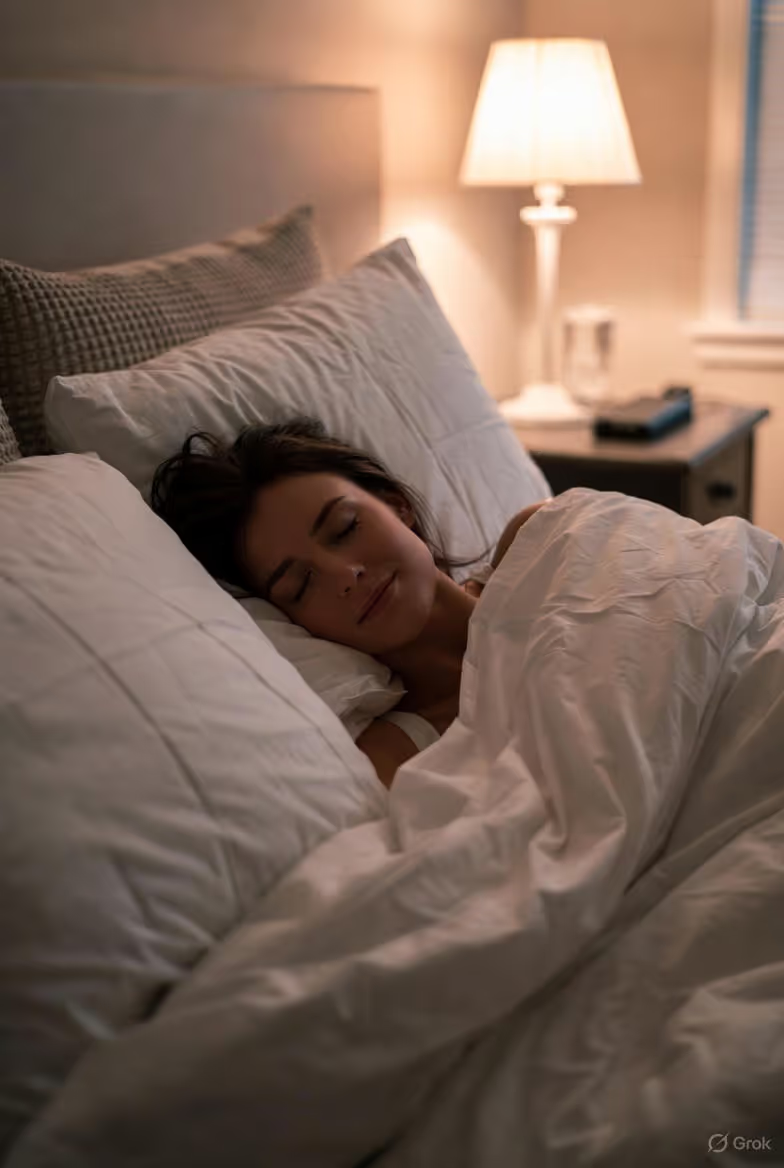
What Is Deep Sleep and Why You're Not Getting Enough
Deep sleep is the most restorative sleep stage, yet many people don't get enough. This foundational guide explains what deep sleep is, why it matters critically for health and recovery, how much you need, and introduces basic concepts about this essential but often insufficient rest stage.
What Is Deep Sleep and Why You're Not Getting Enough
You know the feeling. You log eight hours in bed, but you wake up feeling like you never truly shut down. Your brain is foggy, your energy is on empty, and that 3 PM slump hits like a tidal wave. The problem likely isn't the quantity of your sleep—it’s the quality. Specifically, you’re missing out on one of the most vital, restorative, and mysterious phases of the human sleep cycle: deep sleep.
Deep sleep, or slow-wave sleep, is not just a state of unconsciousness. It’s a nightly biological renovation project. It’s when your brain power-washes itself of toxins, your body repairs tissue and builds bone and muscle, and your memories solidify from fleeting thoughts into lasting knowledge. It’s the foundation of physical recovery, cognitive clarity, and emotional resilience. Without it, we are merely running on a depleted battery.
Yet, in our modern world of 24/7 connectivity, artificial light, and chronic stress, deep sleep is under siege. Many of us are trapped in a silent deficit, robbing ourselves of this fundamental pillar of health without even knowing it. We chase productivity hacks, biohacking supplements, and energy drinks, all while neglecting the most potent performance enhancer available to us, hidden within our own biology.
But what if you could understand exactly what happens during this elusive stage? What if you could identify the invisible forces stealing it from you and, most importantly, reclaim it? This journey begins with decoding the science, confronting the modern culprits, and arming yourself with the tools to measure and improve your most critical hours of rest. Let’s pull back the curtain on deep sleep—your body’s most powerful nightly reset.
The Architecture of Sleep: Understanding Your Nightly Journey
Before we can appreciate the unique role of deep sleep, we must first understand the stage it occupies in the grand theatre of the night. Sleep is not a monolithic state of "shutdown." It's a highly structured, cyclical journey through distinct phases, each with its own unique brainwave patterns and physiological purpose. This structure is known as sleep architecture.
Think of a typical night's sleep not as a flat line, but as a series of descending and ascending staircases. Throughout the night, you progress through multiple cycles, each lasting roughly 90 to 120 minutes. A full, restorative night of 7-9 hours typically comprises 4 to 6 of these cycles. Each cycle is composed of two broad types of sleep:
NREM (Non-Rapid Eye Movement) Sleep: This encompasses three stages, progressing from light sleep to the deep sleep we are focusing on.
REM (Rapid Eye Movement) Sleep: This is the stage most associated with vivid dreaming, high brain activity, and memory processing.
Here’s how the journey through one cycle unfolds:
Stage 1 (N1 - Light Sleep): This is the doorway to sleep, lasting only a few minutes. Your body begins to relax, your brainwave activity starts to slow from its waking patterns (alpha waves) into theta waves, and you can be easily awakened. It's a transitional, twilight zone.
Stage 2 (N2 - Light Sleep): You spend nearly half of your total sleep time in this stage. Your heart rate slows, your body temperature drops, and your brain produces sudden bursts of rhythmic brainwave activity known as sleep spindles and K-complexes. These are believed to play a key role in memory consolidation and protecting sleep by shielding the brain from being awakened by external noises. This is the bedrock of your sleep cycle.
Stage 3 (N3 - Deep Sleep or Slow-Wave Sleep): This is our star player. Your brain now emits slow, rolling delta waves. It is extremely difficult to wake someone from deep sleep; if you do, they will experience "sleep inertia"—that groggy, disoriented feeling. This is when the body focuses on physical repair, growth hormone release, immune system strengthening, and clearing metabolic waste from the brain. Deep sleep is most abundant in the first half of the night.
REM Sleep: After ascending from the depths of deep sleep, you enter REM sleep. Your brain becomes highly active, nearly mirroring wakefulness (which is why it's sometimes called "paradoxical sleep"). Your eyes dart rapidly behind closed lids, most muscles are temporarily paralyzed (to prevent you from acting out your dreams), and your breathing and heart rate become irregular. REM is crucial for emotional processing, learning, and creativity. REM periods typically lengthen with each successive cycle throughout the night.
The proportion of these stages isn't static. As the night progresses, the architecture shifts. The first half of the night is dominated by deep, restorative N3 sleep. As you move into the later cycles, REM sleep episodes become longer, while deep sleep periods shorten or may even disappear. This elegant architecture is why both going to bed early enough to capture those deep-sleep-rich early cycles and sleeping long enough to enjoy the REM-rich later cycles are non-negotiable for holistic rest. For a deeper dive into how sleep cycles work and their impact on daily performance, you can explore our comprehensive wellness blog.
Understanding this architecture is the first step. It reveals that sleep is a dynamic process, and deep sleep is its most physically restorative cornerstone. But to grasp why it's so irreplaceable, we need to zoom in on what exactly happens in your brain and body when you descend into those precious, slow delta waves.
The Science of Deep Sleep: Your Brain's Power Wash and Body's Repair Shop
Deep sleep is not passive downtime; it is a period of intense, purposeful biological activity. When your brainwave monitor shows those slow, high-amplitude delta waves, an army of restoration processes kicks into high gear. Let’s break down the science behind this nightly renovation.
The Glymphatic System: The Brain's Nightly Detox One of the most groundbreaking discoveries in neuroscience in the past decade is the function of the glymphatic system. Think of it as the brain’s personal waste clearance system, a plumbing network that becomes dramatically more active during deep sleep. Cerebrospinal fluid (CSF) washes through the brain tissue, flushing away metabolic debris that accumulates during the day.
The most notable toxic protein it clears is beta-amyloid, which is associated with the development of Alzheimer’s disease. During deep sleep, the channels between brain cells expand by about 60%, allowing CSF to flow rapidly and carry away these waste products. This is literally a power wash for your mind. Chronic deep sleep deprivation impairs this process, allowing toxic proteins to build up, which is why poor sleep is a significant risk factor for cognitive decline.
Memory Consolidation: From Hard Drive to Permanent Storage Deep sleep is the curator of your memories. The hippocampus, your brain’s short-term storage center (like a USB stick), replays the day’s events. During deep sleep, this information is selectively transferred to the neocortex—the brain’s long-term storage hard drive. This process, known as memory consolidation, transforms fragile, recent memories into stable, long-term knowledge.
This isn't just for facts and figures. Procedural memory—the "how-to" knowledge of riding a bike or playing piano—is also solidified here. Studies show that people who get adequate deep sleep after learning a new skill perform significantly better the next day. It’s your brain’s offline processing time, integrating new information and making critical connections.
Hormonal Symphony: The Master Regulator Deep sleep is the conductor of a vital hormonal orchestra:
Growth Hormone Release: The majority of the body’s pulses of human growth hormone (HGH) occur during deep sleep. This hormone is essential not for growth in children, but for tissue repair, muscle growth, cell regeneration, and bone building in adults. It’s your body’s chief recovery agent.
Cortisol Regulation: The stress hormone cortisol follows a diurnal rhythm, peaking in the morning to help you wake up and reaching its lowest point around midnight. Deep sleep is crucial for suppressing cortisol and allowing the body to enter a true state of rest and repair. Poor deep sleep can lead to elevated nighttime cortisol, creating a vicious cycle of stress and sleeplessness.
Insulin Sensitivity: Deep sleep helps regulate glucose metabolism. Sleep deprivation, and specifically a lack of deep sleep, reduces insulin sensitivity, meaning your body struggles to process sugar effectively. This is a direct pathway to increased fat storage and a higher risk of type 2 diabetes.
Physical Restoration and Immune Defense While your brain is busy cleaning and filing, your body is in full repair mode. Protein synthesis increases, facilitating the repair of micro-tears in muscles from the day’s activities. The immune system releases cytokines—proteins that help fight infection and inflammation. This is why you naturally crave more sleep when you’re sick; it’s your body’s way of marshaling its defenses. Chronic deep sleep deprivation leaves you immunocompromised and more susceptible to everything from the common cold to chronic inflammation.
In essence, deep sleep is the non-negotiable maintenance window for your entire biological system. Skipping it is like never taking your car in for an oil change or never rebooting a bogged-down computer. The system will eventually fail. The story of our mission to help people reclaim this vital state is deeply personal; you can read our founding story and vision here.
Now that we understand the profound importance of deep sleep, the critical question becomes: how much of this biological gold do we actually need? And how can we tell if we’re getting it?
How Much Deep Sleep Do You Really Need? Decoding the Numbers
The allure of quantified self-improvement leads us to a pressing question: what’s the magic number? If deep sleep is so crucial, exactly how many minutes per night should we be aiming for? The answer, as with most aspects of human biology, is nuanced and personal.
The General Guidelines: A Percentage, Not a Fixed Number Sleep experts generally define deep sleep as a percentage of your total sleep time, rather than a fixed hour count. For most healthy adults, deep sleep (Stage N3) typically constitutes between 13% and 23% of a full night’s sleep.
Let’s do the math on a 7.5-hour (450-minute) night:
At the lower end (13%): You’d get about 58 minutes of deep sleep.
At the higher end (23%): You’d get about 104 minutes of deep sleep.
This means the typical range for a good sleeper is roughly 1 to 1.7 hours of deep sleep per night. It’s important to note that this is not a target you can consciously control minute-by-minute, but rather a benchmark that reflects the health of your overall sleep architecture.
The Age Factor: The Inevitable Decline Perhaps the most significant factor influencing deep sleep is age. We are deep sleep powerhouses in youth, and it’s a resource that naturally diminishes over time.
Children and Adolescents: They can spend up to 20-25% of their sleep in deep stages, which is critical for physical growth and brain development.
Young Adults (20s-30s): The proportion begins to gently decline but remains robust.
Middle Age (40s-60s): This is where a more noticeable drop occurs. Deep sleep percentage can decrease significantly, and the deep sleep waves themselves may become less powerful. This is one reason why older adults often report lighter, more fragmented sleep.
Senior Years (65+): Deep sleep can become very limited, sometimes dropping to only a few percent of the night or even disappearing entirely in some individuals. This decline is linked to age-related changes in brain structure and is a key area of research for cognitive health.
This natural decline is why prioritizing sleep quality becomes more, not less, critical as we age. We must work smarter to protect the deep sleep we still can generate.
Individual Variability: Your Unique Blueprint Beyond age, genetics, lifestyle, and overall health create a unique deep sleep blueprint for each person. An elite athlete in heavy training may require and generate more deep sleep for physical repair. Someone recovering from an illness or significant stress may also see a temporary increase as the body demands more restoration. Conversely, someone with chronic pain or a sleep disorder will see their deep sleep severely truncated.
The Pitfall of Obsessing Over the Number In the age of sleep trackers, a new anxiety has emerged: “deep sleep anxiety.” Waking up to see only 45 minutes of deep sleep can cause more stress than the deficit itself, which ironically harms future sleep. It’s vital to remember that consumer devices, while insightful for trends, are not medical-grade EEGs. They estimate sleep stages using movement and heart rate variability, which can have margins of error.
The goal is not to hit a perfect number every single night, but to observe trends over weeks and months. Is your deep sleep consistently very low? Is it dropping over time? These trends are more meaningful than a single night’s data. If you have consistent, nagging fatigue despite adequate time in bed, your deep sleep may be the culprit. For common questions on interpreting sleep data from wearables, our comprehensive FAQ resource can be a great help.
So, if you’re consistently feeling unrefreshed, it’s likely your deep sleep is being compromised. But by what? The enemies of deep sleep are numerous, silent, and woven into the very fabric of modern life.
The Modern Enemies of Deep Sleep: Why Your World Is Stealing Your Rest
We are not just passively losing deep sleep to the sands of time. We are actively, though often unknowingly, sabotaging it. The very environment and habits of 21st-century life are hostile to the delicate biological conditions required to generate slow-wave sleep. Here are the primary culprits.
1. The Blue Light Epidemic Our circadian rhythm—the internal 24-hour clock that regulates sleep—is exquisitely tuned to light, specifically blue wavelength light from the sun. When the sun sets, the absence of blue light signals the pineal gland to produce melatonin, the hormone of sleepiness. Enter smartphones, tablets, laptops, and LED lights. They emit a torrent of artificial blue light that tricks your brain into believing it’s perpetually daytime.
This melatonin suppression is a direct attack on sleep onset, but its ripple effect weakens the entire sleep structure, including the depth and quality of deep sleep. Scrolling social media or answering work emails in bed is perhaps the most direct way to tell your biology, "It's go time," right when it needs to wind down.
2. Chronic Stress and the Hyperactive Mind Stress triggers the release of cortisol and adrenaline—the "fight or flight" hormones designed for acute danger. In our modern world, these are often chronically elevated due to work pressure, financial worries, or social anxieties. High cortisol levels at night are the arch-nemesis of deep sleep. They keep your nervous system in a state of high alert, preventing the descent into the deep, slow-wave state.
Furthermore, the "monkey mind"—the constant, racing loop of thoughts and to-do lists—increases beta brainwave activity. To enter deep sleep, the brain must transition from alpha/theta waves to delta waves. A hyperactive mind puts up a formidable roadblock, leaving you stuck in light, unrefreshing Stage 1 or 2 sleep.
3. Irregular Sleep Schedules Your circadian rhythm thrives on consistency. Going to bed and waking up at wildly different times each day (a huge difference between weekdays and weekends, known as "social jetlag") is like constantly giving your body whiplash. This confusion disrupts the predictable timing and robust architecture of your sleep cycles, including the reliable initiation of deep sleep phases. The body doesn’t know when to deploy its restorative forces efficiently.
4. Diet and Substance Use
Alcohol: This is a major deceiver. Alcohol is a sedative that may help you fall asleep faster, but it catastrophically fragments sleep architecture. It suppresses REM sleep in the first half of the night and, as it metabolizes, causes rebound awakenings and lighter sleep. It particularly devastates the continuity and quality of deep sleep.
Caffeine: With a half-life of 5-6 hours, an afternoon coffee can still have significant stimulating effects at bedtime, making it harder to fall asleep and reducing overall sleep depth.
Heavy, Late-Night Meals: Digesting a large meal requires energy and raises core body temperature. For deep sleep to initiate, core temperature needs to drop. A late feast forces your body to choose between digestion and restoration, often at the expense of the latter.
5. Environmental Factors: Noise, Temperature, and Comfort Deep sleep is a fragile state easily disrupted by a noisy environment (a snoring partner, traffic, a ticking clock). Even if you don’t fully wake, noise can pull you out of deep sleep into a lighter stage. Similarly, a room that’s too warm prevents the optimal core temperature drop. An uncomfortable mattress or pillow can cause micro-awakenings that fragment sleep cycles.
6. Lack of Physical Activity Regular physical activity is one of the most potent promoters of deep sleep. It increases sleep pressure (the body’s need for sleep) and seems to enhance the brain’s drive for restorative delta wave sleep. A sedentary life often leads to lighter, less efficient sleep.
The cumulative effect of these enemies is a society-wide deep sleep deficit. We are living in a state of chronic biological debt. But here’s the empowering part: recognizing these enemies is the first step toward defeating them. The journey back to restorative sleep begins with awareness, and today, that awareness can be quantified like never before. To understand how innovative technology is making this possible, you can discover the science behind Oxyzen.
The Silent Symptoms: How to Know You're Deep Sleep Deficient
You don't need a sleep study to suspect you’re missing out on deep sleep. Your body and mind send clear, albeit often misattributed, distress signals. Unlike simply feeling tired from short sleep duration, deep sleep deficiency has a distinct fingerprint. Here are the most common silent symptoms.
1. The Unrefreshing Wake-Up (Sleep Inertia That Lasts) Everyone experiences brief grogginess upon waking—this is normal sleep inertia. But if you feel like you’re dragging a lead weight for an hour or more, if you need multiple alarms and still feel like you could sleep for several more hours, this is a classic sign. Your brain hasn’t completed its essential deep sleep repair cycles, leaving you functionally impaired upon waking.
2. Relentless Brain Fog and Cognitive Glue Deep sleep is crucial for memory consolidation and clearing neurotoxic waste. Without it, your cognitive functions gum up. You might experience:
Poor Concentration: An inability to focus or sustain attention on tasks.
Memory Lapses: Forgetting why you walked into a room, struggling to recall names or details you just learned.
Slow Processing Speed: Feeling like your thoughts are moving through molasses, taking longer to solve problems or make decisions.
3. Physical Fatigue and Poor Recovery Despite a lack of intense activity, your body feels perpetually sore, heavy, or weak. Minor bumps and bruises take longer to heal. Your athletic performance plateaus or declines, and you hit the wall faster during workouts. This is a direct result of impaired growth hormone release and reduced cellular repair that occurs in deep sleep.
4. Intense Sugar and Carb Cravings When you’re deep-sleep deprived, your body’s energy systems are dysregulated. It seeks the quickest possible fuel source: glucose. You’ll find yourself craving sugary snacks, refined carbs, and caffeine just to make it through the day. This is also tied to the disruption of hormones like leptin and ghrelin, which regulate hunger and satiety, and reduced insulin sensitivity.
5. Emotional Volatility and Mood Swings The brain’s emotional centers, particularly the amygdala, become hyperreactive when deep sleep is lacking. You may find yourself more irritable, short-tempered, anxious, or prone to feeling overwhelmed by minor stressors. The emotional resilience built during deep sleep and REM is absent, leaving you emotionally raw.
6. A Weakened Immune System: Constantly Getting Sick If you find yourself catching every cold that goes around, or if it takes you ages to shake a minor illness, look to your sleep. Deep sleep is when your immune system releases infection-fighting cytokines and forms immunological memories. Without it, you are immunologically vulnerable.
7. Increased Sensitivity to Pain Deep sleep has a natural analgesic effect. Studies show that a lack of deep sleep lowers your pain threshold, making you more sensitive to aches, pains, and chronic pain conditions. It creates a vicious cycle where pain disrupts sleep, and poor sleep amplifies the perception of pain.
The Self-Assessment Challenge The tricky part is that these symptoms are often attributed to other causes: "I'm just getting older," "Work is really stressful right now," or "I need a better diet." While these factors interact, consistently experiencing a cluster of these symptoms is a strong indicator that your sleep architecture, specifically your deep sleep, is compromised.
Listening to your body’s signals is the first diagnostic tool. The next is leveraging technology to move from suspicion to insight. Understanding your personal sleep data is the modern key to unlocking better rest, a journey many of our users have documented in their real-world testimonials.
Measuring the Immeasurable: How Technology Is Unveiling Your Sleep Secrets
For centuries, understanding sleep required subjective guesswork. Today, a revolution in personal biometrics allows us to peer into the black box of the night. While a formal polysomnography (PSG) study in a lab is the gold standard for diagnosing sleep disorders, a new generation of accessible technology provides powerful insights for daily life.
The Gold Standard: Clinical Polysomnography (PSG) In a sleep lab, technicians attach electrodes to your scalp (EEG), face, chest, and legs. They measure:
Muscle activity (EMG) to assess relaxation and detect disorders like REM sleep behavior disorder.
Heart rhythm (ECG), breathing effort, blood oxygen levels, and more.
This creates a comprehensive picture and is essential for diagnosing conditions like sleep apnea or narcolepsy. However, it’s expensive, inconvenient, and measures only one night in an unfamiliar environment—not your typical sleep at home.
The Wearable Revolution: From Fitness Trackers to Smart Rings This is where consumer technology has democratized sleep insight. Devices use a combination of sensors to estimate sleep stages:
Accelerometers: Measure movement. Minimal movement suggests sleep, while frequent movement suggests wakefulness or light sleep. This is the basis of simple sleep tracking.
Optical Photoplethysmography (PPG): This is the green LED light on the back of a watch or inside a ring. It measures blood volume changes in capillaries, from which heart rate and heart rate variability (HRV) can be derived.
Pulse Oximetry: Some advanced devices (like smart rings) use red and infrared LEDs to measure blood oxygen saturation (SpO2) continuously through the night, a key metric for detecting breathing disturbances.
How They Estimate Deep Sleep: The HRV Connection The secret sauce for estimating sleep stages without an EEG is Heart Rate Variability (HRV)—the subtle variation in time between each heartbeat. Your autonomic nervous system (ANS) dictates this:
During Wakefulness & REM: The sympathetic ("fight or flight") branch is more active, leading to a faster, more variable heart rate.
During Deep Sleep: The parasympathetic ("rest and digest") branch dominates. Your heart rate reaches its lowest, steadiest point of the day, and HRV shows a very regular, predictable pattern.
Advanced algorithms analyze the combination of minimal movement + low heart rate + high HRV regularity to pinpoint periods that are highly likely to be deep sleep. While not a perfect 1:1 match with an EEG, studies show good correlation for identifying trends over time. The form factor of a device matters greatly—many find a smart ring less intrusive and more comfortable for all-night wear than a wrist-based device, leading to more consistent data.
What You Can Learn From Your Data: Trends Over Perfection The goal isn’t to diagnose a medical condition but to identify personal patterns. A good sleep tracker can show you:
Your Sleep Timeline: When you fell asleep, woke up, and how restful the night was.
Estimated Sleep Stages: The proportion of light, deep, and REM sleep.
Key Biomarkers: Resting heart rate, HRV, and respiratory rate overnight.
Environmental Factors: How room temperature or late alcohol affected your sleep score.
Long-Term Trends: This is the most powerful feature. You can see if your new meditation routine increased deep sleep, or if a week of late nights crashed your recovery metrics.
This data turns abstract concepts like "I slept poorly" into actionable insights: "My deep sleep dropped 40% after I had wine with dinner" or "My HRV is consistently higher when I exercise in the morning." It empowers you to become a scientist of your own sleep. For those looking to explore the full potential of this kind of personal data, our blog is filled with guides and research.
Armed with the knowledge of what deep sleep is, why you need it, and how to measure it, we now turn to the most critical battle: defending it. The modern world is attacking your sleep; here is your defense plan.
Building Your Deep Sleep Sanctuary: The Non-Negotiable Foundation
You cannot force your brain into delta waves, but you can create the perfect biological and environmental conditions for it to happen naturally. Think of this as constructing a sanctuary—a fortress against the enemies of sleep. This foundation is built on three pillars: Environment, Routine, and Mindset.
Pillar 1: Optimize Your Sleep Environment Your bedroom should have one primary function: sleep. Its design should scream "rest" to your senses.
Embrace Darkness: This is non-negotiable for melatonin production. Use blackout curtains or a comfortable sleep mask. Eliminate all electronic light sources—cover LED lights on chargers, routers, or TVs. Consider an eye mask if total darkness isn’t possible.
Chill Out: The optimal room temperature for sleep is around 65°F (18.3°C), a range typically between 60-67°F. Your core body temperature needs to drop by about 1-2 degrees to initiate sleep. A cool room facilitates this. Use breathable, natural-fiber bedding (like cotton or linen).
Silence is Golden: Use earplugs, a white noise machine, or a fan to create a consistent, soothing auditory buffer against unpredictable noises. Even low-level traffic noise can fragment deep sleep.
Invest in Your Bed: Your mattress and pillow should provide proper support and comfort for your sleeping position. This is a highly personal choice, but a good investment pays dividends every single night.
Banish the Electronics: Ideally, remove TVs, laptops, and work materials from the bedroom. Make it a tech-free zone, or at the very least, enforce a strict "no screens in bed" rule.
Pillar 2: Craft a Bulletproof Wind-Down Ritual Your body needs a signal that the day is ending. A consistent, 60-90 minute pre-sleep ritual acts as a "bridge" from the stress of the day to the peace of the night.
The Digital Sunset: This is your most powerful tool. Implement a strict cutoff for blue-light-emitting screens at least 60 minutes before bed. If you must use a device, enable night shift/blue light filters and keep brightness low.
Embrace Dim, Warm Light: After sunset, switch to dimmable lamps with warm-white bulbs (under 2700K). Candlelight is even better. This supports your natural melatonin rise.
The Relaxation Response: Actively engage in calming activities. This could be:
Reading a physical book (non-stimulating content).
Gentle stretching or restorative yoga.
A warm bath or shower (the subsequent drop in body temperature aids sleep onset).
Meditation, deep breathing exercises (like 4-7-8 breathing), or guided imagery.
Journaling to "download" worries from your mind onto paper.
Consistency is King: Go to bed and wake up at the same time every day, even on weekends. This regularity strengthens your circadian rhythm more than anything else.
Pillar 3: Cultivate a Sleep-Positive Mindset Anxiety about sleep is its own disorder ("orthosomnia"). You must shift your relationship with bed.
The Bed is for Sleep (and Sex Only): Break the association of bed with work, stressful scrolling, or watching thrilling shows. This strengthens the psychological link between bed and rest.
The 20-Minute Rule: If you can't fall asleep or wake up and can't return to sleep within 20 minutes, get out of bed. Go to another dimly lit room and do a quiet, boring activity (like reading a dull book) until you feel sleepy. This prevents the bed from becoming a site of frustration.
Reframe the Goal: Instead of "I must get 8 hours of deep sleep," focus on "I will give myself the opportunity for rest by following my ritual and getting into my cool, dark sanctuary on time." You control the process, not the outcome.
Building this sanctuary is not a one-night project; it's a practice. It requires commitment, but the payoff—deeper sleep, sharper days, and a more resilient you—is worth every adjustment. This foundational work is at the heart of our company's mission to empower holistic wellness. Yet, even with a perfect environment and routine, certain daily choices can make or break your deep sleep. Let's examine the critical lifestyle levers you can pull.
The Daily Levers: Diet, Exercise, and Stress for Deeper Sleep
Your choices between sunrise and sunset directly determine the quality of your night. By strategically managing nutrition, movement, and stress, you prime your nervous system for a deep, restorative descent.
Nutrition: Fueling Sleep, Not Sabotaging It What you eat and when you eat it sends powerful signals to your sleep-wake cycle.
Timing Matters: Aim to finish your last large meal at least 2-3 hours before bedtime. Digestion raises core temperature and requires energy, conflicting with sleep initiation. If you need a small snack before bed, opt for a combination of complex carbs and a little protein or healthy fat (e.g., a small bowl of oatmeal, a banana with almond butter, or a handful of nuts). These can help stabilize blood sugar overnight.
Macronutrient Balance: Diets consistently high in sugar and refined carbohydrates are linked to lighter, more fragmented sleep. Focus on a balanced diet rich in fiber, healthy fats, and adequate protein throughout the day to support stable energy and hormone regulation.
Tryptophan: A precursor to melatonin and serotonin. Found in turkey, chicken, eggs, nuts, seeds, and dairy.
Magnesium: A natural muscle relaxant and nervous system calmer. Found in leafy greens, nuts, seeds, avocados, and dark chocolate.
Melatonin: Present in tart cherries, grapes, tomatoes, and peppers.
Hydration Strategy: Stay well-hydrated during the day, but taper fluid intake 1-2 hours before bed to minimize disruptive nighttime bathroom trips.
Movement: The Deep Sleep Catalyst Regular exercise is one of the most effective, scientifically proven ways to enhance deep sleep. It increases sleep pressure, reduces anxiety, and helps regulate circadian rhythms.
Timing and Type: While any exercise is better than none, vigorous aerobic exercise (running, cycling, swimming) seems particularly potent for boosting deep sleep. The timing debate persists, but the consensus is: Listen to your body. For most, finishing intense exercise at least 2-3 hours before bed allows core temperature and adrenaline to return to baseline. However, gentle movement like evening walks, stretching, or yoga can be wonderfully soporific.
Consistency Over Intensity: A regular, moderate exercise regimen yields better sleep benefits than sporadic, intense workouts that leave you exhausted and stressed. The goal is to build a resilient, balanced nervous system.
Stress Management: Quieting the Monkey Mind Unmanaged daytime stress guarantees a noisy mind at night. Building stress resilience is not optional for deep sleep.
Daytime Decompression: Don't wait until bedtime to address stress. Incorporate short "stress resets" throughout your day: a 5-minute breathing break, a walk outside, a moment of mindfulness. This prevents stress from accumulating into an unmanageable wave at night.
Cognitive Behavioral Techniques: Practices like gratitude journaling (focusing on positives) or "worry time"—scheduling 15 minutes in the late afternoon to consciously process worries—can prevent them from hijacking your mind in bed.
Digital Boundaries: Constant connectivity is a chronic low-grade stressor. Set boundaries: turn off non-essential notifications, have email-free hours, and practice being truly offline. This lowers the background hum of sympathetic nervous system activation.
The Caffeine and Alcohol Reckoning These two substances demand special attention due to their profound impact on sleep architecture.
Caffeine: Establish a personal curfew. For most, this means no caffeine after 2 PM. Remember, it’s not just coffee; it’s in tea, soda, chocolate, and some medications.
Alcohol: Understand its true cost. While it may induce sleep, the trade-off is shattered, unrefreshing sleep. For optimal deep sleep, avoid alcohol within 3-4 hours of bedtime. Consider having more "dry" nights per week.
Pulling these daily levers creates a physiological state ripe for deep sleep. You are lowering inflammation, balancing hormones, and calming the nervous system. It’s the art of preparing for restoration from the moment you wake up. For practical tips on integrating these principles with wearable data, our FAQ section offers detailed guidance.
Even with all these strategies, some individuals face more formidable barriers to deep sleep. These are not lifestyle choices but medical conditions that require specific recognition and intervention.
When It's More Than Lifestyle: Recognizing Sleep Disorders That Target Deep Sleep
Despite a perfect sleep sanctuary and impeccable daily habits, some people are robbed of deep sleep by underlying medical conditions. These are not failures of willpower; they are physiological disorders that require professional attention. Ignoring these signs and blaming yourself only compounds the problem. Here are the primary culprits that directly assault deep sleep.
1. Sleep Apnea: The Nocturnal Chokehold This is one of the most common and destructive disorders for deep sleep. Obstructive Sleep Apnea (OSA) occurs when the throat muscles relax during sleep, causing repeated blockages of the airway. Breathing stops (apnea) or becomes shallow (hypopnea) for 10 seconds or more, sometimes hundreds of times a night.
The Impact on Deep Sleep: Every time an apnea occurs, the brain receives a panic signal due to dropping oxygen levels. This triggers a micro-arousal—a shift to a lighter stage of sleep or even a brief awakening to restart breathing. These micro-arousals are so brief you won't remember them, but they are the assassins of deep sleep. Just as you begin to descend into the deep, restorative delta waves, an apnea pulls you back out. The result is a night spent cycling between light sleep and wakefulness, with little to no true deep sleep.
Key Symptoms: Loud, chronic snoring (often with gasping or choking sounds), witnessed pauses in breathing, excessive daytime sleepiness, morning headaches, and waking with a dry mouth. It is strongly associated with hypertension, heart disease, and stroke.
2. Restless Legs Syndrome (RLS) and Periodic Limb Movement Disorder (PLMD)
RLS is a compelling, uncomfortable urge to move the legs (sometimes arms) when at rest, especially in the evening and night. The sensations are often described as creeping, crawling, itching, or throbbing. Movement provides temporary relief.
PLMD involves involuntary, repetitive jerking or twitching of the legs (and sometimes arms) during sleep, typically every 20-40 seconds. The person is often unaware of the movements but may wake frequently.
The Impact on Deep Sleep: Both conditions cause frequent sleep disruptions and prevent the sustained, uninterrupted periods necessary to achieve and maintain deep sleep. The constant need to move or the repetitive jerking fragments the sleep cycle.
3. Chronic Pain Conditions Arthritis, fibromyalgia, back pain, headaches, and other chronic pain conditions create a double-edged sword. Pain makes it difficult to fall asleep and stay asleep, preventing deep sleep. Simultaneously, the lack of deep sleep lowers the pain threshold and amplifies the perception of pain, creating a vicious, exhausting cycle.
4. Insomnia: The Hyperarousal State Chronic insomnia is characterized by persistent difficulty falling asleep, staying asleep, or waking too early. Often, it's rooted in a state of hyperarousal—a 24/7 over-activation of the stress response system and the brain's "wakefulness" circuits. The brain and body are literally stuck in "on" mode, making the descent into deep, restorative sleep physiologically impossible. This is why simply "trying harder" to sleep makes insomnia worse.
When to Seek Professional Help: The Red Flags Consult a doctor or a sleep specialist if you experience:
Persistent, loud snoring with gasping or pauses in breathing (or a partner reports this).
Uncontrollable urges to move your legs at night, relieved only by movement.
Chronic insomnia that doesn't respond to improved sleep hygiene after several weeks.
Excessive daytime sleepiness
5. Circadian Rhythm Disorders Your body’s internal clock can be misaligned with the external world in ways that sabotage deep sleep. This isn't just "night owl" tendencies; it's a physiological mismatch.
Delayed Sleep Phase Disorder (DSPD): Your natural sleep-wake cycle is shifted significantly later. You cannot fall asleep until very late (e.g., 2 AM–6 AM) and have extreme difficulty waking early. Forcing an early schedule results in severe sleep deprivation, with deep sleep often truncated.
Advanced Sleep Phase Disorder (ASPD): The opposite shift. You get unbearably sleepy in the early evening (e.g., 7 PM–9 PM) and wake in the very early morning (e.g., 2 AM–5 AM). While you may get deep sleep in the early part of the night, the overall short sleep duration can limit it.
Shift Work Disorder: Constantly changing work schedules or permanent night work disrupts circadian rhythms so profoundly that the body can never properly synchronize its drive for deep sleep, leading to a chronic deficit.
The Importance of Diagnosis Self-managing these conditions is rarely successful and can be dangerous (particularly in the case of untreated sleep apnea). A proper diagnosis, often involving a sleep study, is crucial. Treatments like CPAP therapy for apnea, medication or supplements for RLS, cognitive behavioral therapy for insomnia (CBT-I), or chronotherapy for circadian disorders can be life-changing, literally restoring deep sleep and, by extension, daytime function and long-term health.
Understanding that your struggle might have a clinical basis is liberating. It moves the problem from a personal failing to a treatable condition. Many individuals discover this path through tracking their data and noticing impossible-to-ignore trends, a journey shared by some of our users in their personal stories. Once any underlying disorders are addressed, or in conjunction with treatment, we can explore advanced strategies to further cultivate and protect deep sleep. This is where ancient wisdom meets modern science.
Beyond the Basics: Advanced Strategies to Cultivate Deep Sleep
You’ve built your sanctuary and mastered the daily levers. You’ve addressed any clinical barriers. Now, how do you go from good sleep to great, resilient, deep sleep? These advanced strategies fine-tune your system, leveraging specific timing, temperature, and technology to maximize your nightly restoration.
1. Strategic Temperature Manipulation (Thermoregulation) The drop in core body temperature is one of the strongest signals for sleep onset and depth. You can hack this system.
The Warm Bath Paradox: Taking a warm bath or shower 1-2 hours before bed is incredibly effective. As you step out, your blood vessels dilate to radiate heat, accelerating the core temperature drop that initiates sleep. Studies show this can significantly increase slow-wave deep sleep.
Bedding as a Tool: Use breathable, moisture-wicking fabrics (like Tencel lyocell or high-quality cotton) to prevent overheating. Consider a dual-zone mattress pad or bedding if you and a partner have different temperature needs. Your feet are key thermoregulators—if they’re cold, wear socks; if you run hot, keep them outside the covers.
2. Mastering the Power of Naps (The Deep Sleep Proxy) While most deep sleep occurs at night, a well-timed nap can provide a boost, especially if you’re in deficit.
The 20-Minute "Power Nap": This short nap primarily consists of Stage 2 sleep, which can boost alertness and memory without causing sleep inertia. It avoids deep sleep, so you wake up refreshed.
The 90-Minute "Full Cycle" Nap: This allows you to complete a full sleep cycle, including deep sleep and REM. This is profoundly restorative but requires you to have the time and should be done earlier in the afternoon (before 3 PM) to avoid interfering with nighttime sleep. This is a powerful tool for shift workers or those recovering from significant sleep debt.
3. Nutrient and Supplement Synergy While food comes first, certain supplements have evidence for supporting sleep depth, always under the guidance of a healthcare provider.
Magnesium Glycinate or L-Threonate: Magnesium is a cofactor for hundreds of enzymatic processes and a natural NMDA receptor modulator and GABA agonist, promoting relaxation. The glycinate and L-threonate forms are noted for their bioavailability and brain effects.
Glycine: This amino acid has been shown to lower core body temperature and improve subjective and objective sleep quality, helping people fall asleep faster and spend more time in deep sleep.
Adaptogens for Stress Resilience: Supplements like Ashwagandha and Rhodiola Rosea can help modulate the HPA axis and lower cortisol over time, creating a physiological state more conducive to deep sleep by addressing the root cause of hyperarousal.
4. Brainwave Entrainment & Sensory Deprivation
Pink Noise & Brown Noise: While white noise contains all frequencies at equal power, pink noise emphasizes lower frequencies and sounds more like steady rain or a waterfall. Emerging research suggests that playing pink noise in sync with a person’s slow-wave sleep can enhance the amplitude of delta waves and improve memory recall.
Floatation Therapy (REST): Restricted Environmental Stimulation Therapy involves floating in a soundproof, lightproof tank filled with salt-saturated water at skin temperature. This removes nearly all sensory input, which can lead to deeply meditative states and has been shown to increase theta and delta brainwave activity, similar to the deep sleep/meditation border.
5. Data-Driven Personal Experimentation This is where a consistent tracking device becomes your most powerful tool. Use it to run personal experiments:
Test Supplements: Try a new supplement (like magnesium glycinate) for two weeks while tracking. Look at the trend in your deep sleep duration and HRV, not just one night.
Optimize Timing: Shift your workout from evening to morning for a week and note the changes in your sleep score and deep sleep percentage.
Correlate with Diet: Log your dinner time and composition and see how it correlates with your "restfulness" metric the next morning.
This approach moves you from generic advice to a personalized deep sleep protocol. It’s the culmination of understanding the science, measuring your baseline, and systematically testing interventions. For those fascinated by the intersection of data and wellness, our blog delves into many of these advanced biohacking topics.
The pursuit of deep sleep is not a narcissistic optimization game. It is a foundational investment with compounding returns across every domain of your life. The final portion of our exploration examines the profound, lifelong impact of protecting this biological treasure.
The Lifelong Impact: How Deep Sleep Protects Your Mind, Body, and Future
Prioritizing deep sleep is not just about feeling sharper tomorrow. It is a long-term investment in your cognitive vitality, physical health, and emotional resilience. The compound interest of nightly restoration pays dividends for decades, acting as a powerful shield against some of the most prevalent diseases of modern life.
Cognitive Longevity: Building a Dementia-Resistant Brain We’ve discussed the glymphatic system. Its role in clearing beta-amyloid during deep sleep is perhaps the most compelling argument for sleep as preventive medicine. Chronic deep sleep deprivation is now recognized as a major, modifiable risk factor for Alzheimer’s disease and other dementias.
The Clearance Mechanism: Think of deep sleep as the nightly maintenance crew for your brain’s infrastructure. Without it, toxic proteins accumulate, forming the plaques and tangles that characterize Alzheimer’s. Consistent deep sleep is like making your mortgage payment on brain health—it keeps the structure sound.
Memory Preservation: The memory consolidation of deep sleep doesn’t just help you remember your to-do list. It helps you retain your life story, your skills, and your identity. Protecting deep sleep is protecting the very fabric of your autobiographical self.
Metabolic Health: Your Secret Weapon Against Diabetes and Obesity The hormonal symphony of deep sleep directly governs your metabolism.
Insulin Sensitivity: Each night of good deep sleep helps reset your body’s sensitivity to insulin, the hormone that ushers glucose into cells for energy. Poor sleep creates insulin resistance, forcing your pancreas to work overtime and leading to elevated blood sugar, increased fat storage (particularly visceral fat), and a heightened risk of Type 2 diabetes.
Appetite Hormones: Deep sleep properly regulates leptin (the "I’m full" hormone) and ghrelin (the "I’m hungry" hormone). Sleep deprivation lowers leptin and raises ghrelin, driving cravings for high-calorie, high-carb foods. This isn’t a lack of willpower; it’s a biological hijacking.
Cardiovascular Fortification: Rest for the Heart During deep sleep, your heart rate and blood pressure dip significantly, giving your cardiovascular system a much-needed period of low-stress operation.
Blood Pressure Regulation: This nightly dip, known as "nocturnal dipping," is crucial for cardiovascular health. The absence of this dip (non-dipping) is a strong predictor of hypertension and adverse cardiac events. Deep sleep facilitates this essential restoration period for your blood vessels and heart.
Inflammation Reduction: Deep sleep is anti-inflammatory. It suppresses the production of inflammatory cytokines. Chronic, systemic inflammation is the common soil in which heart disease, stroke, and many autoimmune conditions grow. Deep sleep is a natural anti-inflammatory therapy.
Emotional and Mental Resilience: The Foundation of Wellbeing The link between sleep and mental health is inextricable. Deep sleep, in particular, plays a critical role in emotional processing and resilience.
Amygdala Regulation: The amygdala, your brain’s fear and emotional center, is calmed and reset during deep sleep. Without this reset, it becomes hyperreactive, making you more prone to anxiety, emotional overreactions, and a negative bias in interpreting the world.
Stress Buffer: By effectively lowering cortisol levels at night, deep sleep breaks the cycle of chronic stress. It provides a daily respite for your HPA axis, preventing the burnout and dysregulation seen in conditions like anxiety and depression. Many therapeutic approaches for mental health now view sleep improvement as a first-line intervention.
The Performance Edge: In Work, Creativity, and Relationships The benefits cascade into your daily life. Deep sleep enhances:
Decision-Making and Judgment: A rested prefrontal cortex is better at complex problem-solving and impulse control.
Creativity and Insight: The offline processing of deep and REM sleep helps form novel connections, leading to "aha!" moments.
Social Intelligence: Sleep deprivation impairs your ability to read facial expressions and emotional cues, damaging social and professional relationships.
In essence, deep sleep is the ultimate multi-vitamin, the most potent anti-aging supplement, and the foundational therapy for long-term health. It is not a luxury; it is a pillar of preventive medicine. This understanding fuels our entire company’s purpose and vision. But knowledge is only power if applied. How do we move from understanding to lasting change?
From Insight to Action: Building Your Personalized Deep Sleep Recovery Plan
You now possess the map—the science, the culprits, the strategies, and the profound stakes. The final step is to chart your personal course. A generic list of "sleep tips" is ineffective. What works is a structured, self-compassionate, and data-informed plan tailored to your life. Here’s how to build yours.
Phase 1: The Baseline Audit (Week 1-2) Before changing anything, observe. Become a detective of your own sleep.
Choose Your Tool: Commit to wearing a reliable sleep tracker consistently. A smart ring or comfortable wearable is ideal for all-night data.
Log Context: For two weeks, track not just your sleep data, but your daily inputs:
Caffeine/Alcohol intake (time and amount).
Exercise (type, duration, time).
Dinner time and heaviness.
Stress level (1-10 scale).
Wind-down routine.
Subjective feeling upon waking (1-10).
Establish Your Numbers: What is your current average for total sleep, deep sleep %, resting heart rate, and HRV? Don’t judge, just note.
Phase 2: The Foundation Focus (Week 3-4) Start with the non-negotiable environmental and routine changes. These have the highest ROI.
Implement Your Sanctuary: Make your bedroom pitch black, cool (65-68°F), and silent. Banish all screens from the bed.
Set Your Schedule: Choose a consistent bedtime and wake time you can stick to within a 30-minute window, 7 days a week. Protect this schedule fiercely.
Craft Your 60-Minute Ritual: Design and execute your digital sunset and relaxation routine every single night. This is your behavioral anchor.
Phase 3: The Strategic Experimentation (Week 5 Onward) Now, use the data to run personal experiments. Change one variable at a time for 1-2 weeks and observe the trend in your data.
Experiment A: Caffeine Curfew. Move your last coffee from 4 PM to 2 PM. Observe deep sleep and HRV trends.
Experiment B: Evening Fuel. Eat your last meal 3 hours before bed instead of 1.5. Note changes in restfulness and overnight heart rate.
Experiment C: Stress Buffer. Add 10 minutes of meditation or light stretching to your wind-down. Check for impacts on sleep latency (time to fall asleep).
Experiment D: Temperature Hack. Try a warm bath 90 minutes before bed. Look for an increase in deep sleep percentage.
Use your tracker not as a judge, but as a coach. Did your experiment move the needle? If yes, cement that change into your lifestyle. If not, revert and try something else.
The Mindset for Sustainable Success
Embrace Gradual Progress: A 5% increase in deep sleep over a month is a huge win. This is a marathon, not a sprint.
Practice Self-Forgiveness: There will be bad nights. A late party, a sick child, a work deadline. The goal is resilience—the ability to return to your good habits quickly, not perfection.
Focus on the Process, Not Just the Outcome: Celebrate sticking to your ritual. Celebrate getting to bed on time. The deep sleep will follow as a natural result of consistent good habits.
Seek Community and Support: Share your journey with a partner or friend. Consider working with a sleep coach if you’re stuck. Read about others’ experiences to stay motivated, like those shared in our community testimonials.
When to Seek a Professional Checkpoint If, after 3 months of diligent, data-driven self-experimentation, you still experience:
Severe daytime sleepiness.
Loud snoring/gasping.
Uncontrollable leg movements.
Chronic insomnia that doesn’t budge, it is time to consult a healthcare provider or sleep specialist. Bring your sleep data with you—it can be a valuable conversation starter.
Your deep sleep recovery plan is a living document, a commitment to honoring your body’s most fundamental need. It is the ultimate act of self-respect and future-proofing. By taking ownership of this process, you are not just chasing better sleep; you are building a healthier, sharper, and more vibrant life, one deep, restorative night at a time. For ongoing support and the latest research on making this a reality, we invite you to explore all our resources.
The Oxyzen Deep Sleep Protocol: Integrating Technology with Timeless Wisdom
We stand at a unique crossroads in human history. For the first time, we have the ability to merge ancient, intuitive practices for rest with precise, real-time biological feedback. This integration is where true transformation occurs—moving from guessing about our sleep to knowing, from applying generic tips to executing a personalized protocol. This is the promise of a holistic approach to deep sleep recovery.
The Convergence: Why Data Alone (or Wisdom Alone) Isn't Enough
The path to better sleep has long been split into two camps.
Camp A: The Intuitive Wisdom Approach. This relies on feel, tradition, and qualitative observation. "I feel tired, so I'll go to bed early." "I had wine and slept poorly, so I'll avoid it." While valuable, this approach is prone to blind spots and confirmation bias. We might miss subtle correlations (e.g., that late-afternoon meeting stress that consistently wrecks our sleep 48 hours later) or give up on a good habit (like morning sunlight) because we don't feel an immediate difference.
Camp B: The Quantified Self Approach. This is driven by data from wearables. It provides objective metrics and reveals hidden patterns. But data without context or a framework for action can lead to anxiety ("Why did I only get 12% deep sleep last night?") or meaningless experimentation without understanding the underlying physiology.
The Oxyzen Protocol is the synthesis. It proposes that data informs wisdom, and wisdom gives meaning to data. Your smart ring tells you what is happening (your deep sleep dropped). Timeless wisdom and science tell you why it might have happened and how to fix it (was it stress, diet, temperature, or timing?). You then test a solution, and the data confirms whether your intervention worked, closing the loop. This creates a virtuous cycle of learning and adaptation.
The Four Pillars of the Protocol: A Structured Framework
To make this synthesis actionable, we've distilled the science and strategies into four core, interconnected pillars. Think of them as the dials on a soundboard; optimizing your sleep is about finding the perfect mix for your unique biology.
Pillar 1: Synchronization (Mastering Your Circadian Rhythm) This is about aligning your internal clock with the external world. It’s the foundation for everything else.
Morning Anchor: Get bright light exposure (ideally sunlight) within 30-60 minutes of waking. This shuts off melatonin production and sets your circadian timer for the day.
Evening Cue: Enforce a strict digital sunset and embrace dim, warm light. This initiates the melatonin rise.
Consistency: The non-negotiable. A fixed wake time is the most powerful synchronizer. Your bedtime will naturally follow.
Data Insight: Your tracker can show you if your rhythm is stable by examining the consistency of your sleep onset and wake times. A high "sleep consistency" score is a direct win for this pillar.
Pillar 2: Preparation (Lowering Sleep Latency and Raising Sleep Pressure) This is about building a strong, natural drive for sleep so you fall asleep quickly and transition smoothly into deep stages.
Sleep Pressure (Adenosine): Use daytime activity—both physical (exercise) and mental (challenging work)—to build up adenosine, the sleepiness chemical. Avoid napping late in the day if you struggle with sleep onset.
The Wind-Down Bridge: Your 60-90 minute ritual is the active process of switching the nervous system from sympathetic (fight-or-flight) to parasympathetic (rest-and-digest) dominance. This isn't passive; it's an active skill like meditation, breathwork, or gentle yoga.
Data Insight: Watch your "time to fall asleep" (sleep latency) metric. The goal is under 20 minutes. A consistently high latency indicates a failure in Pillar 2 preparation—your mind or body isn't ready for sleep when you get into bed.
Pillar 3: Environment (Engineering the Optimal Sanctuary) This is about removing all external barriers to uninterrupted, deep sleep.
The Triad: Darkness, Coolness, Quiet. Revisit these constantly. Is a new LED light visible? Is the heating coming on too high? This pillar is about meticulous control of your physical space.
The Bed Association: Reinforcing that the bed is only for sleep and intimacy strengthens the psychological cue. This pillar is about behavioral architecture.
Data Insight: Look for periods of "restlessness" or "awake" time during the night. Correlate them with environmental factors. Did a loud noise occur? Did your partner come to bed later? Did the room temperature spike? Your device's "sleep disturbance" log is your environmental audit tool.
Pillar 4: Restoration (Maximizing Sleep Quality and Depth) This is the outcome pillar—where the magic of deep sleep happens. It’s the result of optimizing the first three pillars.
Uninterrupted Cycles: The goal is to protect the 90-120 minute sleep cycles from fragmentation. This allows for proper progression into deep N3 and REM sleep.
Physiological State: A low resting heart rate and high, regular HRV during sleep are biomarkers of a dominant parasympathetic state, which is highly correlated with deep sleep.
Data Insight: This is where your deep sleep percentage and HRV metrics live. They are your report card. But crucially, they are not to be obsessed over nightly. They are trend indicators to be viewed weekly or monthly, showing whether your work on Pillars 1-3 is paying off.
Implementing the Protocol: A Week in the Life
Let’s see how this looks in practice for "Alex," a knowledge worker struggling with unrefreshing sleep.
Monday: Focus on Pillar 1 (Synchronization). Alex commits to a 7:00 AM wake-up, opens the blinds immediately for sunlight, and sets a phone reminder for a 9:30 PM digital sunset.
Data Check: Alex notes the previous week's inconsistent bedtimes on the Oxyzen app. The goal this week is to get the "Sleep Schedule Consistency" graph to smooth out.
Tuesday: Focus on Pillar 2 (Preparation). Alex schedules a 30-minute gym session for 6:00 PM (ending 3 hours before bed) and blocks the 9:30-10:30 PM slot in the calendar as "Wind-Down: No Meetings."
Data Check: Alex will watch Tuesday night's "Sleep Latency" score, aiming for it to drop below the previous average of 35 minutes.
Wednesday: Focus on Pillar 3 (Environment). Alex installs blackout curtains, sets the smart thermostat to 66°F at 10 PM, and places the phone charger outside the bedroom.
Data Check: Alex will look for a reduction in the "Awake/ Restless" duration on the sleep timeline graph for Wednesday night.
Thursday: Review & Integrate. Alex reviews the weekly trends in the app. The deep sleep graph shows a slight uptick from Monday to Wednesday. HRV is trending upward. The connection becomes clear: consistency and a better environment are working.
Friday & Weekend: Maintain and Experiment. Alex maintains the rituals. On Saturday, Alex experiments by having a glass of wine with dinner. Sunday's data shows a clear dip in resting HRV and a more fragmented sleep timeline. The data provides a cost-benefit analysis for future choices.
This structured yet flexible approach prevents overwhelm and creates a direct line between action and result. For a deeper library of actionable plans and routines that support this protocol, our blog is a continually updated resource.
The Role of Advanced Biomarkers: HRV, Respiratory Rate, and SpO2
While deep sleep percentage is a key goal, the most insightful data often comes from supporting biomarkers that tell the story of your night. The Oxyzen protocol places special emphasis on these.
1. Heart Rate Variability (HRV): The Master Metric of Recovery HRV is the single best non-invasive biomarker of your autonomic nervous system balance and overall recovery status.
What it is: The variation in time between consecutive heartbeats. High HRV (with a regular, sine-wave-like pattern during sleep) indicates strong parasympathetic activity and resilience.
The Deep Sleep Link: HRV is intrinsically linked to deep sleep. As you enter deep N3 sleep, your HRV pattern becomes remarkably regular and coherent. A high nightly HRV average is strongly correlated with more restorative sleep. Tracking HRV trends tells you if your lifestyle is supporting recovery or leading to strain.
Actionable Insight: A sustained drop in your 7-day HRV average is a red flag. It signals cumulative stress (physical, mental, or emotional) and suggests you should prioritize recovery—perhaps by dialing back intense exercise, doubling down on your wind-down ritual, or addressing an emotional stressor. It’s an early warning system.
2. Nocturnal Respiratory Rate Your breaths per minute during sleep is a remarkably stable metric for a given individual—often between 12-18. It’s a window into your metabolic and nervous system state.
The Deep Sleep Link: Respiratory rate typically decreases and becomes very steady during deep sleep. A significant, sustained elevation in your average nocturnal respiratory rate can indicate underlying stress, the onset of an illness, sleep-disordered breathing, or even metabolic strain.
Actionable Insight: If your app shows a consistent creep upward in your respiratory rate over weeks, it’s a signal to investigate. Are you training too hard? Is allergy season impacting your breathing? It provides a subtle clue that something may be off.
3. Blood Oxygen Saturation (SpO2) Continuous pulse oximetry, once confined to clinics, is now available in advanced wearable rings. It measures the oxygen level in your blood.
The Deep Sleep Link: Significant, repeated dips in SpO2 (usually below 90%) during sleep are the hallmark of obstructive sleep apnea. Even mild dips can fragment sleep and strangle deep sleep. Monitoring this at home can provide compelling data to take to a doctor.
Actionable Insight: A consistently "good" SpO2 profile (stable in the mid-to-high 90s) gives peace of mind that your breathing is not a primary disruptor. Any pattern of frequent dips is a non-negotiable signal to seek a professional sleep evaluation.
By monitoring these biomarkers alongside sleep stages, you move from a simplistic "score" to a rich, multidimensional understanding of your nightly restoration. You’re not just tracking sleep; you’re tracking your nervous system’s journey back to balance. This comprehensive view of health is central to our vision at Oxyzen.
Navigating Setbacks and Plateaus: The Mindset of Long-Term Success
No protocol is immune to life’s interruptions. The true test of a sustainable approach is not perfect adherence, but how you respond to deviations. Here’s how to navigate the inevitable challenges.
The "Bad Night" Recovery Protocol You had a terrible night—due to travel, illness, stress, or poor choices. The next day is critical.
Radical Acceptance: Acknowledge it without self-judgment. One night does not define you or ruin your progress. The stress of worrying about sleep loss is more damaging than the lost sleep itself.
Prioritize Pillar 1: Get bright morning light and absolutely protect your consistent wake-up time, even if you’re tired. Do not sleep in. This is the fastest way to resynchronize your rhythm.
Gentle Day: Avoid intense exercise. Opt for gentle movement like walking. Make nourishing food choices.
Lean Into Your Ritual: That evening, be meticulous about your wind-down. Your body needs the signal of safety and routine more than ever.
Trust the Process: Often, after a poor night, the following night features a "rebound" effect with increased deep sleep as your body prioritizes recovery.
The Plateau: When Progress Stalls You’ve been consistent for months, but your deep sleep metrics have flatlined. This is normal.
Re-audit the Basics: Have you slowly gotten lax? Is your "digital sunset" now 15 minutes instead of 60? Has a new stressor crept in? Often, plateaus are due to a subtle erosion of fundamentals.
Consider a Deload: If you’re highly active, a planned week of reduced training volume can lower systemic stress and often boosts HRV and deep sleep, breaking the plateau.
Change Your Stimulus: Your body adapts. If your wind-down is always meditation, try journaling or a warm bath instead. If you always run, try swimming. A novel stimulus can spark new adaptation.
Look Beyond Sleep: Is your plateau in sleep reflecting a plateau in life? Are you unfulfilled at work, stagnant in a relationship, or lacking intellectual challenge? Holistic health is interconnected. Sometimes, the key to better sleep is a daytime life worth being awake for.
The Social and Cultural Dimension: Sleep in a Connected World
Pursuing deep sleep is often a counter-cultural act. It requires saying "no" to late-night events, leaving parties early, and setting boundaries with work. This can be challenging.
Reframe Your Narrative: Don’t say "I can’t, I need to sleep." Frame it as a positive, powerful choice. "I’m prioritizing my recovery so I can be my best tomorrow." Or simply, "I have a morning commitment." You own your time.
Lead by Example: Your improved energy, mood, and performance will become their own advertisement. You may find others start asking for your "secret."
Create a Sleep-Positive Tribe: Share articles, discuss your experiments with curious friends, or partner with a roommate or spouse to optimize your shared environment. Support is powerful.
Your journey to reclaiming deep sleep is not just a personal health project; it is a quiet rebellion against a culture that glorifies burnout and trades long-term vitality for short-term output. It is a commitment to performing at your highest potential, not for a day, but for a lifetime. To join a community of others on this same path, we invite you to connect with the stories of our community.
The Future of Sleep Optimization: What’s on the Horizon?
The field of sleep science and technology is moving at a breathtaking pace. The protocols of tomorrow will be even more personalized and predictive.
Closed-Loop Systems: Imagine a device that not only tracks your sleep but also adjusts your environment in real time—a smart thermostat that subtly lowers the temperature as you enter deep sleep, or a white noise machine that emits pink noise pulses synchronized with your slow-wave brain activity (a technology already in early-stage research).
Genetic and Microbiome Insights: Personal sleep recommendations may one day be informed by your genetic predispositions (e.g., are you a natural short sleeper?) or the state of your gut microbiome, which produces many sleep-regulating neurotransmitters.
Advanced Neurostimulation: Non-invasive, gentle electrical stimulation (like tACS) applied during sleep is showing promise in research for enhancing slow-wave activity and improving memory in older adults.
Integrated AI Coaches: Your sleep data will be analyzed by AI that cross-references it with your calendar, stress levels, and diet to provide hyper-personalized, proactive recommendations: "Based on your elevated HRV, you’re well-recovered. It’s a good day for that intense workout." Or, "Your data suggests you’re fighting off a virus. Prioritize rest tonight."
The core principles, however, will remain. Darkness, coolness, consistency, and stress management will never go out of style. Technology will simply give us finer tools to listen to and cooperate with our ancient biology.
Your Invitation to Begin
You have now traversed the full landscape of deep sleep—from its cellular mechanics to its life-altering impacts, from the thieves that steal it to the advanced strategies to reclaim it. This knowledge is your foundation.
The journey starts not with a drastic overhaul, but with a single, conscious step.
Your First Step: The 7-Day Sanctuary Challenge.
For the next seven days, commit to just Pillar 1 (Synchronization) and Pillar 3 (Environment).
Choose a fixed wake-up time and stick to it.
Get 10 minutes of morning sunlight.
Make your bedroom pitch black and cool (65-68°F).
Do not worry about deep sleep scores, supplements, or perfect diets. Just master these fundamentals. Observe how you feel. Notice if falling asleep becomes easier.
After seven days, add one element from Pillar 2 (Preparation): a 20-minute digital sunset before bed.
This gradual, foundational approach builds confidence and creates sustainable habits. Your data will become a fascinating story of your progress, not a source of anxiety.
Deep, restorative sleep is your birthright. It is the foundation upon which a vibrant, healthy, and impactful life is built. The modern world has disconnected us from this rhythm, but with knowledge, intention, and the right tools, we can find our way back.
We built Oxyzen to be a companion on this journey—to provide the clarity of data and the wisdom of science in a form that fits seamlessly into your life. This is not the end of the exploration, but the beginning of your own.
The night is not an emptiness to be endured, but a sanctuary to be entered. A time of profound restoration, healing, and growth. We wish you deep, restful nights and vibrant, purposeful days ahead.
For any questions as you begin, remember our comprehensive FAQ is always available. Now, go build your sanctuary. Your future self will thank you for every deep, nourishing wave of sleep you reclaim.



%402x.svg)