


Work-Life Balance and Relationship Health: What Your Wellness Ring Indirectly Tracks
Explores how relationship health can indirectly affect the stress and sleep metrics on your wellness ring.
Explores how relationship health can indirectly affect the stress and sleep metrics on your wellness ring.
%402x.svg)
We live in an age of quantified selves. We track steps, monitor heart rates, score our sleep, and optimize our macros. This data promises a clearer path to a healthier, more productive life. But what if the most profound story our devices tell isn't about our physical fitness, but about the health of our most critical ecosystems: our work and our relationships?
Your smart wellness ring, silently circling your finger, is more than a sleep tracker or a fitness monitor. It is a passive, unbiased anthropologist of your daily existence. It doesn't listen to your words or observe your actions; it reads your body’s raw, unfiltered physiological poetry. The spikes and dips in your stress, the architecture of your sleep, the rhythm of your daily activity—these are not just biometrics. They are the indirect, yet startlingly accurate, signatures of a meeting that ran too long, a tense conversation left unresolved, the quiet joy of a connected weekend, or the slow burn of chronic overwork.
This article explores the hidden narrative woven into the data you glance at each morning. We will decode how the metrics you associate with personal wellness—heart rate variability (HRV), resting heart rate (RHR), sleep stages, and activity levels—are, in fact, real-time mirrors reflecting the state of your professional engagement and the quality of your intimate connections. The balance—or imbalance—between work and life isn't an abstract concept; it’s a physiological state your ring is already tracking. Let’s learn to read its deeper report.
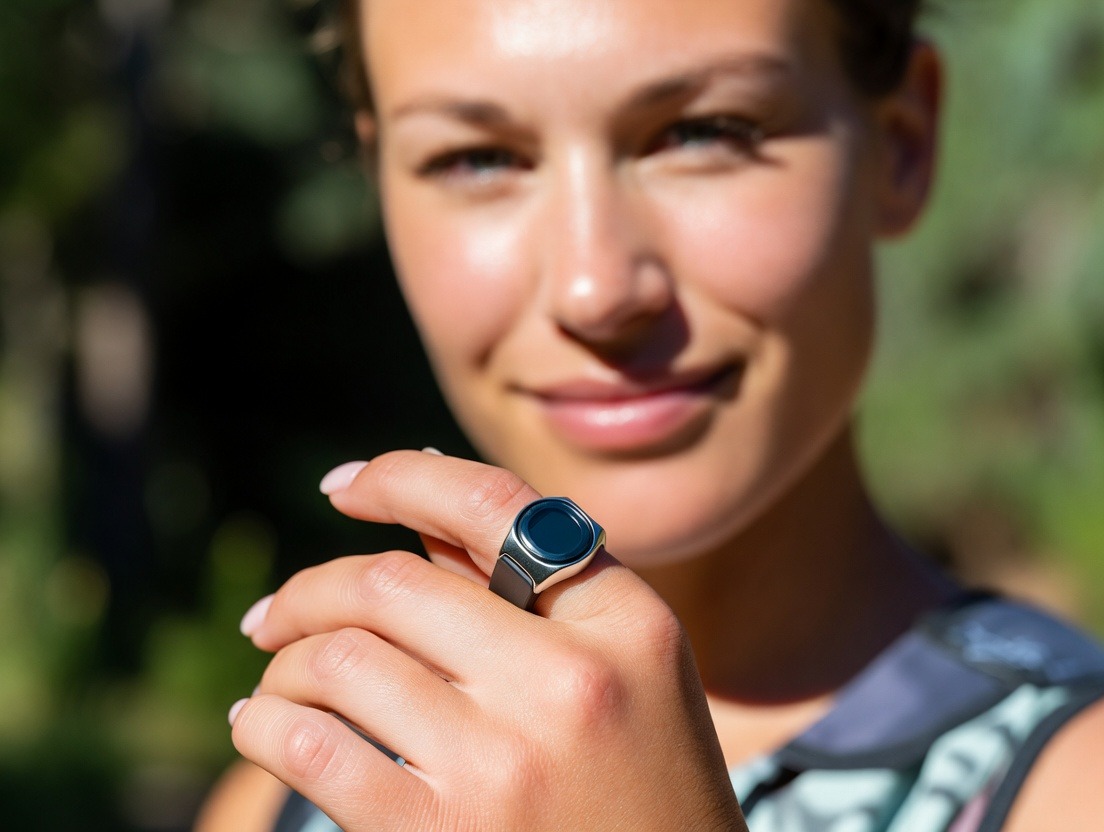
Before we connect the dots to work and love, we must understand the dots themselves. A modern wellness ring like Oura, Ultrahuman, or Circular isn't just counting. It's interpreting a symphony of autonomic nervous system (ANS) signals. The ANS is the unconscious control center for your "fight-or-flight" (sympathetic) and "rest-and-digest" (parasympathetic) responses. It reacts instantly to everything: a looming deadline, a critical email, your partner’s touch, or your child’s laughter.
The primary metrics are:
The crucial insight here is that your ANS does not compartmentalize. It registers the stress of a toxic work call with the same physiological toolkit as it registers an argument with your spouse. The resulting data is a holistic readout of your total emotional and cognitive load. Therefore, a sustained dip in your HRV isn't just "bad data"—it’s a biometric flag that something in your life ecosystem is demanding more than you can healthily give. To understand the root cause, we often need to look at the silent story of our nights, which is why sleep pattern analysis is the first critical clue in decoding your life's balance.

Your sleep is the final report of your day. Think of it as your body’s non-negotiable processing period. A peaceful, structured night of sleep suggests your systems effectively managed the day’s stimuli. A fragmented, restless night suggests they did not—and the debris has spilled over into your recovery time.
Here’s how the connection works:
Your wellness ring aggregates these nightly clues into a "Readiness" or "Recovery" score. A low score isn't a personal failure; it's diagnostic data. It asks: What from yesterday is still with me today? By learning to use sleep pattern data to optimize your life, you begin a reverse-engineering process. You can start to correlate poor sleep scores with specific days: Was it the day of back-to-back meetings with no breaks? The evening you and your partner discussed a stressful family issue? The pattern, over time, becomes undeniable.
If sleep is the report, HRV is the live feed of your nervous system’s capacity. It is the single most sensitive non-invasive metric we have for tracking your body’s resilience and adaptability—its ability to handle load and bounce back.
In the context of work-life balance and relationships, HRV acts as a pressure gauge:
Monitoring HRV trends teaches you the cost of your choices. It answers questions like: Does my weekly team meeting drain me for 24 hours? Does my Saturday morning hike with my partner actually fill my cup? The data is objective, removing the distortion of "I should be fine" or "It’s not that bad."
While HRV is sensitive to daily fluctuations, Resting Heart Rate (RHR) and body temperature are slower-moving, but equally telling, indicators of systemic load.
A creeping RHR is your cardiovascular system working harder, 24/7. Causes include:
Similarly, a sustained elevation in your nighttime skin temperature often precedes illness. Why? Because chronic stress suppresses immune function. Your body is so busy managing the perceived emergency of your inbox or your arguments that its resources for defense are depleted. You are literally burning the candle at both ends.
These metrics are the canaries in the coal mine for burnout. They don't spike from one bad day; they trend in the wrong direction over weeks of imbalance. They tell you that the acute stresses of work and relational life have become a chronic physiological state. This is where the pursuit of "balance" moves from a luxury to a medical necessity.
Wellness rings track activity, but their genius is in contextualizing it. Ten thousand steps after a night of poor sleep and with a low HRV is not the same as ten thousand steps when you are fully recovered. The former adds strain; the latter supports fitness.
This has direct implications for work-life balance:
The lesson here is that the ring encourages a listening relationship with your body. It asks you to match your activity to your capacity, not to an arbitrary, guilt-driven step goal. This self-awareness is the bedrock of sustainable energy management across all life domains.
Your body thrives on predictable rhythm. Your circadian system governs not just sleep, but hormone release, digestion, cognitive function, and mood. A consistent routine is the scaffolding upon which work-life balance is built. Your wellness ring is a powerful circadian rhythm tracker.
When your ring shows consistent sleep and wake times, it’s a sign that you have agency over your schedule. It suggests boundaries are in place. When it shows wild variability, it often indicates a life reactive to external demands, with personal time being whatever is left over—a sure path to depletion.
Your ring doesn't track screen time, but it brilliantly infers its impact. The blue light from screens suppresses melatonin, delaying sleep onset. But the real damage is cognitive and emotional.
Scrolling through work emails in bed creates cognitive arousal, making it impossible for your nervous system to shift into rest mode. Doomscrolling through news or social media can trigger anxiety and a sense of threat. Even a "quick check" of your phone during an evening with family fractures presence and subtlely signals that the outside world is more important.
Your ring captures this through:
In this way, your recovery score becomes an indirect "digital hygiene" score. A good score suggests you successfully unplugged. A poor score asks: Was your phone the last thing you touched before sleep? Did work notifications interrupt your personal time? The data provides objective evidence for setting boundaries you can feel guilty about ignoring, but which your body desperately needs.
Many rings now offer a composite "Stress" or "Daytime Stress" score. This isn't guessing; it's algorithmically derived from live heart rate data, HRV, and activity. A high stress score indicates periods of sympathetic nervous system dominance.
The power of this metric is in its timing.
By reviewing your daily stress timeline, you move from a vague sense of being "busy" or "stressed" to a precise map of your physiological pain points. You can see, in undeniable data, where your work infringes on your peace, and where your home life, perhaps, lacks the restorative quality it should have.
This is where the narrative becomes truly fascinating. When both partners in a relationship wear wellness rings, you move from tracking individual biology to tracking the biology of the relationship itself.
This shared data moves couples away from "You're stressing me out!" (which is blaming and vague) to "Look at our data. When we argued last night, both our systems crashed and haven't recovered. What do we need to do to repair this?" It fosters a team-based approach to relational health, grounded in shared biological reality.
Raw data is meaningless without context. The final, crucial step is building the narrative bridge. This is the practice of journaling or tagging your days.
When your ring gives you a poor readiness score, don't just dismiss it. Open the app and ask:
Over weeks, patterns emerge that are unique to you. You might discover that "finishing a work deliverable" is less stressful for you than "managing interpersonal team conflict." You might see that your time with a certain friend is consistently draining, while time with another is consistently replenishing. You learn the true cost of your choices and the real value of your connections.
In the next portion of our exploration, we will build on this foundational understanding. We will delve into specific, actionable frameworks for using this data to set better boundaries at work, design more restorative routines, communicate more effectively in relationships, and create a life where your physiological data reflects not just survival, but sustainable thriving. We will examine case studies, explore advanced correlation techniques, and provide a roadmap for turning these indirect tracks into a direct path toward holistic well-being.
Work-related stress is no longer an abstract feeling of dread on Sunday night. With a wellness ring, it becomes a quantifiable, time-stamped physiological event. Your body's response to professional pressure leaves a distinct biometric signature that your device captures with unflinching accuracy. This data reveals not just that you're stressed, but how your work habits are wiring your nervous system for overload.
The most telling signature is the "Weekday Crash vs. Weekend Rebound" pattern. Examine your weekly trend graph for HRV and Resting Heart Rate. For many professionals, it paints a stark picture: a steady decline in HRV (and a rise in RHR) from Monday through Thursday or Friday, followed by a sharp, upward recovery spike on Saturday and Sunday. This is your body's direct plea: it is being depleted by the workweek structure and can only heal during the respite of the weekend. The steepness of the decline and the speed of the rebound are key indicators of your job's toll. A slow, shallow recovery suggests the weekend isn't truly restorative—perhaps because you're working remotely, ruminating, or simply too exhausted to engage in replenishing activities.
Beyond the weekly cycle, we can pinpoint specific stressors:
This data empowers a crucial mindset shift: work stress is not a moral failing or a sign of weakness; it's a measurable physiological load. By identifying the specific triggers (meeting types, times of day, project phases), you can move from generalized anxiety to targeted interventions, such as blocking strategic recovery time after known high-stress events or creating a strict digital sunset ritual.
The commute home is more than a travel interval; it's a biological transition ritual. For remote workers, this ritual has vanished, and the data shows the cost. The "failed transition" is one of the most common and damaging patterns visible in wellness ring data, eroding the quality of personal and relational life.
Your ring tracks your transition success through two primary metrics: the slope of your heart rate decline in the evening and the timing of your nervous system's shift into parasympathetic (rest-and-digest) dominance.
The impact on relationships is profound. Attempting to connect with a partner or be present with children while your physiology is shouting "threat mode" is neurologically challenging. You are biologically primed for defense and reaction, not for empathy, patience, or open listening. Your ring data provides the objective evidence that you are not truly "home" yet, creating a powerful incentive to design a deliberate transition ritual—a 45-minute buffer of no screens, gentle movement, quiet conversation, or reading—that allows your biology to catch up with your physical location.

We often think of sleep as a solitary act. Your wellness ring reveals it as a deeply relational metric. The quality of your slumber is a final, integrated report on the emotional and psychological safety of your day—and much of that safety is determined by the health of your primary connections.
By viewing sleep as a shared bio-marker, couples can depersonalize sleep issues. Instead of "You're keeping me awake," the conversation becomes, "Our shared data shows we're both sleeping poorly when we have conflict before bed. How can we create a better pre-sleep routine for our team?"
Your wellness ring is a brilliant tracker of social rhythms—the daily and weekly routines that structure your life. Consistency in these rhythms is a powerful predictor of mental health and relational stability. The groundbreaking research on Social Rhythm Therapy shows that regularity in daily activities (wake time, meals, work start, social connection) helps regulate circadian biology and mood.
Your ring quantifies your social rhythm through:
For relationships, shared social rhythms are the glue. Regular, predictable times for connection—a weekly date night, a morning coffee together, a weekend walk—create a scaffold of security. Your combined ring data can show whether you are building this scaffold or living in reactive chaos. The goal isn't rigidity, but a flexible framework that provides enough predictability for your nervous systems to relax, knowing that connection is a scheduled, prioritized part of the ecosystem, not a leftover to be squeezed in.
In a culture that glorifies busyness, we often wear fatigue as a badge of honor. Wellness rings brutally refute this logic by introducing the critical concept of readiness. Your "Activity" score means nothing without the context of your "Recovery" or "Readiness" score. This is the ultimate work-life balance equation.
By adopting this battery model, you move from judging days as "productive" or "lazy" to assessing them as "sustainable" or "depleting." The goal of balance is to design a life where your average readiness score trends upward or remains stable, indicating that your sources of recharge consistently meet or exceed your drains. This is the physiological foundation of sustainability.
The minute-by-minute "Stress" or "ANS Balance" timeline is perhaps the most powerful, underutilized feature for auditing work-life balance. It's not a judgment; it's a story. A single day's graph tells a clearer story about your life than a week of journal entries.
Learn to read the chapters:
Now, conduct a life audit. Pick three representative days: a standard workday, a weekend day, and a "bad" day. Lay their stress timelines side-by-side.
This audit moves you from subjectively feeling "stressed" to objectively knowing when and in what context you are stressed. With this knowledge, you can strategically place recovery practices, set boundaries (e.g., "no meetings after 4 p.m."), and design your ideal day based on your body's truthful report, not society's expectations.
In the following sections, we will shift from diagnosis to solution. We will explore how to use this rich, personal dataset to engineer better work boundaries, design restorative personal rituals, communicate needs more effectively in relationships, and ultimately, create a life that your physiology celebrates with high HRV, deep sleep, and resilient recovery. The data is the map; the choices you make are the path to a new equilibrium.
The journey from individual biometrics to shared relational insight is where the wellness ring transcends personal gadgetry and becomes a tool for co-creation. When both partners engage with their data, it fosters a new language—one of empathy, objectivity, and teamwork. This shift from blaming behavior to observing shared patterns is foundational to building a resilient partnership.
The process begins with depersonalizing the stress response. In a conflict, it’s easy to say, "You are stressing me out." This places blame on the other person as the active agent of your discomfort. Shared ring data reframes this: "Look at our stress timelines from last night. When we started discussing finances at 8:30 PM, both our heart rates spiked and our HRV dropped. My body is still showing the effects with low recovery today." This statement is factual, non-accusatory, and focuses on the interaction and its mutual impact as the issue, not the individual. It invites collaboration: "How can we approach tough topics in a way that doesn't dysregulate both of us?"
This leads to the practice of identifying mutual triggers and recovery strategies. By reviewing data together, couples can discover their unique patterns. Perhaps one partner's stress from work manifests as evening irritability, which triggers the other partner's anxiety, creating a negative feedback loop visible in both sets of data. The solution isn't for one person to "just relax"; it's to create a buffer ritual. The data might show that a 20-minute quiet period for the stressed partner after work, followed by a brief, connected check-in, prevents the evening cascade. The ring provides immediate feedback: did this new ritual produce calmer evening metrics and better sleep for both?
Furthermore, celebrating positive co-regulation becomes evidence-based. It’s one thing to feel that a weekend getaway was relaxing. It’s another to see the synchronized rise in both partners' HRV, the deep, uninterrupted sleep scores, and the low stress baselines. This data reinforces what works. It helps you identify the specific activities—a hike in nature, cooking together without phones, playing with a pet—that reliably bring your physiologies into harmony. You move from guessing what’s good for your relationship to knowing, biometrically, what fuels its health.
Data-driven insight is meaningless without action. The most potent action for improving work-life balance is the establishment of non-negotiable boundaries. Your wellness ring provides the irrefutable evidence needed to design and defend these boundaries, transforming them from vague intentions into essential, biologically-verified protocols.
Start with The Evening Digital Sunset. Your sleep and stress data likely show a direct correlation between evening screen use and poor recovery. Use this to institute a hard stop. For example, the data may reveal that checking email after 7:30 PM adds an average of 20 minutes to your sleep latency and reduces your deep sleep by 12%. This isn't an opinion; it's a cause-and-effect relationship specific to you. Your boundary becomes: "To protect my sleep architecture (which my ring shows is critical for my mood and resilience), all work devices go into a drawer at 7:30 PM." The ring then validates this boundary by showing improvements in your sleep scores, reinforcing the habit.
Next, design The Strategic Recovery Buffer. Analyze your stress timeline to find your most consistent high-stress period. Is it Tuesday afternoons full of meetings? Block the 60 minutes immediately following as a "Recovery Block" on your calendar. Treat it with the same importance as a meeting with your CEO. During this time, engage in an activity your data shows helps you recalibrate—a walk, deep breathing, or simply doing nothing. The goal is to see the steep stress spike on your timeline followed by a rapid return to baseline, rather than a prolonged plateau. This is you actively managing your nervous system's recovery curve.
Finally, establish The Weekend Sanctuary Rule. If your data shows the dramatic weekend sleep pattern problem of social jet lag, use it to set a gentler boundary. Perhaps the rule is: "No alarm on weekends, but we aim to be out of bed within a 90-minute window of our weekday wake-up time to preserve circadian rhythm." The data will show if this reduces Sunday night insomnia and improves Monday readiness. The boundary is not about deprivation, but about protecting the quality of your rest and, by extension, your upcoming week.
These boundaries are not rigid walls but intelligent filters. They are built on the answer to the question: "What does my body need to recover and thrive?" The ring provides the answer, and the boundaries are the lifestyle implementation.
With boundaries protecting your energy, you create space for intentional connection. This is where you move from preventing damage to actively building vitality. Use your combined data to design rituals that are not just pleasurable, but physiologically synchronizing.
The After-Work Decompression Ritual: Instead of launching into the day's dramas, create a 15-minute buffer ritual. This could be a silent walk side-by-side, sitting together with a cup of tea without talking, or a shared breathing exercise. The goal is to allow both nervous systems to down-regulate from the sympathetic arousal of the day before attempting connection. Check your data: does this ritual correlate with a smoother descent in both partners' evening heart rates and less pre-sleep tension?
The Biometric Date Night: Experiment with different types of date nights and observe the data. A tense, overcrowded dinner in a noisy restaurant might be fun but show up as a stress spike. A calm evening walk followed by cooking a meal together might show a steady, calm stress baseline and a higher readiness score the next morning. The data helps you discern between stimulation that is exciting and stimulation that is depleting. You can then intentionally plan more of the connective, replenishing activities. You might even explore activities known to boost HRV, like partner yoga or guided meditation, and see their direct impact on your shared recovery metrics.
The Weekly Check-In, Powered by Data: Dedicate 20 minutes each week to a "Relationship Readiness" review. Open your ring apps together and discuss:
This practice transforms relationship maintenance from an emotional, abstract concept into a practical, grounded, and collaborative project. It builds a shared identity as a team that manages its collective well-being.
One of the most profound applications of wellness ring data is in the realm of communication. It provides a neutral third party in difficult conversations—the unbiased testimony of your own body.
When you need to express a need or a limit, anchor it in your data:
This approach reduces defensiveness. You are not attacking or blaming; you are presenting observable facts about your physiological state and inviting problem-solving. It also fosters self-awareness and responsibility. You are communicating your needs based on your own metrics, not on judgments of the other person's behavior.
The ultimate goal is to move from using your ring to put out daily fires to using it to design a life that rarely sparks. This requires shifting your focus from daily scores to long-term trends.
Establish Your Baselines: Over 2-3 months of consistent wear, you'll establish your personal baselines for HRV, RHR, and sleep. These are your unique set points. The goal is not to chase someone else's "high" HRV, but to understand what your body looks like when it's in equilibrium.
Watch the Direction, Not the Daily Dips: A single bad day is noise. A three-week downward trend in HRV is a signal. A gradual, month-over-month rise in your average resting heart rate is a signal. These long-term trends tell the true story of your work-life balance. They answer: Is my current lifestyle sustainable? Are the boundaries and rituals I've implemented actually moving the needle on my physiological resilience?
Correlate with Life Chapters: Use tags or journals to mark life events: "Started new project," "Began meditation practice," "Parent moved in," "Began regular weekly dates." Review your long-term trends in the context of these chapters. You may see a clear dip during a stressful project, followed by a rebound when it ended and you took vacation. This teaches you the real cost and recovery timeline of major life stressors, allowing for better planning in the future.
By focusing on trends, you cultivate patience and a strategic mindset. You learn that building a resilient, balanced life is a marathon, not a sprint. The ring is your coach, providing pace data and letting you know when you need to hydrate, slow down, or can afford to speed up. It helps you align your daily choices with your long-term vision for health and harmony, ensuring that the life you're building is one your body can actually live in—and thrive in—for the long haul.

Armed with a deep understanding of your stress signatures and recovery needs, the next step is to conduct a fearless audit of your professional life. This isn't about blaming your job, but about using empirical data to identify the specific, modifiable factors that create undue physiological strain. Your wellness ring transforms from a passive tracker into an active consultant for job crafting and boundary setting.
Begin with a Meeting Impact Analysis. Over a two-week period, tag or note the type and timing of your meetings. Then, correlate them with your stress timeline and subsequent recovery scores. You will likely discover distinct patterns:
With this data, you can advocate for change. You might propose agendas for key meetings, suggest a "no meetings after 3 PM" block to protect focus time and enable evening transition, or advocate for a 25/5-minute meeting format (25 minutes of discussion, 5 minutes for note-taking and transition) to reduce cognitive pile-up. Presenting this as a productivity and well-being optimization strategy ("The data shows our current meeting structure creates a recovery debt that impacts next-day focus") is often more effective than citing personal fatigue.
Next, scrutinize Your Deep Work & Focus Architecture. Your HRV and stress data during periods of focused, individual work are telling. If you see frequent micro-spikes during these blocks, it indicates constant interruptions—whether external (Slack pings, colleague drop-ins) or internal (your own urge to check email). The data provides the evidence you need to create sacred focus blocks: turning off notifications, using a "do not disturb" sign, or working from a different location. The goal is to see longer periods of stable, moderate arousal on your stress graph, indicative of flow, rather than a jagged line of reactive chaos.
Finally, analyze The Email & Asynchronous Communication Load. Note the times you check and process messages. Does a 5 PM email scan send your pre-evening stress line climbing? Does checking messages right before bed, as mentioned, devastate your sleep pattern consistency? The data empowers you to institute batching. Perhaps you check email only at 10 AM, 1 PM, and 4 PM. Your ring will show if this reduces the frequent, anxiety-provoking spikes throughout the day and leads to a calmer, more controlled physiological state. You are training your nervous system to expect information at predictable times, not to be in a constant state of alert.
The antidote to work-life blur is not just logistical separation, but qualitative presence. Presence—the state of being fully engaged with the current moment and person—has a detectable, positive physiological profile that your wellness ring can measure and encourage.
When you are truly present, your nervous system tends to settle. The ruminative loops about the past and anxious projections about the future quiet down, allowing your heart rate to lower and your HRV to improve. This state is the bedrock of both deep personal satisfaction and relational connection. Your ring can help you cultivate it through biofeedback.
Practice this: During a period of intentional connection—say, a dinner conversation with your partner—make a mental note of the time. Later, review your stress timeline for that period. Were you truly in a calm, engaged state (showing a stable, low-to-moderate line), or was your physiology still jittery from the day? This objective feedback is powerful. If you see the latter, it’s a cue to implement a pre-connection "landing" ritual, like three minutes of conscious breathing or a brief walk, to discharge residual arousal before attempting to engage.
Furthermore, mindful practices directly improve the metrics your ring tracks. Studies show that consistent meditation practice increases HRV, lowers resting heart rate, and improves sleep quality—all key biomarkers of balance. You can use your ring to validate this for yourself. Start a simple, daily 10-minute breathing meditation practice. After 3-4 weeks, examine your long-term trends. Has your baseline HRV crept up? Has your sleep score average improved? This turns an abstract wellness practice into a data-verified tool, increasing motivation and adherence. You are not just "feeling" calmer; you have the biometric proof that you are becoming more resilient.
Conflict is inevitable in any close relationship or high-stakes work environment. However, the management of conflict is what determines its cost to your well-being. Your wellness ring offers a revolutionary tool for real-time de-escalation: interoceptive awareness—the ability to perceive the internal state of your body.
During a rising disagreement, your sympathetic nervous system activates. Your heart rate increases, your breath shallows, and your HRV drops. This "hijacked" state impairs prefrontal cortex function—the part of your brain responsible for rational thinking, empathy, and nuanced communication. You become biologically primed for fight-or-flight, not for constructive problem-solving.
Here is where your ring’s real-time data (available on some models via a companion app glance) or, more accessibly, your learned awareness of your body's signals, becomes crucial. You can learn to recognize the early somatic signs of escalation: a tight chest, warm face, or clenched jaw. The moment you feel these, you can call a "physiological time-out."
The script changes from:
"You're not listening to me!" (escalating)
to:
*"I'm noticing my heart is starting to race, which means I'm getting flooded. I need a 10-minute break to calm my nervous system so I can really hear you. Let's pause and resume at 3:15."*
This is not avoidance; it is sophisticated emotional and biological regulation. It honors the data of your body. Use the break to engage in a parasympathetic-activating activity: deep, slow breathing (aiming for a 5-second inhale, 5-second exhale), splashing cold water on your face, or walking outside. The goal is to see your real-time heart rate descend. When you reconvene, your physiology will be more capable of connection and collaboration. Over time, tracking these conflict episodes will show you if your recovery times are improving—a sign of greater relational resilience.
Work-life balance is not a static achievement; it's a dynamic equilibrium that must be constantly adjusted as life changes. Your wellness ring provides the compass for these navigations, offering grace and guidance during natural transitions.
Seasonal Changes: Your data will likely show seasonal variations. Winter, with less sunlight, can impact sleep patterns and mood and lower overall energy. You may see a natural dip in your activity scores and a need for more sleep. Instead of fighting this as a personal failing, your data allows you to adapt your expectations and routines seasonally—prioritizing sleep, using a light therapy lamp, and adjusting workout intensity. Similarly, the busy holiday season will likely show up as a period of lower recovery; seeing it in the data can help you plan intentional rest for January.
Major Life Events: A new job, a promotion, the birth of a child, caring for an aging parent—these events are seismic shifts for your nervous system. During these times, your baseline metrics may change, perhaps for an extended period. A new parent's HRV and sleep scores will look radically different. The goal during these chapters is not to "get back to your old baseline," but to find a new sustainable baseline within the new context. The ring helps you monitor for danger signs (like a prolonged, unchecked downward trend in recovery) while also offering self-compassion. It shows you that the struggle is real, biological, and measured.
Project Cycles: Work life often operates in sprints and cycles. Your data during a critical project "crunch time" will look different from data during a maintenance phase. The key is to use the ring to ensure that the "crunch" is truly a time-limited sprint with a planned recovery period afterward. If the "crunch" metrics become your new normal for months, that's the very definition of burnout. The long-term trend graph will sound the alarm long before you consciously admit it.
By viewing your data through a lifecycle lens, you develop self-compassion and strategic foresight. You learn that balance is about skillful adjustment to constant change, guided by the truthful feedback from your own body.
As powerful as this technology is, it is critical to recognize its limitations. A wellness ring is a brilliant biometric reporter, but it is not a therapist, a marriage counselor, or a career coach. It provides the "what" and the "when," but rarely the deep "why."
Embrace the ring as an unparalleled guide, not a guru. Its true power is unlocked in dialogue with your own intuition, emotions, and lived experience. It gives you a new language to describe your internal state, but you still have to write the story of your life. The data informs your choices, but it should not make them for you. The ultimate metric of work-life balance and relationship health is not a number on an app, but a felt sense of alignment, connection, and sustainable energy in the story you are living each day.
Your Trusted Sleep Advocate: Sleep Foundation — https://www.sleepfoundation.org
Discover a digital archive of scholarly articles: NIH — https://www.ncbi.nlm.nih.gov/
39 million citations for biomedical literature :PubMed — https://pubmed.ncbi.nlm.nih.gov/
Experts at Harvard Health Publishing covering a variety of health topics — https://www.health.harvard.edu/blog/
Every life deserves world class care :Cleveland Clinic - https://my.clevelandclinic.org/health
Wearable technology and the future of predictive health monitoring :MIT Technology Review — https://www.technologyreview.com/
Dedicated to the well-being of all people and guided by science :World Health Organization — https://www.who.int/news-room/
Psychological science and knowledge to benefit society and improve lives. :APA — https://www.apa.org/monitor/
Cutting-edge insights on human longevity and peak performance:
Lifespan Research — https://www.lifespan.io/
Global authority on exercise physiology, sports performance, and human recovery:
American College of Sports Medicine — https://www.acsm.org/
Neuroscience-driven guidance for better focus, sleep, and mental clarity:
Stanford Human Performance Lab — https://humanperformance.stanford.edu/
Evidence-based psychology and mind–body wellness resources:
Mayo Clinic — https://www.mayoclinic.org/healthy-lifestyle/
Data-backed research on emotional wellbeing, stress biology, and resilience:
American Institute of Stress — https://www.stress.org/


